KS3 and KS4 Transformations Worksheets
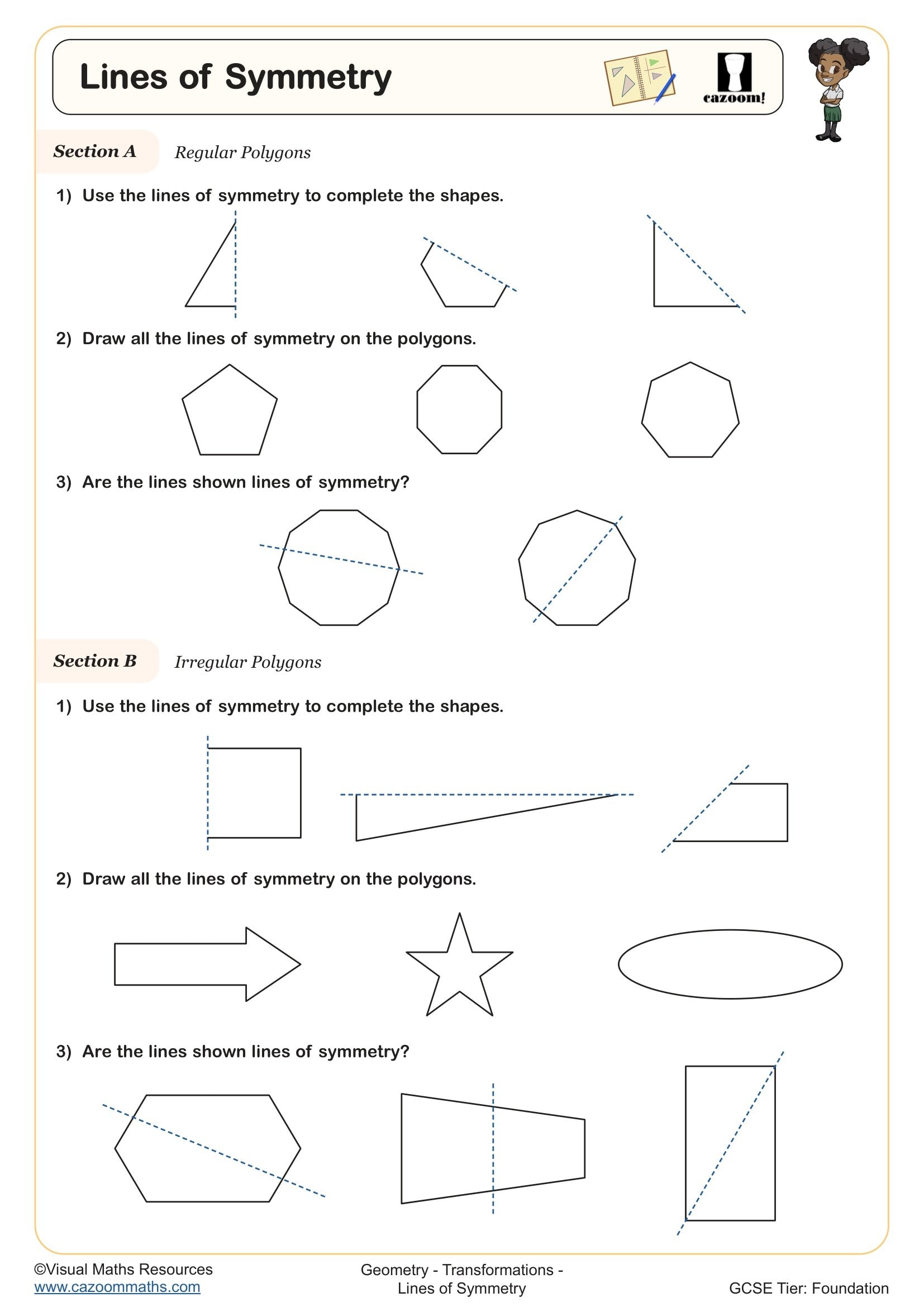
Lines of Symmetry
Year groups: 7, 8
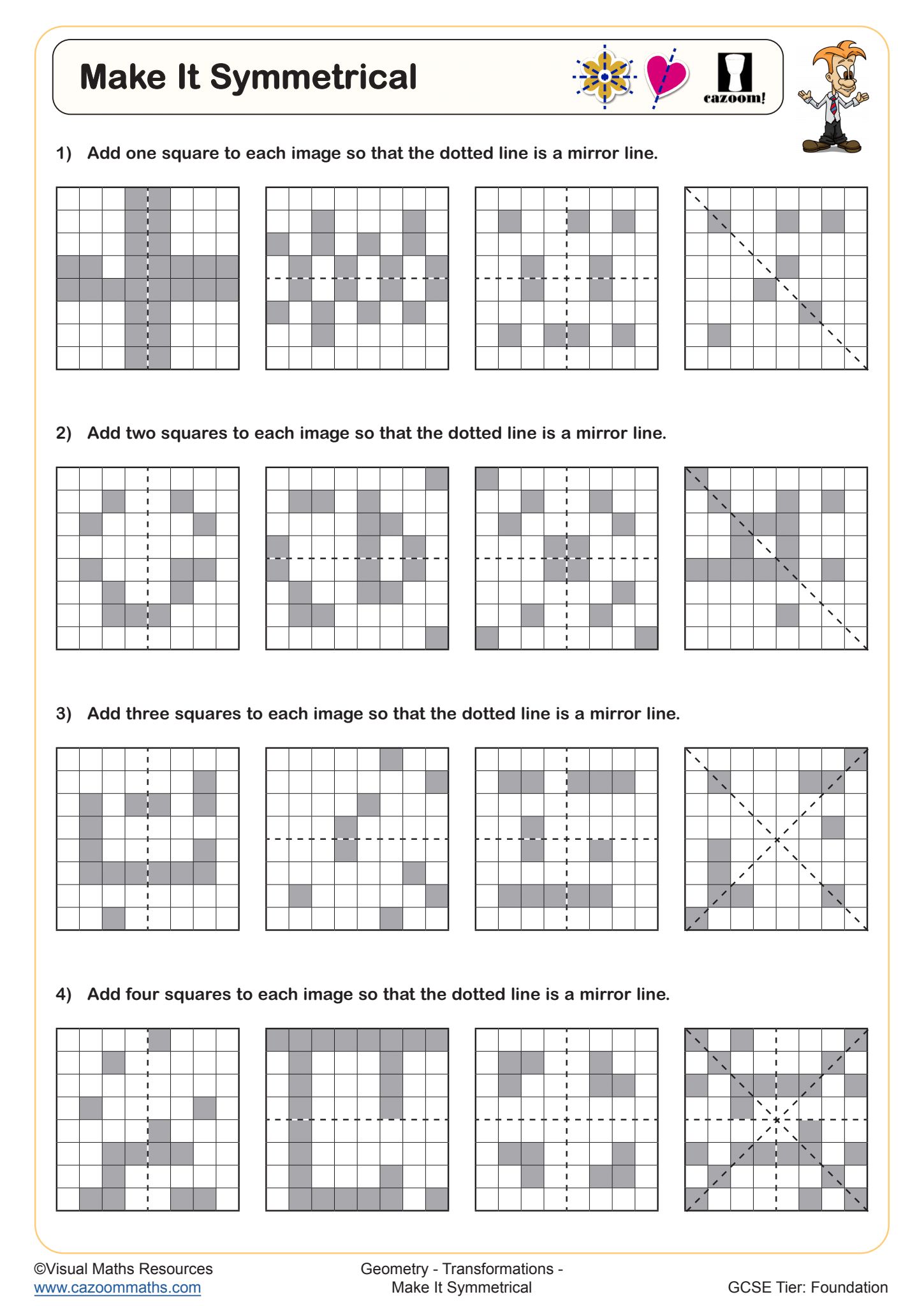
Make it Symmetrical
Year groups: 7, 8
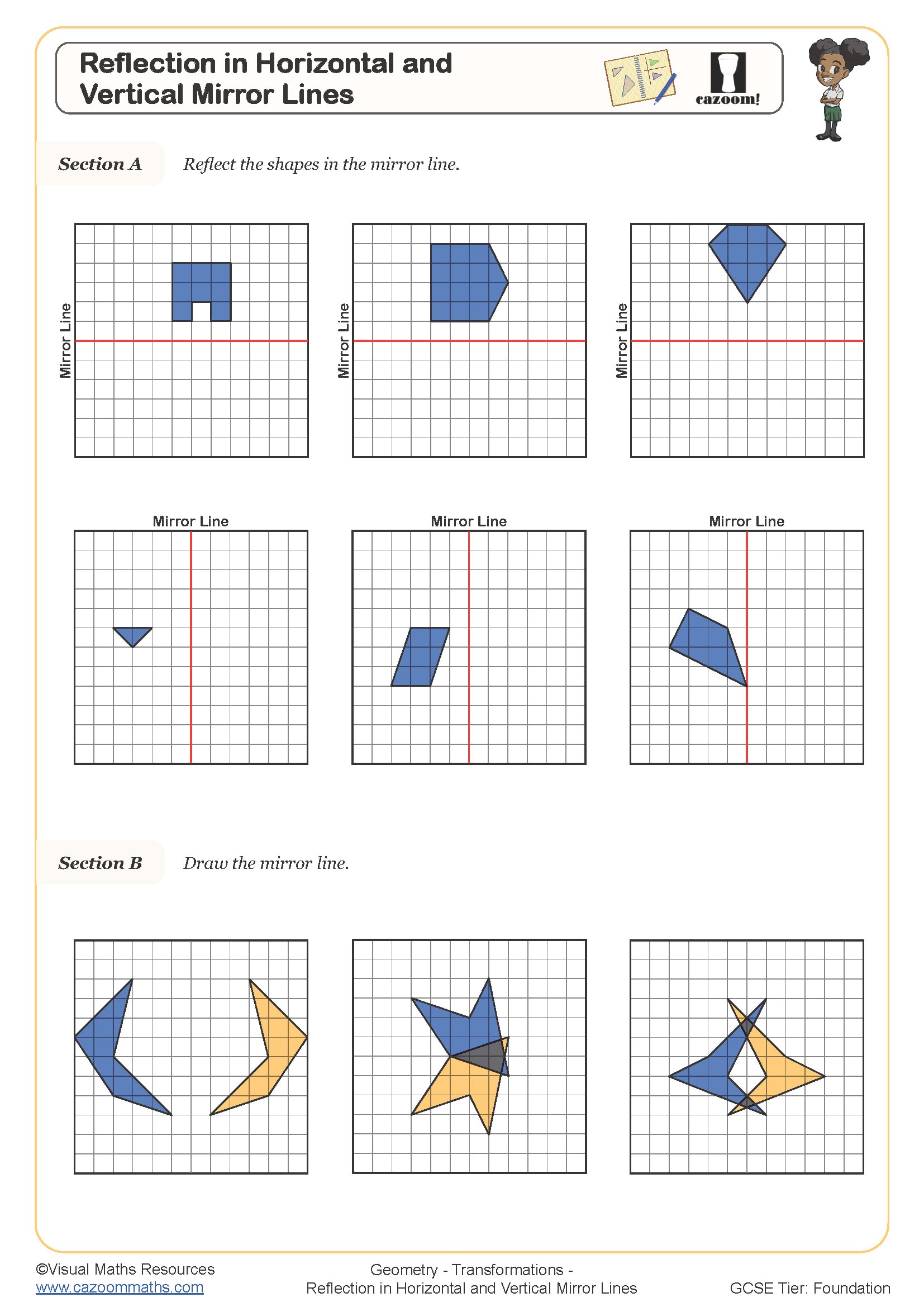
Refelction in Horizontal and Vertical Mirror Lines
Year groups: 7, 8, 9
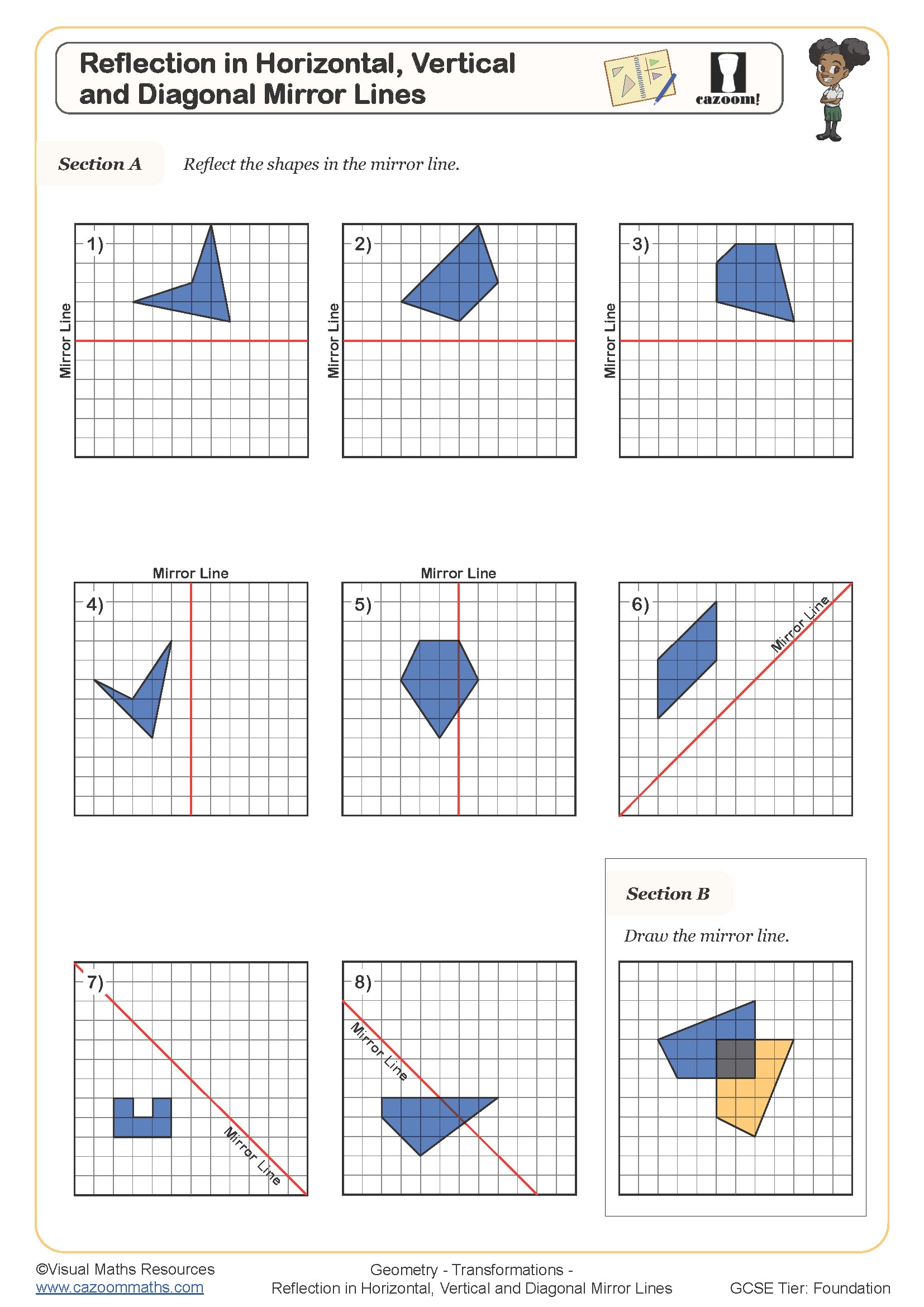
Reflection in Horizontal, Vertical and Diagonal Mirror Lines
Year groups: 7, 8, 9
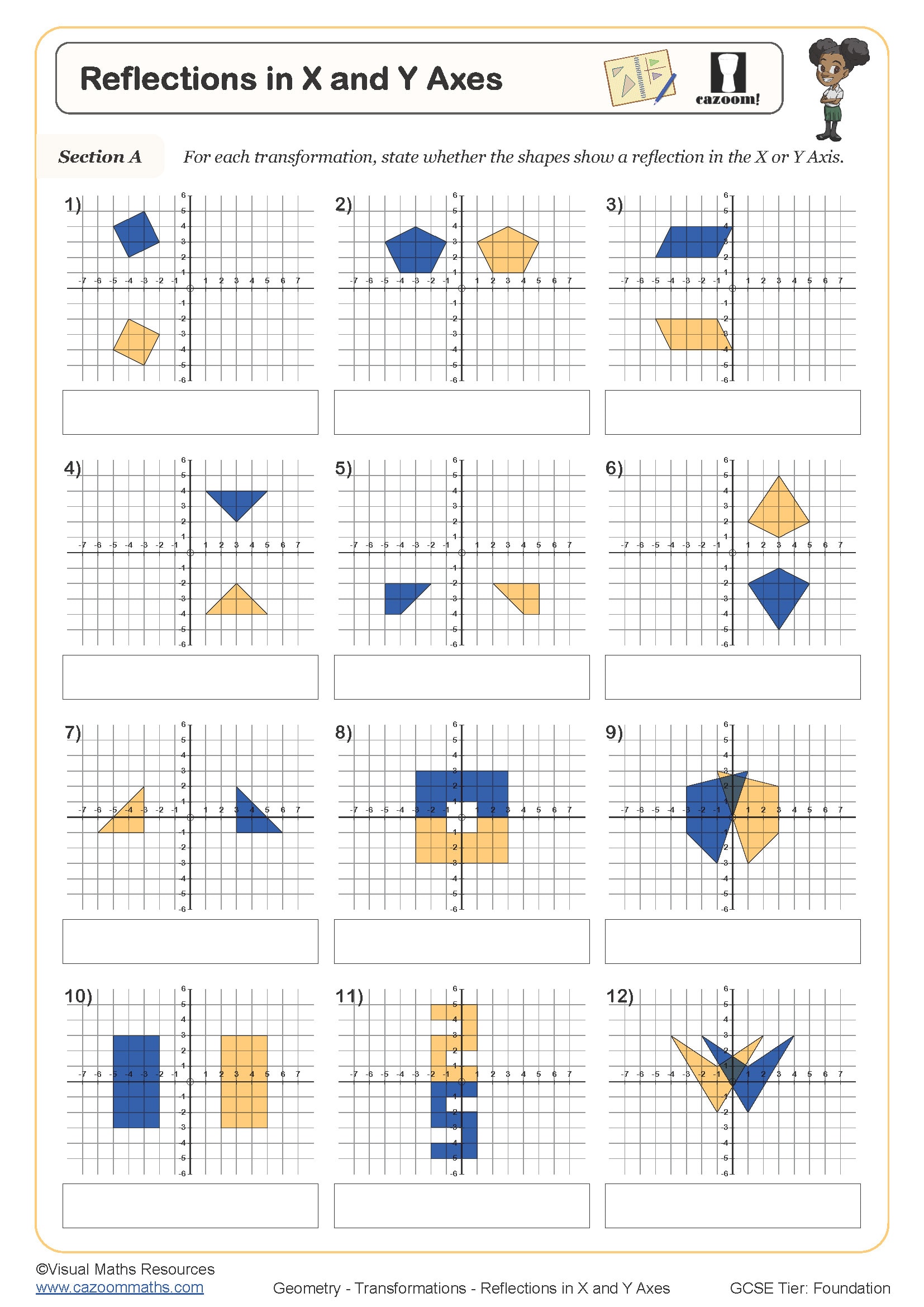
Reflections in X and Y Axes
Year groups: 7, 8, 9
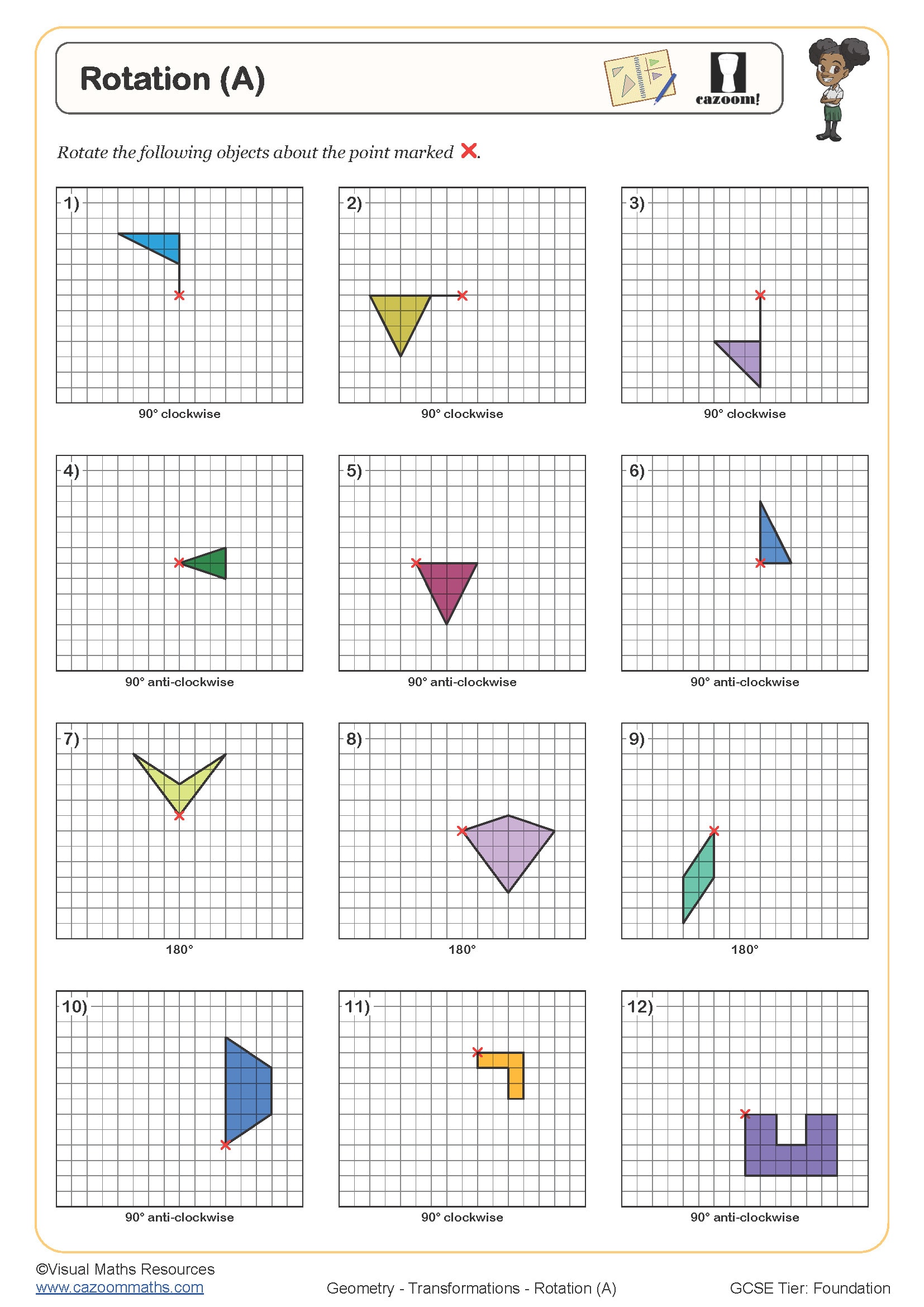
Rotation (A)
Year groups: 7, 8, 9
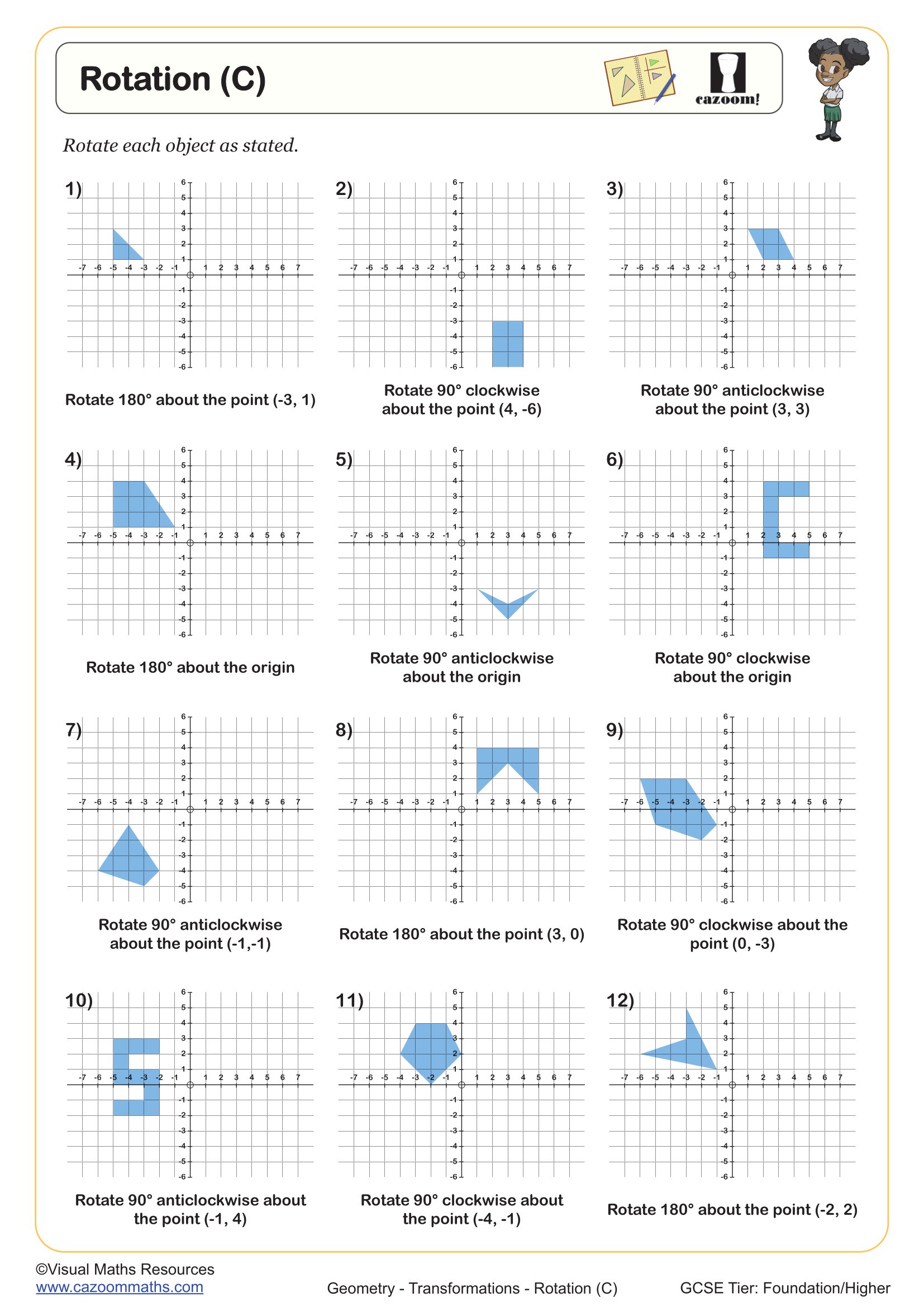
Rotation (C)
Year groups: 7, 8, 9
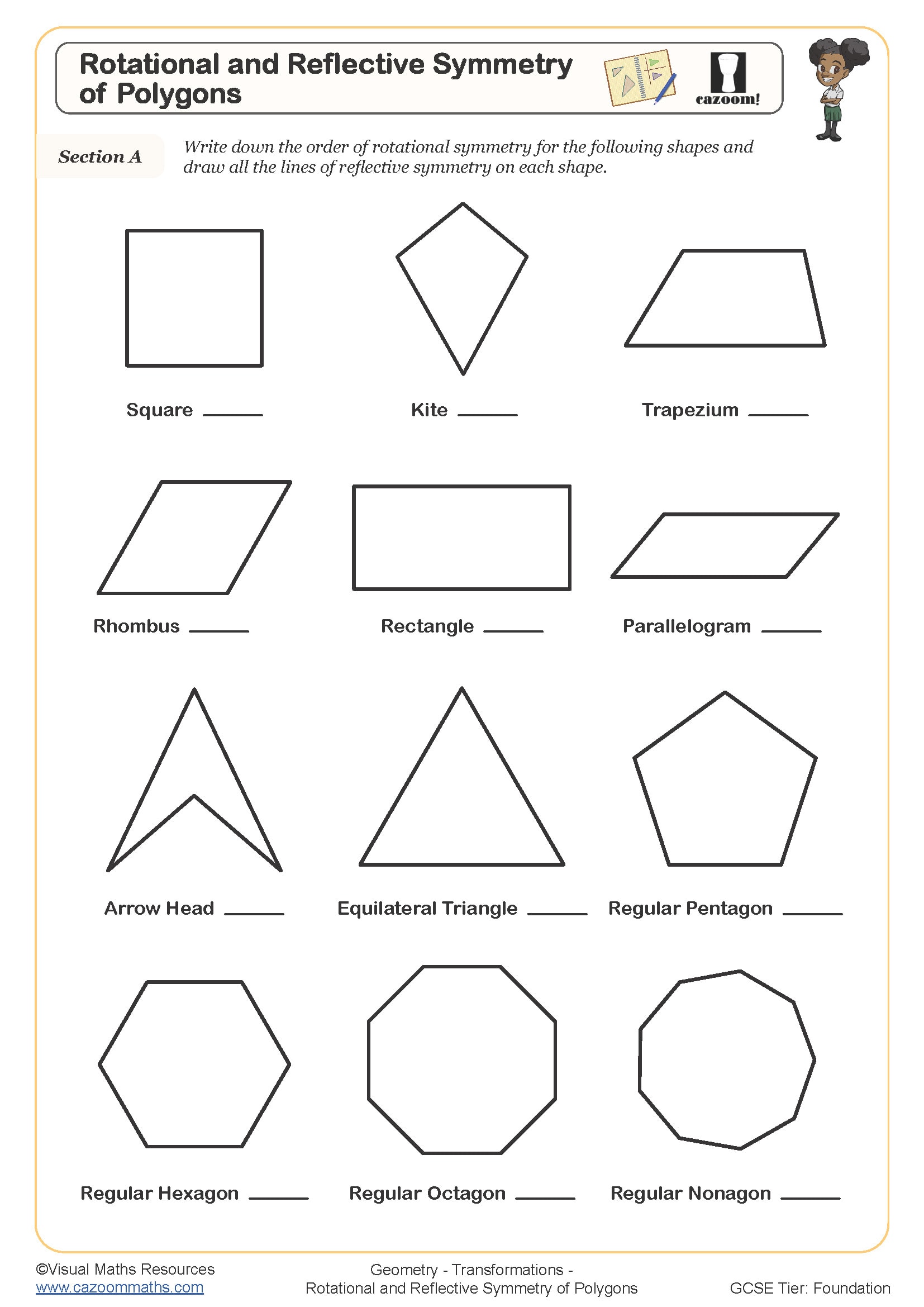
Rotational and Refelctive Symmetry of Polygons
Year groups: 7, 8
Enlargement (A)
Year groups: 8, 9
-Worksheet.jpg?w=3840)
Enlargement (B)
Year groups: 8, 9
-Worksheet.jpg?w=3840)
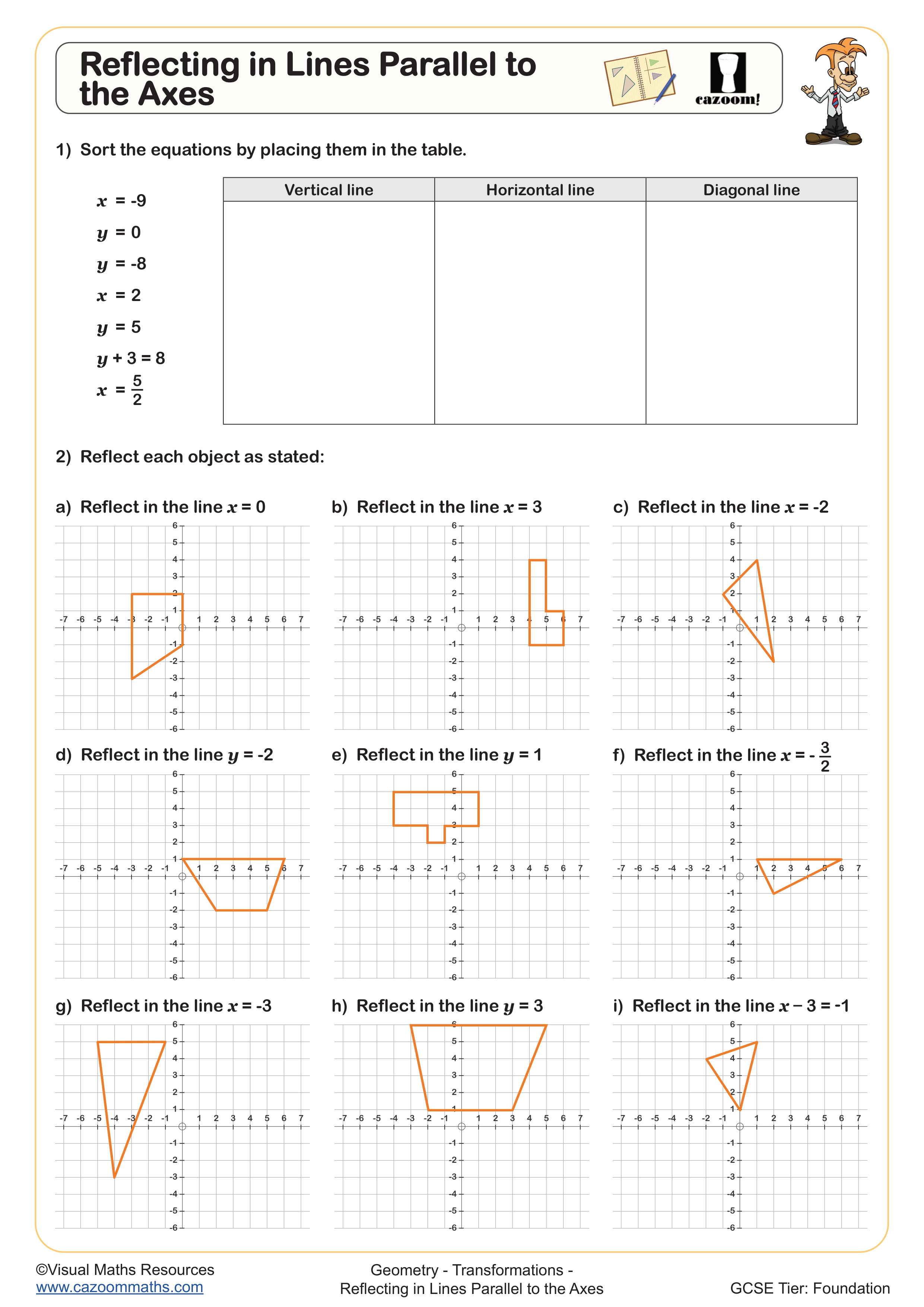
Reflecting in Lines Parallel to the Axes
Year groups: 8, 9
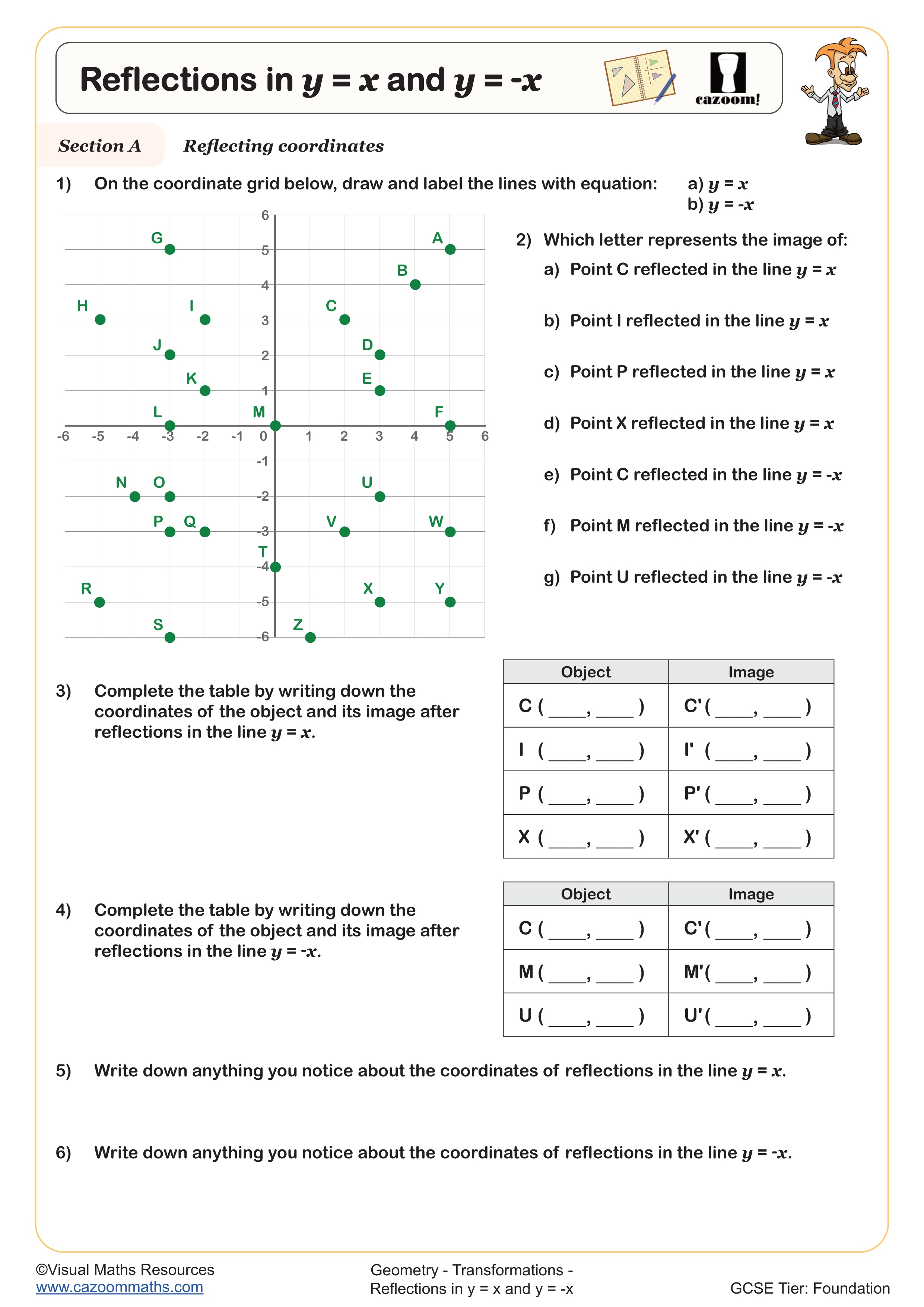
Reflections in 𝑦 = 𝑥 and 𝑦 = -𝑥
Year groups: 8, 9
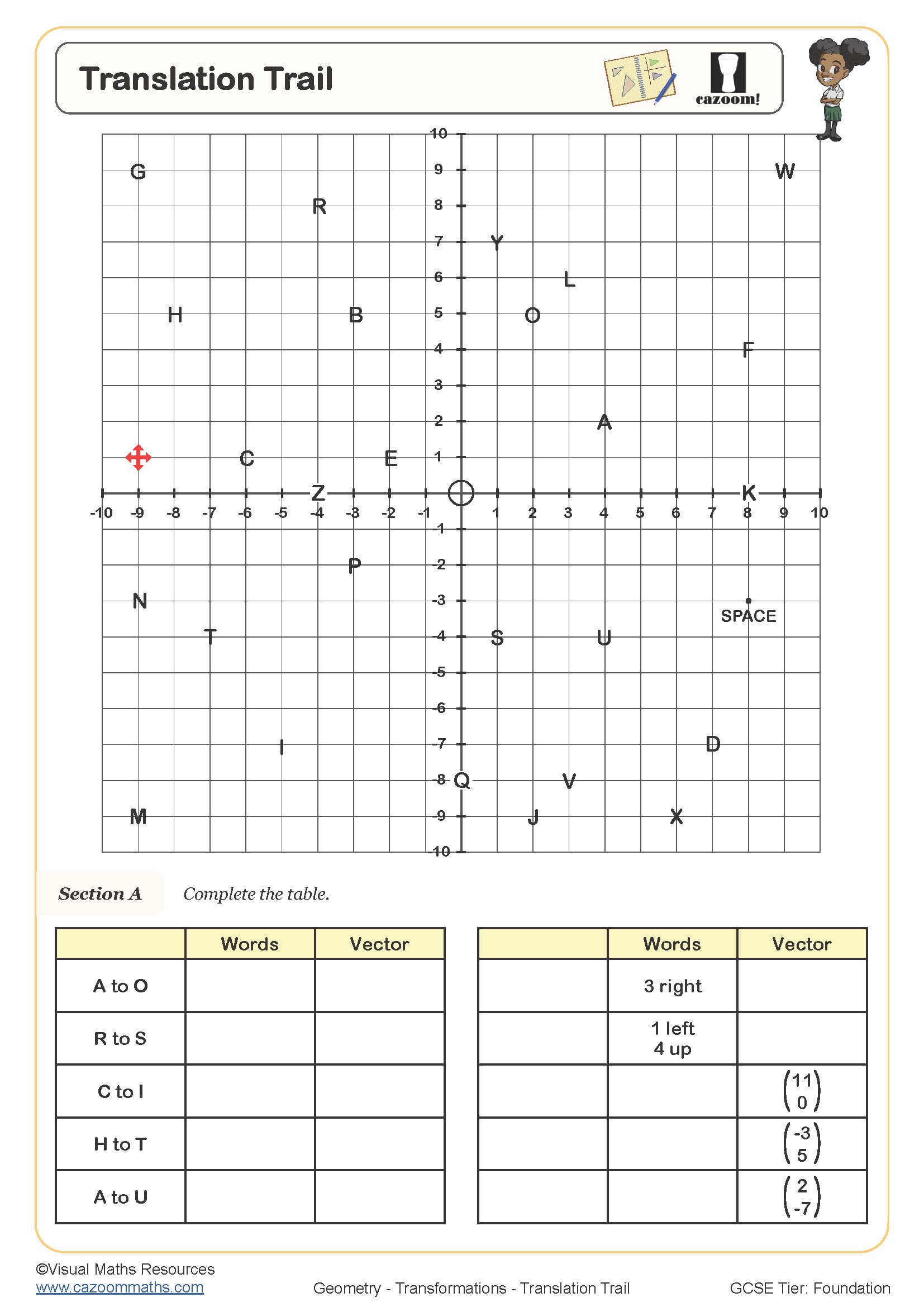
Translation Trail
Year groups: 8, 9
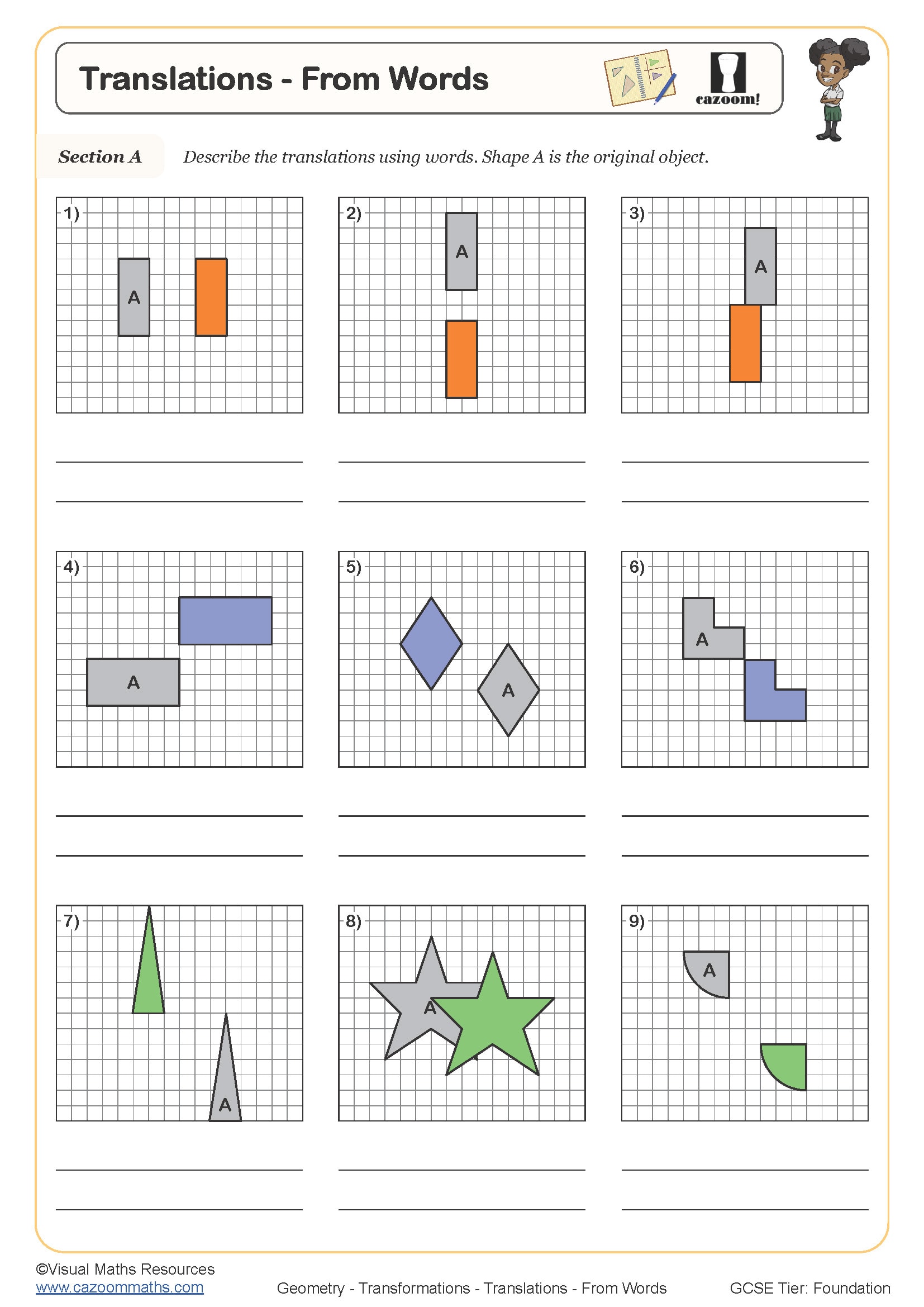
Translations - from Words
Year groups: 8, 9
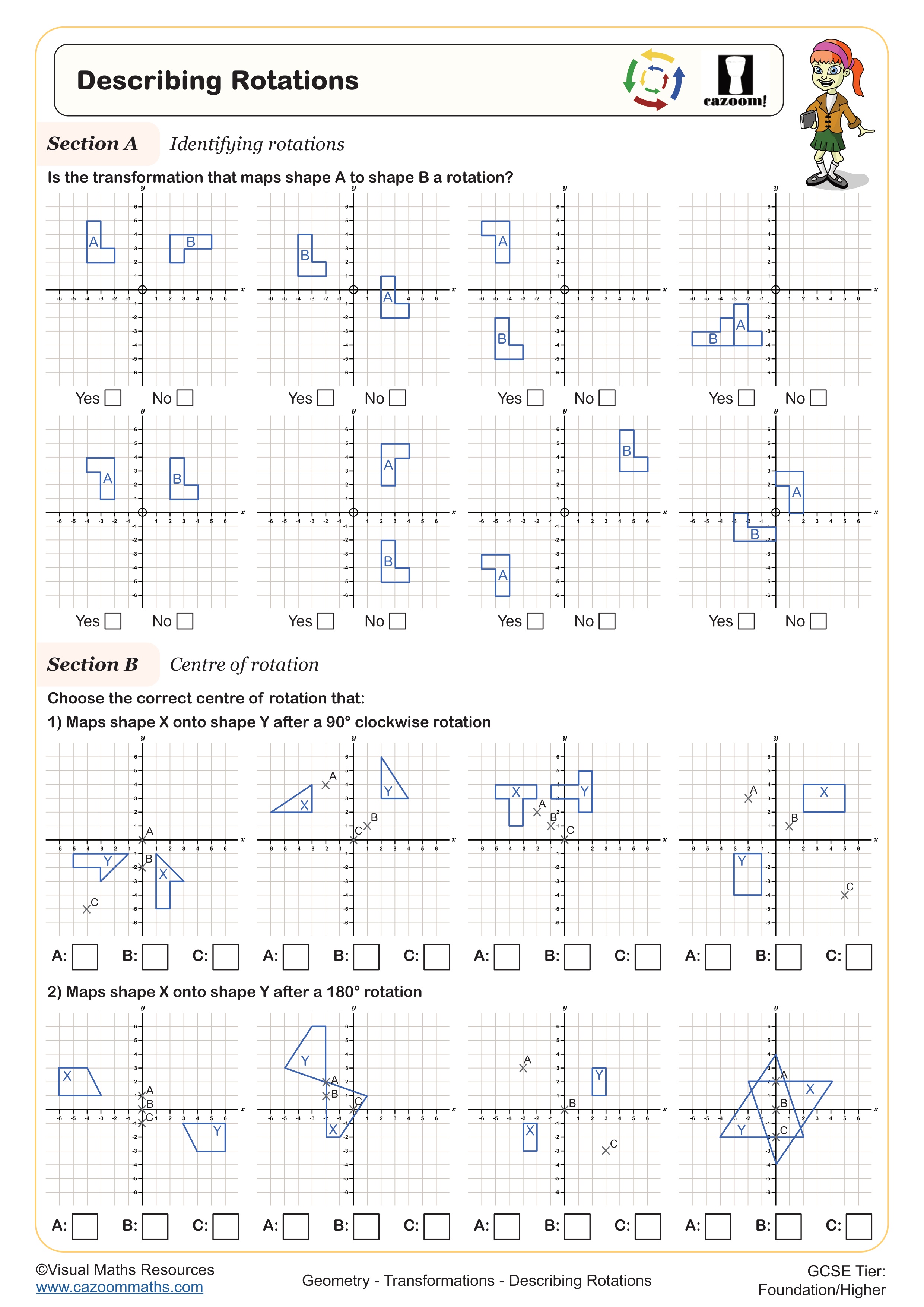
Describing Rotations
Year groups: 9, 10
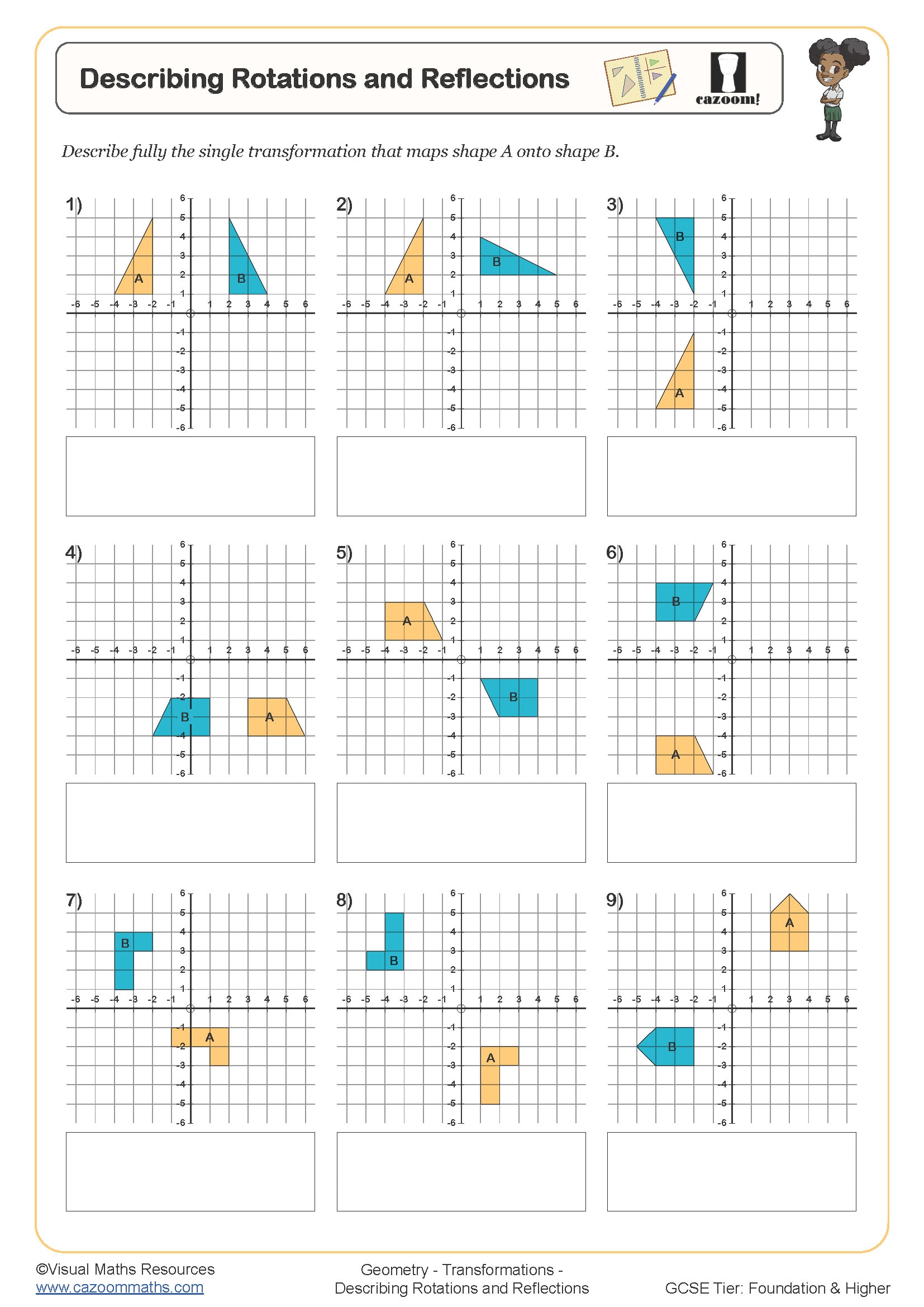
Describing Rotations and Reflections
Year groups: 9, 10, 11
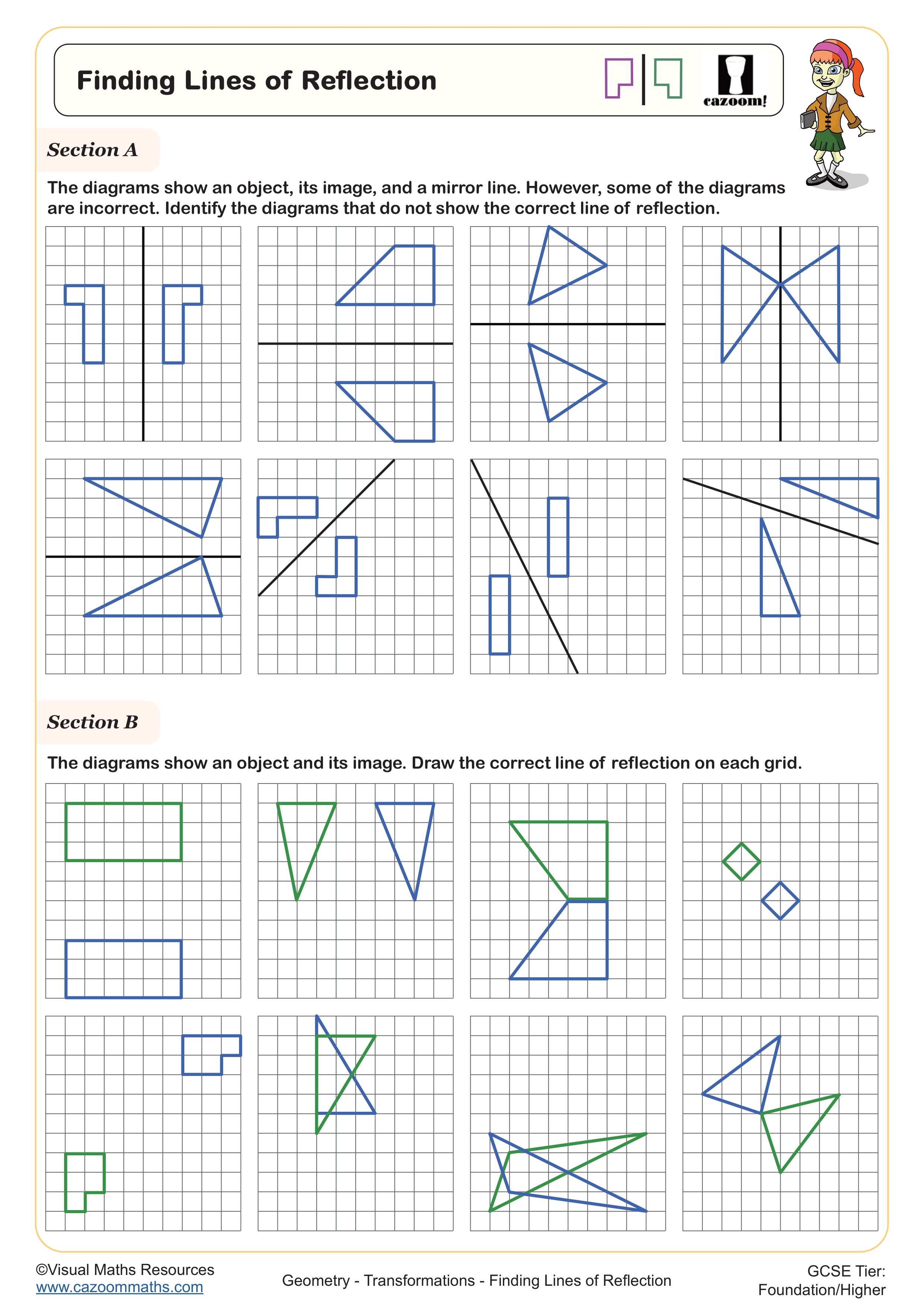
Finding Lines of Reflection
Year groups: 9, 10
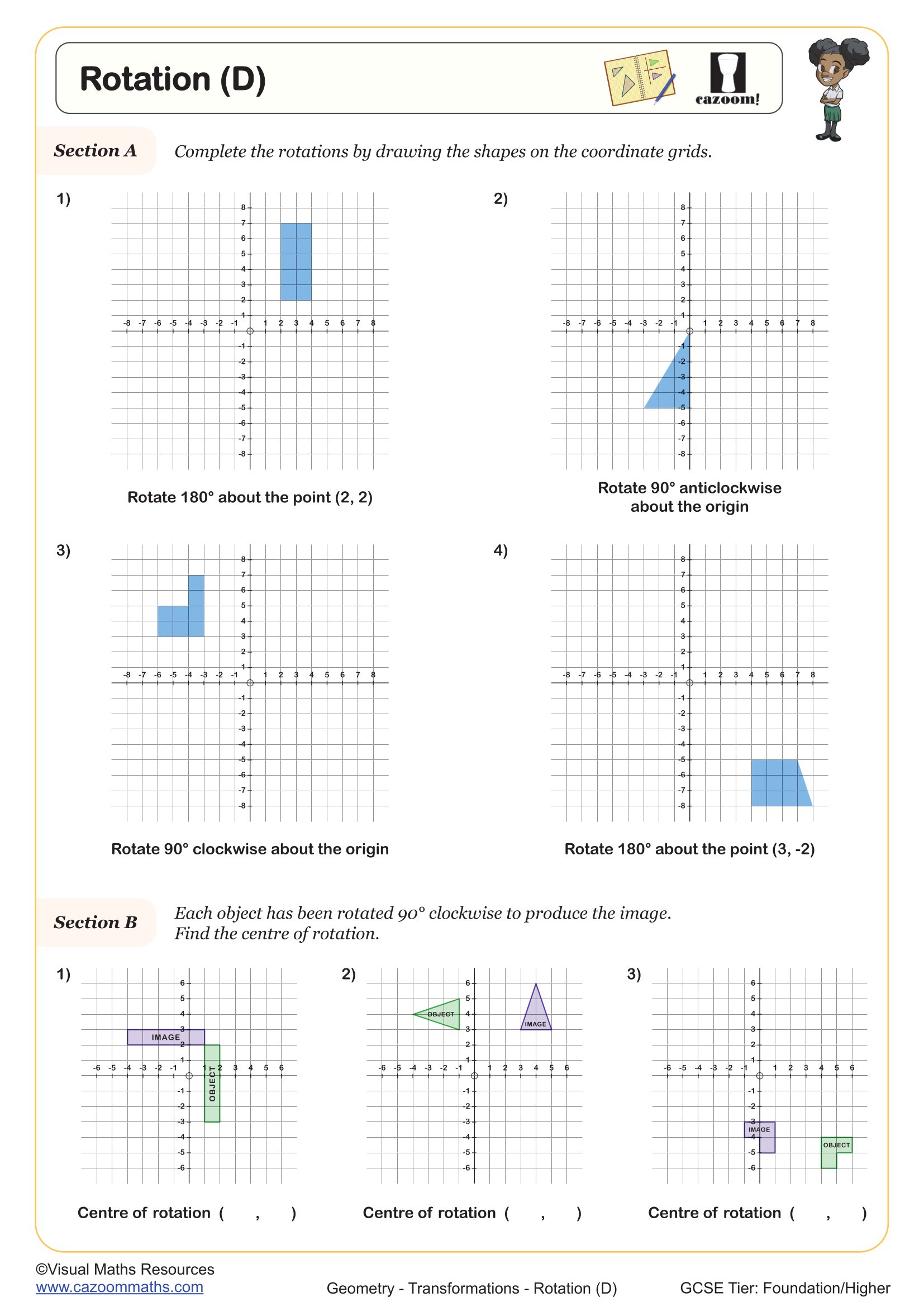
Rotation (D)
Year groups: 9, 10, 11
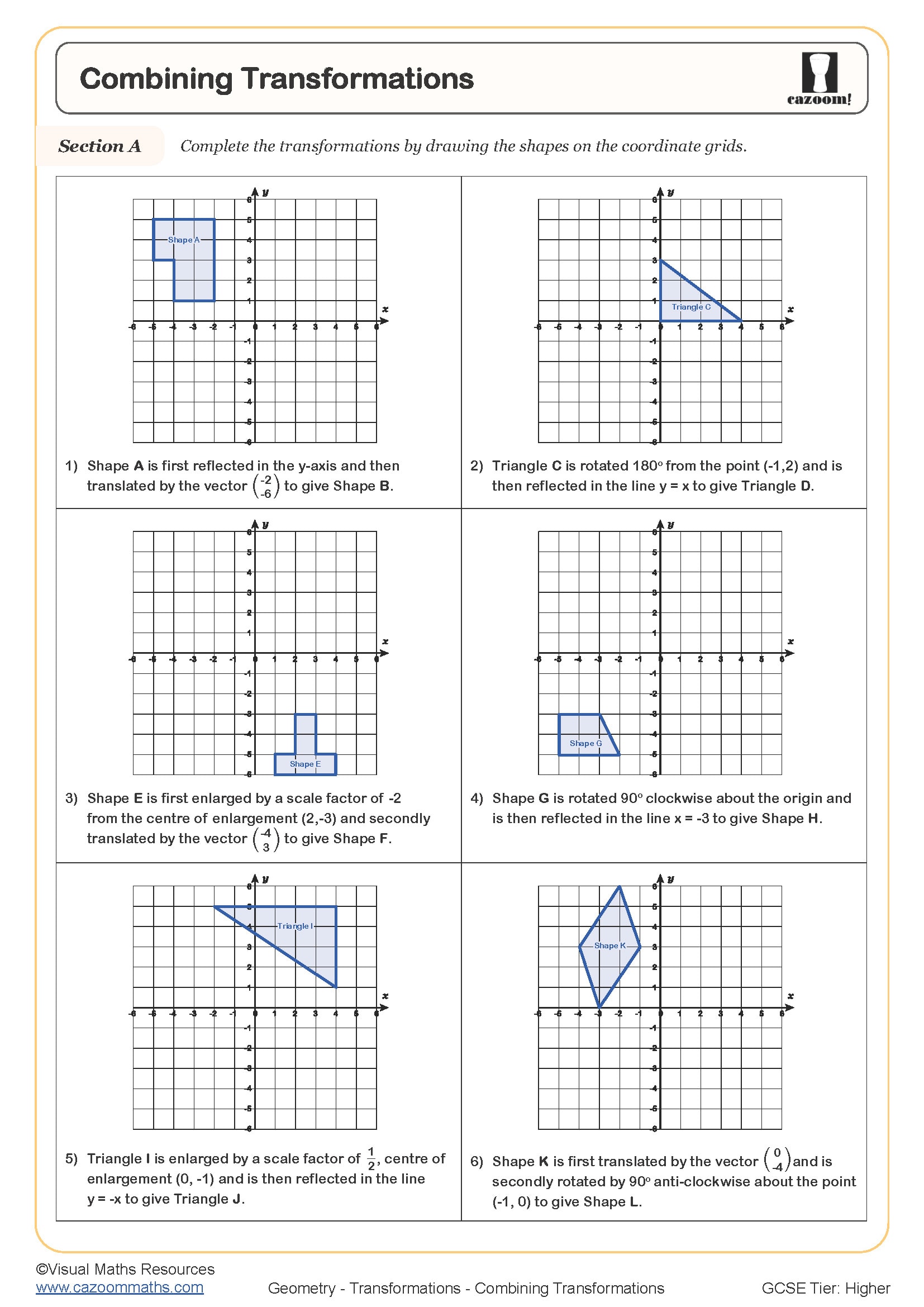
Combining Transformations
Year groups: 10, 11
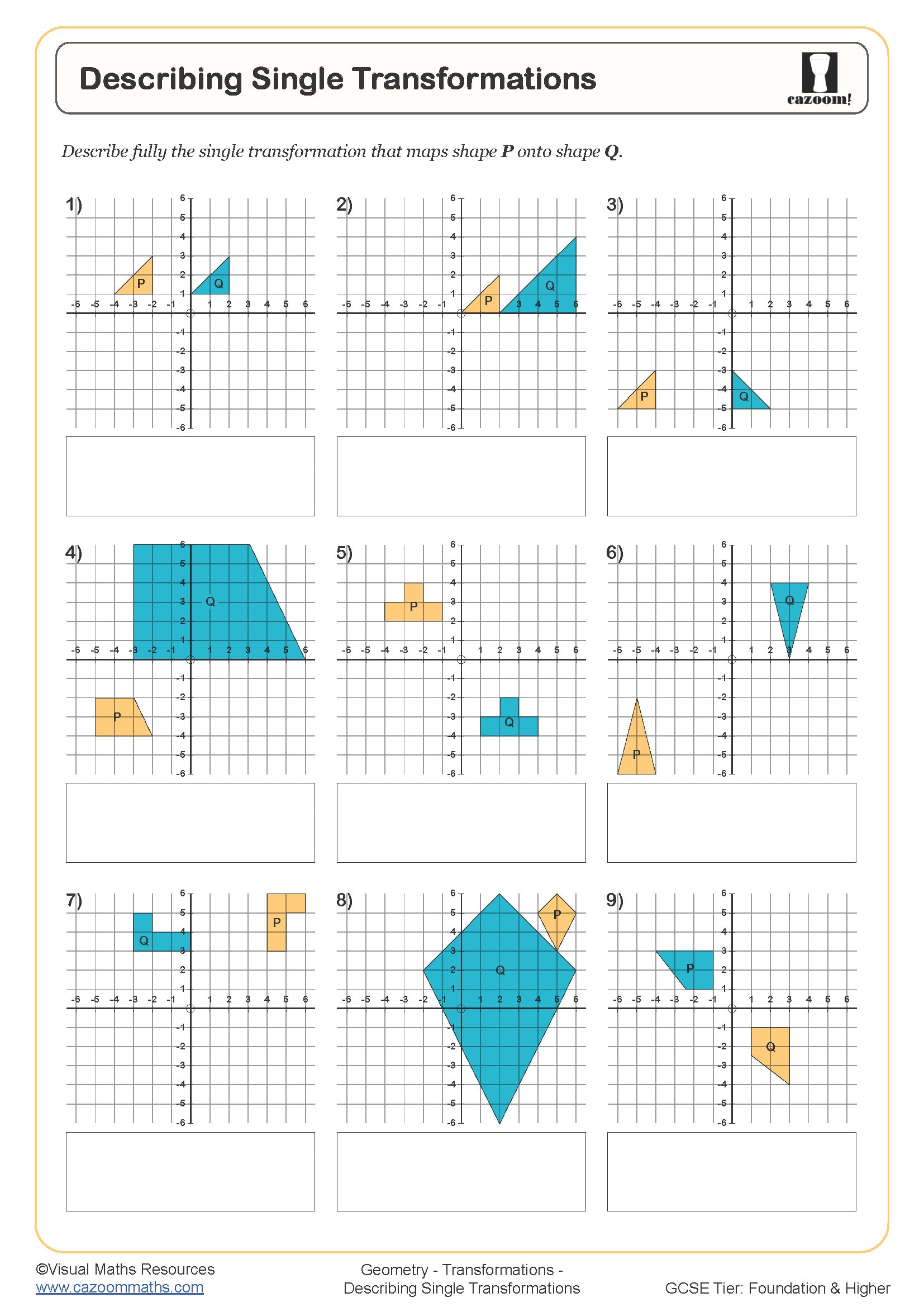
Describing Single Transformations
Year groups: 10, 11
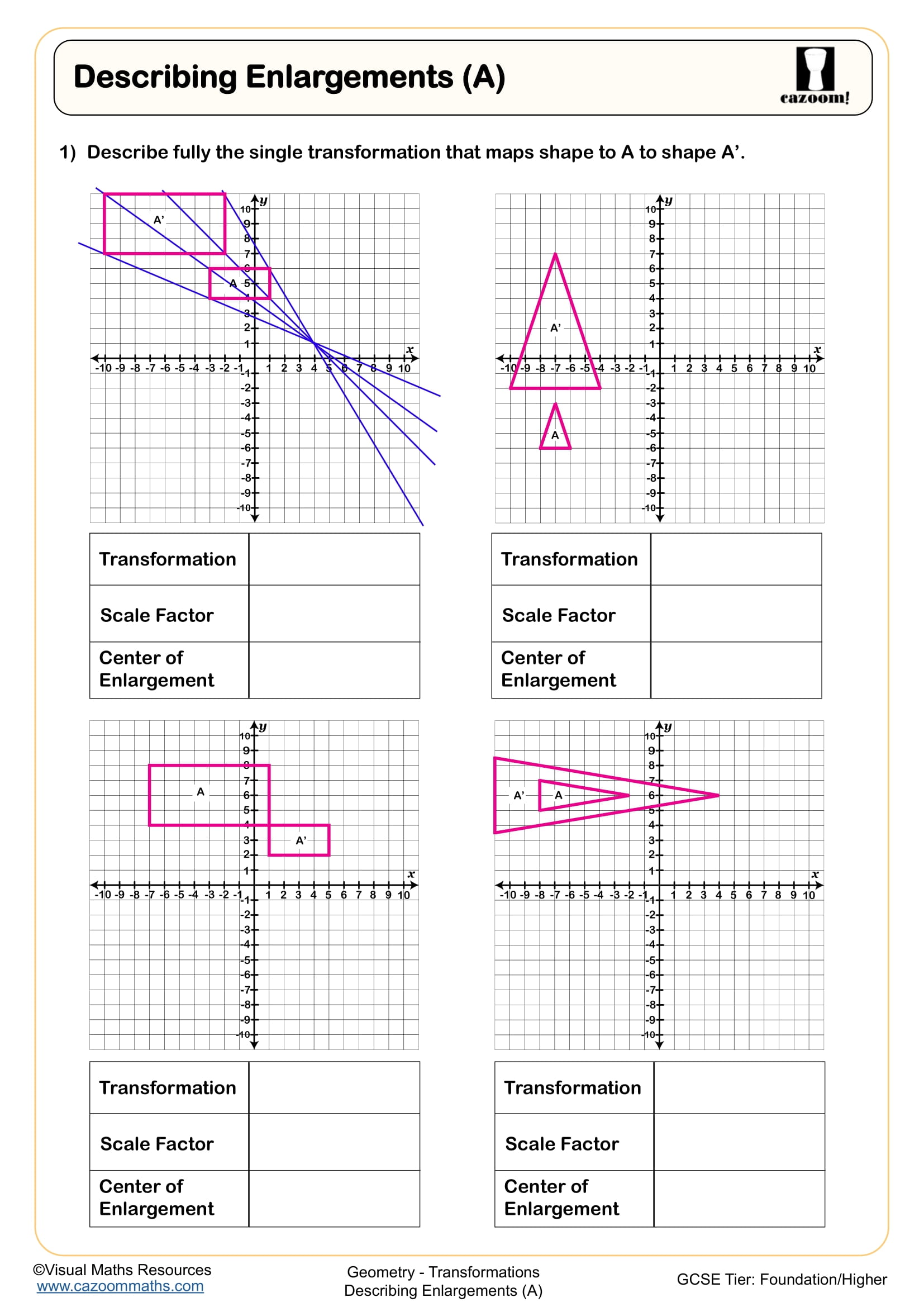
Describing Enlargements (A)
Year groups: 10, 11
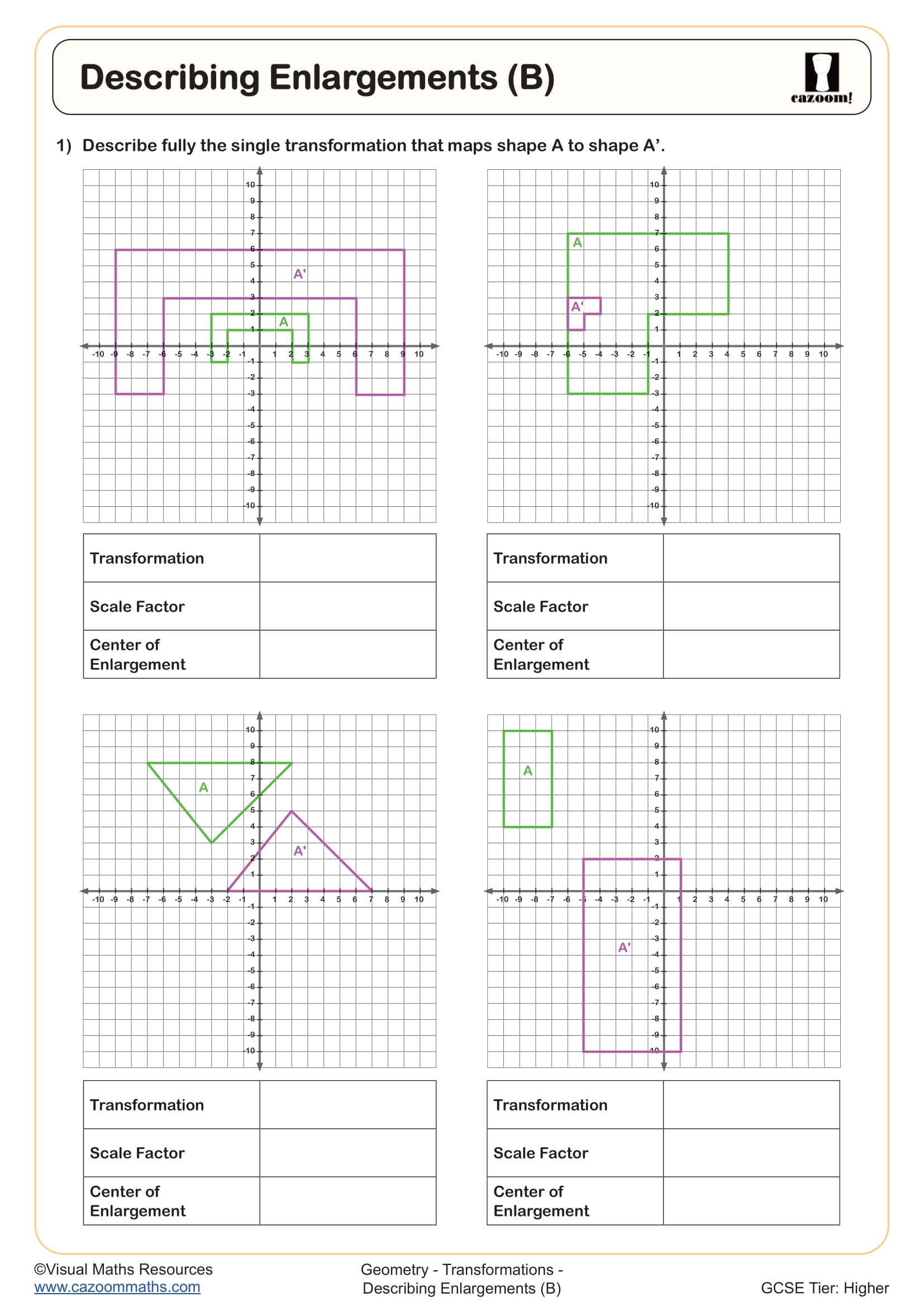
Describing Enlargements (B)
Year groups: 10, 11
Enlargement (C)
Year groups: 10, 11
-Worksheet.jpg?w=3840)
Enlargement with Fractional Negative Scale Factors
Year groups: 10, 11
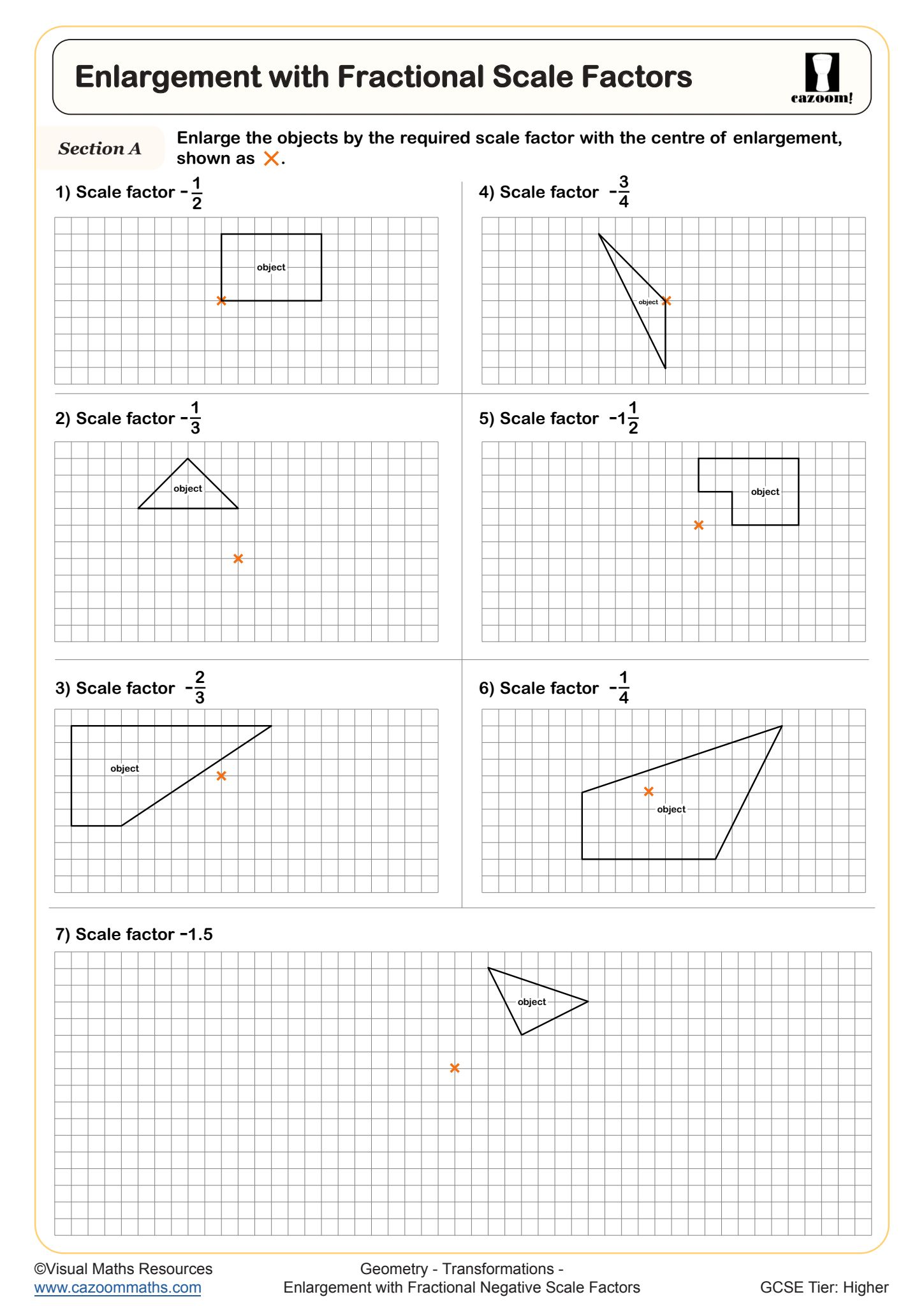
Enlargement with Fractional Scale Factors (A)
Year groups: 10, 11
-Worksheet.jpg?w=3840)
Enlargement with Fractional Scale Factors (B)
Year groups: 10, 11
-Worksheet.jpg?w=3840)
Enlargement with Negative Scale Factors
Year groups: 10, 11
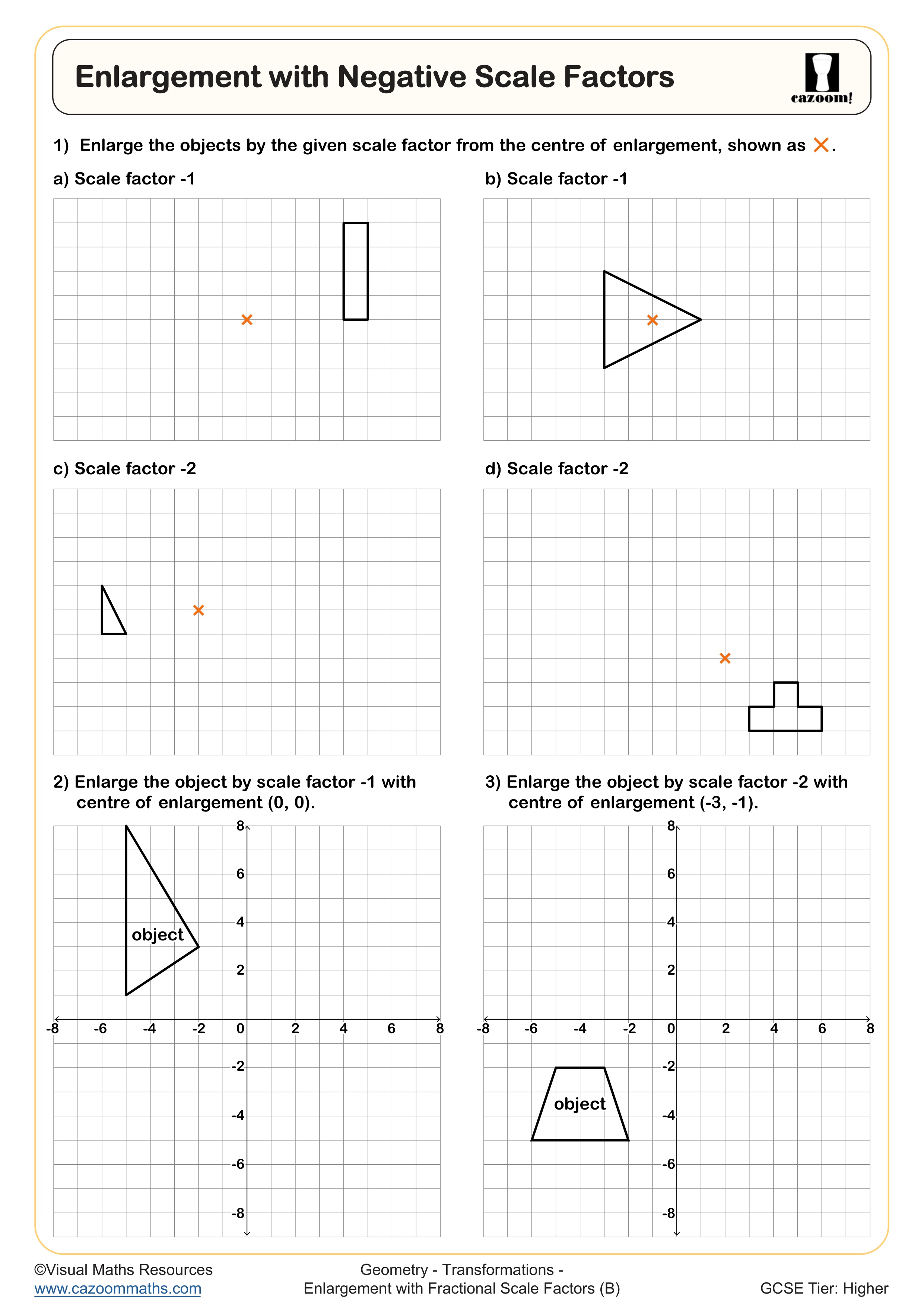
Enlargements on Axes
Year groups: 10, 11
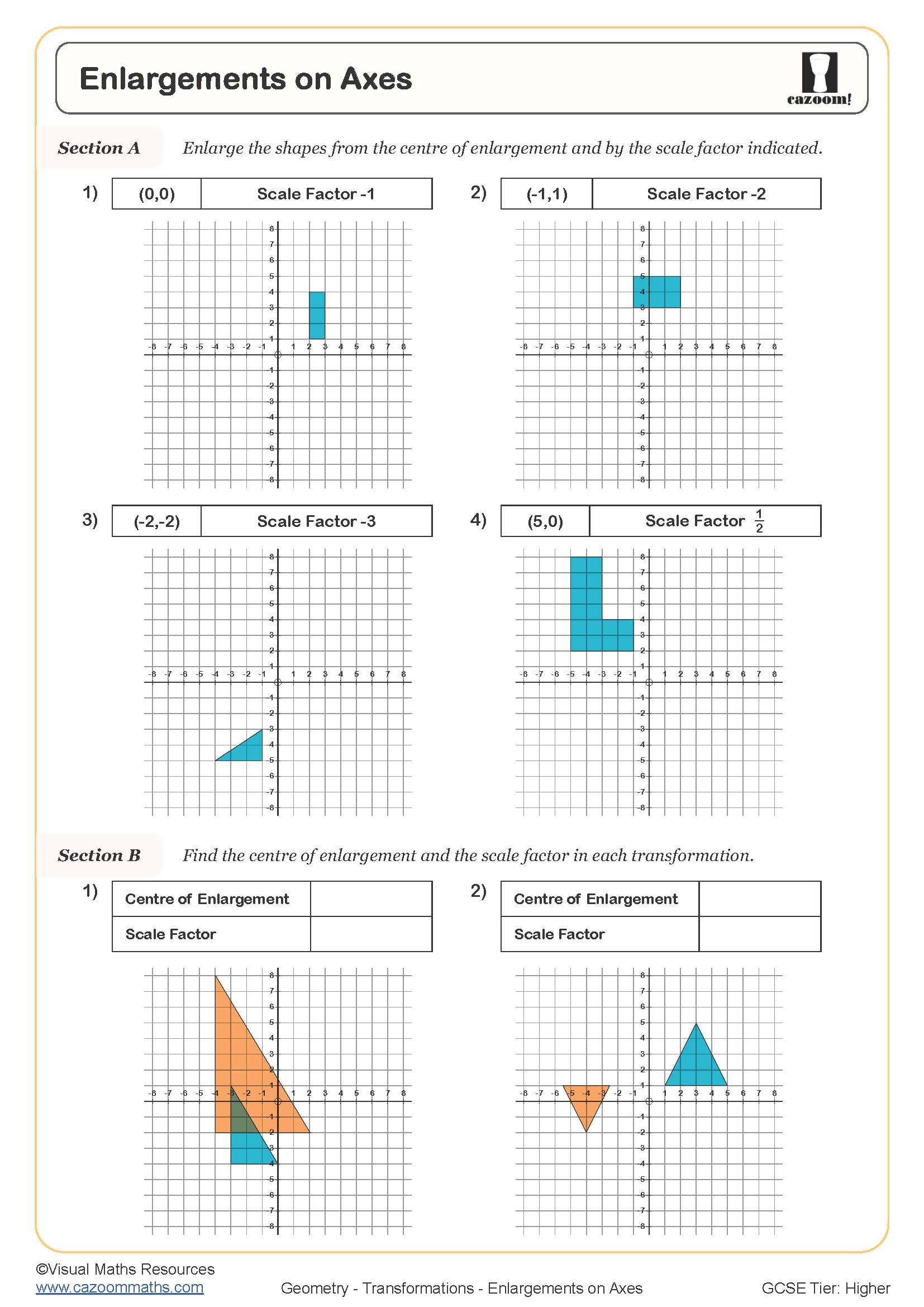
Enlargements Using Column Vectors
Year groups: 10, 11
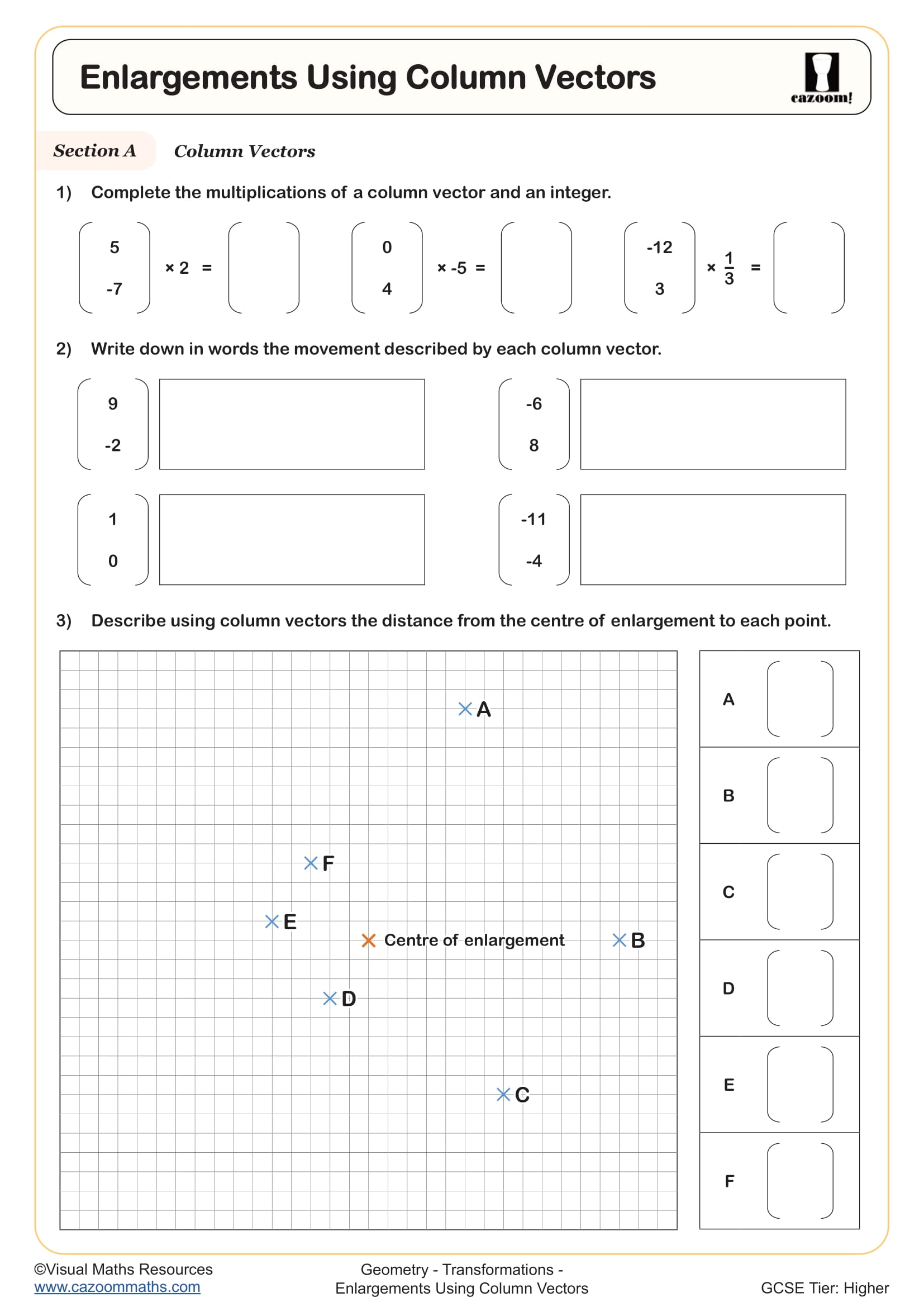
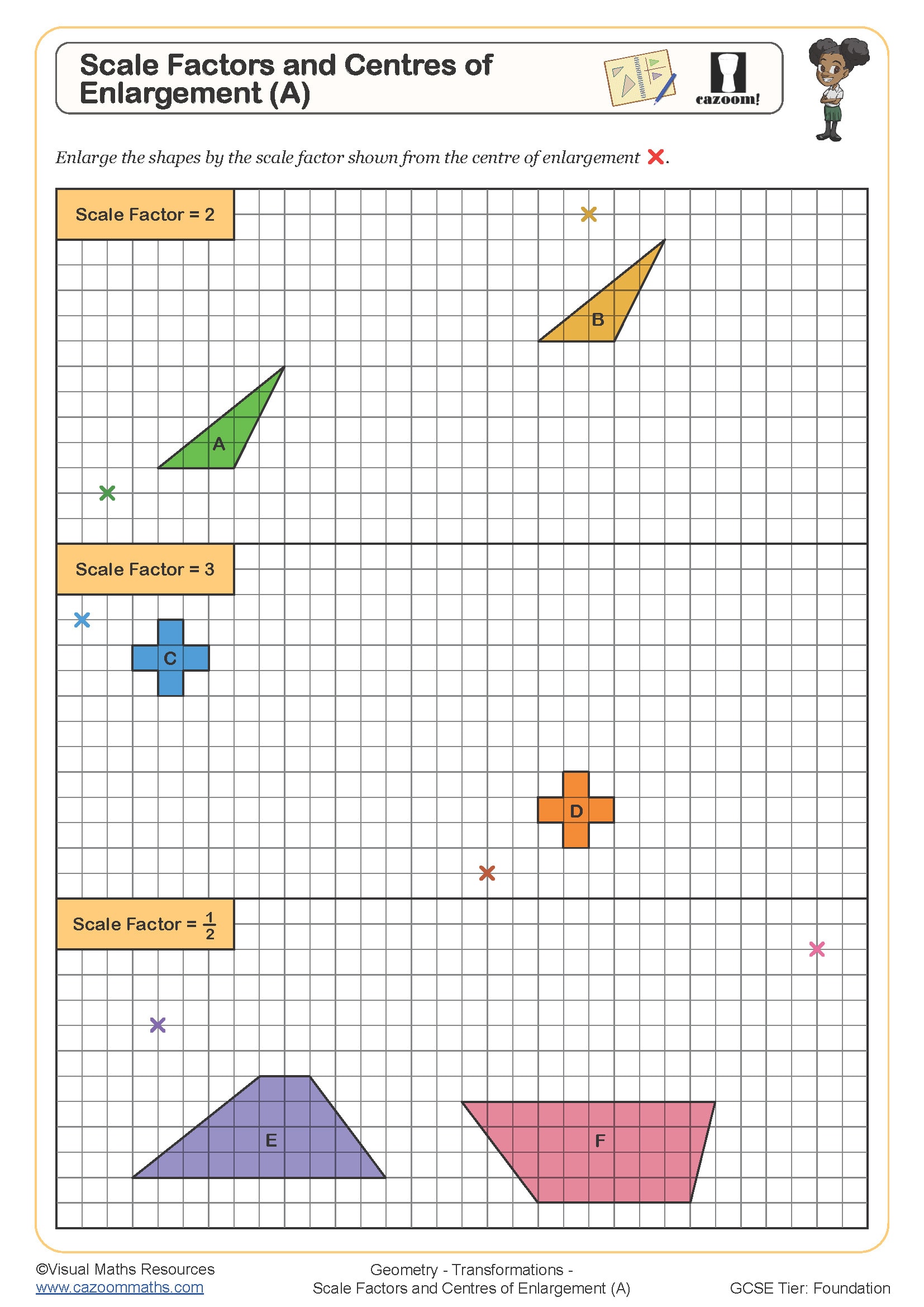
Scale Factors and Centres of Enlargement (A)
Year groups: 10, 11
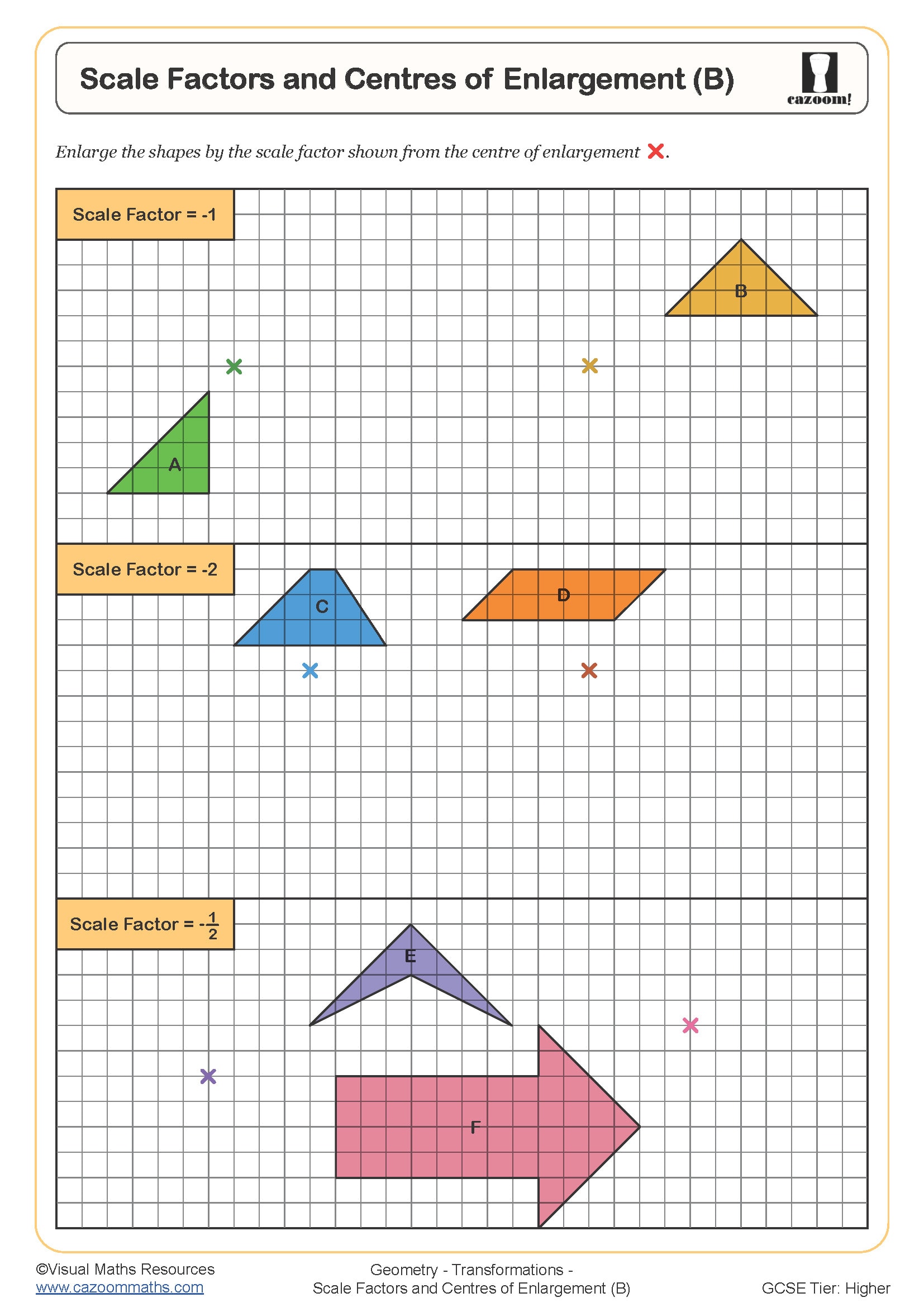
Scale Factors and Centres of Enlargement (B)
Year groups: 10, 11
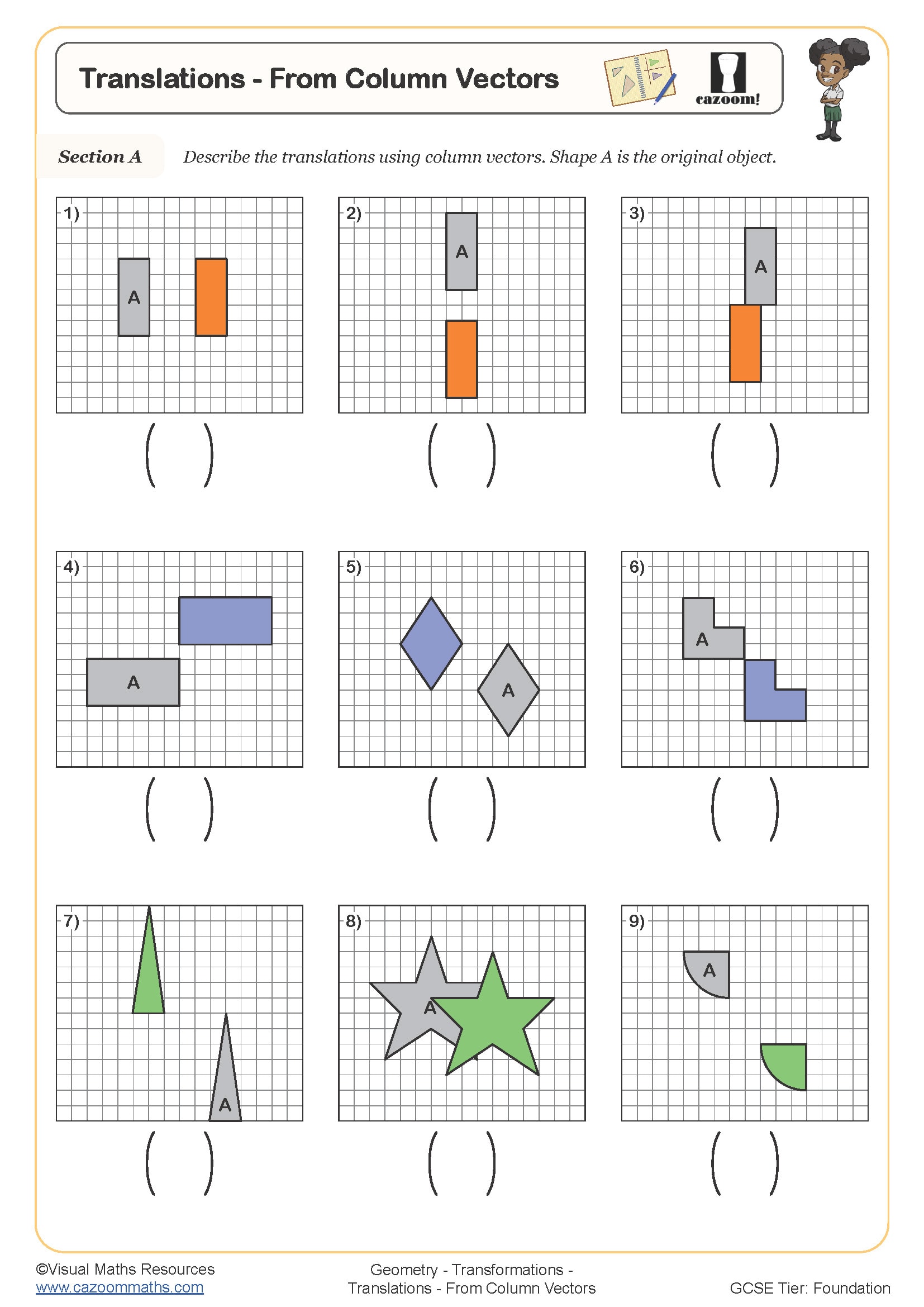
Translations - from Column Vectors
Year groups: 10, 11
All worksheets are created by the team of experienced teachers at Cazoom Maths.
What should students focus on when using a describing transformations worksheet?
Students need to develop precise mathematical vocabulary when describing transformations, specifying the type of transformation and all necessary details like direction, magnitude and fixed points. This skill directly supports GCSE requirements where marks are frequently lost for incomplete descriptions.
Teachers often observe that students can perform transformations but struggle to describe them systematically. For example, they might correctly rotate a shape 90° clockwise about the origin but describe it as 'turned to the right', missing the specific angle and centre of rotation that examiners expect.
Which year groups benefit most from transformations worksheets?
Transformations appear throughout KS3 (Years 7-9) and continue into GCSE level, with complexity increasing as students progress. Year 7 typically focuses on basic translations and reflections, while Year 8 introduces rotations and enlargements with positive scale factors.
By Year 9 and into GCSE, students tackle negative scale factors, combined transformations, and describing transformations from coordinate grids. Teachers find that regular practice across all year groups prevents the knowledge gaps that often emerge when students reach more advanced transformation problems in their GCSE examinations.
How do enlargement worksheets help students understand scale factors?
Enlargement worksheets systematically introduce scale factors, starting with positive integers before progressing to fractional and negative scale factors. Students learn to identify the centre of enlargement and calculate how coordinates change under different scale factors.
Many students initially assume enlargement always makes shapes bigger, creating confusion when they encounter scale factors between 0 and 1, or negative scale factors. Structured worksheet practice helps them understand that 'enlargement' is the mathematical term regardless of whether the image is larger or smaller than the original object.
How can teachers use transformation worksheet PDFs with answers effectively?
The included answer sheets make these transformation worksheets particularly valuable for peer assessment and self-marking activities. Students can check their own work immediately, identifying errors in their transformation techniques or descriptions before misconceptions become embedded.
Teachers find that projecting the answers during lessons creates opportunities for whole-class discussion about common errors. This approach works especially well when students compare their descriptions of the same transformation, highlighting the importance of mathematical precision in their written explanations.