Trigonometry Worksheets
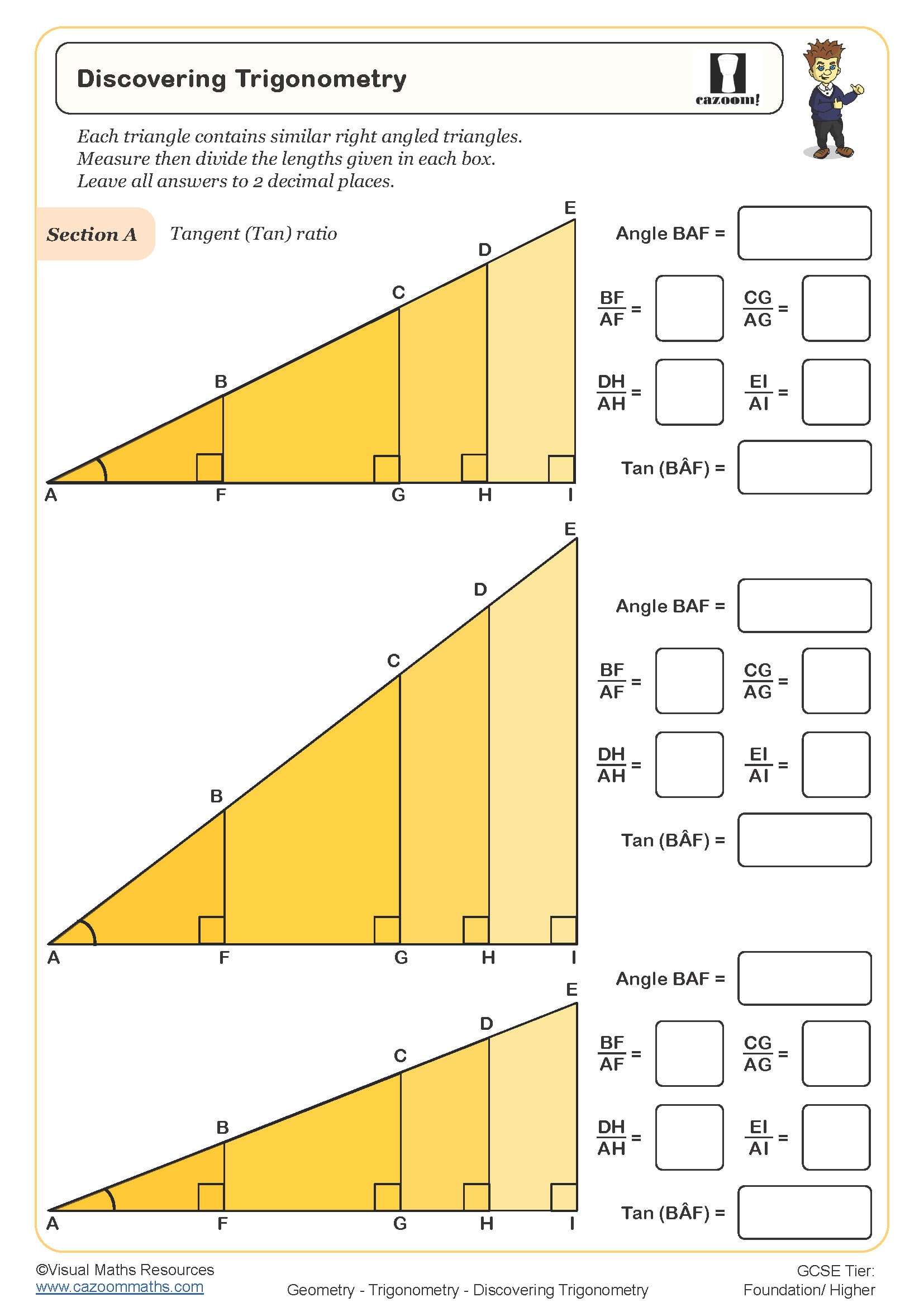
Discovering Trigonometry (Investigation)
Year groups: 8, 9
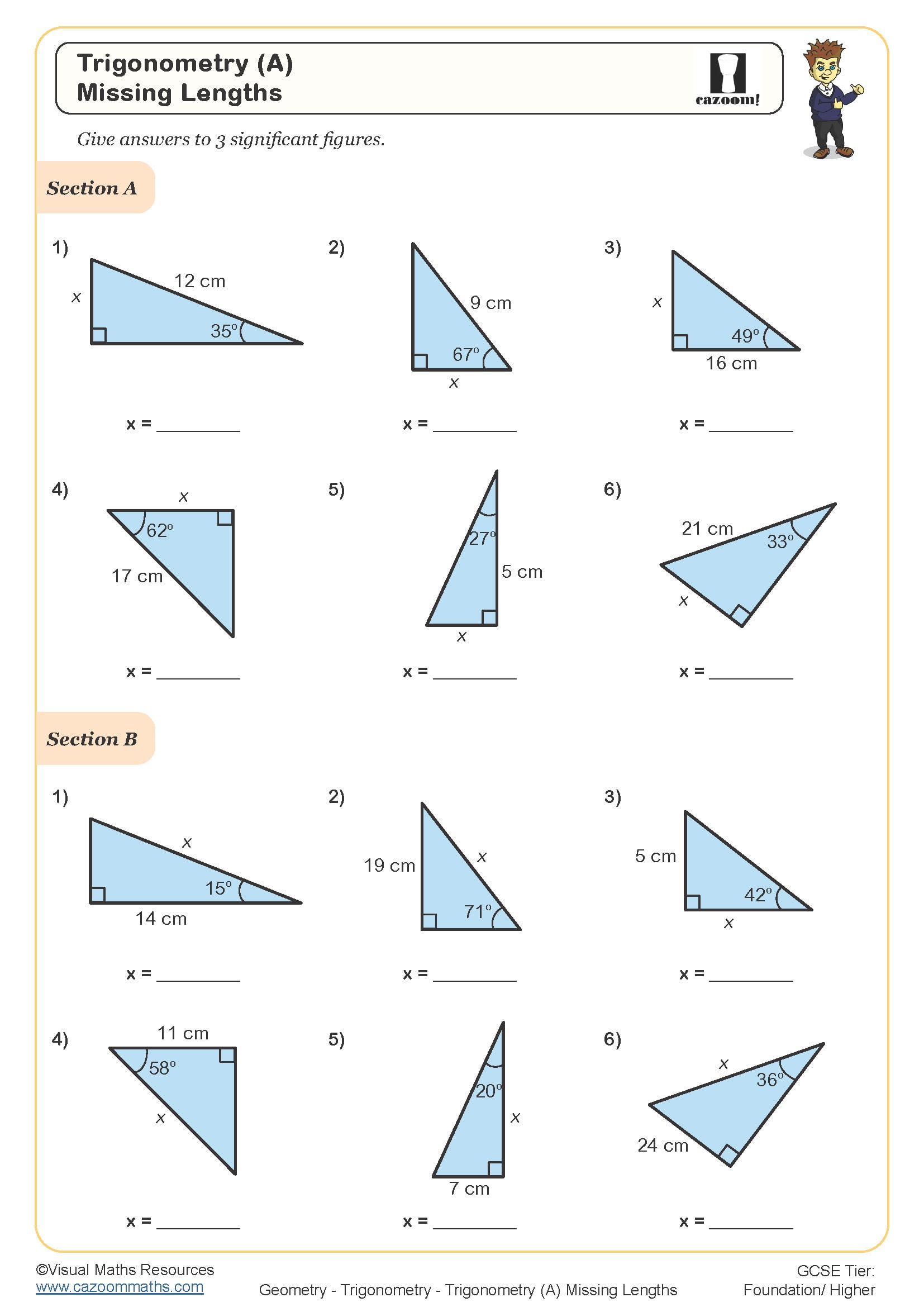
Trigonometry (A) Missing Lengths
Year groups: 8, 9
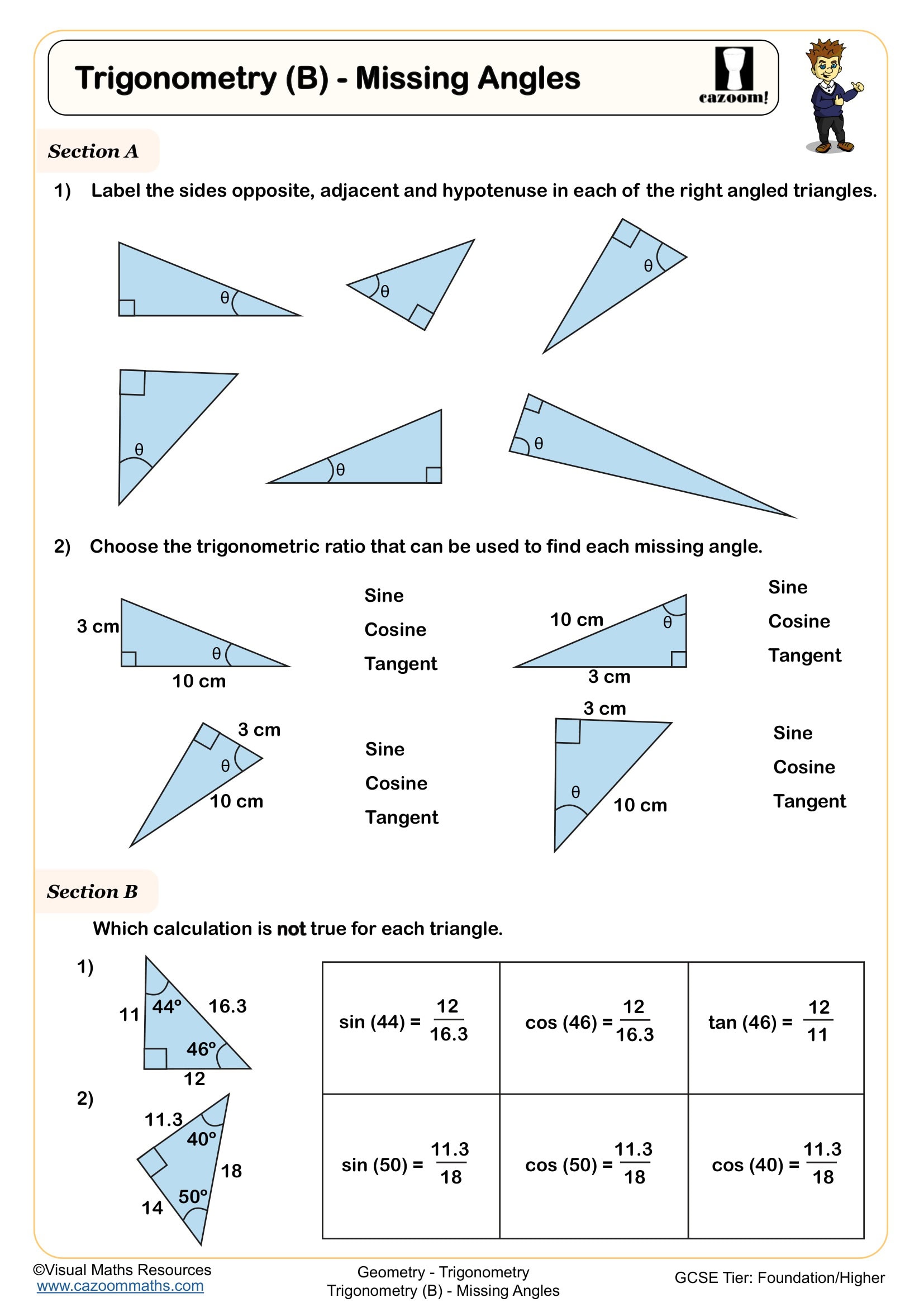
Trigonometry (B) - Missing Angles
Year groups: 8, 9
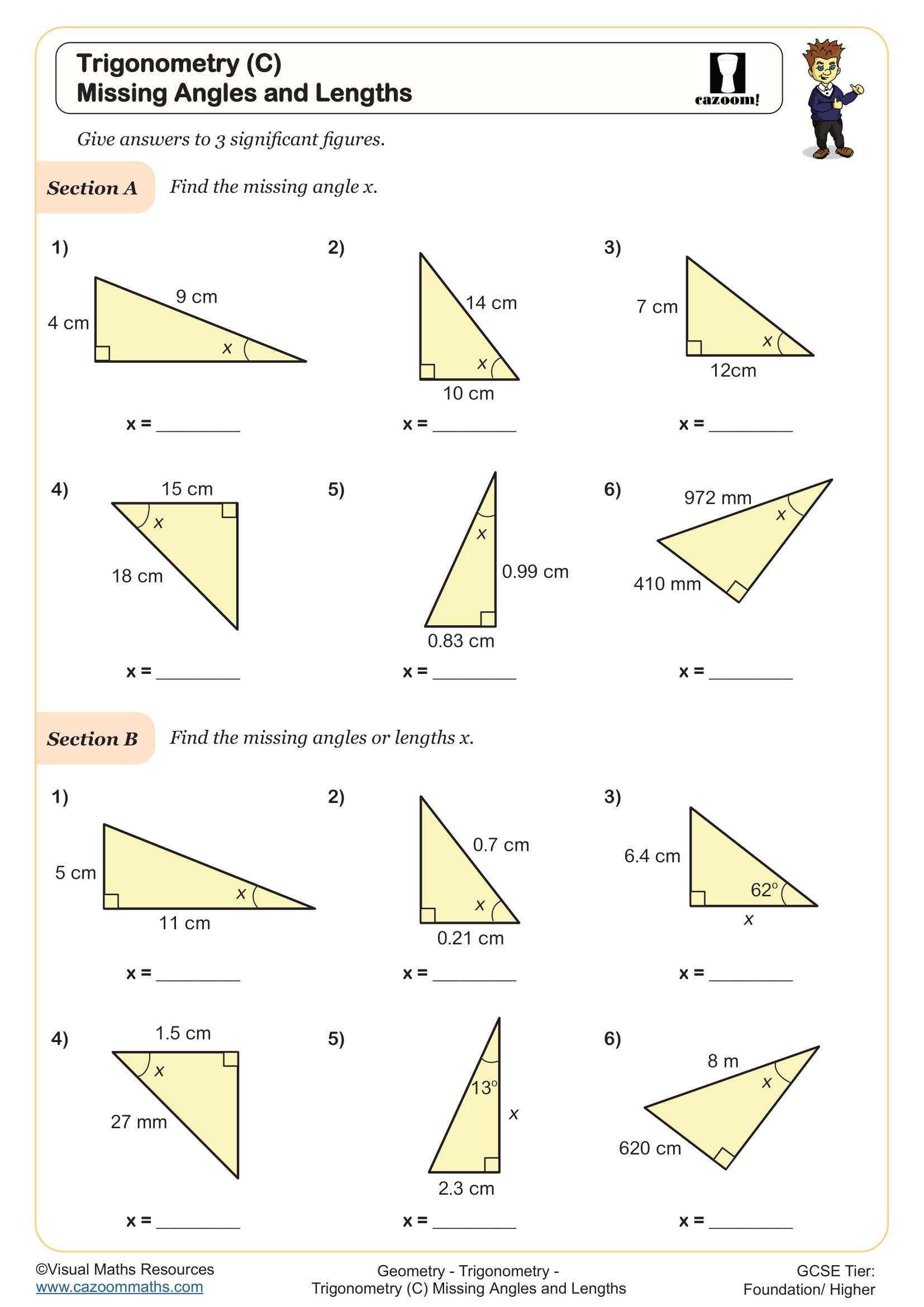
Trigonometry (C) Missing Angles and Lengths
Year groups: 8, 9
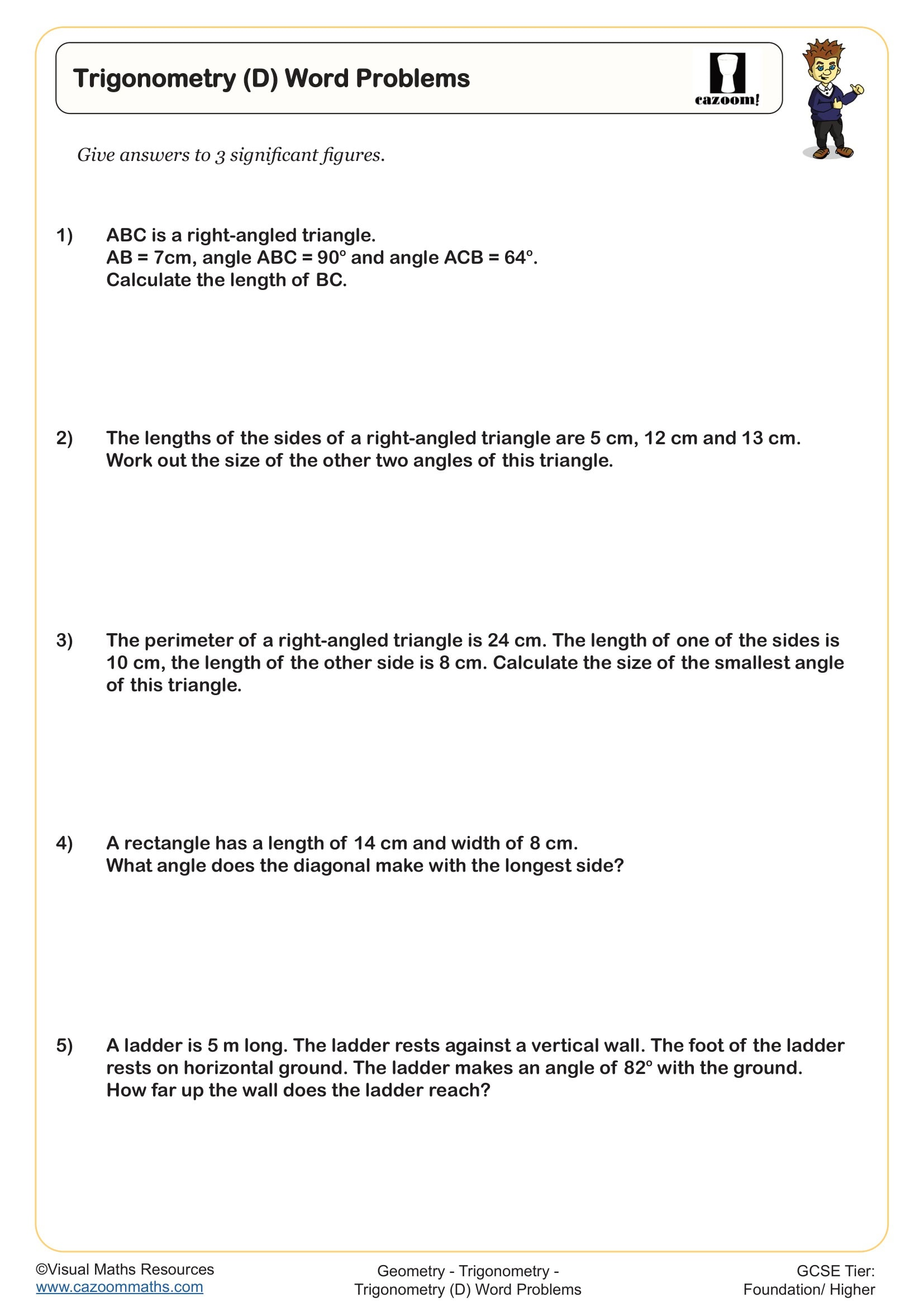
Trigonometry (D) Word Problems
Year groups: 8, 9
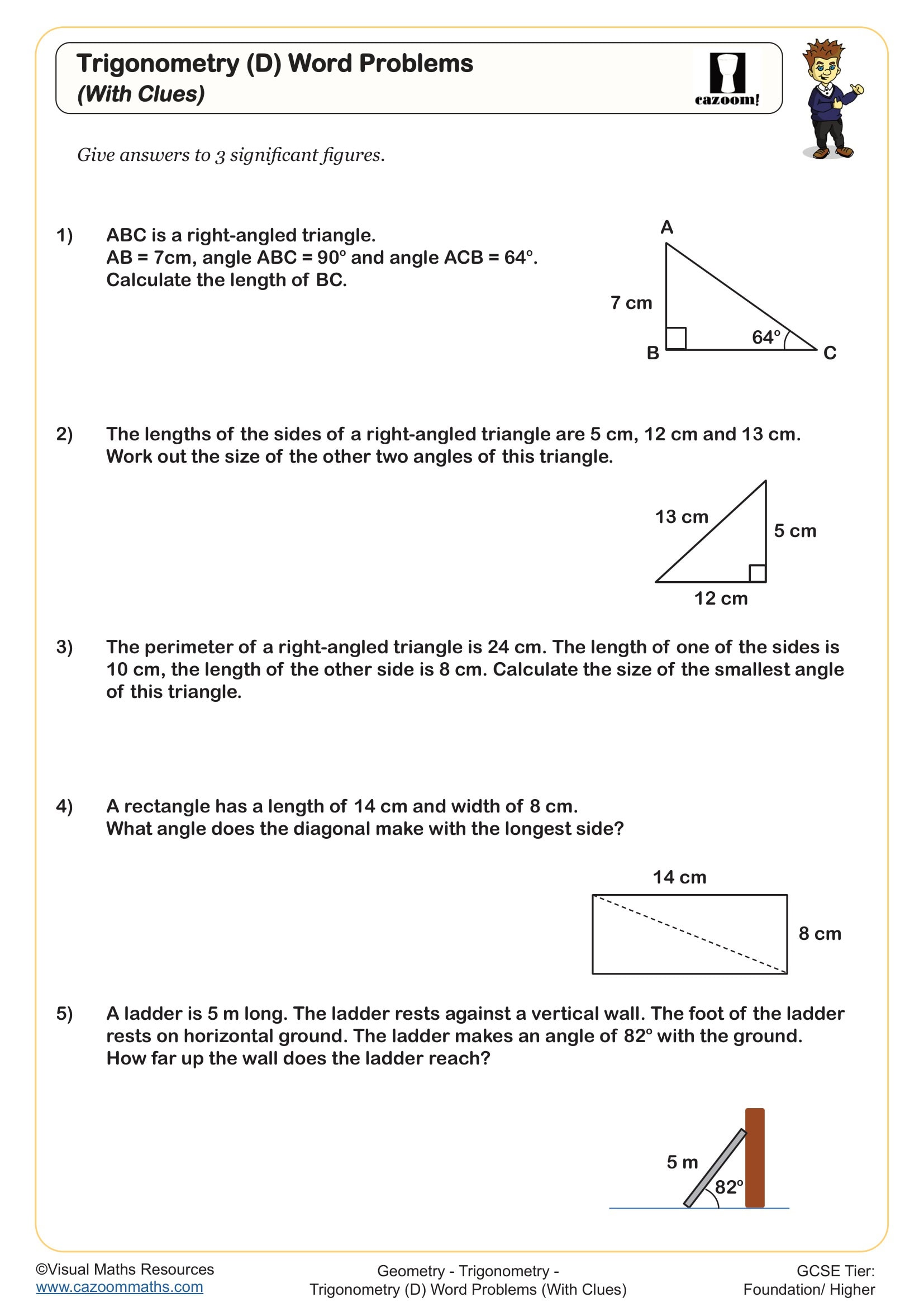
Trigonometry (D) Word Problems (With Clues)
Year groups: 8, 9
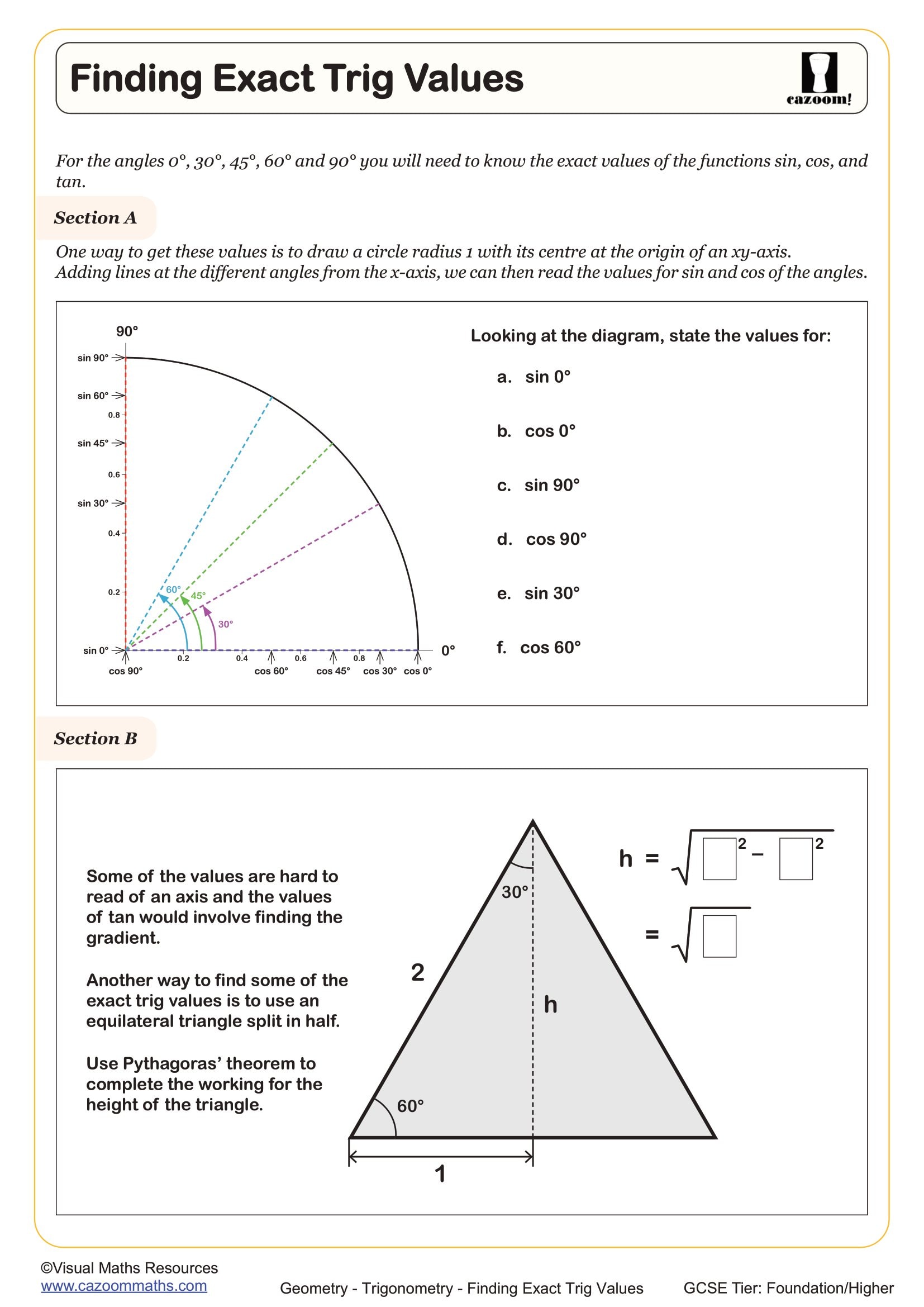
Finding Exact Trig Values
Year groups: 9, 10
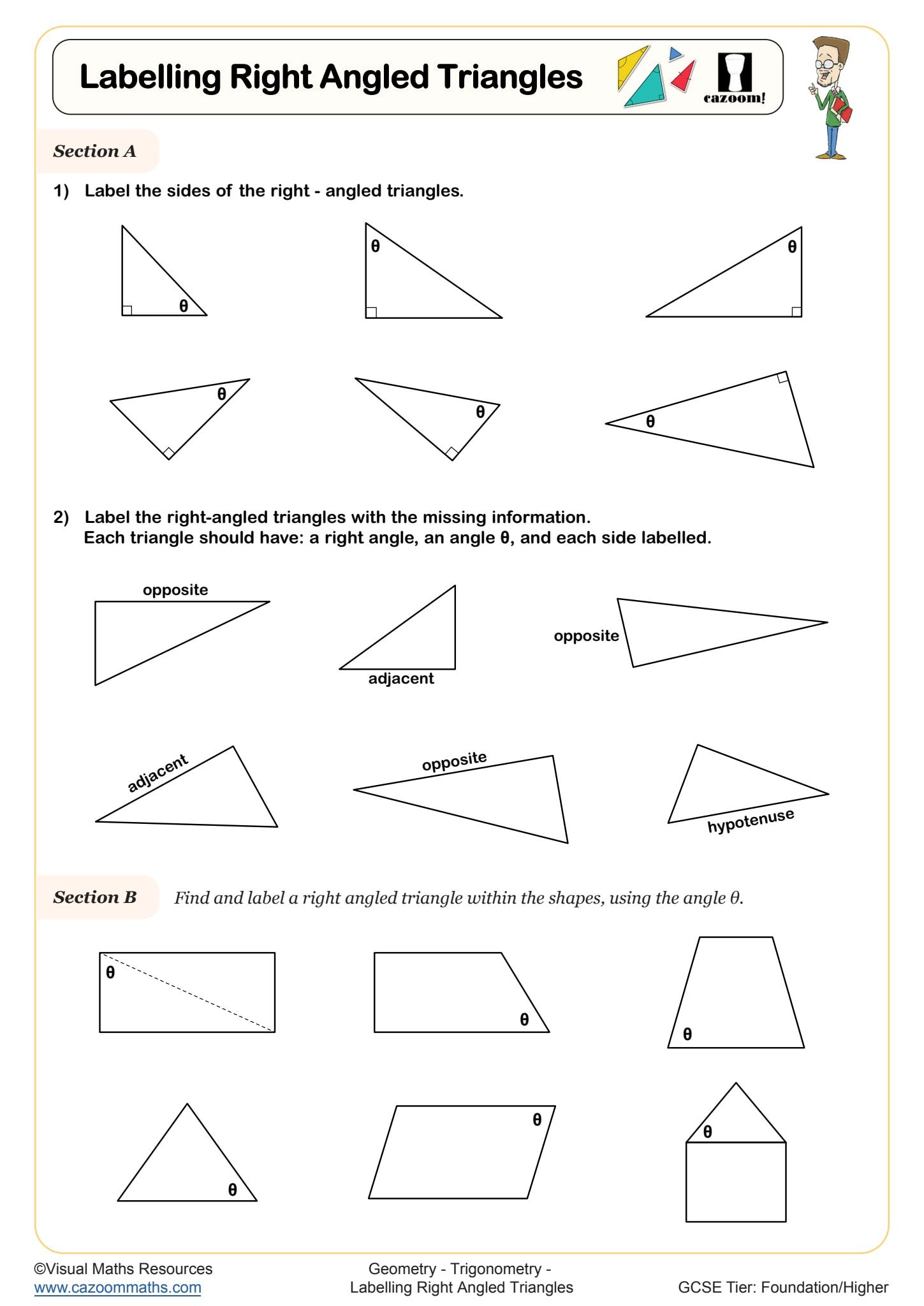
Labelling Right Angled Triangles
Year groups: 9, 10, 11
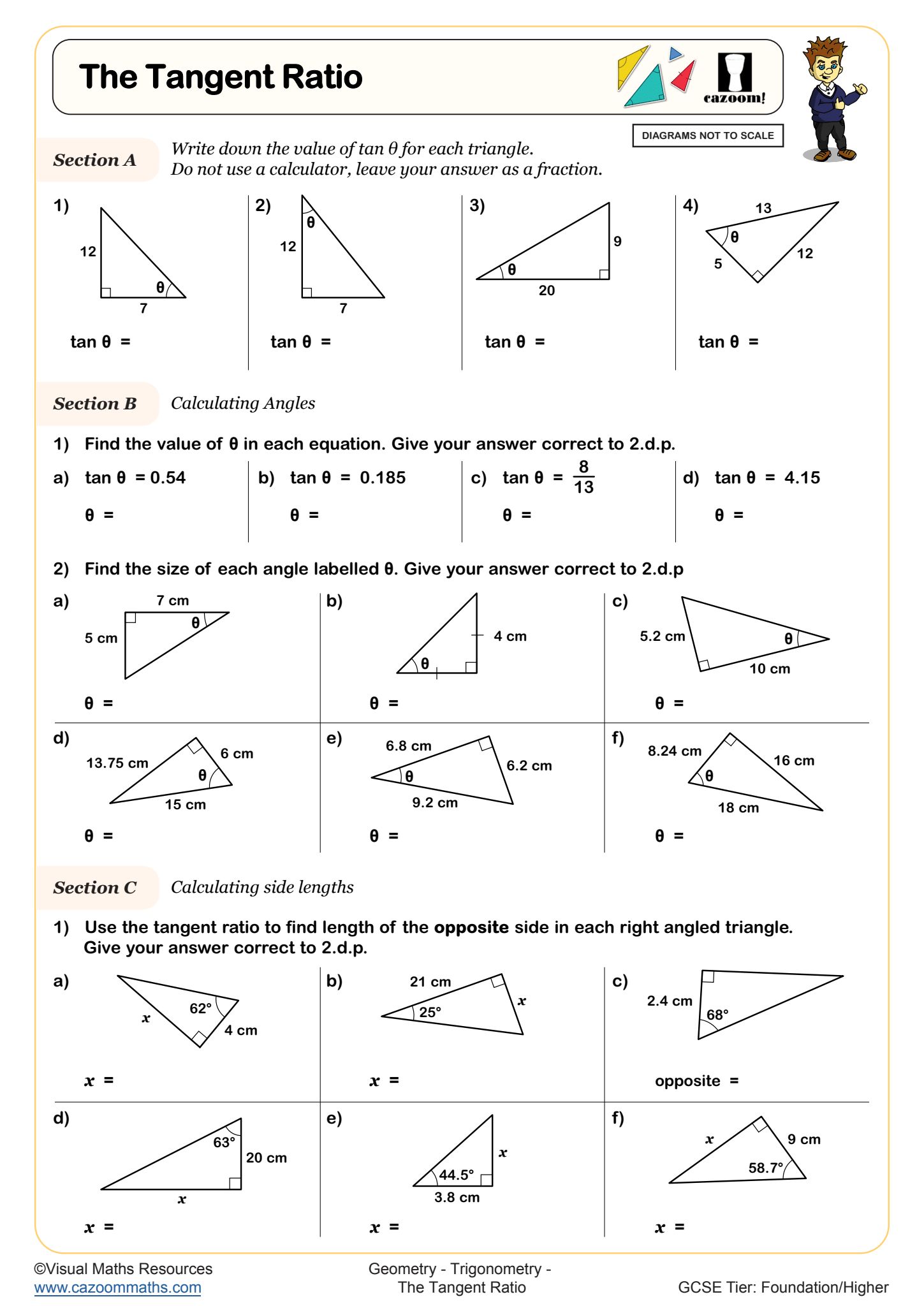
The Tangent Ratio
Year groups: 9, 10, 11
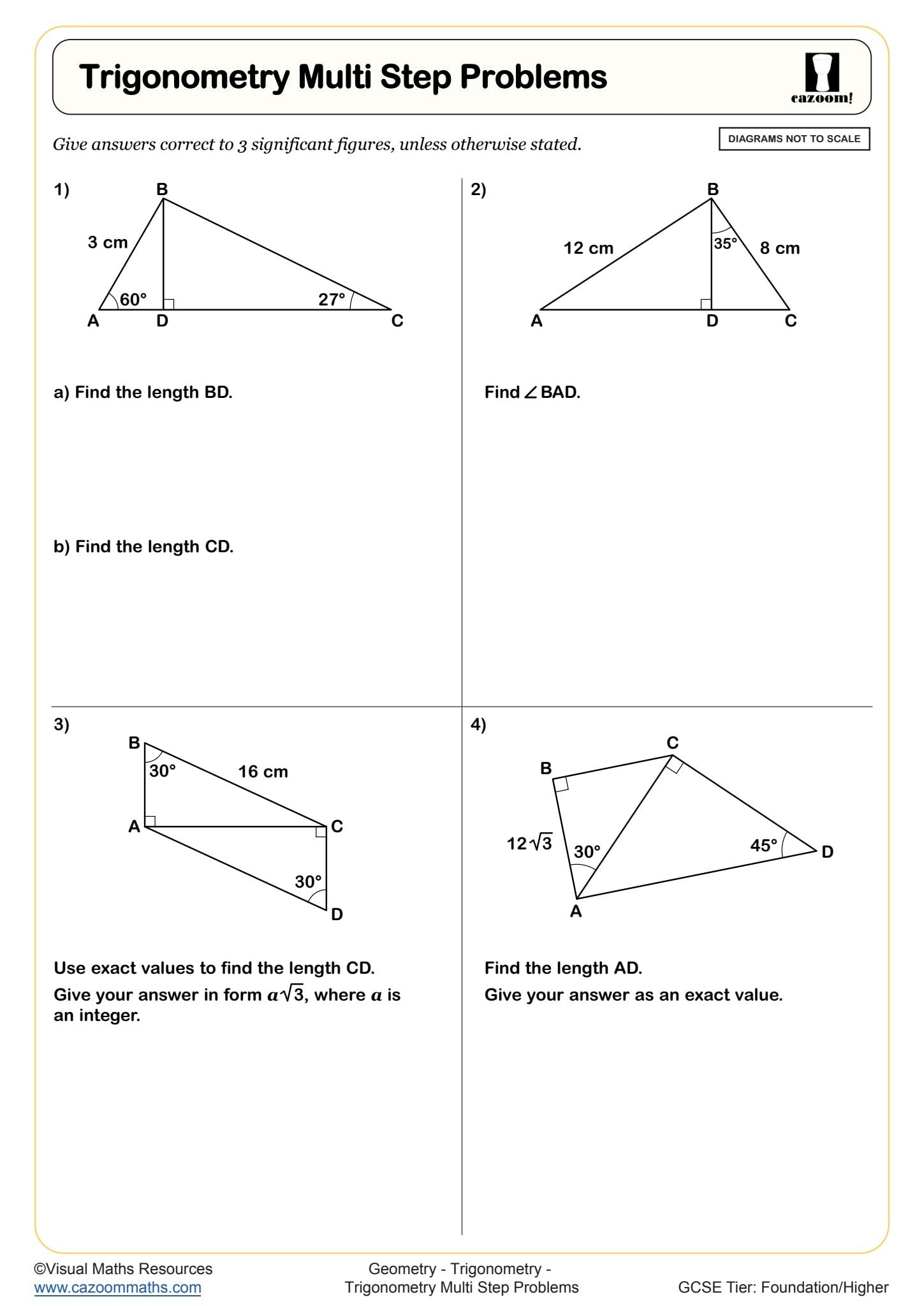
Trigonometry Multi Step Problems
Year groups: 9, 10, 11
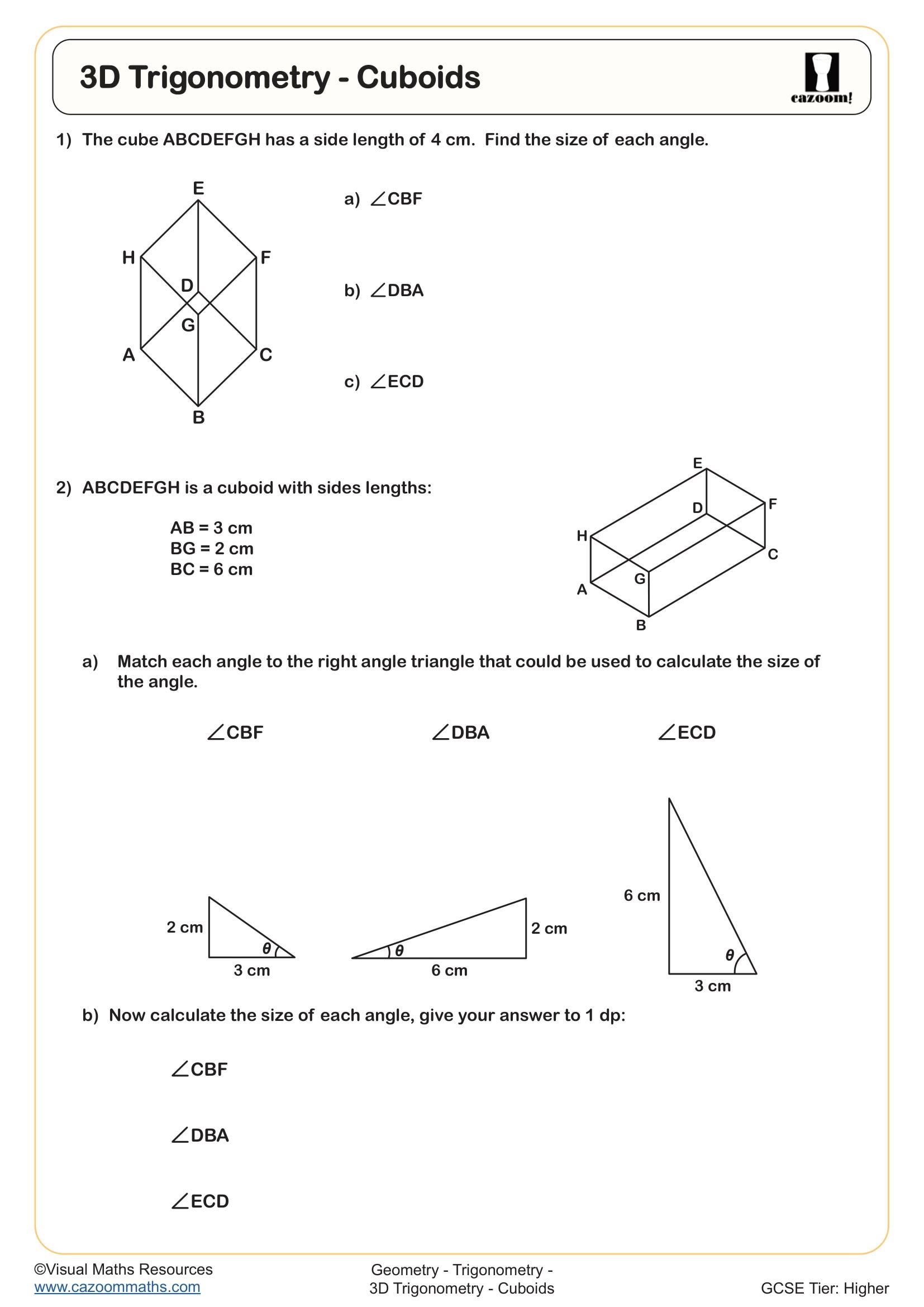
3D Trigonometry - Cuboids
Year groups: 10, 11
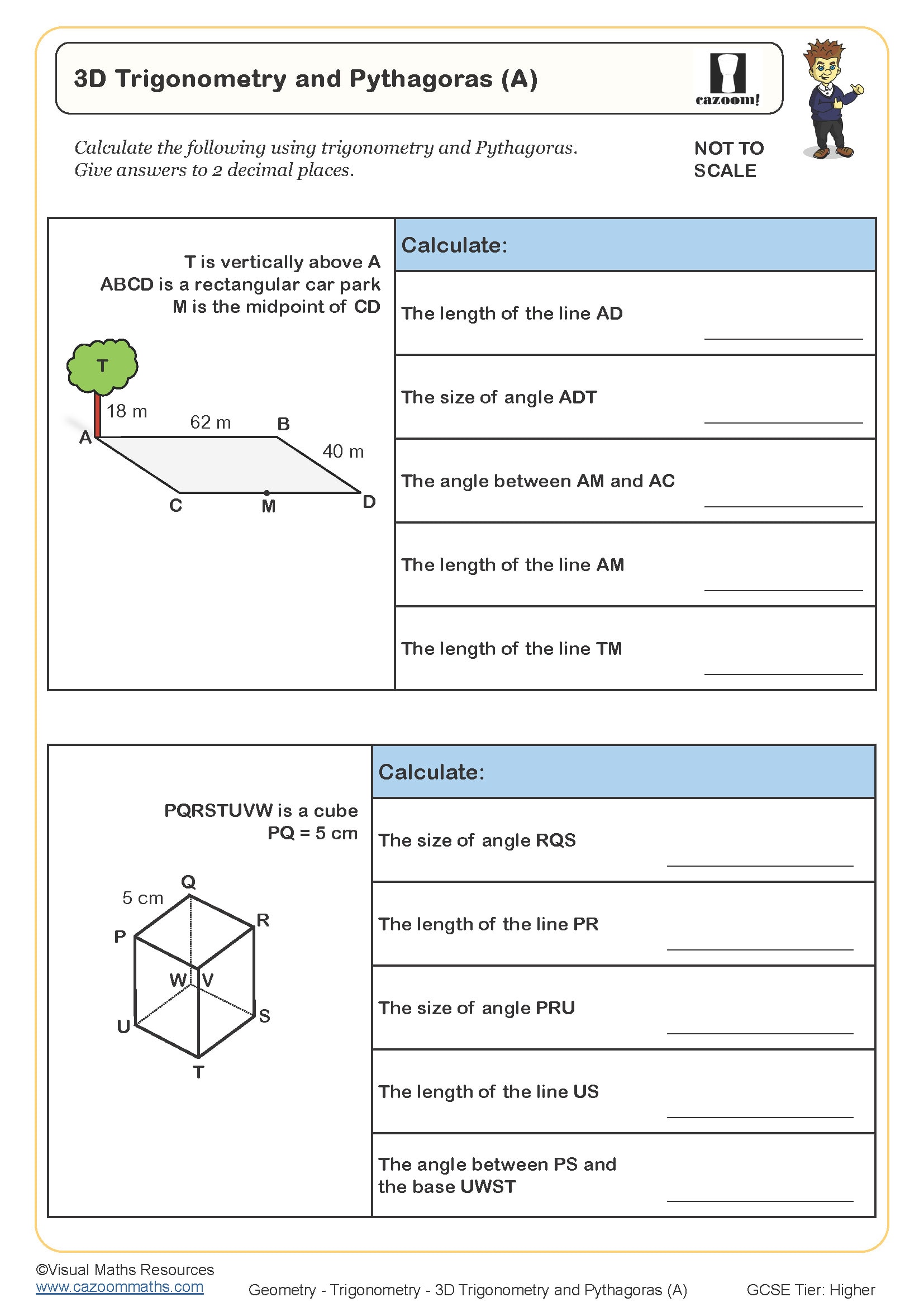
3D Trigonometry and Pythagoras (A)
Year groups: 10, 11
3D Trigonometry and Pythagoras (B)
Year groups: 10, 11
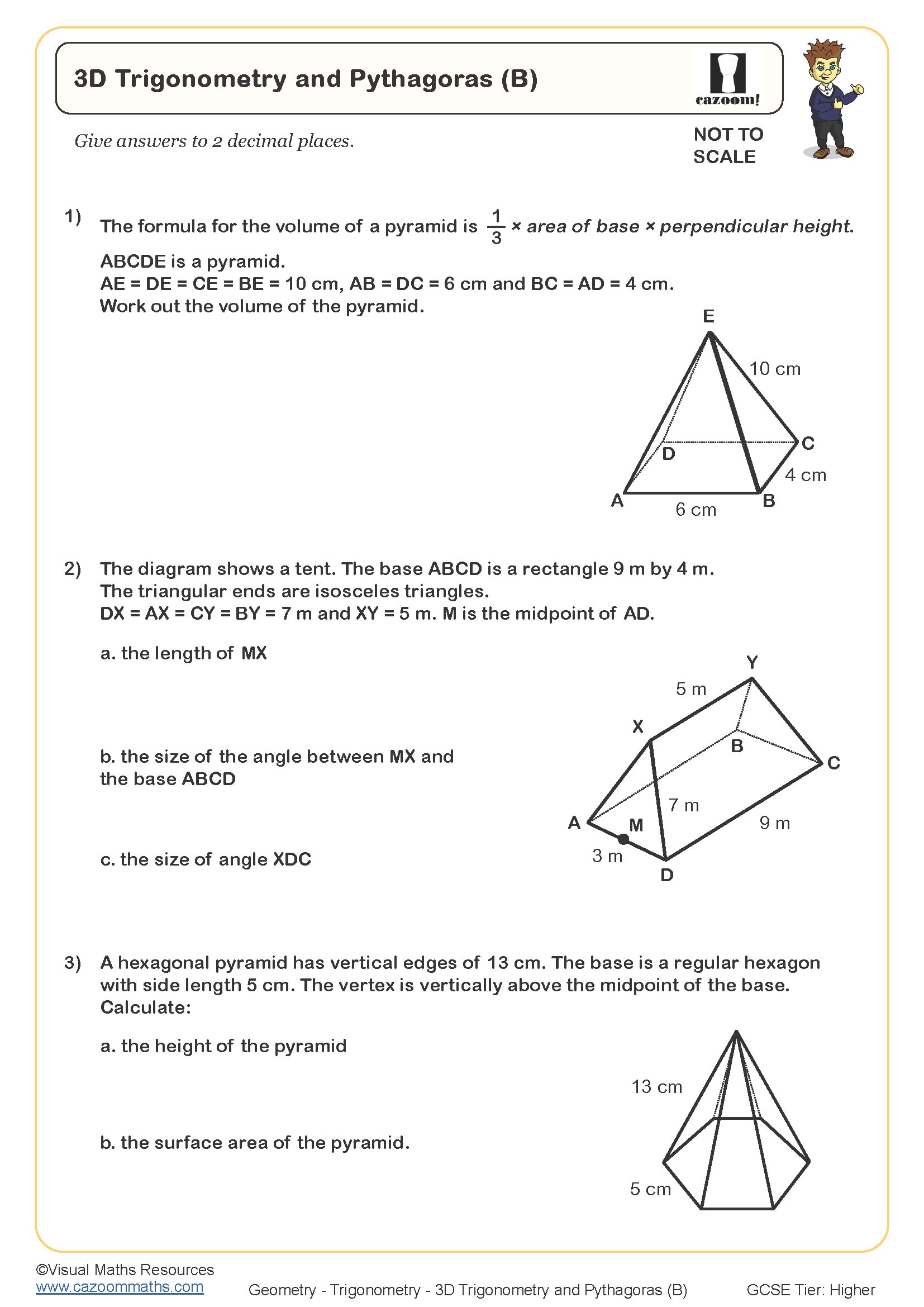
Area of a Triangle - Using Exact Values
Year groups: 10, 11
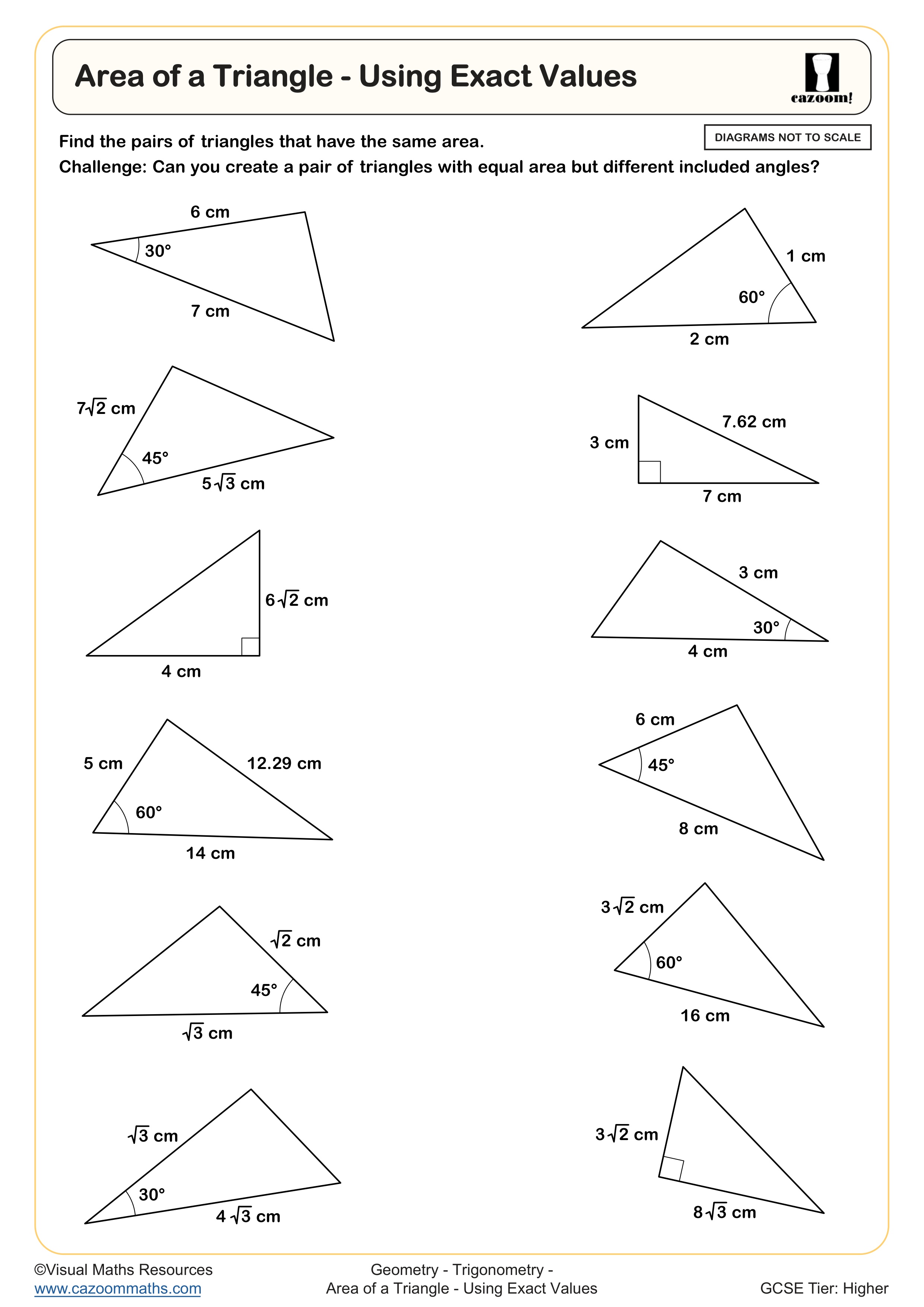
Area of Triangles
Year groups: 10, 11
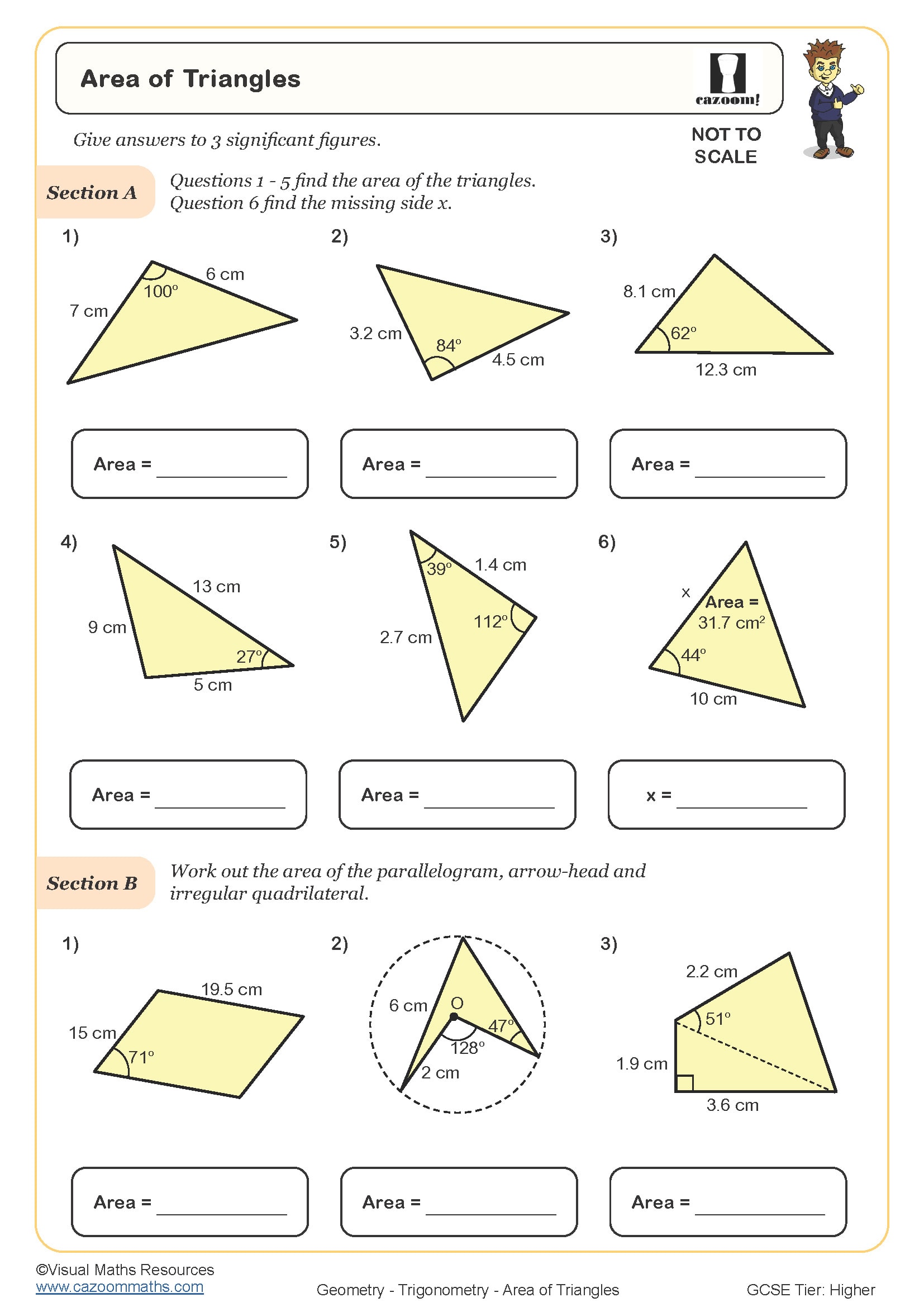
Area of Triangles (With Clues)
Year groups: 10, 11
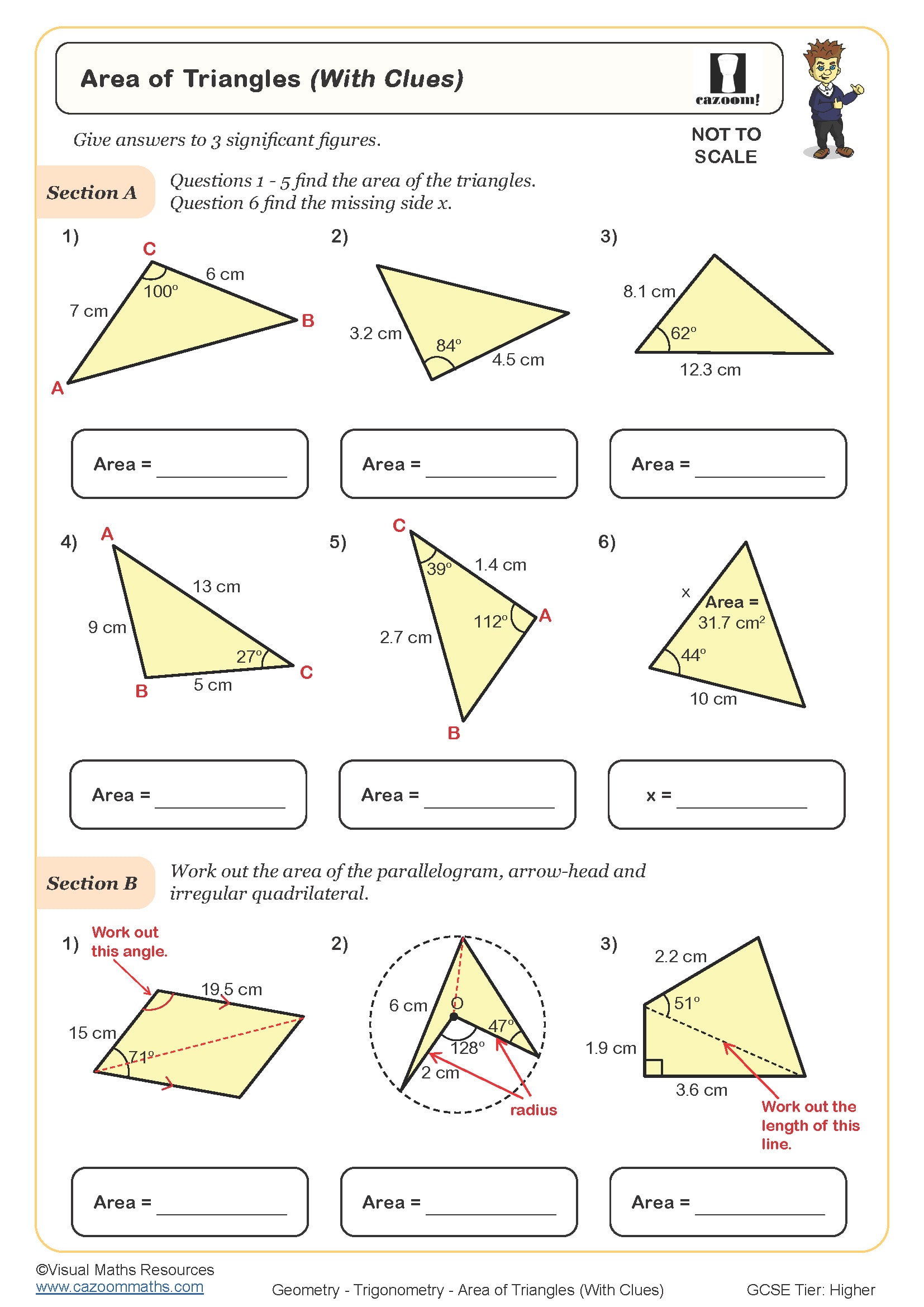
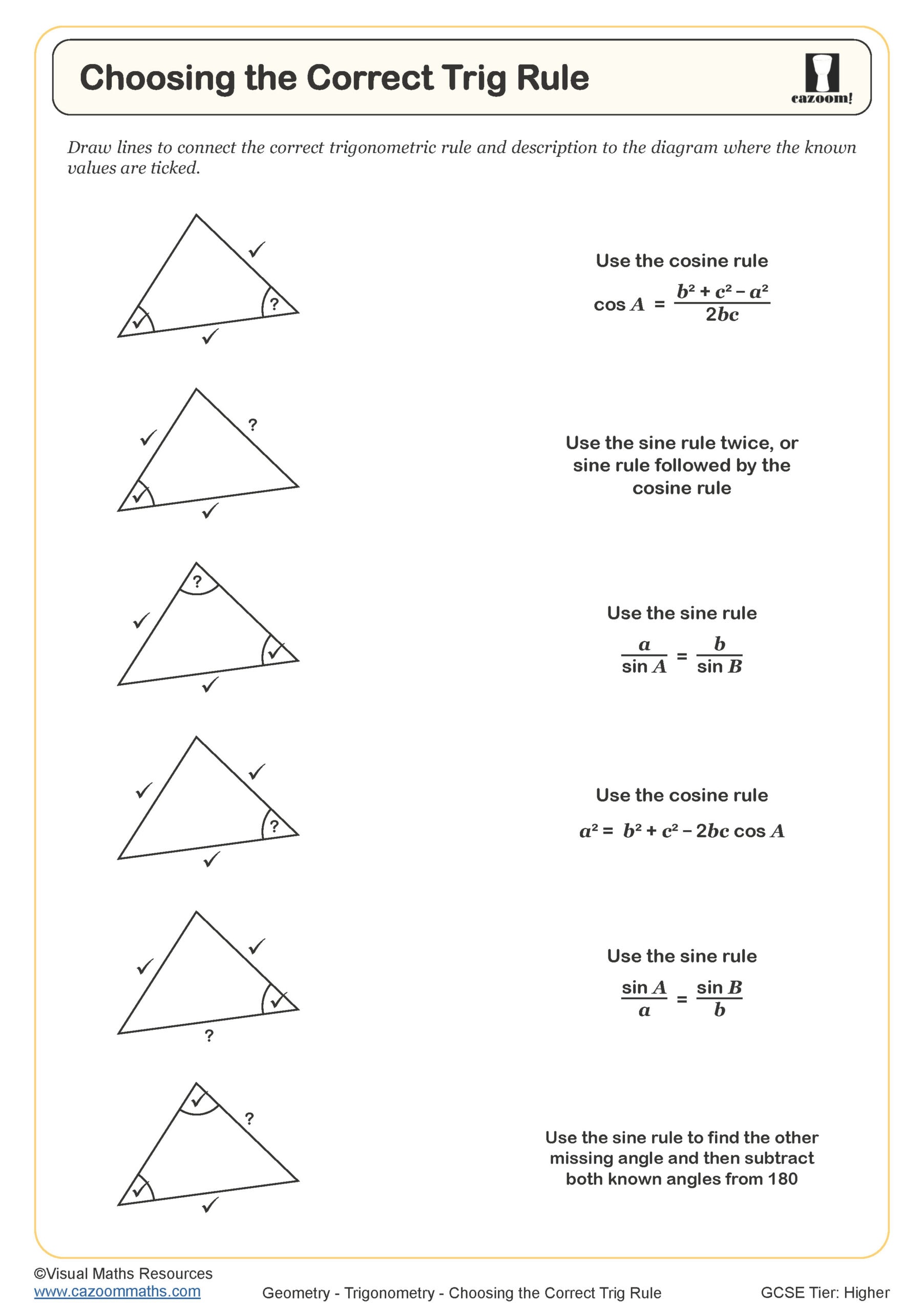
Choosing the Correct Trig Rule
Year groups: 10, 11
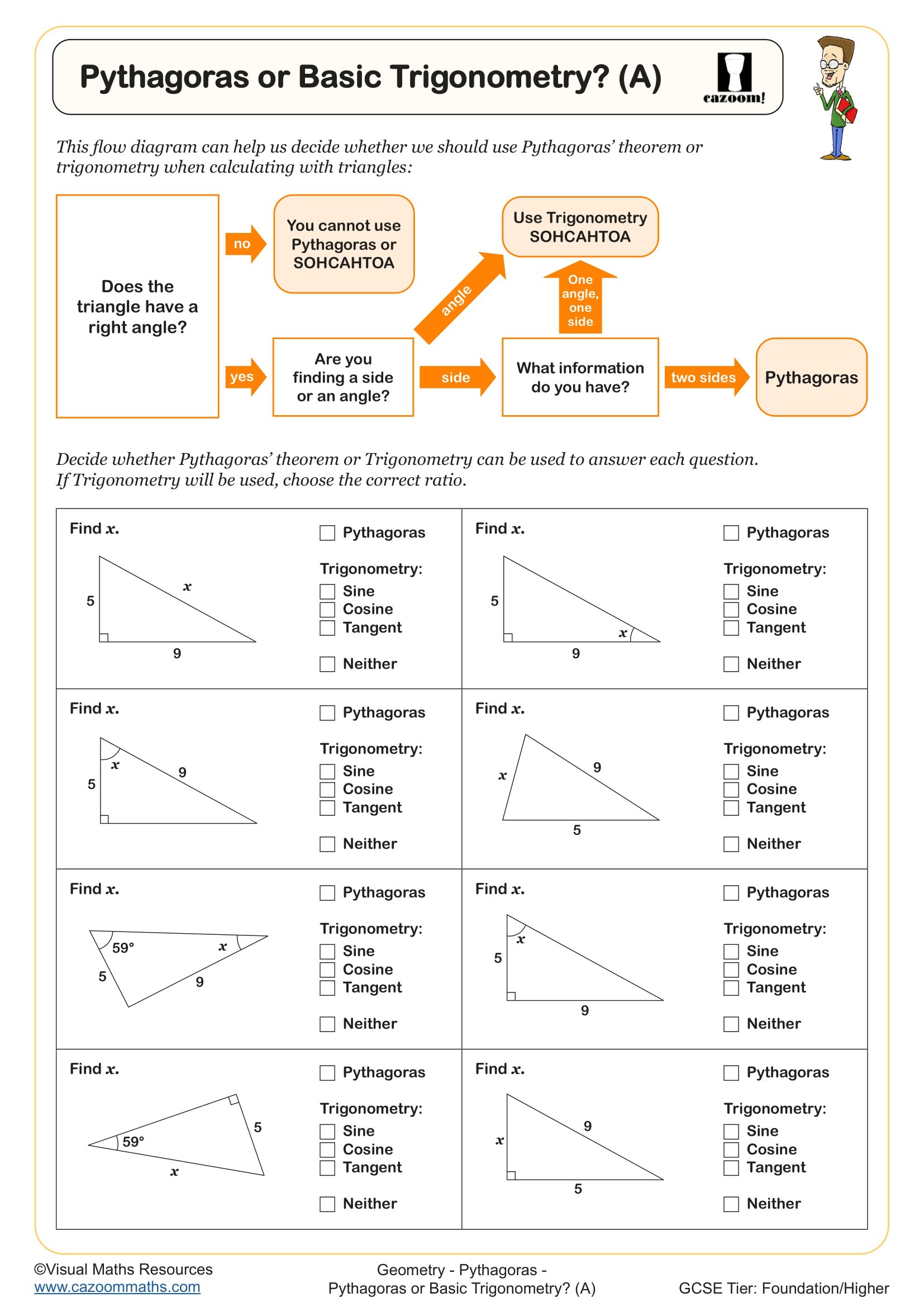
Pythagoras or Trigonometry? (A)
Year groups: 10, 11
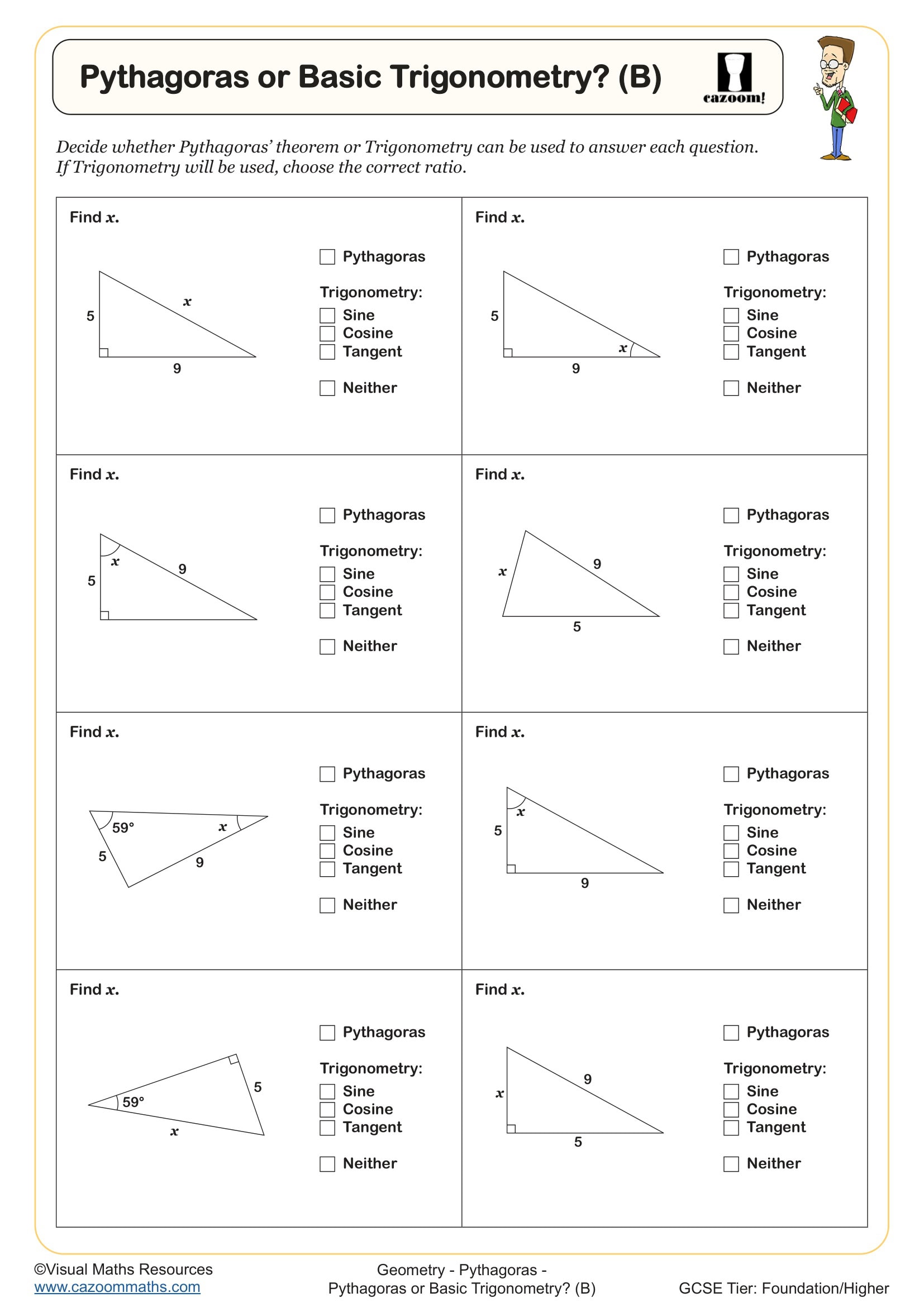
Pythagoras or Trigonometry? (B)
Year groups: 10, 11
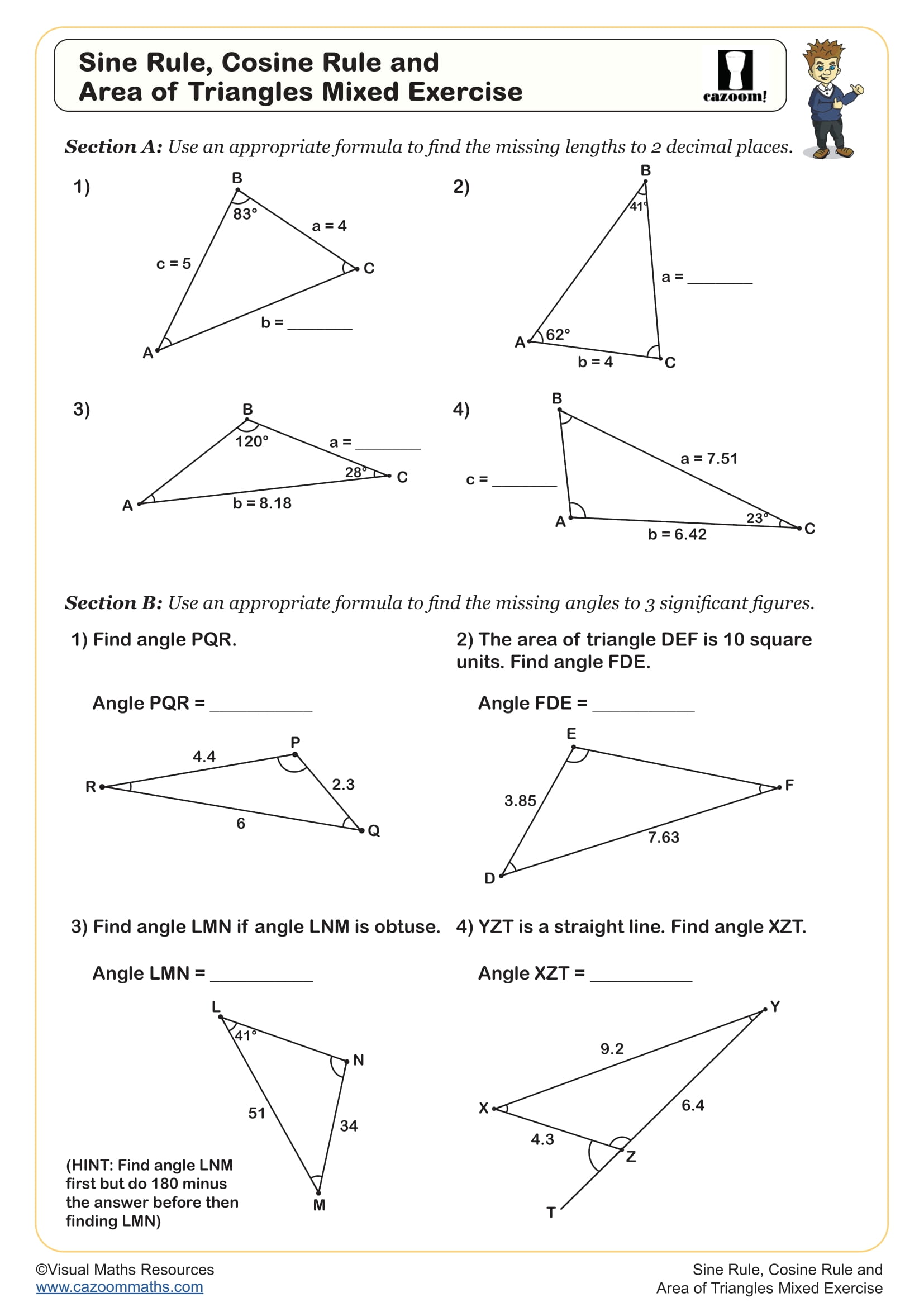
Sine Rule Cosine Rule and Area Mixed Exercise
Year groups: 10, 11
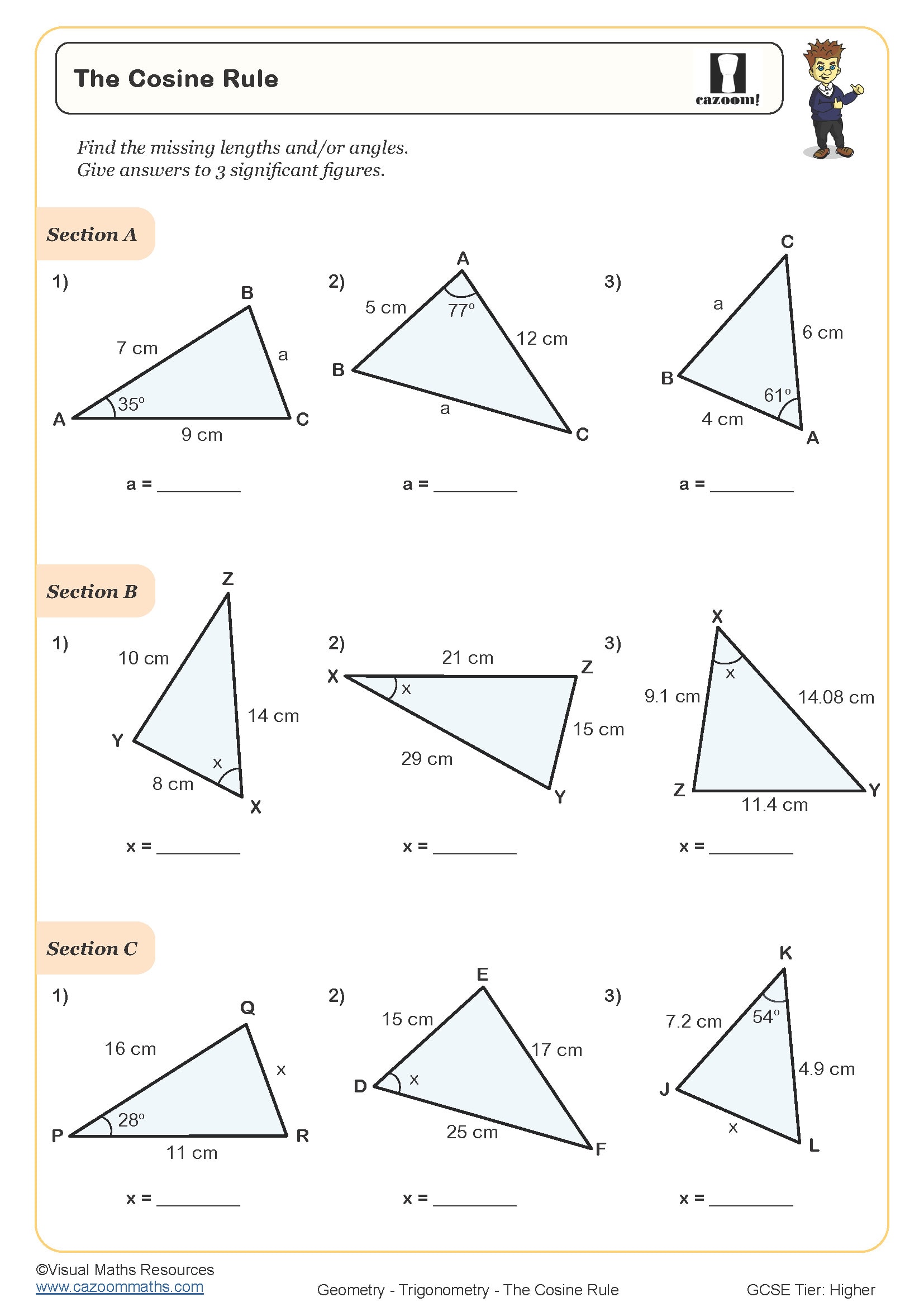
The Cosine Rule
Year groups: 10, 11
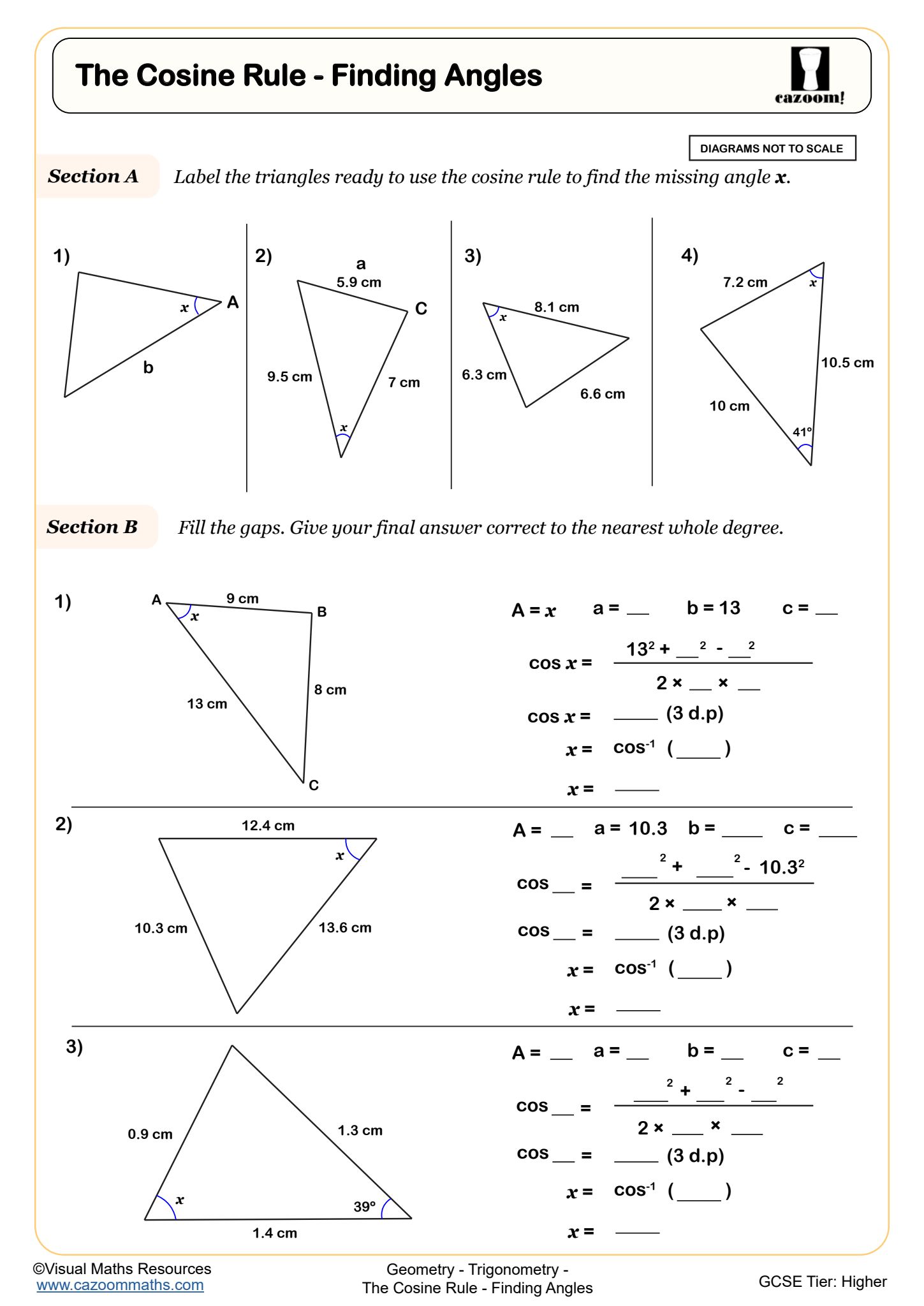
The Cosine Rule - Finding Angles
Year groups: 10, 11
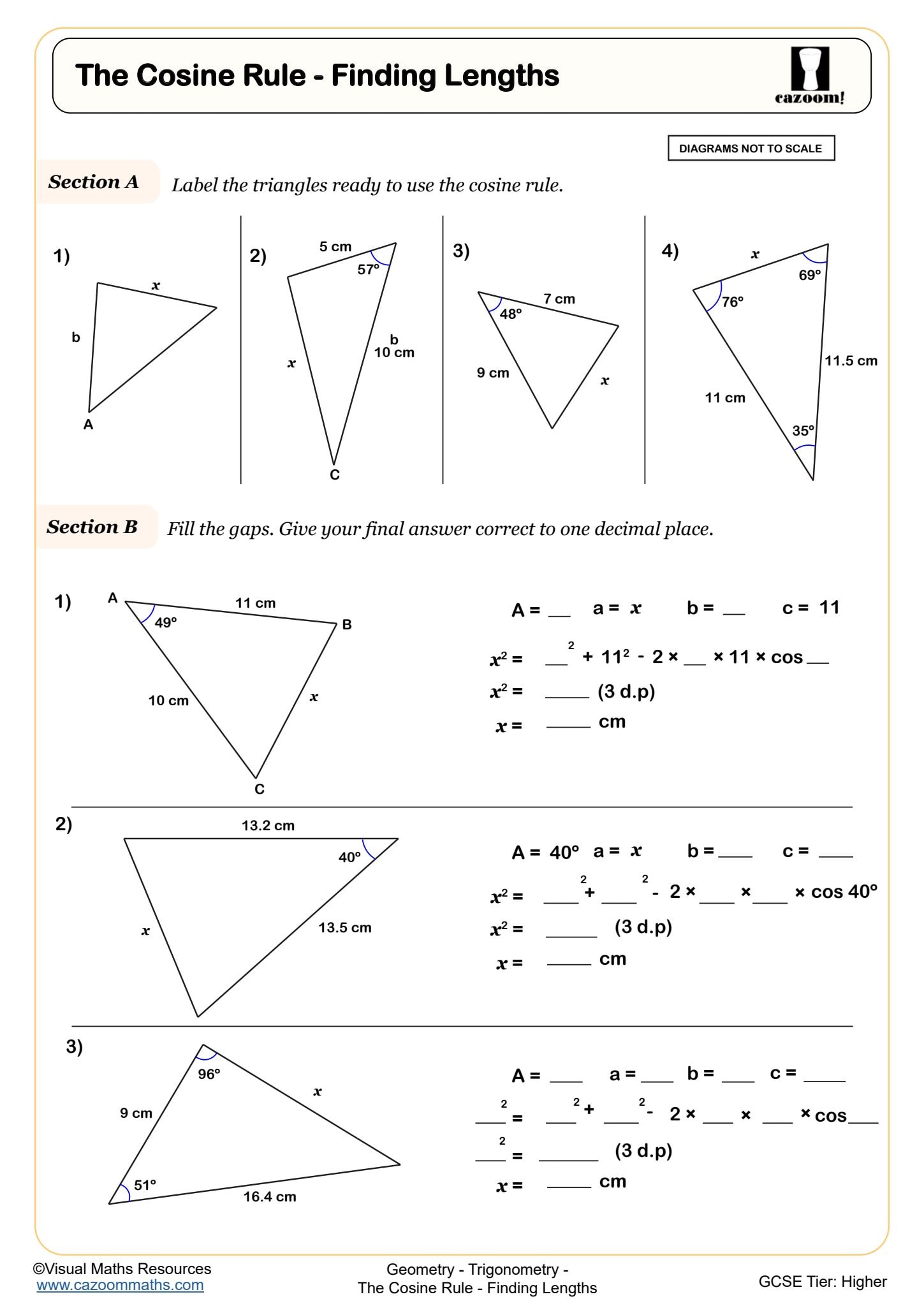
The Cosine Rule - Finding Lengths
Year groups: 10, 11
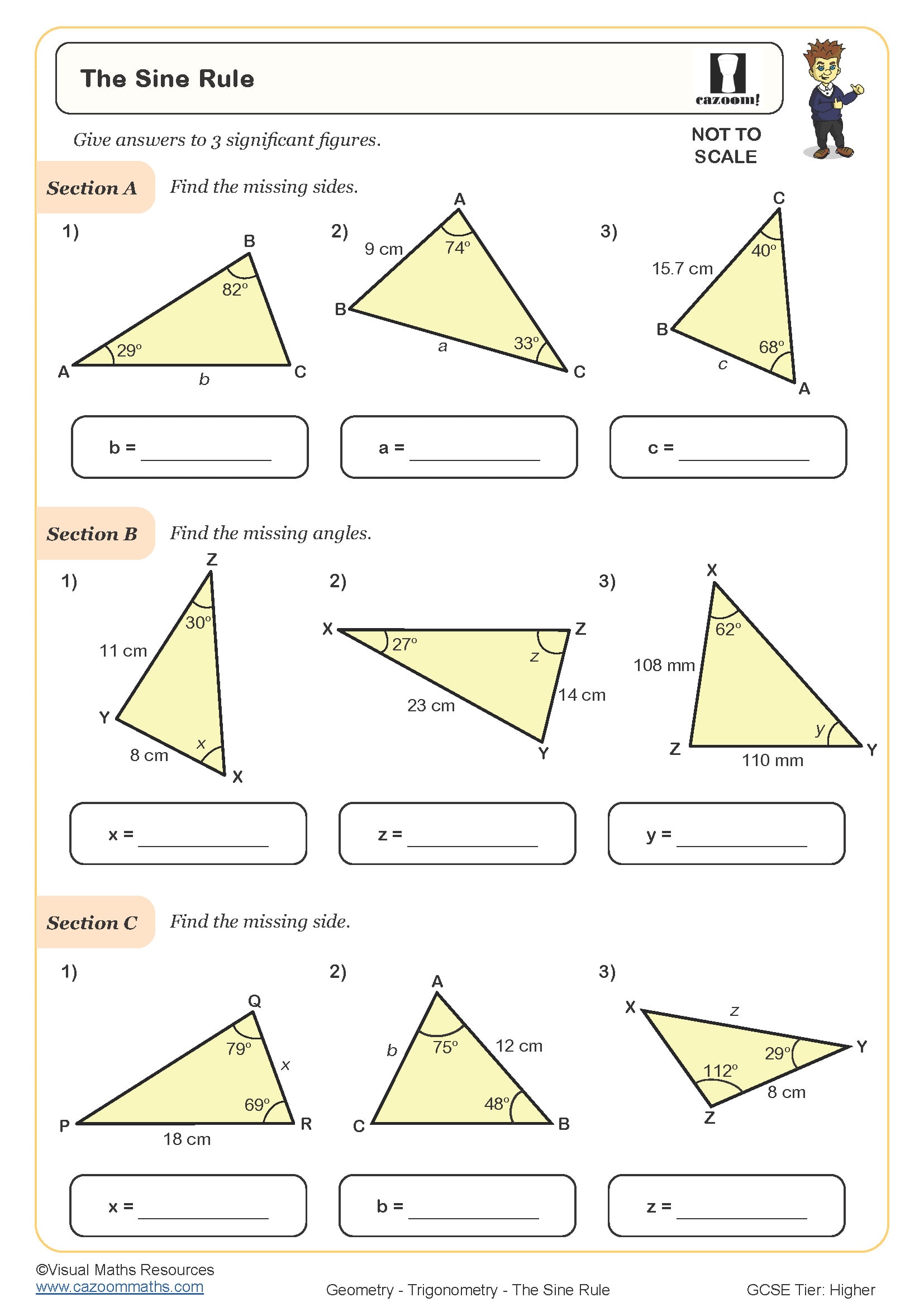
The Sine Rule
Year groups: 10, 11
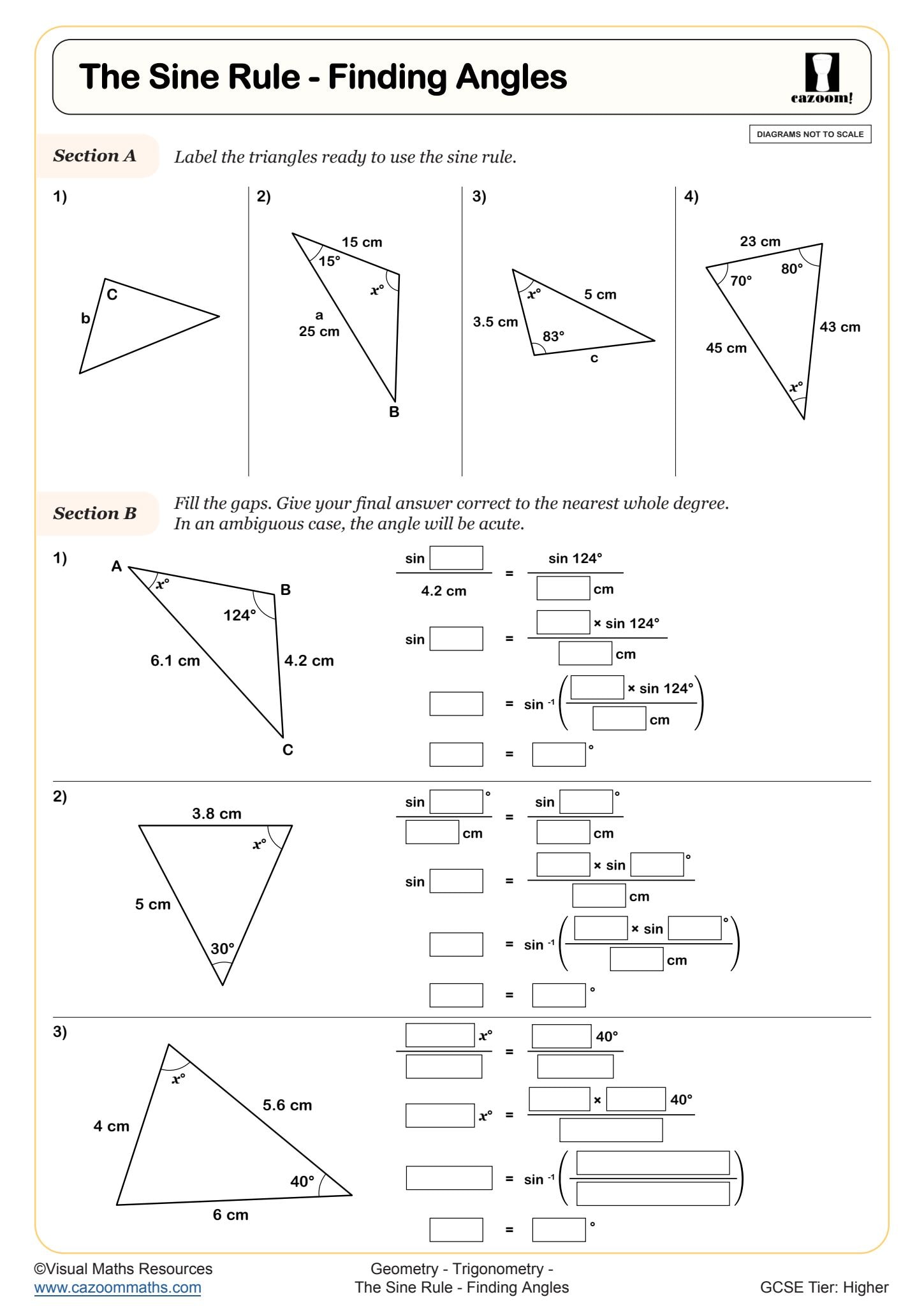
The Sine Rule - Finding Angles
Year groups: 10, 11
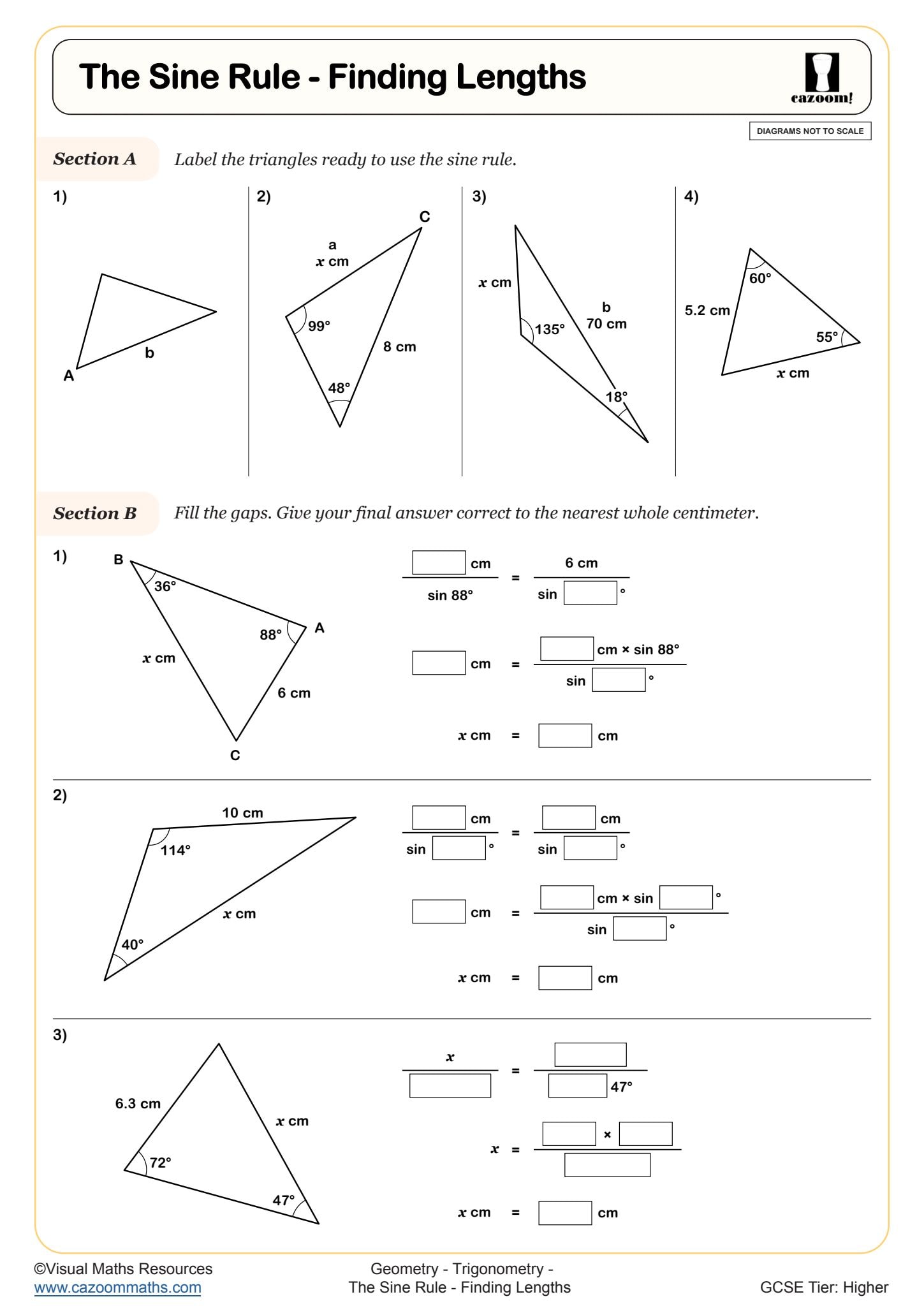
The Sine Rule - Finding Lengths
Year groups: 10, 11
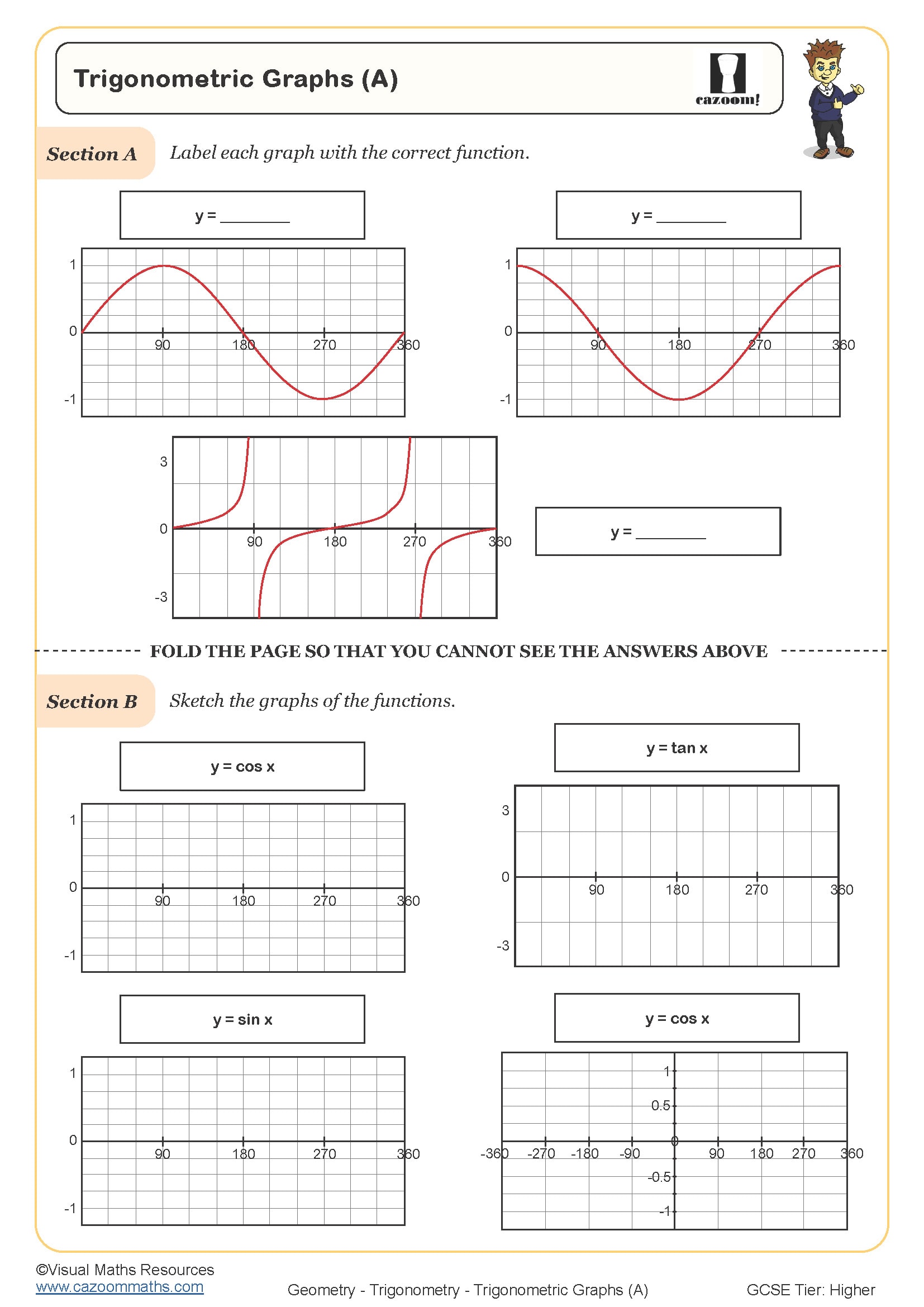
Trigonometric Graphs (A)
Year groups: 10, 11
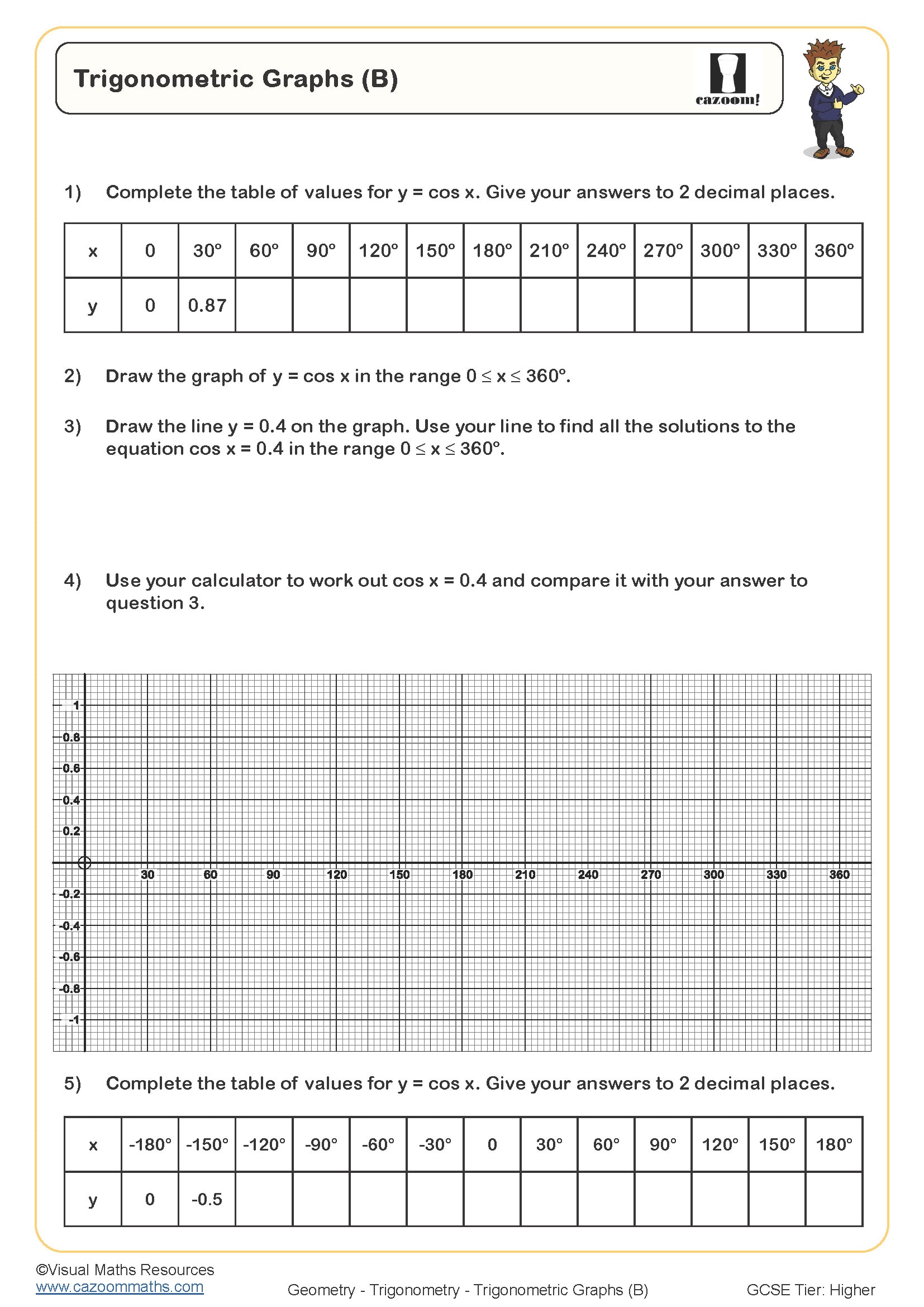
Trigonometric Graphs (B)
Year groups: 10, 11
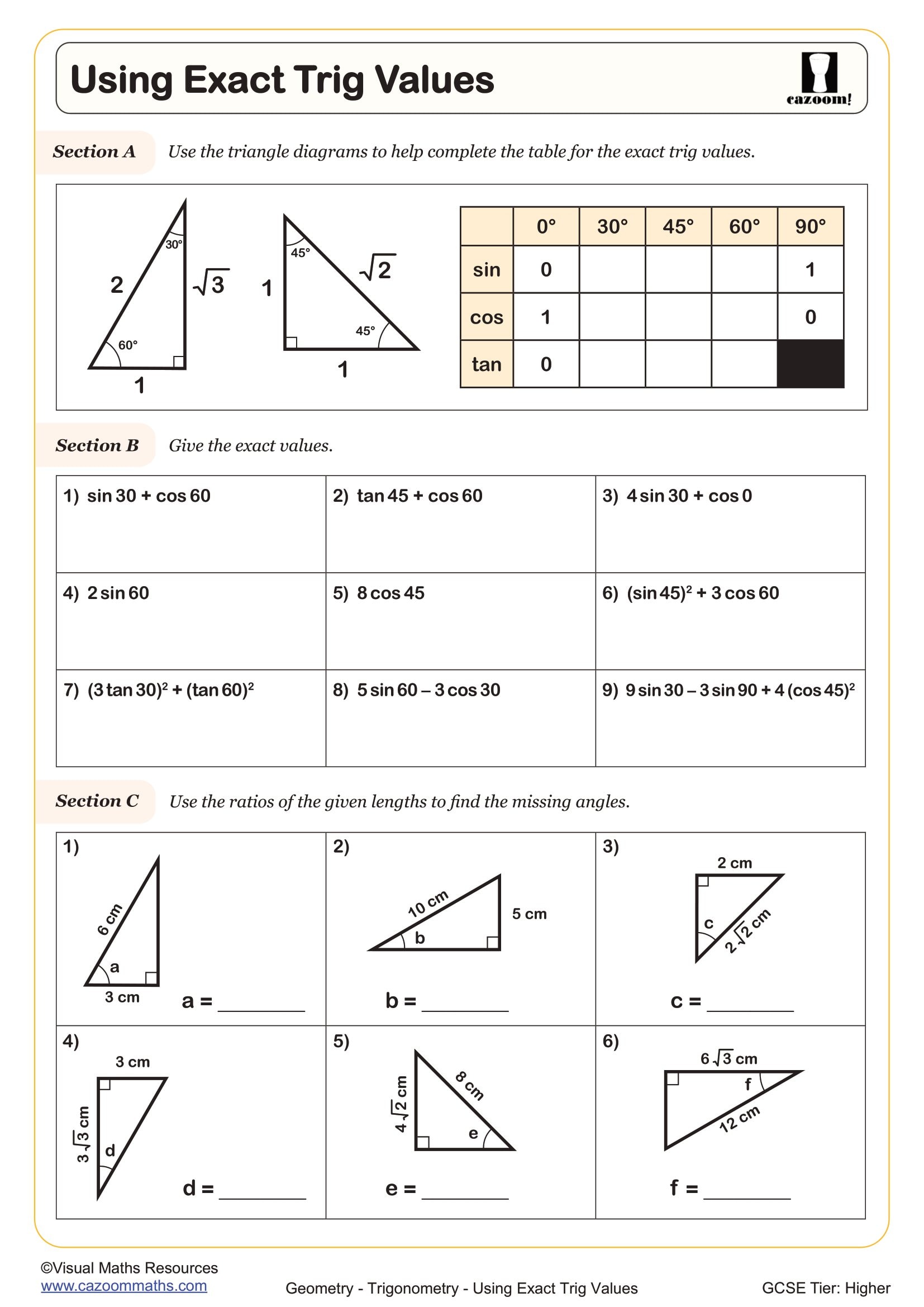
Using Exact Trig Values
Year groups: 10, 11
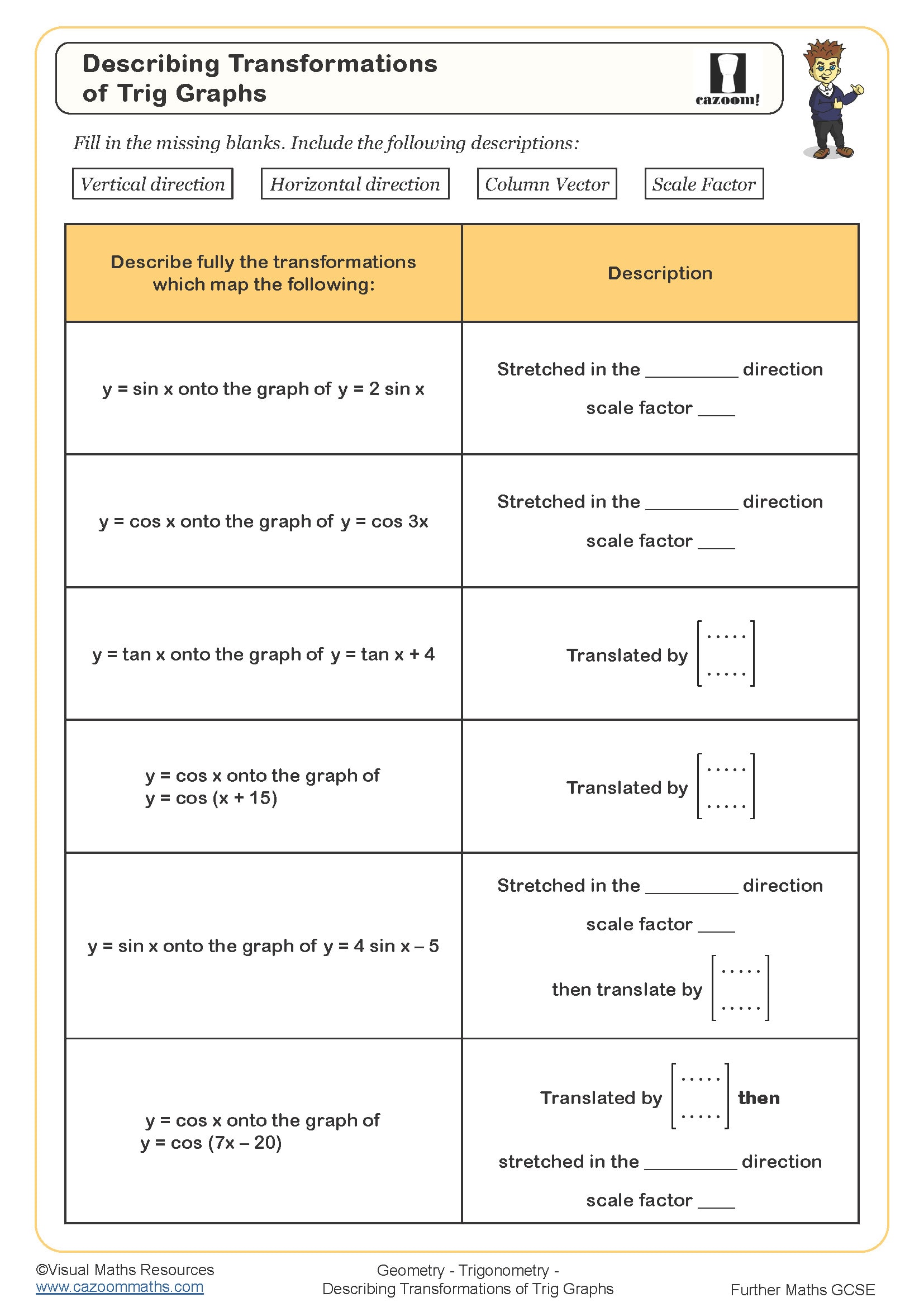
Describing Transformations of Trig Graphs
Year groups: 11
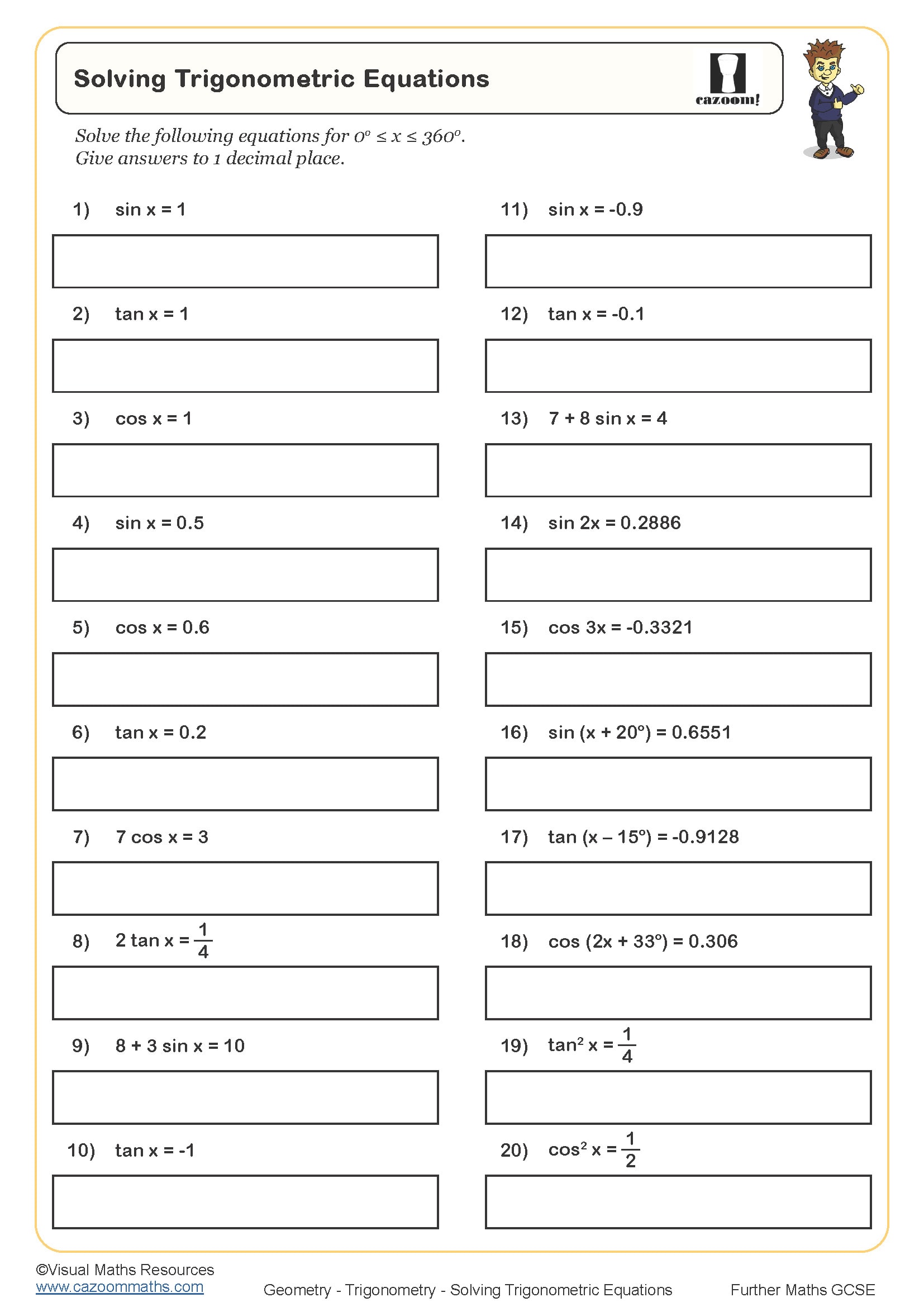
Solving Trigonometric Equations
Year groups: 11
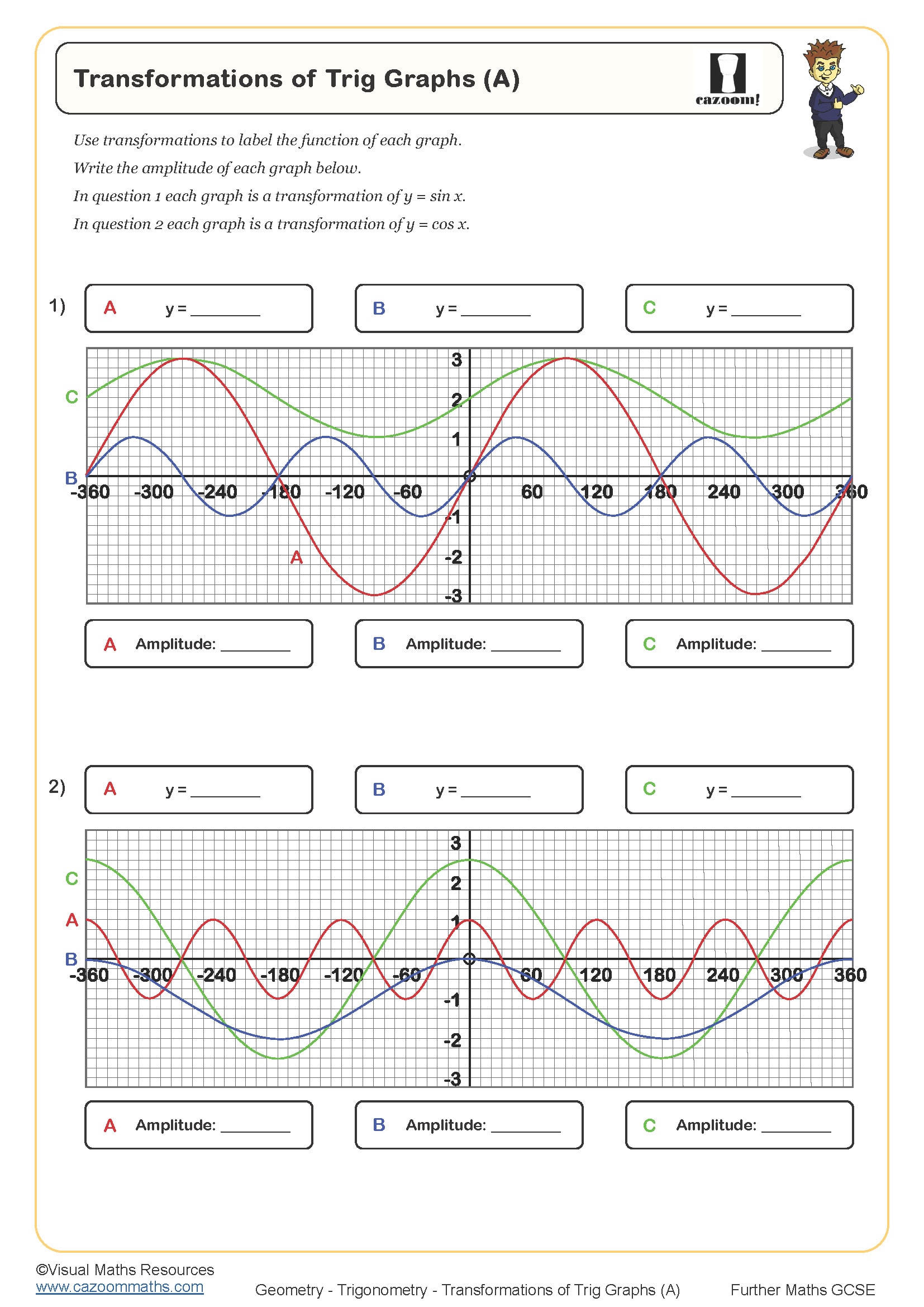
Transformations of Trig Graphs (A)
Year groups: 11
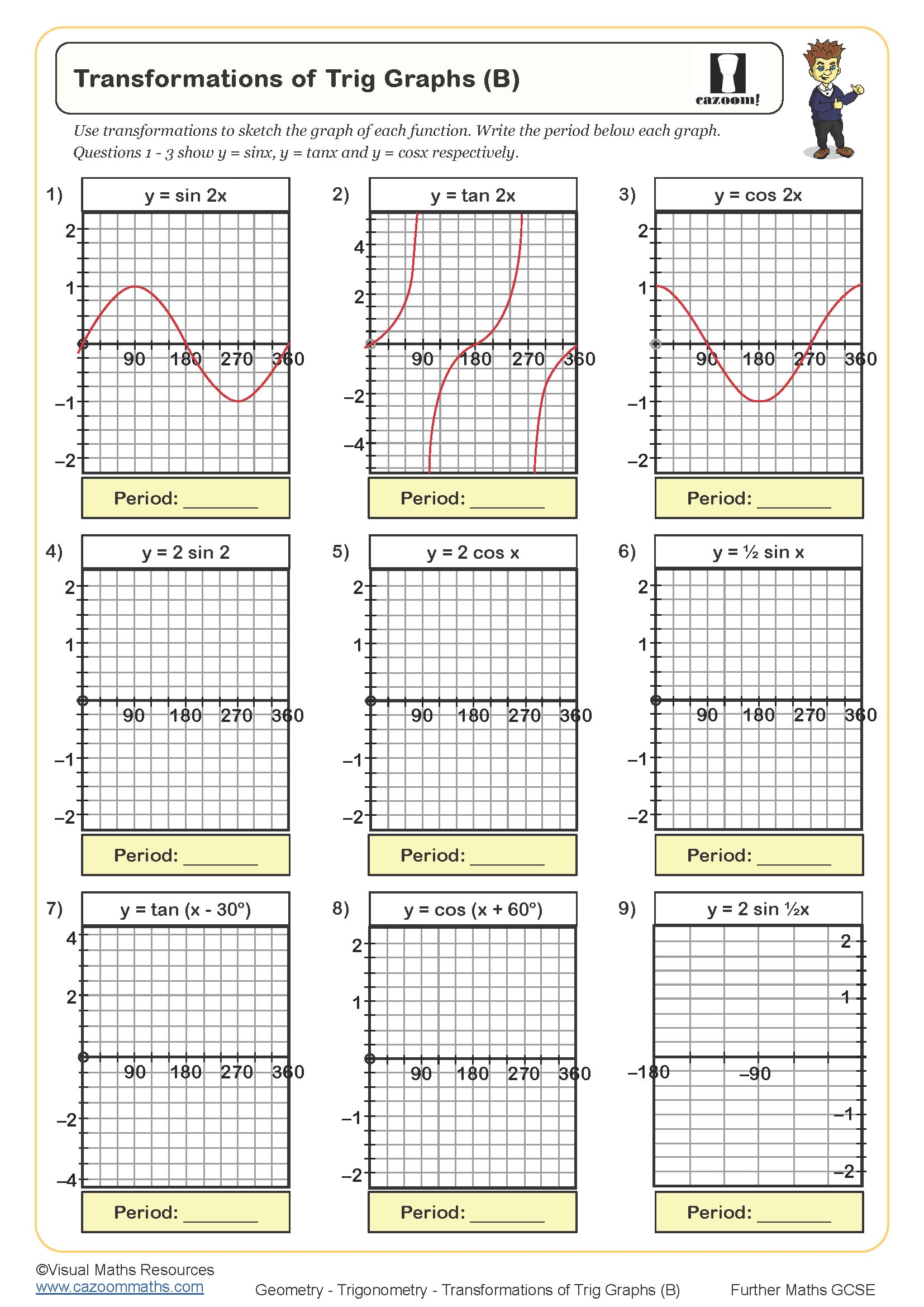
Transformations of Trig Graphs (B)
Year groups: 11
All worksheets are created by the team of experienced teachers at Cazoom Maths.
What makes a good trigonometry worksheet for classroom use?
A quality trigonometry worksheet should progress logically from basic ratio identification through to application problems, with clear diagrams and varied question types. Teachers need resources that address the Key Stage 3 introduction of SOH CAH TOA alongside GCSE-level applications including bearings, elevation angles, and compound shapes.
Many teachers notice that students benefit from worksheets featuring consistent diagram conventions and explicit labelling of sides as opposite, adjacent, and hypotenuse. Questions should include both exact and calculator-based answers, helping students recognise when to leave answers as surds versus decimal approximations during examinations.
Which year groups should use trigonometry worksheets?
Trigonometry typically begins in Year 9 as part of Key Stage 3, where students meet basic ratios and simple right-angled triangle problems. The topic then develops significantly during Years 10 and 11, becoming a substantial component of GCSE mathematics with applications to real-world contexts.
Teachers often find that Year 9 students need extensive practice with ratio identification before attempting calculations, whilst GCSE students require more complex scenarios involving multiple steps and mixed triangle types. The progression from calculator-free exact values to applied problems requiring technology mirrors the examination structure students will encounter.
How do students typically struggle with SOH CAH TOA?
The most common error teachers observe is students mixing up opposite and adjacent sides, particularly when triangles are rotated or presented in unfamiliar orientations. Students often memorise the ratios but struggle to identify which side is which relative to the angle they're working with.
Successful teaching strategies include consistent labelling exercises where students mark diagrams before attempting calculations, and using phrases like 'opposite the angle' rather than assuming spatial awareness. Many teachers find that students benefit from drawing additional lines or rotating their papers to standardise triangle orientation before applying SOH CAH TOA.
What's the most effective way to use trigonometry worksheets in lessons?
Teachers achieve best results by starting with diagram interpretation exercises before moving to calculations, ensuring students can consistently identify triangle components. Paired work often proves valuable, with students explaining their ratio choices to each other before calculating answers.
Answer sheets enable immediate feedback during lessons, allowing teachers to address misconceptions as they arise rather than discovering errors during marking. Many teachers structure lessons with short bursts of practice followed by mini-plenaries where common errors are addressed collectively, particularly around calculator use and answer forms required for examinations.