KS3 and KS4 Vectors Worksheets
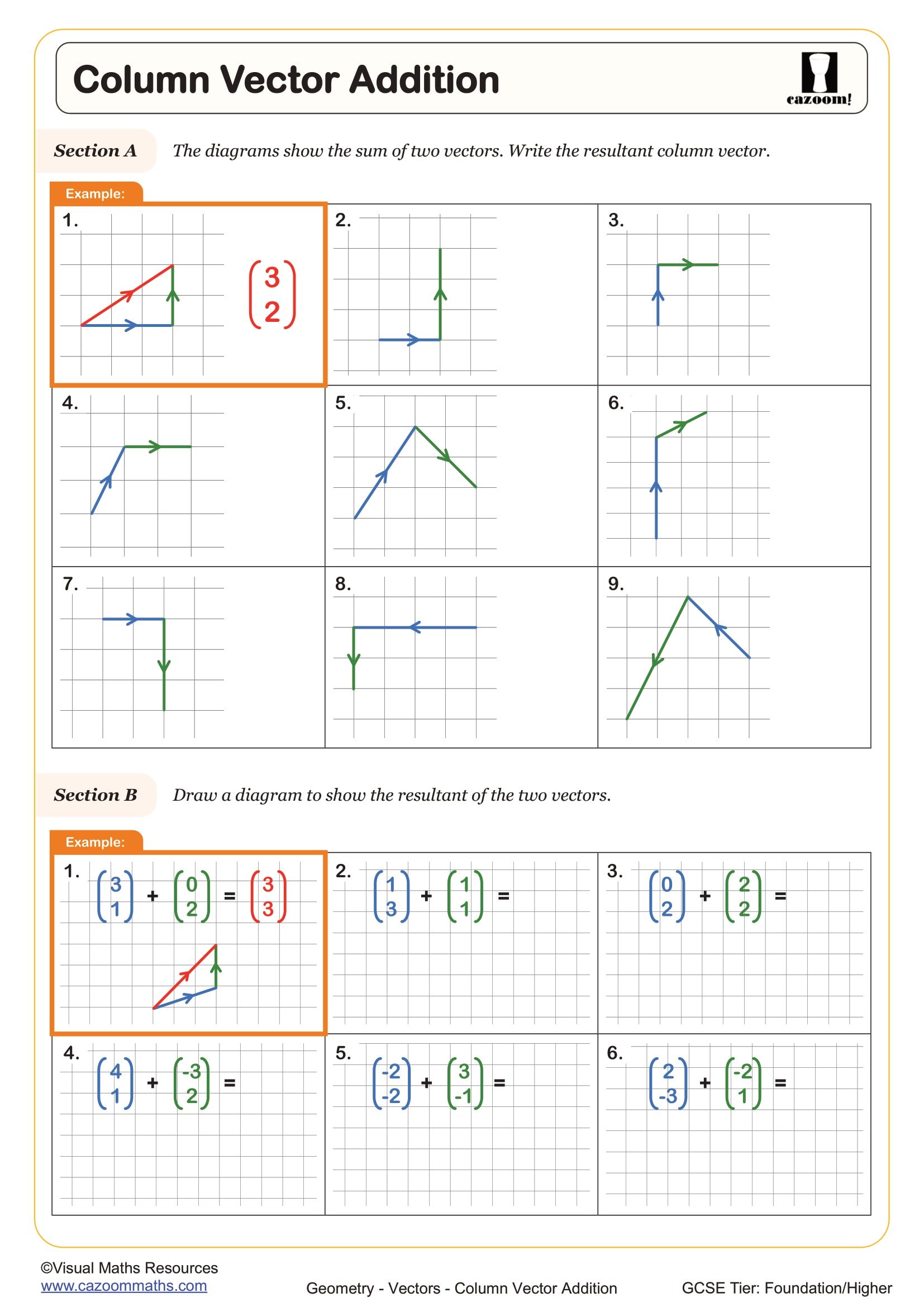
Column Vector Addition
Year groups: 10, 11
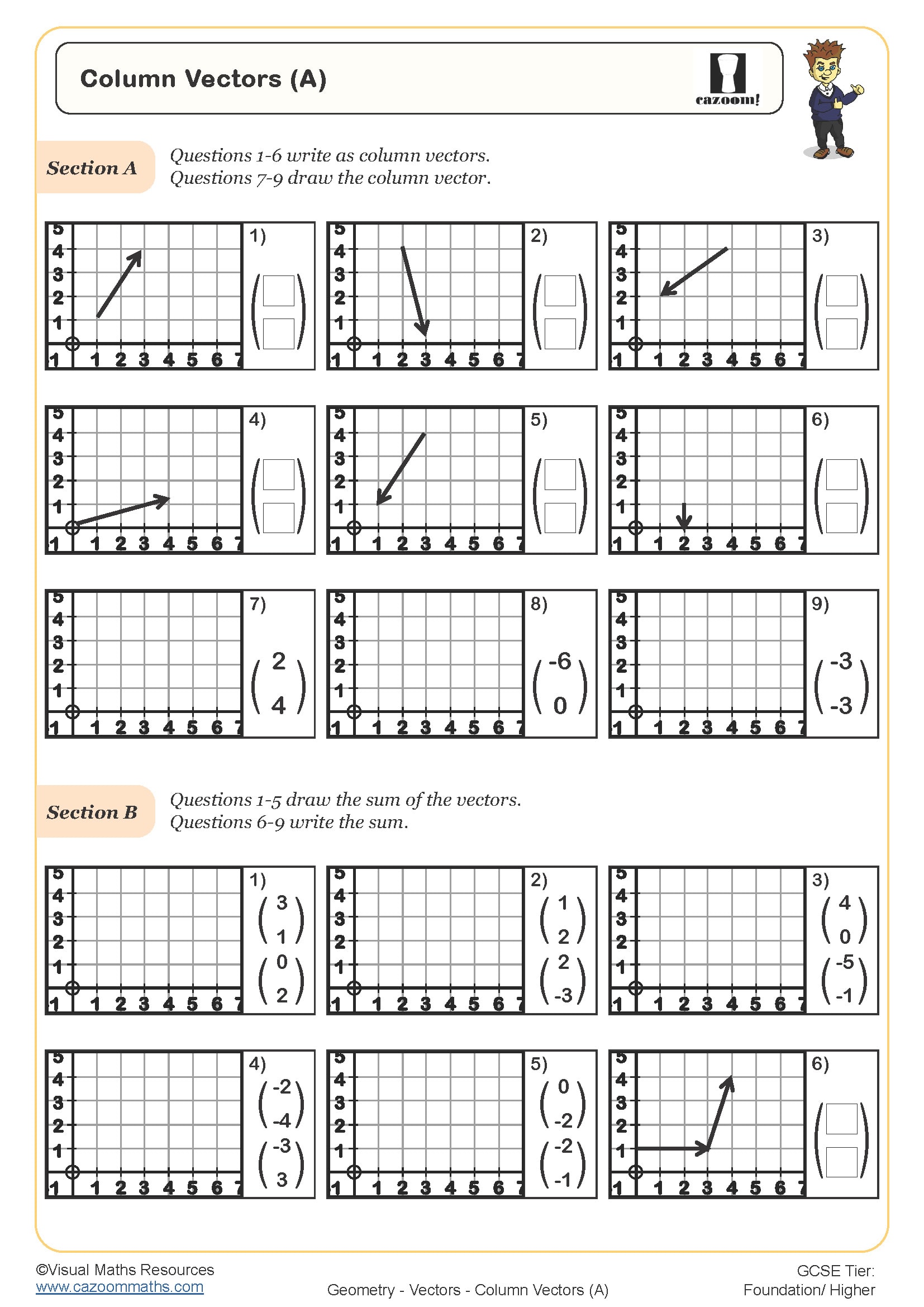
Column Vectors (A)
Year groups: 10, 11
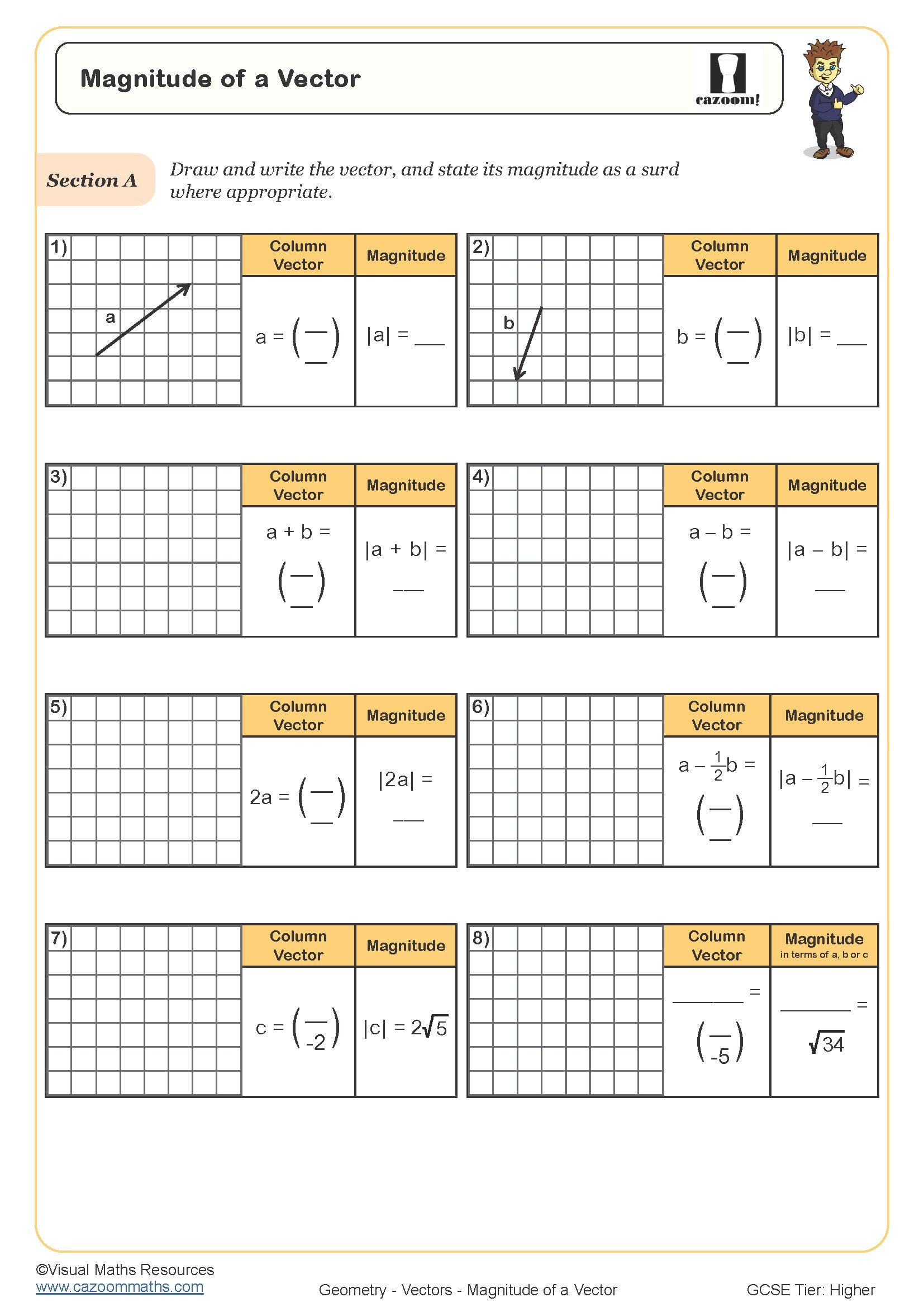
Magnitude of a Vector
Year groups: 10, 11
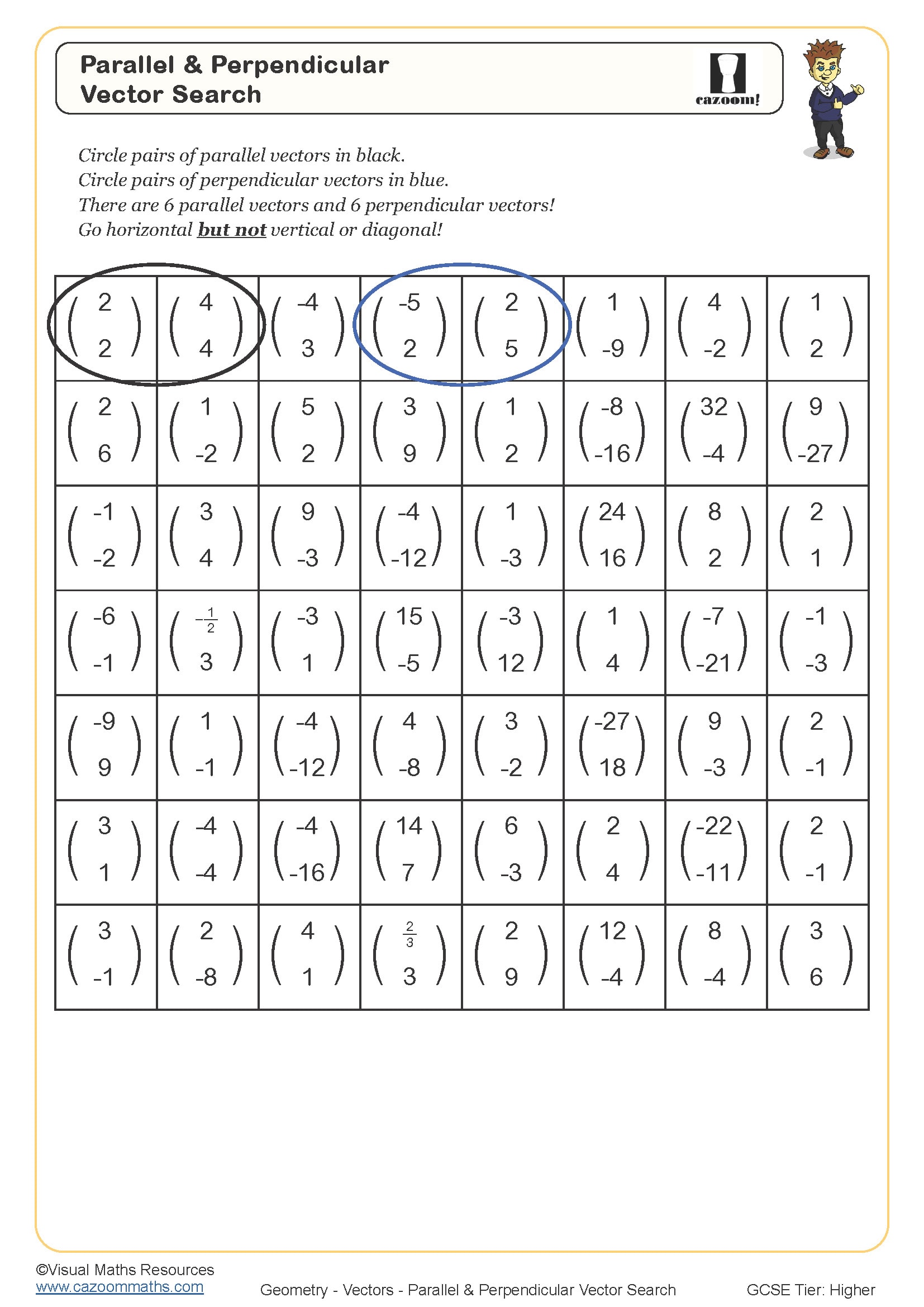
Parallel and Perpendicular Vector Search
Year groups: 10, 11
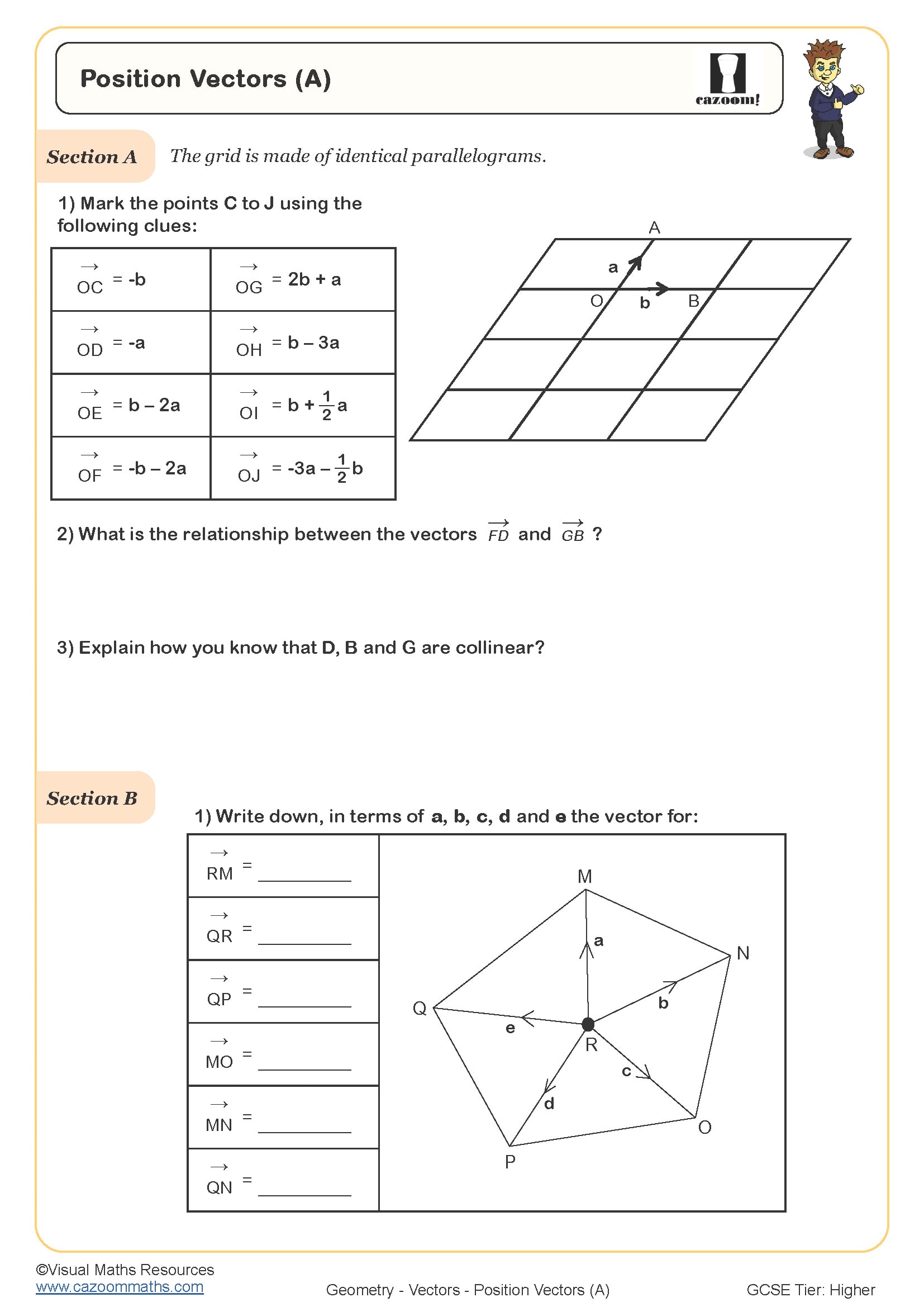
Position Vectors (A)
Year groups: 10, 11
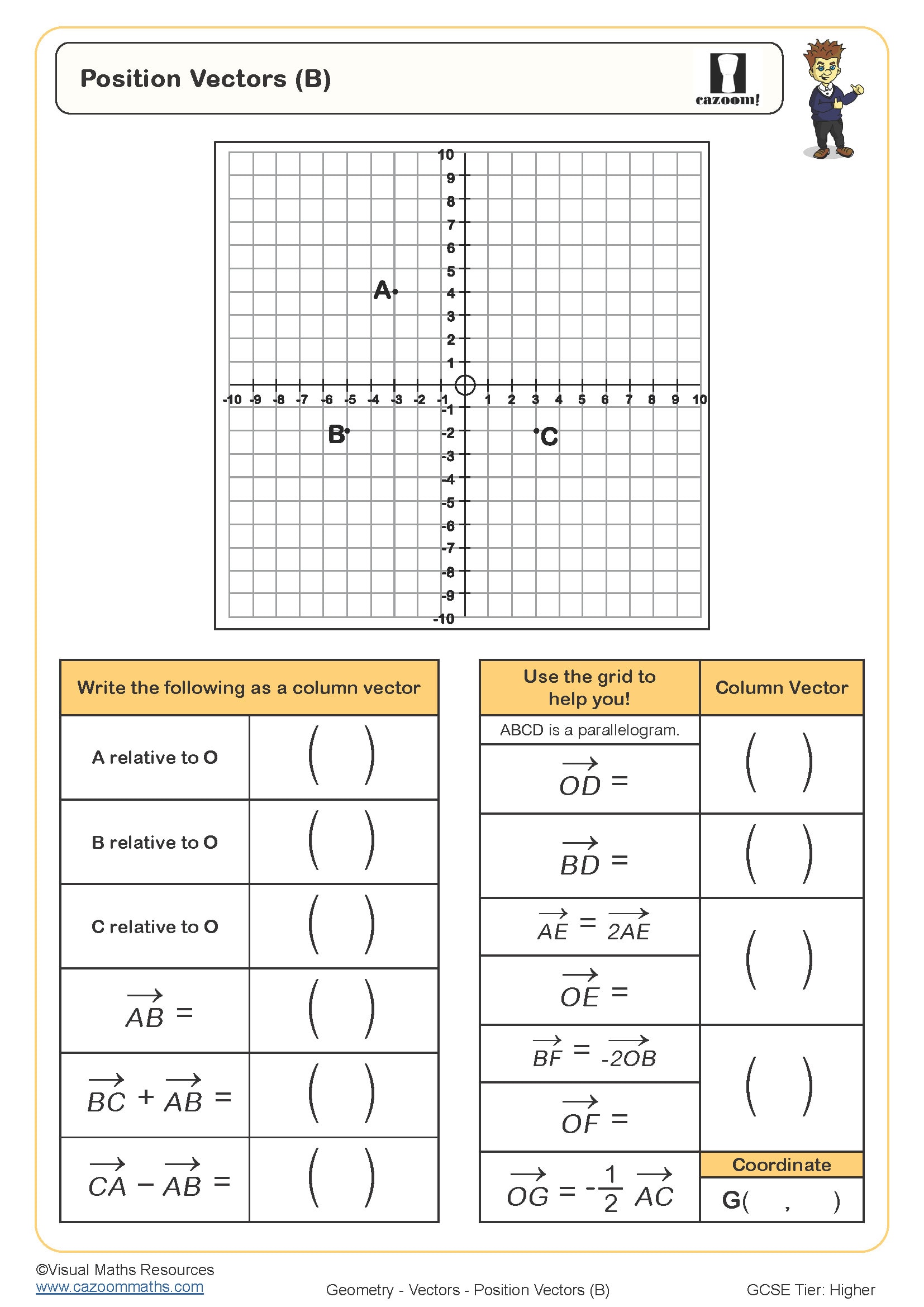
Position Vectors (B)
Year groups: 10, 11
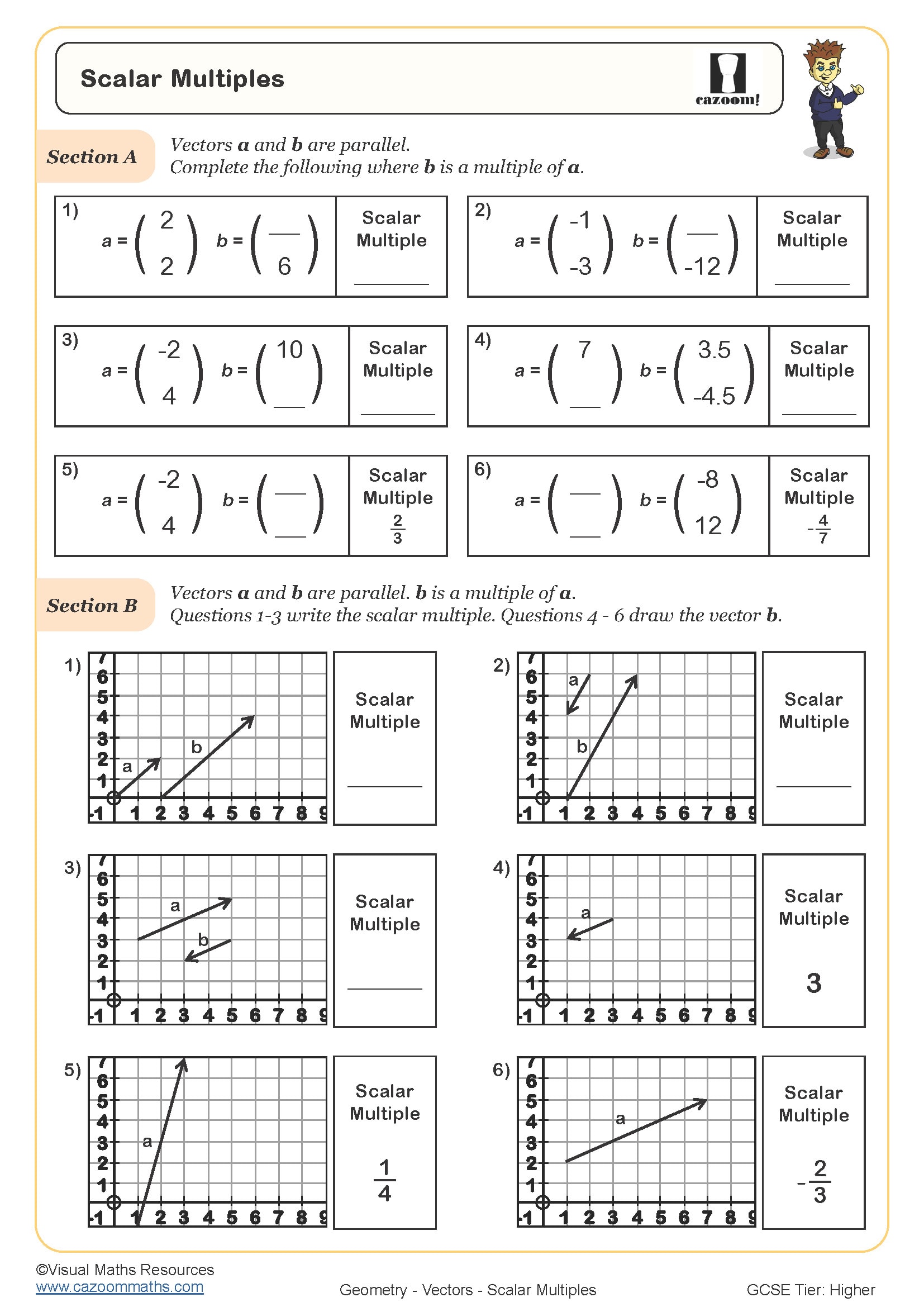
Scalar Multiples
Year groups: 10, 11
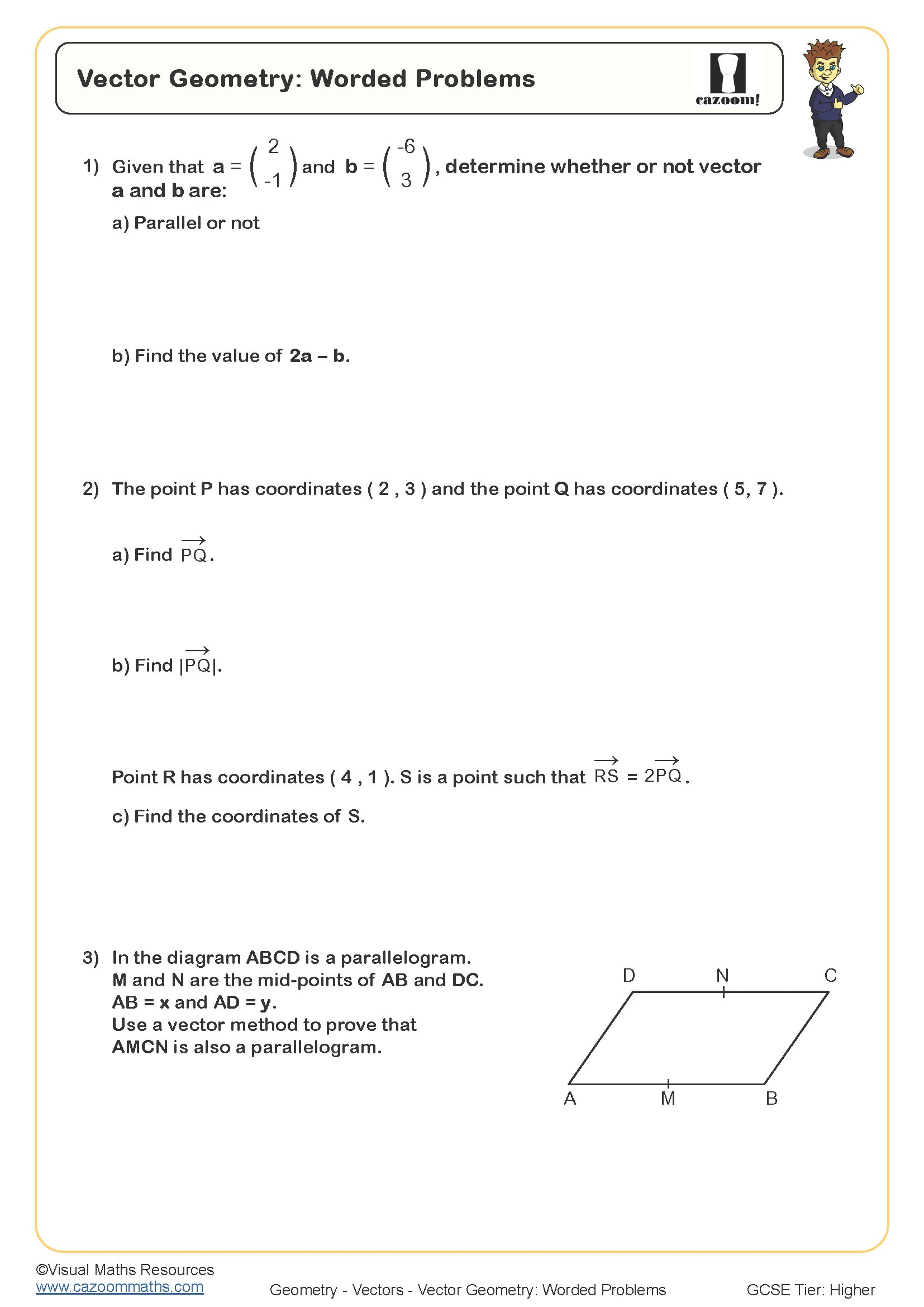
Vector Geometry (Word Problems)
Year groups: 10, 11
All worksheets are created by the team of experienced teachers at Cazoom Maths.
Why do teachers search for vectors worksheet with answers pdf resources?
Teachers frequently look for vectors worksheet pdf materials with complete answer sheets because vector problems require students to show clear working and accurate diagrams. The answer sheets allow teachers to model correct vector notation and demonstrate proper methods for calculating resultant vectors, which many students find challenging initially.
Having worked solutions in PDF format proves particularly valuable when teaching vector subtraction and scalar multiplication. Teachers observe that students often make computational errors when working with negative vector components, so detailed answer sheets help identify where misconceptions arise and provide clear examples of correct working methods.
Which year groups benefit most from vector diagram worksheet activities?
Vector concepts typically appear in Year 9 as part of the KS3 programme, where students first encounter vector notation and basic operations. At this level, vector worksheets focus on drawing vectors to scale, understanding displacement, and performing simple vector addition using diagrams and column vectors.
By Years 10 and 11, students tackle more sophisticated vector problems involving magnitude and direction calculations, position vectors, and applications in mechanics contexts. Teachers notice that students who master vector diagrams early show greater confidence when progressing to algebraic vector methods required for GCSE examinations.
How do vector worksheets help students master resultant vector calculations?
Vector worksheets provide structured practice in finding resultant vectors through both graphical and algebraic methods. Students work through problems involving vector addition and subtraction, learning to apply the triangle rule and parallelogram law systematically. These exercises help develop spatial reasoning skills practical for understanding vector geometry.
Teachers observe that students benefit from worksheets that combine vector diagram construction with numerical calculations. This dual approach helps students connect visual representations with algebraic methods, reducing errors when calculating magnitudes and directions. Regular practice with resultant vectors also prepares students for mechanics applications in A-level mathematics and physics.
What makes these vector worksheets effective for classroom teaching?
These vector worksheets work effectively because they progress systematically from basic vector notation to complex applications, matching the National Curriculum sequence. The inclusion of grid paper sections allows students to draw accurate vector diagrams, whilst varied question types keep students engaged and challenge different aspects of vector understanding.
Teachers find the complete answer sheets particularly useful for peer assessment activities and self-checking exercises. The clear worked solutions help students identify their own errors and understand correct methods, reducing marking time whilst maintaining high-quality feedback. This approach supports independent learning whilst ensuring students develop accurate vector manipulation skills.