Surface Area and Volume Worksheets
Surface Area of Cuboids
Year groups: 7, 8, 9
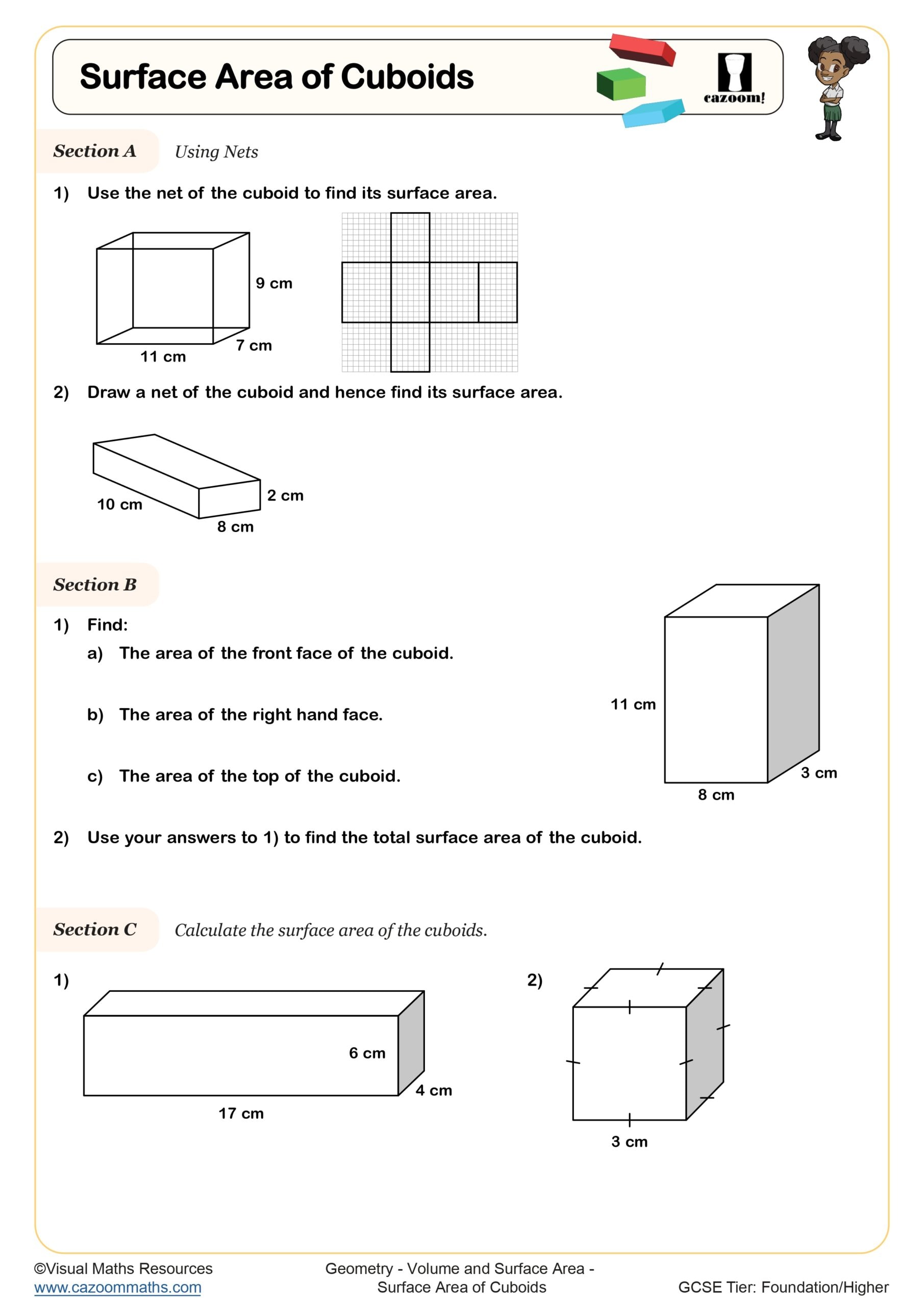
Volume and Surface Area of Cuboids
Year groups: 7, 8
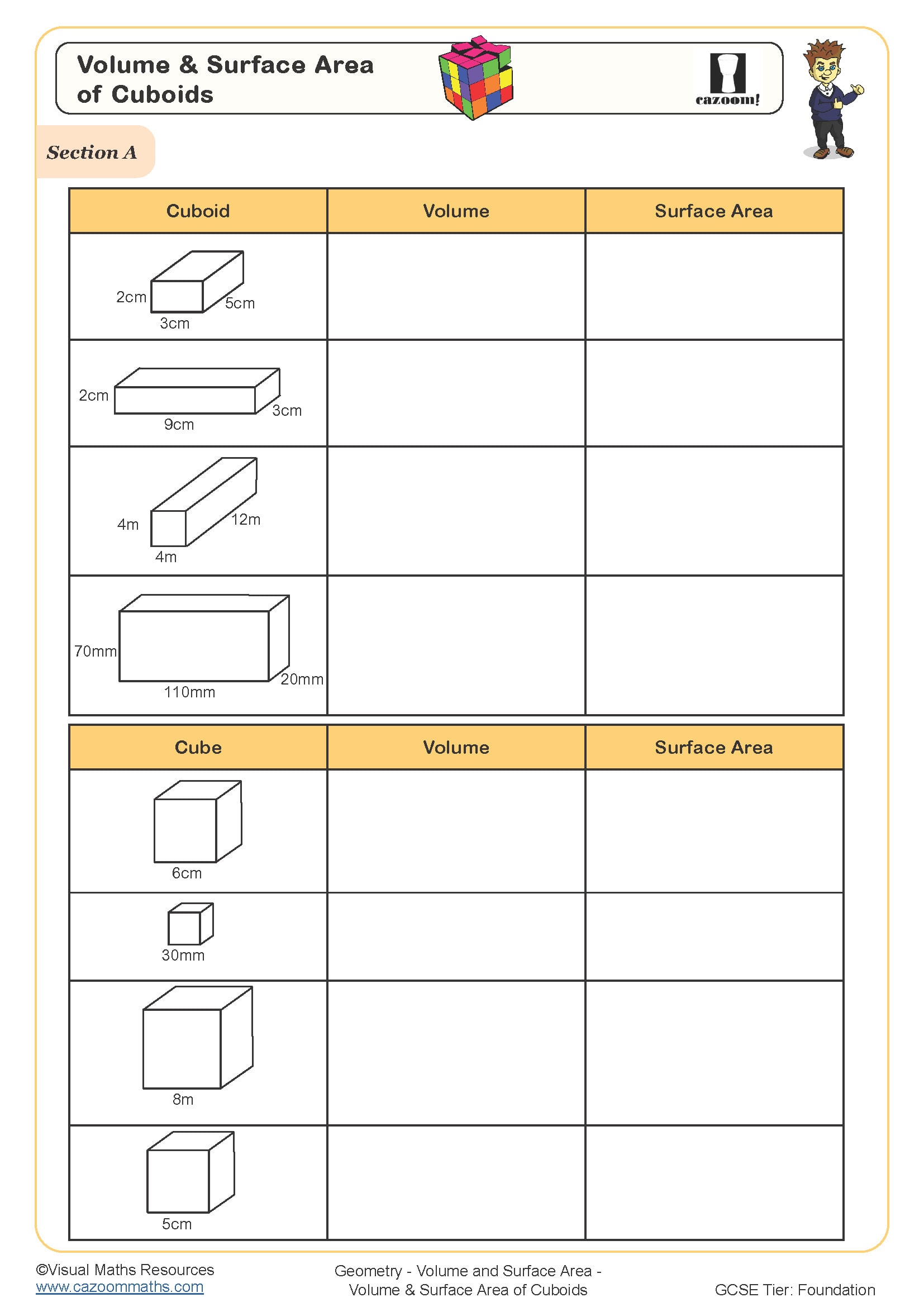
Volume of Cuboids
Year groups: 7, 8
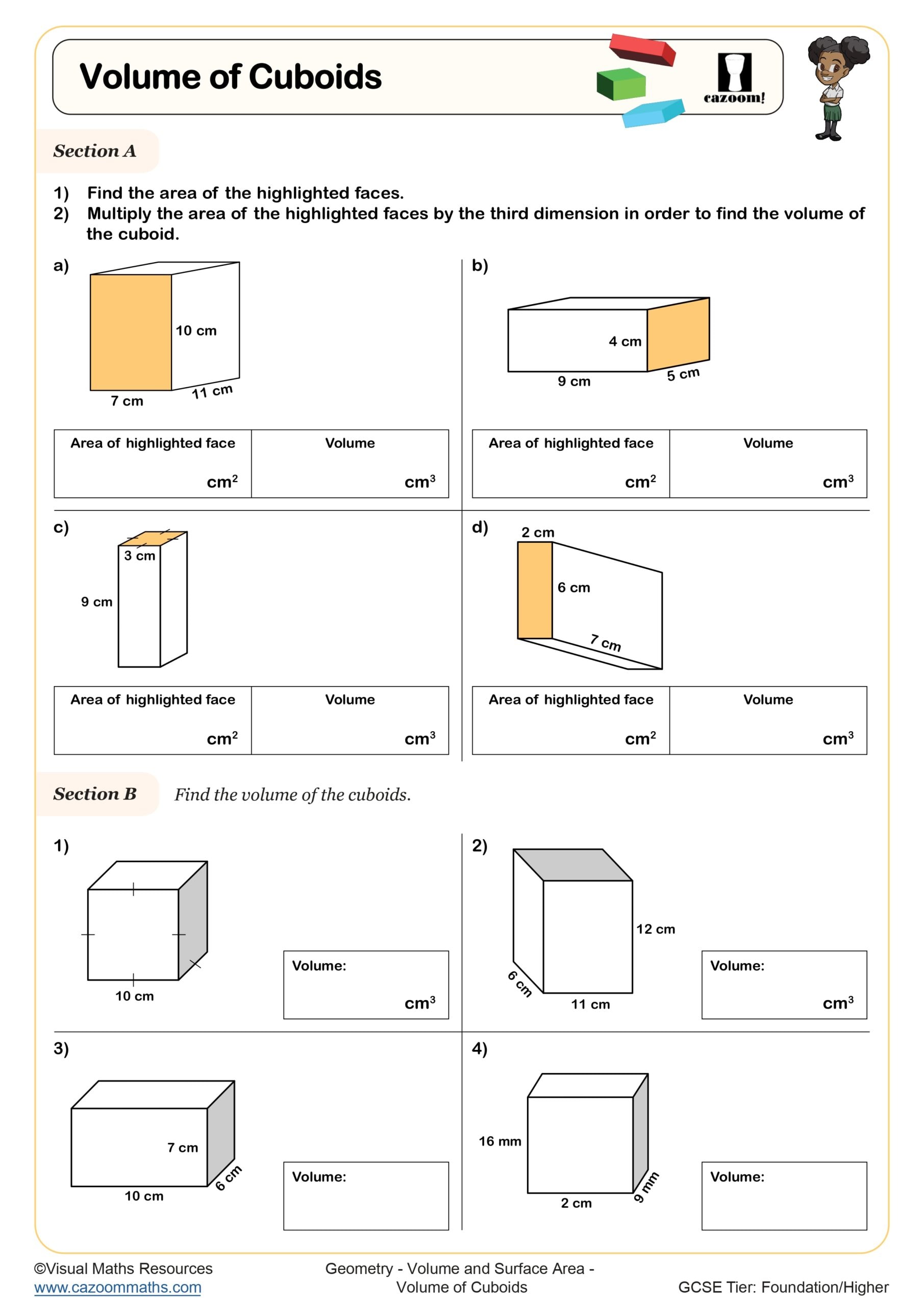
Volume of Cuboids made with Cubes
Year groups: 7, 8
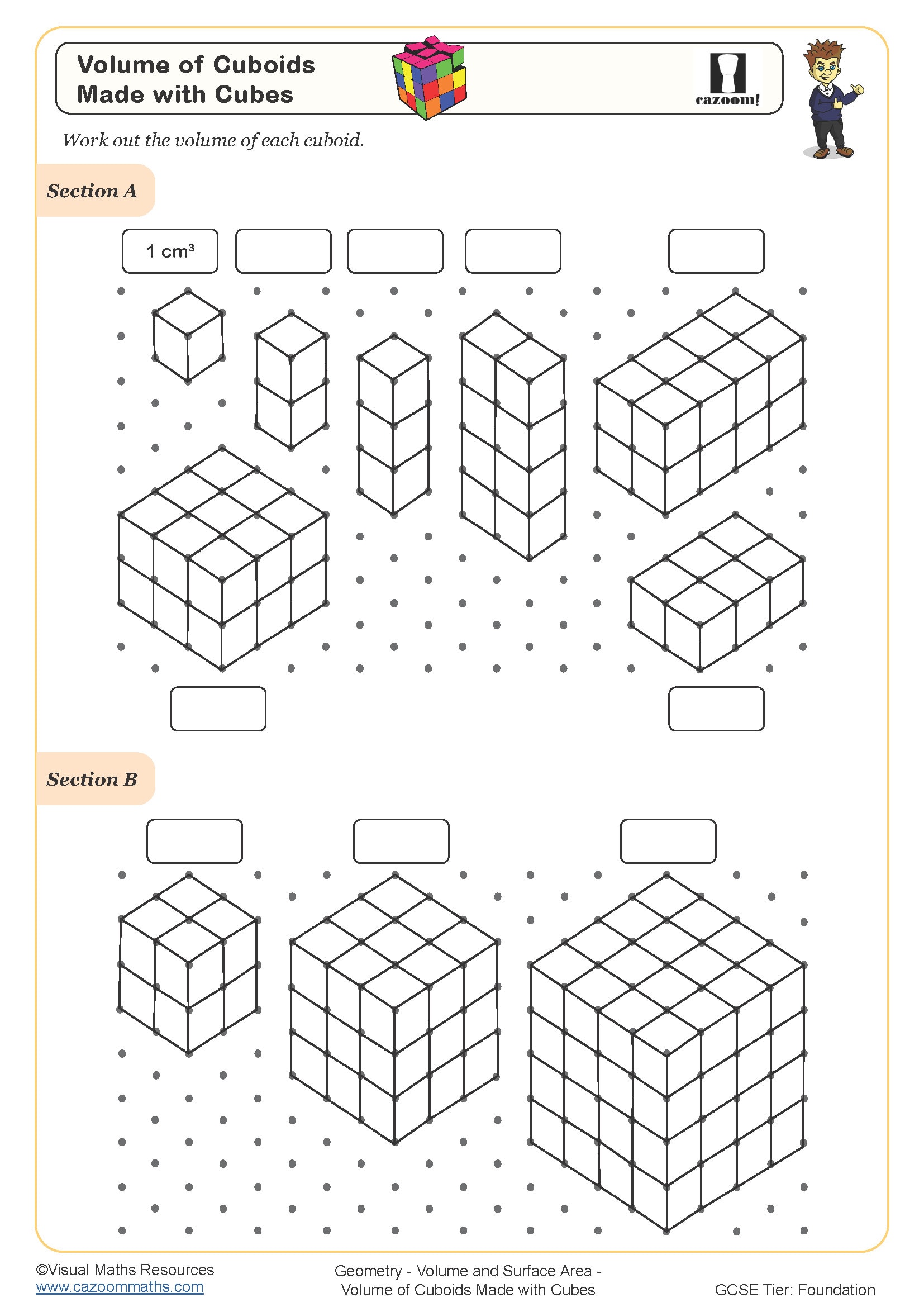
Volume of Prisms and Cylinders
Year groups: 8, 9
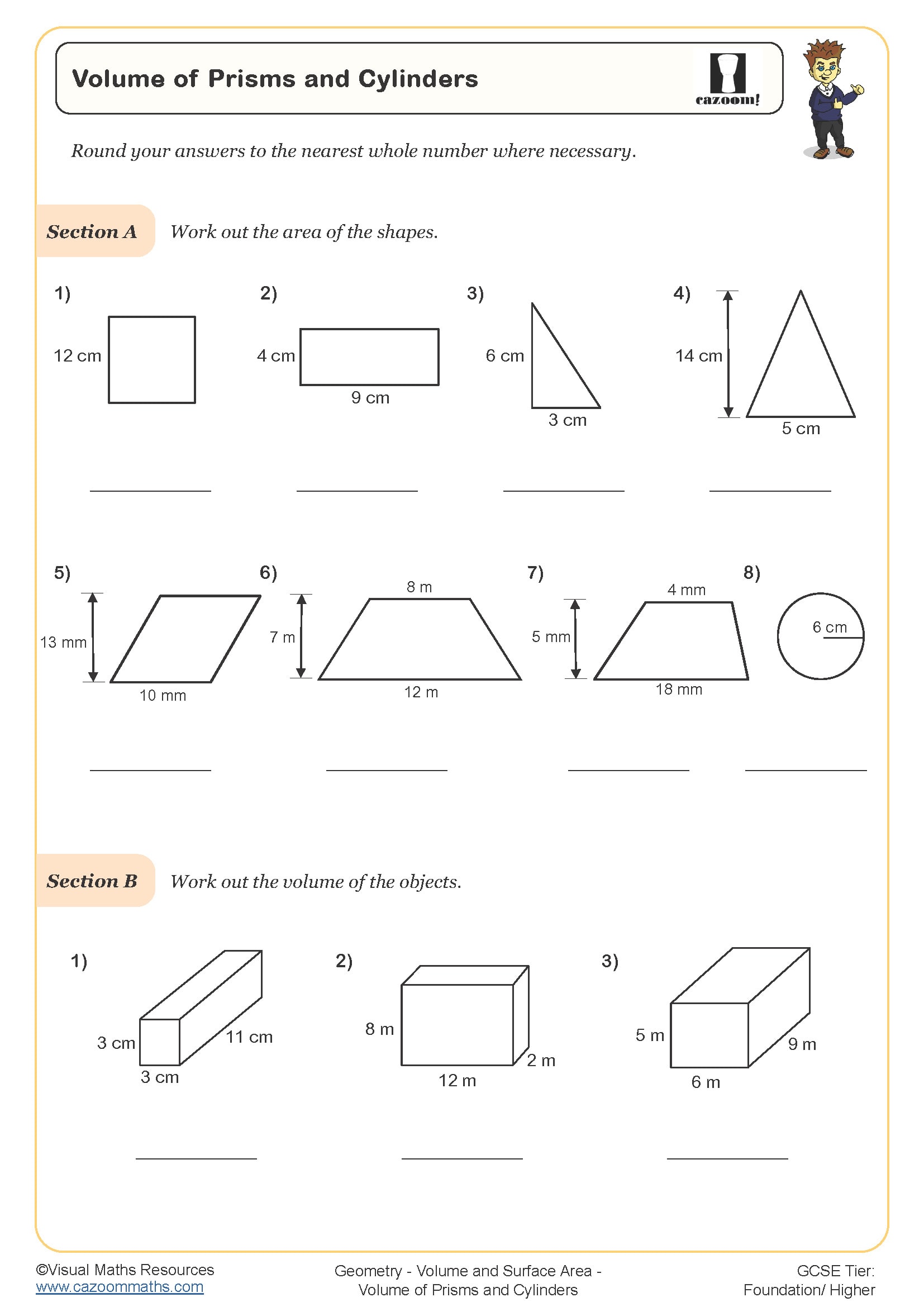
Frustums
Year groups: 9, 10
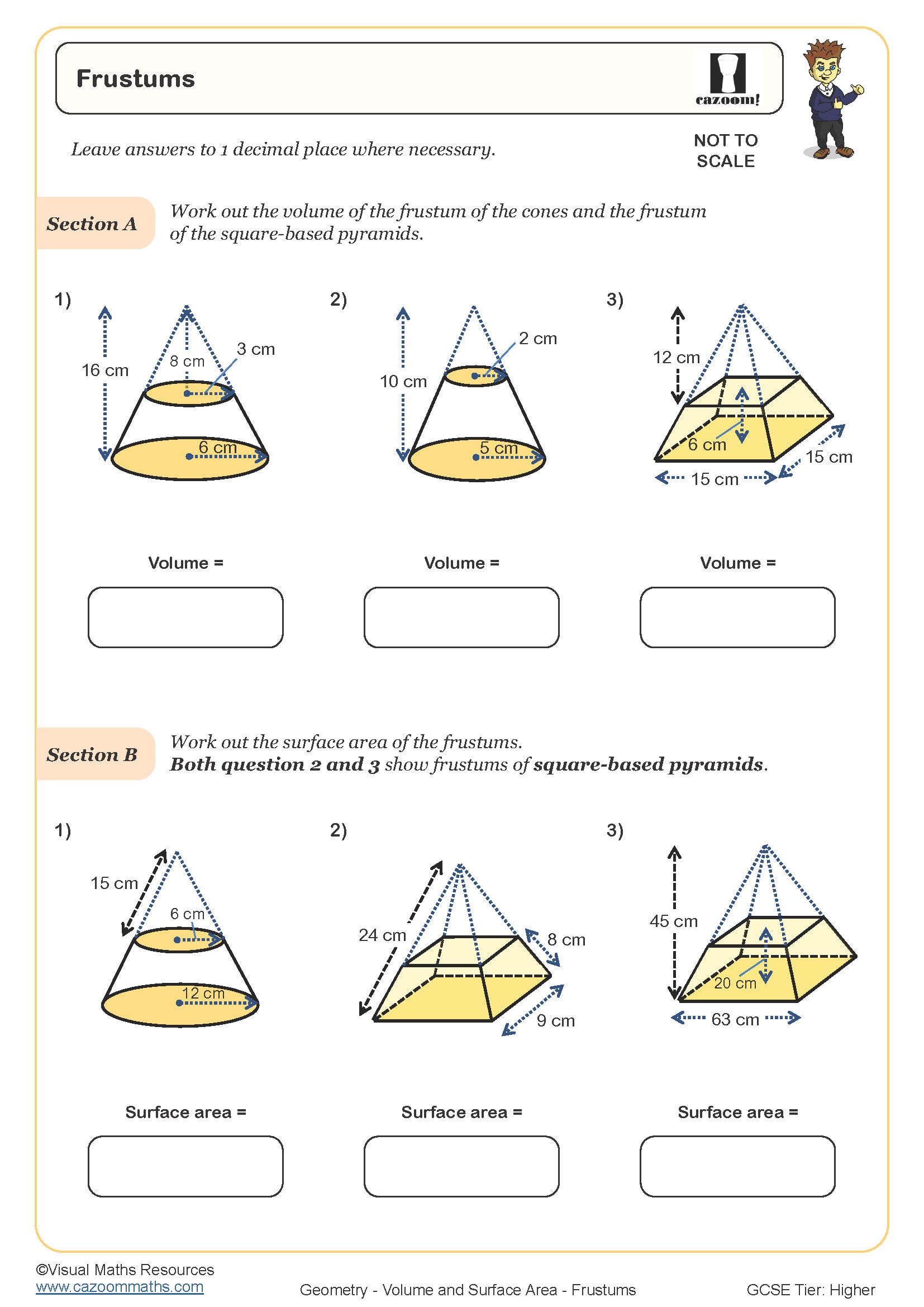
In Terms of Pi (C)
Year groups: 9, 10
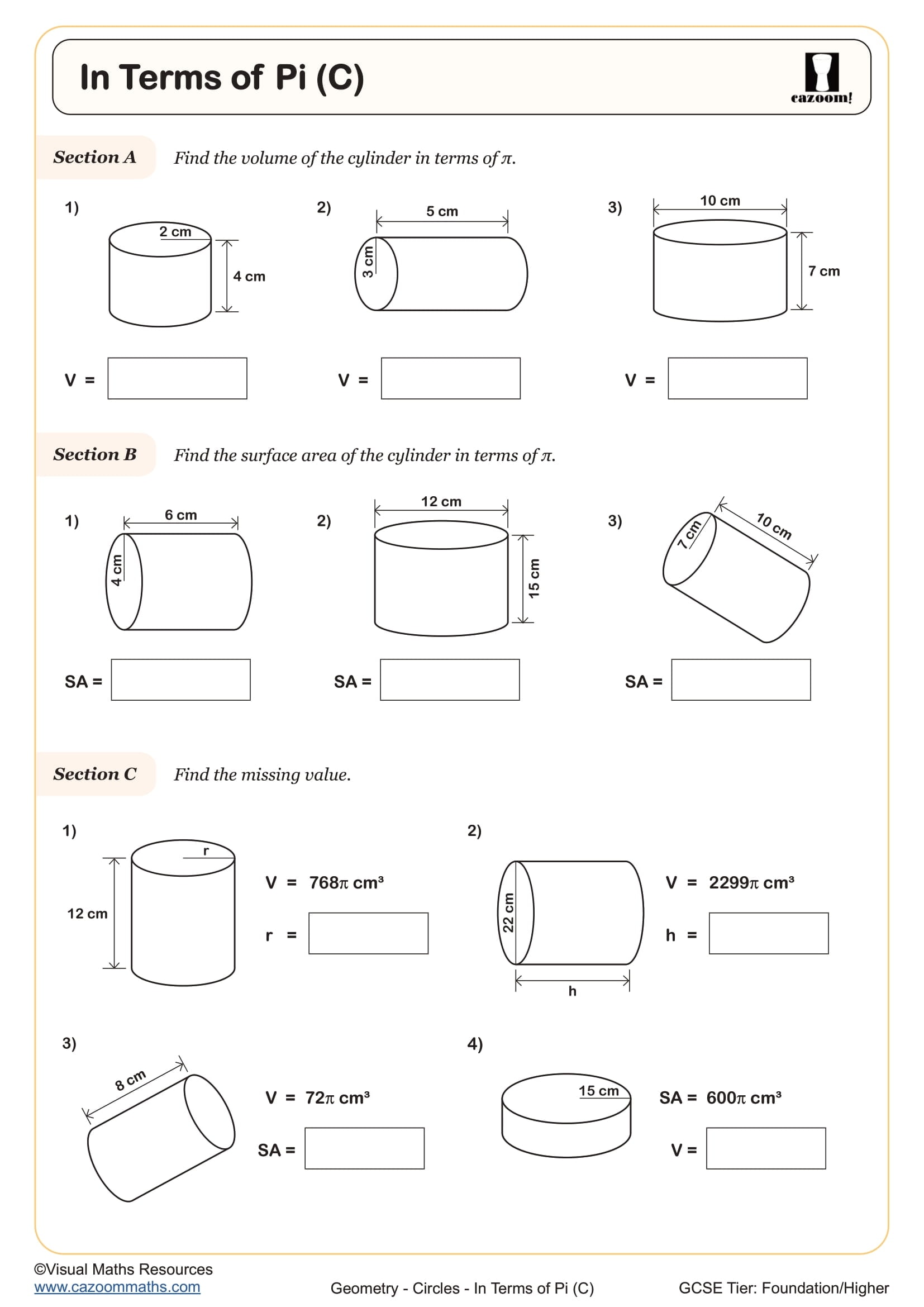
Recognising Prisms
Year groups: 9, 10
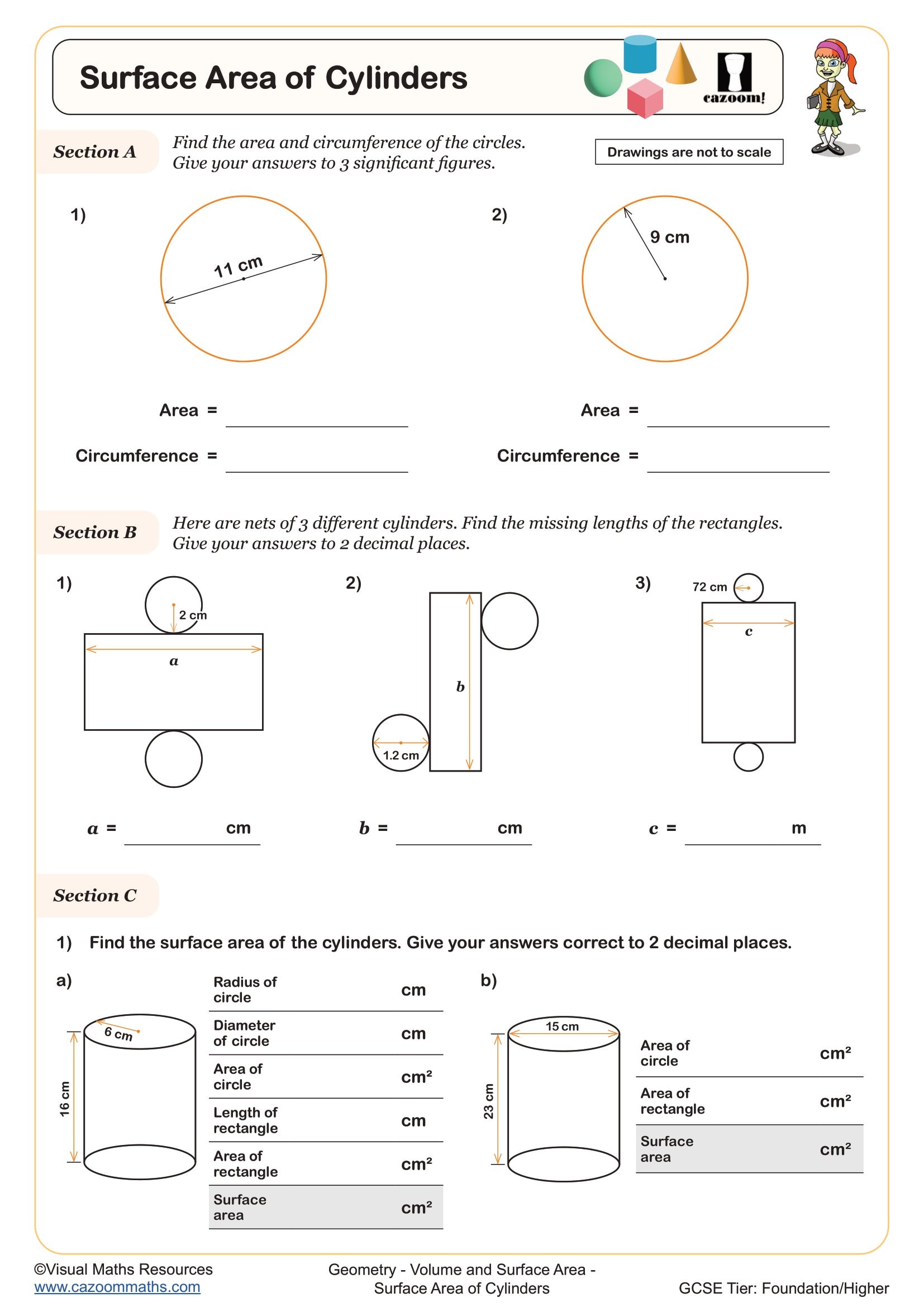
Surface Area of Cylinders
Year groups: 9, 10
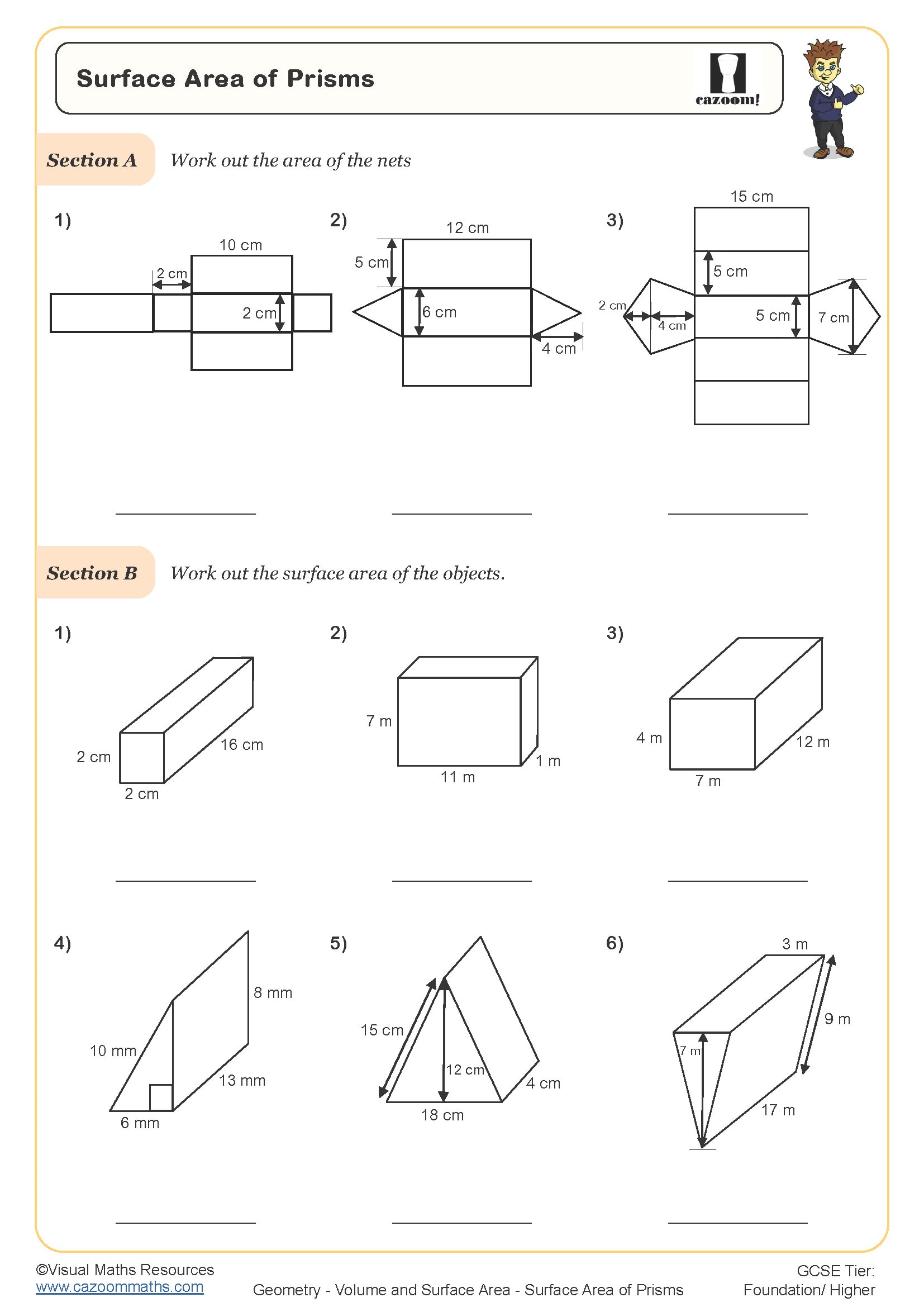
Surface Area of Prisms
Year groups: 9, 10
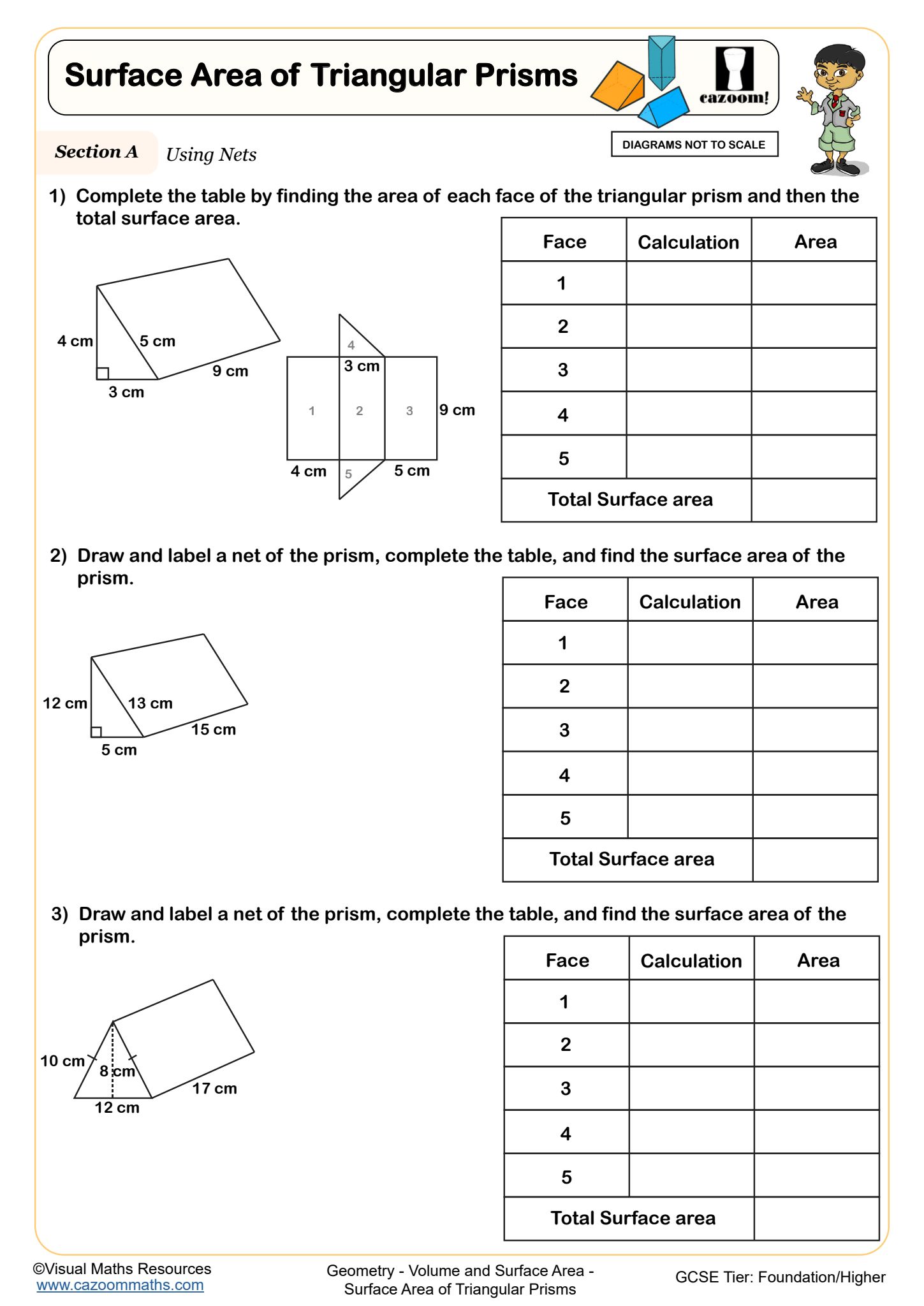
Surface Area of Triangular Prisms
Year groups: 9, 10
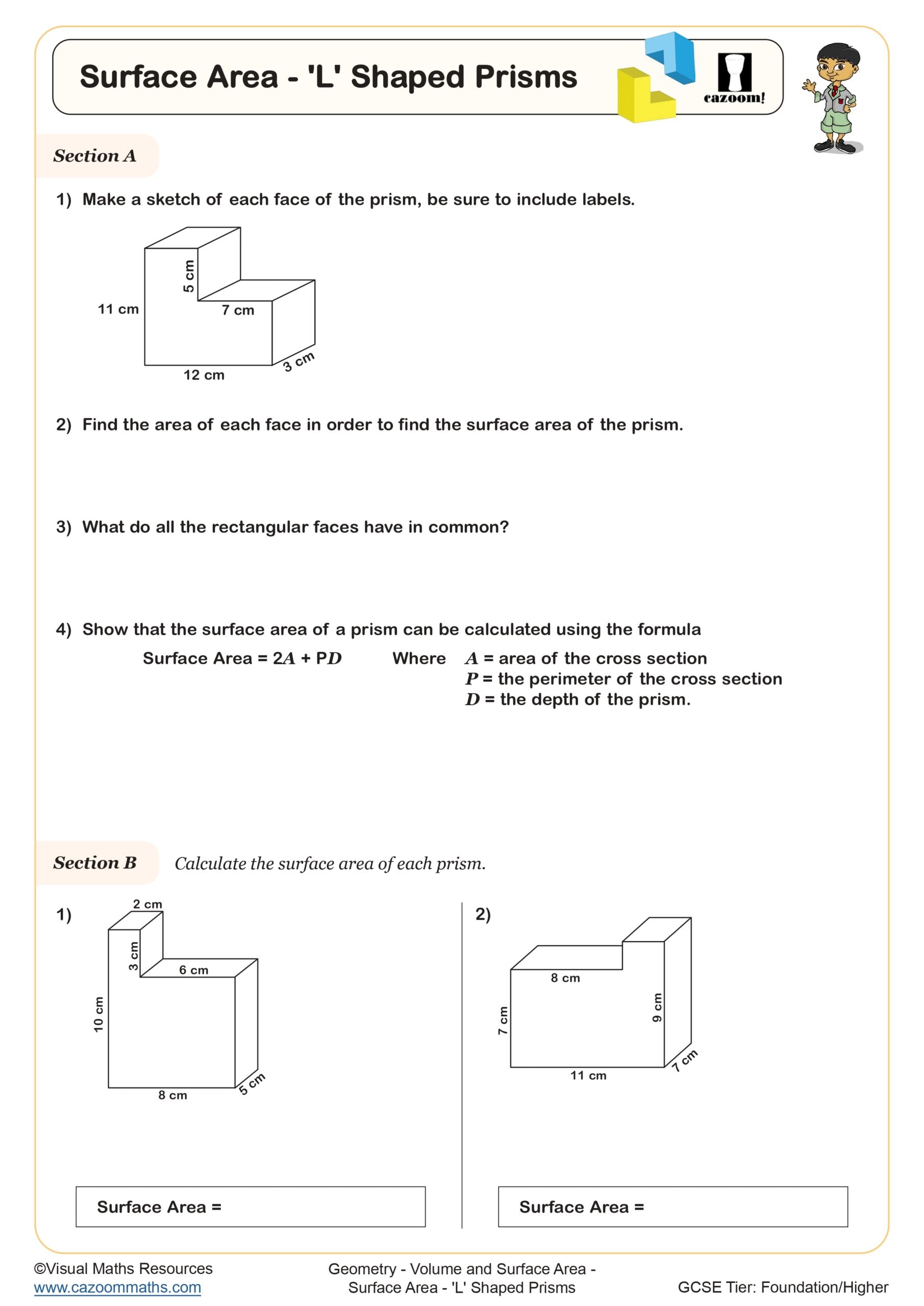
Surface Area- 'L' Shaped Prisms
Year groups: 9, 10
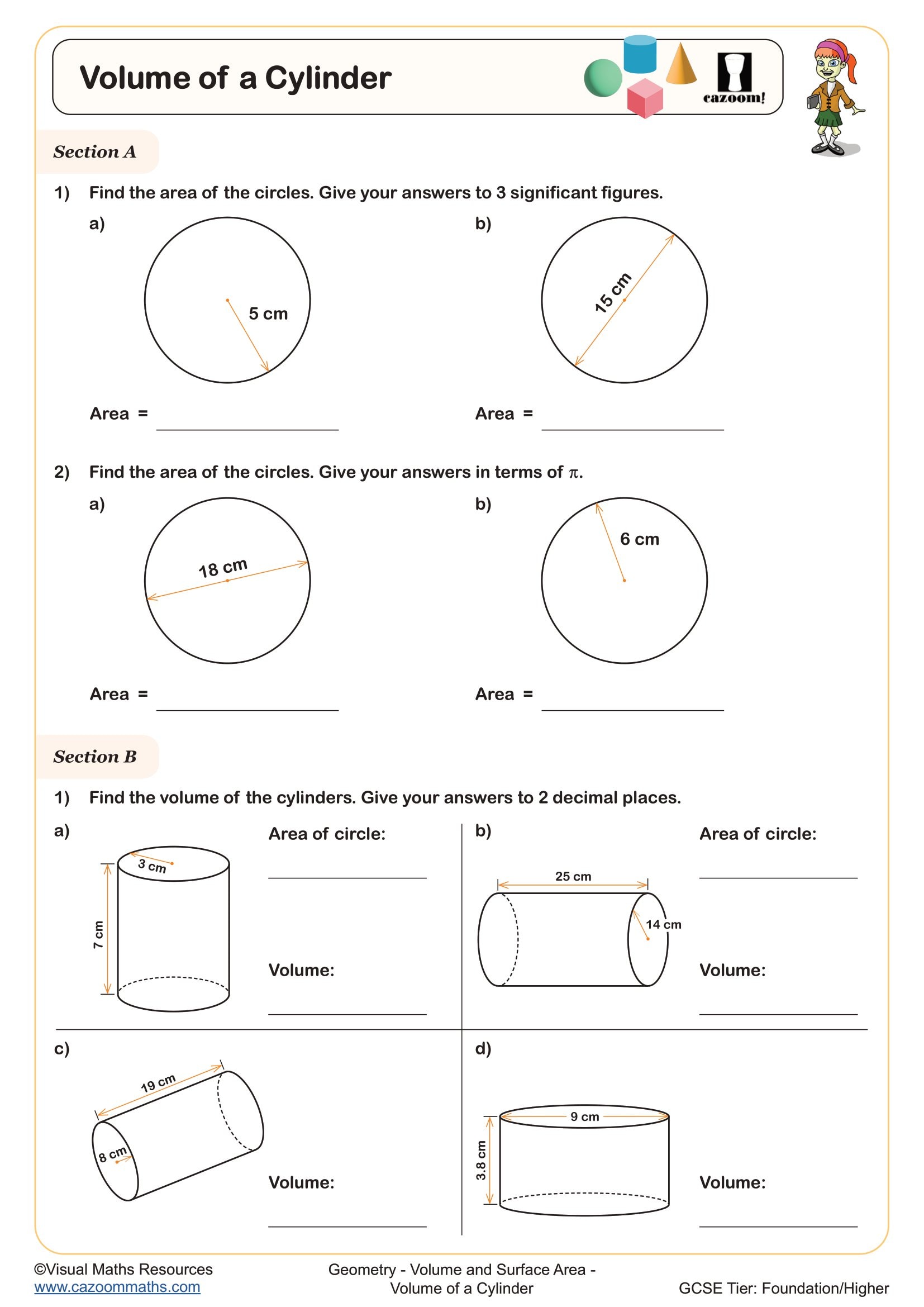
Volume of a Cylinder
Year groups: 9, 10
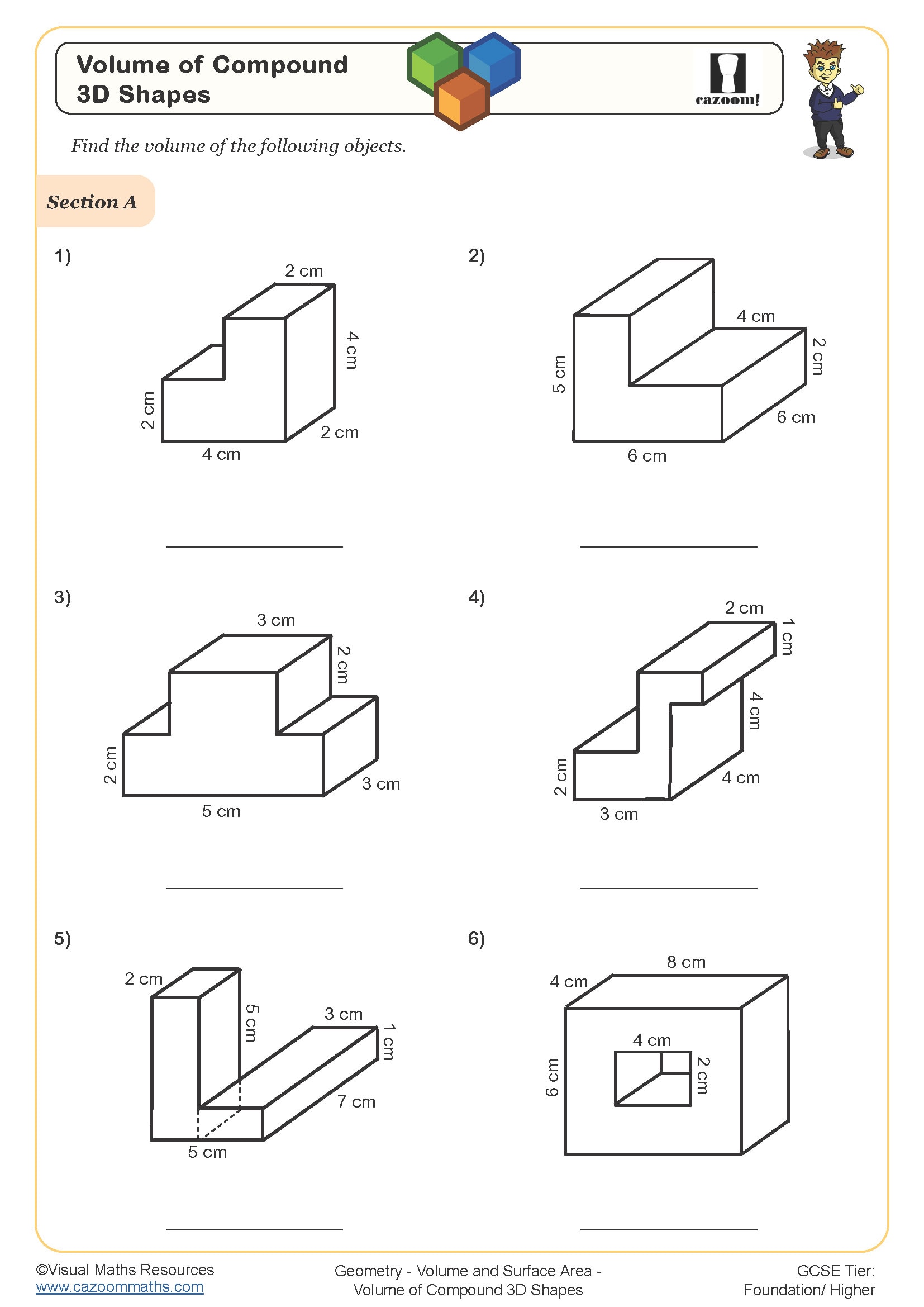
Volume of Compound 3D shapes
Year groups: 9, 10
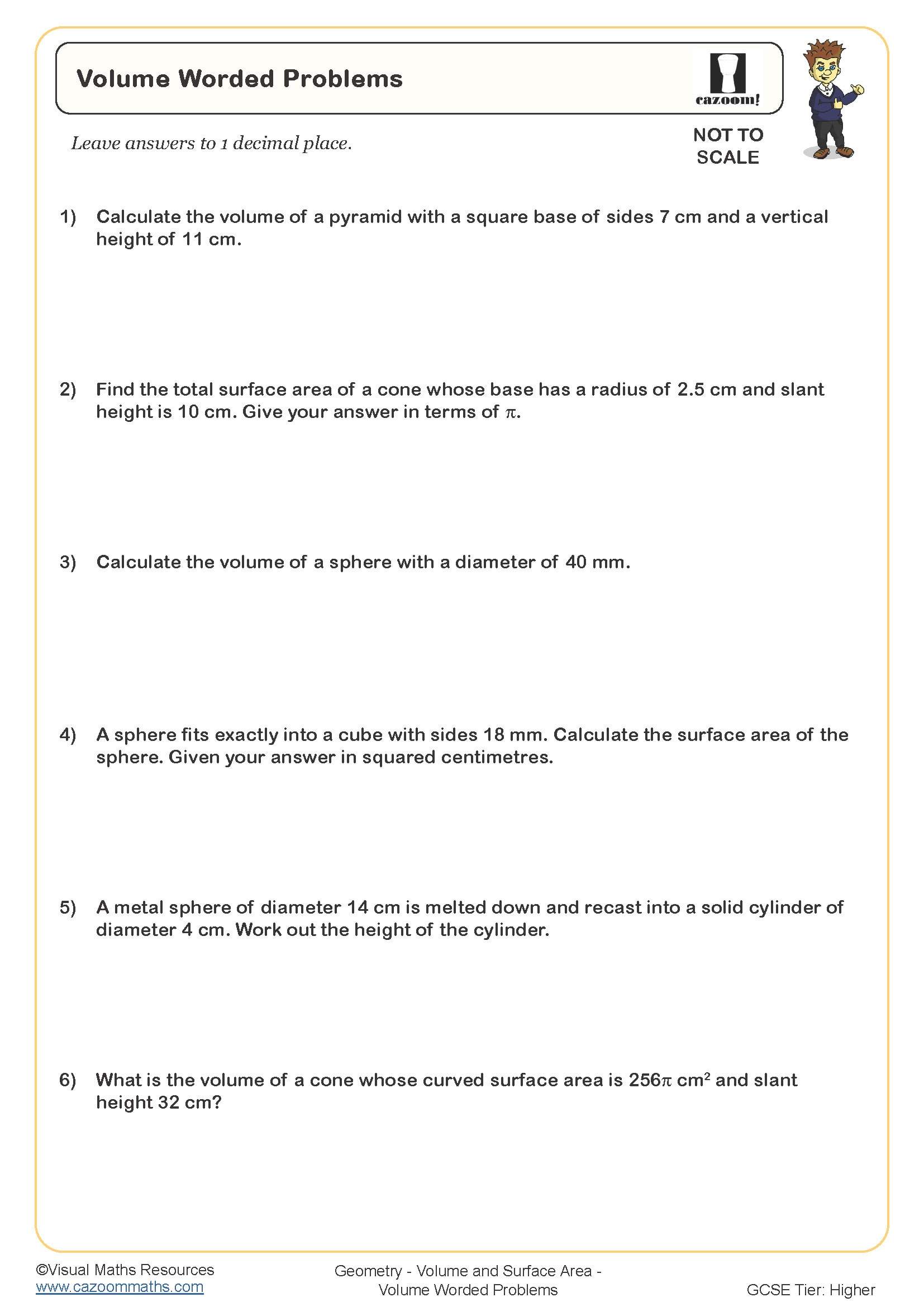
Volume Word Problems
Year groups: 9, 10
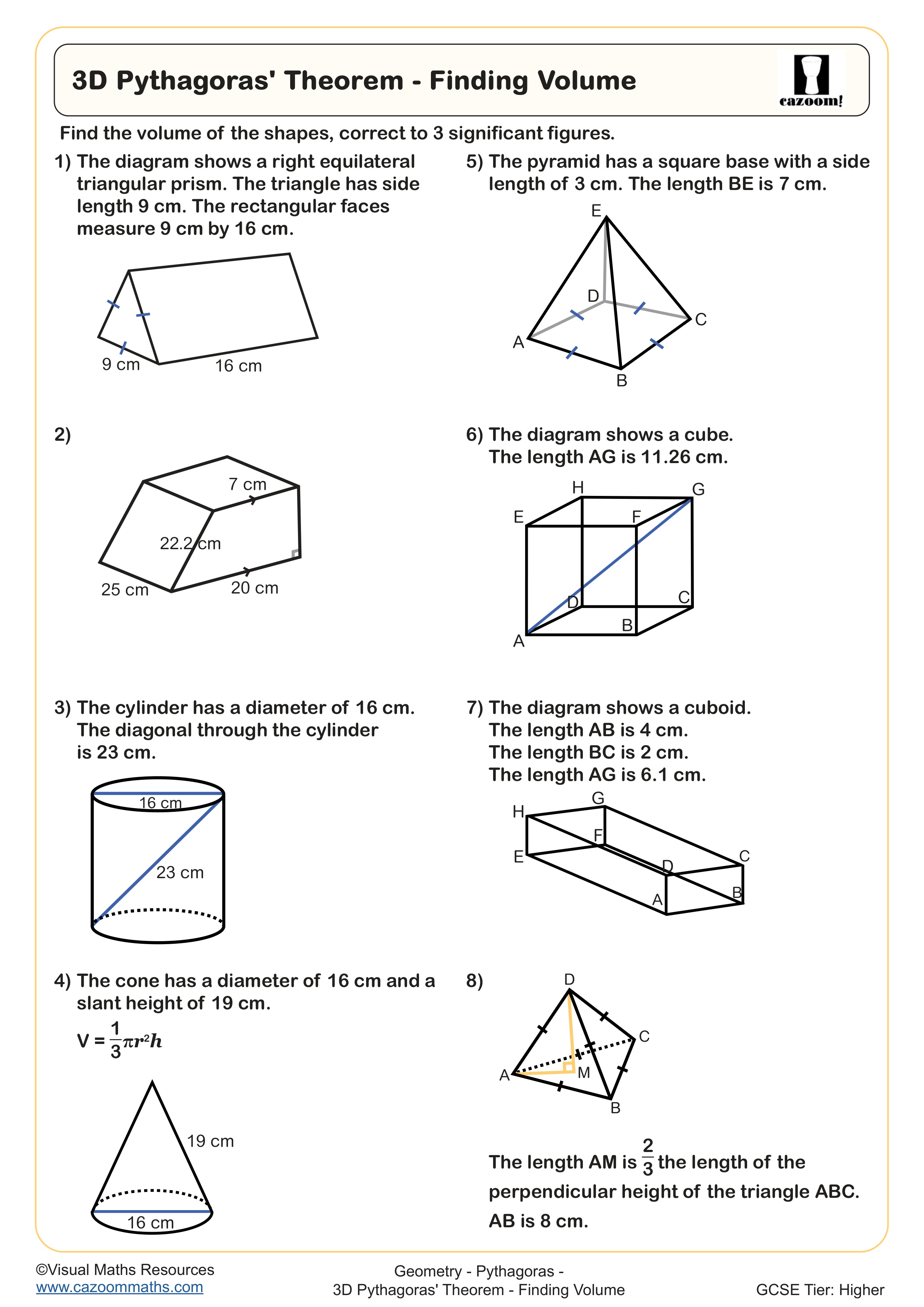
3D Pythagoras' Theorem - Finding Volume
Year groups: 10, 11
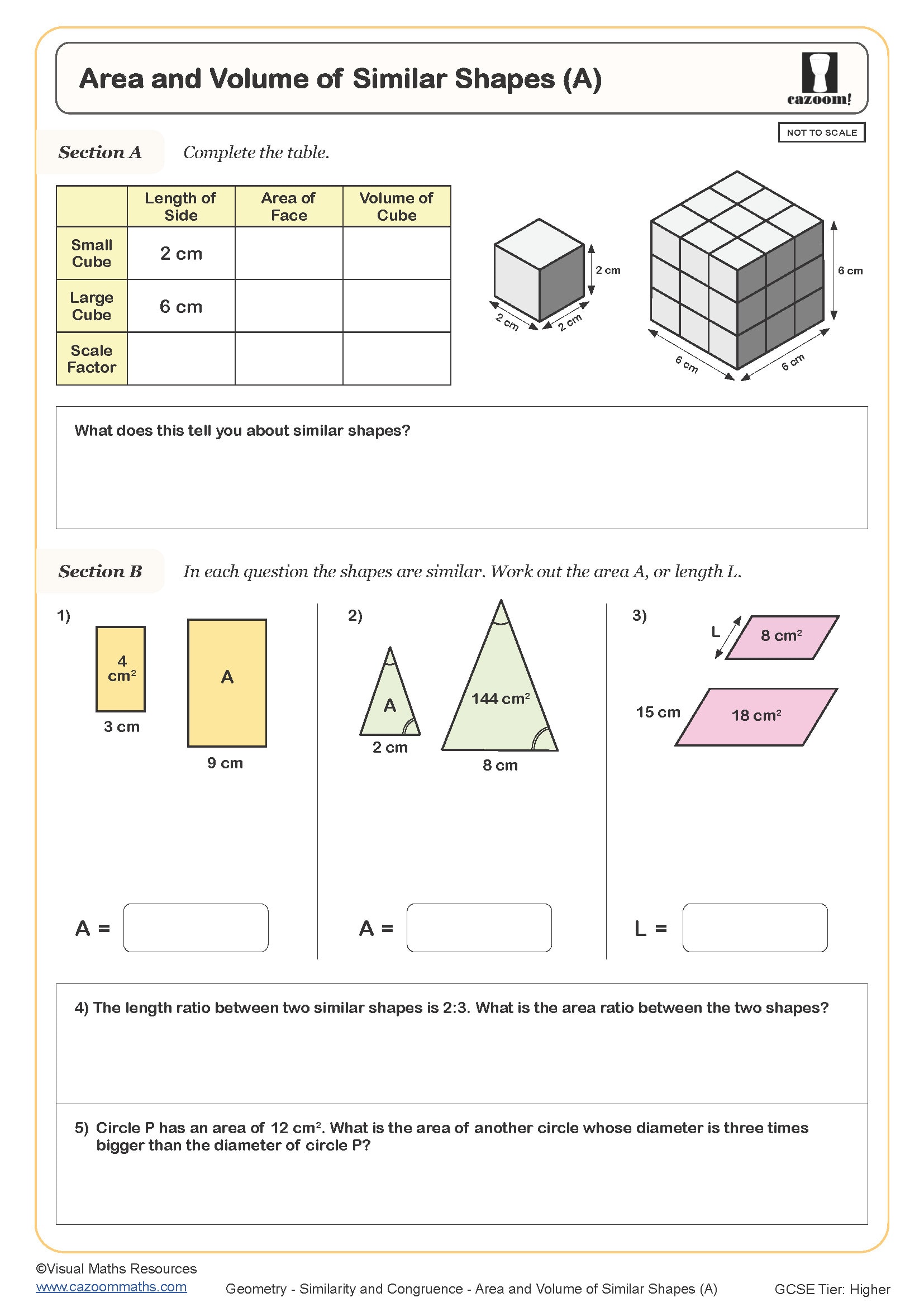
Area and Volume of Similar Shapes (A)
Year groups: 10, 11
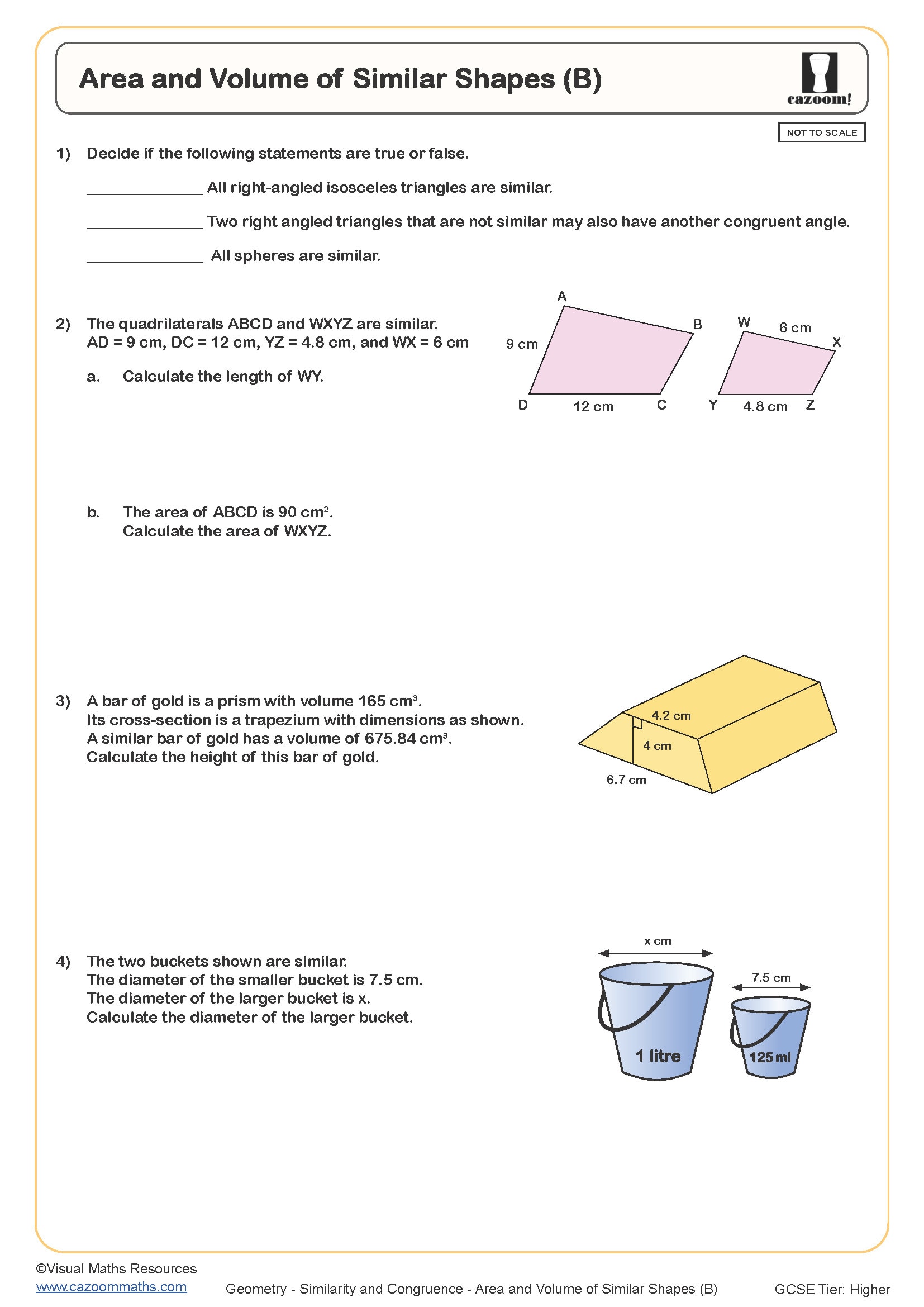
Area and Volume of Similar Shapes (B)
Year groups: 10, 11
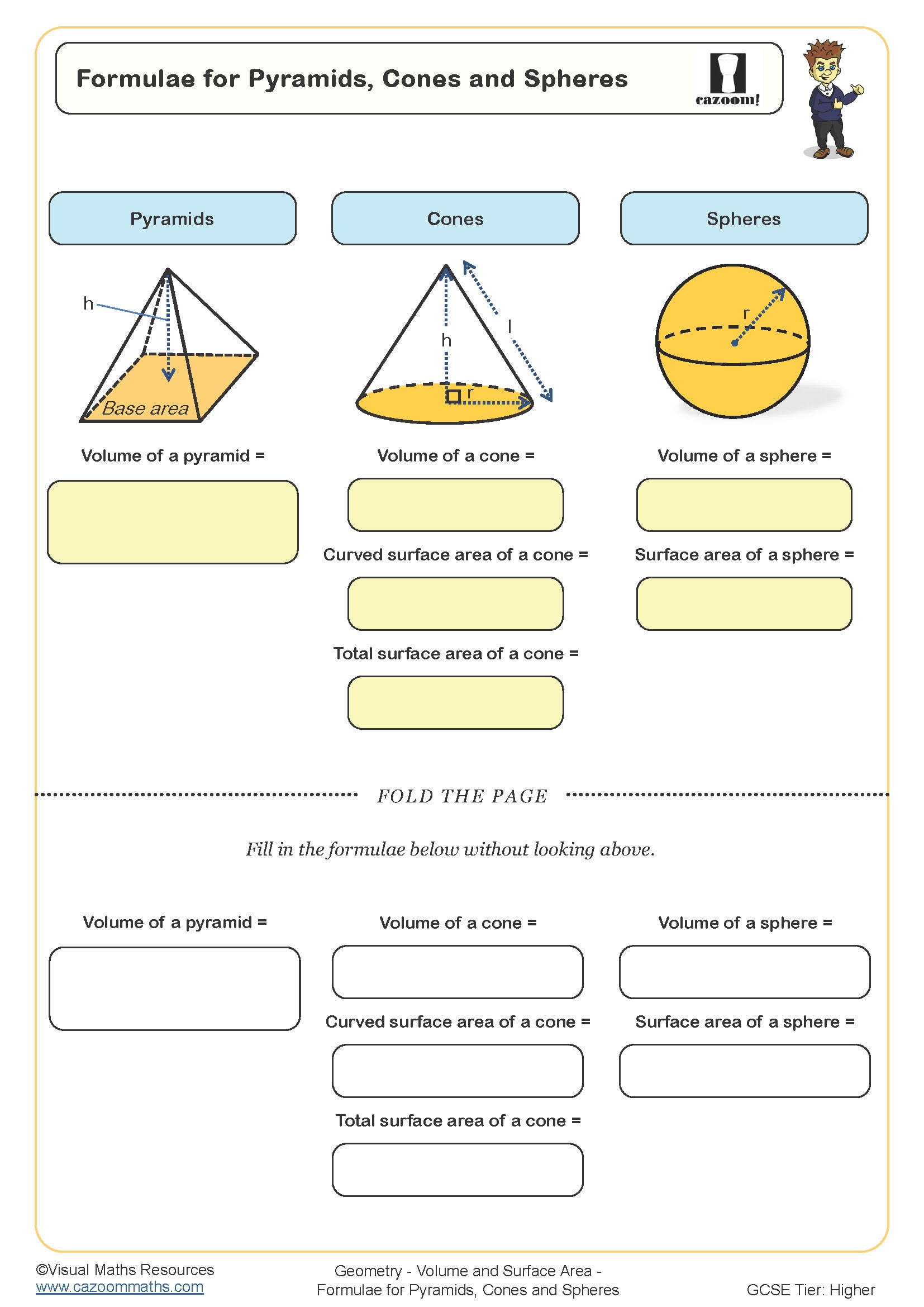
Formulae for Pyramids Cones and Spheres
Year groups: 10, 11
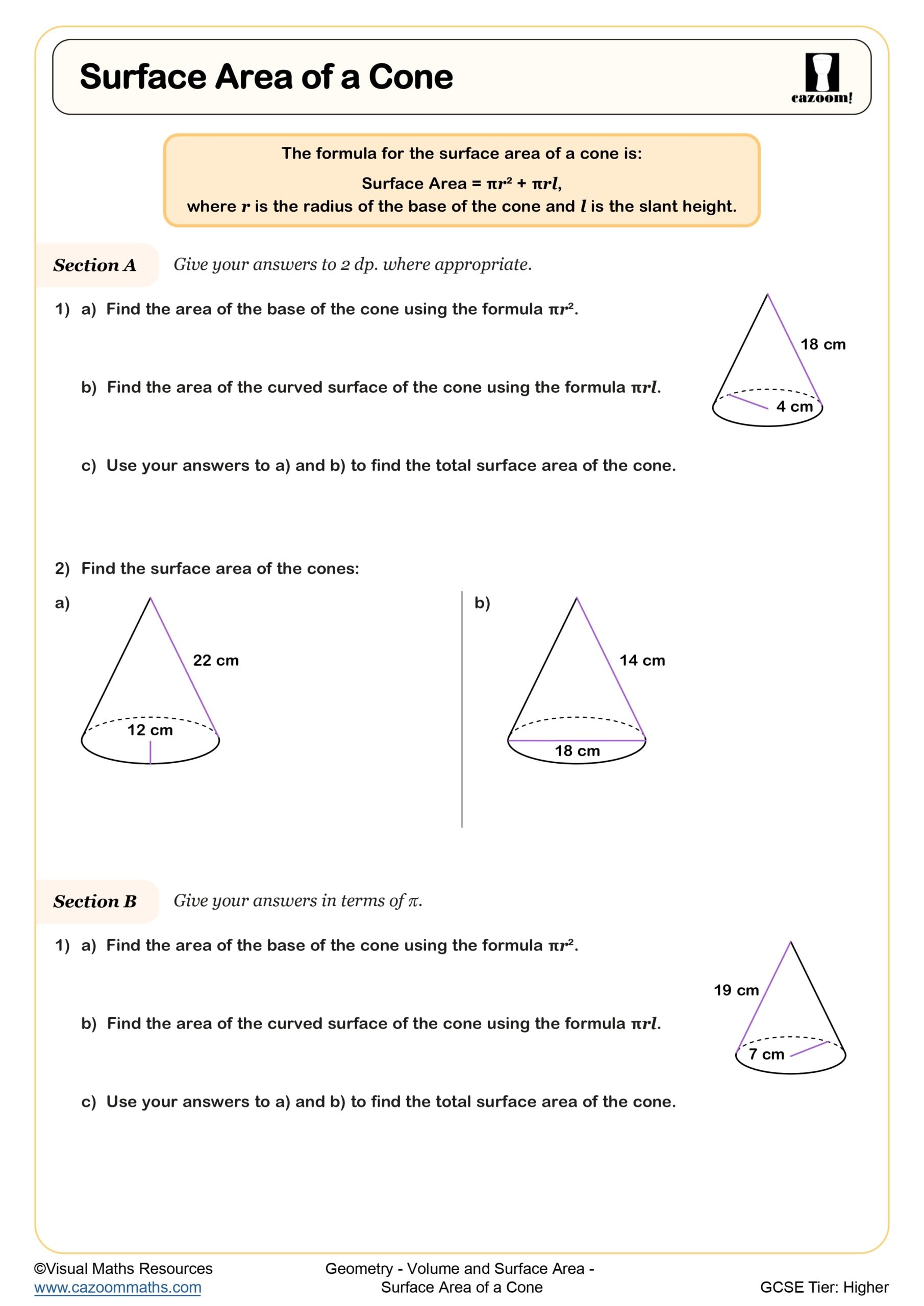
Surface Area of a Cone
Year groups: 10, 11
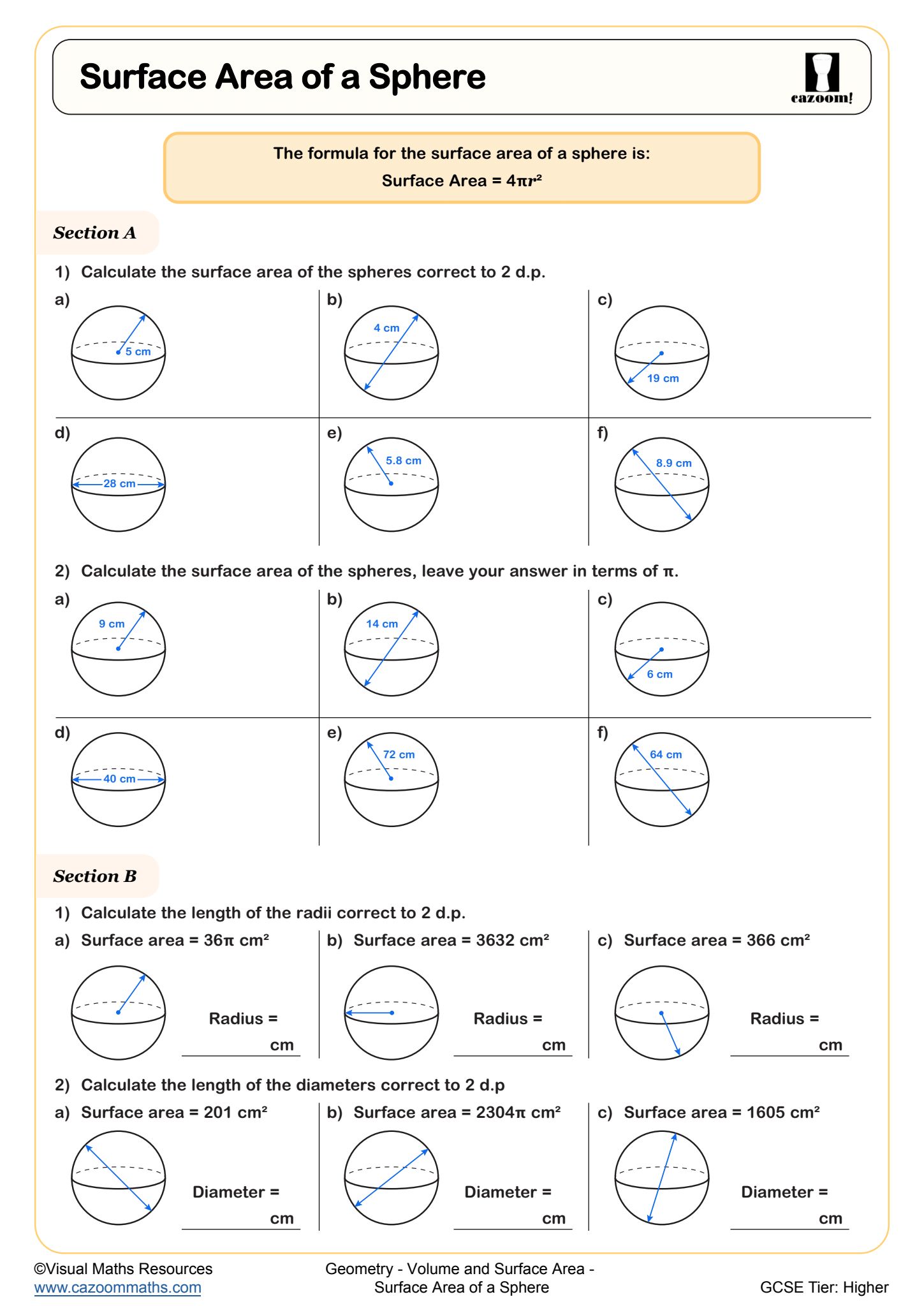
Surface Area of a Sphere
Year groups: 10, 11
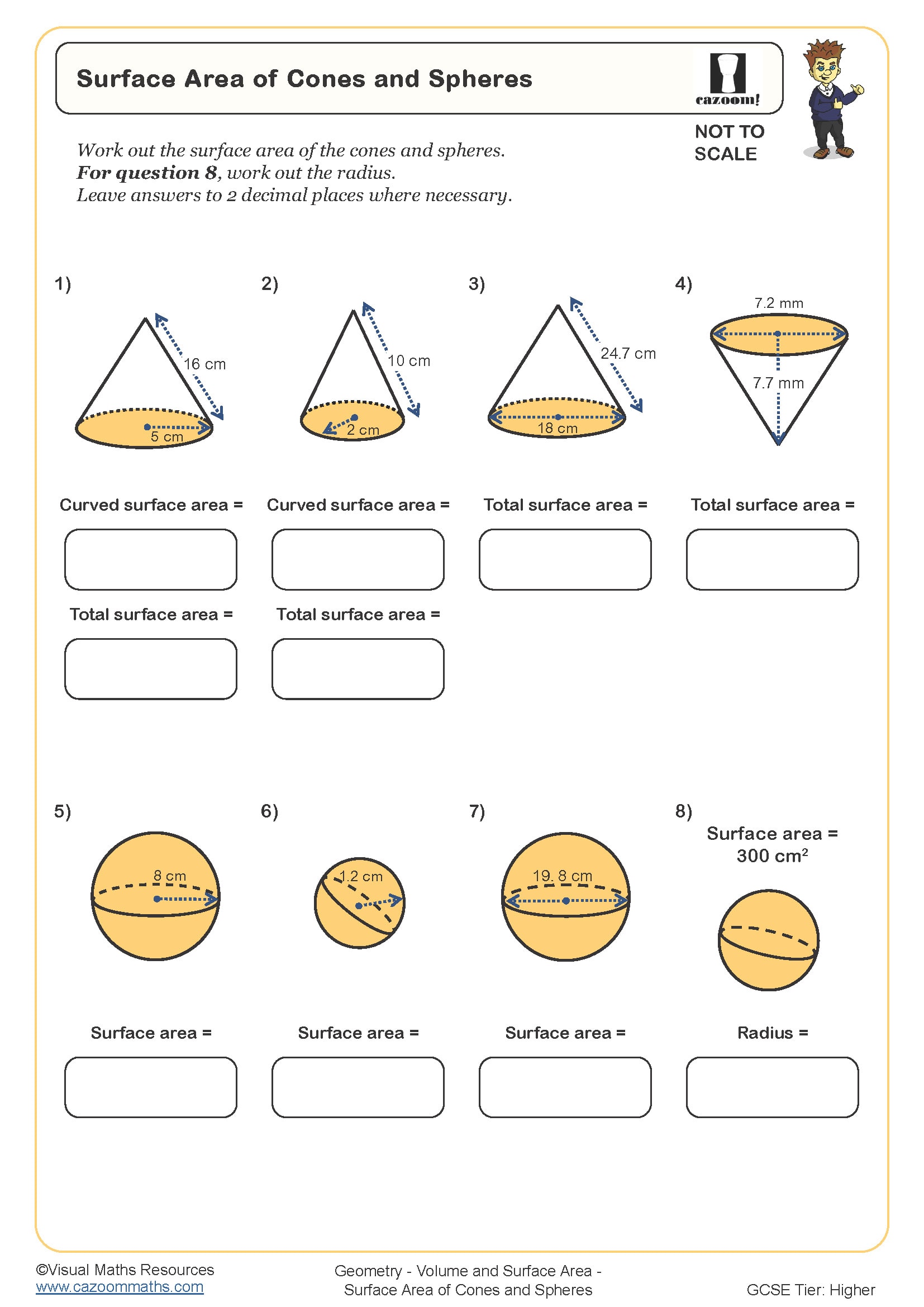
Surface Area of Cones and Spheres
Year groups: 10, 11
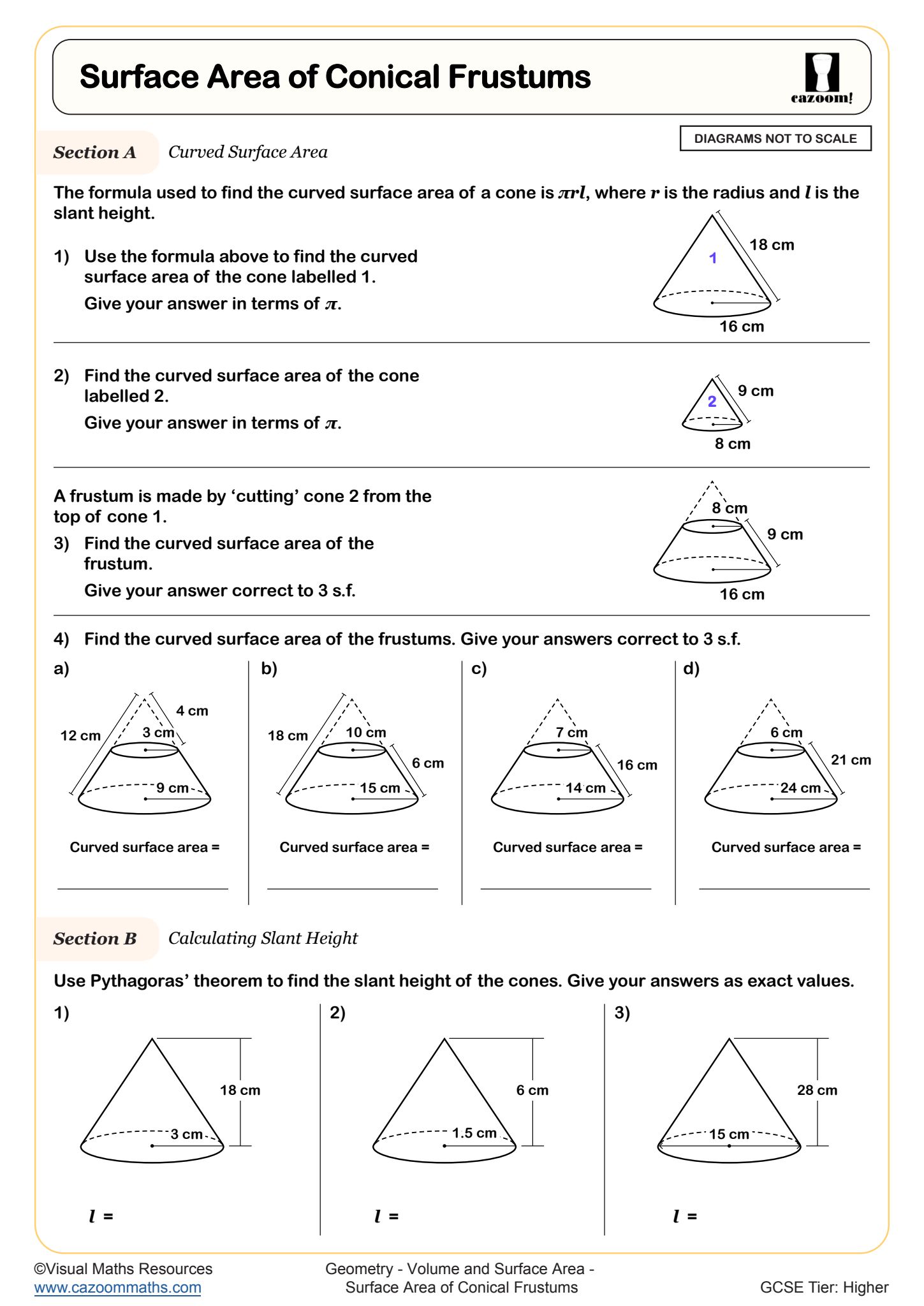
Surface Area of Conical Frustums
Year groups: 10, 11
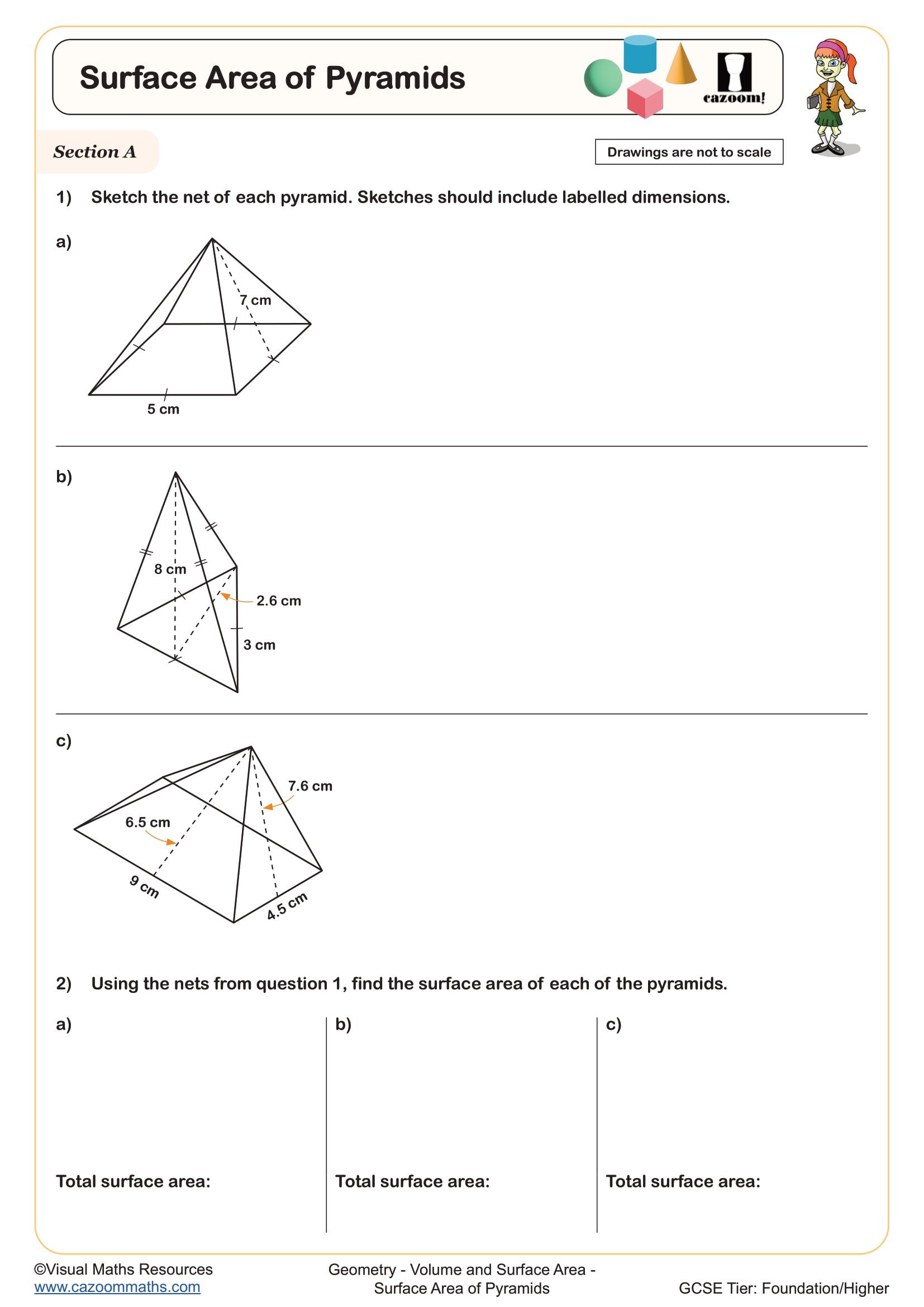
Surface Area of Pyramids
Year groups: 10, 11
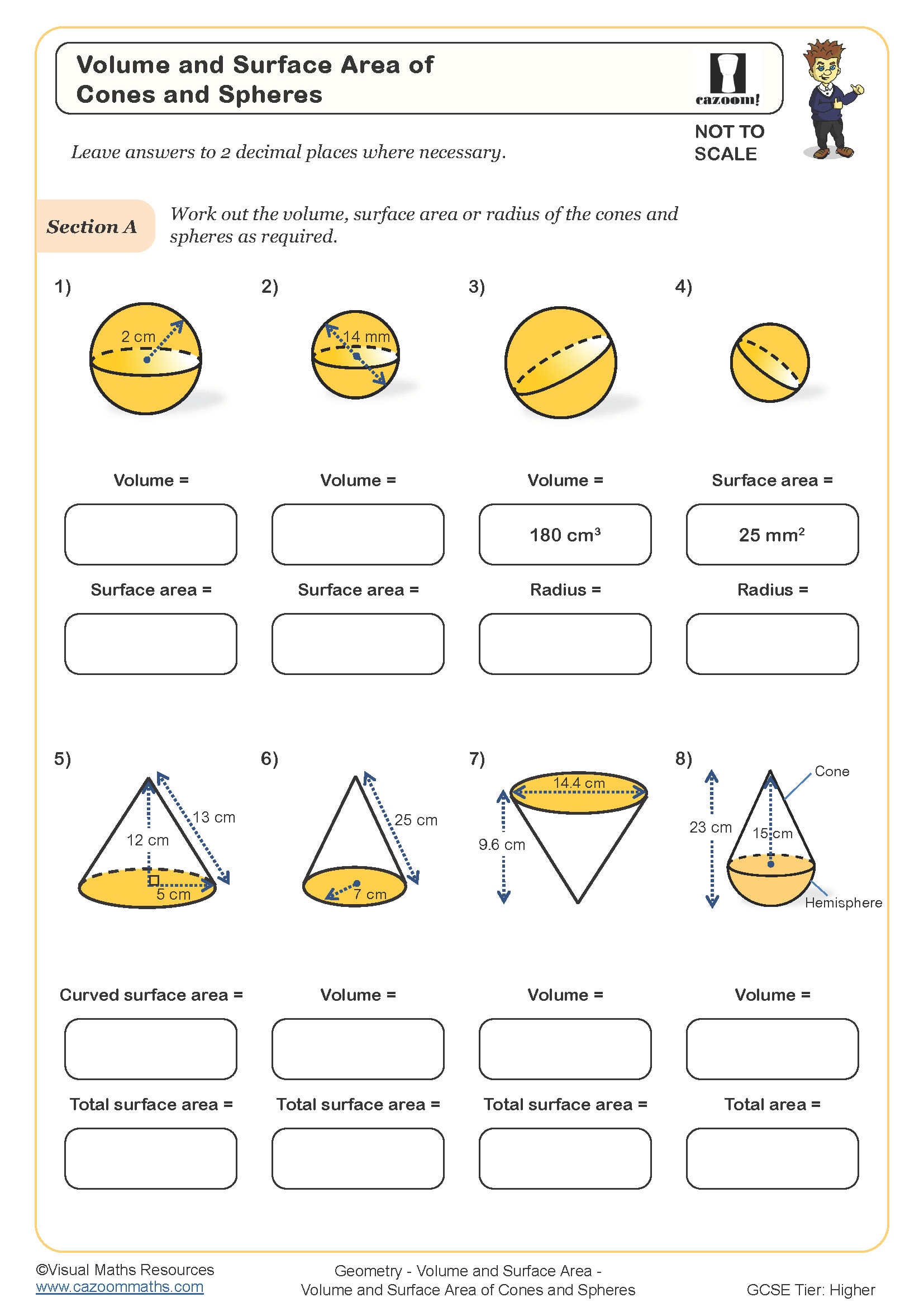
Volume and Surface Area of Cones and Spheres
Year groups: 10, 11
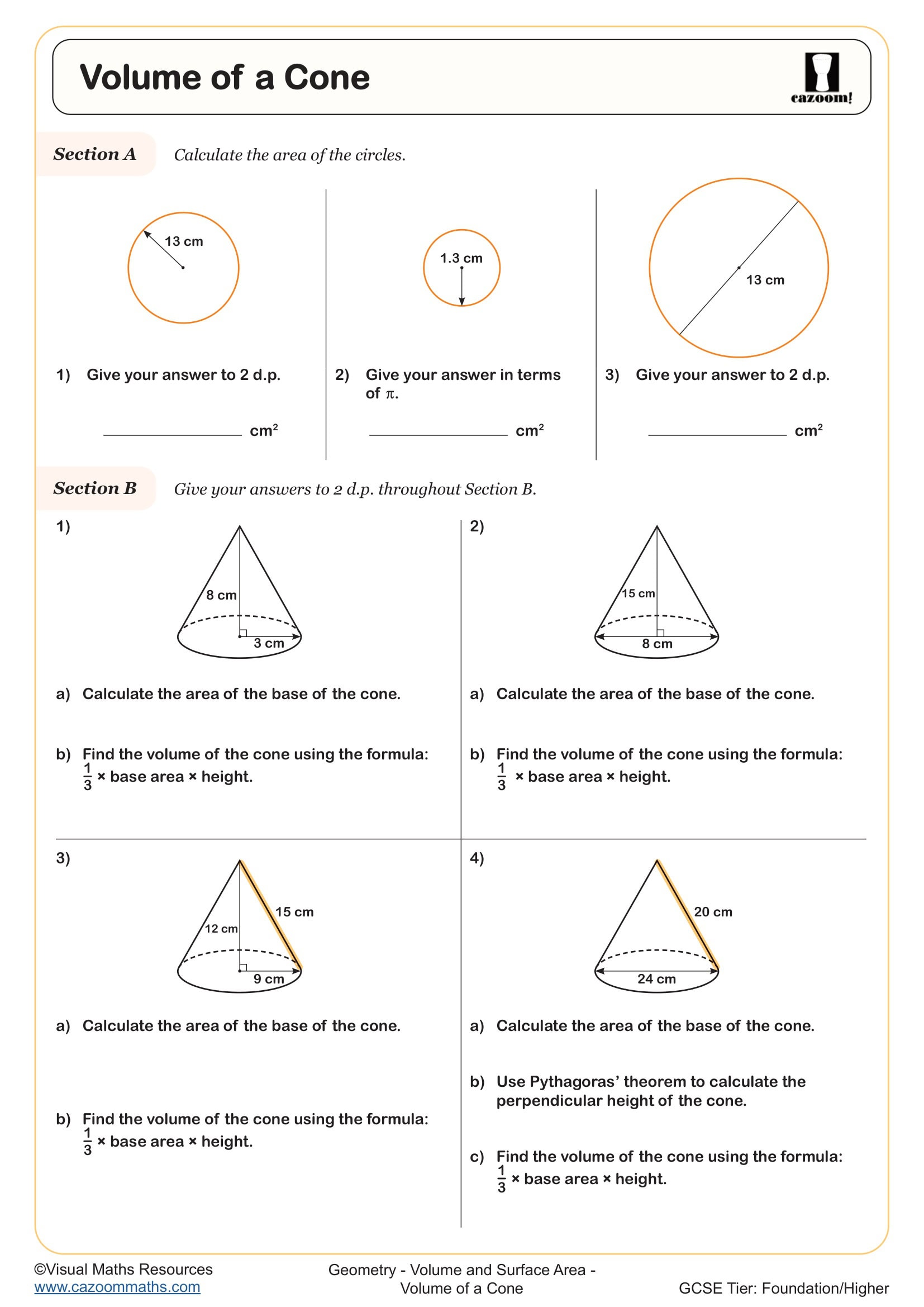
Volume of a Cone
Year groups: 10, 11
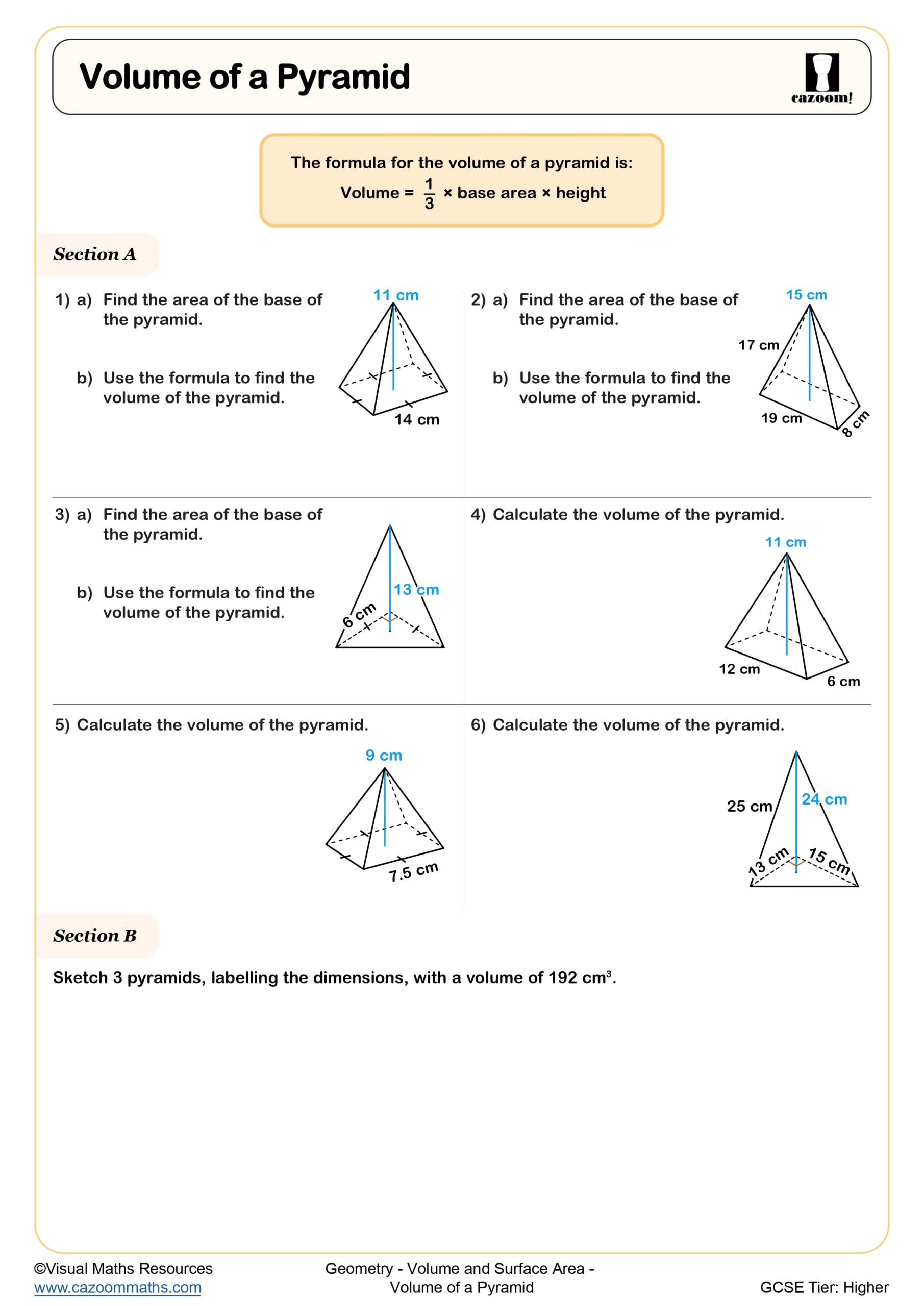
Volume of a Pyramid
Year groups: 10, 11
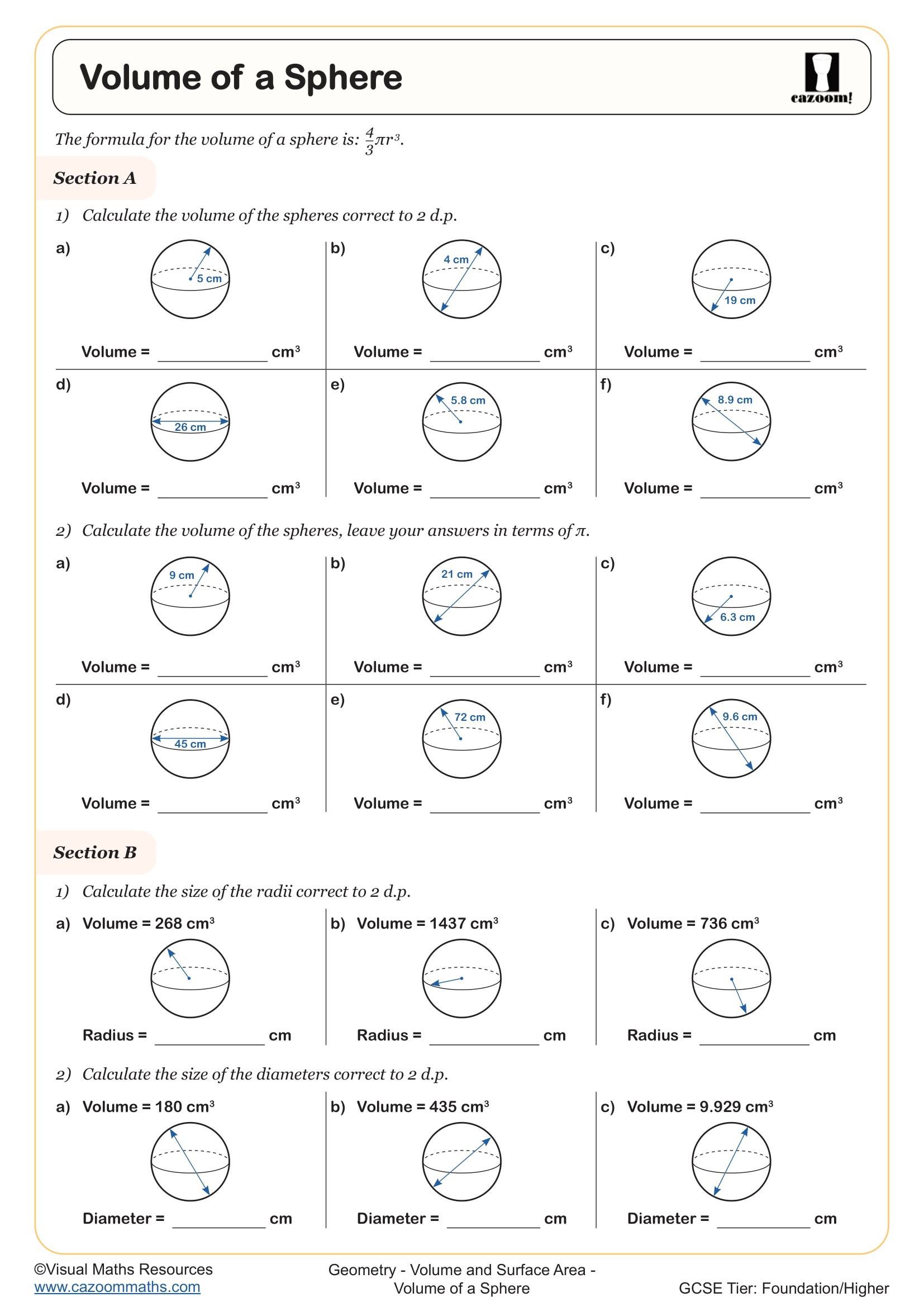
Volume of a Sphere
Year groups: 10, 11
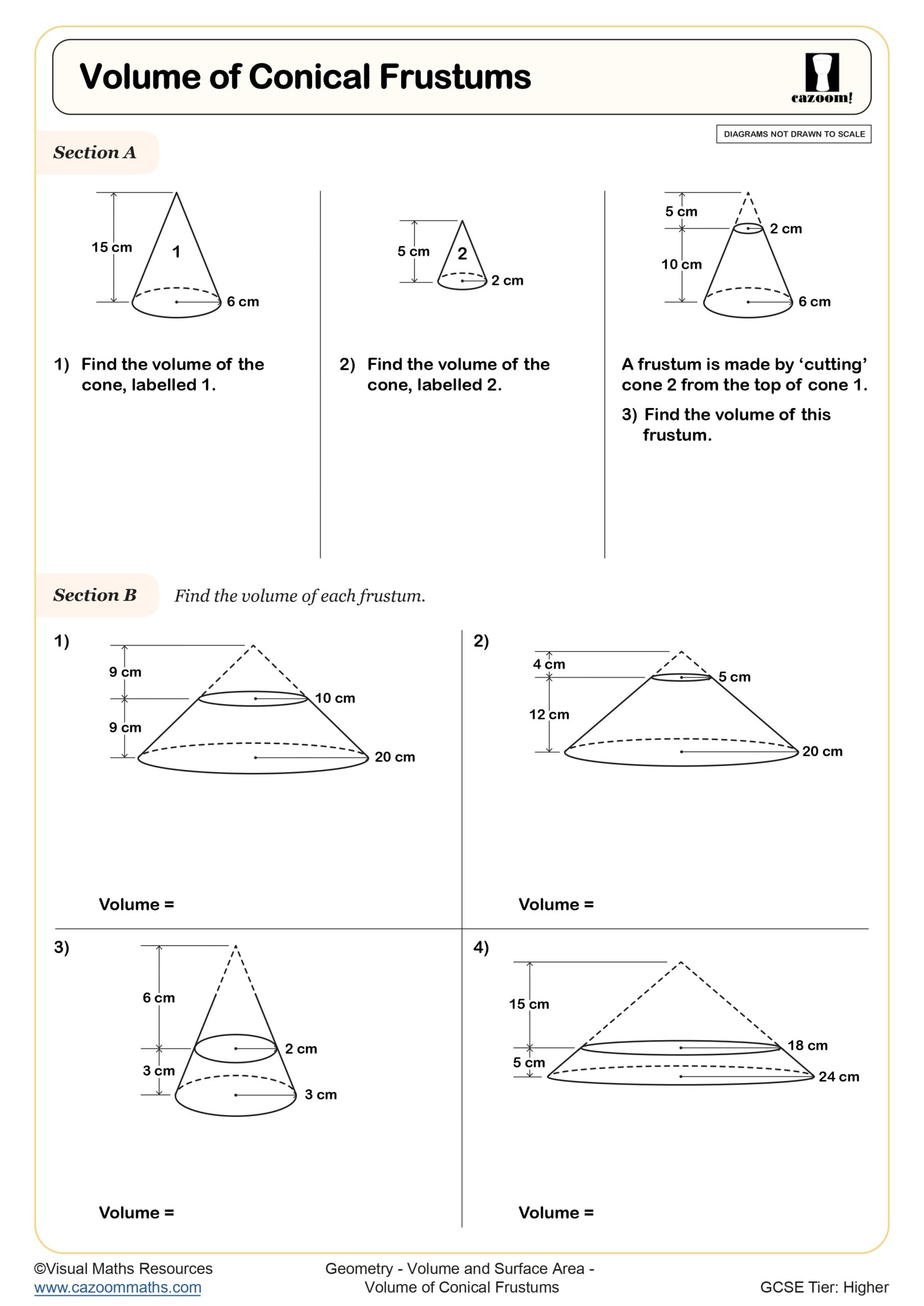
Volume of Conical Frustums
Year groups: 10, 11
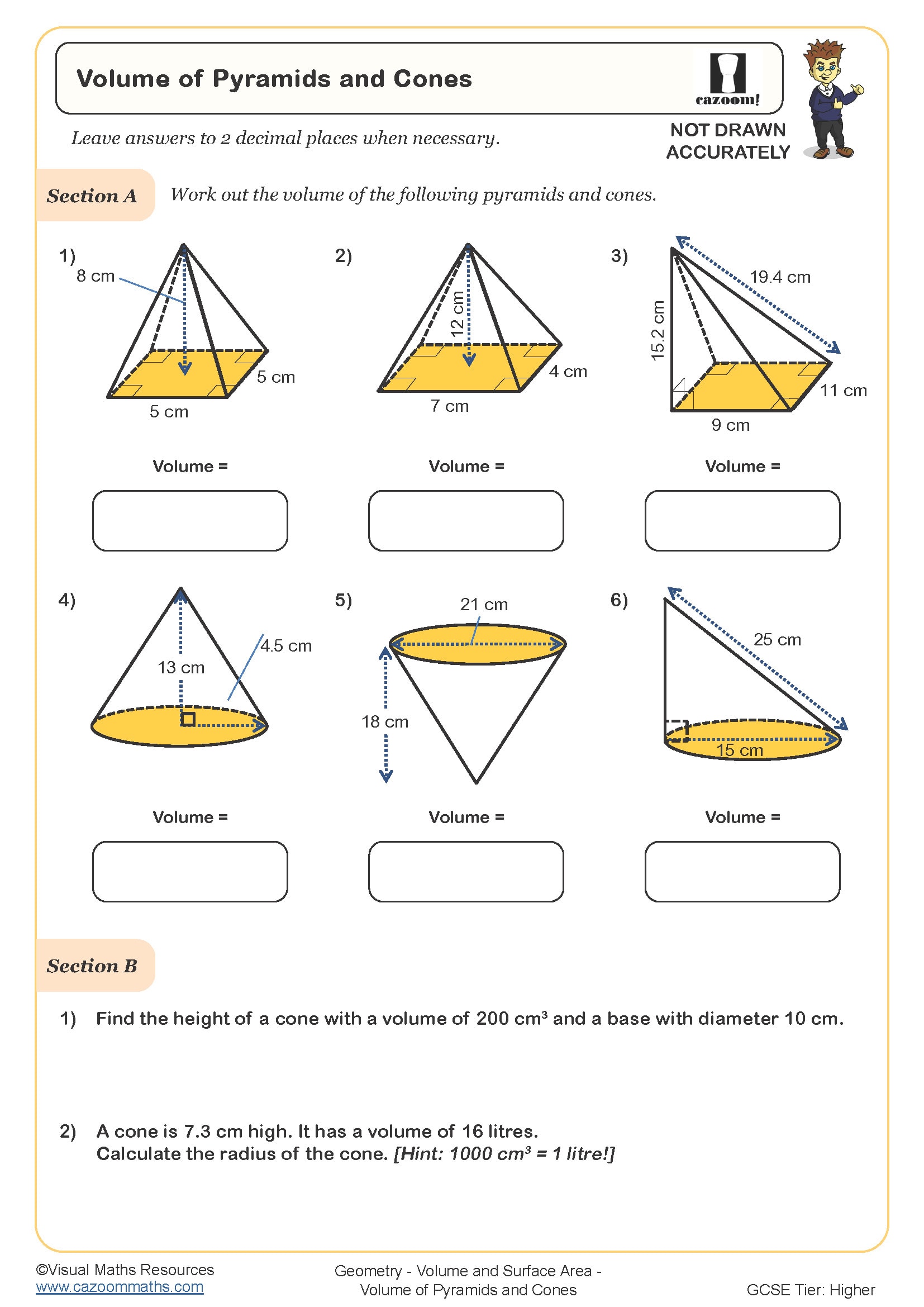
Volume of Pyramids and Cones
Year groups: 10, 11
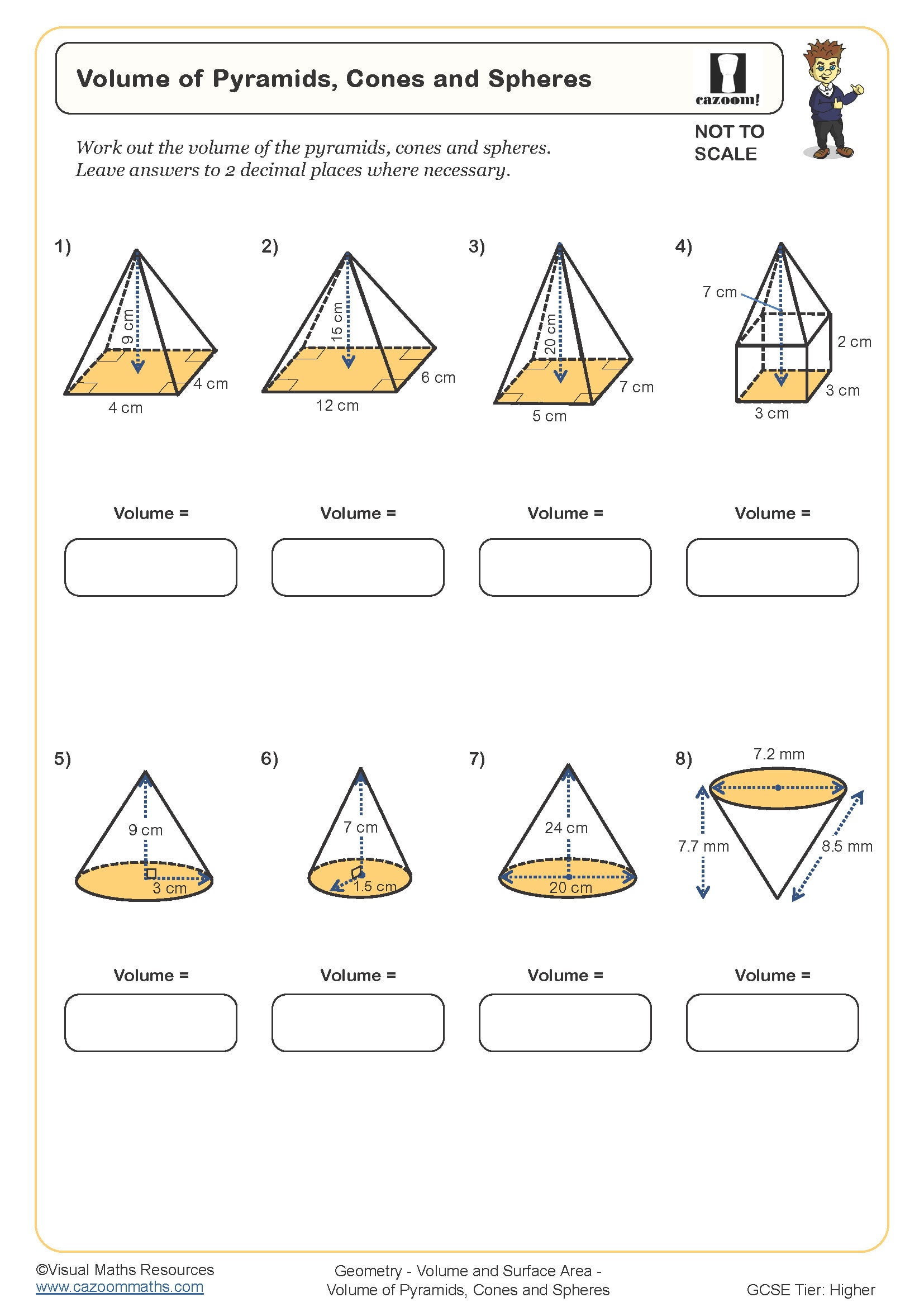
Volume of Pyramids Cones and Spheres
Year groups: 10, 11
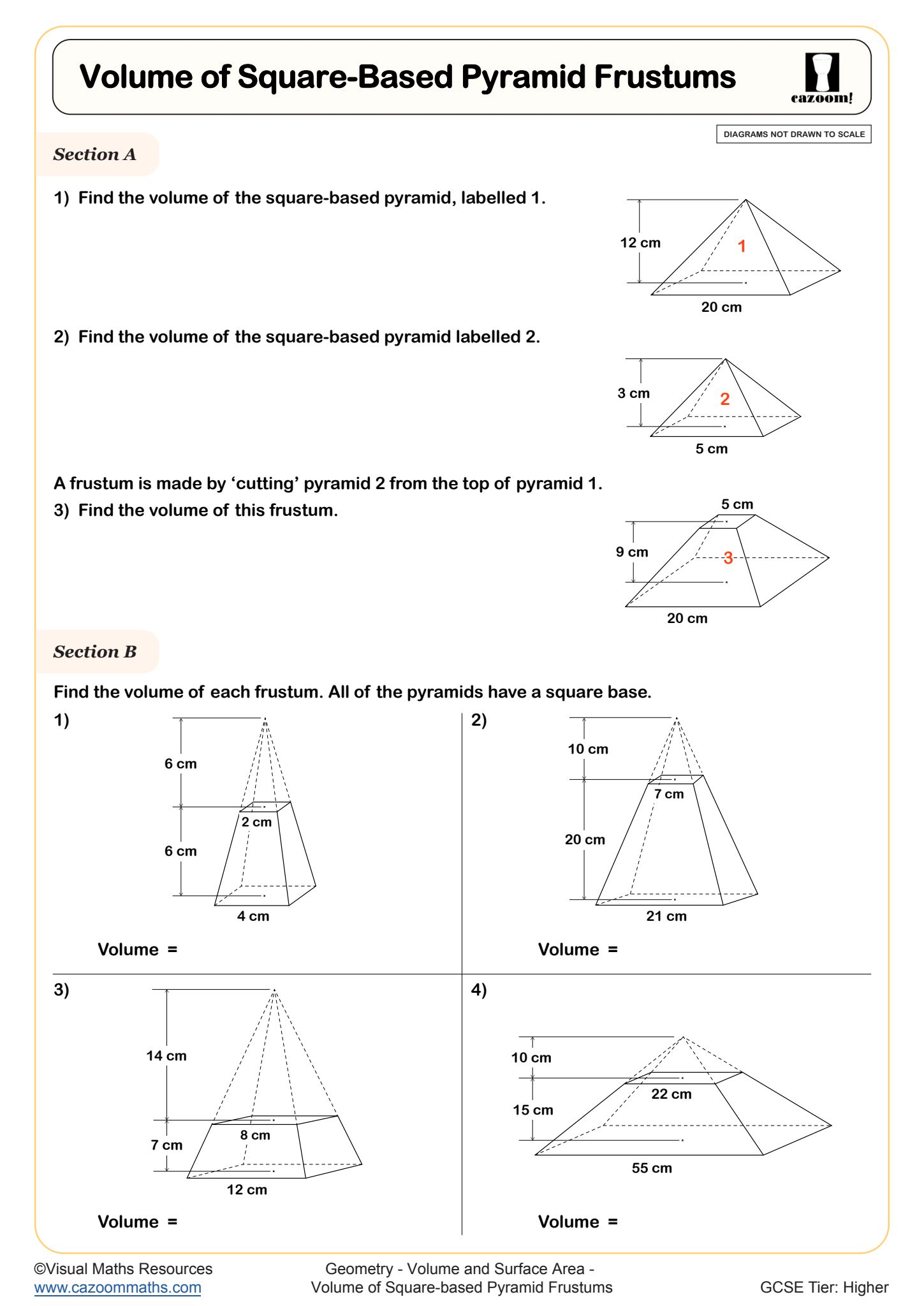
Volume of Square-based Pyramid Frustums
Year groups: 10, 11
All worksheets are created by the team of experienced teachers at Cazoom Maths.
What makes a good volume worksheet pdf for secondary students?
A quality volume worksheet pdf provides structured progression through different 3D shapes, starting with familiar cuboids before advancing to prisms, cylinders and spheres. The best resources include mixed question types that mirror GCSE expectations, with clear diagrams and appropriate units that require students to convert between measurements.
Teachers find that worksheets work most effectively when they include worded problems alongside pure calculations. Students often struggle with interpreting 3D diagrams, so resources that provide multiple representations of the same shape help develop spatial awareness. Answer sheets showing complete working methods prove invaluable for addressing common errors like forgetting to cube units for volume or mixing up radius and diameter measurements.
Which year groups should use surface area and volume worksheets?
Surface area and volume concepts typically begin in Year 7 with simple cuboids and rectangular prisms, building foundational understanding of 3D measurements. Years 8 and 9 extend this to triangular prisms, cylinders and composite shapes, whilst GCSE students tackle spheres, cones, pyramids and frustums alongside more complex problem-solving contexts.
Many teachers introduce volume before surface area, as students find it more intuitive to think about 'filling' a shape rather than 'covering' its faces. However, both concepts require sustained practice across multiple years. Students who master basic calculations early can focus on interpreting complex diagrams and multi-step problems that frequently appear in GCSE examinations, particularly in the higher tier papers.
Why do students struggle with volume of frustums calculations?
Volume of frustums represents one of the most challenging topics in GCSE geometry, as students must understand the concept of a truncated cone and apply the frustum formula correctly. The calculation requires finding volumes of two cones and subtracting, which involves multiple steps where errors can accumulate. Students frequently confuse which measurements represent the large cone versus the small cone being removed.
Teachers observe that students benefit from visual representations showing how a frustum relates to complete cones. Practice with similar triangles helps students find missing dimensions, whilst step-by-step worked examples demonstrate the logical sequence. Many students find success by drawing diagrams that separate the complete cone from the removed portion, making the subtraction method clearer and reducing computational errors.
How should teachers use surface area and volume worksheets most effectively?
Teachers achieve best results when they use these worksheets to consolidate understanding after introducing concepts through practical activities or visual demonstrations. Starting lessons with hands-on measurement of actual 3D shapes helps students connect abstract formulas to real objects before moving to worksheet calculations. Mixed practice sheets work particularly well for revision, ensuring students don't develop pattern recognition that fails them in unfamiliar contexts.
Regular diagnostic use of worksheets helps teachers identify persistent misconceptions, such as students adding dimensions instead of multiplying them or forgetting to apply indices correctly. The detailed answer sheets enable targeted feedback, whilst varied question styles prepare students for the range of presentations they'll encounter in formal assessments. Many teachers find success in using worksheets for starter activities, allowing quick assessment of prior learning before introducing new concepts.