Year 10 Compound Measures Worksheets
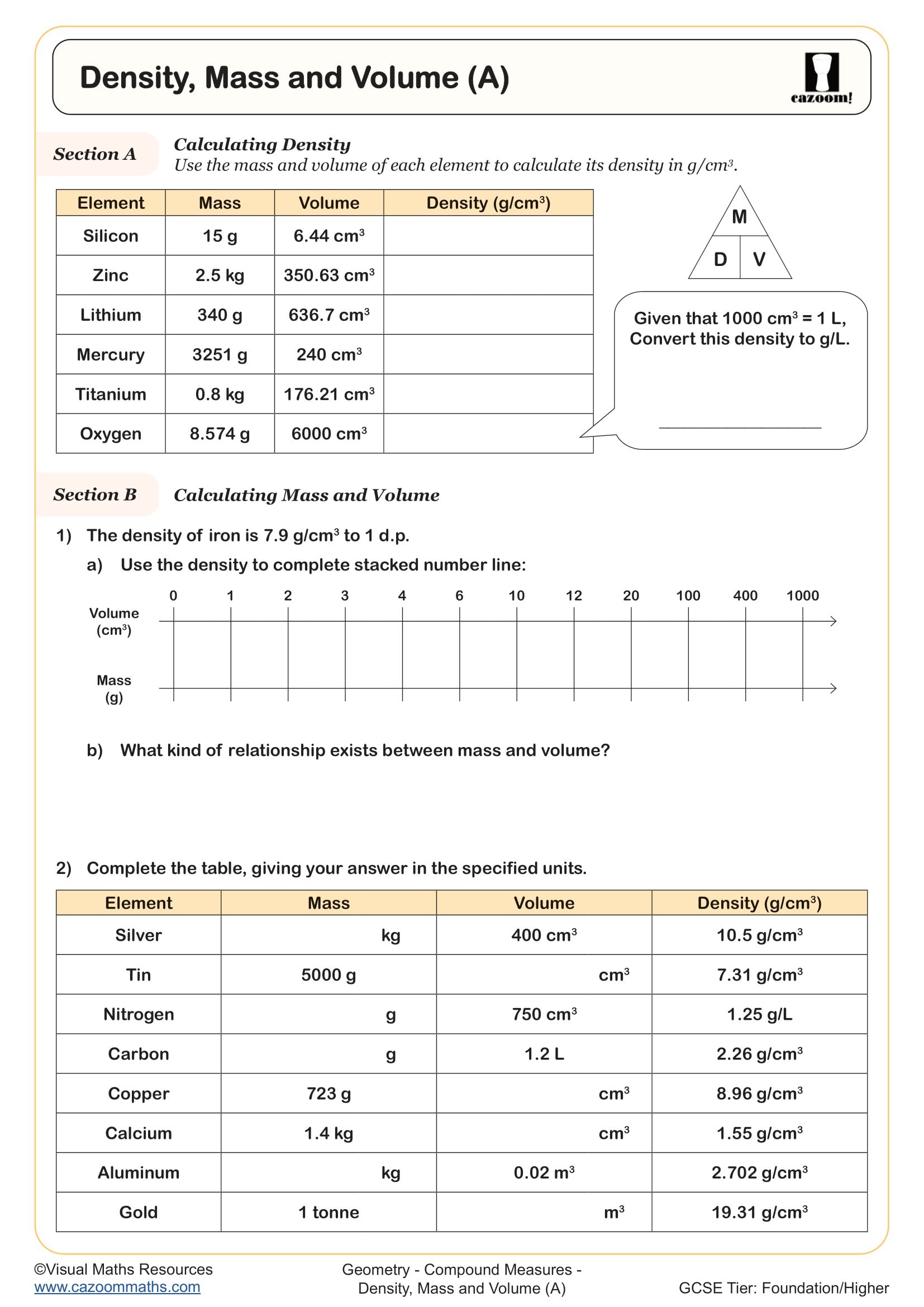
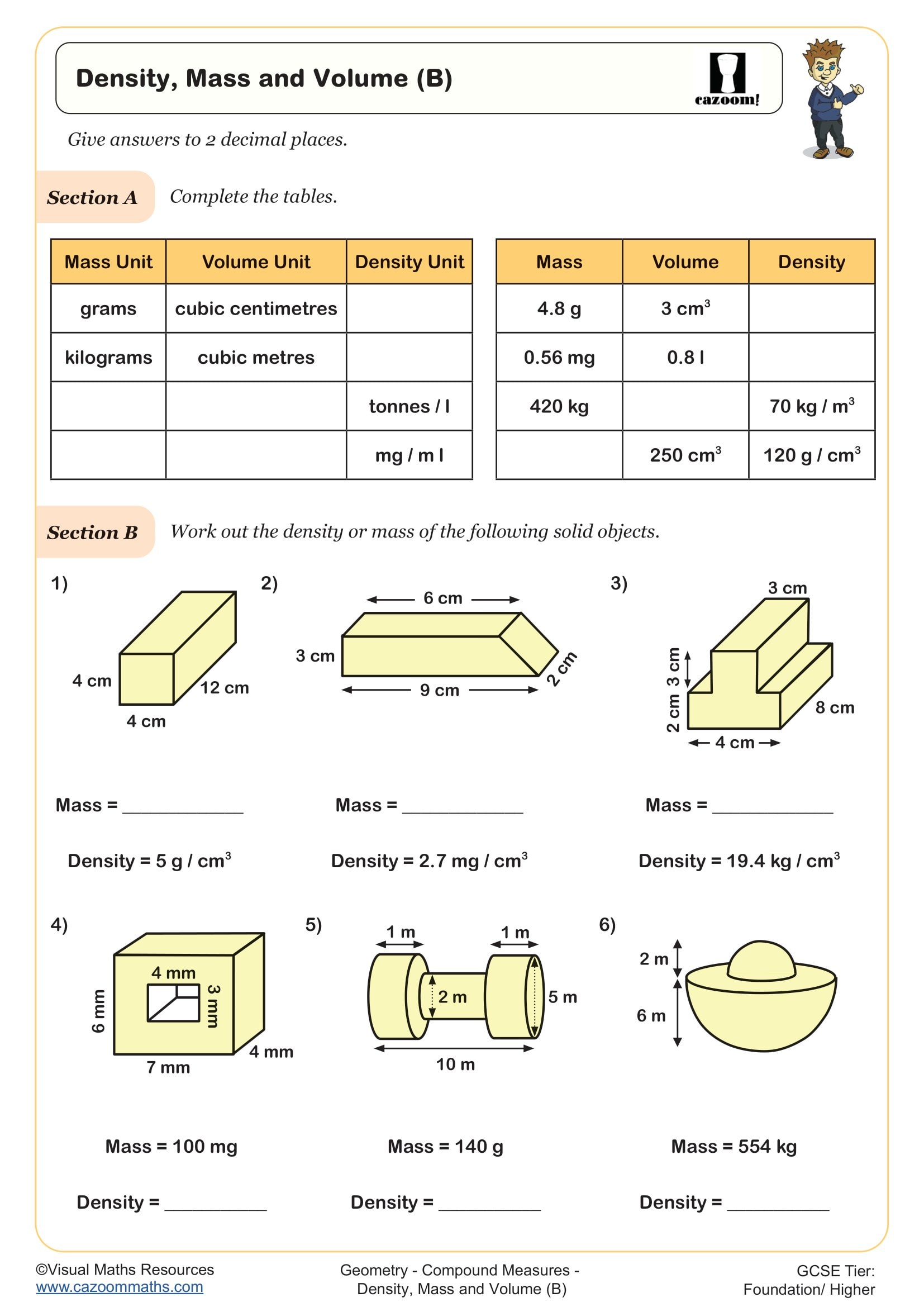
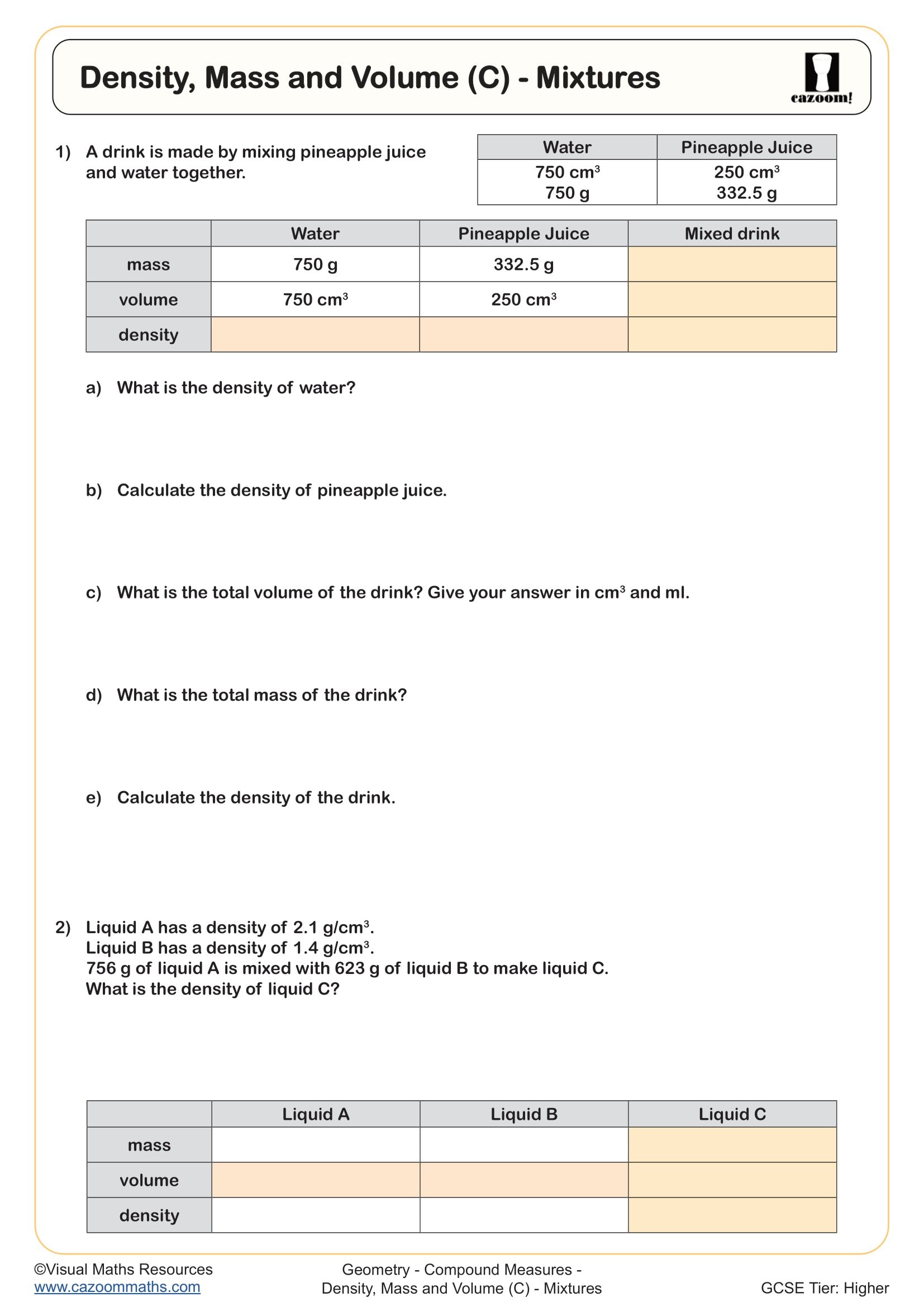
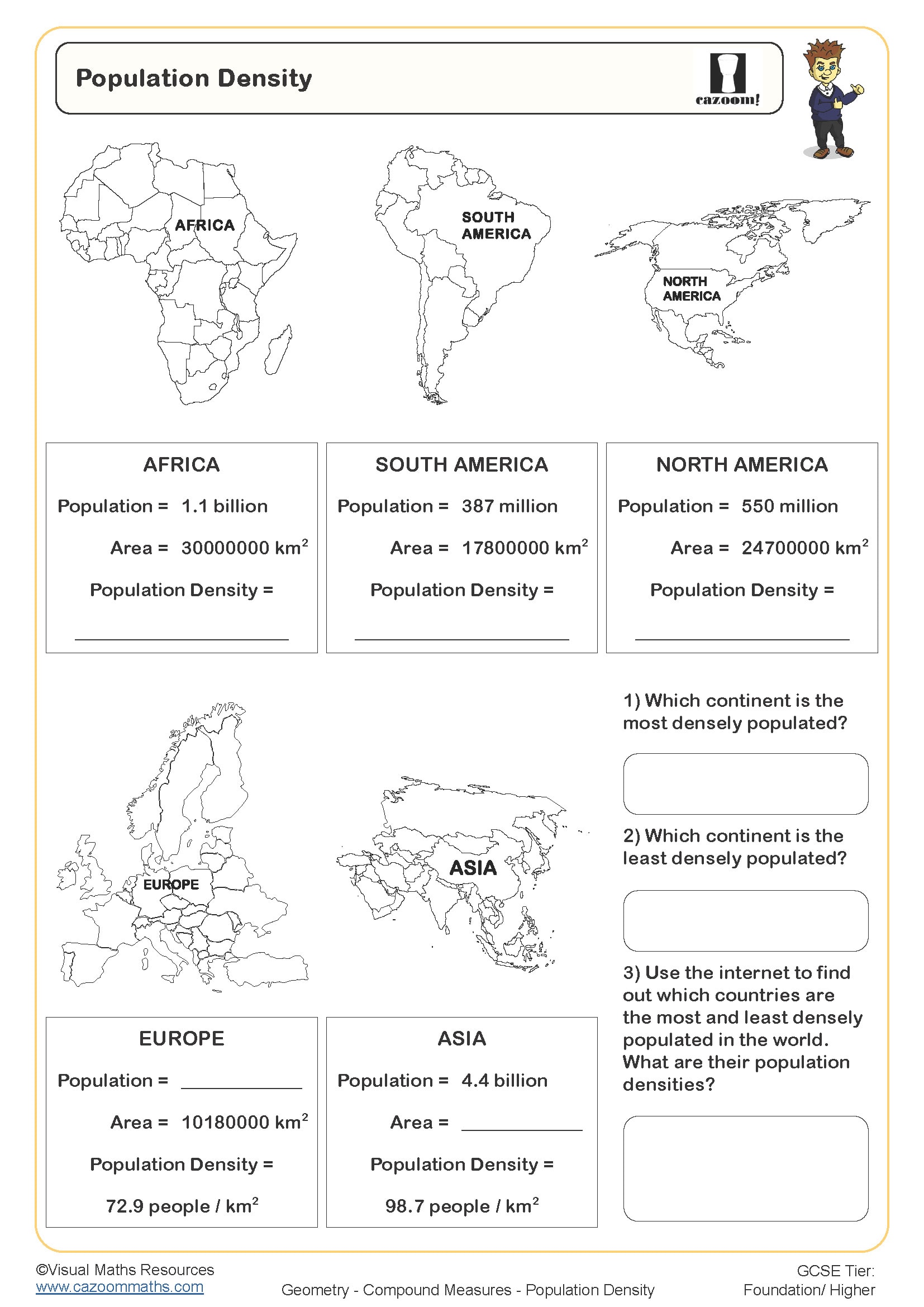
All worksheets are created by the team of experienced teachers at Cazoom Maths.
What are compound measures in maths?
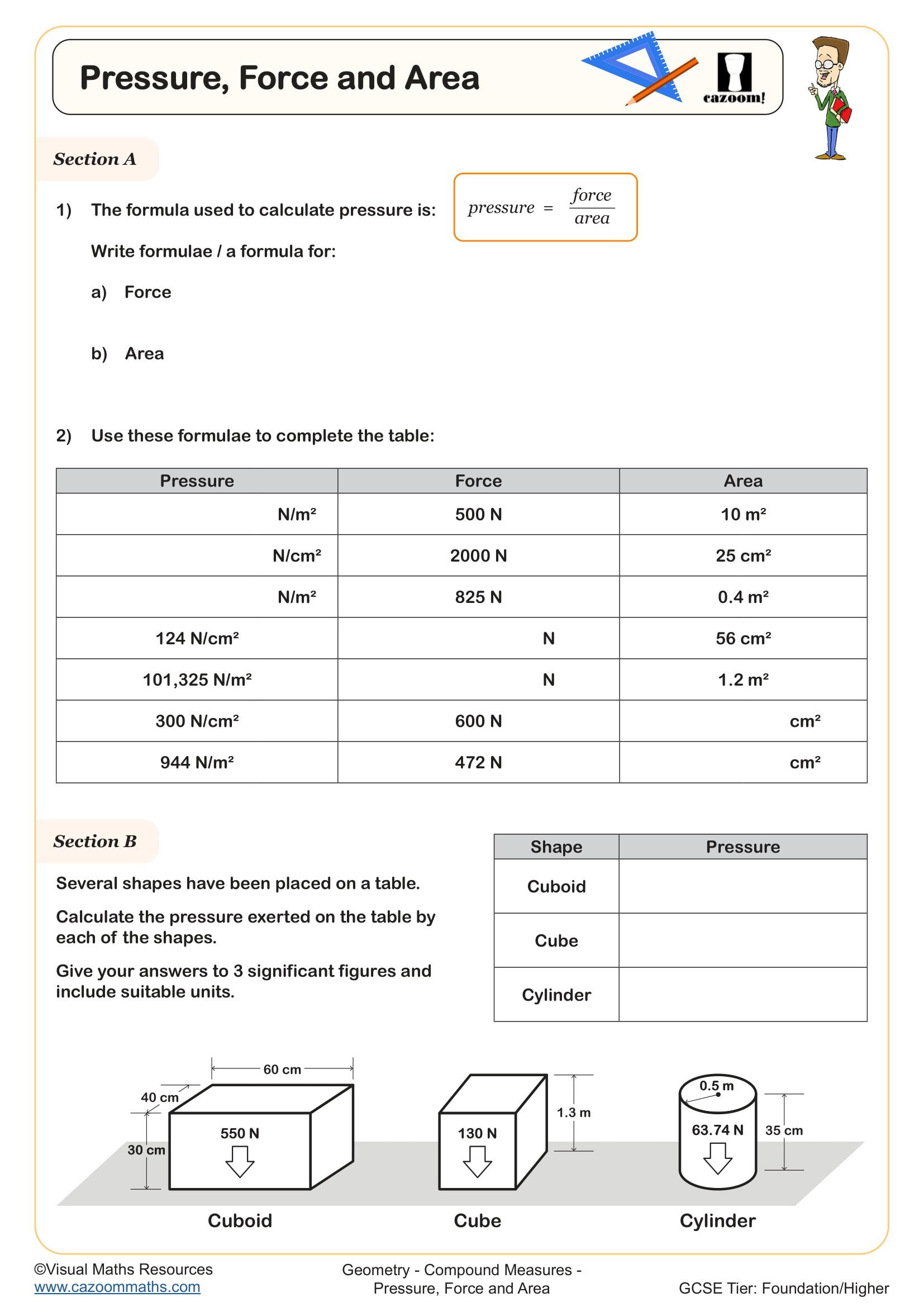
Compound measures combine two different measurements to create a new quantity, such as speed (distance per time), density (mass per volume), or pressure (force per area). In the KS4 curriculum, students must calculate these measures, convert between units, and rearrange formulae to find unknown values. The National Curriculum requires students to work with compound units like metres per second, kilograms per cubic metre, and newtons per square centimetre.
A common error occurs when students try to find density but incorrectly calculate volume × mass instead of mass ÷ volume. Exam mark schemes frequently penalise students who write correct formulae but then perform the wrong operation, particularly in questions where they must first convert units before applying the formula. Teachers often use triangle diagrams to help students remember these relationships, though understanding why division creates rate-based measures proves more robust for tackling unfamiliar contexts.
Which year groups study compound measures?
These compound measures worksheets target Year 10 students working through the KS4 maths curriculum. The topic typically appears in Year 9 or 10, building on earlier work with ratio, proportion, and units from KS3. Students encounter compound measures in both Foundation and Higher GCSE tiers, though Higher tier questions demand more complex rearrangement and problem-solving across multiple steps.
The progression within Year 10 moves from straightforward substitution into formulae towards interpreting compound measures in context and working backwards from given rates. Foundation tier focuses on calculating speed, density, and pressure with clear unit consistency, whilst Higher tier introduces conversions between units like km/h to m/s within the same problem. Students also progress from single-step calculations to multi-stage problems where they must select the appropriate formula before manipulating it.
How do you convert between different units of speed?
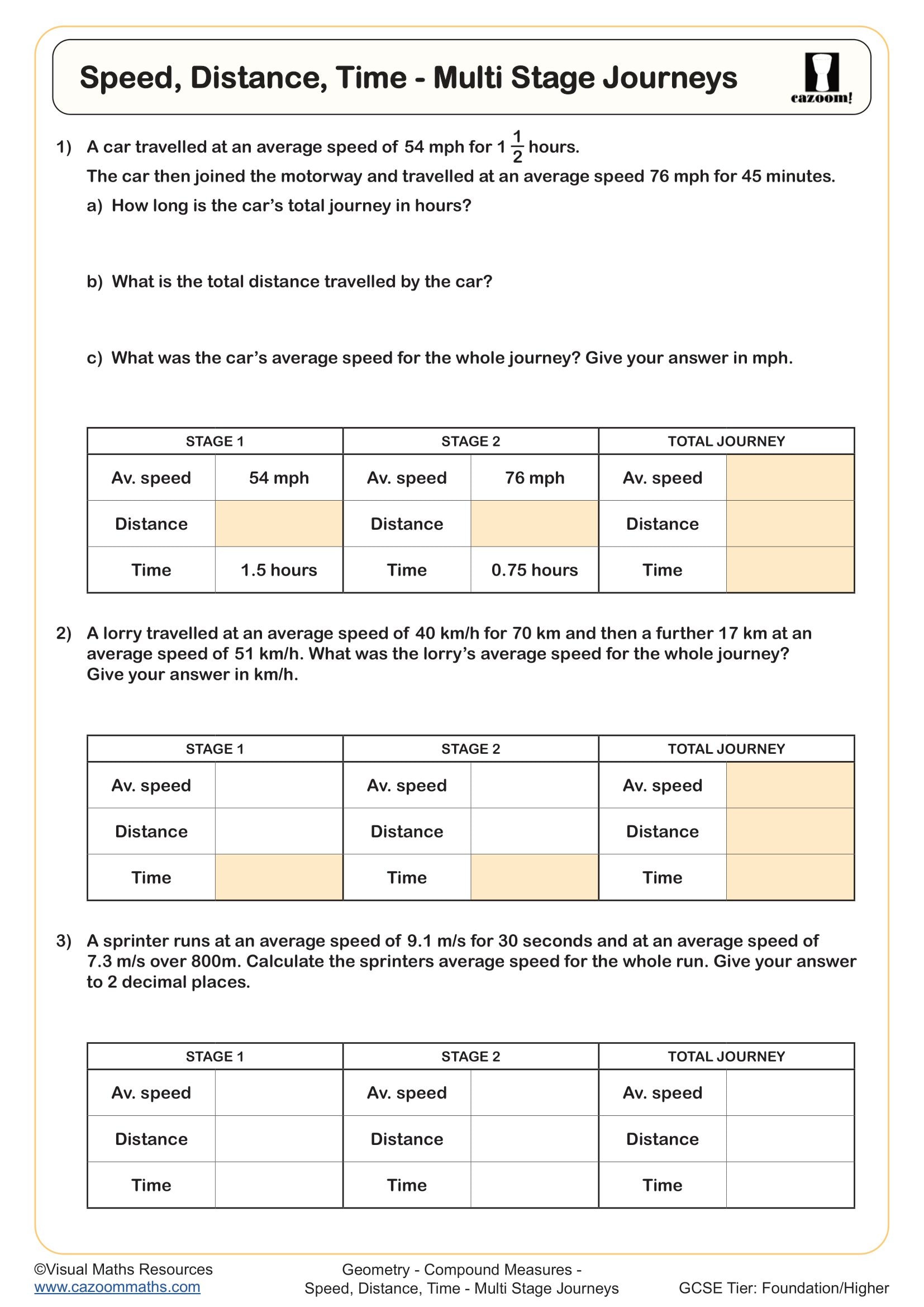
Converting speed units requires understanding the relationship between distance and time measurements. To convert km/h to m/s, students divide by 3.6 (or multiply by 1000 then divide by 3600), whilst converting m/s to km/h involves multiplying by 3.6. Teachers regularly observe students attempting to convert by multiplying both distance and time separately rather than recognising speed as a single compound unit requiring one conversion factor.
These conversions matter considerably in engineering and transport contexts. Vehicle designers must convert between km/h (used on speedometers) and m/s (used in physics calculations for braking distances and collision forces). Traffic accident investigators routinely convert witness estimates of speed from mph to m/s when calculating stopping distances, whilst aerospace engineers switch between different speed units when designing aircraft that operate across international airspace. Understanding these conversions helps students grasp why dimensional analysis matters in STEM careers.
How can teachers use these compound measures worksheets effectively?
The worksheets provide progressive practice starting with direct substitution into formulae before advancing to rearrangement and multi-step problems. Each question type builds procedural fluency whilst developing the reasoning skills needed to select appropriate methods. The scaffolded structure allows students to consolidate basic calculations before tackling contextual problems that mirror GCSE question styles.
Many teachers use these worksheets during intervention sessions with students who struggle to distinguish between different compound measures, setting specific sections for homework whilst working through similar examples in class. The answer sheets prove particularly valuable for paired work, where students can check each other's solutions and identify where calculation errors occur versus conceptual misunderstandings. Teachers also find them useful for revision carousels, assigning different compound measure types to groups before rotating, ensuring students practise all formula types without repetitive whole-class teaching.