Year 10 Fractions Worksheets
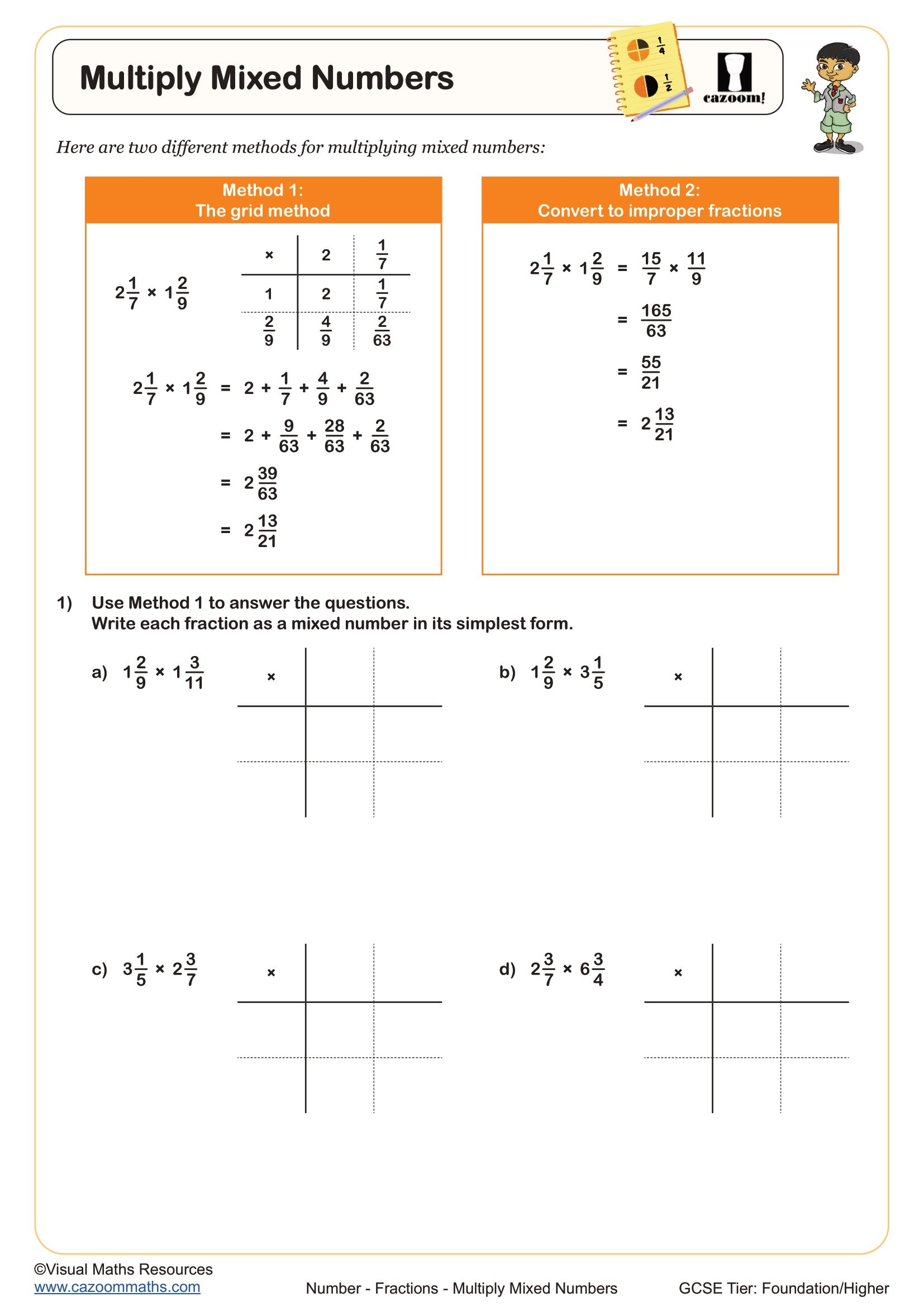
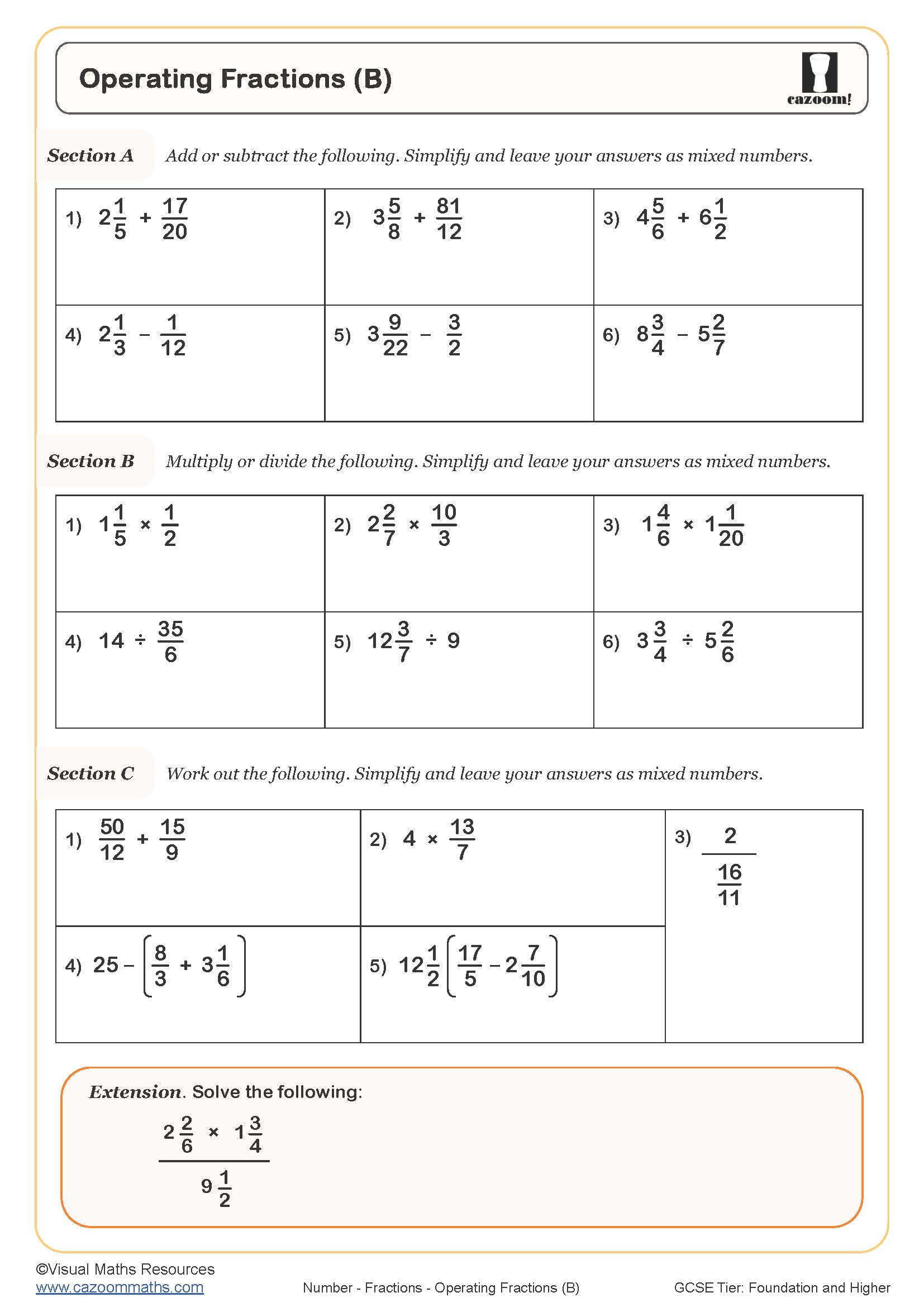
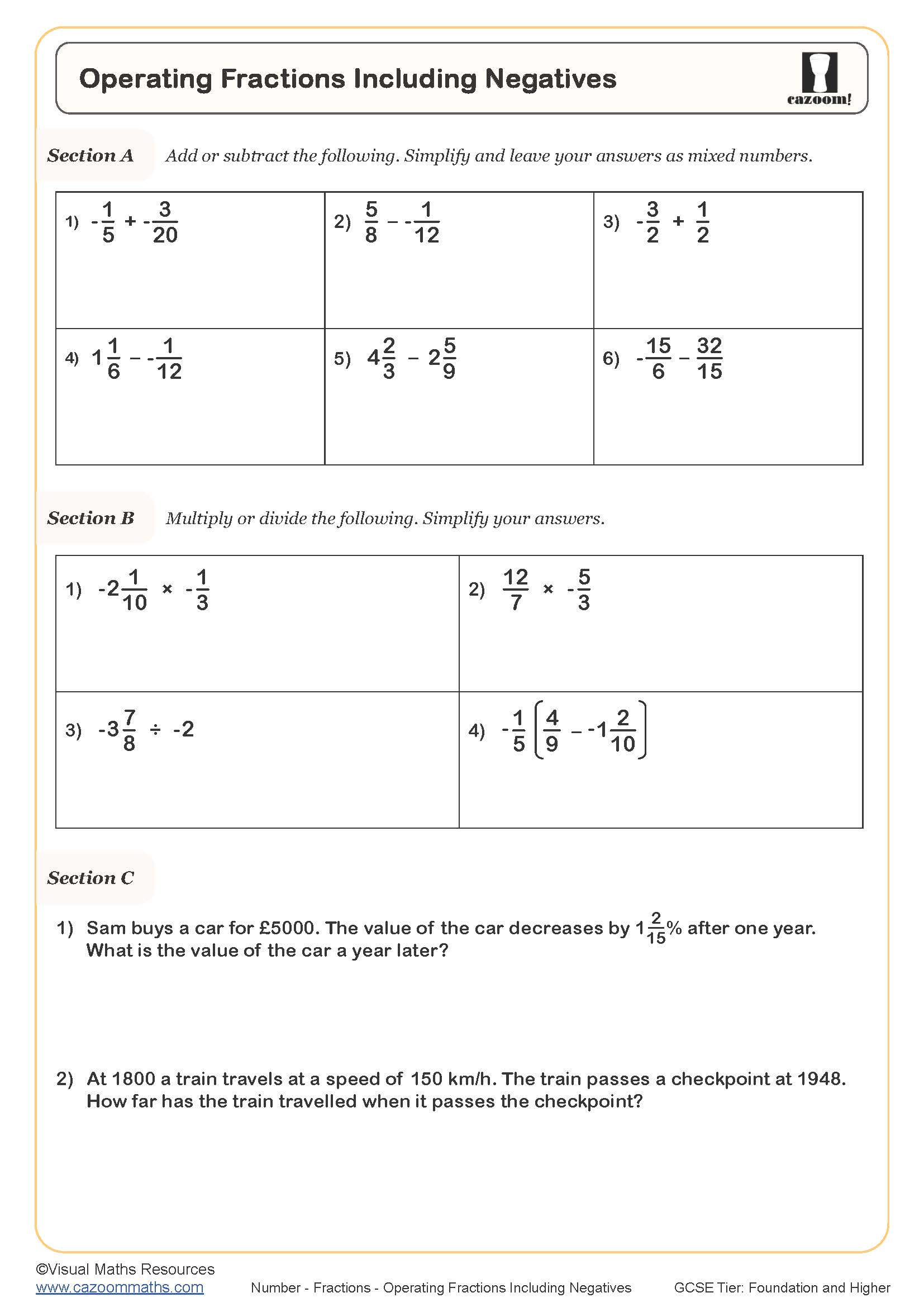
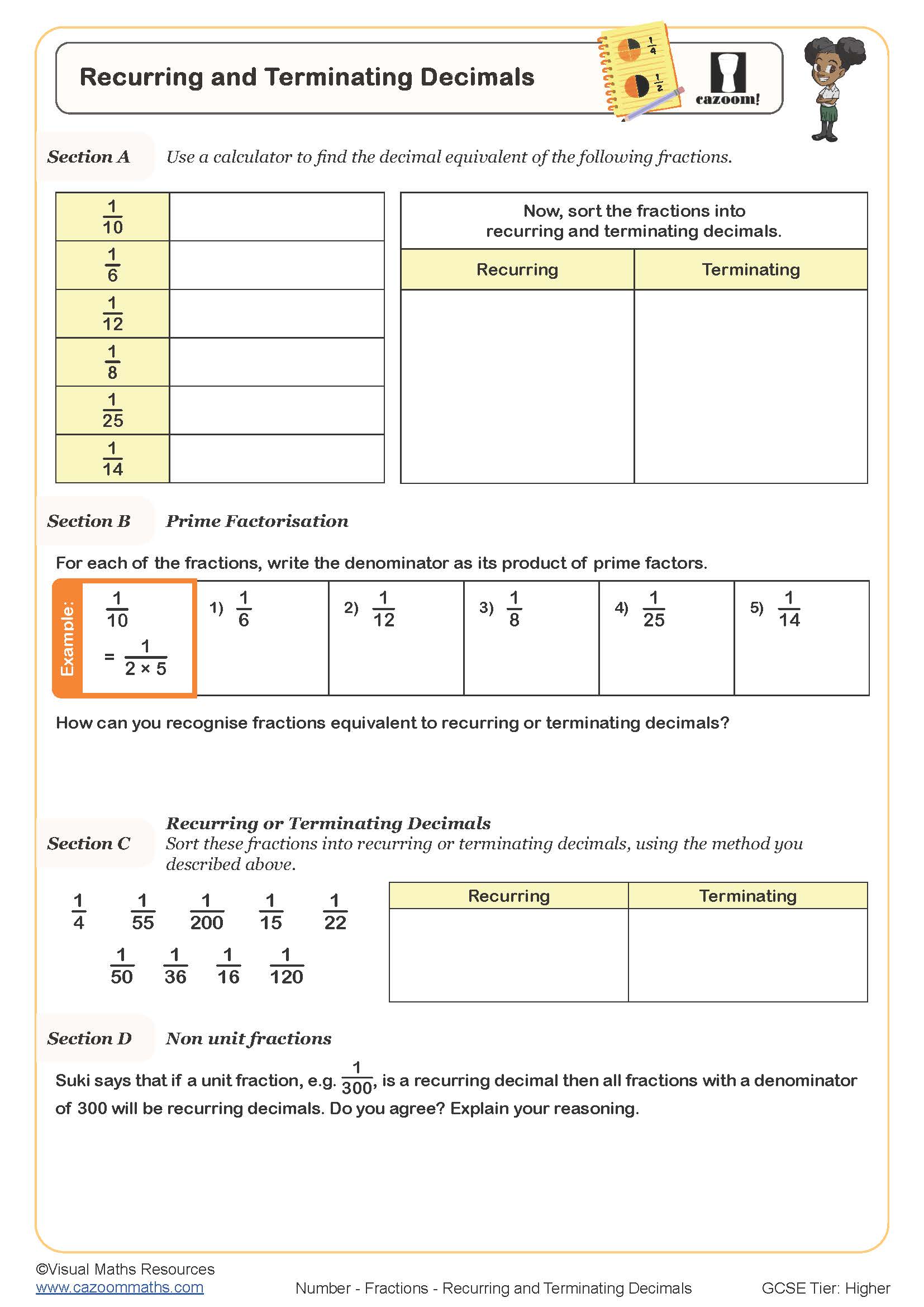
All worksheets are created by the team of experienced teachers at Cazoom Maths.
What types of fraction questions do Year 10 students typically encounter?
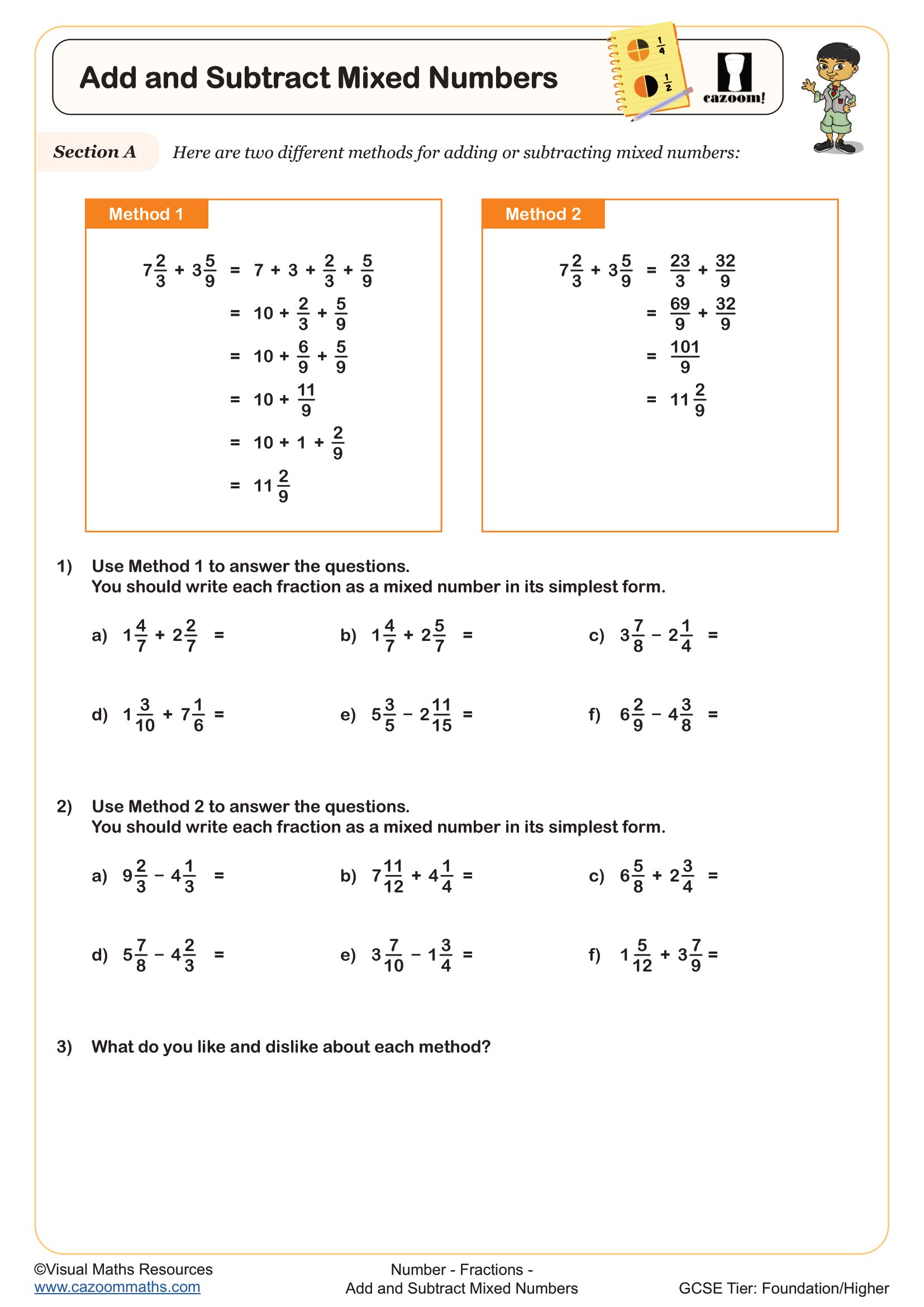
Year 10 fraction questions focus on building fluency with operations involving mixed numbers, improper fractions, and algebraic expressions containing fractions. Students work through problems that combine addition, subtraction, multiplication, and division of fractions, often within multi-step calculations that mirror GCSE examination requirements.
Teachers notice that students frequently lose marks when they forget to simplify their final answers or when they incorrectly convert between mixed numbers and improper fractions. These gcse fractions worksheets with answers help address these common pitfalls by providing structured practice with immediate feedback through detailed solution steps.
Are Year 10 fraction skills different from what younger students learn?
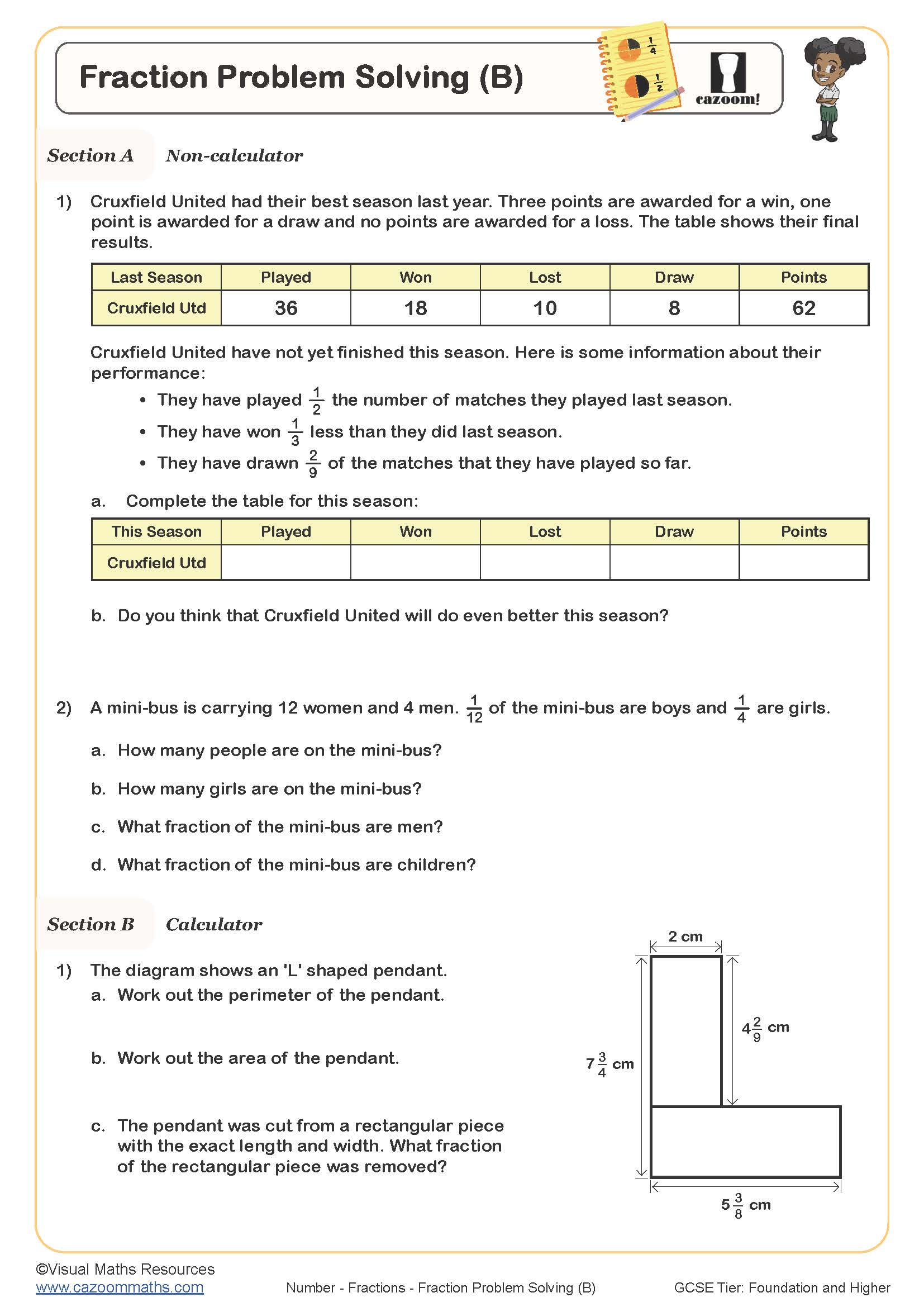
Year 10 fraction work builds significantly on Key Stage 3 foundations, incorporating algebraic elements and preparing students for A-level mathematics. While younger students focus on basic operations, Year 10 students tackle fractions within equations, work with fractional coefficients, and solve problems involving fractions in real-world contexts like recipes, measurements, and financial calculations.
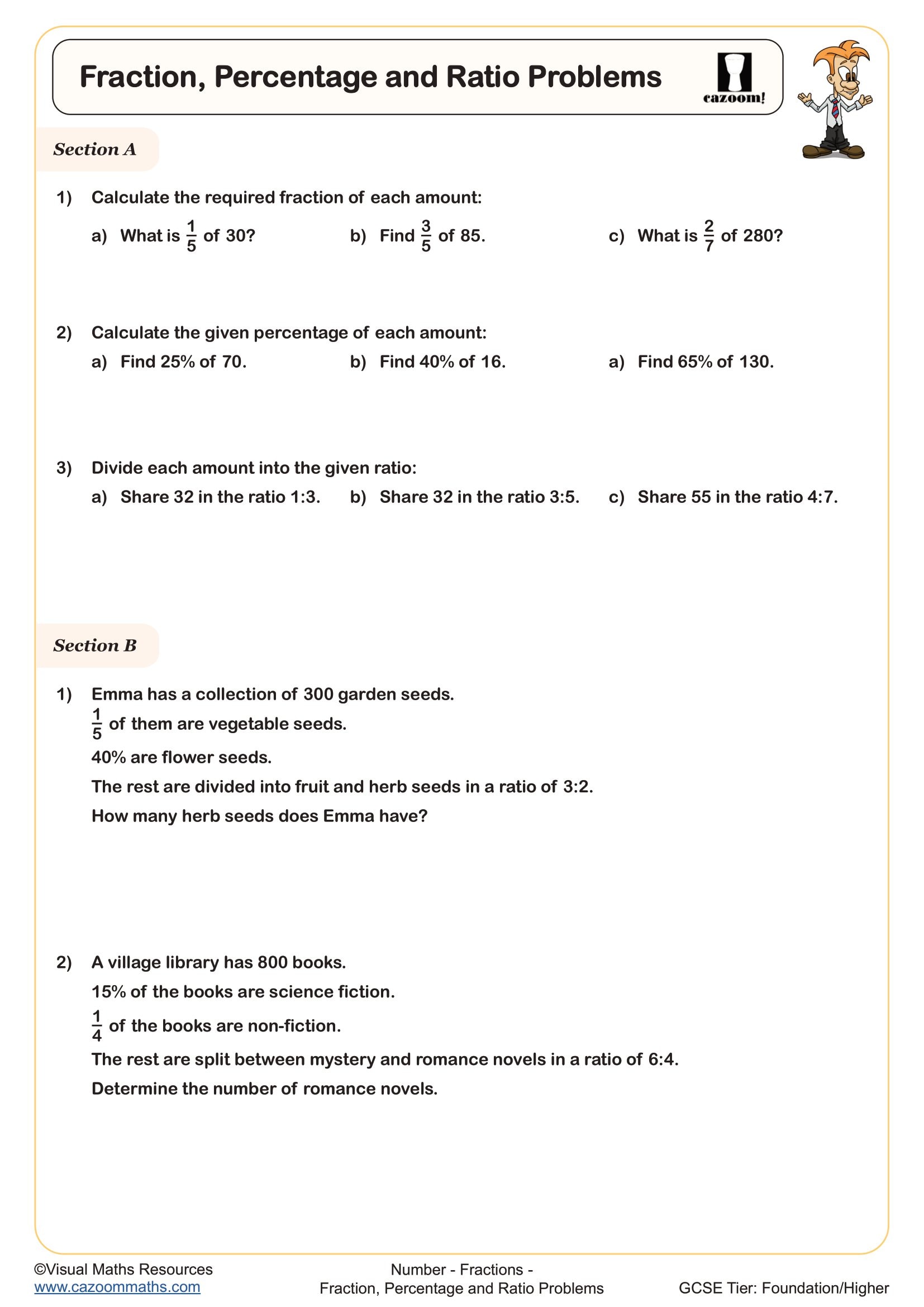
The progression from Year 9 to Year 10 often challenges students because fraction questions become less procedural and more problem-solving focused. Year 10 fractions work requires students to identify which operations to use and in what sequence, making these fraction worksheets valuable for developing mathematical reasoning alongside computational skills.
How do students typically approach multiplying and dividing fractions?
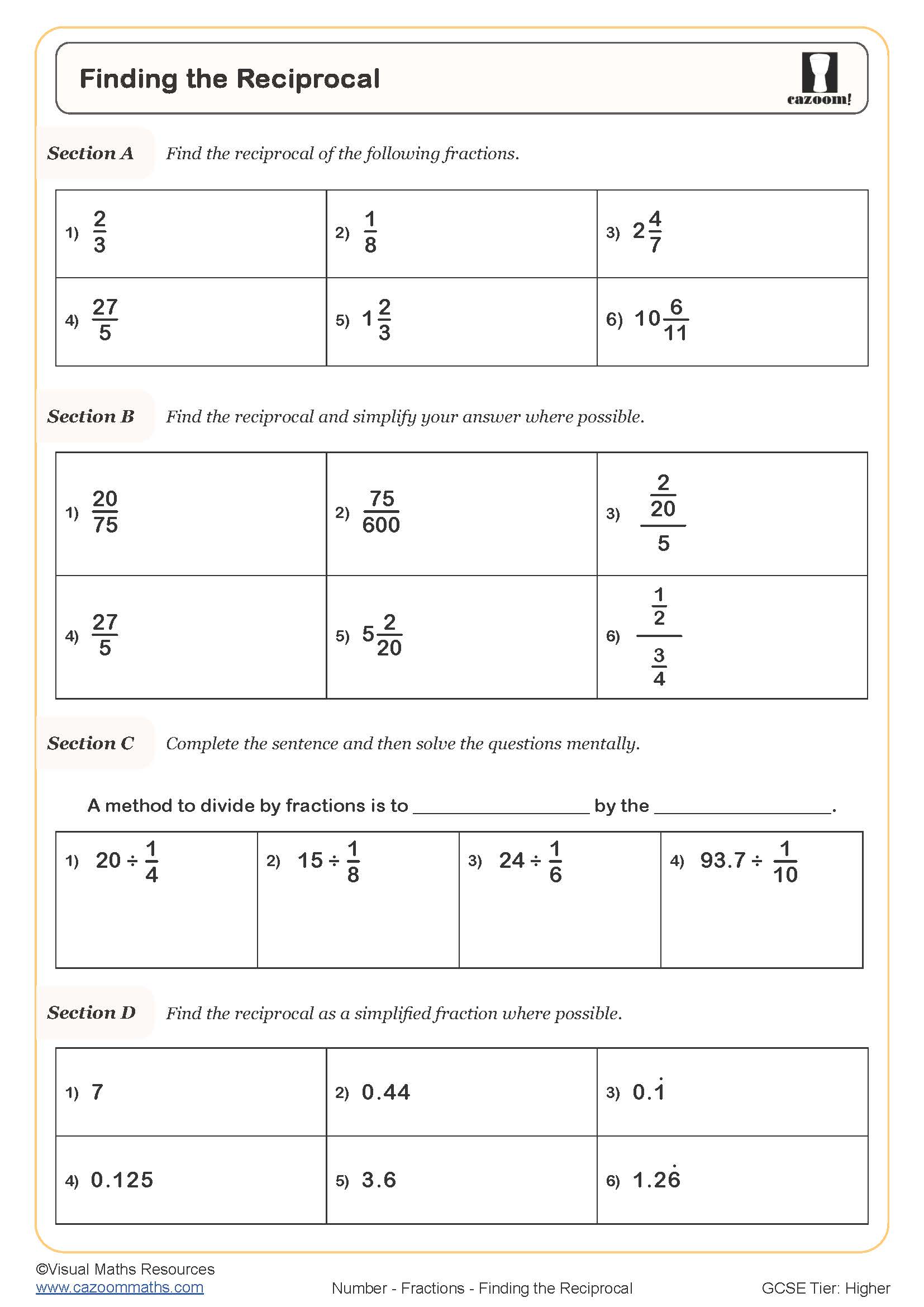
Multiplying fractions follows the straightforward rule of multiplying numerators together and denominators together, but students often struggle with mixed numbers and knowing when to simplify. Teachers observe that dividing fractions causes more confusion because students must remember to multiply by the reciprocal of the second fraction.
Common errors include trying to find common denominators when multiplying (unnecessary) or forgetting to flip the second fraction when dividing. These fraction examples with answers demonstrate each step clearly, helping students recognise patterns and avoid these typical mistakes that cost marks in examinations.
How can teachers use these worksheets most effectively in Year 10 classes?
These fractions worksheets work best when teachers use them diagnostically first, identifying which specific fraction skills need reinforcement before moving to exam-style applications. Starting each lesson with a few basic fraction questions helps maintain fluency while building towards more complex problems involving algebra and problem-solving.
Many teachers find success using the answer sheets for peer marking activities, where students explain their working to partners and identify errors together. This approach helps students articulate their mathematical thinking while reinforcing correct methods. The worksheets also provide excellent homework material, giving students independent practice with the security of complete solutions for self-checking.