Year 10 Percentages Worksheets
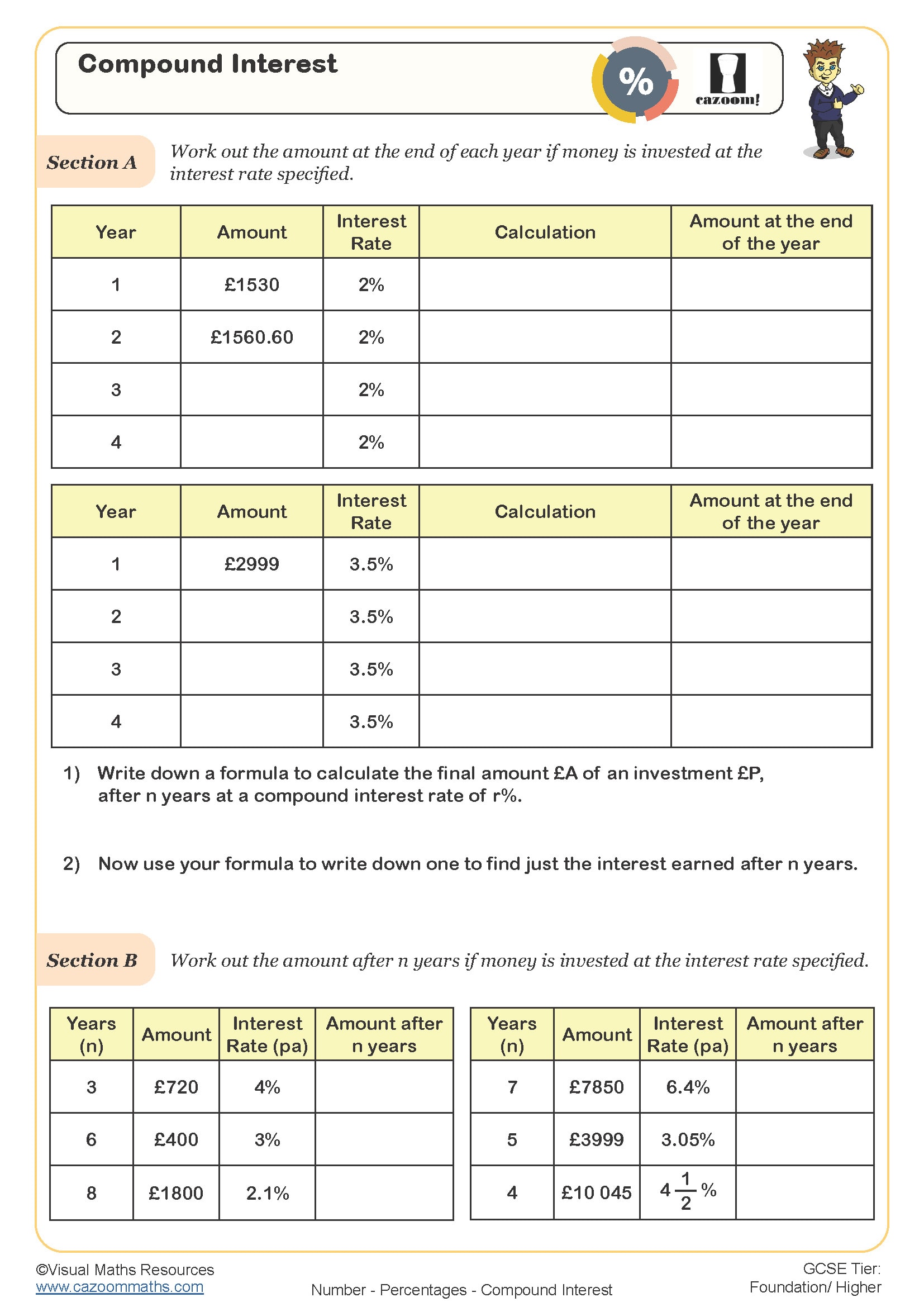
Compound Interest
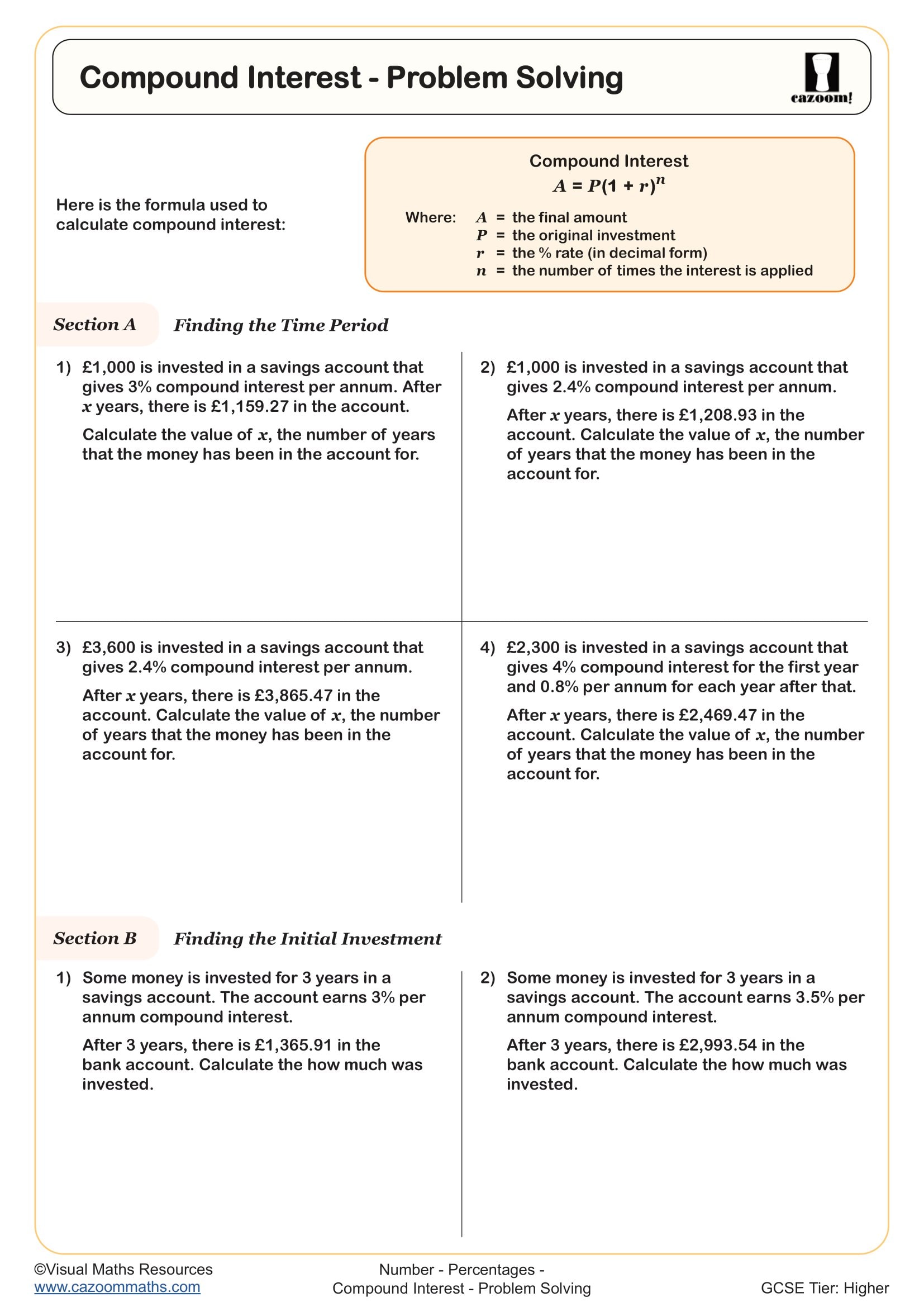
Compound Interest - Problem Solving
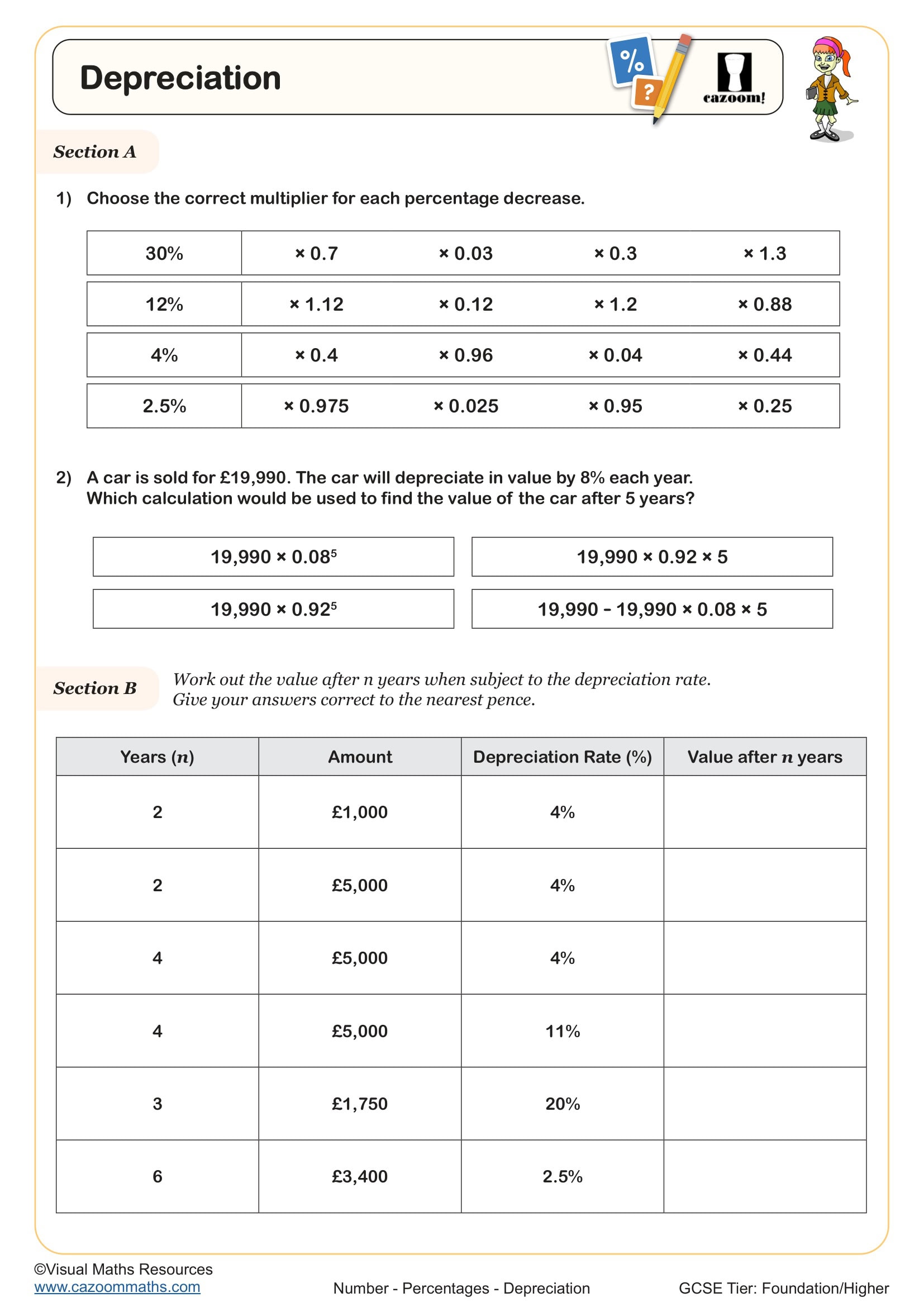
Depreciation
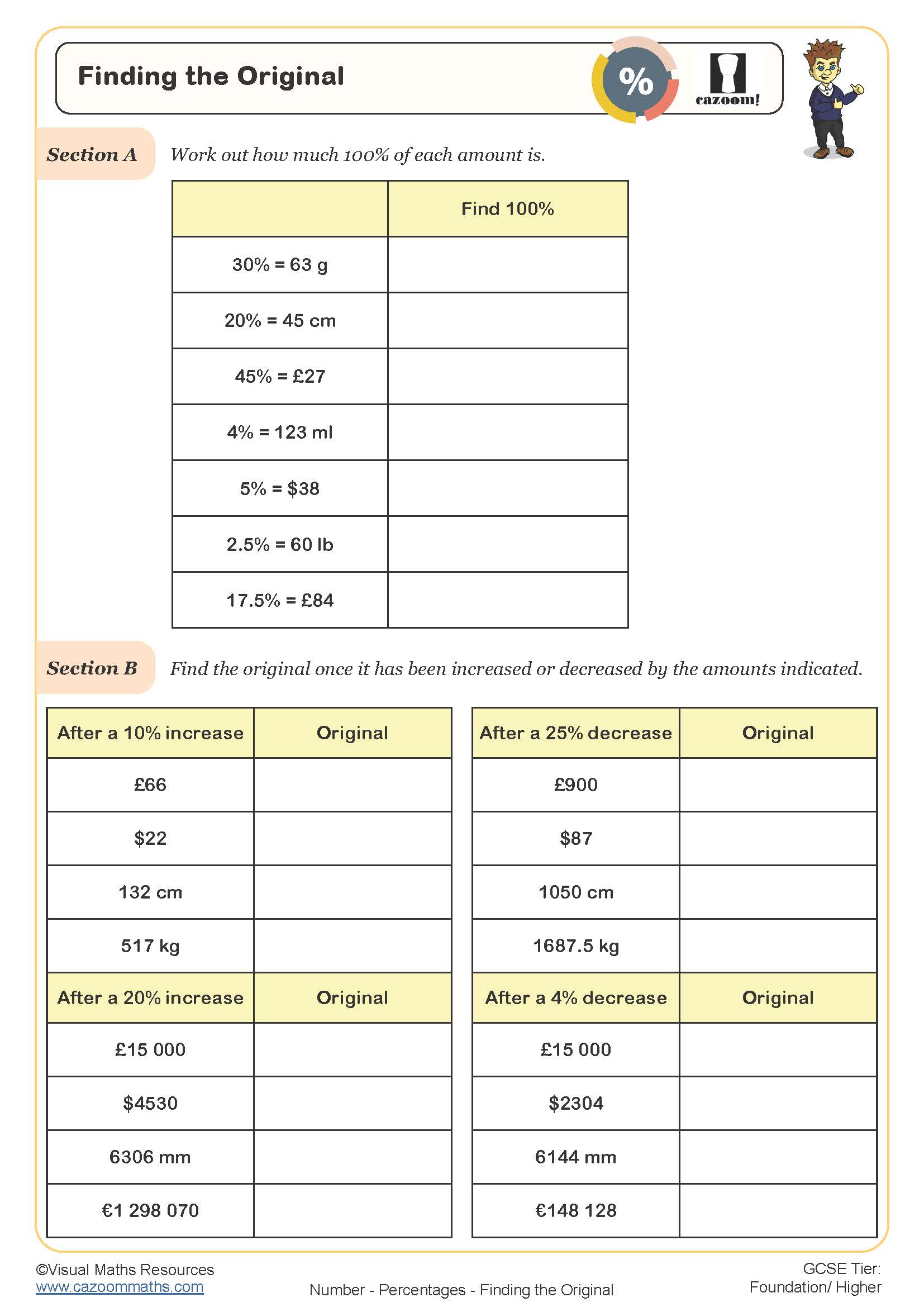
Finding the Original
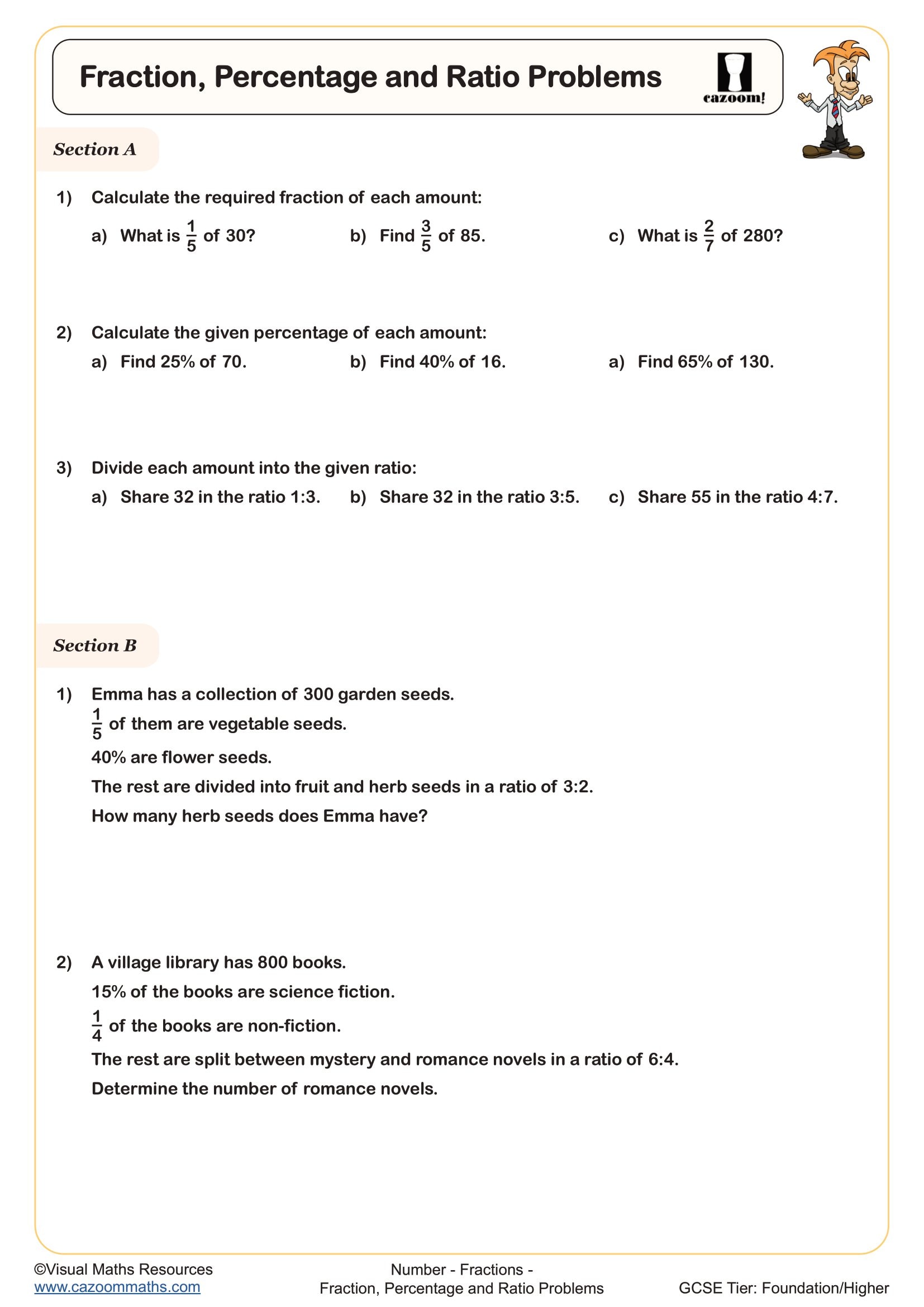
Fraction, Percentage and Ratio Problems
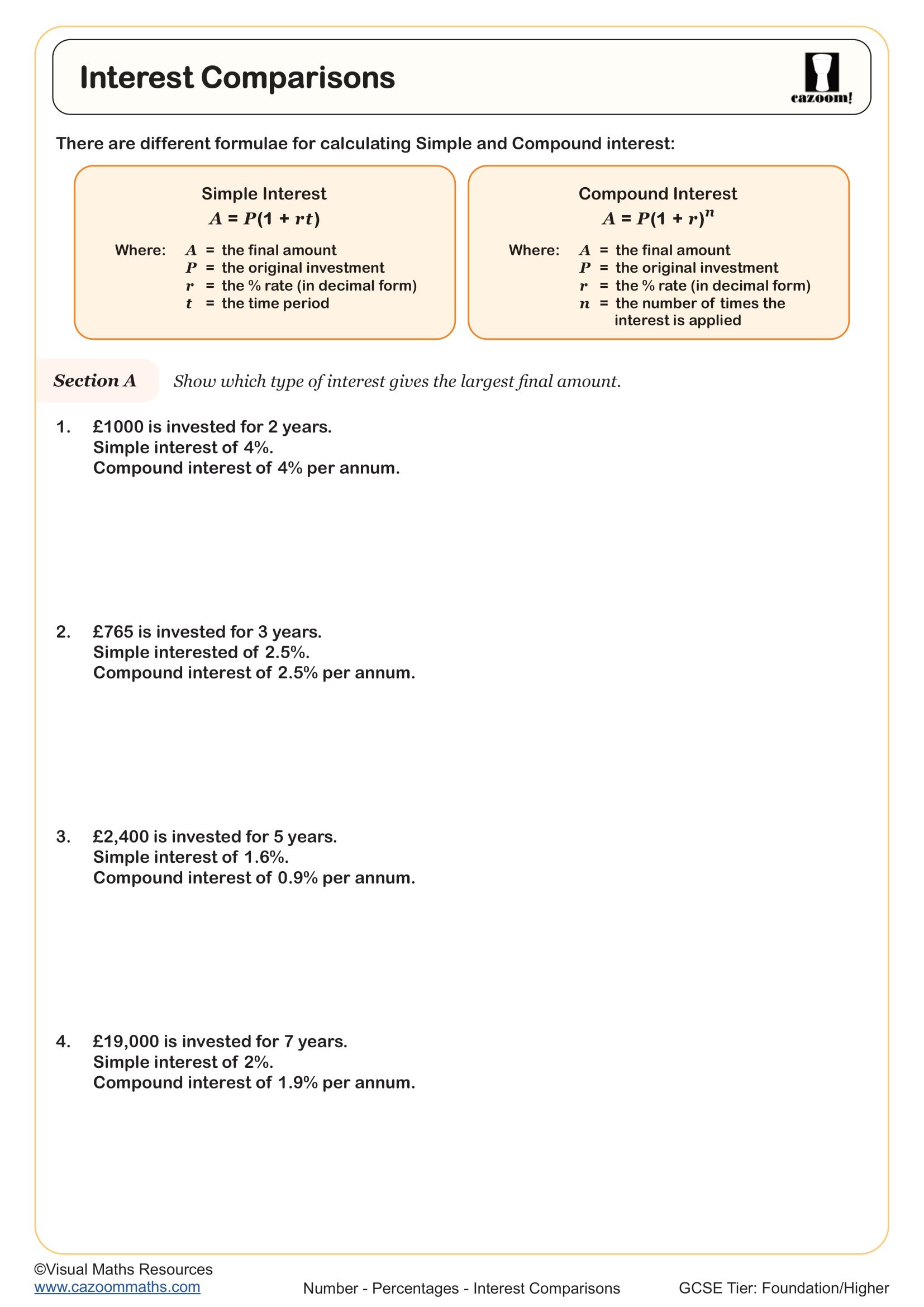
Interest Comparisons
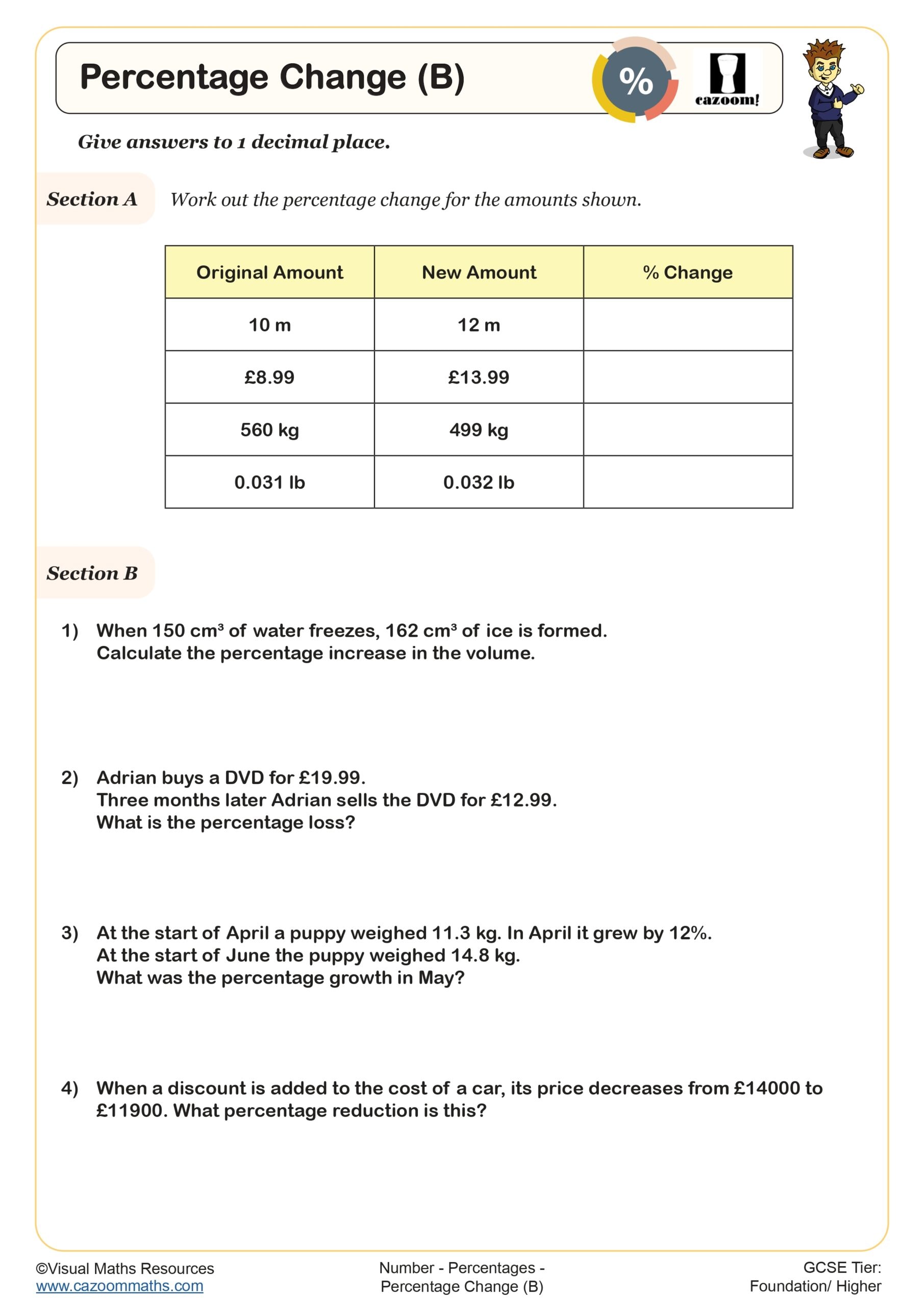
Percentage Change (B)
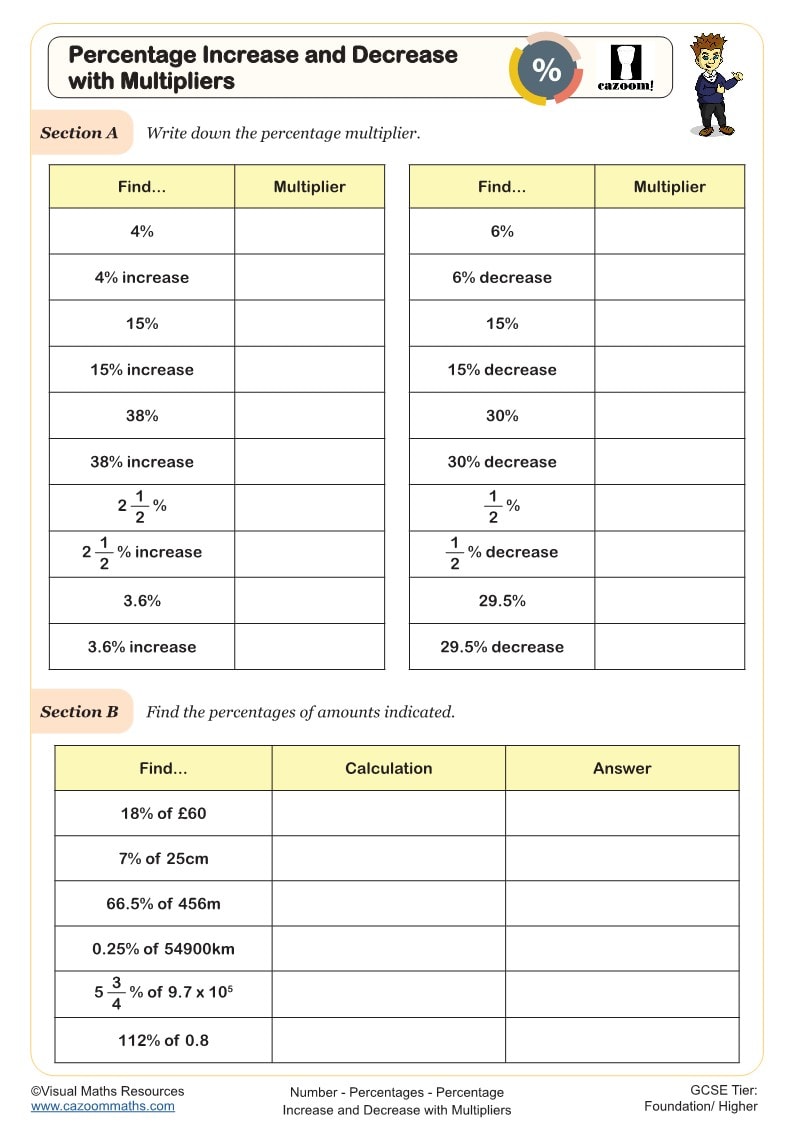
Percentage Increase and Decrease with Multipliers
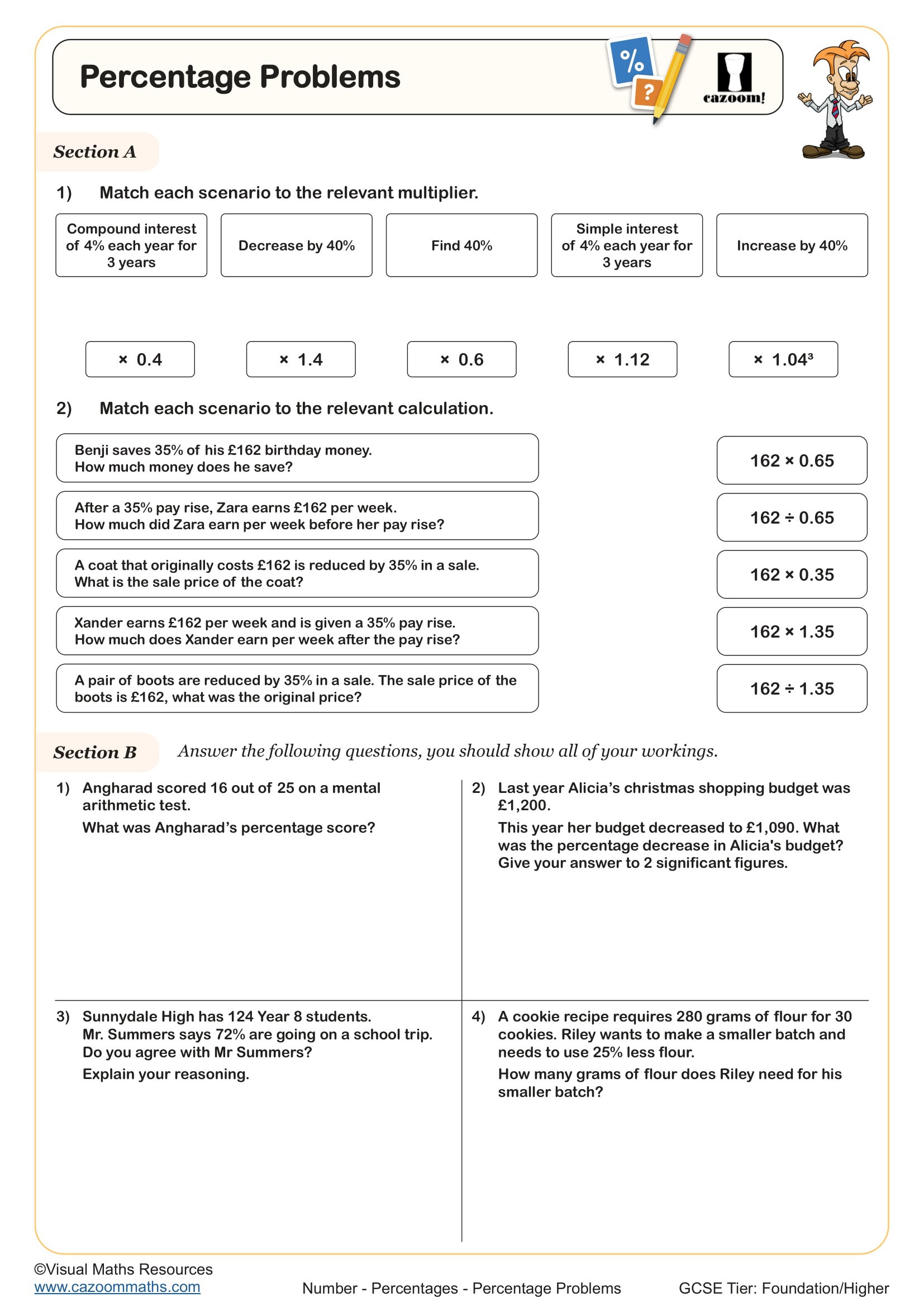
Percentage Problems
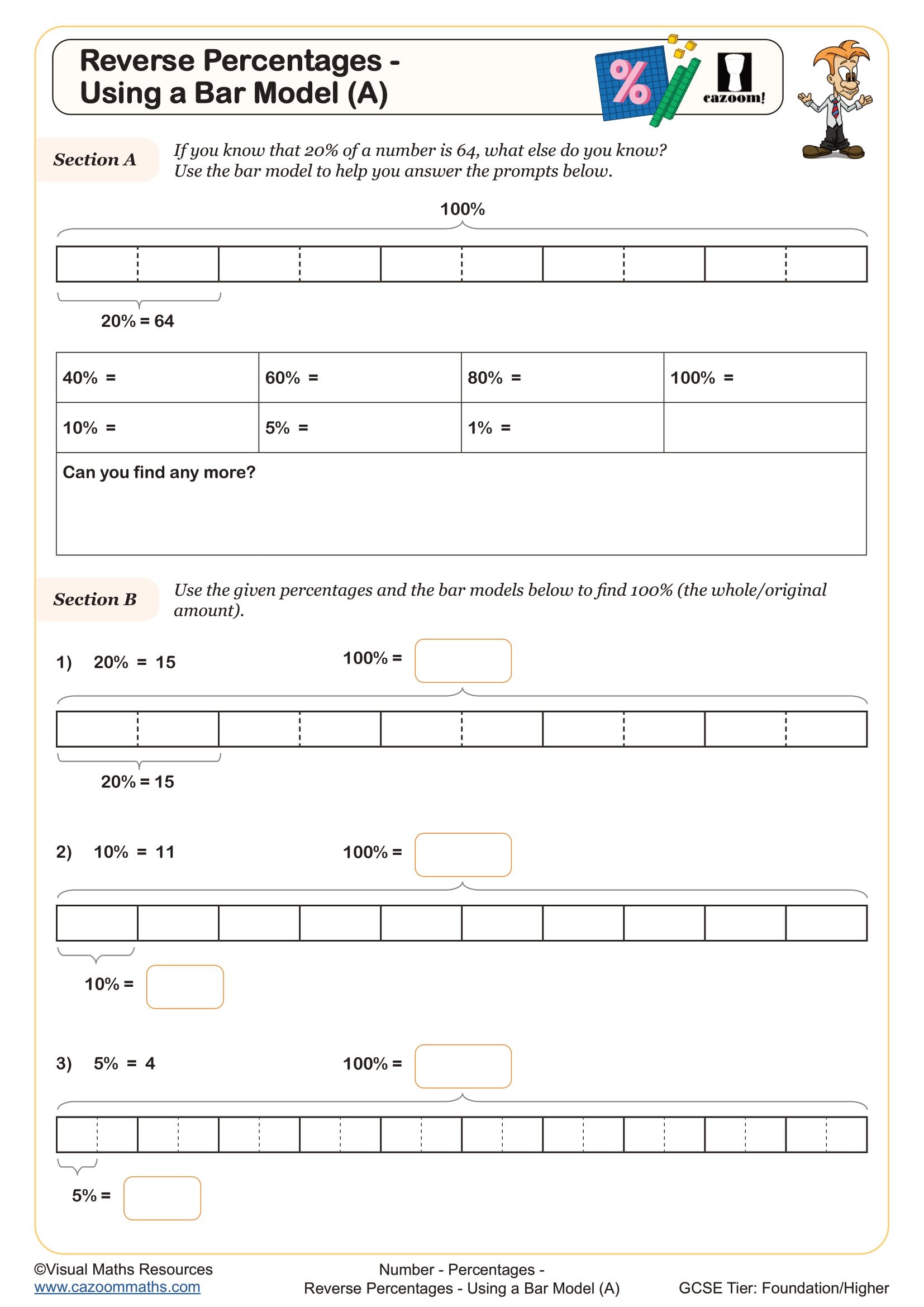
Reverse Percentages - Using a Bar Model (A)
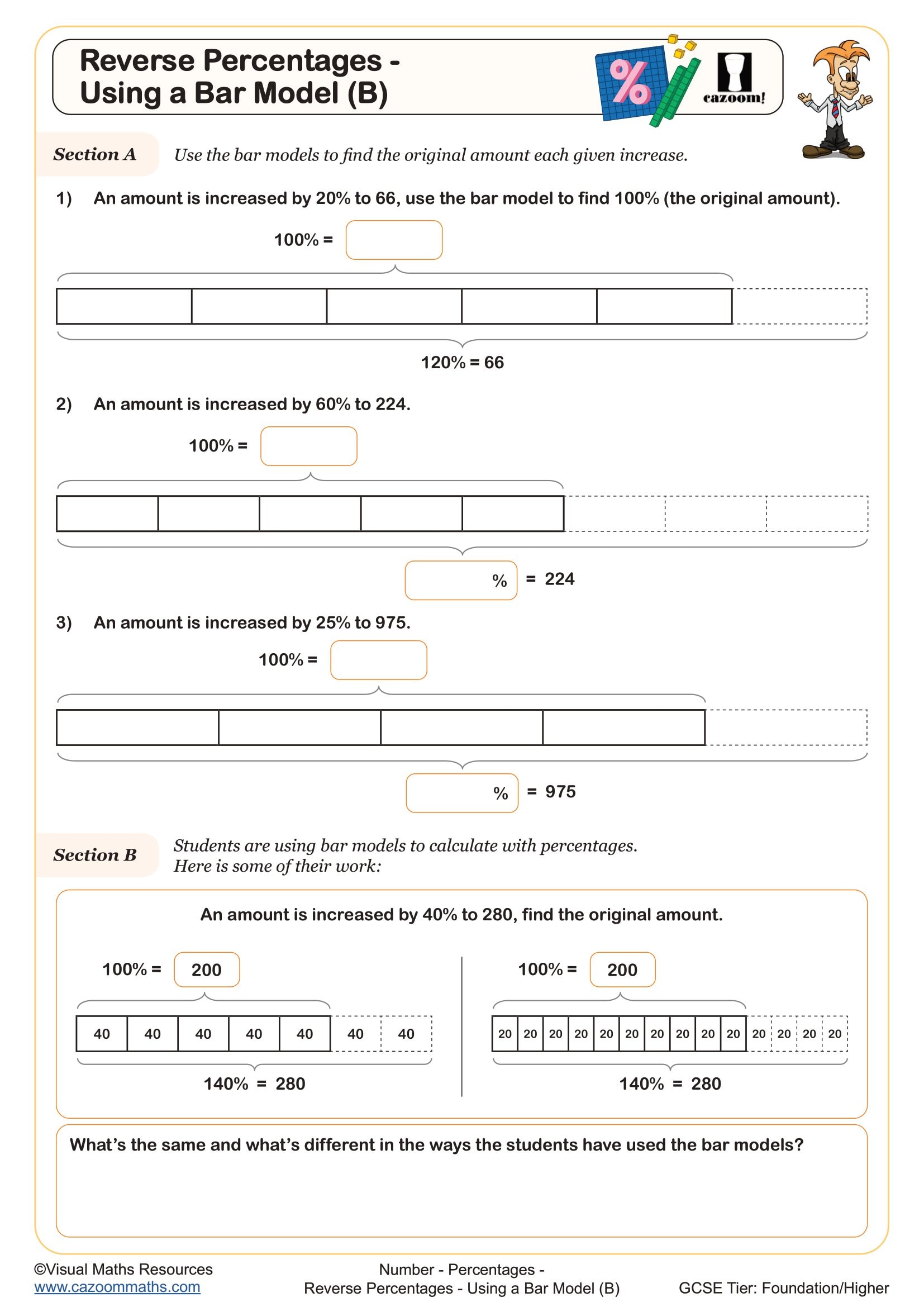
Reverse Percentages - Using a Bar Model (B)
All worksheets are created by the team of experienced teachers at Cazoom Maths.
What makes a good percentages worksheet for Year 10 students?
A quality percentage worksheet should cover the full range of Year 10 expectations including percentage increase and decrease, reverse percentages, and compound interest calculations. The questions need to progress logically from straightforward calculations to complex problem-solving scenarios that mirror GCSE exam questions.
Teachers notice that students perform better when worksheets include contextual problems rather than abstract calculations. For example, calculating salary increases or price reductions helps students understand why they're learning these methods. The most effective percentage worksheets also include common misconceptions as distractors, helping students recognise and avoid typical errors before examinations.
How do Year 10 percentage skills differ from earlier key stages?
Year 10 percentage work builds significantly on KS3 foundations, introducing reverse percentages and compound calculations that require algebraic thinking. Students move beyond finding 10 percent of a number worksheet problems to solve multi-step scenarios involving percentage change over time.
The cognitive demand increases substantially as students must decide which method to apply and work backwards from given information. Teachers observe that many students can handle forward percentage calculations but struggle when asked to find the original amount after a percentage change. This represents a crucial transition point towards GCSE-level mathematical reasoning.
Why do students find reverse percentages particularly challenging?
Reverse percentages require students to think multiplicatively rather than additively, which many find counterintuitive. When told that £120 represents 80% of an original amount, students often subtract 20% instead of dividing by 0.8, showing they haven't grasped the underlying mathematical relationship.
Teachers frequently see students attempt to 'undo' a percentage increase by subtracting the same percentage, not realising this creates a different result. For instance, increasing by 20% then decreasing by 20% doesn't return to the original value. Quality worksheets address this misconception by showing the algebraic relationship and providing varied contexts where students must identify the correct approach.
How should teachers use these percentage worksheets most effectively?
Teachers find that starting each lesson with a quick percentage worksheet section focusing on mental calculations helps maintain fluency before tackling complex problems. The worksheets work well as diagnostic tools, revealing which students need additional support with fundamental concepts versus those ready for extension work.
Using the answer sheets strategically proves valuable - some teachers provide them for self-marking during independent work, while others use them for peer assessment activities. The PDF format allows teachers to project solutions for whole-class discussion, highlighting common errors and alternative methods. Regular low-stakes practice using these worksheets builds the automaticity students need for successful GCSE performance.