Year 10 Pythagoras Worksheets
3D Pythagoras (A)
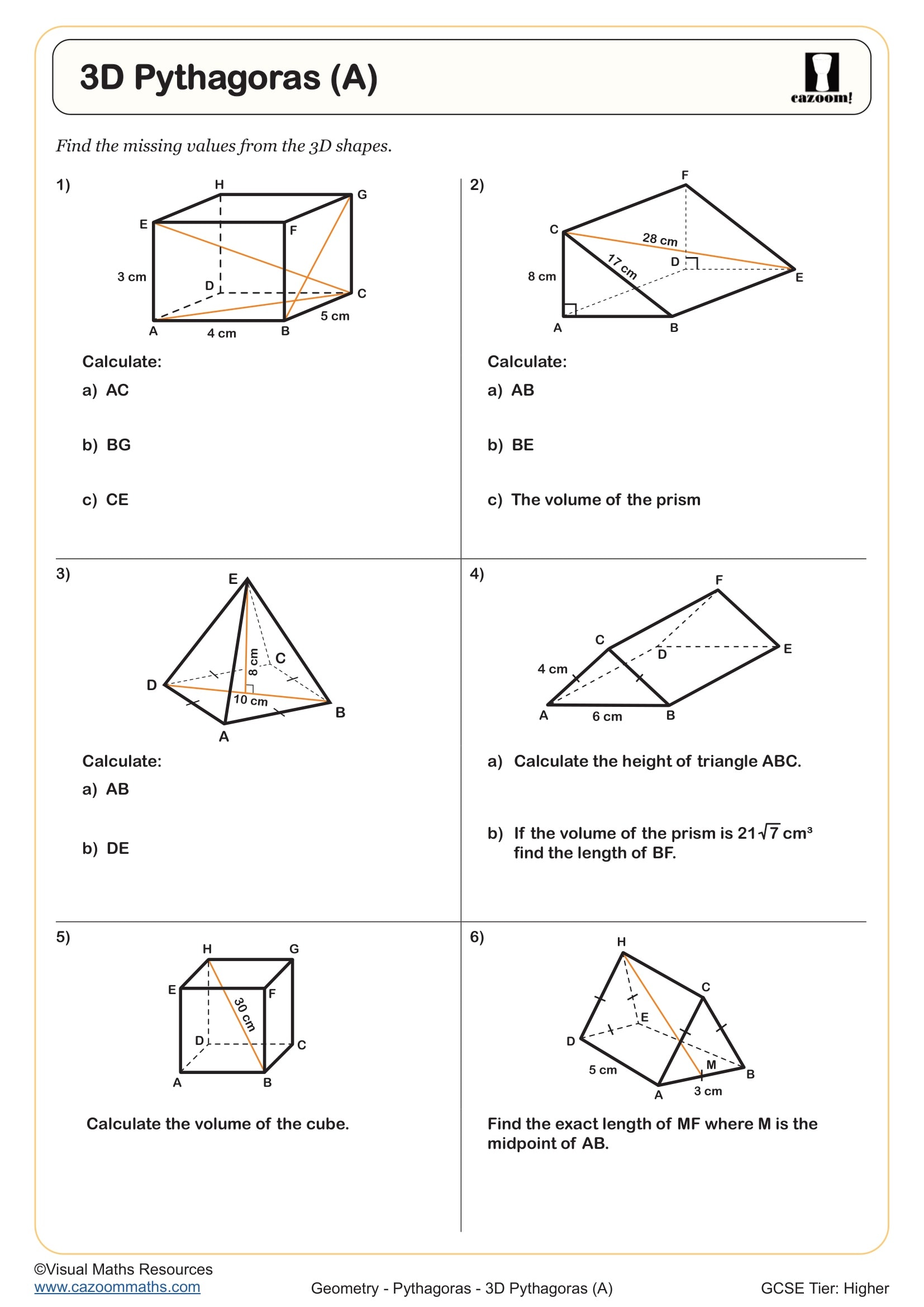
3D Pythagoras (B)
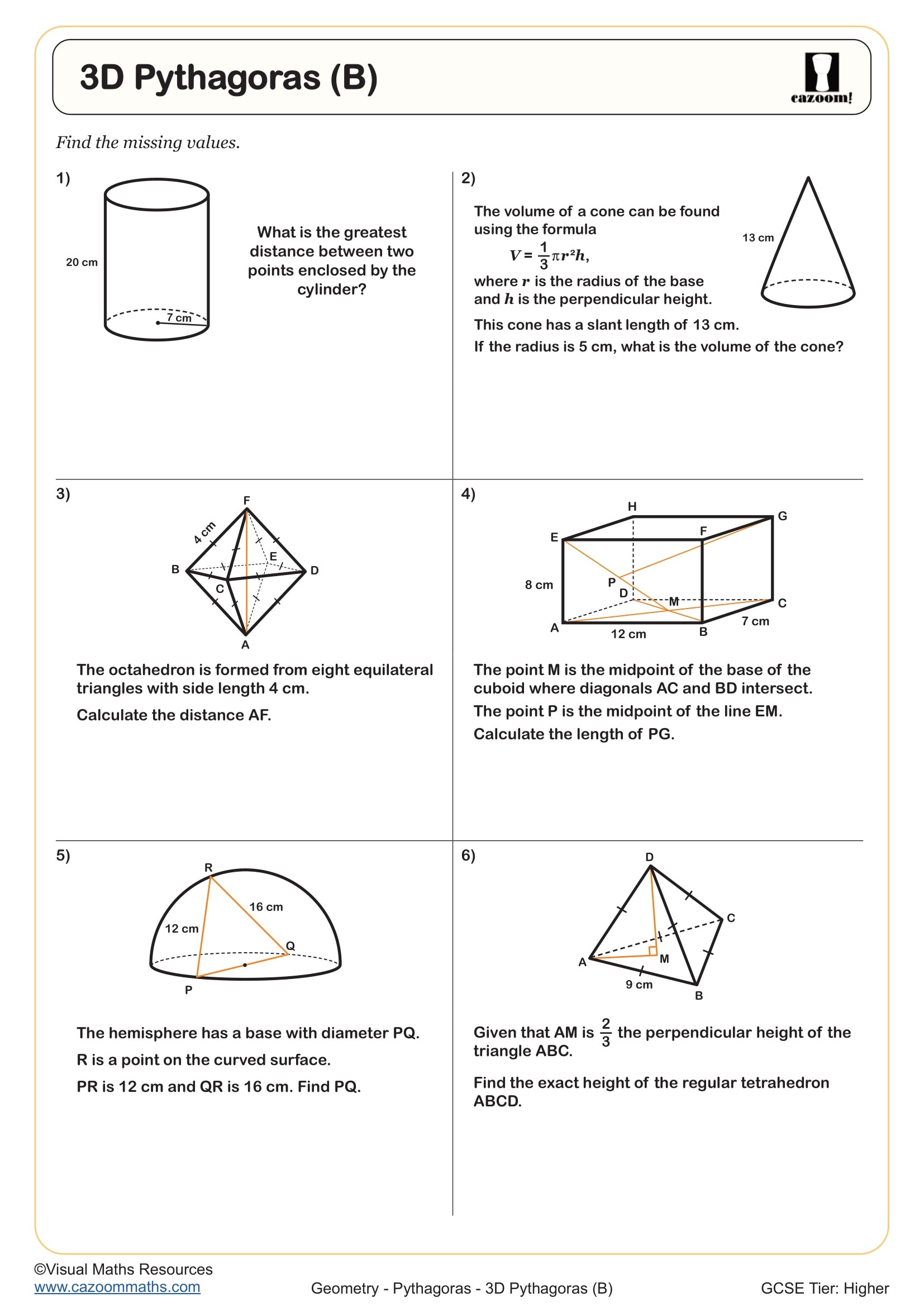
3D Pythagoras' Theorem - Finding Volume
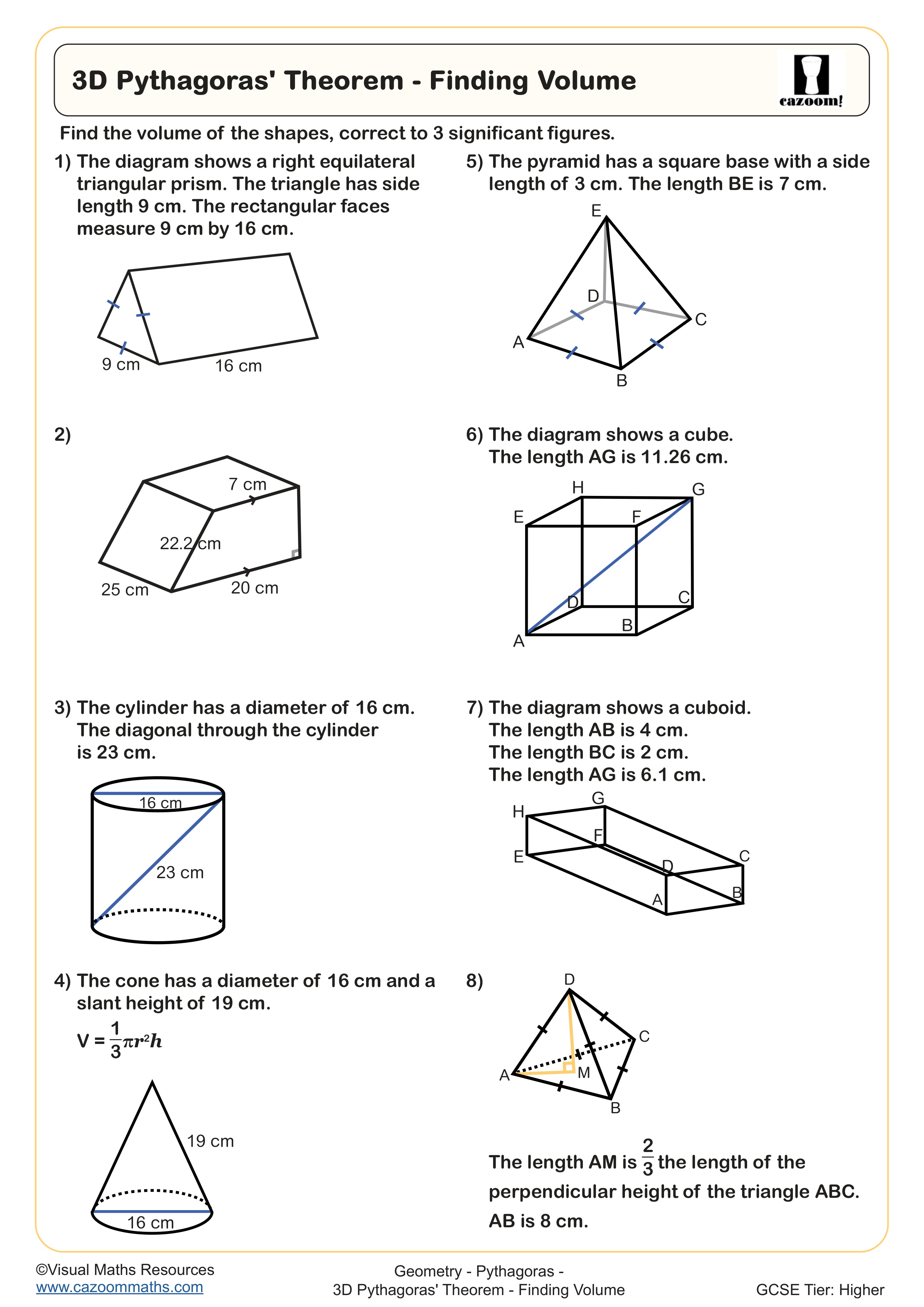
Area of a Triangle Using Pythagoras' Theorem
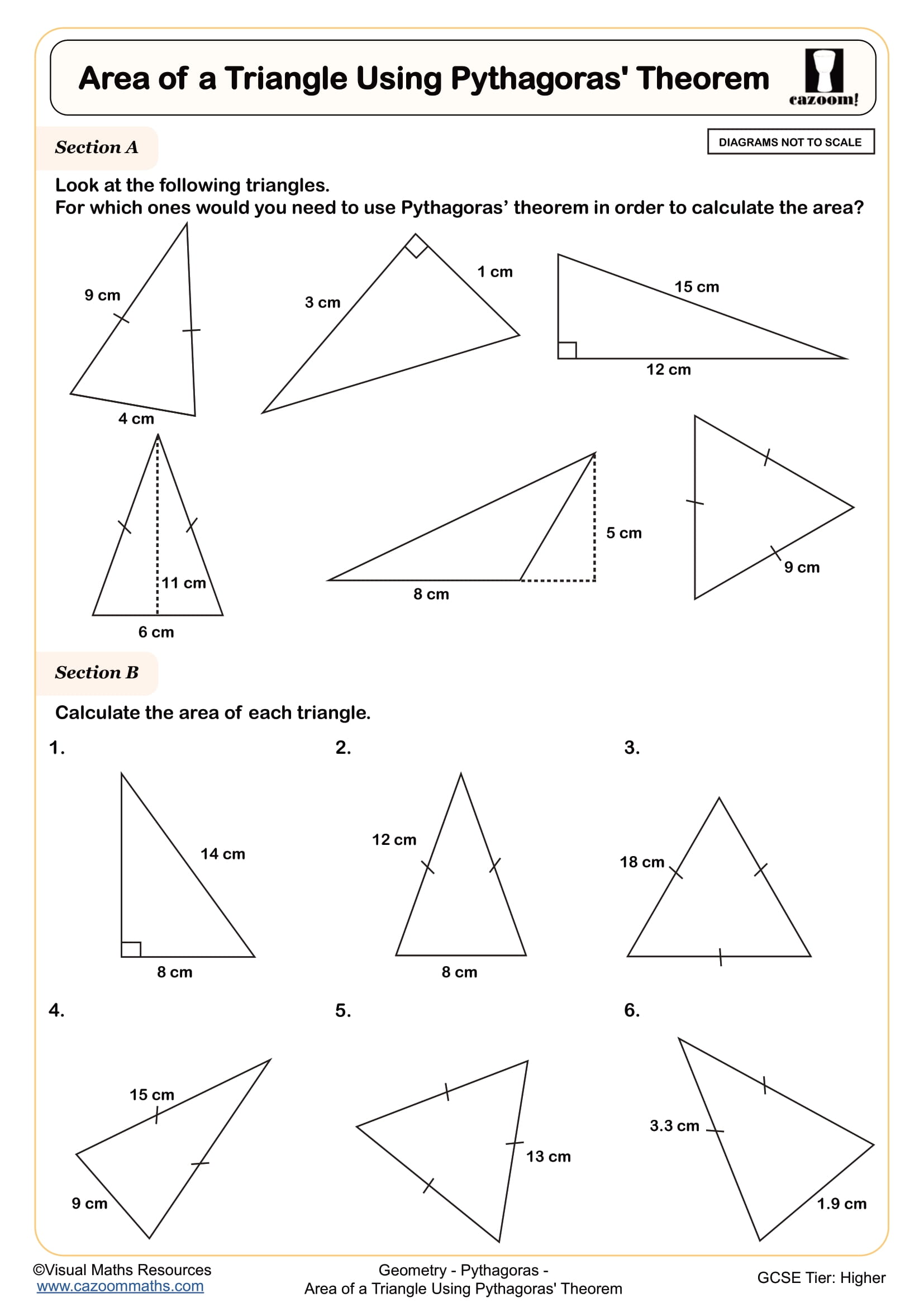
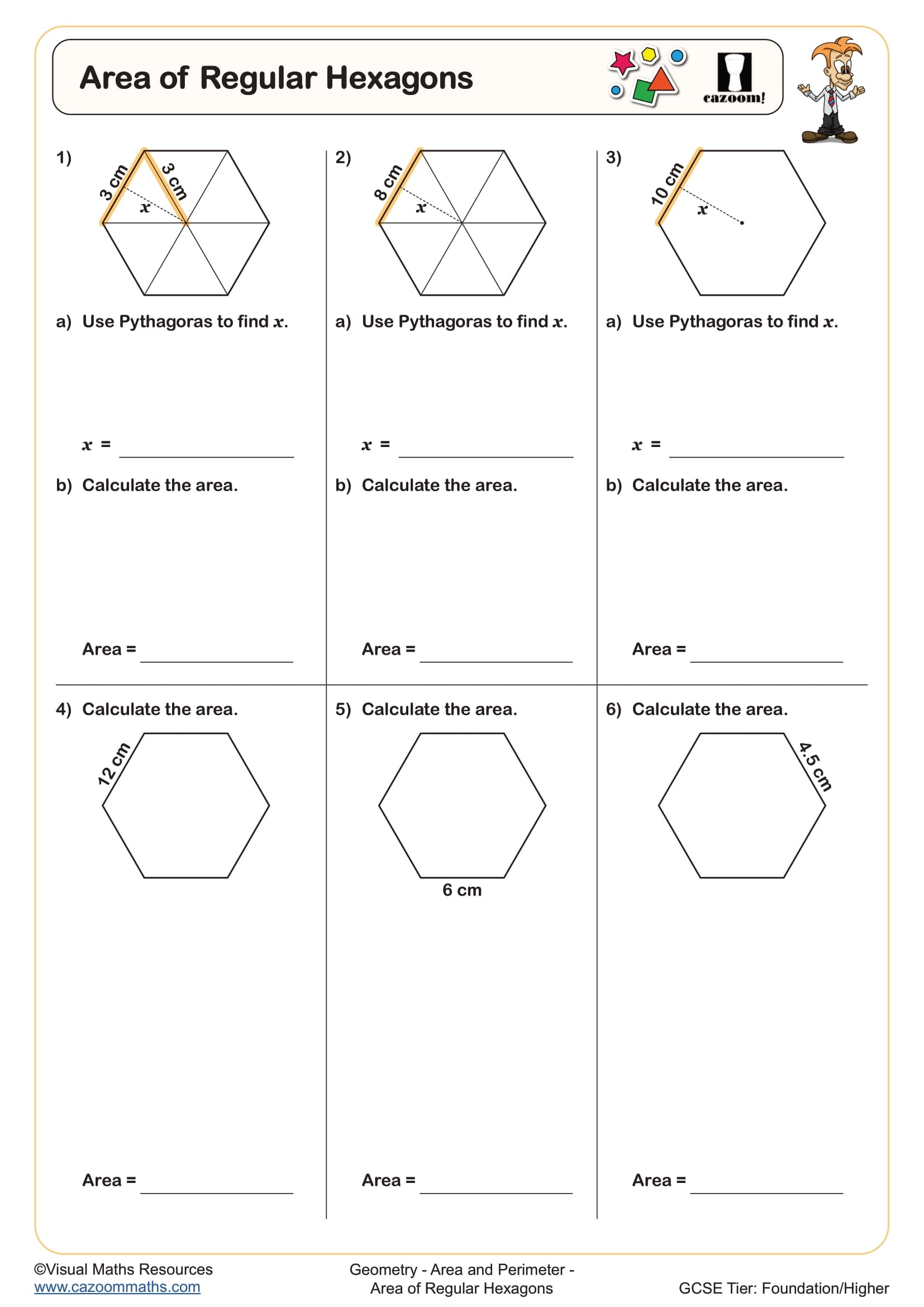
Area of Regular Hexagons
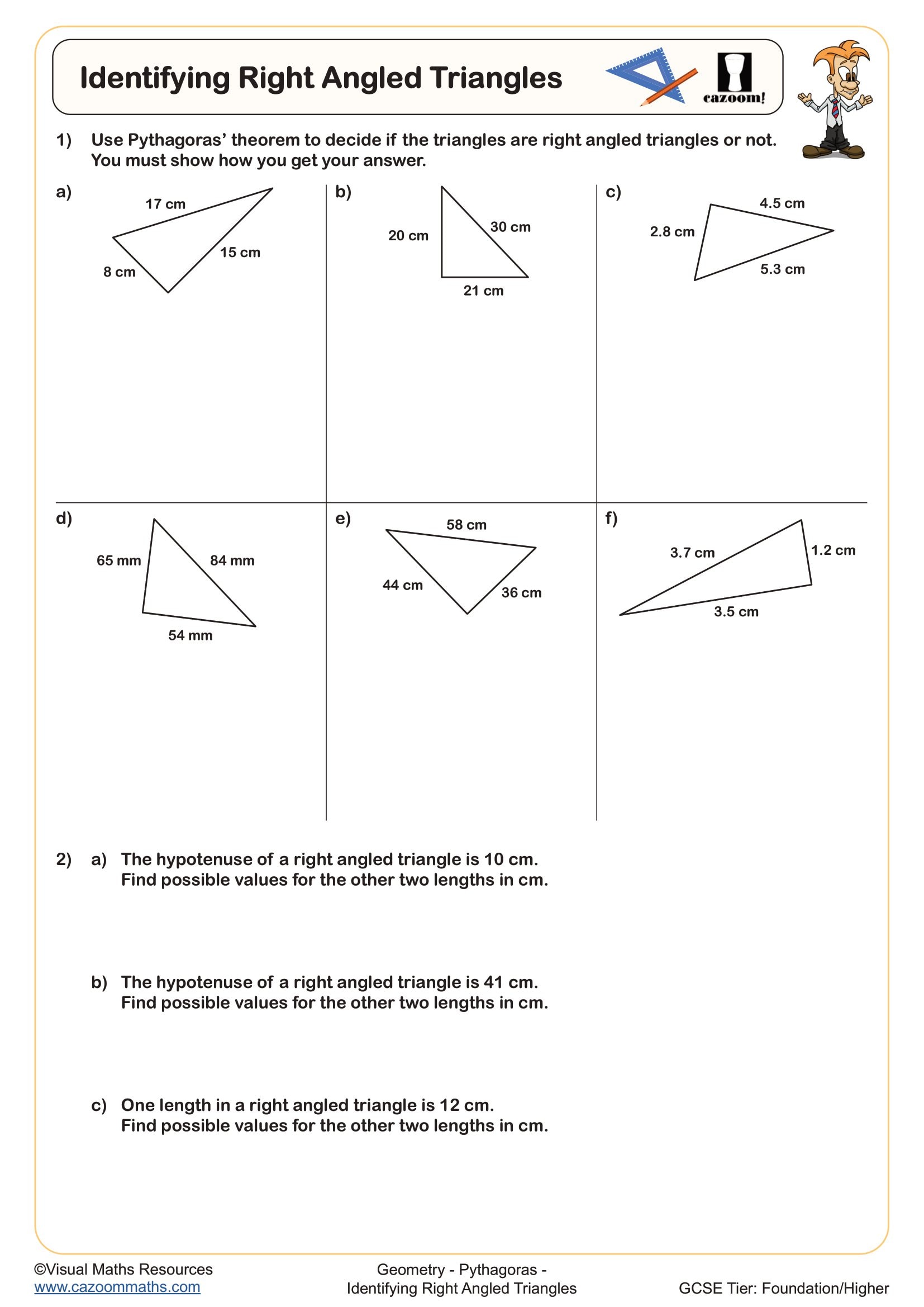
Identifying Right Angled Triangles
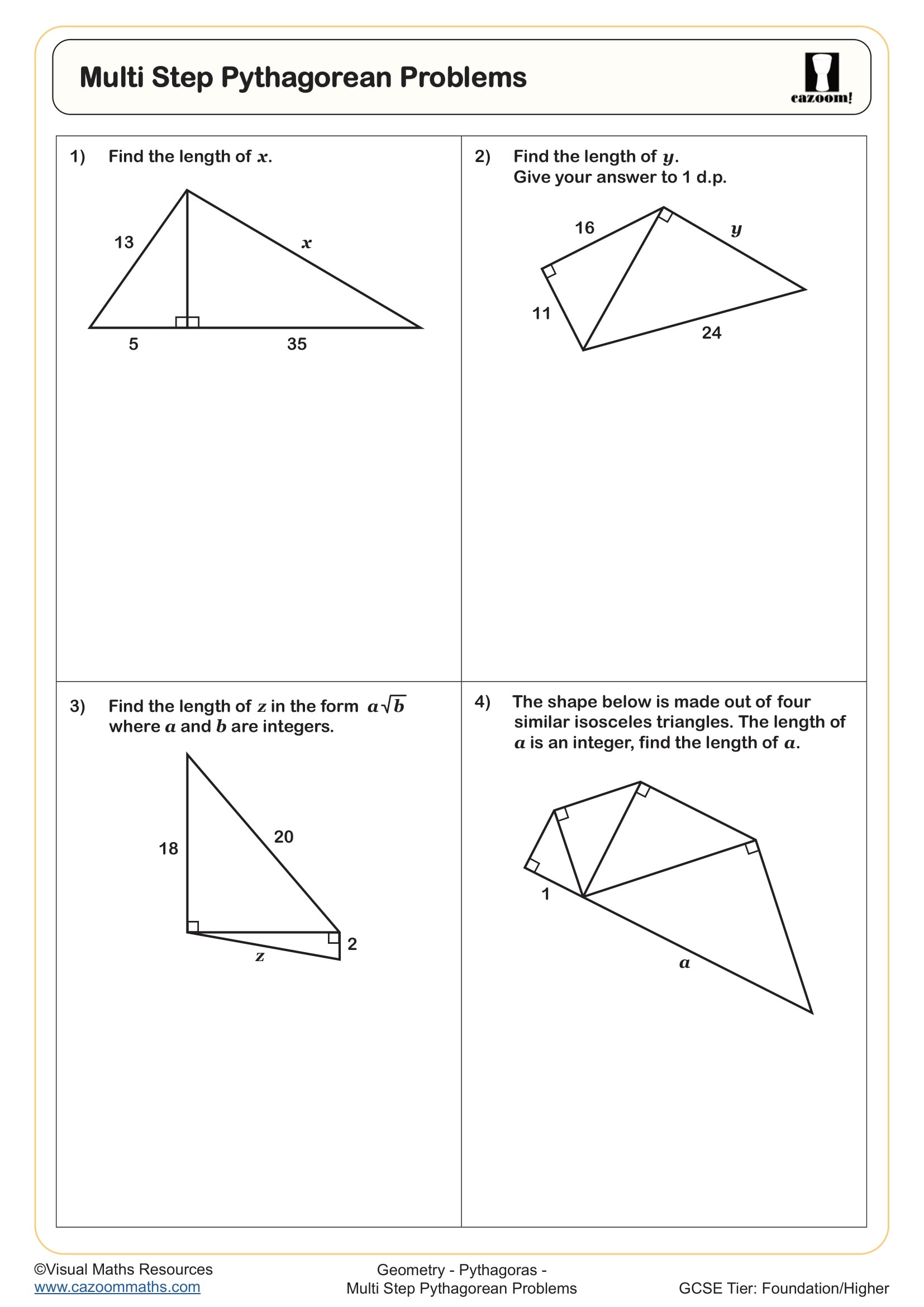
Multi Step Pythagorean Problems
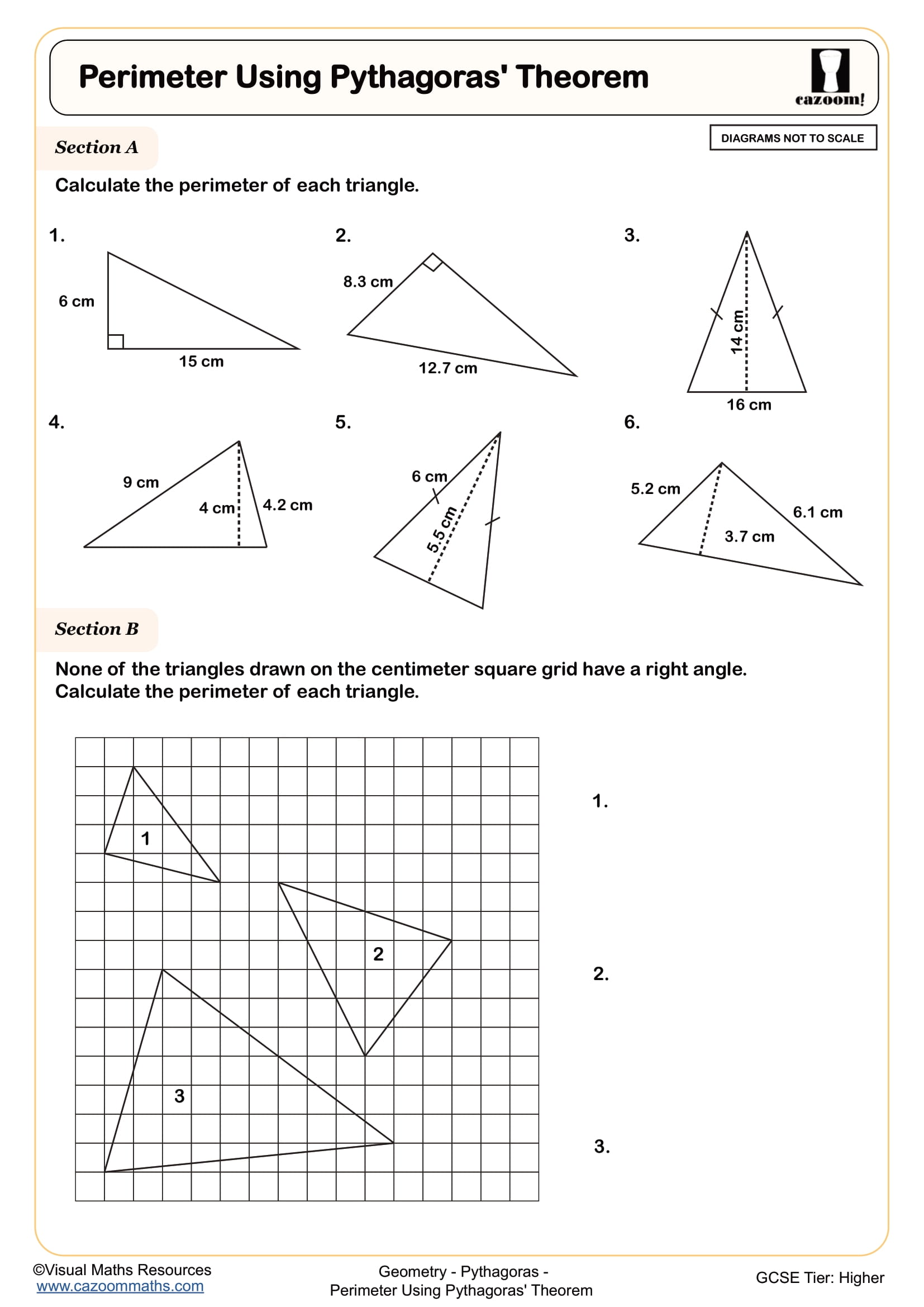
Perimeter Using Pythagoras' Theorem
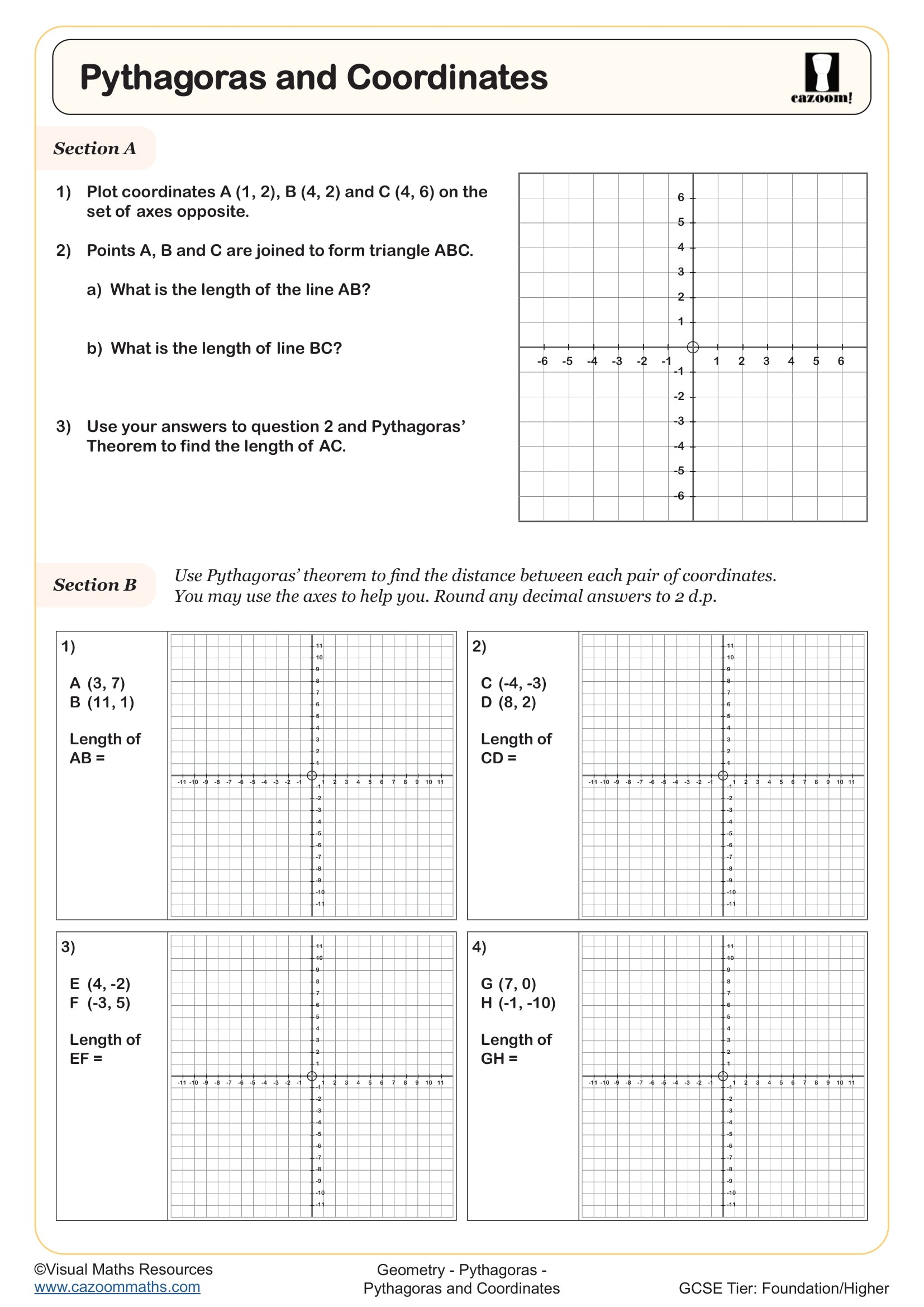
Pythagoras and Coordinates
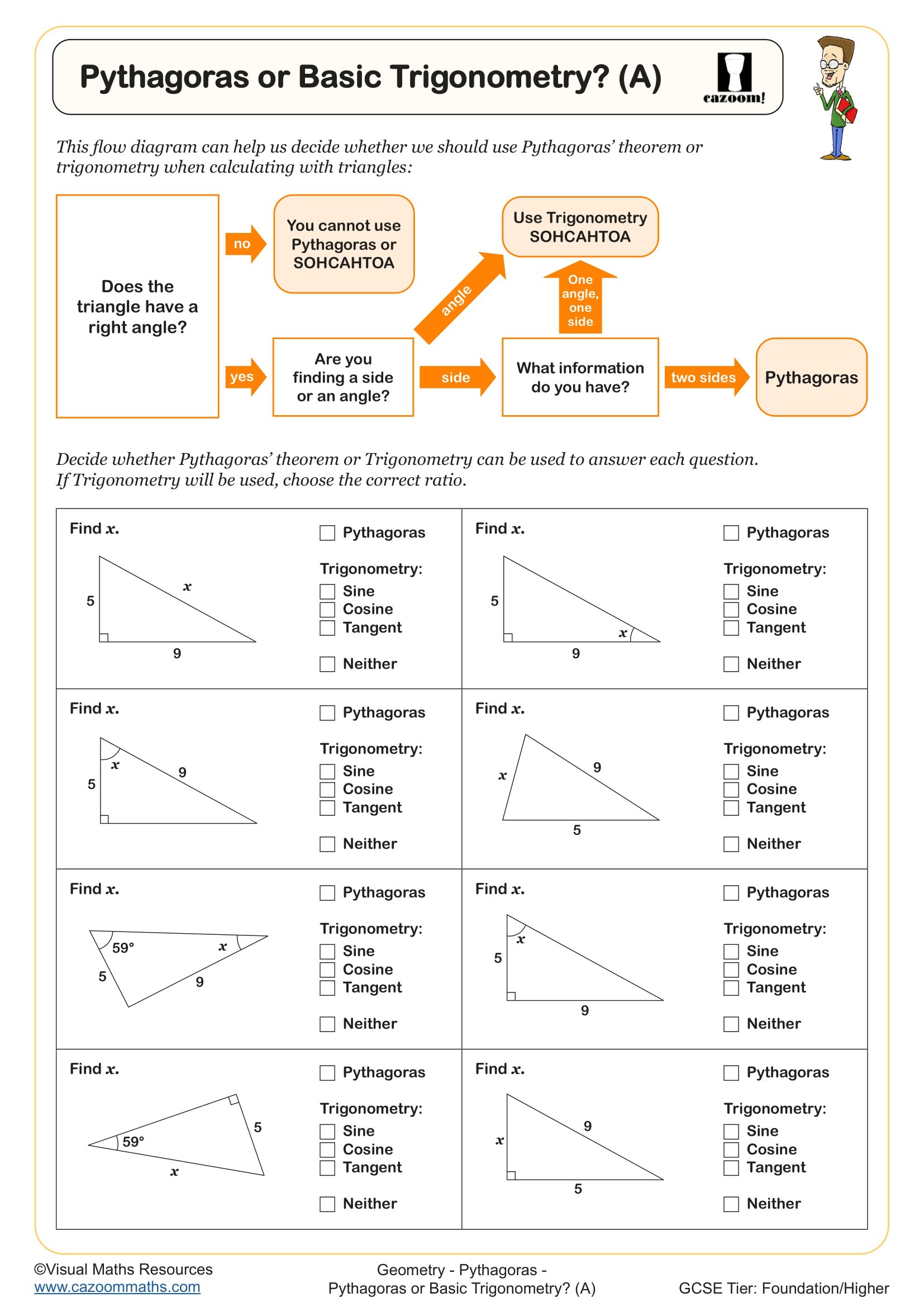
Pythagoras or Trigonometry? (A)
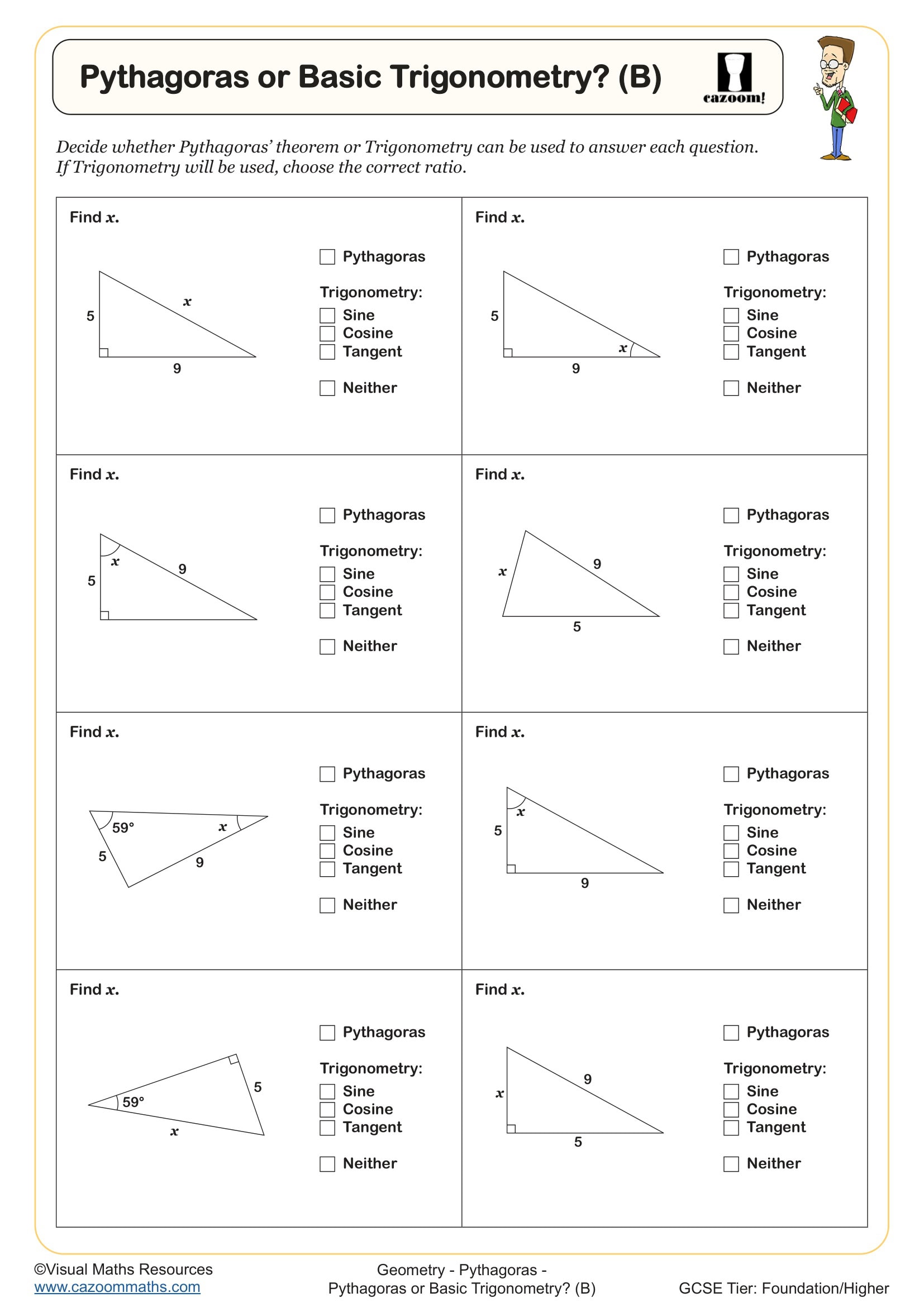
Pythagoras or Trigonometry? (B)
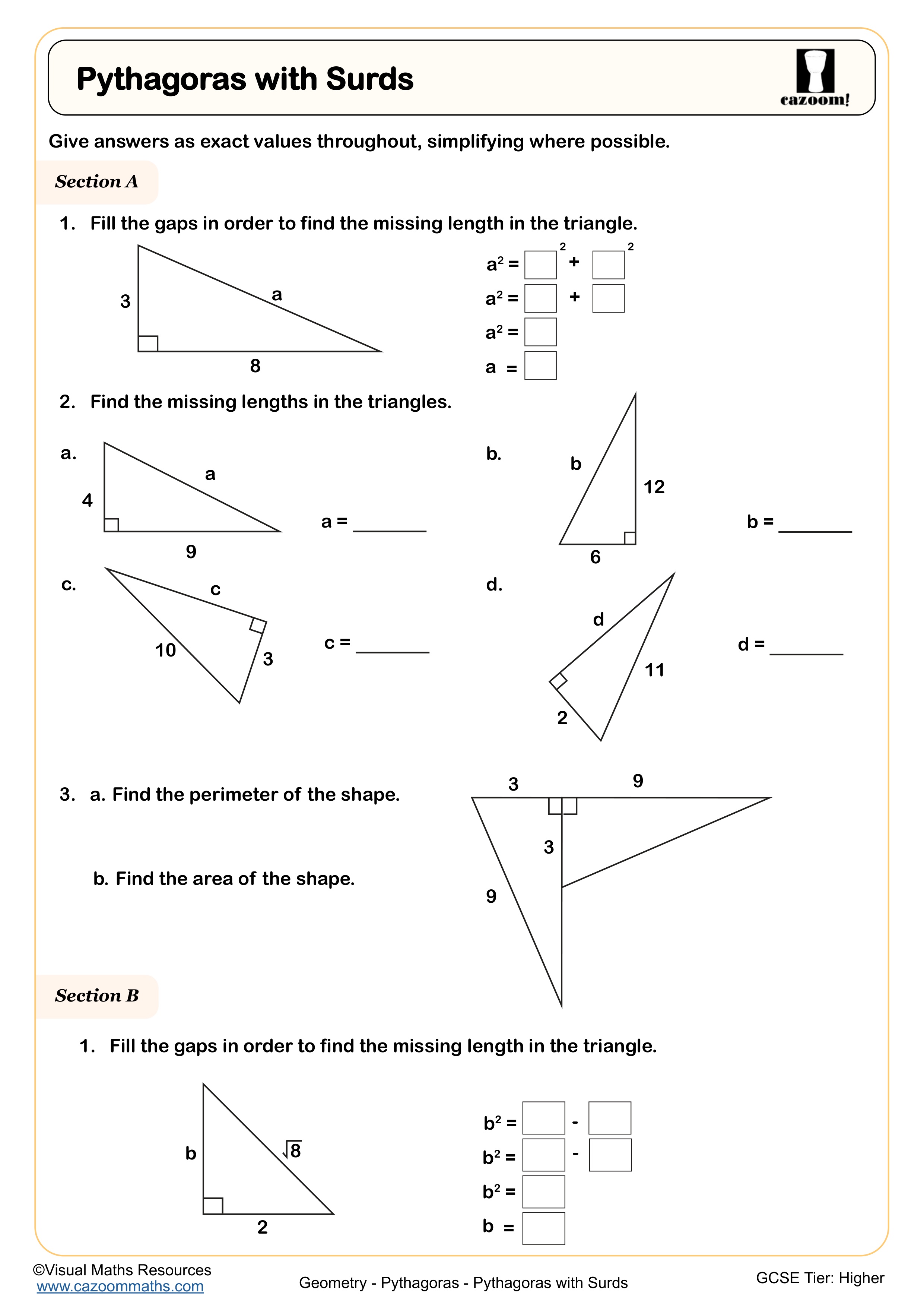
Pythagoras with Surds
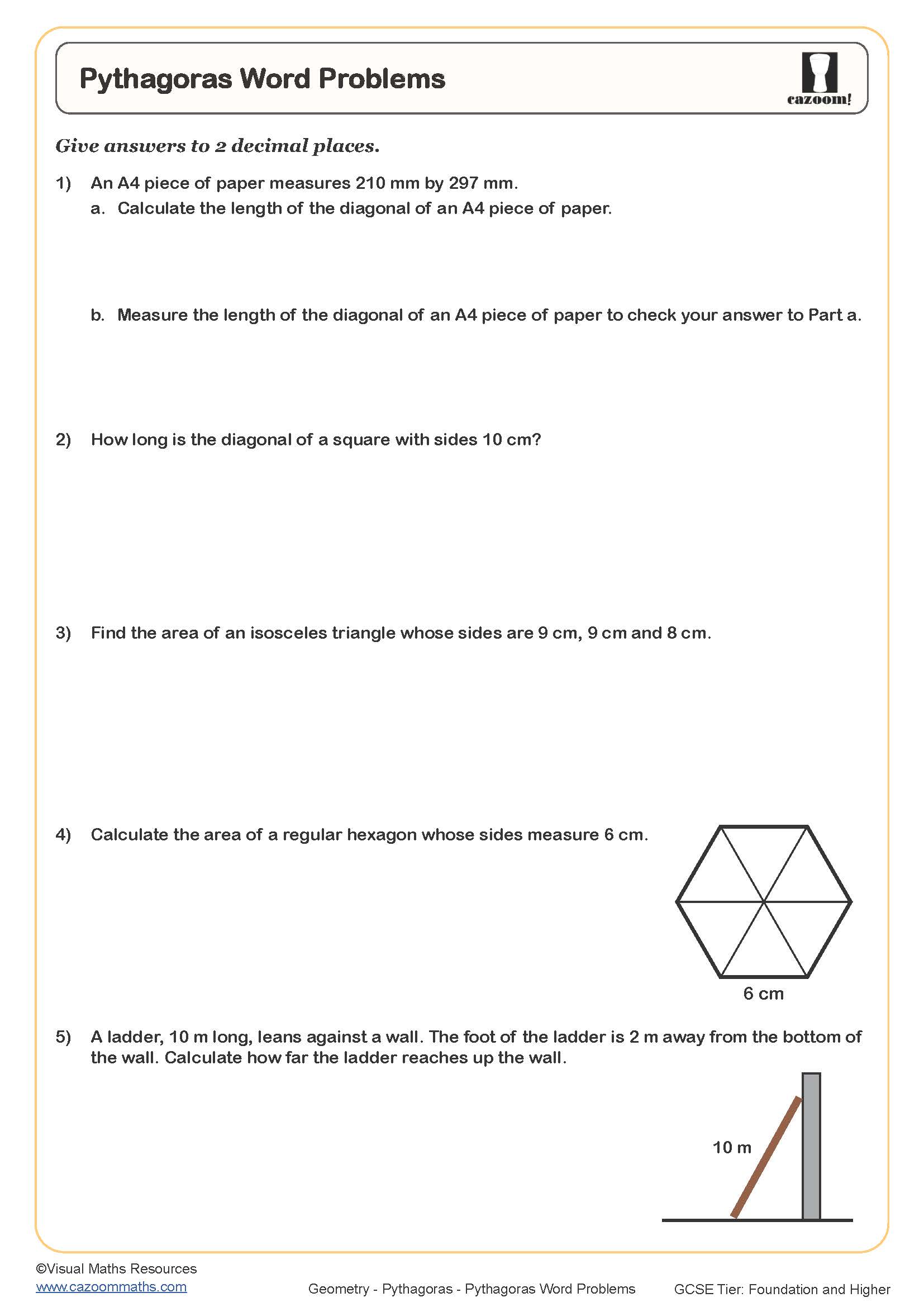
Pythagoras Word Problems
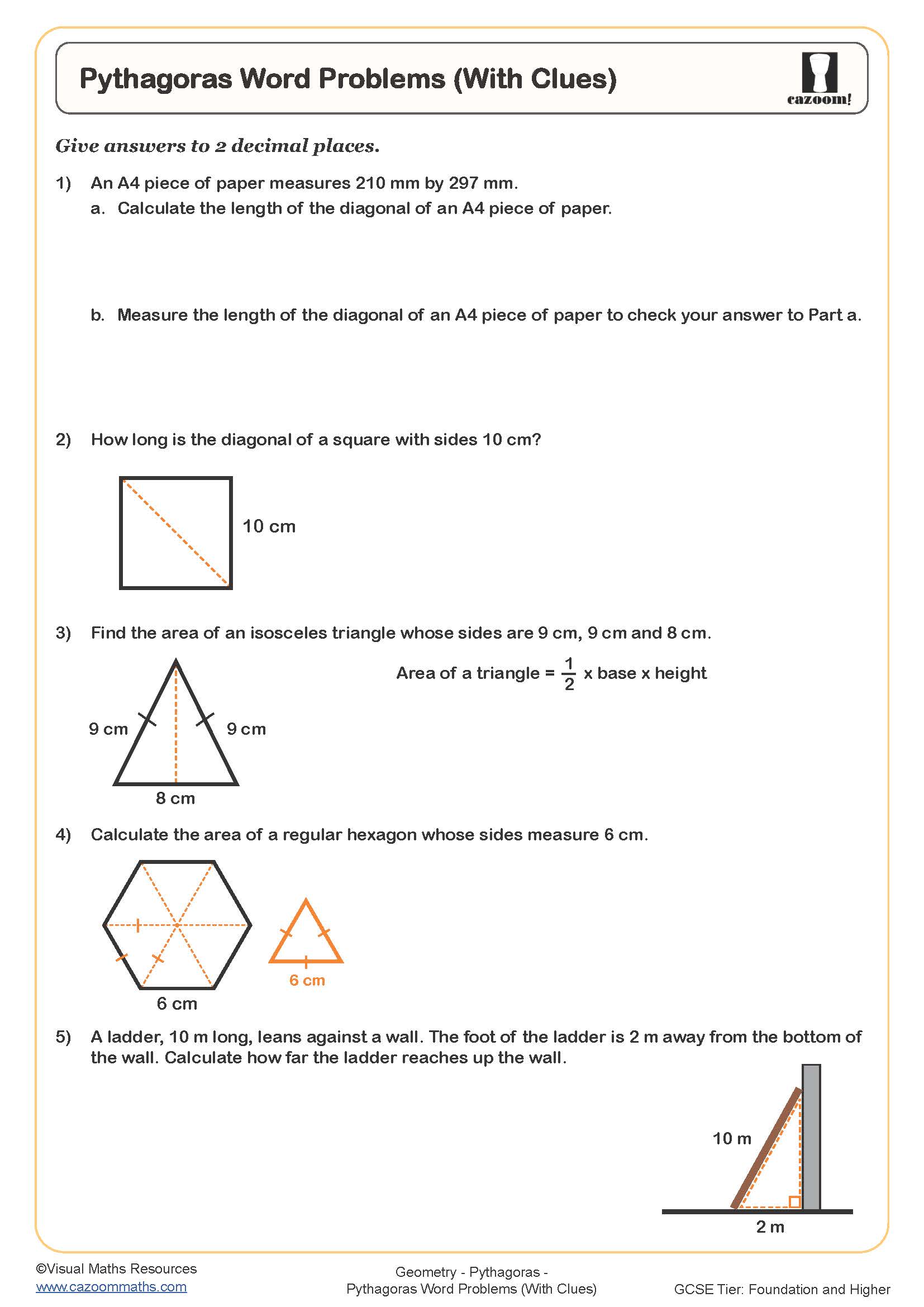
Pythagoras Word Problems (With Clues)
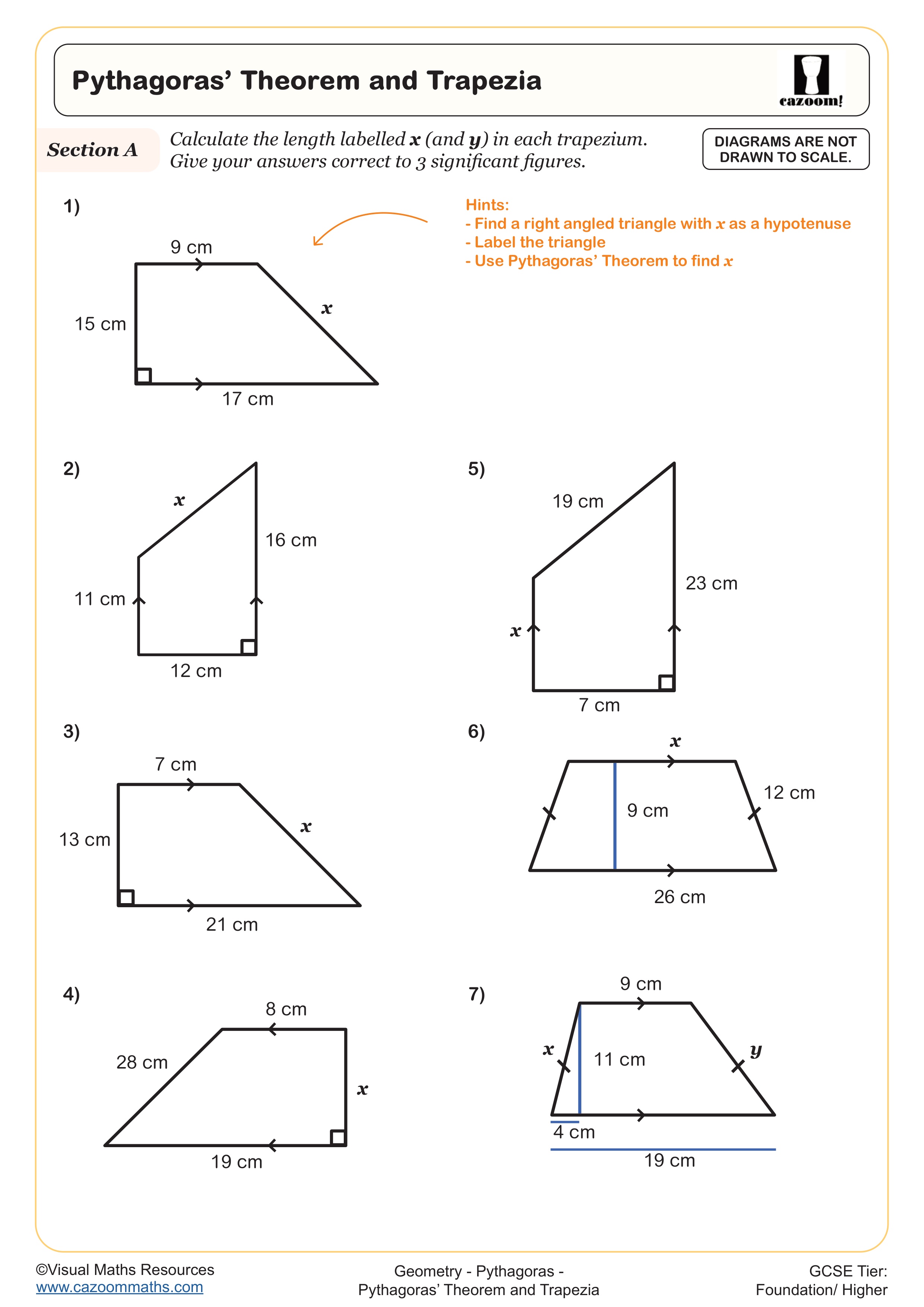
Pythagoras’ Theorem and Trapezia
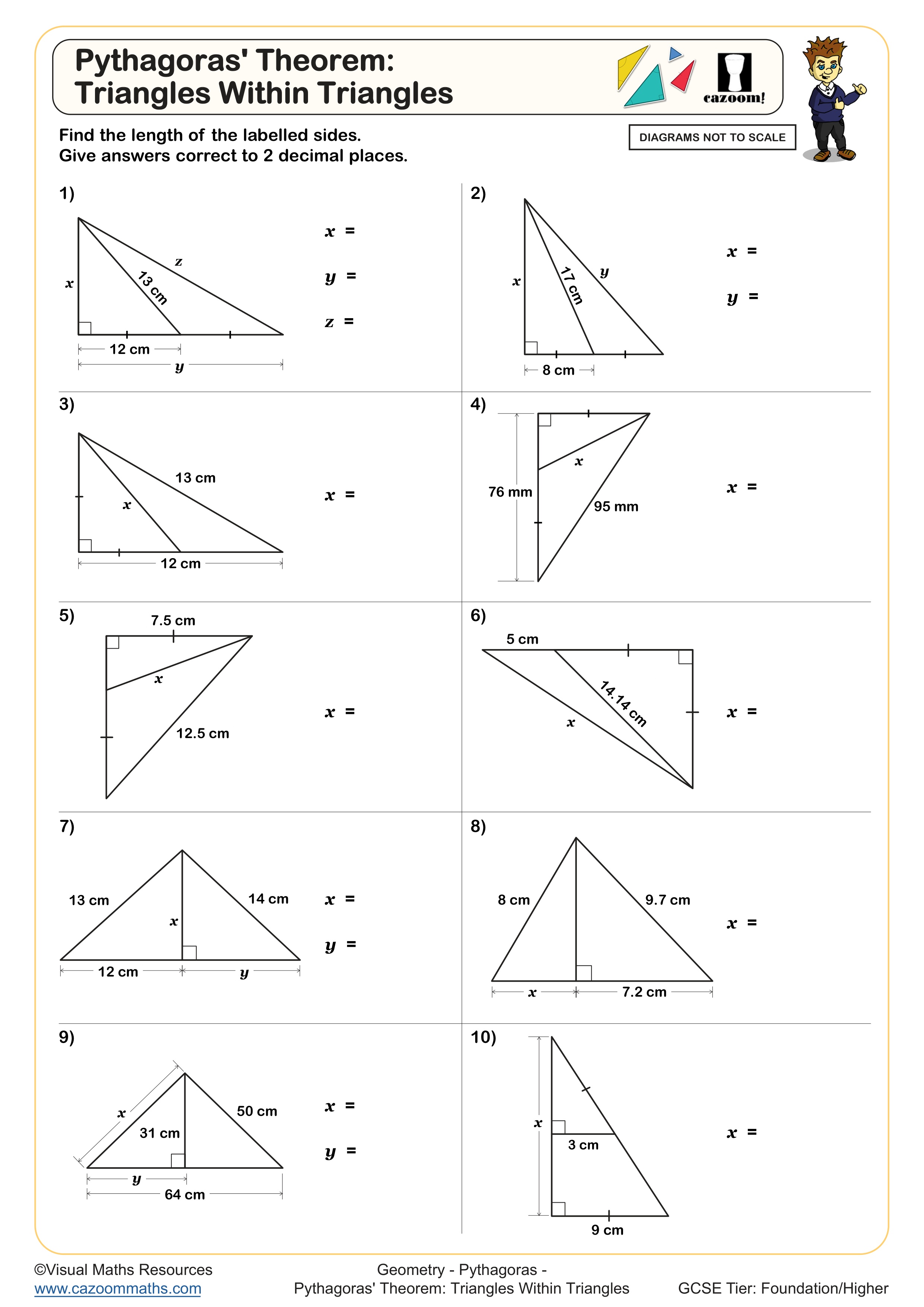
Pythagoras' Theorem: Triangles Within Triangles
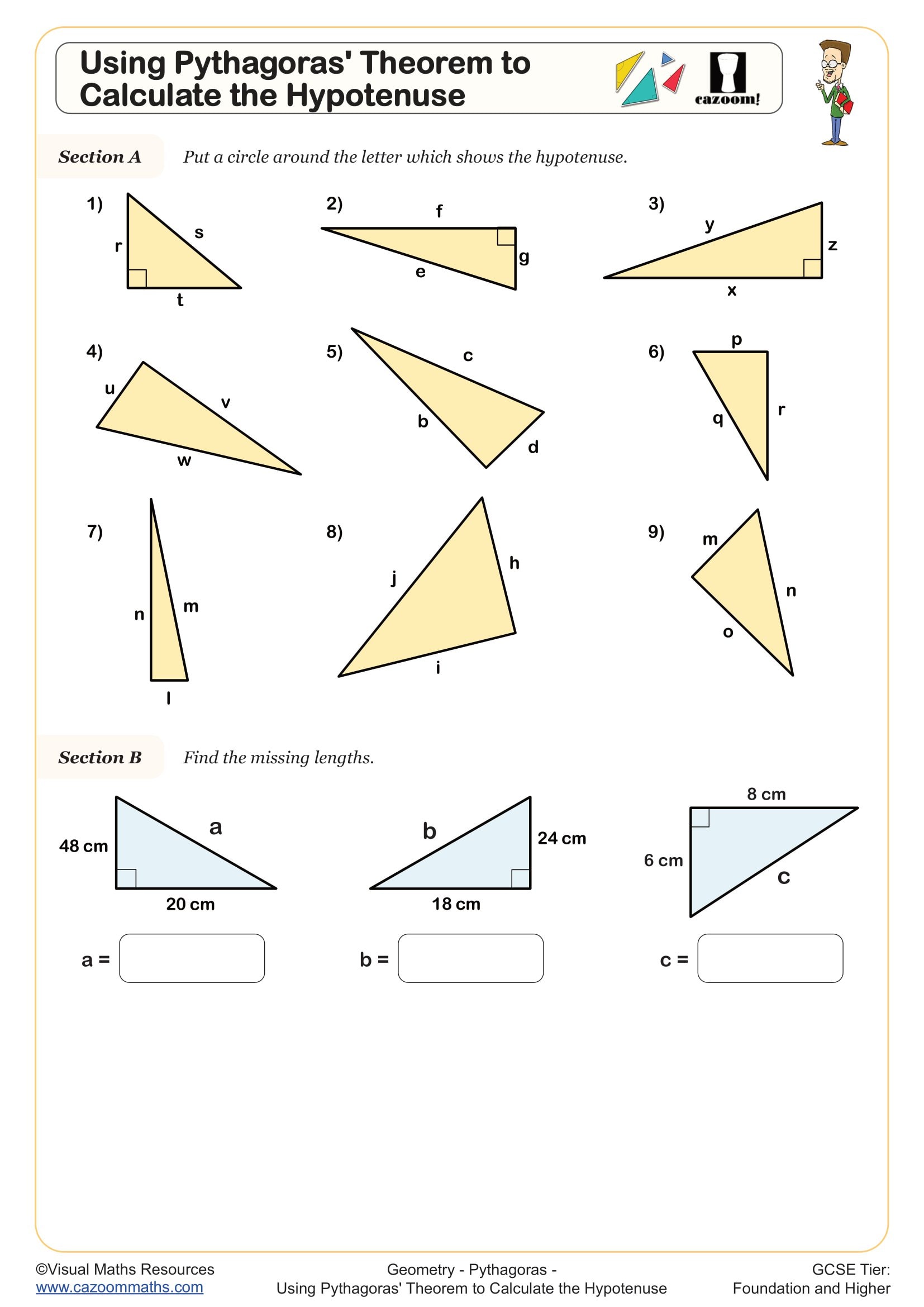
Using Pythagoras Theorem to Calculate the Hypotenuse
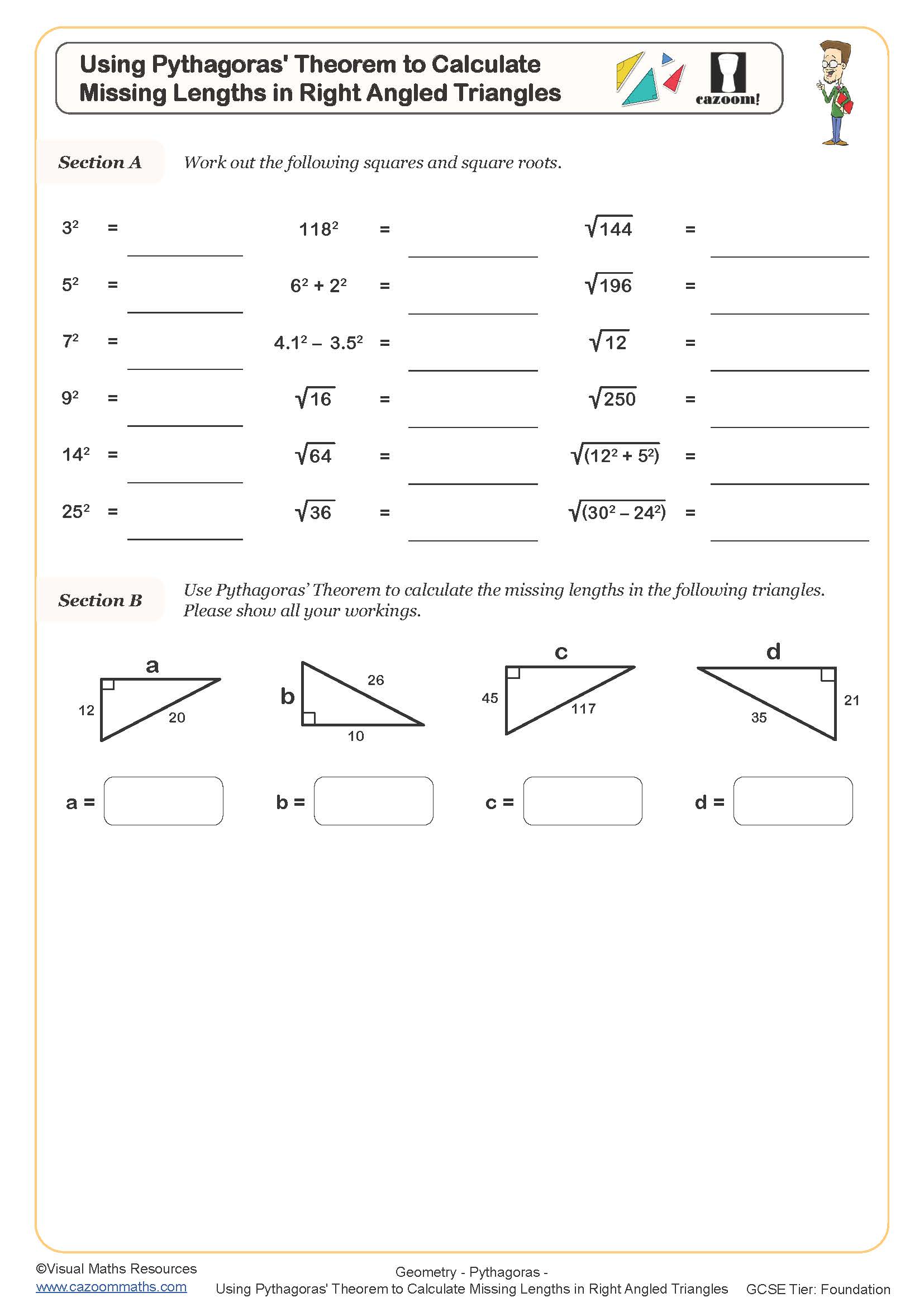
Using Pythagoras' Theorem to Calculate Missing Lengths in Right Angled Triangles
All worksheets are created by the team of experienced teachers at Cazoom Maths.
What makes effective pythagoras theorem worksheet practice for GCSE students?
Effective pythagoras worksheet materials present questions in order of increasing complexity, starting with right-angled triangles in standard orientation before progressing to rotated triangles and real-world contexts. Students need extensive practice identifying the hypotenuse correctly, as this remains the most common error at GCSE level.
Teachers find that pythagoras theorem worksheets pdf with answers work best when they include both exact and rounded answers, allowing students to practise surds alongside decimal approximations. Mixed question types help students recognise when to find a missing side versus when to verify whether a triangle is right-angled, both key skills for GCSE examinations.
When should students begin working with pythagoras theorem questions?
Most schools introduce Pythagoras' theorem in Year 9 as part of the Key Stage 3 curriculum, with students encountering basic right-angled triangle problems. By Year 10, students tackle more sophisticated applications including composite shapes, coordinate geometry connections, and problem-solving contexts that appear regularly in GCSE examinations.
The progression typically moves from simple numerical calculations to multi-step problems involving Pythagoras combined with other mathematical concepts. Teachers observe that students who master the theorem early in Year 10 perform significantly better on GCSE papers, where Pythagoras often appears within broader geometry questions worth multiple marks.
How do pythagorean theorem worksheet problems connect to real applications?
Engineering and construction contexts provide natural applications for Pythagoras' theorem, with problems involving ladder safety, roof pitch calculations, and structural bracing appearing frequently in GCSE questions. Students encounter scenarios where they must determine safe working distances or calculate material lengths for diagonal supports.
Teachers find that pythagoras questions worksheet materials incorporating GPS navigation, architectural design, and sports field layouts help students appreciate the theorem's relevance. These contexts also prepare students for the problem-solving demands of A-level Mathematics and STEM subjects, where Pythagoras forms the foundation for more advanced trigonometric concepts.
How can teachers use pythagoras worksheet pdf resources most effectively in lessons?
Teachers achieve best results when they use pythagoras and trigonometry worksheet with answers materials for differentiated practice, with struggling students focusing on standard orientation triangles whilst more confident learners tackle rotated and embedded triangle problems. The answer sheets enable immediate feedback during guided practice sessions.
Many teachers structure lessons using a mix of worked examples followed by independent practice with pythagorean theorem worksheet with answers pdf Year 10 materials. This approach allows students to self-assess their understanding before moving to more challenging applications, building confidence whilst maintaining rigorous mathematical standards important for GCSE success.