Year 10 Ratio Worksheets
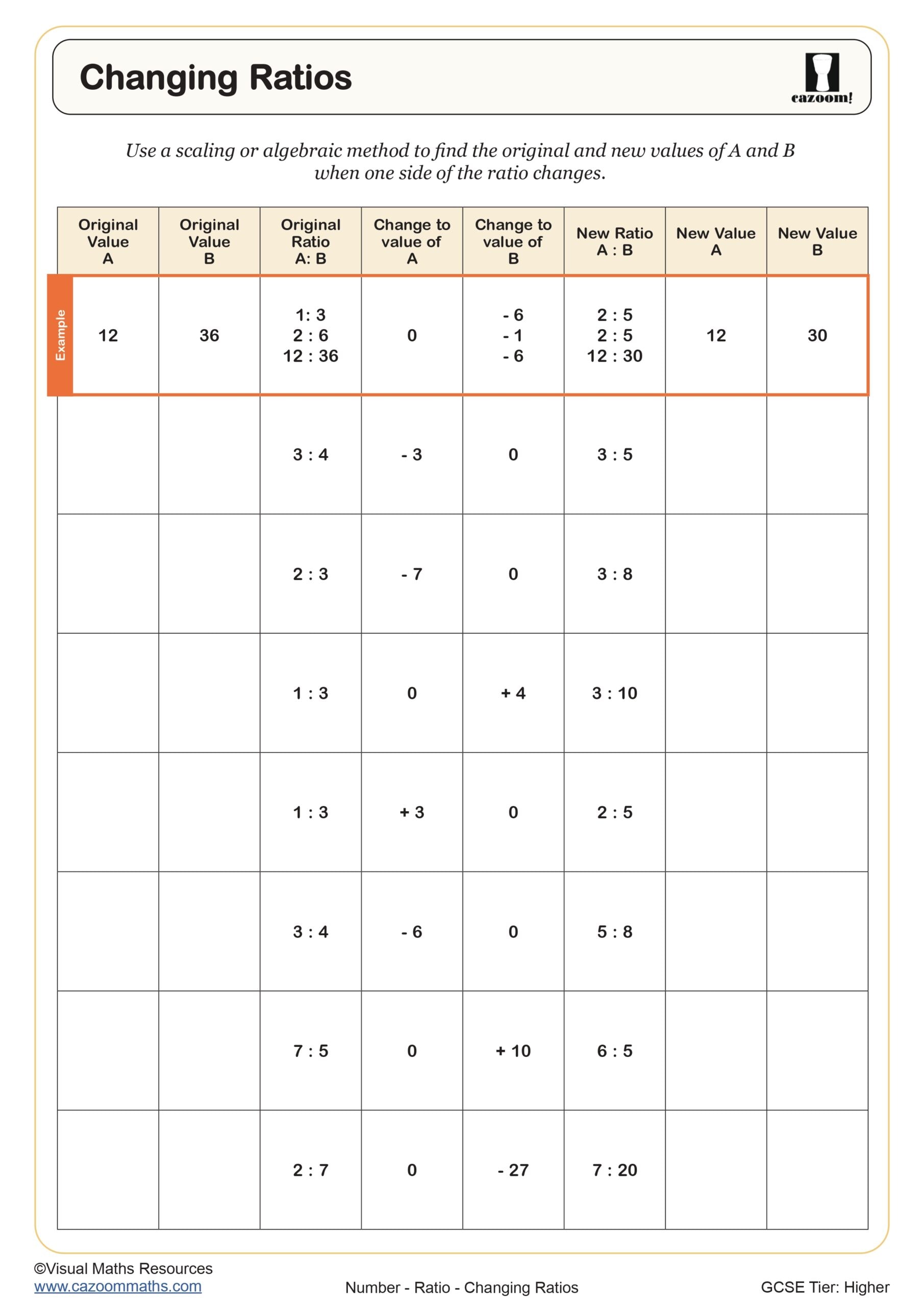
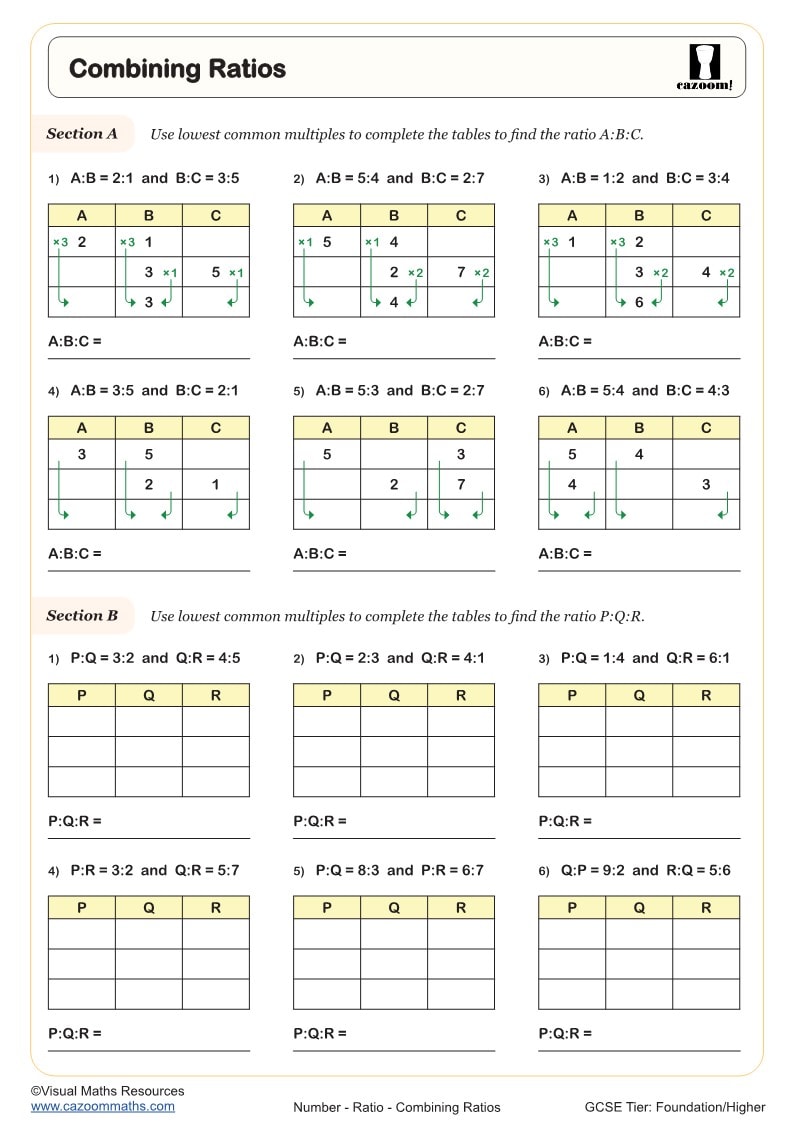
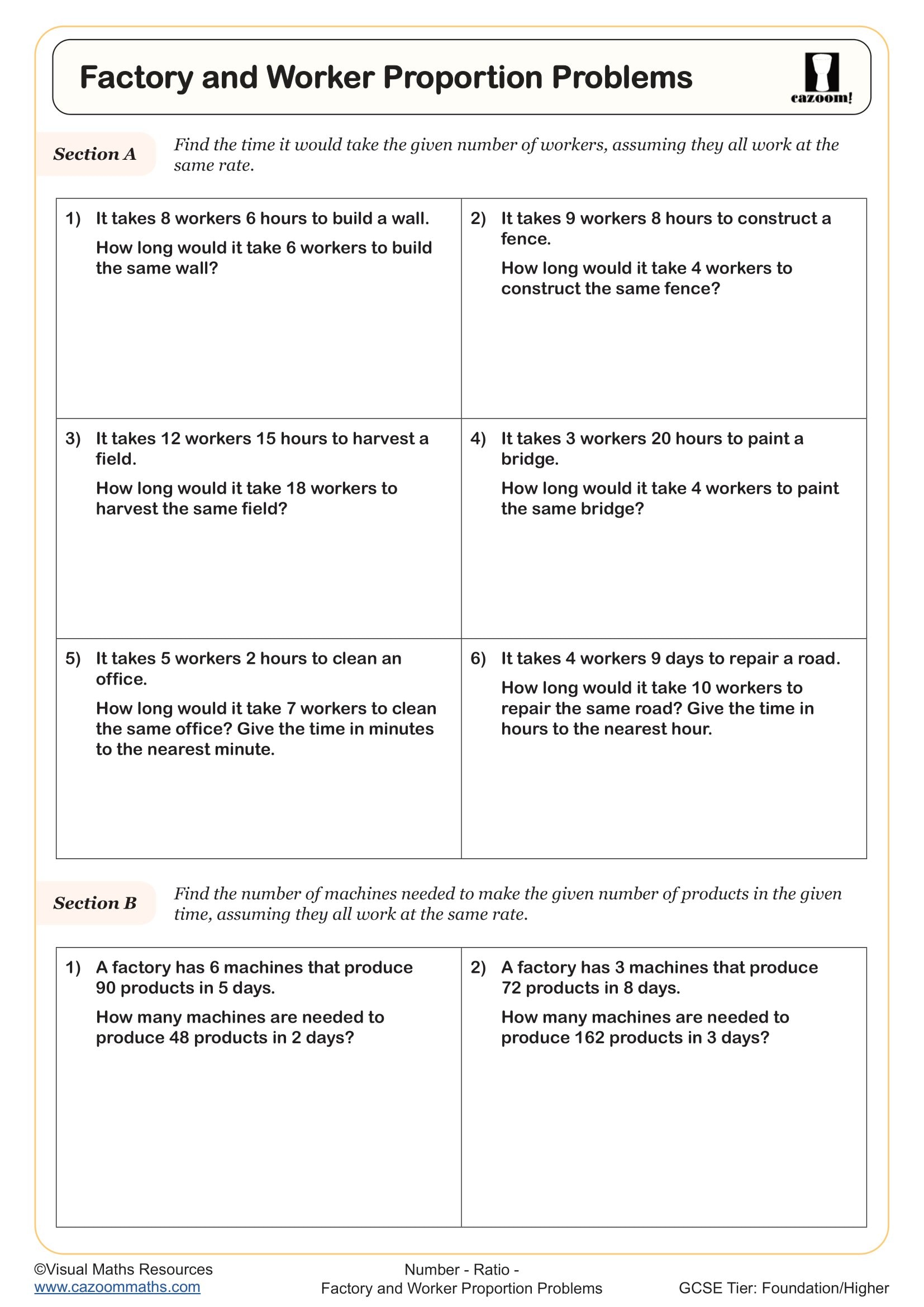
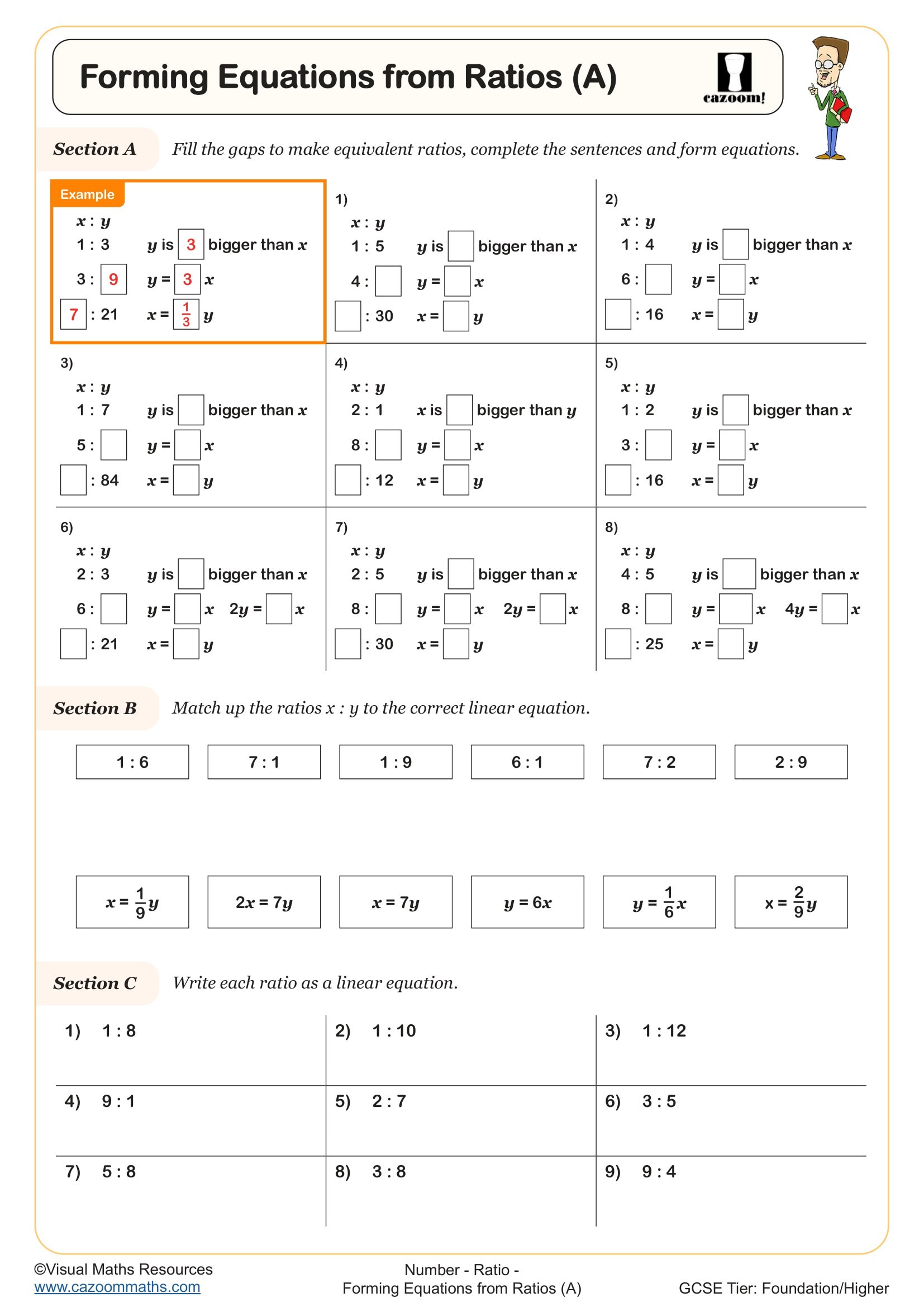
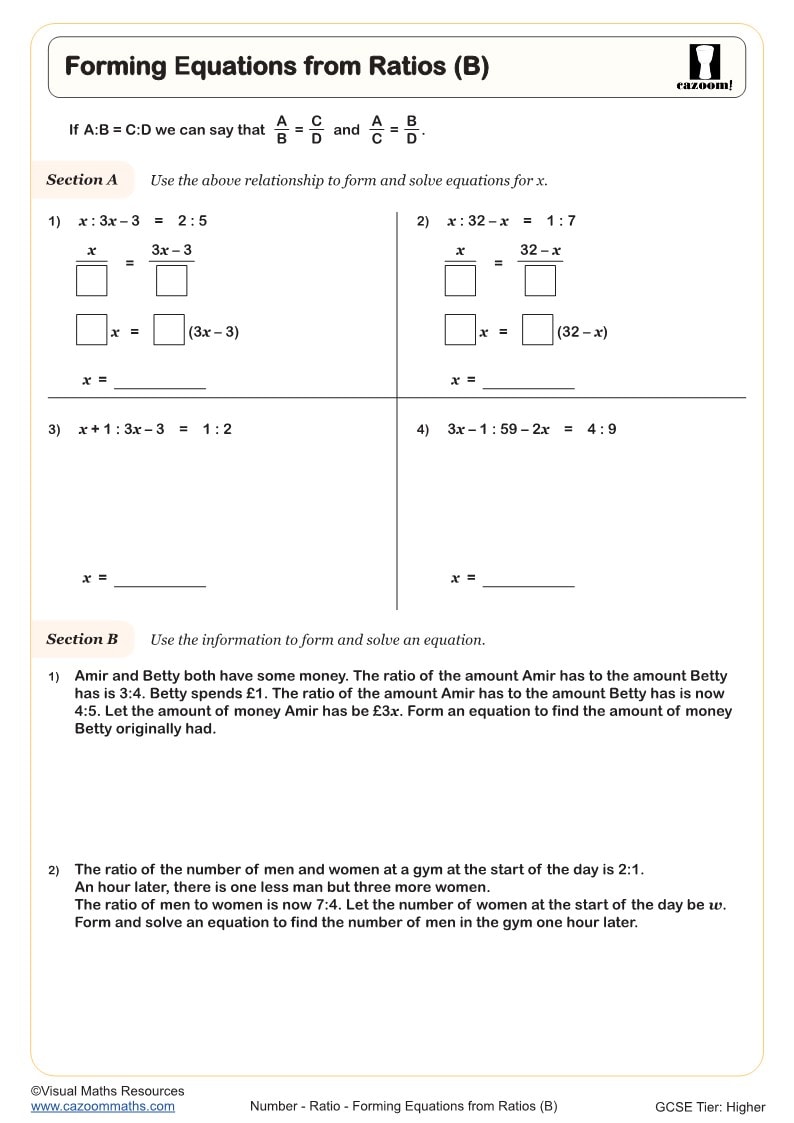
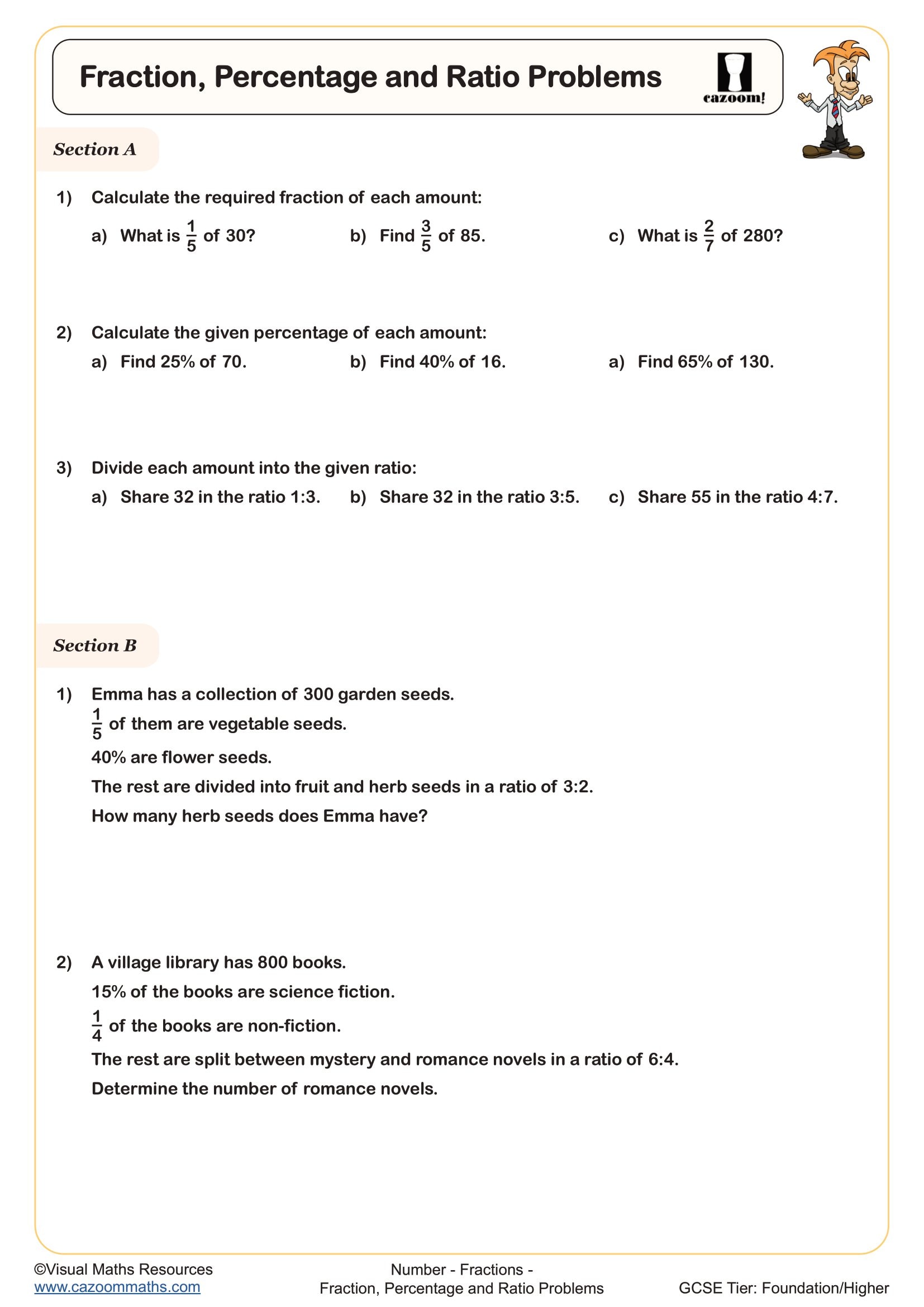
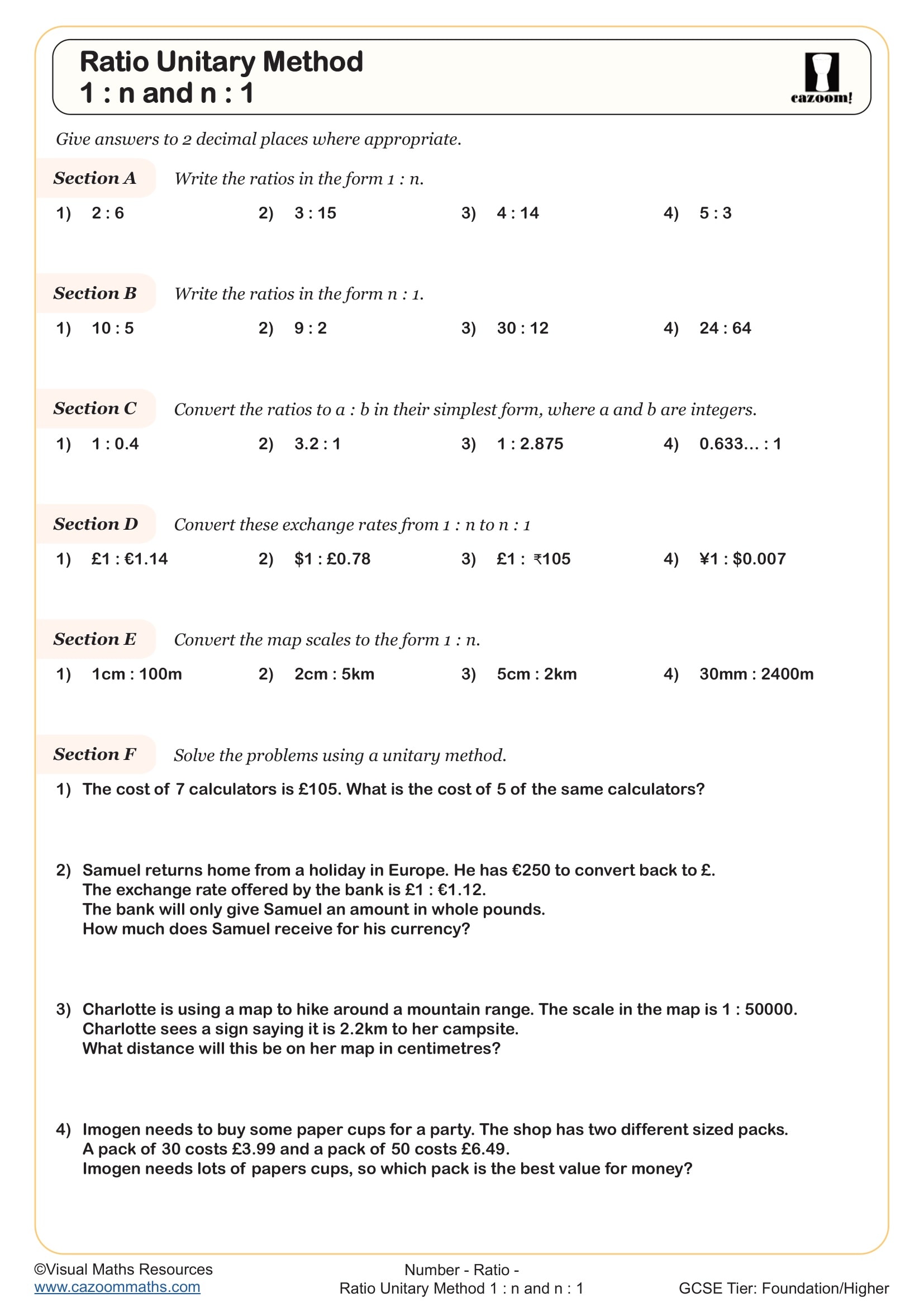
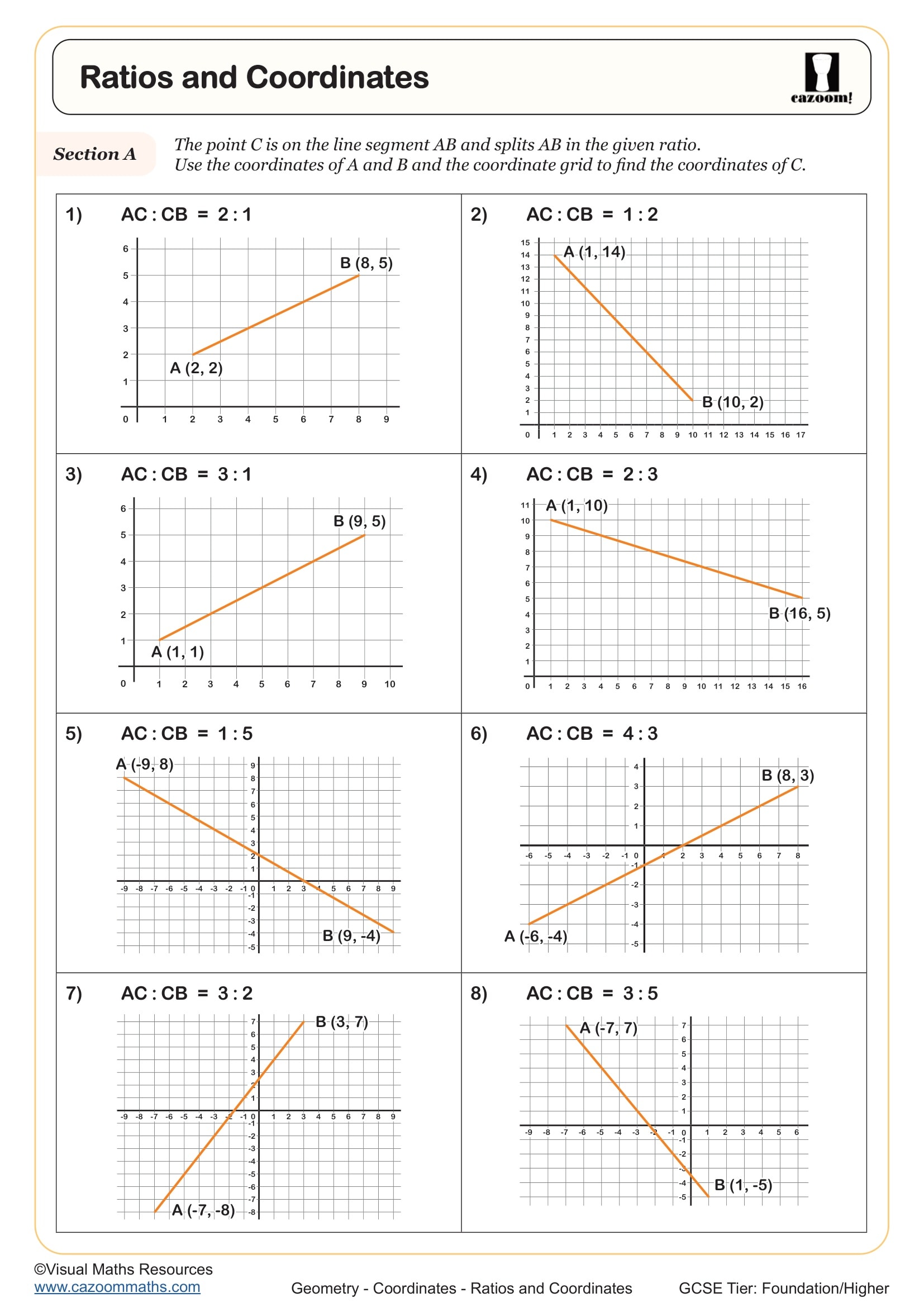
All worksheets are created by the team of experienced teachers at Cazoom Maths.
What types of year 10 ratio questions should students practise?
Students at this level need exposure to multi-step ratio problems that combine simplification, scaling, and real-world applications. The curriculum expects them to handle ratios in contexts like recipe adjustments, map scales, and financial calculations, moving beyond basic sharing problems they encountered in earlier years.
Teachers frequently notice that students can handle straightforward ratio worksheets but struggle when problems involve inverse operations or require them to find an original quantity from a given ratio. These ratio calculations worksheet exercises help bridge that gap by presenting problems in logical progression from simple to complex scenarios.
How do Year 10 ratio topics build from earlier key stages?
By Year 10, students should confidently work with ratios involving decimals, fractions, and percentages, building on the integer ratios they mastered in Years 7-9. The focus shifts to more sophisticated problem-solving where ratios appear embedded within complex scenarios rather than as isolated calculations.
Many teachers observe that students who seemed confident with ratios worksheet exercises in lower years suddenly struggle when ratios appear in geometry, probability, or algebraic contexts. This highlights the importance of varied practice that shows ratios as a connecting thread across mathematical topics rather than a standalone skill.
Why do students find inverse ratio problems challenging?
Inverse ratio problems require students to work backwards from a known outcome to find original quantities or missing parts of a ratio. This reversal of their usual problem-solving approach often causes confusion, particularly when dealing with part-to-whole relationships versus part-to-part comparisons.
Classroom experience shows that students benefit from visual representations and systematic approaches when tackling these problems. Teachers notice that students who master inverse ratios often show improved algebraic thinking skills, as both require similar logical reasoning about relationships between quantities and systematic manipulation of mathematical relationships.
How can teachers use these worksheets most effectively in lessons?
These materials work well as starter activities to refresh prior learning, or as structured practice following direct teaching of new ratio concepts. The answer sheets allow for immediate feedback, which many teachers find key for addressing misconceptions before they become embedded.
Teachers report success using selected problems for worked examples on the board, then allowing students to attempt similar questions independently. This approach helps students recognise problem types and develop systematic approaches. The variety in these ratios worksheets also supports differentiated learning, with teachers able to direct students to appropriate challenge levels while maintaining whole-class focus on core ratio concepts.