Year 10 Similar Shapes Worksheets
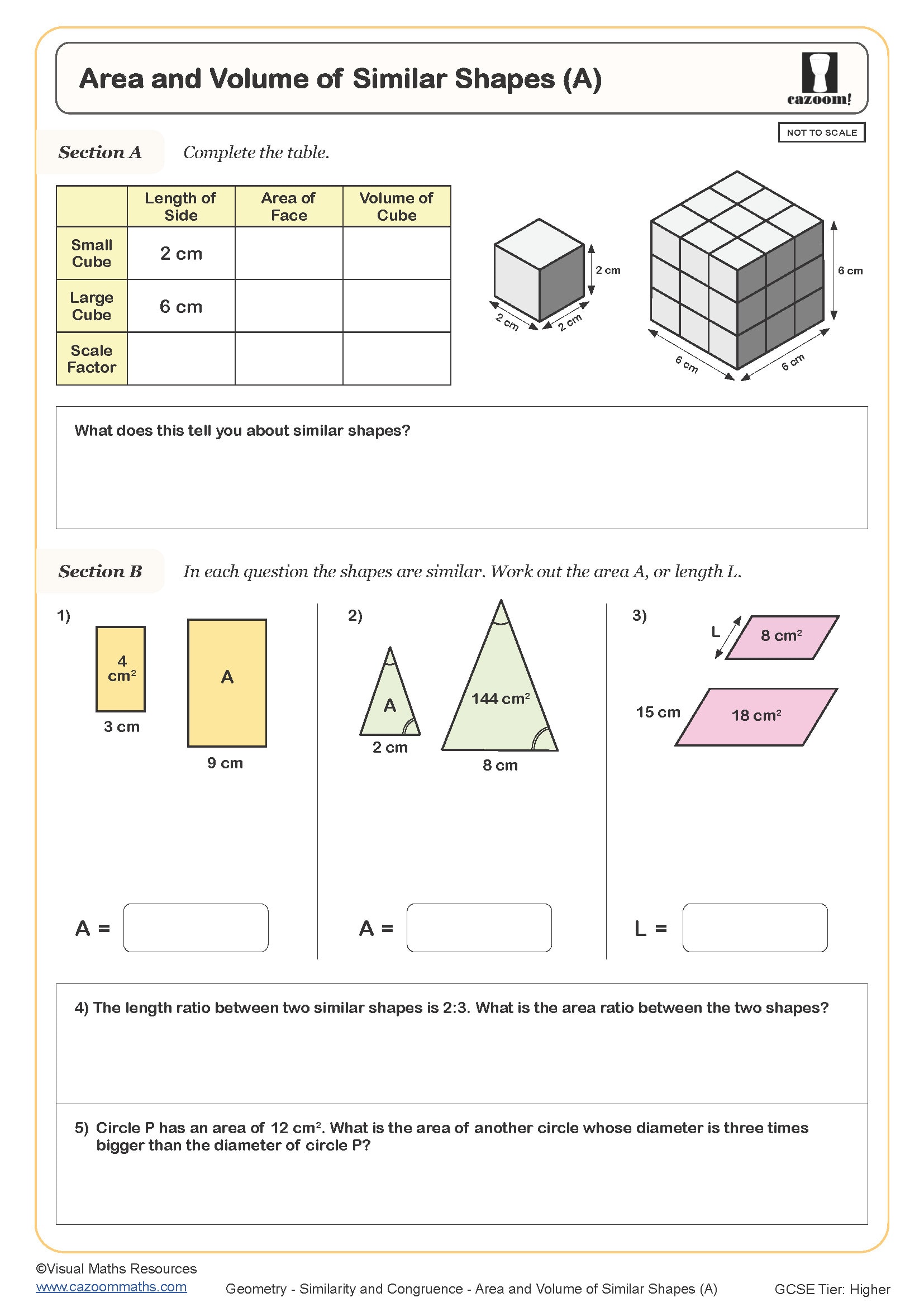
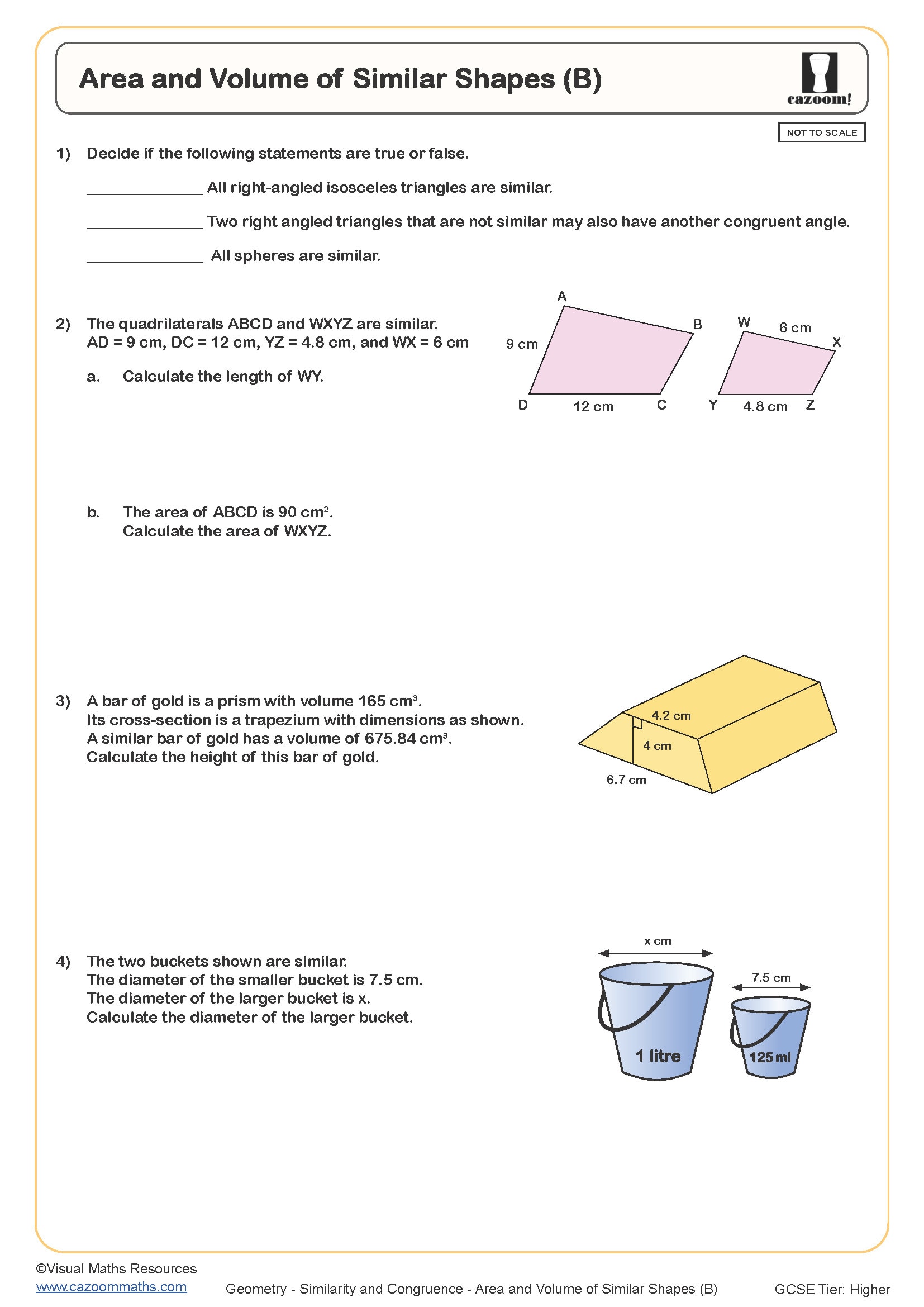
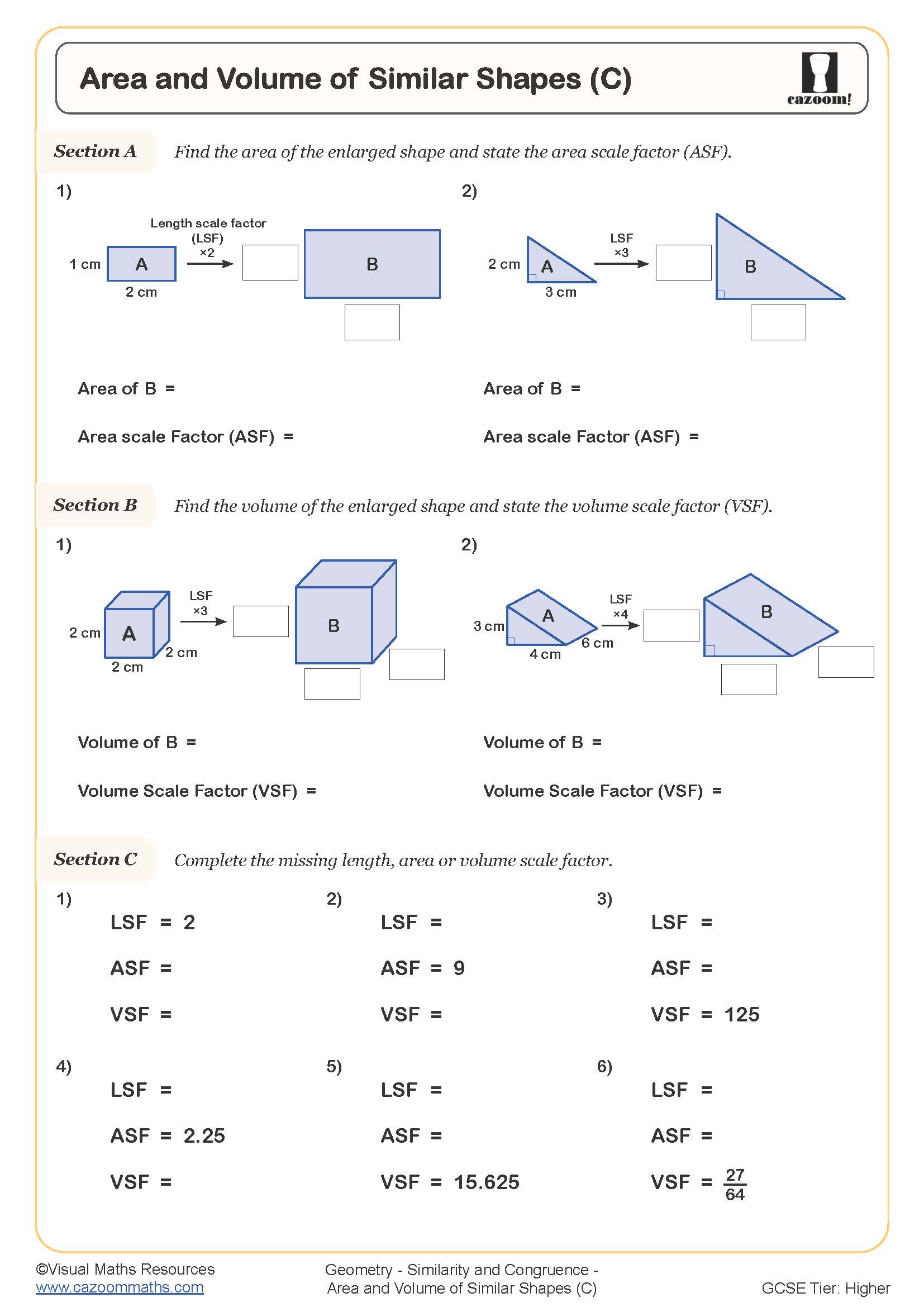
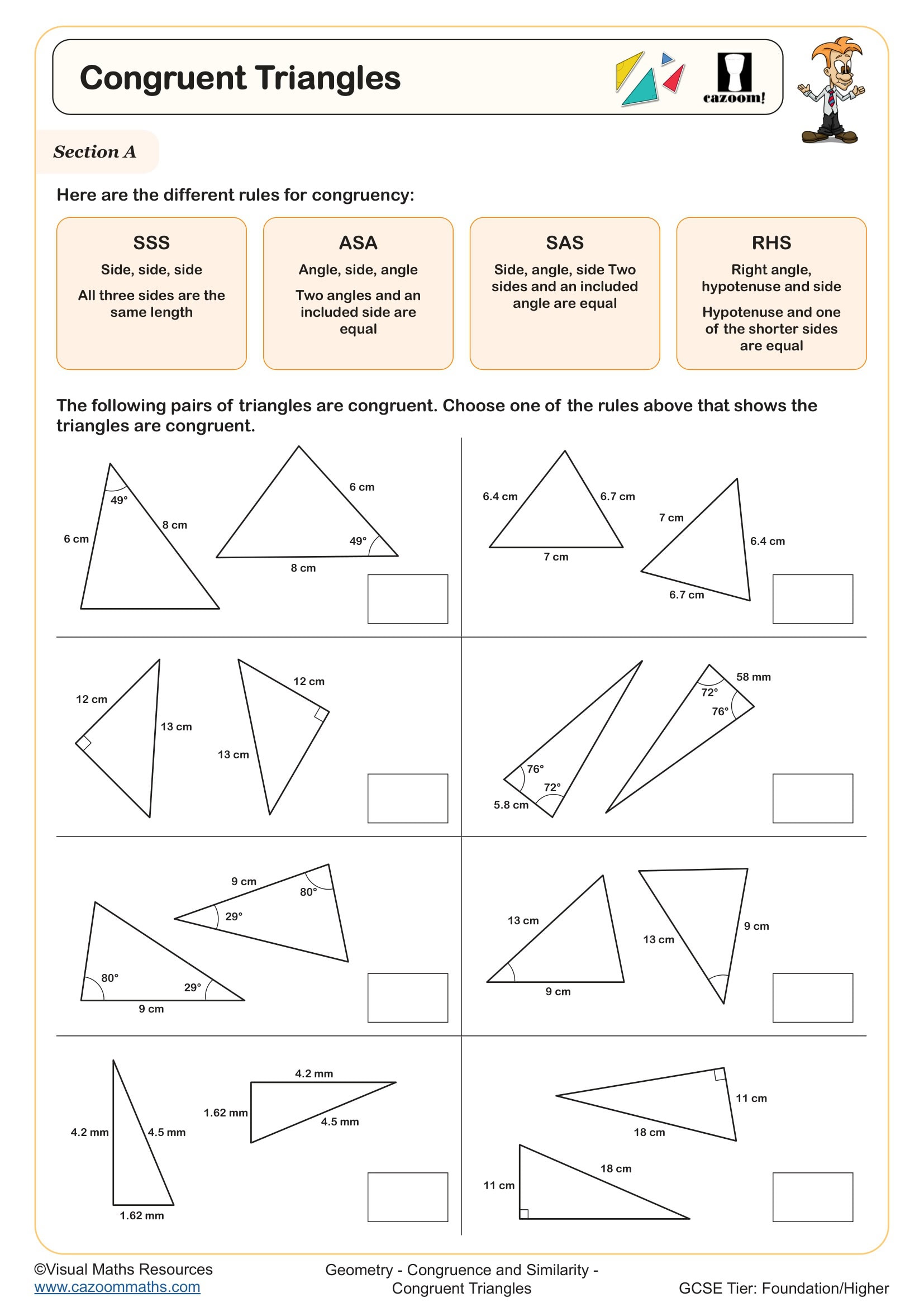
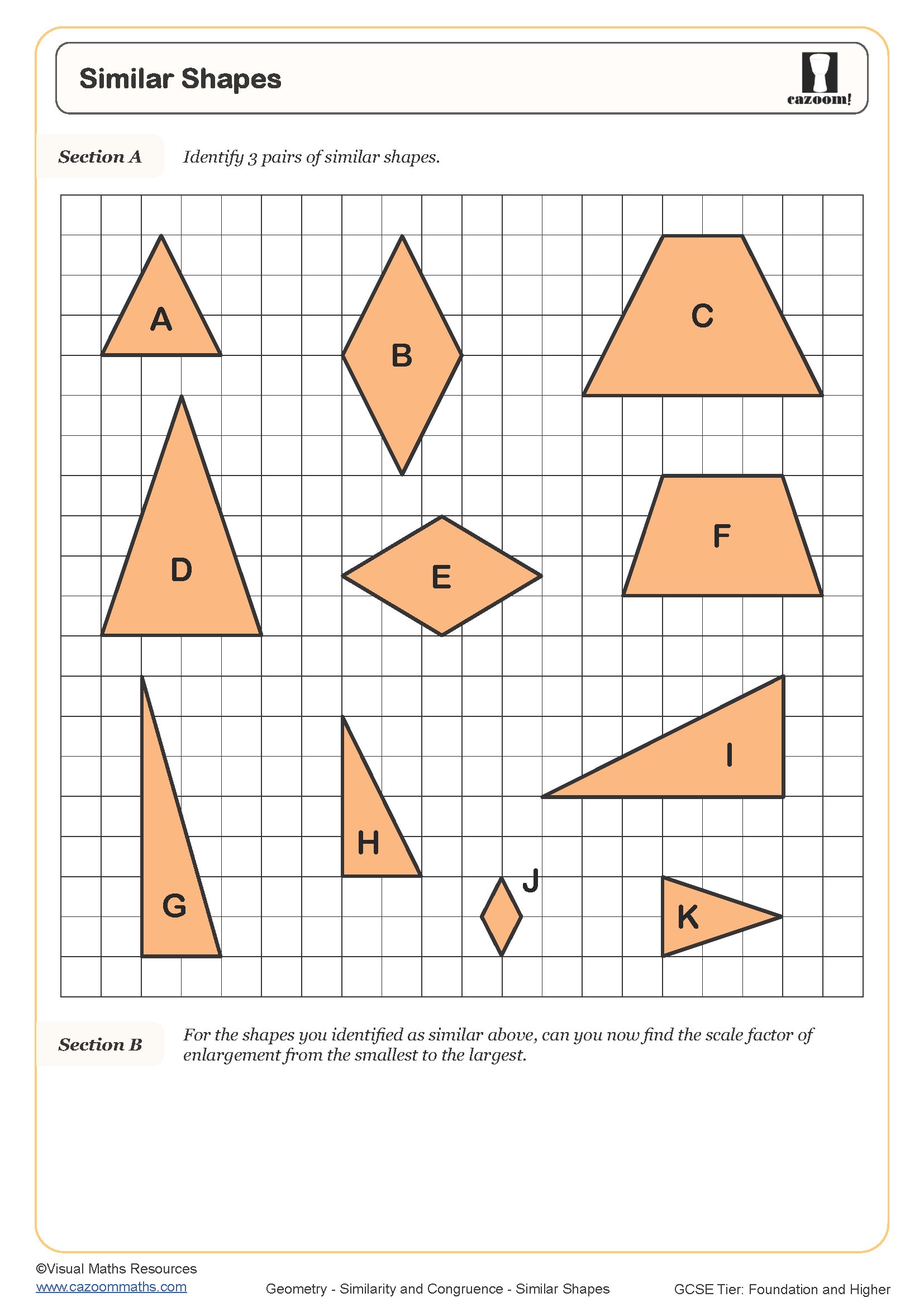
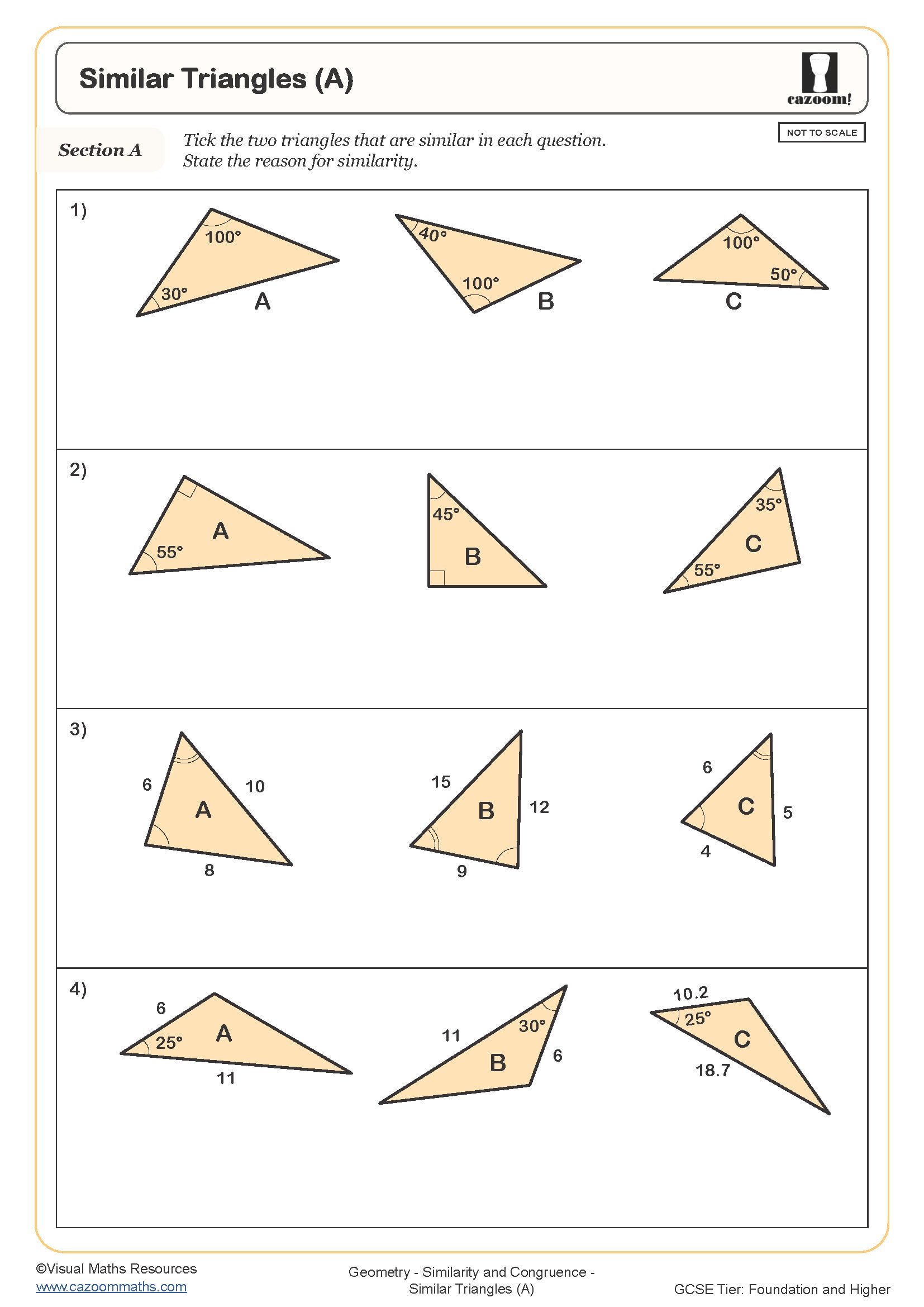
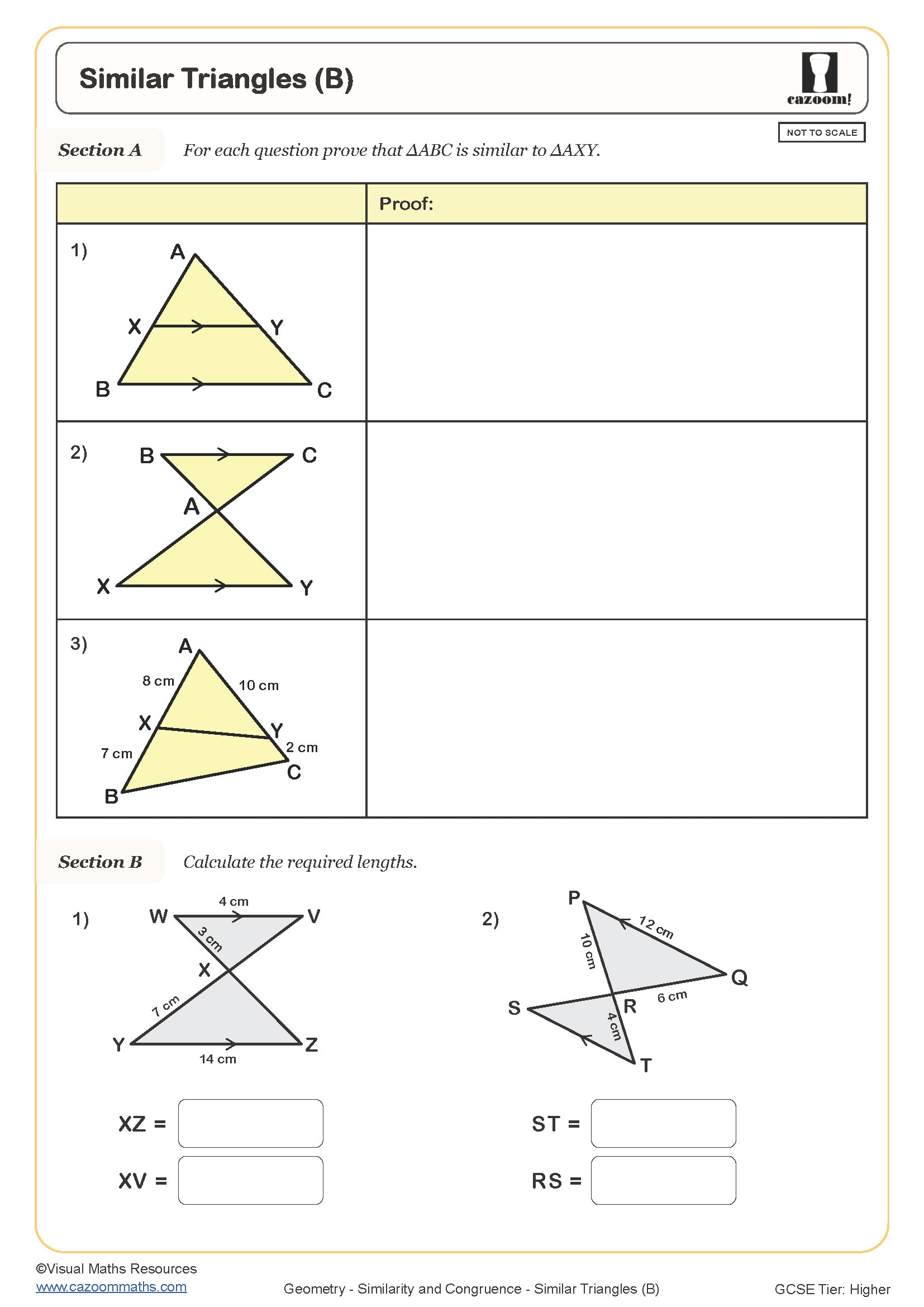
All worksheets are created by the team of experienced teachers at Cazoom Maths.
What makes a good similar shapes worksheet for GCSE preparation?
A quality similar shapes worksheet should progress systematically from identifying corresponding sides and angles to calculating missing lengths using scale factors. The problems need to include both numerical calculations and reasoning questions that require students to explain their mathematical thinking, reflecting GCSE assessment objectives.
Teachers find that worksheets work best when they include diagrams drawn to different orientations, as students often assume similar shapes must be positioned identically. The most effective similar shape worksheet resources also incorporate mixed question types, combining basic scale factor problems with more complex scenarios involving similar triangles in coordinate geometry or real-world applications like photography and engineering drawings.
Which year groups should use similarity worksheets?
Similarity concepts typically appear in Year 9 as an introduction, with full GCSE coverage occurring in Year 10 and 11. The Key Stage 4 curriculum expects students to understand both similarity and congruence, calculate scale factors, and apply these concepts to solve problems involving area and volume scaling.
Many teachers introduce basic similar shapes questions in Year 9 using simple geometric figures before progressing to algebraic applications in Year 10. Students who struggle with ratio and proportion often need additional support with similarity, as these foundational concepts underpin scale factor calculations. The progression allows teachers to revisit and reinforce understanding throughout Key Stage 4.
How do students approach scale factor and similar figures worksheet problems effectively?
Students achieve better results when they systematically identify corresponding sides before attempting calculations, using clear labelling to match vertices between similar figures. Teaching students to write the scale factor as a fraction or ratio first helps prevent common errors in determining whether lengths increase or decrease.
Mathematics teachers observe that students frequently confuse linear scale factors with area scale factors, particularly in problem-solving contexts. A structured approach involves checking that the scale factor produces consistent results across all corresponding measurements. Students benefit from practising with both enlargements and reductions, as scale factors less than one often cause confusion in calculations involving similar triangles and polygons.
How can teachers use these worksheets most effectively in lessons?
These worksheets work well as starter activities to recap previous learning or as consolidation exercises following direct instruction on similarity properties. Teachers can differentiate by selecting specific questions for different ability groups, using the answer sheets to facilitate peer assessment and mathematical discussions about solution methods.
The most successful implementation involves using worksheets alongside dynamic geometry software or physical manipulatives, allowing students to visualise transformations before attempting written calculations. Teachers report better engagement when students work through similar shapes GCSE questions in pairs, discussing their reasoning before recording final answers. This collaborative approach helps identify misconceptions early whilst building confidence with similarity concepts.