Year 10 Surface Area and Volume Worksheets
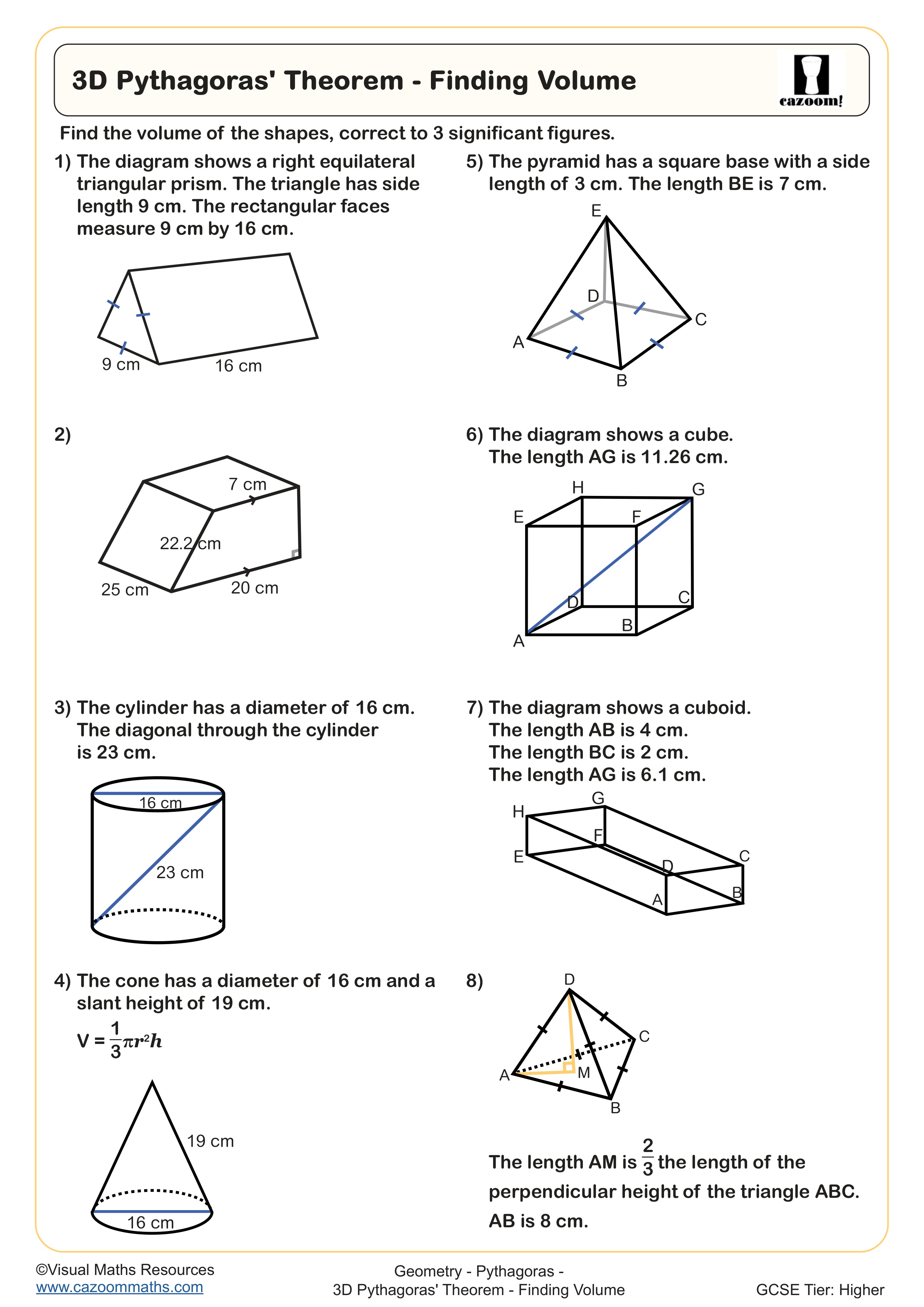
3D Pythagoras' Theorem - Finding Volume
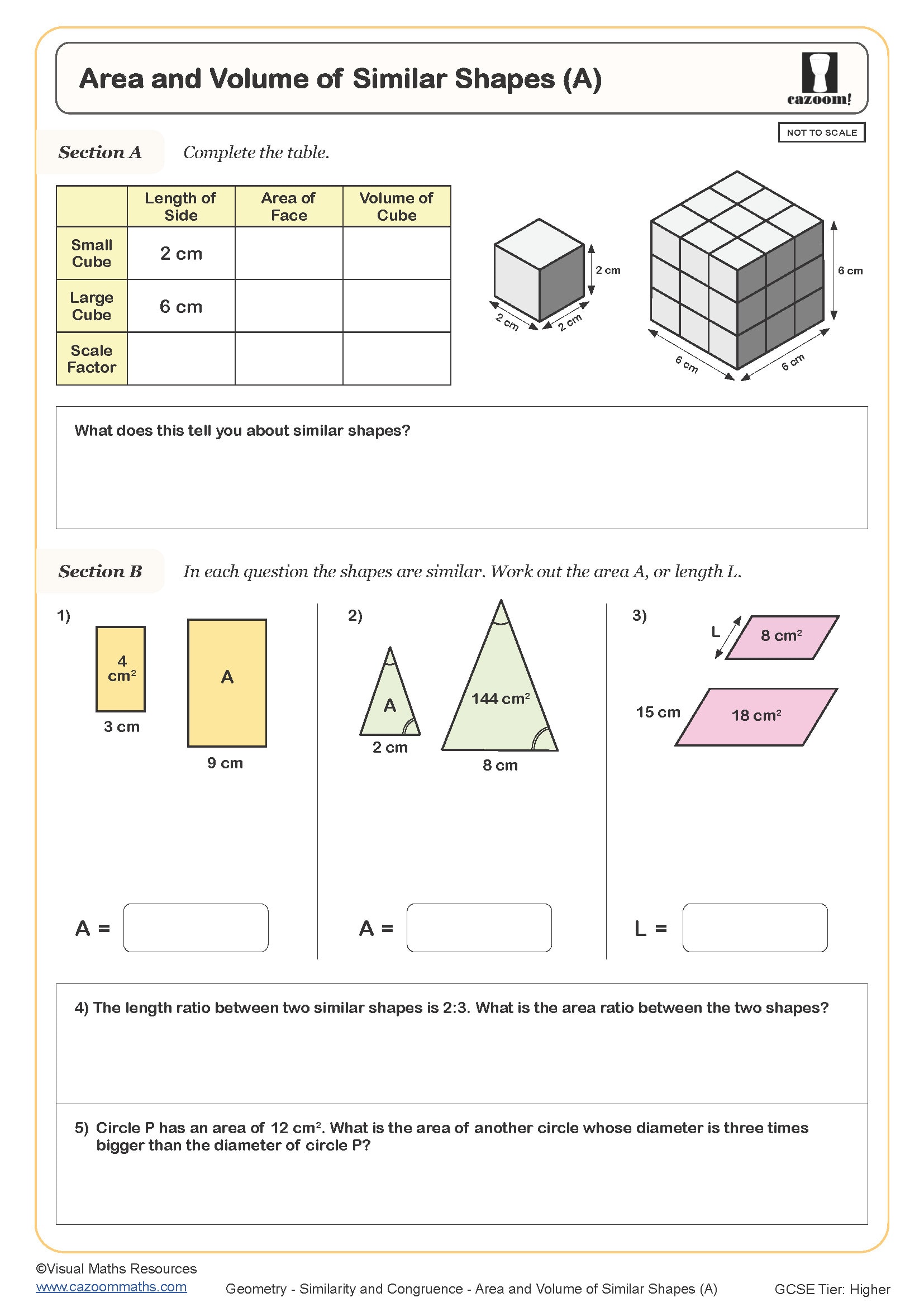
Area and Volume of Similar Shapes (A)
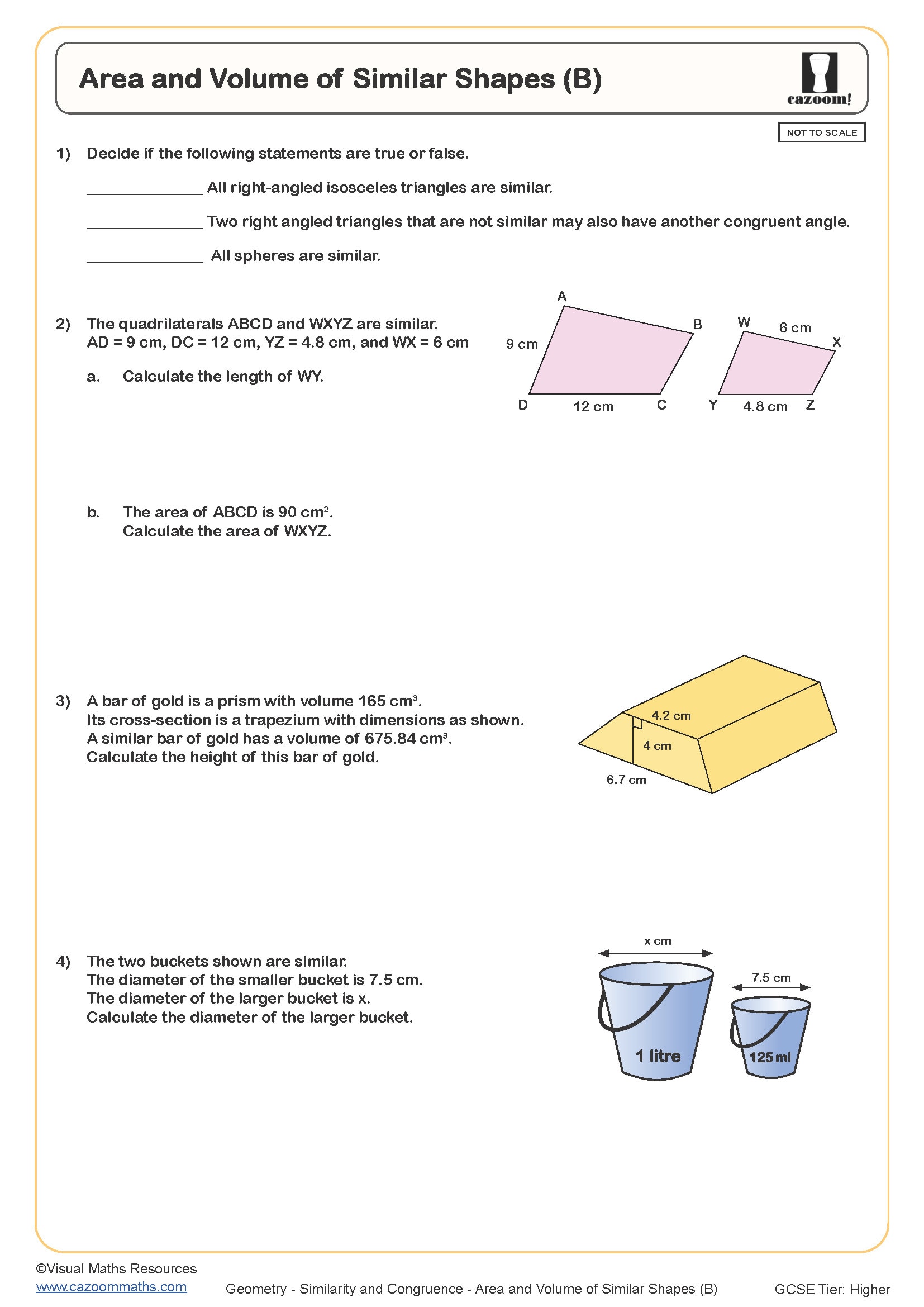
Area and Volume of Similar Shapes (B)
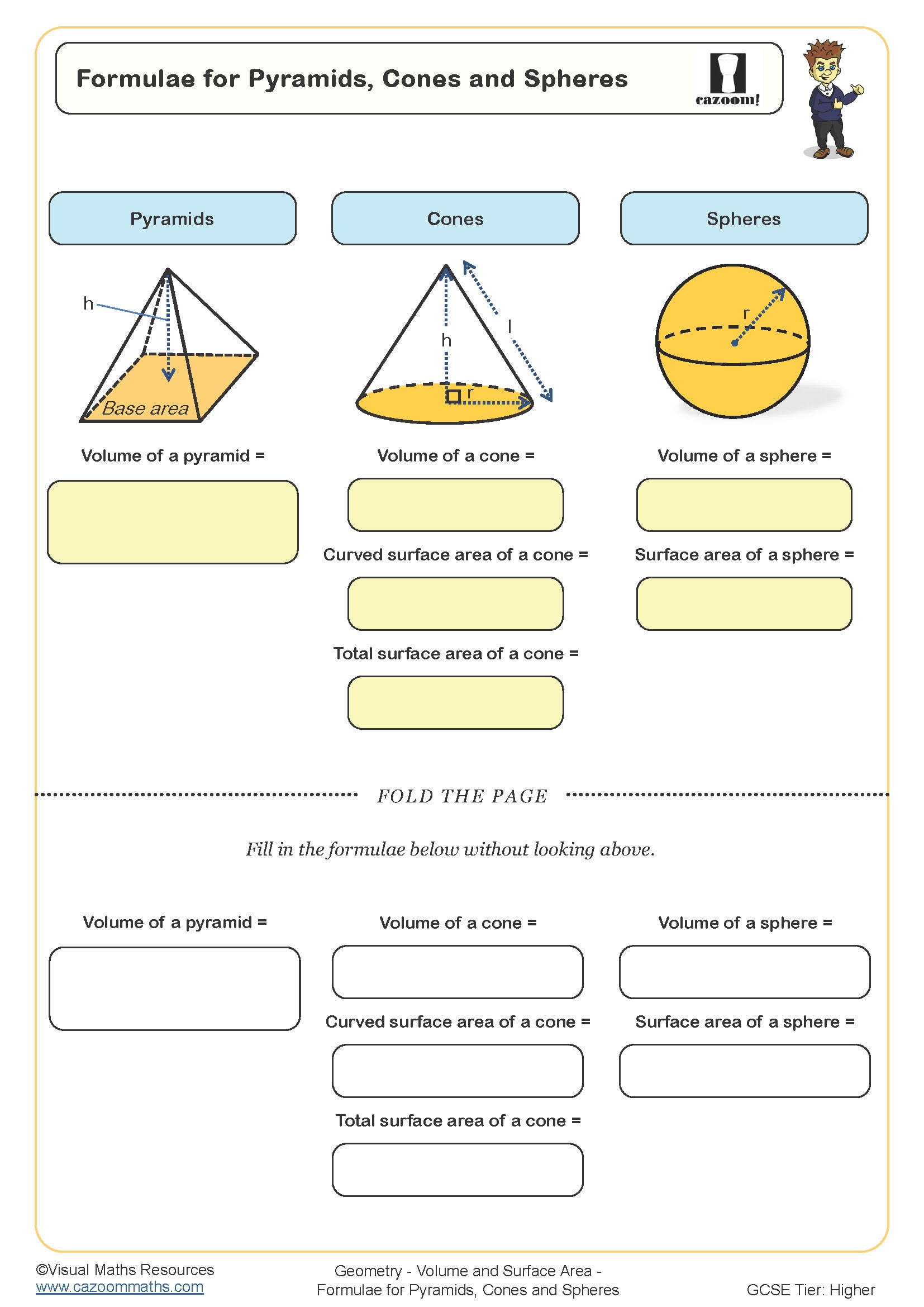
Formulae for Pyramids Cones and Spheres
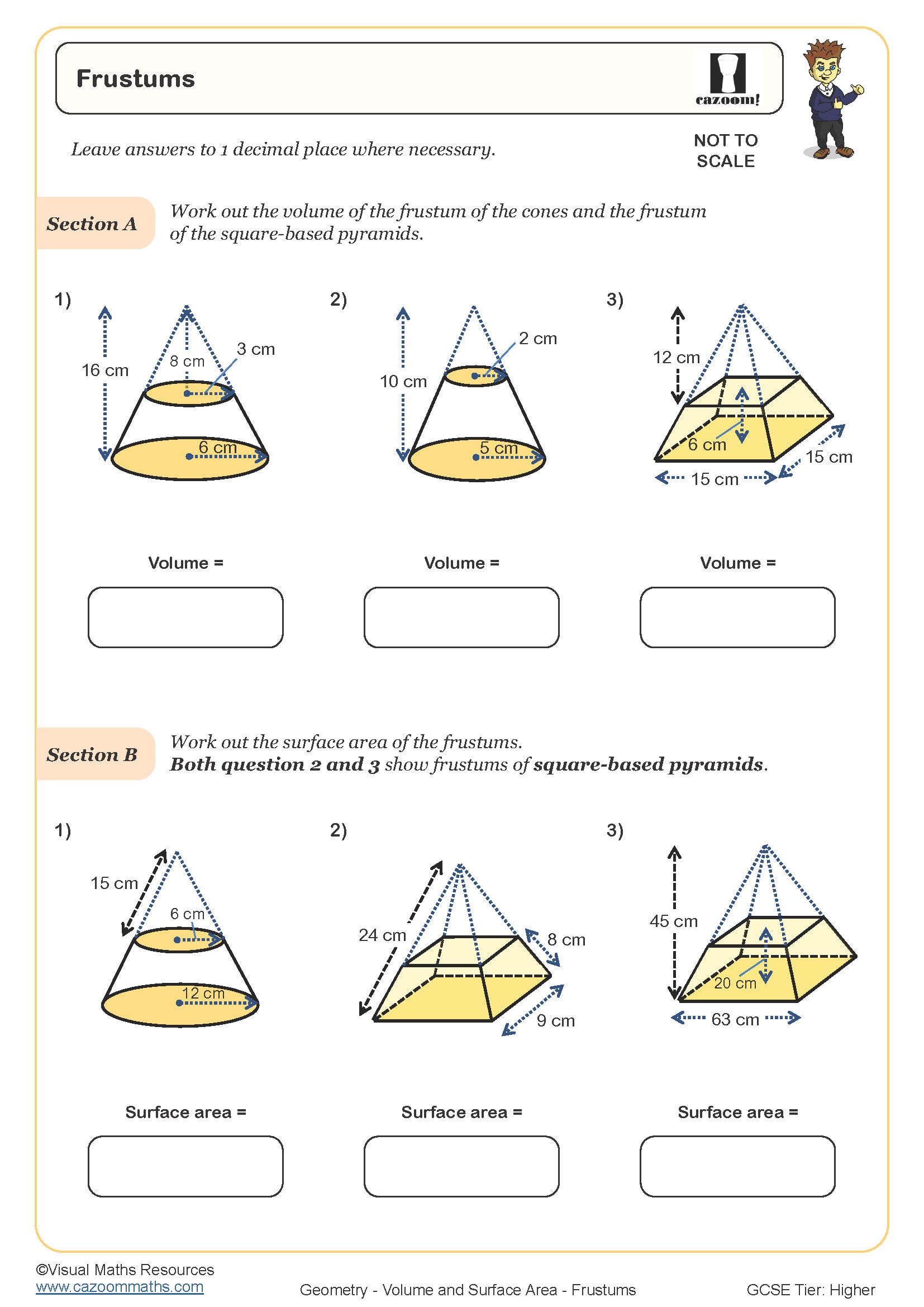
Frustums
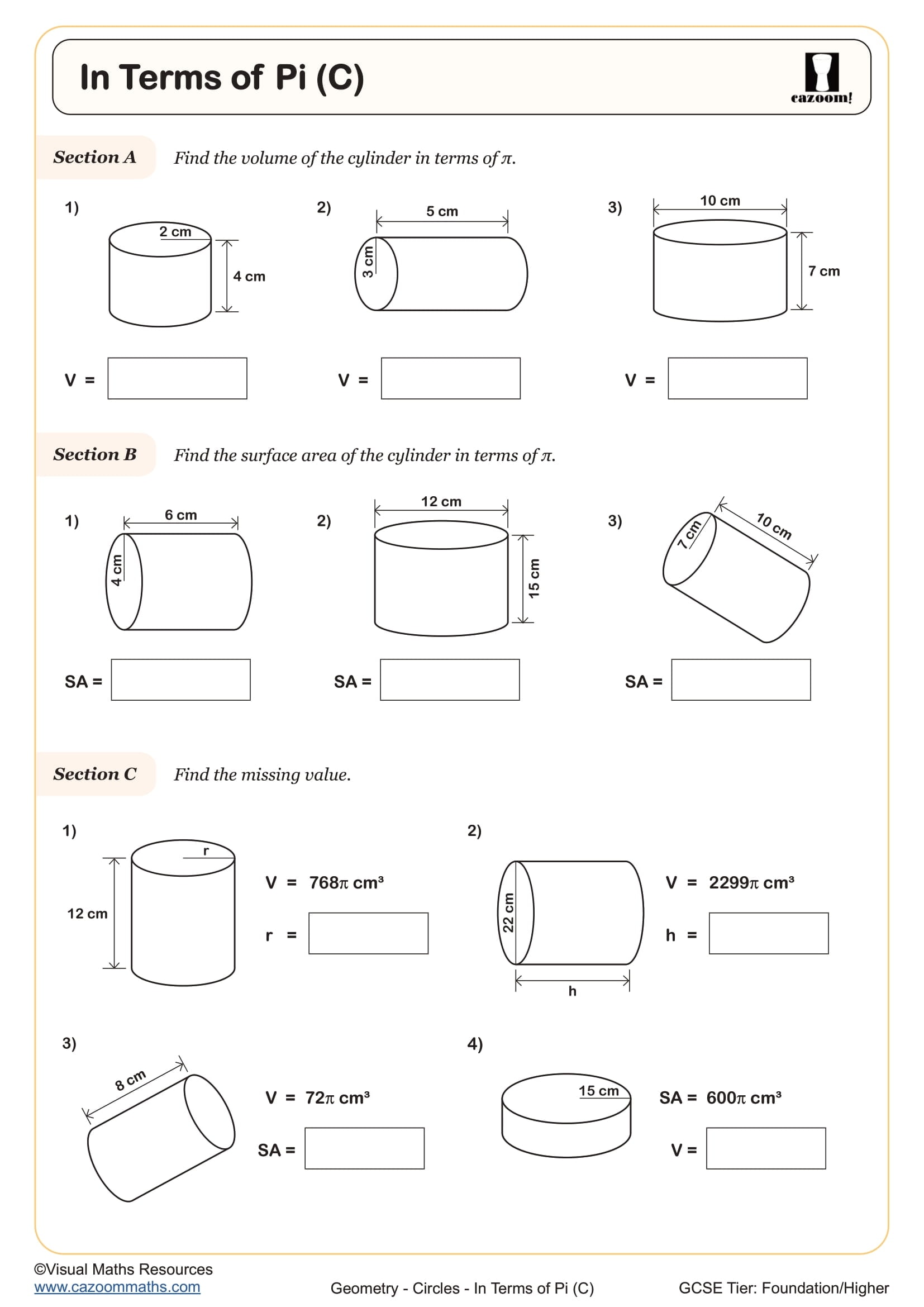
In Terms of Pi (C)
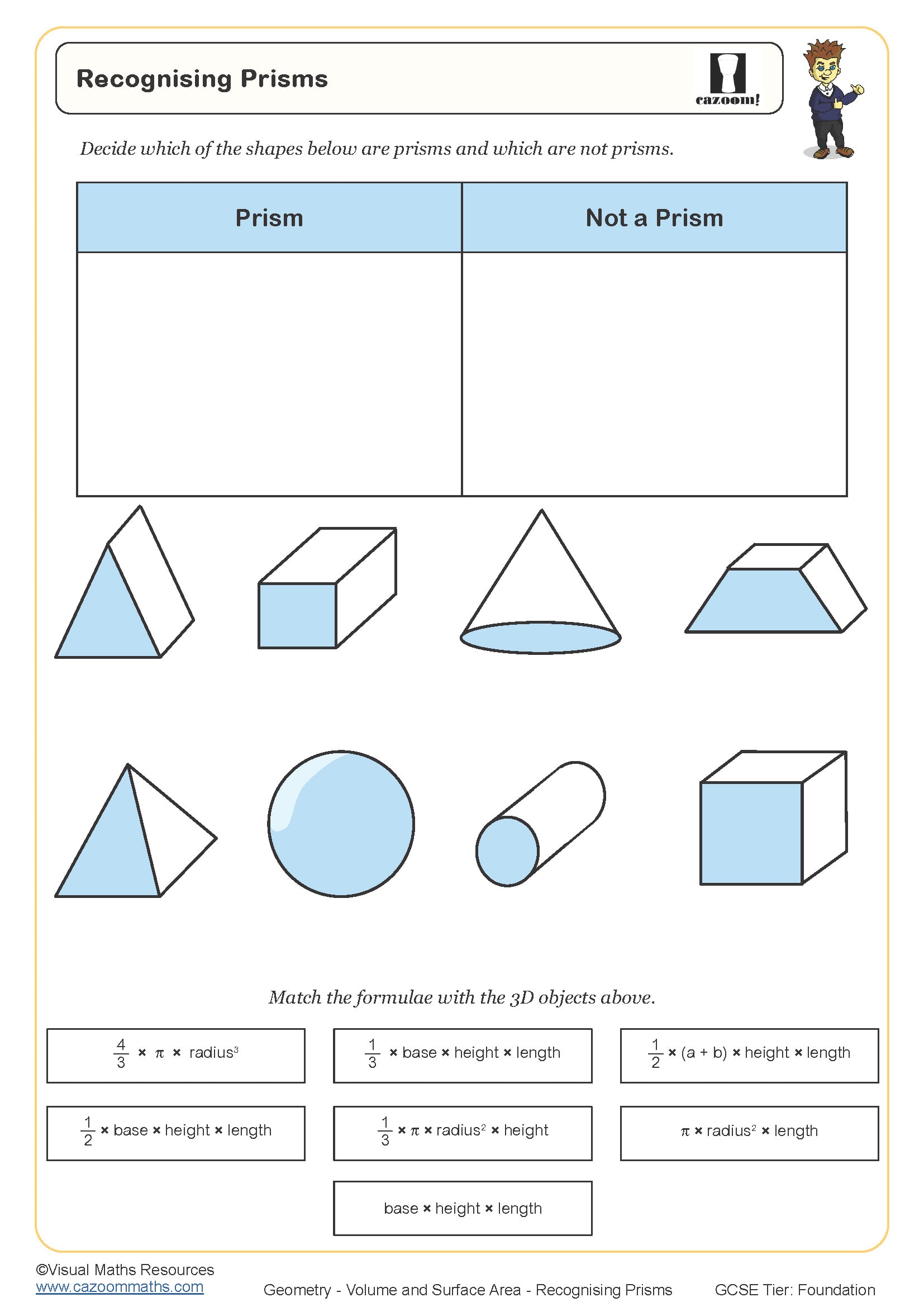
Recognising Prisms
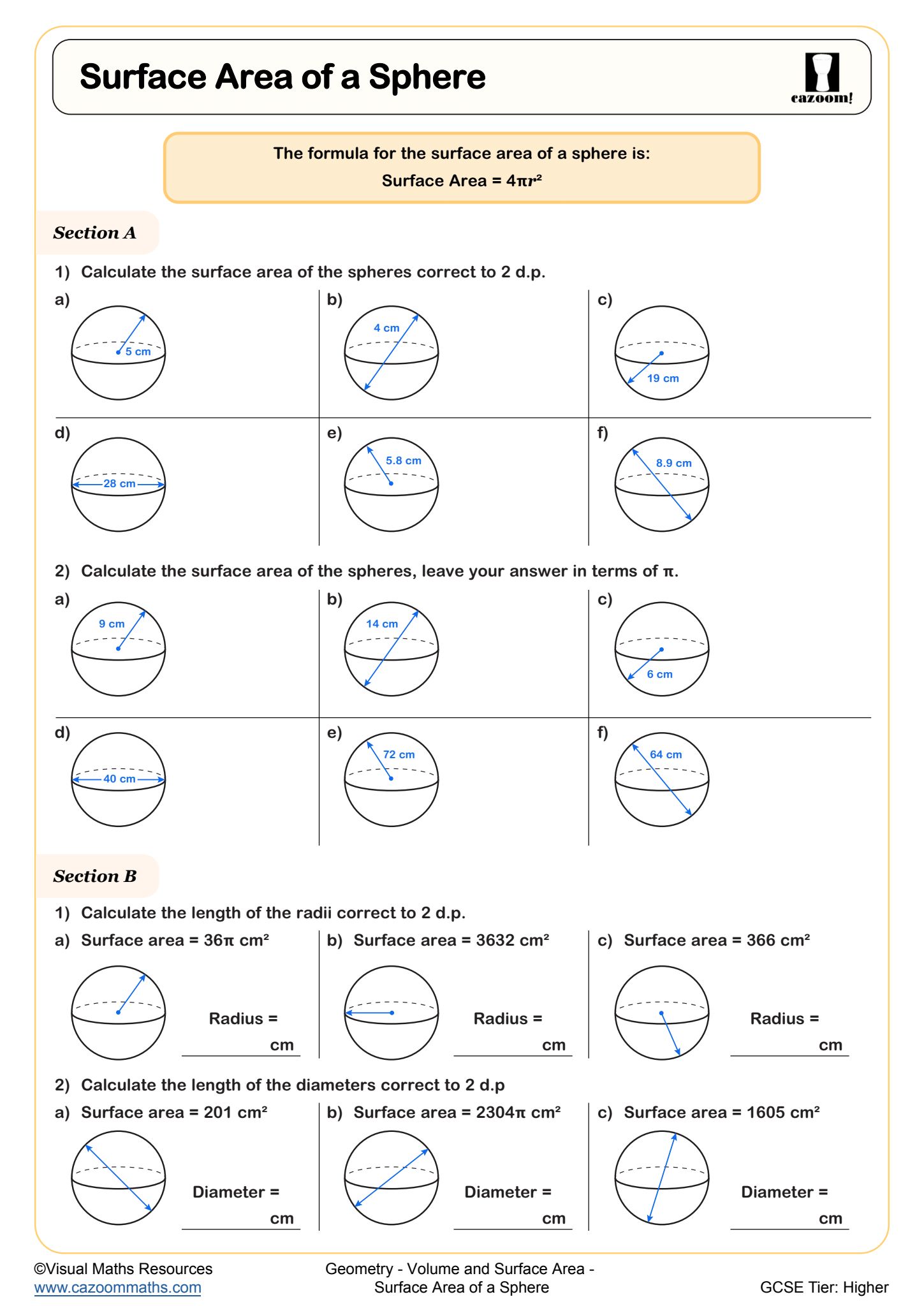
Surface Area of a Sphere
Surface Area of Cones and Spheres
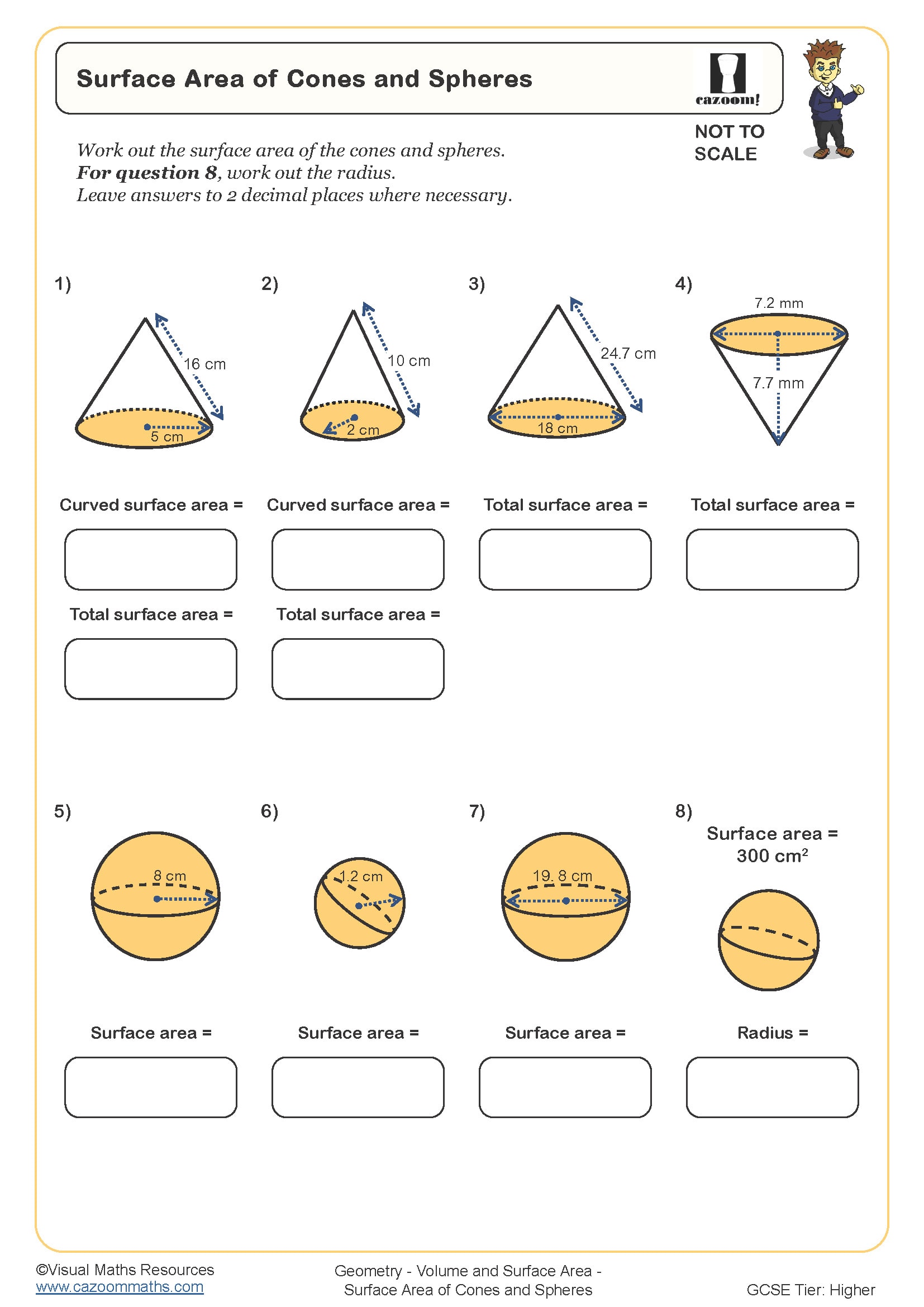
Surface Area of Conical Frustums
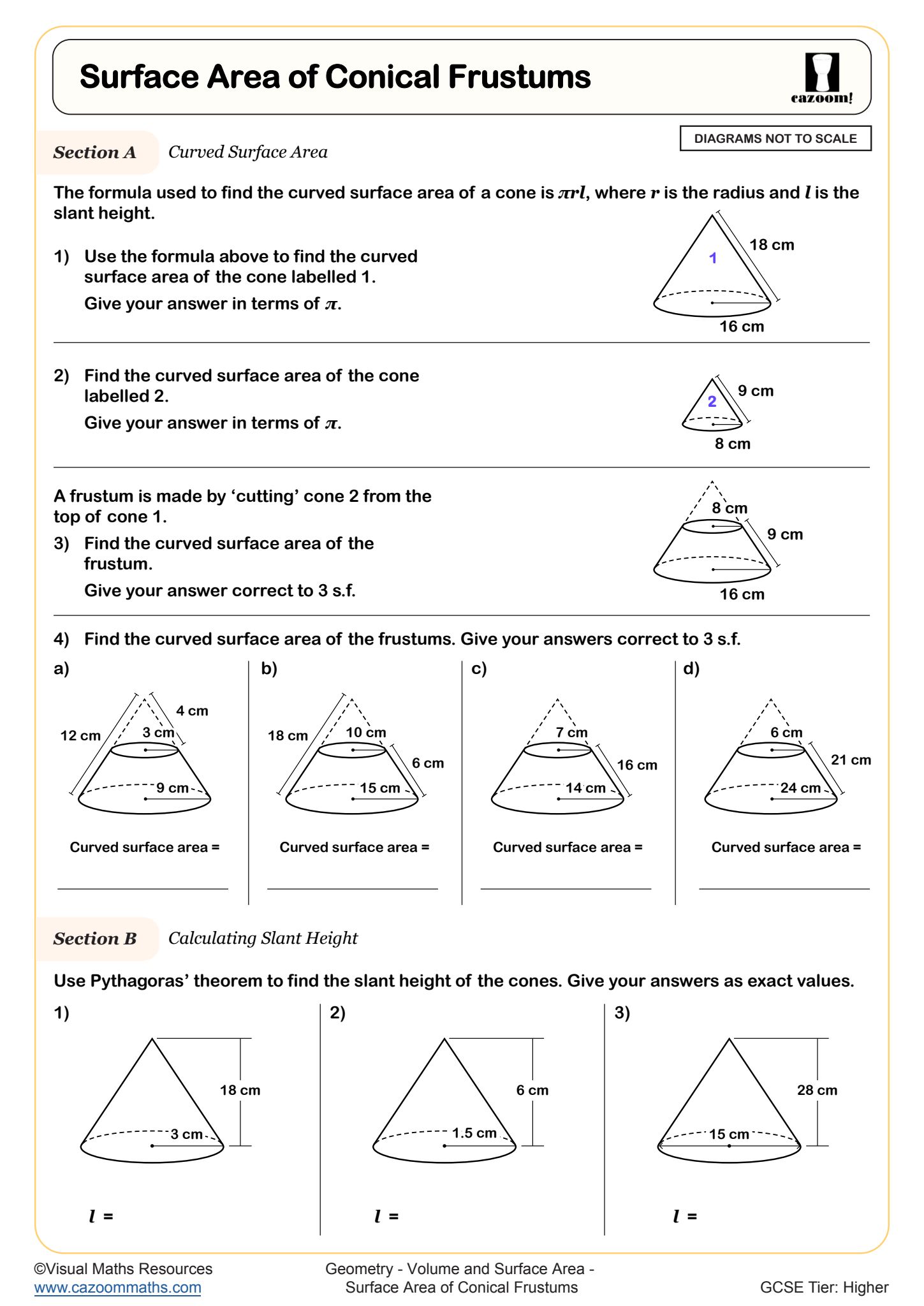
Surface Area of Cylinders
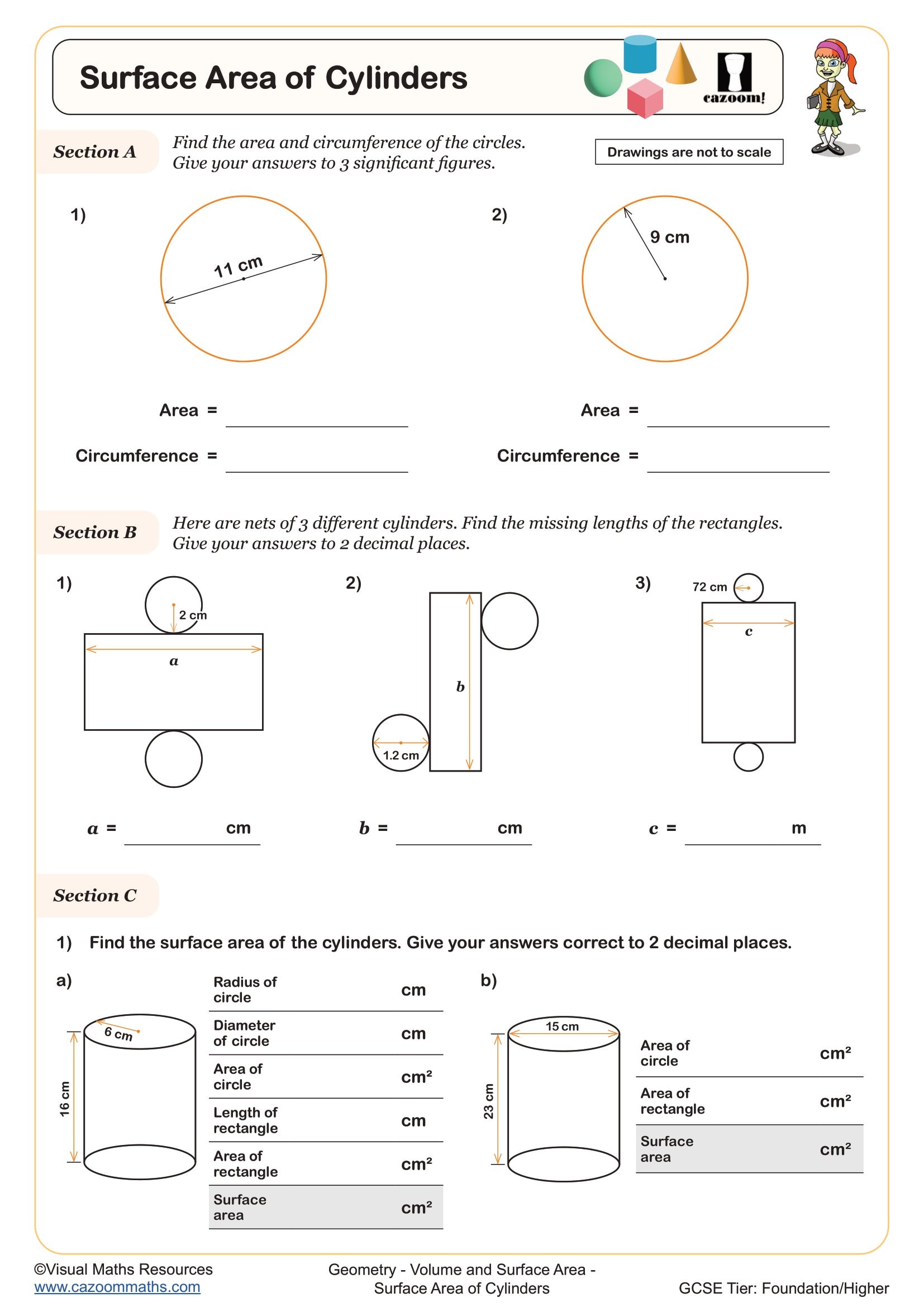
Surface Area of Prisms
Surface Area of Pyramids
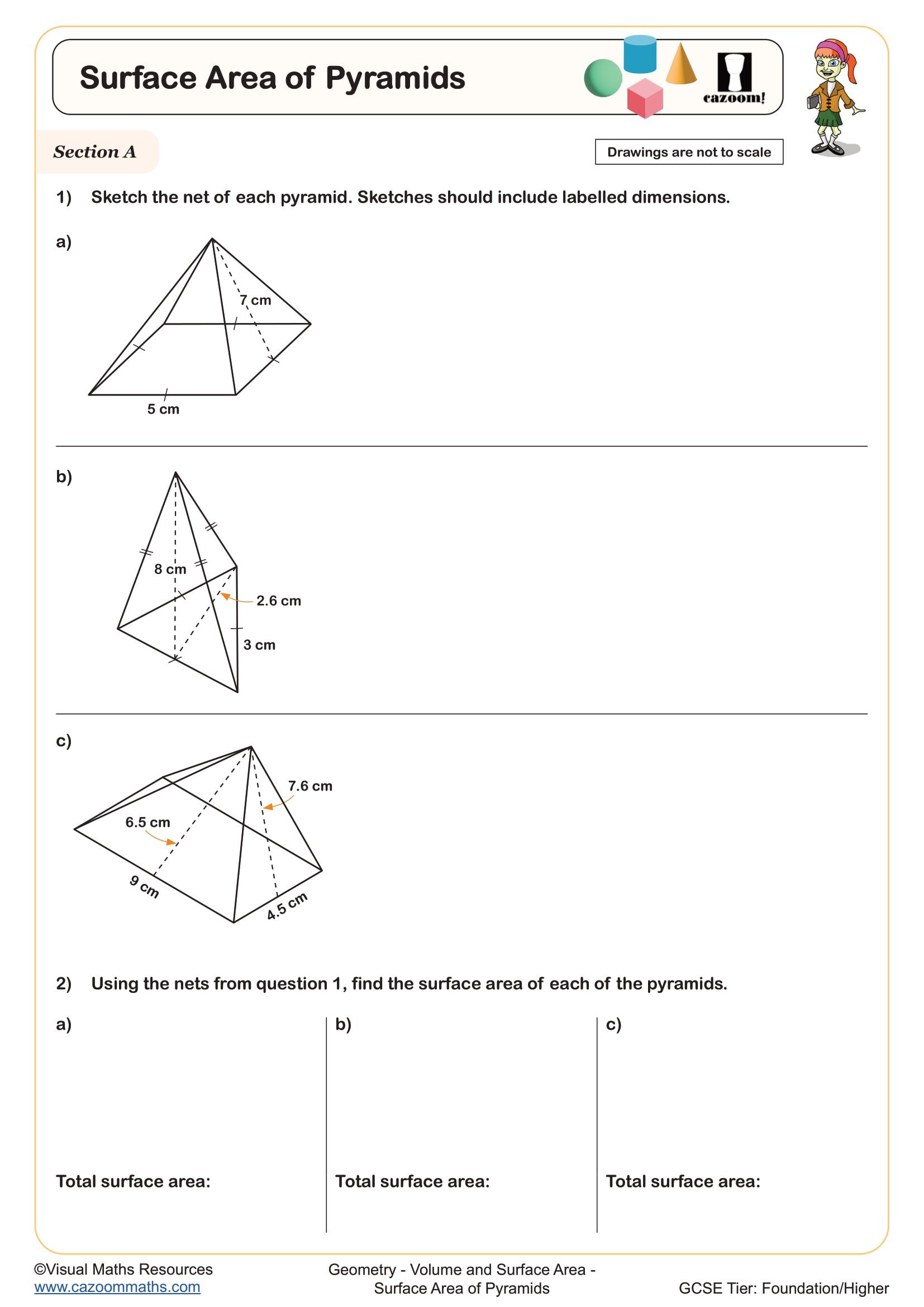
Surface Area of Triangular Prisms
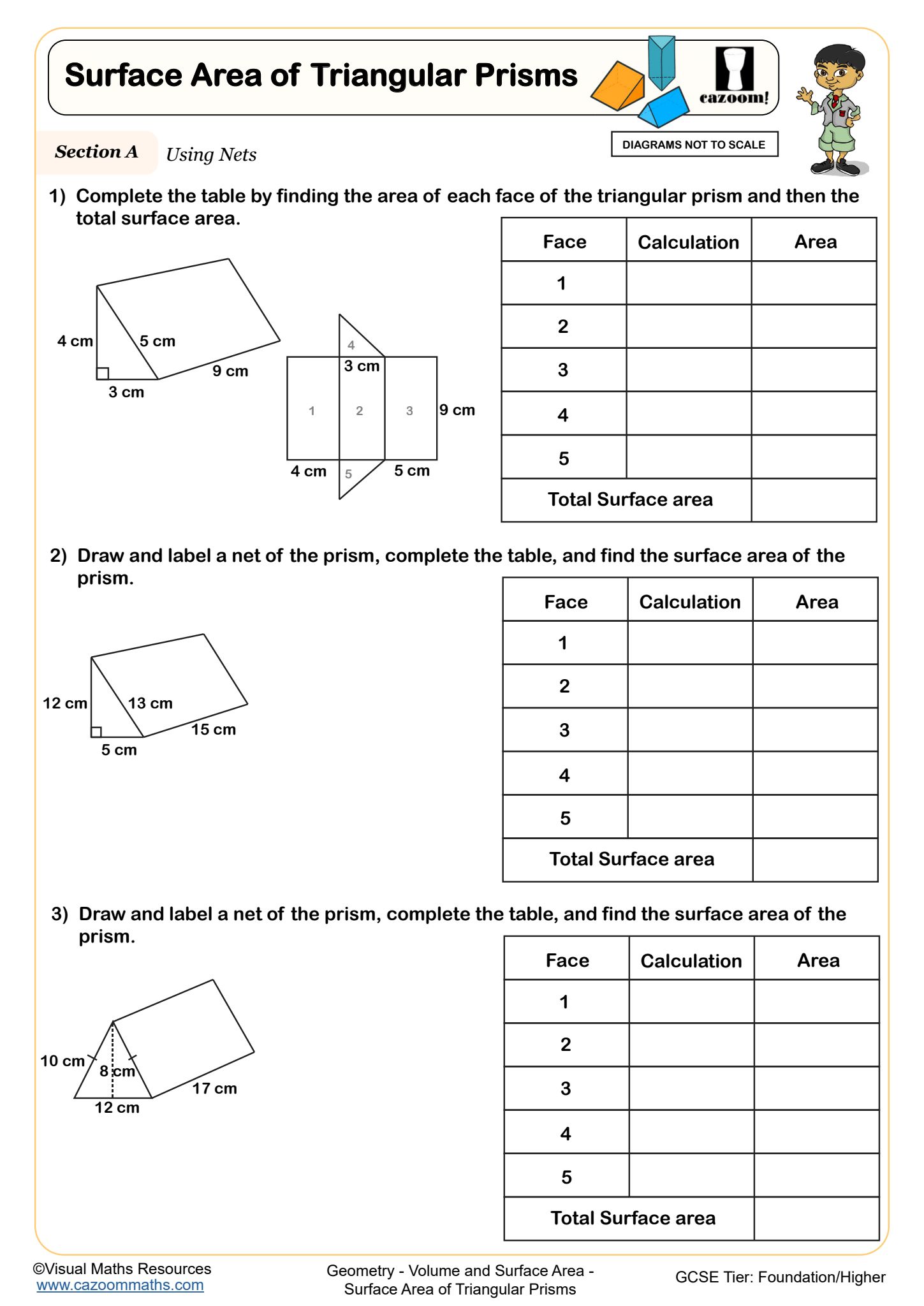
Surface Area- 'L' Shaped Prisms
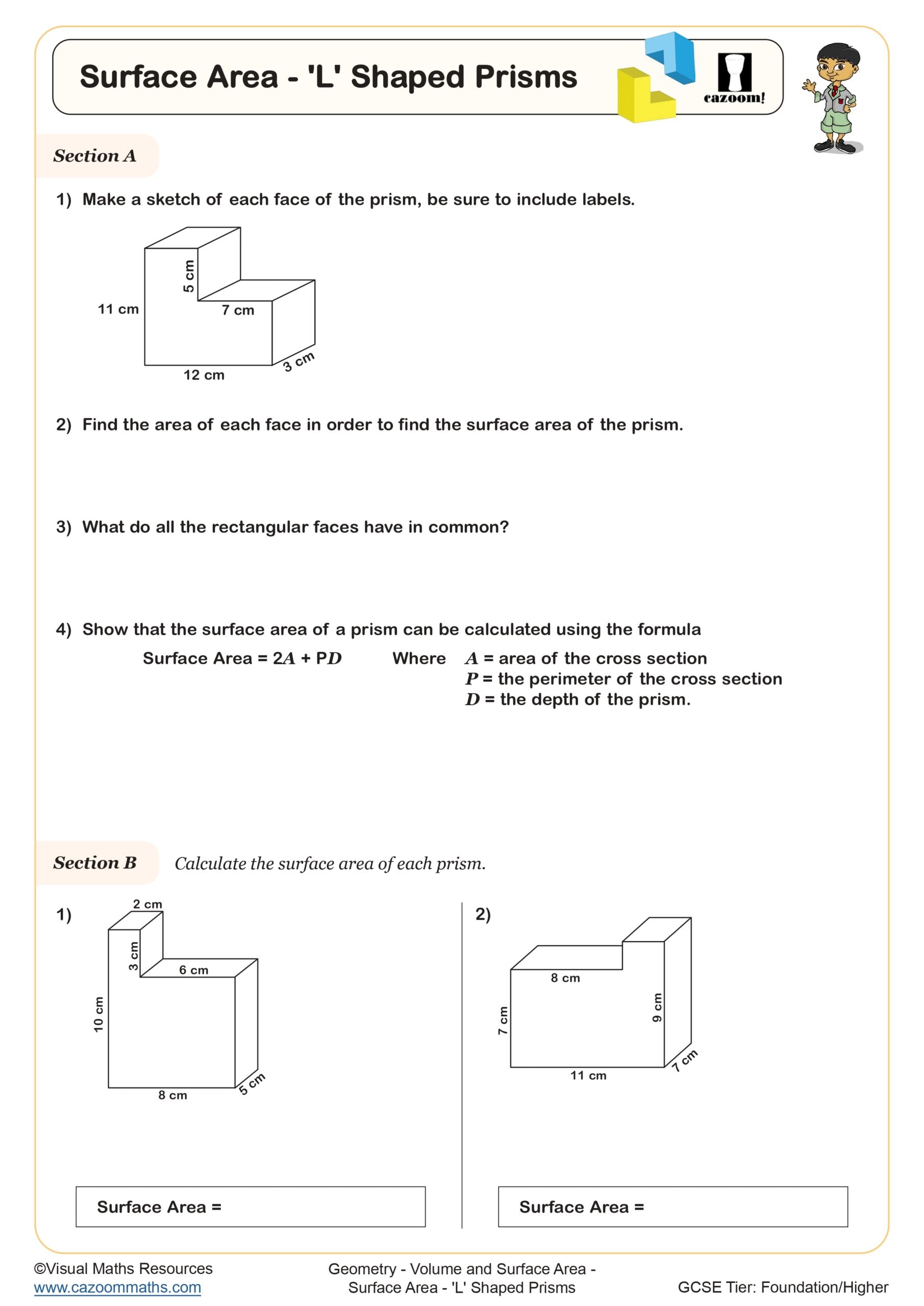
Volume and Surface Area of Cones and Spheres
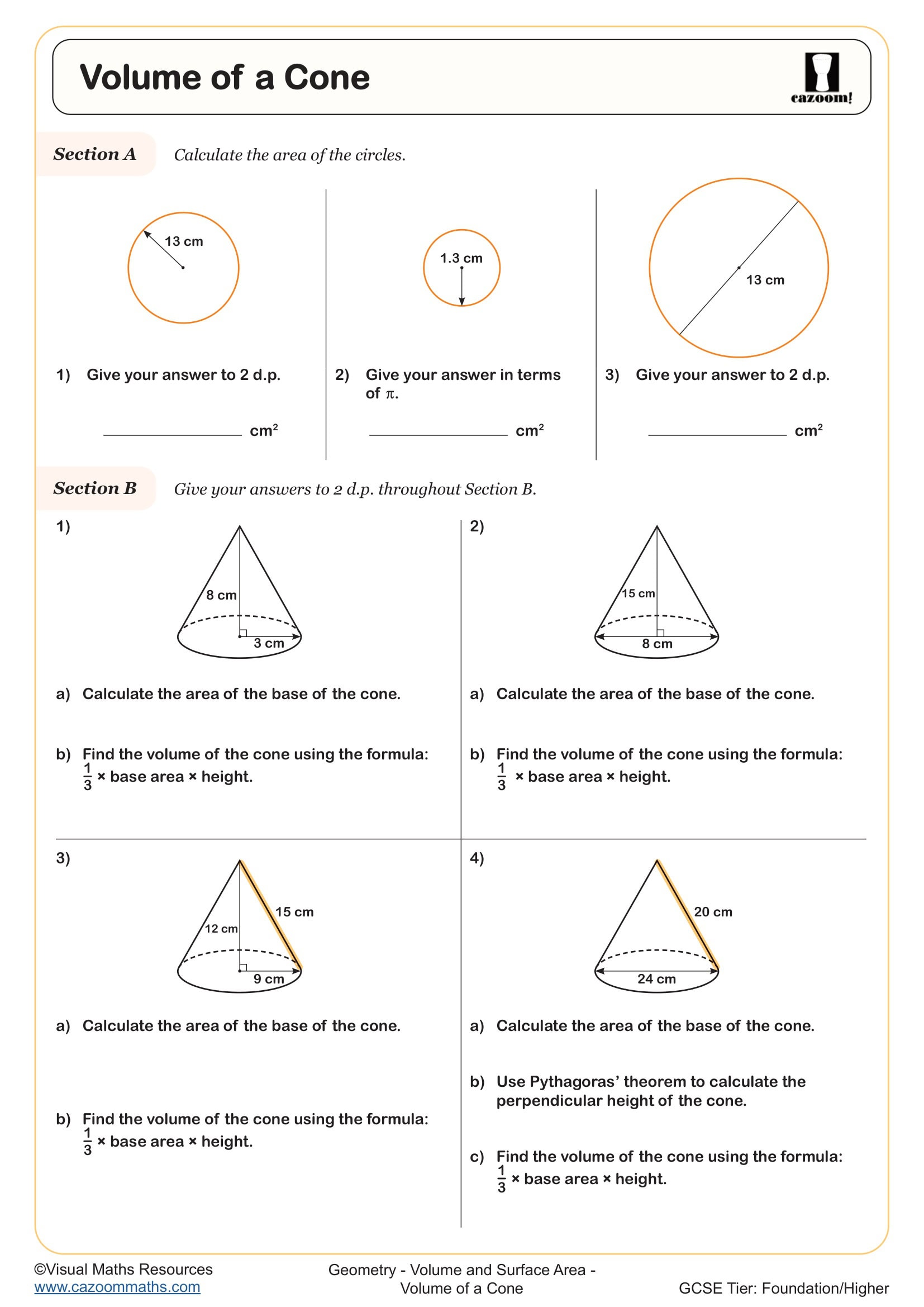
Volume of a Cone
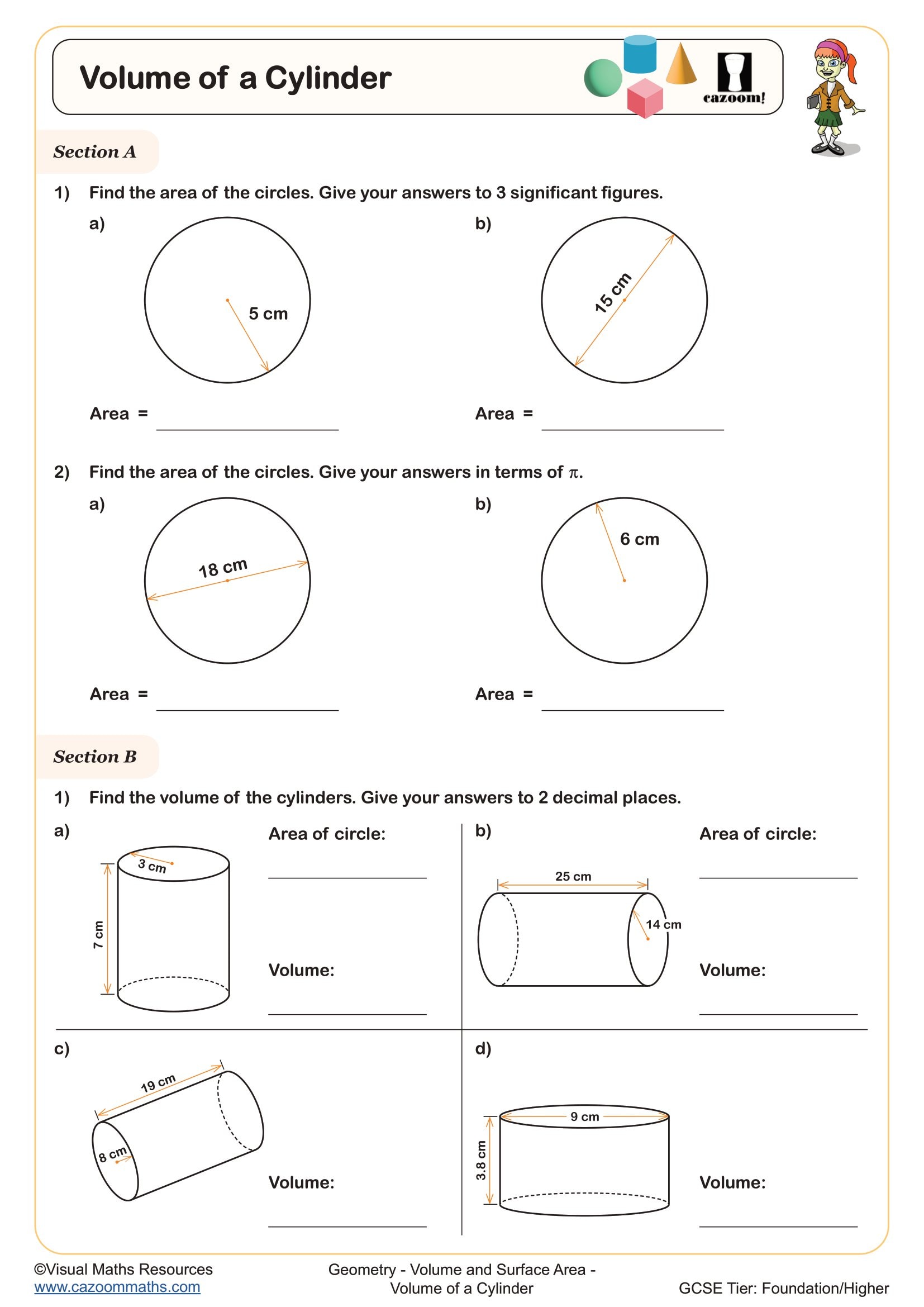
Volume of a Cylinder
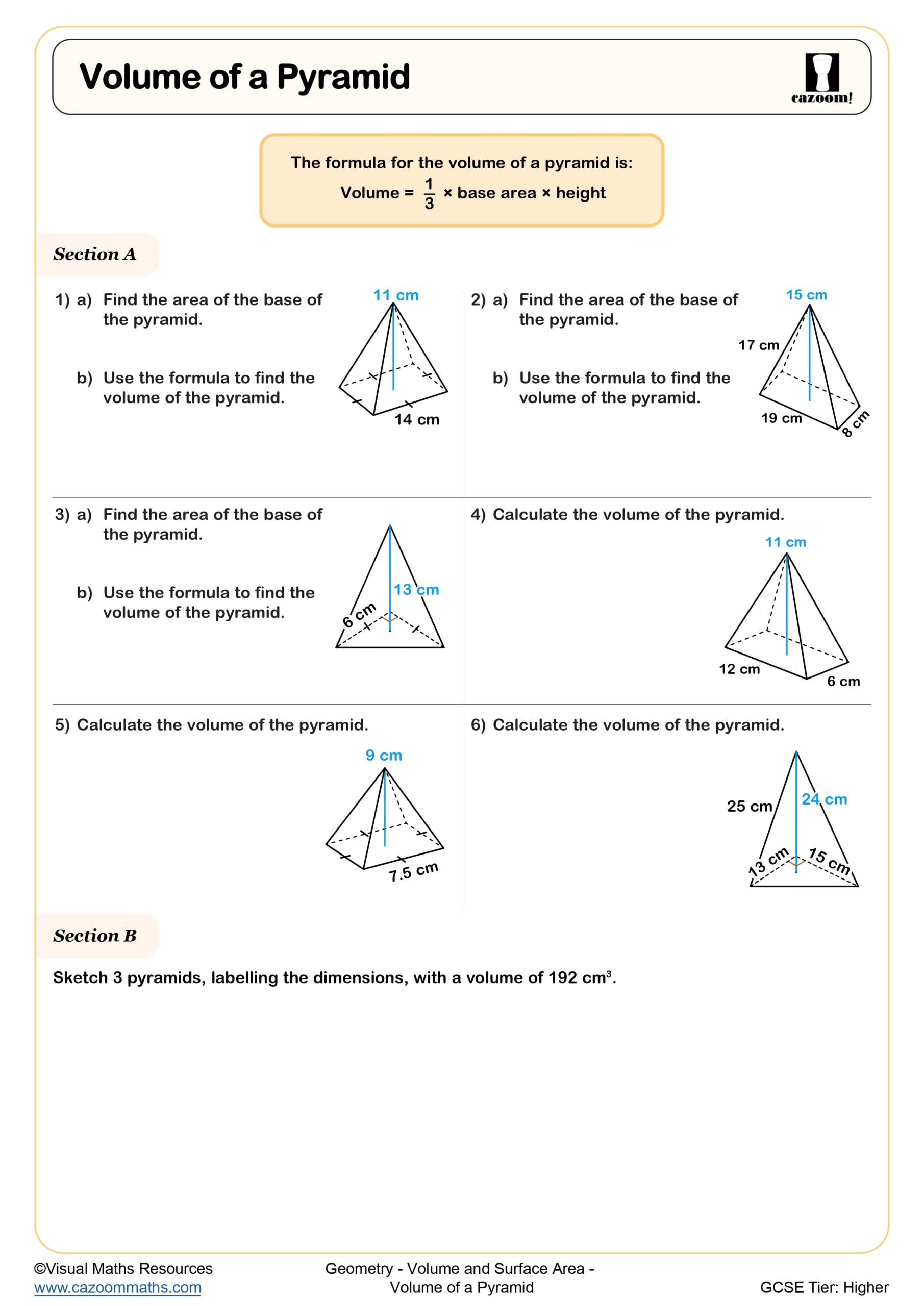
Volume of a Pyramid
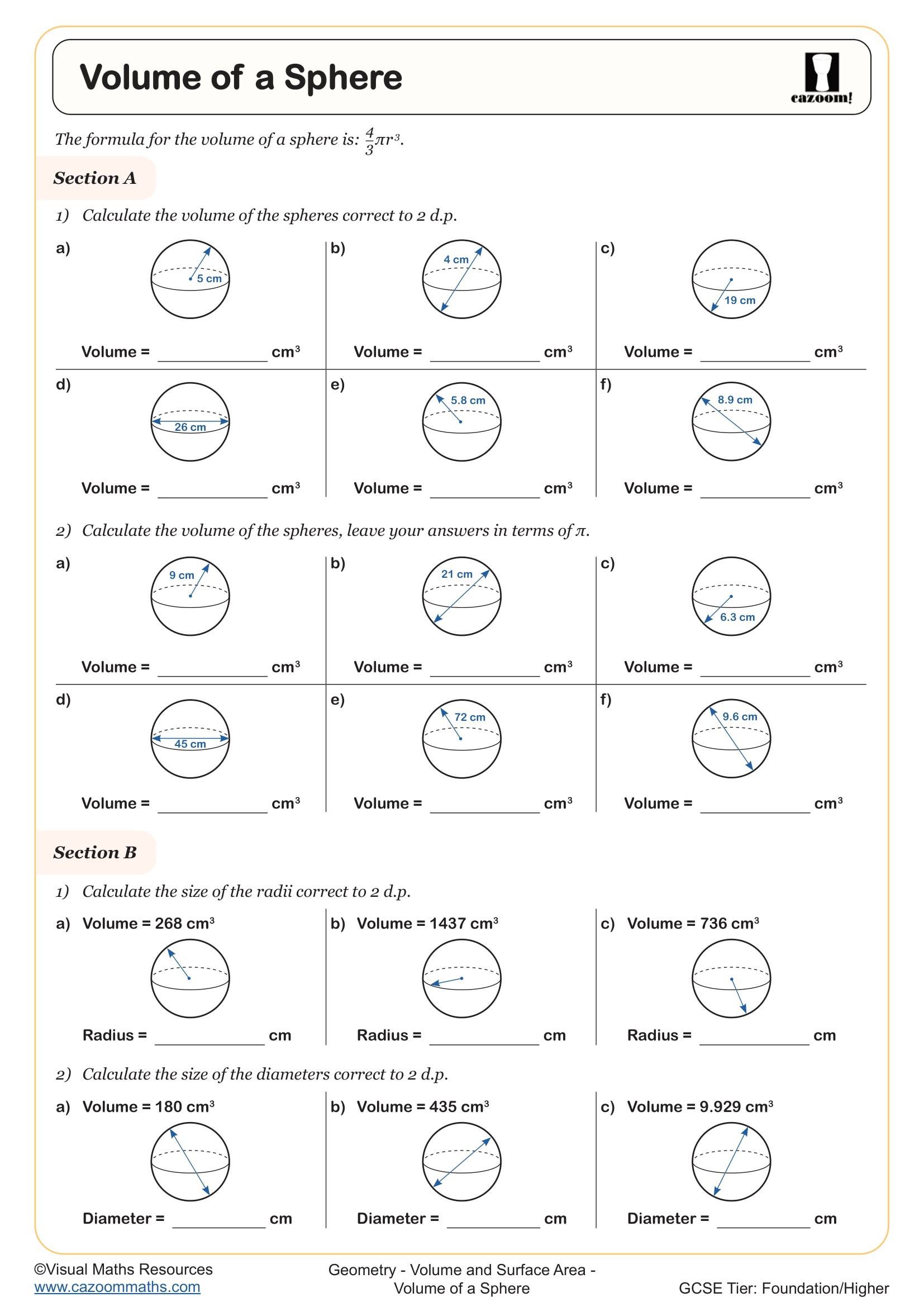
Volume of a Sphere
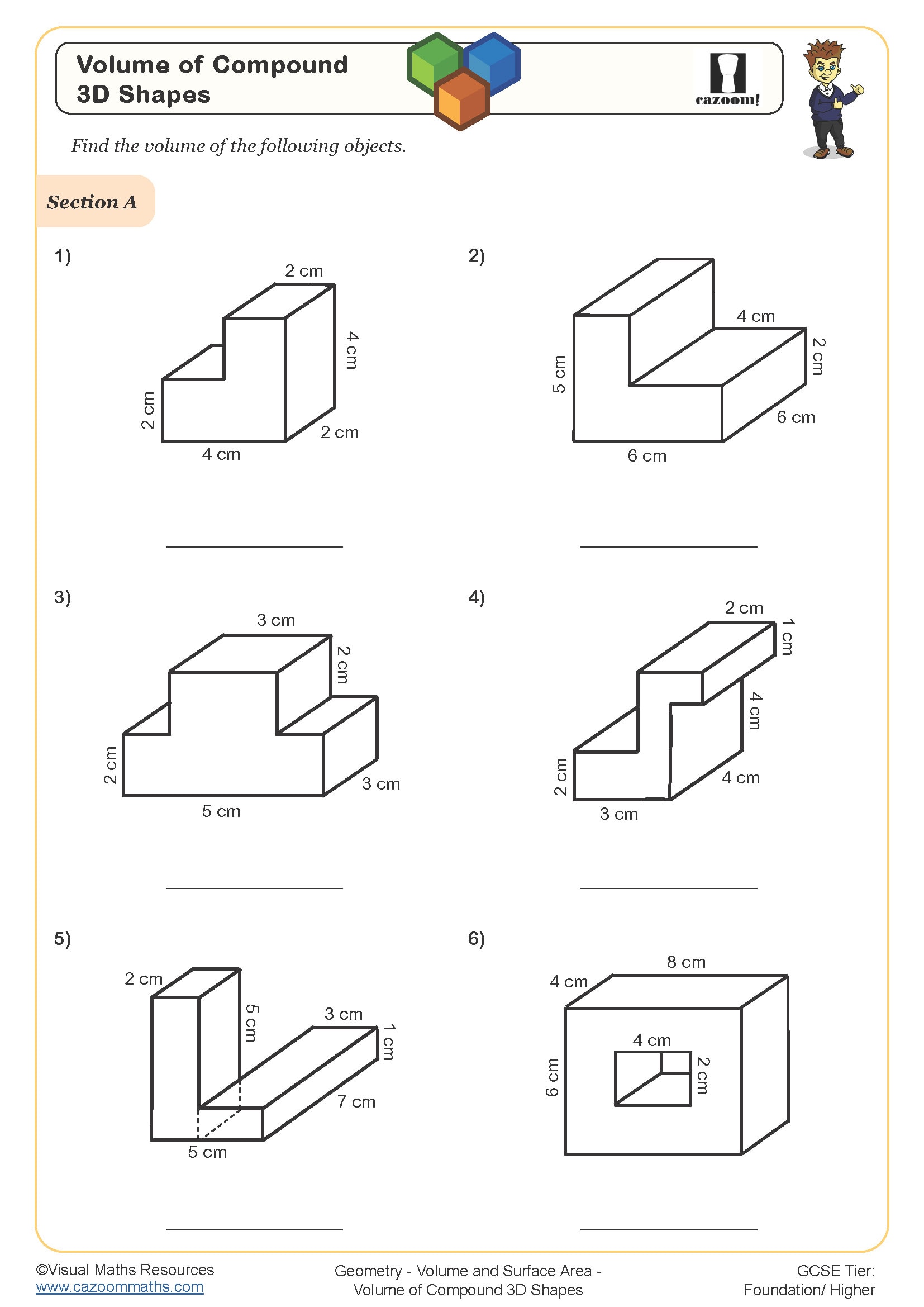
Volume of Compound 3D shapes
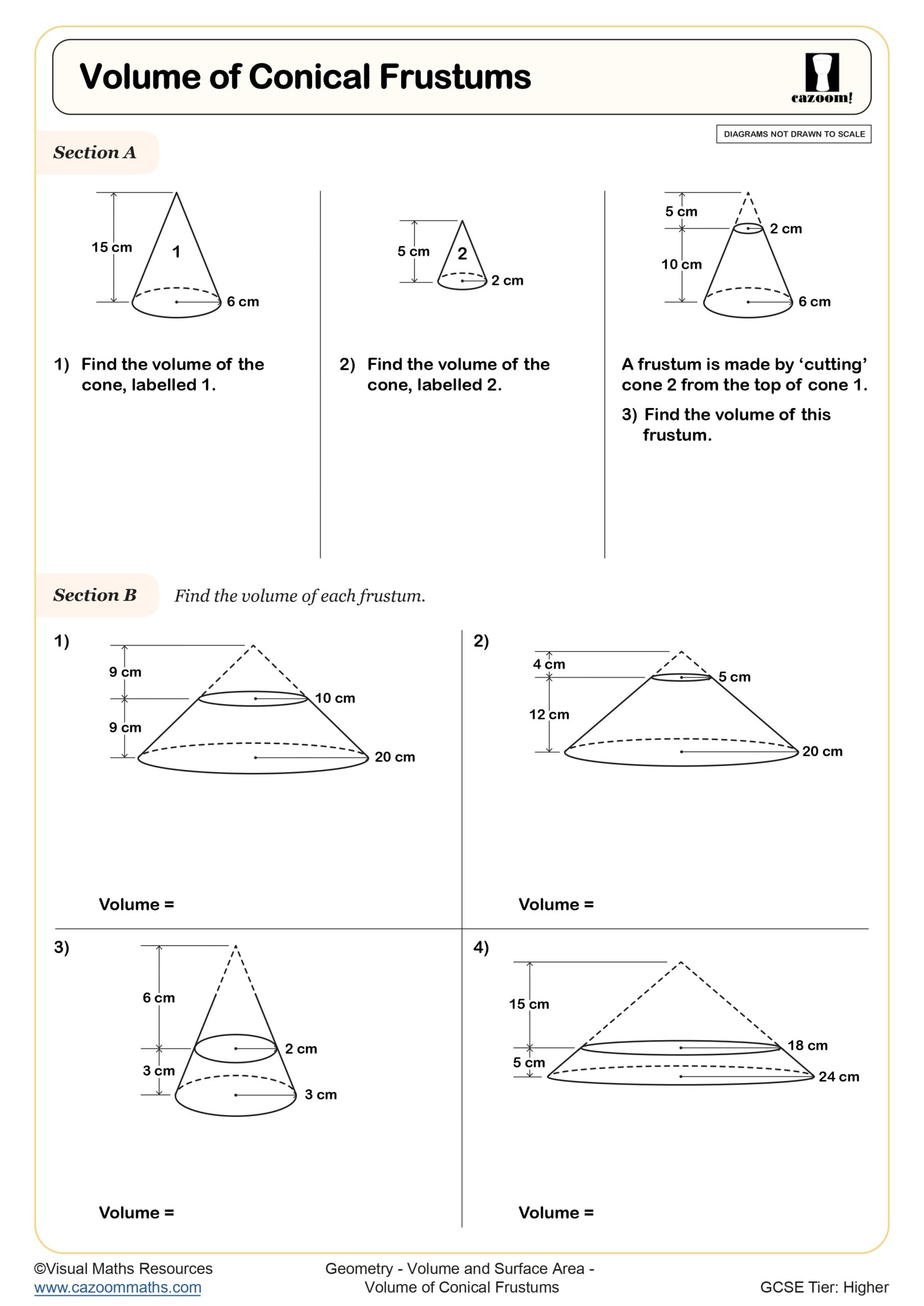
Volume of Conical Frustums
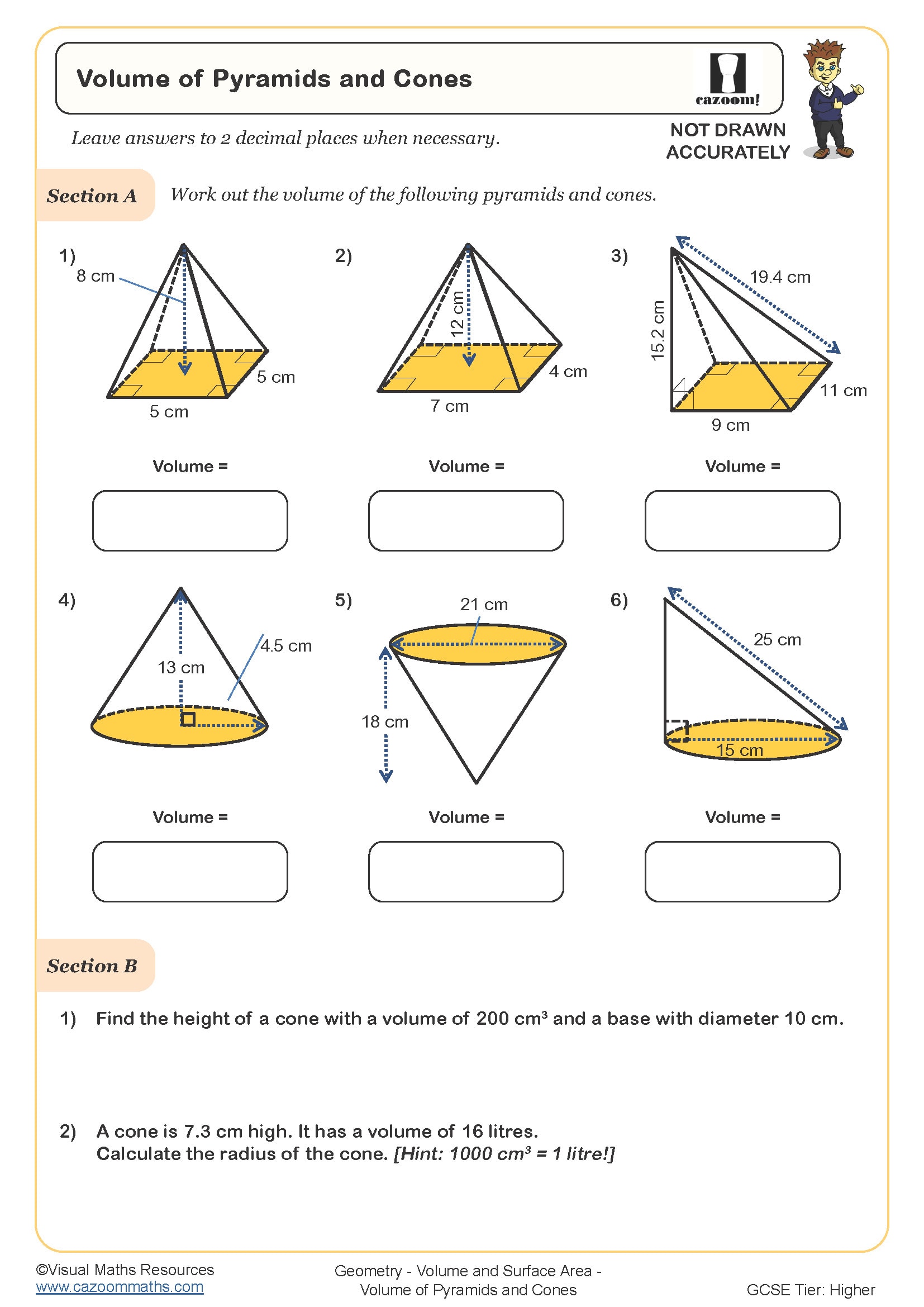
Volume of Pyramids and Cones
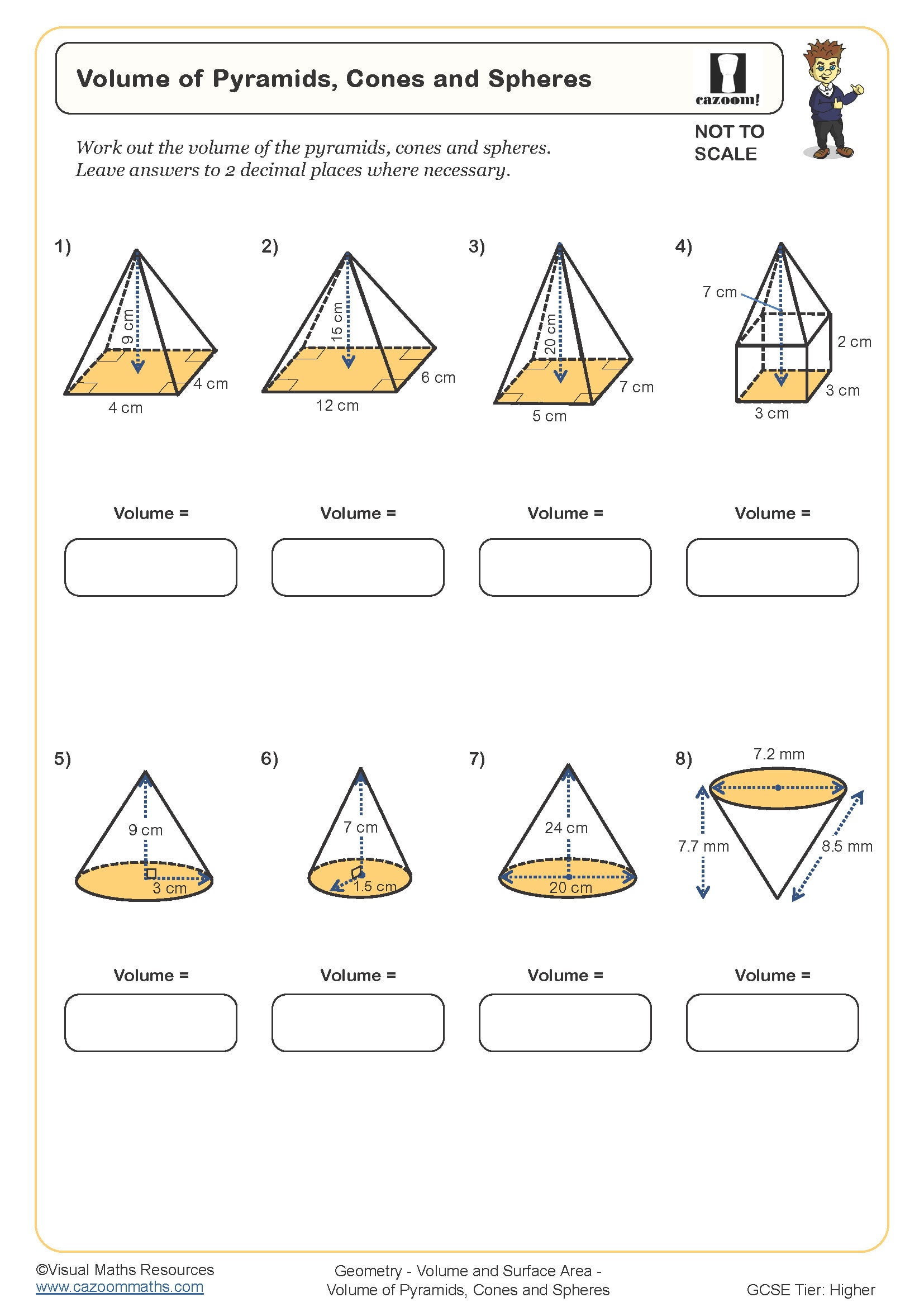
Volume of Pyramids Cones and Spheres
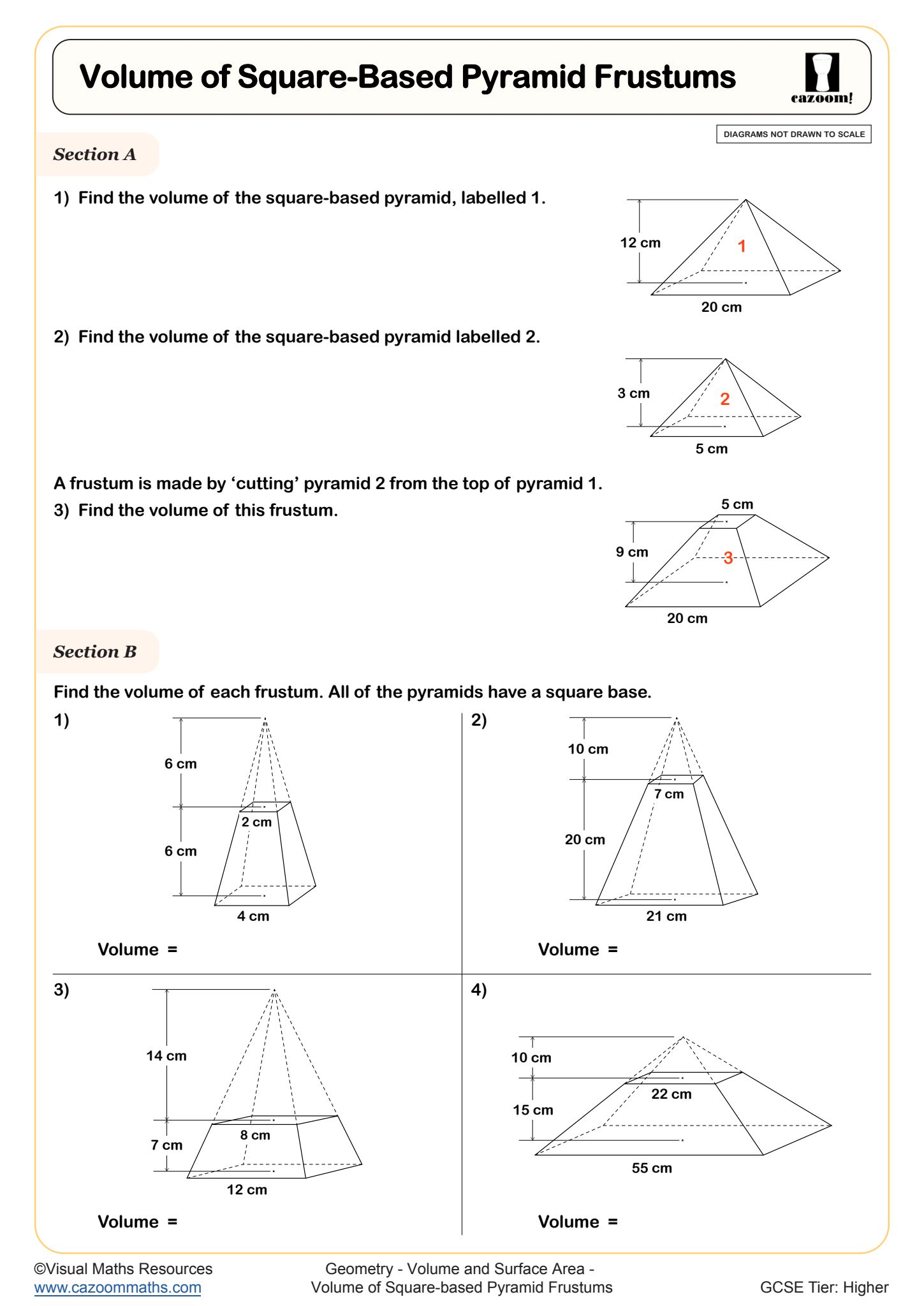
Volume of Square-based Pyramid Frustums
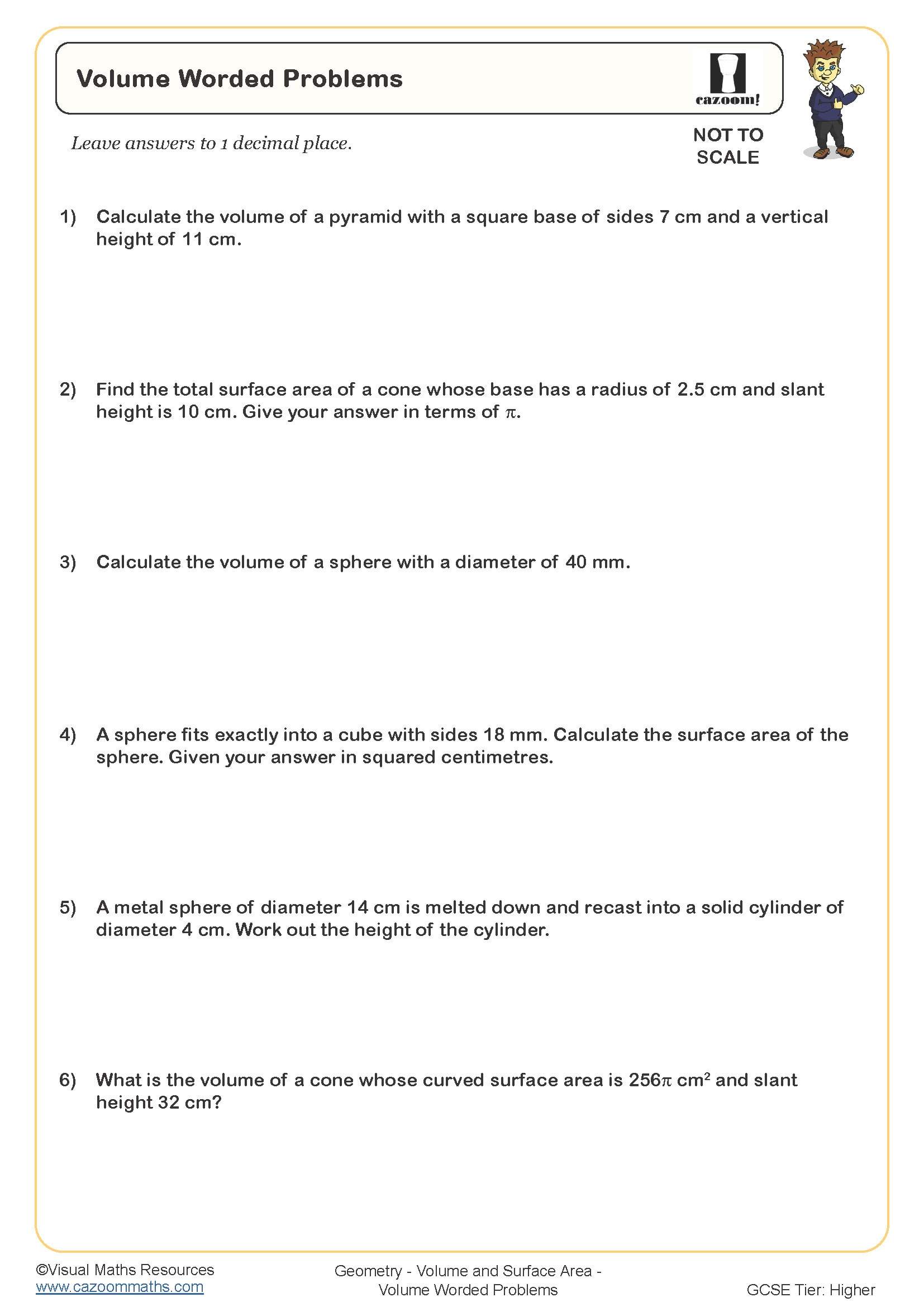
Volume Word Problems
All worksheets are created by the team of experienced teachers at Cazoom Maths.
What makes effective volume worksheets for GCSE students?
Strong volume worksheets target the specific calculation skills required at GCSE level, covering prisms, cylinders, pyramids, cones and spheres with clear formula applications. They should include both exact answers using π and decimal approximations, as examination papers test both approaches depending on question context.
Teachers find that students benefit most from worksheets that separate surface area and volume calculations initially, then combine them in later questions. Many students incorrectly apply 2πr² + 2πrh for cylinder volume instead of πr²h, so effective worksheets include diagnostic questions that highlight these common formula confusions.
Which year groups typically study surface area and volume together?
Surface area and volume form a key component of the Year 10 curriculum, though some schools introduce basic volume calculations in Year 9. The combined study allows students to understand the relationship between two-dimensional measurements and three-dimensional space, practical for GCSE success.
Year 10 students are expected to handle more complex composite shapes and real-world applications, such as calculating paint needed for irregular containers or comparing packaging efficiency. This builds naturally from the simpler area calculations studied in Years 8 and 9, preparing students for the demanding problem-solving questions they'll encounter in their GCSE examinations.
How do students master surface area calculations for composite shapes?
Students need systematic approaches for breaking down composite shapes into recognisable components like rectangular faces, circular bases, and curved surfaces. Teachers observe that students often forget to subtract overlapping areas where shapes join together, particularly with cylinders attached to rectangular prisms.
Successful surface area work requires students to visualise nets mentally and identify which faces remain external in the final composite shape. Surface area and volume worksheets Year 10 pdf resources typically include stepped examples showing how to methodically account for each face, helping students develop reliable calculation strategies for examination success.
What teaching strategies work best with these worksheet resources?
Teachers achieve better results when they use these worksheets alongside physical models or interactive software that students can manipulate. Starting with concrete examples helps students connect the abstract formulas to actual three-dimensional objects they can measure and verify.
Many teachers find success in pairing stronger students with those who struggle with spatial reasoning, as peer explanation often clarifies concepts more effectively than teacher demonstration alone. The answer sheets allow teachers to focus on misconceptions during marking, particularly the common error of confusing radius and diameter measurements in circular calculations.