Year 10 Transformations Worksheets
Combining Transformations
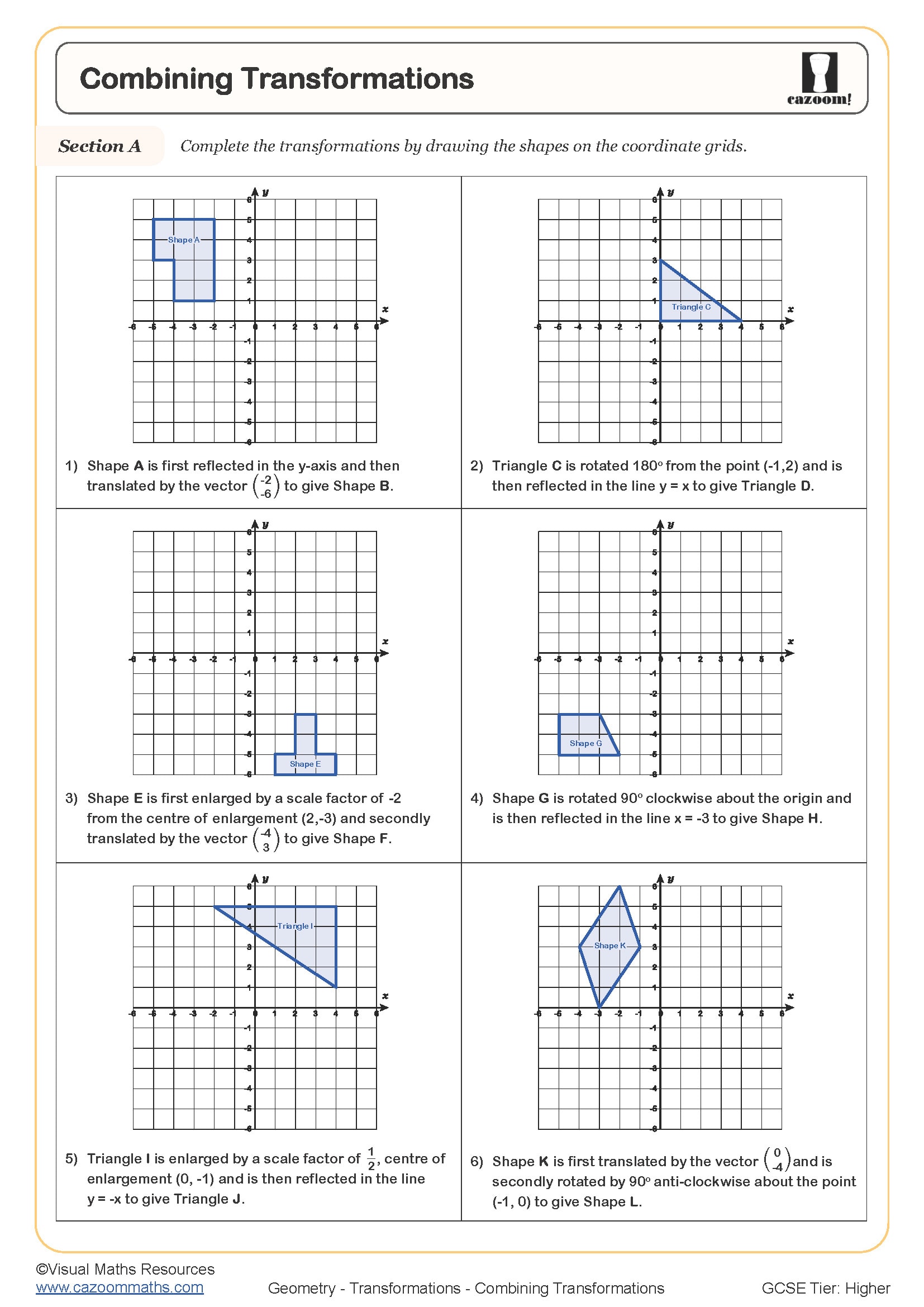
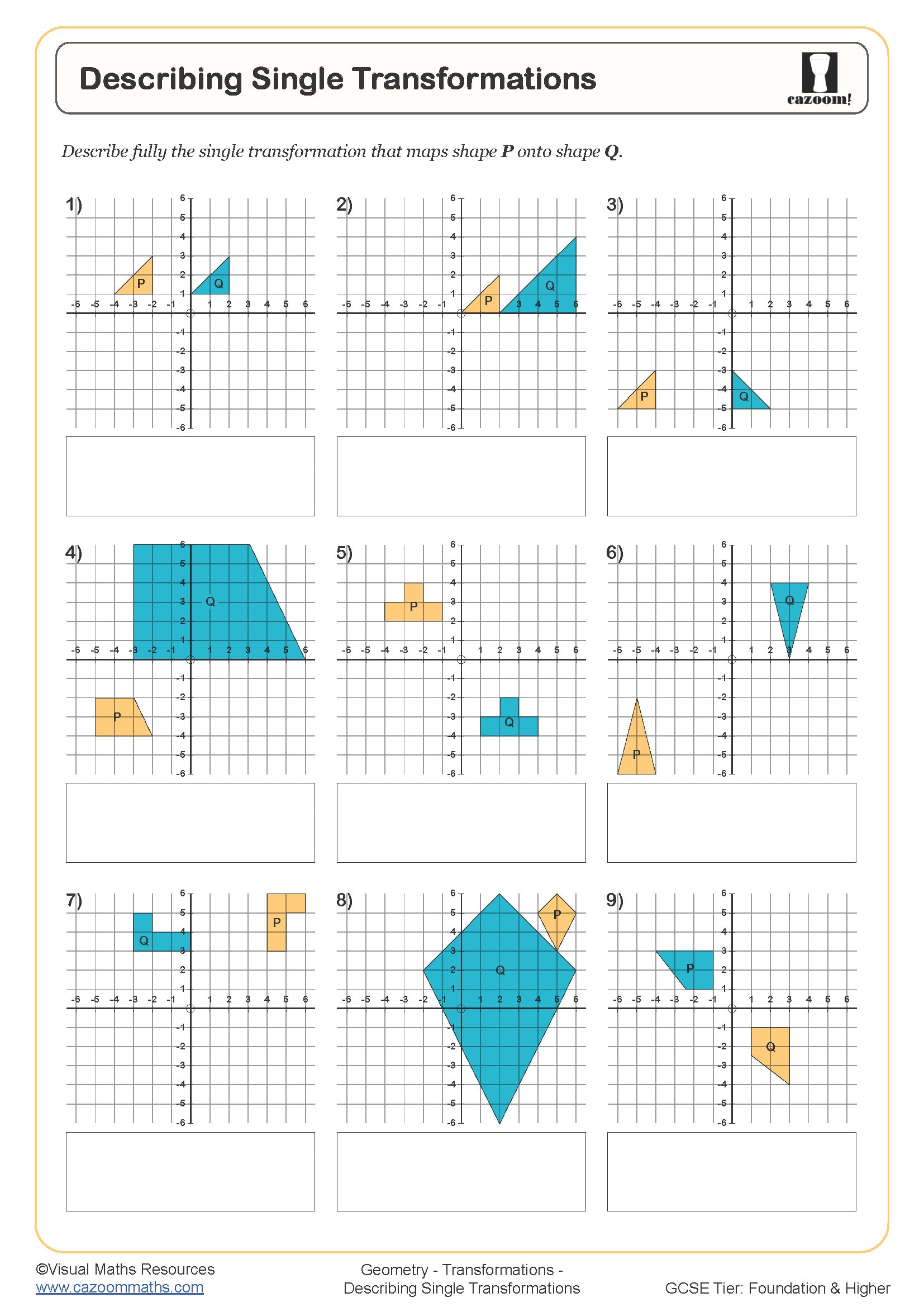
Describing Single Transformations
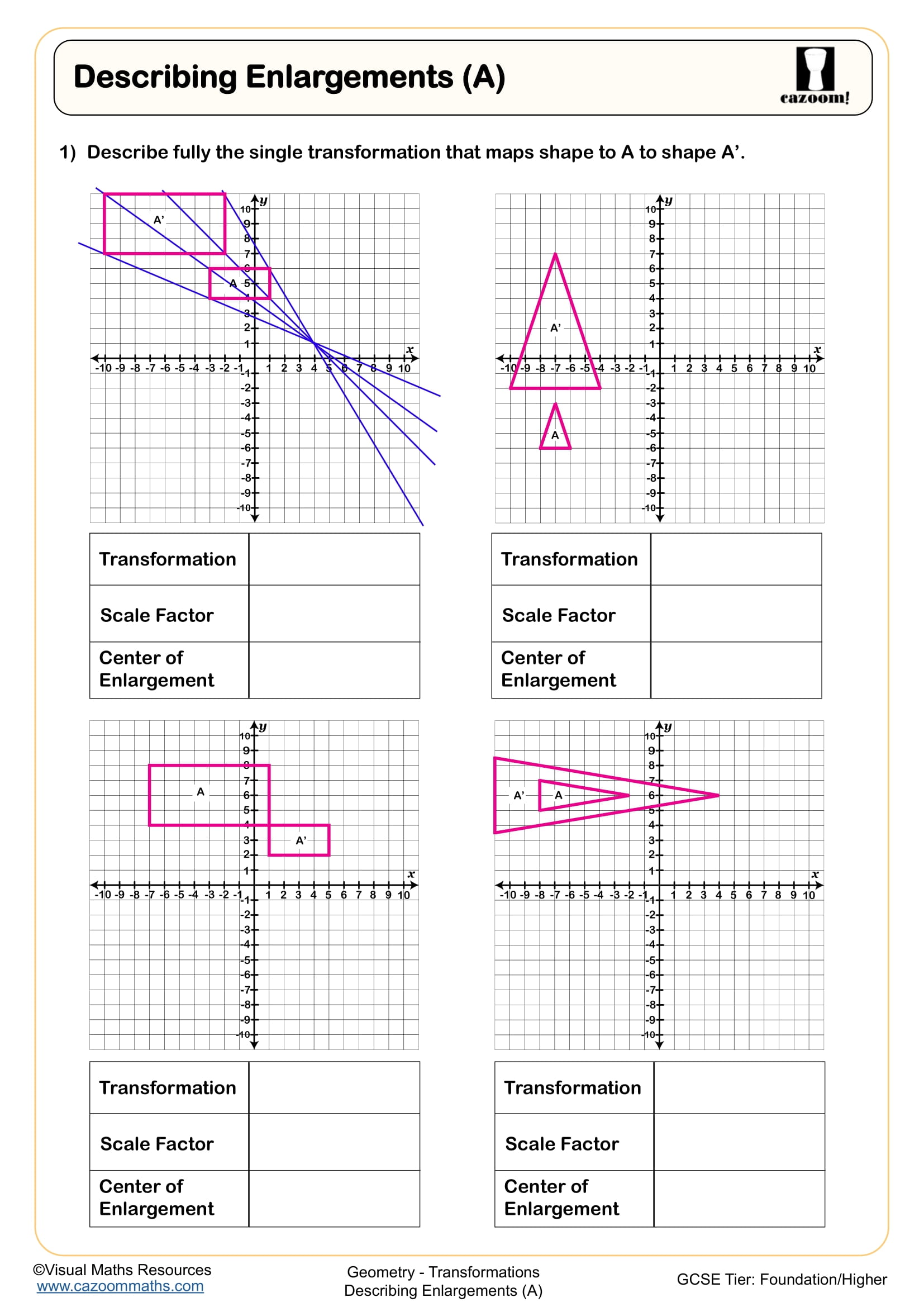
Describing Enlargements (A)
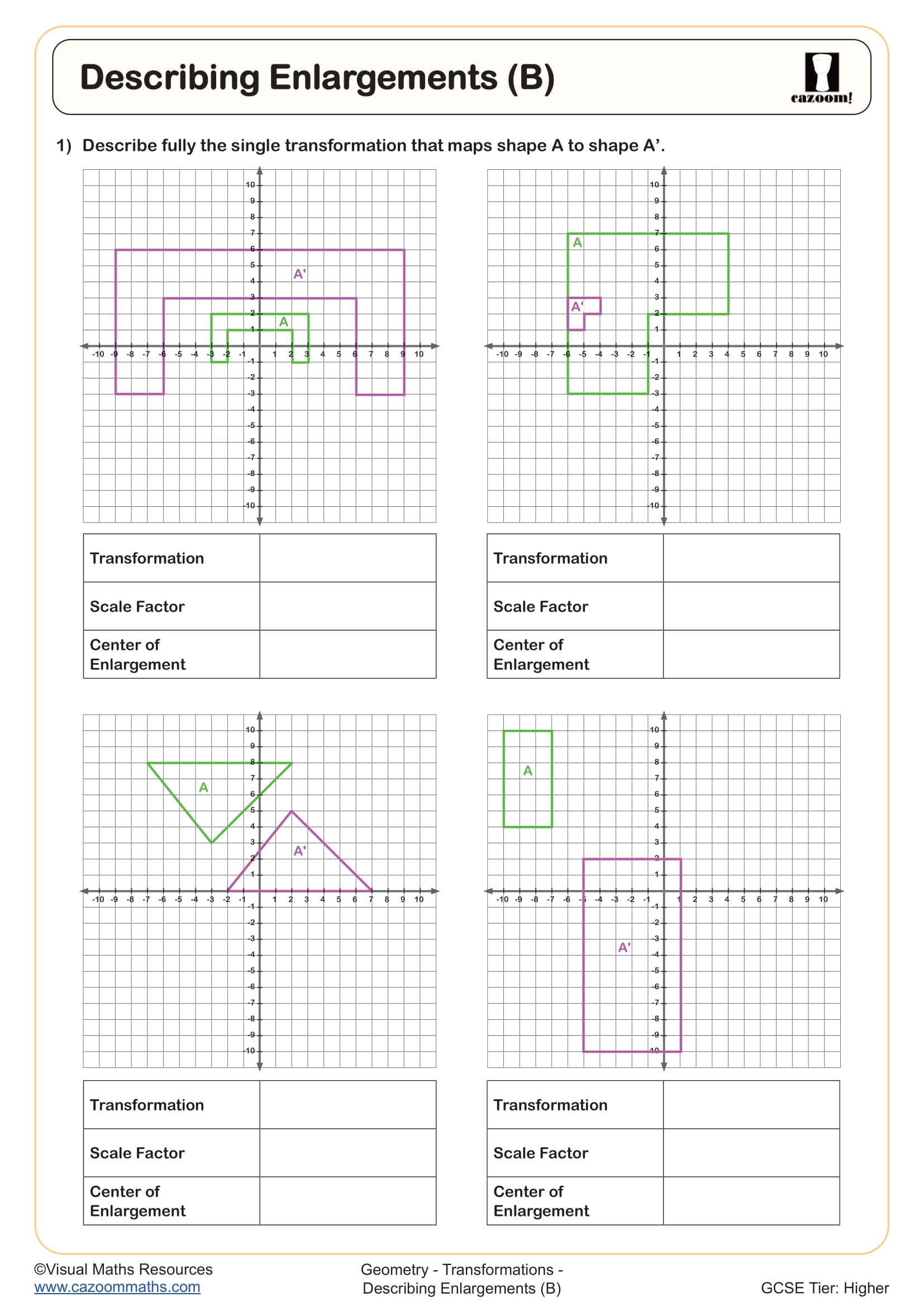
Describing Enlargements (B)
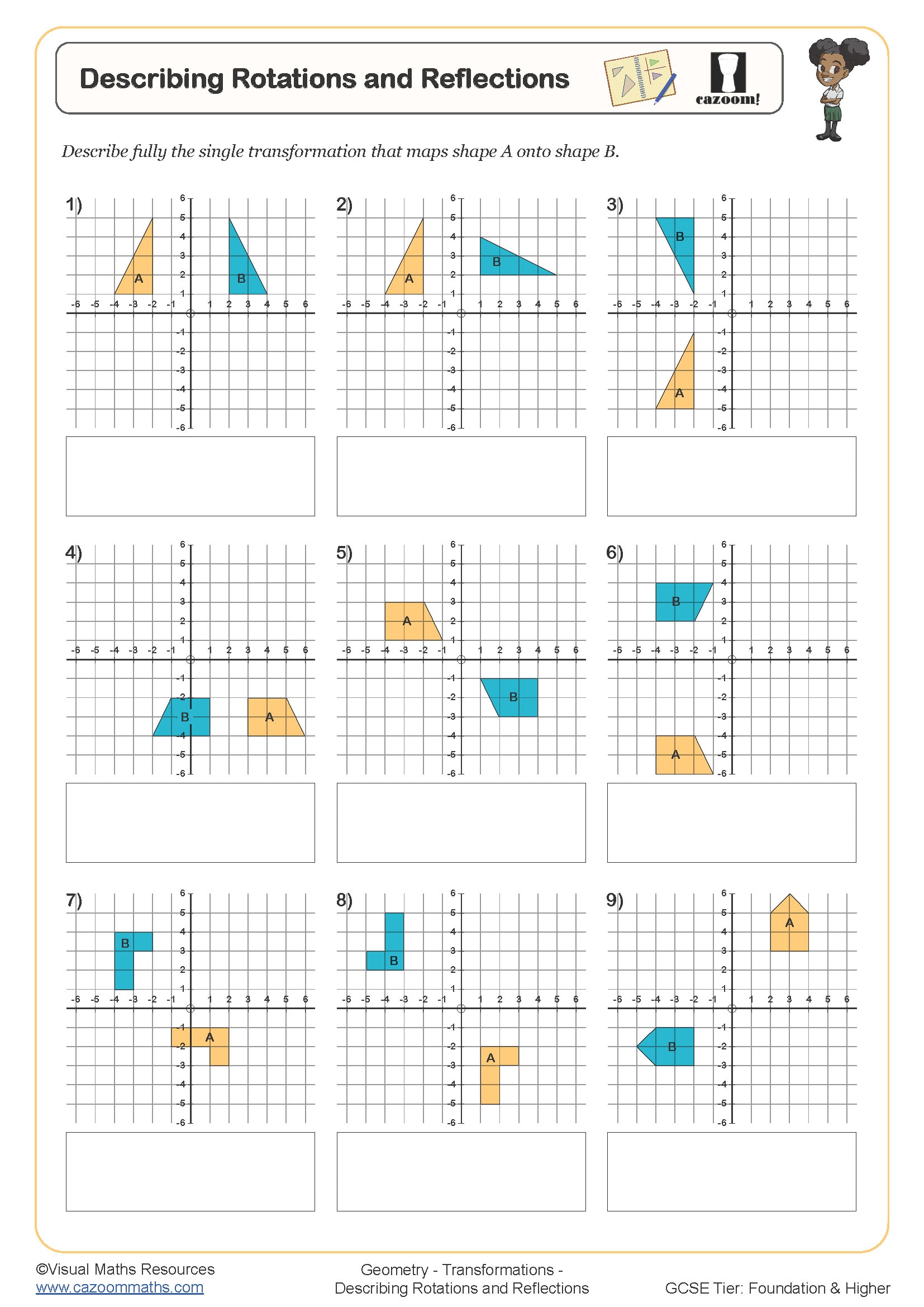
Describing Rotations
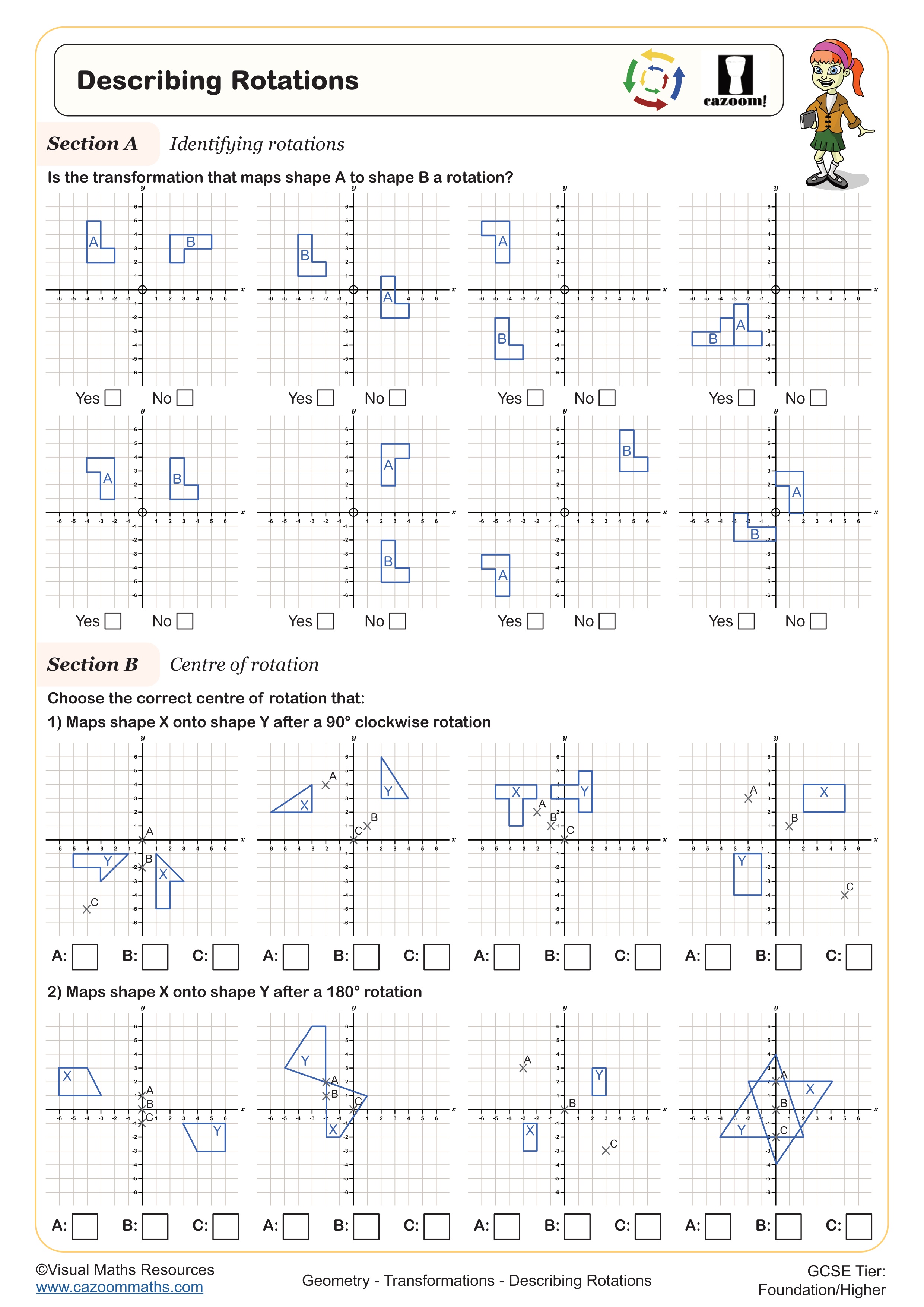
Describing Rotations and Reflections
Enlargement (C)
-Worksheet.jpg?w=3840)
Enlargement with Fractional Negative Scale Factors
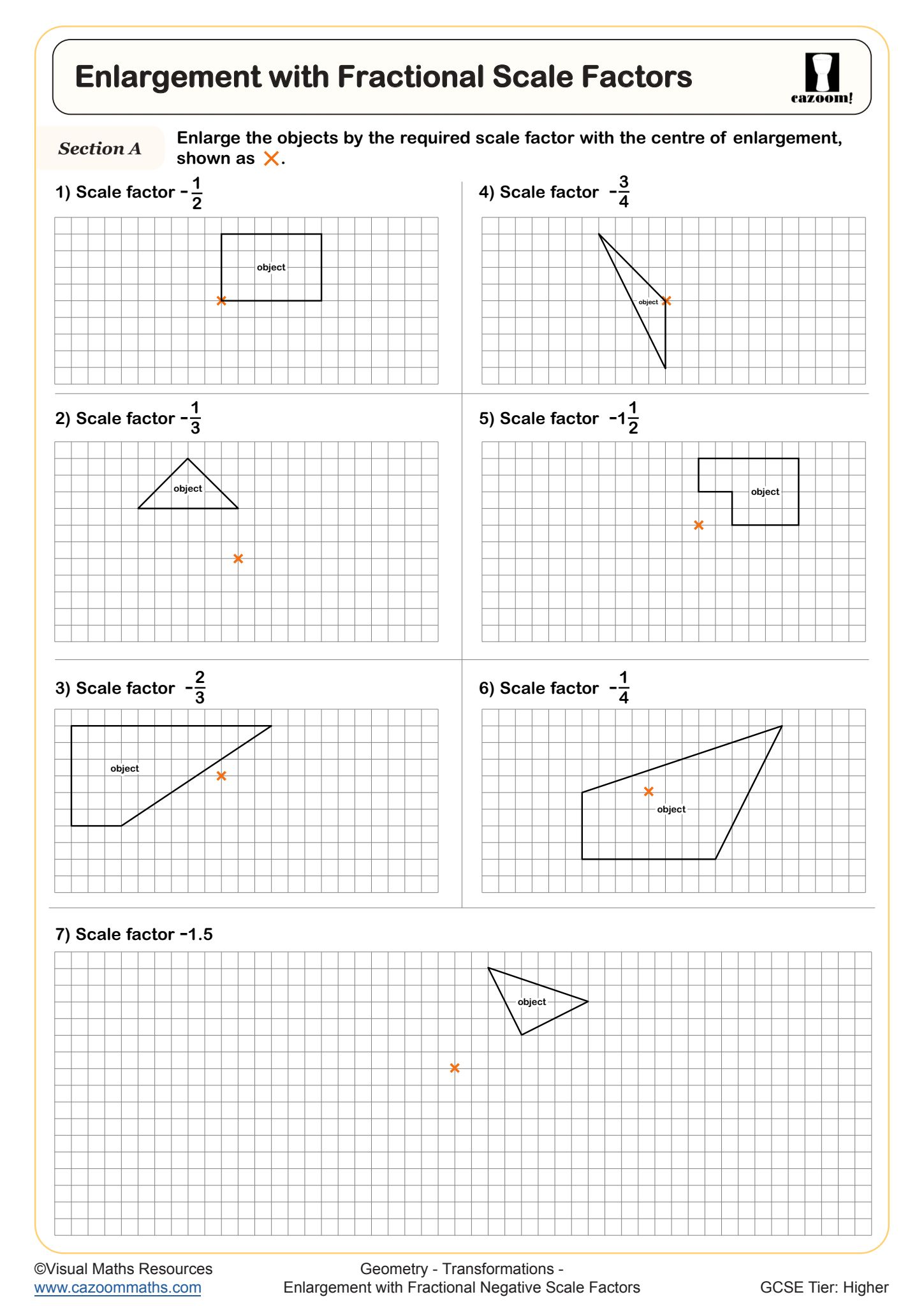
Enlargement with Fractional Scale Factors (A)
-Worksheet.jpg?w=3840)
Enlargement with Fractional Scale Factors (B)
-Worksheet.jpg?w=3840)
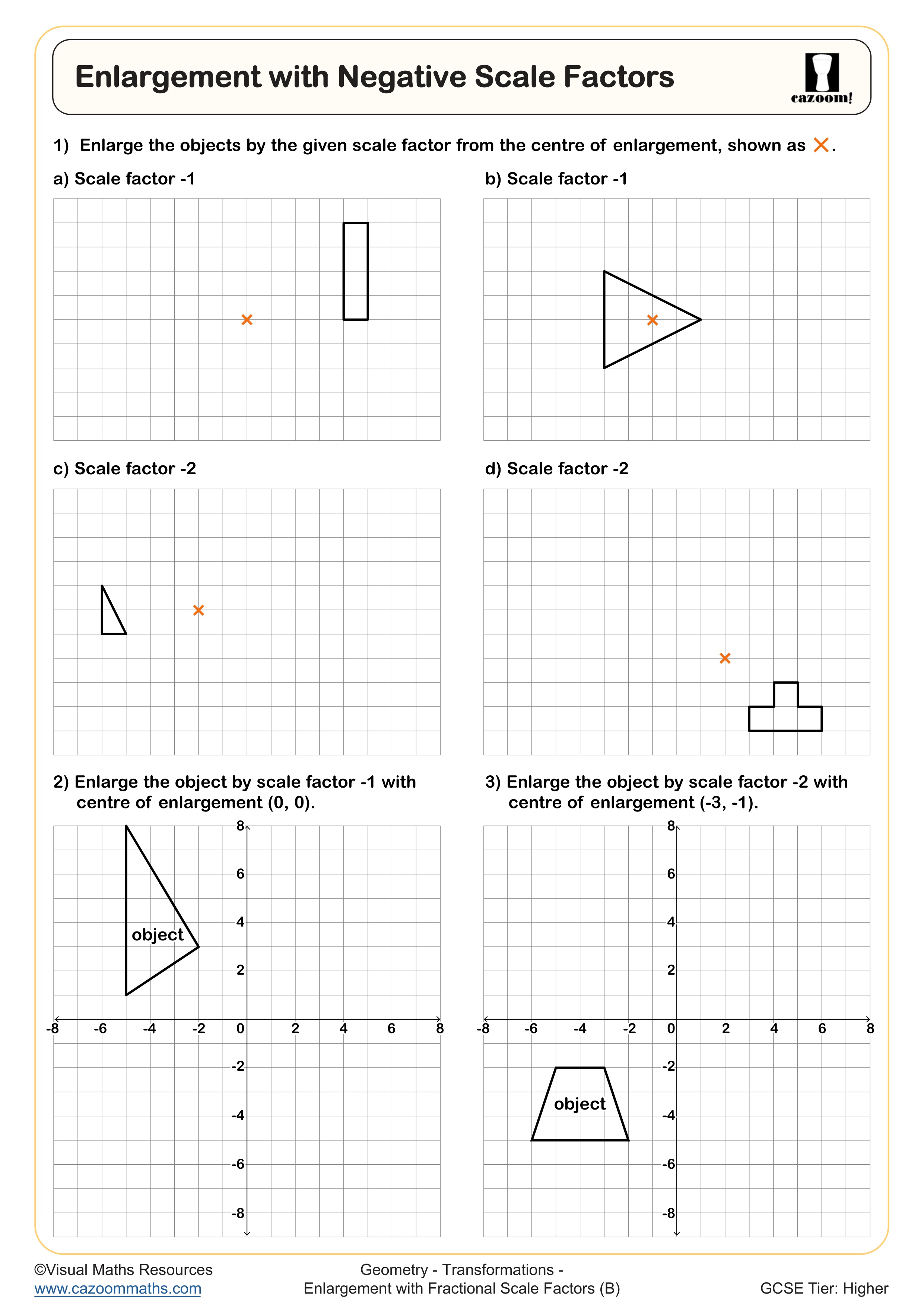
Enlargement with Negative Scale Factors
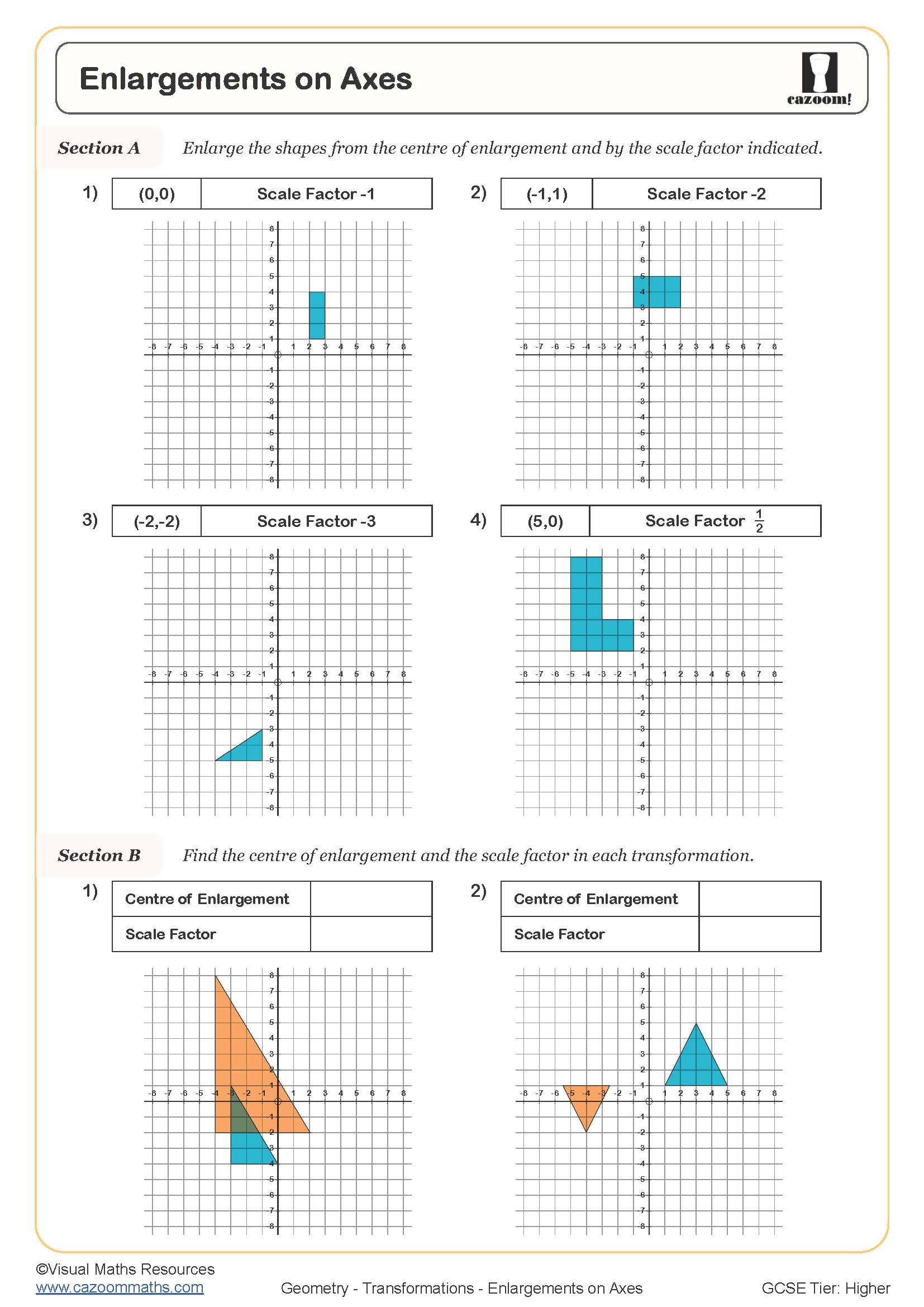
Enlargements on Axes
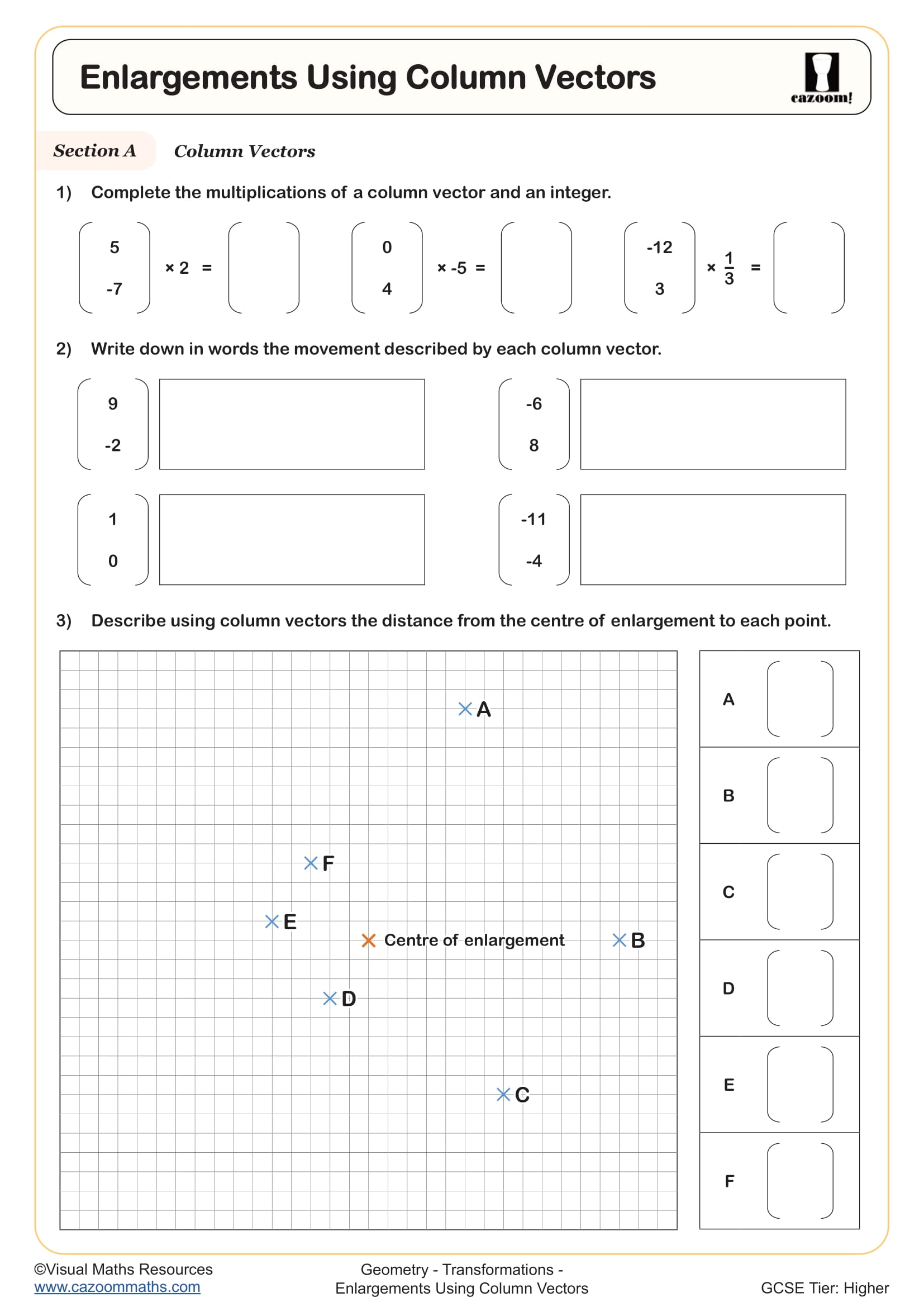
Enlargements Using Column Vectors
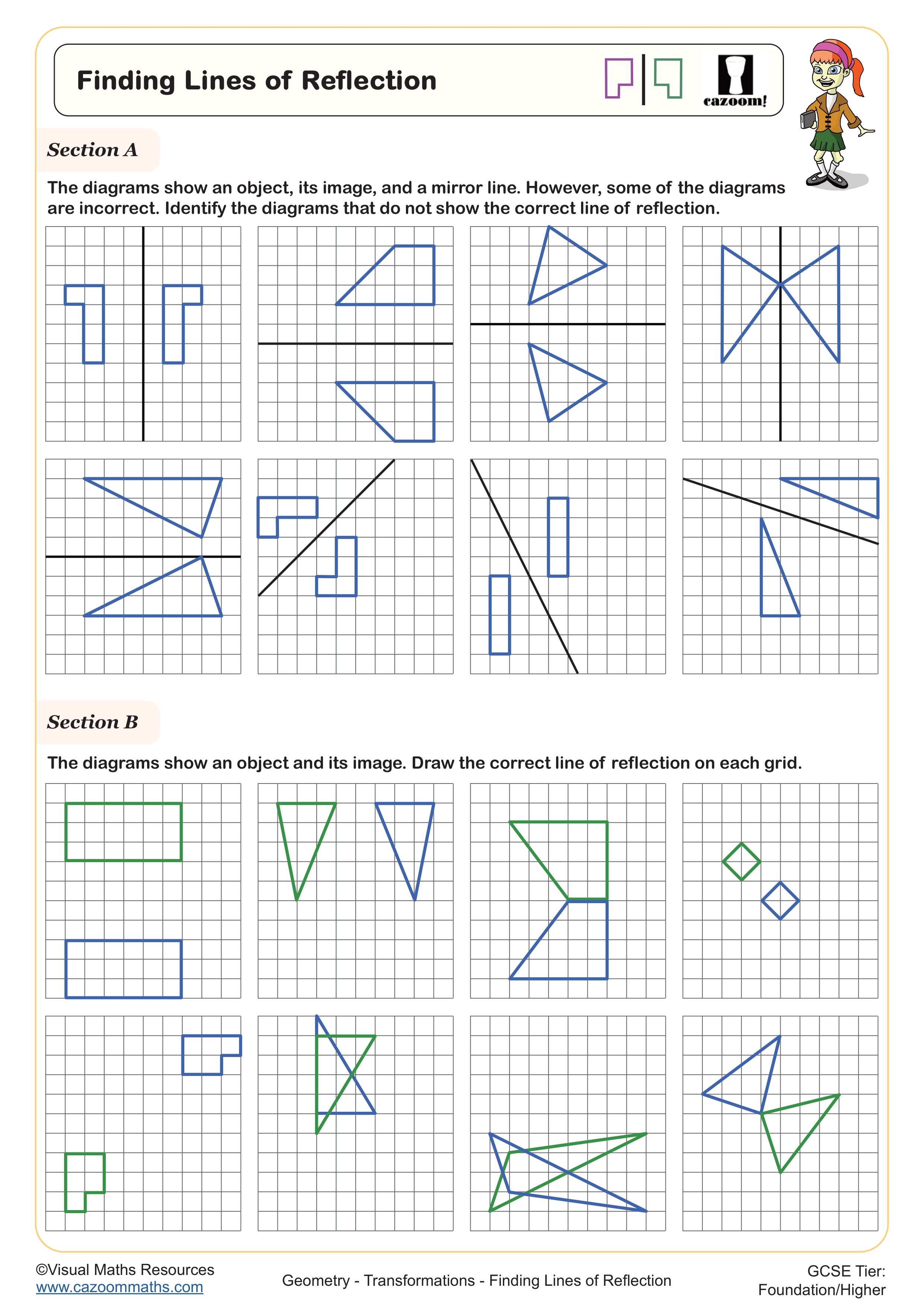
Finding Lines of Reflection
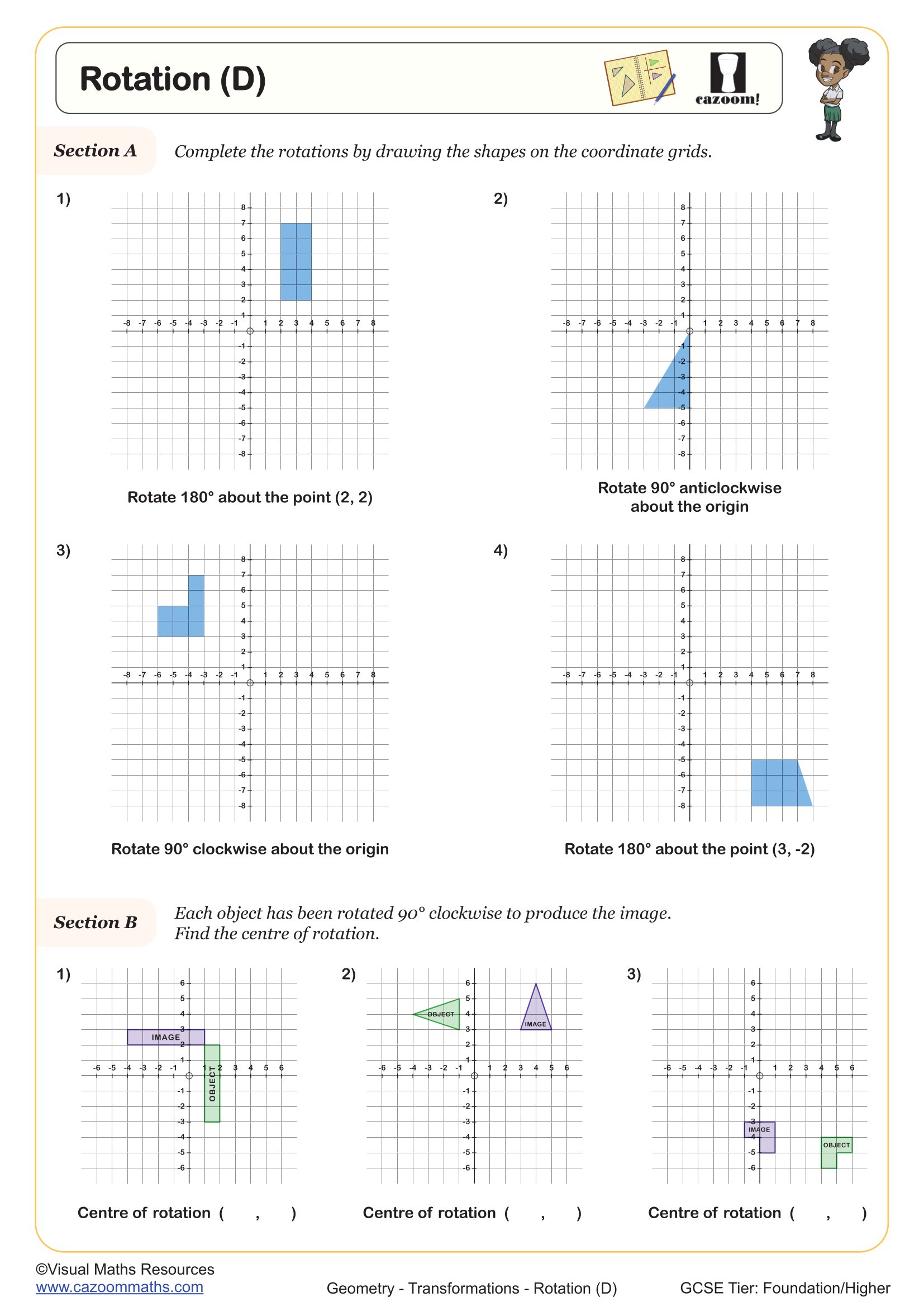
Rotation (D)
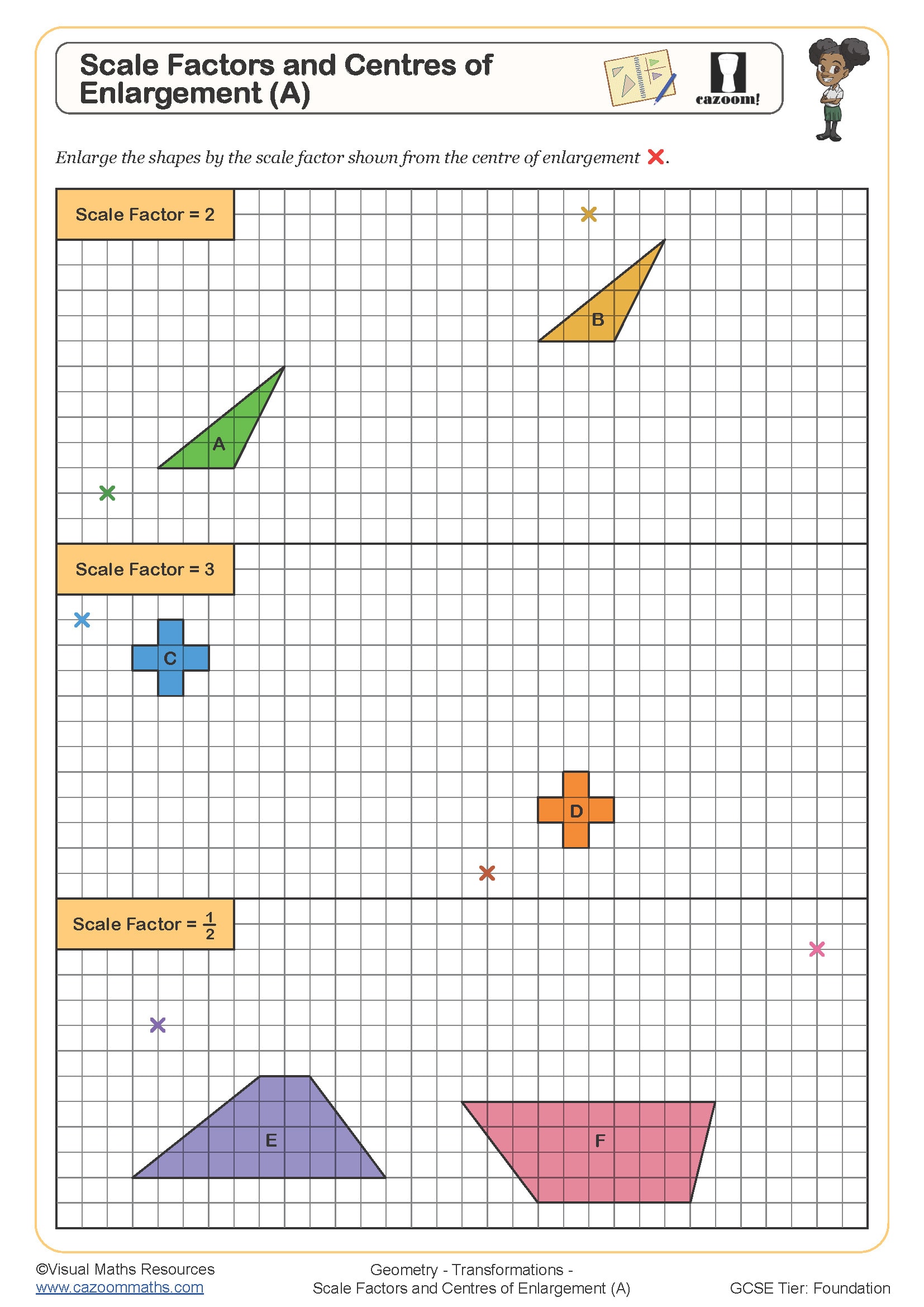
Scale Factors and Centres of Enlargement (A)
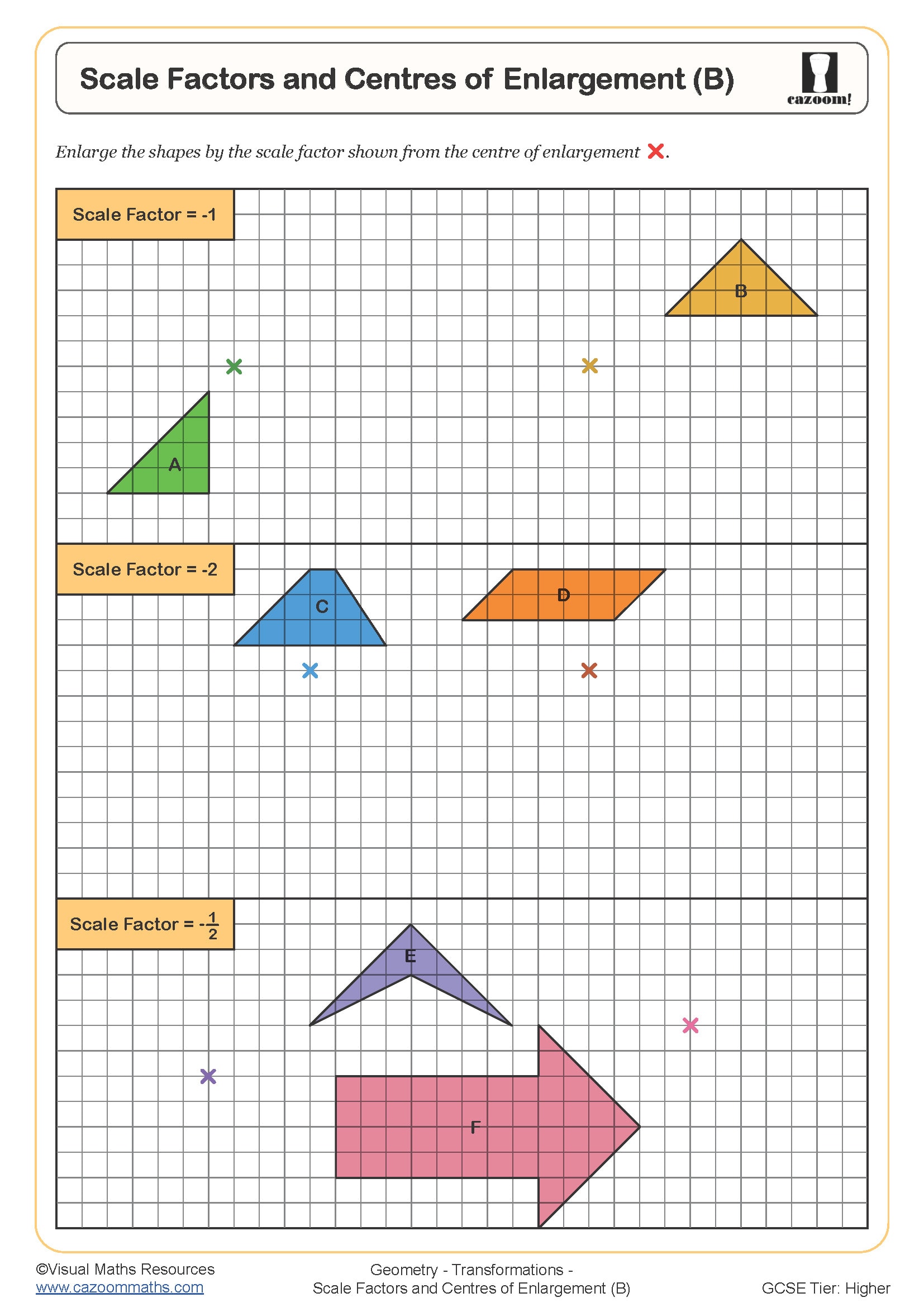
Scale Factors and Centres of Enlargement (B)
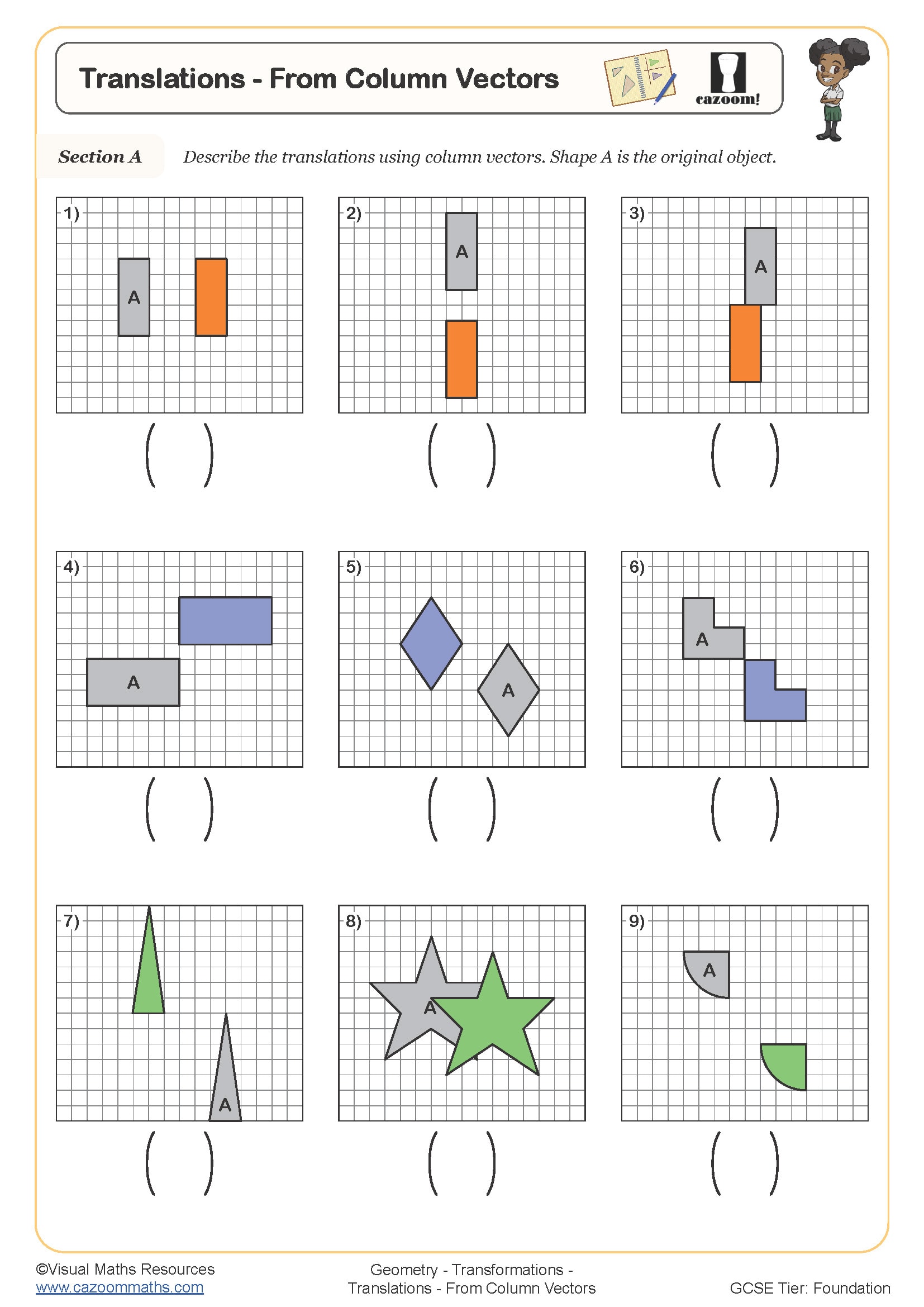
Translations - from Column Vectors
All worksheets are created by the team of experienced teachers at Cazoom Maths.
What makes a good transformations worksheet pdf for GCSE preparation?
A quality transformation worksheet should cover all four transformation types with clear coordinate grids and systematic progression from basic single transformations to combined operations. The exercises need to include both performing transformations and describing them using correct mathematical terminology, as both skills appear regularly in GCSE papers.
Teachers frequently observe that students lose marks by confusing rotation direction or failing to specify centres of rotation and enlargement. Effective worksheets address these misconceptions by providing varied examples where students must identify missing information, such as determining scale factors from given shapes or finding centres of transformation through systematic methods.
Which year groups should use transformation worksheets?
Transformations begin in Year 7 with basic reflections and translations, but the full GCSE specification for transformation of shapes worksheet content typically starts in Year 9. Year 10 students need worksheets that consolidate all four transformations whilst introducing more complex scenarios like negative scale factors and combined transformations.
The progression matters significantly because students often carry forward incomplete understanding from earlier years. Teachers notice that students who haven't fully grasped simple reflections in coordinate geometry struggle enormously with more advanced transformation sequences, making thorough revision targeted before tackling GCSE-level problems.
How should students approach reflection rotation translation and enlargement worksheet questions?
Students should develop a systematic approach: first identify the transformation type, then determine the specific parameters like centre, angle, or vector. For reflections, they need to find the mirror line; for rotations, the centre and angle; for translations, the vector; and for enlargements, both centre and scale factor.
Maths teachers consistently observe students making careless errors when working backwards from transformed shapes. The most effective method involves using tracing paper for rotations and reflections, whilst enlargements require careful attention to whether measurements are taken from the centre or between corresponding points. This methodical approach prevents the rushed mistakes that cost marks in examinations.
How can teachers use transformation worksheets most effectively?
Teachers find that breaking transformation worksheets into focused sessions works better than attempting all four types simultaneously. Starting each lesson with a brief recap of transformation properties helps students recall key facts like 'translations preserve orientation' or 'enlargements change size but not shape'.
The included answer sheets prove invaluable for peer marking activities, where students can immediately identify and discuss errors in their working. Many teachers use the worksheets for homework consolidation after introducing each transformation type, then return to mixed questions once students demonstrate confidence with individual transformations through targeted practice.