Year 10 Trigonometry Worksheets
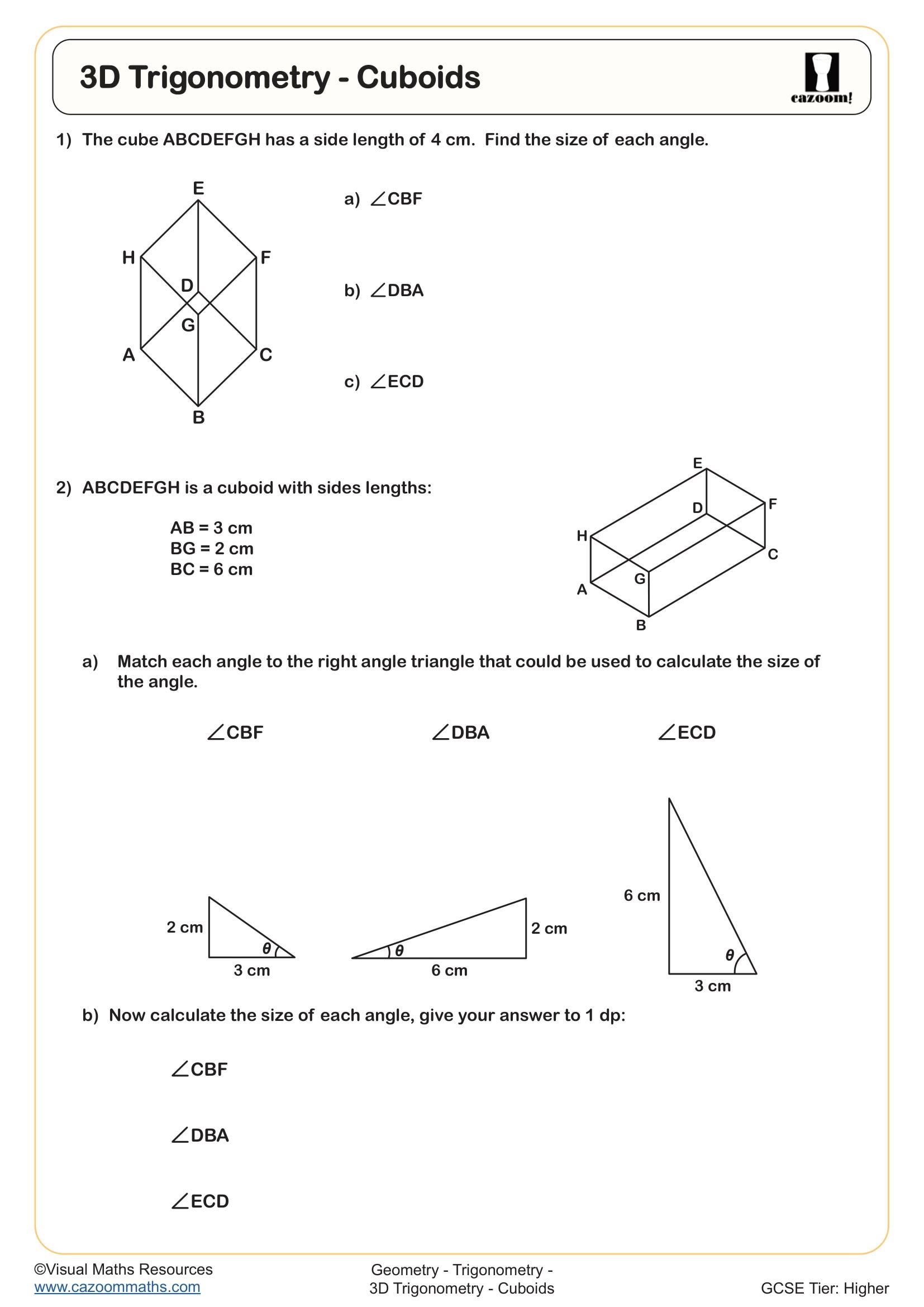
3D Trigonometry - Cuboids
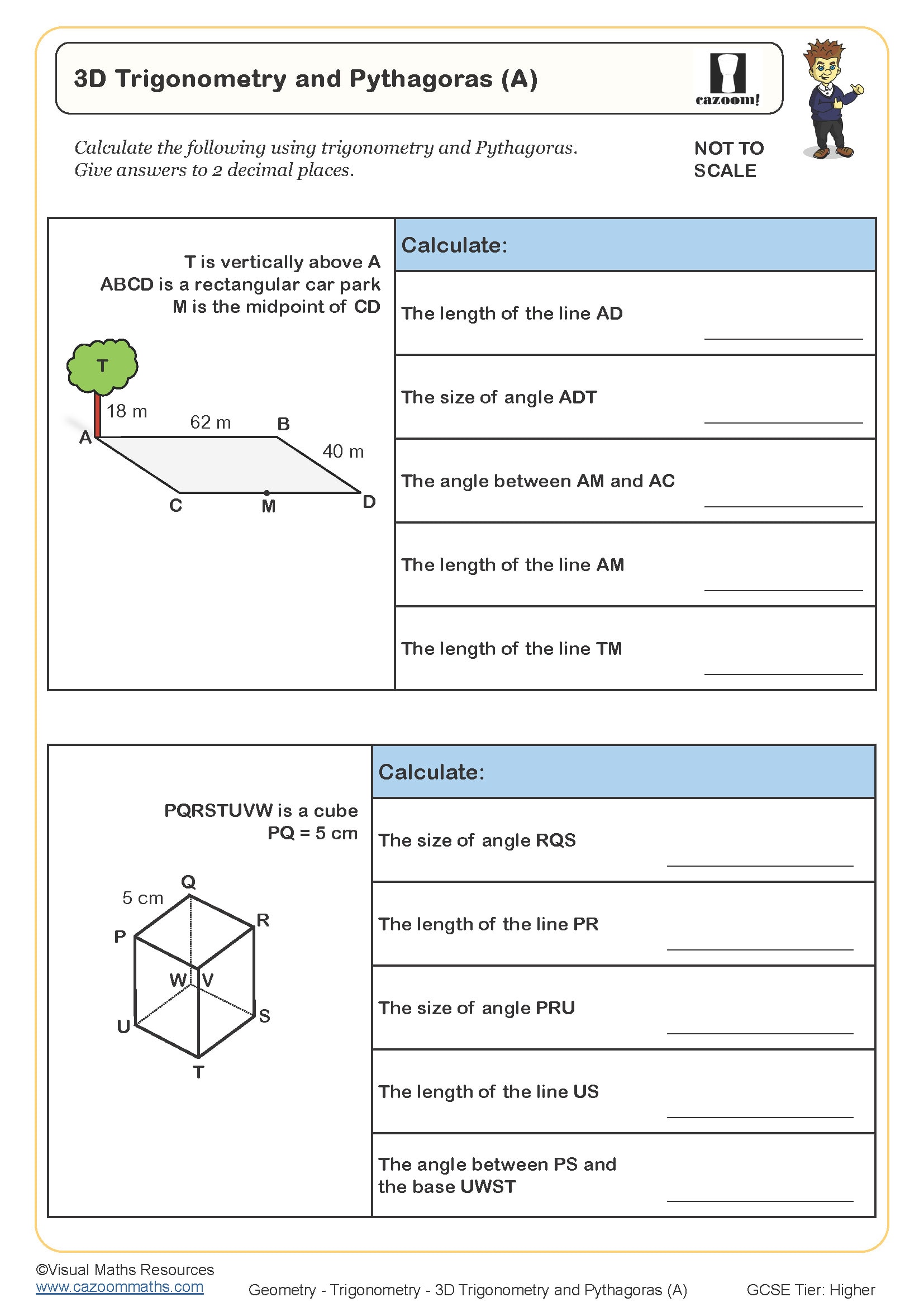
3D Trigonometry and Pythagoras (A)
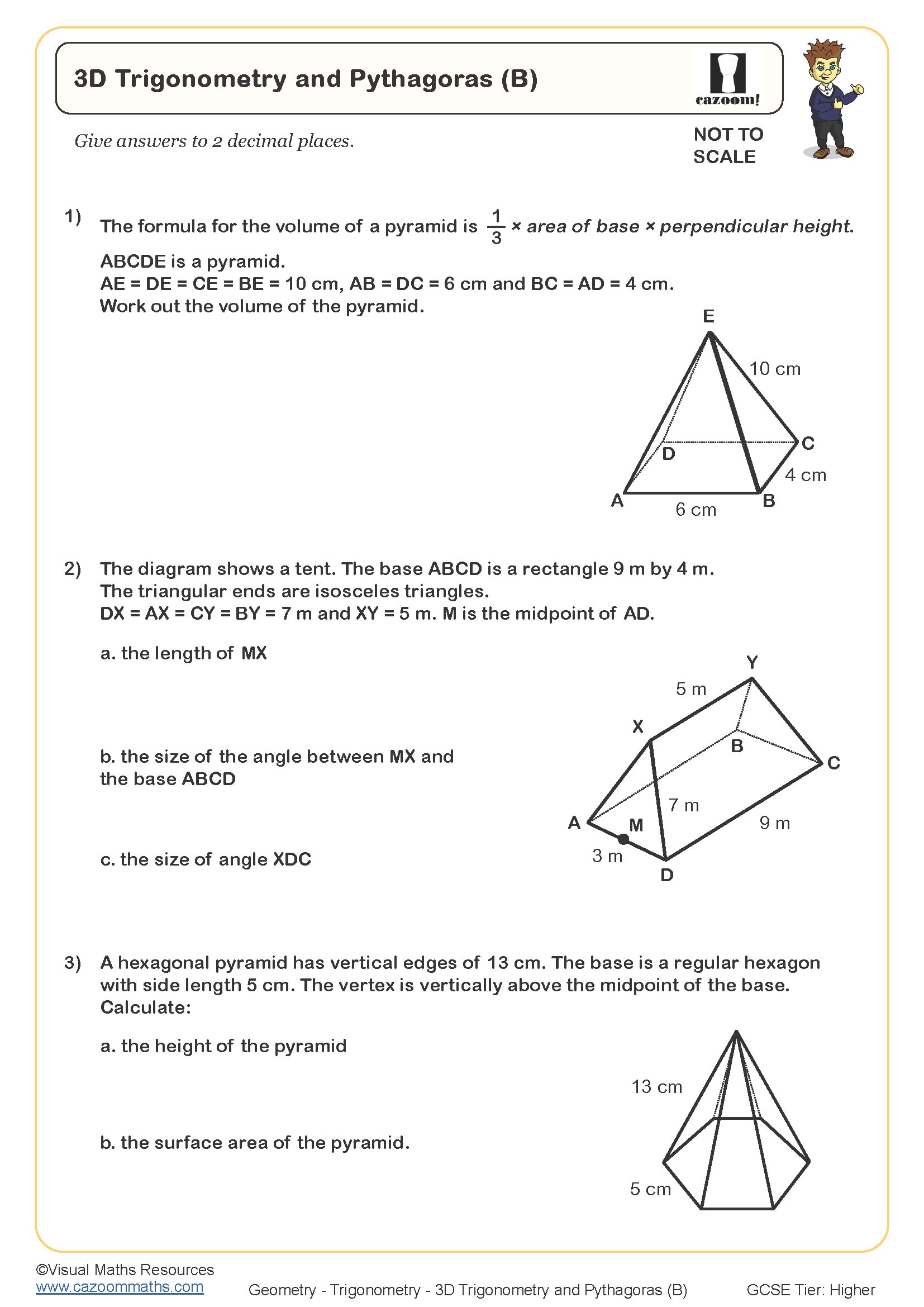
3D Trigonometry and Pythagoras (B)
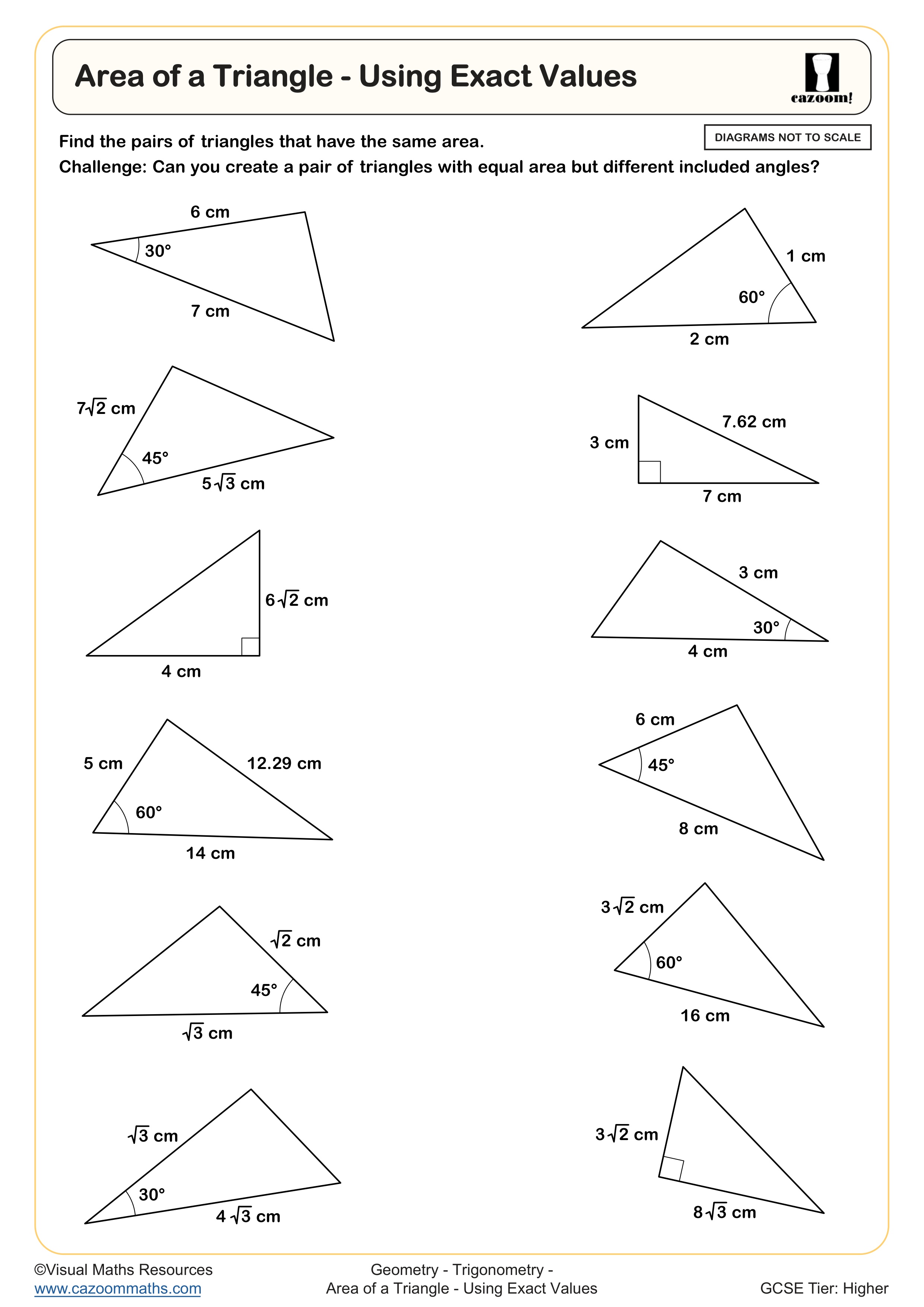
Area of a Triangle - Using Exact Values
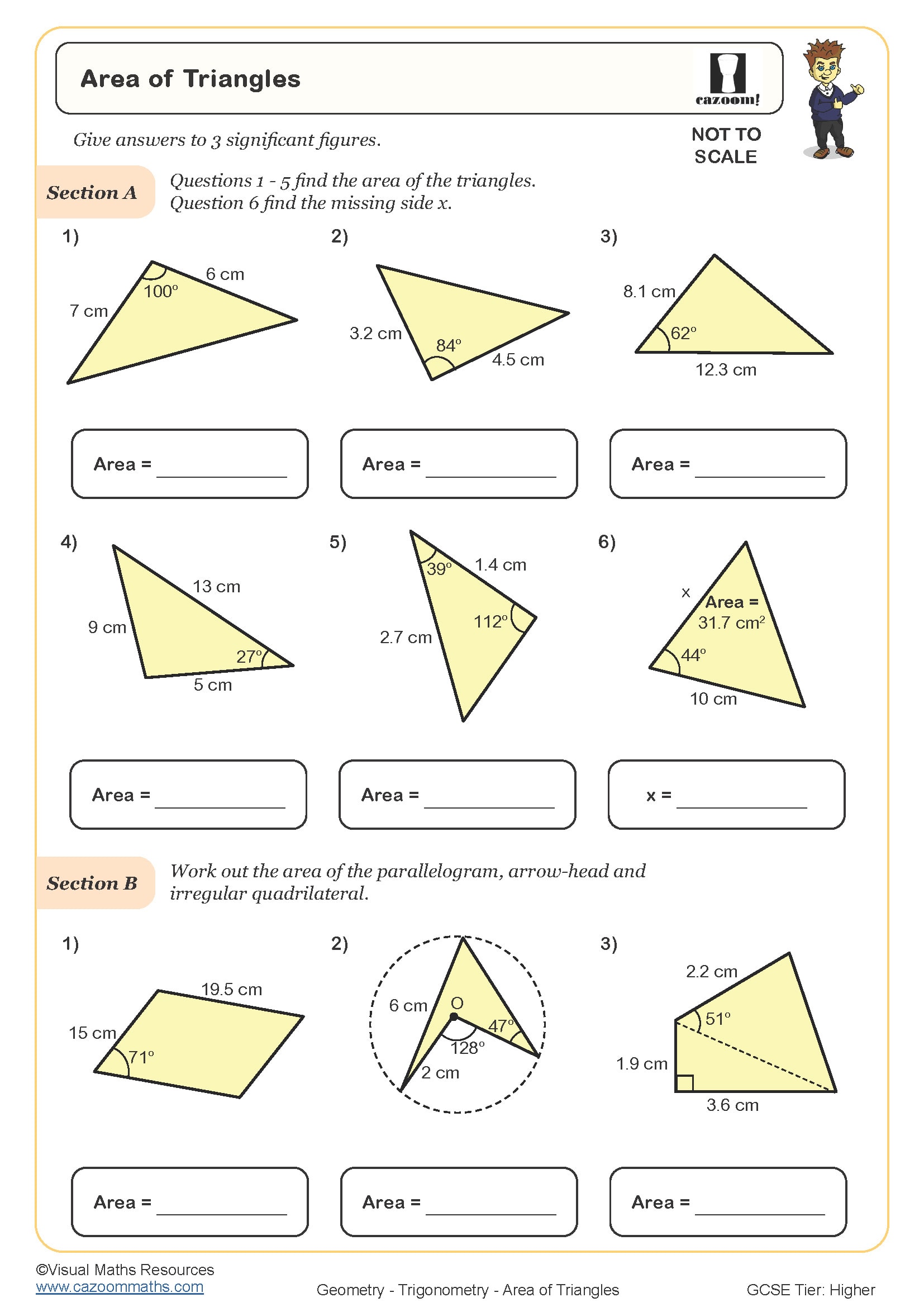
Area of Triangles
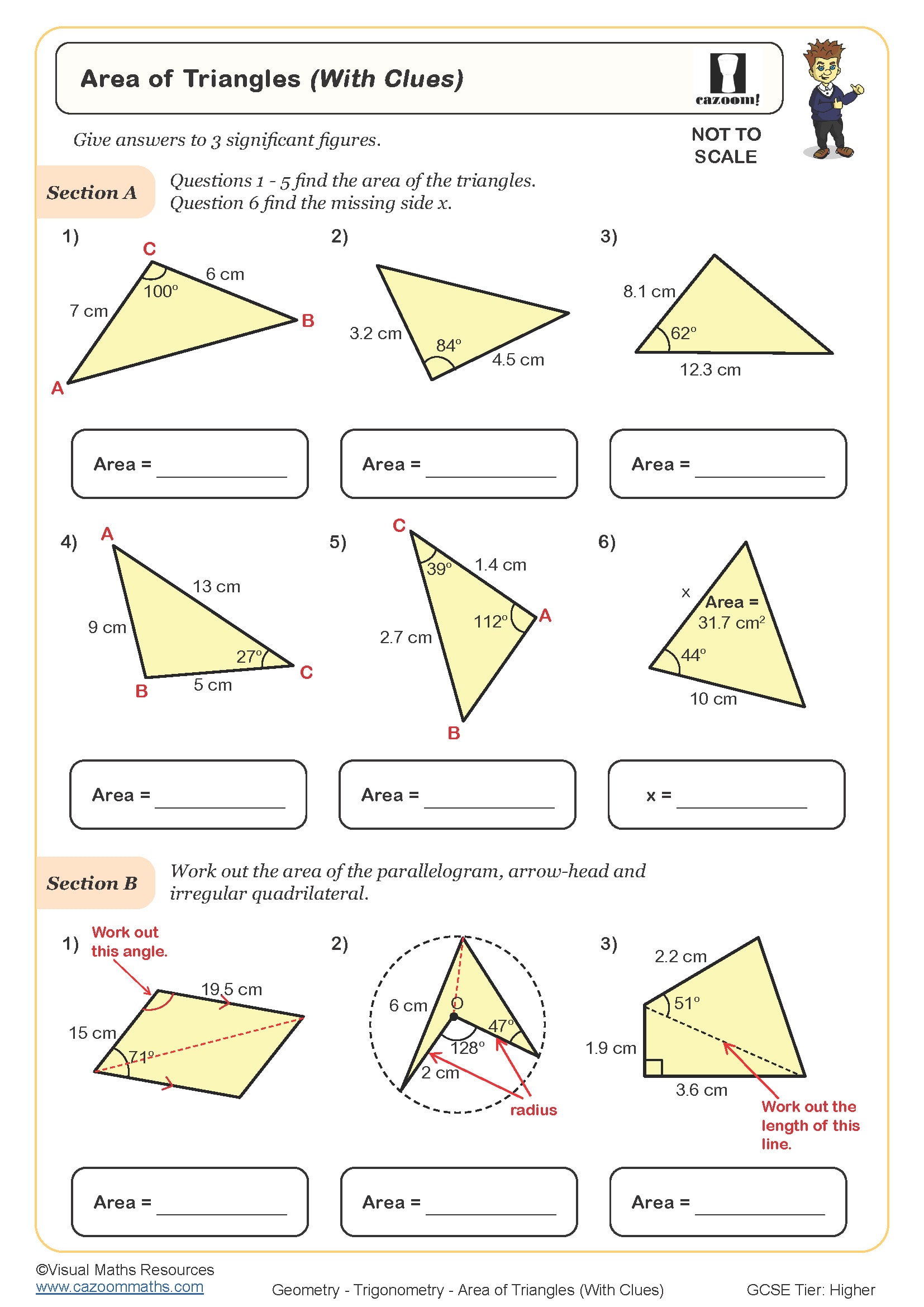
Area of Triangles (With Clues)
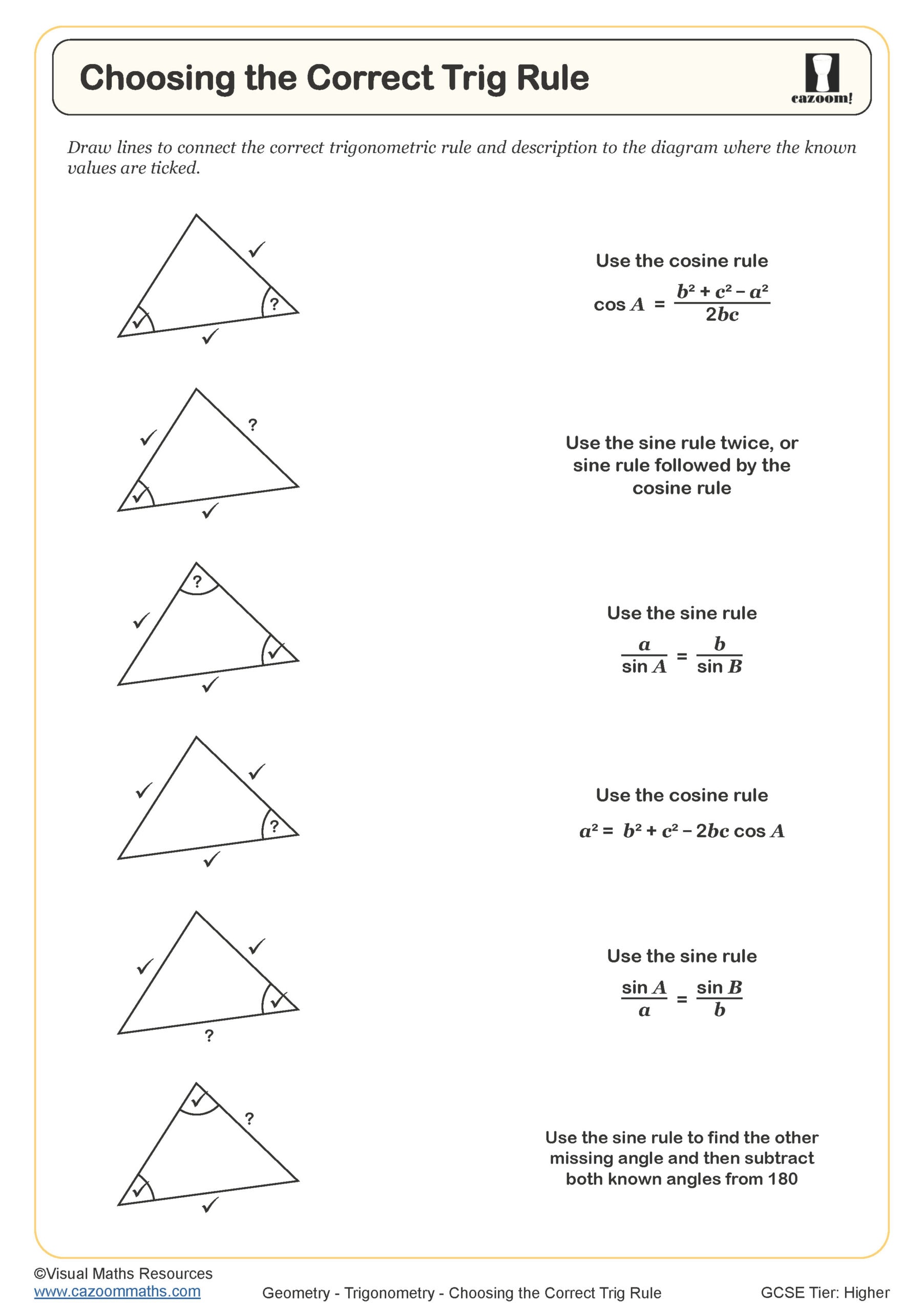
Choosing the Correct Trig Rule
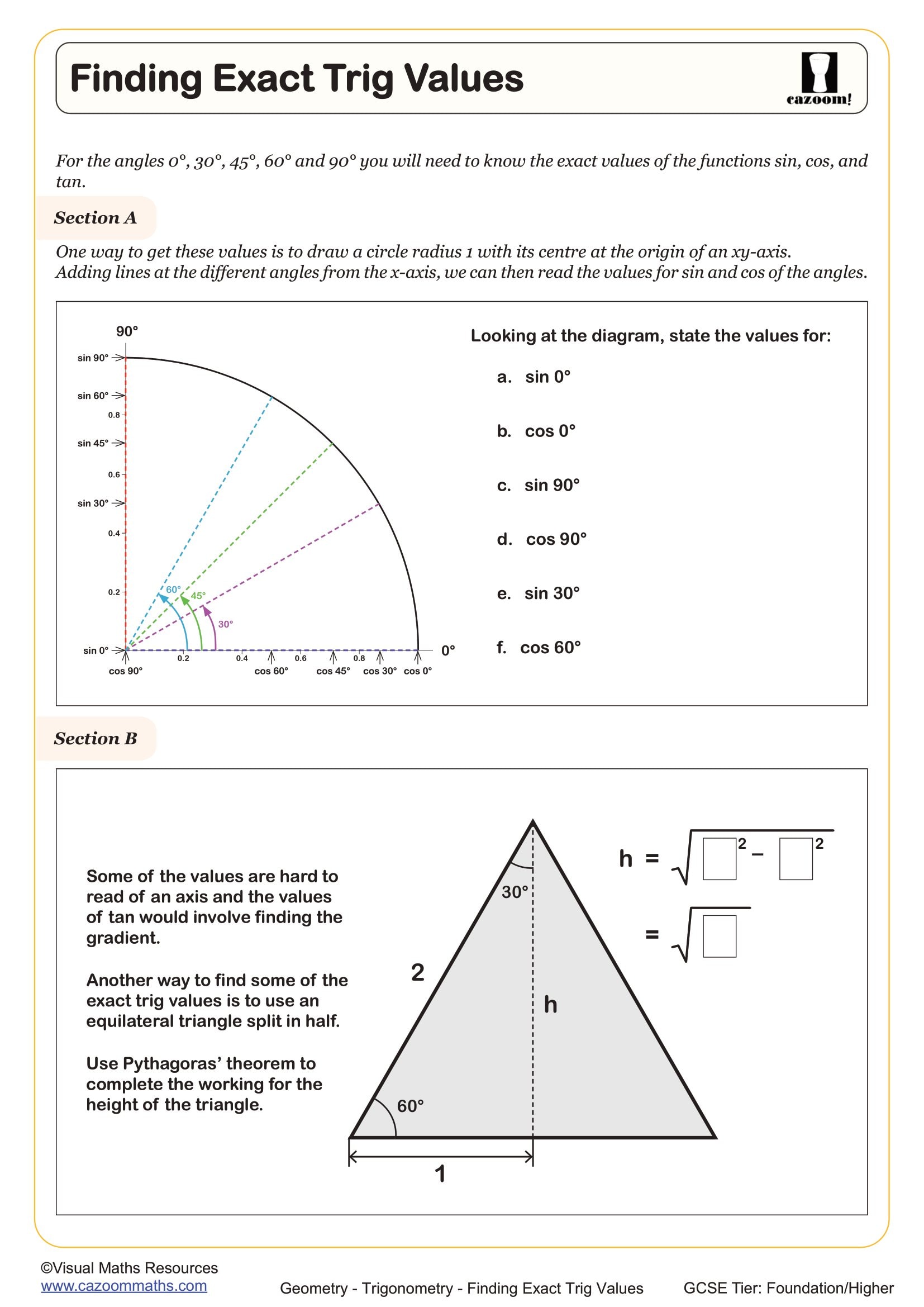
Finding Exact Trig Values
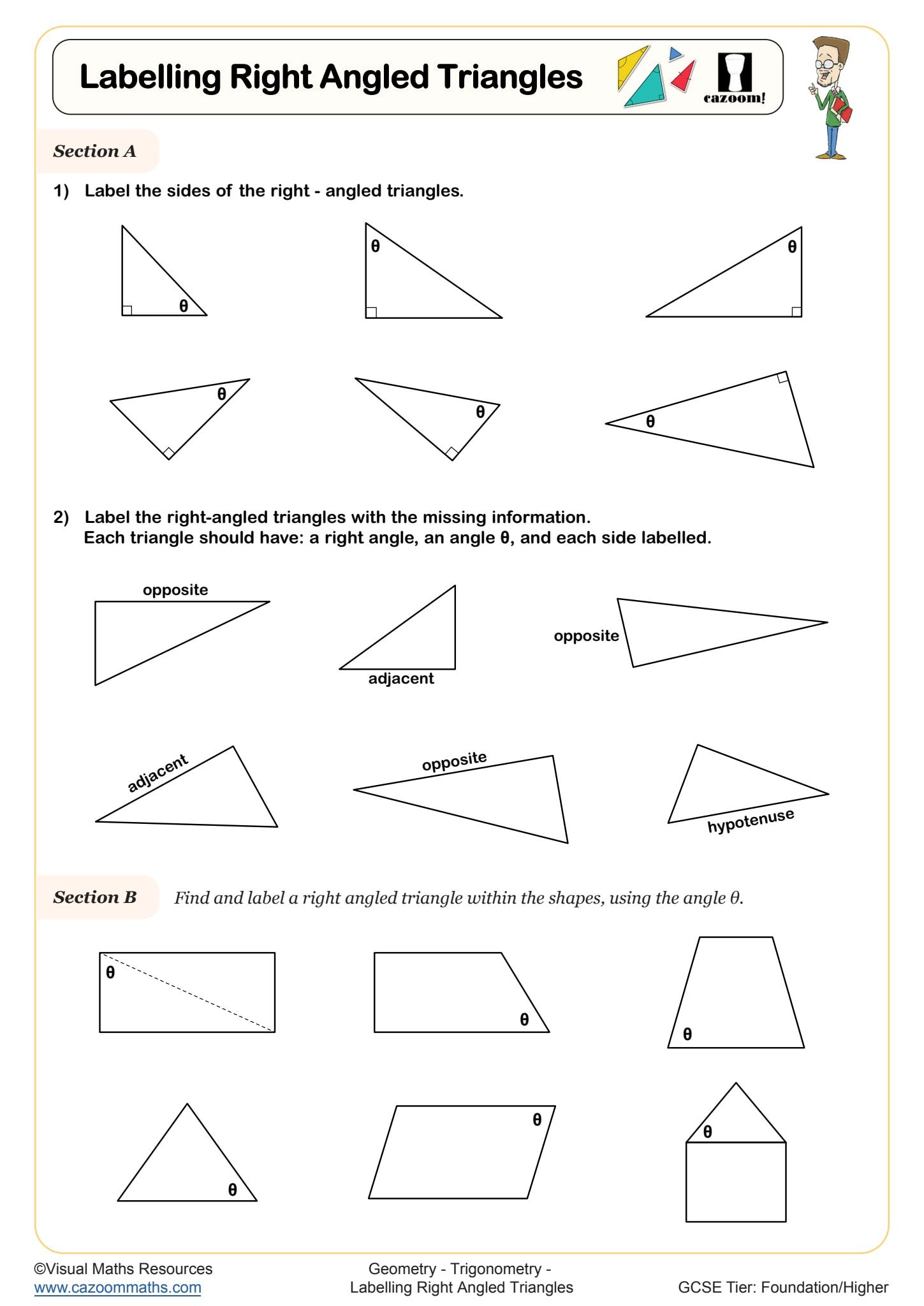
Labelling Right Angled Triangles
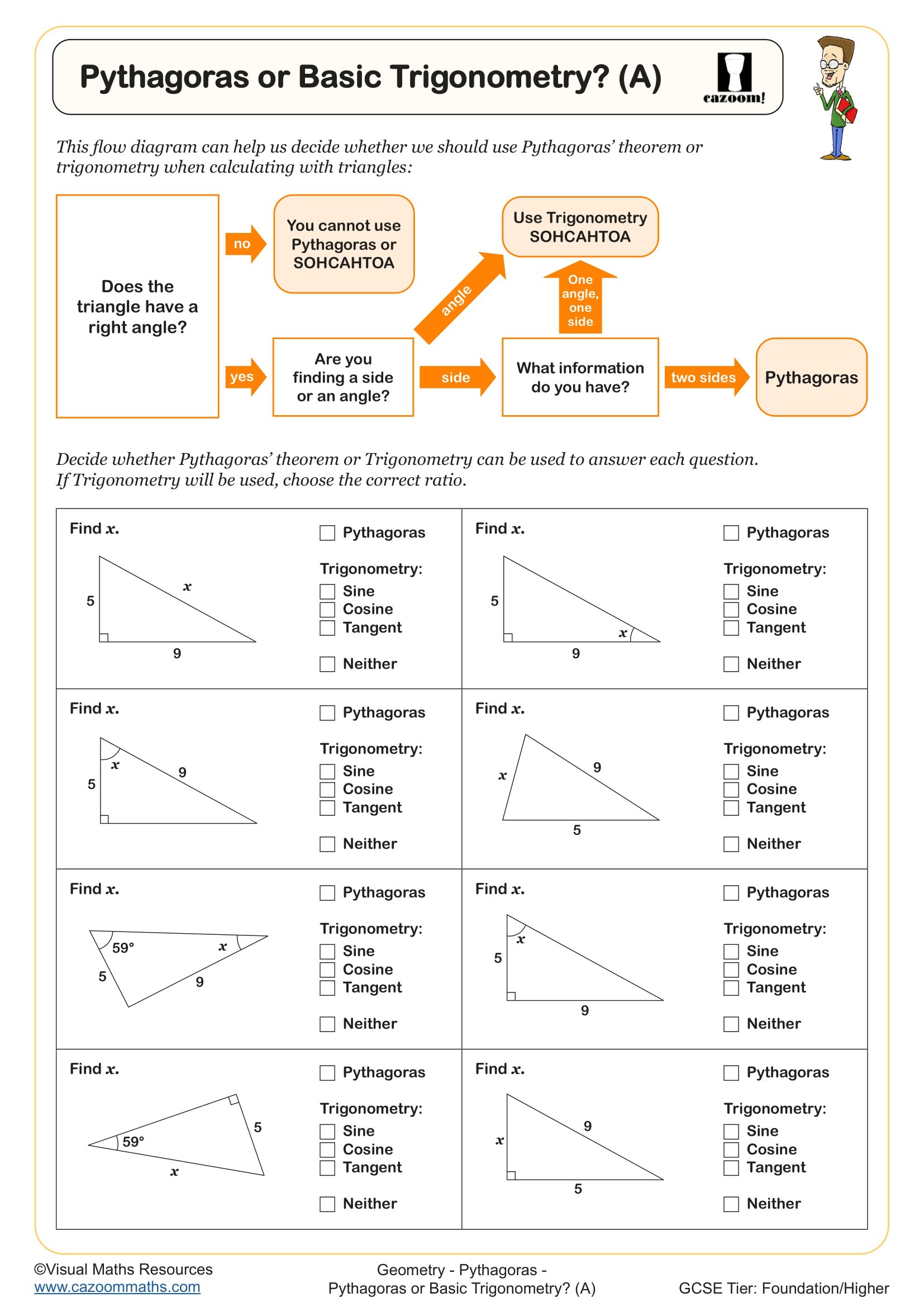
Pythagoras or Trigonometry? (A)
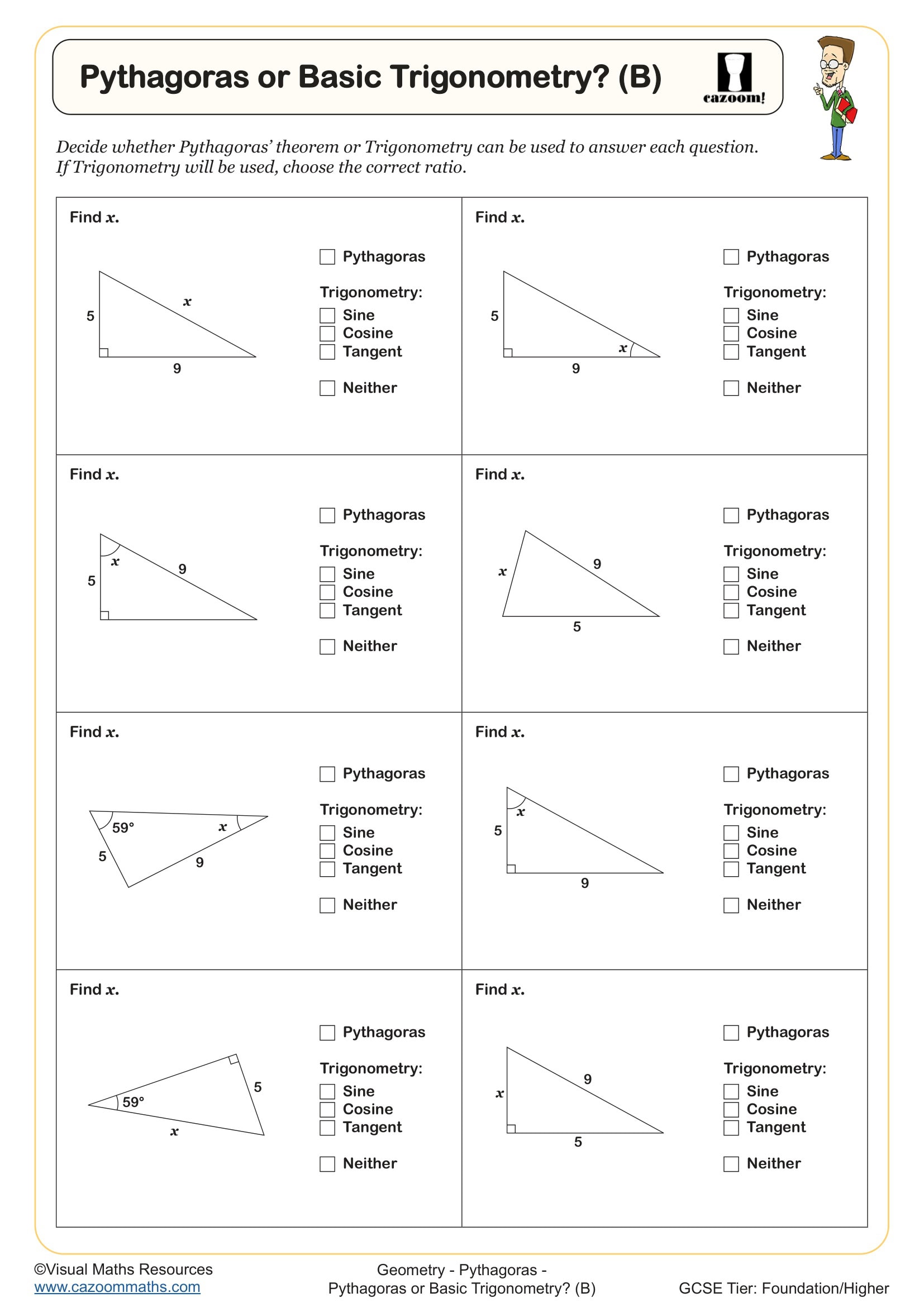
Pythagoras or Trigonometry? (B)
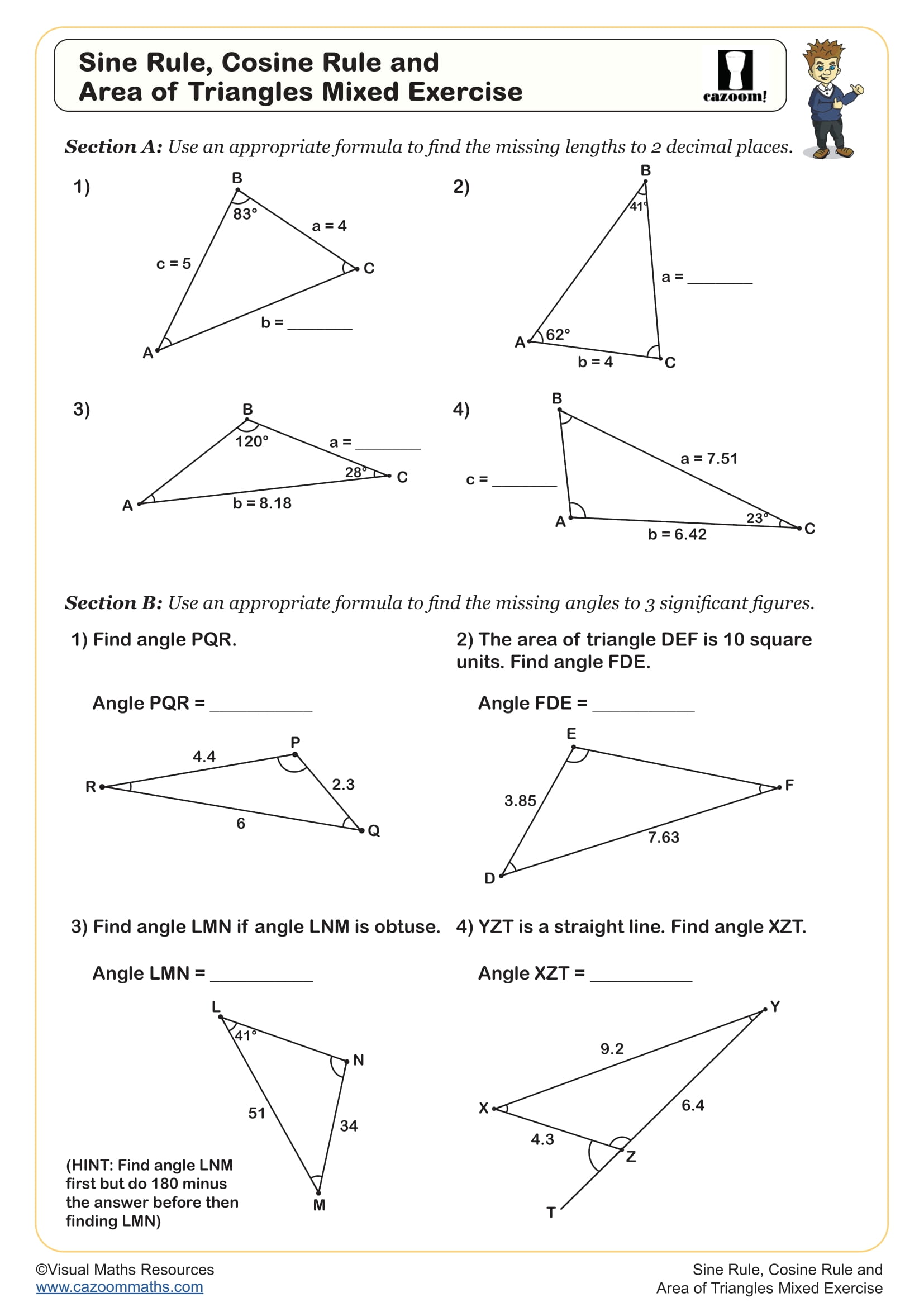
Sine Rule Cosine Rule and Area Mixed Exercise
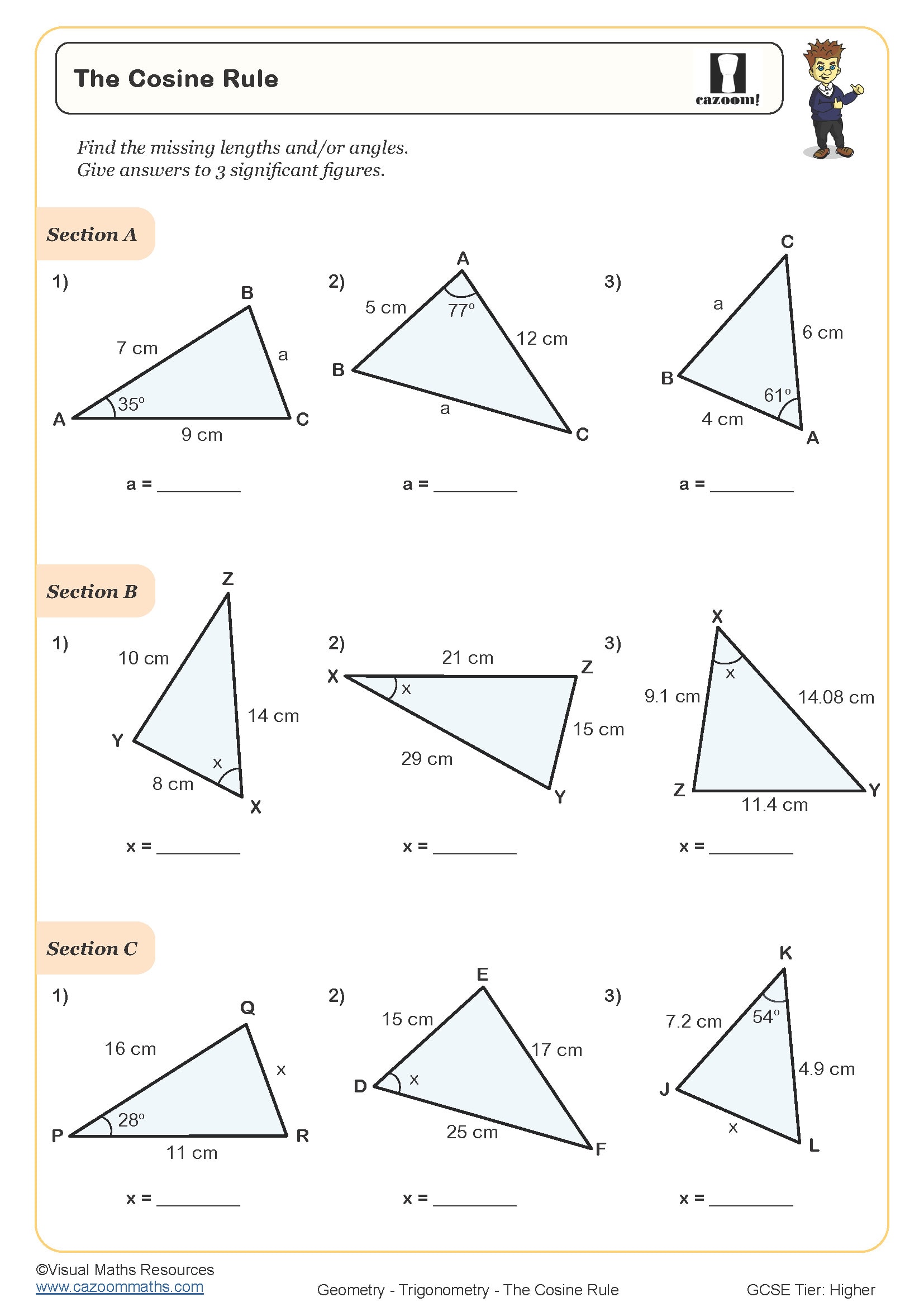
The Cosine Rule
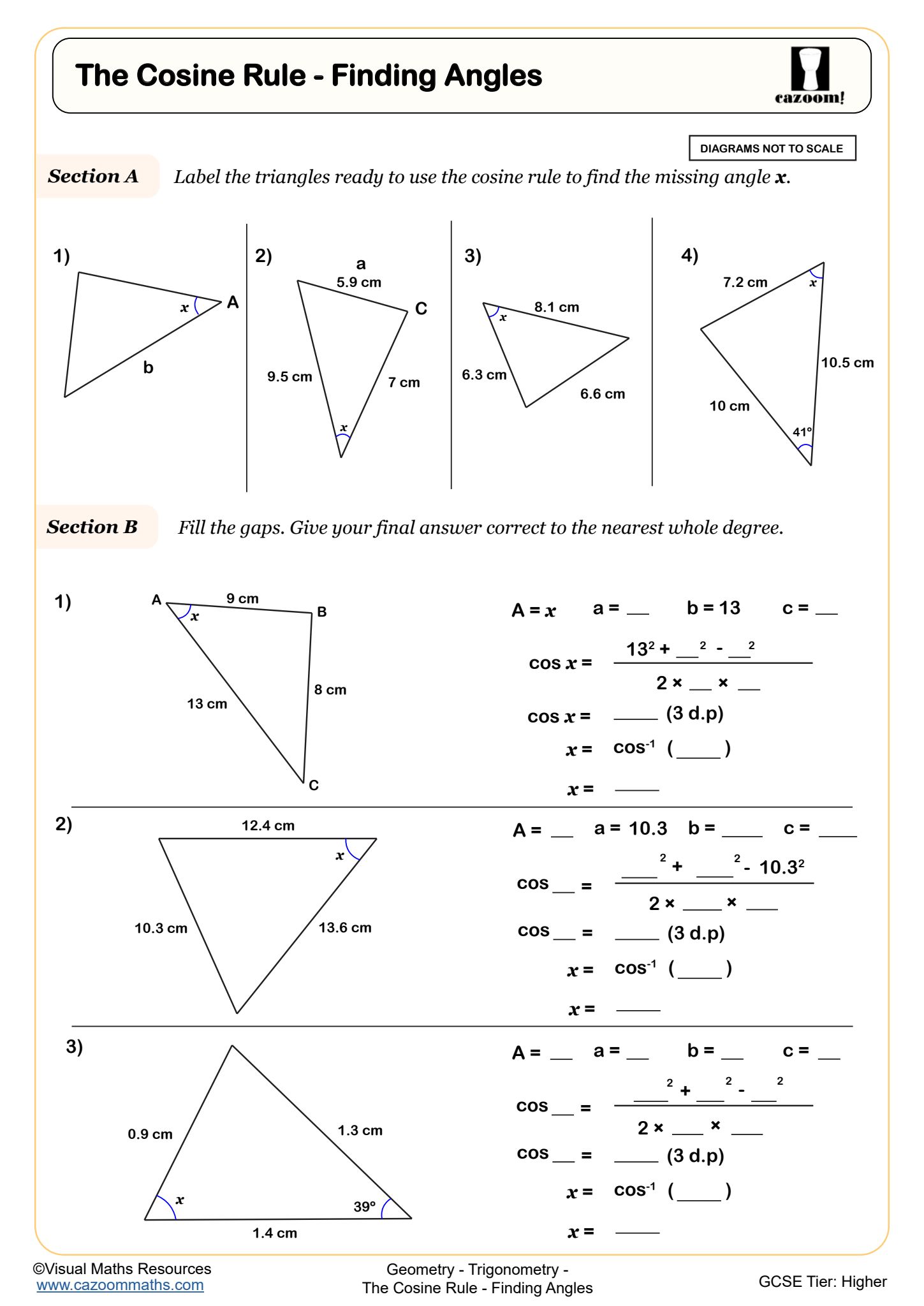
The Cosine Rule - Finding Angles
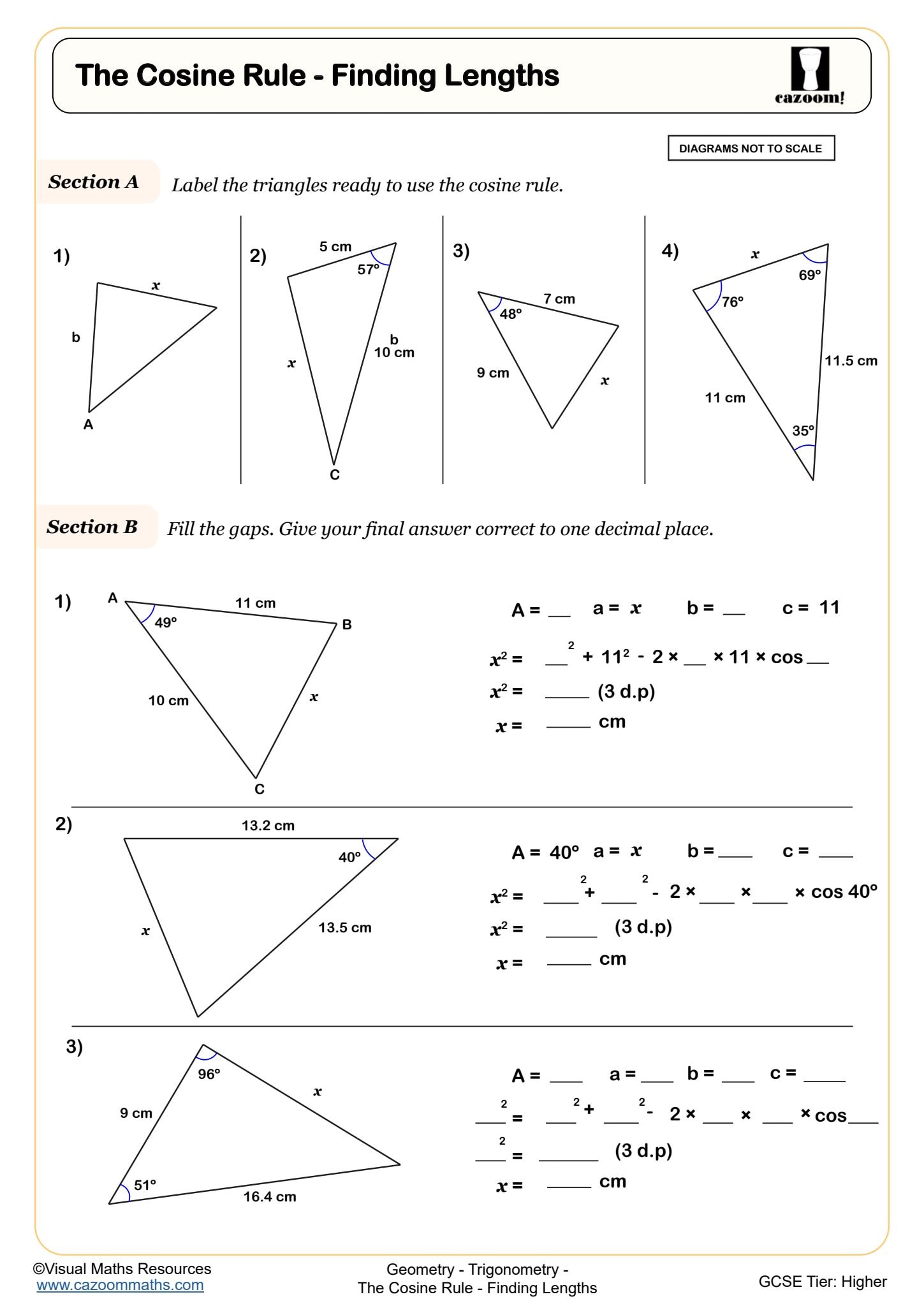
The Cosine Rule - Finding Lengths
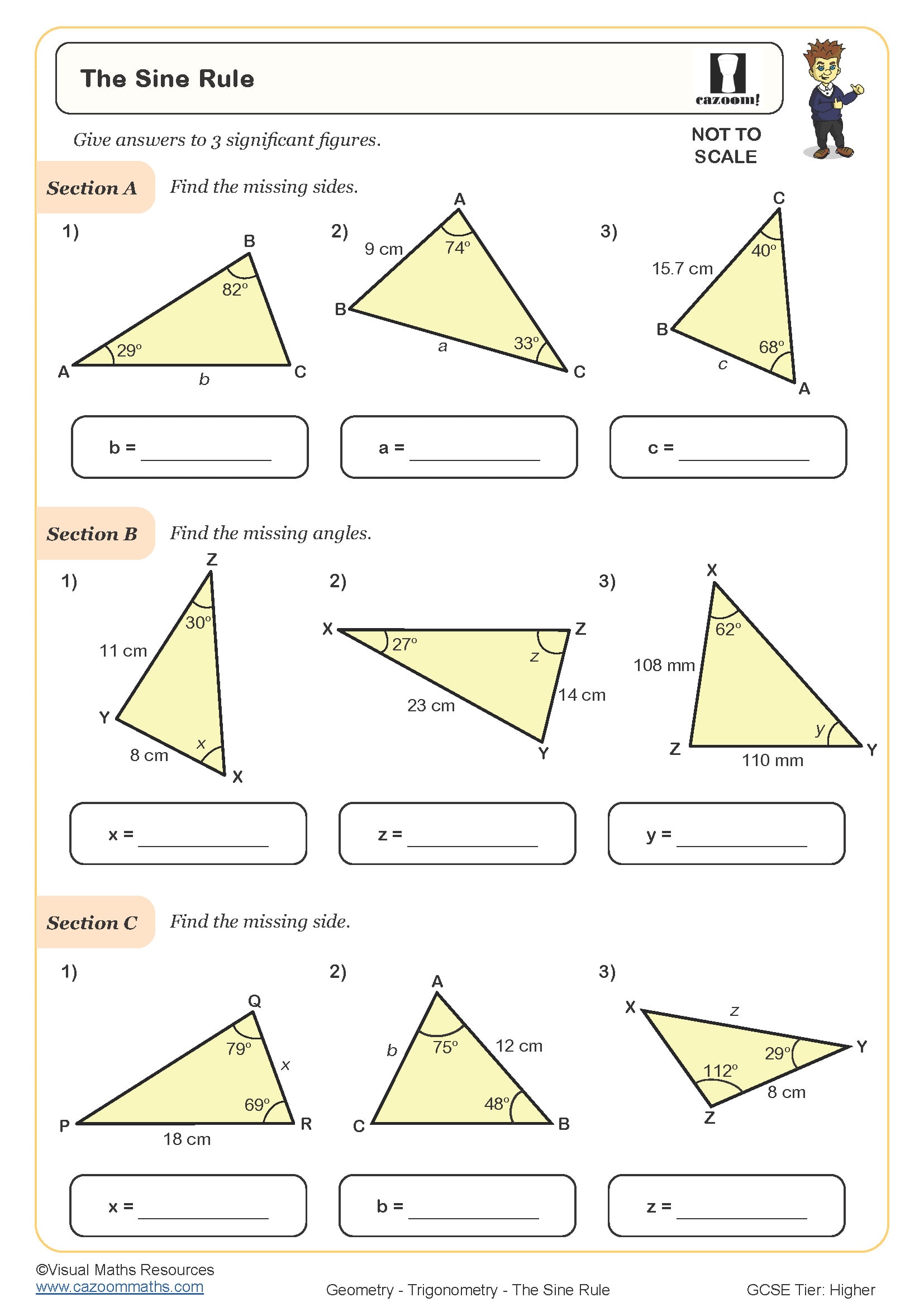
The Sine Rule
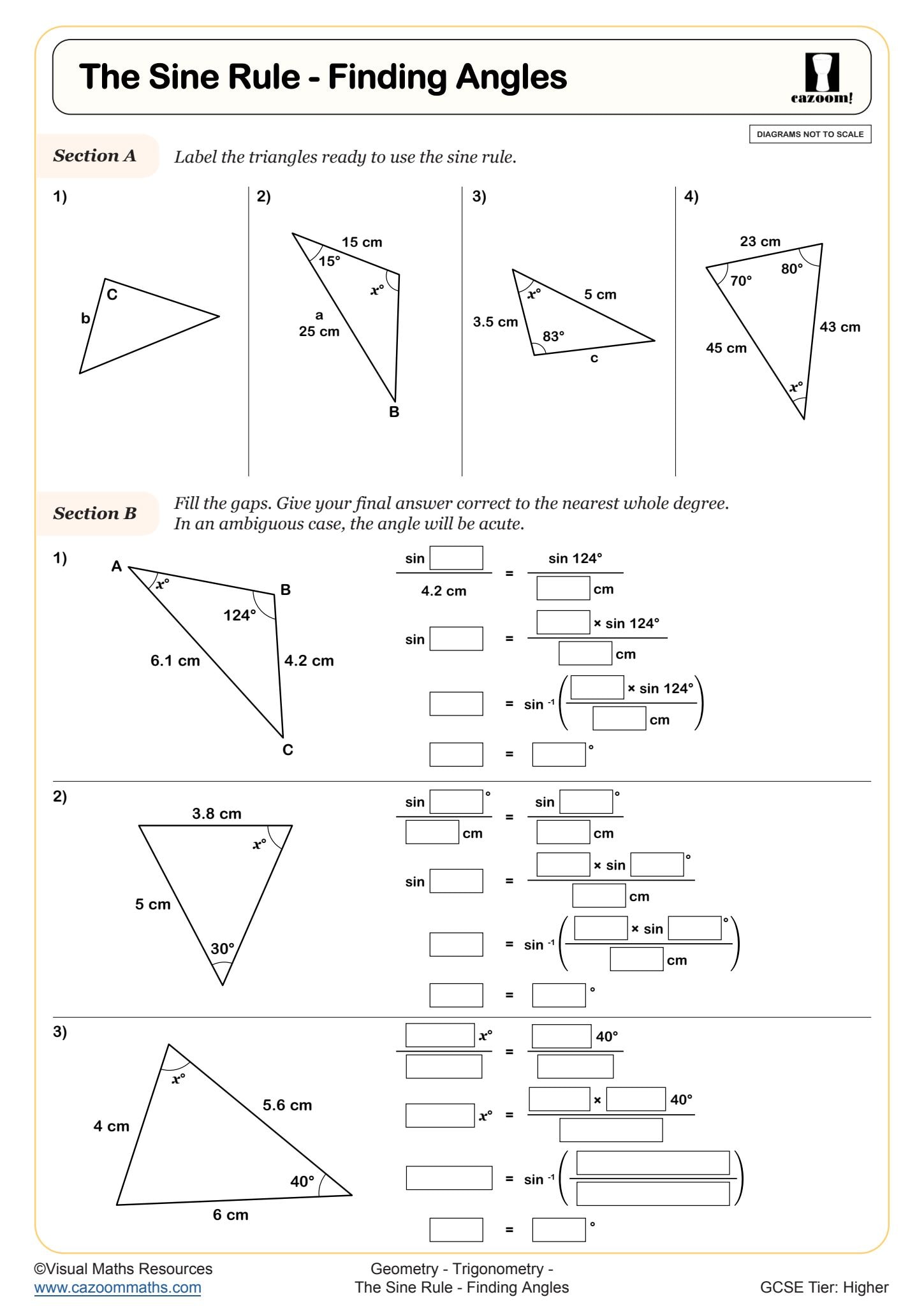
The Sine Rule - Finding Angles
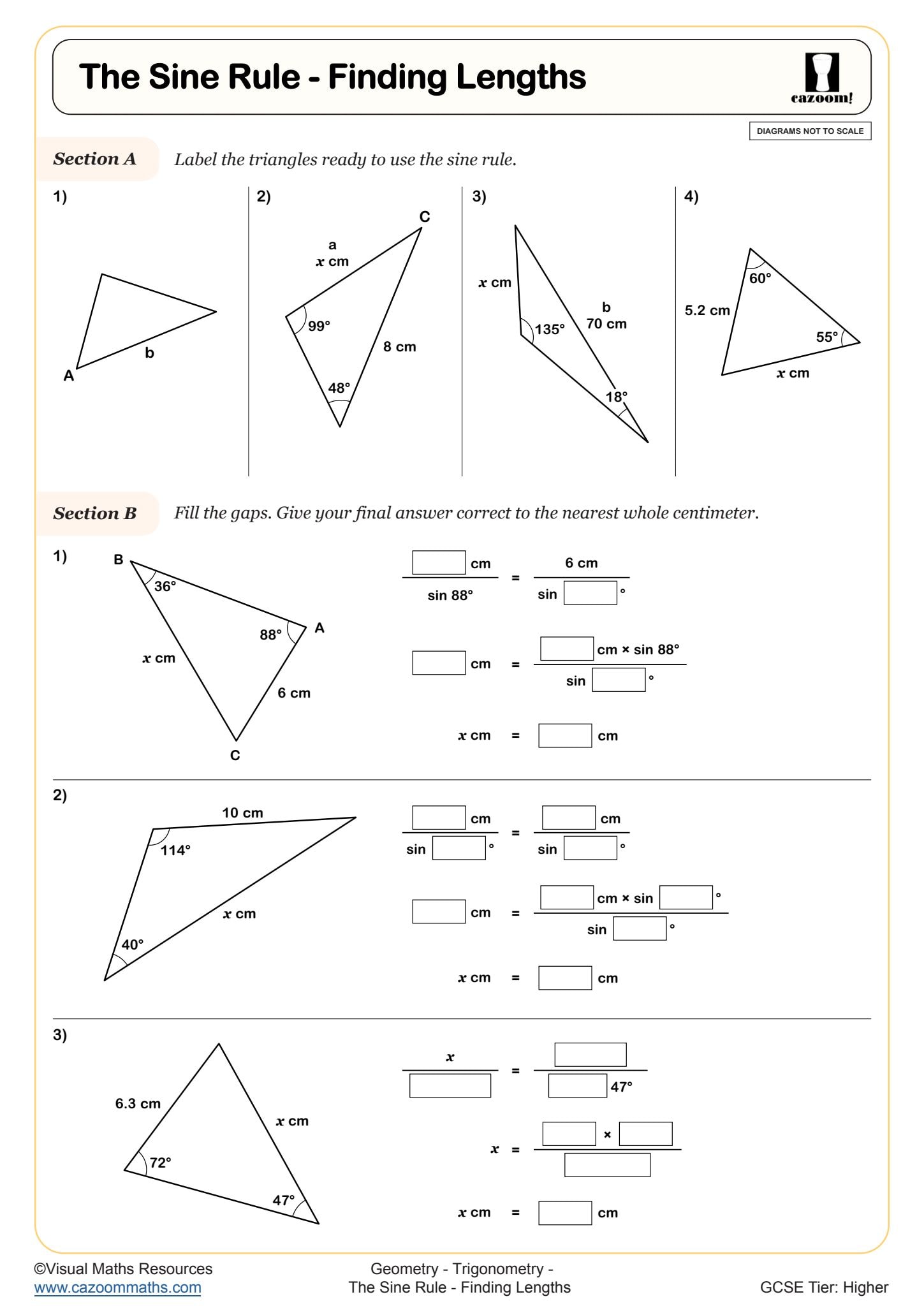
The Sine Rule - Finding Lengths
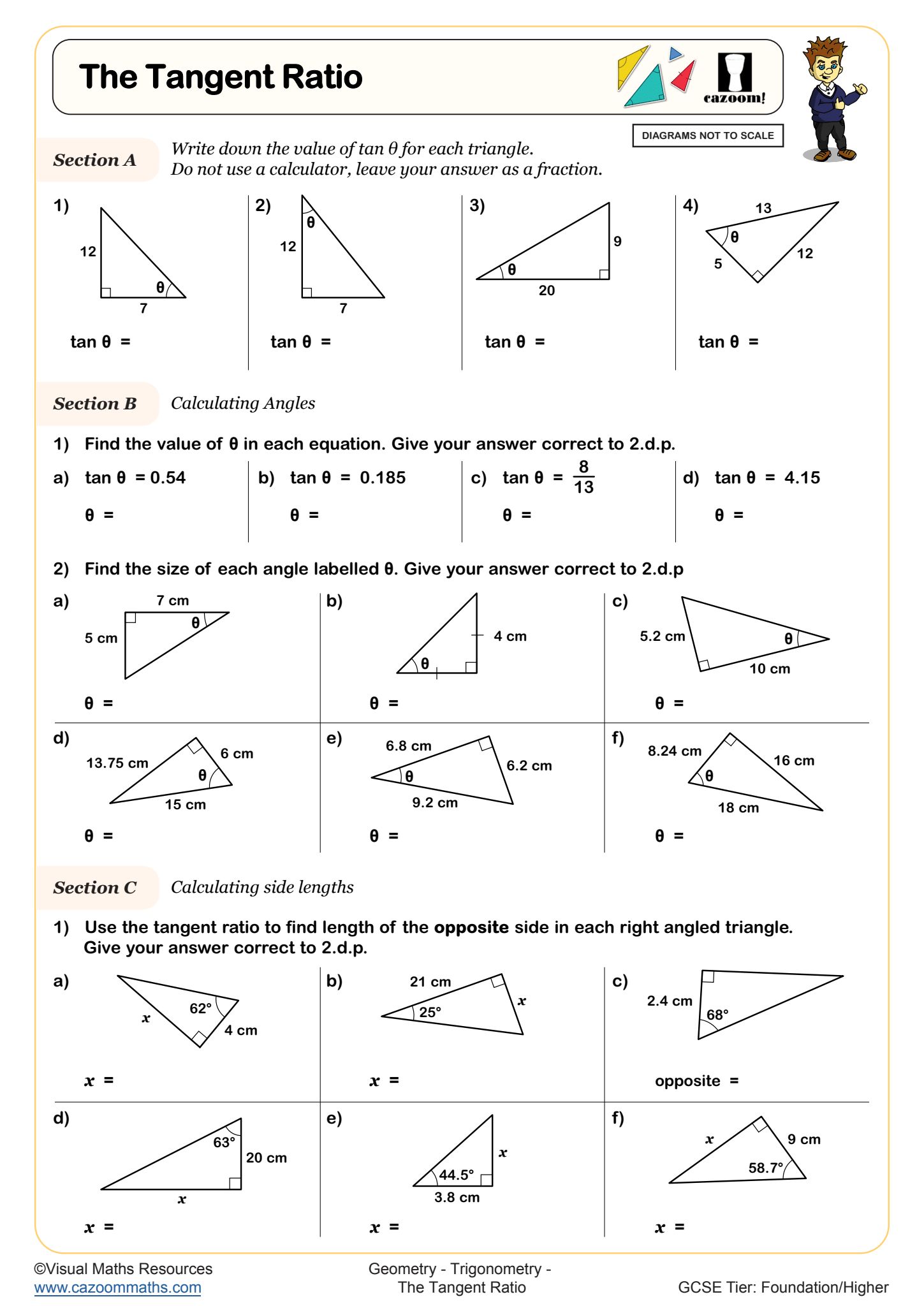
The Tangent Ratio
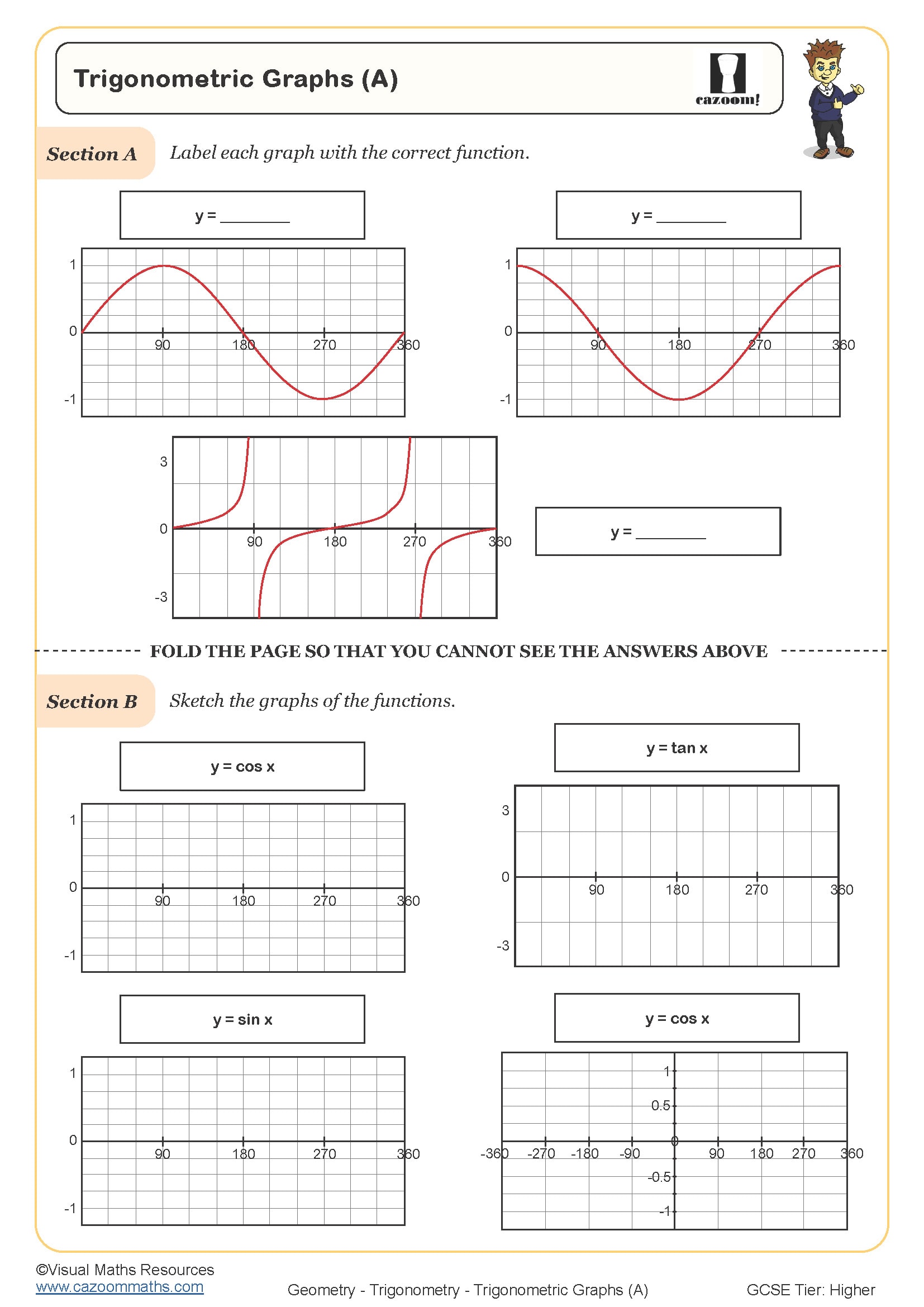
Trigonometric Graphs (A)
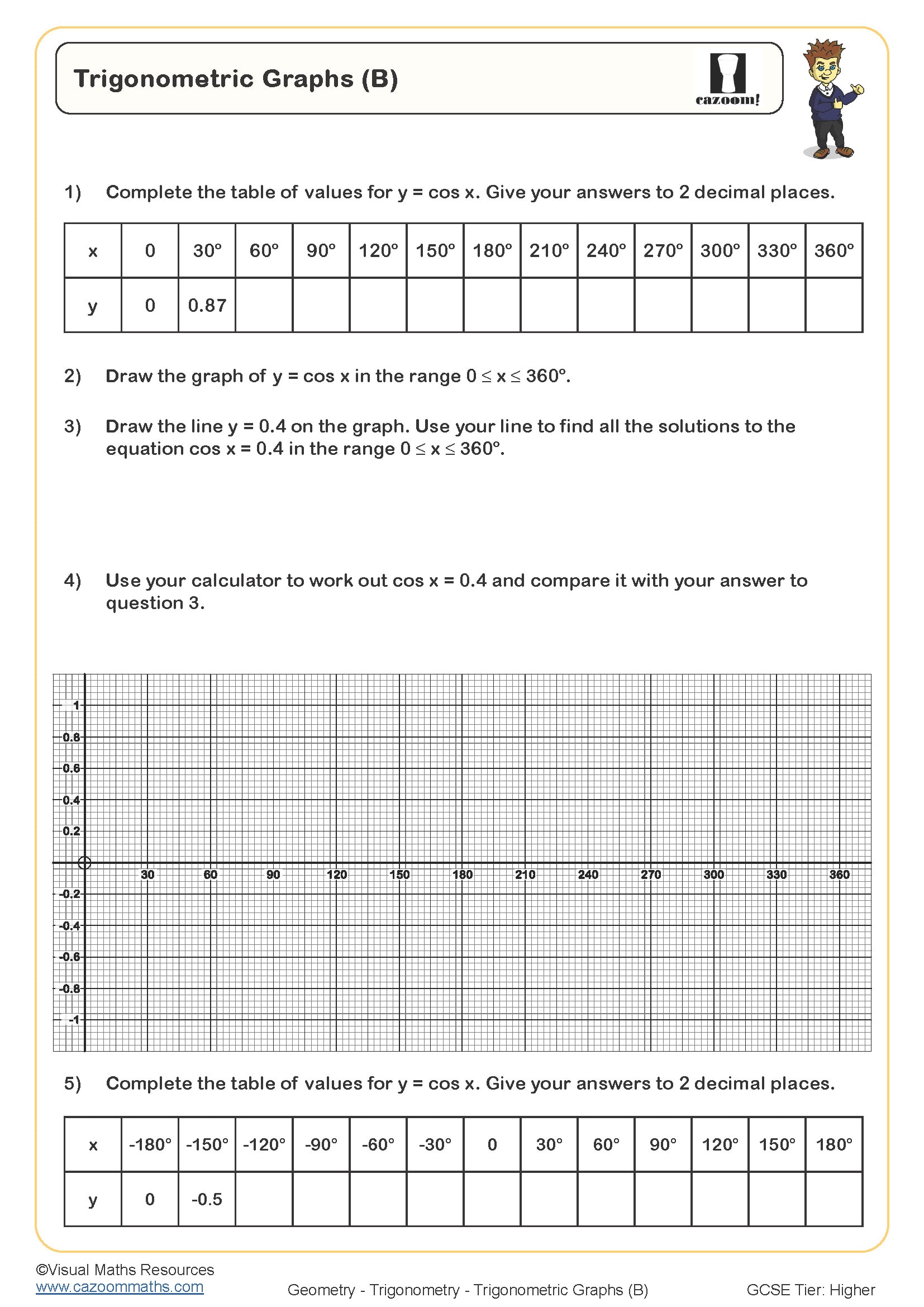
Trigonometric Graphs (B)
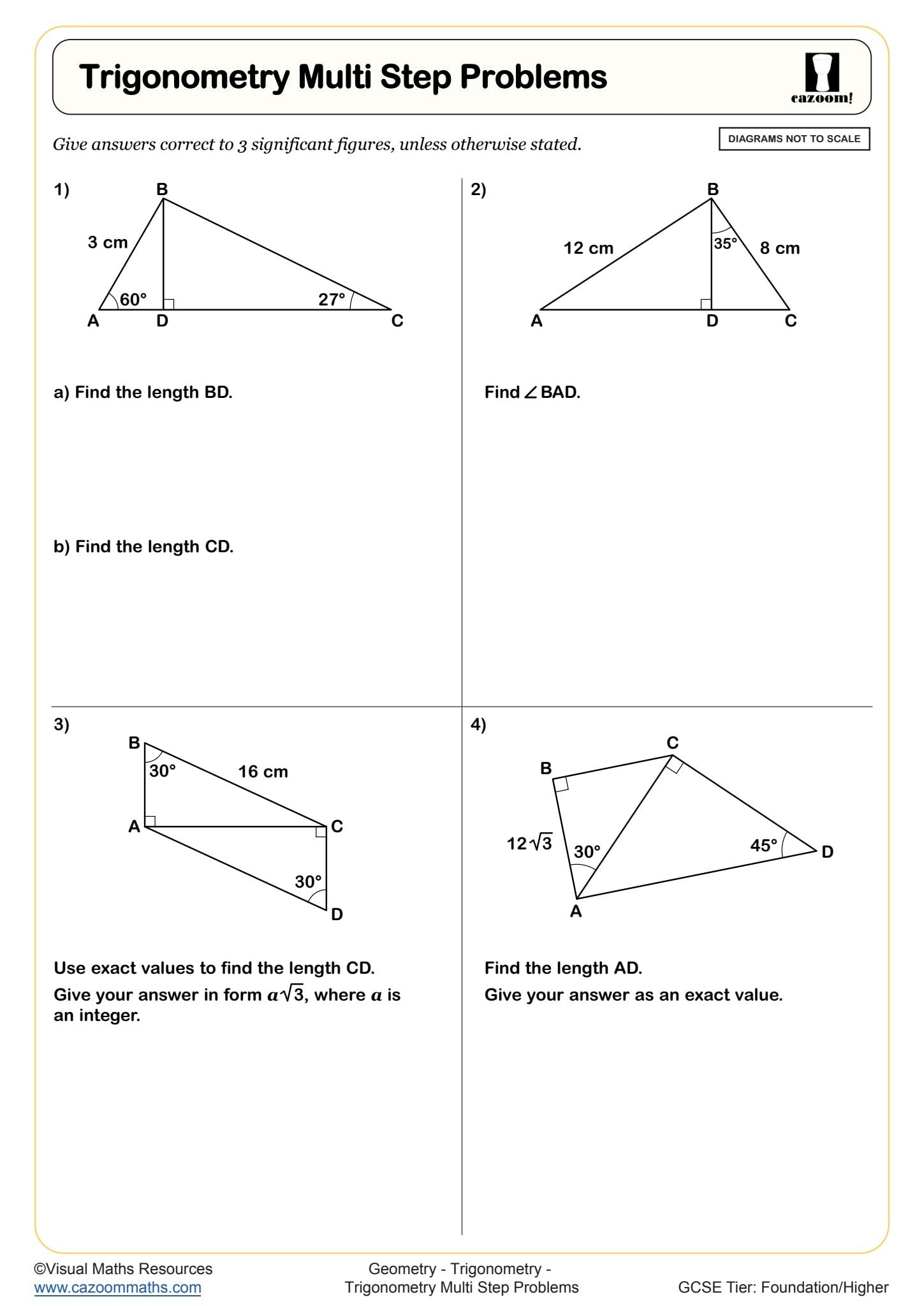
Trigonometry Multi Step Problems
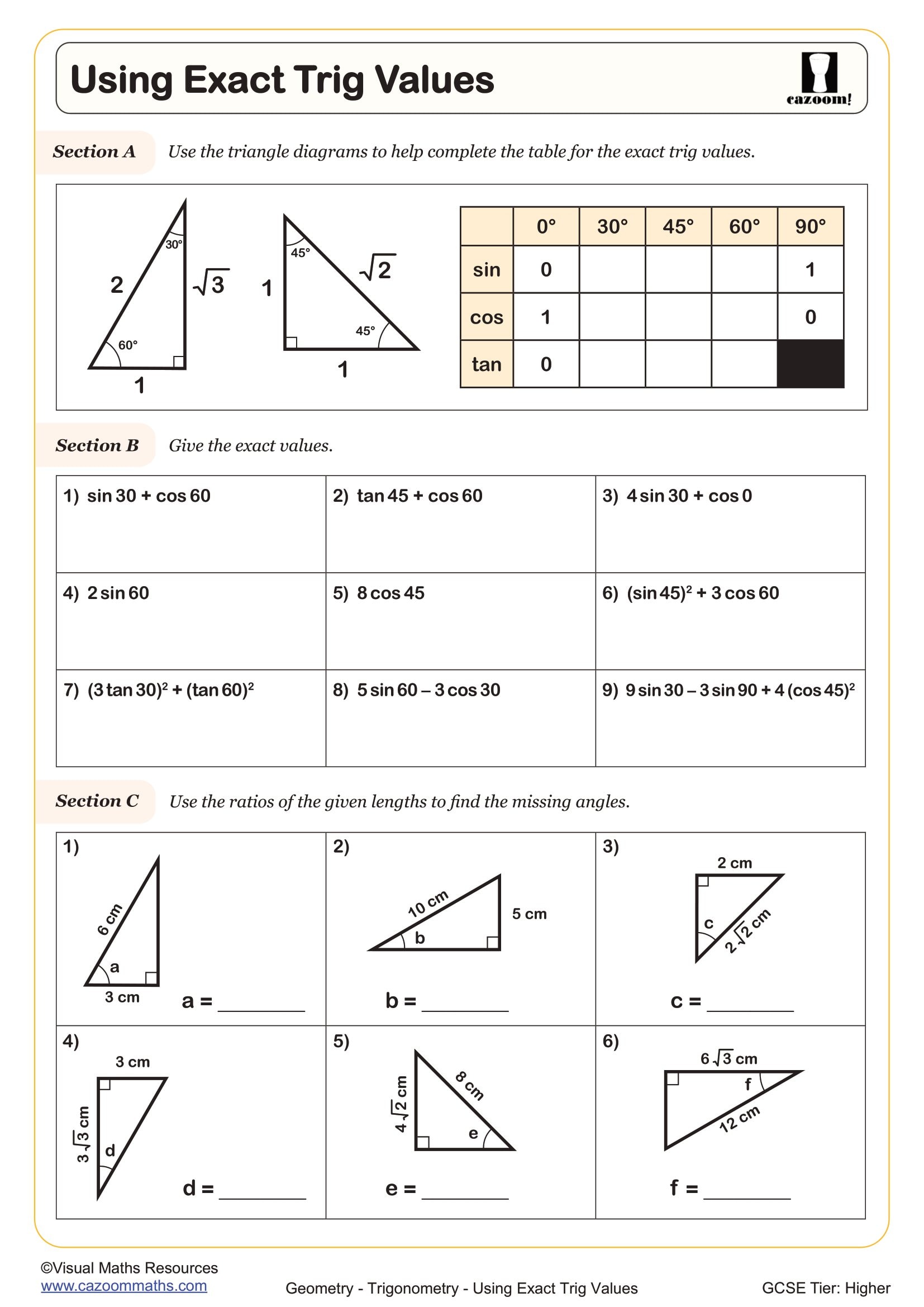
Using Exact Trig Values
All worksheets are created by the team of experienced teachers at Cazoom Maths.
What makes a good Year 10 trigonometry worksheet for UK students?
Effective trigonometry worksheets for Year 10 students must align with National Curriculum objectives while providing scaffolded practice that builds from basic SOHCAHTOA applications to more complex problem-solving. Quality resources include clear diagrams, varied question types and progressive difficulty that matches GCSE Foundation and Higher tier expectations.
Teachers notice that students benefit most from worksheets that explicitly label sides in early questions before progressing to unlabelled triangles. The most successful resources include angle of elevation and depression problems that connect to real-world contexts like navigation and engineering, helping students understand why trigonometry matters beyond the classroom.
How do Year 10 trigonometry topics build on previous learning?
Year 10 trigonometry extends Year 9 work on Pythagoras' theorem and similarity, introducing the ratios that connect angles to side lengths in right-angled triangles. Students move from purely numerical calculations to understanding how sine, cosine and tangent create relationships that apply across different triangle sizes.
Many teachers observe that students who struggled with ratio work in earlier years often find trigonometry challenging initially. The key breakthrough comes when students realise that SOH-CAH-TOA provides a systematic approach to triangle problems, replacing guesswork with methodical problem-solving that prepares them for Higher GCSE content like the sine and cosine rules.
Why do students often confuse sine, cosine and tangent ratios?
Students frequently mix up trigonometric ratios because they struggle to identify opposite and adjacent sides correctly, particularly when triangles appear in different orientations. Teachers consistently observe that students who learn to mark the sides clearly before applying SOHCAHTOA make fewer errors than those who rush into calculations.
The confusion often stems from thinking about sides as 'fixed' rather than understanding they're relative to the angle being used. Successful teachers emphasise that the 'opposite' and 'adjacent' sides change depending on which angle students are working with, using colour coding and systematic labelling to reinforce this crucial concept before introducing calculator work.
How should teachers use trigonometry worksheets to address common misconceptions?
Effective use of trigonometry worksheets involves identifying specific student errors before selecting targeted practice. Teachers find that beginning each lesson with diagnostic questions helps pinpoint whether students need work on side identification, ratio selection or calculator skills, allowing for differentiated worksheet allocation.
Many teachers structure lessons around common misconceptions, using worksheet answers to facilitate whole-class discussions about why certain approaches fail. The most successful approach involves students working through solutions step-by-step, comparing their methods with provided answers to identify where their reasoning diverged, building metacognitive awareness that improves problem-solving across all trigonometry applications.