Year 10 Vectors Worksheets
All worksheets are created by the team of experienced teachers at Cazoom Maths.
What topics are covered in vectors gcse worksheet collections?
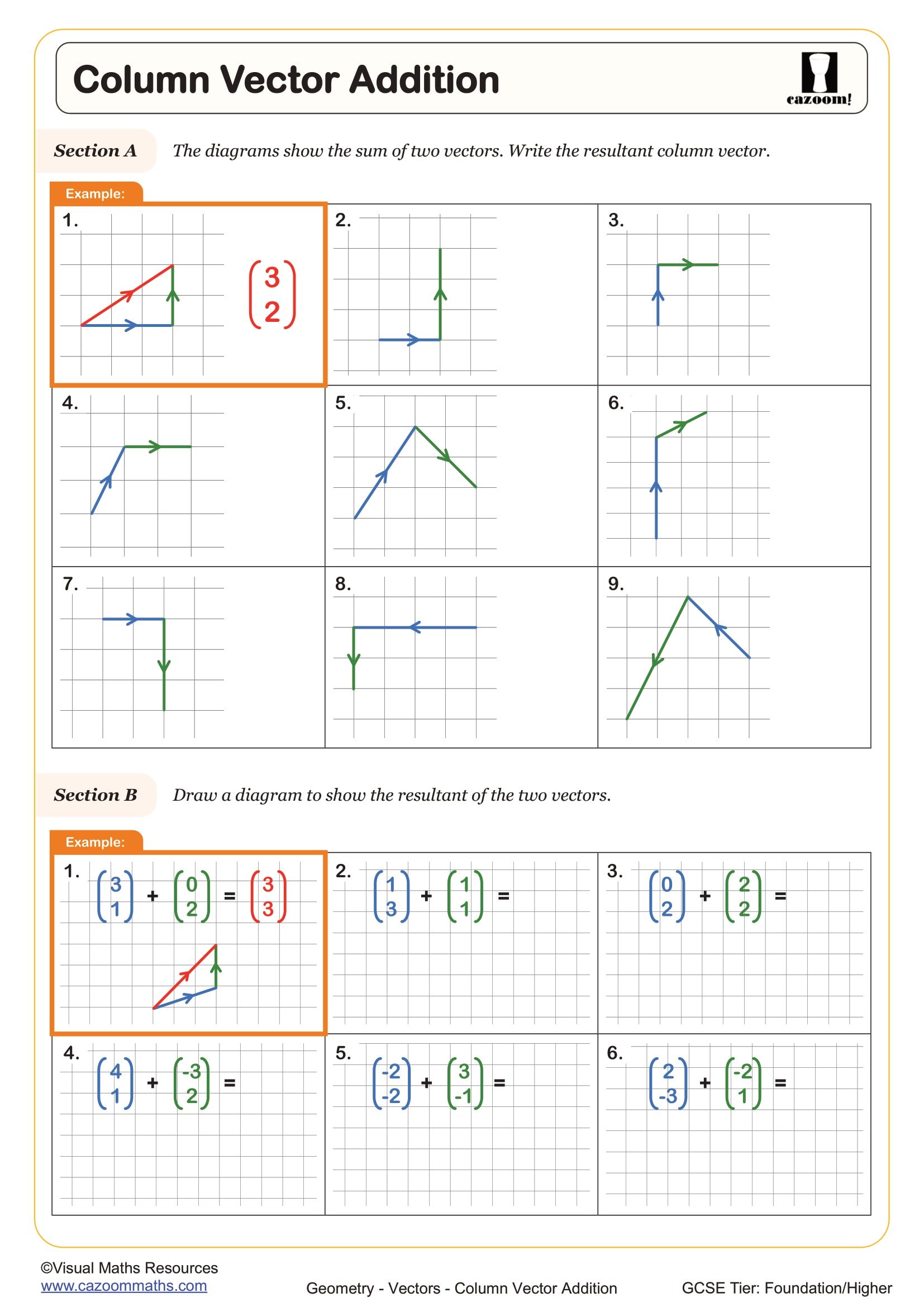
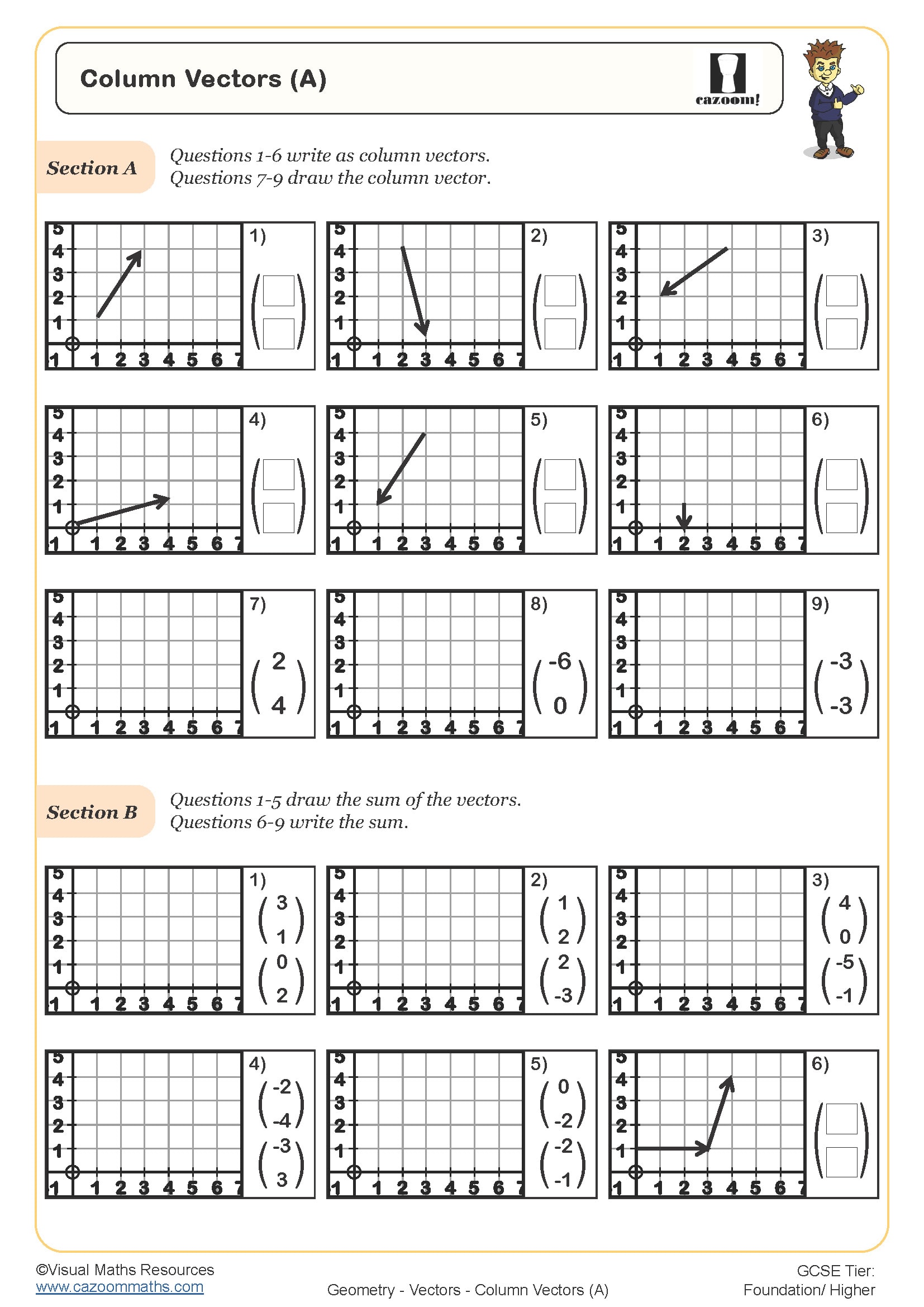
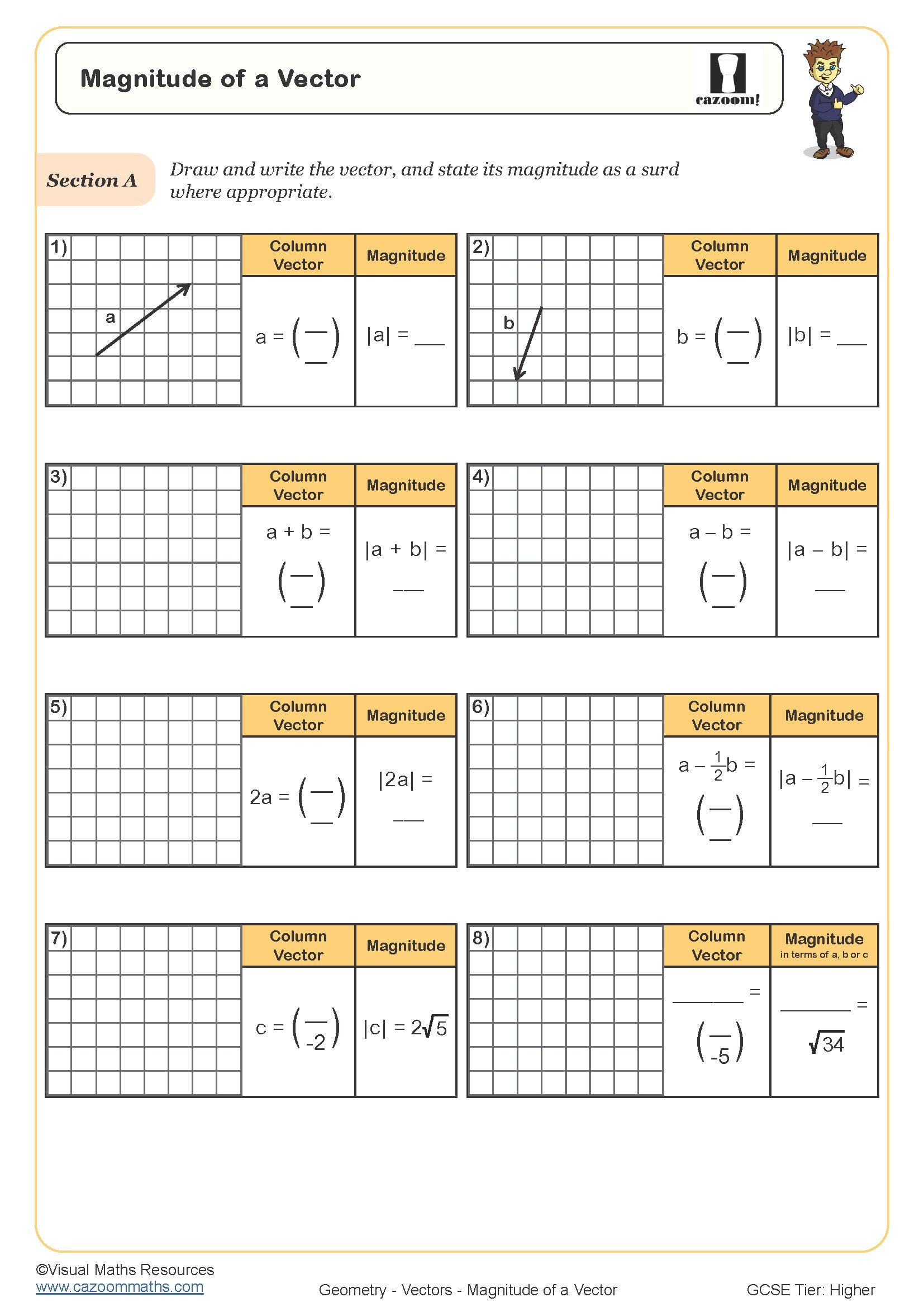
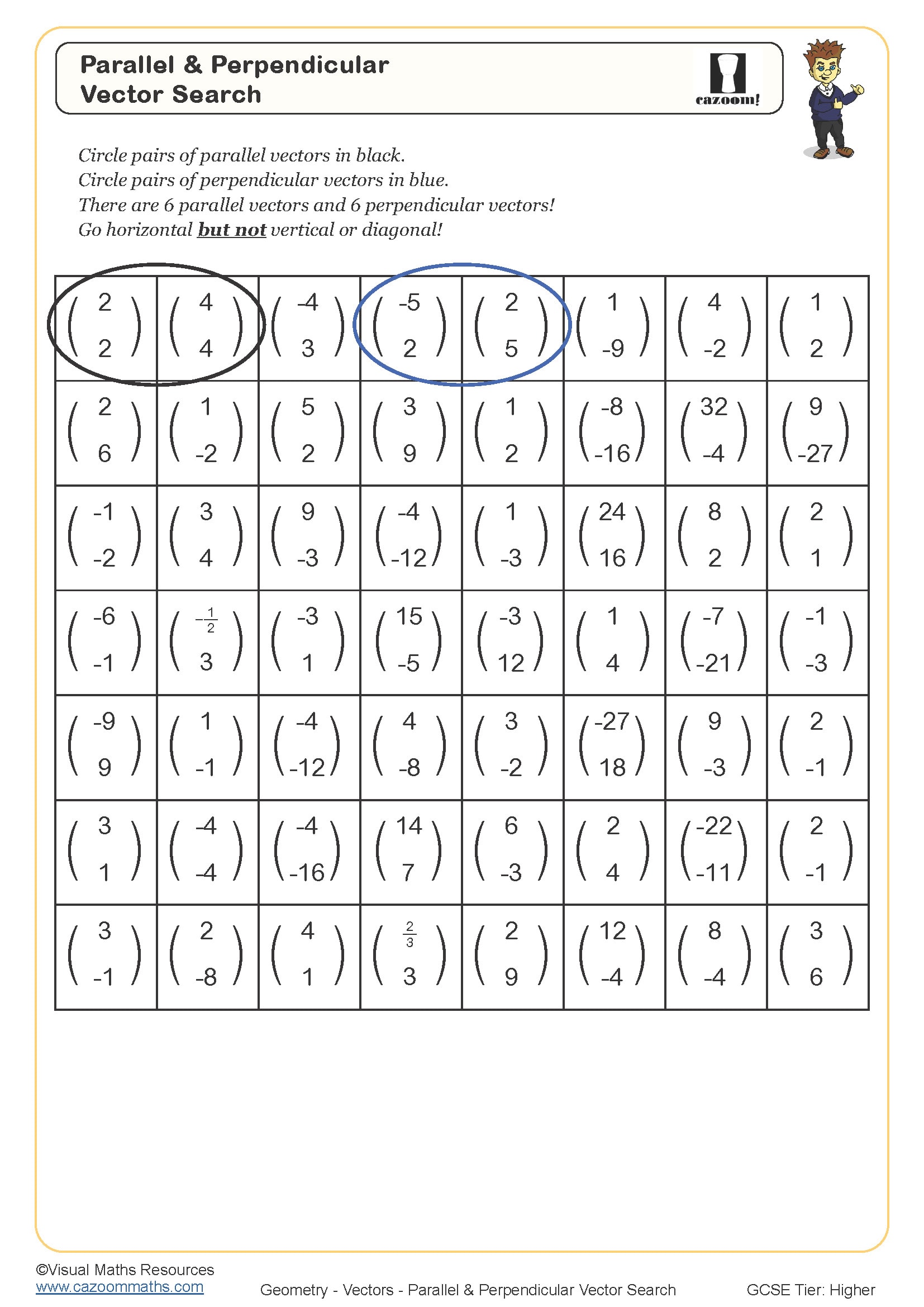
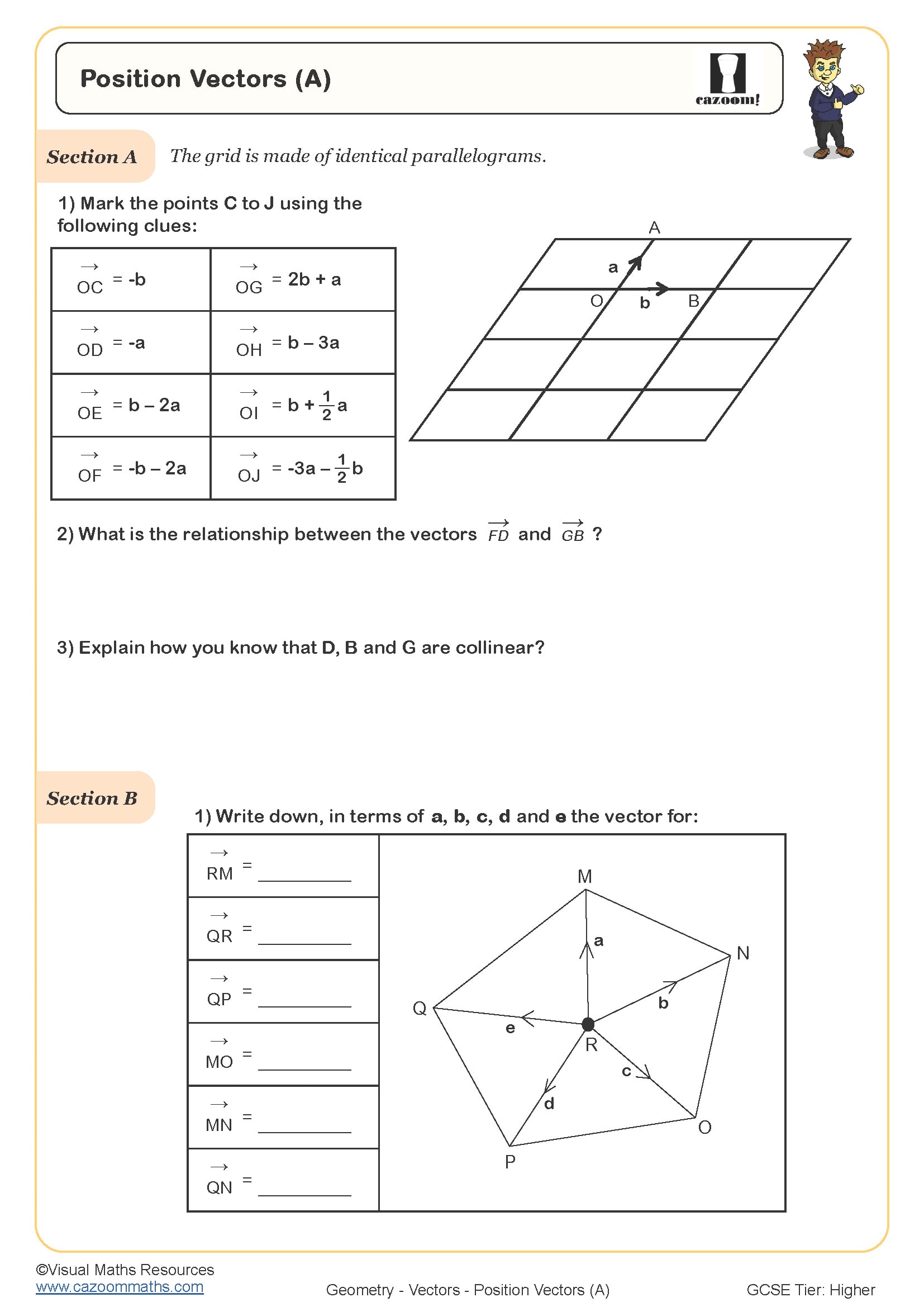
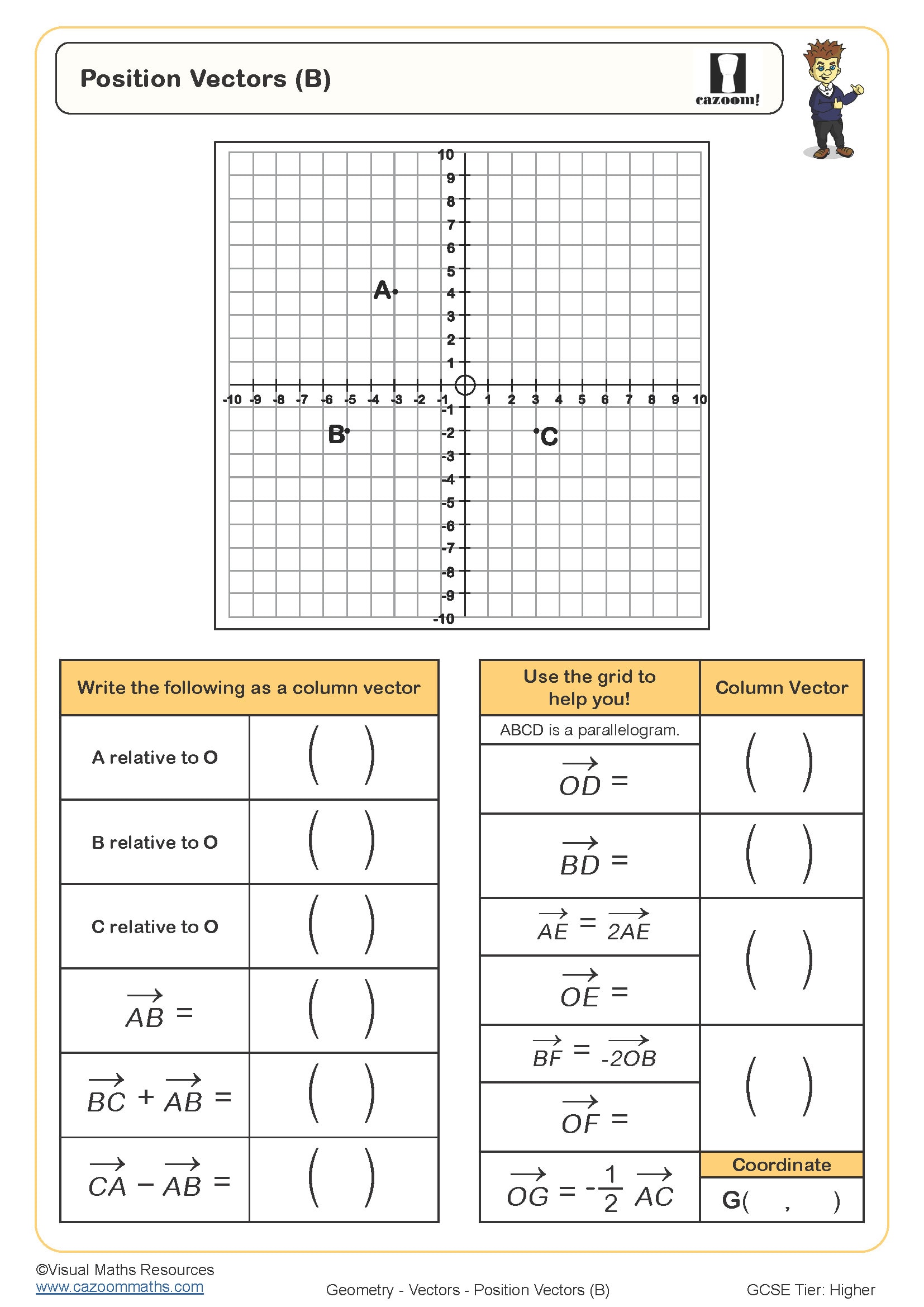
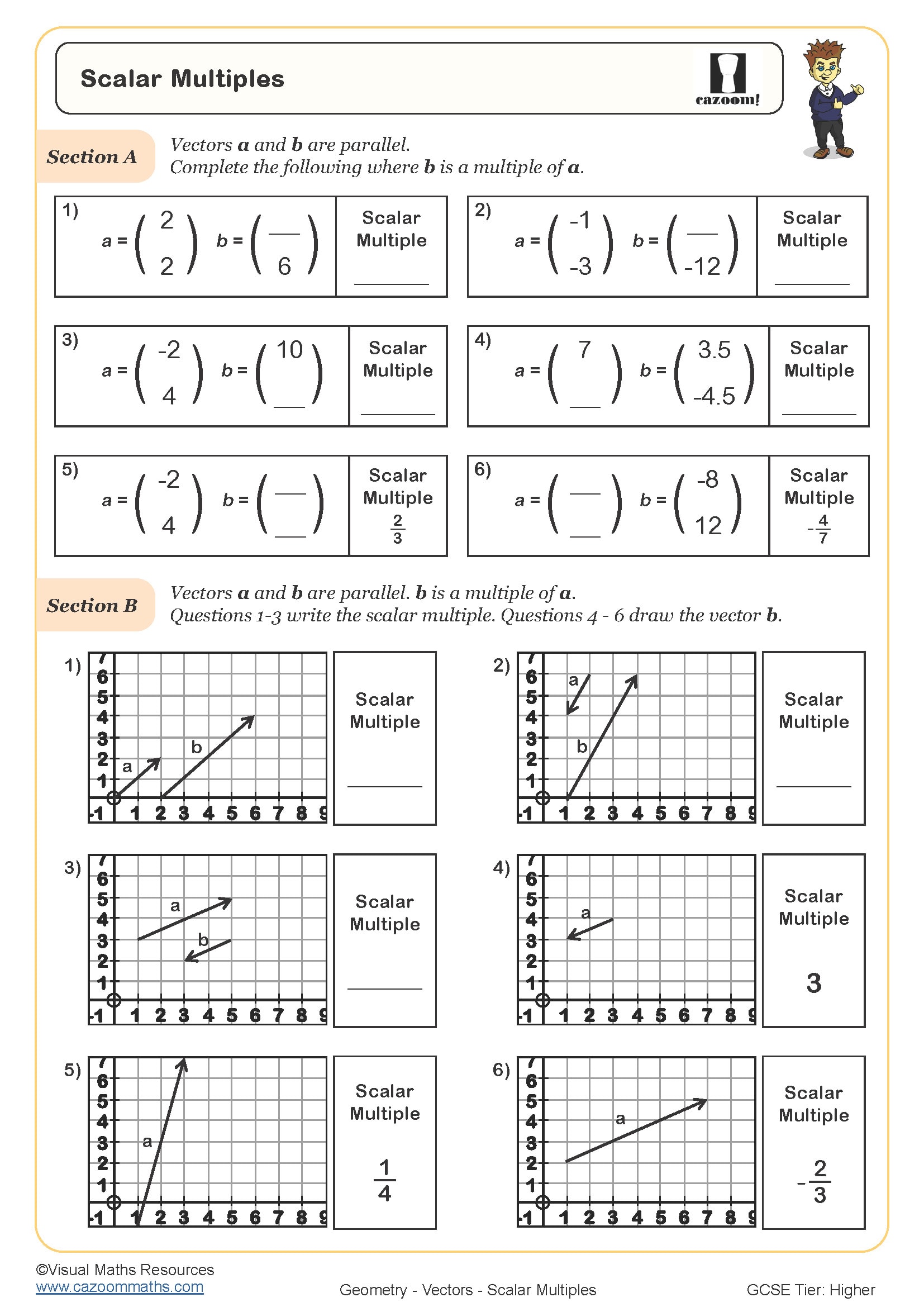
A thorough vectors gcse worksheet set covers vector notation, addition and subtraction of vectors, scalar multiplication, and position vectors in coordinate systems. Students work through problems involving column vectors, vector diagrams, and finding resultant vectors using both graphical and algebraic methods.
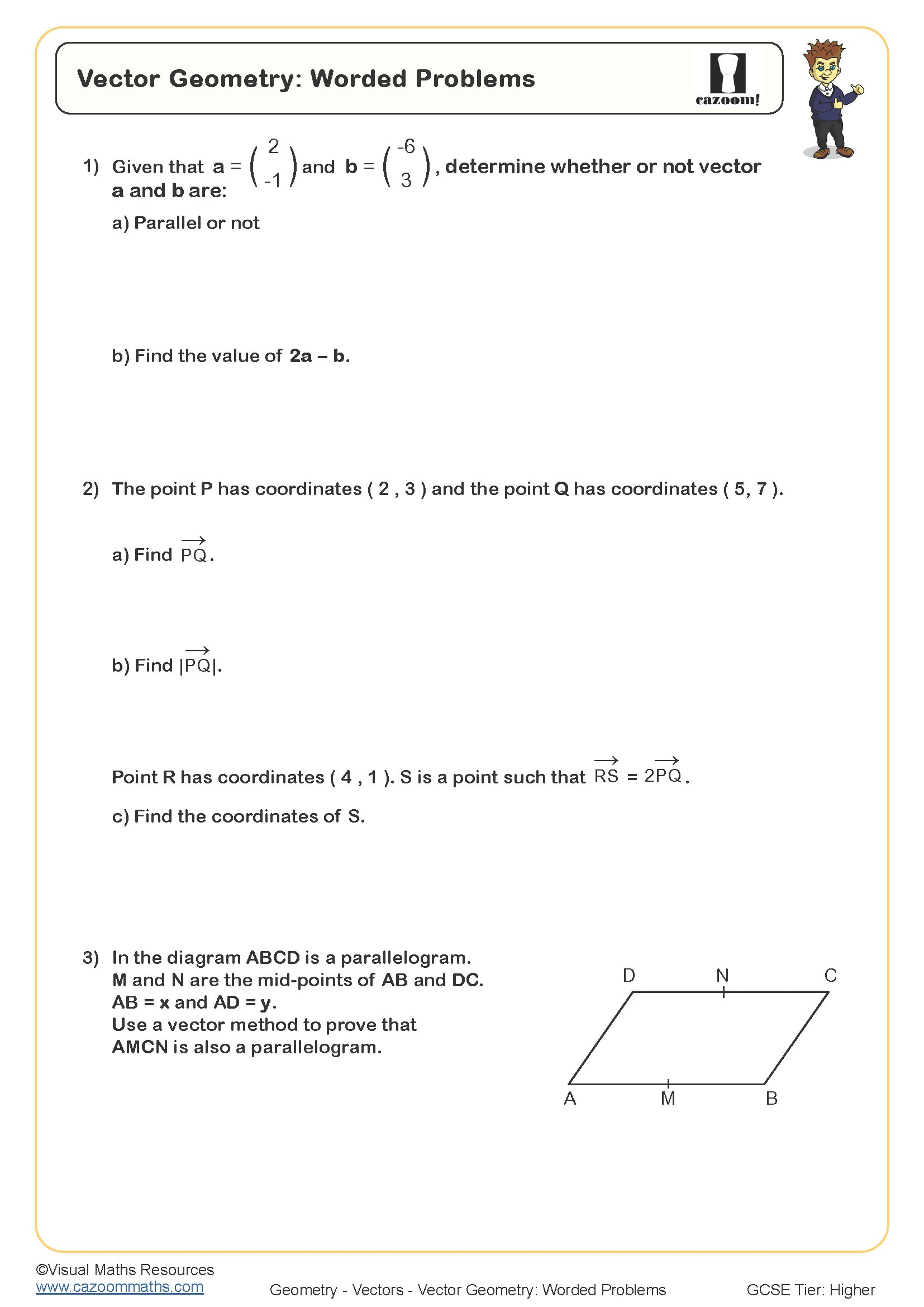
Teachers find that students often confuse vector addition with simple arithmetic, particularly when working with negative components. The worksheets progress from basic vector operations to applications in geometry, including finding unknown vectors in triangles and parallelograms, which directly reflects GCSE examination requirements.
Which year groups should use these vector worksheets?
Vector worksheets are primarily designed for Year 10 and Year 11 students following the GCSE Mathematics curriculum. Most schools introduce vectors during Year 10, building from basic concepts towards more complex applications needed for GCSE examinations.
Some teachers introduce vector concepts to strong Year 9 students as extension work, particularly when covering coordinate geometry. The progression from simple vector notation to problem-solving applications typically spans several months, with regular practice focused for students to develop fluency with vector operations and geometric interpretations.
How do these worksheets help with position vector problems?
Position vector worksheets focus on representing points in coordinate systems and using vectors to describe movements and relationships between points. Students practise finding position vectors from the origin, calculating distances using vector methods, and solving geometric problems involving midpoints and parallel lines.
Many teachers observe that students initially struggle to connect position vectors with familiar coordinate geometry concepts. The worksheets bridge this gap by presenting problems that show how vector methods can simplify calculations involving parallel lines, similar triangles, and geometric proofs that appear frequently in GCSE examinations.
How can teachers use these vector worksheets most effectively?
Teachers achieve best results by introducing vector concepts through visual representations before moving to algebraic manipulation. Starting lessons with vector diagrams helps students understand addition and subtraction geometrically, then progressing to column vector notation reinforces the algebraic approach.
Regular assessment using these worksheets reveals common misconceptions early, particularly around sign errors and coordinate interpretation. Teachers often pair worksheet practice with interactive demonstrations using coordinate grids, as students need multiple exposures to vector concepts before achieving the fluency required for GCSE problem-solving questions involving vectors in geometric contexts.