Year 11 Lines and Angles Worksheets
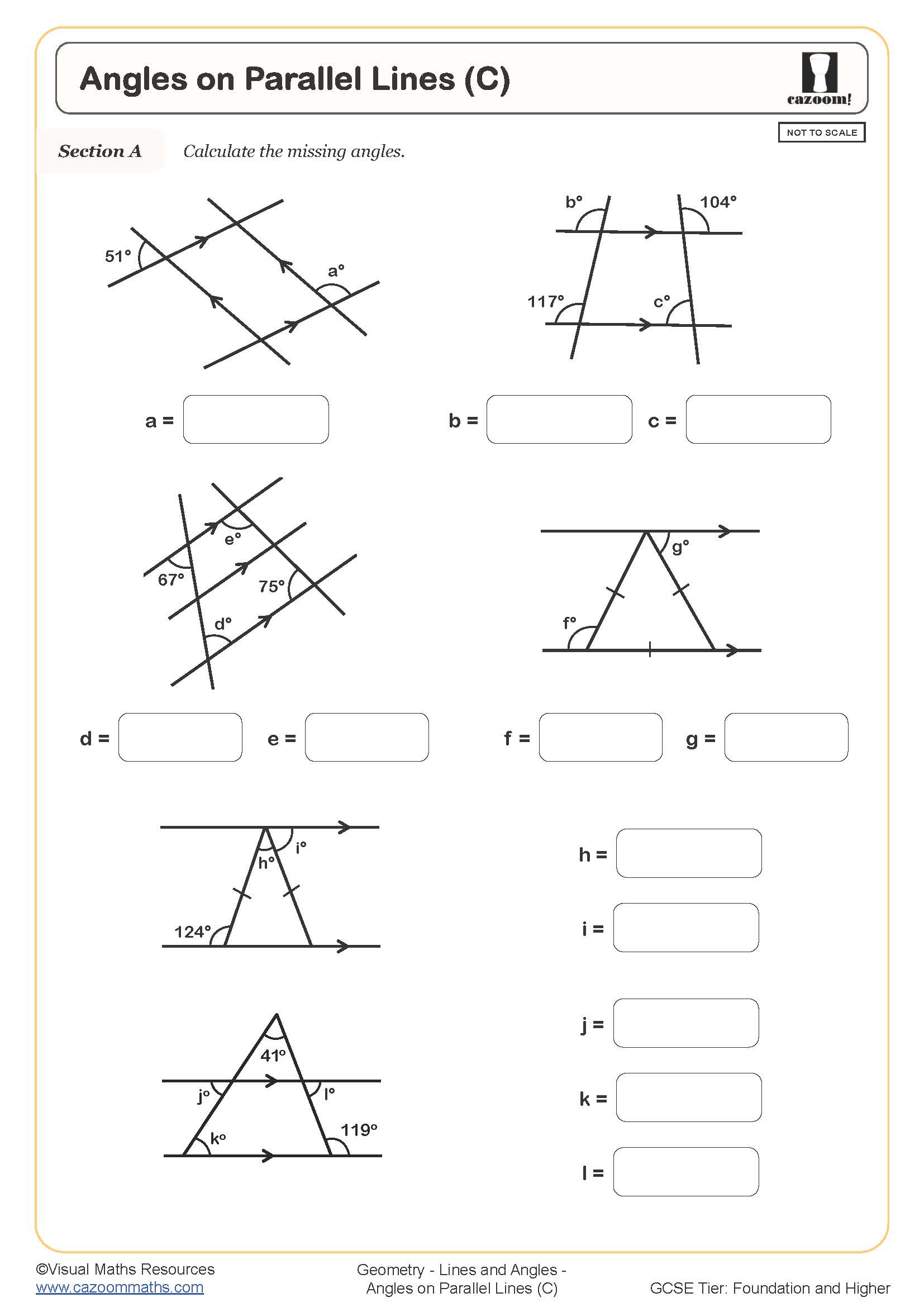
Angles on Parallel Lines (C)
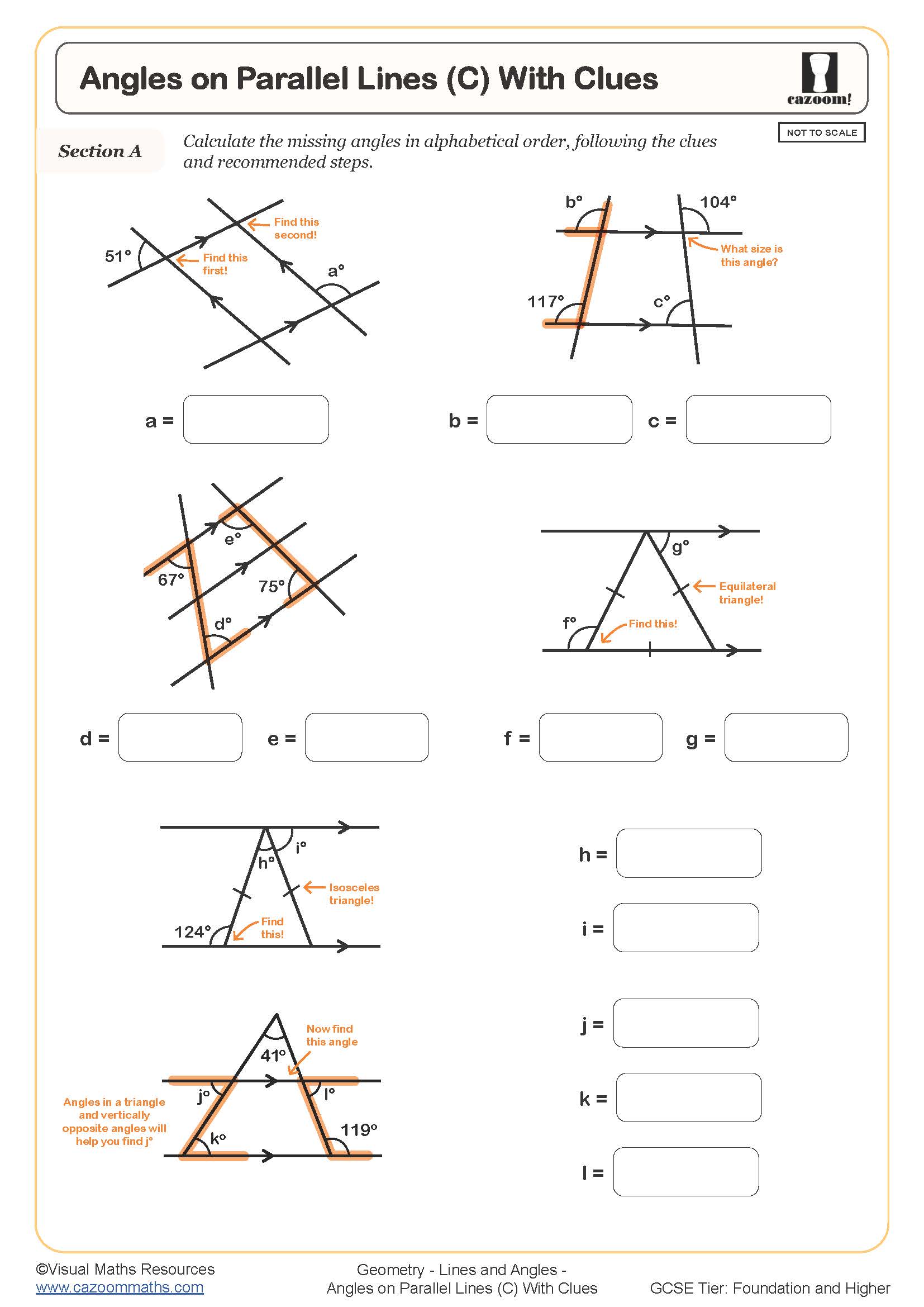
Angles on Parallel Lines (C) (With Clues)
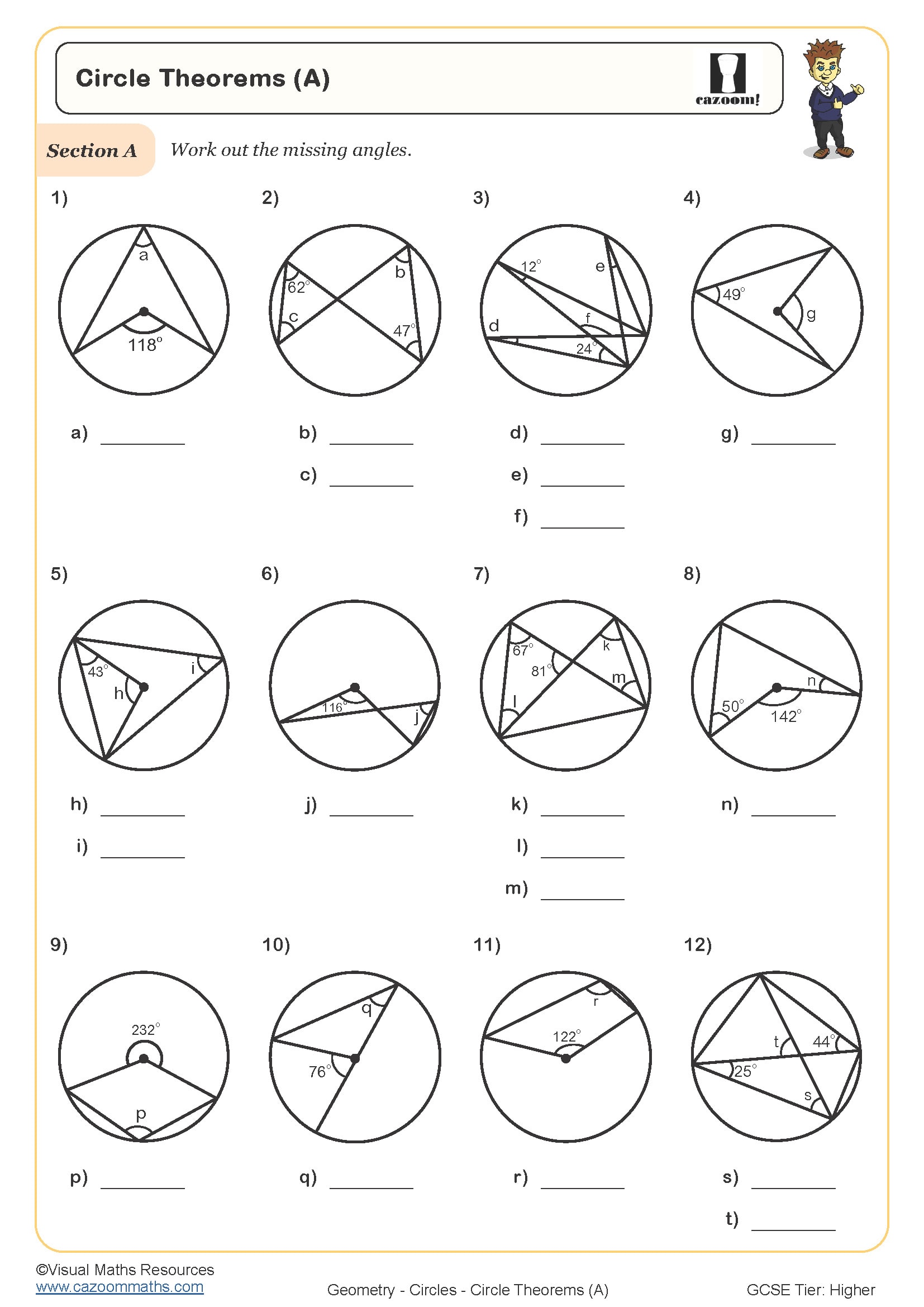
Circle Theorems (A)
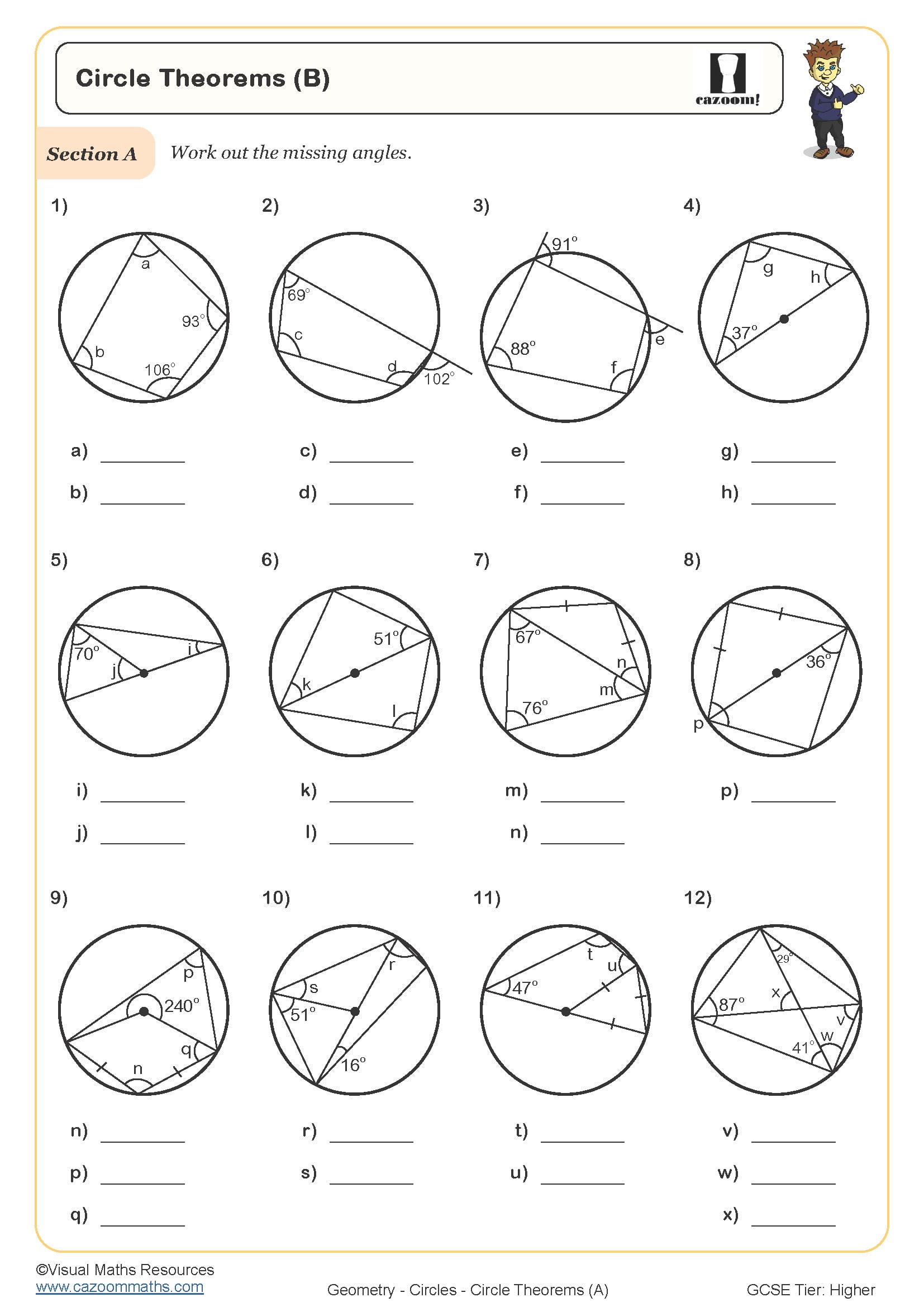
Circle Theorems (B)
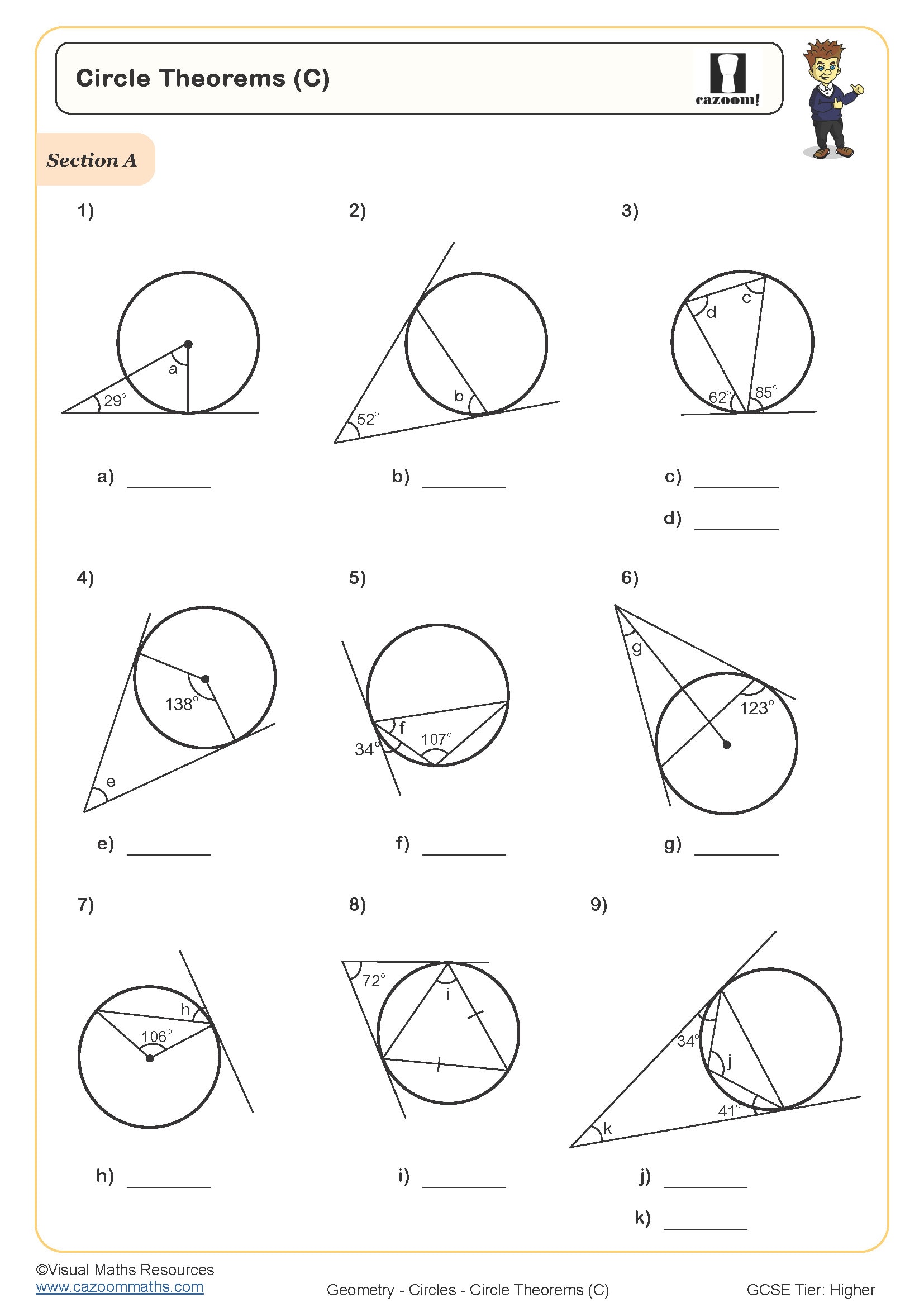
Circle Theorems (C)
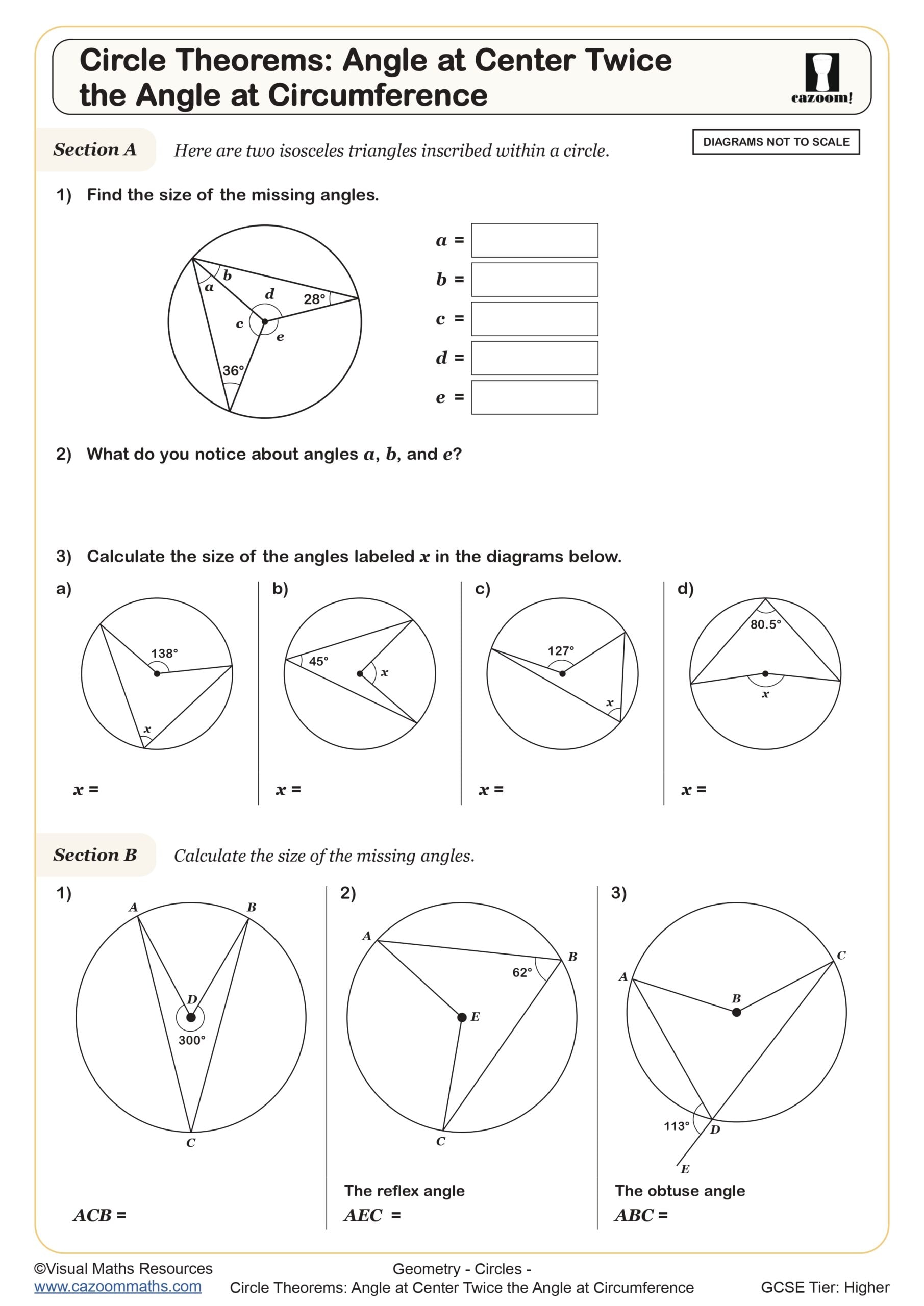
Circle Theorems: Angle at Center Twice the Angle at Circumference
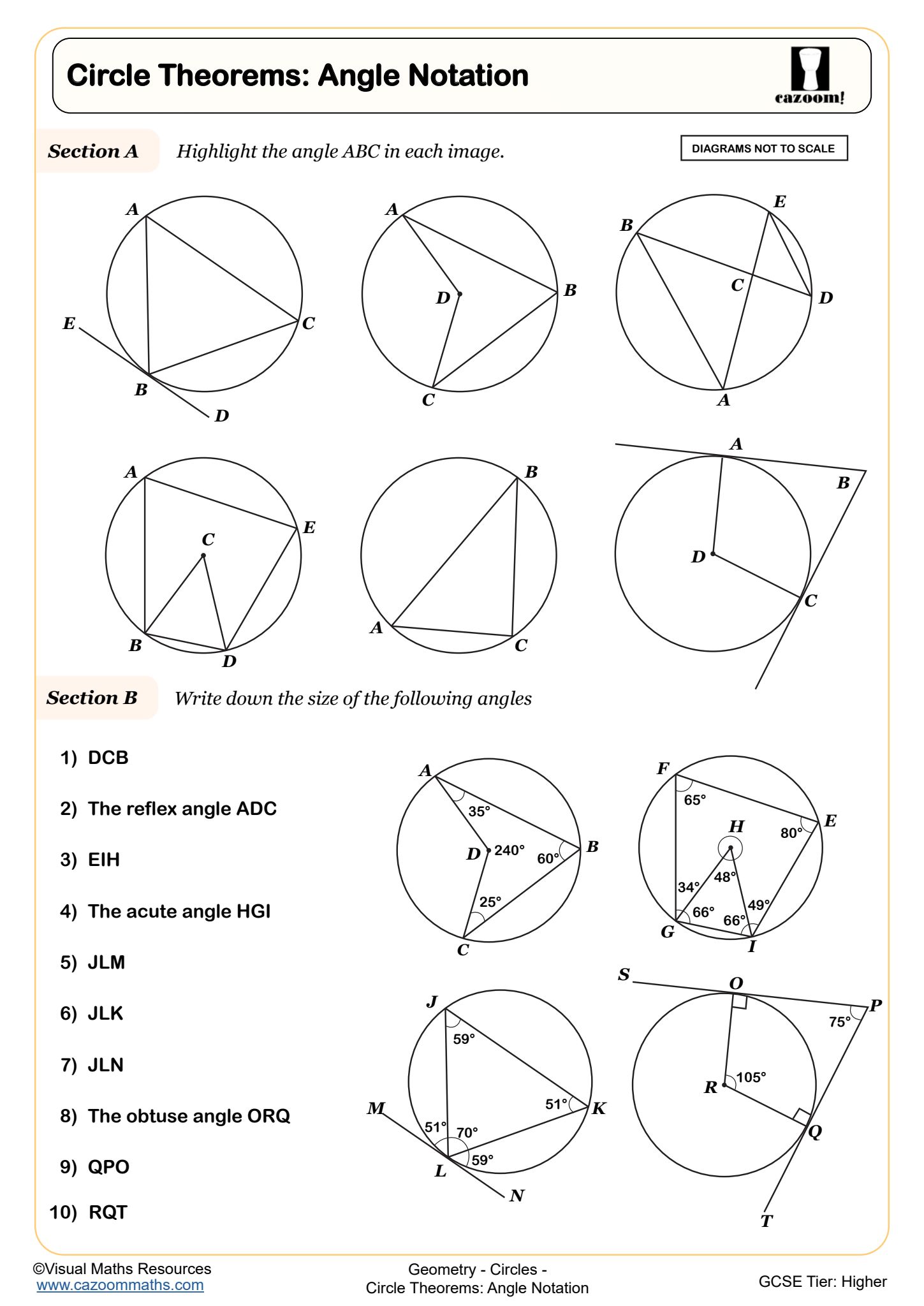
Circle Theorems: Angle Notation
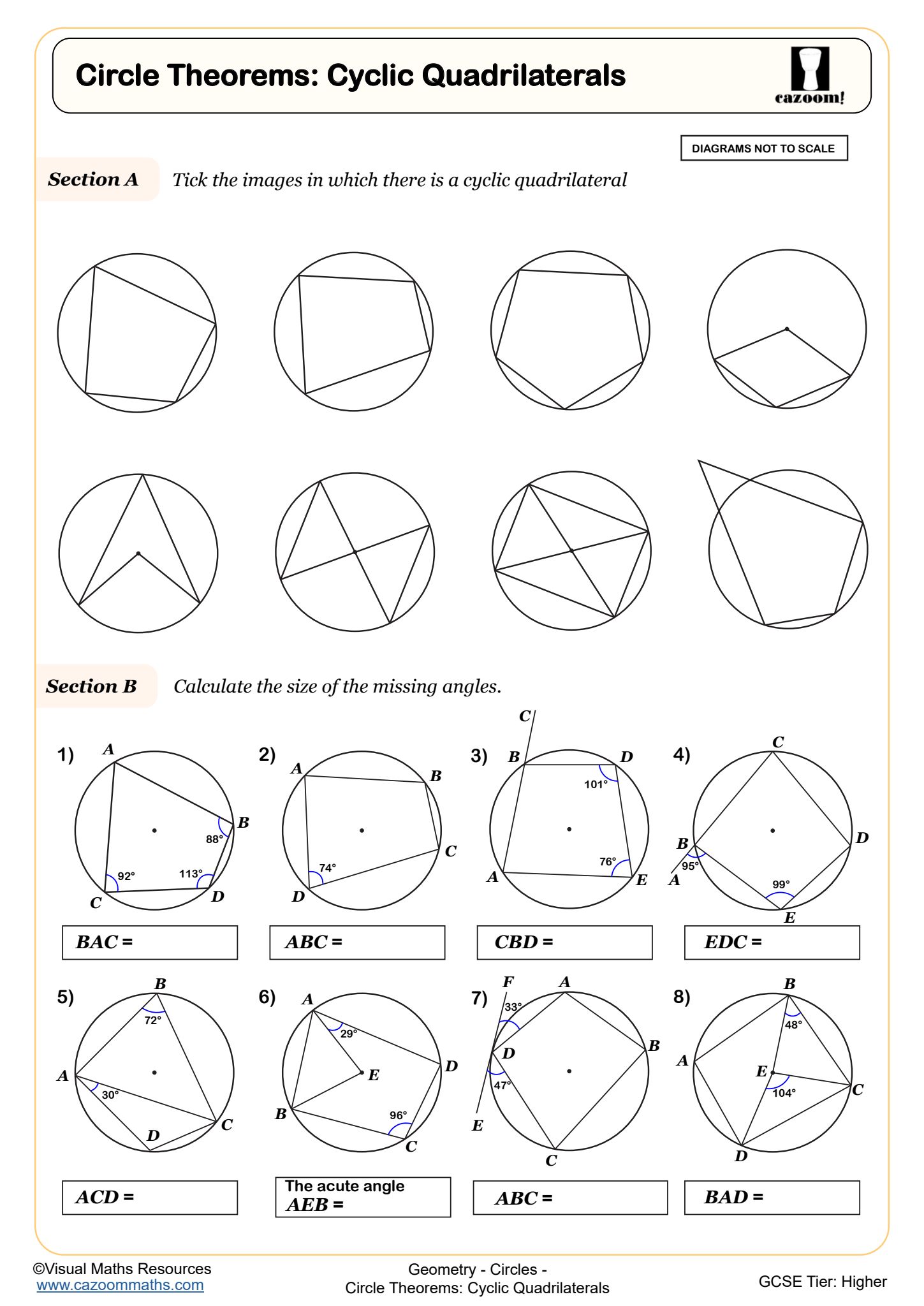
Circle Theorems: Cyclic Quadrilaterals
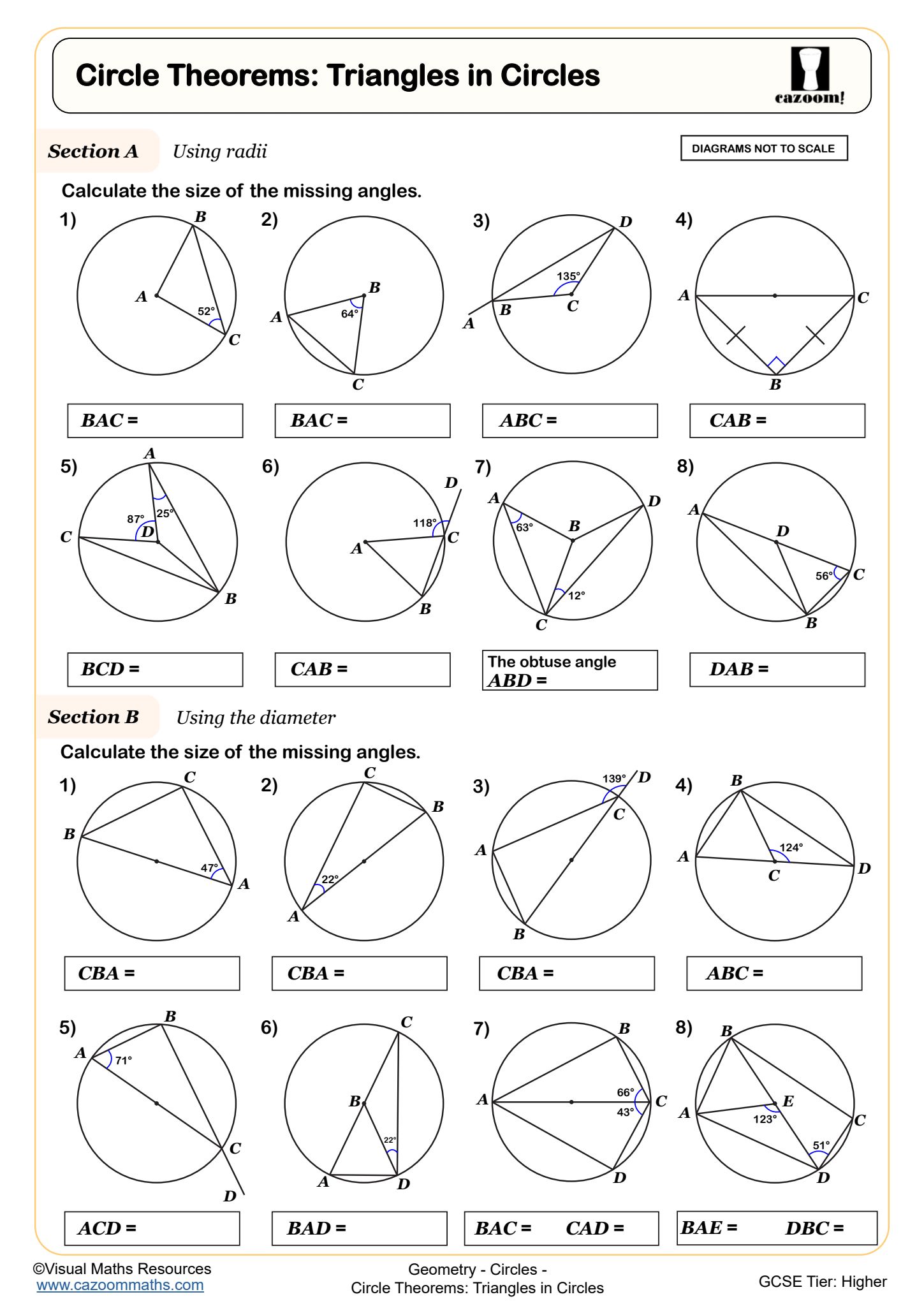
Circle Theorems: Triangles in Circles
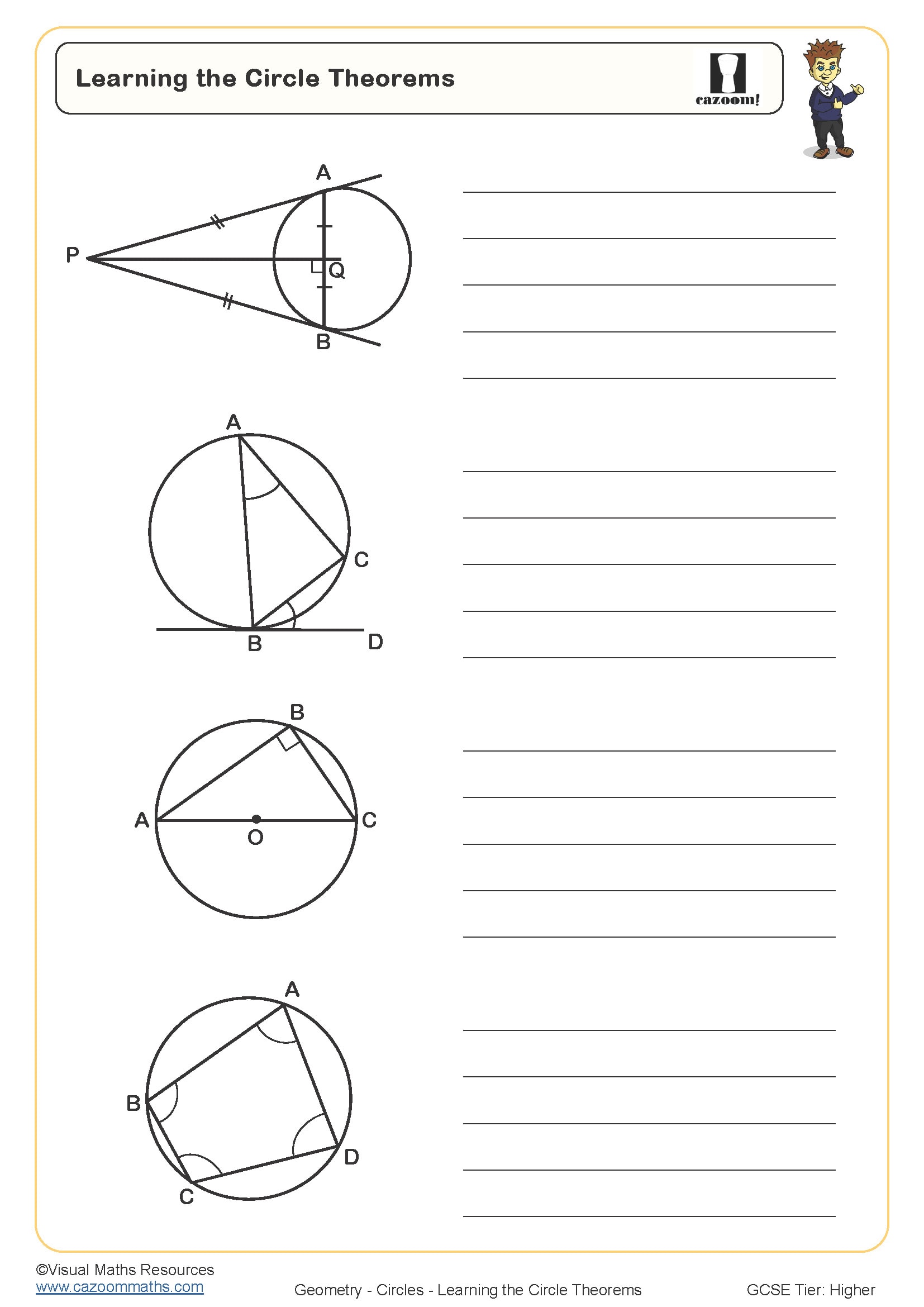
Learning the Circle Theorems
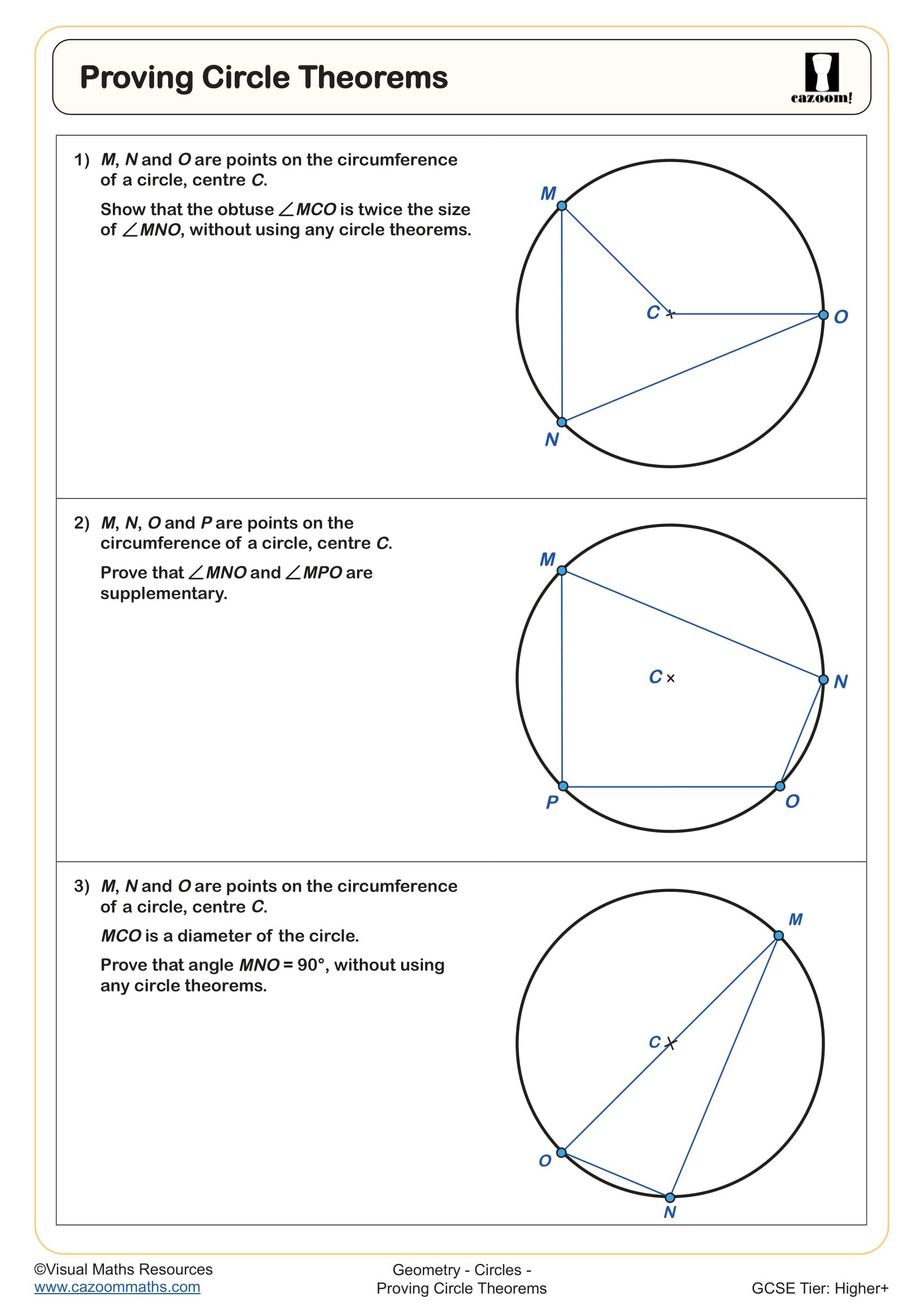
Proving Circle Theorems
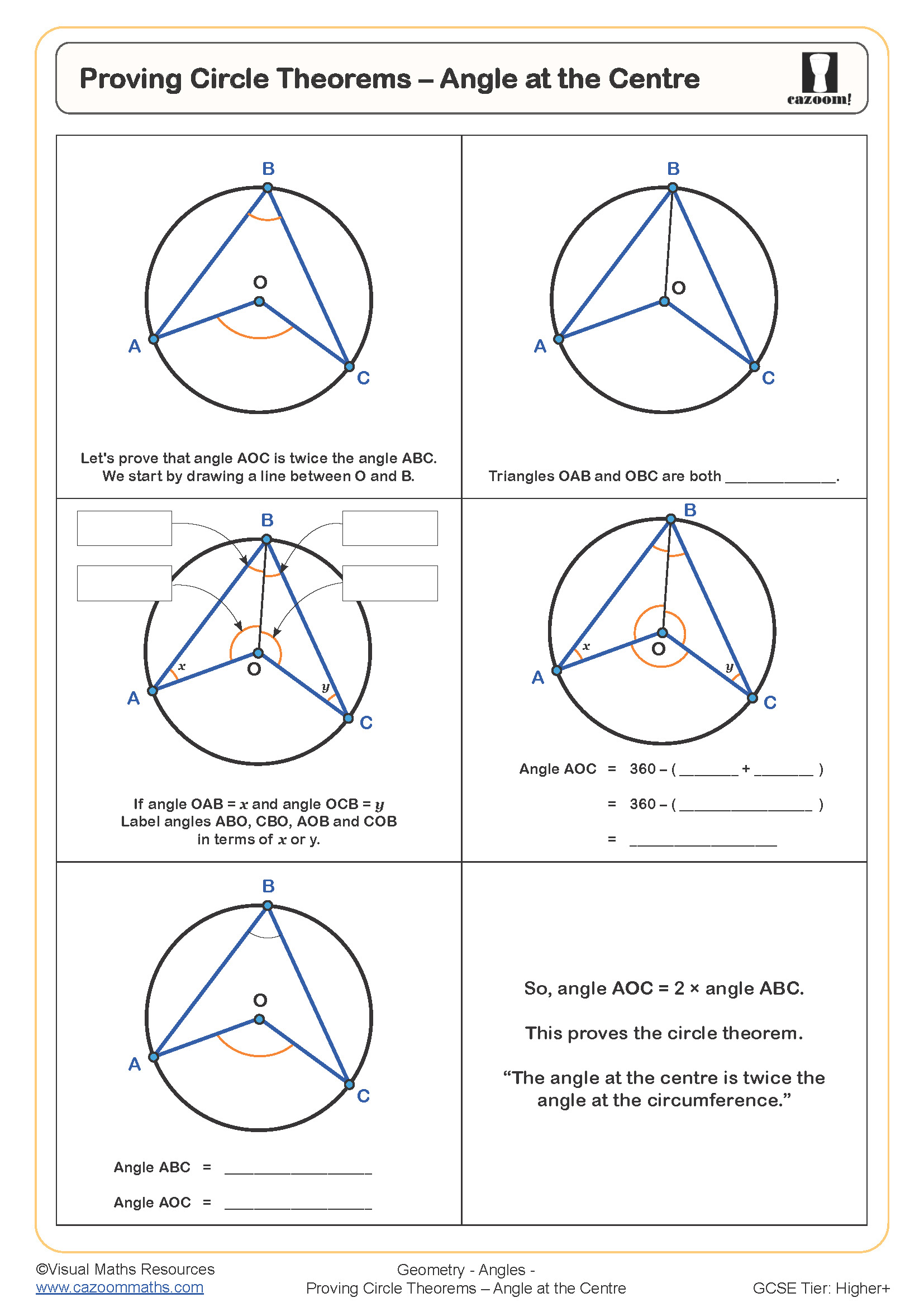
Proving Circle Theorems - Angle at the Centre
Proving Circle Theorems - Angle in a Semicircle
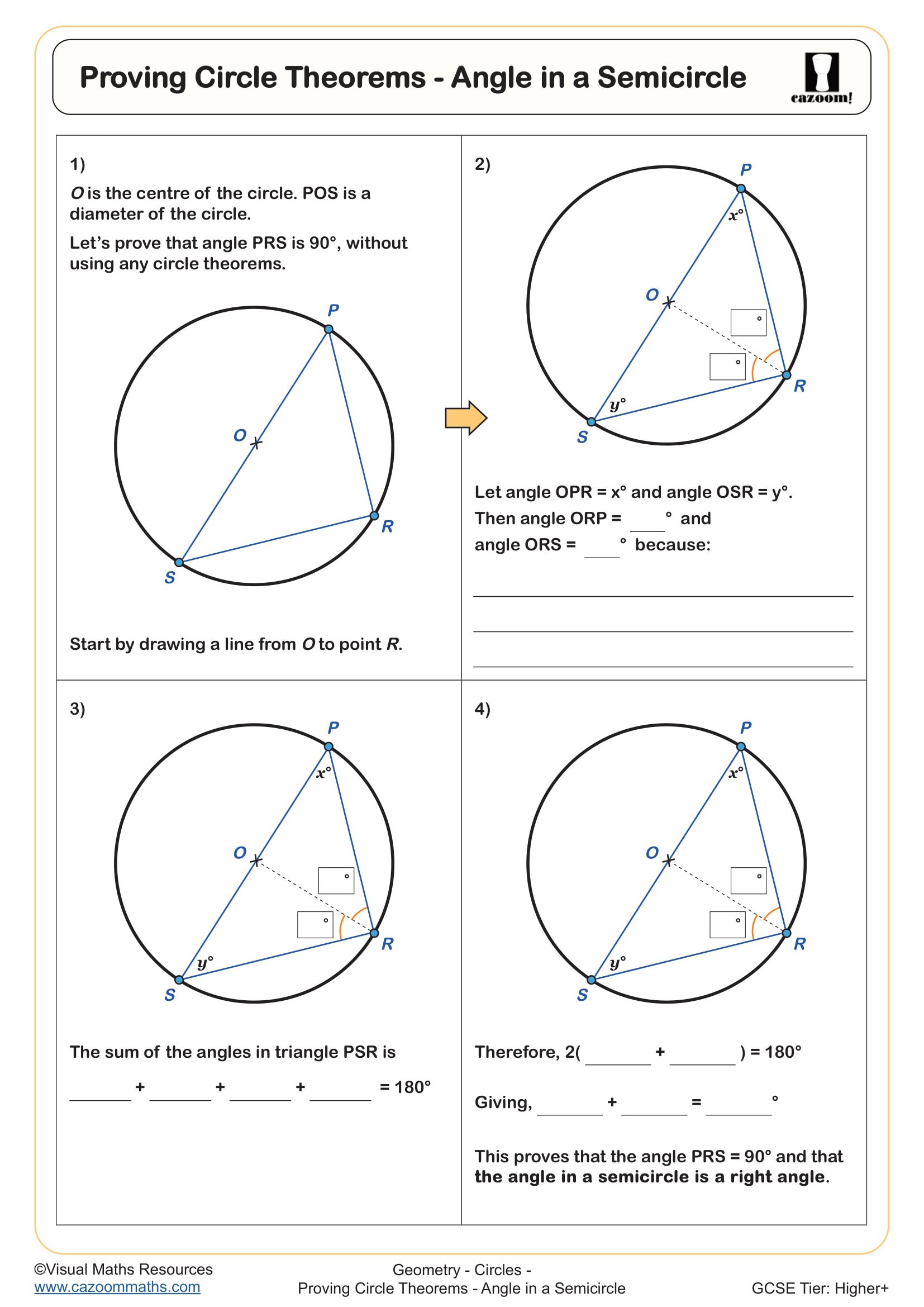
Proving Circle Theorems - Angles in the Same Segment
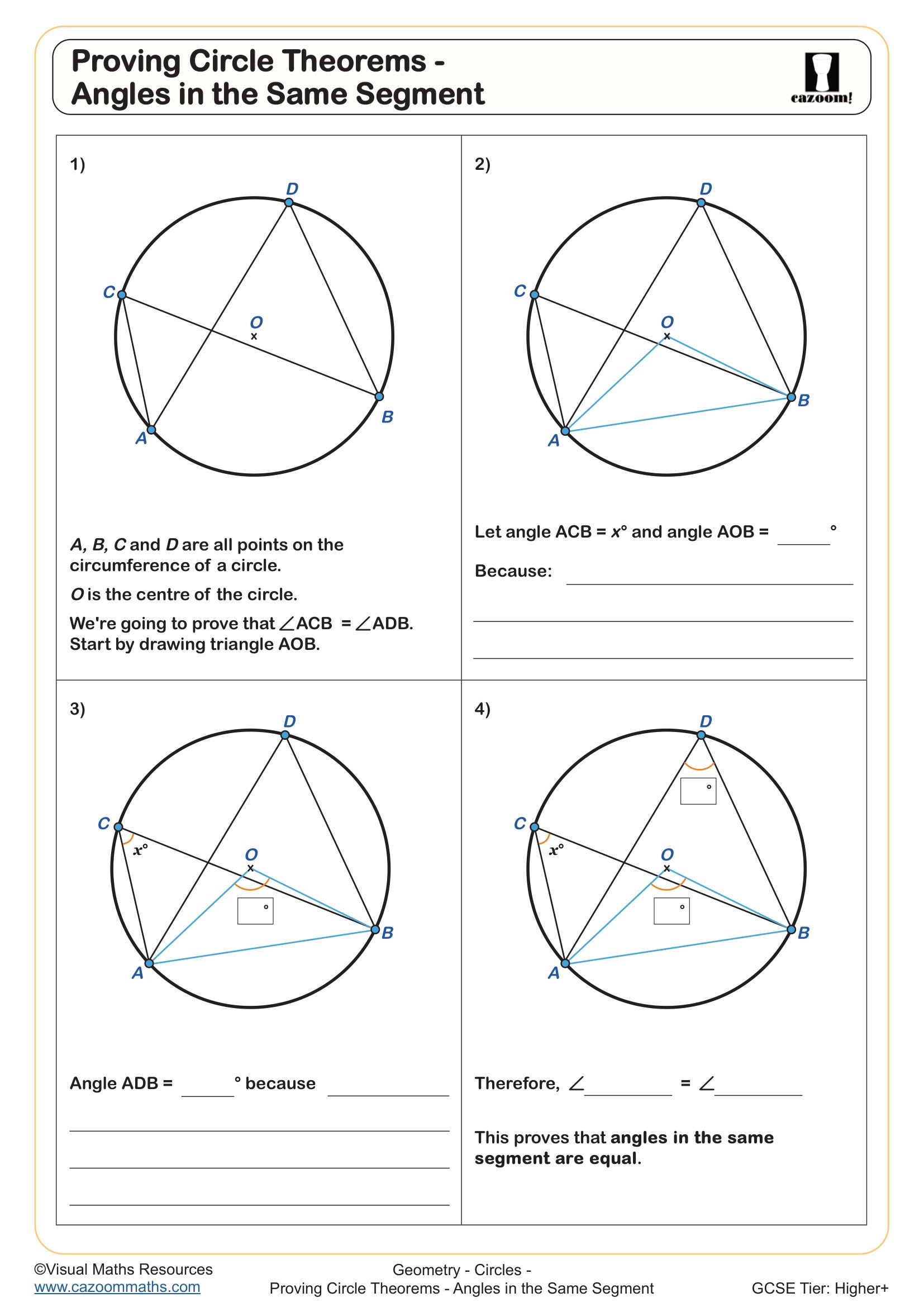
Proving Circle Theorems - Cyclic Quadrilaterals
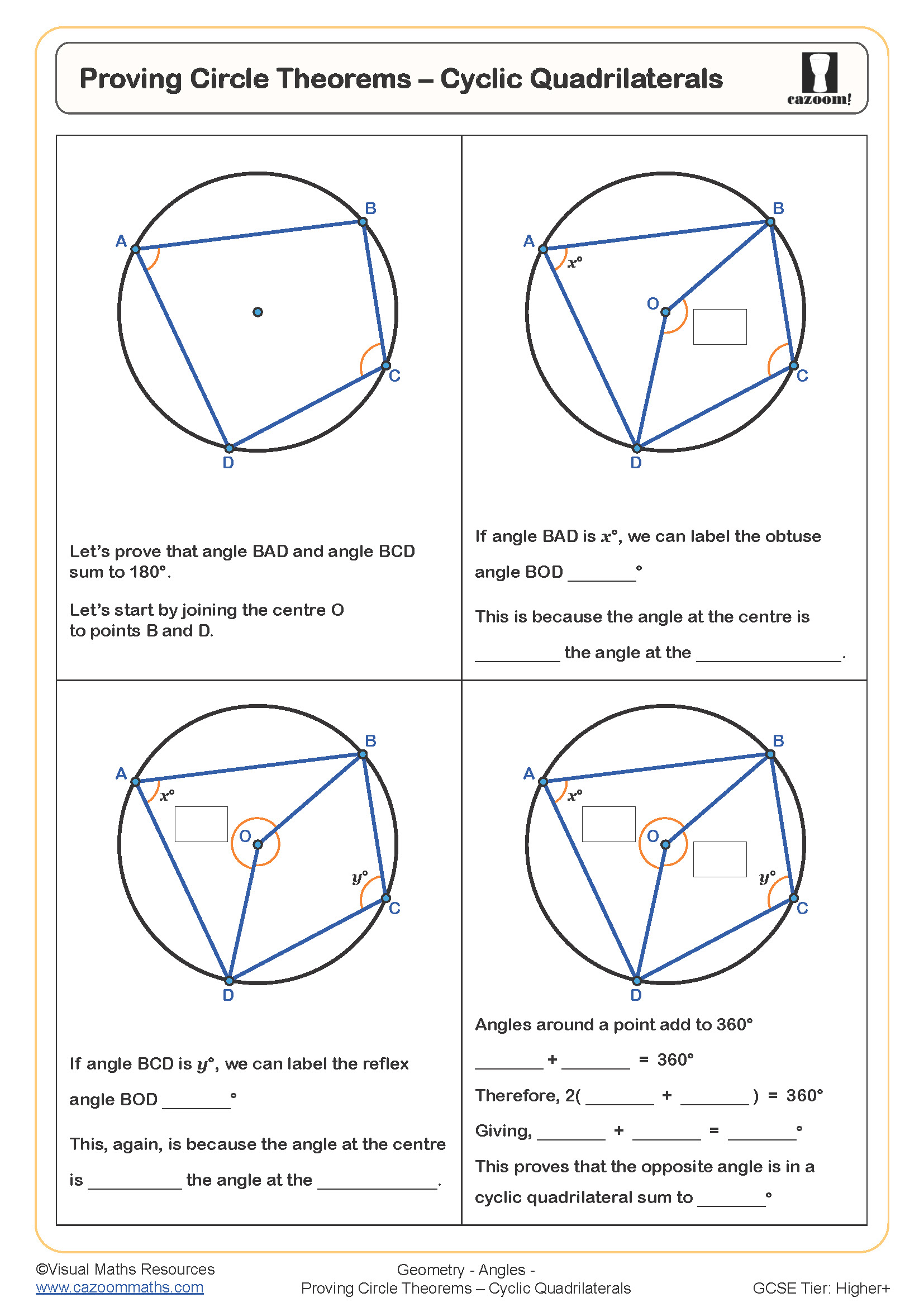
All worksheets are created by the team of experienced teachers at Cazoom Maths.
What are the main topics covered in lines and angles at Year 11?
Year 11 lines and angles covers circle theorems, advanced polygon problems, angles in parallel lines with algebra, and geometric proof. Students apply properties like alternate segment theorem, angles subtended by the same arc, and the relationship between tangents and radii. At GCSE higher tier, questions frequently combine multiple angle properties in a single problem, requiring students to plan a logical sequence of steps.
Exam mark schemes consistently penalise students who give correct numerical answers without stating the geometric reason. A typical error involves calculating an angle using the alternate segment theorem but simply writing 'angles are equal' rather than naming the specific theorem. Teachers find that regular practice identifying and naming angle properties—rather than just calculating values—significantly improves exam performance, particularly in the reasoning questions worth 4-6 marks.
Which year groups study lines and angles?
These worksheets target Year 11 students preparing for GCSE exams, focusing on the higher-tier content that builds on Key Stage 3 foundations. At KS4, lines and angles work shifts from basic angle facts to complex proof and multi-step problems involving circle theorems and algebraic expressions. Year 11 students encounter questions where they must form and solve equations using angle properties, connecting geometric and algebraic reasoning.
The progression across Key Stage 4 moves from consolidating angle rules in parallel lines and polygons in Year 10 to tackling circle theorems and formal geometric proof in Year 11. Students working at higher tier need fluency with all circle theorems, including proving why angles in a semicircle are 90° or explaining the alternate segment theorem using established geometric properties. This depth of understanding separates grades 6-7 from grades 8-9 in GCSE examinations.
How do circle theorems apply to real-world contexts?
Circle theorems describe fundamental geometric properties used extensively in engineering, architecture, and design. The principle that angles subtended by the same arc are equal governs gear ratios in mechanical systems, while the perpendicular from centre to chord property underpins load distribution calculations in circular structures. Satellite dish design relies on tangent properties, where signals must arrive at specific angles to the receiver positioned at the focal point.
Civil engineers apply these theorems when designing roundabouts, determining sightlines, and calculating turning circles for vehicles. The tangent-radius perpendicularity principle ensures accurate surveying measurements and GPS triangulation. In manufacturing, understanding how angles relate in circular components prevents assembly errors in products from bicycle wheels to wind turbine hubs. Students who grasp why these theorems work—not just how to apply them—develop the spatial reasoning essential for STEM careers requiring three-dimensional design and structural analysis.
How can teachers use these worksheets effectively in Year 11?
The worksheets provide graduated difficulty levels, allowing teachers to match questions to individual student needs during GCSE preparation. Each sheet focuses on specific angle properties or theorem applications, making them useful for targeted intervention when assessment data reveals gaps in geometric reasoning. The structured layout helps students organise their working logically, practising the clear method marks require in exam conditions.
Many teachers use these resources for retrieval practice starters, selecting questions that revisit previously learned theorems before introducing new content. The complete answer sheets showing full working make them suitable for peer assessment activities, where students mark each other's responses and identify where geometric reasoning could be clearer. They work well as homework tasks following classroom teaching, or as independent revision material during study leave. For intervention sessions, teachers can focus on specific theorems causing difficulty, using the worksheets to provide repeated practice without creating resources from scratch.