Year 11 Percentages Worksheets
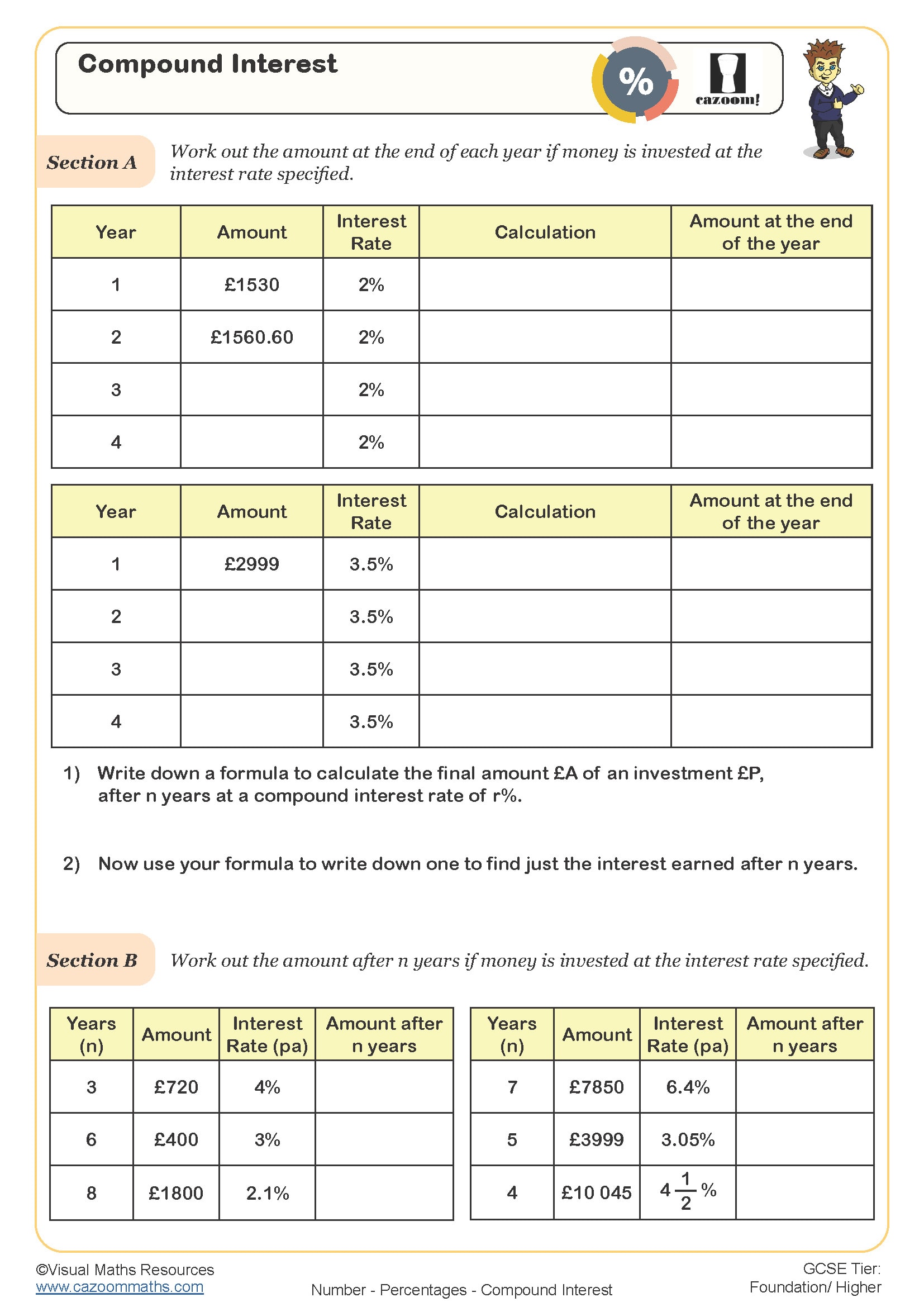
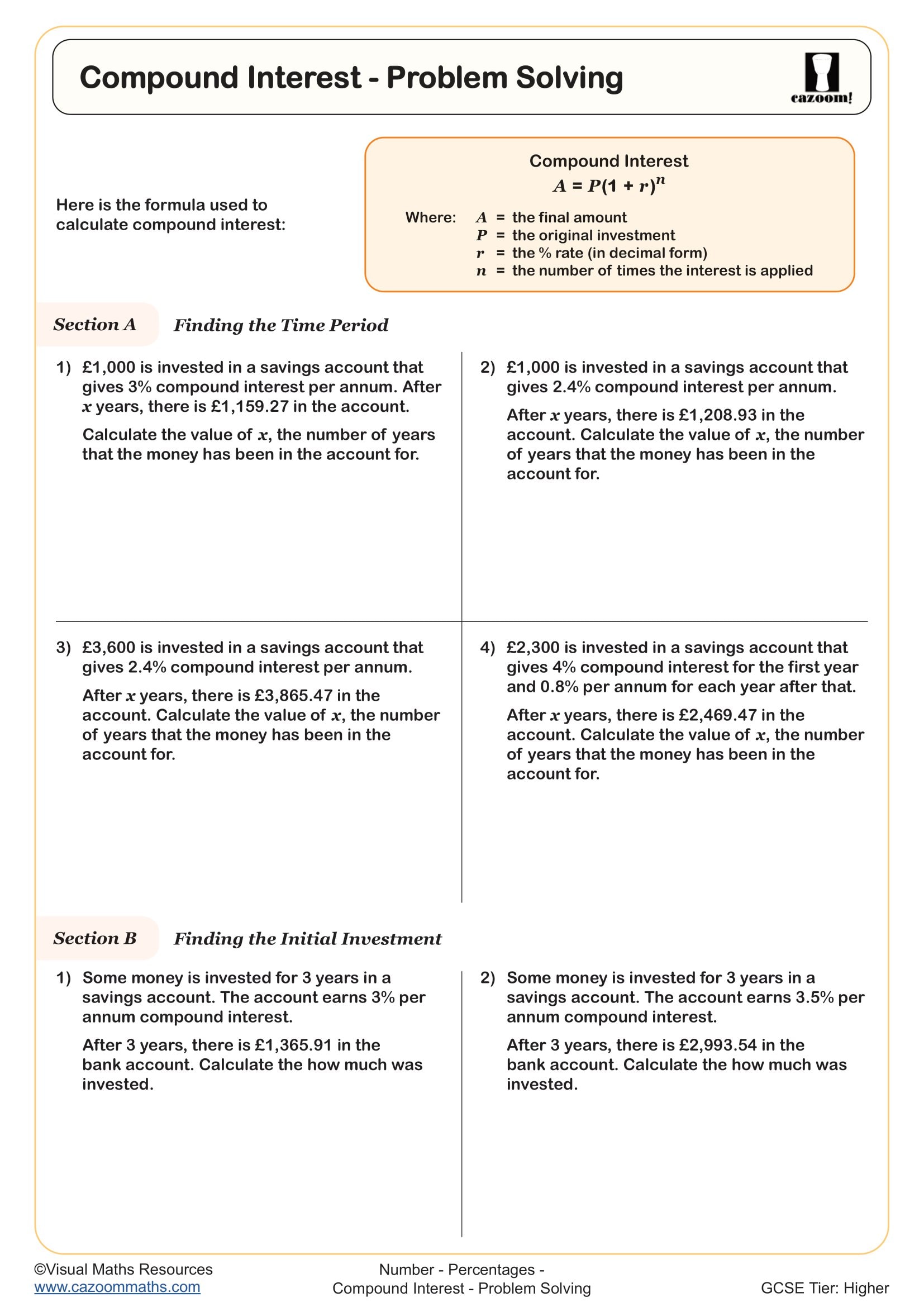
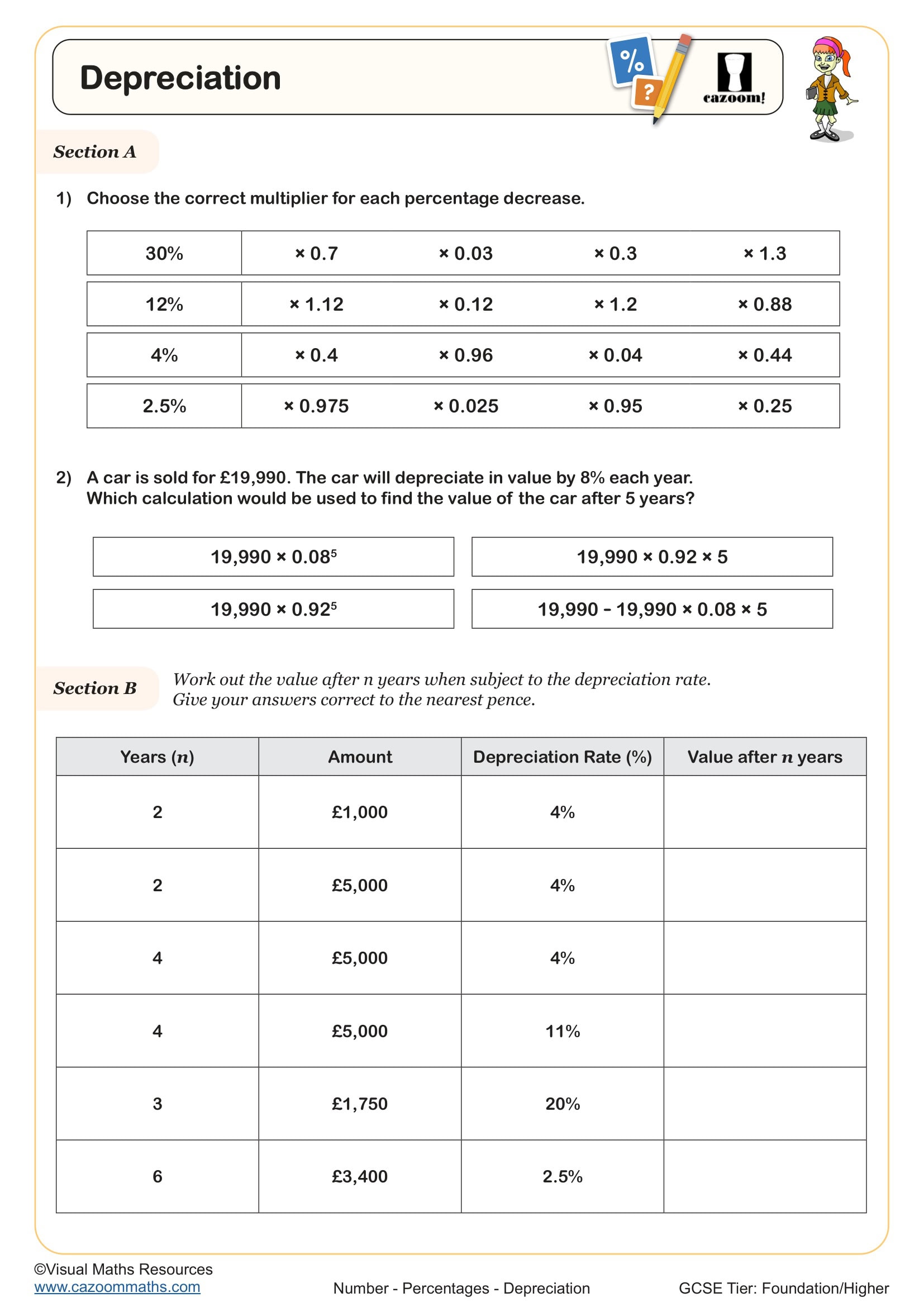
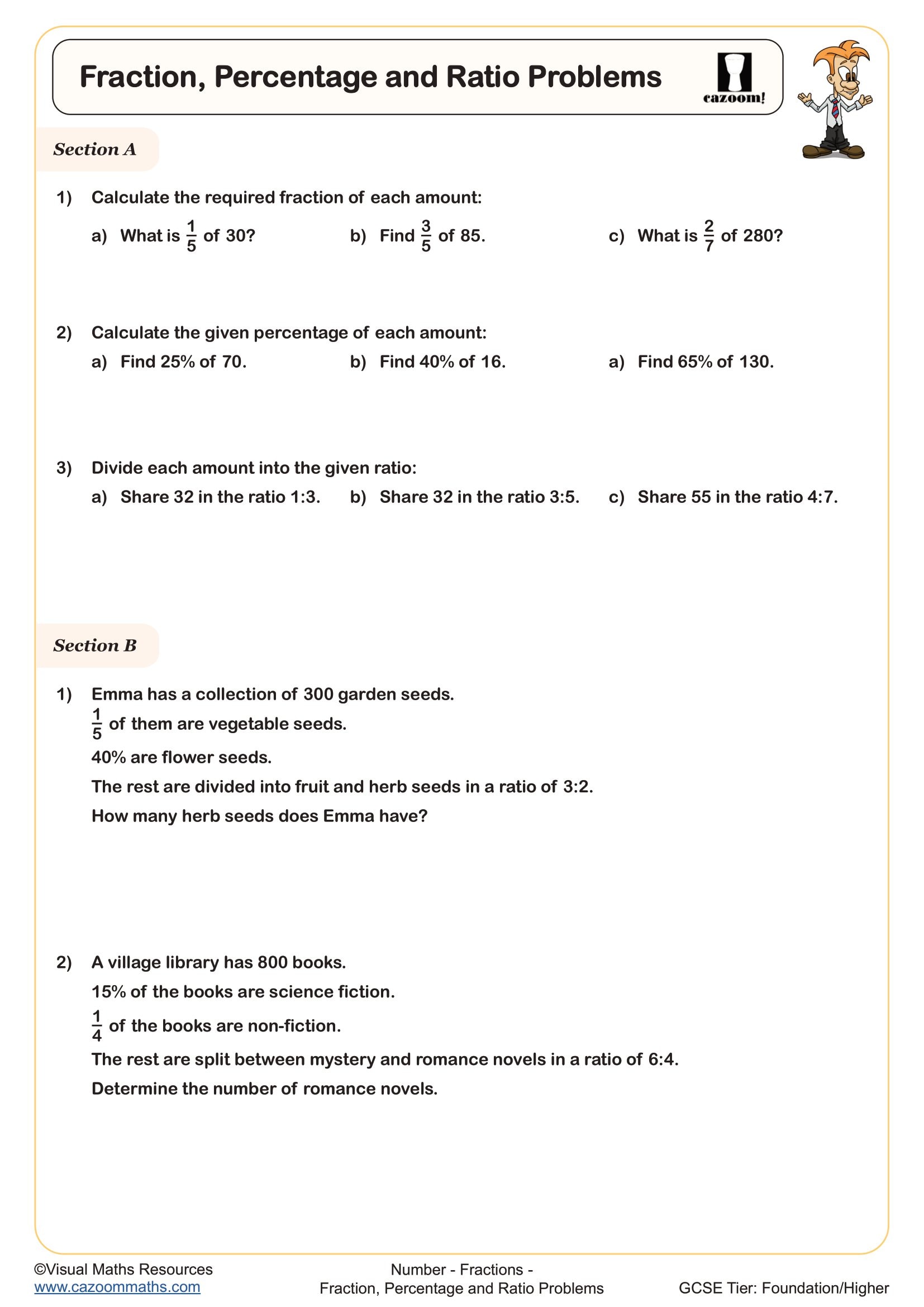
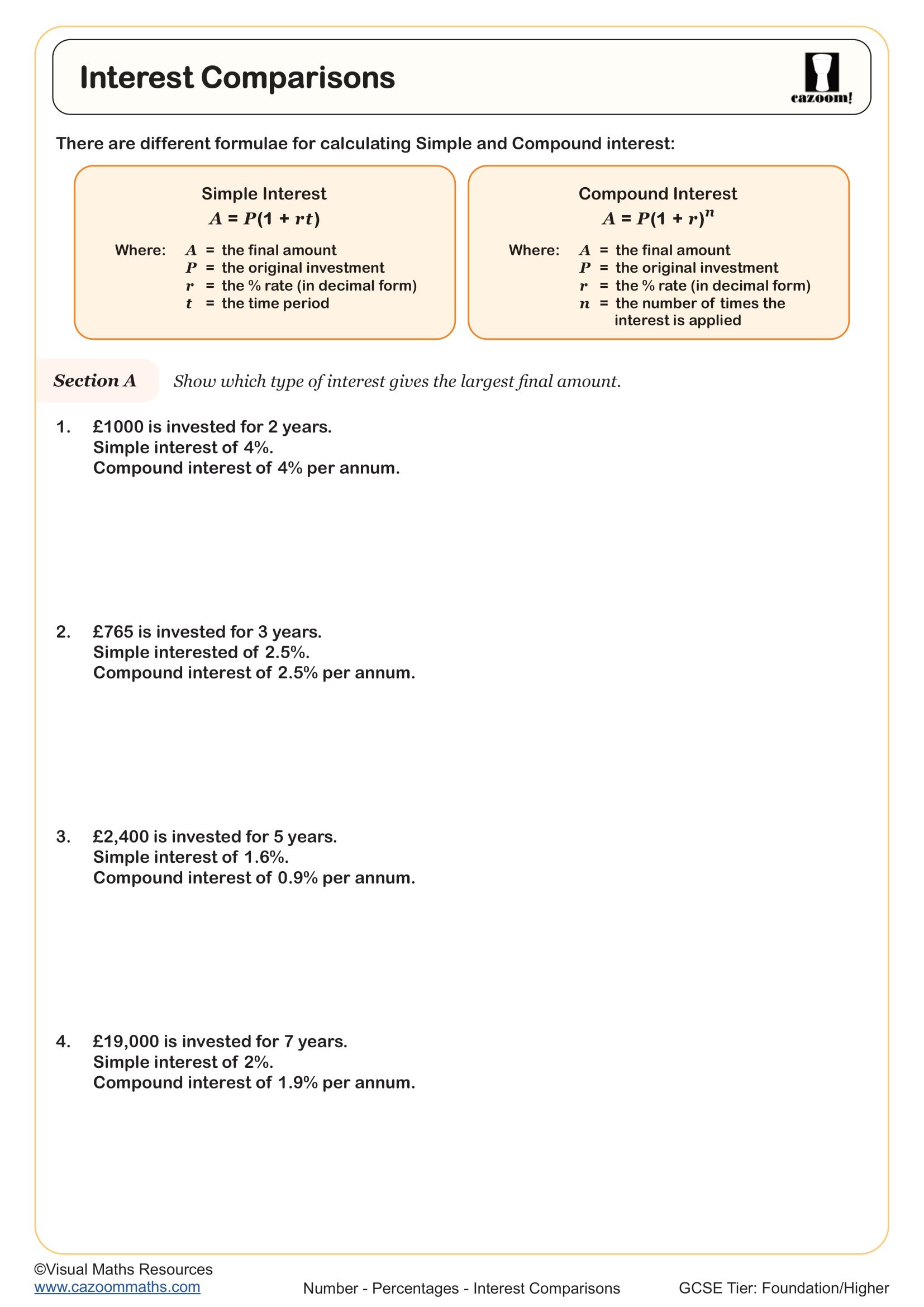
All worksheets are created by the team of experienced teachers at Cazoom Maths.
What percentage skills do Year 11 students need for GCSE?
Year 11 students must demonstrate fluency across all percentage operations for GCSE, including finding percentages of amounts with and without a calculator, calculating percentage increase and decrease, working out reverse percentages, and solving percentage change problems in context. The Foundation tier expects efficient use of benchmark percentages (10%, 25%, 50%) whilst Higher tier demands confidence with multipliers and understanding of compound percentage change.
Exam mark schemes regularly penalise students who cannot show clear method when working with percentages in multi-step problems. A common error involves confusing percentage increase with percentage of the original amount—for example, calculating 30% of £80 (£24) instead of finding £80 increased by 30% (£104). Students who practise converting percentage problems into decimal multipliers typically gain accuracy and speed, particularly under exam conditions where time pressure affects calculation reliability.
Which year groups study advanced percentages?
These worksheets specifically support Year 11 students at Key Stage 4 who are consolidating percentage skills ahead of GCSE examinations. By this stage, students should be moving beyond basic percentage calculations towards applying these skills in problem-solving contexts, including financial mathematics, data analysis, and scientific applications that appear across Foundation and Higher tier papers.
The progression from Year 7 through Year 11 sees students move from finding simple percentages like 50% and 10% by halving and dividing, through calculating any percentage of an amount using formal methods, towards reverse percentages and percentage change problems that require algebraic thinking. Year 11 work emphasises exam technique, recognising problem types quickly, and selecting appropriate methods efficiently—skills that determine whether students can access the higher grade boundaries within the time constraints of GCSE papers.
How do you efficiently calculate 25% and 50% of amounts?
Calculating 50% and 25% efficiently relies on understanding the fraction equivalents: 50% equals one half, whilst 25% equals one quarter. For 50% of any amount, halving gives an immediate answer (50% of 84 is 42). For 25%, students can halve then halve again, or find one quarter directly by dividing by 4. Teachers often observe that students who default to formal percentage methods (amount × 25 ÷ 100) for these benchmark values lose both time and accuracy compared to those using mental strategies.
These percentage skills transfer directly into retail contexts, where understanding that 25% off represents a quarter reduction allows quick mental estimates of sale prices. In scientific contexts, percentage concentrations frequently use 25% and 50% values—a 25% saline solution contains one quarter salt to the total volume. Students who recognise these equivalences can verify calculator answers, spot unreasonable results in context, and work more efficiently across subjects where percentage reasoning appears regularly, from chemistry practical calculations to geography data interpretation.
How should teachers use these percentage worksheets?
The worksheets provide structured practise that builds from straightforward percentage calculations through to problems requiring students to select appropriate methods independently. Each question type allows teachers to identify whether students struggle with the underlying percentage concept or with applying it in unfamiliar contexts—a distinction that significantly affects intervention planning. The included answer sheets enable students to self-assess during independent revision, whilst teachers can use them for rapid feedback during whole-class review of common errors.
Many teachers deploy these worksheets during targeted intervention sessions for students approaching grade boundaries, where improving percentage accuracy can shift multiple marks across a GCSE paper. They work effectively as homework following lessons on specific percentage techniques, allowing teachers to diagnose misconceptions before moving forward. For paired work, students can attempt different questions then compare methods, particularly valuable for exposing multiple solution strategies for problems involving 25% and 50% where mental methods often prove more efficient than formal algorithms.