Year 11 Pythagoras Worksheets
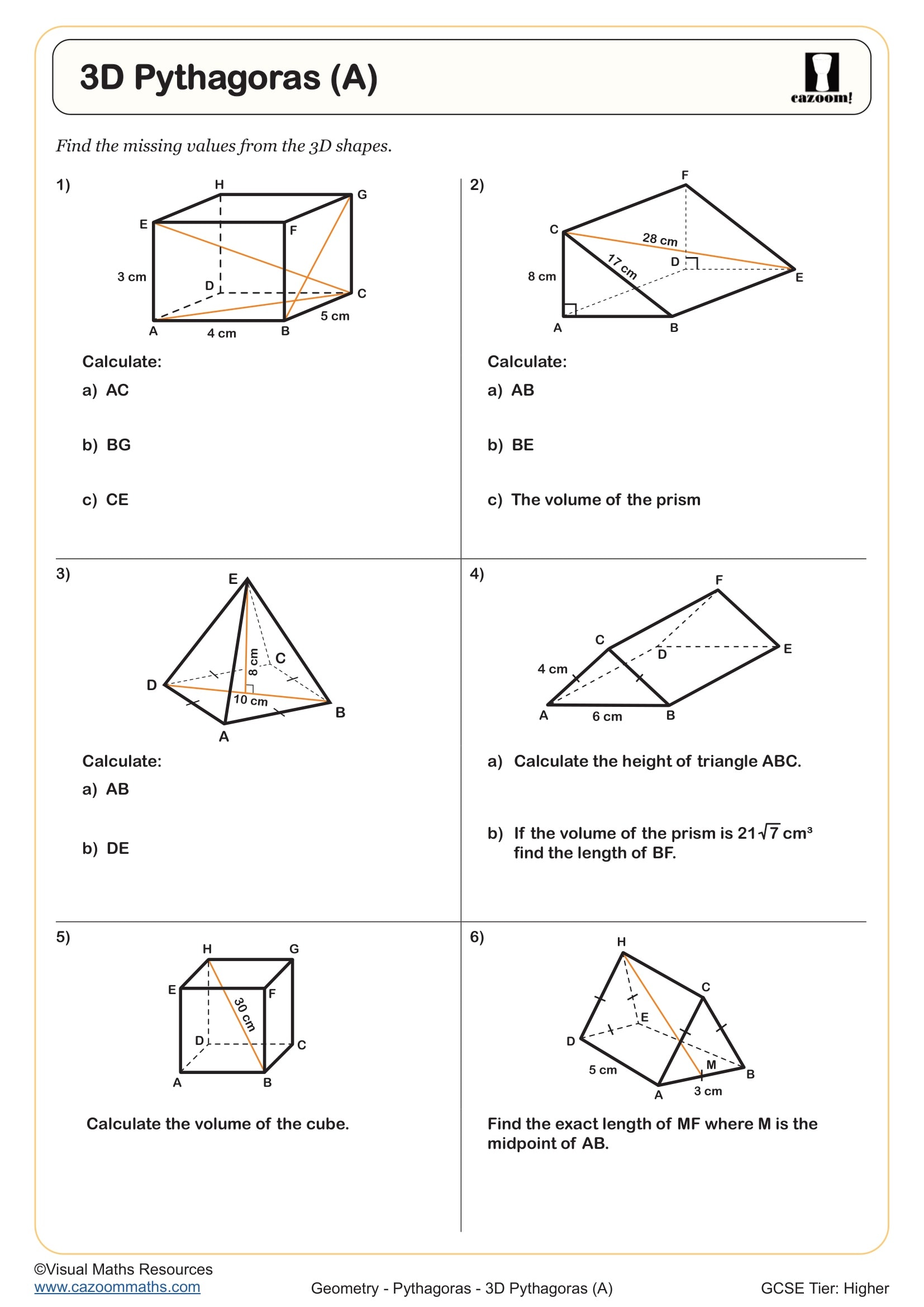
3D Pythagoras (A)
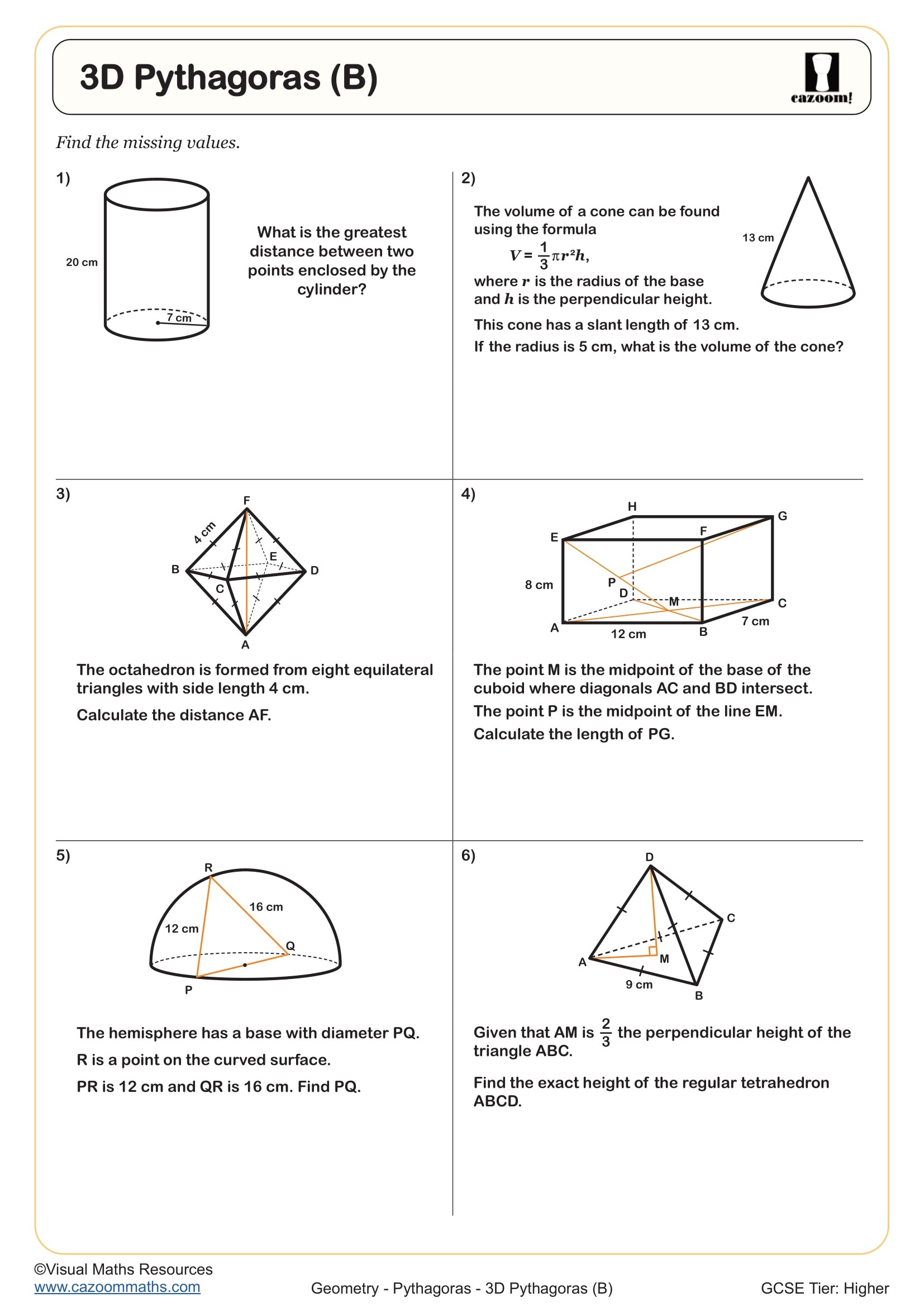
3D Pythagoras (B)
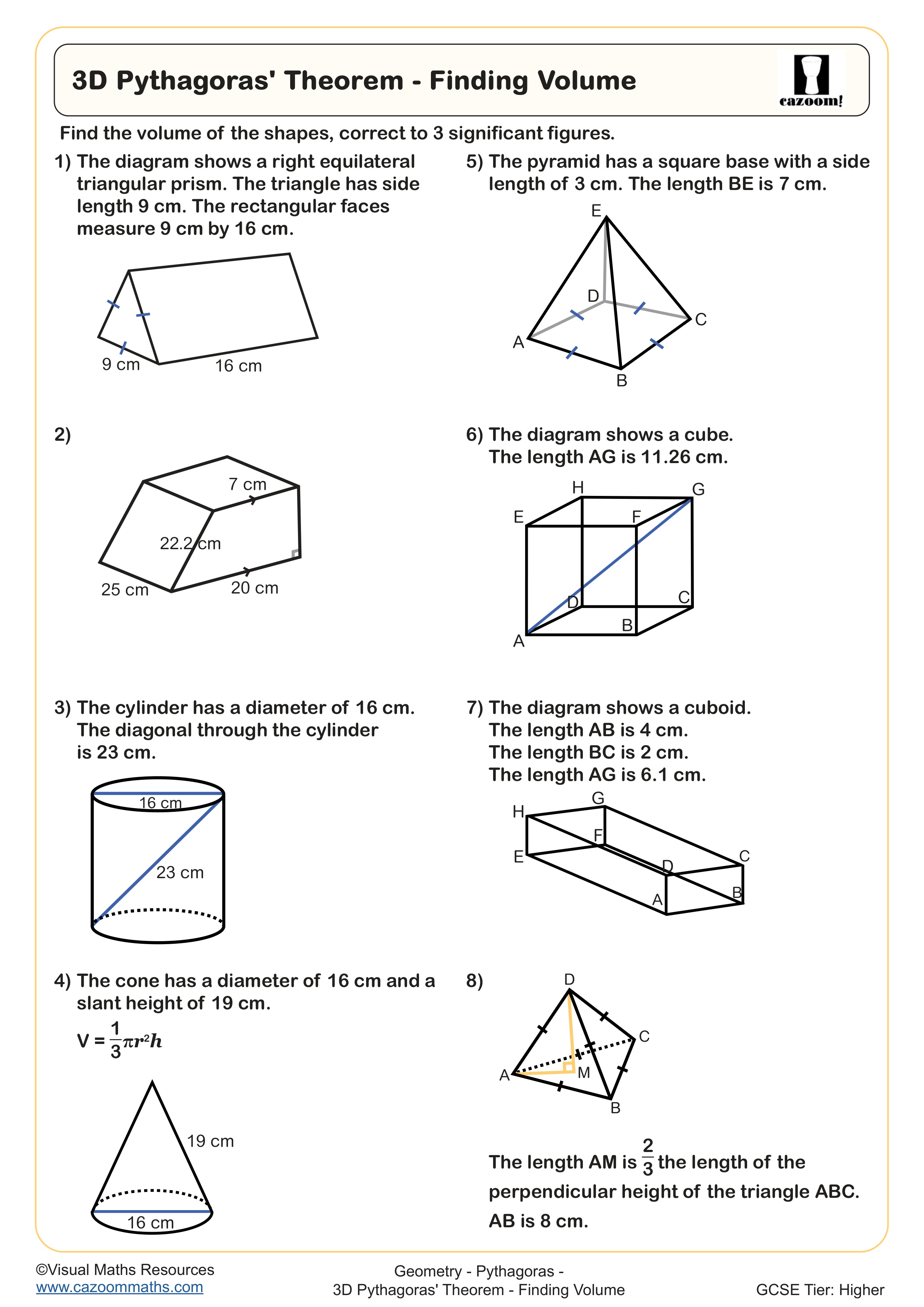
3D Pythagoras' Theorem - Finding Volume
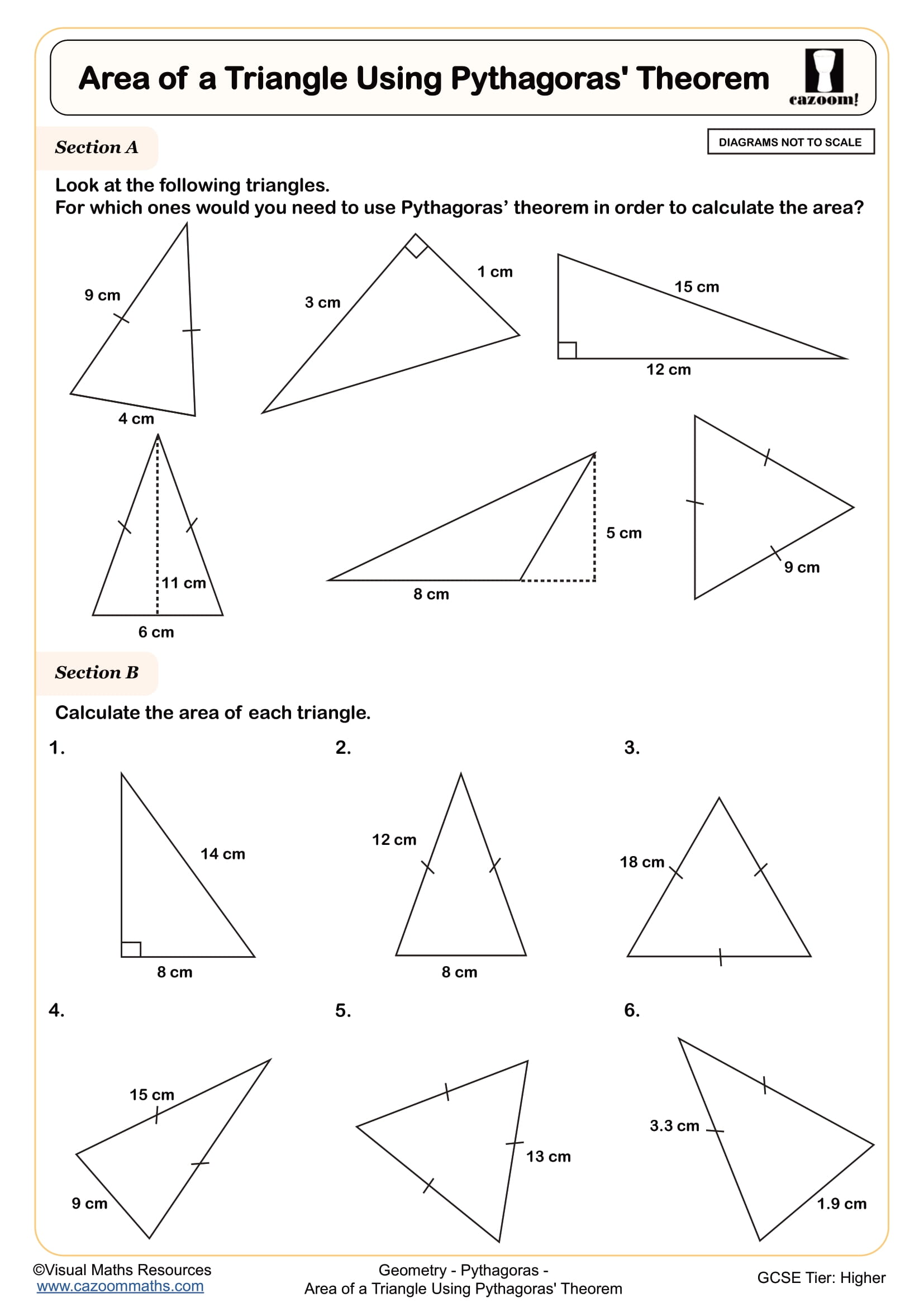
Area of a Triangle Using Pythagoras' Theorem
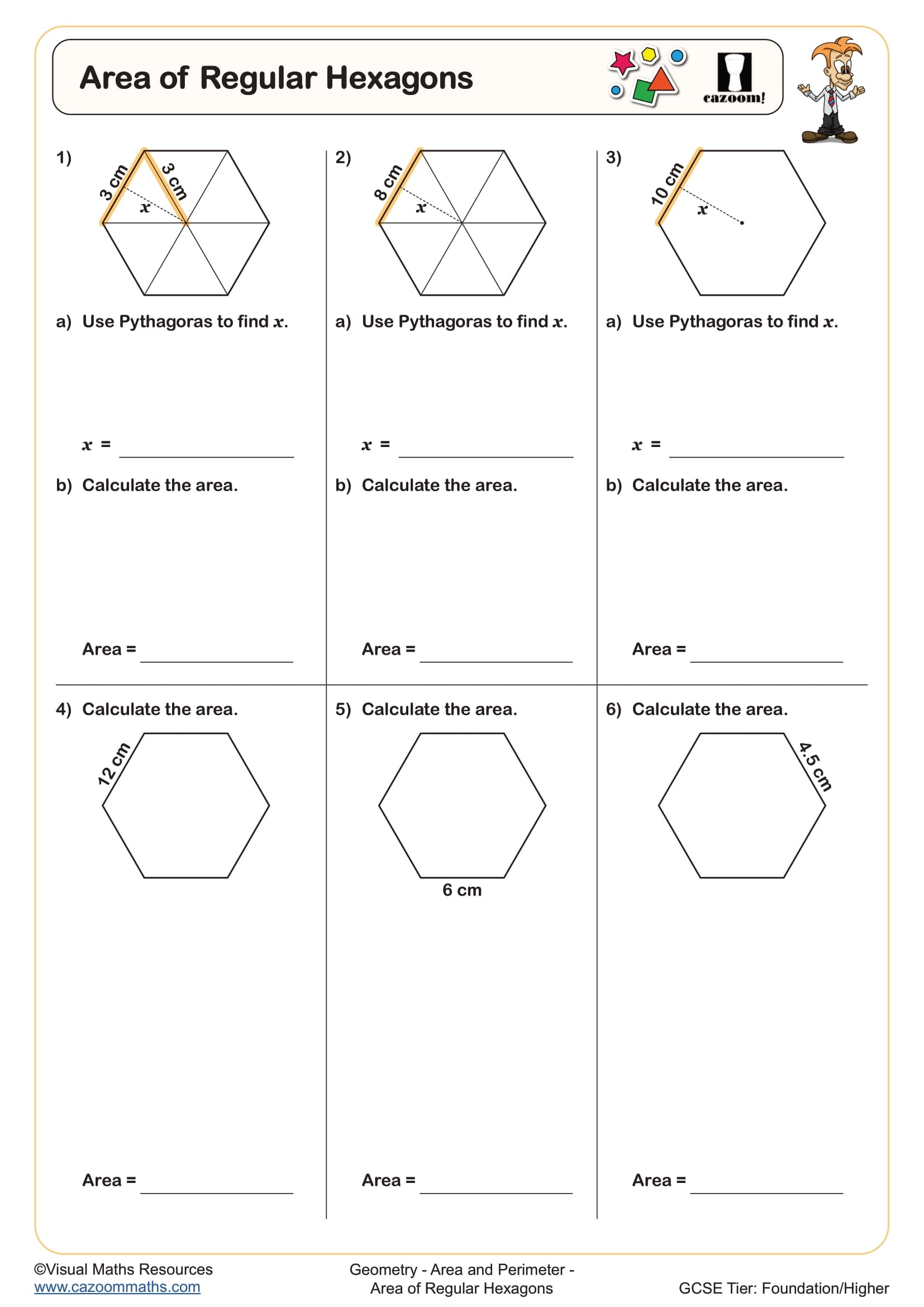
Area of Regular Hexagons
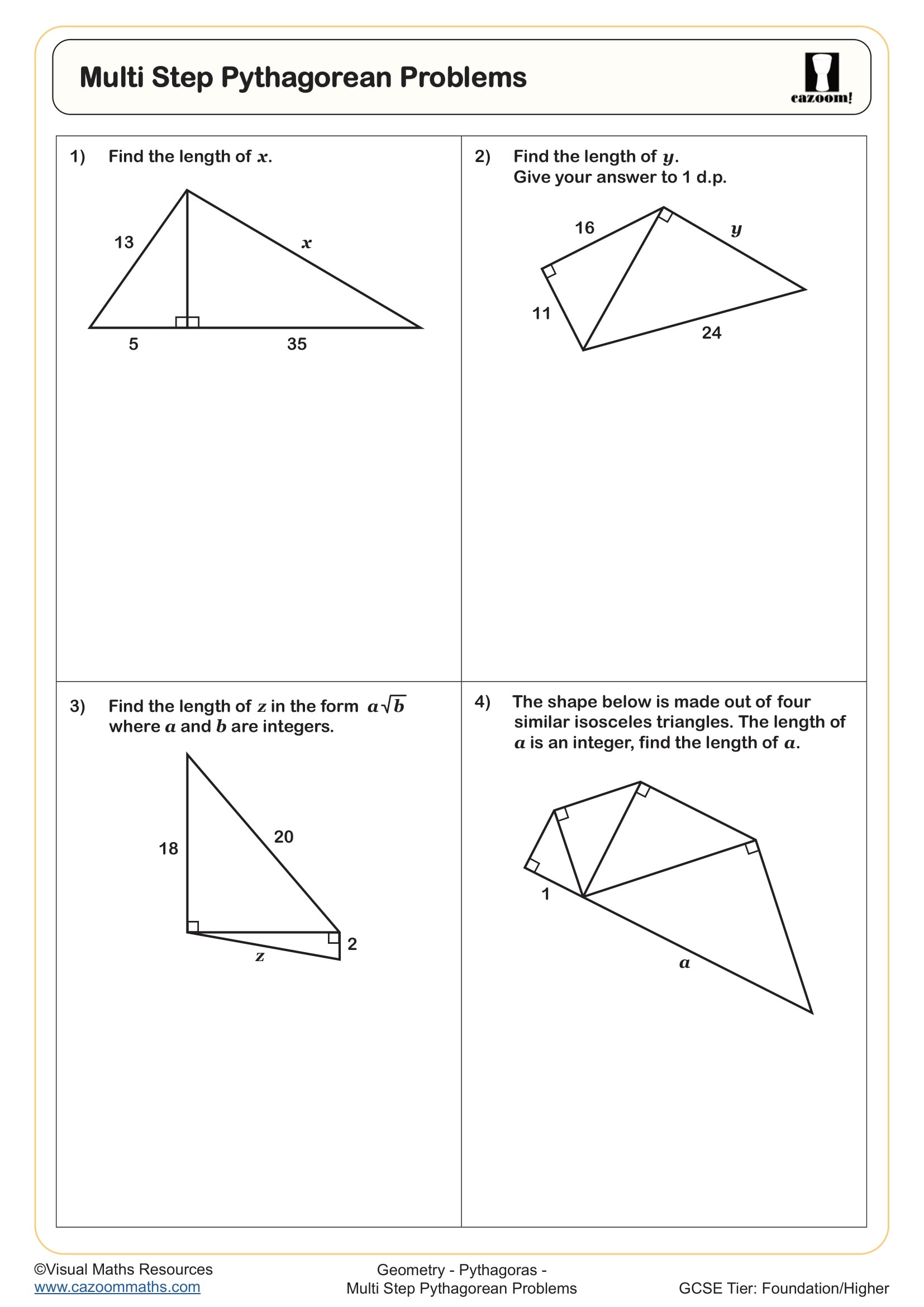
Multi Step Pythagorean Problems
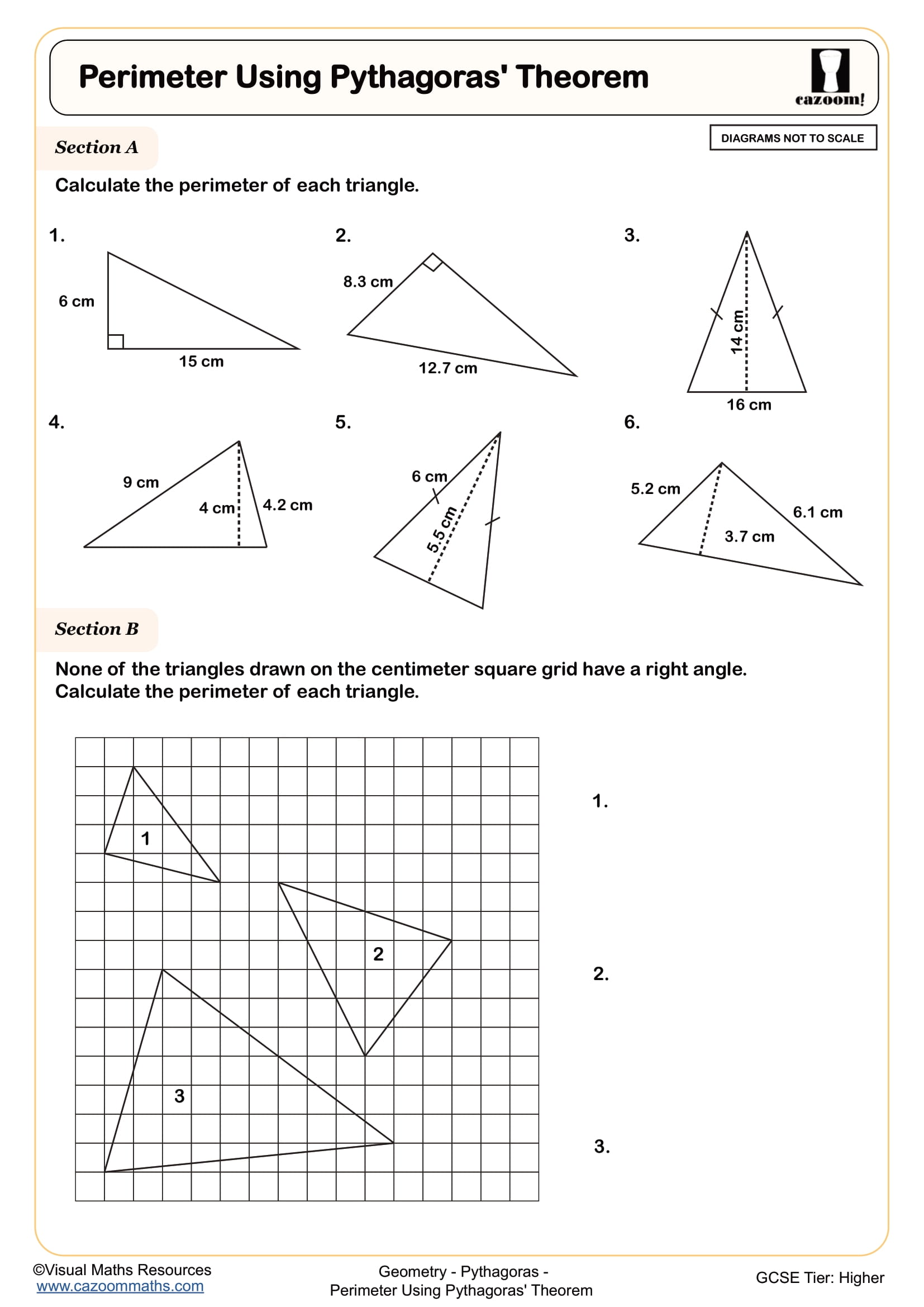
Perimeter Using Pythagoras' Theorem
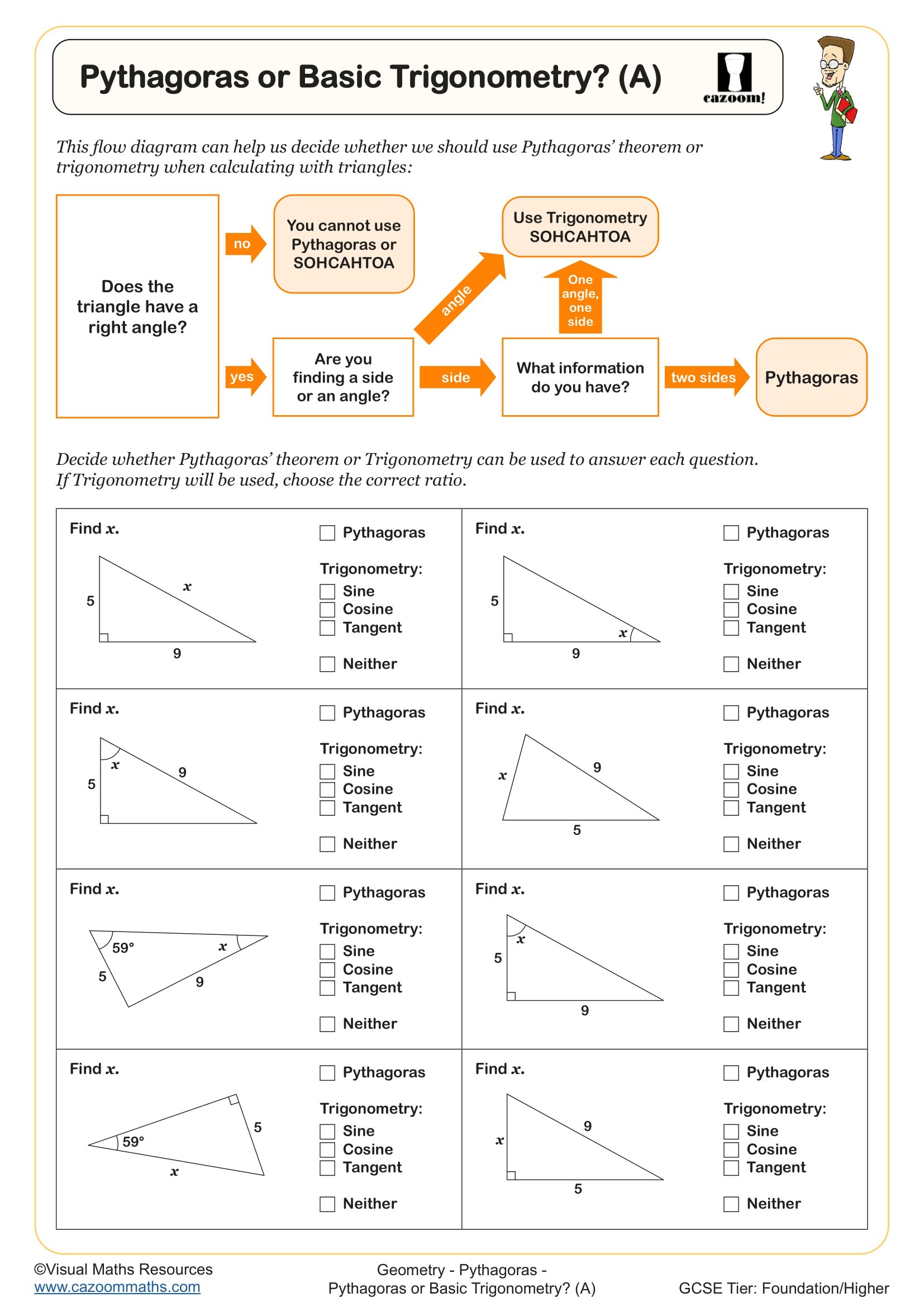
Pythagoras or Trigonometry? (A)
Pythagoras or Trigonometry? (B)
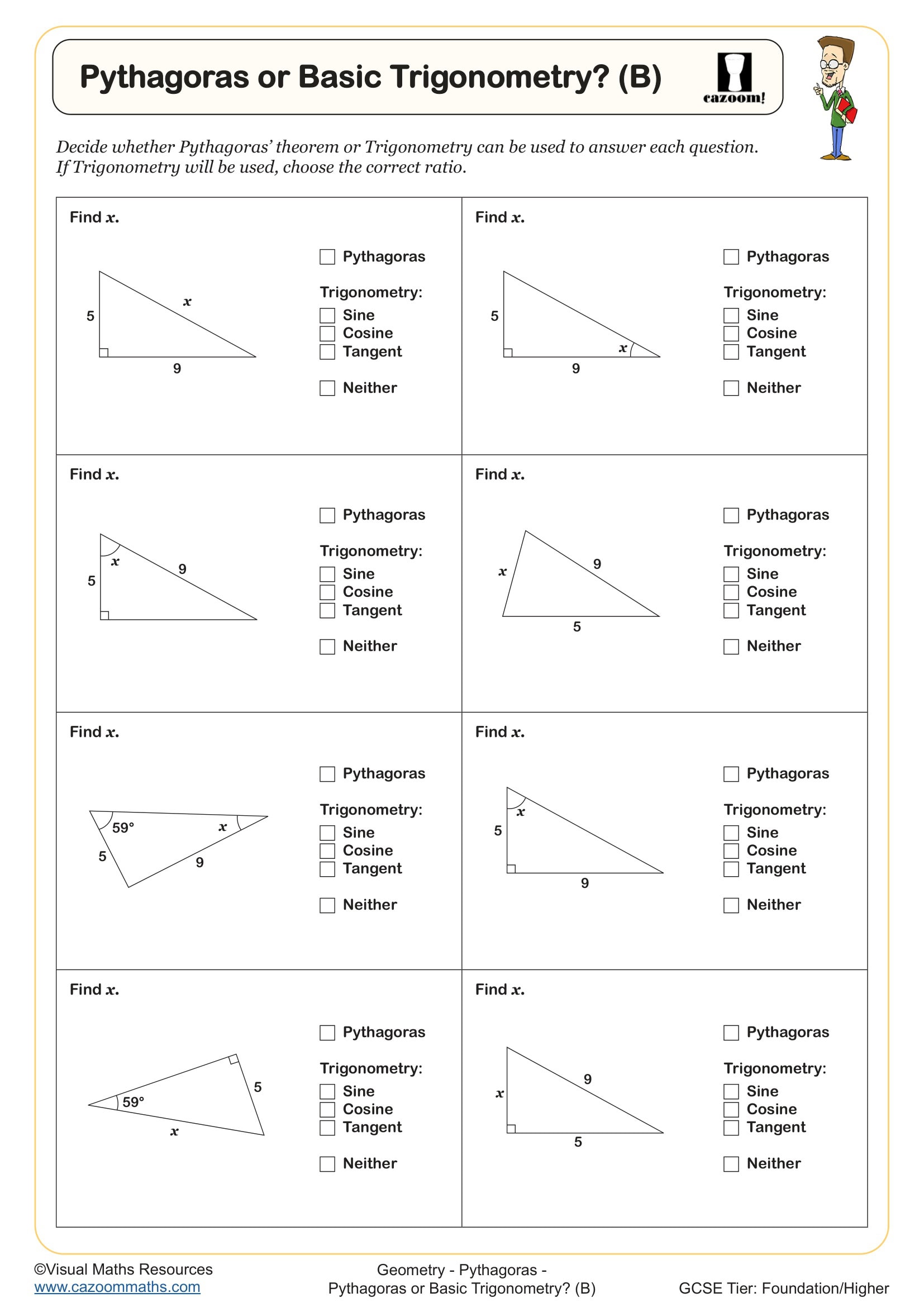
Pythagoras with Surds
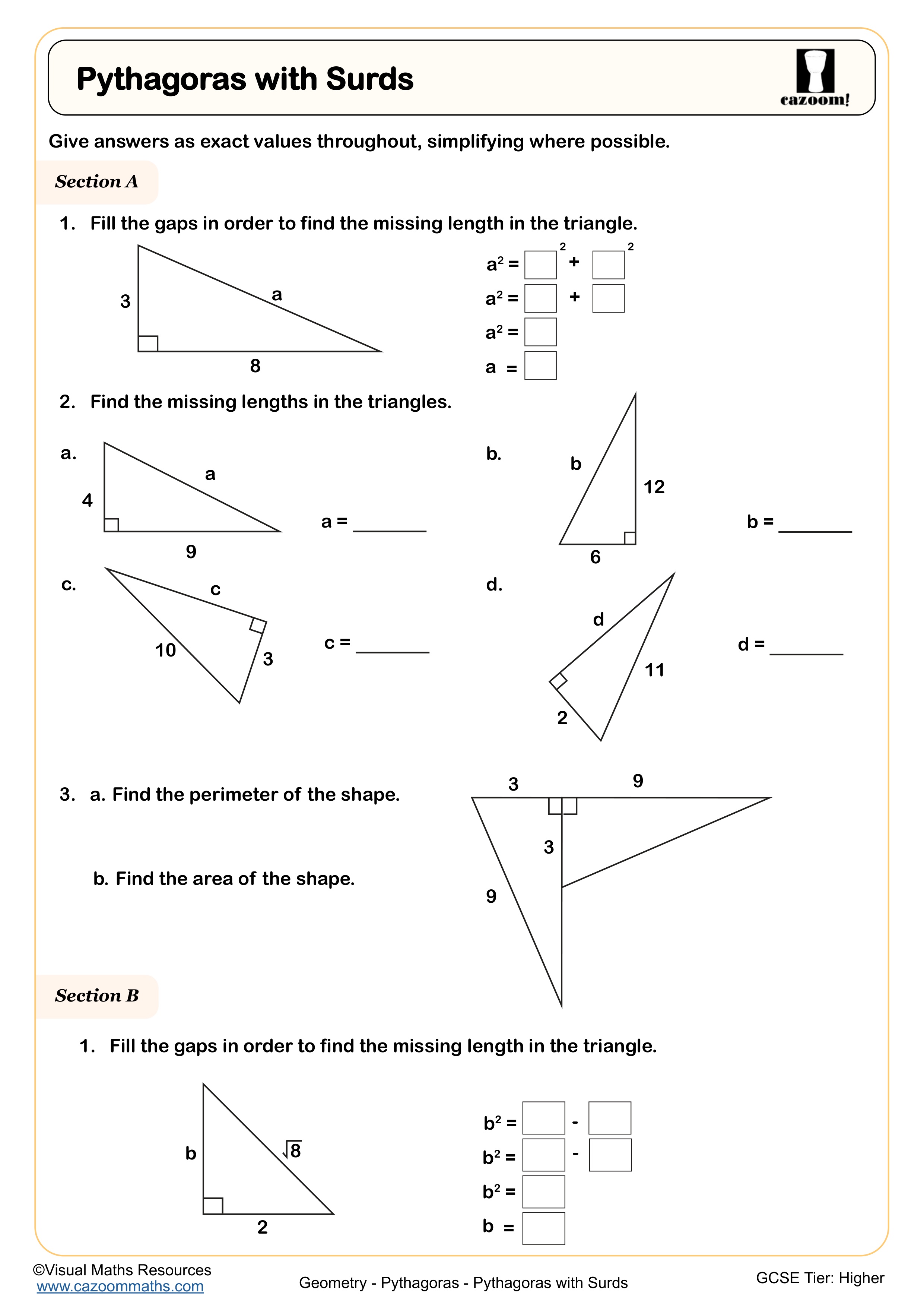
Pythagoras Word Problems
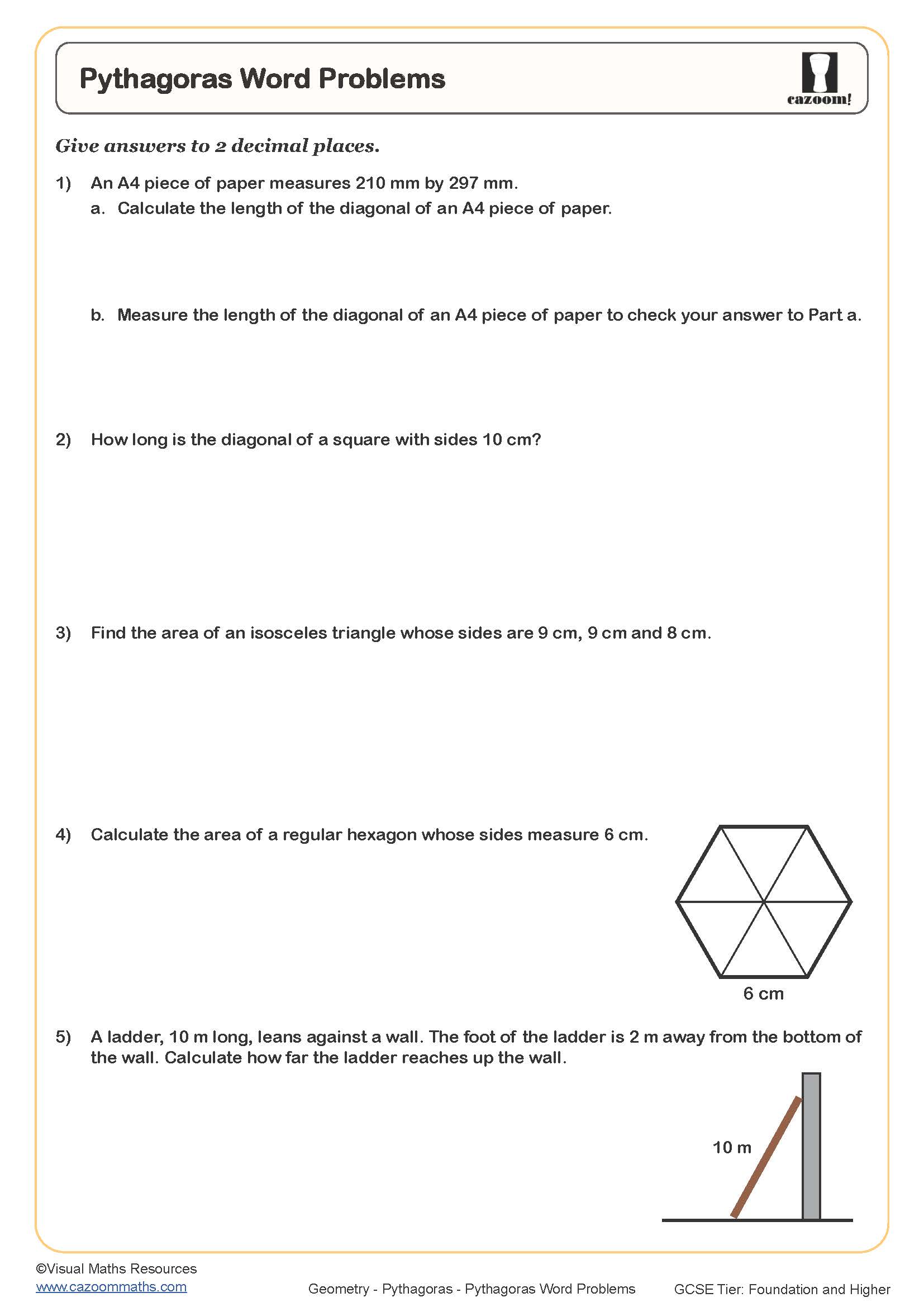
Pythagoras Word Problems (With Clues)
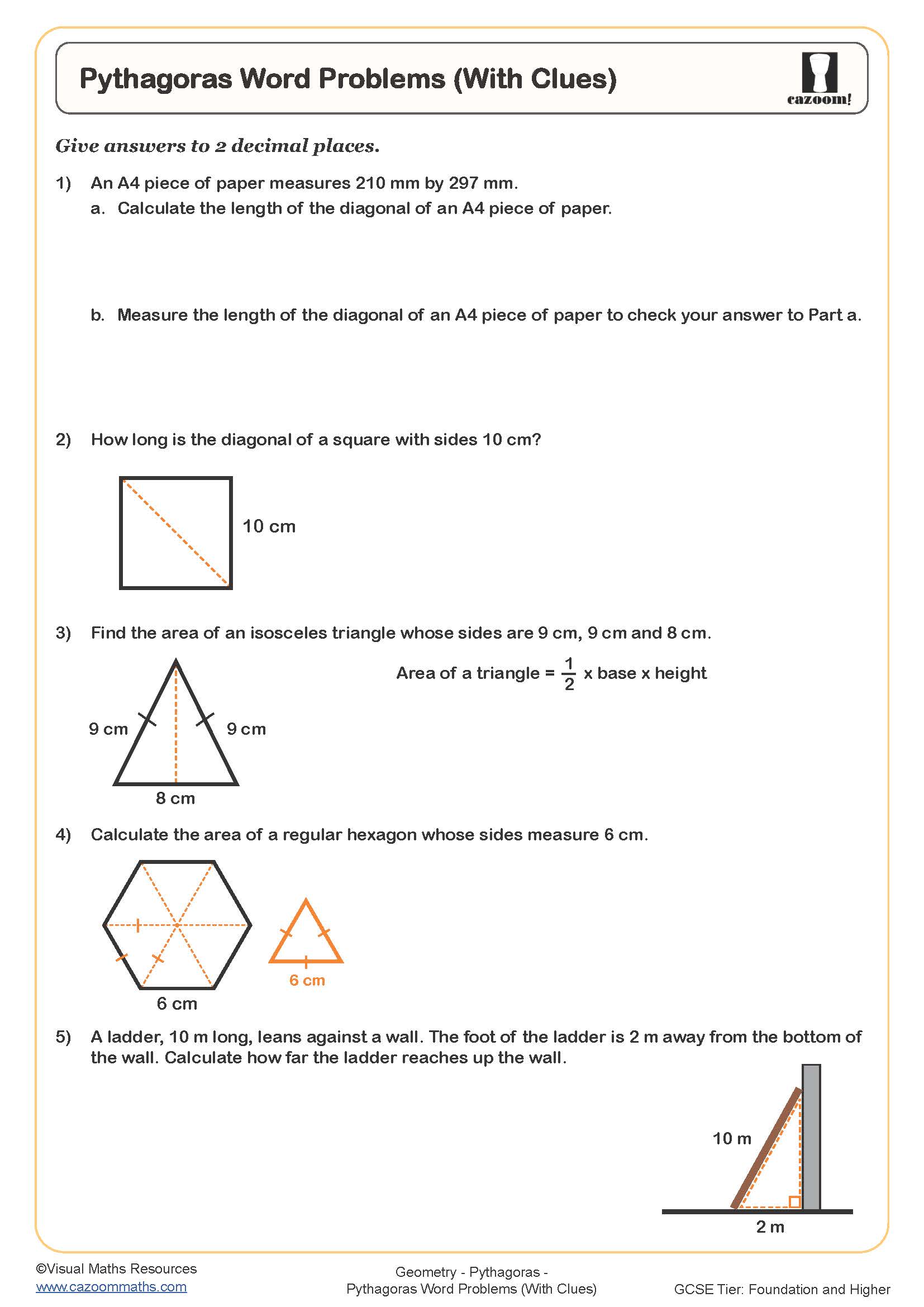
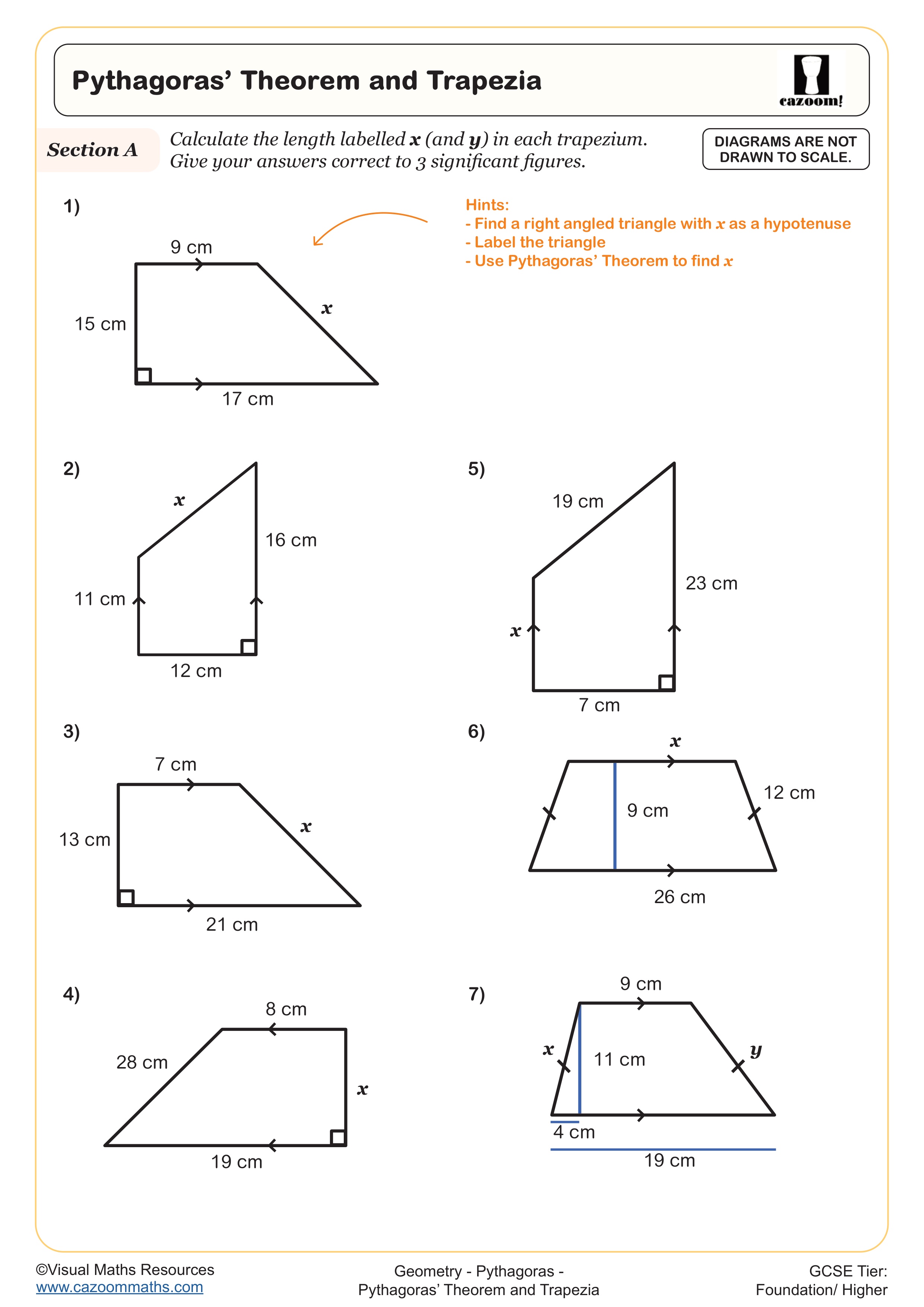
Pythagoras’ Theorem and Trapezia
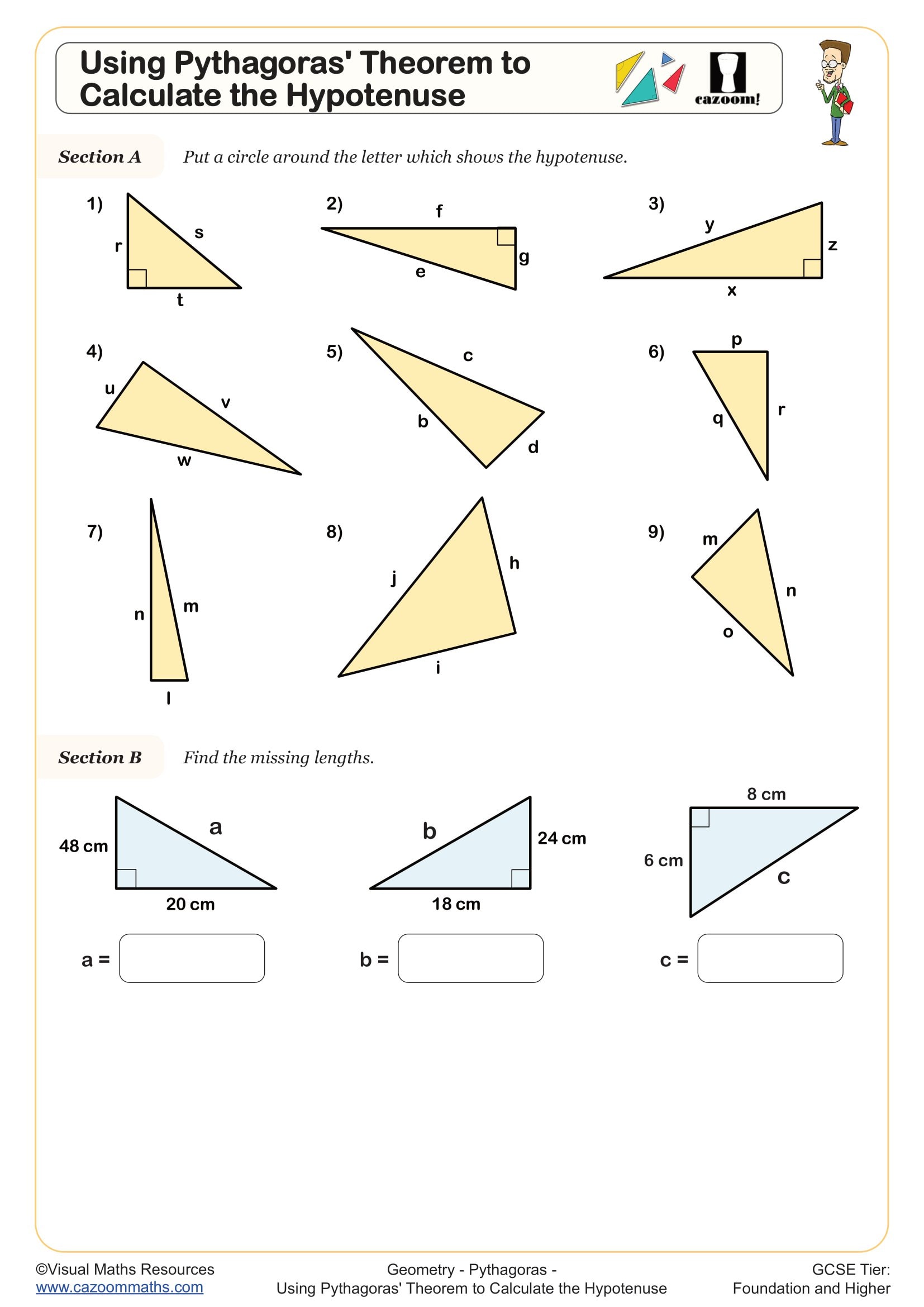
Using Pythagoras Theorem to Calculate the Hypotenuse
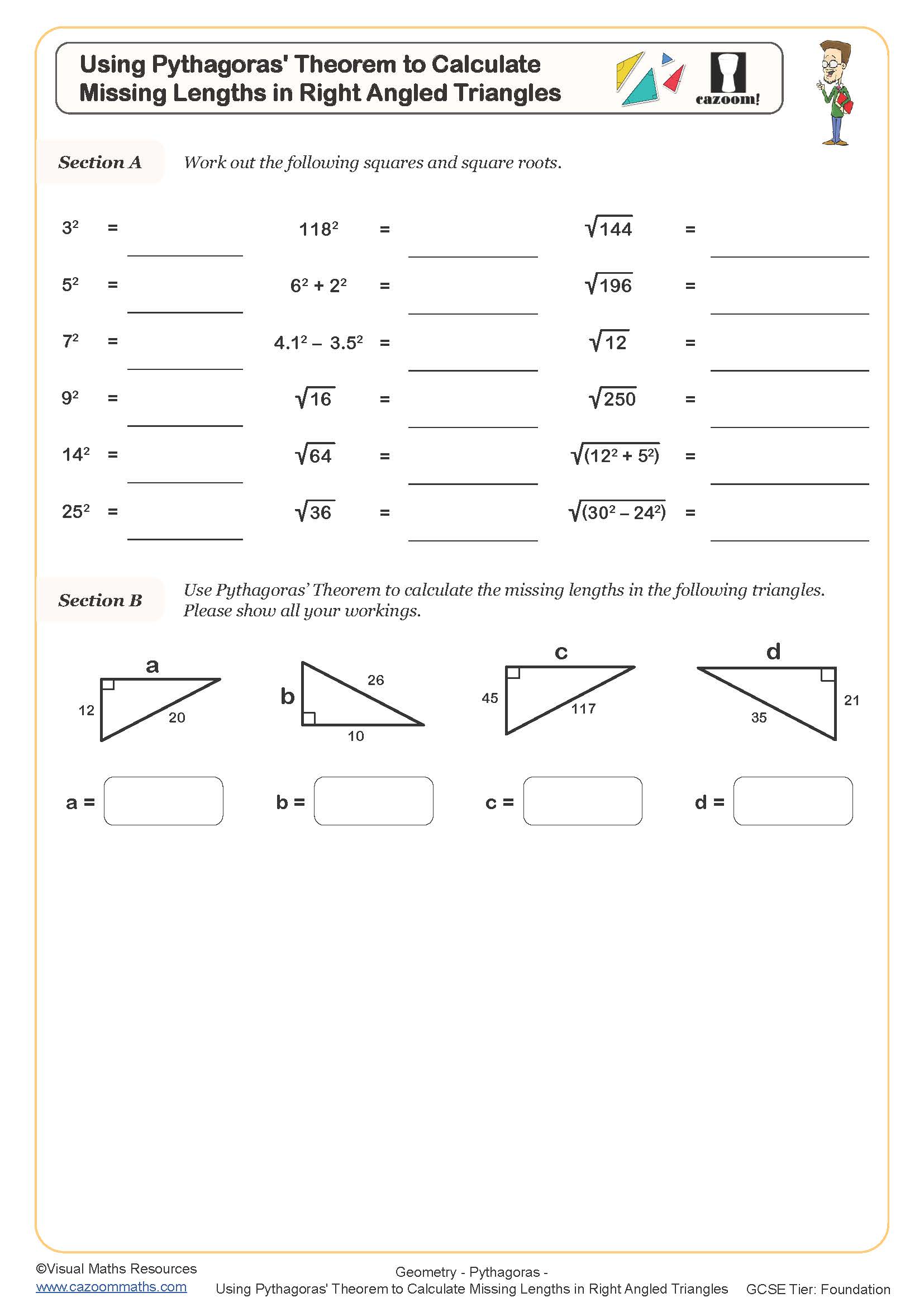
Using Pythagoras' Theorem to Calculate Missing Lengths in Right Angled Triangles
All worksheets are created by the team of experienced teachers at Cazoom Maths.
What makes a good pythagoras theorem worksheet for GCSE preparation?
Effective pythagoras theorem gcse questions and answers should progress systematically from basic right-angled triangles to complex multi-step problems. The worksheet needs clear diagrams showing triangles in various orientations, as GCSE papers deliberately present triangles rotated from the standard position to test genuine understanding rather than pattern recognition.
Teachers find that students perform significantly better when worksheets include mixed question types within each set. This prevents the common mistake of automatically assuming the longest visible side is always the hypotenuse. Quality worksheets also incorporate worded problems requiring students to draw their own diagrams, as this skill frequently appears in GCSE examinations and separates higher-achieving students from those who only memorise procedures.
Which year groups should use Pythagoras theorem worksheets?
Pythagoras theorem typically appears in Year 9 as part of the KS3 programme of study, but GCSE-level pythagoras questions require more sophisticated application than basic introduction. Year 11 students revisit the theorem with greater depth, tackling problems involving coordinates, compound shapes, and real-world applications that demand higher-order thinking skills.
Many teachers observe that students who learned Pythagoras in Year 9 often need substantial revision by Year 11, as they've forgotten the conceptual foundation. The theorem connects directly to trigonometry, making it crucial preparation for the more complex GCSE topics that follow. Students aiming for higher year groups particularly benefit from extended practice, as Pythagoras frequently appears in multi-mark questions worth significant points.
How do you solve Pythagoras problems involving coordinates effectively?
Coordinate geometry problems using Pythagoras theorem require students to visualise right-angled triangles on a grid system. The key insight is recognising that the distance between two points creates the hypotenuse of a right-angled triangle, with the horizontal and vertical distances forming the other two sides.
Teachers notice students often calculate the coordinate differences correctly but then forget to square the values before adding them. A systematic approach works best: identify coordinates, find horizontal distance, find vertical distance, then apply a² + b² = c². These problems frequently appear in GCSE papers as they test multiple skills simultaneously, making them valuable for developing mathematical fluency and problem-solving confidence.
How can teachers use these worksheets to address common misconceptions?
The most persistent misconception teachers encounter is students identifying the hypotenuse incorrectly when triangles appear in non-standard positions. Using worksheets that deliberately include rotated triangles helps students focus on the right angle rather than assuming the bottom or longest-looking side is always the hypotenuse.
Structured worksheet progression proves particularly effective for building confidence. Teachers often start lessons with basic pythagoras maths questions before introducing variations like finding shorter sides rather than the hypotenuse. The included answer sheets allow students to self-assess their understanding immediately, preventing misconceptions from becoming embedded. Regular practice with mixed question types helps students develop the flexibility needed for GCSE success, where Pythagoras problems rarely follow predictable patterns.