Year 11 Transformations Worksheets
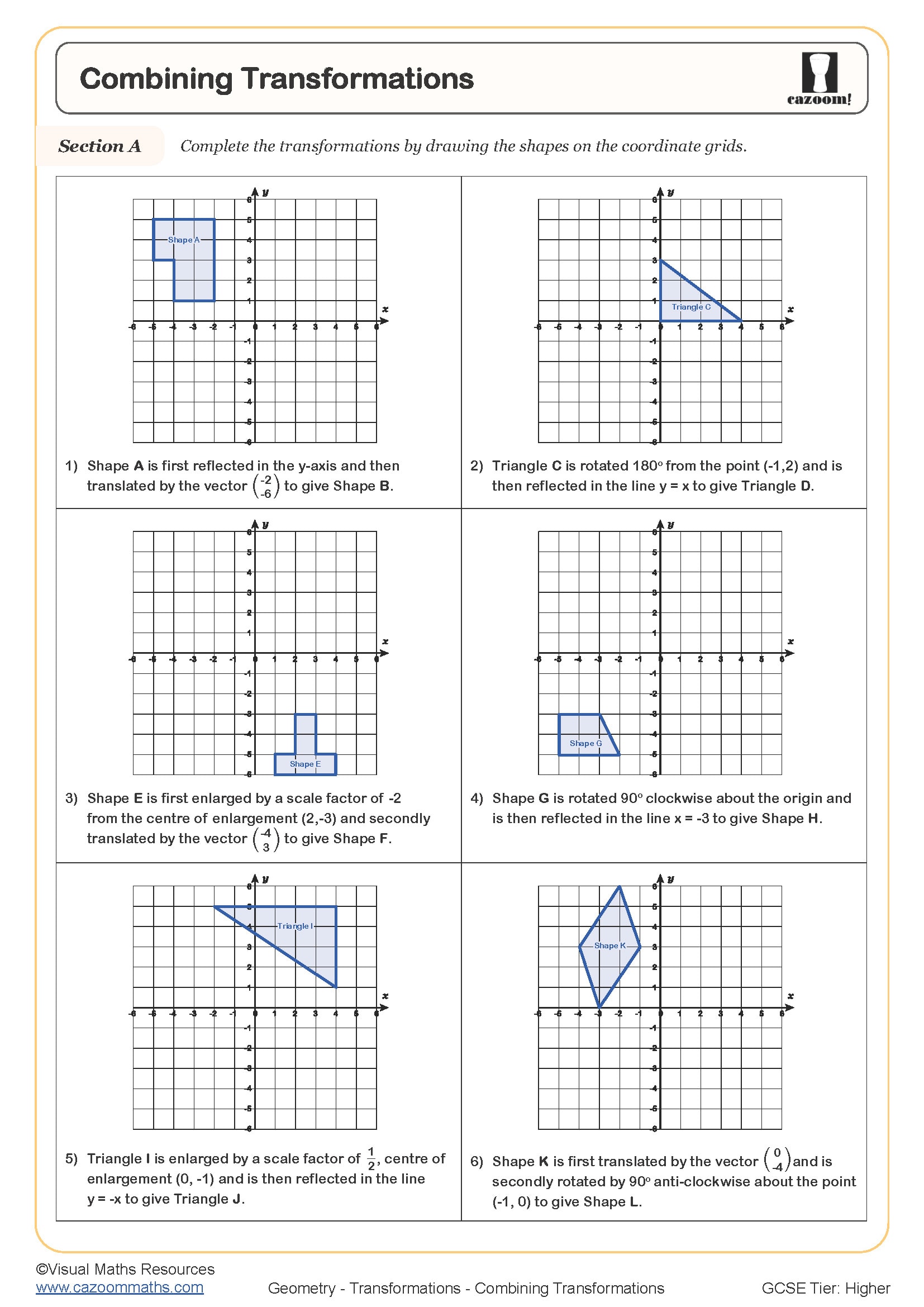
Combining Transformations
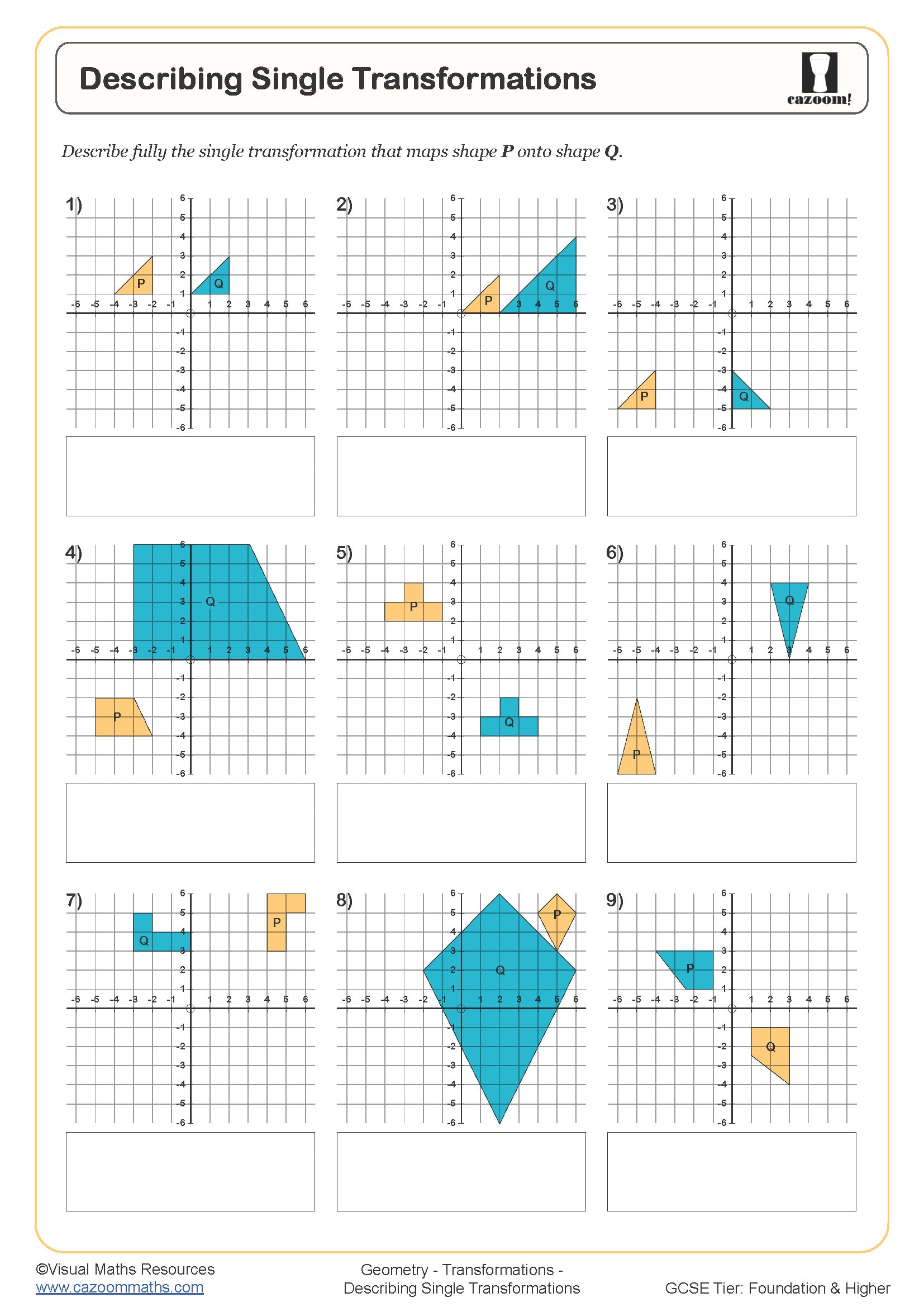
Describing Single Transformations
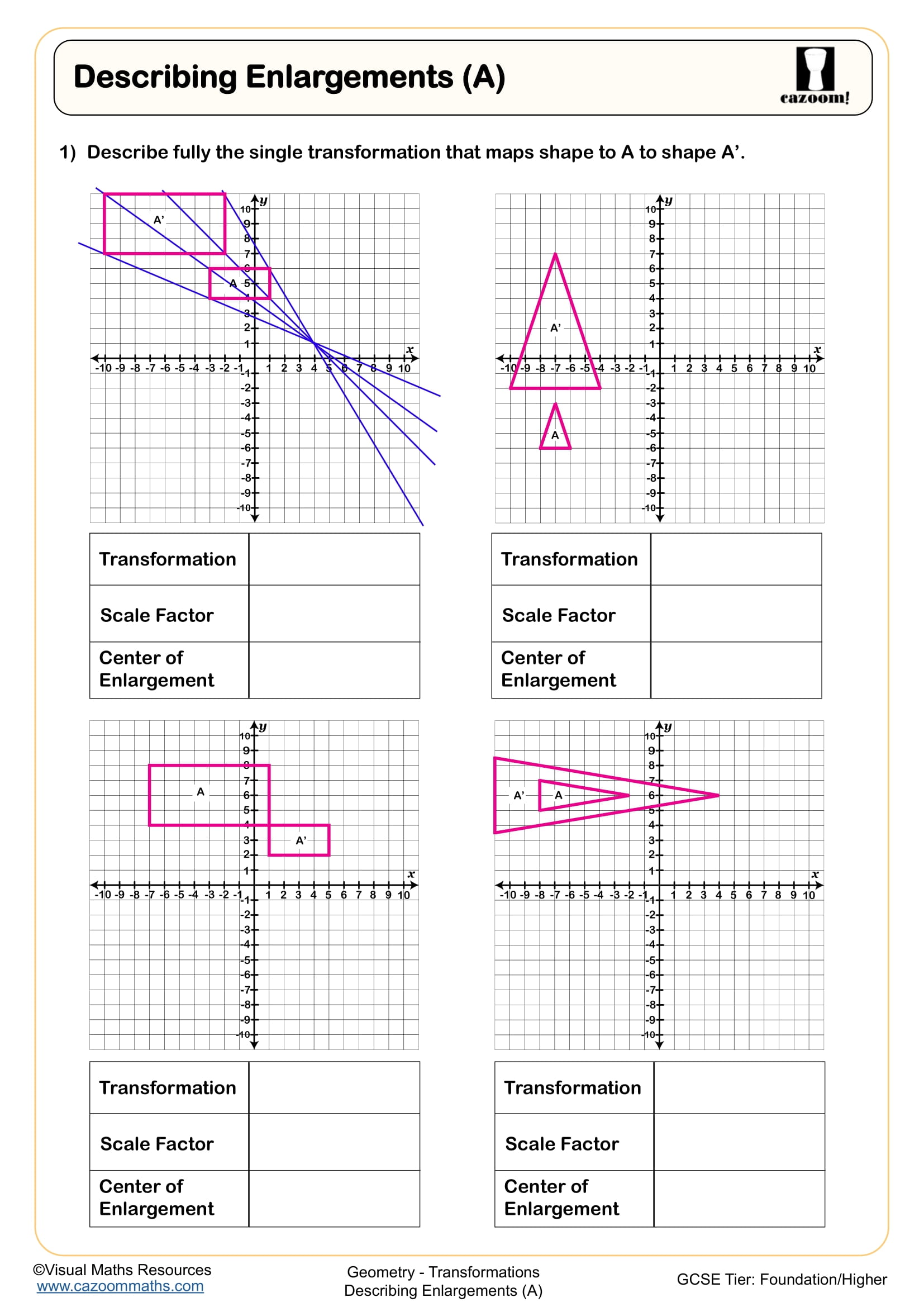
Describing Enlargements (A)
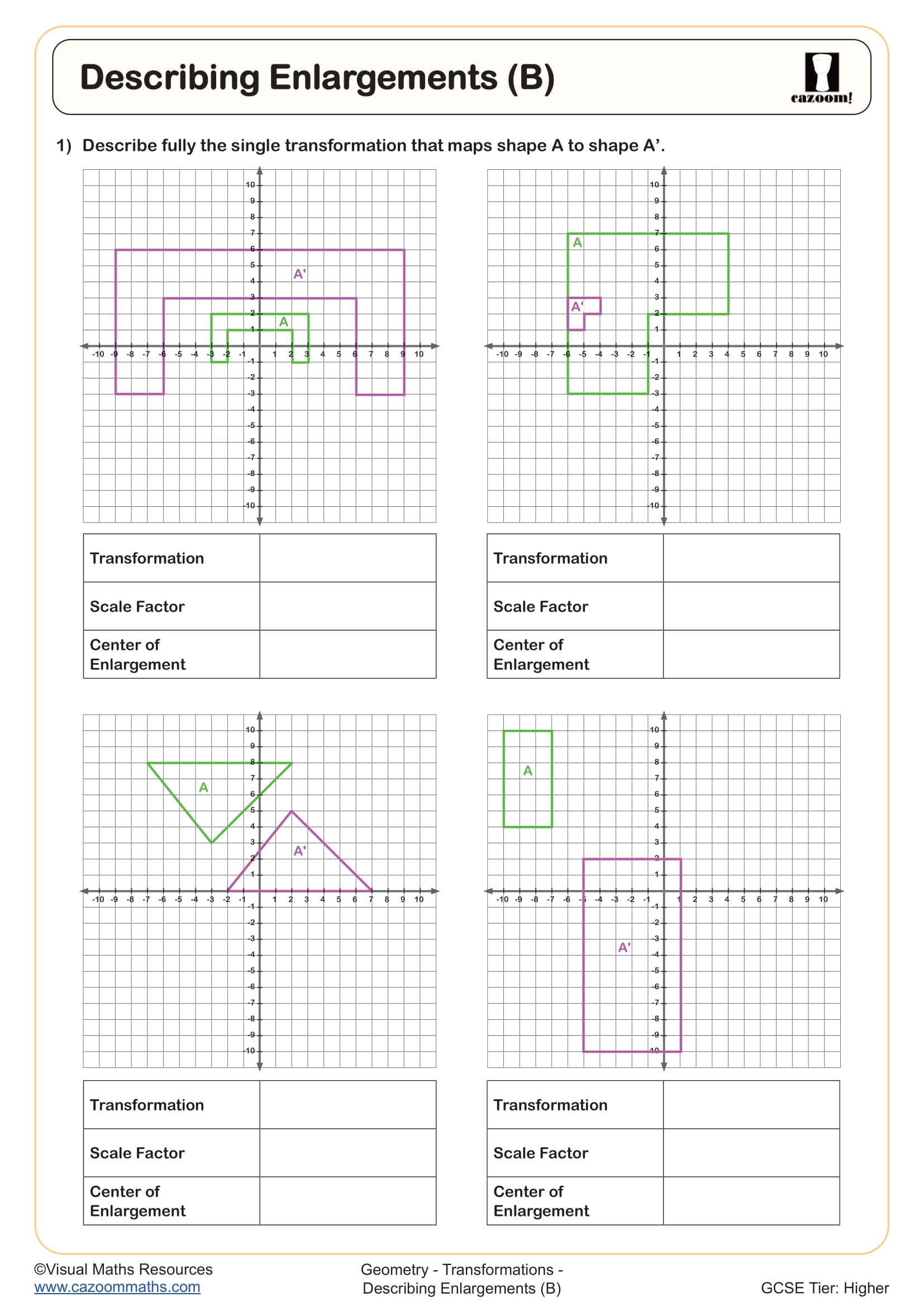
Describing Enlargements (B)
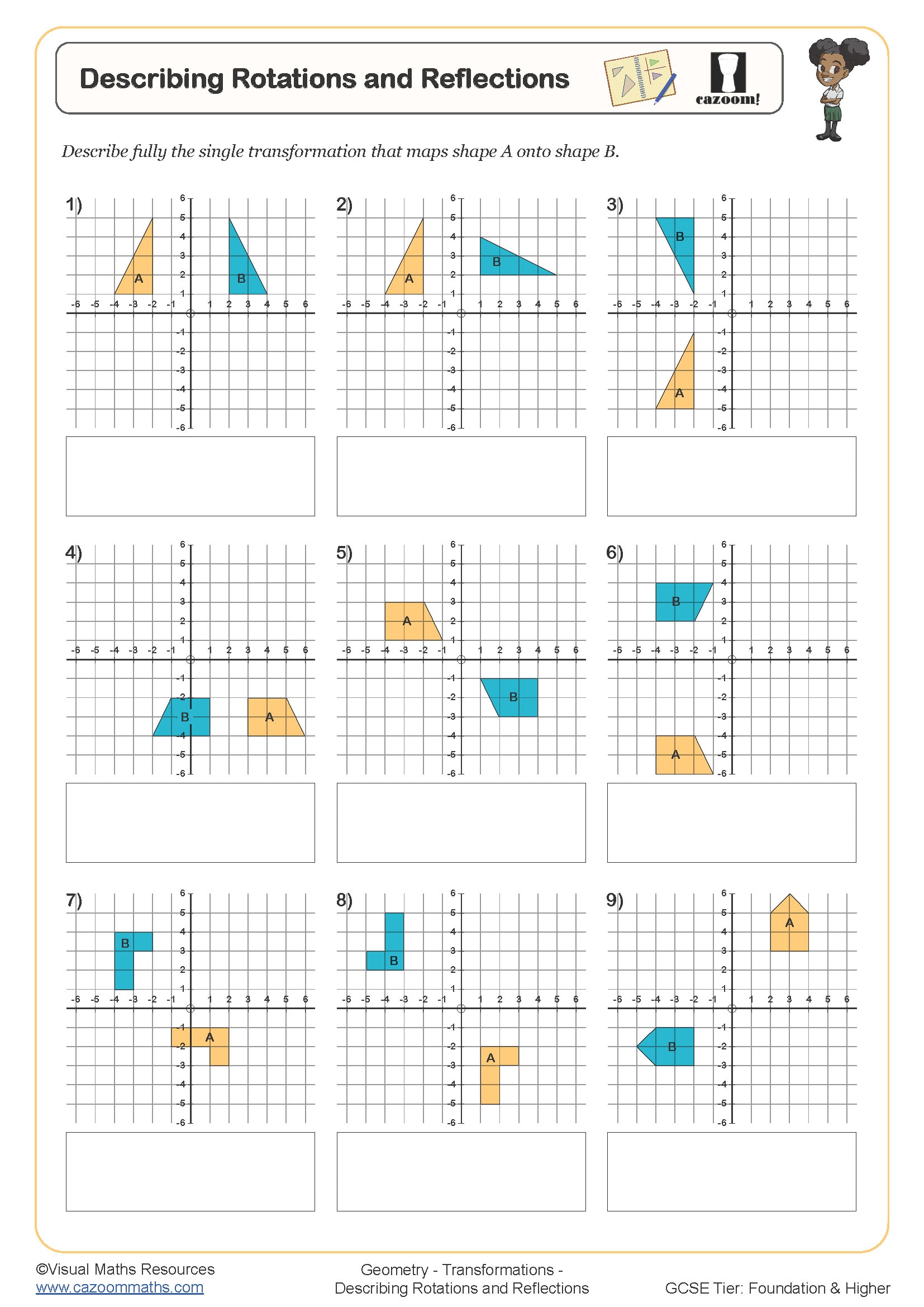
Describing Rotations and Reflections
Enlargement (C)
-Worksheet.jpg?w=3840)
Enlargement with Fractional Negative Scale Factors
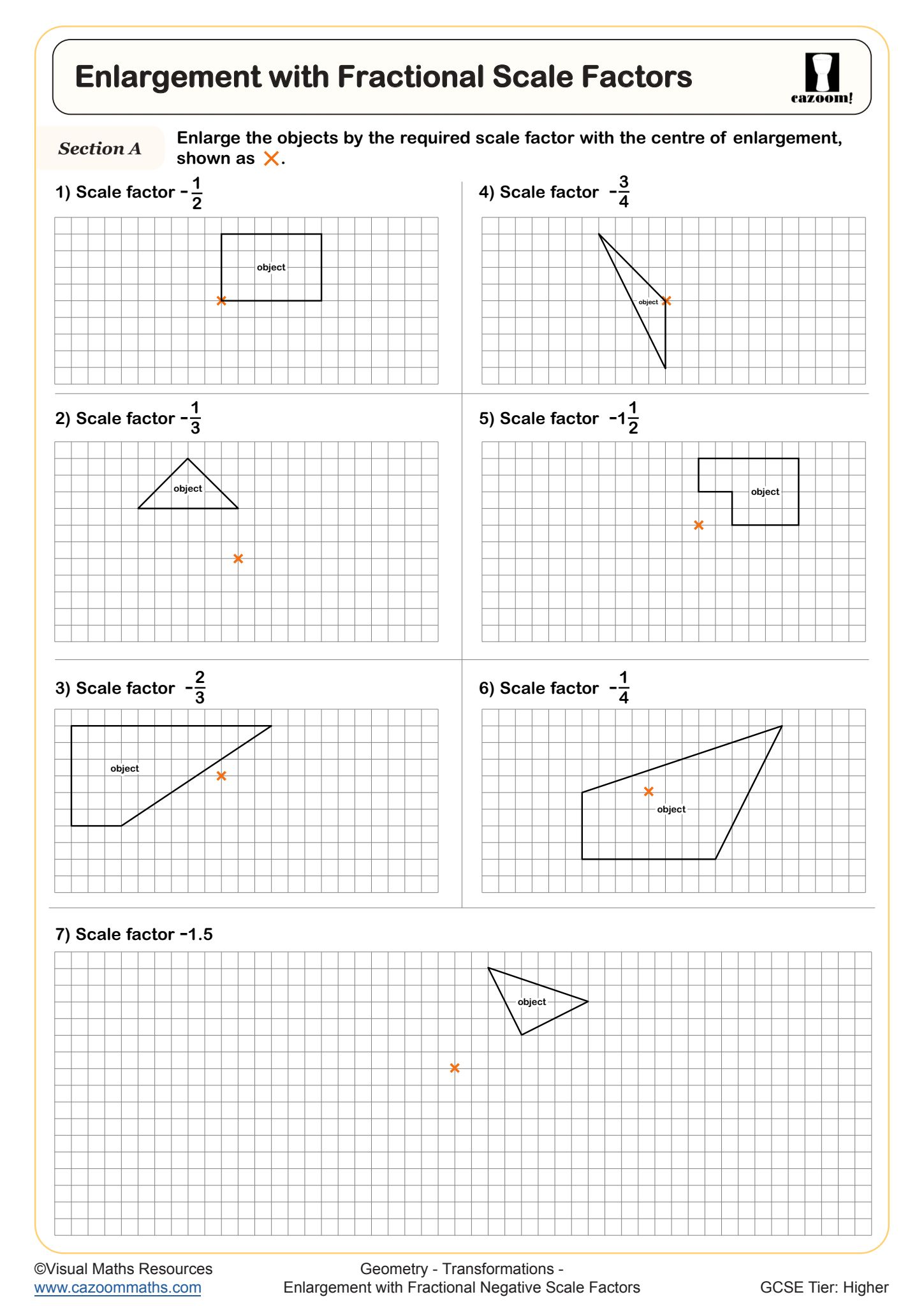
Enlargement with Fractional Scale Factors (A)
-Worksheet.jpg?w=3840)
Enlargement with Fractional Scale Factors (B)
-Worksheet.jpg?w=3840)
Enlargement with Negative Scale Factors
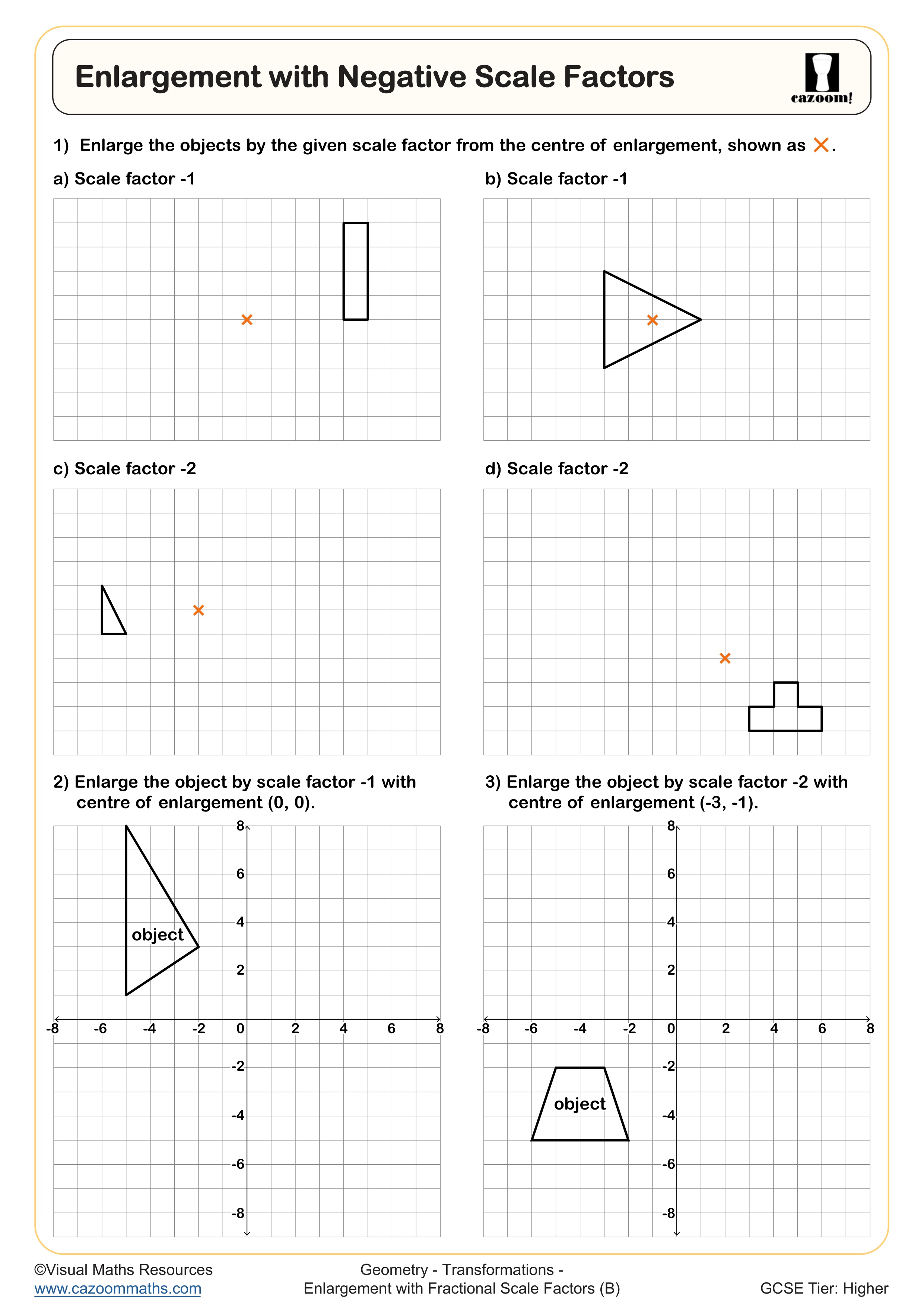
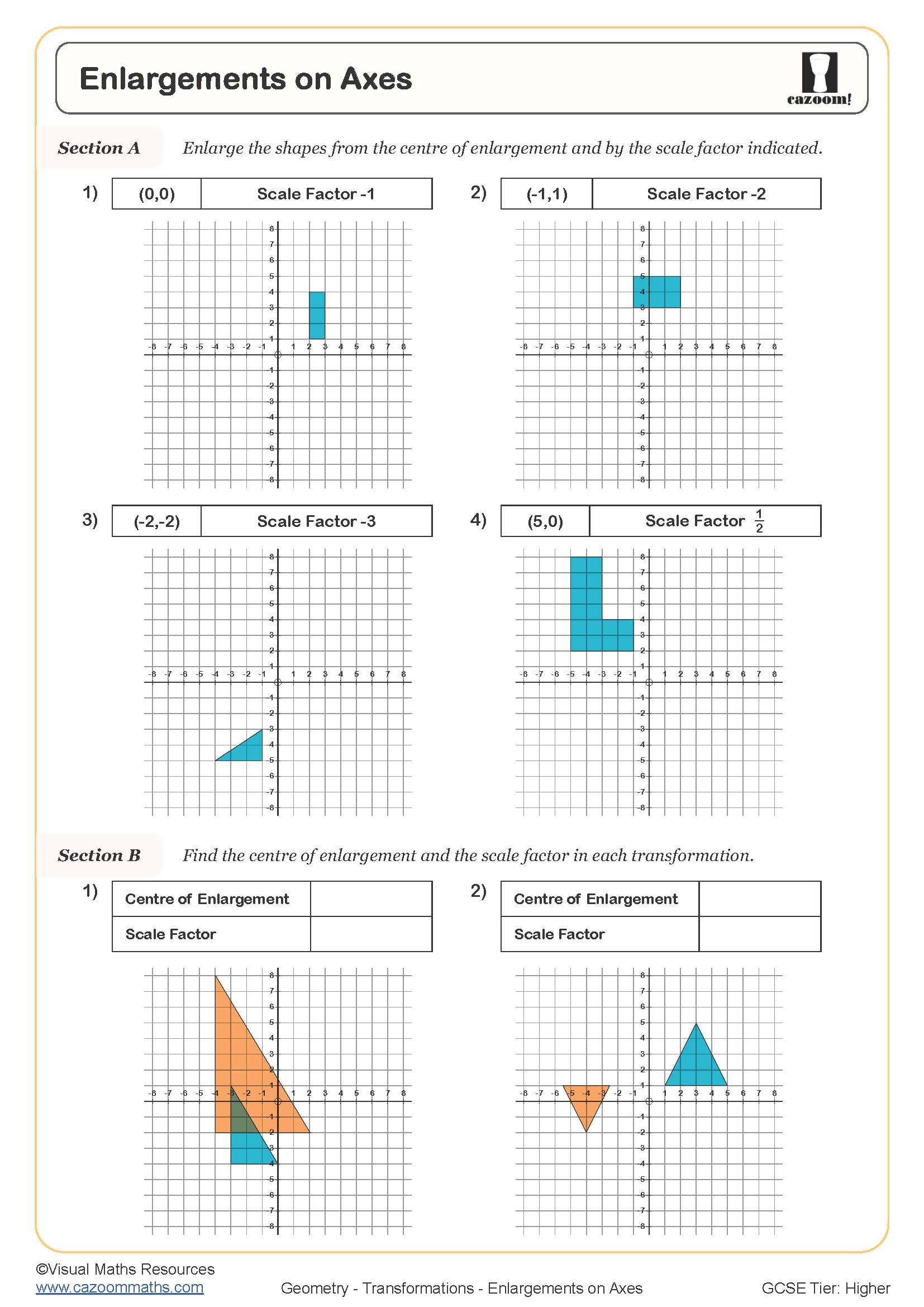
Enlargements on Axes
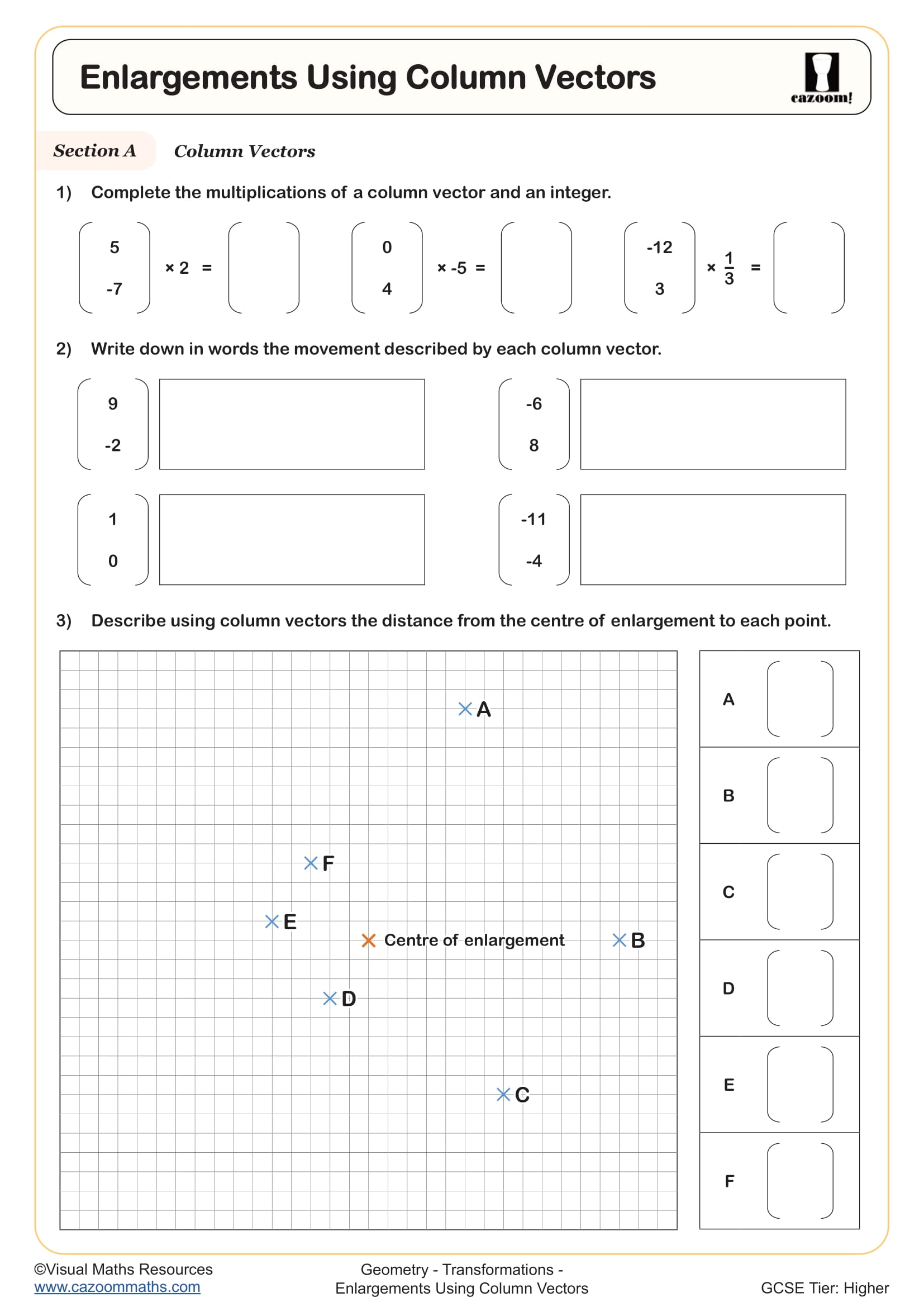
Enlargements Using Column Vectors
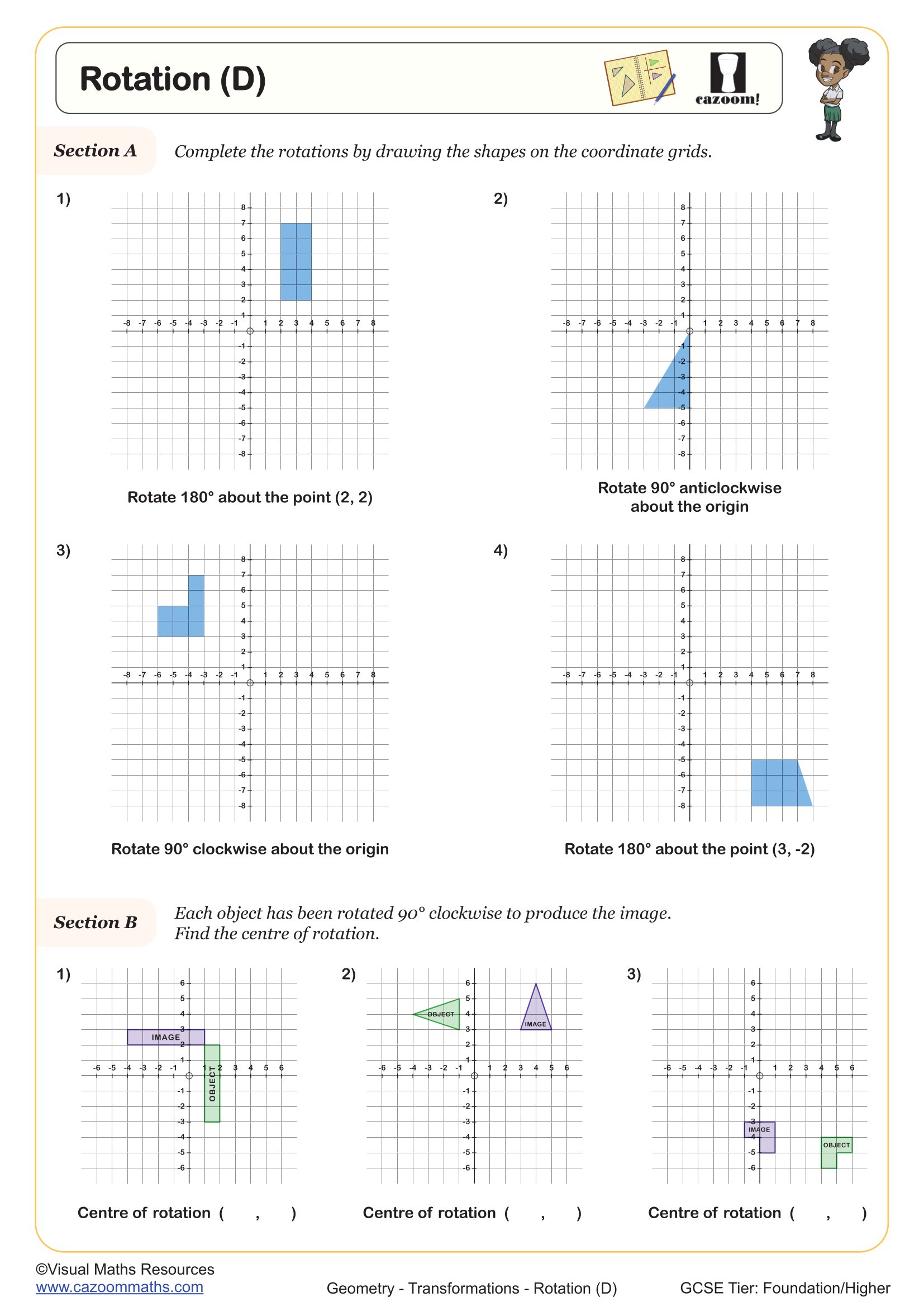
Rotation (D)
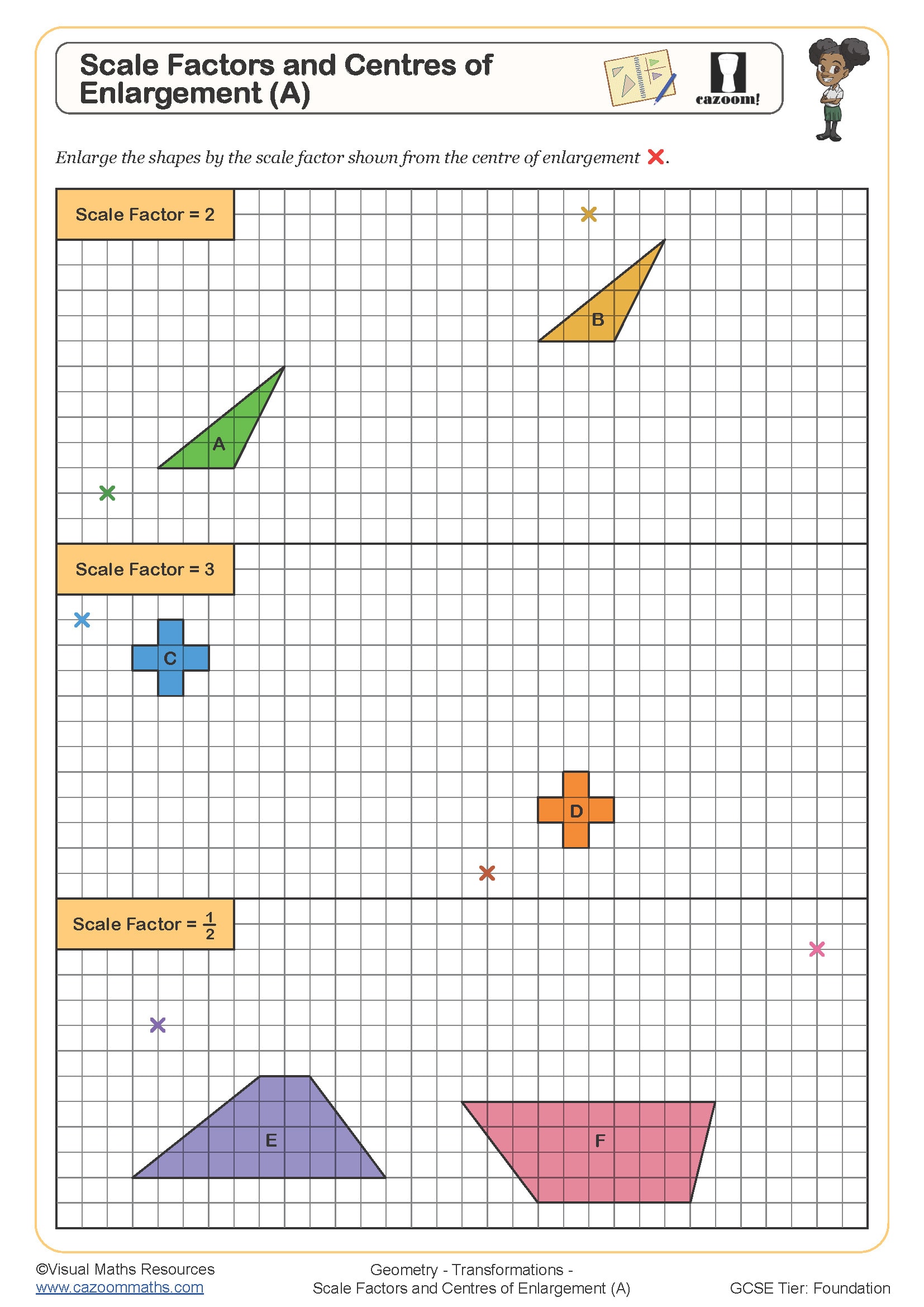
Scale Factors and Centres of Enlargement (A)
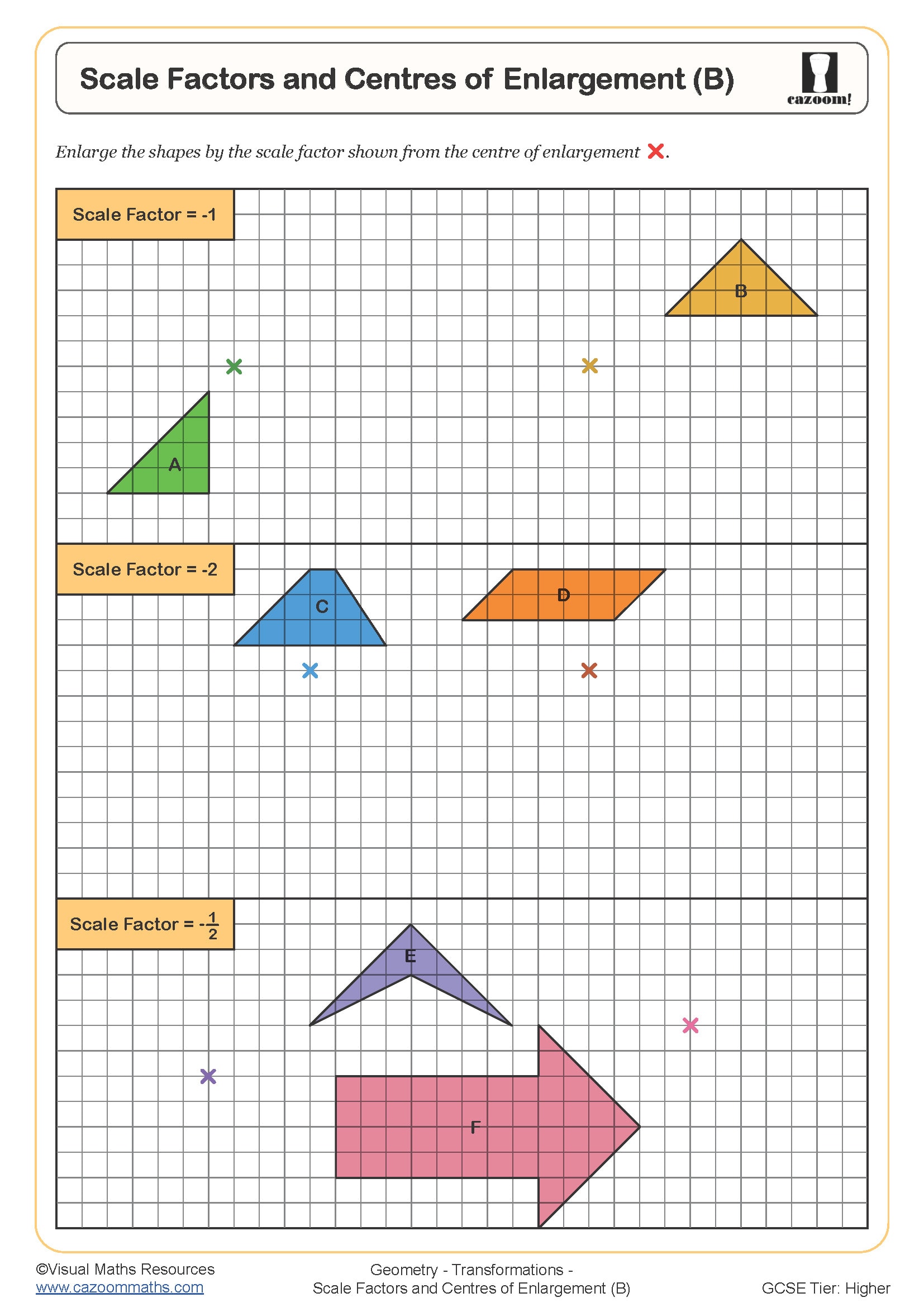
Scale Factors and Centres of Enlargement (B)
Translations - from Column Vectors
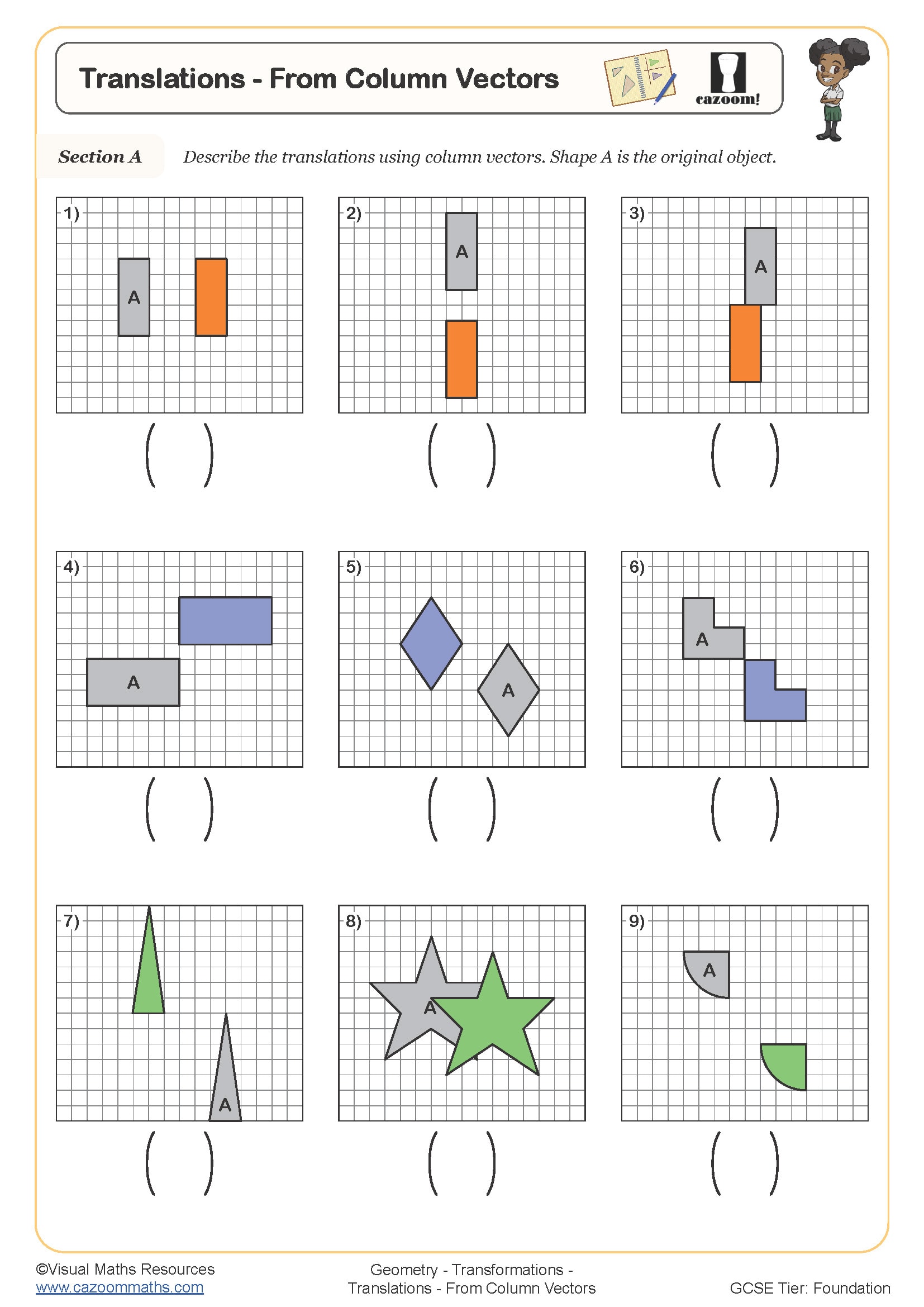
All worksheets are created by the team of experienced teachers at Cazoom Maths.
What makes an effective transformations worksheet for GCSE preparation?
An effective transformations worksheet should progress systematically from identifying single transformations to describing and performing combined transformations. Teachers notice that students need extensive practice with the precise mathematical language required for GCSE, particularly distinguishing between 'rotation of 90° clockwise about the origin' versus vague descriptions like 'turned right'.
The most successful transformation worksheet formats include coordinate grids for practical work, followed by questions requiring written descriptions. Students often lose marks on GCSE papers by omitting crucial details like the centre of rotation or the equation of the line of reflection, so worksheets should explicitly practise this mathematical vocabulary alongside the geometric skills.
How do transformations progress from Year 7 through to Year 11?
The transformations curriculum builds systematically across Key Stages 3 and 4, starting with simple translations and reflections in Year 7, then introducing rotations and enlargements. By Year 9, students typically encounter transformations on coordinate grids, whilst Year 11 work focuses on combined transformations and invariant points required for GCSE success.
Teachers observe that the jump from describing single transformations to analysing sequences of transformations often challenges students. Year 11 worksheets therefore emphasise the order dependency of combined transformations, showing how rotating then reflecting produces different results from reflecting then rotating the same shape, a concept crucial for higher-tier GCSE questions.
Why do students find combined transformations particularly challenging?
Combined transformations require students to track multiple changes whilst maintaining accuracy in their mathematical descriptions. Teachers notice that students often correctly perform the geometric operations but struggle to describe the single transformation equivalent, particularly when the combination involves rotations about different centres or reflections across parallel lines.
The key difficulty lies in visualising how two transformations compose into a third. For example, two reflections across parallel lines create a translation, whilst two reflections across intersecting lines produce a rotation. Students need extensive practice recognising these patterns, which appears regularly in GCSE questions worth significant marks.
How can teachers use these worksheets most effectively in their lessons?
Teachers find these worksheets work best when students complete practical constructions first, then move to analytical description tasks. Using mini-whiteboards for initial attempts allows teachers to identify misconceptions quickly before students practise independently. The answer sheets enable peer marking activities where students explain their reasoning to classmates.
Many teachers report success using these resources for differentiated homework, with some students tackling basic single transformations whilst others work through complex combined transformation challenges. The PDF format allows teachers to project solutions for whole-class discussion, particularly valuable when addressing common errors around mathematical language and precision in geometric descriptions.