Year 11 Trigonometry Worksheets
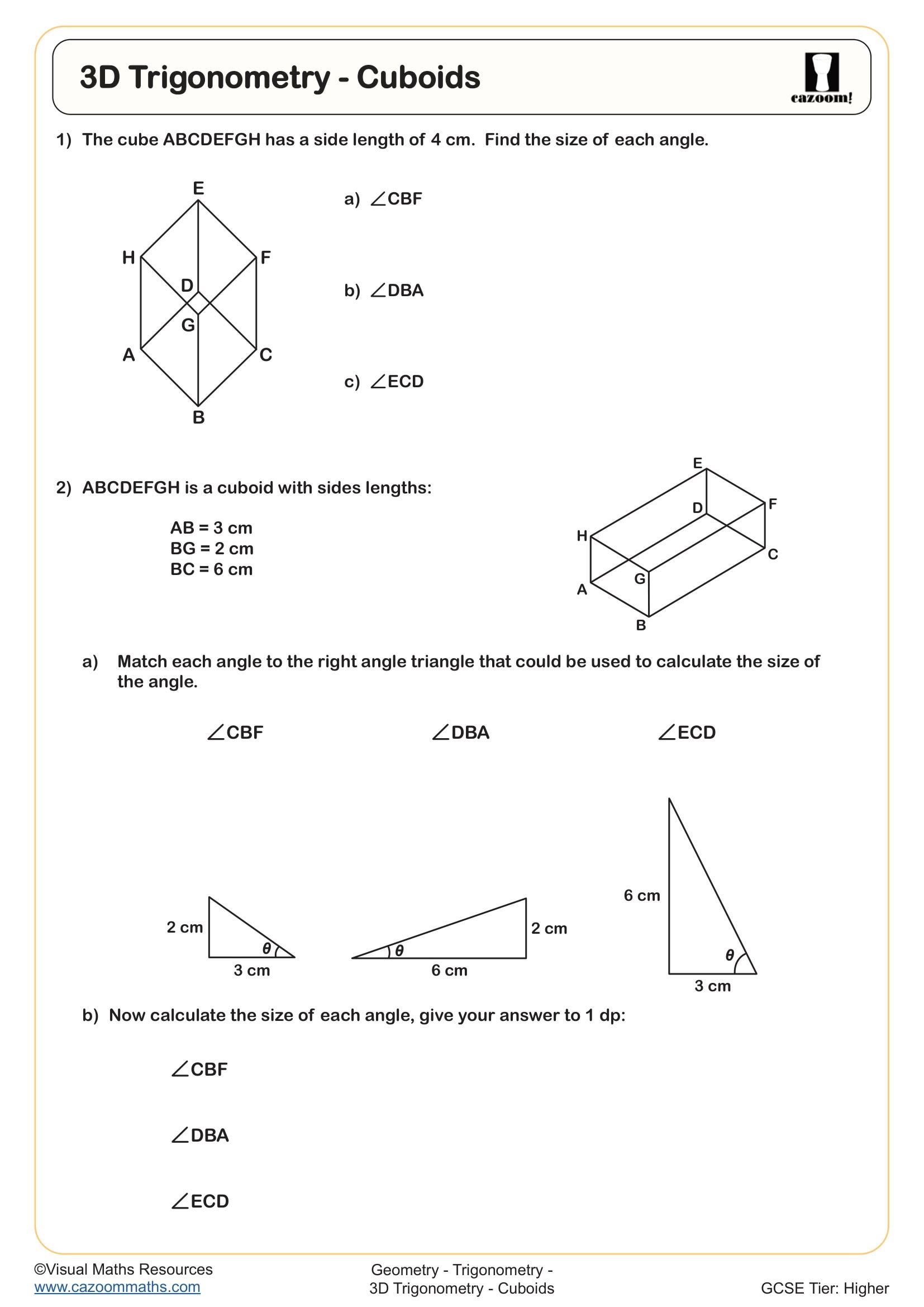
3D Trigonometry - Cuboids
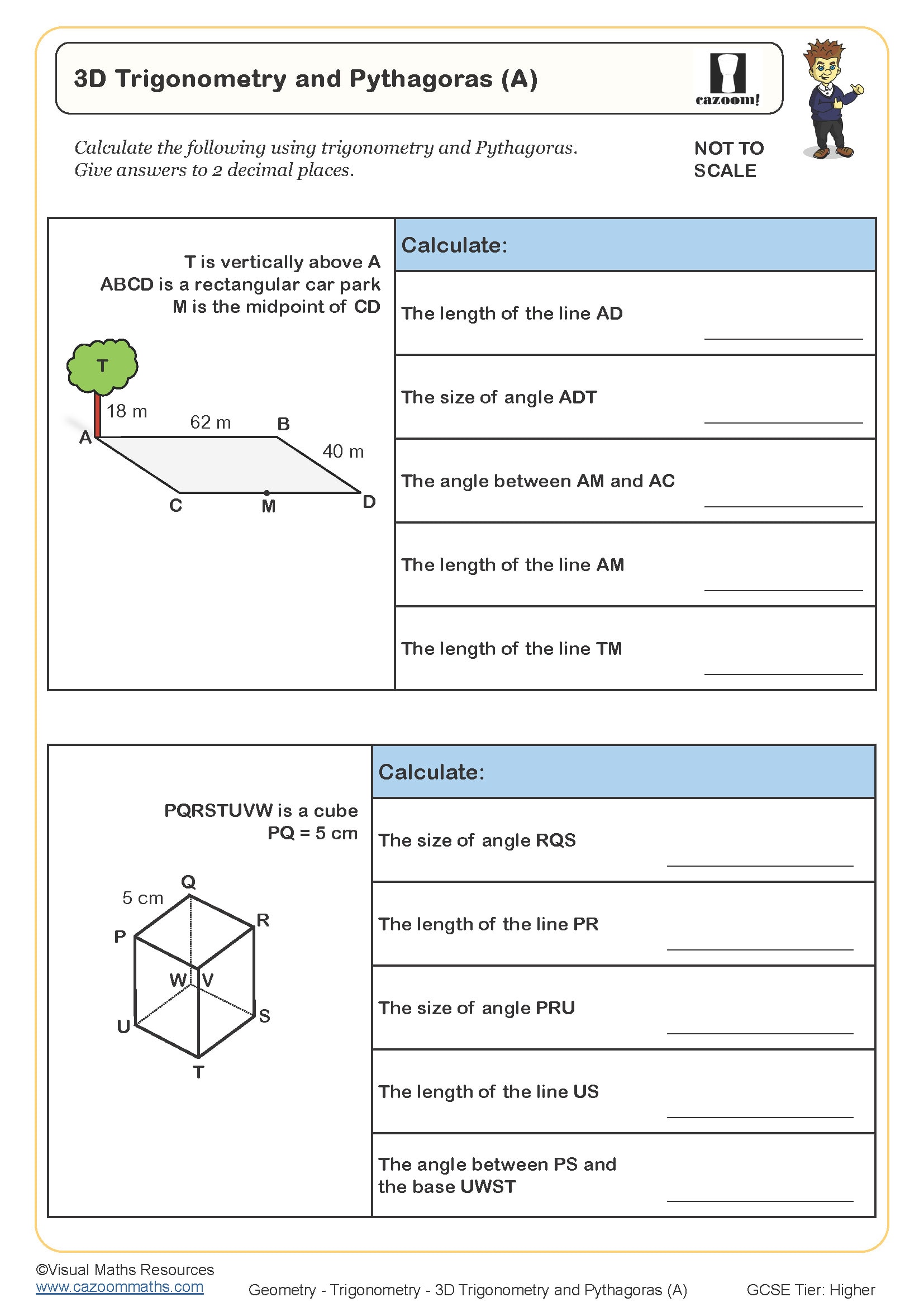
3D Trigonometry and Pythagoras (A)
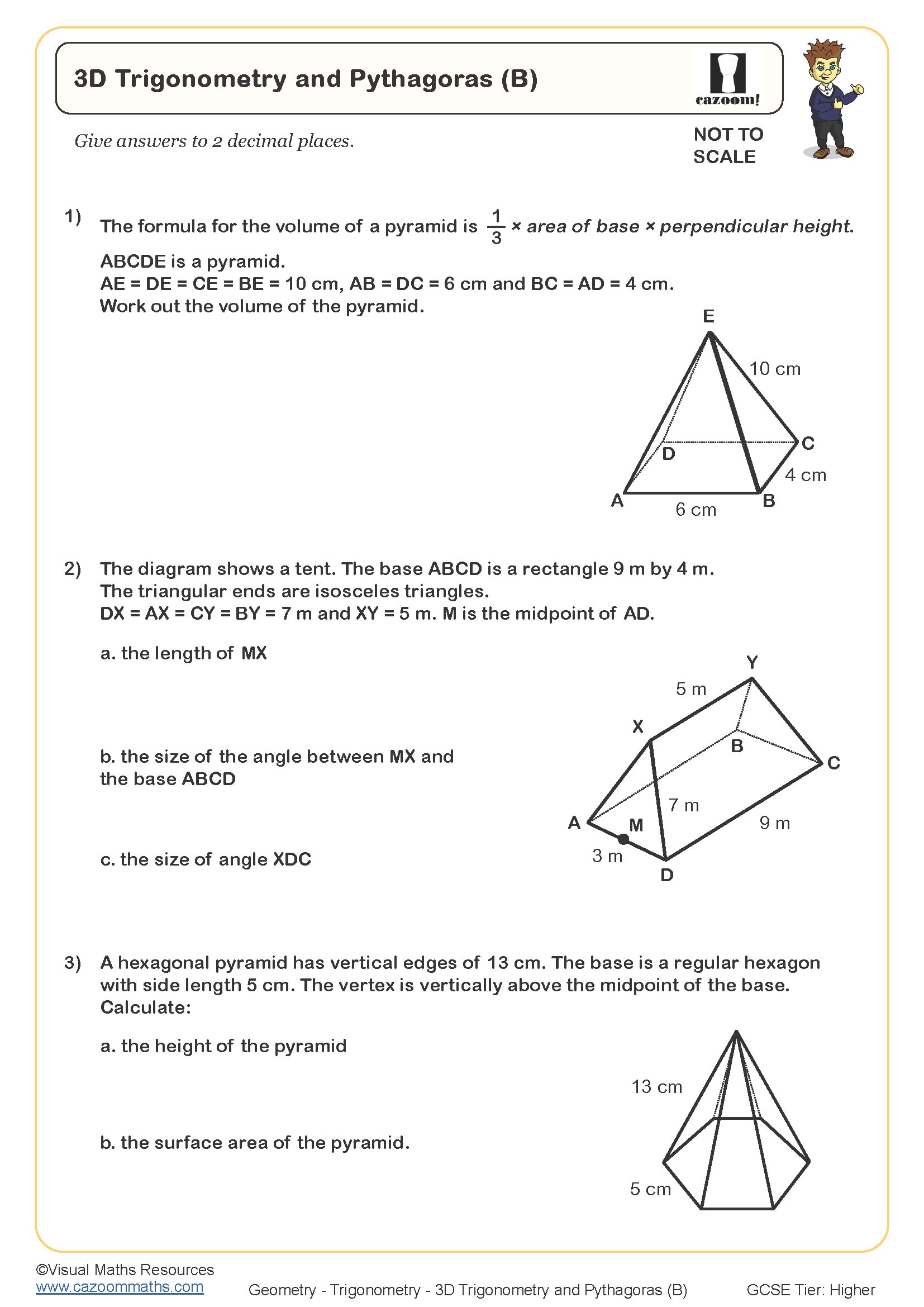
3D Trigonometry and Pythagoras (B)
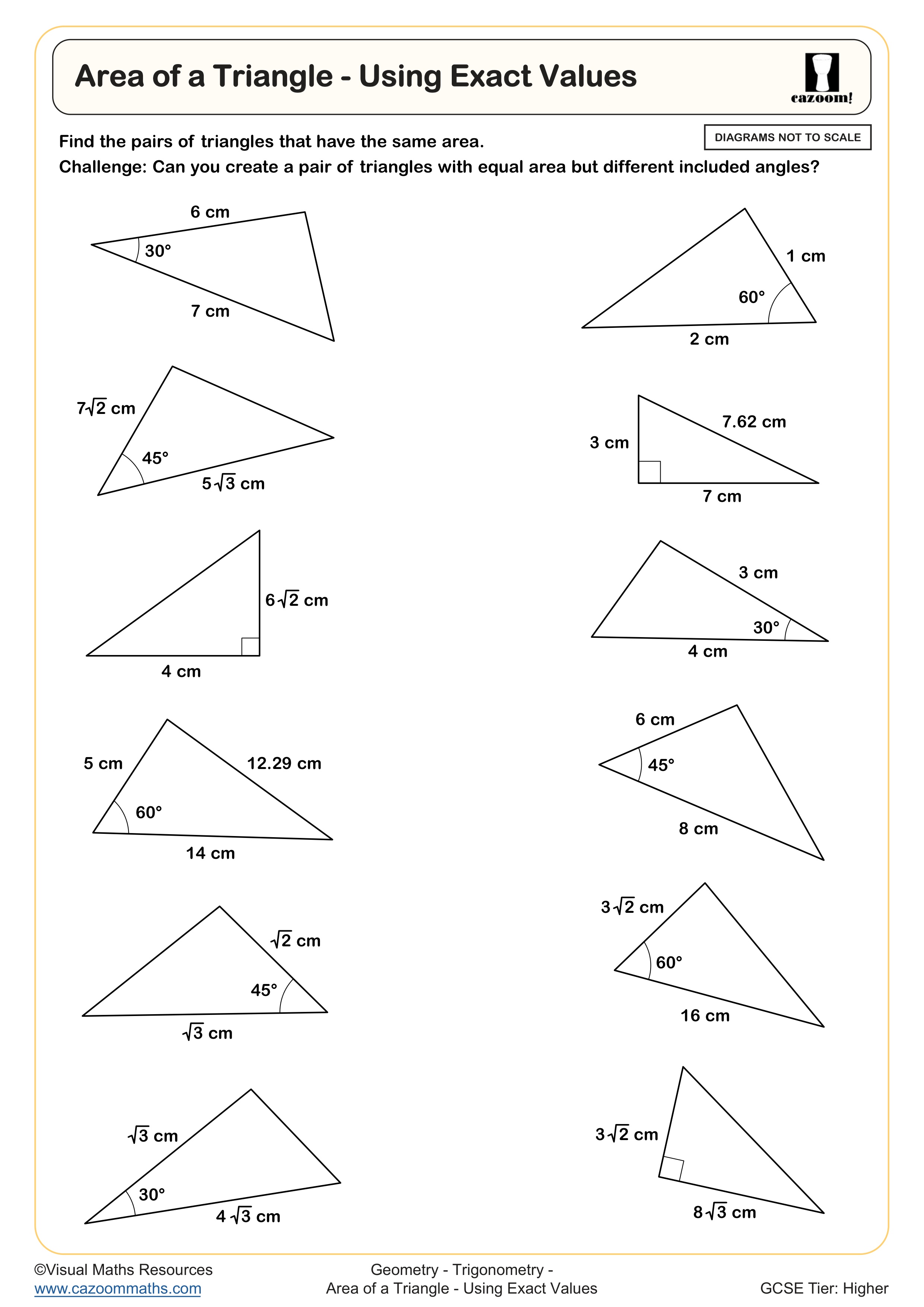
Area of a Triangle - Using Exact Values
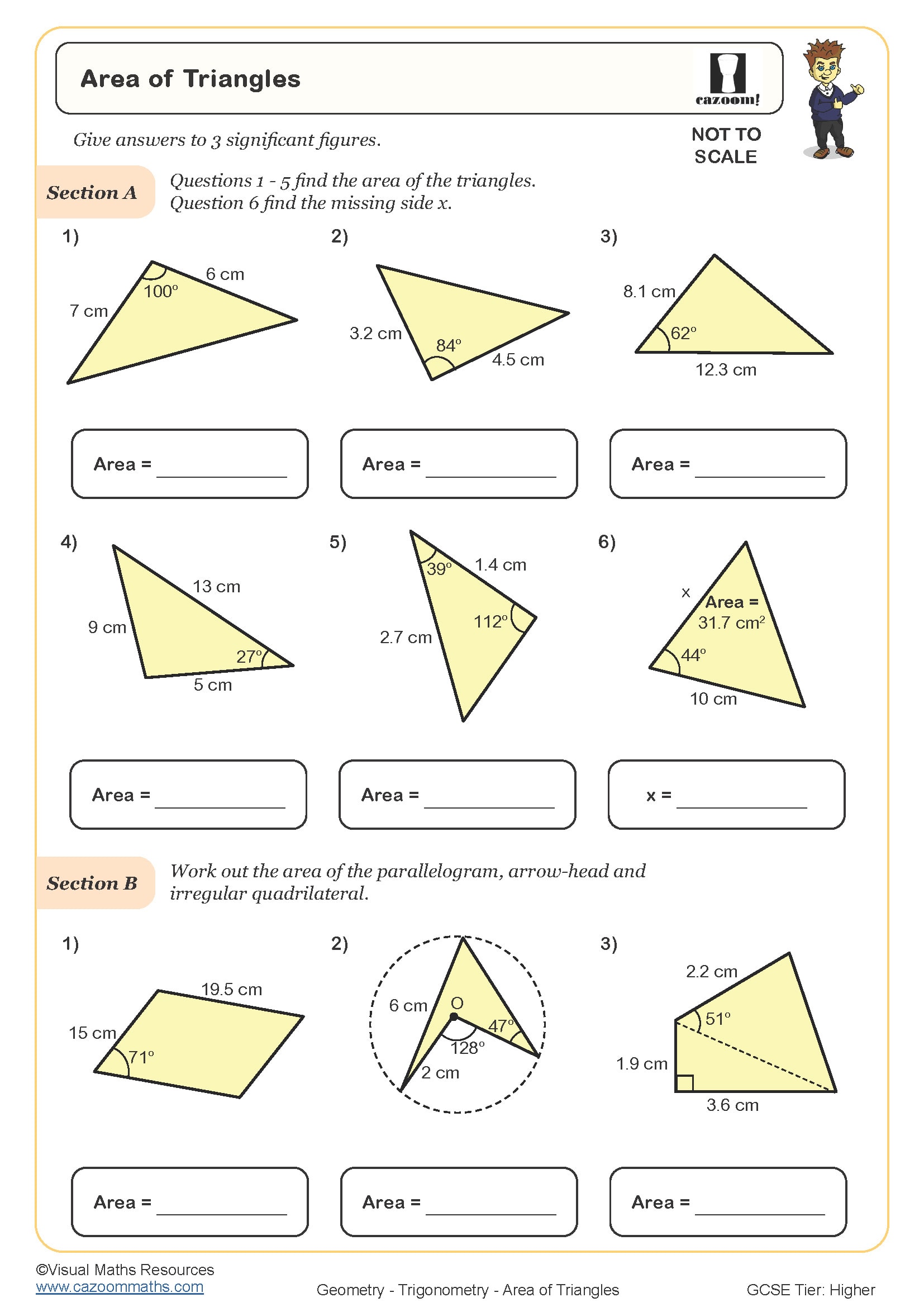
Area of Triangles
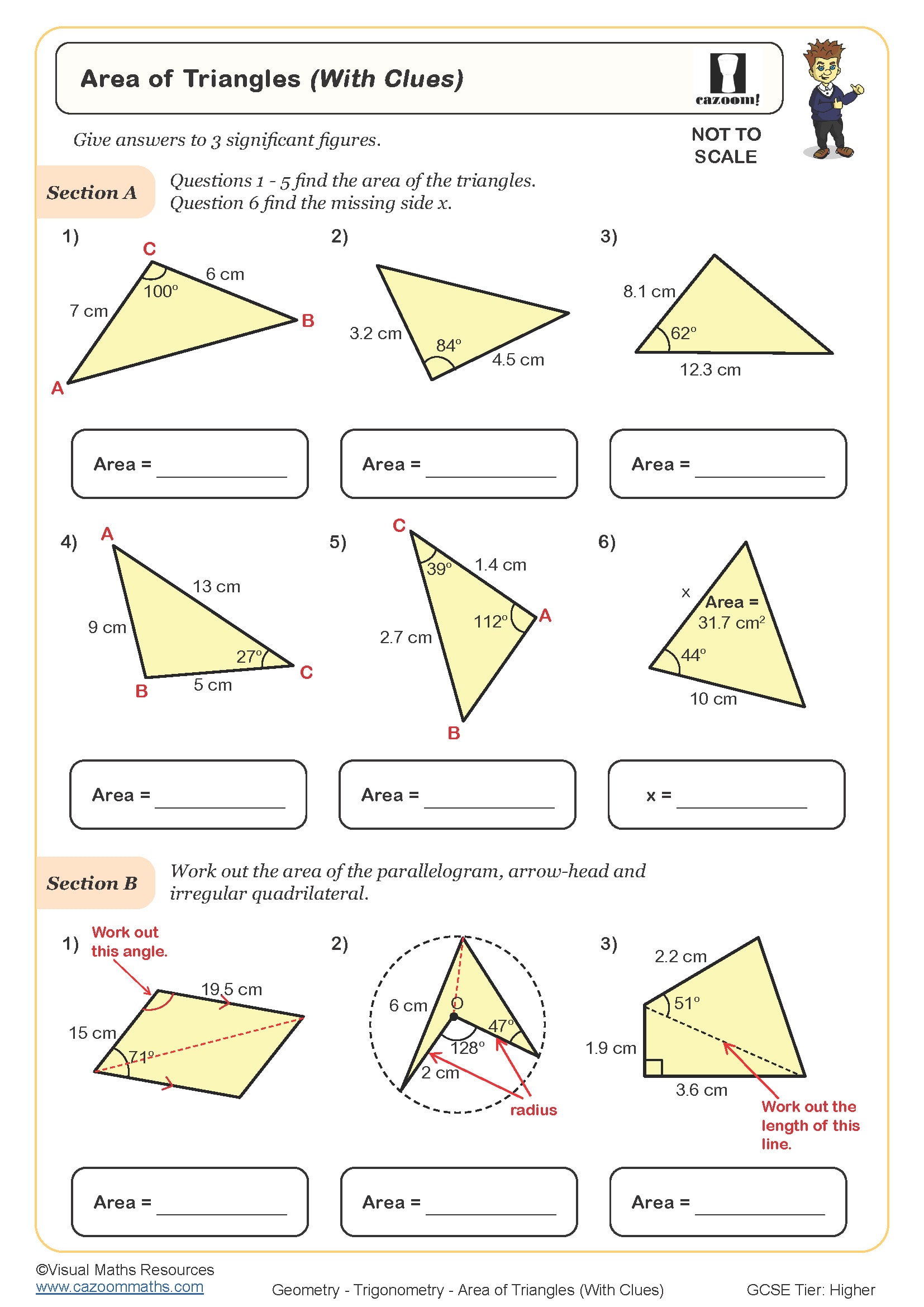
Area of Triangles (With Clues)
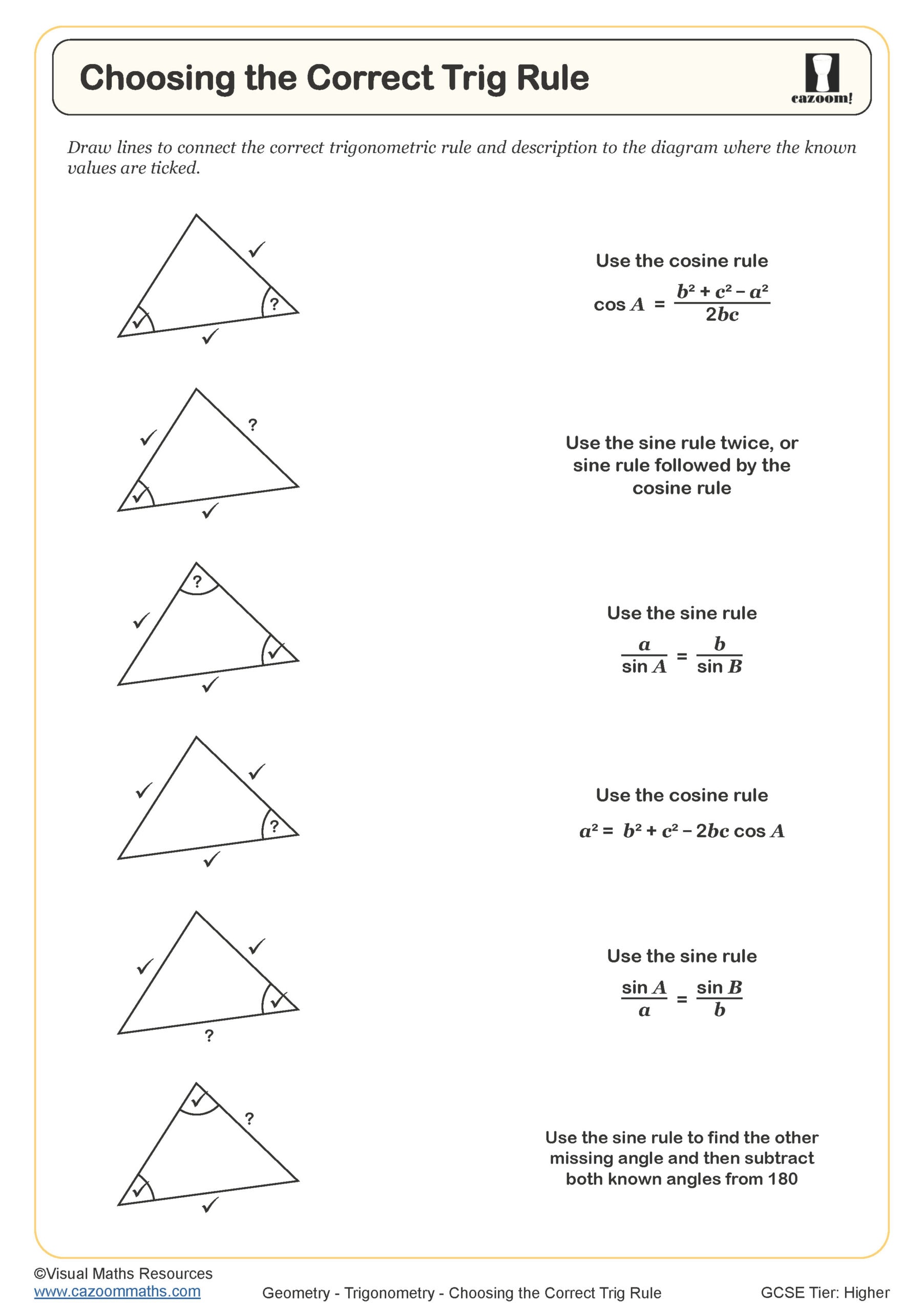
Choosing the Correct Trig Rule
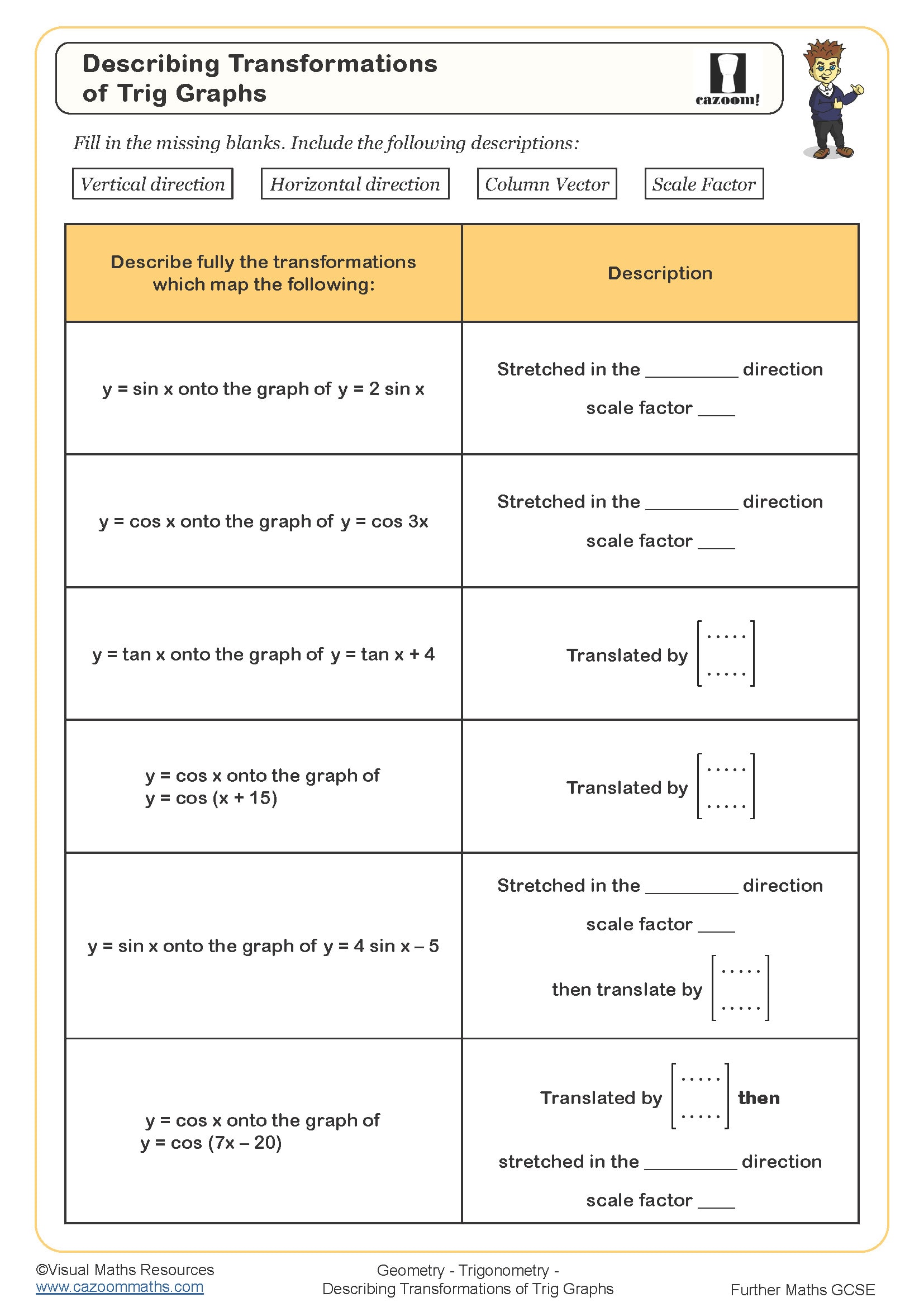
Describing Transformations of Trig Graphs
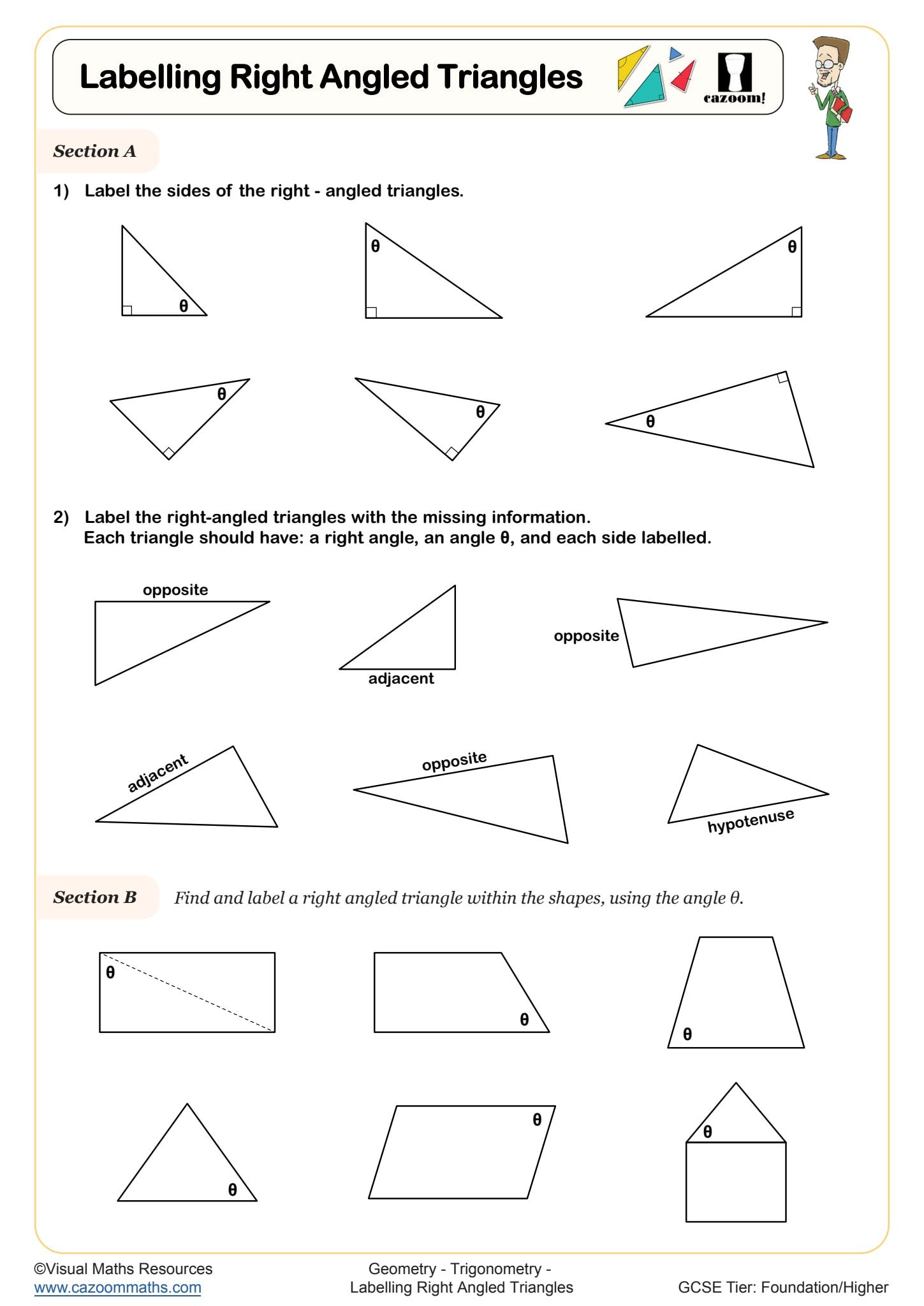
Labelling Right Angled Triangles
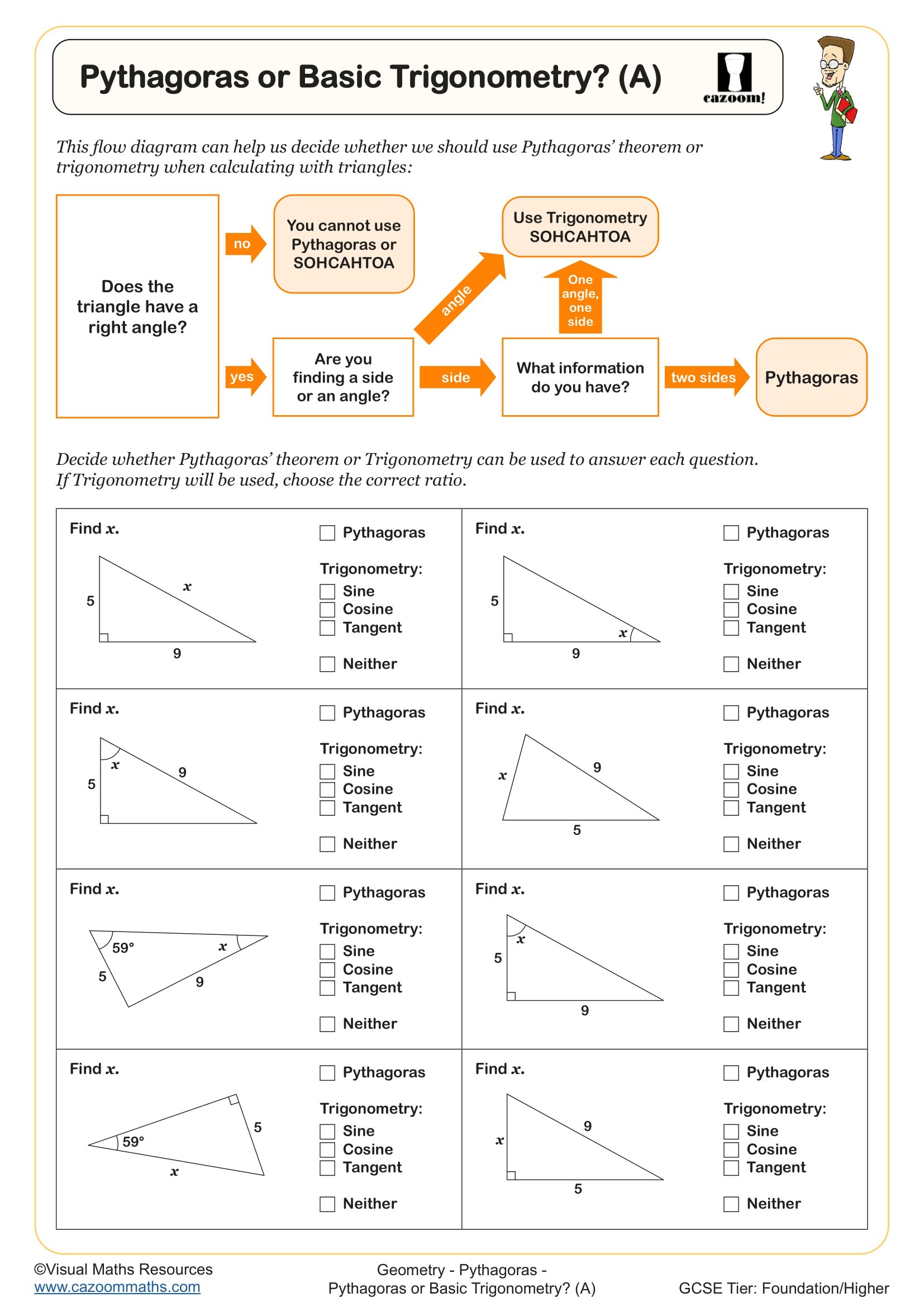
Pythagoras or Trigonometry? (A)
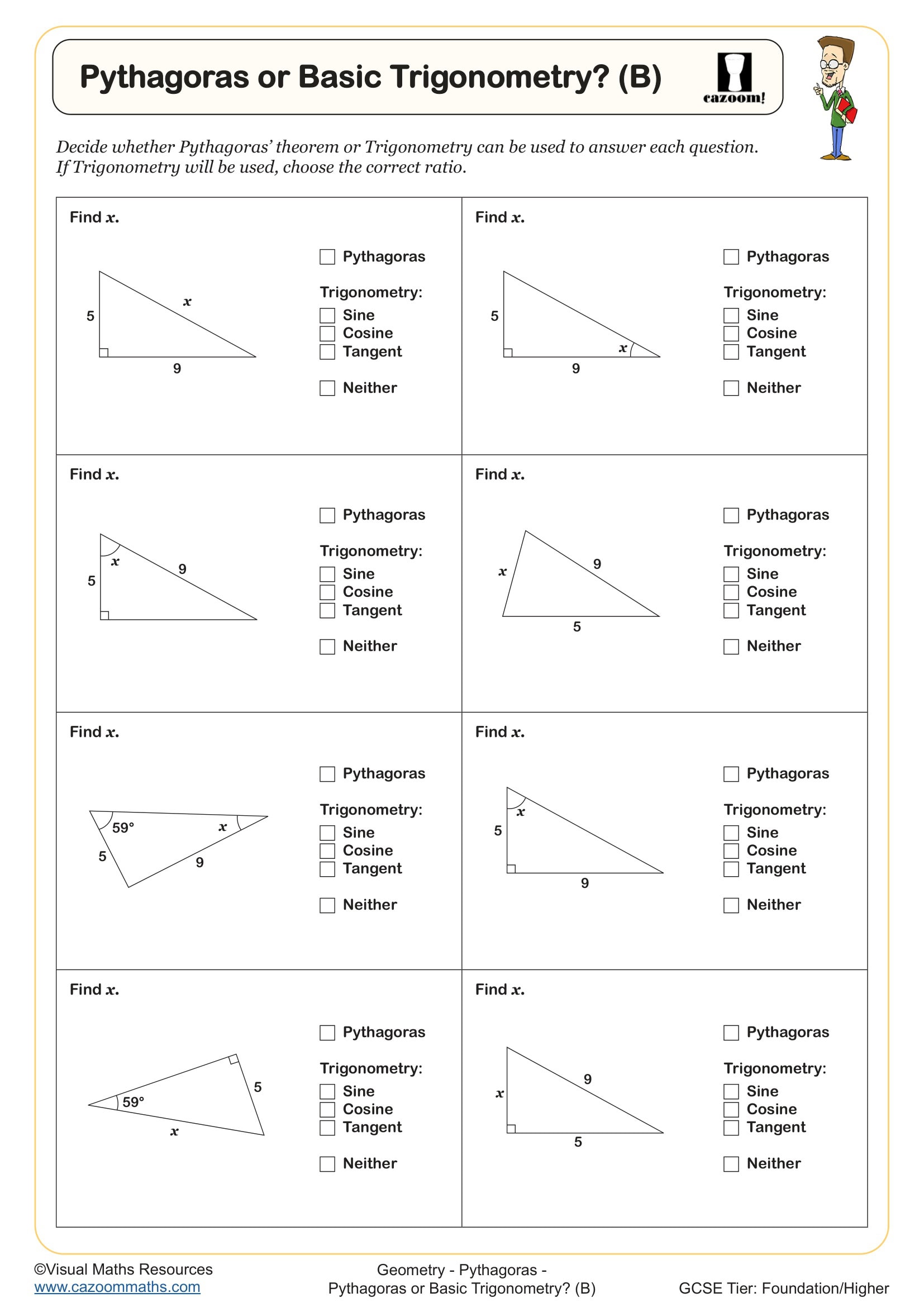
Pythagoras or Trigonometry? (B)
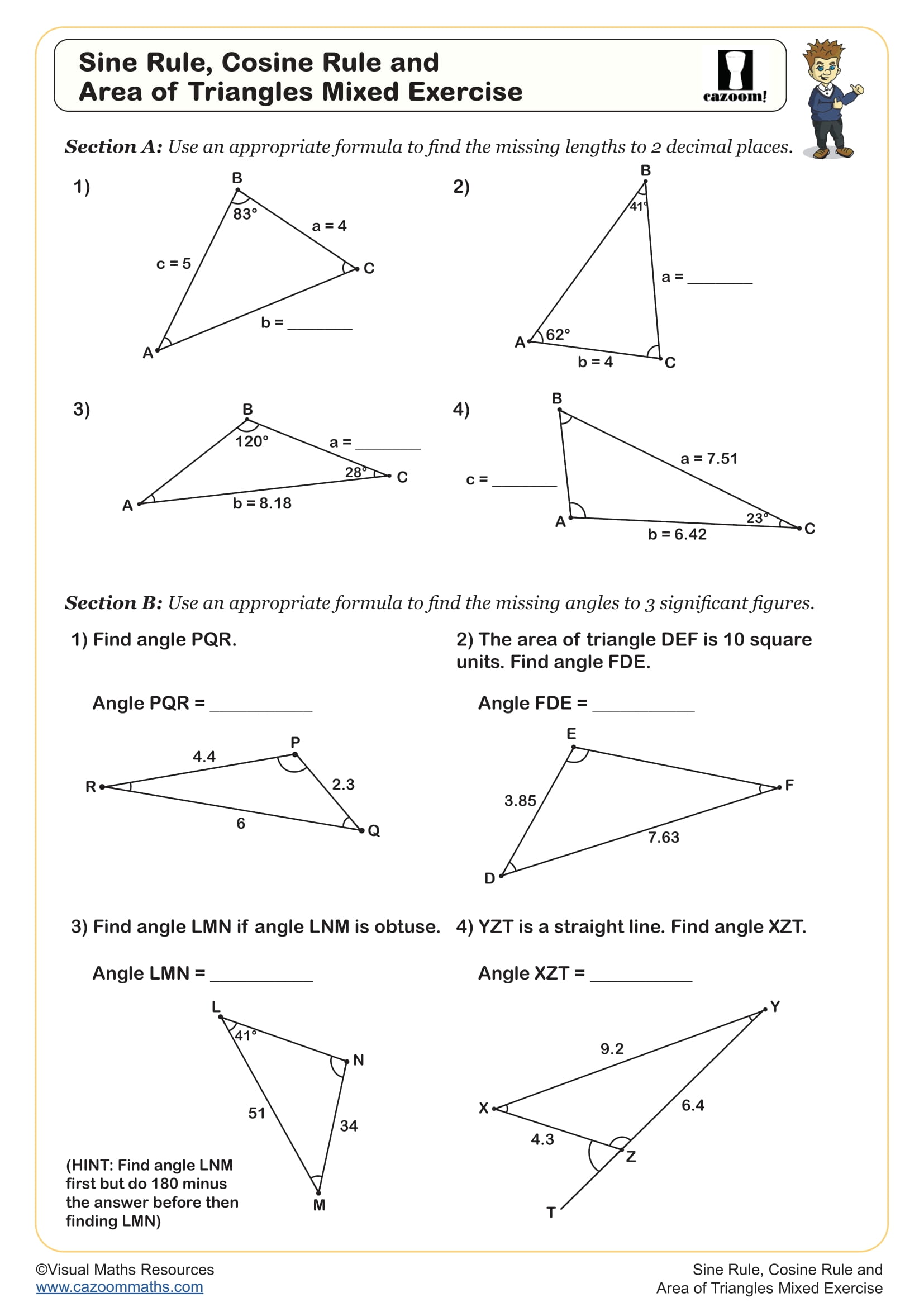
Sine Rule Cosine Rule and Area Mixed Exercise
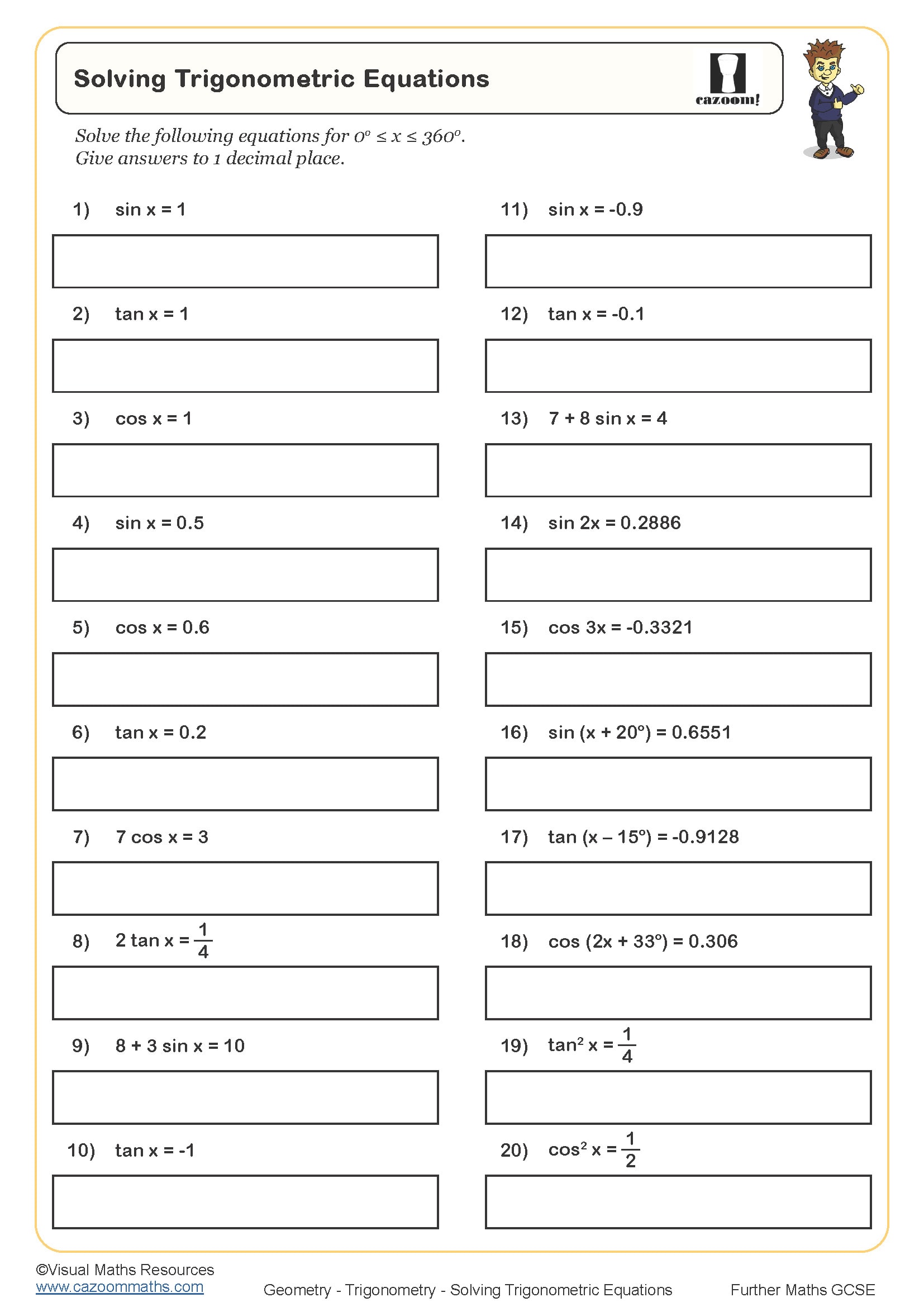
Solving Trigonometric Equations
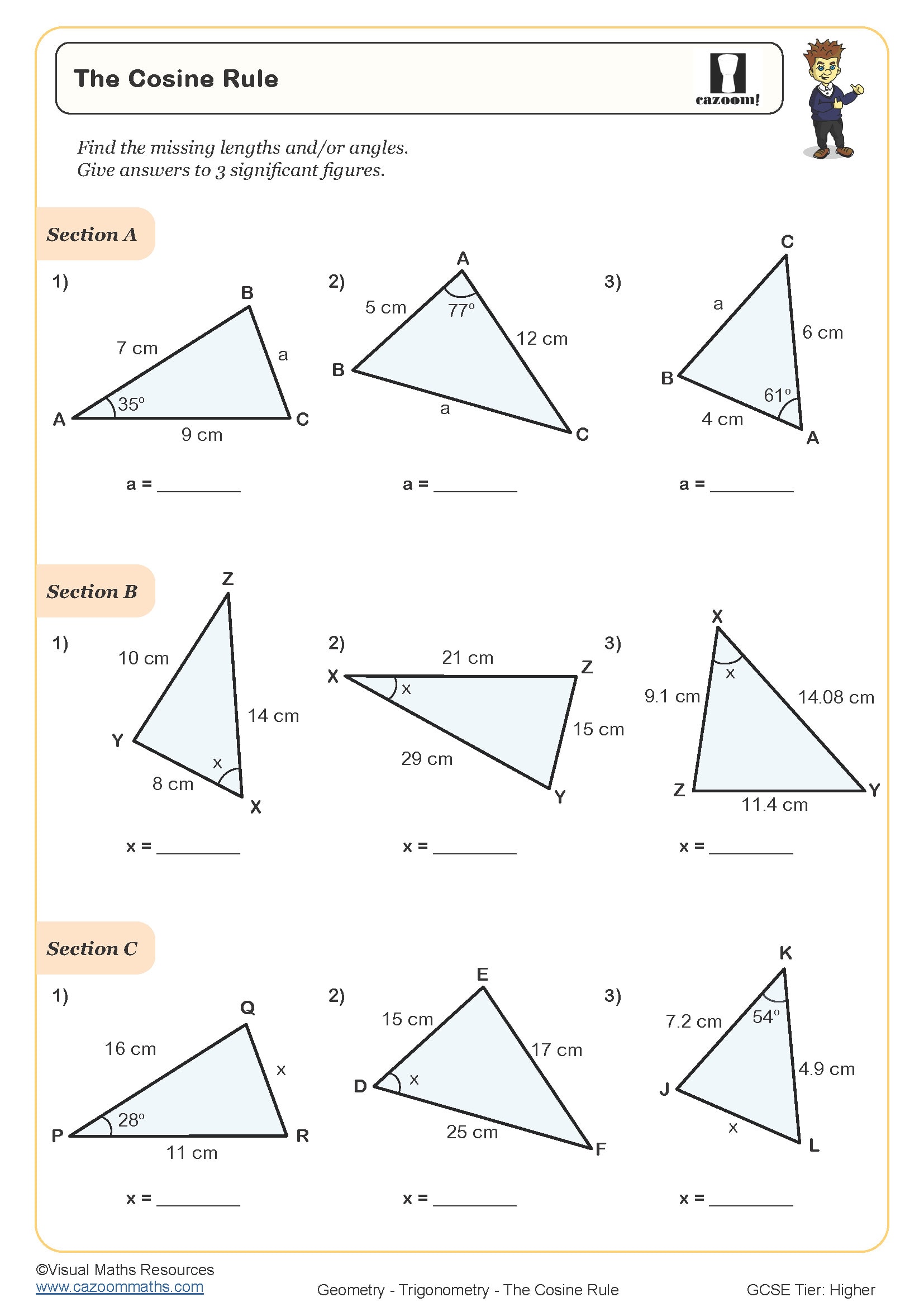
The Cosine Rule
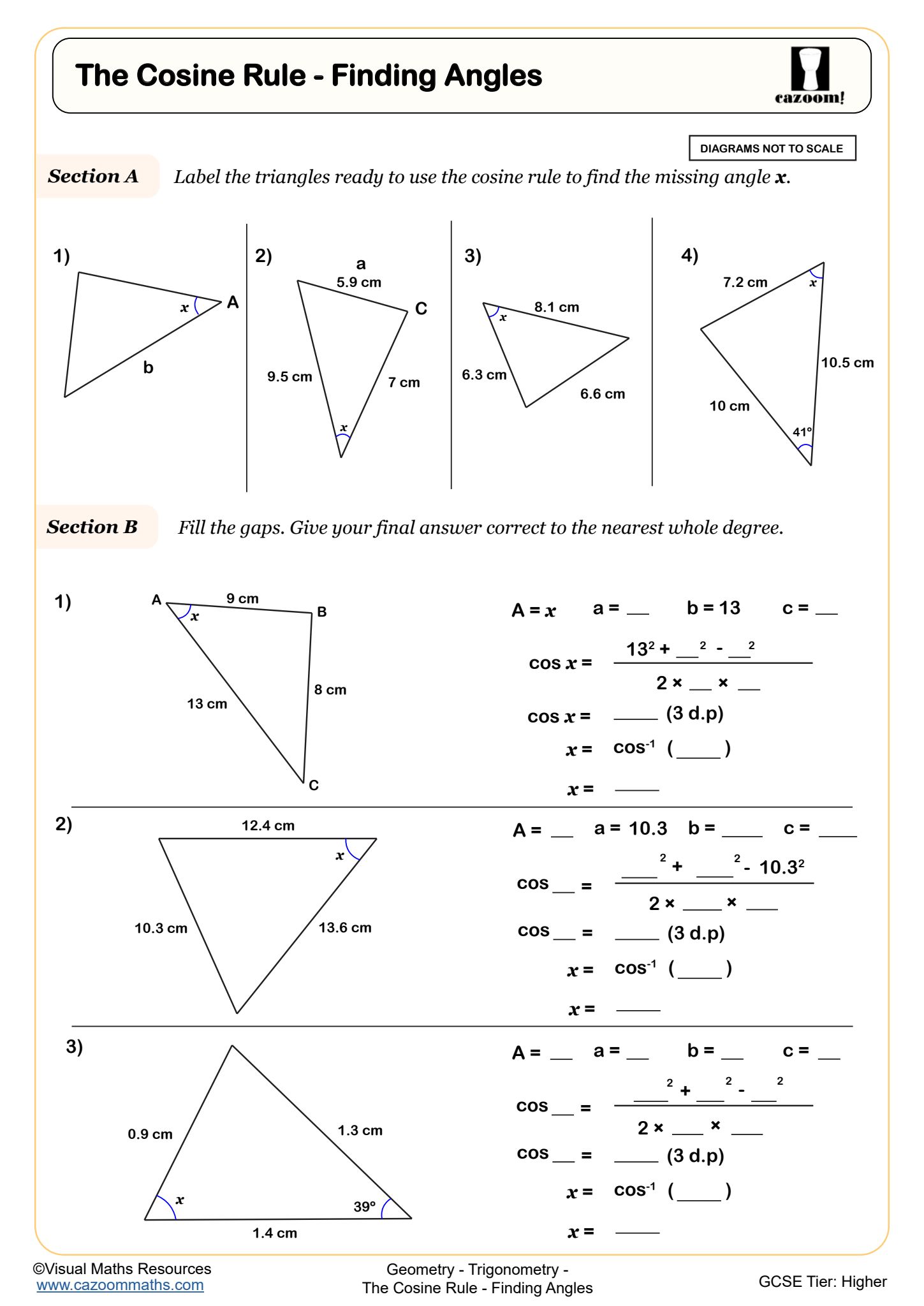
The Cosine Rule - Finding Angles
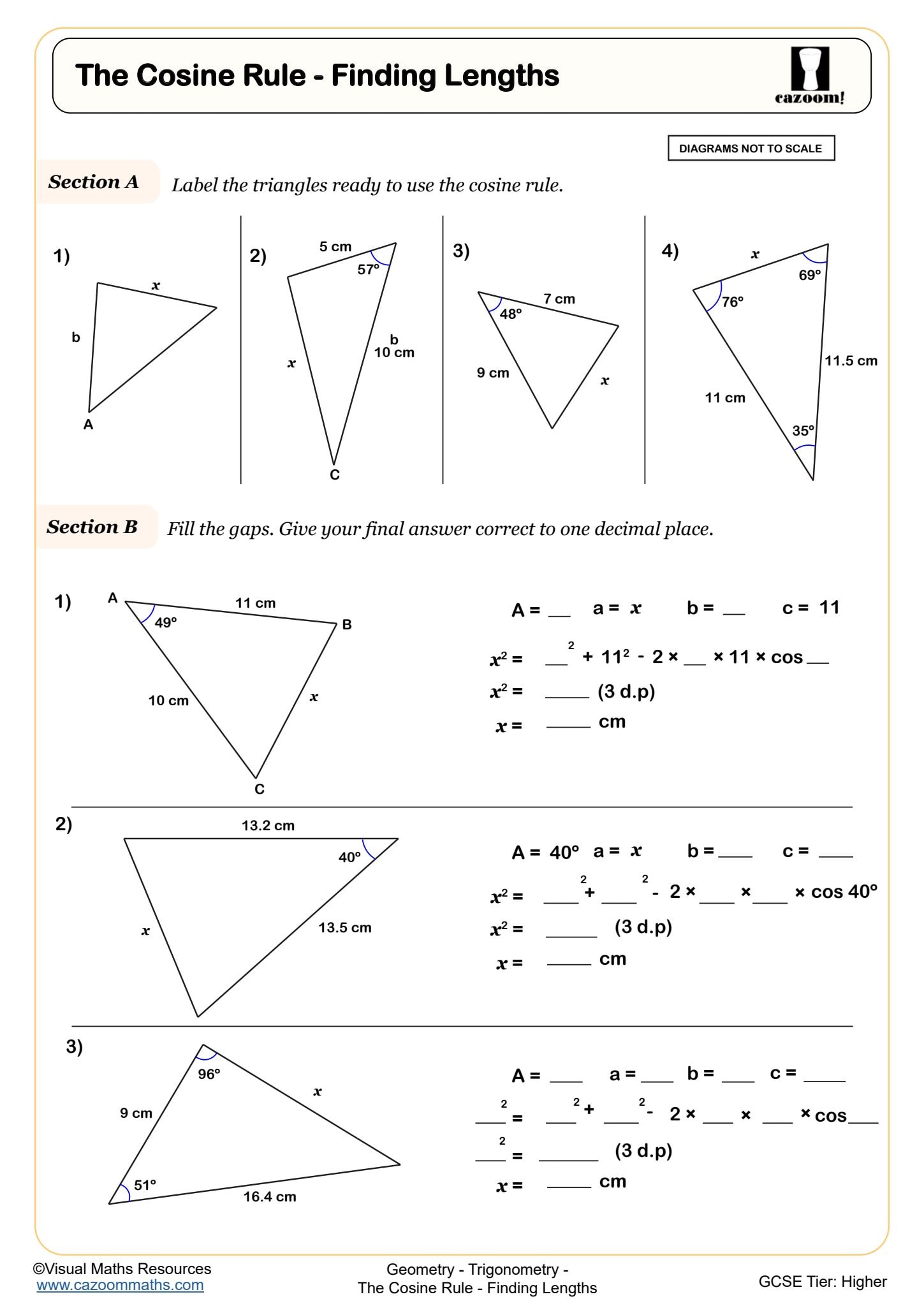
The Cosine Rule - Finding Lengths
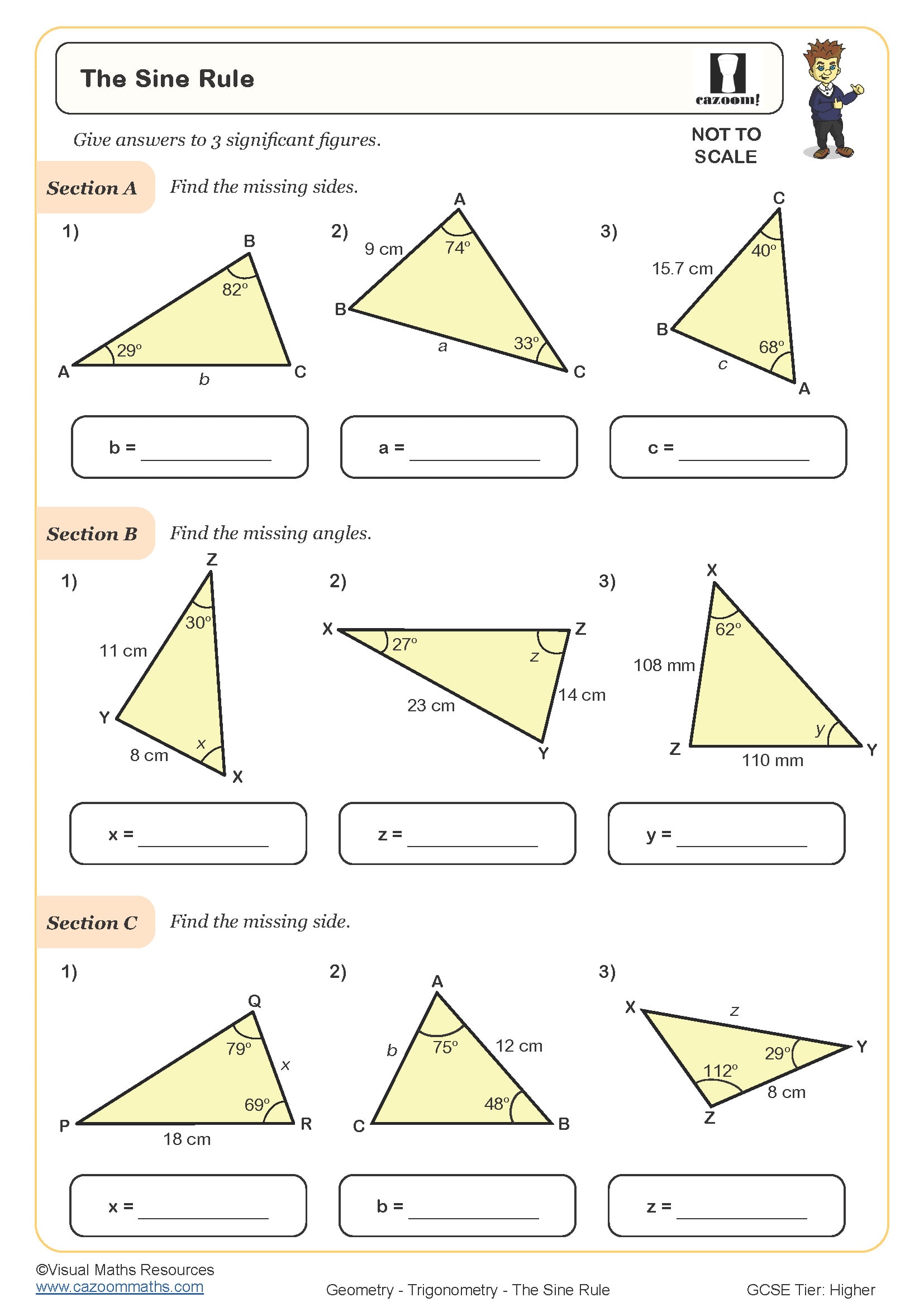
The Sine Rule
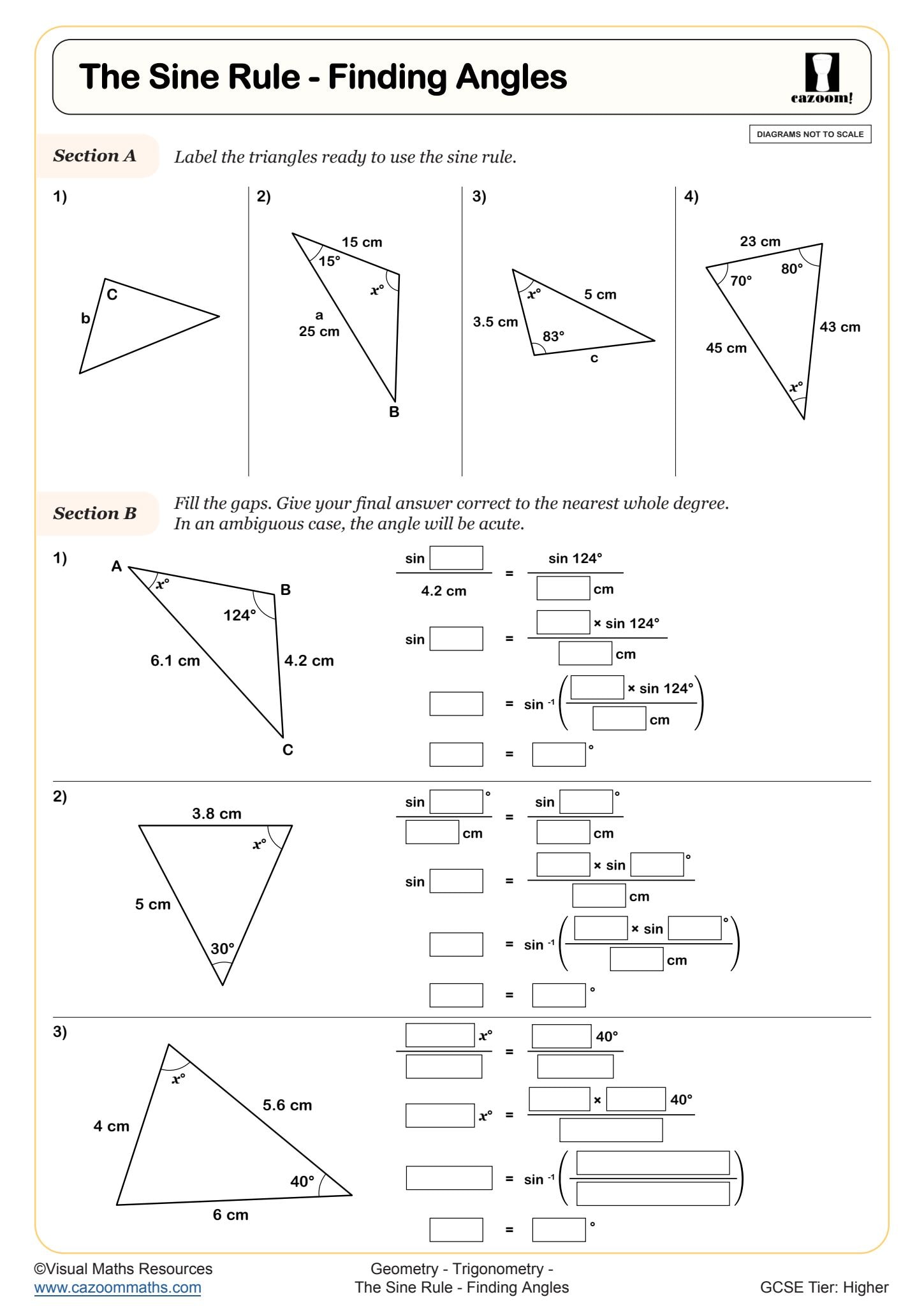
The Sine Rule - Finding Angles
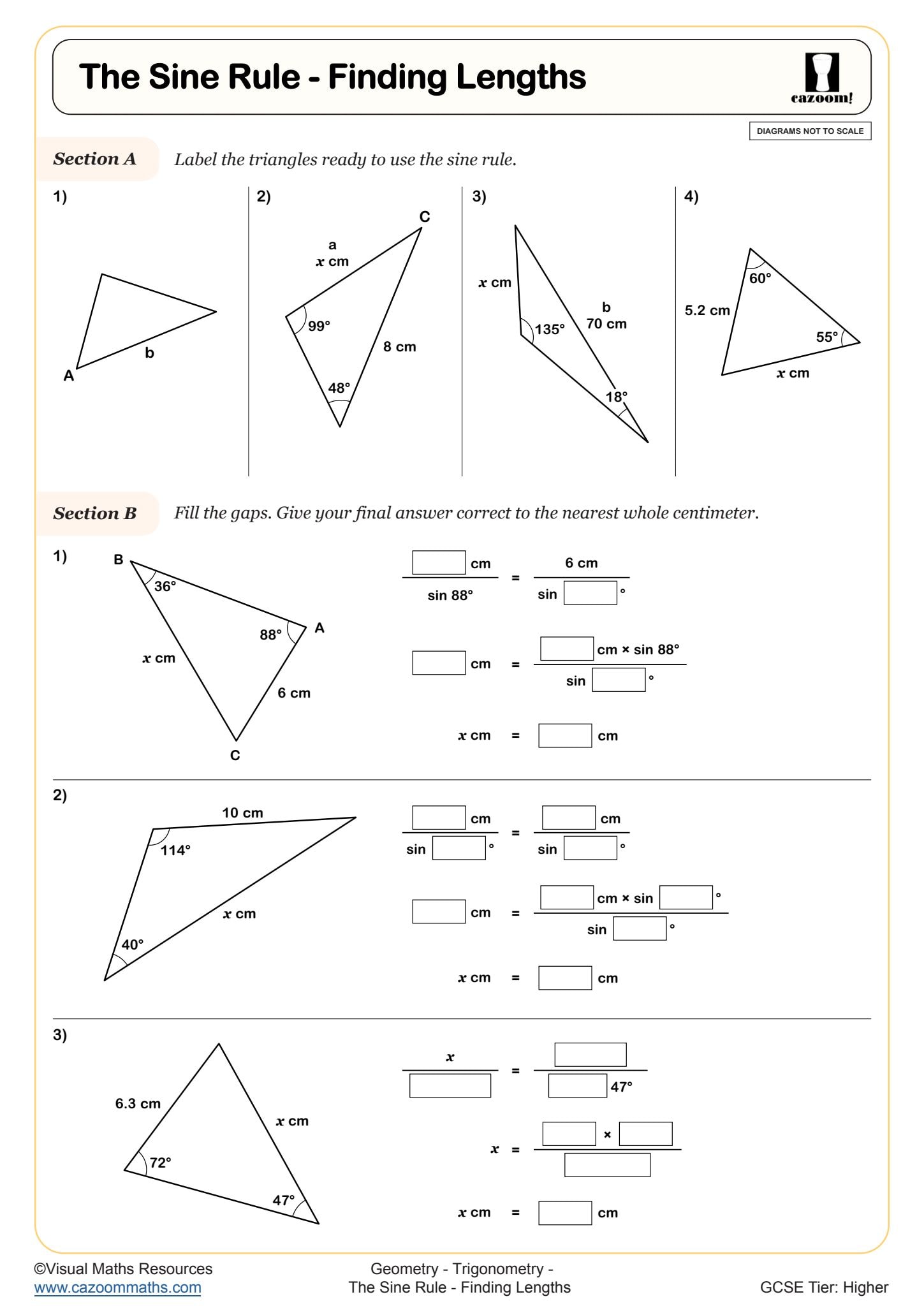
The Sine Rule - Finding Lengths
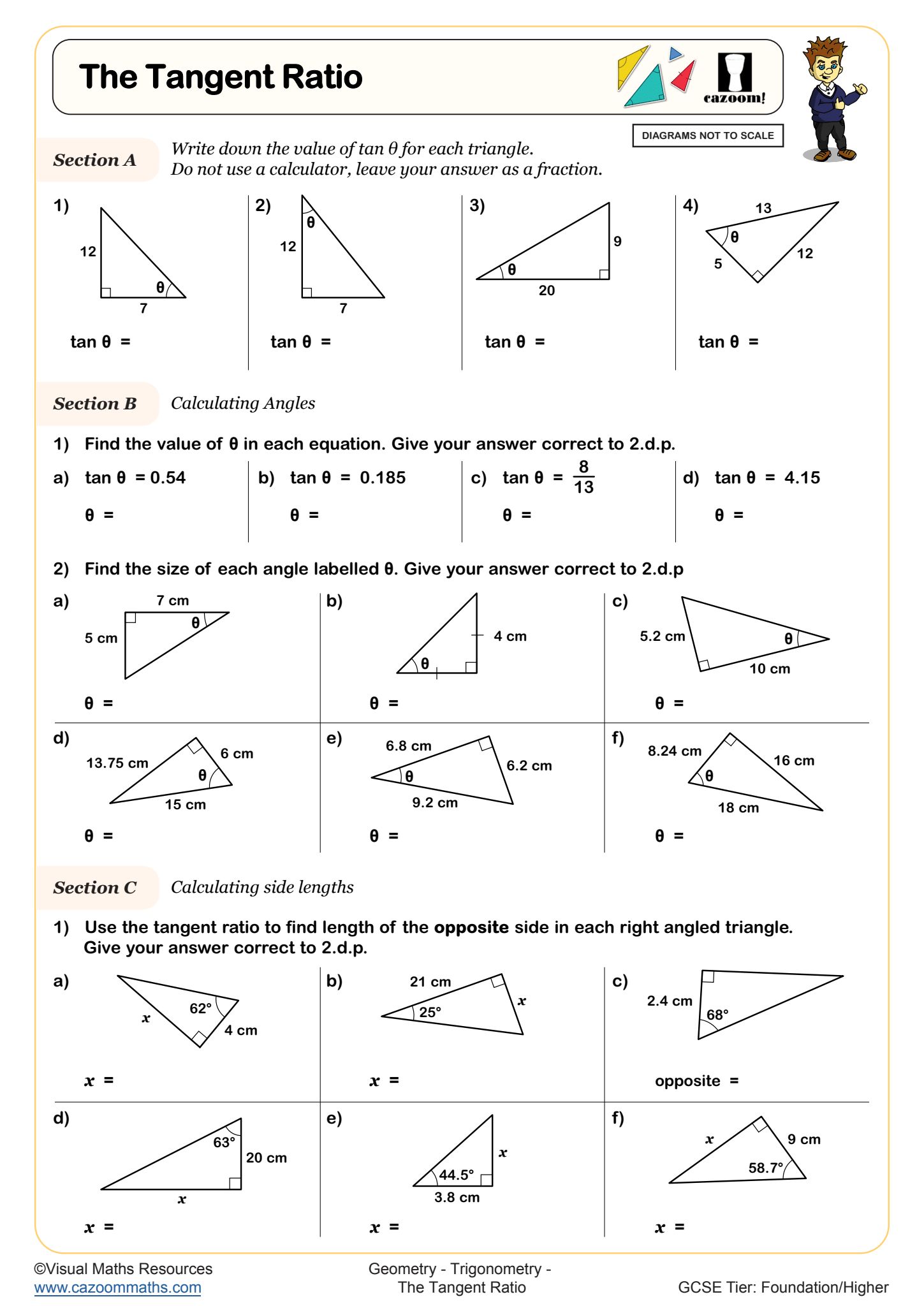
The Tangent Ratio
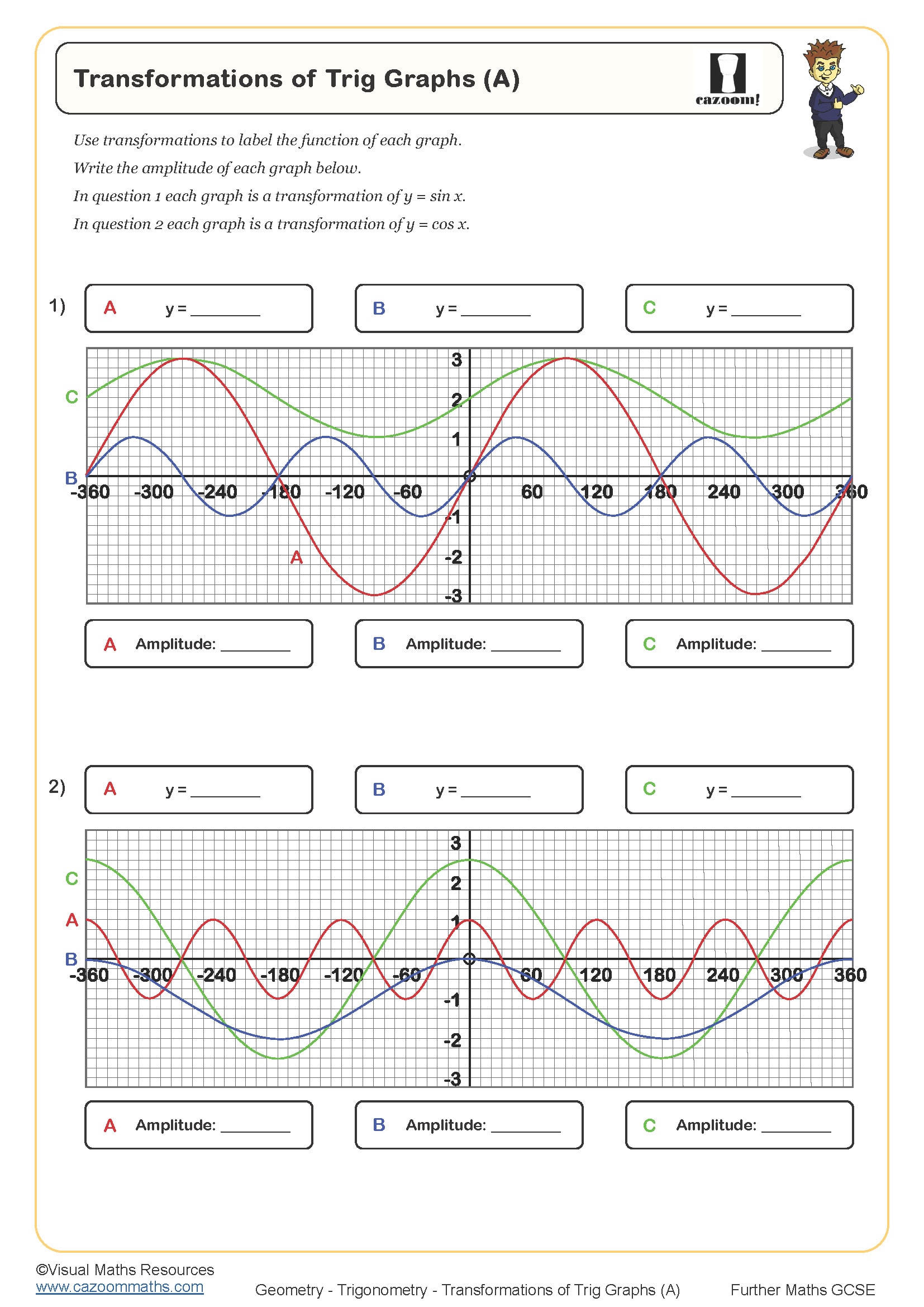
Transformations of Trig Graphs (A)
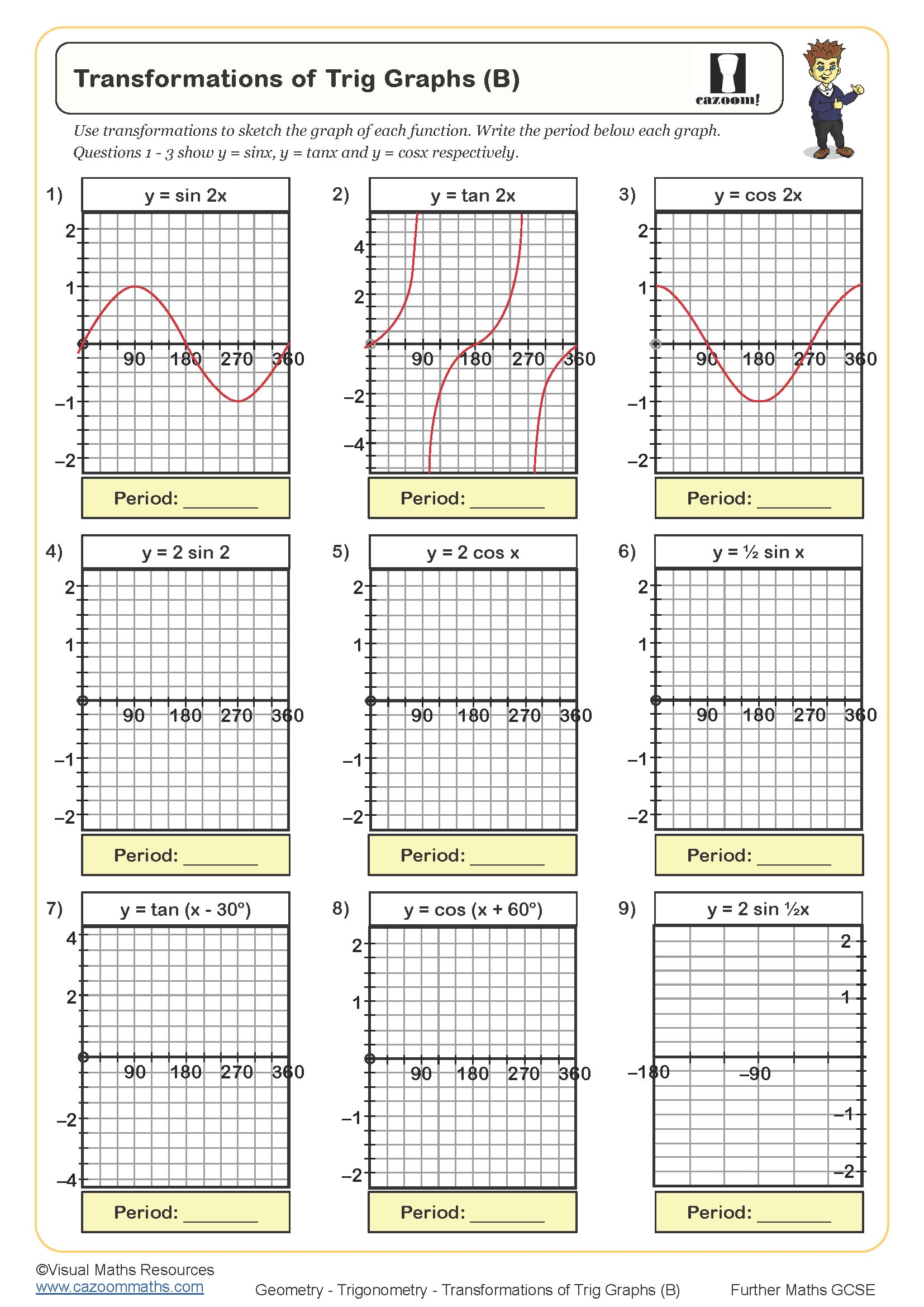
Transformations of Trig Graphs (B)
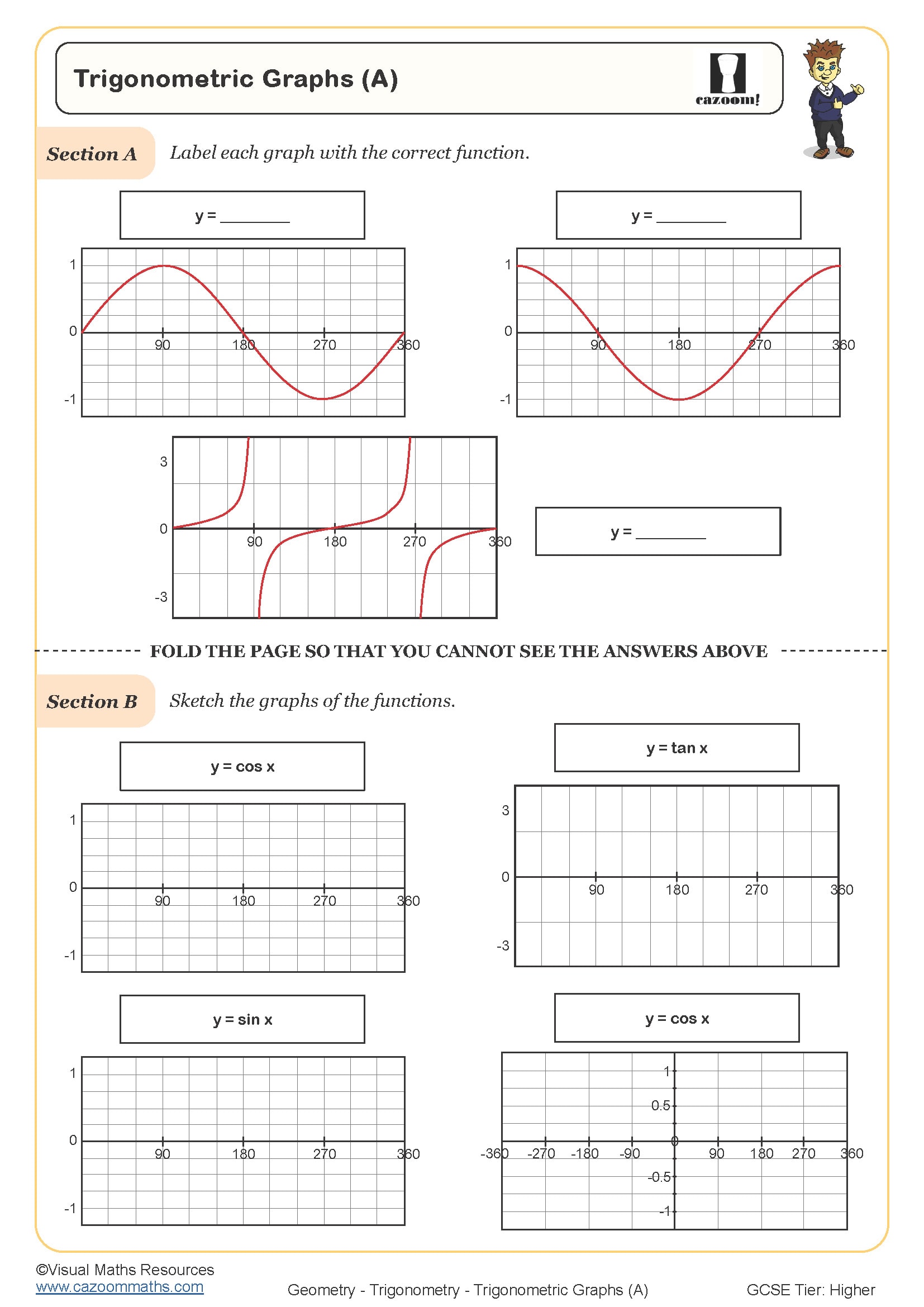
Trigonometric Graphs (A)
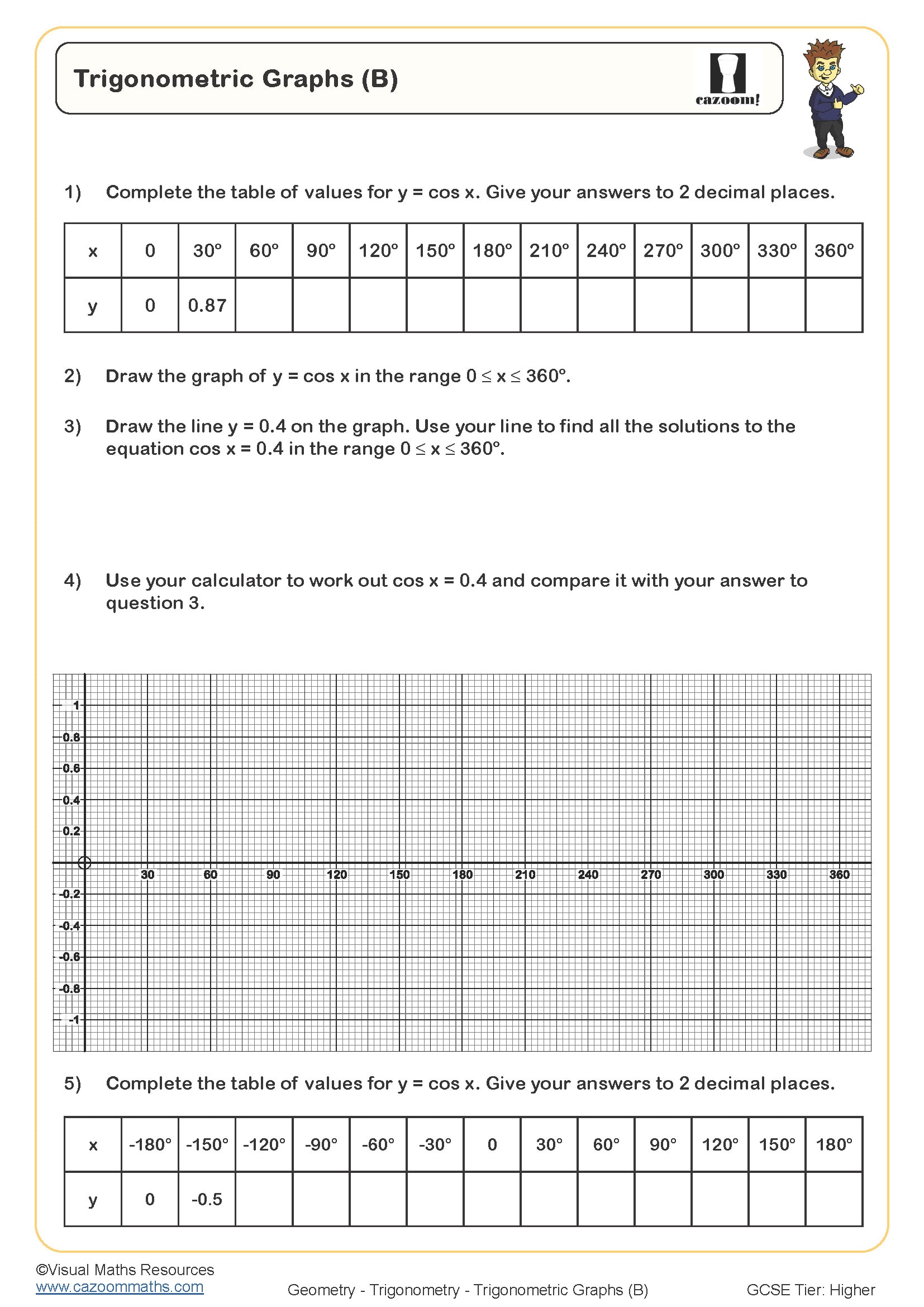
Trigonometric Graphs (B)
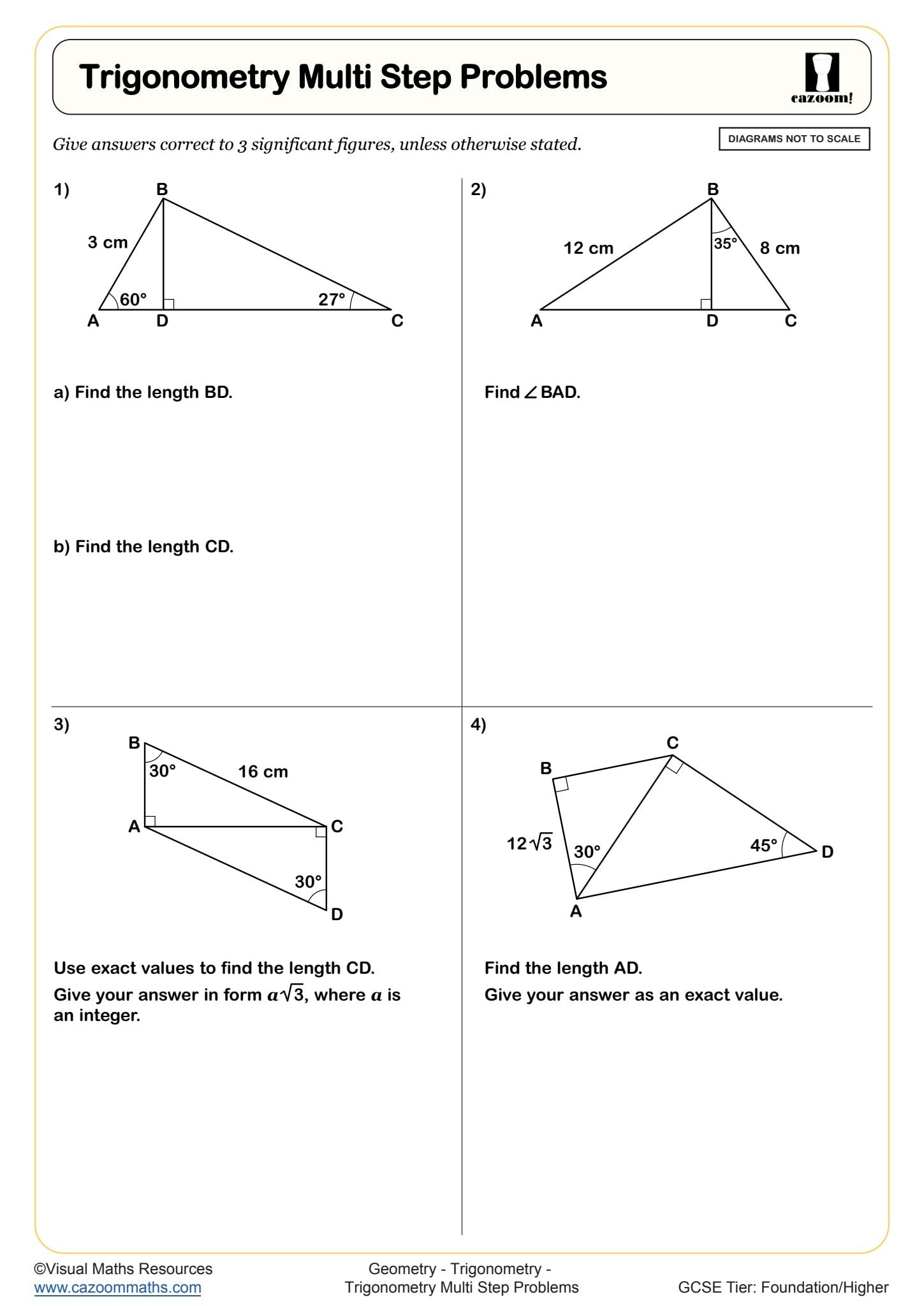
Trigonometry Multi Step Problems
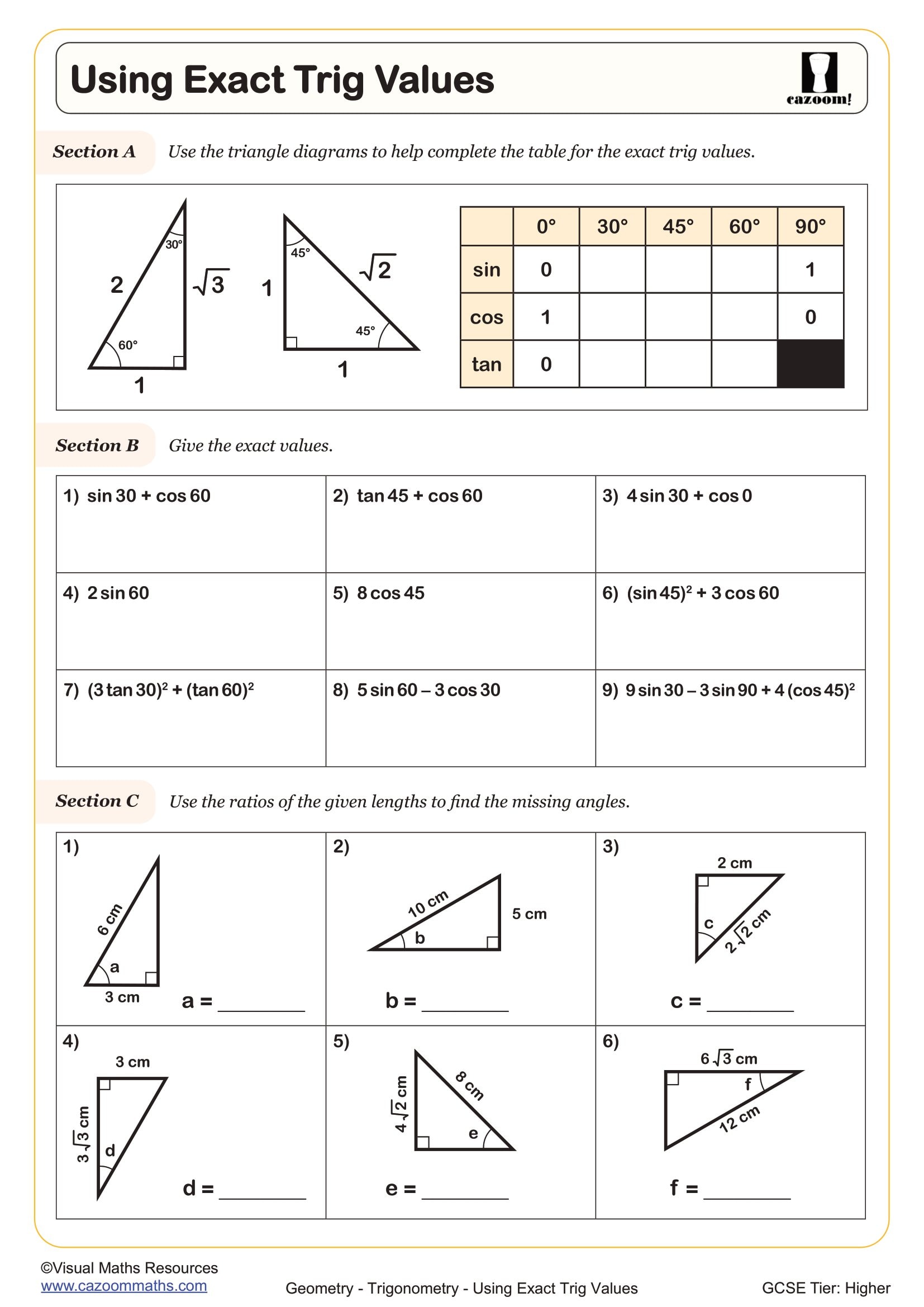
Using Exact Trig Values
All worksheets are created by the team of experienced teachers at Cazoom Maths.
What topics do trigonometry Year 11 worksheets typically cover?
Trigonometry Year 11 worksheets focus on the core GCSE trigonometry curriculum, covering basic trigonometric ratios (sine, cosine, tangent), solving right-angled triangles, angles of elevation and depression, bearings, and the sine and cosine rules for non-right-angled triangles. These worksheets also include three-dimensional problems and exact trigonometric values for special angles.
Teachers frequently observe that students perform well with basic ratio calculations but struggle when trigonometry appears within real-world contexts like navigation or engineering problems. The worksheets deliberately include varied question types to help students recognise trigonometric applications across different scenarios, from calculating building heights to determining distances in surveying tasks.
Why is Year 11 the critical stage for trigonometry learning?
Year 11 represents the culmination of trigonometry learning in the National Curriculum, where students must consolidate all trigonometric concepts for GCSE examinations. At this stage, students move beyond mechanical calculations to applying trigonometry in complex, multi-step problems that often combine with other mathematical areas like Pythagoras' theorem or coordinate geometry.
Maths teachers note that Year 11 students who haven't secured basic trigonometric understanding find it particularly challenging to tackle the demanding problem-solving questions that appear in higher-tier GCSE papers. These worksheets provide the sustained practice necessary to build confidence and automaticity with trigonometric reasoning before facing examination conditions.
How should students approach sine and cosine rule problems?
Students should systematically identify whether they're dealing with a right-angled triangle (basic trigonometry) or non-right-angled triangle (sine/cosine rule) before selecting their method. The sine rule applies when finding unknown sides or angles with two angles and one side known, whilst the cosine rule suits problems involving two sides and the included angle.
Classroom experience shows that students often apply the sine rule incorrectly when dealing with the ambiguous case, where two possible triangles could exist. Teachers recommend that students sketch triangles and check whether their calculated angles make geometric sense, particularly when working with obtuse angles where sine values can be misleading.
How can teachers use these worksheets most effectively in lessons?
Teachers find success by using these worksheets as targeted intervention tools rather than general practice sheets, identifying specific trigonometric concepts where individual students need additional support. The answer sheets enable teachers to quickly mark work and identify patterns in student errors, such as confusion between sine and cosine or incorrect calculator mode usage.
Many maths teachers structure lessons by beginning with a few worksheet questions as retrieval practice, then using more complex problems during guided practice sessions. The variety of question types allows teachers to differentiate effectively, providing basic ratio practice for students consolidating foundations whilst challenging confident students with multi-step applications involving bearings or three-dimensional problems.