Year 11 Vectors Worksheets
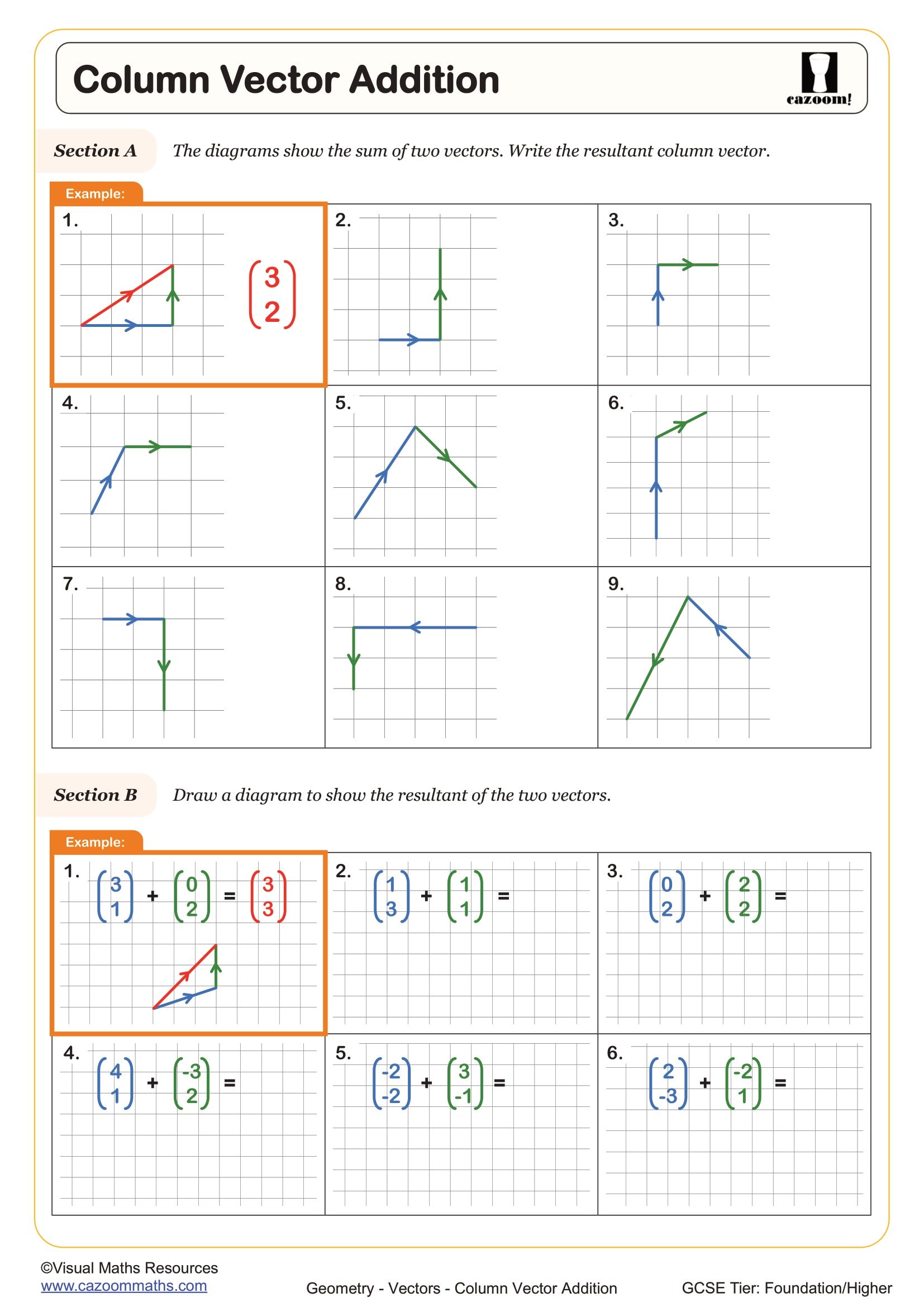
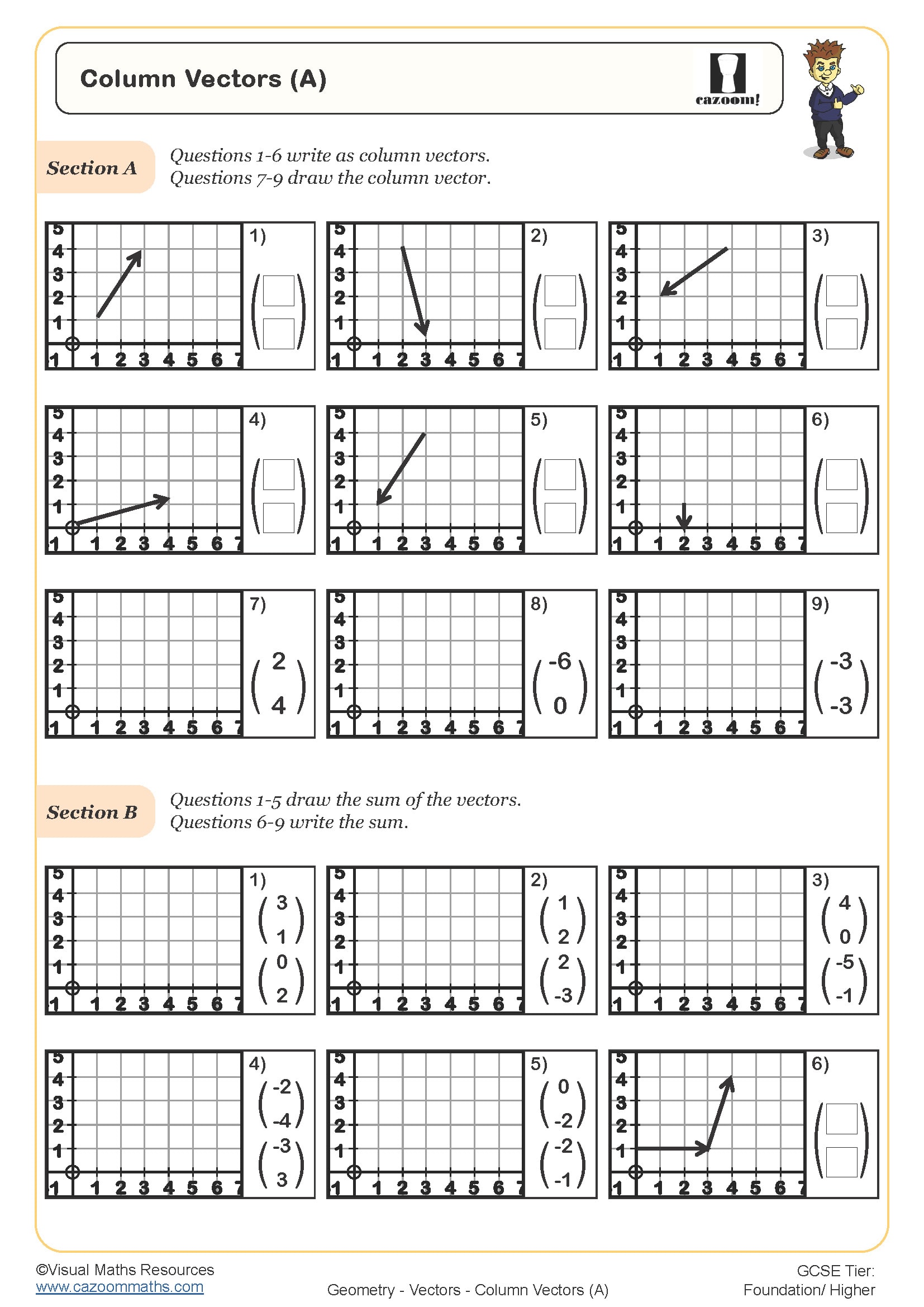
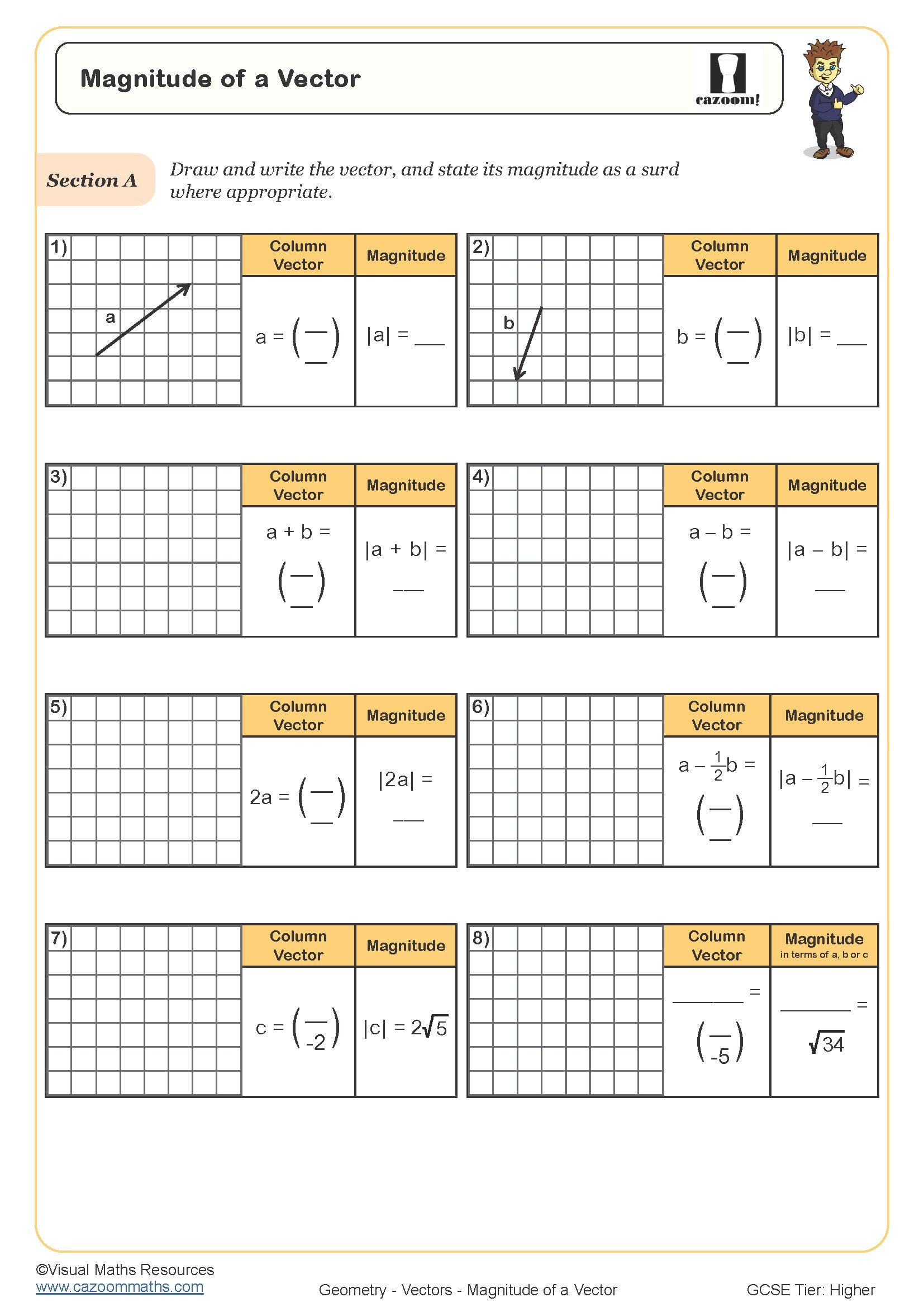
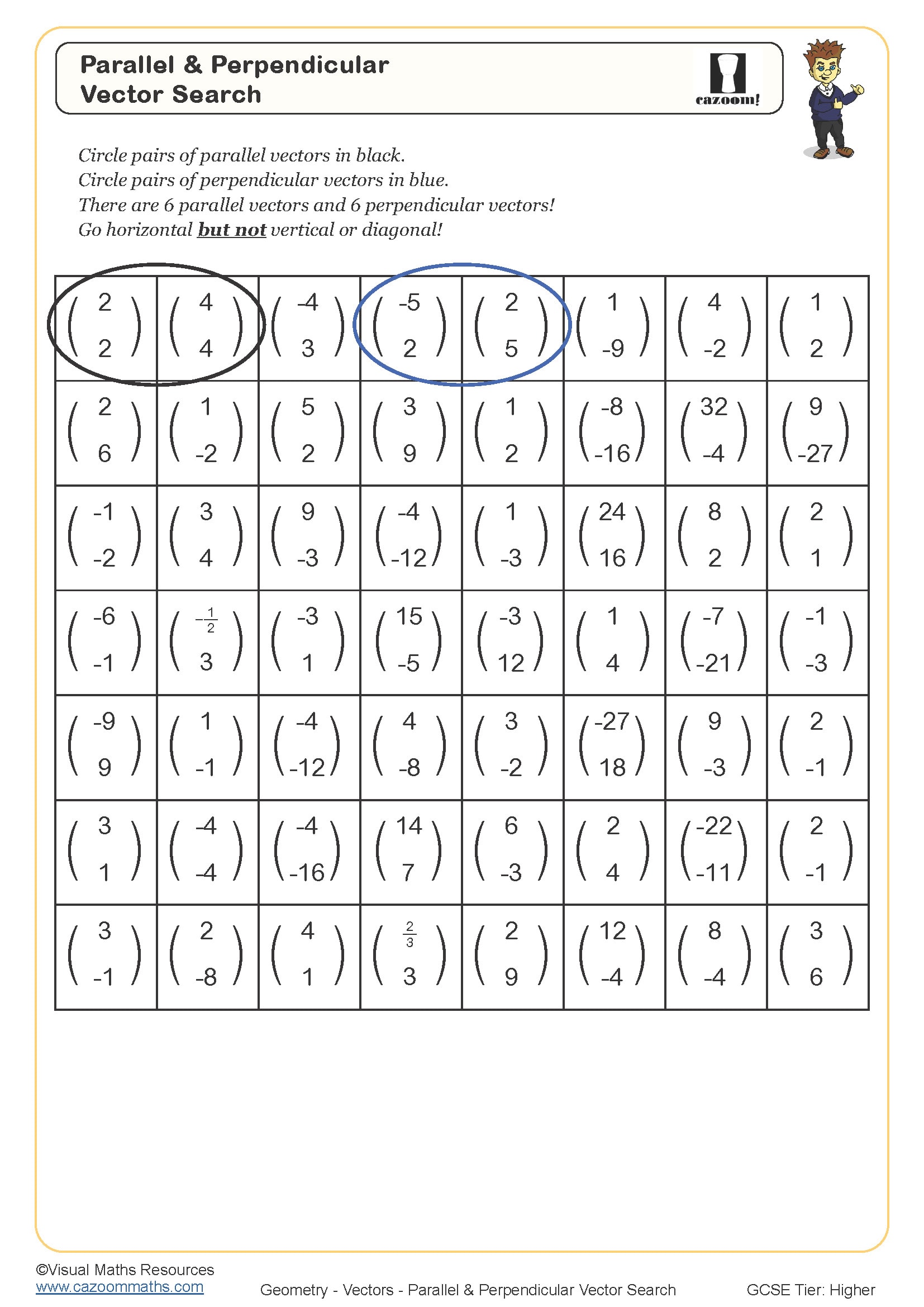
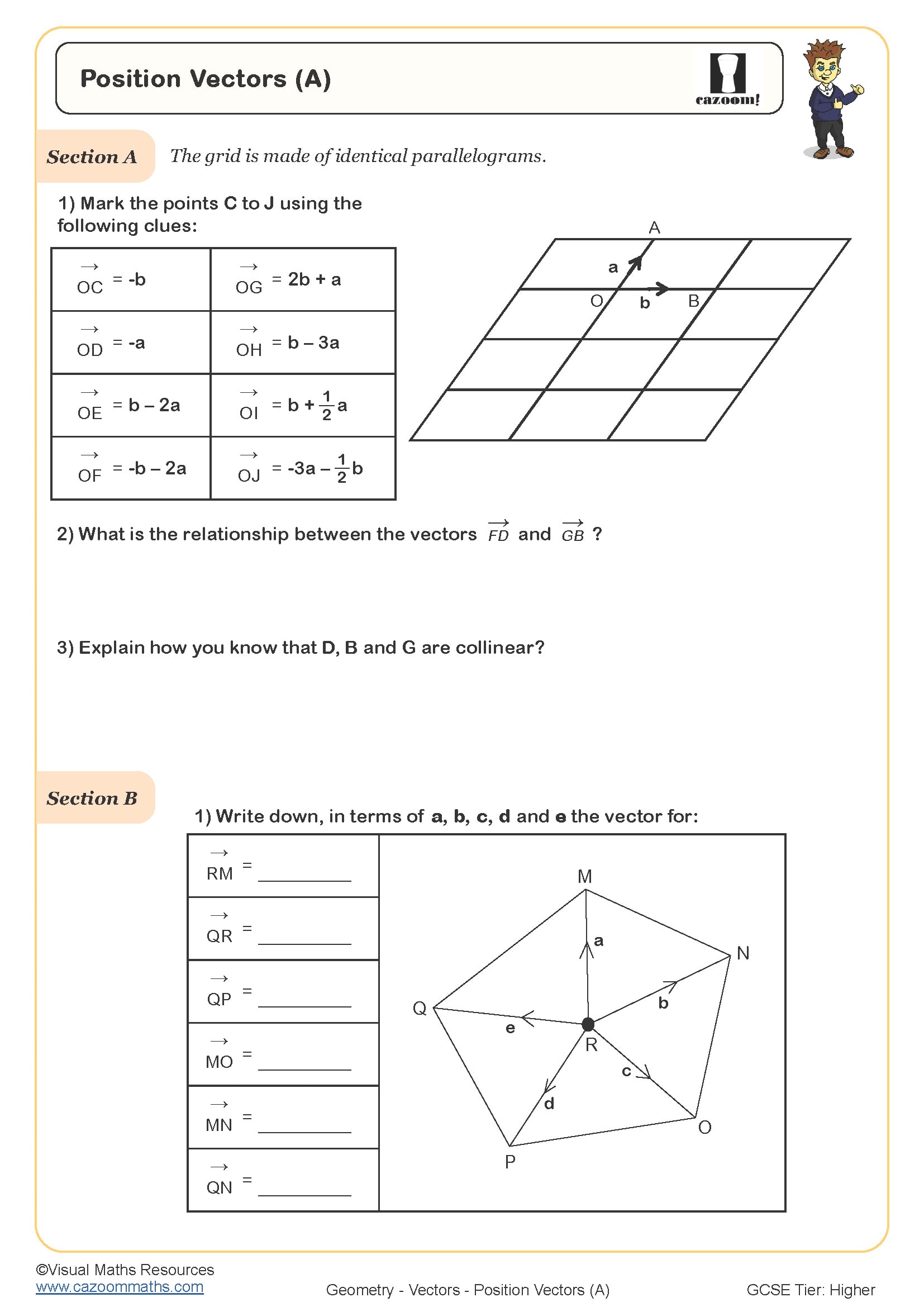
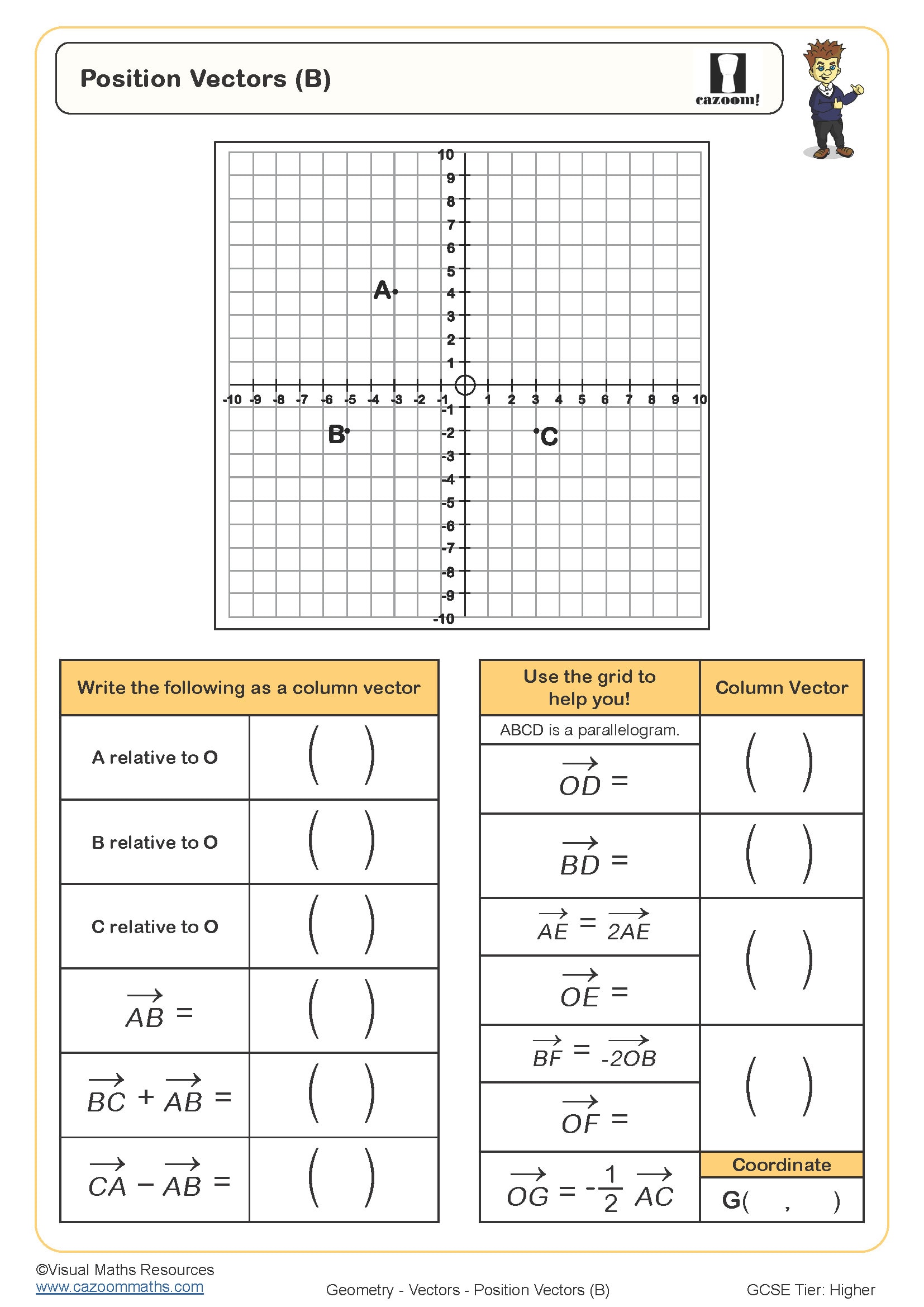
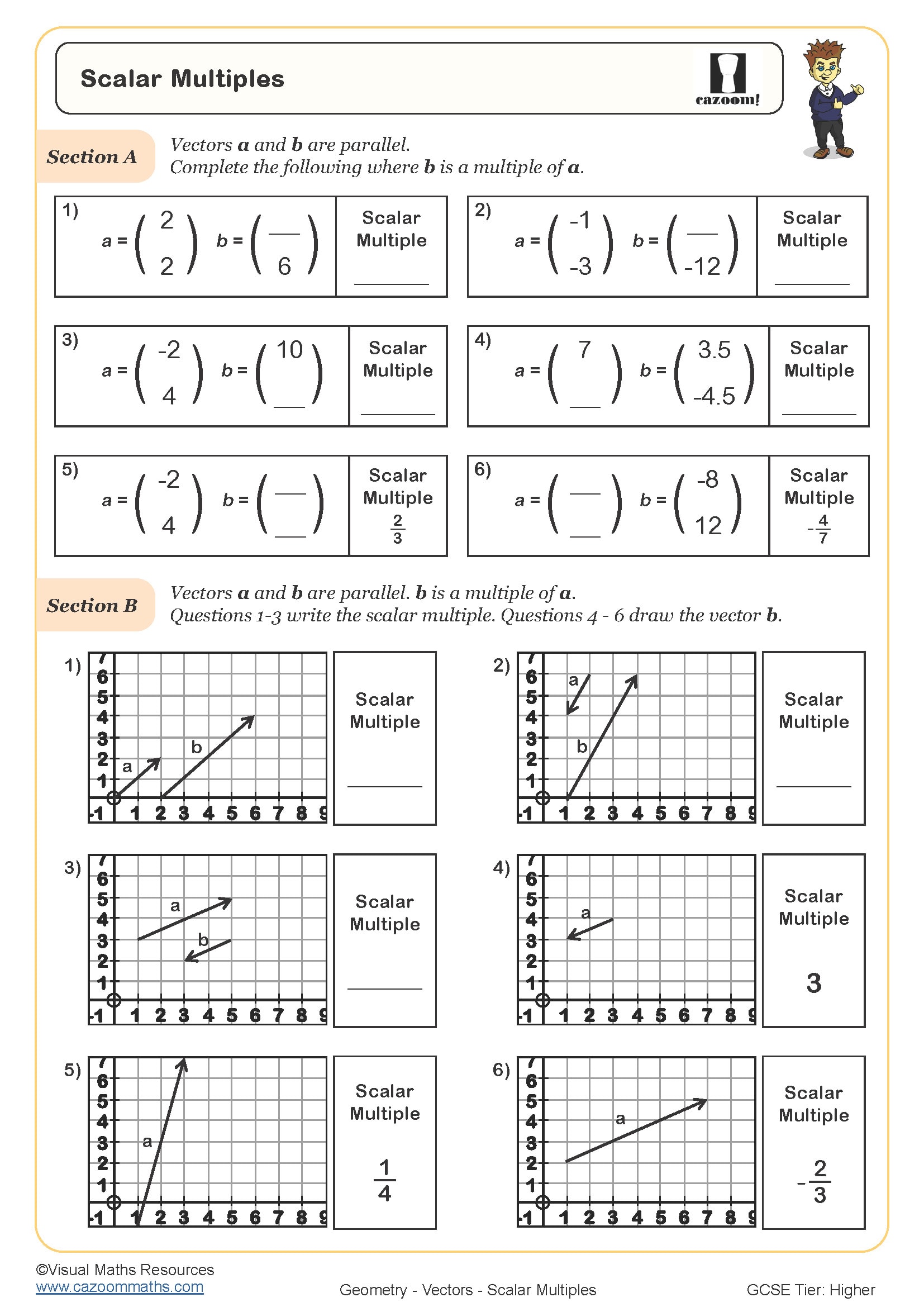
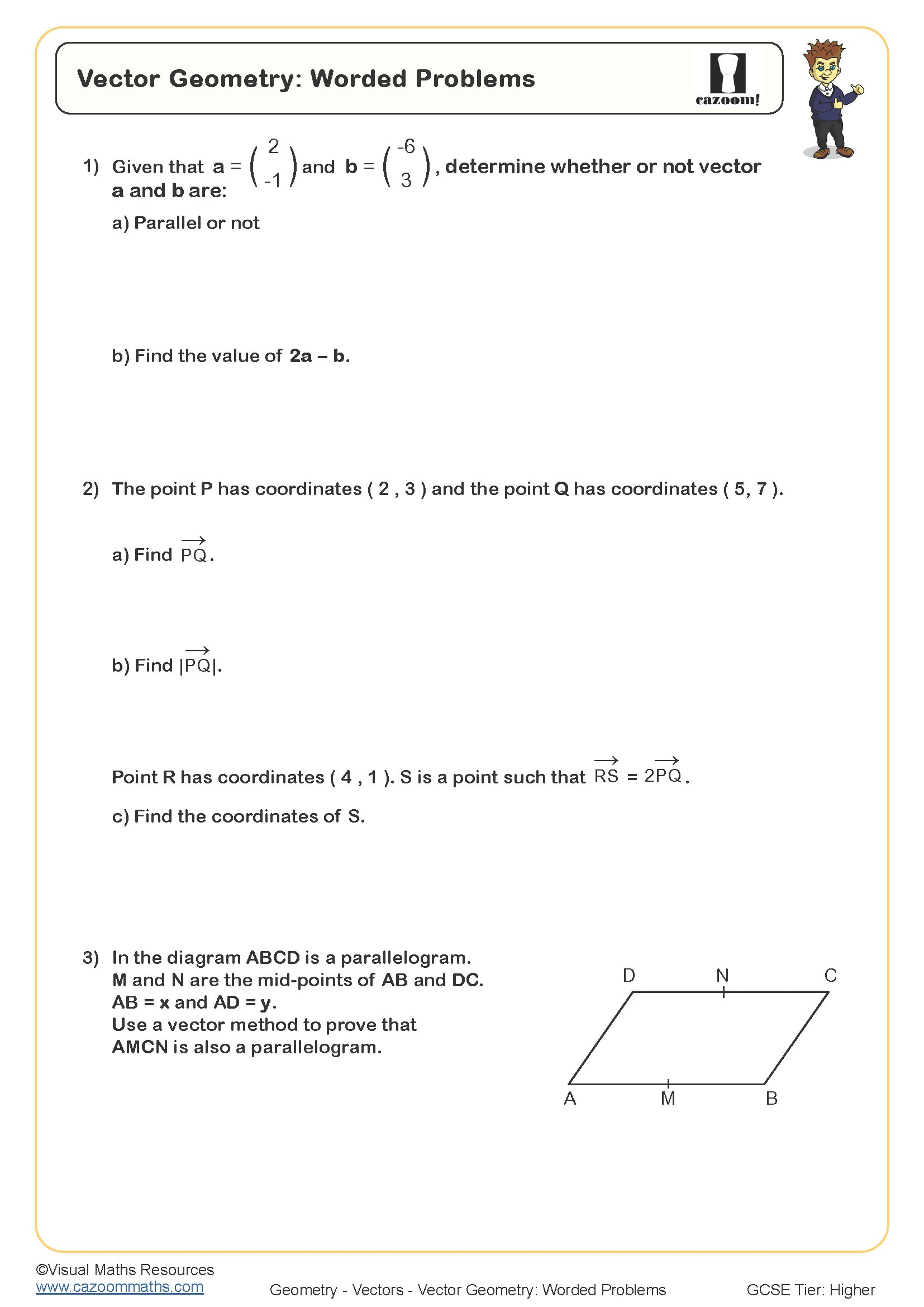
All worksheets are created by the team of experienced teachers at Cazoom Maths.
What do Year 11 students need to know about vectors for GCSE?
At GCSE Higher tier, students must understand vectors as quantities with both magnitude and direction, represent them using column notation, and perform operations including addition, subtraction, and multiplication by a scalar. They need to calculate magnitudes, express vectors in terms of other vectors, and solve geometric problems involving parallel vectors and position vectors. The specification requires students to prove collinearity and work with ratio problems involving vectors.
Exam mark schemes consistently penalise students who omit direction when stating vector results or fail to show that parallel vectors share a common scalar factor. Teachers often observe that students can perform vector arithmetic correctly but struggle to translate geometric diagrams into vector equations, particularly when working backwards from a required position to find an unknown vector. This translation skill separates students who understand vectors conceptually from those following procedural steps.
Which year group learns vectors in the UK curriculum?
Vectors appear in Year 11 as part of the GCSE Higher tier curriculum within the geometry and measures strand. This topic builds on students' understanding of coordinates, transformation geometry, and algebraic manipulation developed throughout Key Stages 3 and 4. Students first encounter directed line segments and the idea that certain quantities need direction as well as magnitude, then progress to formal vector notation and operations.
Within Year 11, the difficulty increases from basic column vector arithmetic to multi-step problems requiring students to combine several operations and apply geometric reasoning. The progression moves from representing single vectors and performing isolated calculations to solving problems where students must identify relationships between multiple vectors, prove geometric properties, and work with position vectors in triangles and parallelograms. The final challenge involves constructing algebraic proofs using vectors.
How do you calculate the magnitude of a vector?
The magnitude of a vector represents its length and is calculated using Pythagoras' theorem. For a vector written in column form with horizontal component a and vertical component b, the magnitude equals the square root of (a² + b²). Students must recognise that this formula applies regardless of the vector's direction, and that magnitude is always a positive value. When vectors involve surds or fractions, maintaining accuracy throughout the calculation becomes particularly important.
Vector magnitude connects directly to navigation, where displacement vectors describe journeys between locations. GPS systems calculate the straight-line distance between coordinates using exactly this principle, treating latitude changes and longitude changes as vector components. In physics and engineering, force vectors and velocity vectors use magnitude to quantify strength and speed, whilst direction indicates the line of action. Air traffic control systems process thousands of velocity vectors simultaneously, calculating aircraft separations using these magnitude principles to ensure safety.
How do vector worksheets help students prepare for GCSE exams?
These worksheets develop fluency with vector notation and operations through structured practice that mirrors GCSE question styles. Students encounter worked examples showing correct layout and mathematical communication, then attempt similar problems with increasing complexity. The progression from straightforward calculations to multi-step geometric problems helps students build confidence with each component skill before combining techniques, which exam questions invariably require.
Many teachers use these resources for targeted intervention with Higher tier students who find vectors particularly abstract compared to other GCSE topics. The worksheets work effectively for homework following initial teaching, as revision material before assessments, or as starter activities to maintain vector skills between initial teaching and final exams. Paired work proves particularly valuable, with students explaining their reasoning to partners, since verbalising why vectors combine in specific ways often clarifies thinking and reveals misunderstandings about direction or scalar multiplication.