Year 7 Area and Perimeter Worksheets
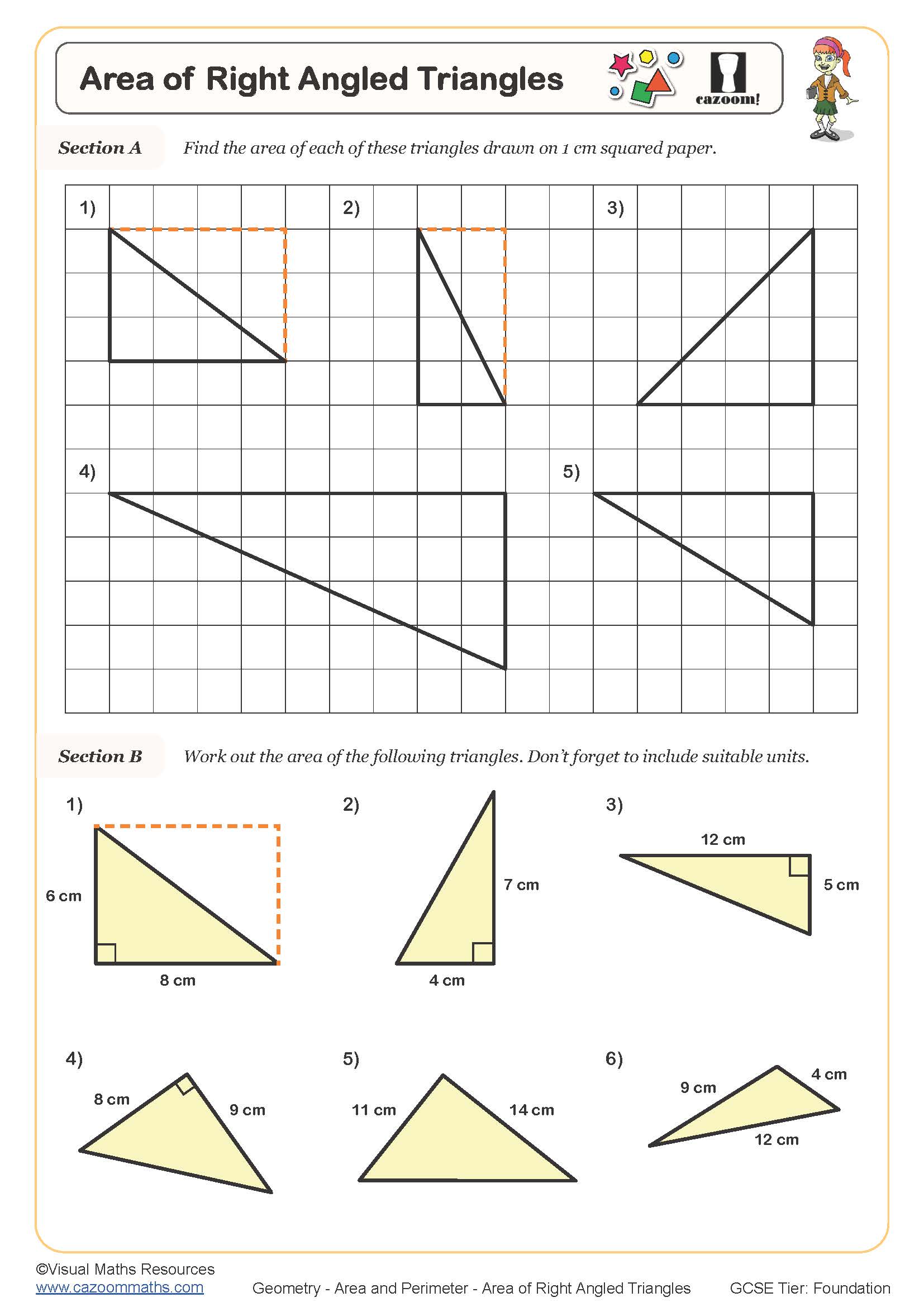
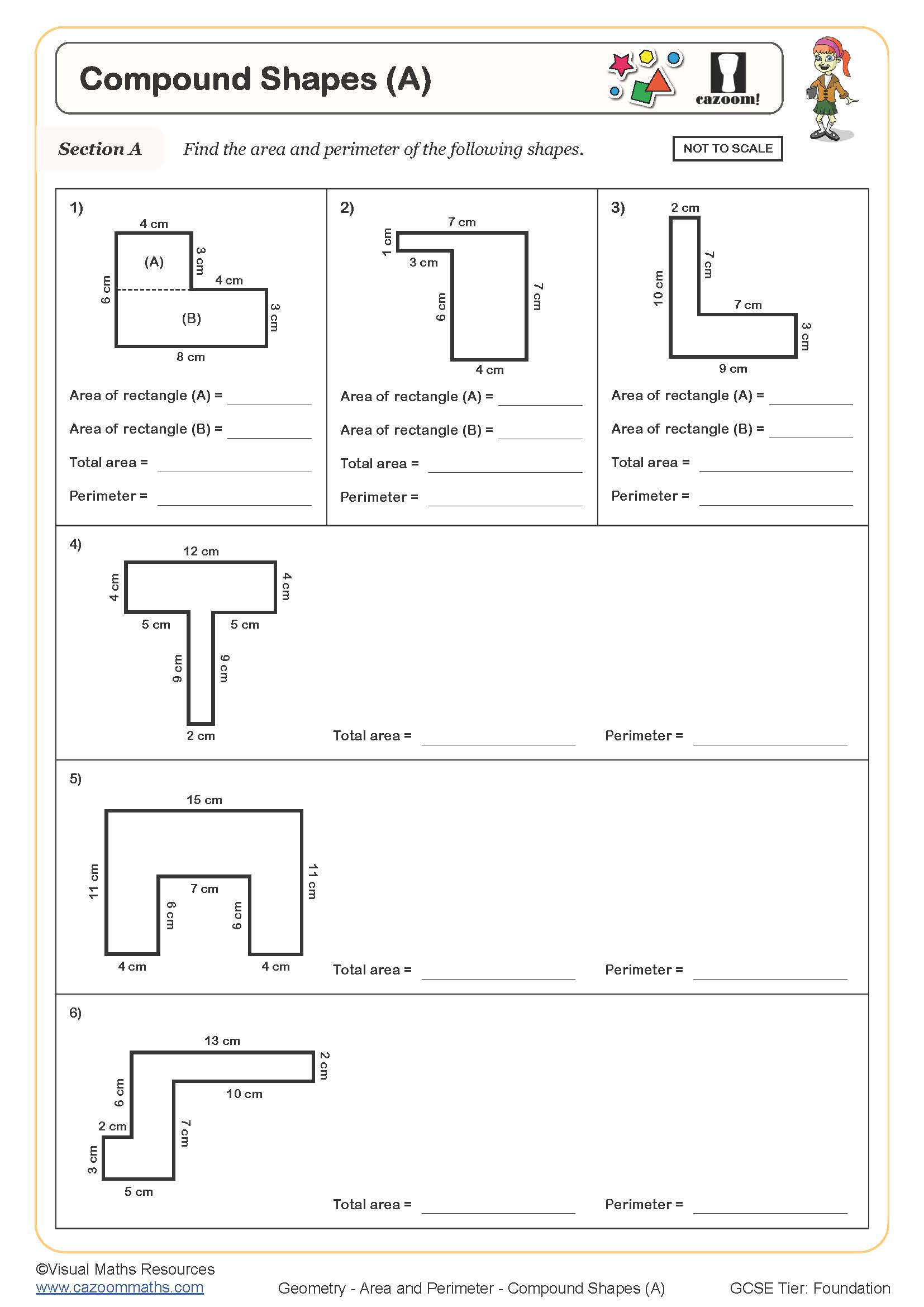
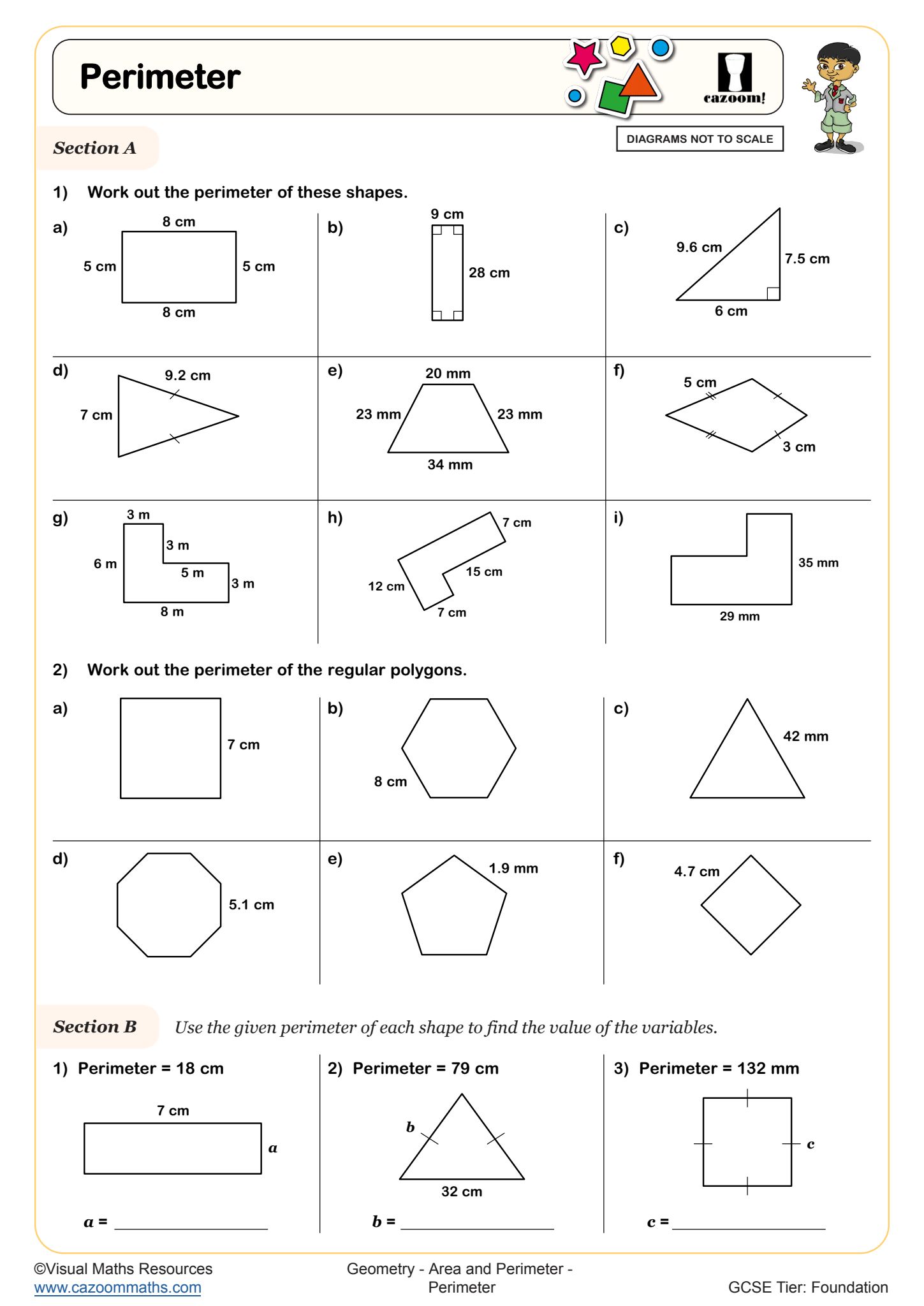
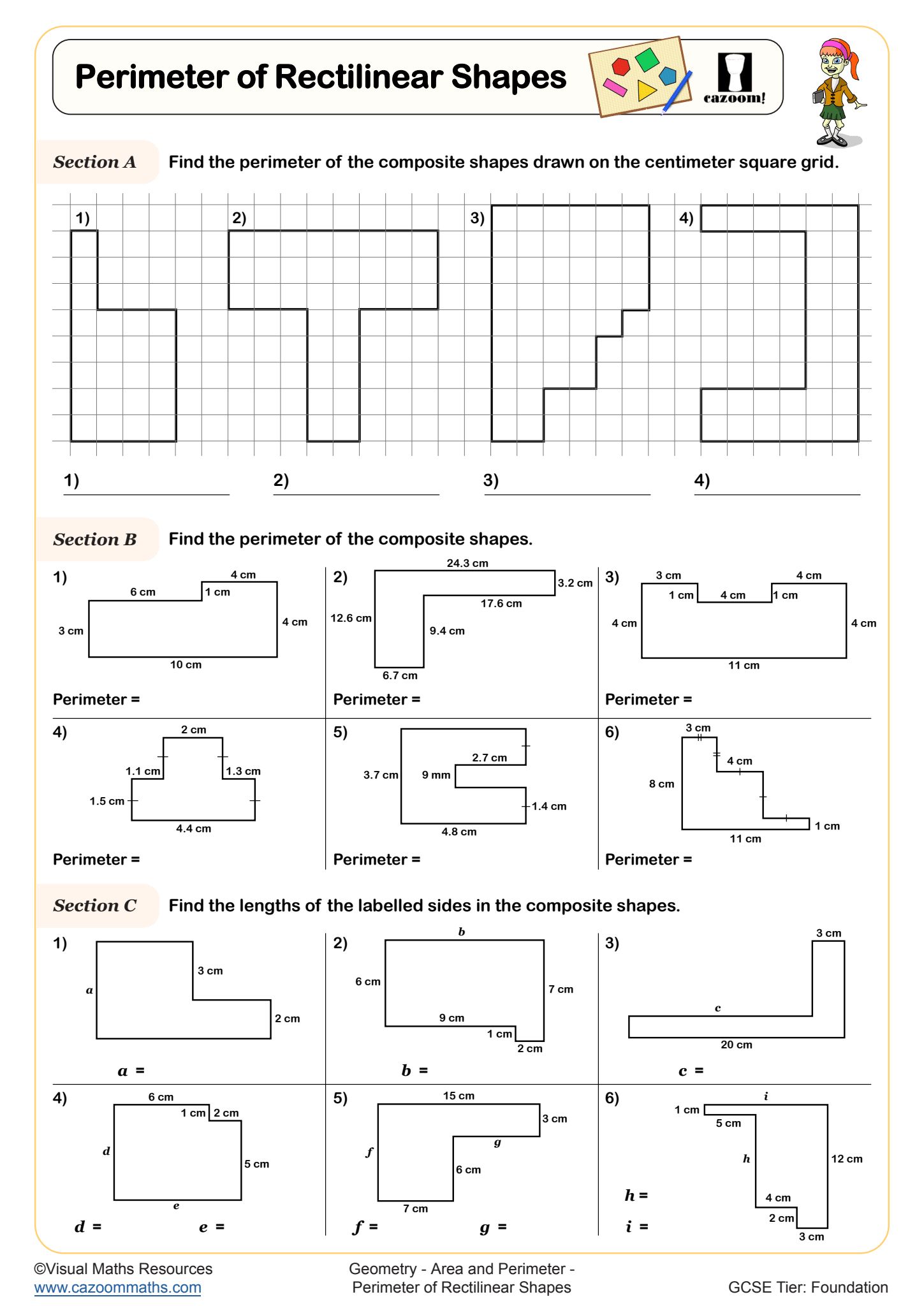
All worksheets are created by the team of experienced teachers at Cazoom Maths.
What makes area and perimeter worksheets Year 7 suitable for Year 7 students?
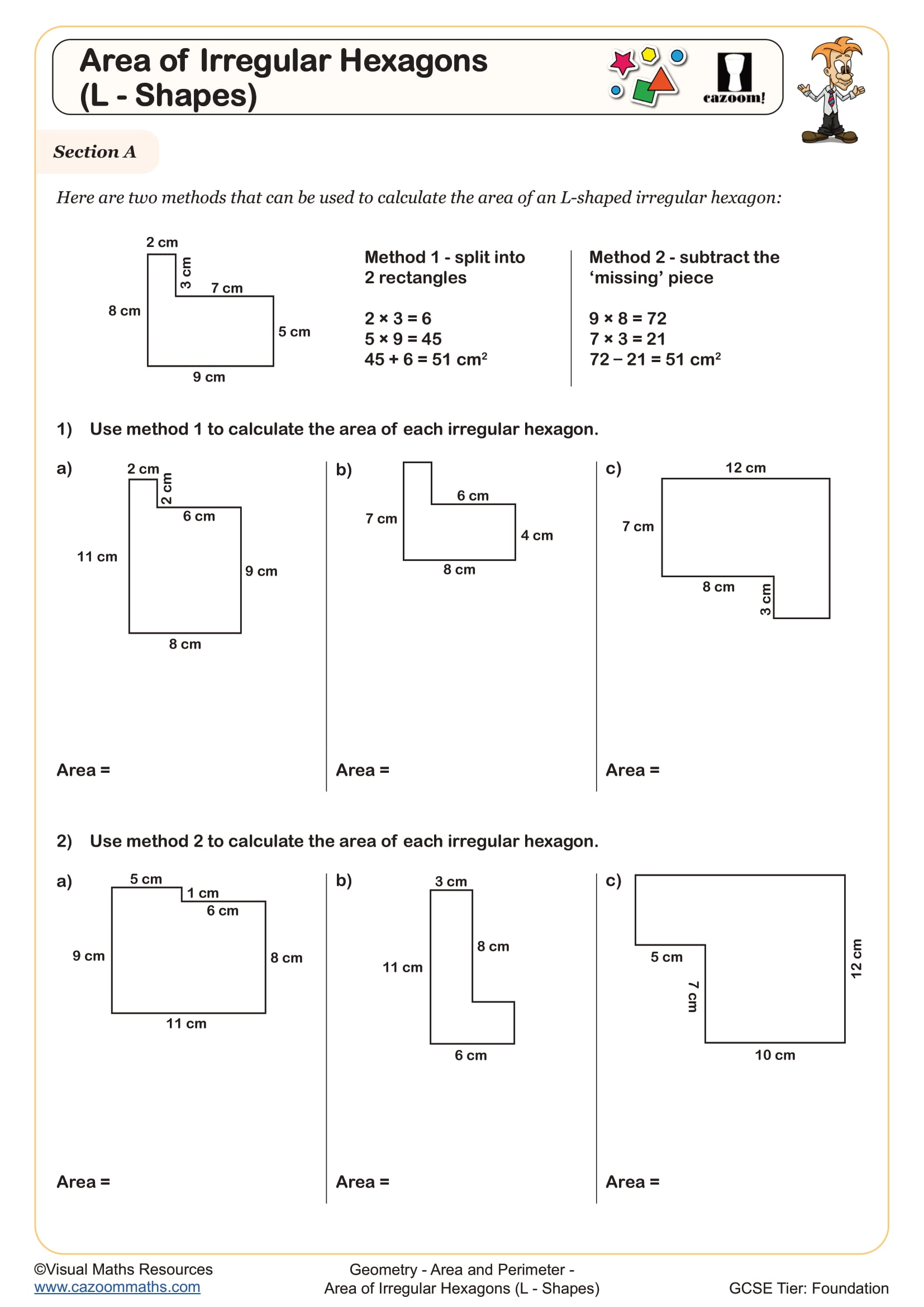
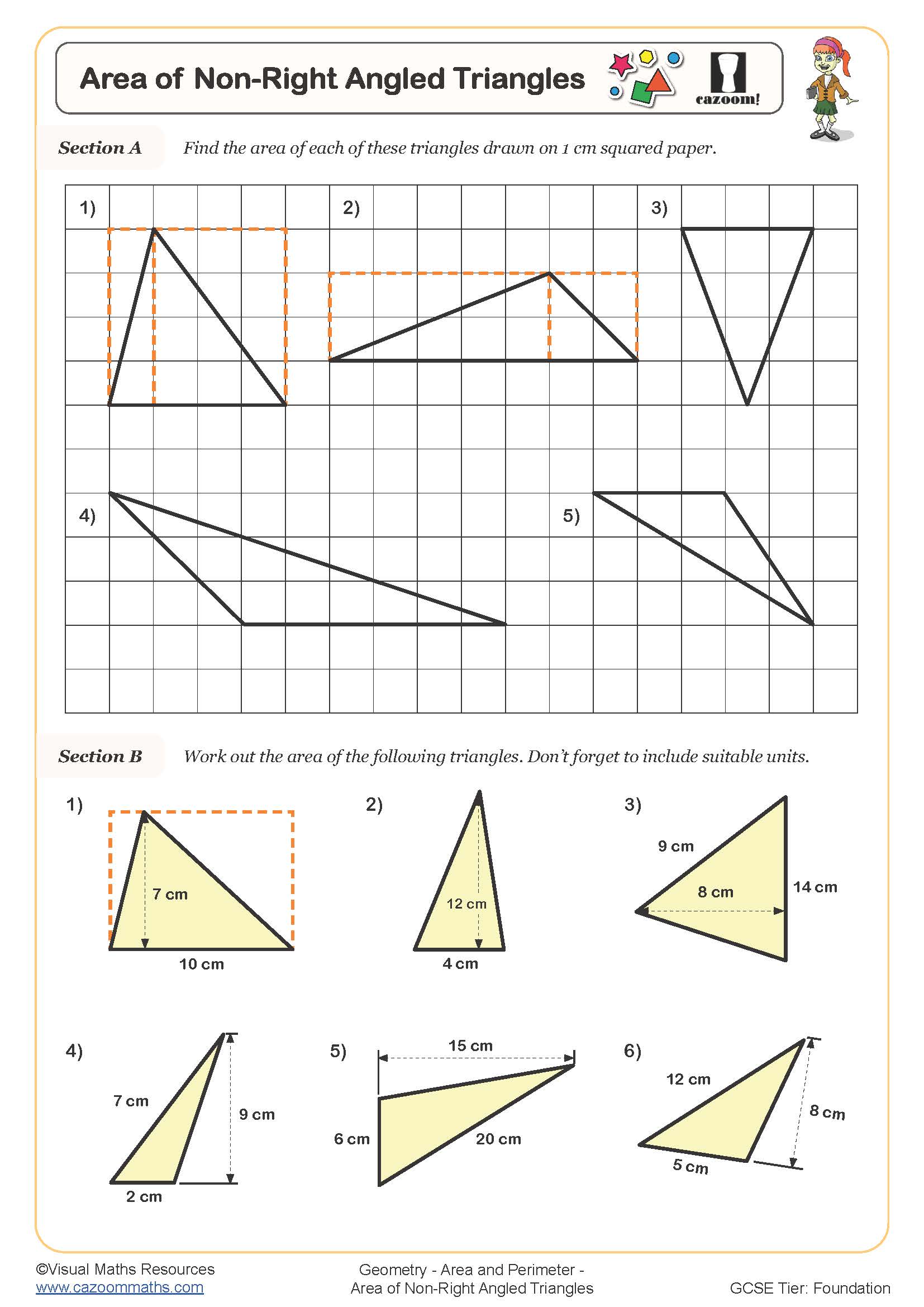
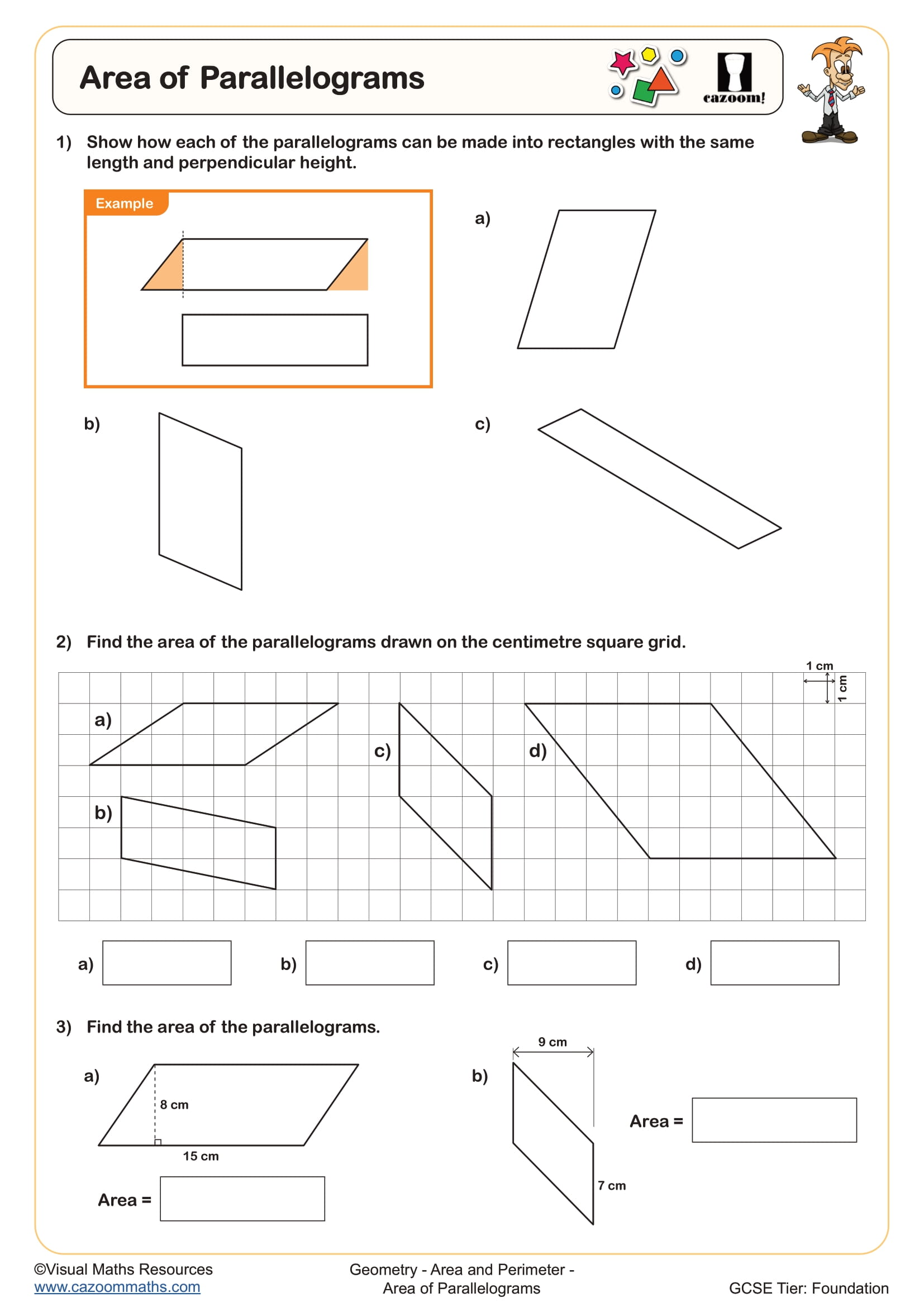
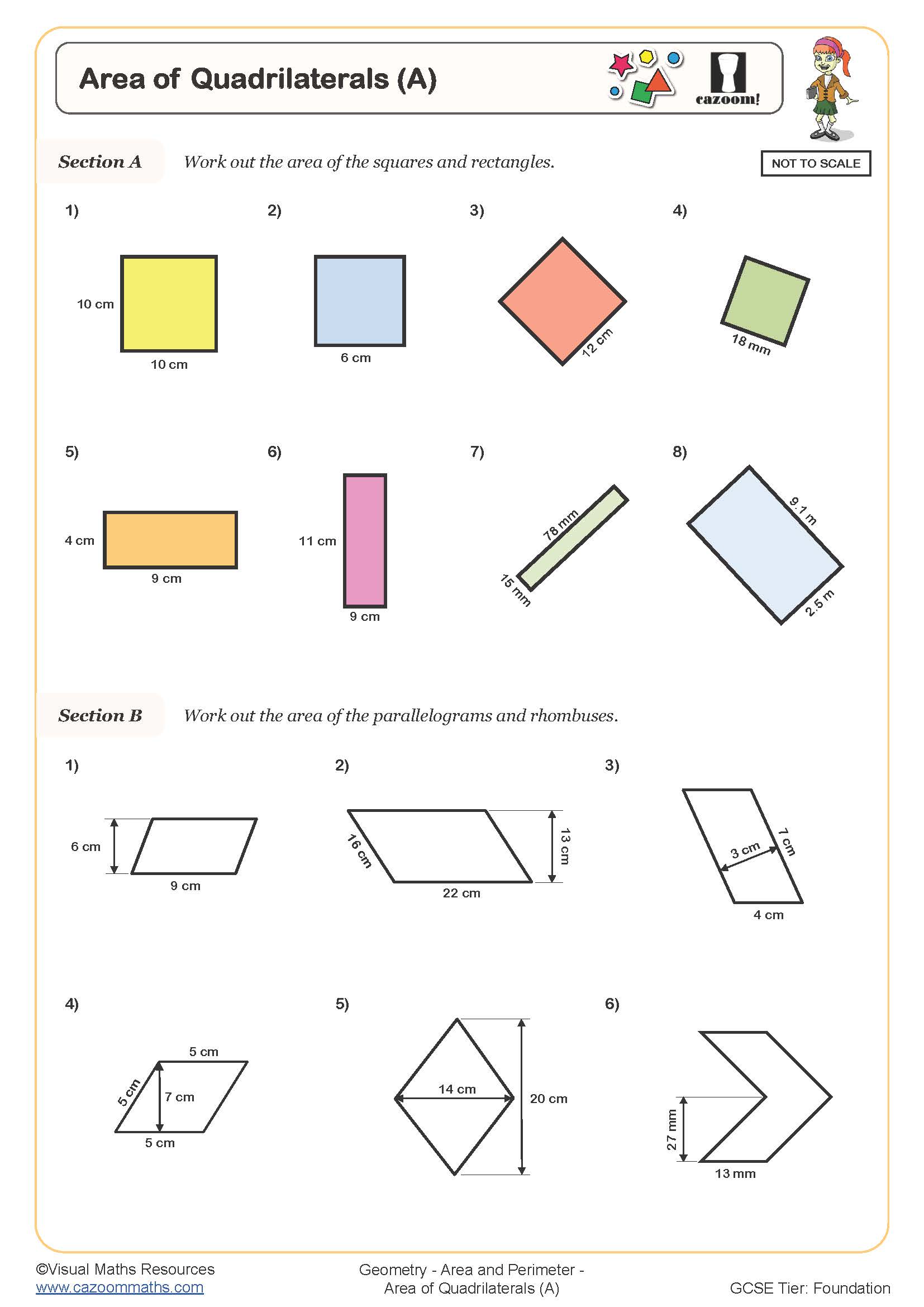
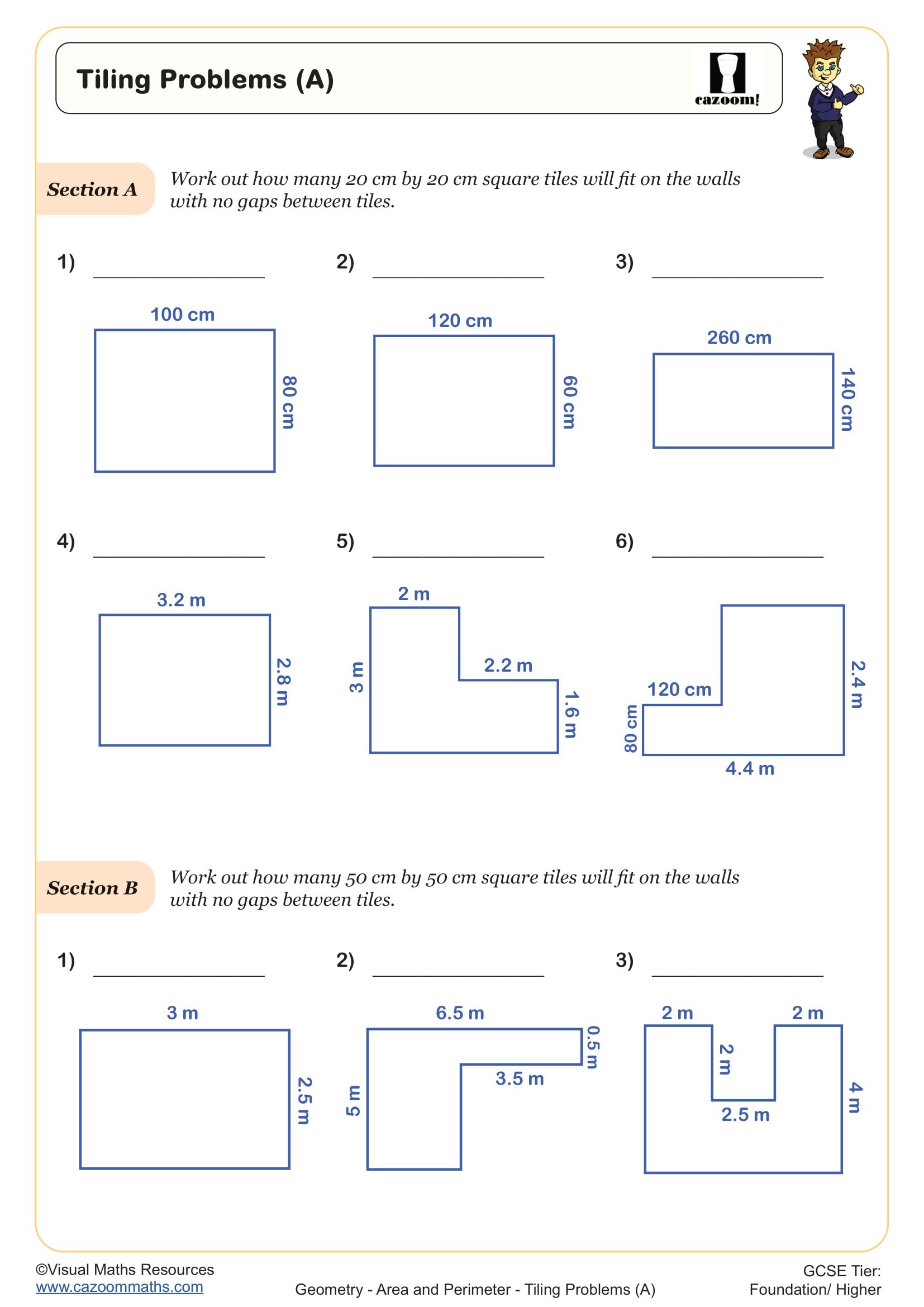
Area and perimeter worksheets Year 7 align with National Curriculum expectations for Key Stage 3, introducing students to calculating measurements beyond basic rectangles. These resources bridge the gap between primary school methods and GCSE requirements, focusing on triangles, parallelograms and compound shapes that appear in secondary assessments.
Teachers find that Year 7 students often struggle with units, mixing up cm and cm² in their answers. The worksheets address this by requiring students to identify appropriate units for each calculation, reinforcing the conceptual difference between linear perimeter measurements and area calculations.
How do these worksheets support progression from Year 6 to GCSE level?
Year 7 area and perimeter work extends primary school rectangle and square calculations to include triangular and compound shapes. Students learn to decompose complex figures into manageable parts, a skill that becomes important for GCSE topics like surface area of 3D shapes and trigonometric area formulas.
The worksheets introduce algebraic elements gradually, with some questions featuring unknown side lengths represented by letters. This prepares students for Year 8 and 9 work where area and perimeter problems become vehicles for practising equation solving and algebraic manipulation.
Why do students often confuse area and perimeter calculations?
Students frequently muddle area and perimeter because both involve measuring shapes, but they represent fundamentally different concepts. Teachers observe that many pupils apply perimeter methods to area questions, adding all sides together when they should multiply length by width for rectangles or use specific formulas for triangles.
The worksheets combat this confusion by presenting mixed question types that require students to read carefully and identify whether they need to find the distance around a shape (perimeter) or the space inside it (area). Visual cues and varied question formats help reinforce these distinct mathematical concepts.
How can teachers use these worksheets most effectively in lessons?
Teachers achieve better results when they use these worksheets after demonstrating key formulas with practical activities, such as measuring classroom objects or calculating playground areas. The answer sheets enable quick assessment of common errors, particularly students who forget to include units or apply incorrect formulas.
Many teachers find success using selected questions as starter activities or homework tasks, then addressing misconceptions revealed through marking. The PDF format allows teachers to project individual questions for whole-class discussion, focusing on method rather than just final answers.