Year 7 Calculator Methods Worksheets
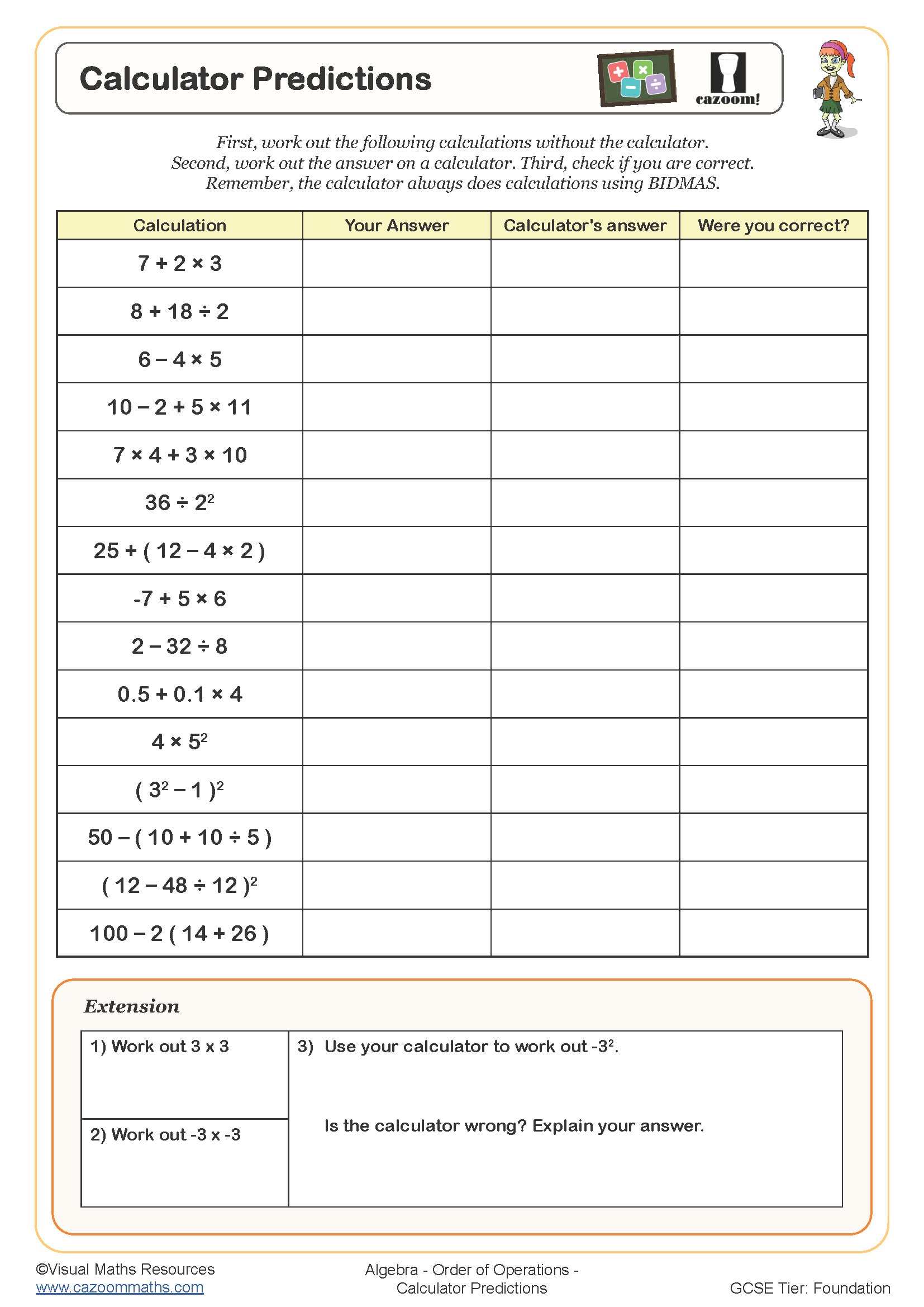
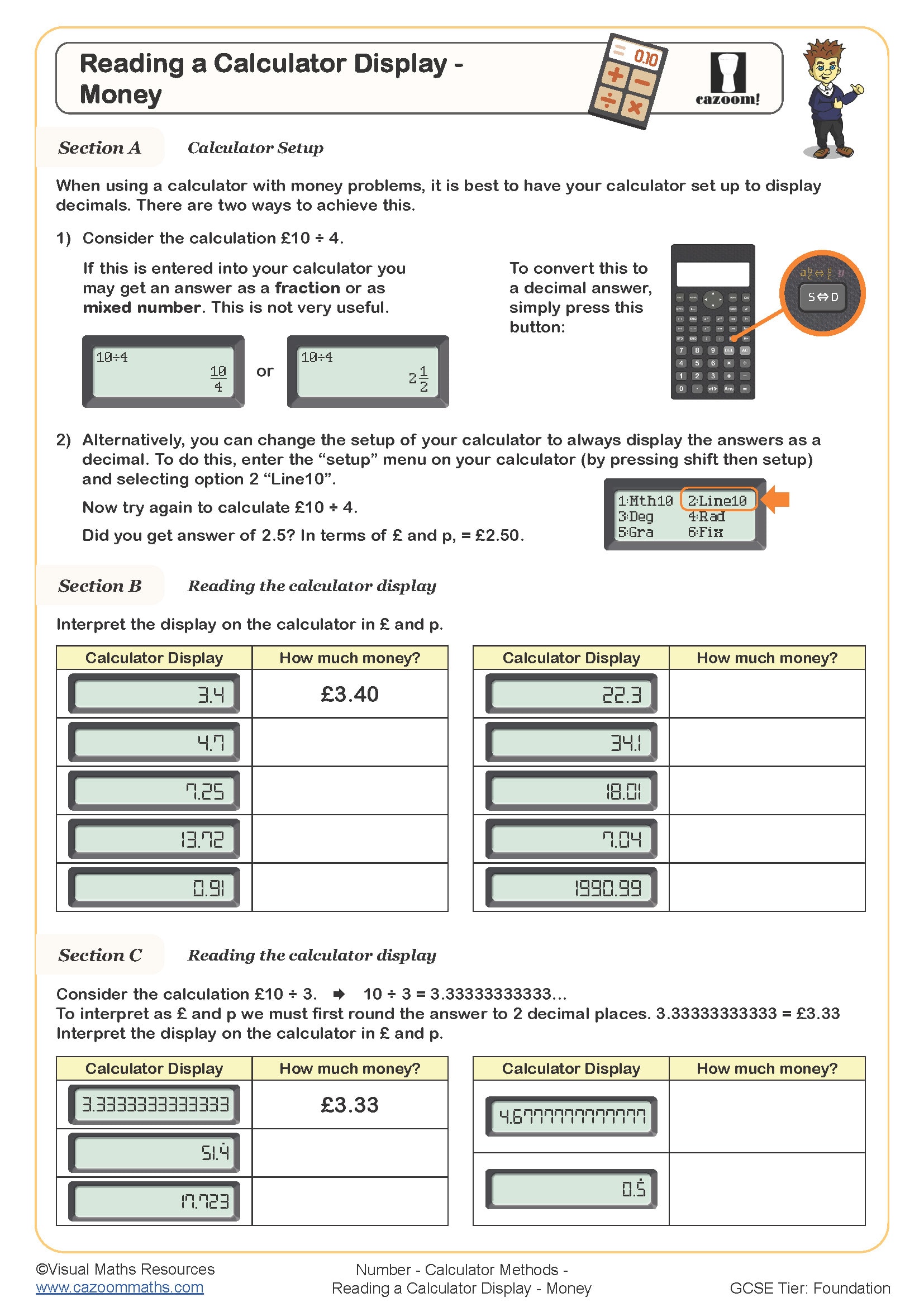
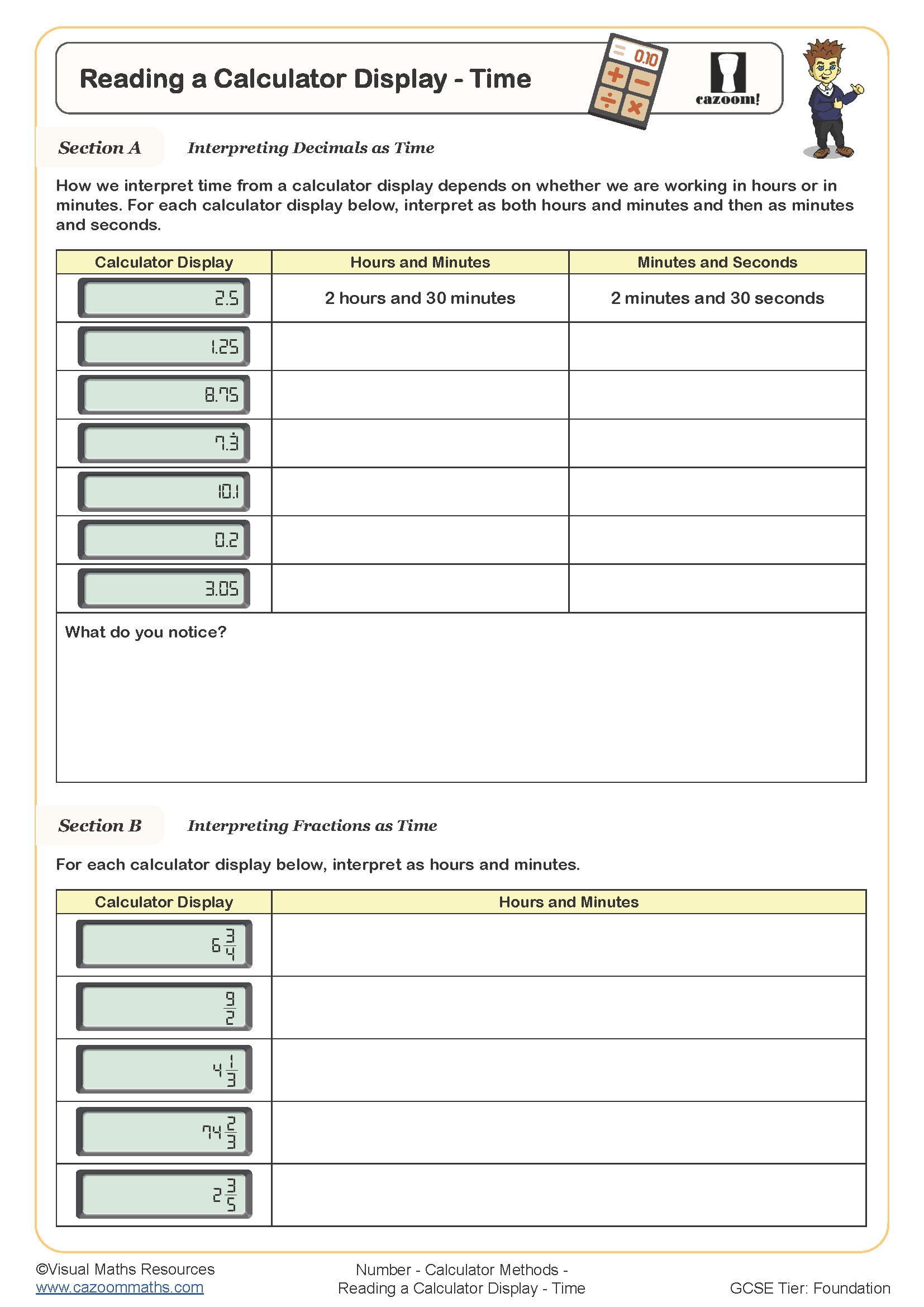
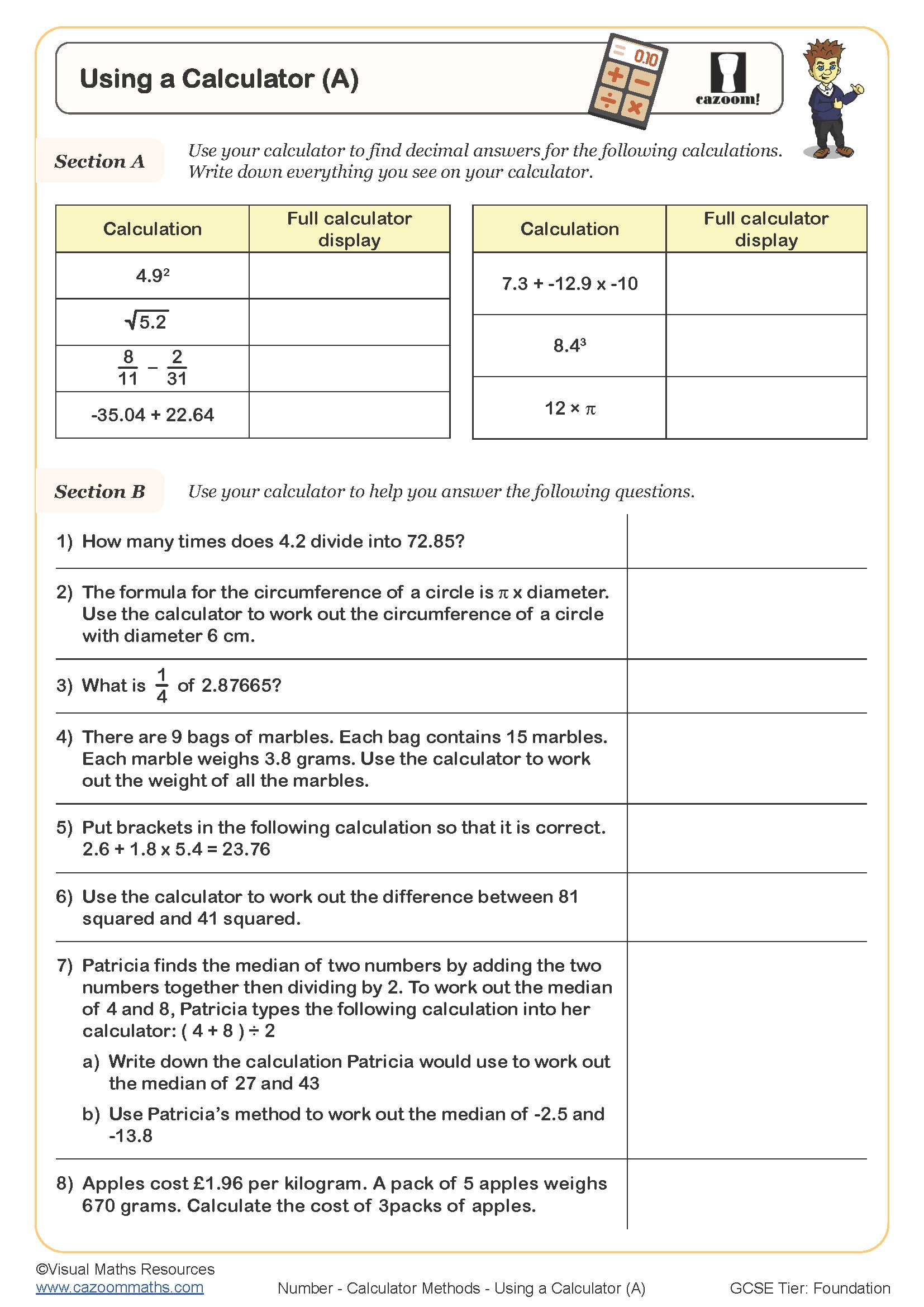
All worksheets are created by the team of experienced teachers at Cazoom Maths.
What makes effective calculator practice worksheets for Year 7 students?
Effective calculator practice worksheets pdf resources focus on building methodical approaches to complex calculations while reinforcing mathematical understanding. Year 7 students need structured practice that moves beyond basic arithmetic to include scientific notation, statistical functions, and multi-step problems that mirror real GCSE contexts.
Teachers notice that students who receive systematic calculator training early in Key Stage 3 show greater confidence in later topics like trigonometry and quadratic equations. The most successful calculator practice questions require pupils to estimate answers first, encouraging them to spot unreasonable results that indicate input errors or misunderstanding of mathematical processes.
Which year groups benefit most from structured calculator skills practice?
Calculator skills development typically begins in earnest during Year 7, when students transition from primary arithmetic methods to more sophisticated problem-solving approaches. The National Curriculum expects pupils to use calculators efficiently by the end of Key Stage 3, making Years 7-9 crucial for building these competencies.
Many schools introduce calculator methods gradually, starting with basic scientific functions in Year 7 before progressing to statistical calculations and complex formulae in Years 8 and 9. Teachers find that early intervention prevents the formation of poor habits, such as over-reliance on calculators for simple mental maths or failure to check results against reasonable estimates.
How do memory functions improve students' mathematical problem-solving?
Memory functions on scientific calculators allow students to store intermediate results during multi-step calculations, reducing errors and building confidence with complex problems. Year 7 pupils often struggle with problems requiring several operations, losing track of partial answers and making costly mistakes.
Teachers observe significant improvements in accuracy when students learn to use memory operations systematically. For example, when calculating compound interest or solving simultaneous equations, stored values eliminate the need to write down lengthy decimal approximations, which often introduce rounding errors that propagate through subsequent calculations.
What classroom strategies work best when teaching calculator methods?
Successful calculator instruction combines demonstration with guided practice, allowing students to observe proper techniques before attempting independent work. Teachers find that projecting calculator displays helps pupils follow button sequences and understand the logic behind complex calculations.
The most effective approach involves pairing calculator work with estimation skills, encouraging students to predict reasonable answers before computing exact values. This dual approach helps pupils spot input errors immediately and builds number sense alongside technical calculator skills, creating more resilient problem-solvers who can adapt to both calculator and non-calculator examination contexts.