Year 7 Coordinates Worksheets
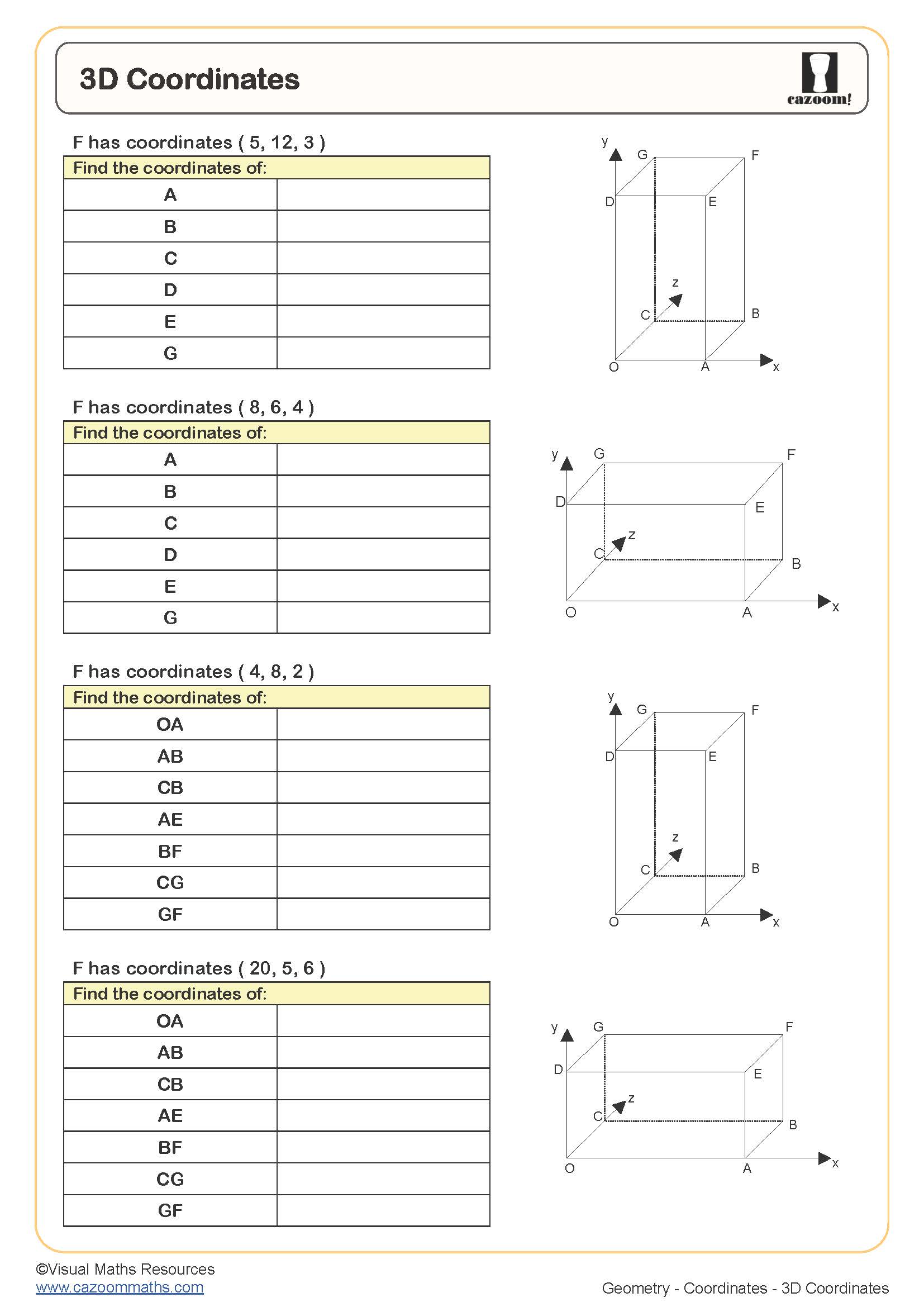
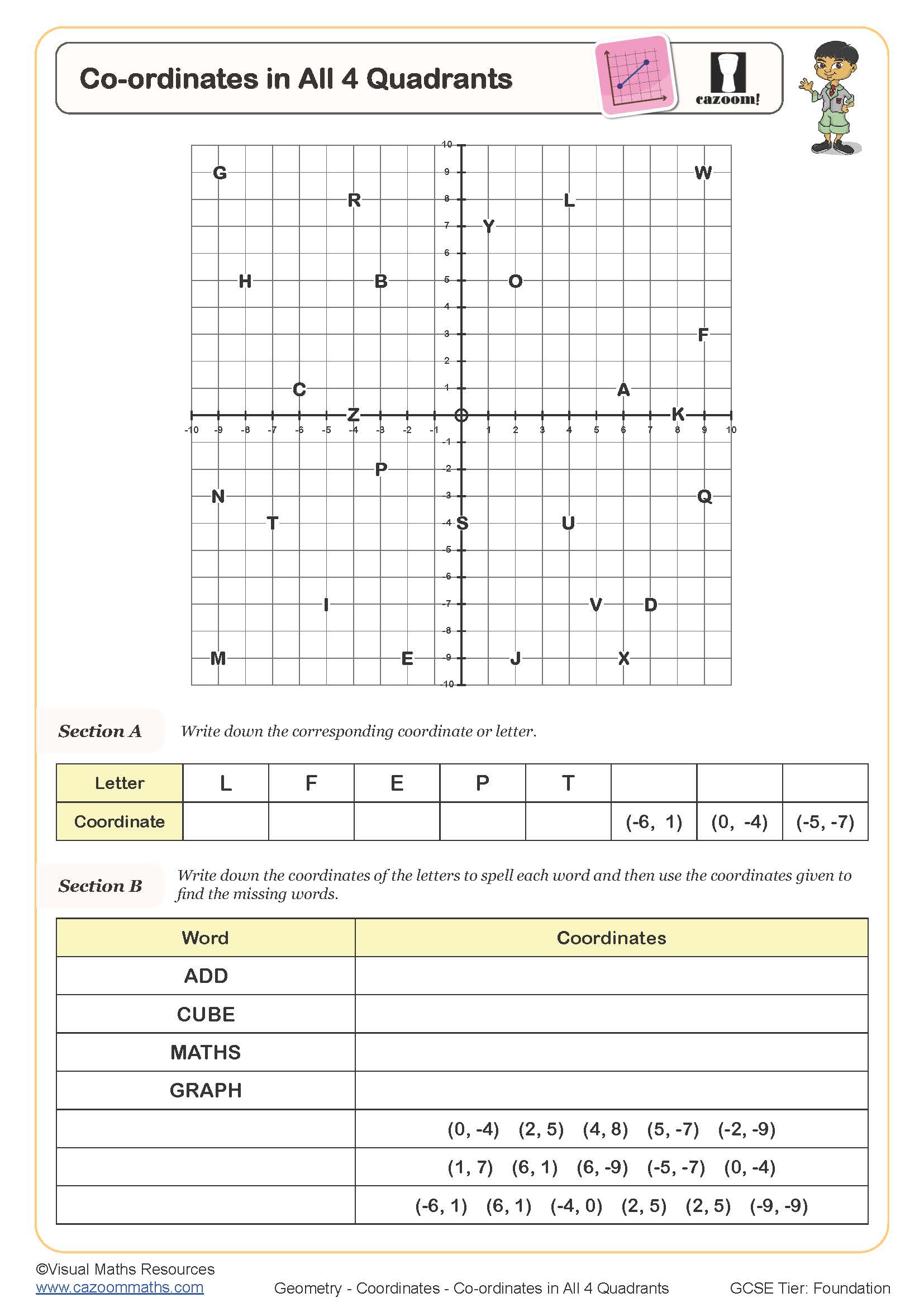
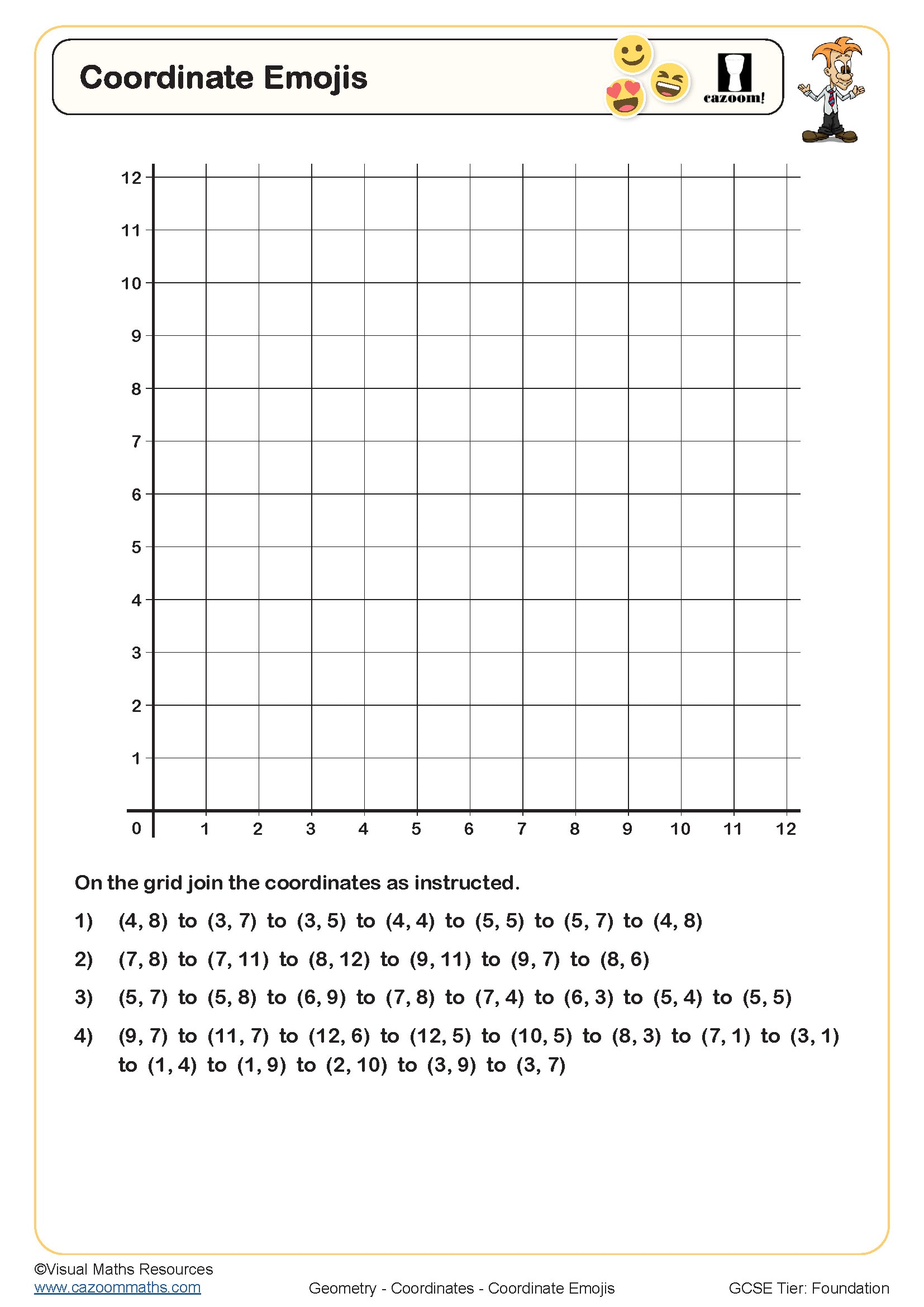
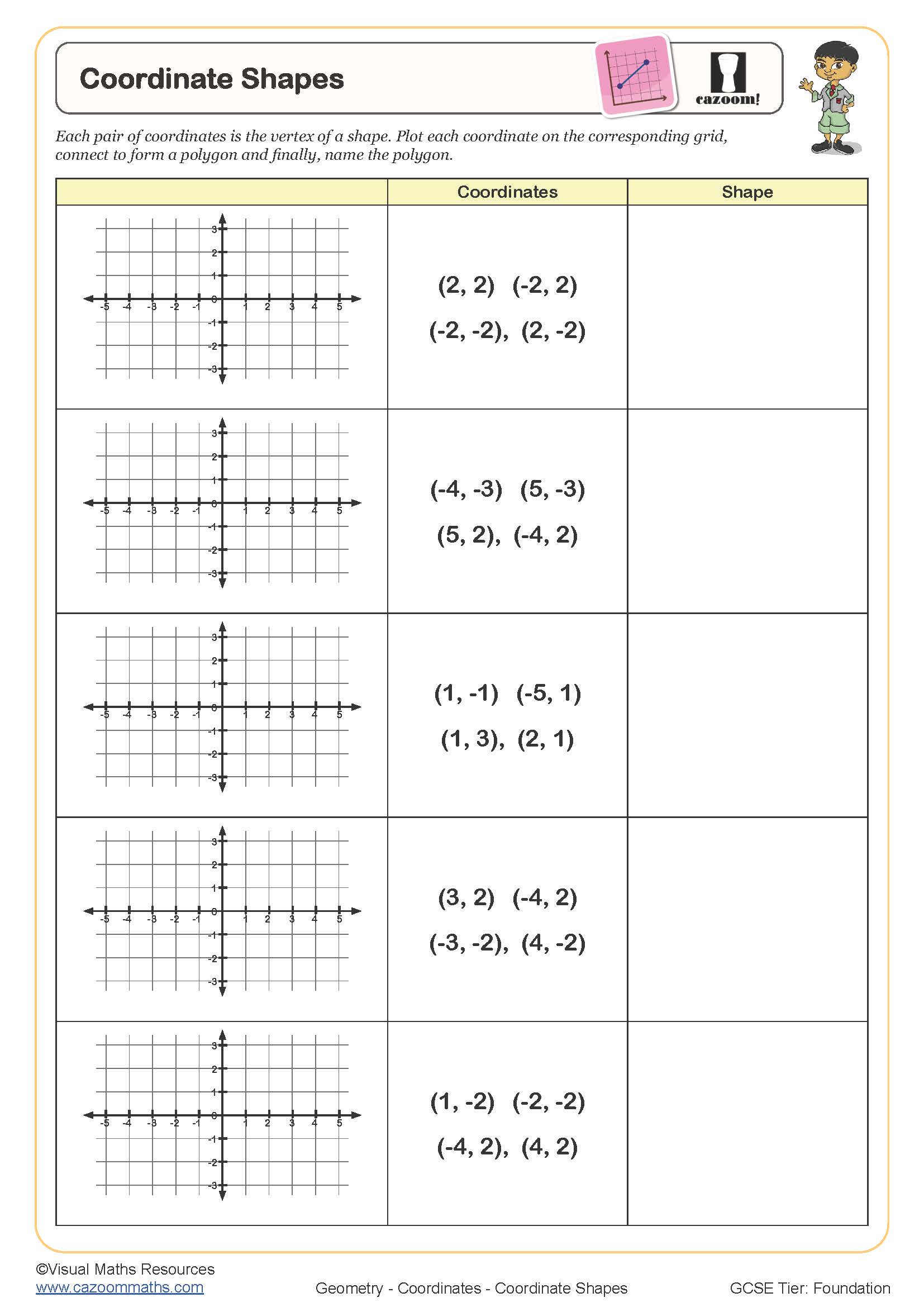
All worksheets are created by the team of experienced teachers at Cazoom Maths.
What should I look for in a year 7 coordinates worksheet pdf?
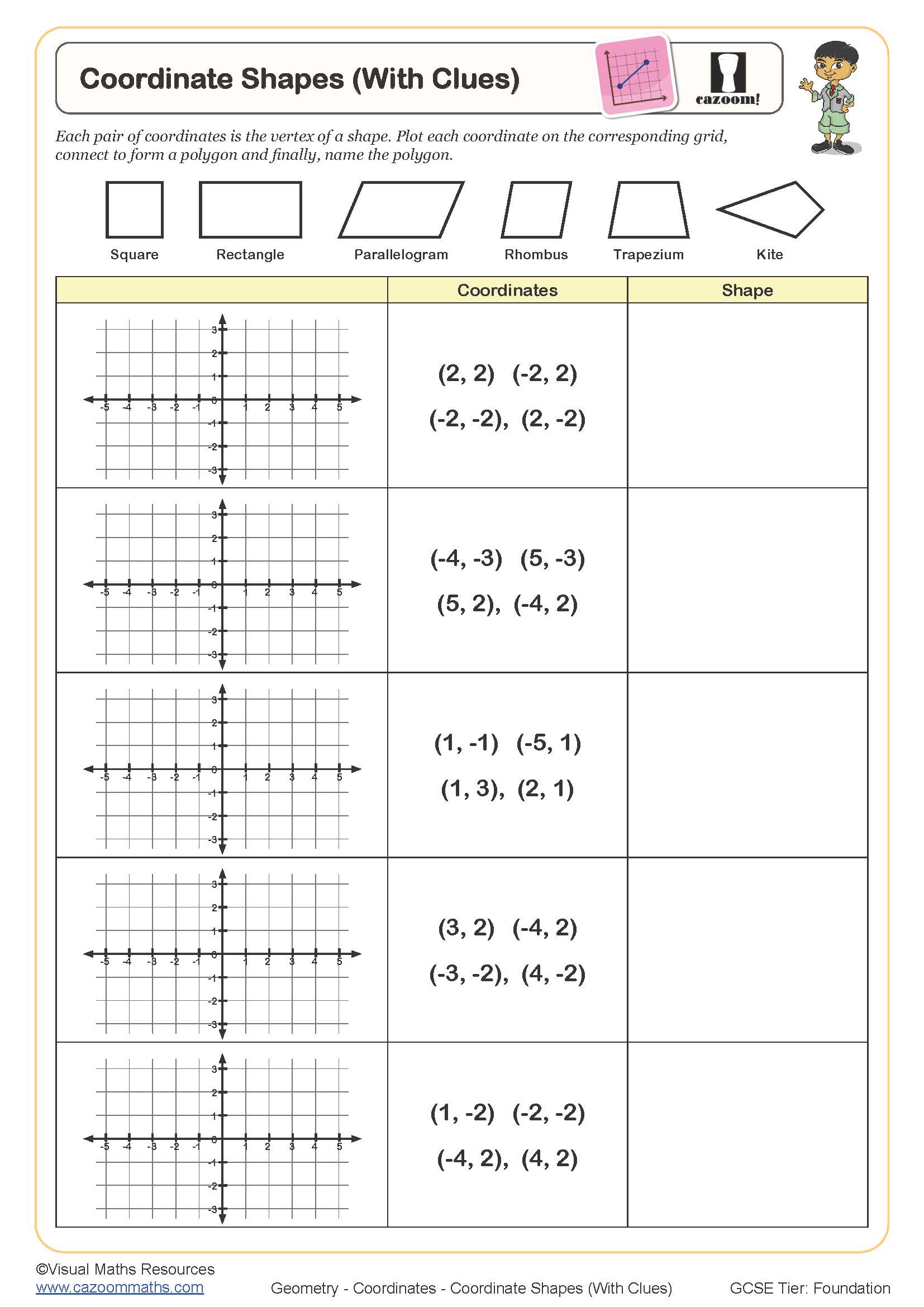
A quality coordinates worksheet for Year 7 should cover all four quadrants of the coordinate plane, not just the first quadrant that primary students encounter. The worksheet should include exercises on plotting points, reading coordinates from graphs, and identifying patterns in coordinate pairs to meet National Curriculum requirements.
Teachers find that worksheets work best when they include grid paper with clearly marked axes and consistent scaling. Students often lose marks on assessments because they misread scales or plot points between grid lines rather than on intersection points. Look for coordinate plane worksheets pdf and answers Year 7 format that provide step-by-step solutions showing exactly where each point should be positioned.
How do coordinates worksheets progress from Year 6 to Year 8?
Year 6 students typically work only with positive coordinates in the first quadrant, while Year 7 extends this to all four quadrants using negative numbers. This represents a significant conceptual leap that requires careful scaffolding through structured worksheet practice.
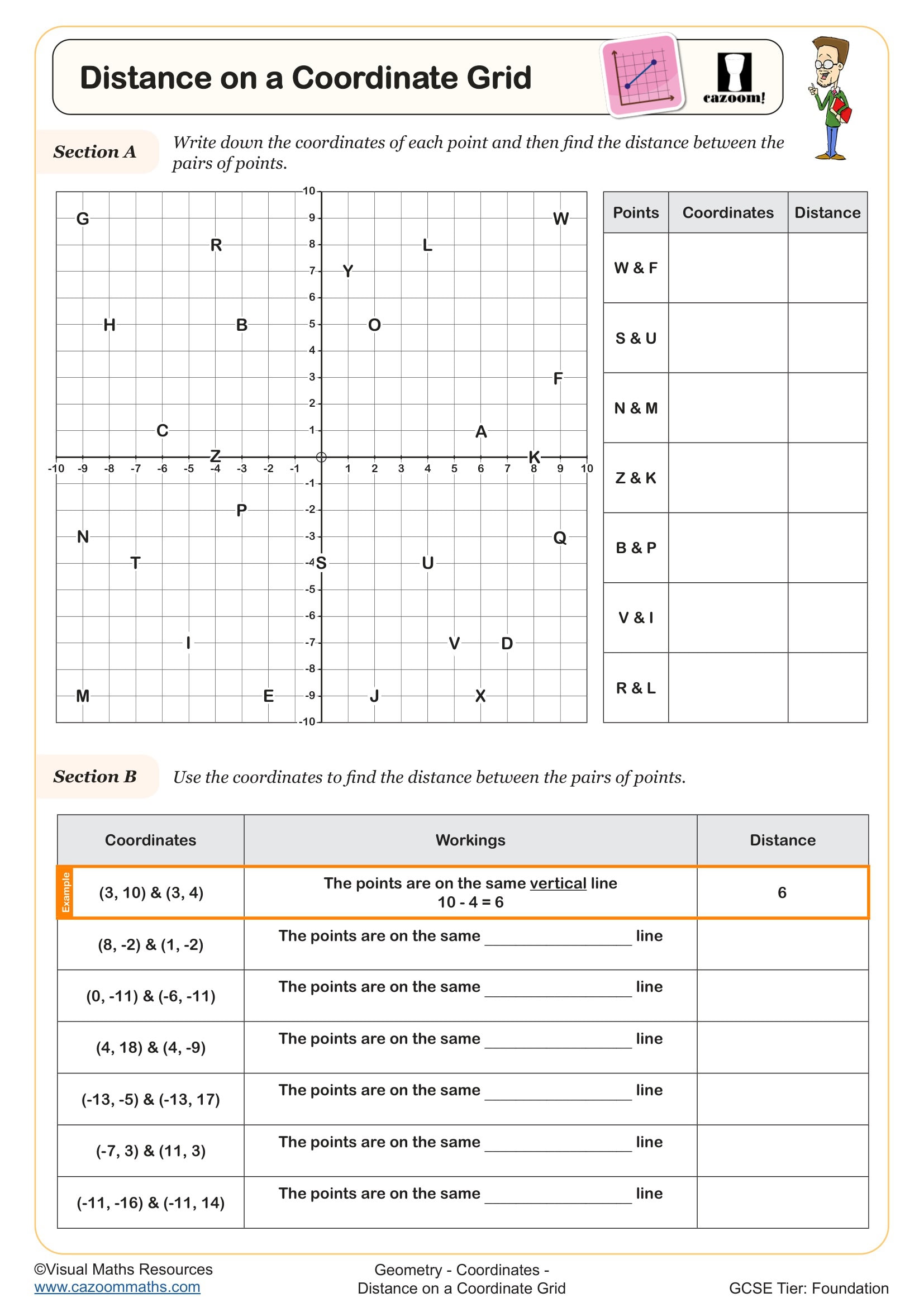
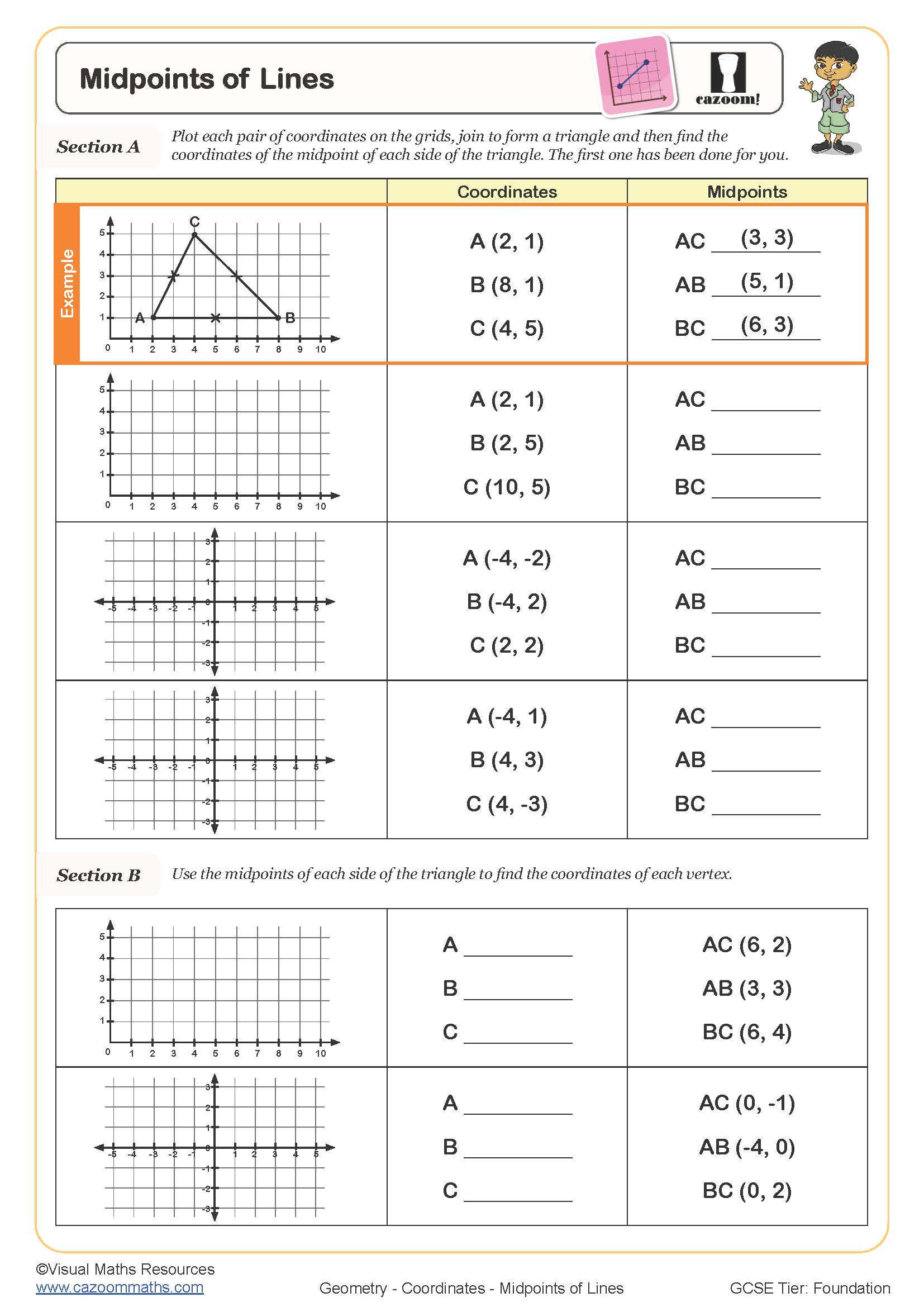
By Year 8, students apply coordinate skills to more complex problems involving midpoints, distance between points, and coordinate geometry. Teachers observe that students who struggle with basic coordinate plotting in Year 7 find these advanced topics extremely challenging. Regular practice with cartesian plane worksheet Year 7 pdf resources helps build the automaticity needed for success in higher-level maths topics.
Why do students find negative coordinates particularly challenging?
Many Year 7 students struggle when coordinates involve negative numbers because they haven't fully grasped that the axes extend in both directions from the origin. The concept that (-3, 2) means three units left and two units up requires mental flexibility that develops through repeated practice.
Teachers notice that students often plot negative coordinates in the wrong quadrant or apply the negative sign to both coordinates when only one should be negative. Using coordinate sheet exercises that specifically focus on different quadrants helps students visualise how negative values affect positioning. This understanding becomes crucial for later work with linear graphs and transformations.
How can teachers use these coordinates worksheets most effectively?
Start each lesson with a quick warm-up using coordinate worksheets to reinforce previous learning before introducing new concepts. Teachers find that short, frequent practice sessions are more effective than lengthy worksheet sessions that can overwhelm students.
The answer sheets make these resources valuable for peer marking activities, allowing students to identify their own errors and discuss misconceptions with classmates. Many teachers use the PDF format to display solutions on interactive whiteboards, working through common errors as a whole class. This approach helps address the widespread confusion between x and y coordinates that often persists into GCSE level.