Year 7 Equivalent Fractions Worksheets
Equivalent Fractions (A)
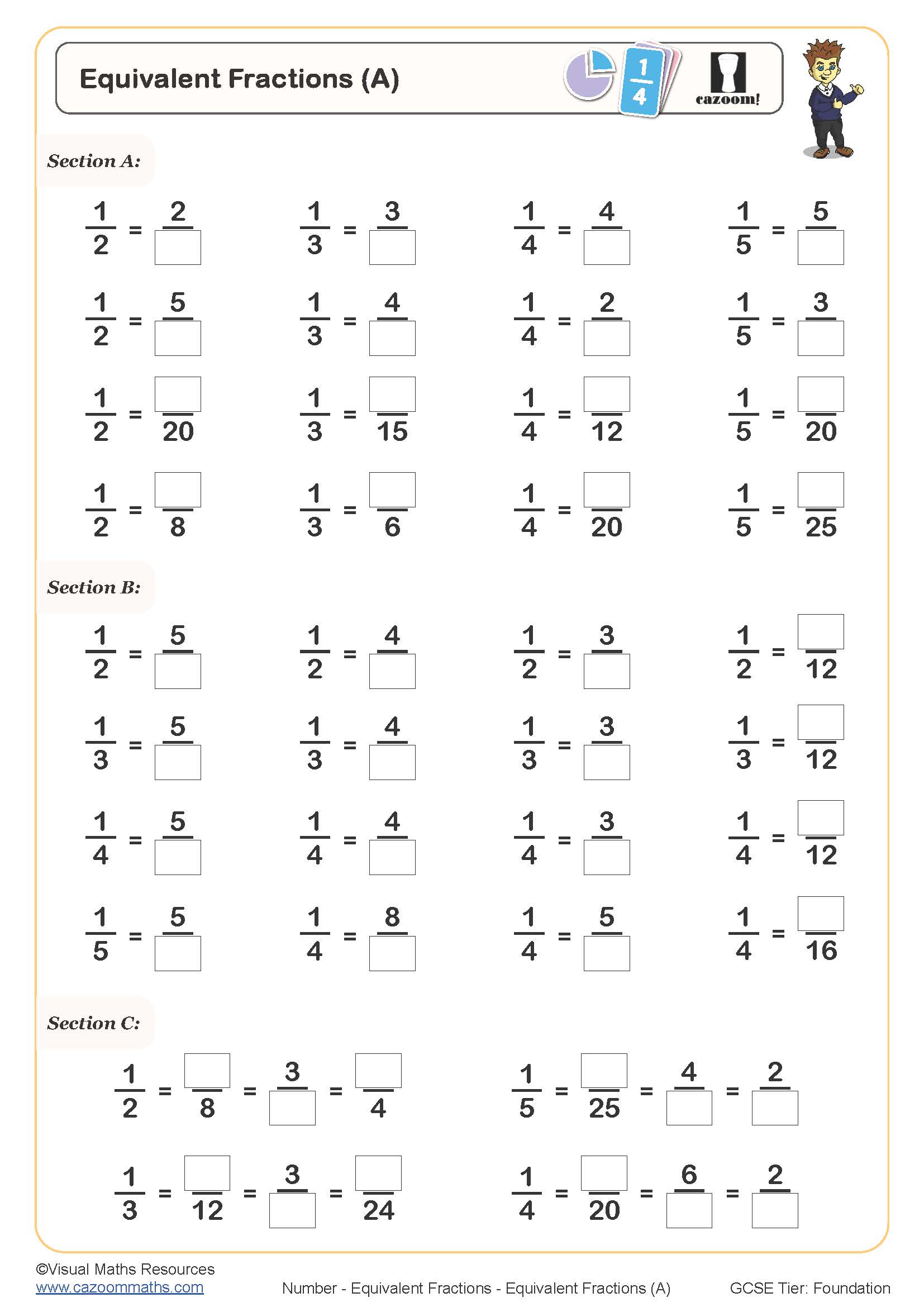
Equivalent Fractions (B)
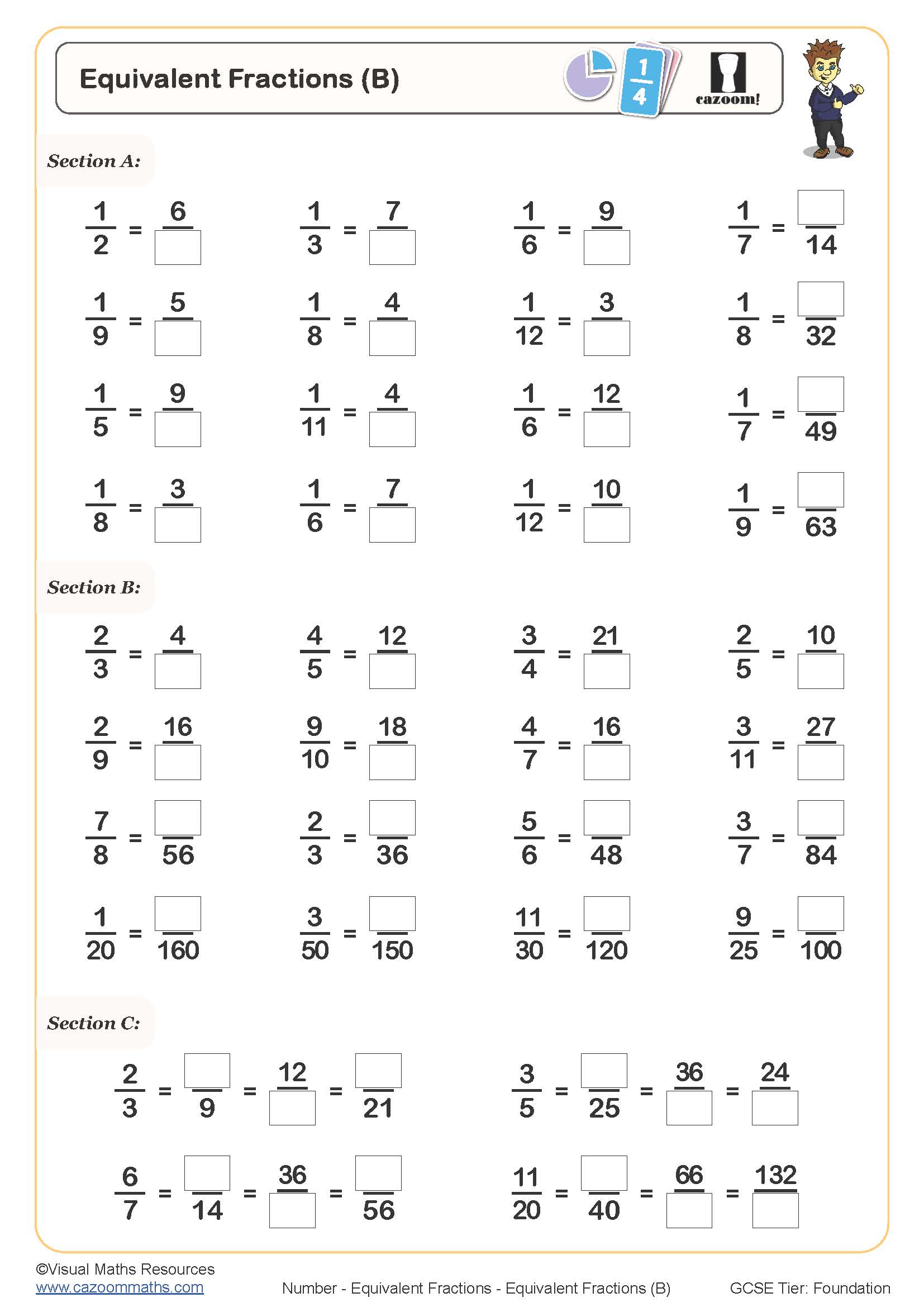
Equivalent Fractions (C)
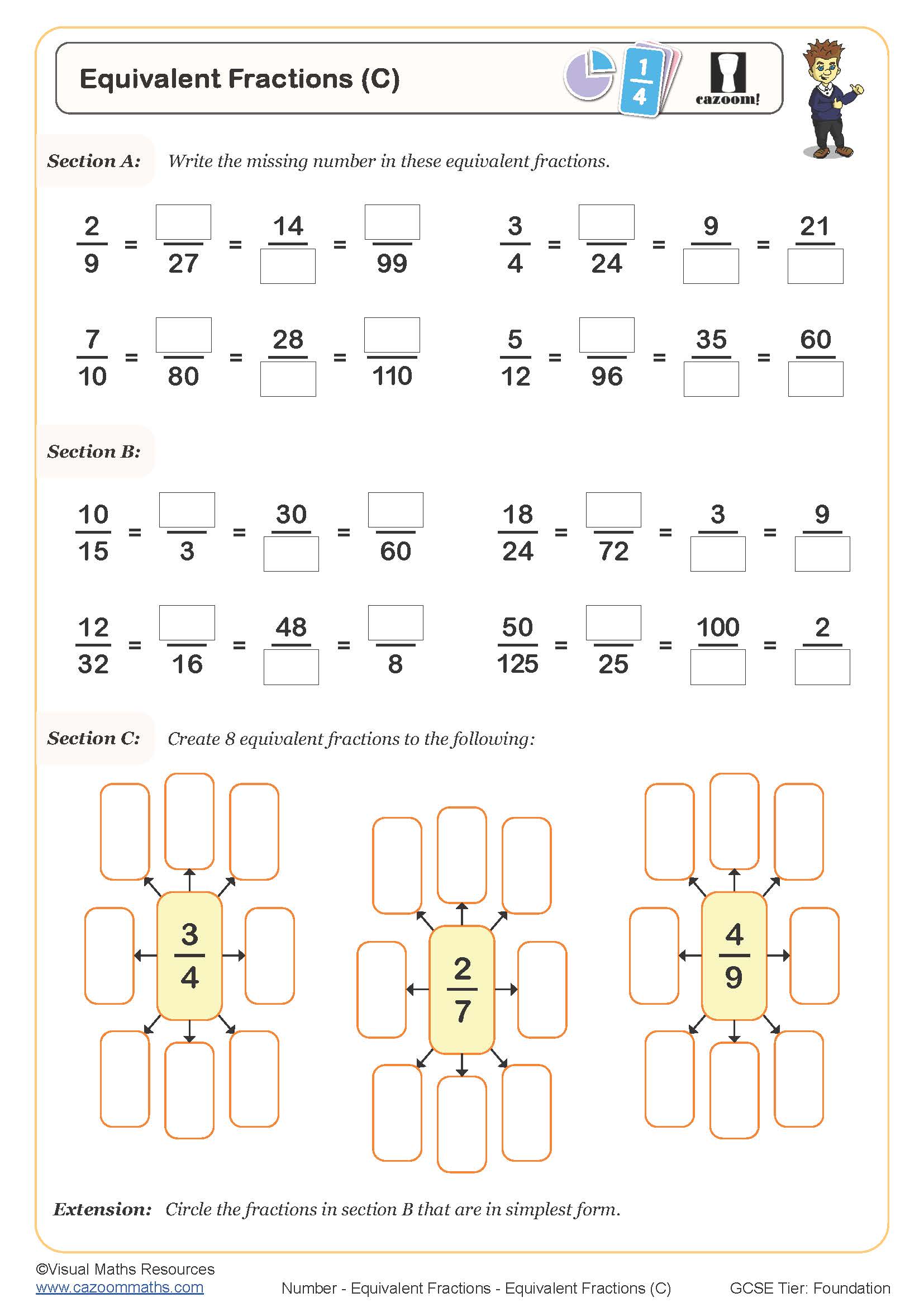
Fractions Equivalent to One Half
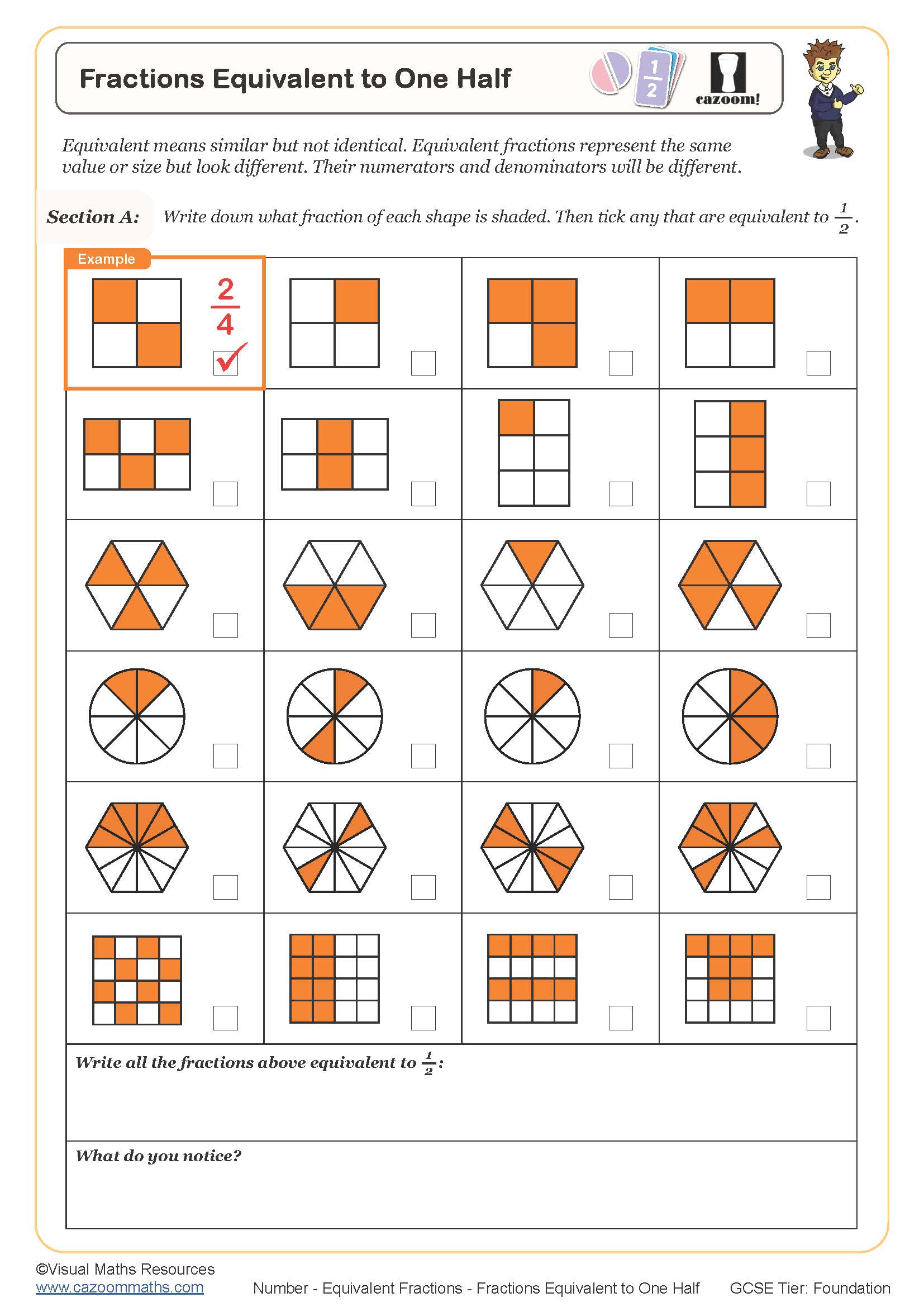
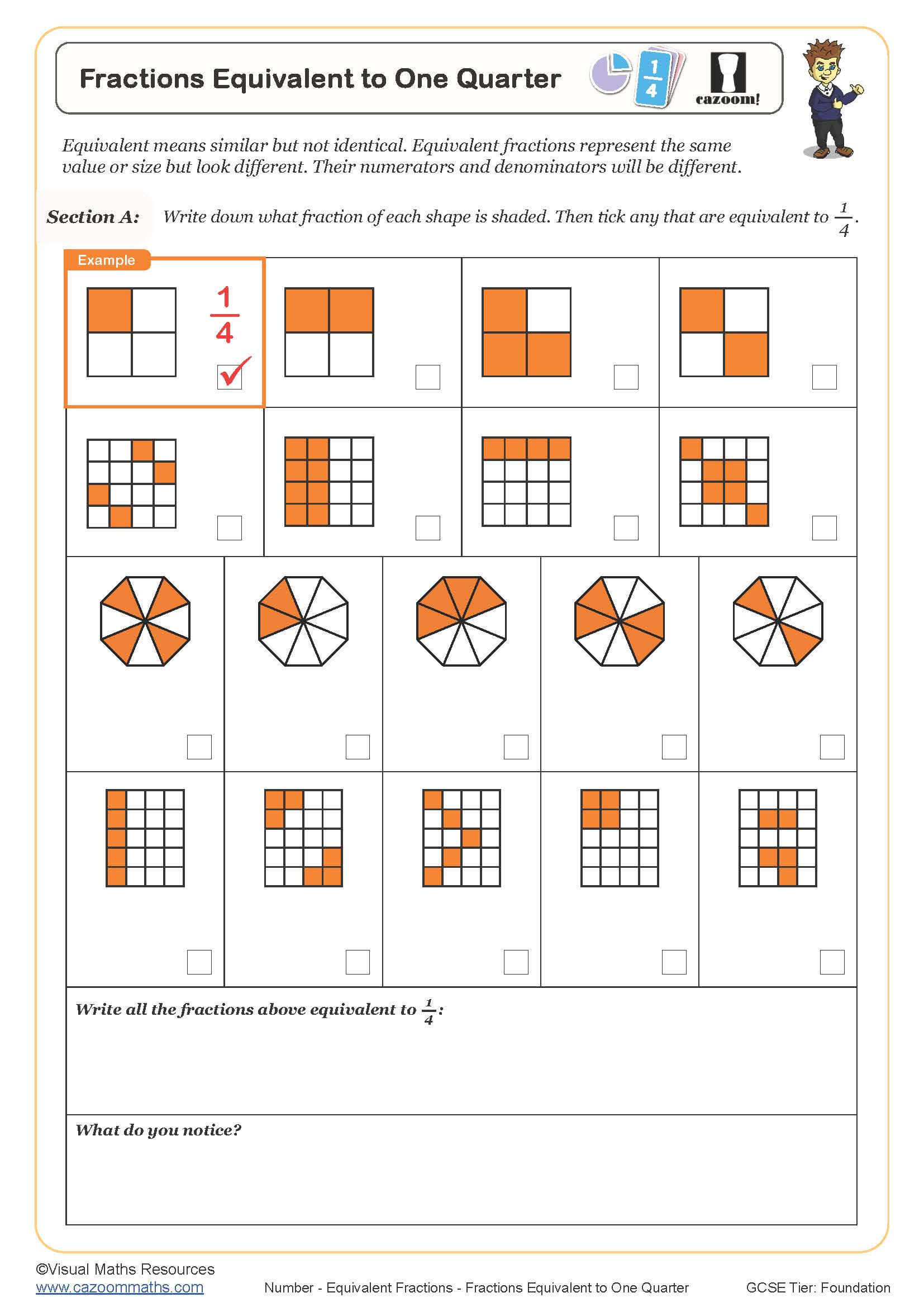
Fractions Equivalent to One Quarter
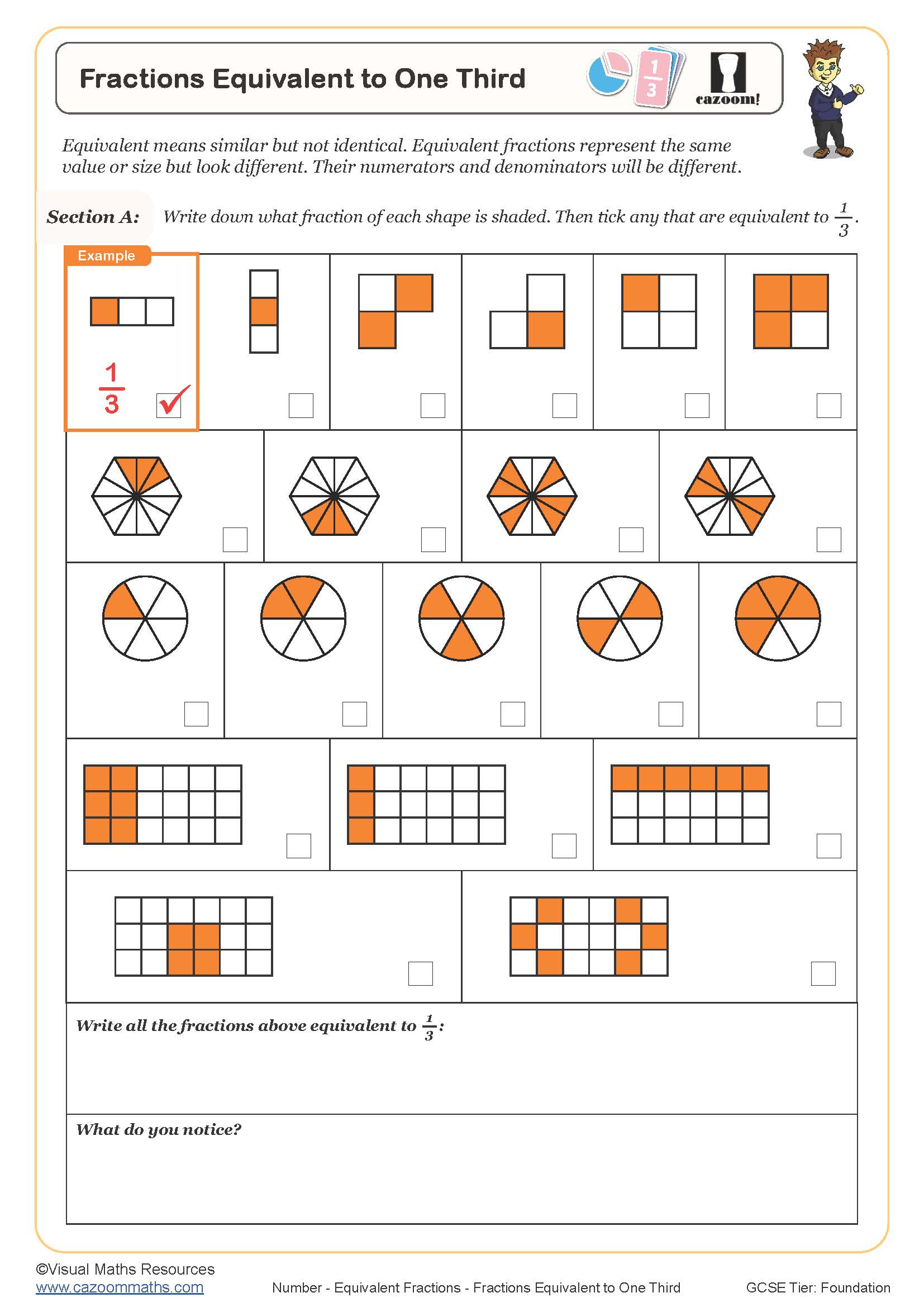
Fractions Equivalent to One Third
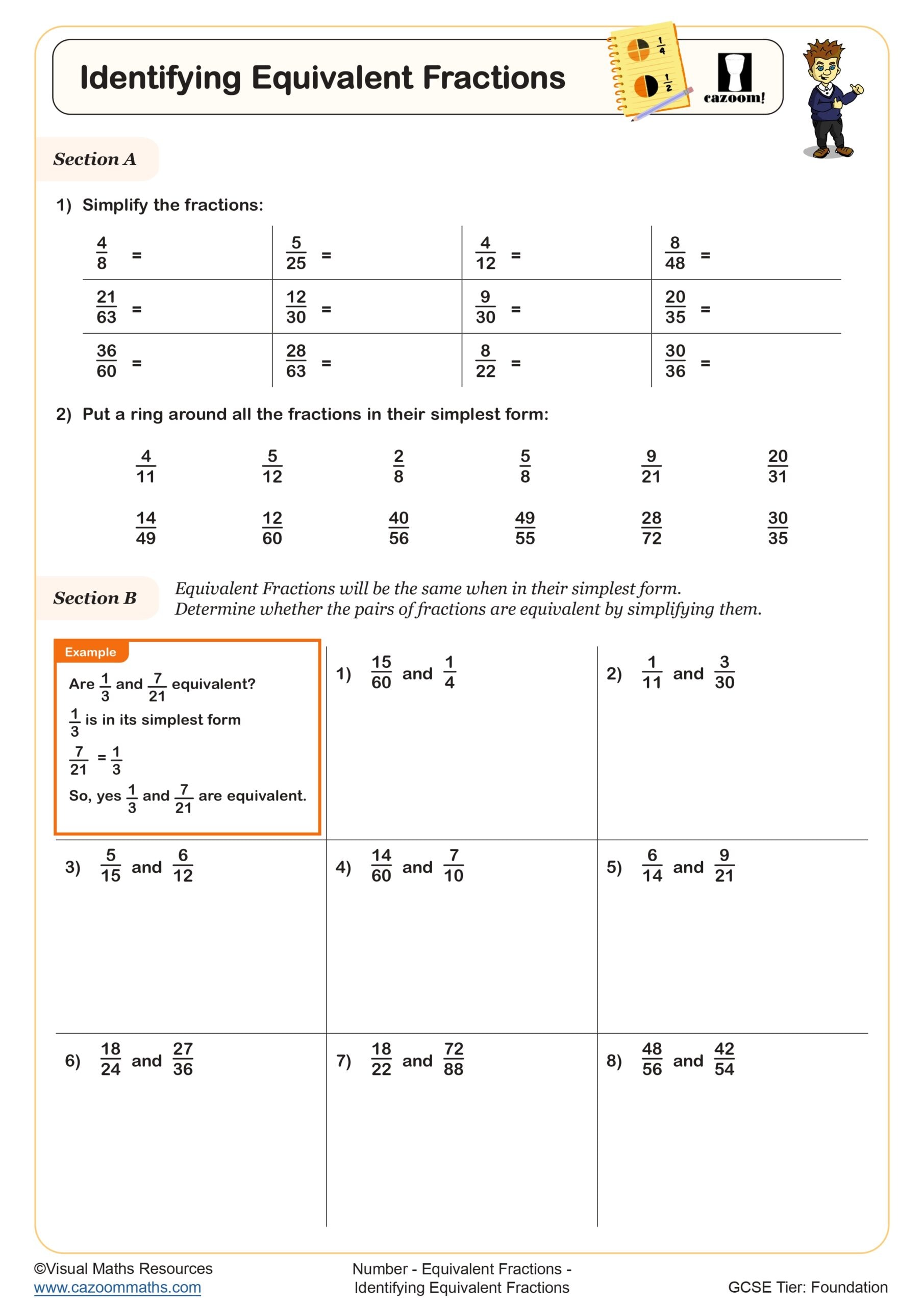
Identifying Equivalent Fractions
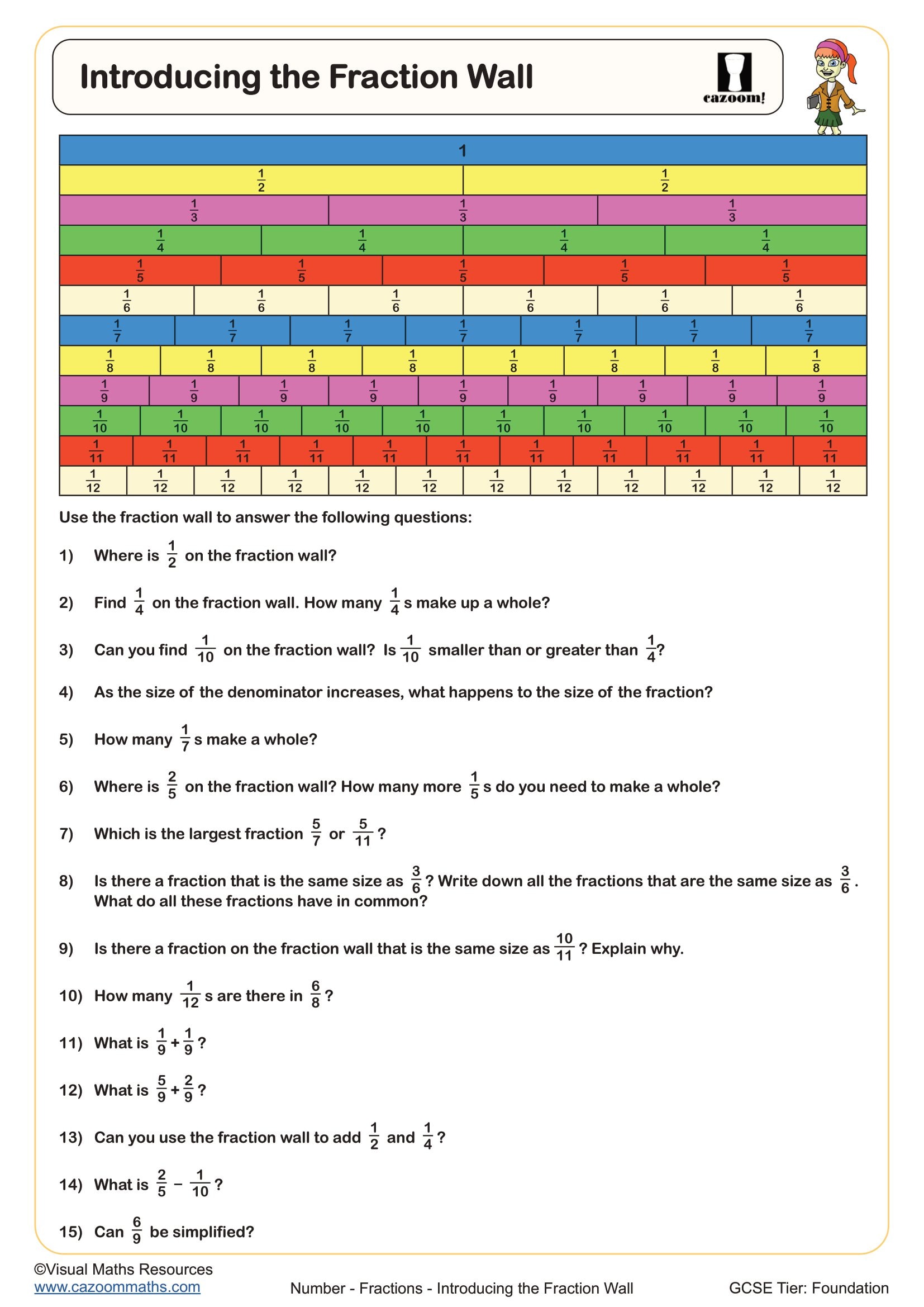
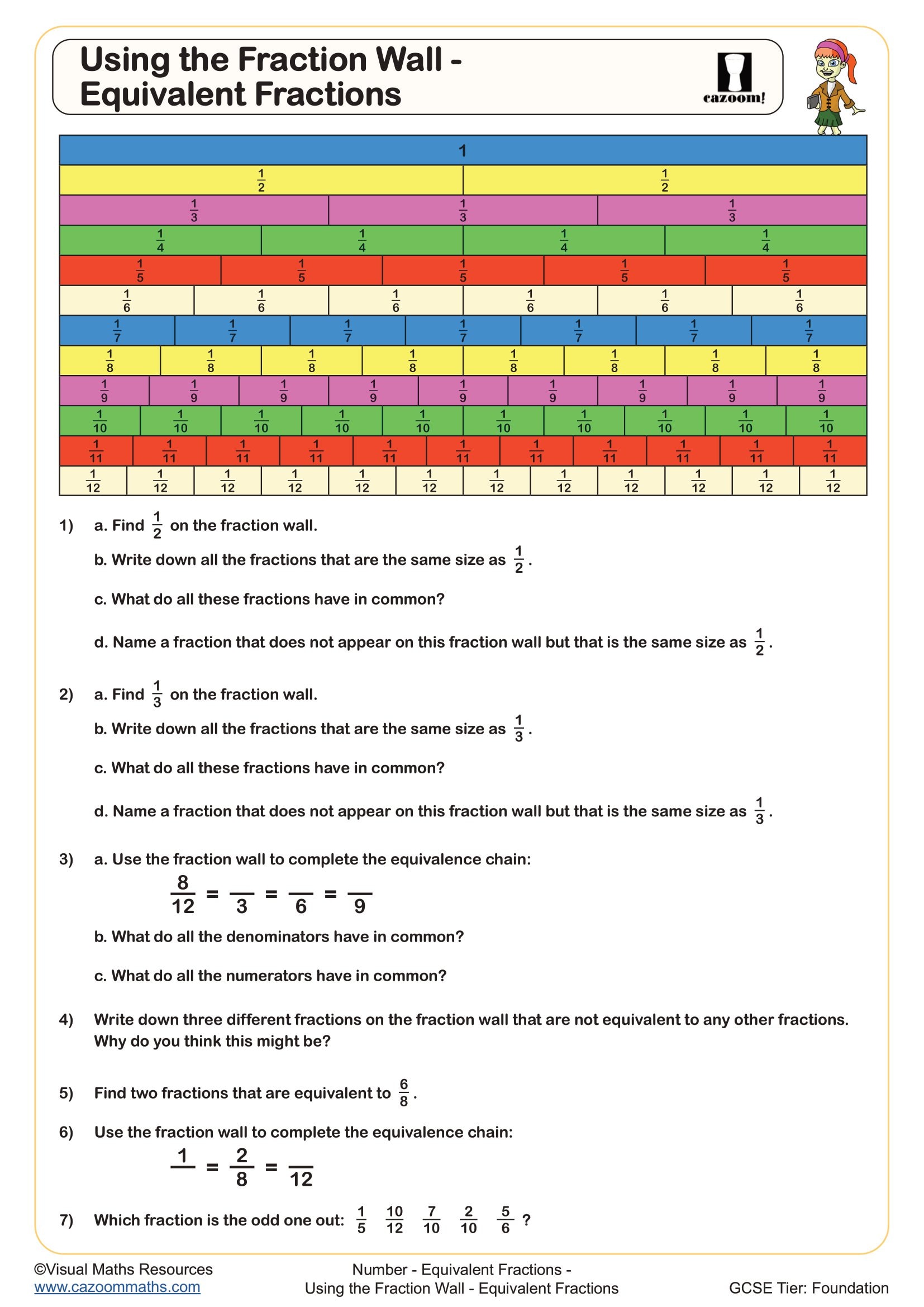
Introducing the Fraction Wall
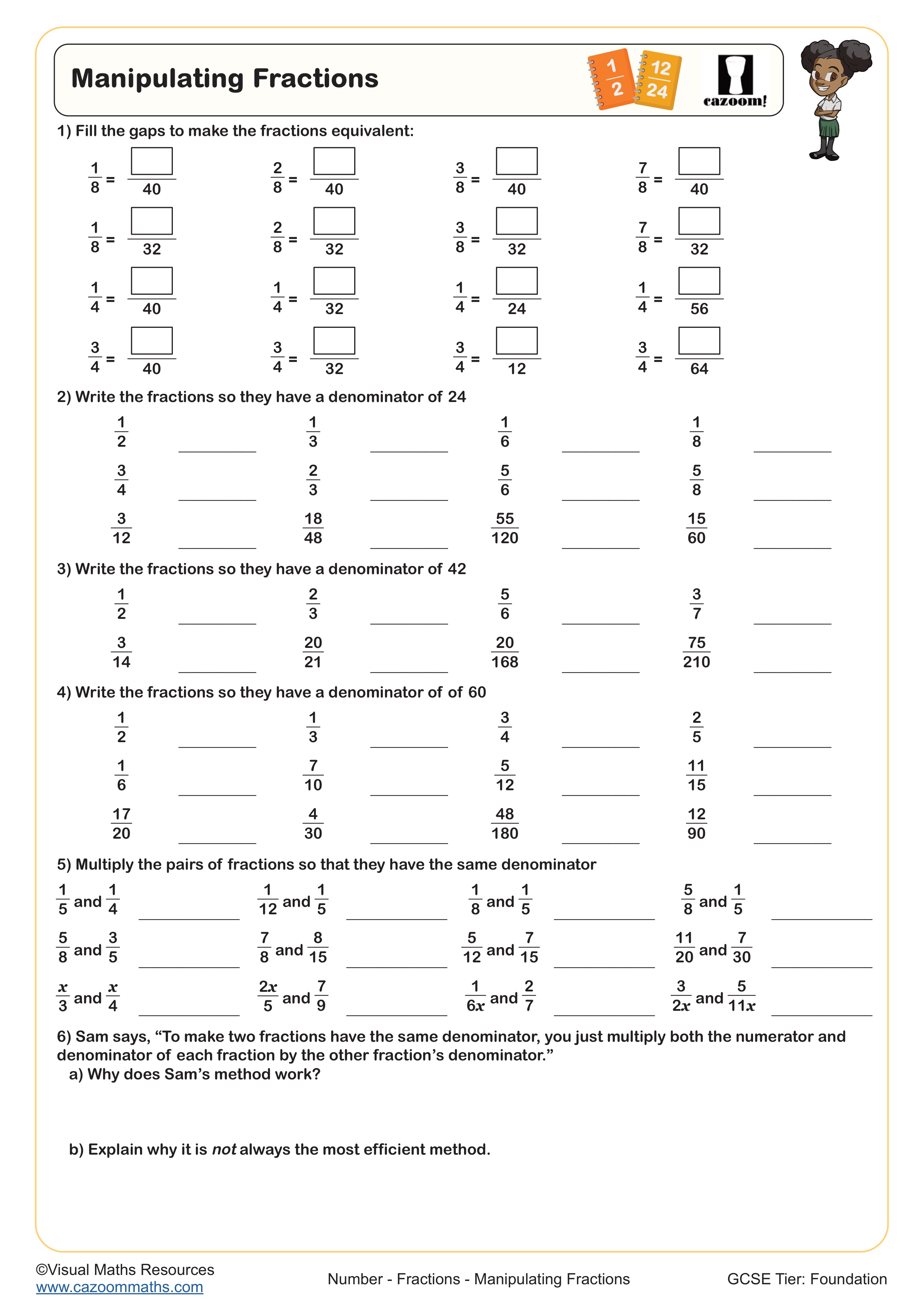
Manipulating Fractions
Using The Fraction Wall - Equivalent Fractions
All worksheets are created by the team of experienced teachers at Cazoom Maths.
What makes an effective equivalent fractions worksheet for Year 7?
An effective equivalent fractions worksheet presents problems in logical progression, starting with simple visual fraction strips before moving to numerical calculations. Year 7 students need worksheets that connect concrete representations to abstract methods, particularly the multiply-and-divide rule.
Teachers find that worksheets combining multiple approaches work best - those featuring fraction walls, number lines, and algebraic methods. Students often make errors when they multiply the numerator but forget the denominator, so quality worksheets include targeted practice addressing this misconception through varied question types.
Are these worksheets suitable for both Year 6 and Year 7 students?
These year 7 fractions worksheets work effectively across the KS2-KS3 transition, though teachers typically adjust expectations based on student ability. Year 6 students benefit from the visual elements and simpler equivalent fractions, whilst Year 7 students tackle the more complex algebraic representations and mixed number equivalents.
Many teachers use these resources for differentiation within mixed-ability classes. Higher-achieving Year 6 students often access Year 7 content successfully, whilst some Year 7 students benefit from revisiting foundational concepts through the structured progression these worksheets provide.
How do students find equivalent fractions using the cross multiplication method?
Cross multiplication helps students verify whether two fractions are equivalent by checking if the cross products are equal. For fractions a/b and c/d, students multiply a×d and b×c - if these products match, the fractions are equivalent. This method particularly supports students who struggle with the multiply-and-divide approach.
Teachers observe that students initially find cross multiplication mechanical rather than meaningful. The method works well for checking answers, but many educators emphasise understanding why fractions are equivalent before introducing this verification technique. Students gain deeper insight when they connect cross multiplication back to the fundamental principle of multiplying by equivalent forms of one.
How should teachers use these worksheets to address common misconceptions?
Teachers find these worksheets most effective when used diagnostically to identify specific misconceptions before moving to practice activities. Common errors include adding the same number to numerator and denominator, or assuming larger numbers always mean larger fractions. The varied question types help teachers pinpoint exactly where understanding breaks down.
Many teachers use the answer sheets strategically for peer assessment activities, where students mark each other's work and discuss errors. This approach encourages mathematical discussion and helps students articulate their reasoning. The immediate feedback from complete answer sheets allows teachers to address misconceptions whilst they're still fresh in students' minds.