Year 7 Fractions Worksheets
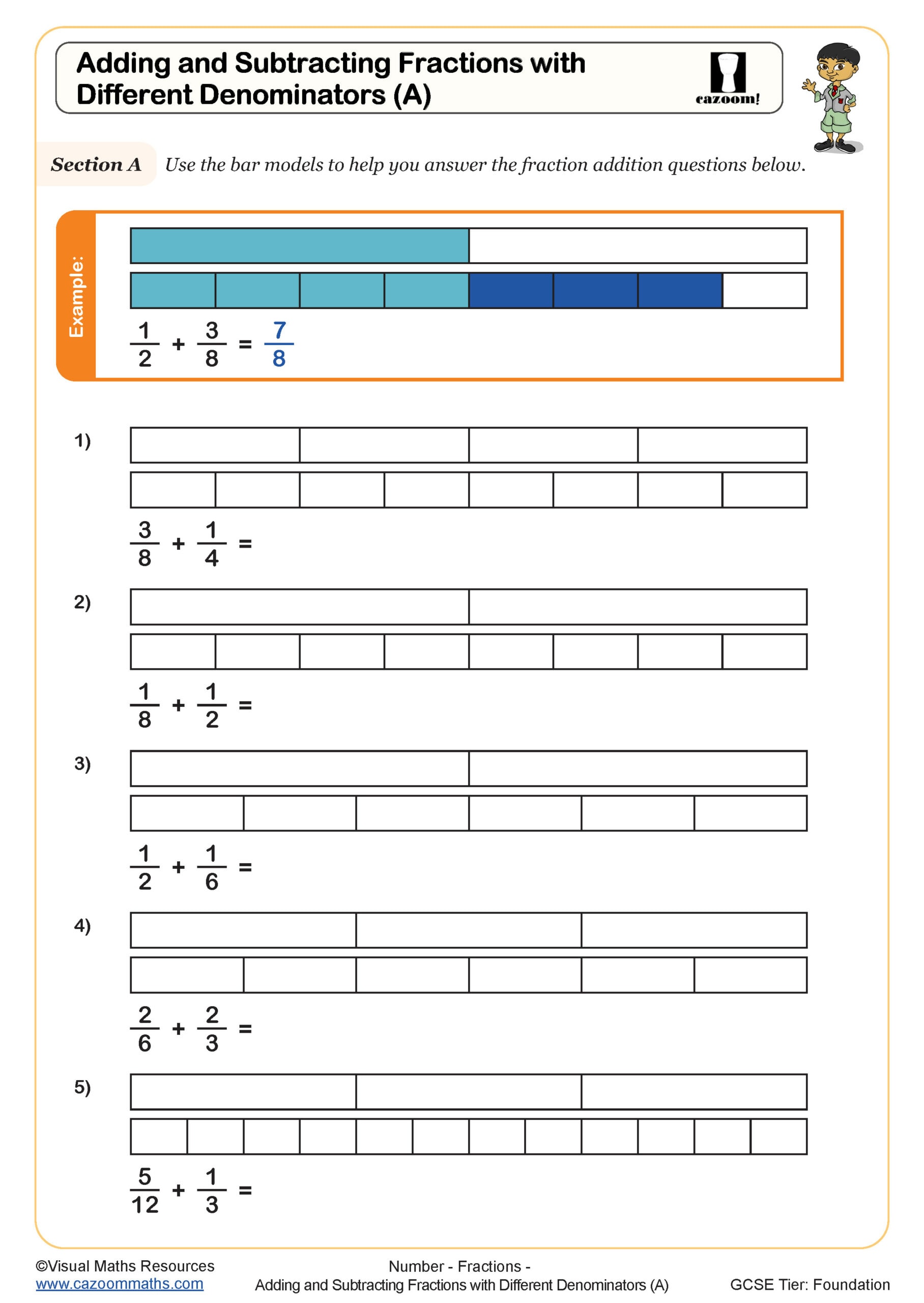
Adding and subtracting fractions with different denominators (A)
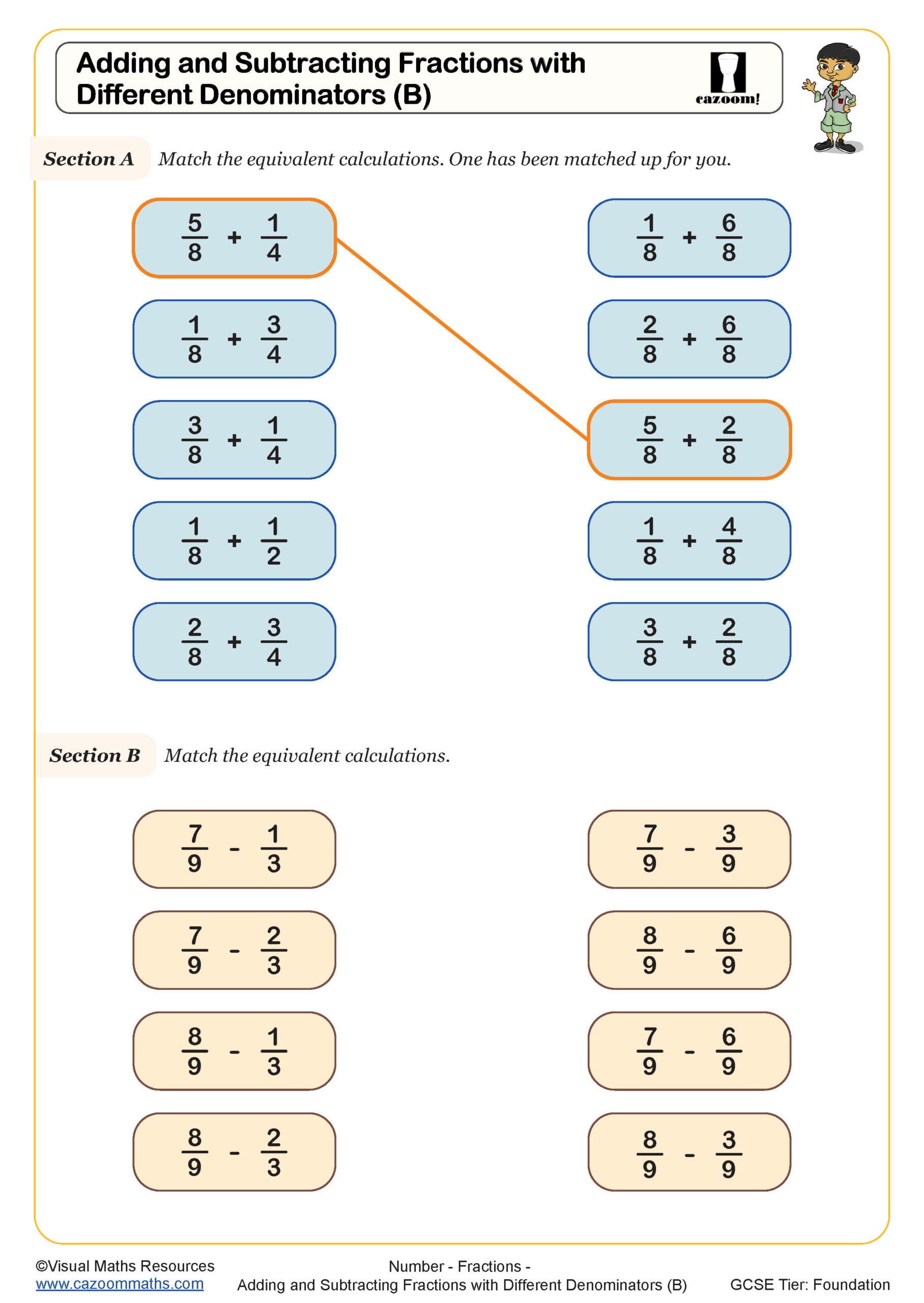
Adding and subtracting fractions with different denominators (B)
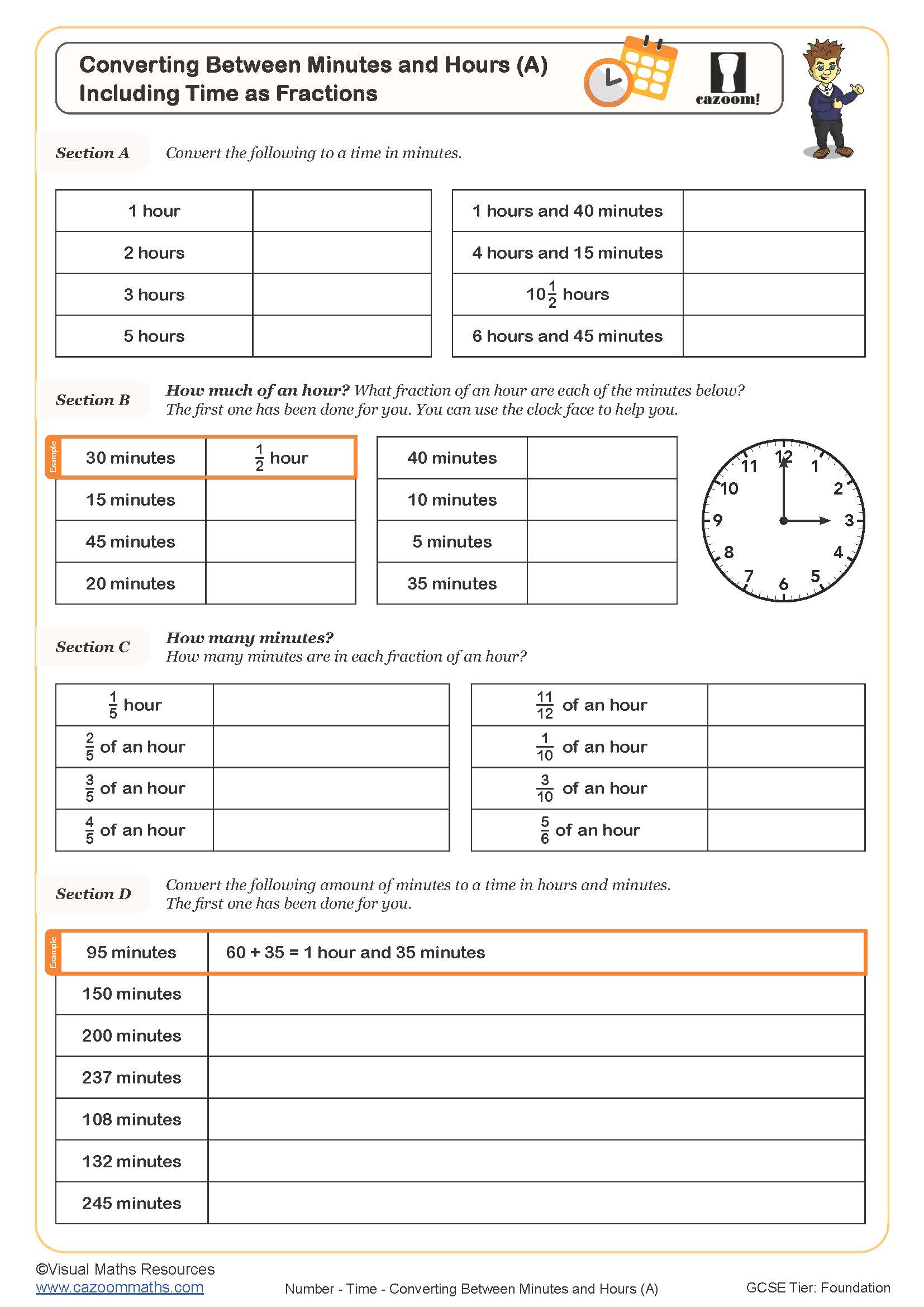
Converting Between Minutes and Hours (A)
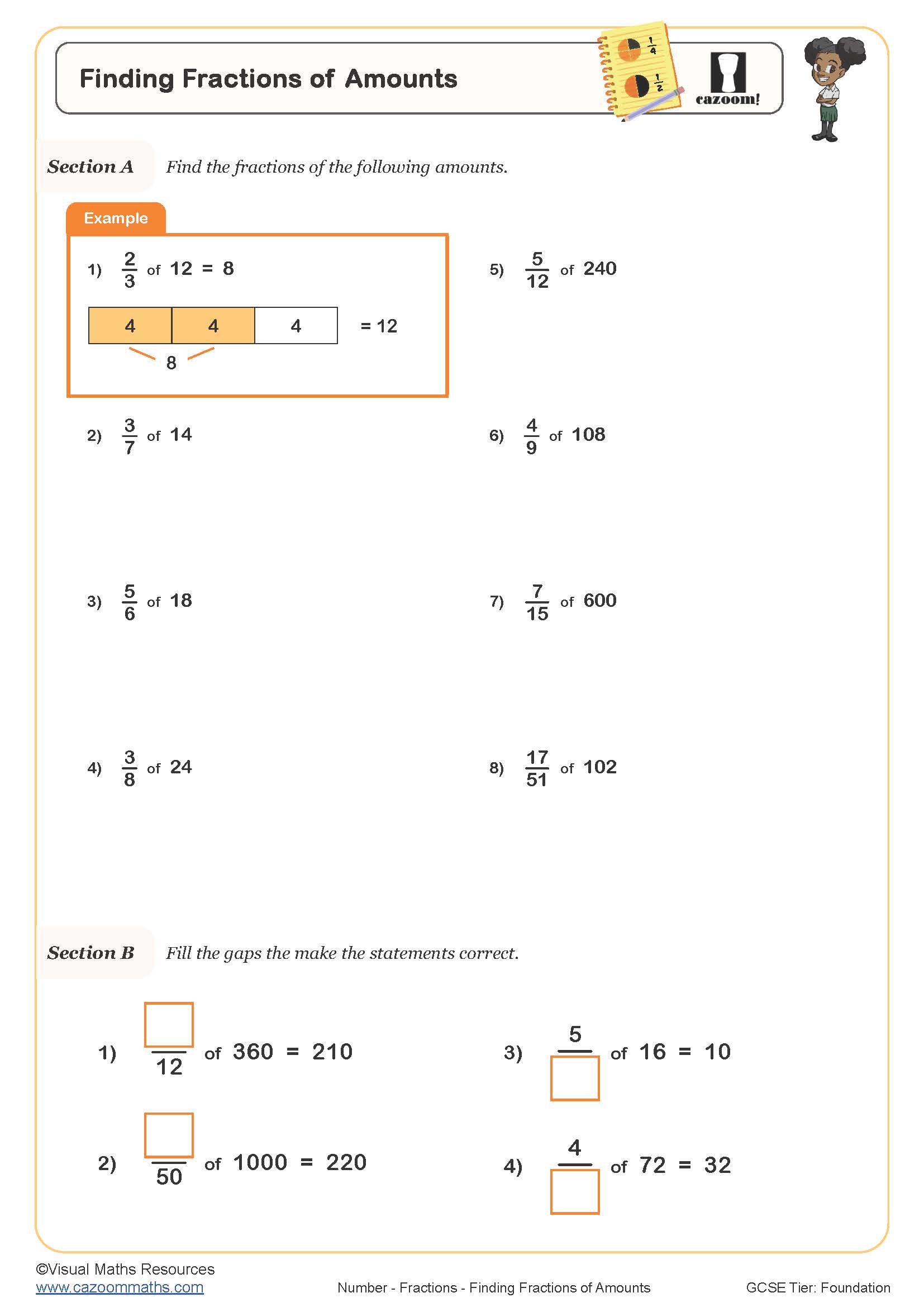
Finding Fractions of Amounts
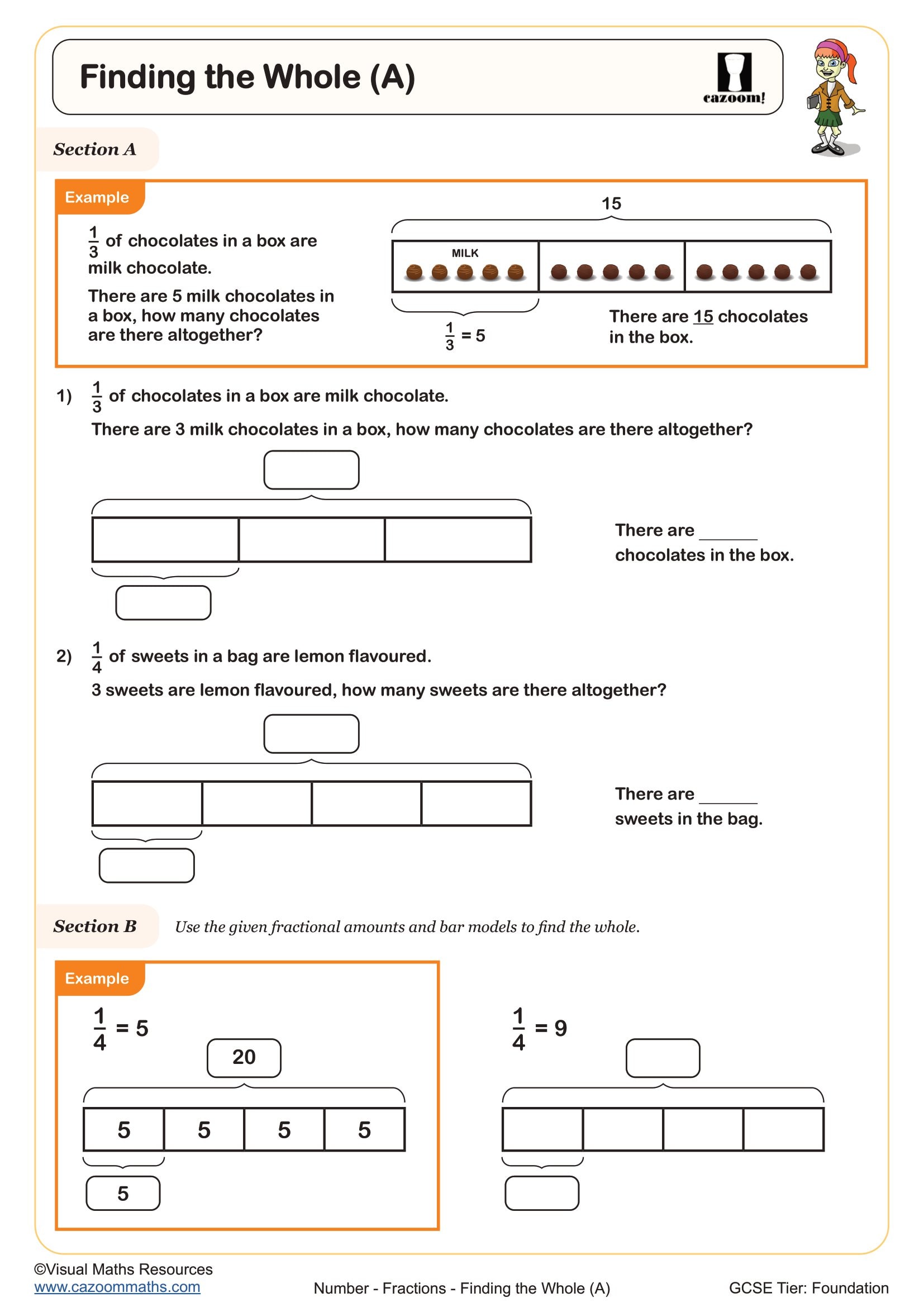
Finding the Whole (A)
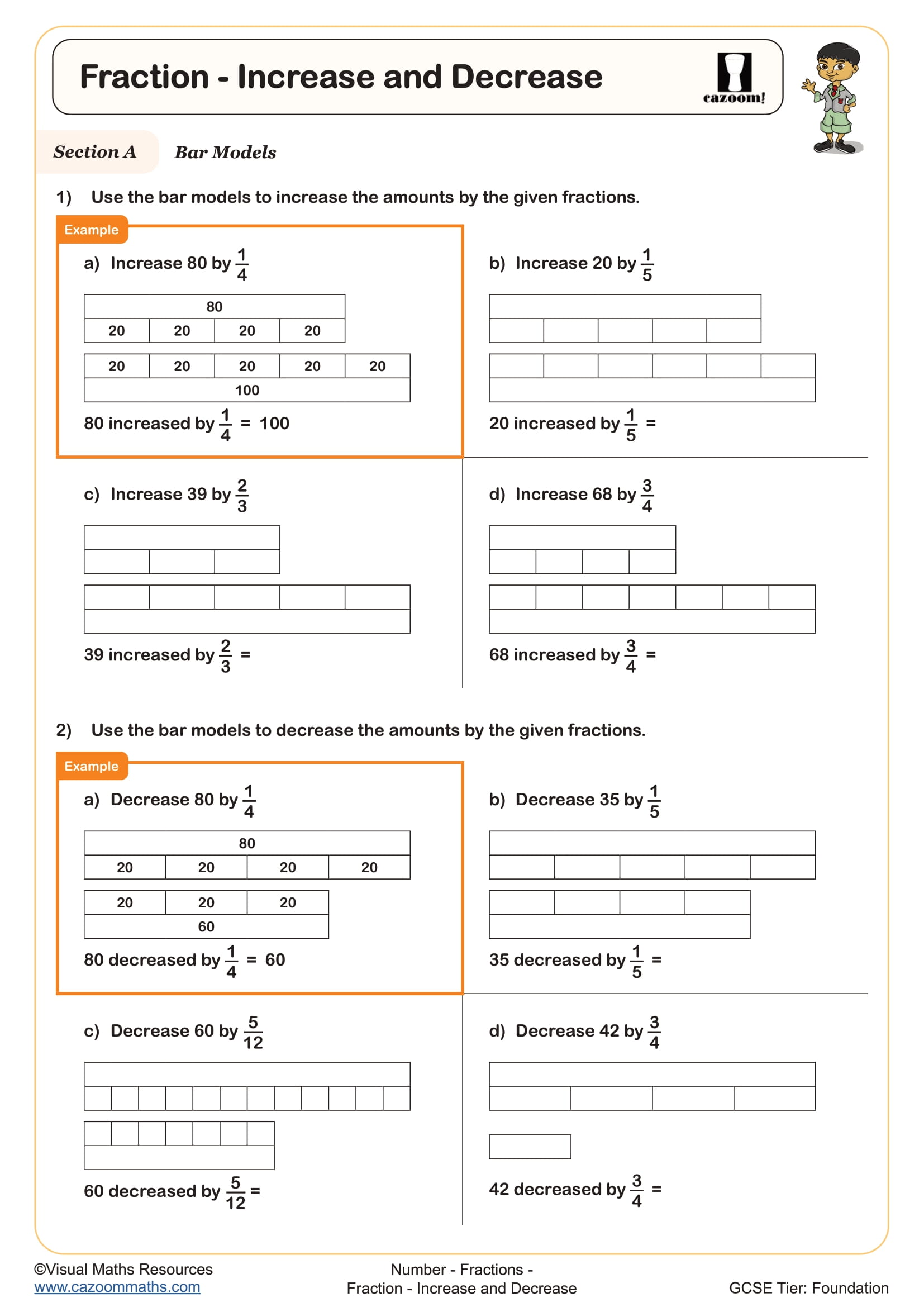
Fraction - Increase and Decrease
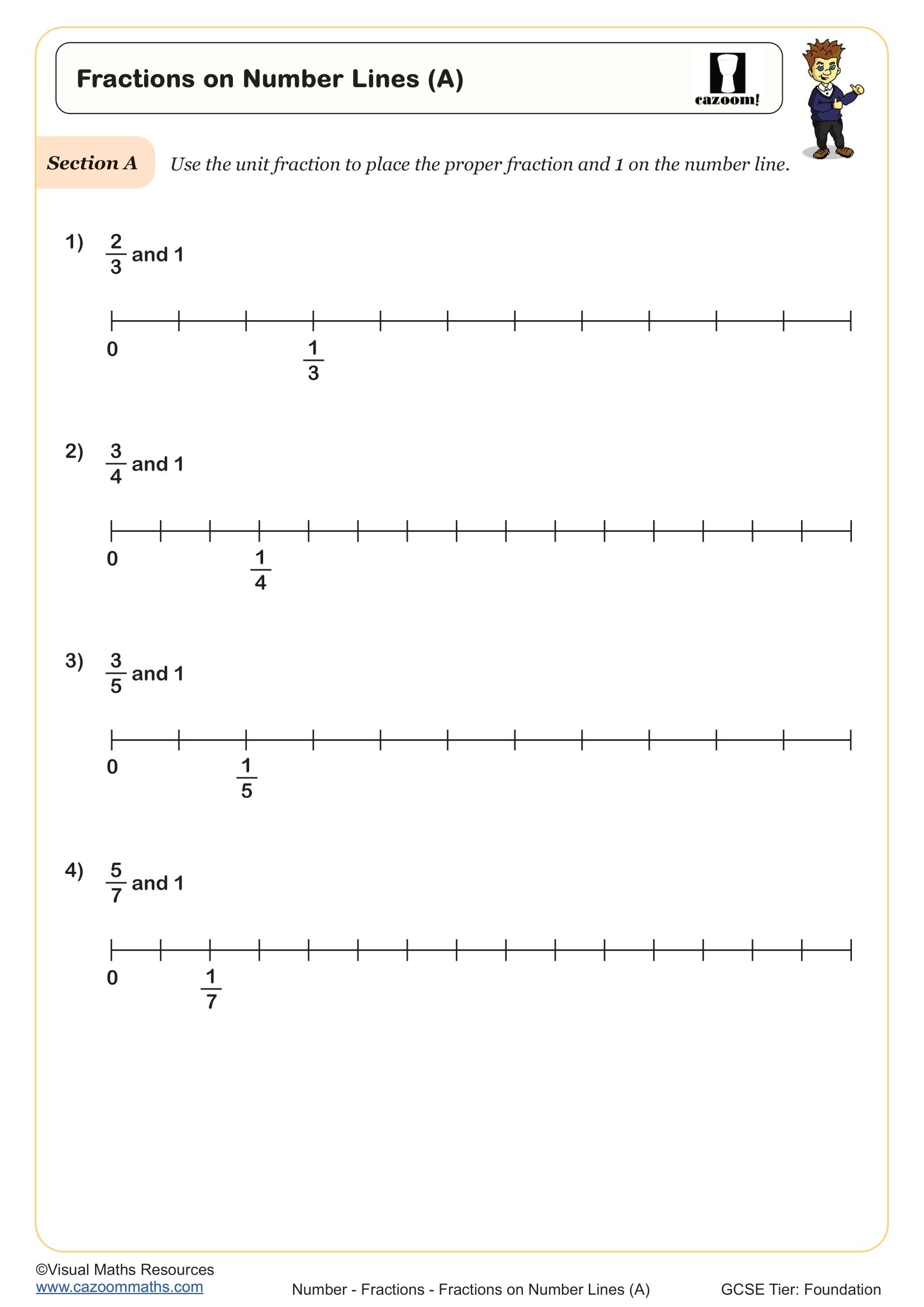
Fractions on Number Lines (A)
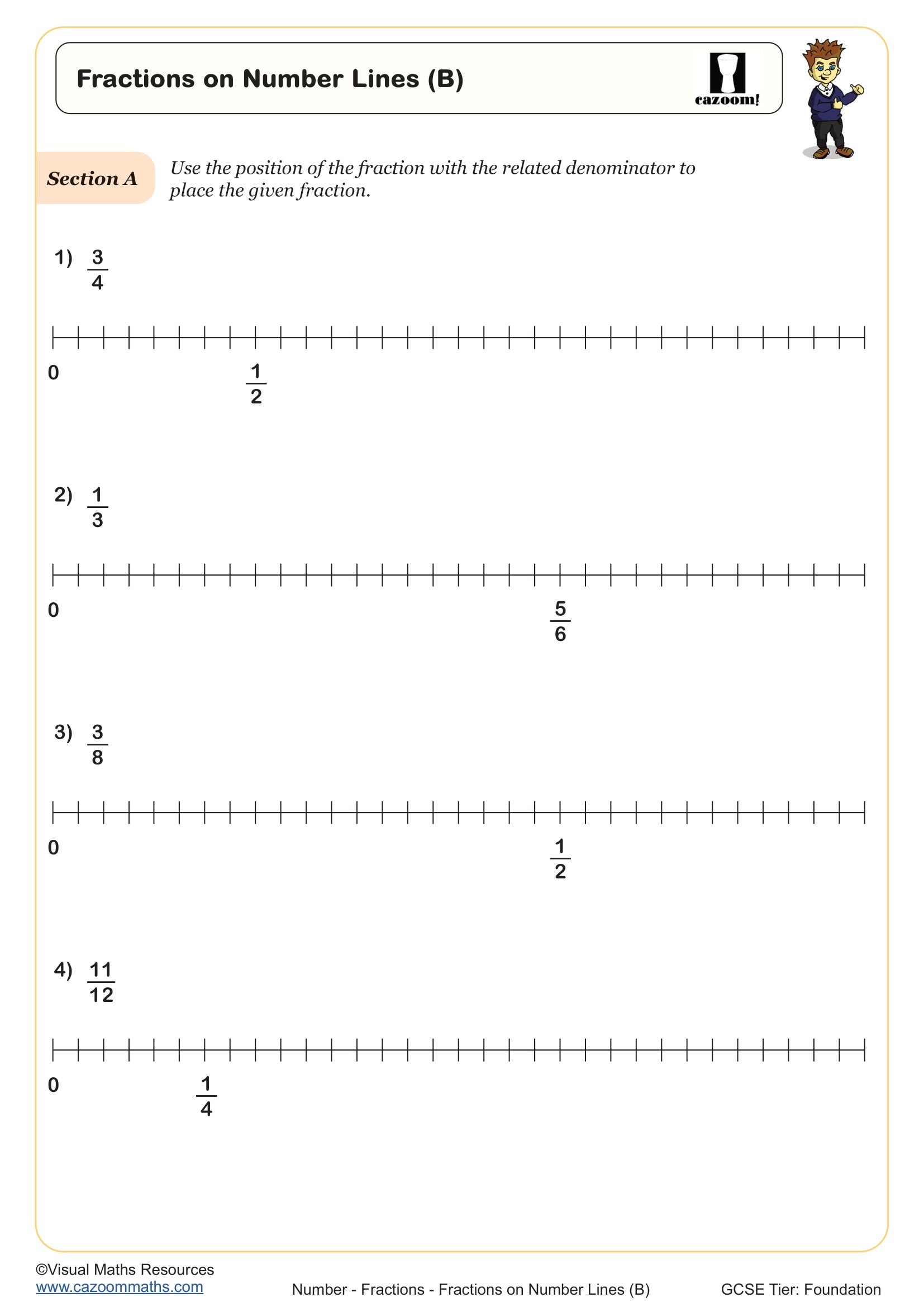
Fractions on Number Lines (B)
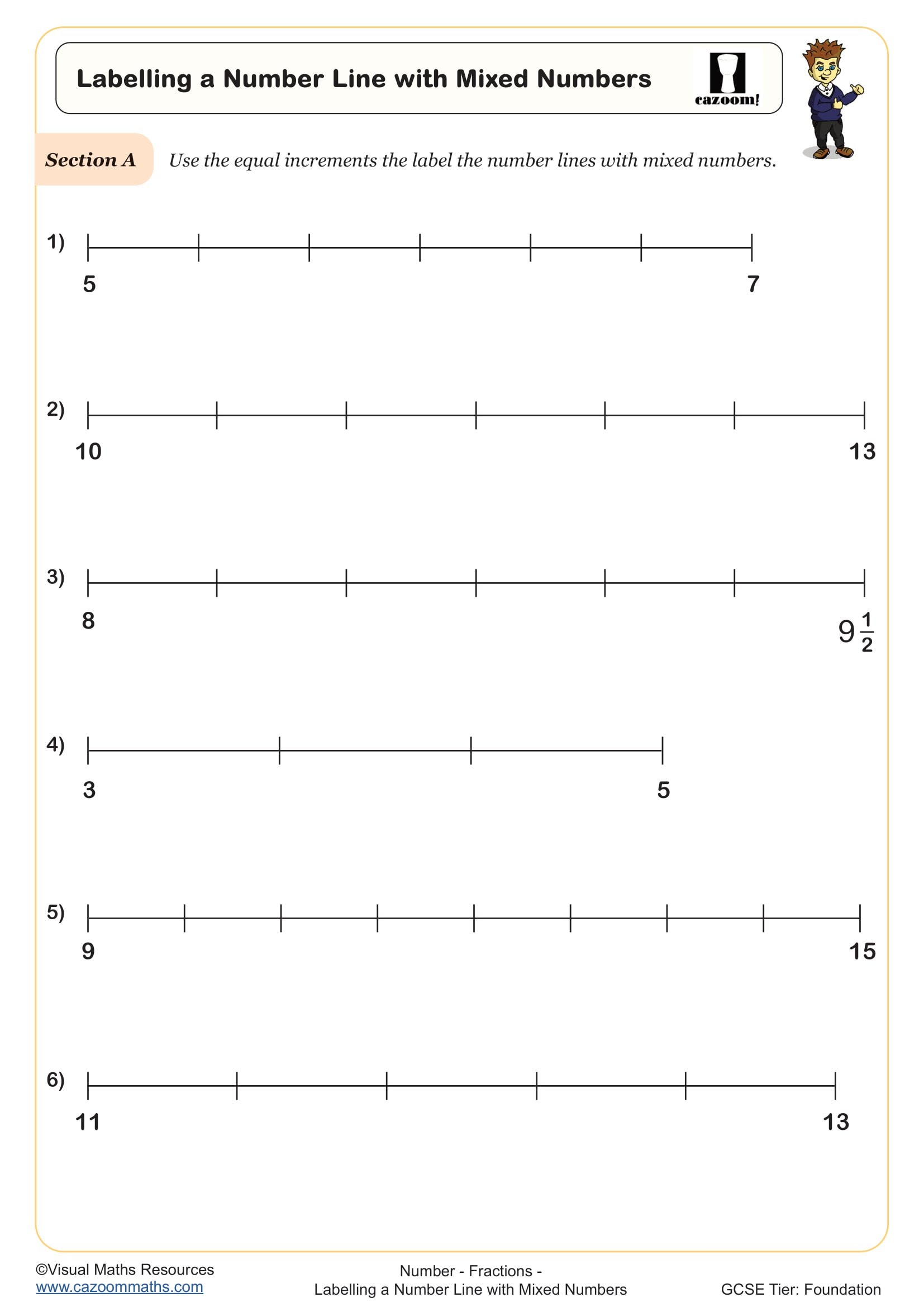
Labelling a Number Line with Mixed Numbers
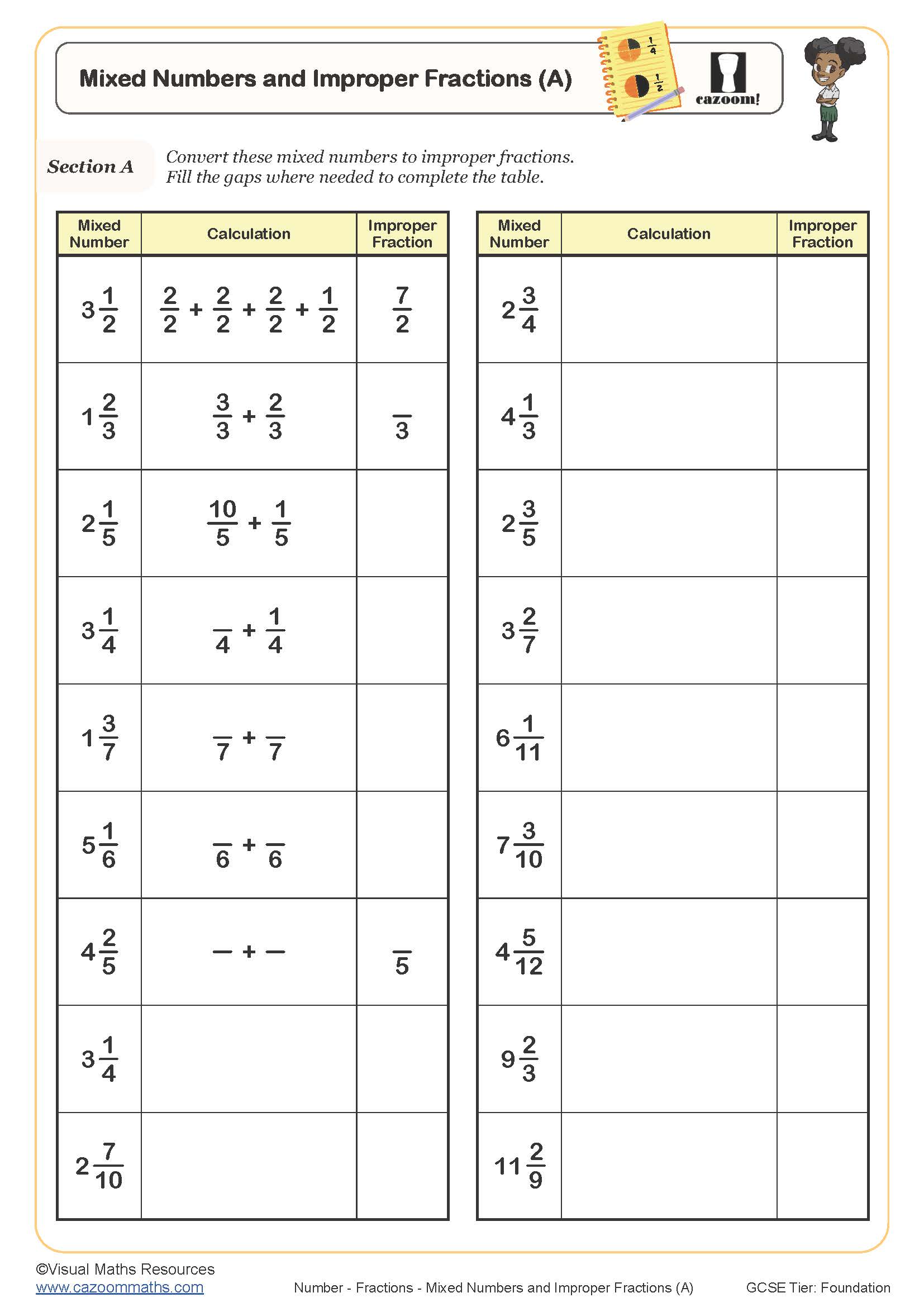
Mixed Numbers and Improper Fractions (A)
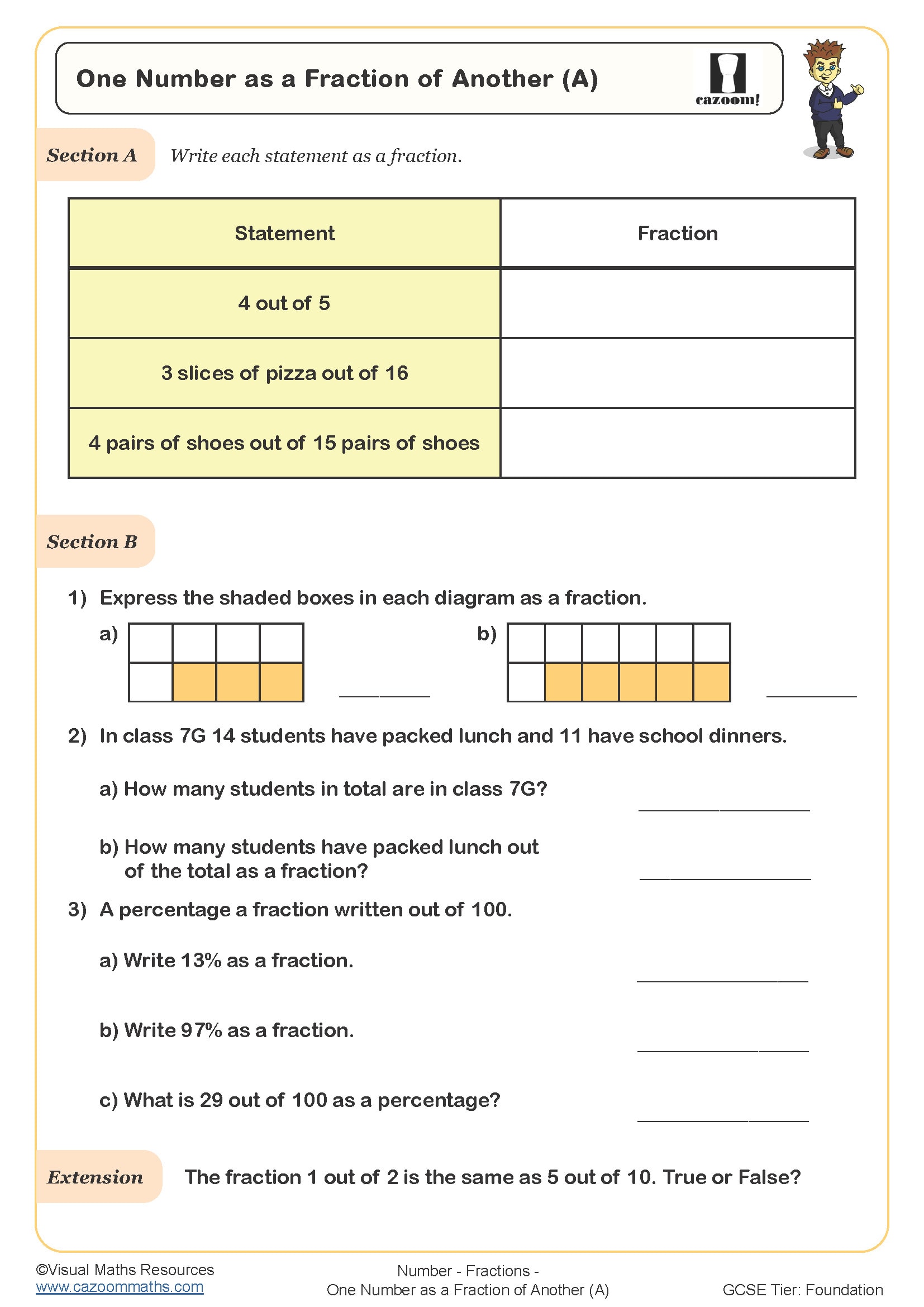
One Number as a Fraction of Another (A)
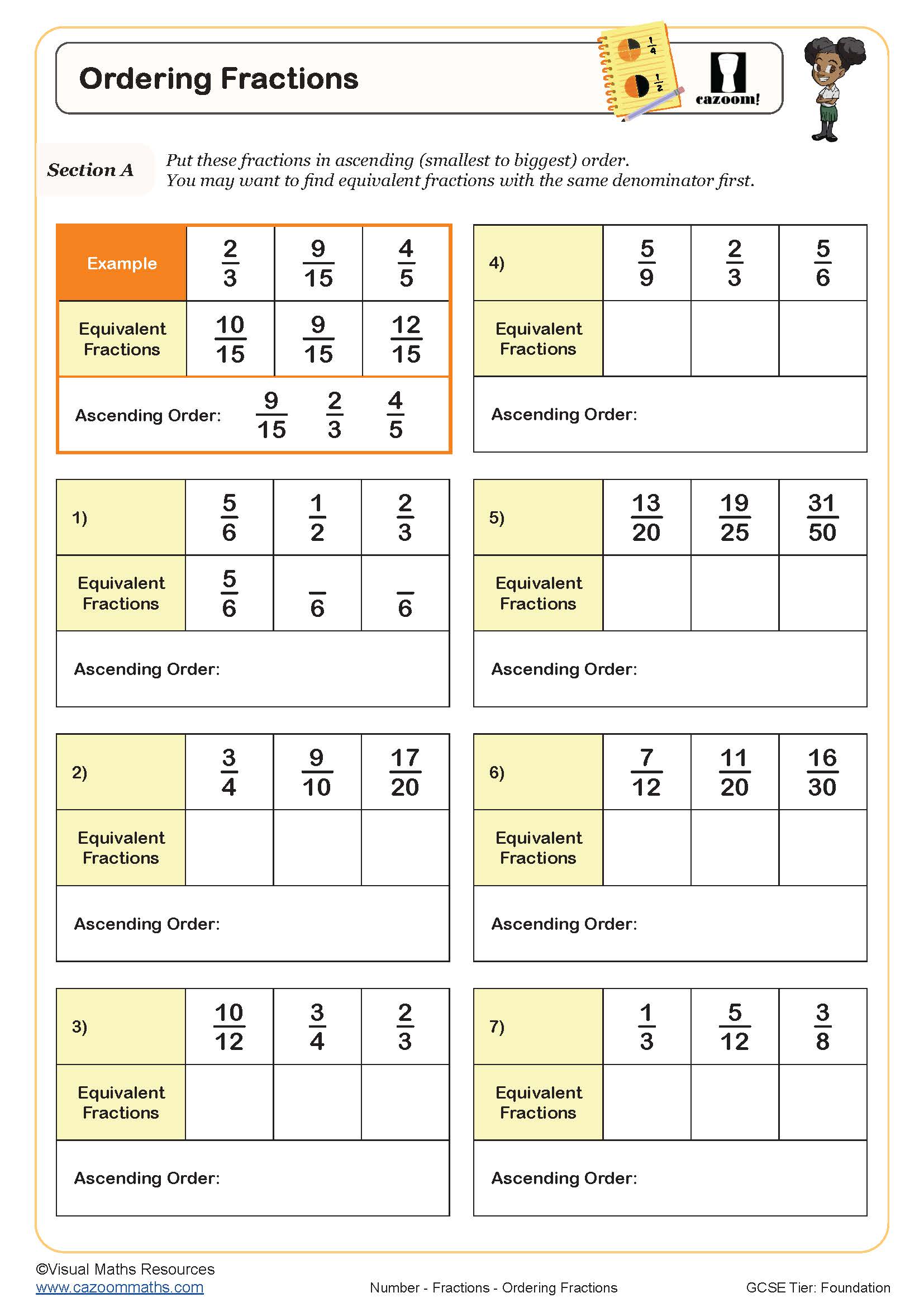
Ordering Fractions
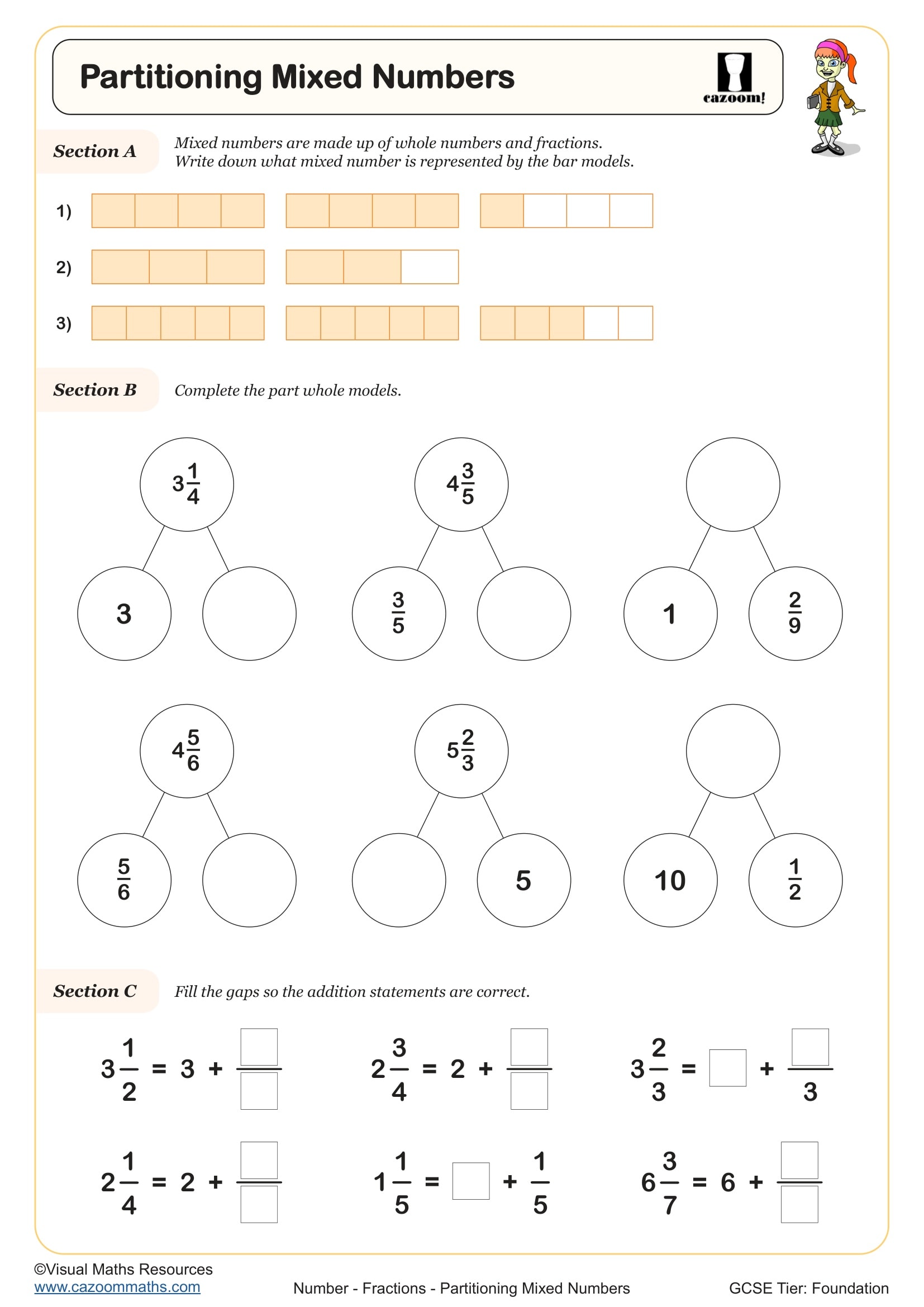
Partitioning Mixed Numbers
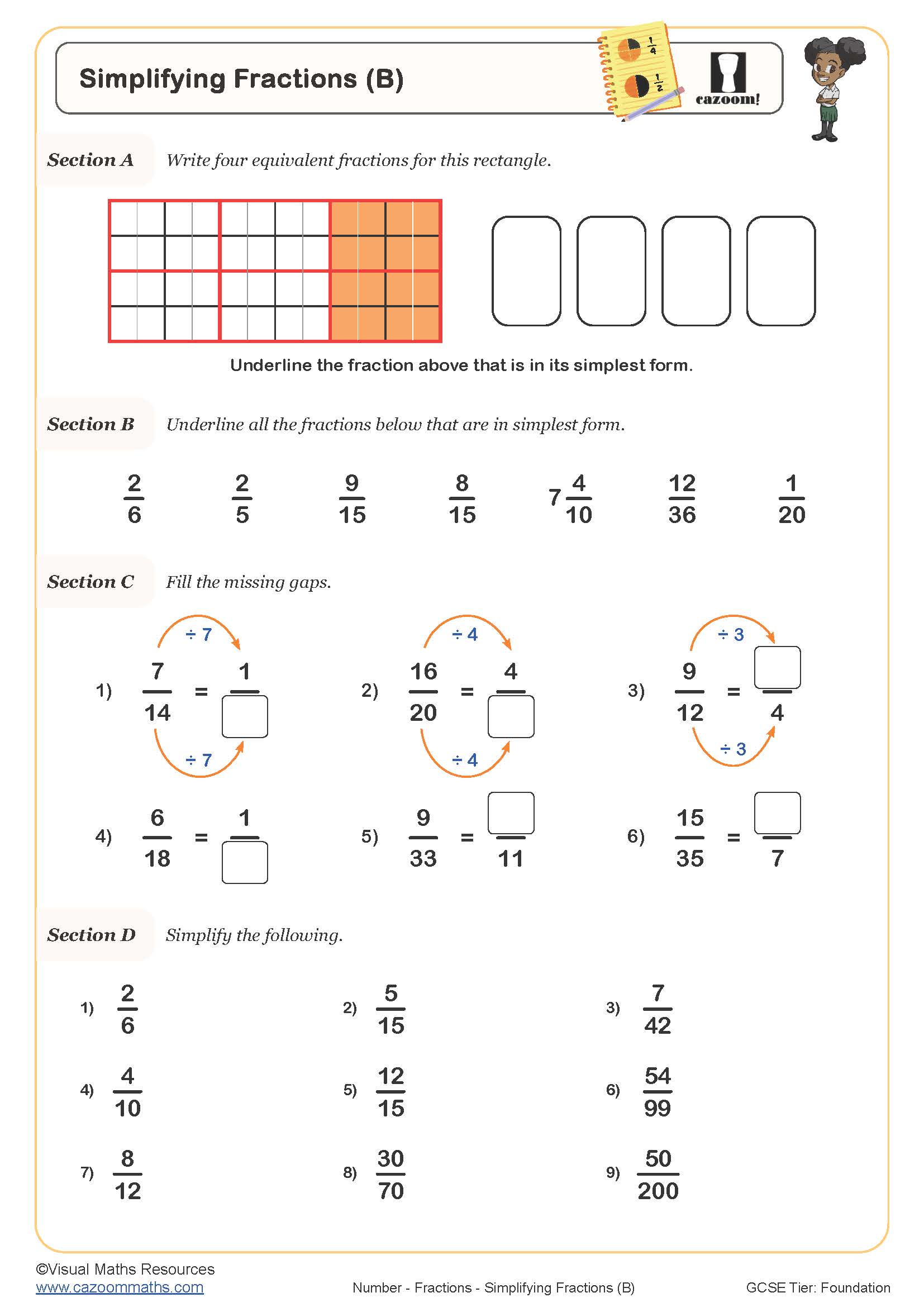
Simplifying Fractions (B)
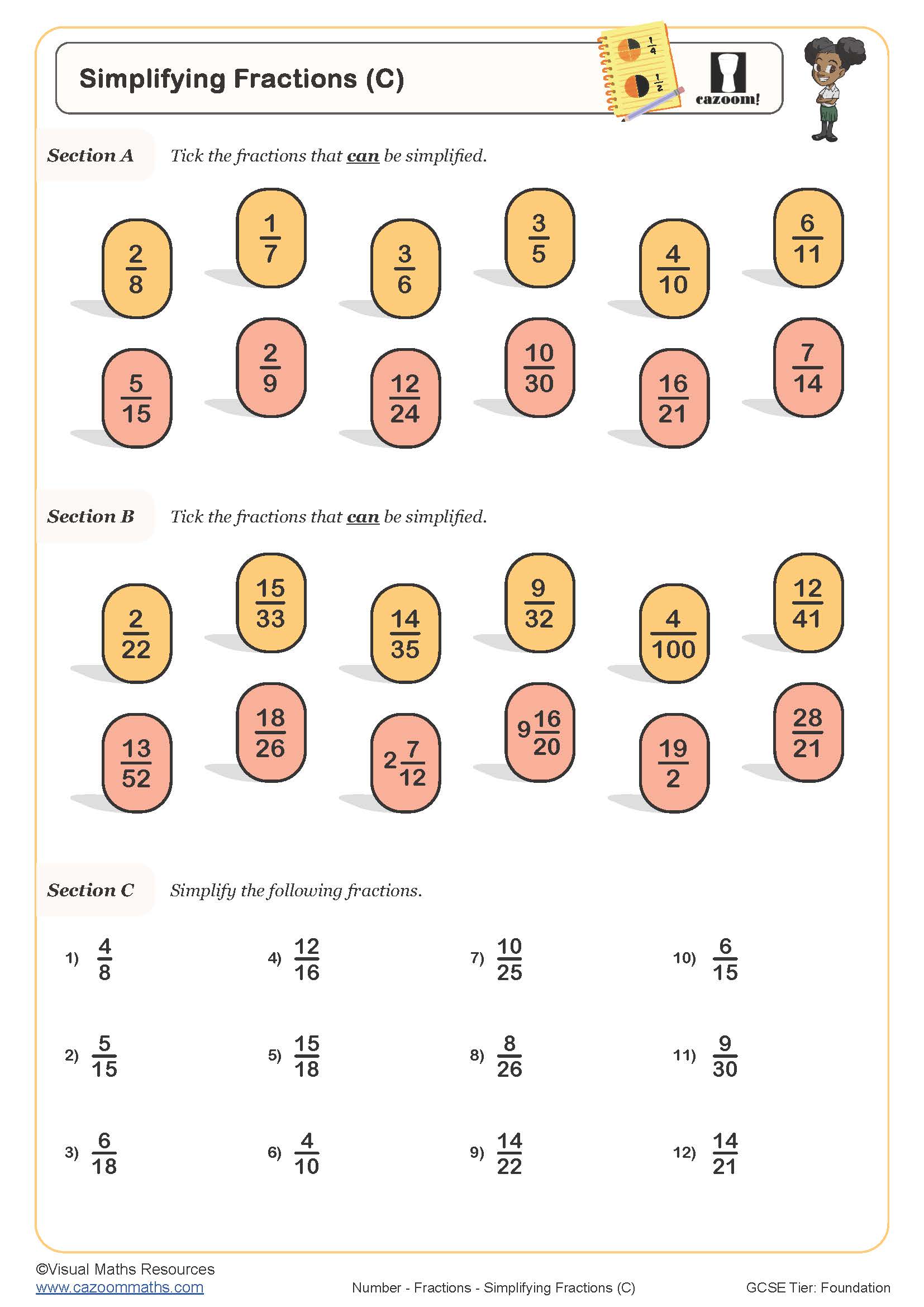
Simplifying Fractions (C)
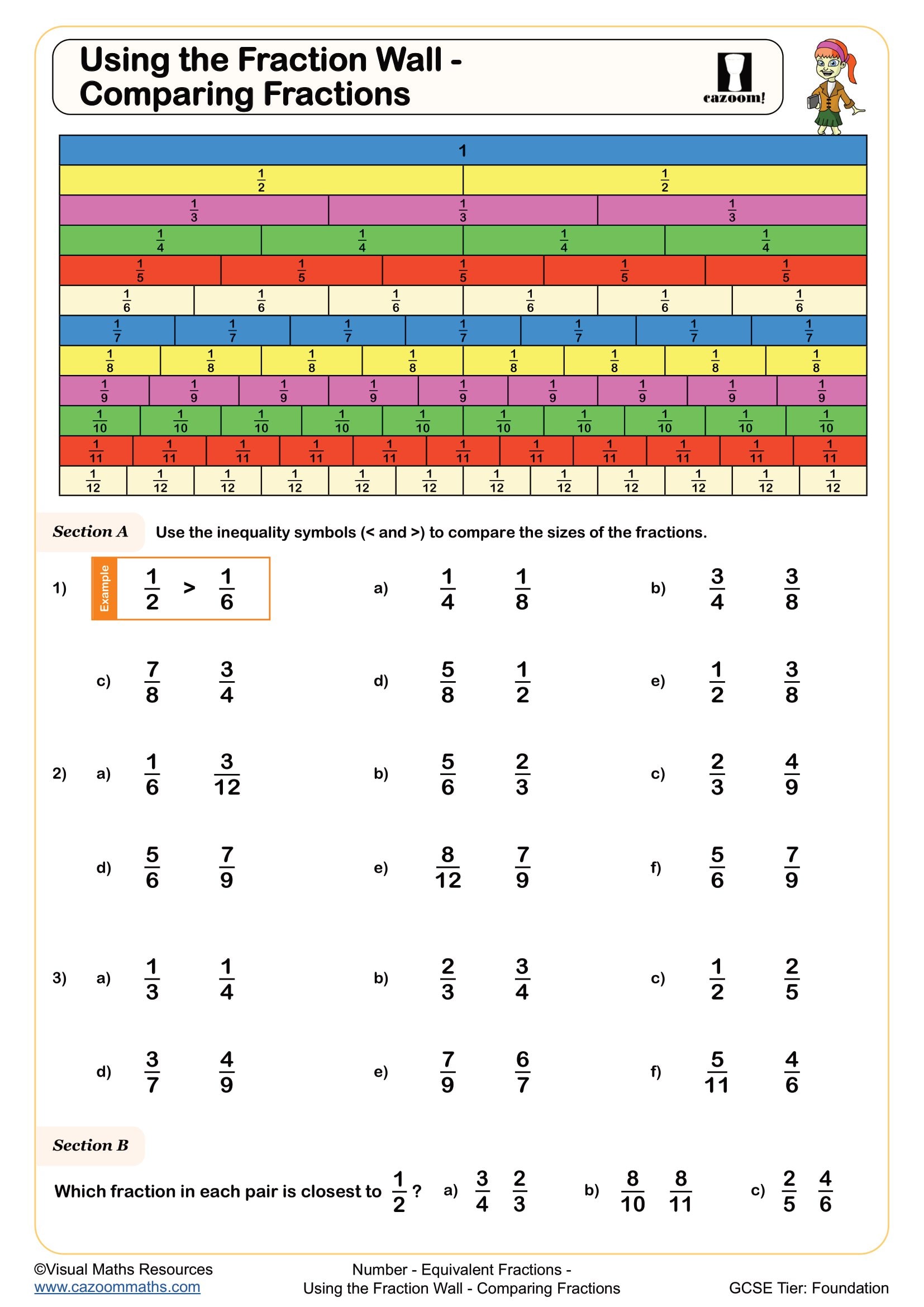
Using a Fraction Wall - Comparing Fractions
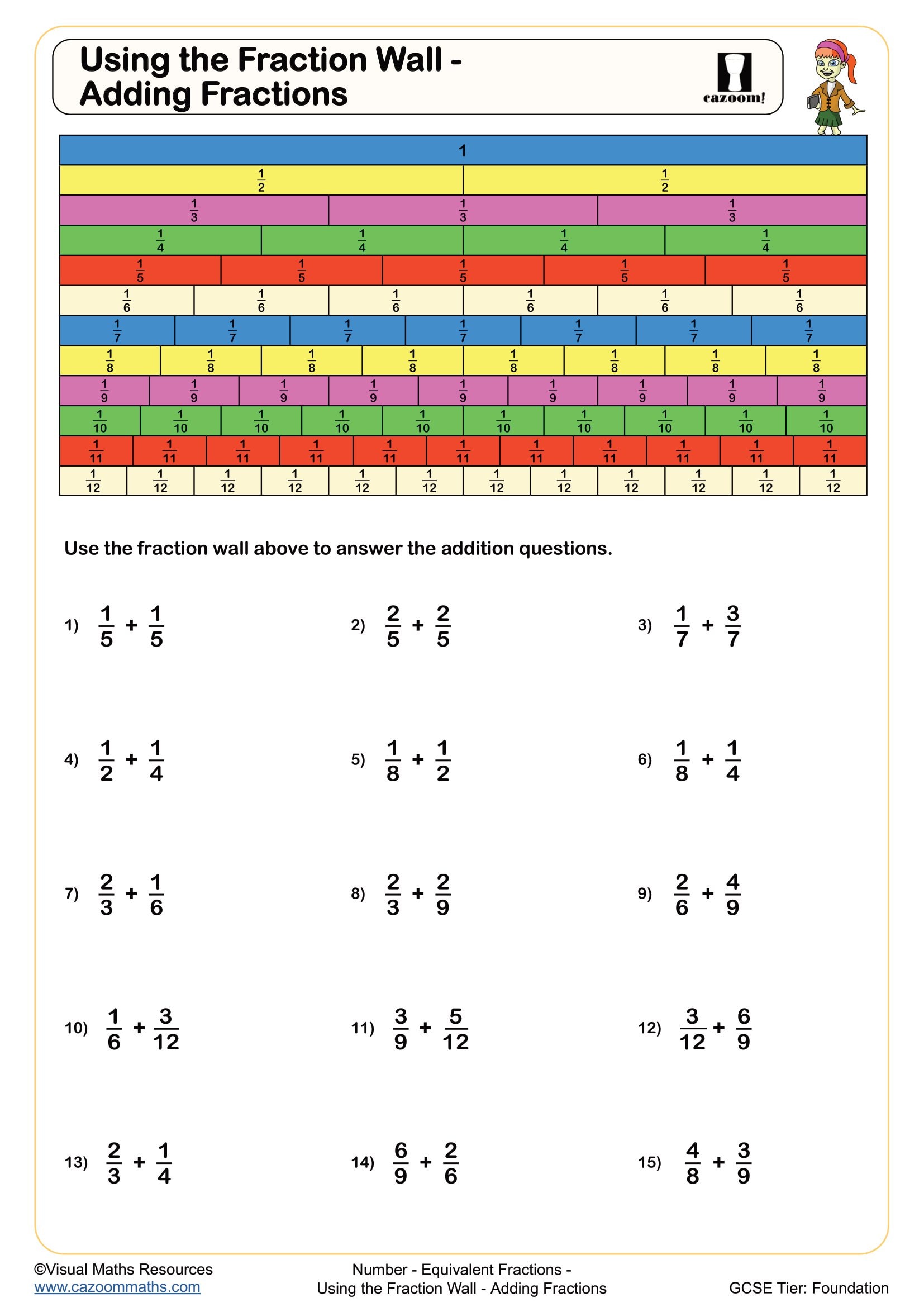
Using The Fraction Wall - Adding Fractions
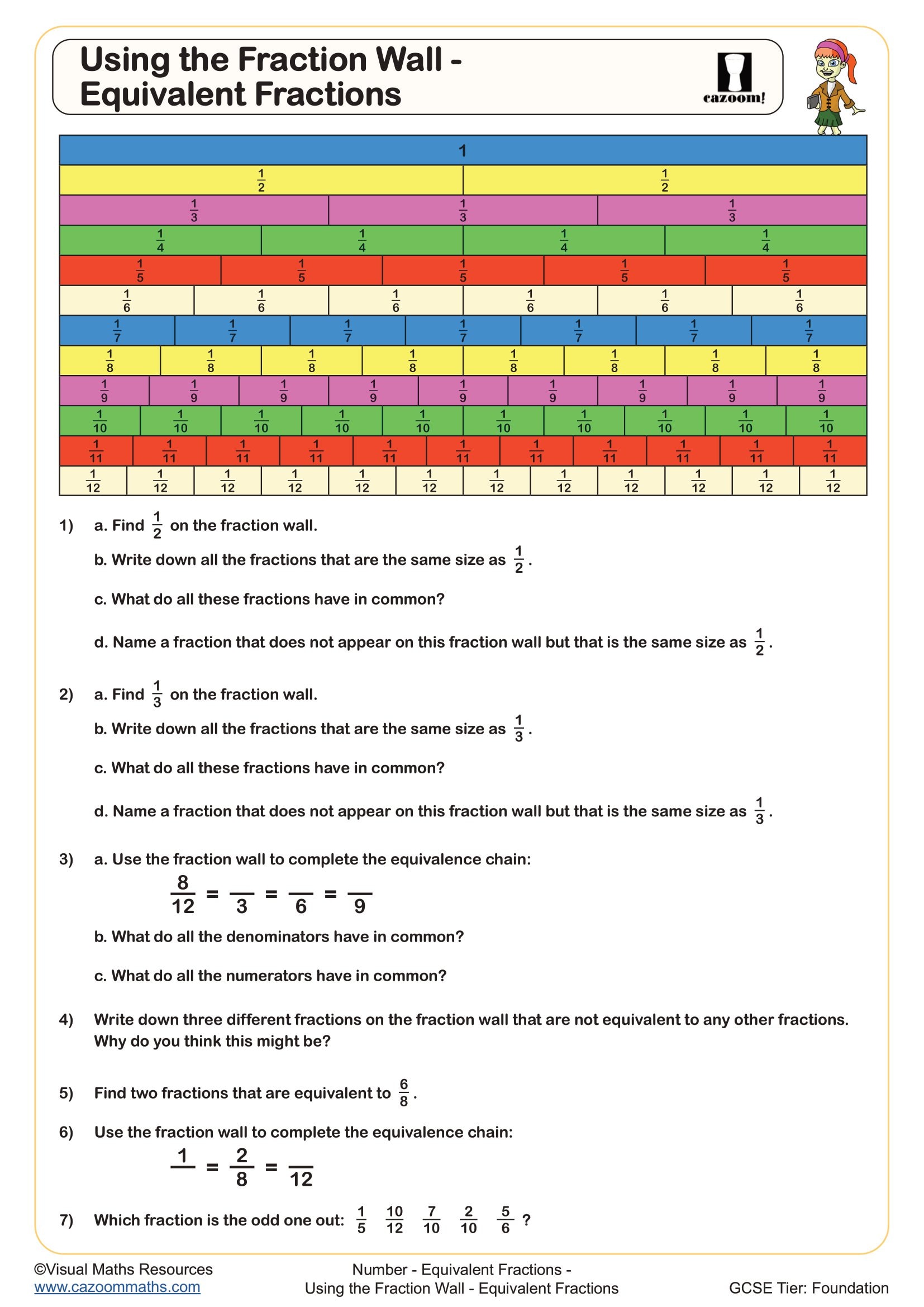
Using The Fraction Wall - Equivalent Fractions
All worksheets are created by the team of experienced teachers at Cazoom Maths.
What topics are covered in year 7 fractions worksheets?
Year 7 fractions worksheets typically cover equivalent fractions, simplifying fractions, comparing and ordering fractions, adding and subtracting fractions with like and unlike denominators, multiplying and dividing fractions, and converting between mixed numbers and improper fractions. These align with National Curriculum expectations for Year 7 students building on KS2 foundations.
Teachers often notice that students struggle most with finding common denominators when adding unlike fractions, frequently attempting to add numerators and denominators separately. The worksheets provide structured practice to overcome this misconception, with visual representations and step-by-step examples that help students understand why denominators must be the same before adding or subtracting fractions.
Are these fractions worksheets suitable for other year groups?
These fractions worksheets work effectively for high-achieving Year 6 students preparing for secondary school, as well as Year 8 students who need consolidation of fundamental fraction skills before progressing to more advanced algebraic fractions. The content bridges KS2 and KS3 expectations, making it valuable for transition work.
Many teachers use these resources during intervention sessions with older students who missed key fraction concepts during remote learning. The systematic approach helps fill gaps in understanding, particularly for students who struggle with fraction questions in other mathematical contexts such as ratio, percentage, and algebraic manipulation where fraction skills are important.
How do these worksheets help with converting between mixed numbers and improper fractions?
The worksheets provide clear visual methods for converting between mixed numbers and improper fractions, using both the traditional algorithm and pictorial representations. Students practise identifying when fractions are improper and learn systematic approaches to convert them to mixed numbers and vice versa.
Teachers frequently observe that students make errors when multiplying the whole number by the denominator during conversion to improper fractions, often forgetting to add the existing numerator. The worksheets include common error analysis exercises where students identify and correct typical mistakes, helping them develop better mathematical reasoning and self-checking strategies for these conversions.
How can teachers use these fraction worksheets most effectively in lessons?
Teachers find these worksheets work best when used as part of a structured sequence, starting with diagnostic assessment to identify specific gaps in fraction understanding. The worksheets can be differentiated by selecting appropriate sections for different ability groups, with answer sheets enabling peer marking and immediate feedback.
Many mathematics departments use these resources for homework consolidation after introducing new fraction concepts in class, as the clear layout helps students work independently. The fraction questions progress logically in difficulty, making them suitable for both whole-class teaching and individual intervention work, particularly when supporting students who need additional practice before attempting more complex mathematical problems involving fractions.