Year 7 Lines and Angles Worksheets
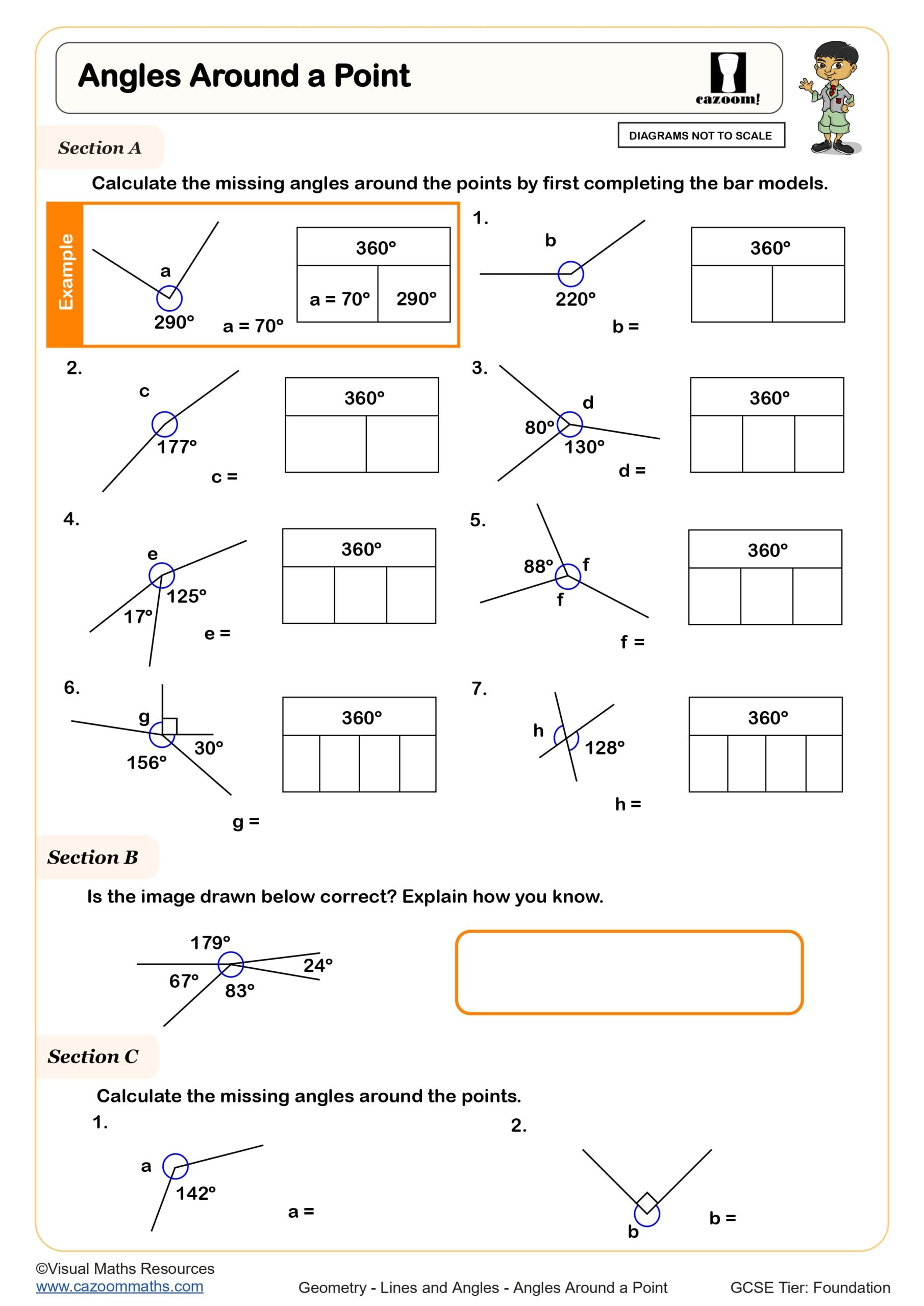
Angles Around a Point
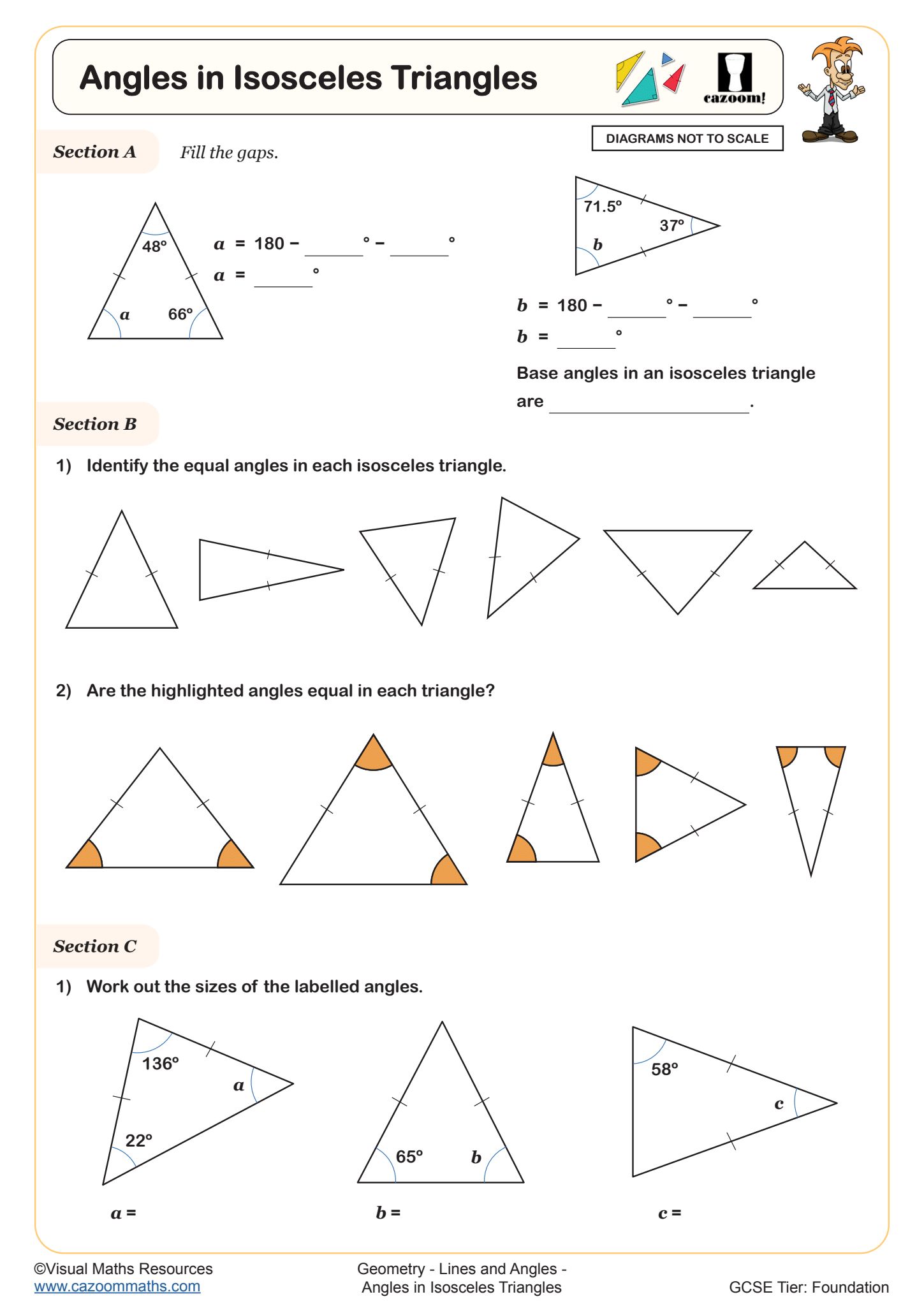
Angles in Isosceles Triangles
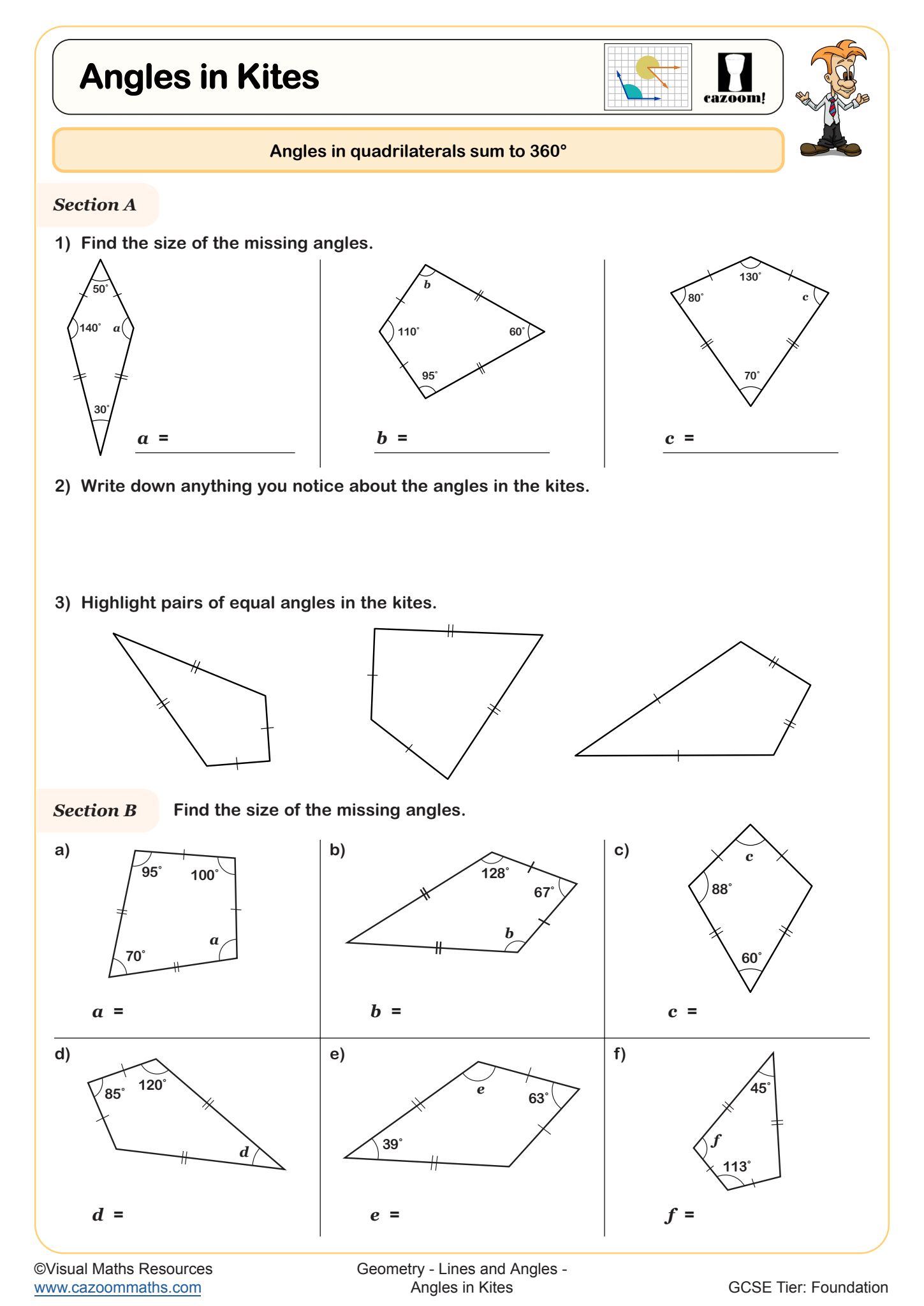
Angles in Kites
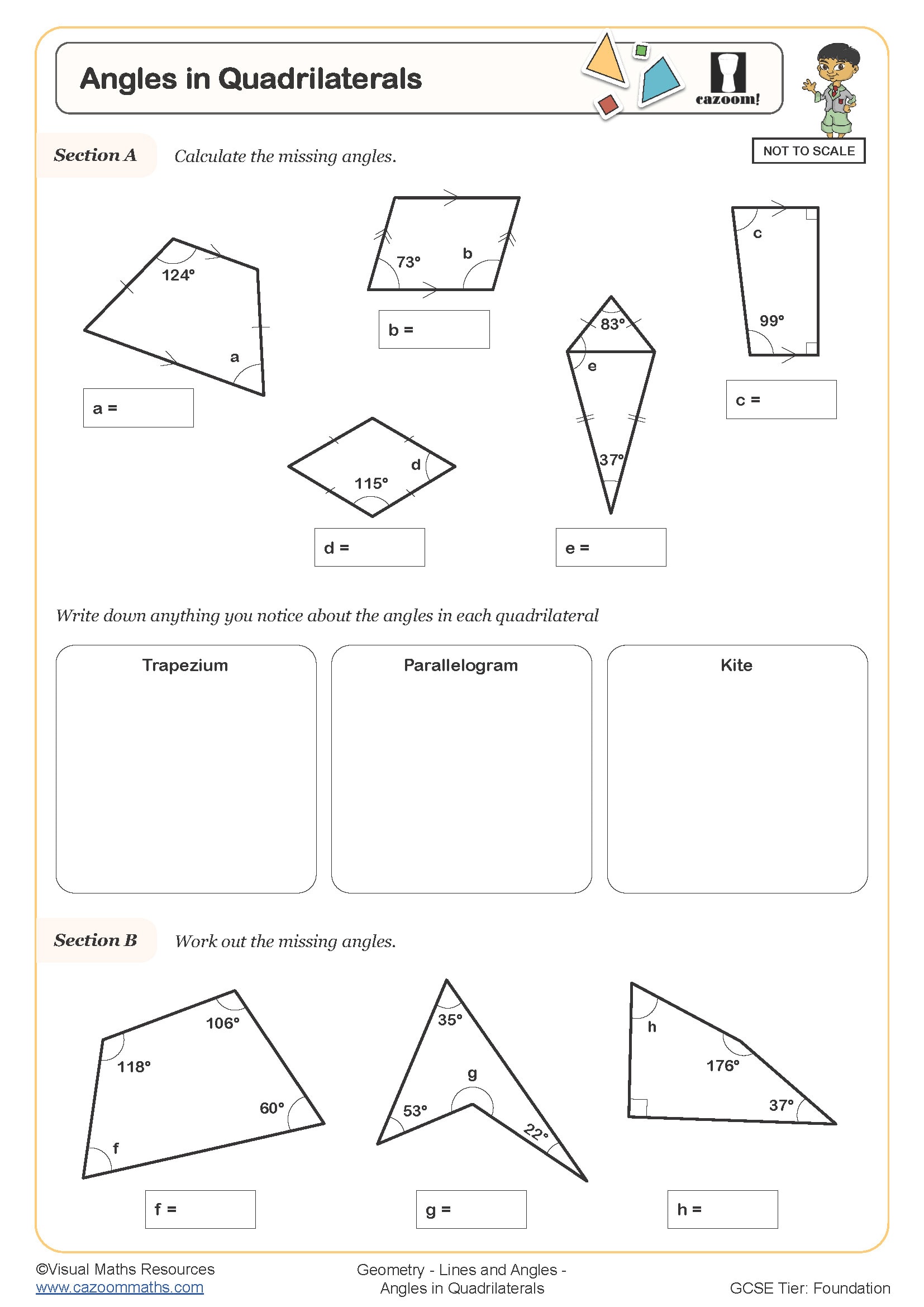
Angles in Quadrilaterals
Angles in Triangles (A)
-Worksheet.jpg?w=3840)
Angles in Triangles (B)
/Cazoom-Maths-Lines-and-Angles-Angles-in-Triangles-(B-Worksheet.jpg?w=3840)
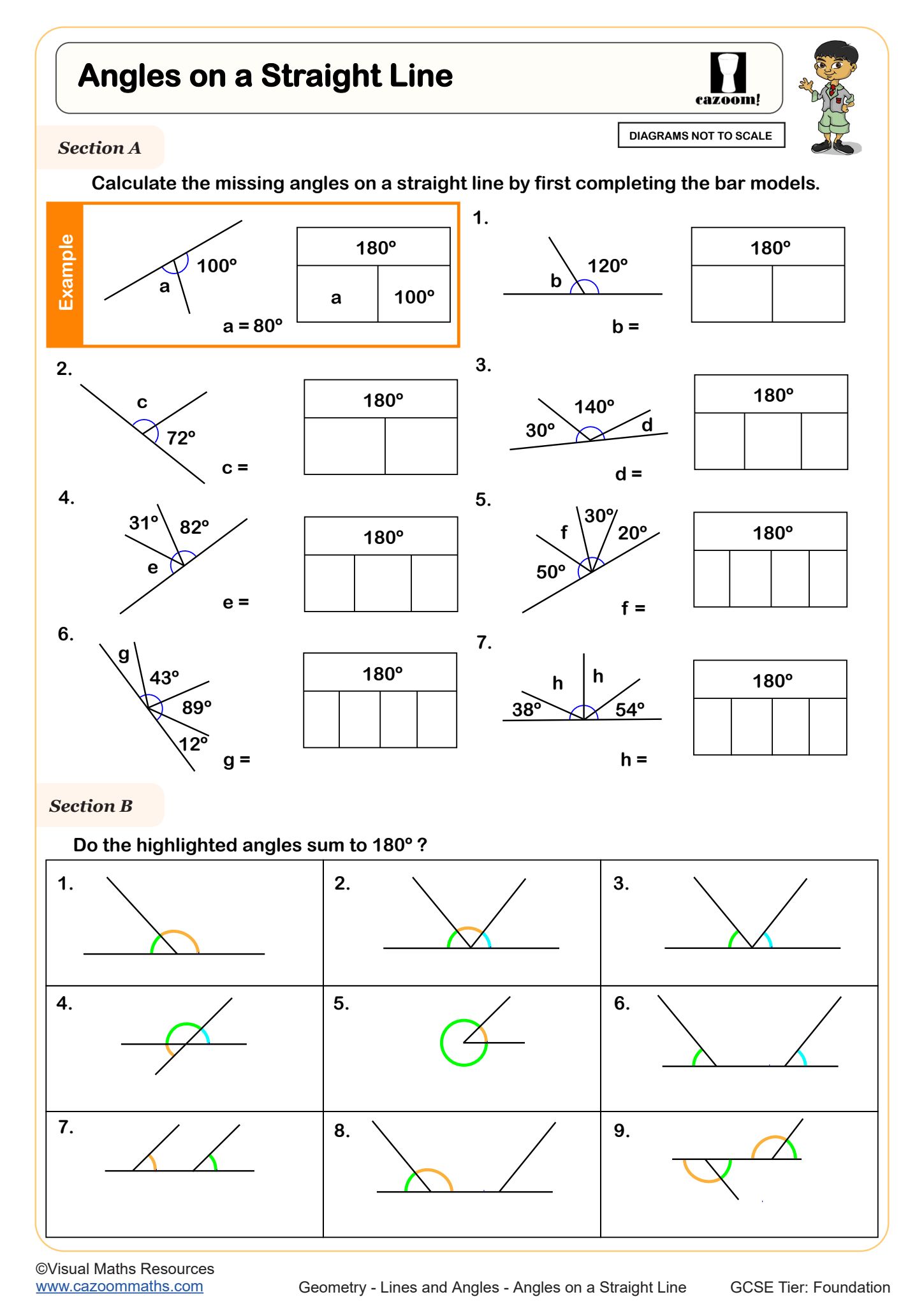
Angles on a Straight Line
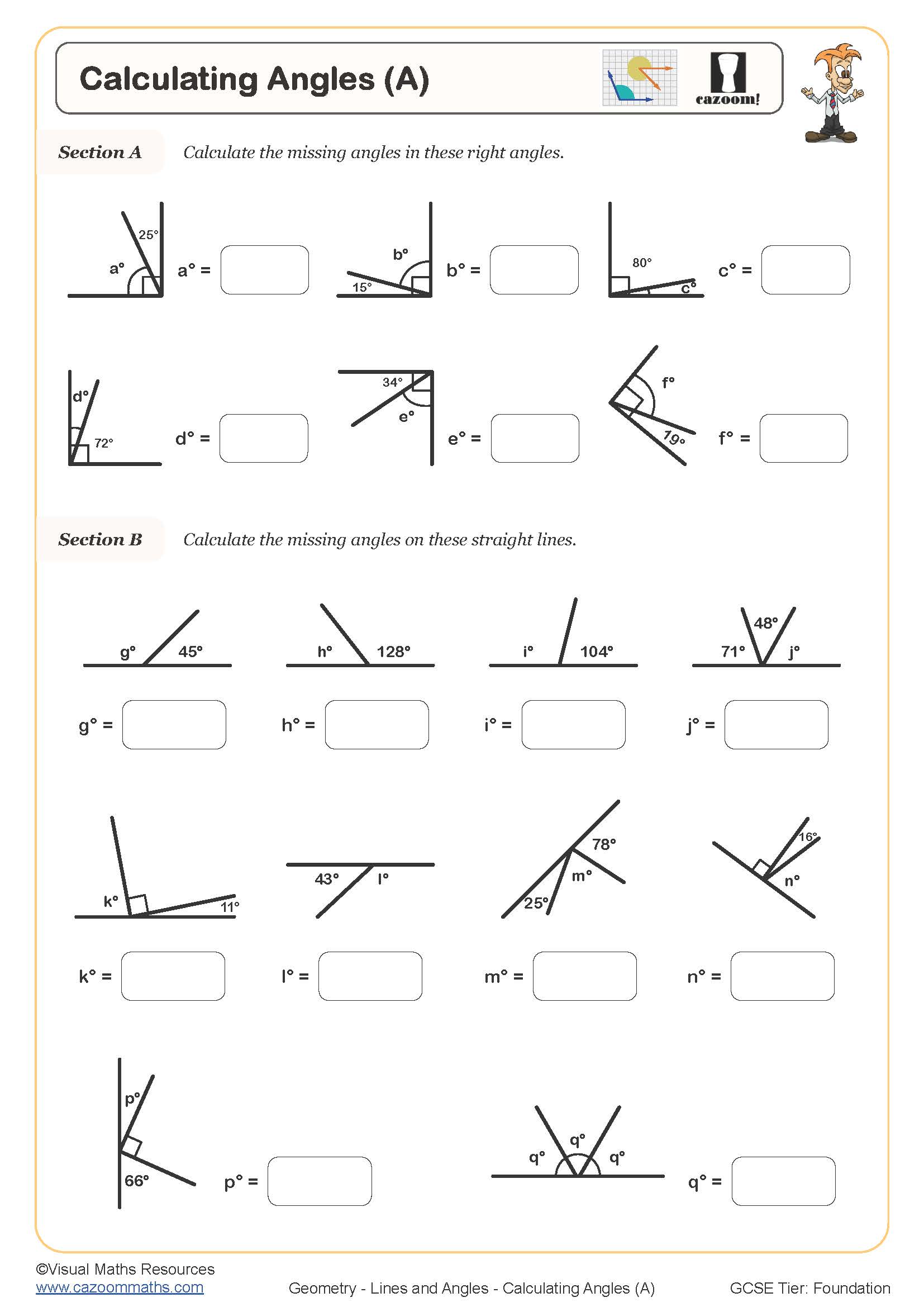
Calculating Angles (A)
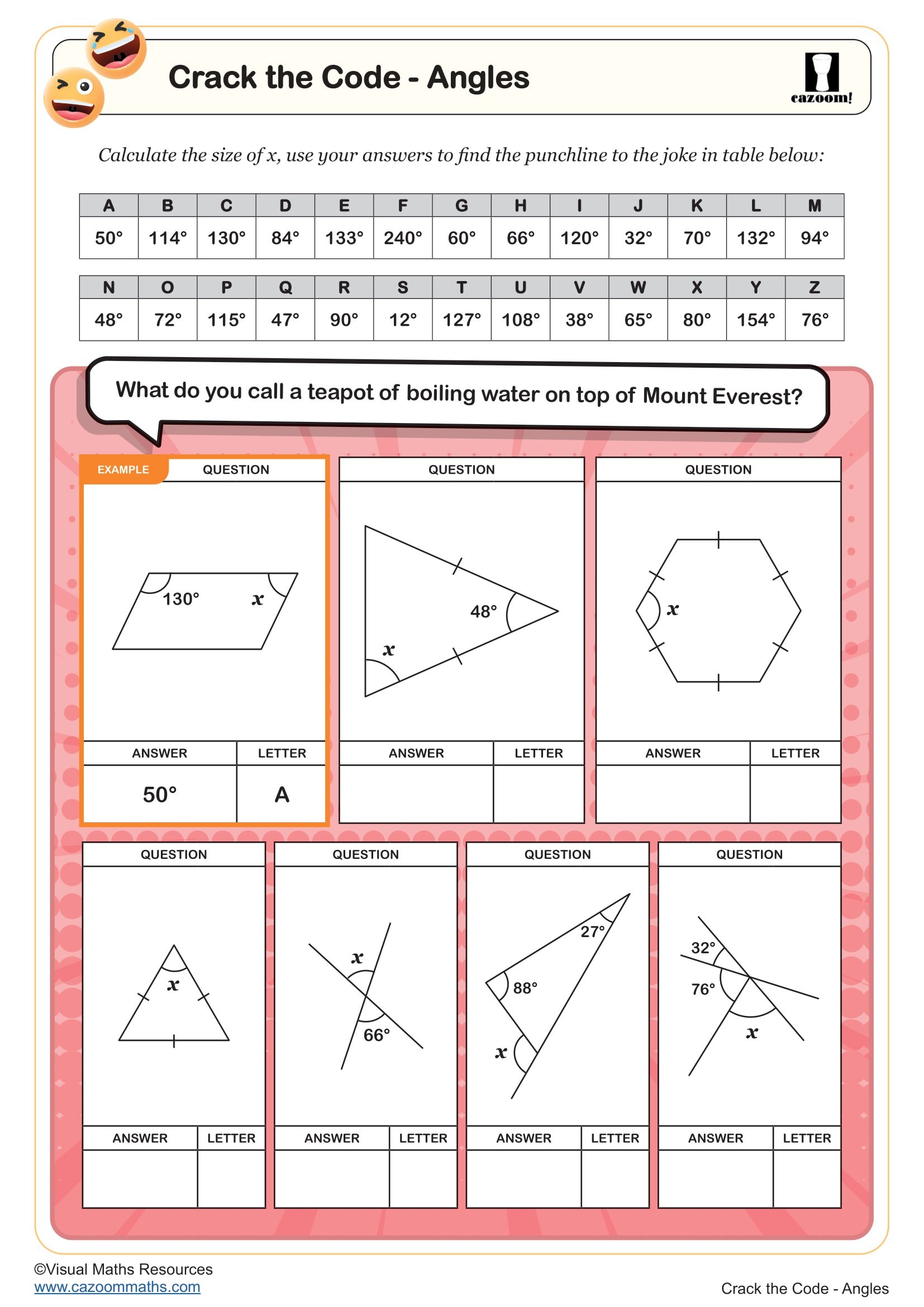
Crack the Code - Angles
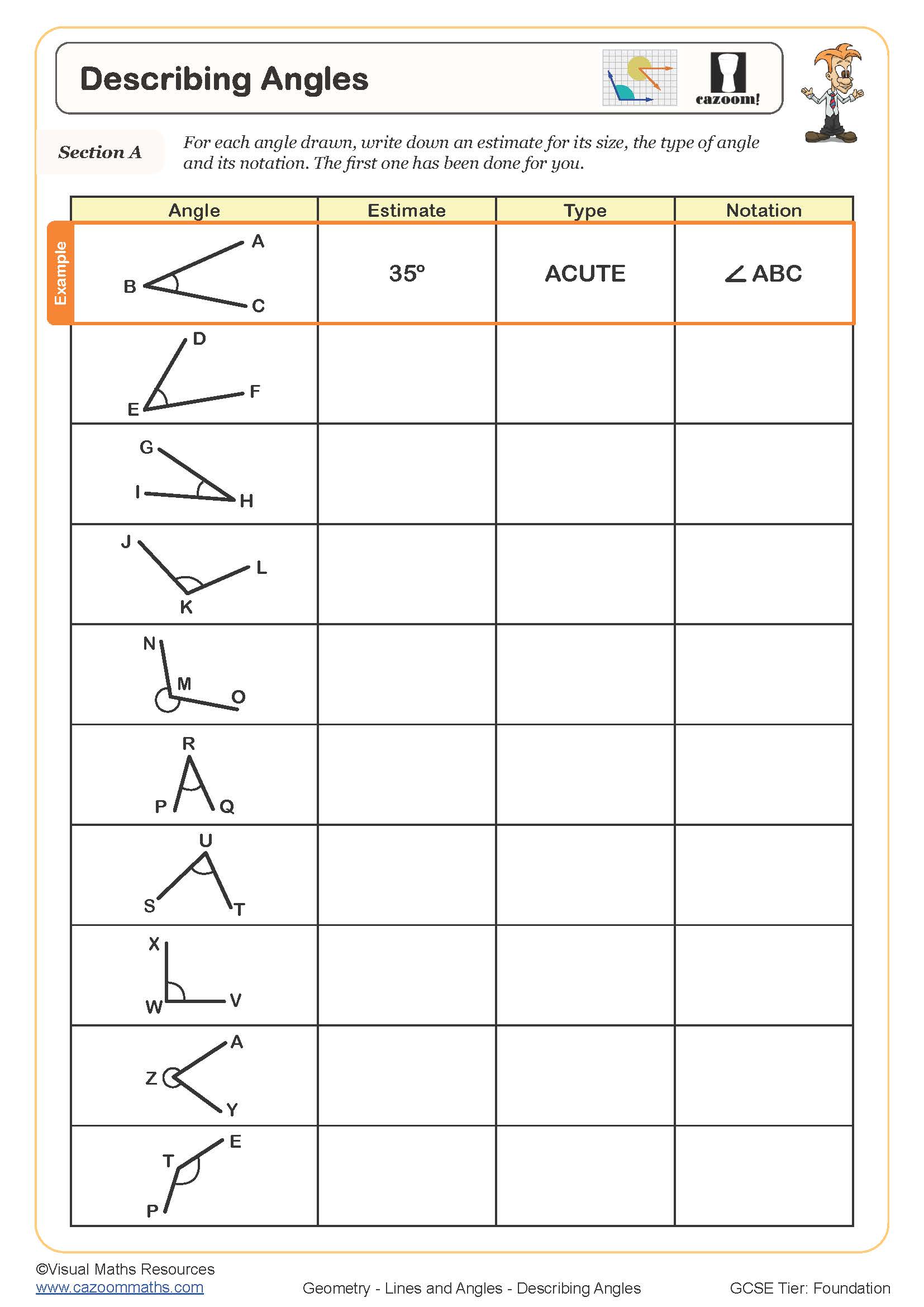
Describing Angles
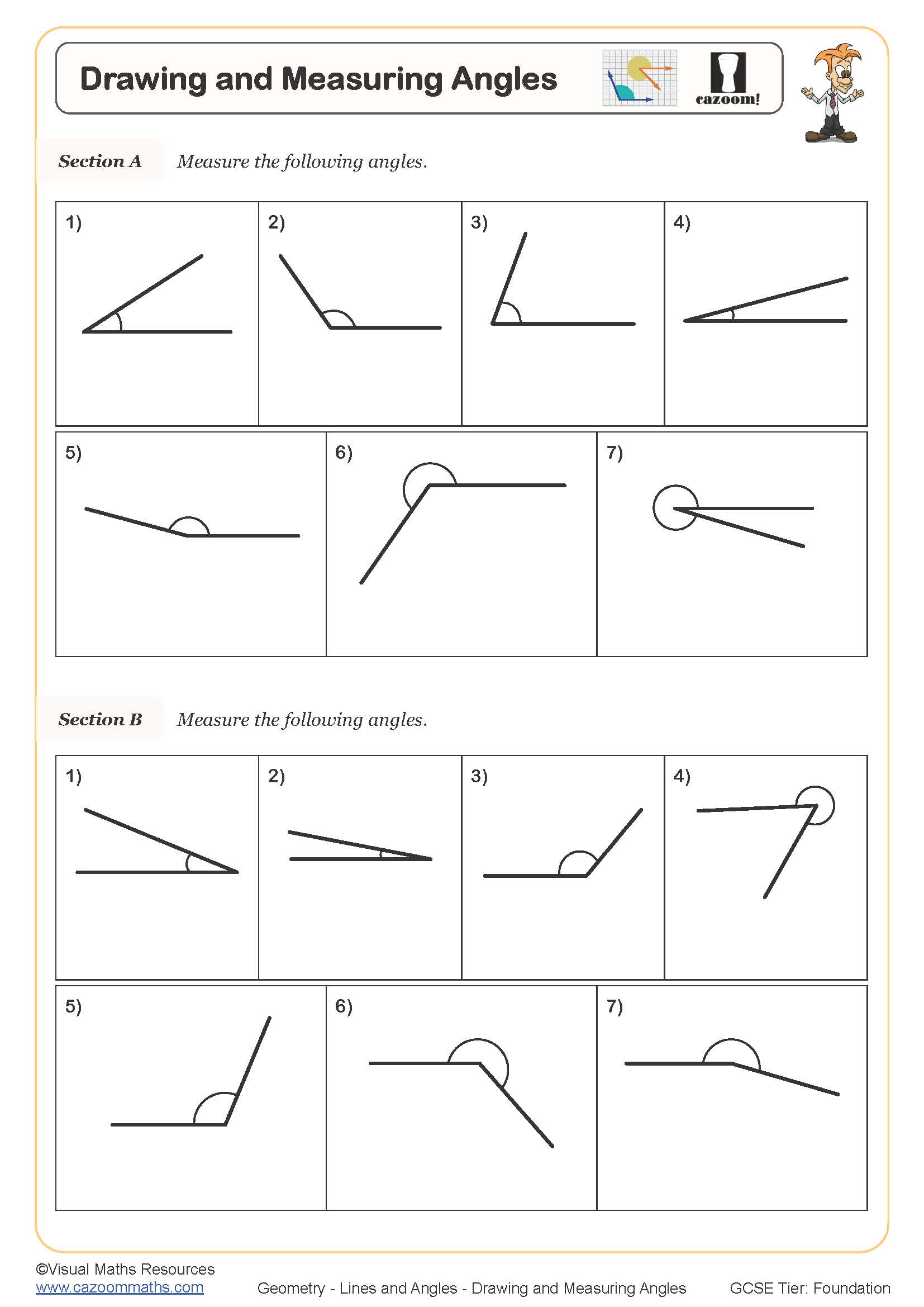
Drawing and Measuring Angles
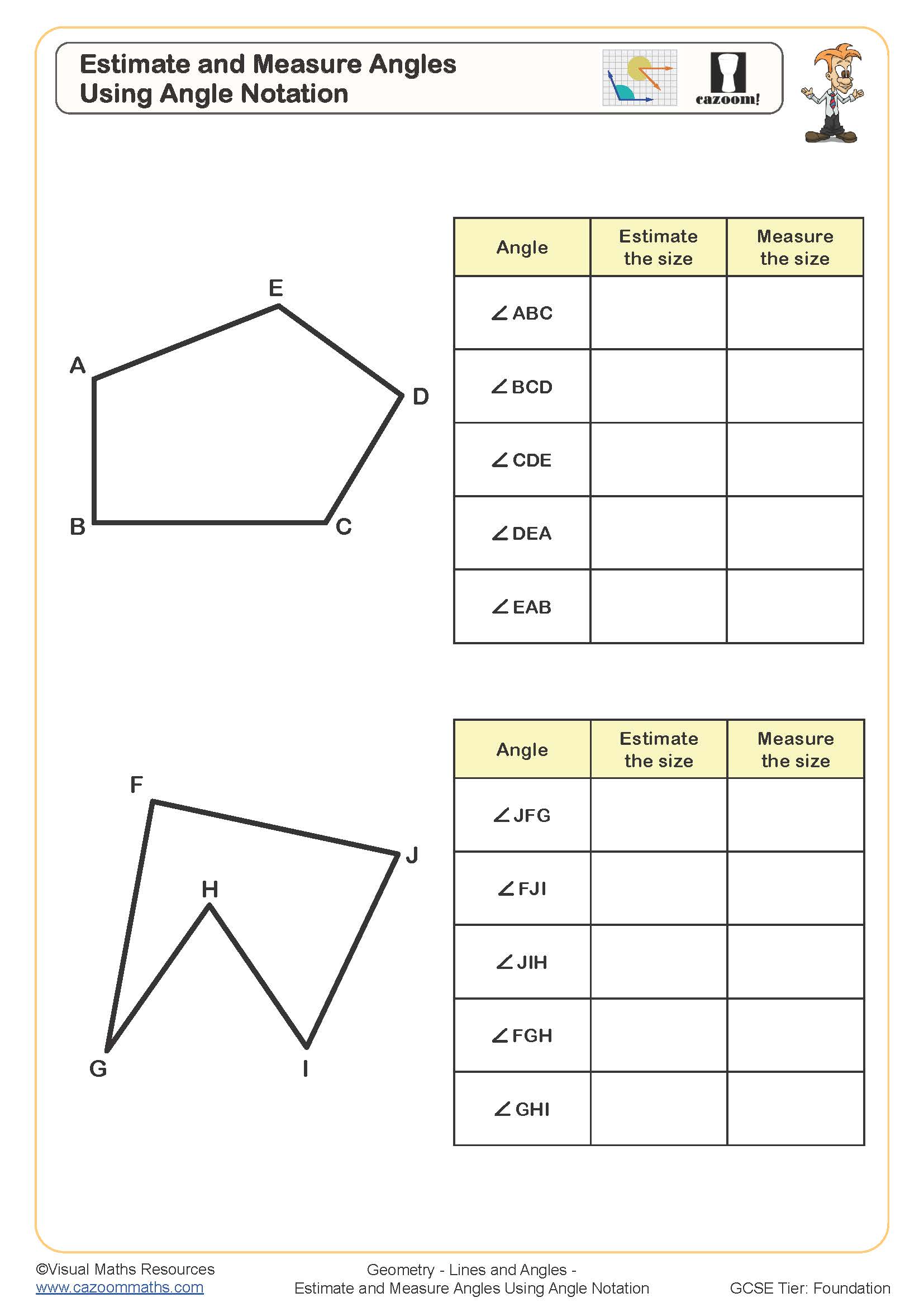
Estimate and Meaure Angles using Angle Notation
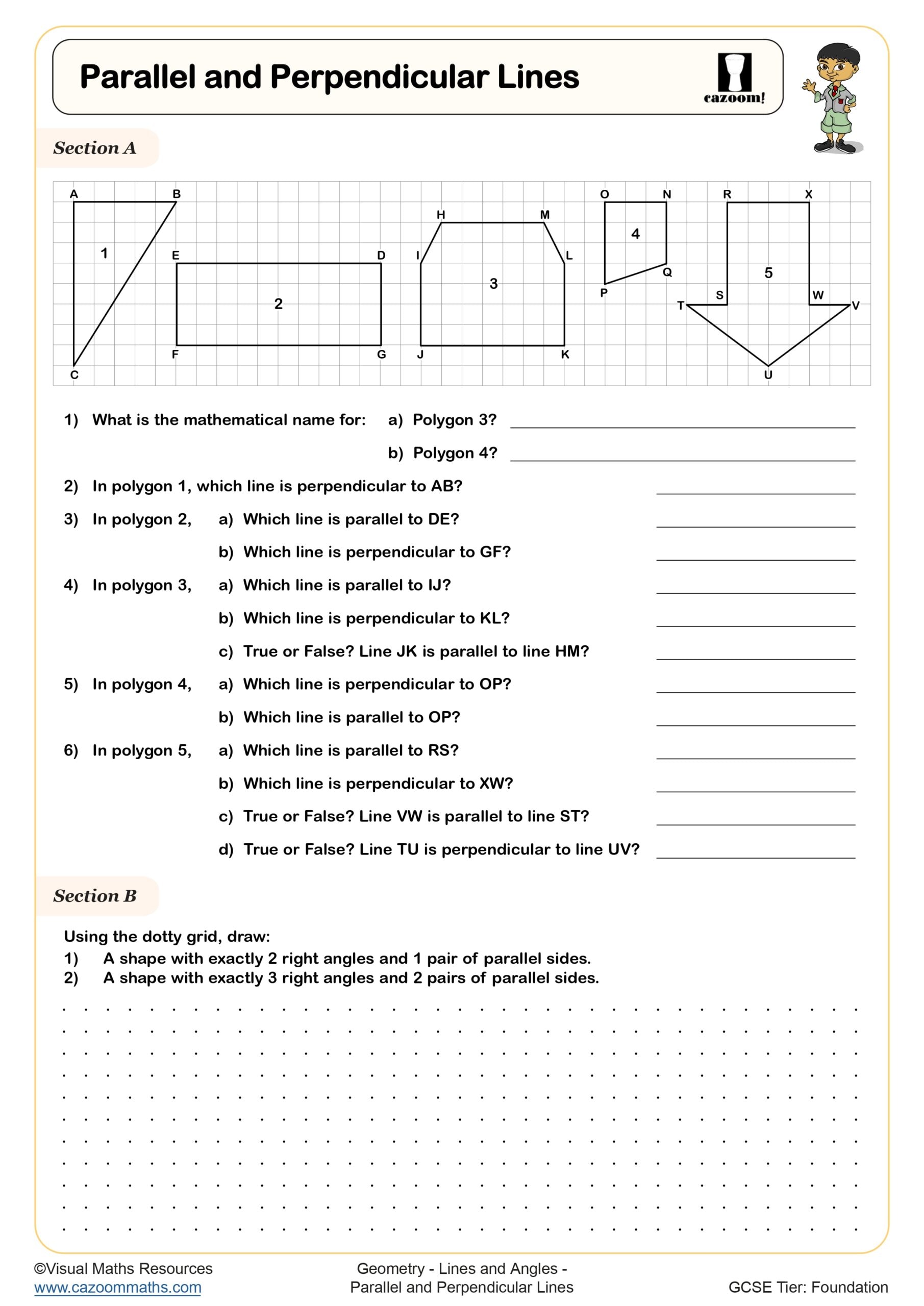
Parallel and Perpendicular Lines
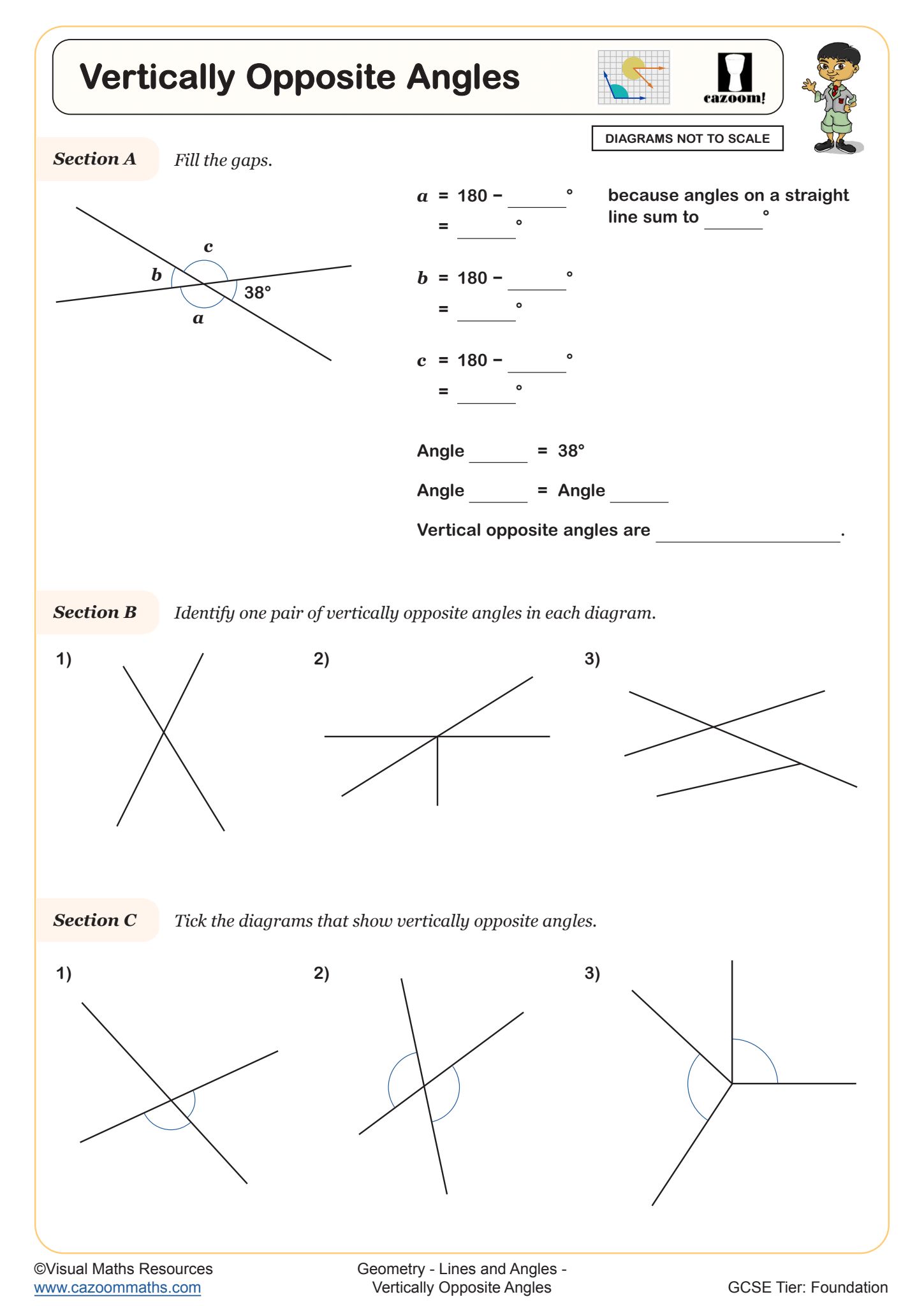
Vertically Opposite Angles
All worksheets are created by the team of experienced teachers at Cazoom Maths.
What makes a good angles year 7 worksheet for KS3 students?
A quality ks3 angles worksheet should progress systematically from basic angle identification through to multi-step problems involving parallel lines and triangles. It needs clear diagrams that aren't cluttered, plenty of space for working, and questions that develop both calculation skills and geometric reasoning required by the National Curriculum.
Teachers find that students often confuse co-interior and corresponding angles, so effective worksheets include visual cues and varied contexts. The best resources also incorporate real-world applications like roof trusses or bridge construction, helping students see why angle relationships matter in engineering and architecture.
How do Year 7 angle topics build on primary maths knowledge?
Year 7 maths angles extends Key Stage 2 work on right angles, straight lines and full turns by introducing formal angle properties and algebraic thinking. Students move from simple angle measurement to understanding why angles in triangles sum to 180° and how parallel lines create predictable angle relationships.
The transition can be challenging because primary students often rely on estimation and measurement, while KS3 demands logical reasoning. Teachers notice that students who struggled with times tables in primary school often find angle calculations difficult too, as the algebraic manipulation requires confident arithmetic skills.
Which angle properties cause the most confusion in Year 7?
Corresponding and alternate angles with parallel lines consistently trip up Year 7 students, who often confuse which angles are equal and struggle to identify parallel line markers in diagrams. Co-interior angles present another challenge, as students forget these add to 180° rather than being equal.
Teachers observe that students frequently attempt to measure angles with protractors instead of applying geometric rules, missing the logical reasoning aspect entirely. Effective worksheet on angles practise includes exercises where measurement would be impossible, forcing students to use angle properties and algebraic methods instead.
How should teachers use these angle worksheets in lessons?
These angles Year 7 worksheet pdf resources work best when combined with practical demonstrations using mini-whiteboards or dynamic geometry software. Teachers find that starting each lesson with a quick angle vocabulary recap prevents students mixing up acute, obtuse and reflex angles during problem-solving.
The answer sheets prove invaluable for peer assessment activities, allowing students to check working methods rather than just final answers. Many teachers use the worksheets for homework consolidation after introducing new angle properties, then review common errors at the start of subsequent lessons to address misconceptions before they become embedded.