Year 7 Maths Worksheets
Access our complete library of Year 7 Maths Worksheets, a comprehensive collection of over 1,100 pages across 360+ downloadable PDFs with full answer keys. Created by experienced teachers and trusted by over 60,000 users, these TES-recommended resources are fully aligned with the National Curriculum, providing unparalleled depth for classroom learning, homework, and revision.
Year 7 Number Worksheets
Year 7 Geometry Worksheets
Year 7 Algebra Worksheets
All worksheets are created by the team of experienced teachers at Cazoom Maths.
TRY SOME FREE SAMPLE YEAR 7 MATHS WORKSHEETS
What Do Year 7 Students Learn in Maths?
Year 7 marks the transition from primary to secondary maths education, where students begin Key Stage 3. This pivotal year builds upon primary foundations whilst introducing more sophisticated mathematical concepts that prepare students for GCSE study. The curriculum becomes more structured around distinct mathematical strands, with increased emphasis on algebraic thinking and formal mathematical language.
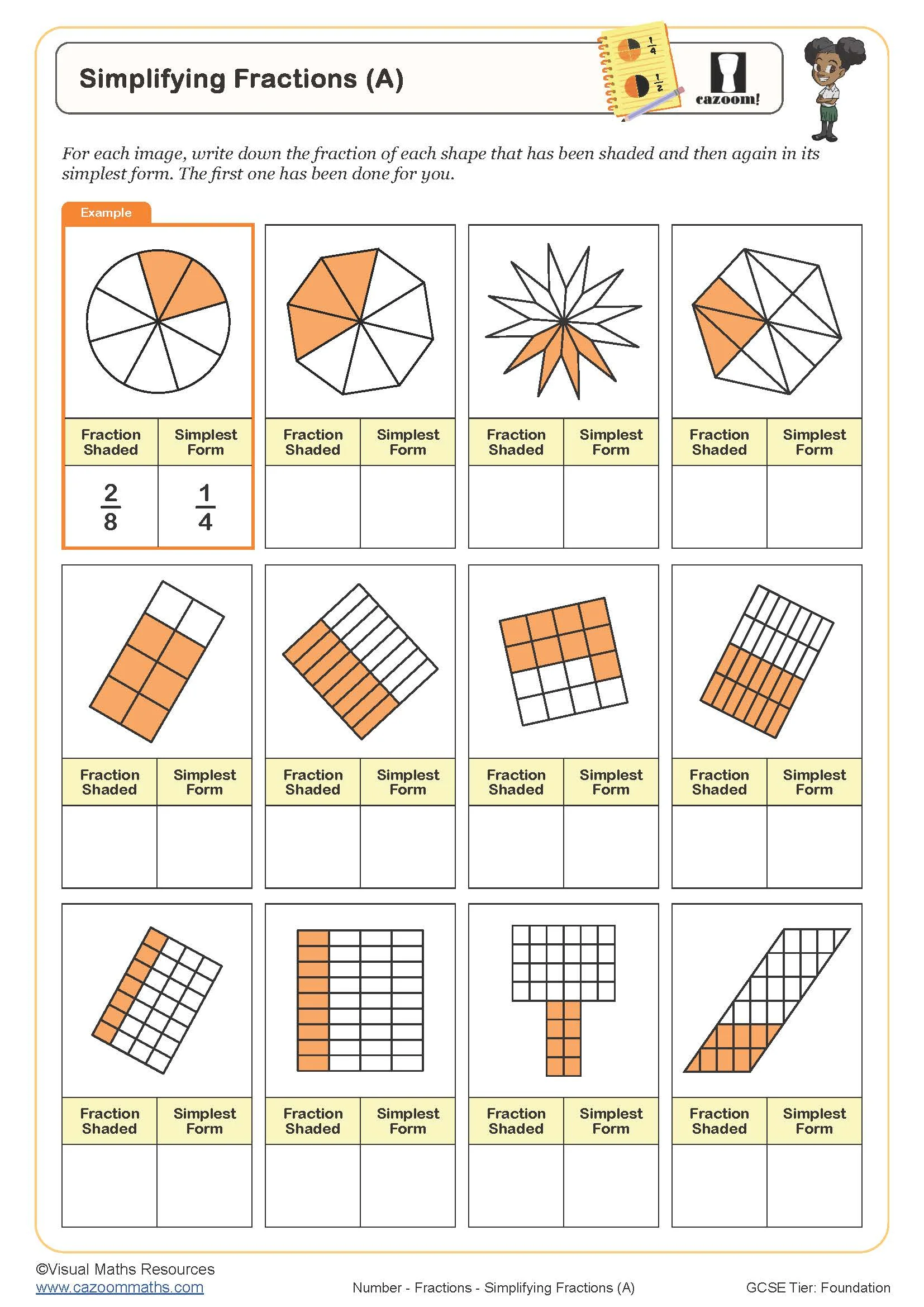
Number work expands beyond basic operations to include negative numbers, factors, multiples, and prime numbers. Students develop fluency with fractions, decimals, and percentages, learning to convert between different forms and solve practical problems involving these concepts.
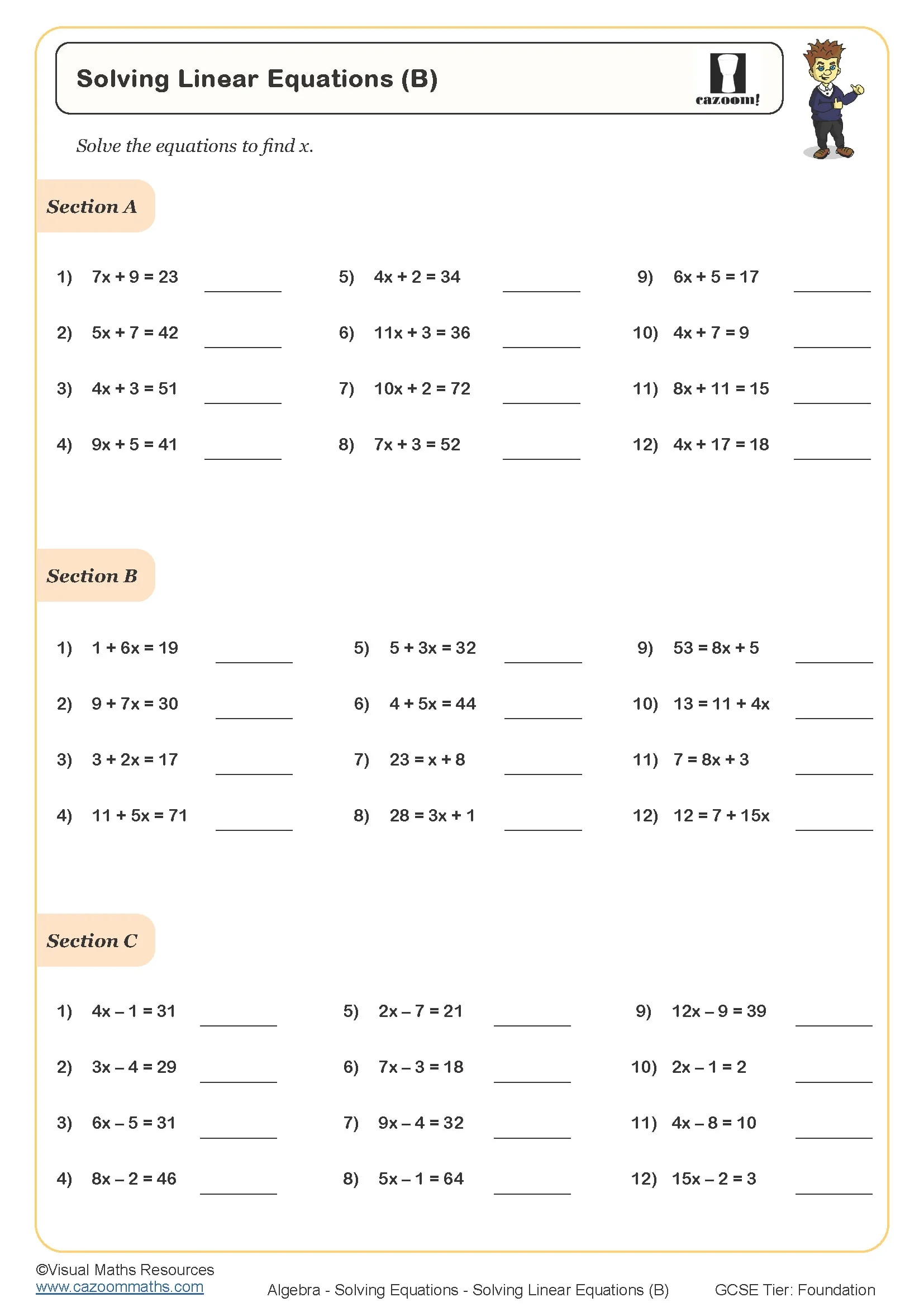
Algebra introduces students to mathematical symbols and expressions for the first time. They learn to substitute values into formulae, simplify basic algebraic expressions, and begin solving simple linear equations. This foundational algebraic thinking represents a significant conceptual leap from primary arithmetic.
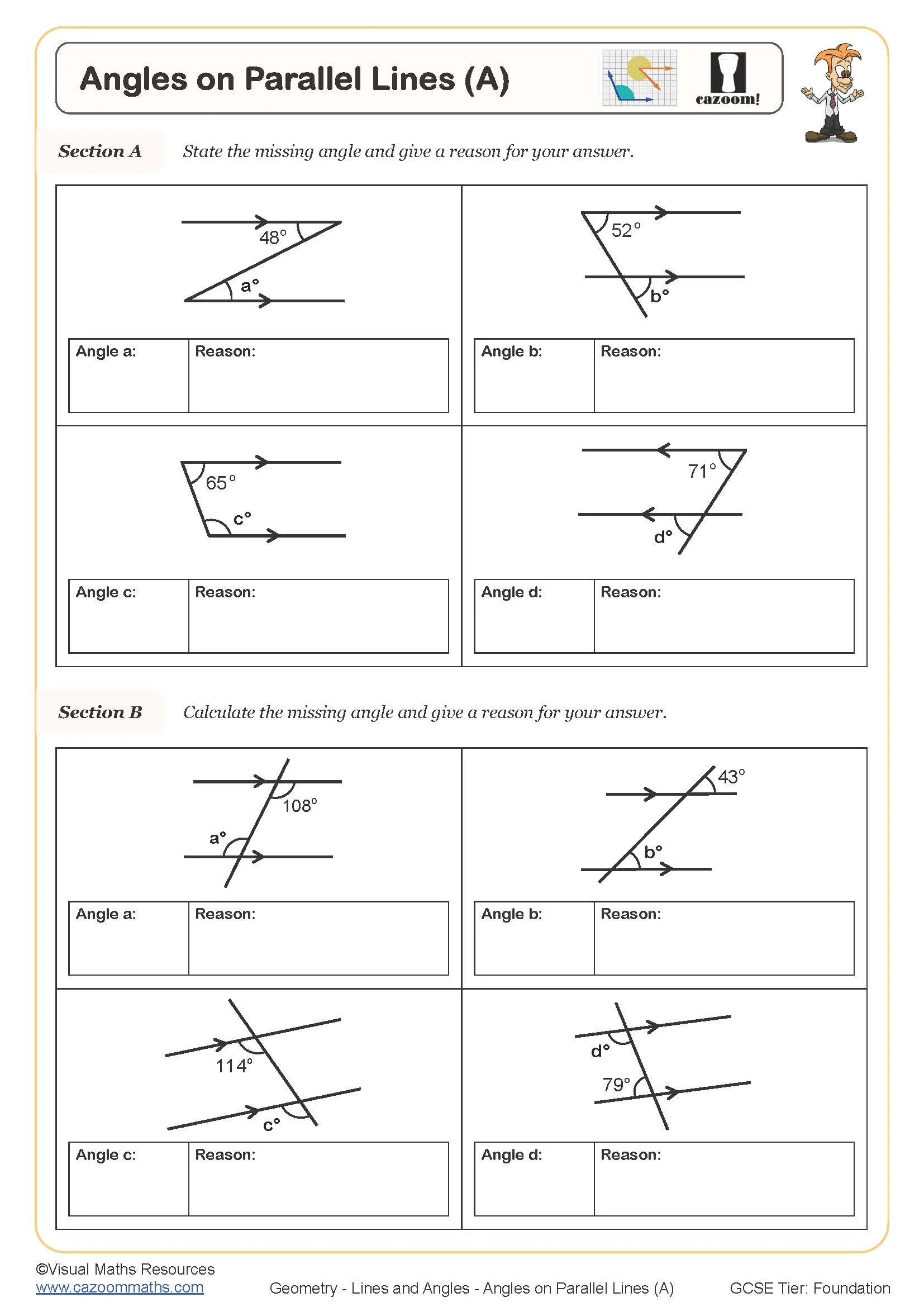
Geometry covers properties of angles, including those in triangles and quadrilaterals, alongside work with parallel lines and basic constructions. Students also explore area and perimeter of various shapes, developing spatial reasoning skills.
Statistics involves collecting, organising, and interpreting data through various charts and graphs, whilst calculating measures of central tendency including mean, median, and mode.
Frequently Asked Questions
Our collection of Year 7 maths worksheets covers all core areas of the curriculum. This includes in-depth resources for Number (such as fractions and decimals), Algebra, Geometry, Statistics, and Measurement. Every worksheet is designed to align with the KS3 National Curriculum, making them a trusted resource for teachers, parents, and students.
We offer one of the UK's largest libraries of Year 7 maths worksheets. The collection features over 350 individual worksheets, which translates to hundreds of pages of high-quality practice. We provide exceptional depth in key topics, ensuring comprehensive coverage for all Year 7 maths students.
Yes, absolutely. Our Year 7 maths worksheets are an excellent tool for revision and test preparation. They provide extensive practice on specific topics, helping students to identify areas of weakness and build confidence before assessments. They are a perfect resource for Year 7 maths homework and revision sessions.
Yes. Every single one of our Year 7 maths worksheets comes with a corresponding answer page. The answers are provided separately, making them easy to use for marking, self-assessment, or checking homework.
All our Year 7 maths worksheets are provided as high-quality, printable PDF files. This standard format makes them easy to view on any device, print for classroom or home use, and ensures that the layout and questions are always clear and easy to read.
Every Year 7 maths worksheet available on Cazoom Maths is created by our team of experienced and qualified maths teachers. They use their real classroom expertise to design effective and engaging resources that genuinely support student learning and understanding.
Our Year 7 maths worksheets are designed to build confidence through consistent and targeted practice. By covering the entire curriculum with clear, progressively challenging problems, they help students solidify their understanding, master difficult topics, and turn mathematical anxiety into achievement.