Year 7 Mental Methods Worksheets
4 Operations 10 Minute Challenge
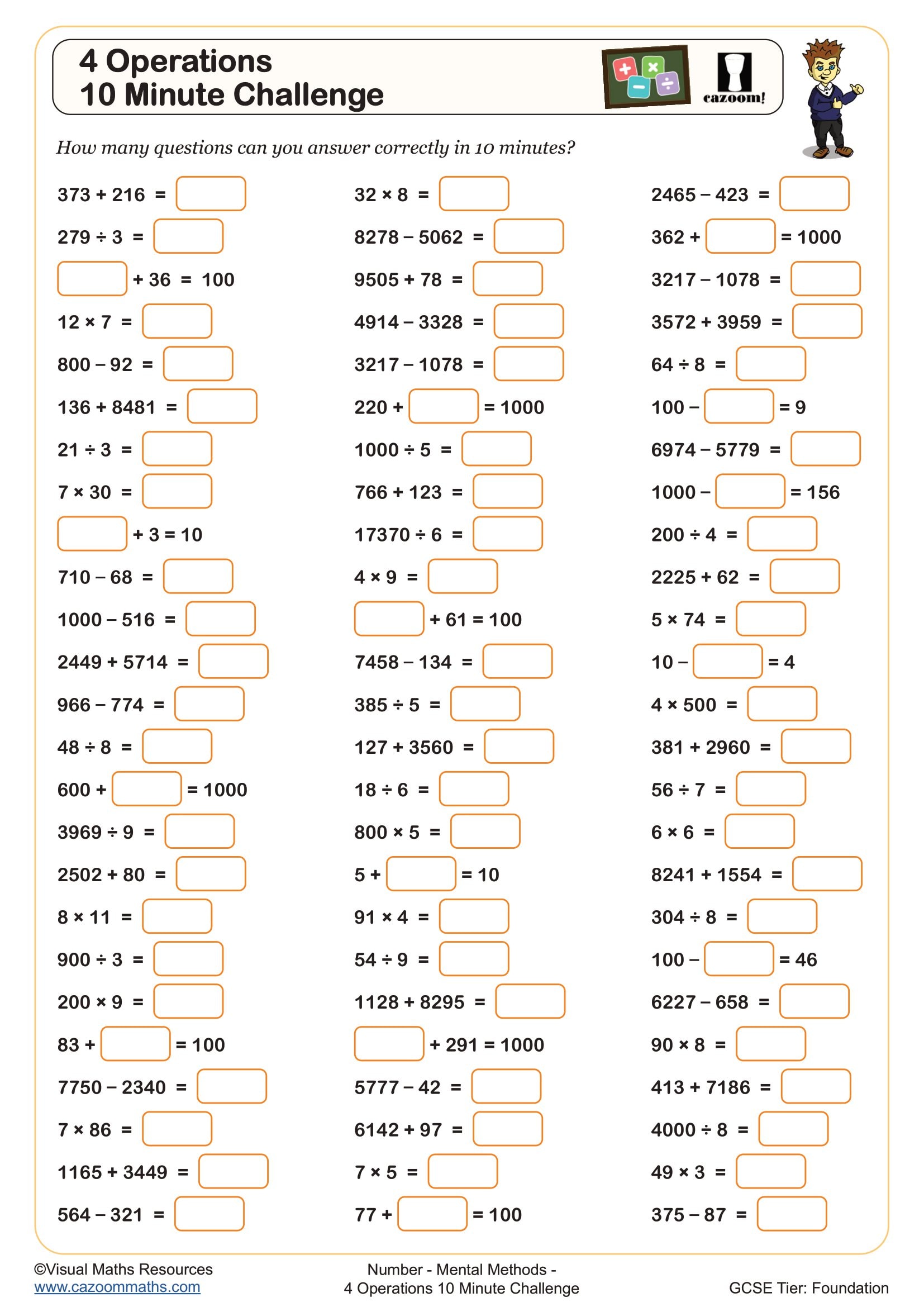
Arithmagons
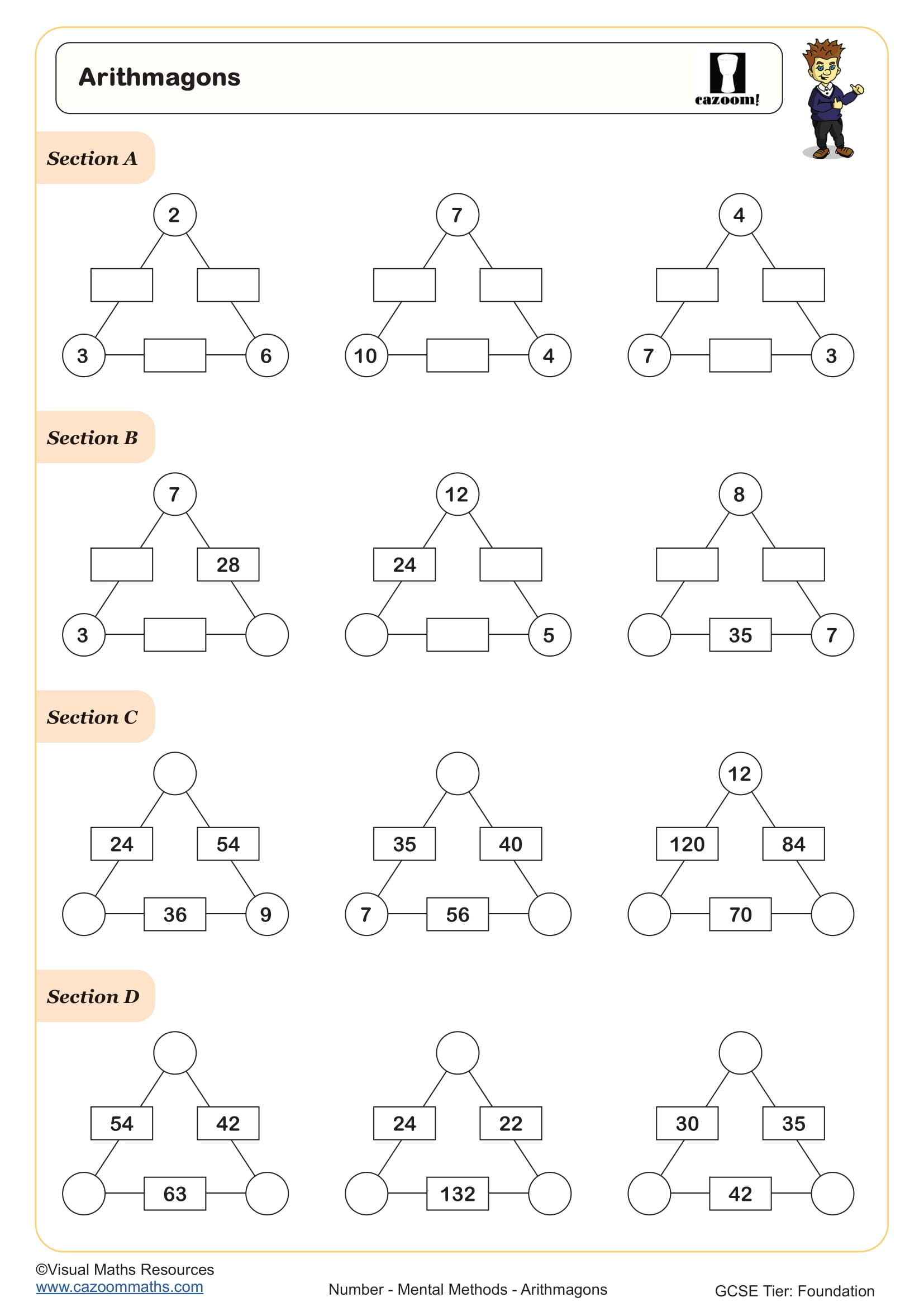
Calculating from Related Addition and Subtraction Facts
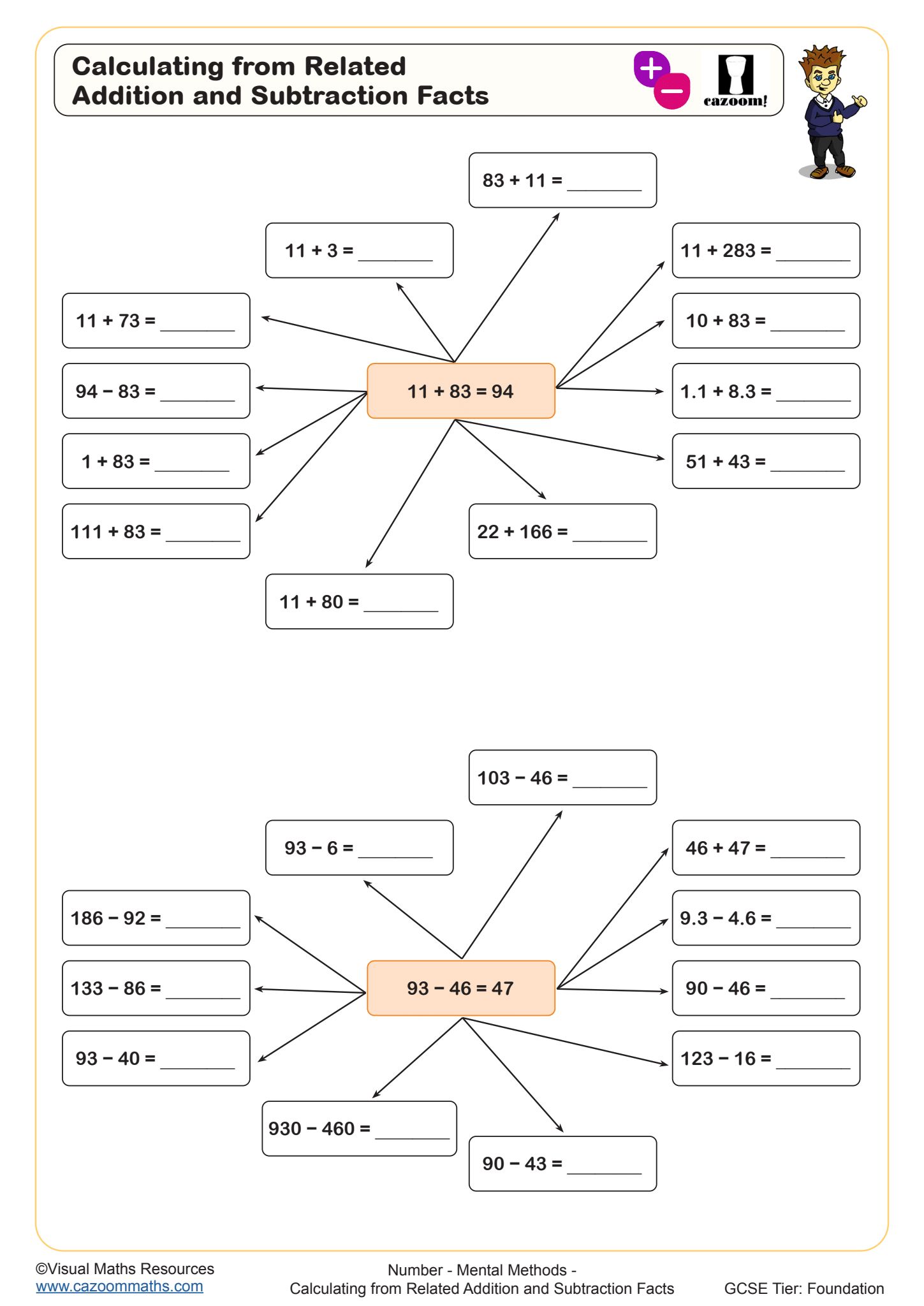
Dividing by Multiples of Ten
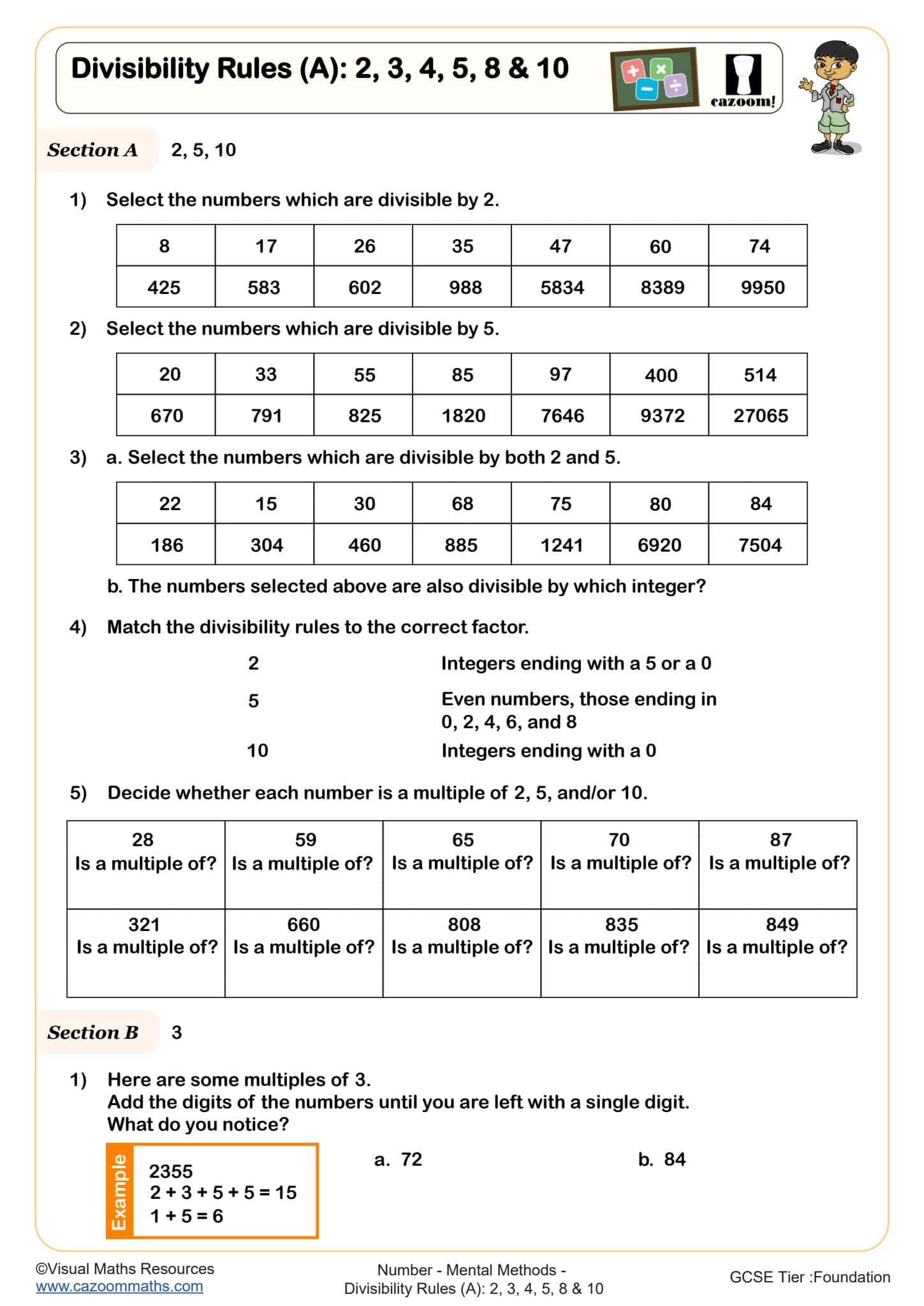
Divisibility Rules (A): 2, 3, 4, 5, 8 & 10
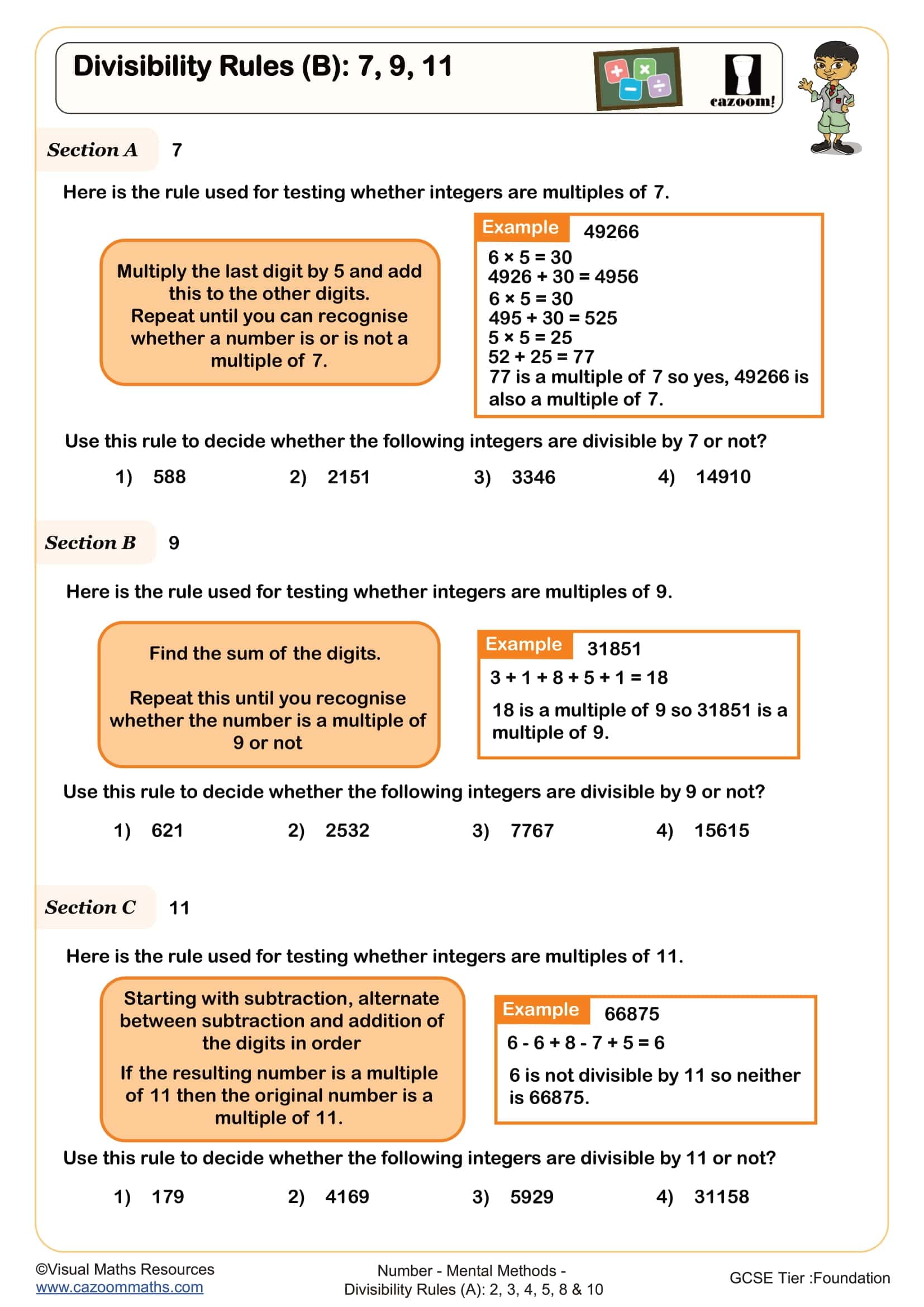
Divisibility Rules (B): 7, 9, 11
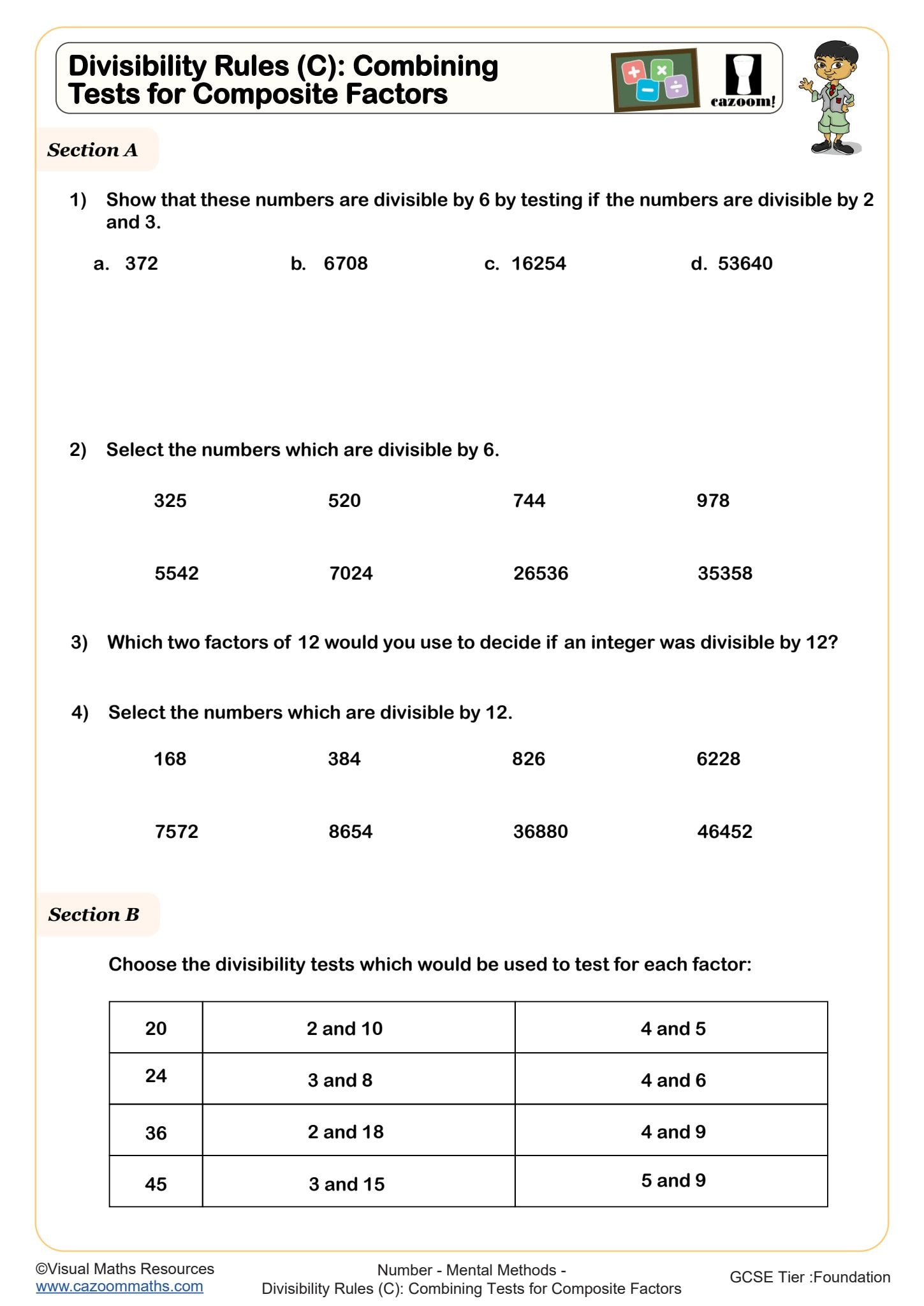
Divisibility Rules (C): Combining Tests for Composite Factors
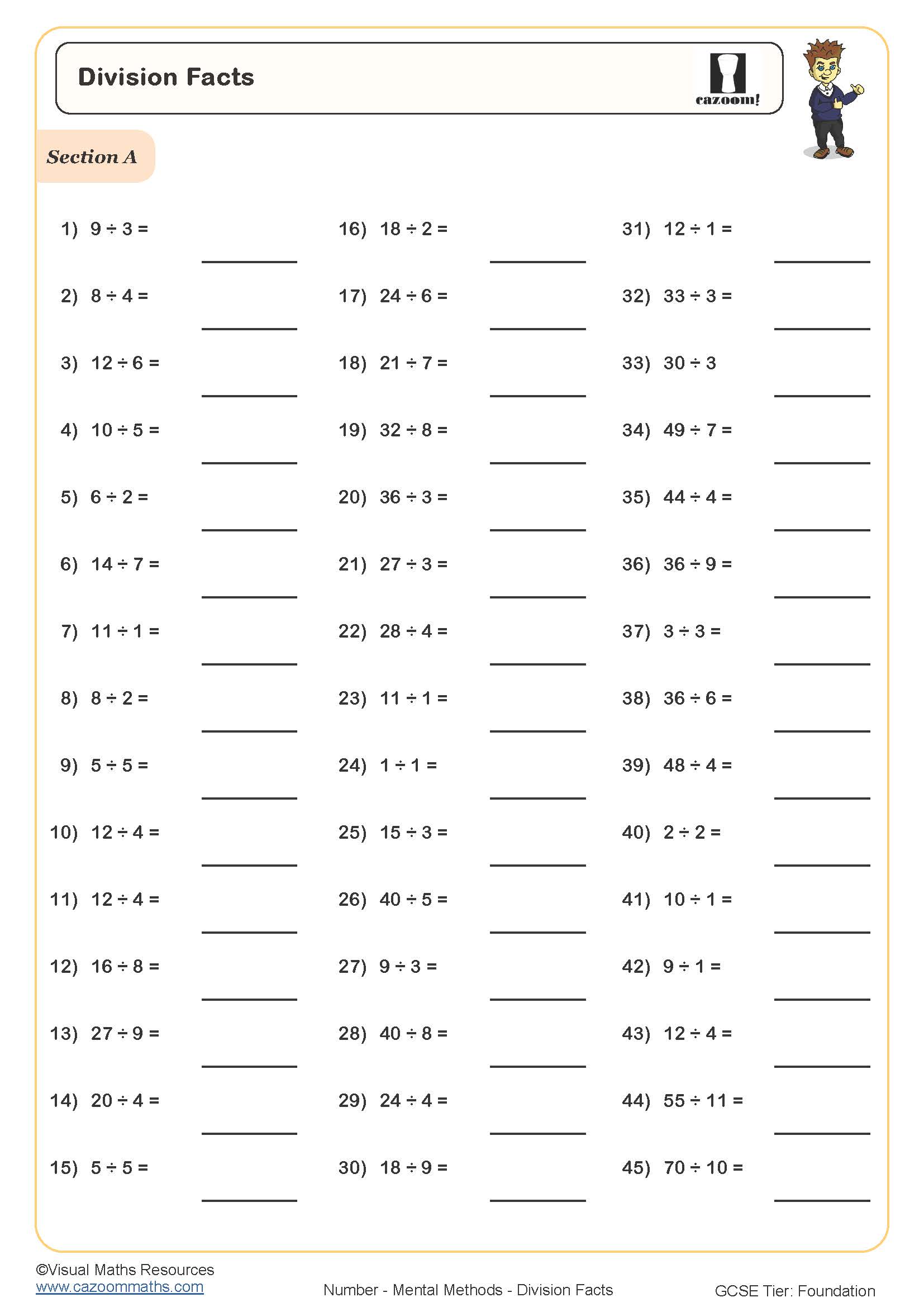
Division Facts
Midpoint of Two Numbers
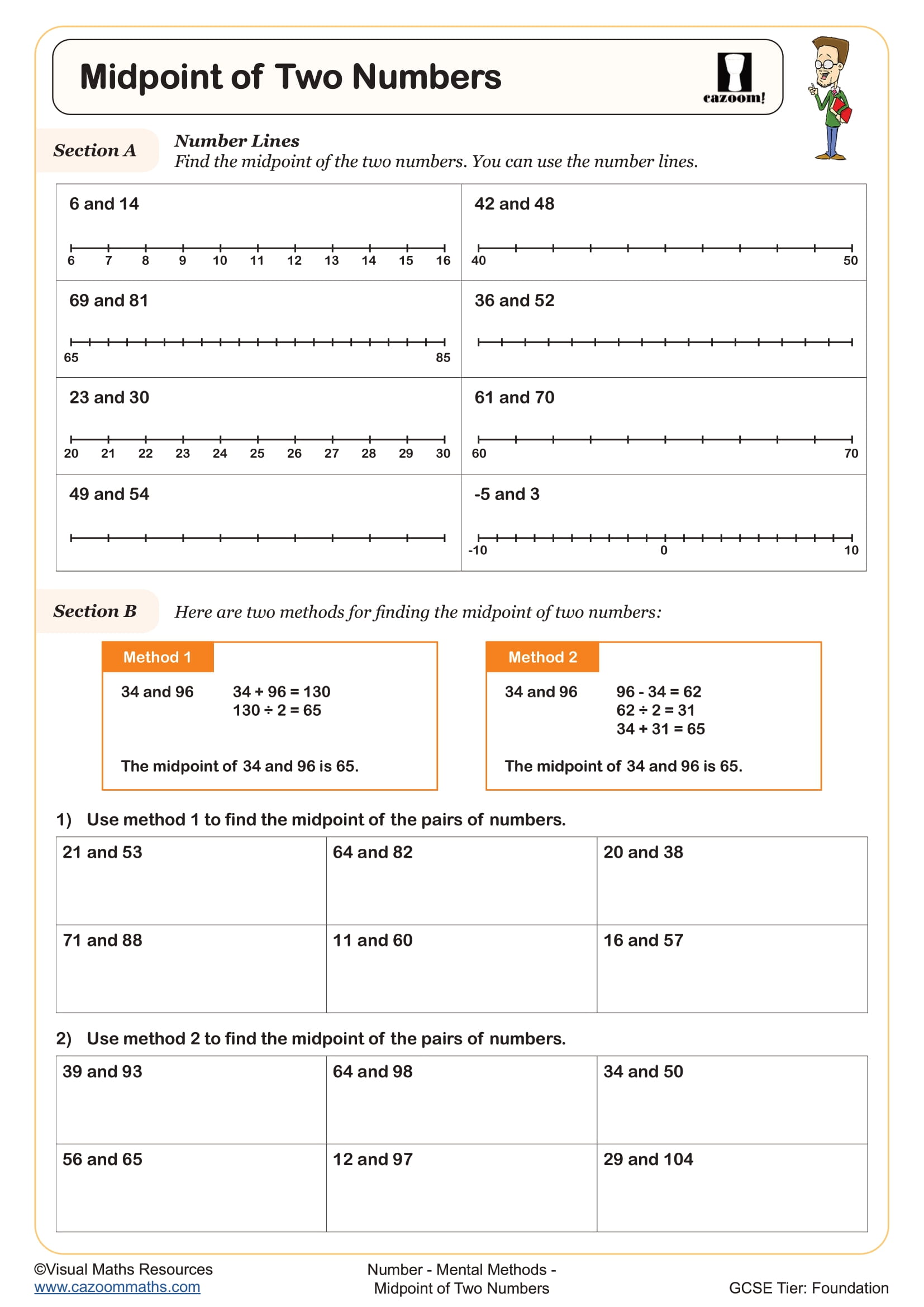
Multiplication Grids
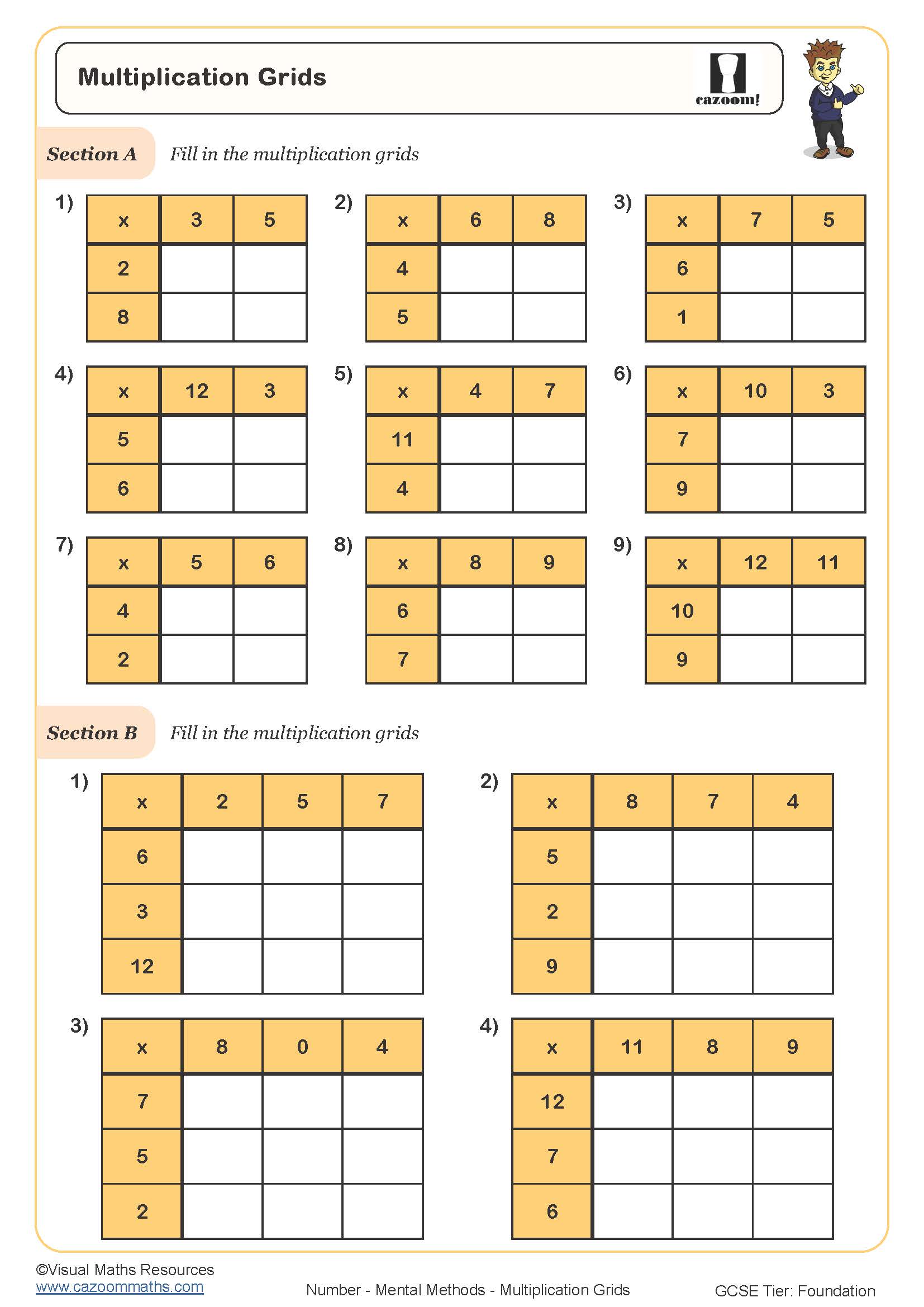
Multiplying by Multiples of Ten
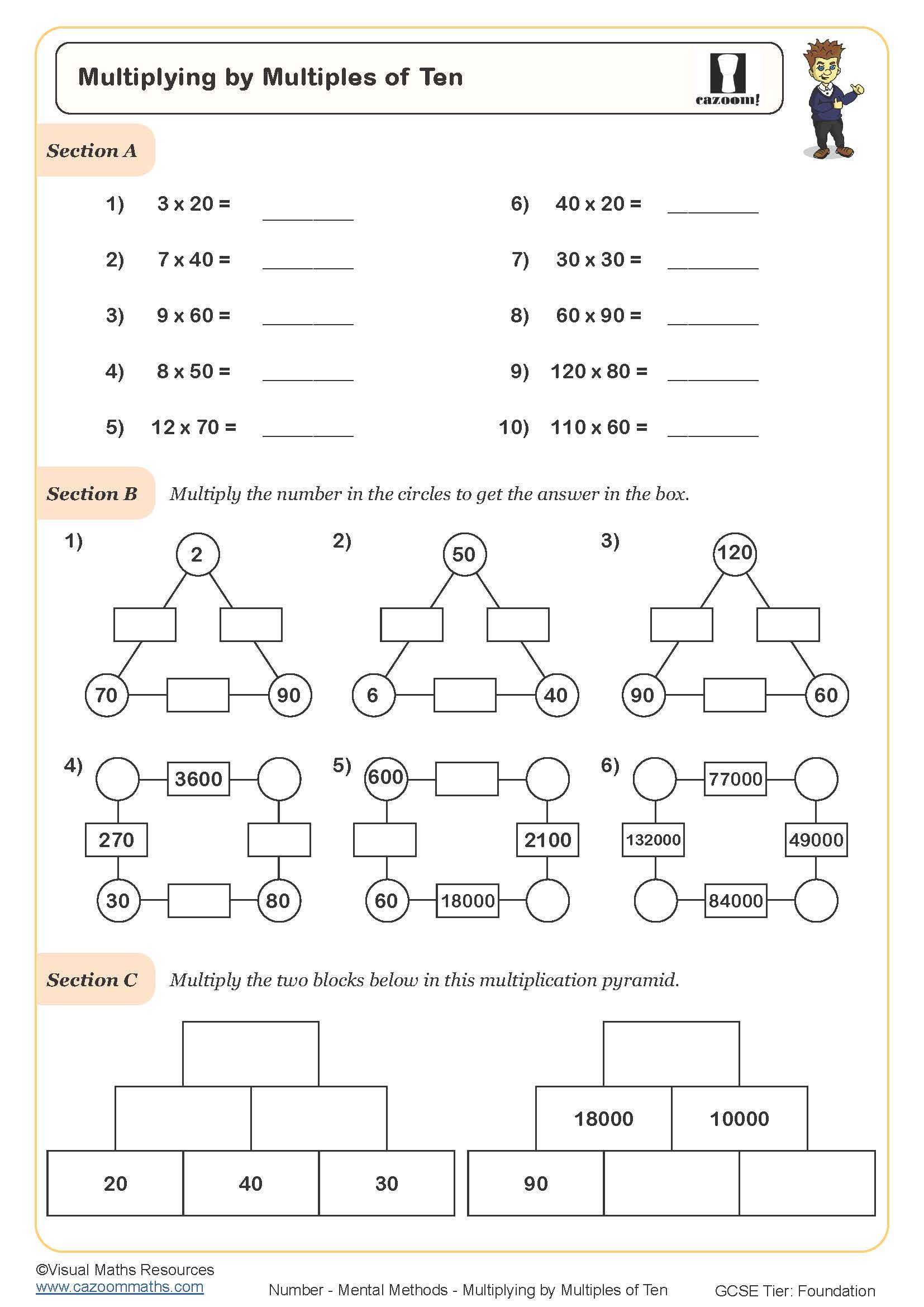
Multiplying by Two Digits Mentally
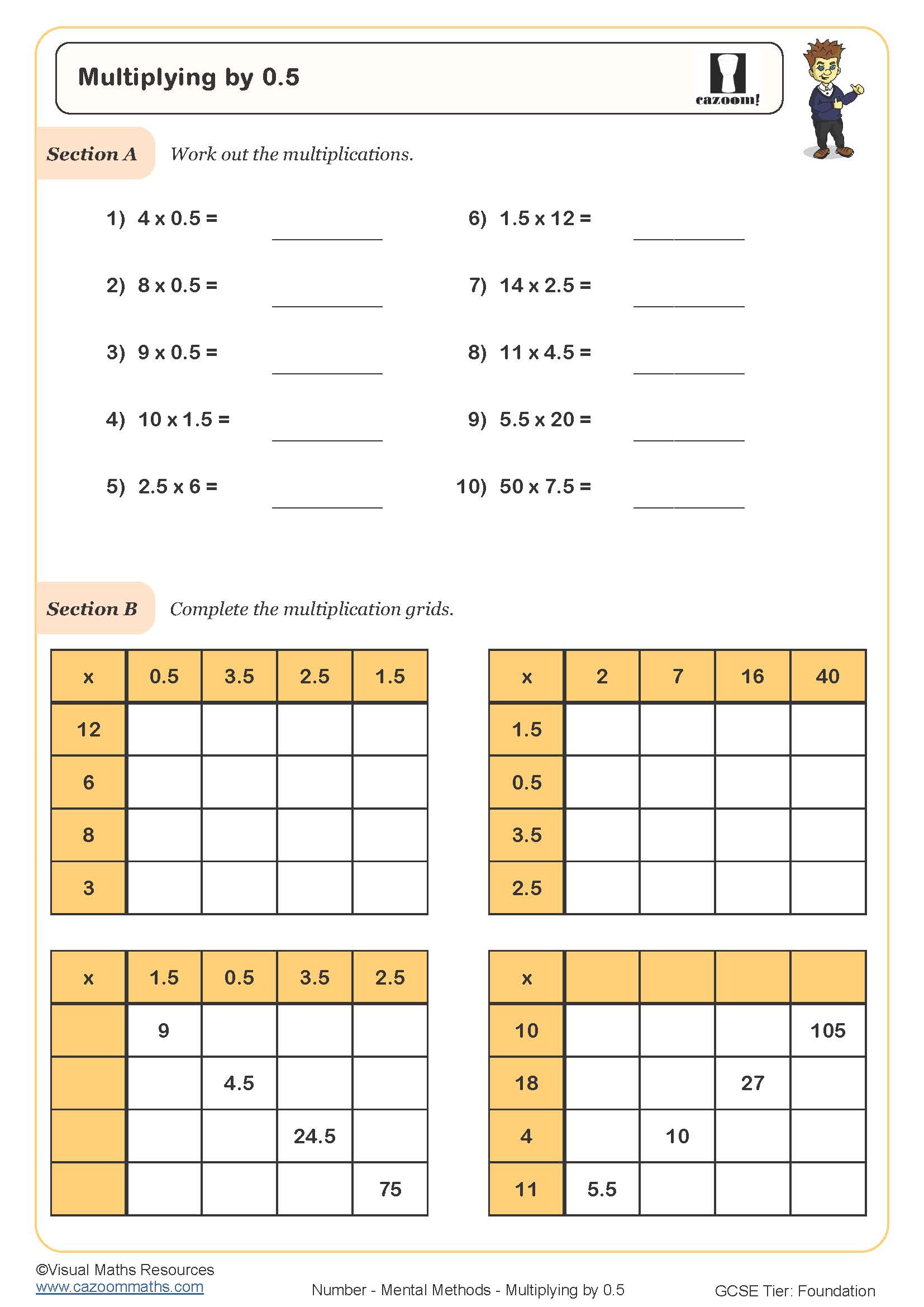
Multiplying by Zero Point Five
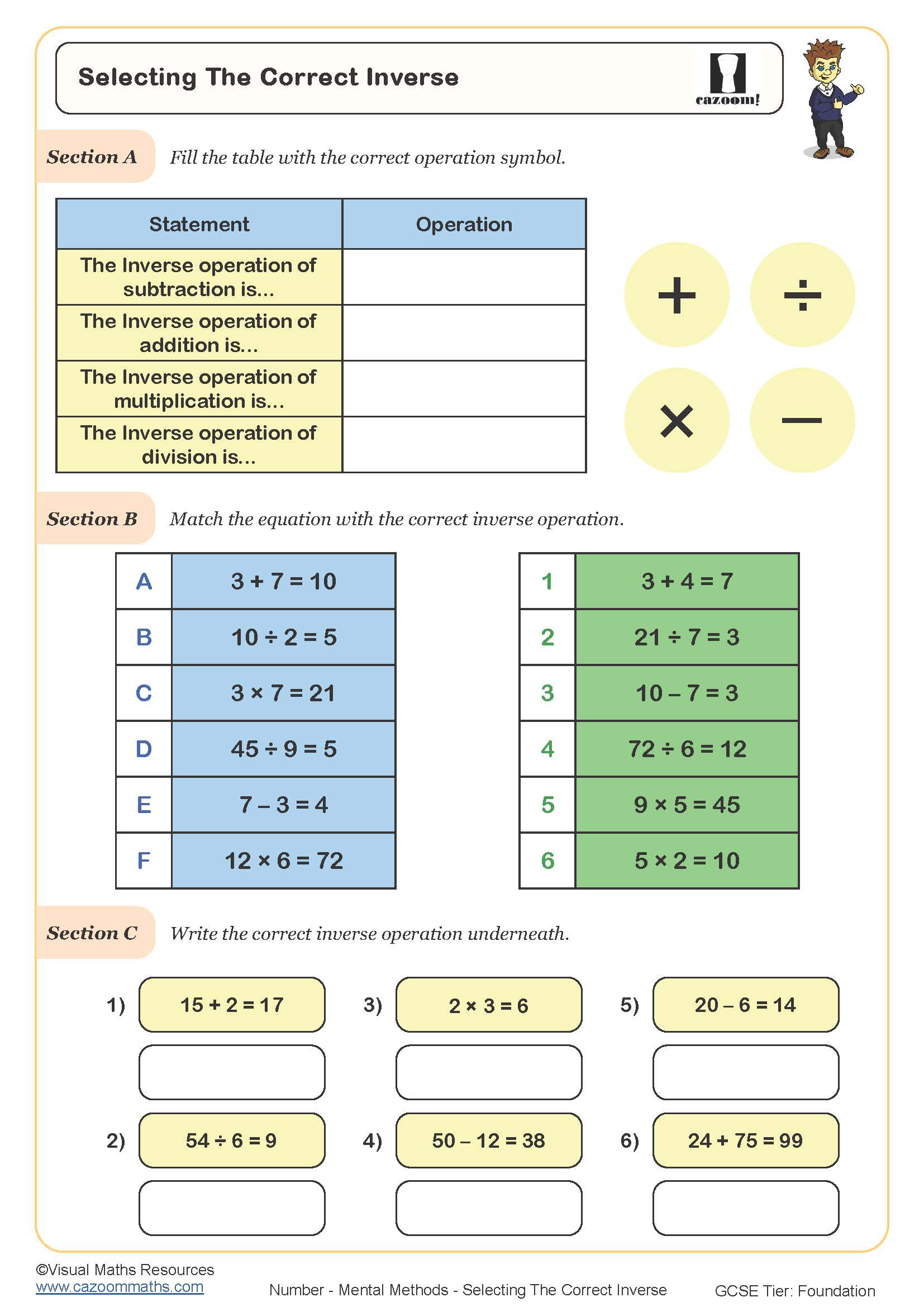
Selecting the Correct Inverse
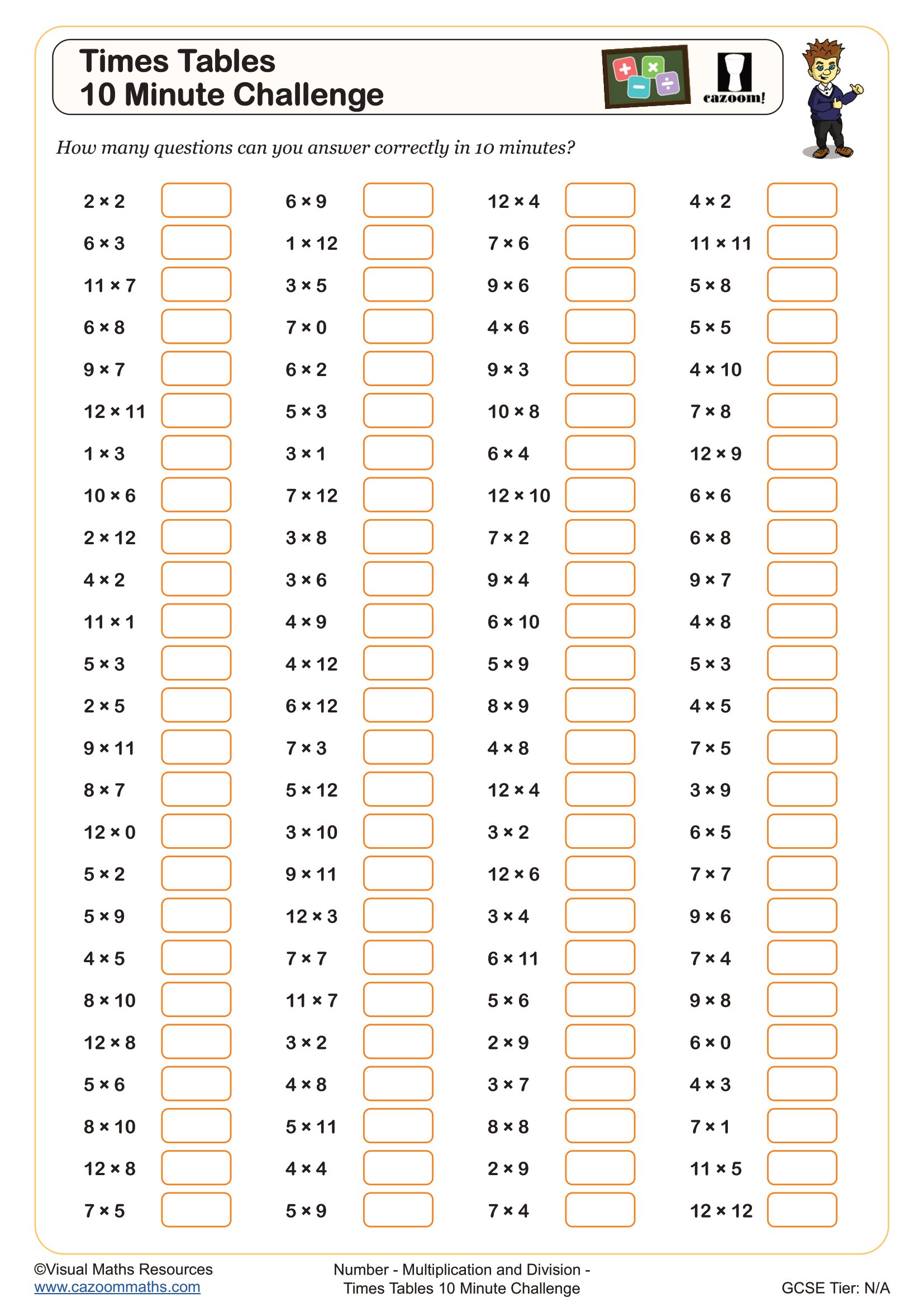
Times Tables 10 minute Challenge
All worksheets are created by the team of experienced teachers at Cazoom Maths.
What should year 7 maths worksheets include for mental methods practice?
Effective year 7 maths worksheets should cover the core mental strategies outlined in the KS3 National Curriculum, including using known facts to derive new ones, partitioning numbers, and applying the distributive law mentally. These worksheets typically include calculations involving decimals, fractions, and percentages that students can solve without written algorithms.
Maths teachers frequently observe that students need structured practice moving from concrete examples to abstract problems. Mental maths worksheets work best when they present calculations in contexts where mental methods are genuinely more efficient than written ones, such as finding 15% of £80 or calculating 47 × 9 using compensation strategies.
How do Year 7 mental maths skills differ from primary school methods?
Year 7 mental maths extends primary school foundations by introducing more sophisticated strategies and larger numbers. Students begin working with negative numbers, more complex decimals, and percentage calculations that require multiple steps. The emphasis shifts from basic recall to flexible thinking and strategy selection.
Secondary teachers notice that many students initially struggle to adapt their primary mental methods to work with directed numbers and algebraic thinking. Year 7 worksheets bridge this gap by providing structured practice that builds on familiar strategies while introducing the mathematical reasoning skills needed for GCSE success.
Which estimation strategies should Year 7 students master?
Year 7 students should develop estimation skills for all four operations, including rounding to appropriate degrees of accuracy and using approximation to check answers. Key strategies include rounding to significant figures, using compatible numbers, and front-end estimation for multi-step calculations.
Maths year 7 worksheets often reveal that students over-rely on calculators for estimation rather than developing number sense. Teachers find that students who master estimation techniques in Year 7 show greater confidence in problem-solving throughout KS3, as they can quickly assess whether their answers are reasonable before detailed calculations.
How can teachers use these mental maths worksheets most effectively?
Teachers achieve best results by using these worksheets as starter activities or focused practice sessions rather than entire lessons. The key is selecting specific strategies that match current learning objectives and providing time for students to explain their mental methods to develop mathematical reasoning.
Experienced KS3 teachers often use these year 7 worksheets diagnostically, identifying which students need additional support with particular strategies. The answer sheets enable quick marking and immediate feedback, while the PDF format allows teachers to project questions for whole-class discussion of different mental approaches to the same calculation.