Year 7 Negative Numbers Worksheets
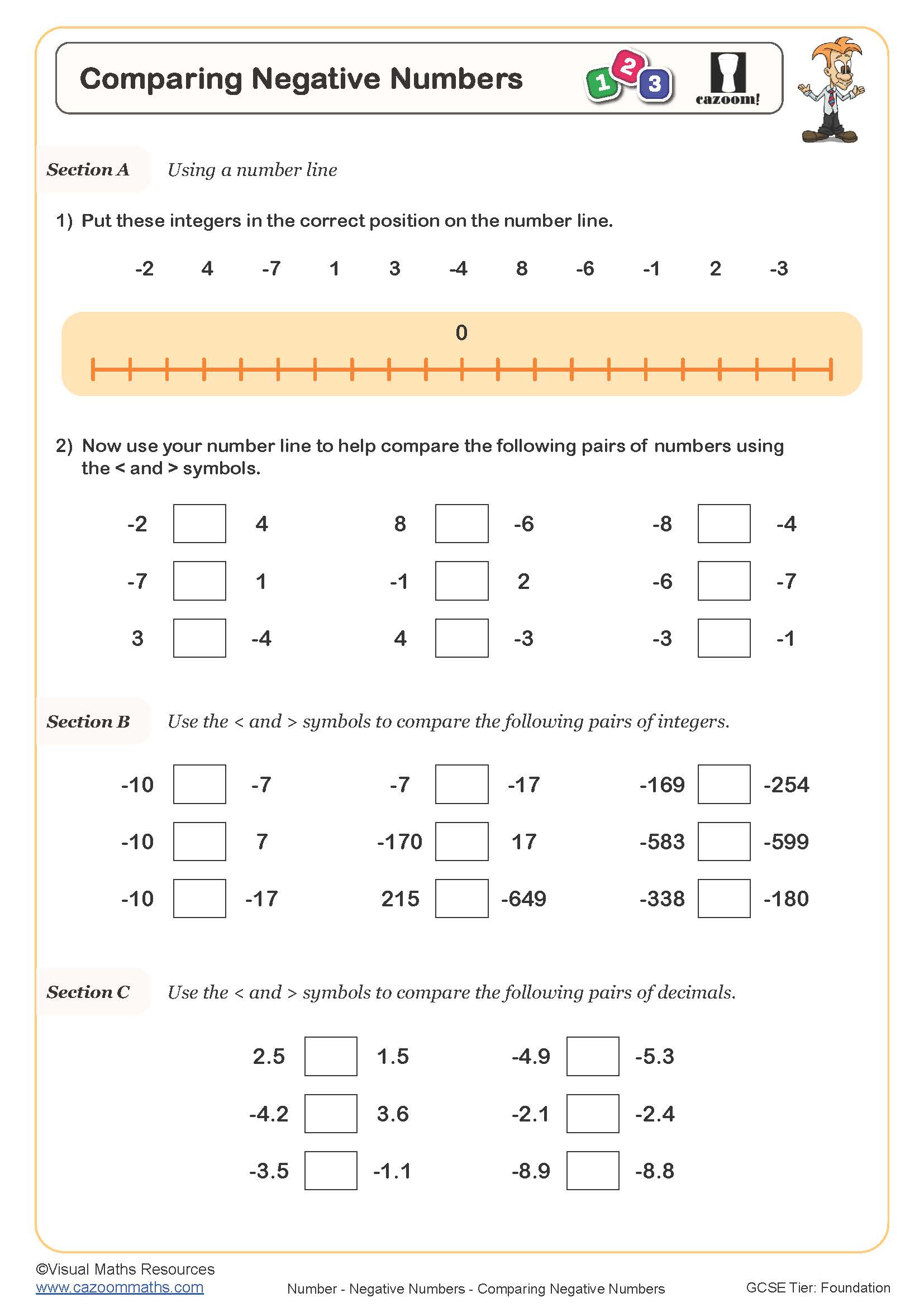
Calculations Crossing Zero (A)
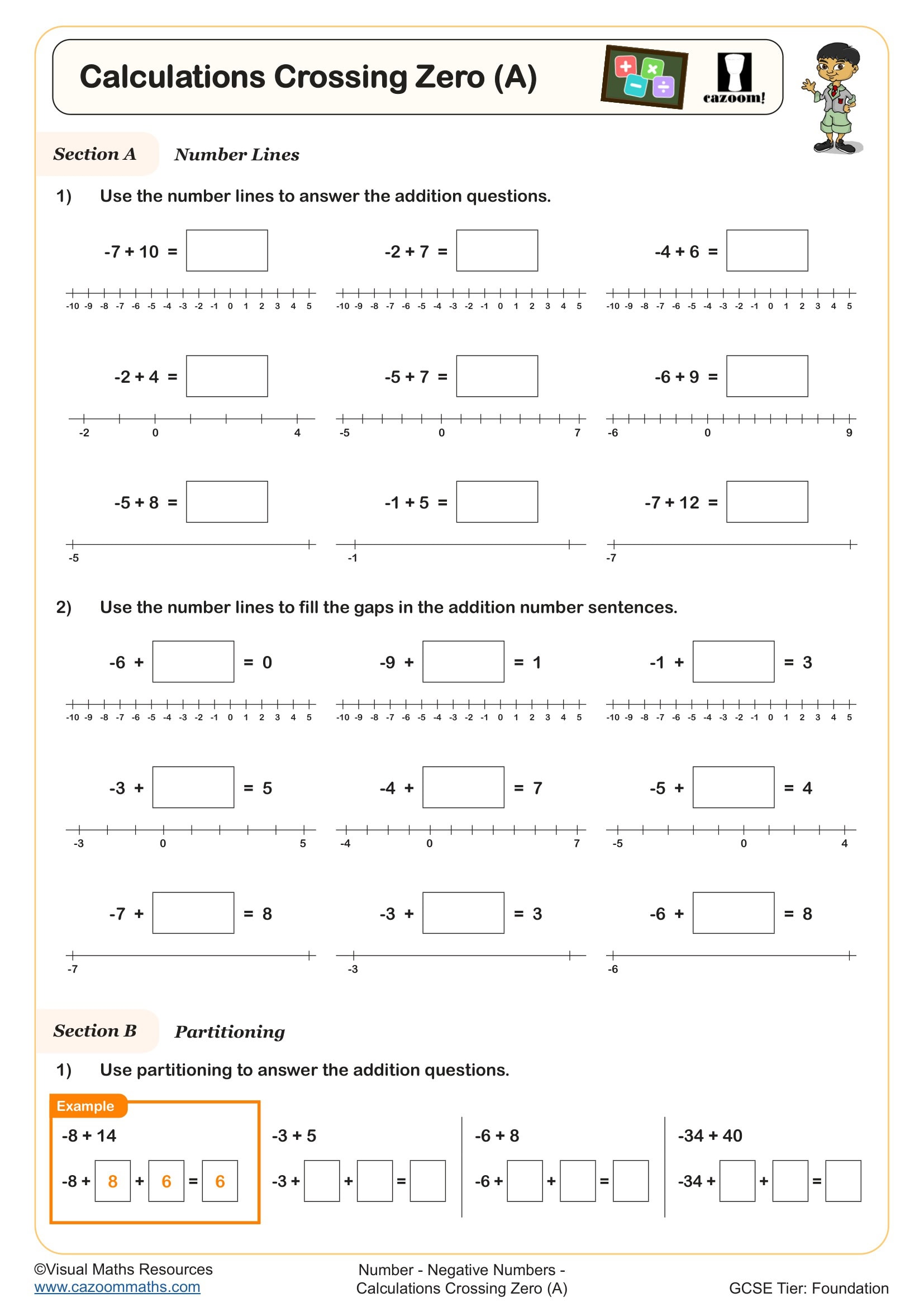
Calculations Crossing Zero (B)
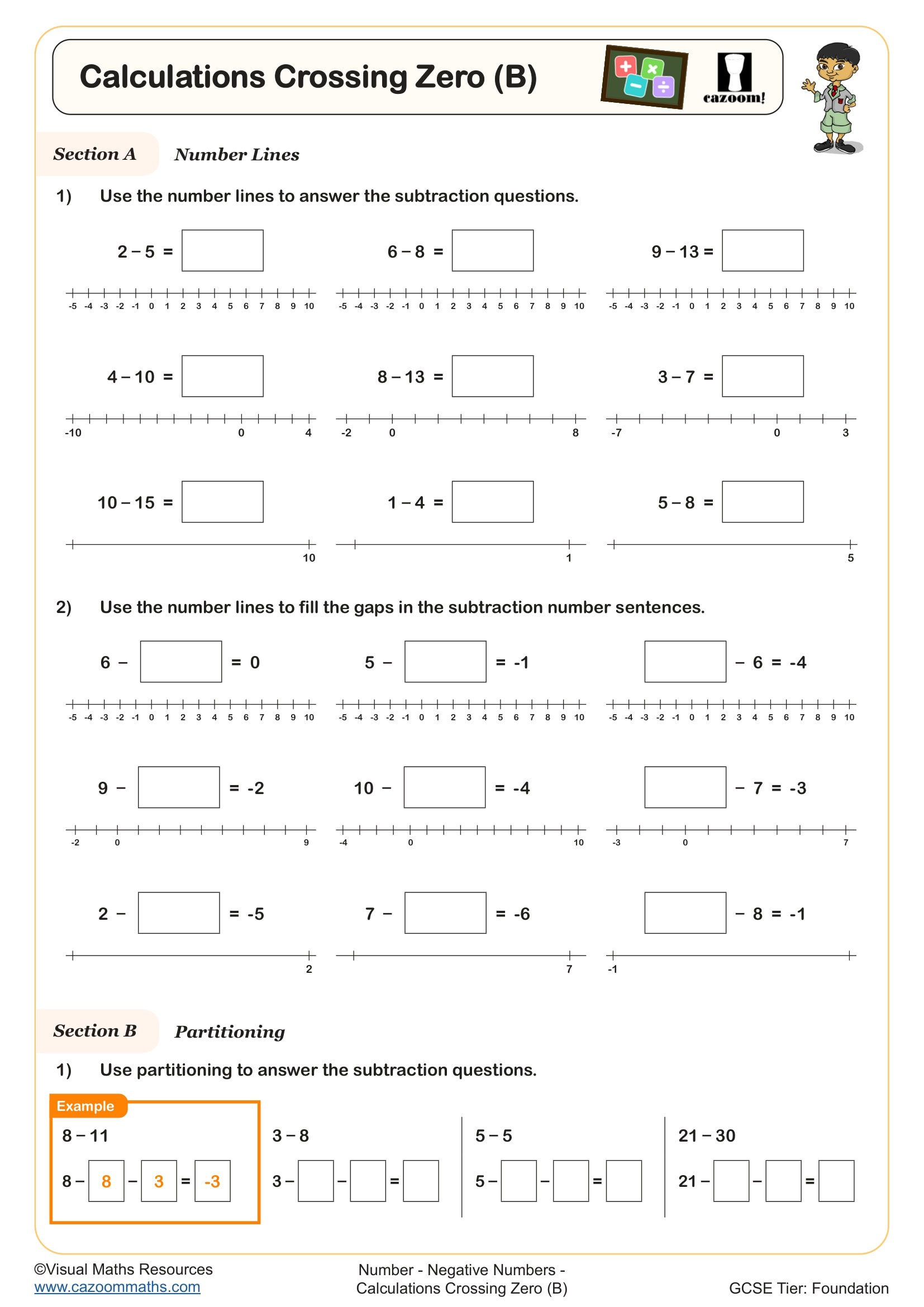
Calculations Crossing Zero (C)
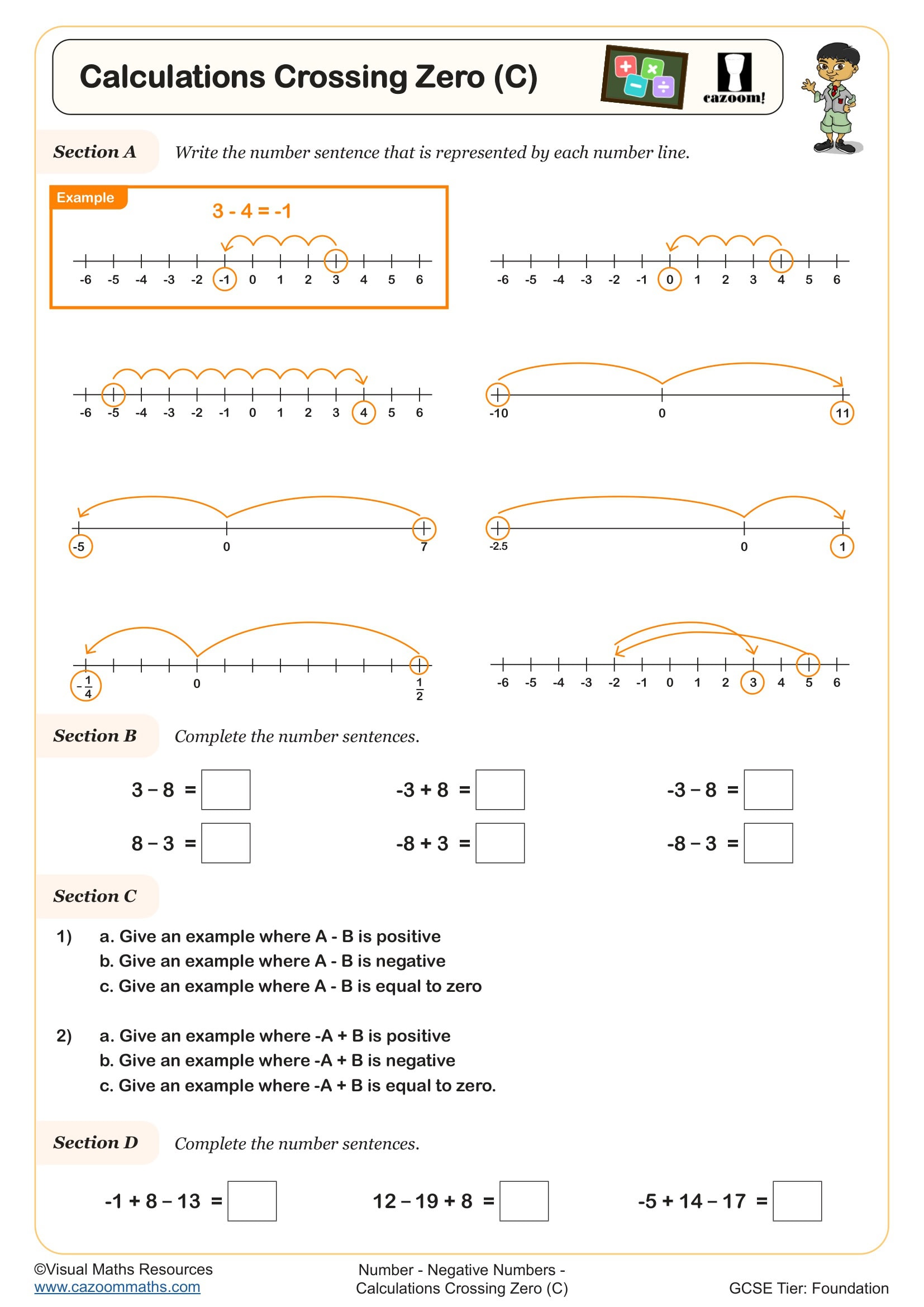
Comparing Negative Numbers
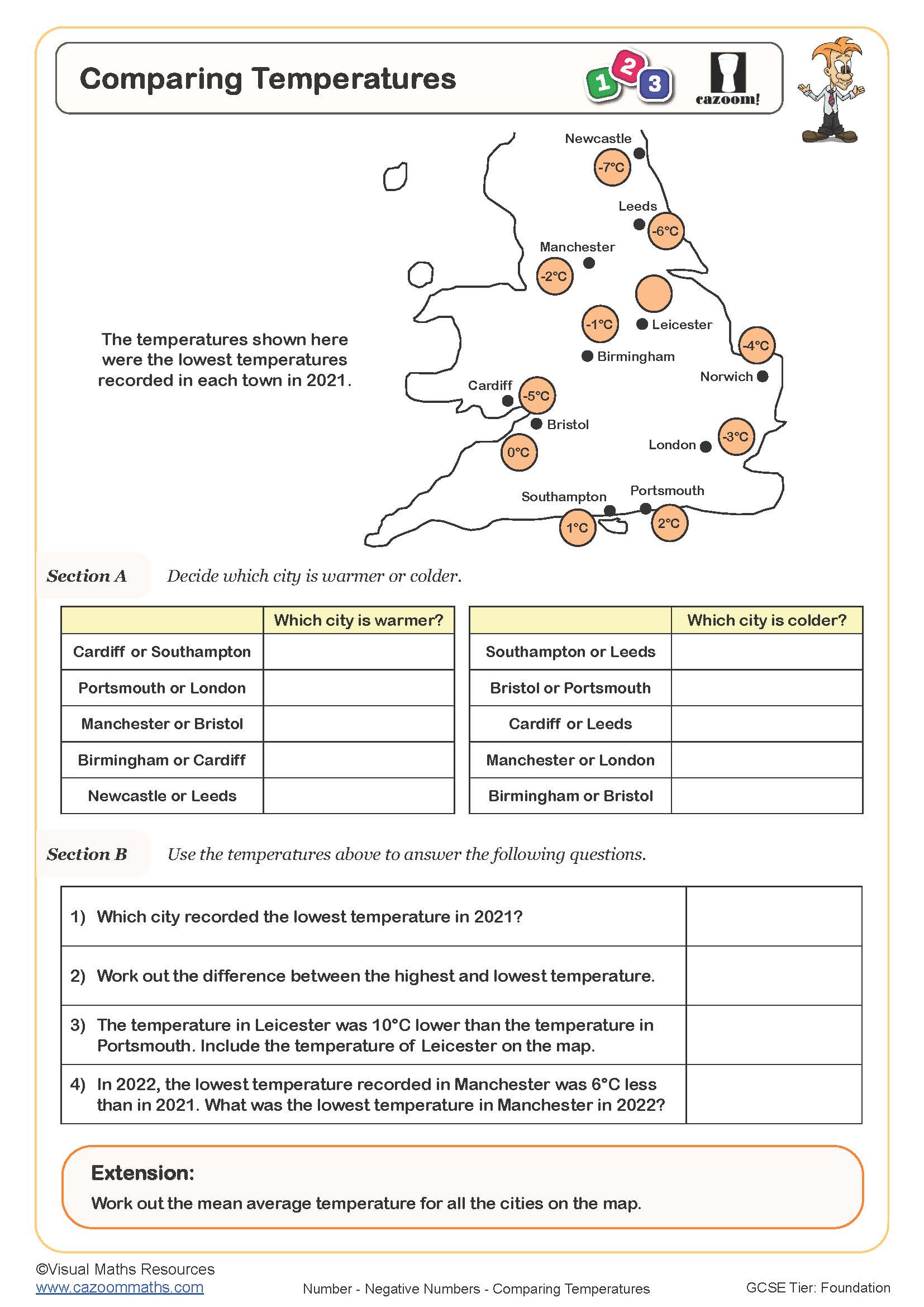
Comparing Temperatures
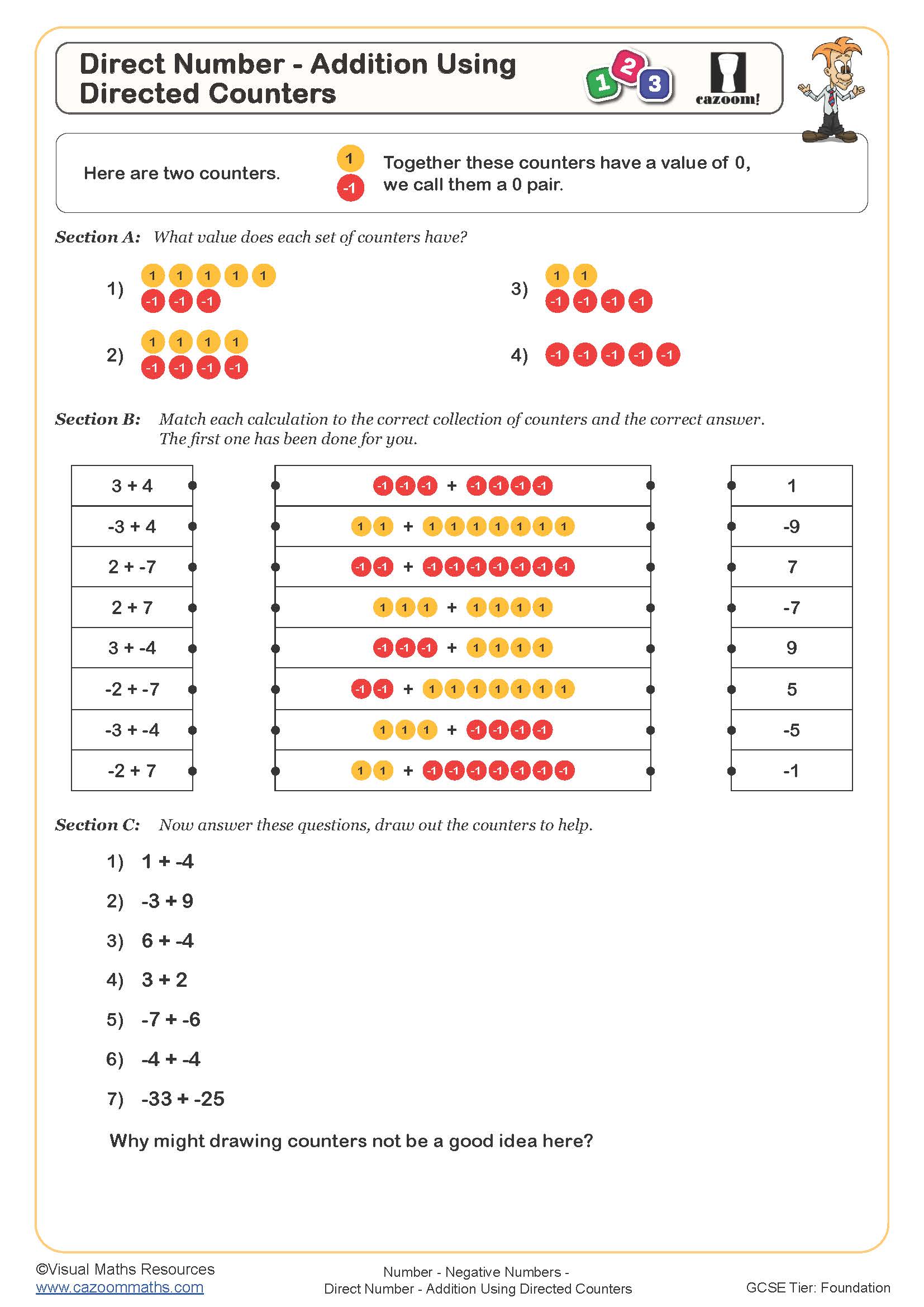
Directed Number - Addition Using Directed Counters
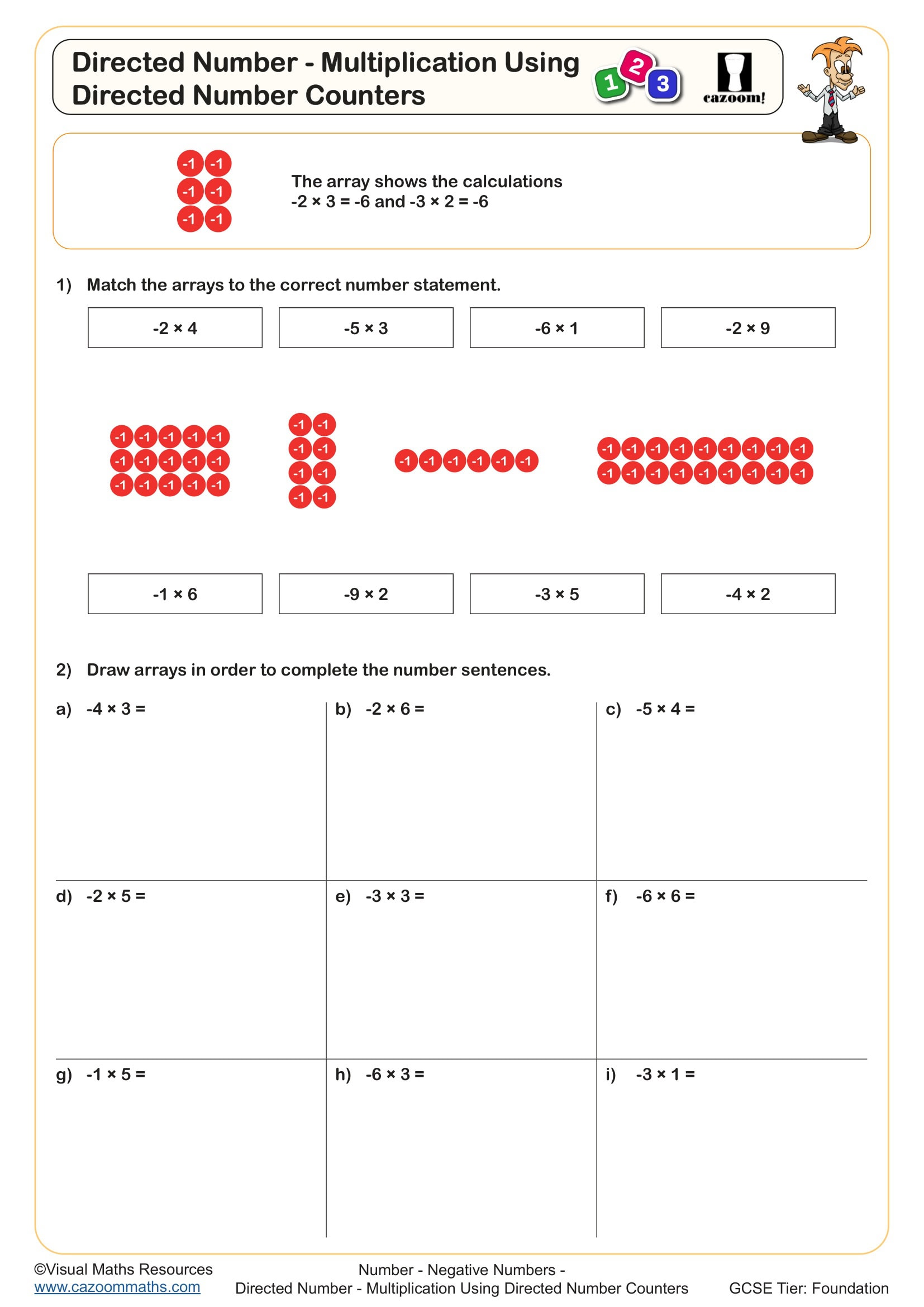
Directed Number - Multiplication Using Directed Number Counters
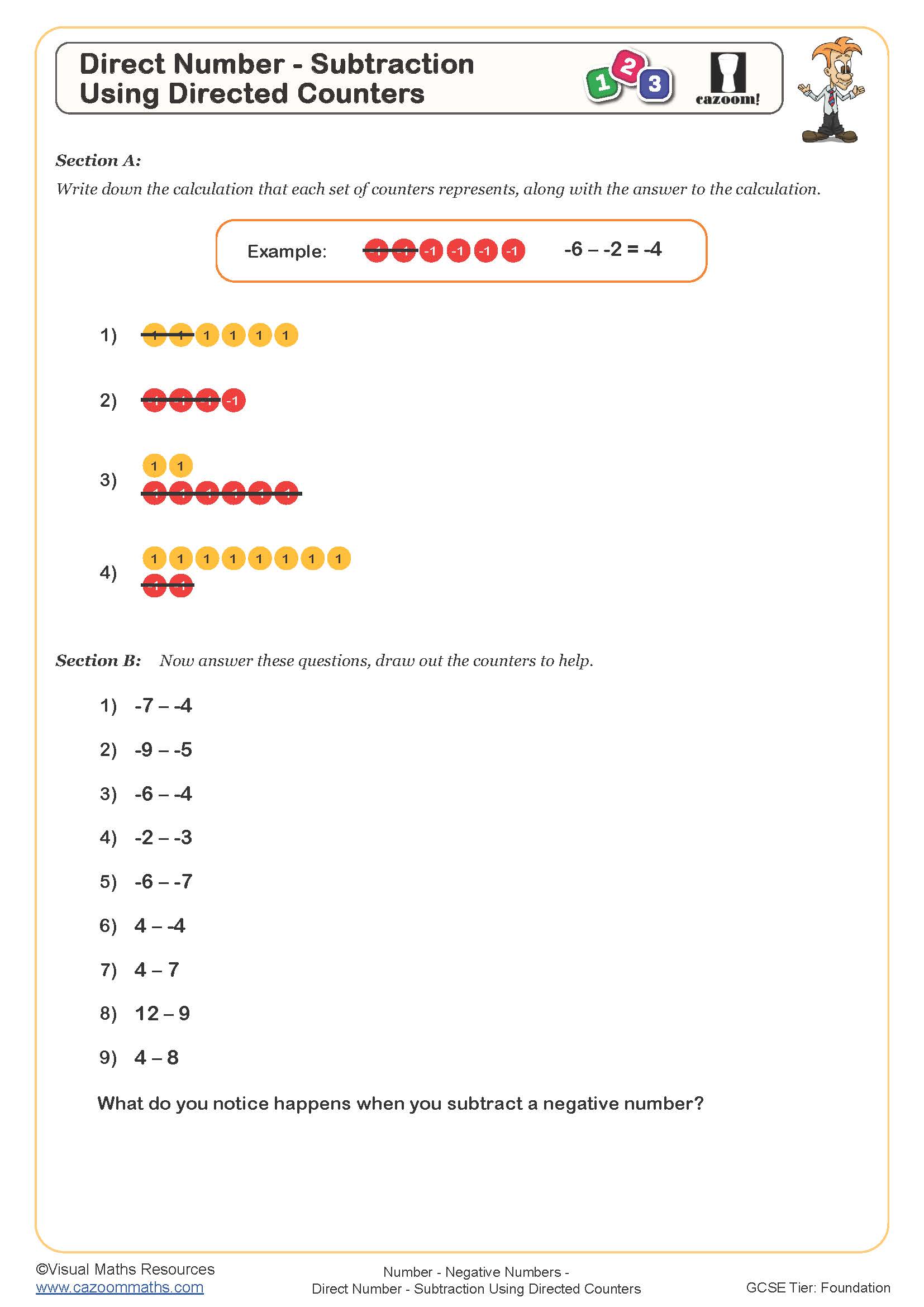
Directed Number - Subtraction Using Directed Counters
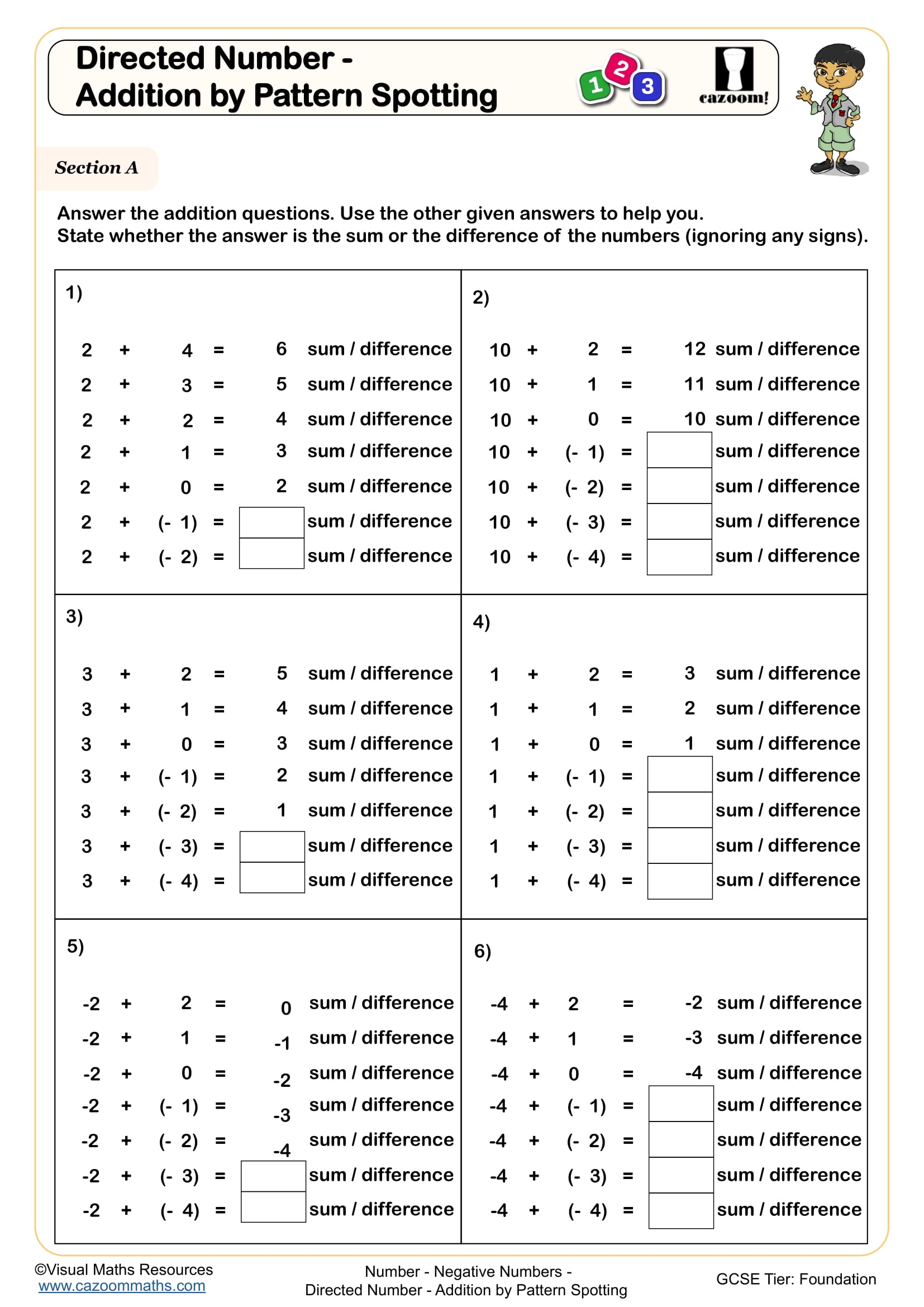
Directed Number – Addition by Pattern Spotting
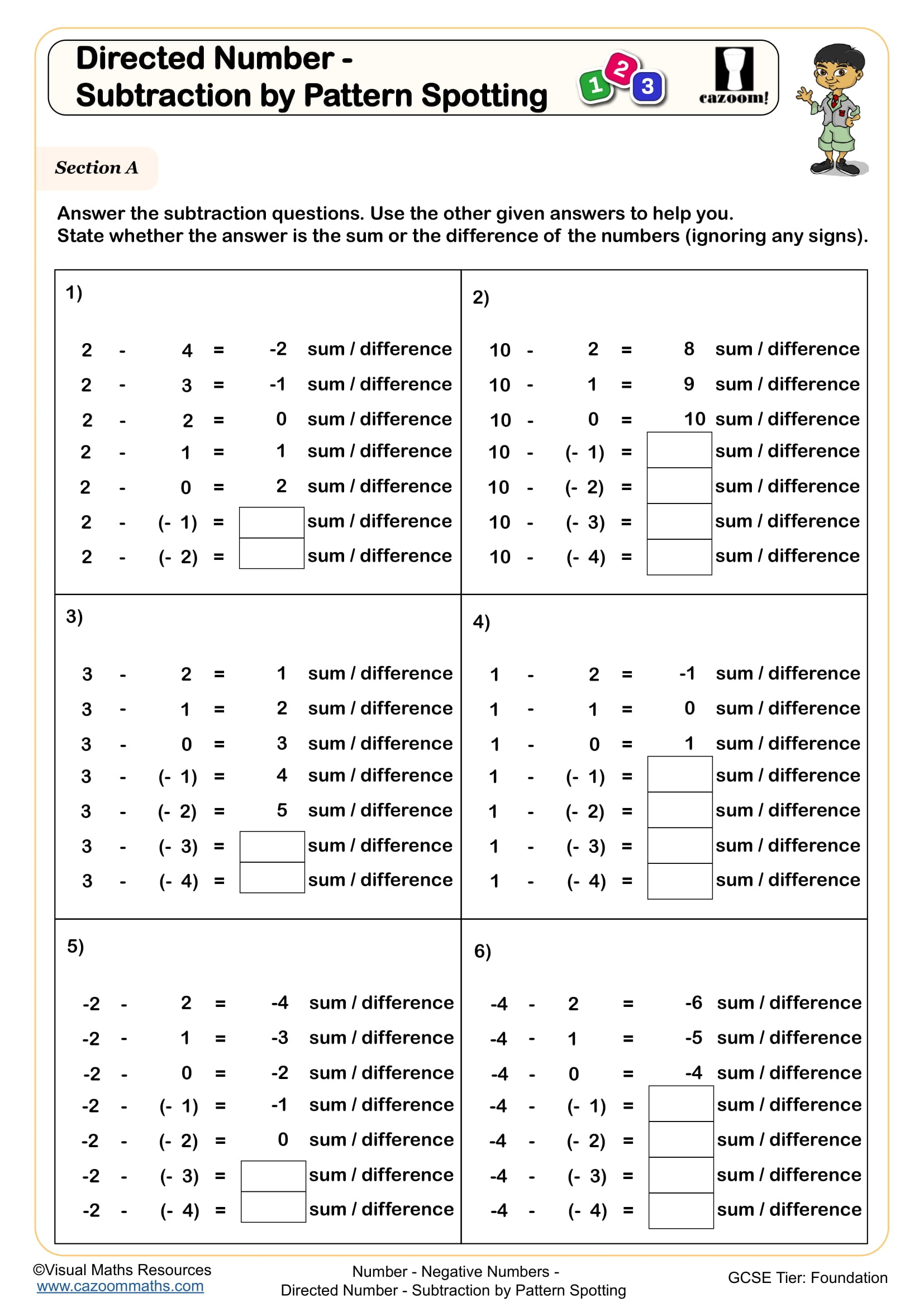
Directed Number – Subtraction by Pattern Spotting
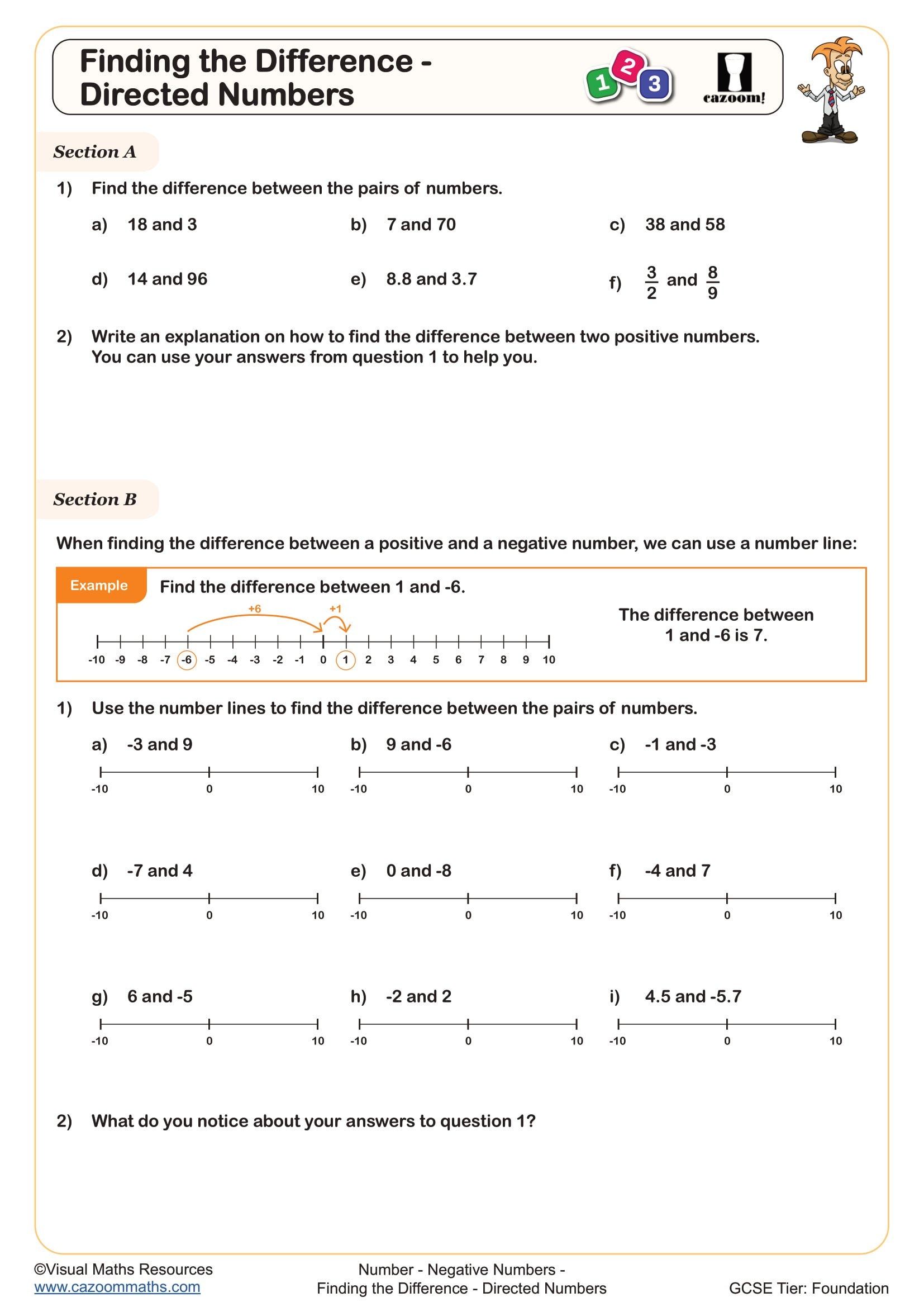
Finding the Difference - Directed Numbers
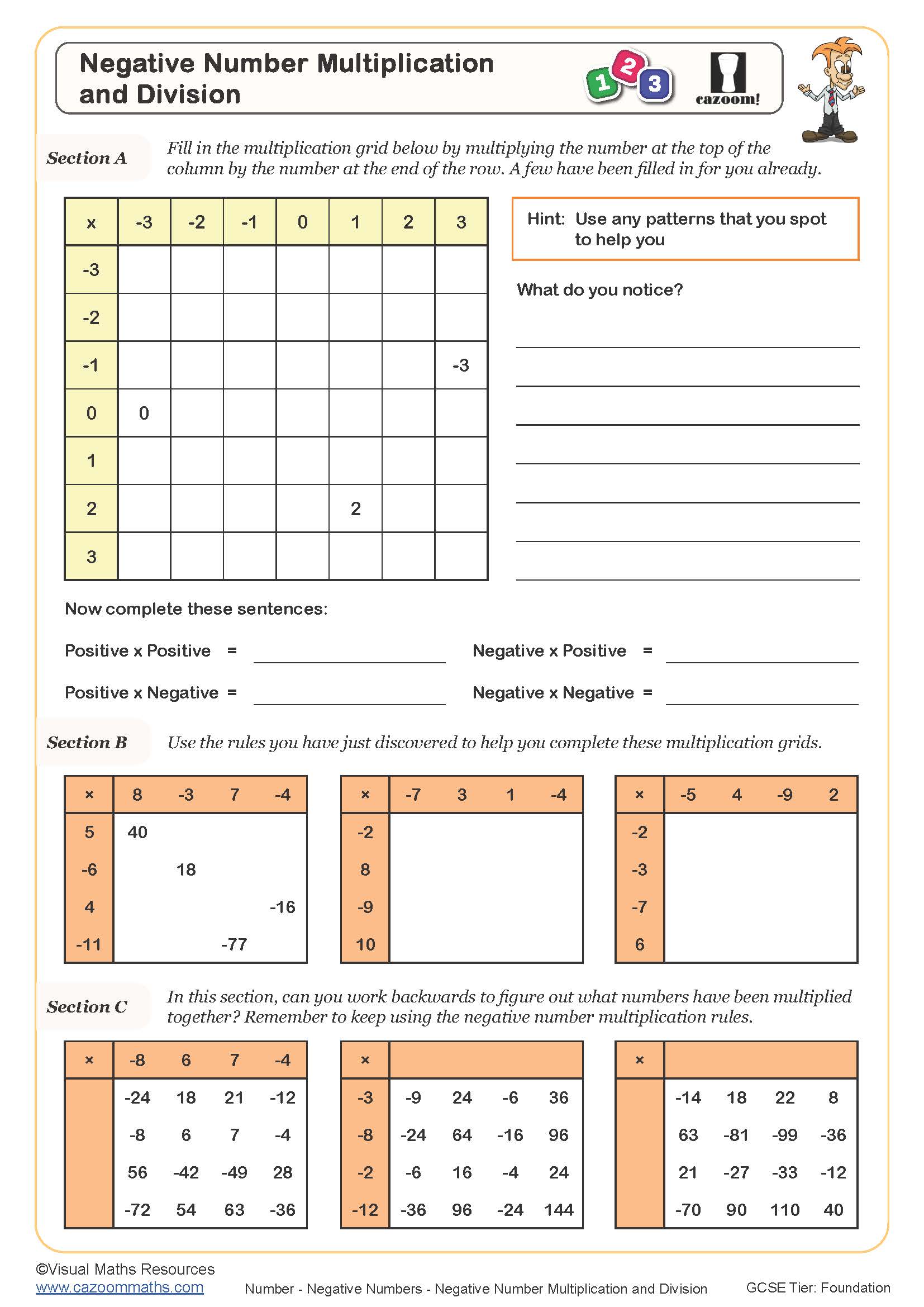
Negative Number Multiplication and Division
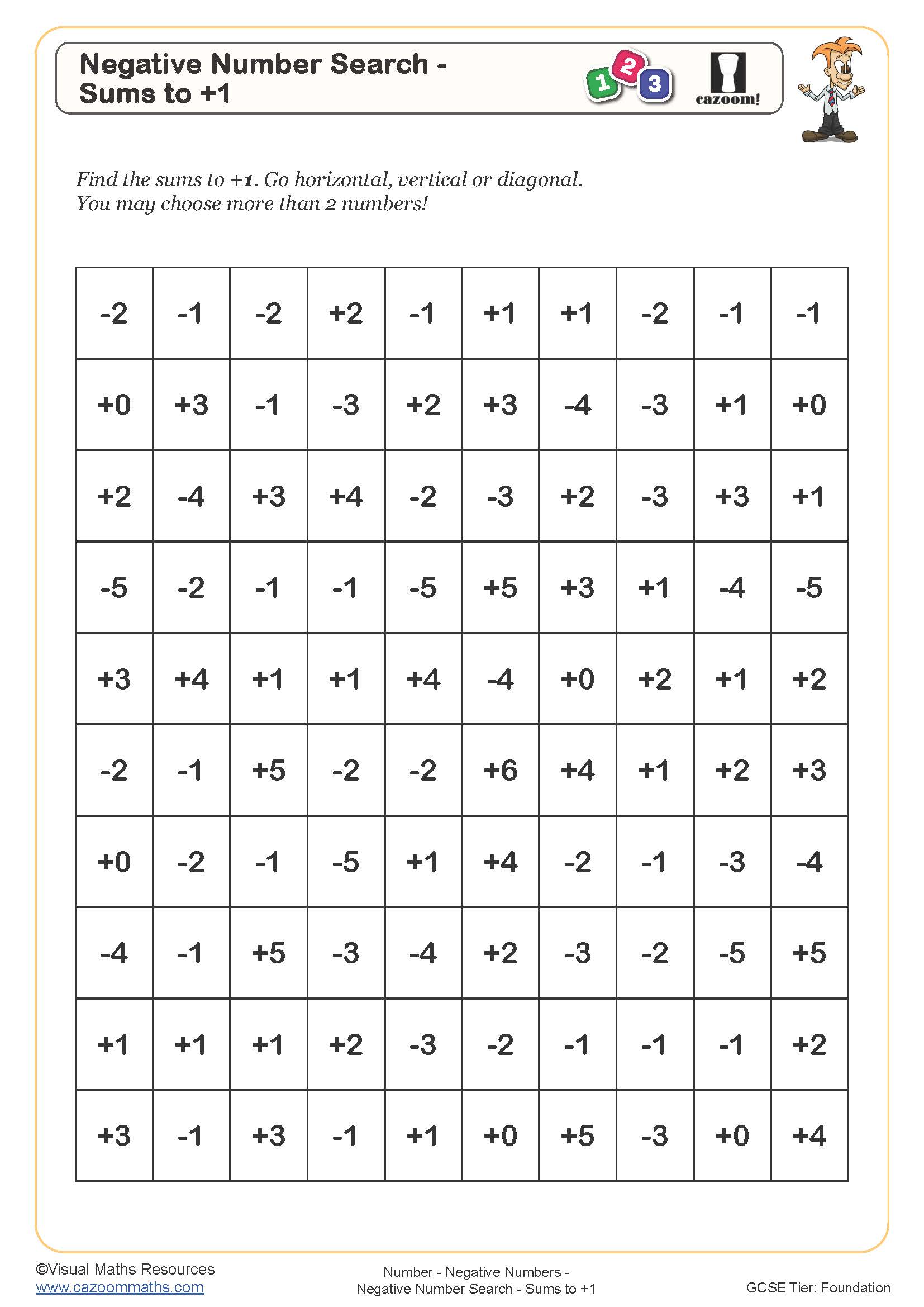
Negative number search - sums to +1
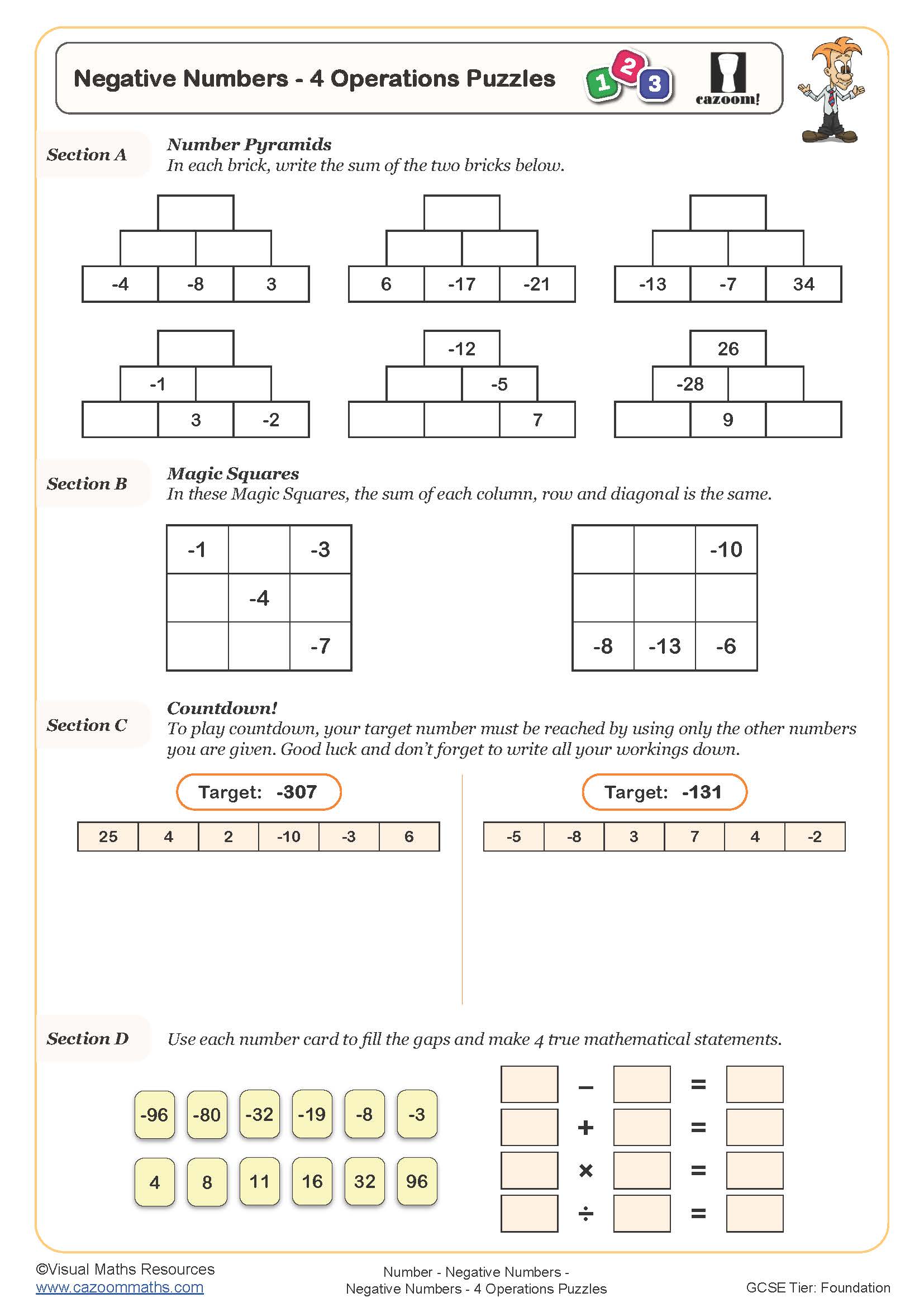
Negative Numbers - 4 Operations Puzzles
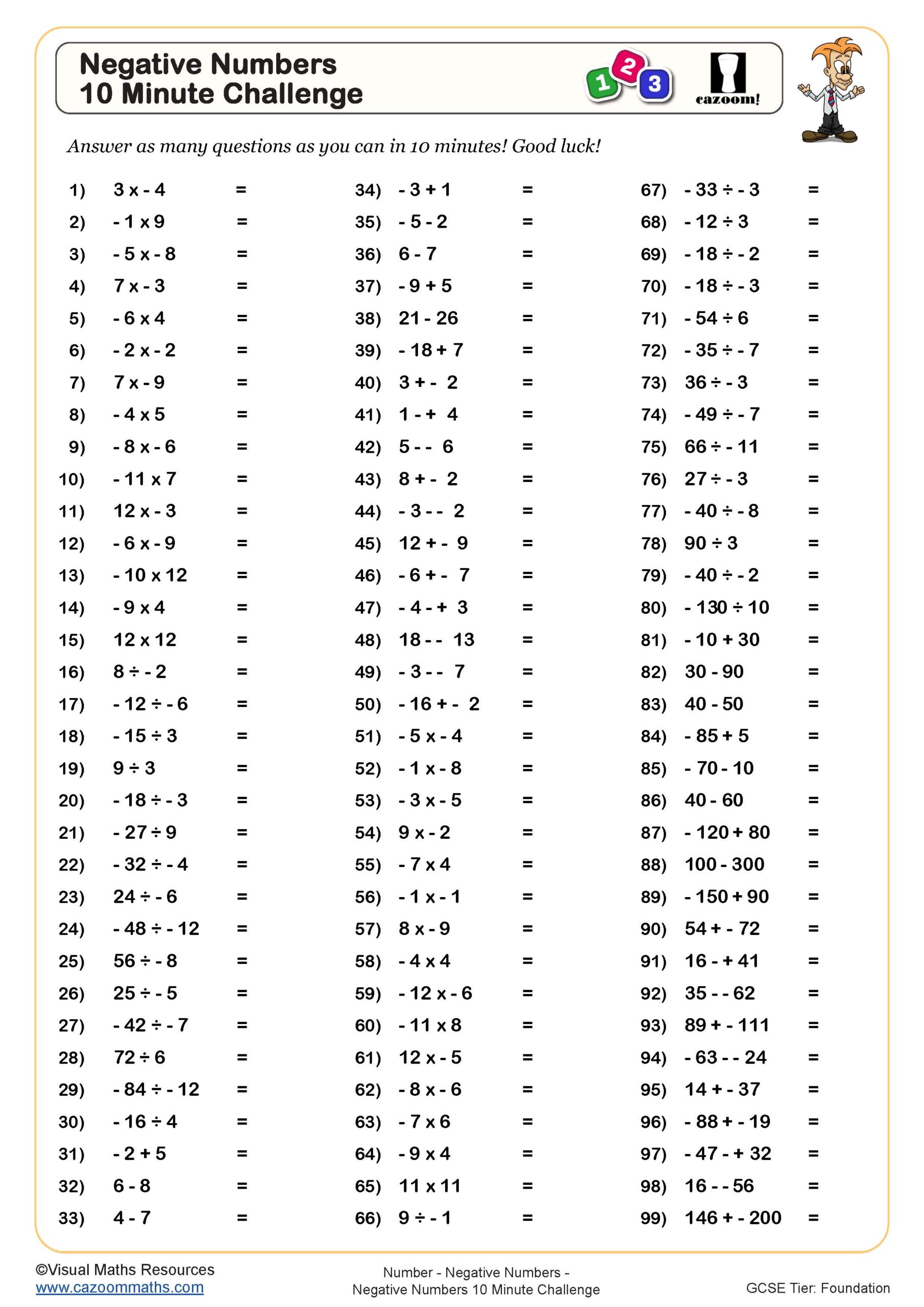
Negative Numbers 10 Minute Challenge
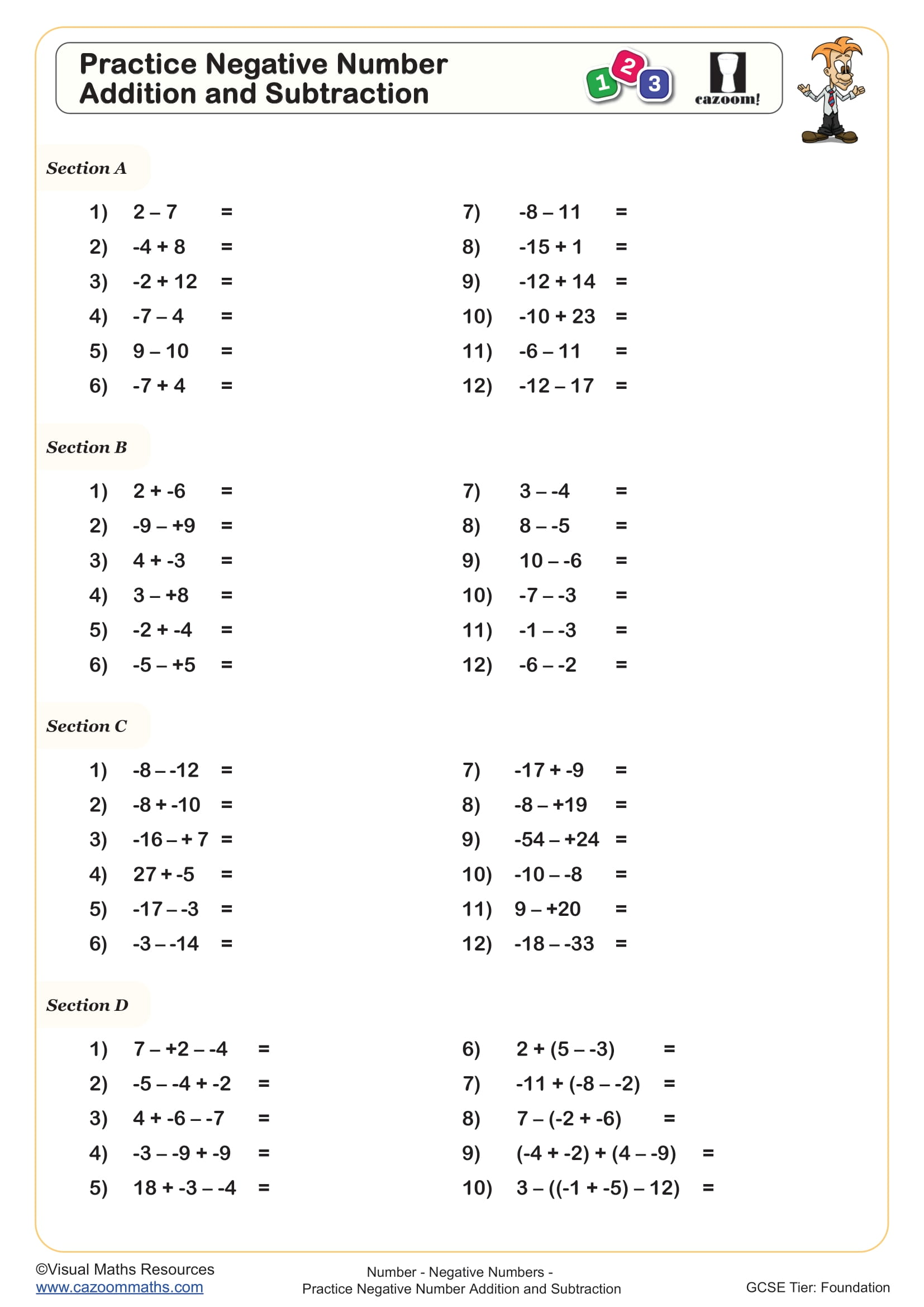
Practice Negative Number Addition and Subtraction
Representing Numbers - Using Directed Counters
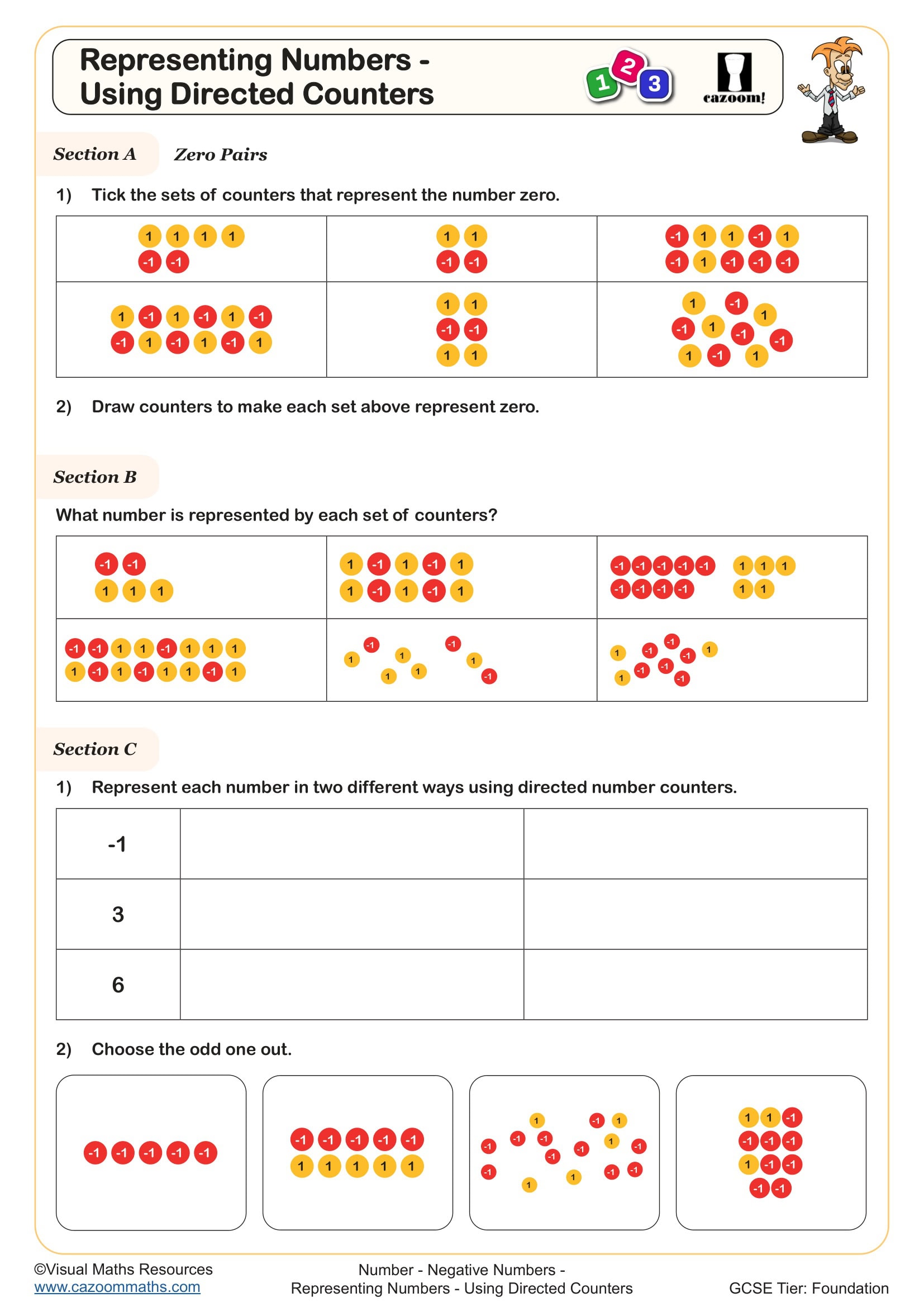
All worksheets are created by the team of experienced teachers at Cazoom Maths.
What makes an effective negative numbers worksheet for Year 7 students?
An effective year 7 negative numbers worksheet combines clear progression from concrete to abstract concepts, starting with number line representations before moving to purely numerical calculations. The most successful resources include varied question types that address ordering, comparing, and all four operations with directed numbers, matching the National Curriculum expectations for Key Stage 3.
Teachers consistently find that worksheets mixing different operation types within the same exercise help students avoid developing rigid procedural approaches that fail when question formats change. Questions should include real-world contexts like temperature changes and financial transactions, as these concrete applications help students understand why negative number rules work rather than just memorising procedures.
How do negative number skills develop from Year 6 to Year 8?
Students typically encounter negative numbers briefly in Year 6 through temperature and coordinate work, but Year 7 marks the first systematic study of directed numbers as mathematical objects. The progression moves from recognising and ordering negative numbers to performing calculations, with Year 8 building towards algebraic applications and more complex problem-solving contexts.
Many teachers notice that students who struggled with negative numbers in Year 7 often experience renewed success when the same concepts reappear in algebraic contexts during Year 8. This suggests that multiple exposures to negative number concepts through different mathematical lenses strengthens understanding, making regular practice with varied question types particularly valuable during the foundational Year 7 stage.
Why do students find multiplying and dividing negative numbers particularly challenging?
Multiplication and division of negative numbers often proves most difficult because the rules seem counterintuitive compared to addition and subtraction, where number line models provide clear visual support. Students frequently apply addition rules incorrectly to multiplication, expecting that negative times negative should give negative rather than positive results.
Experienced teachers find that connecting negative number multiplication to familiar patterns helps build understanding. For example, showing how 3 × (-2) = (-6), 2 × (-2) = (-4), 1 × (-2) = (-2), then 0 × (-2) = 0 creates the expectation that (-1) × (-2) = 2. This pattern-based approach often proves more memorable than abstract rule statements for Year 7 students.
How should teachers use negative numbers worksheets to address common misconceptions?
Teachers achieve best results when they use worksheets diagnostically, identifying specific misconceptions through student responses rather than simply marking correct or incorrect answers. Common errors like treating subtraction of negatives as simple addition, or applying incorrect sign rules in multiplication, require targeted intervention rather than general re-teaching.
The most effective approach involves having students explain their reasoning for incorrect answers, then using worksheet problems as starting points for class discussions about why certain methods fail. Teachers often find that peer explanation during worksheet review sessions helps students recognise and correct their own misconceptions more effectively than teacher-led correction alone.