Year 7 Percentages Worksheets
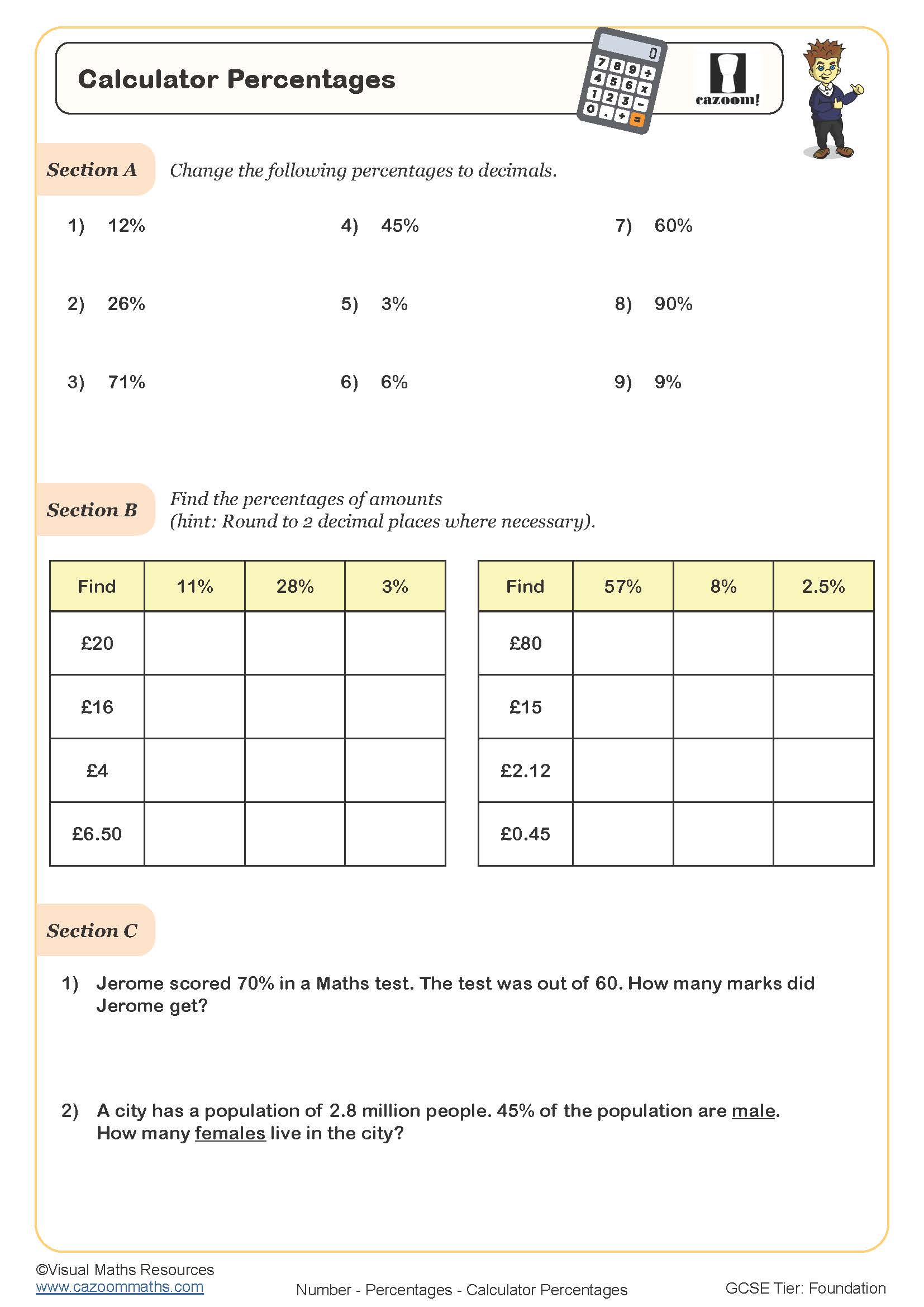
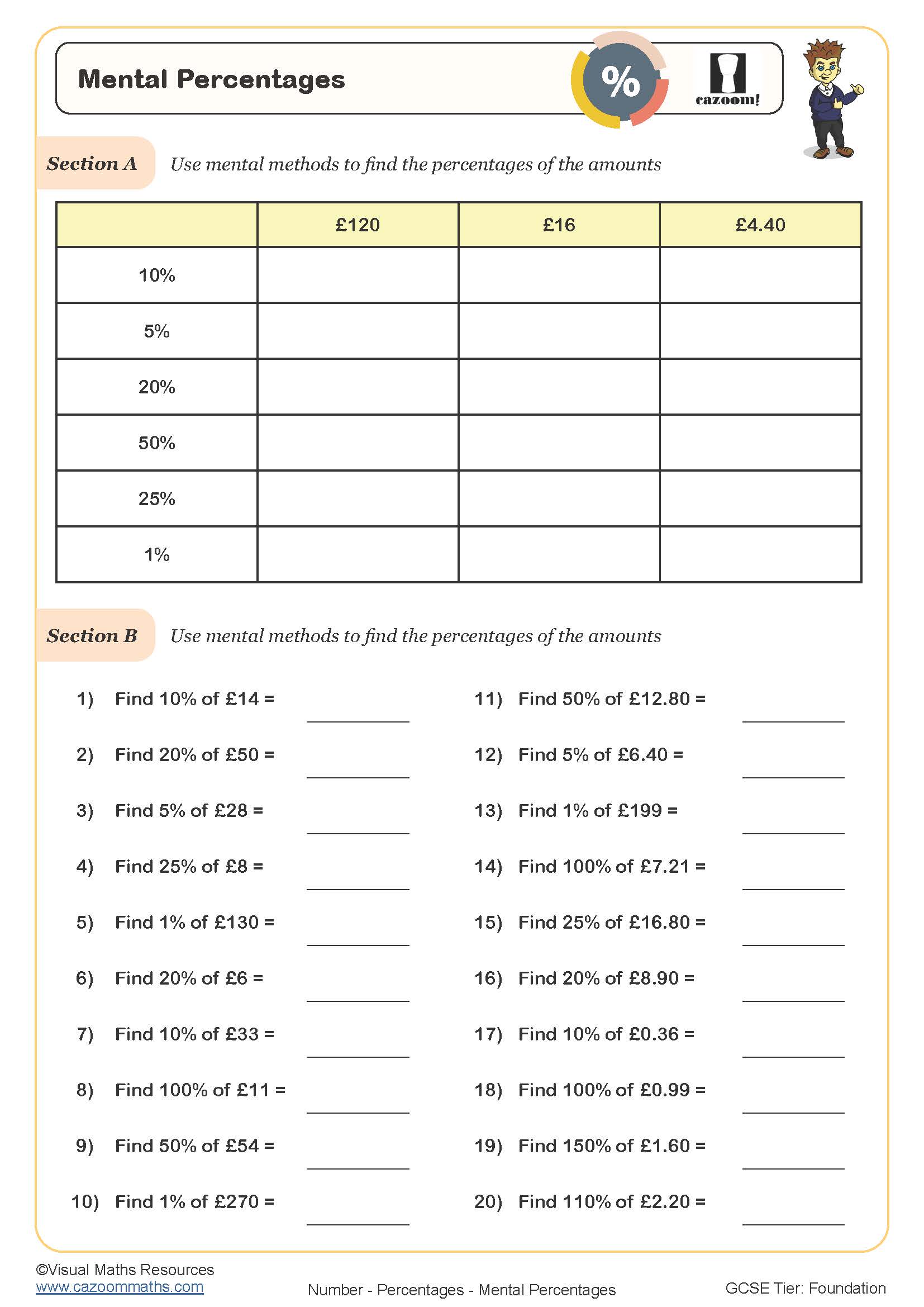
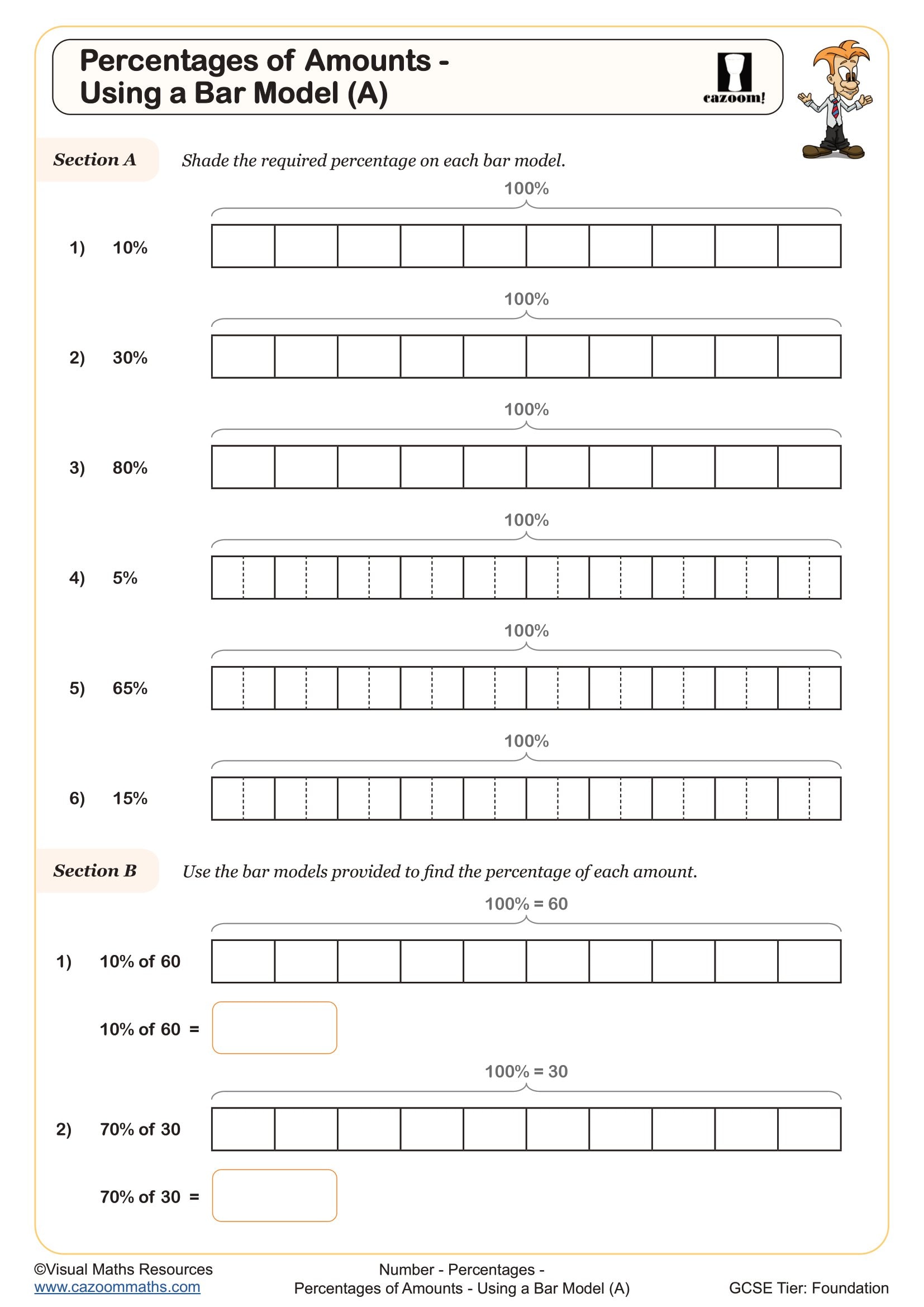
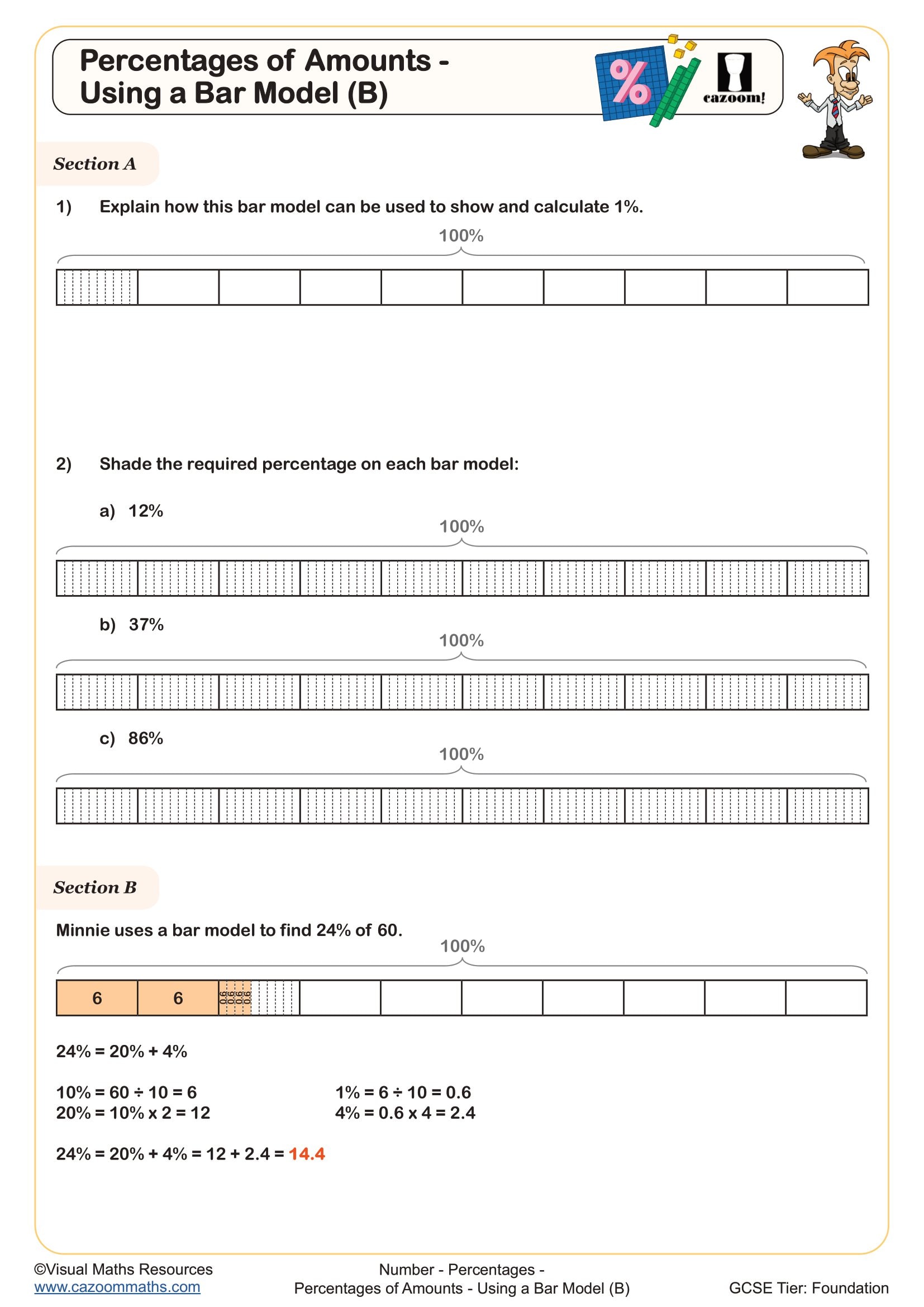
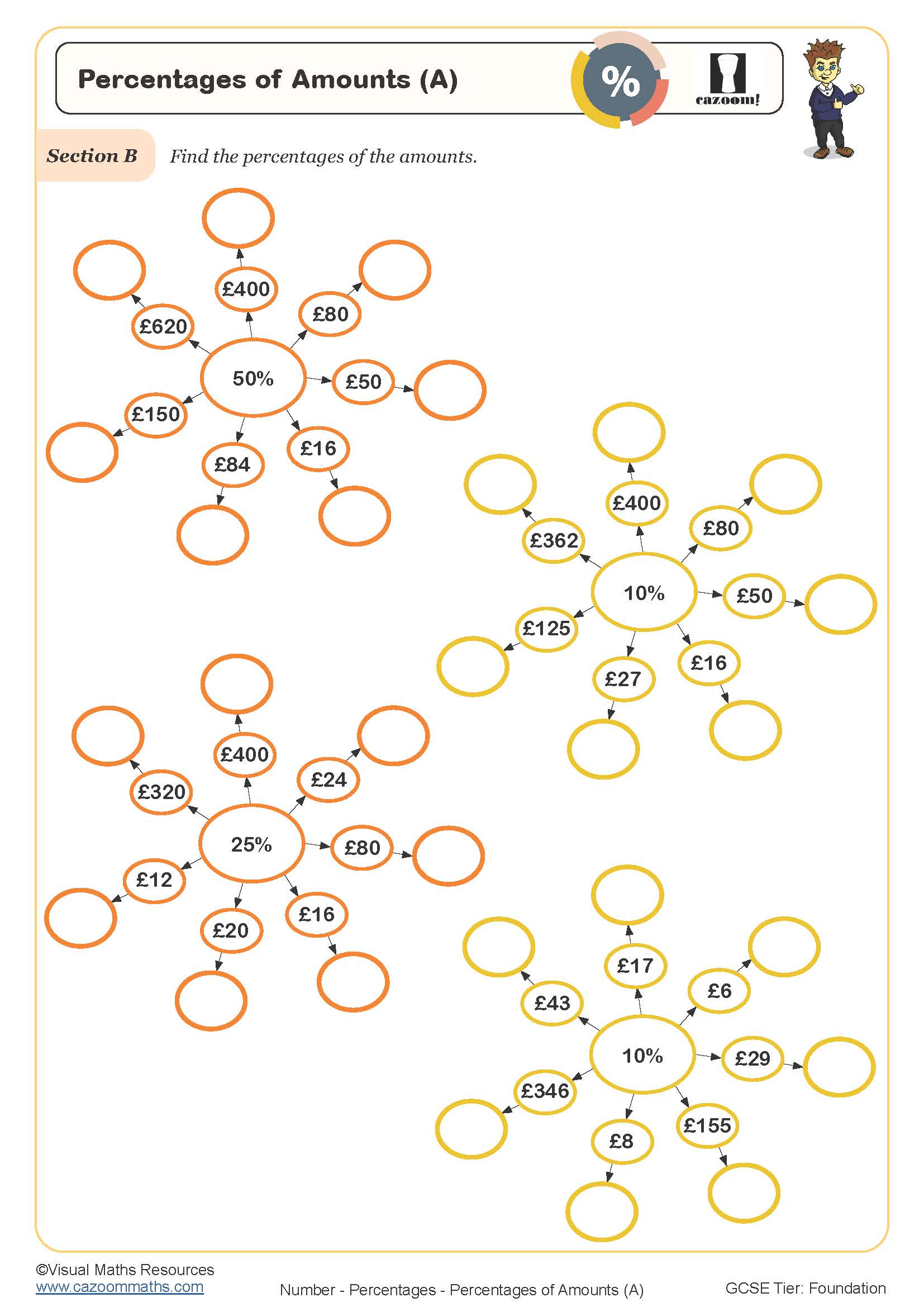
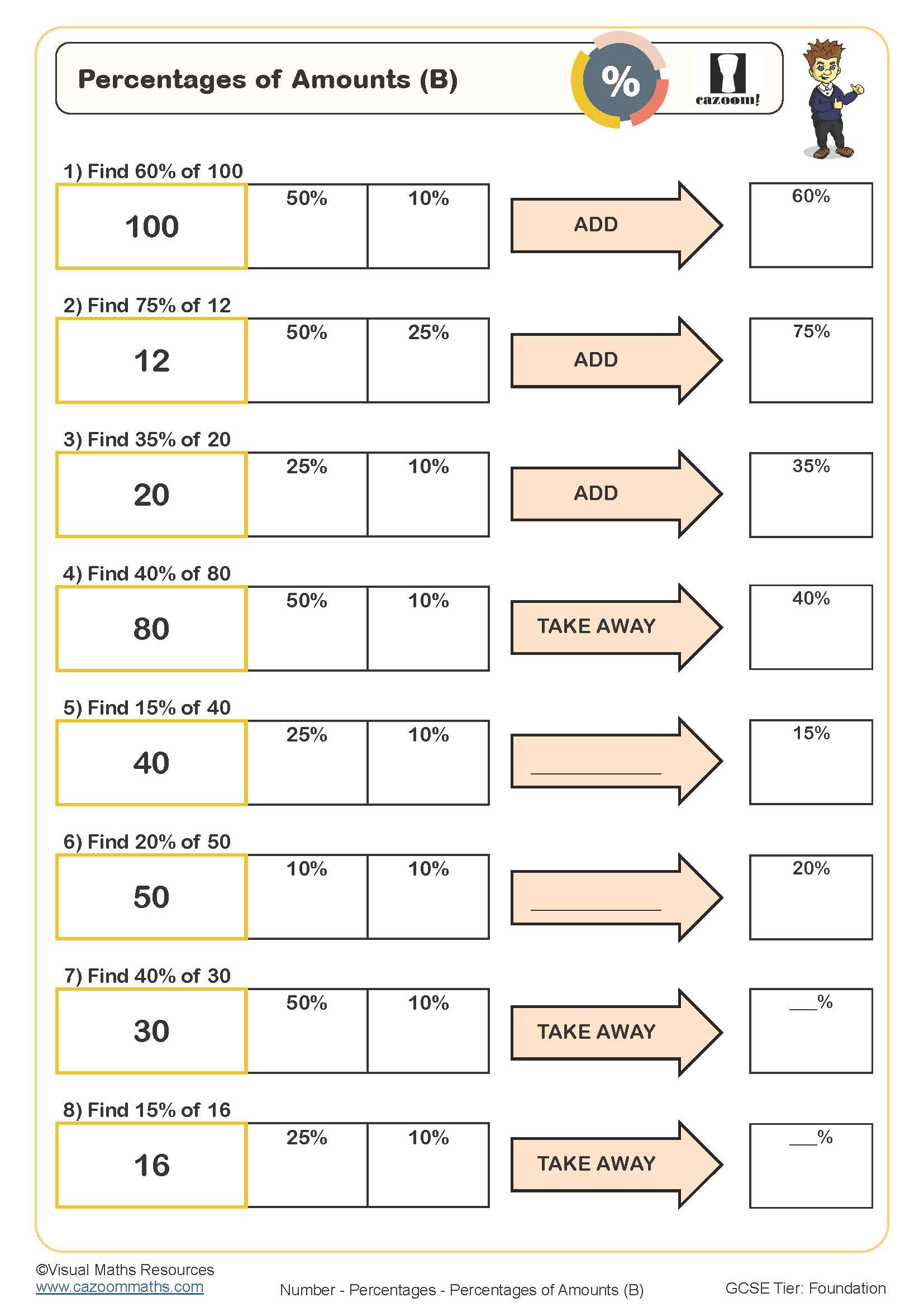
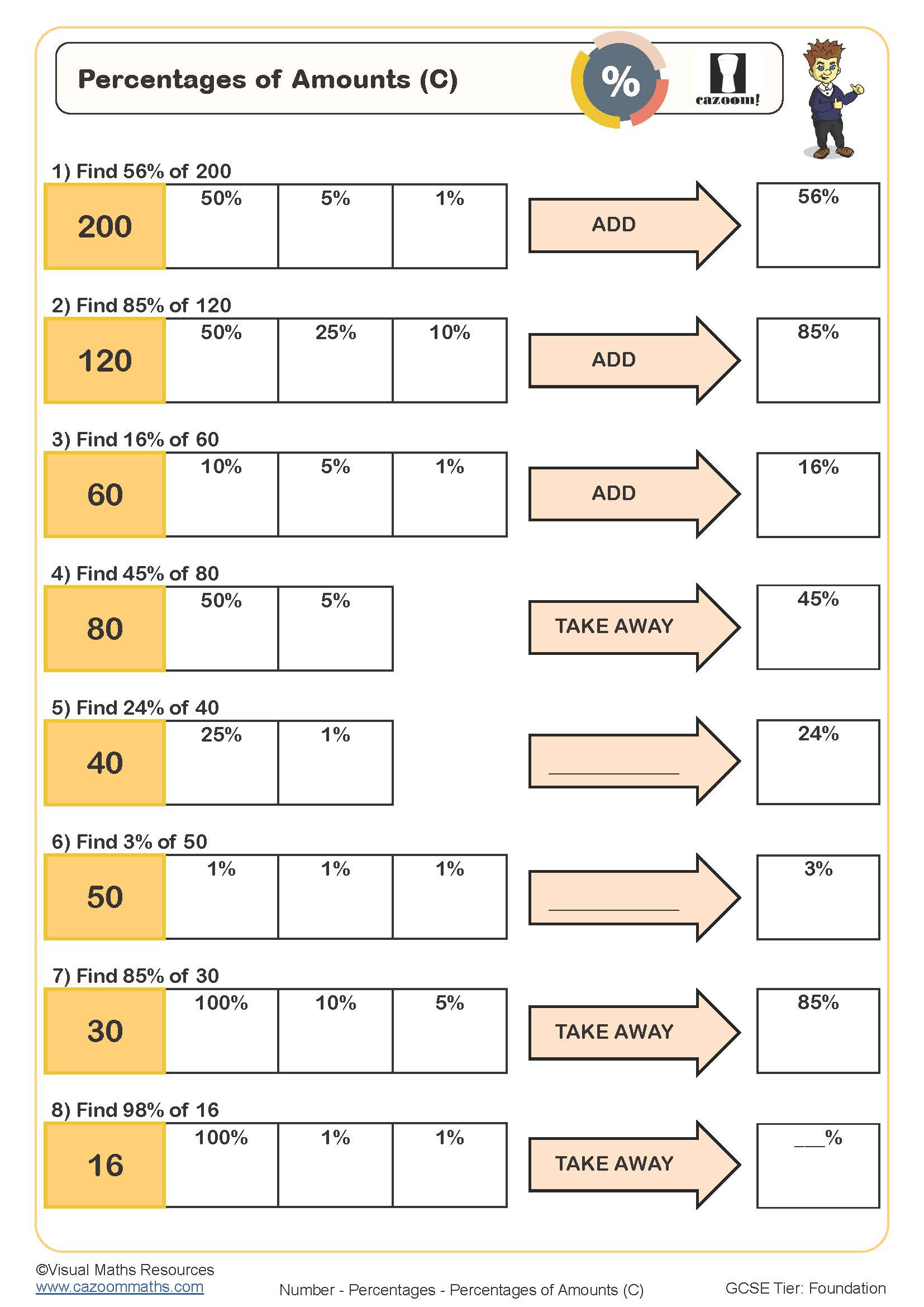
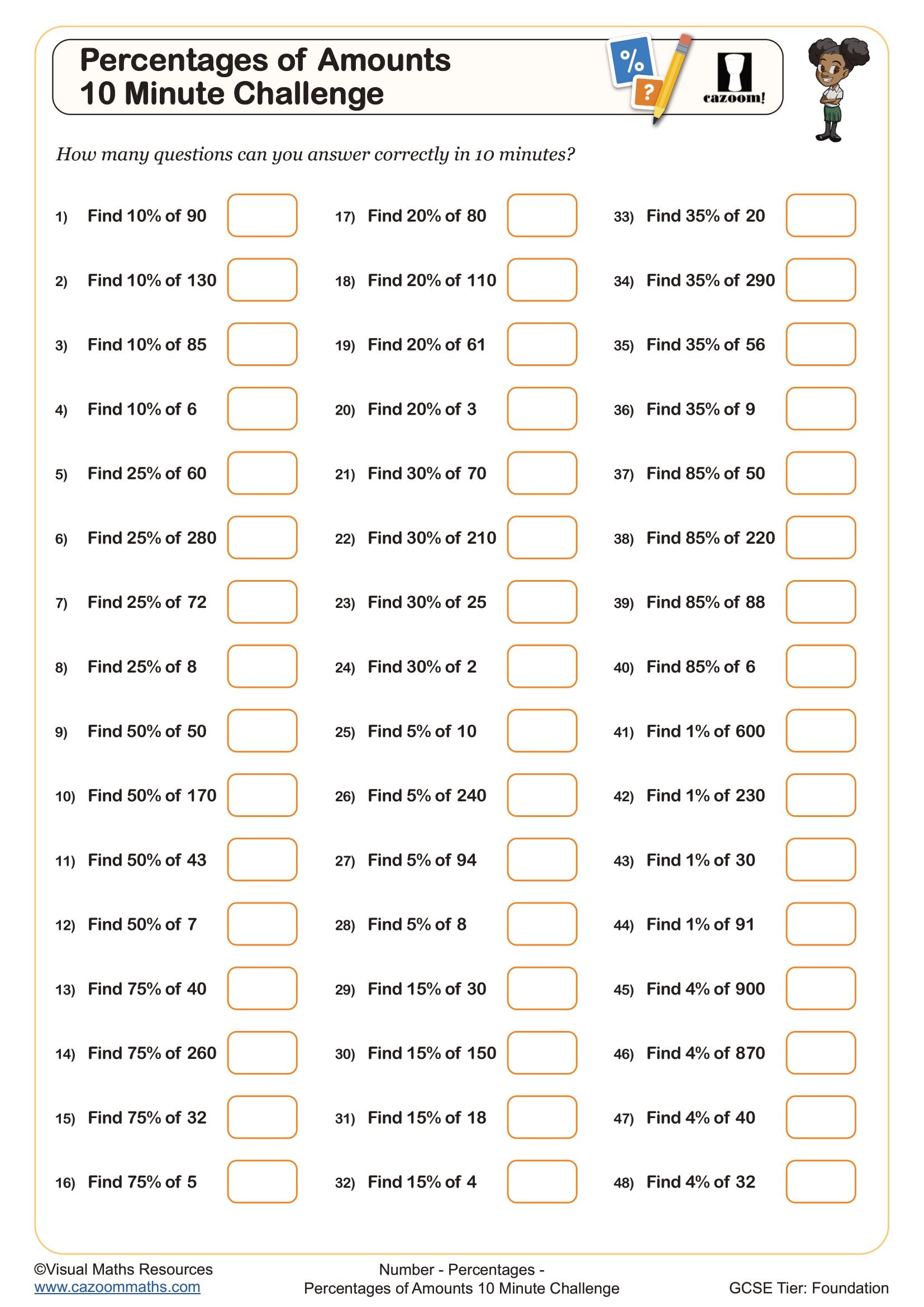
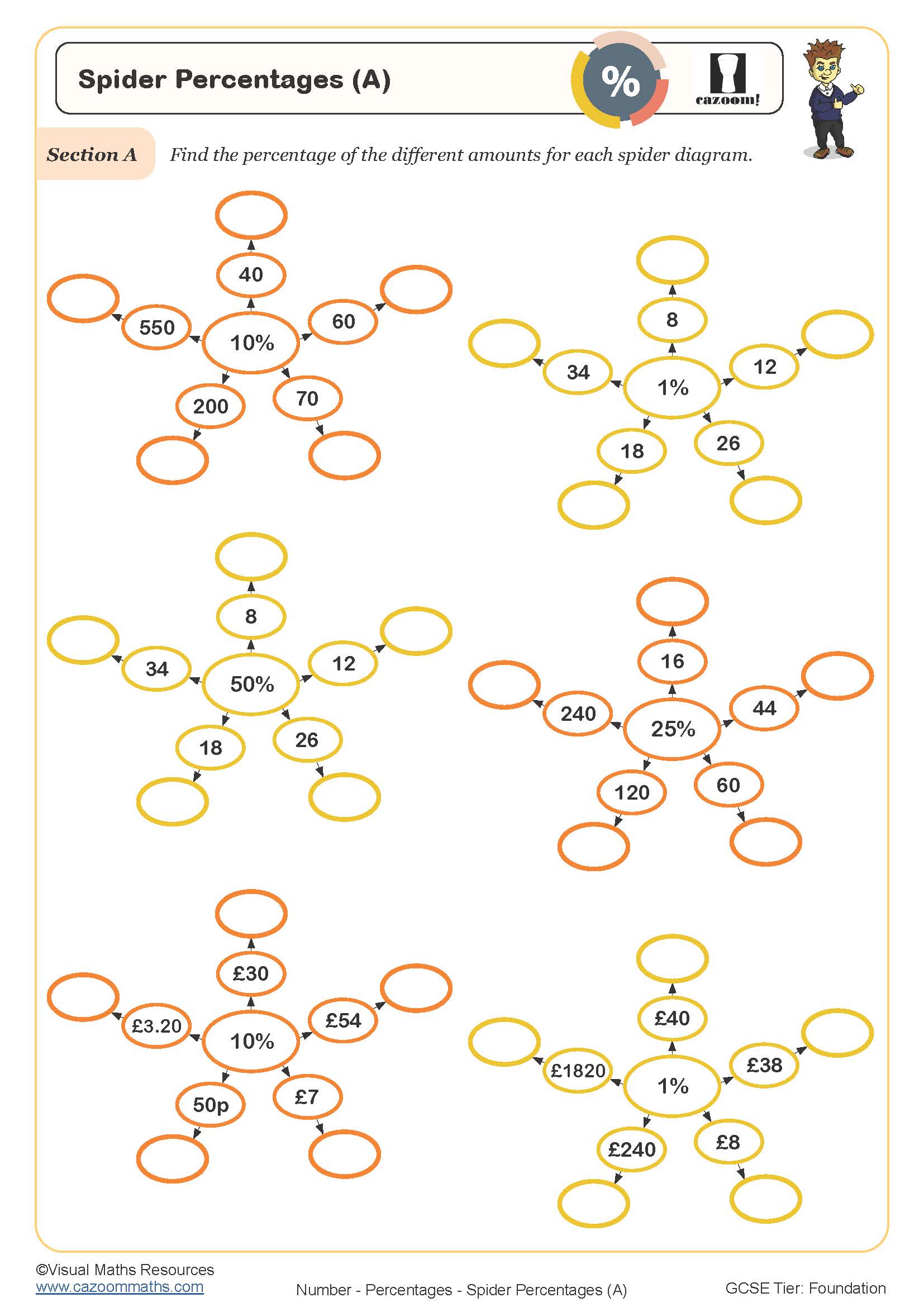
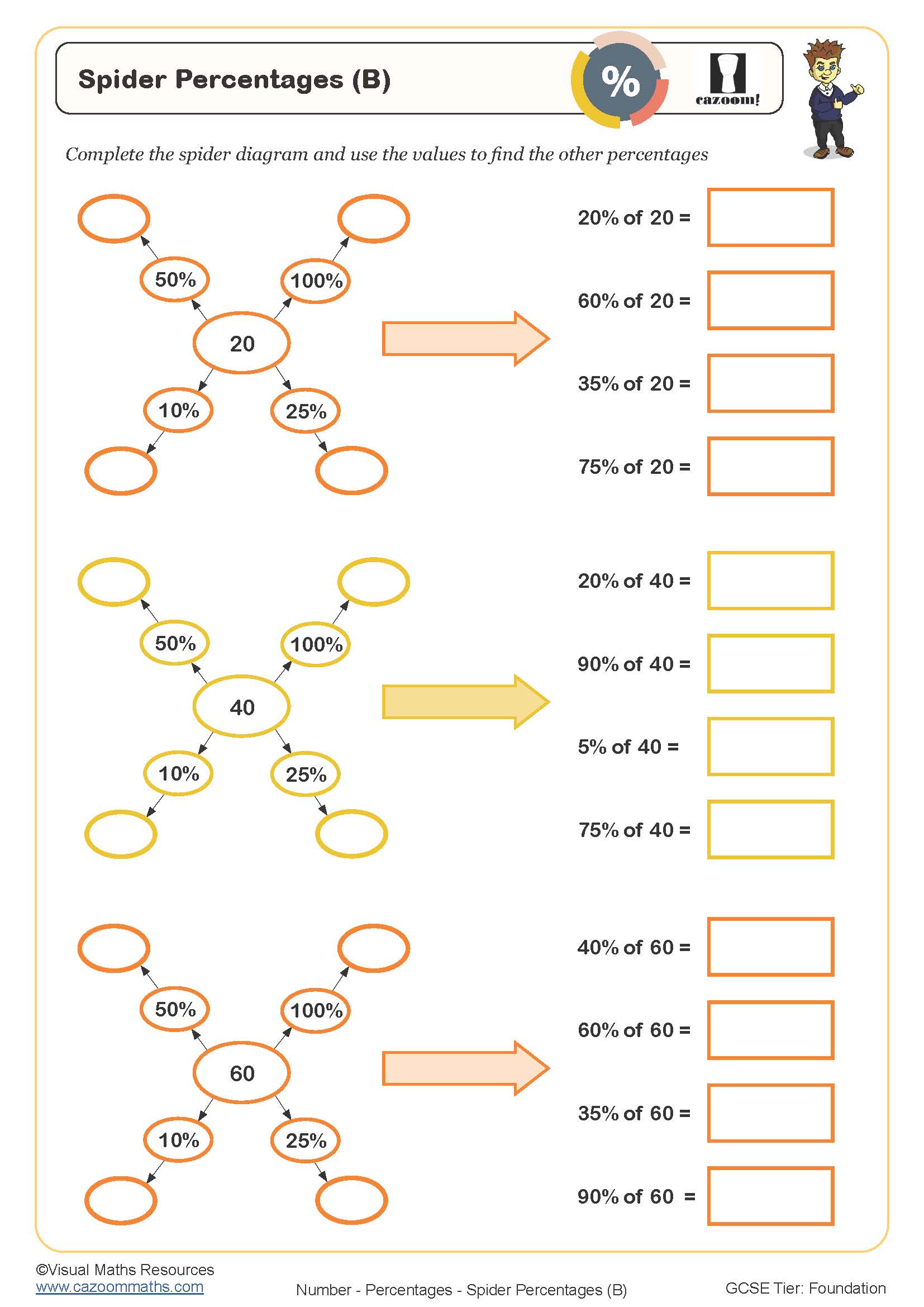
All worksheets are created by the team of experienced teachers at Cazoom Maths.
Where can Teachers find year 7 percentages worksheets pdf downloads?
These percentage worksheet Year 7 resources are available as instant PDF downloads, designed specifically for Year 7 students working through KS3 percentage concepts. The worksheets align with National Curriculum expectations for this year group, covering foundational skills like calculating percentages of amounts and working with percentage changes.
Teachers often find that having printable PDF formats allows for flexible classroom organisation, whether used for whole-class teaching, small group work, or individual practice. The answer sheets included with each worksheet help reduce marking time while providing students with immediate feedback on their percentage calculations.
Are these percentages worksheets suitable for different year groups?
While designed primarily for Year 7, these percentage worksheets work effectively across upper KS2 and lower KS3. Year 6 students who have mastered basic percentage concepts can tackle the foundational questions, while the more challenging problems suit Year 8 students needing revision or extension work.
Many teachers use these resources for mixed-ability classes, selecting specific questions that match individual student needs. The progression from simple percentage calculations to more complex real-world applications means teachers can differentiate easily within the same worksheet set, supporting both struggling students and those ready for greater challenge.
How do these worksheets help with percentage increase and decrease calculations?
The worksheets systematically introduce percentage increases and decreases through structured examples and practice questions. Students learn to identify whether they need to add or subtract the percentage change, a concept many find initially confusing when working with scenarios like price rises or discount calculations.
Teachers frequently observe that students make errors by calculating the percentage change correctly but then applying it incorrectly to the original amount. The worksheets address this through clear worked examples and progressive questioning that builds understanding of multiplier methods, helping students connect percentage changes to real-world contexts like VAT calculations and sale prices.
What's the most effective way to use these percentage worksheets in lessons?
Most teachers find success using these worksheets as part of a three-part lesson structure: starter questions for retrieval practice, main worksheet activities for new learning or consolidation, and selected challenging questions for plenary discussions. The variety within each worksheet allows teachers to assign different sections based on prior assessment data.
Effective implementation often involves pairing the worksheets with manipulatives like percentage grids or calculators for verification. Teachers report that students benefit from completing one section at a time rather than rushing through entire worksheets, allowing for misconceptions to be addressed before they become embedded in student thinking.