Year 7 Powers and Roots Worksheets
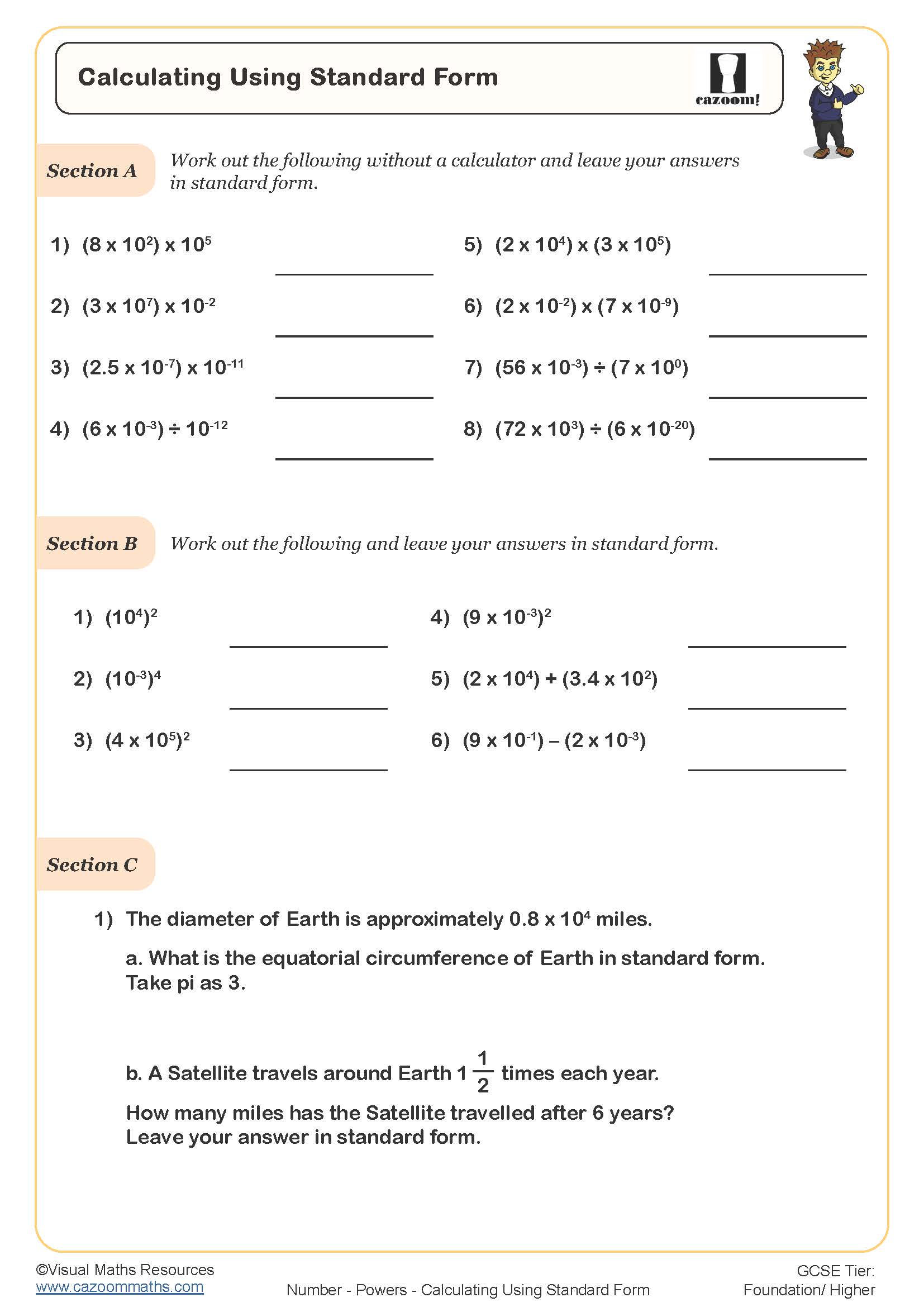
Calculating Using Standard Form
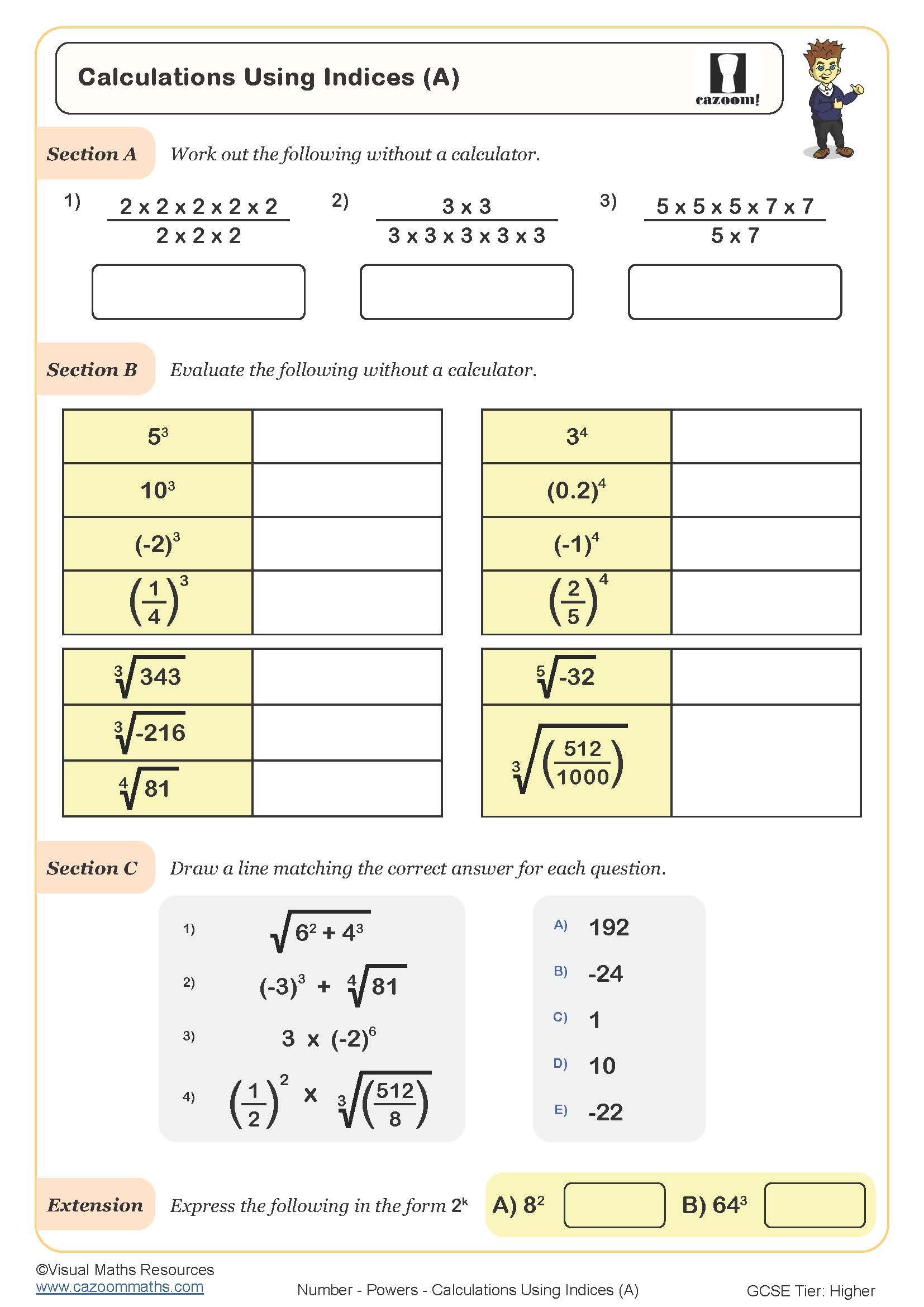
Calculations Using Indices (A)
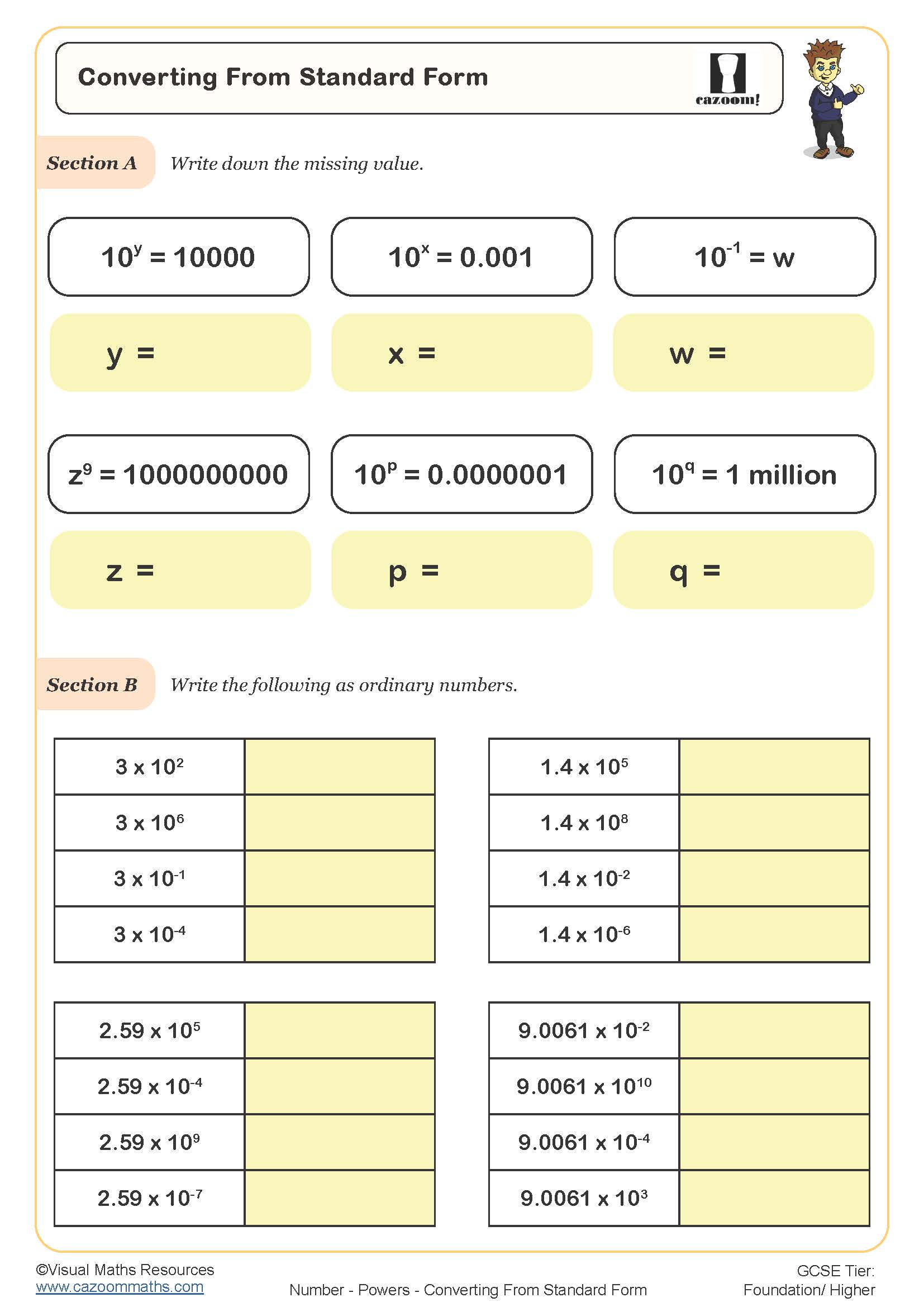
Converting from Standard Form
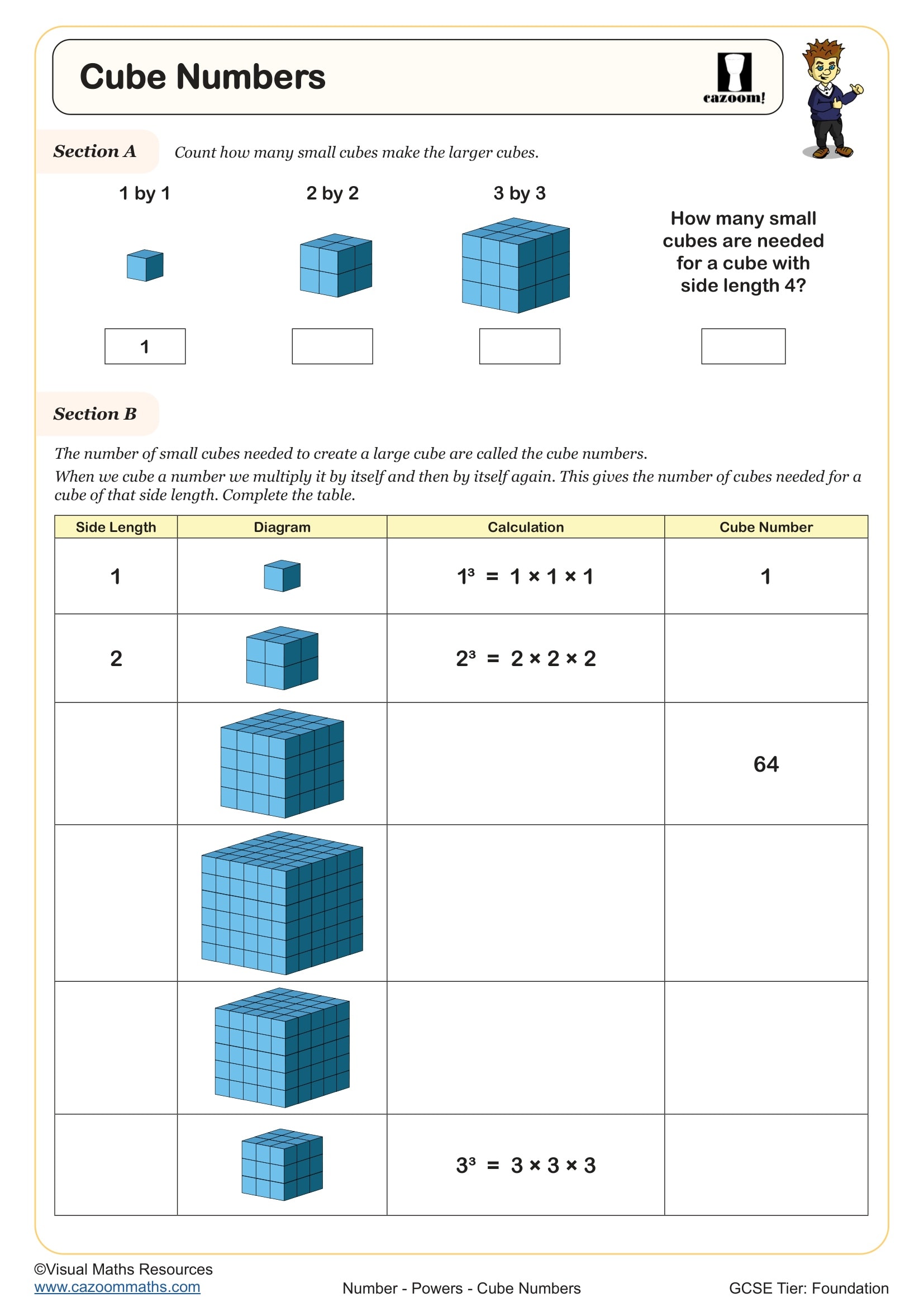
Cube Numbers
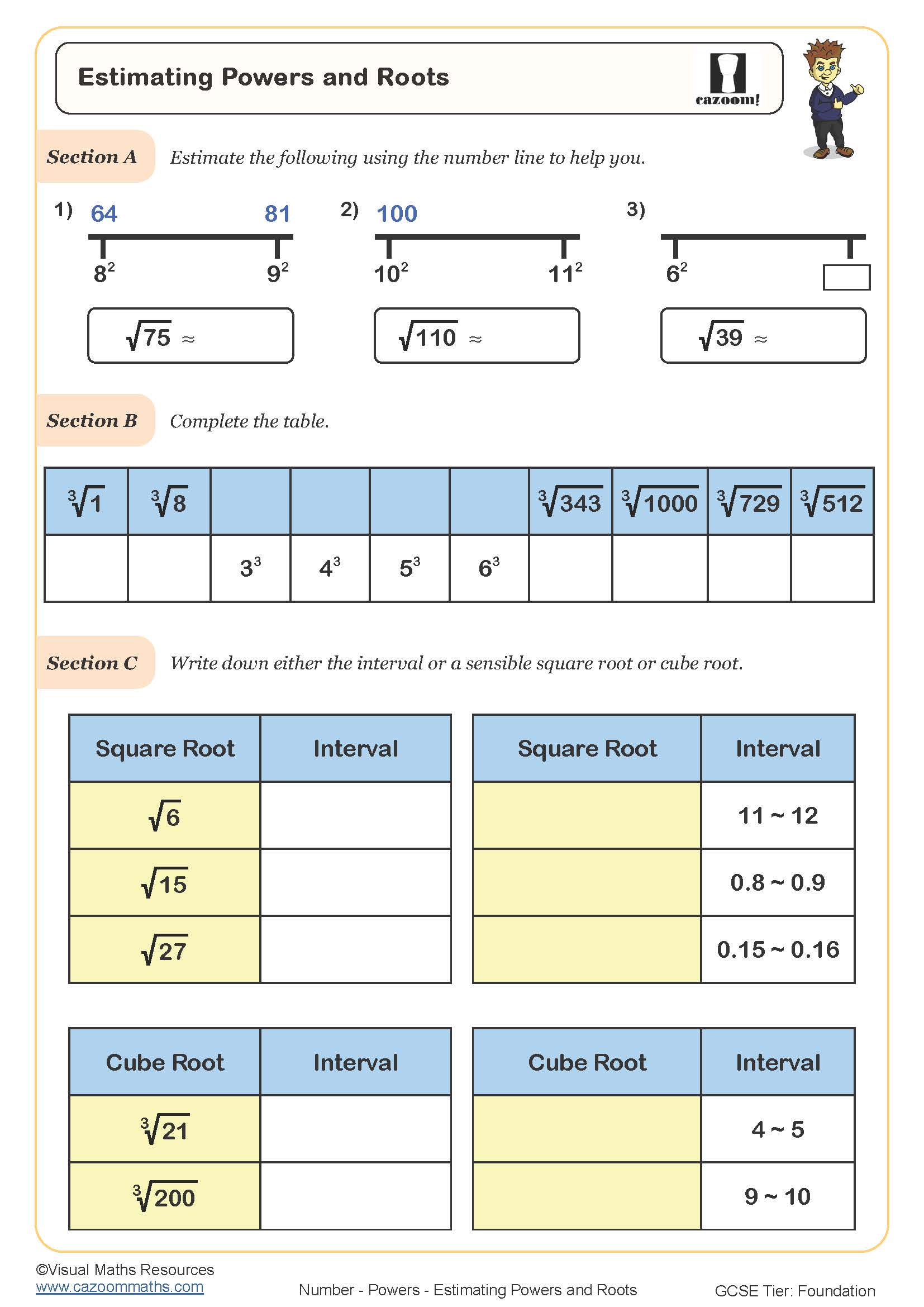
Estimating Powers and Roots
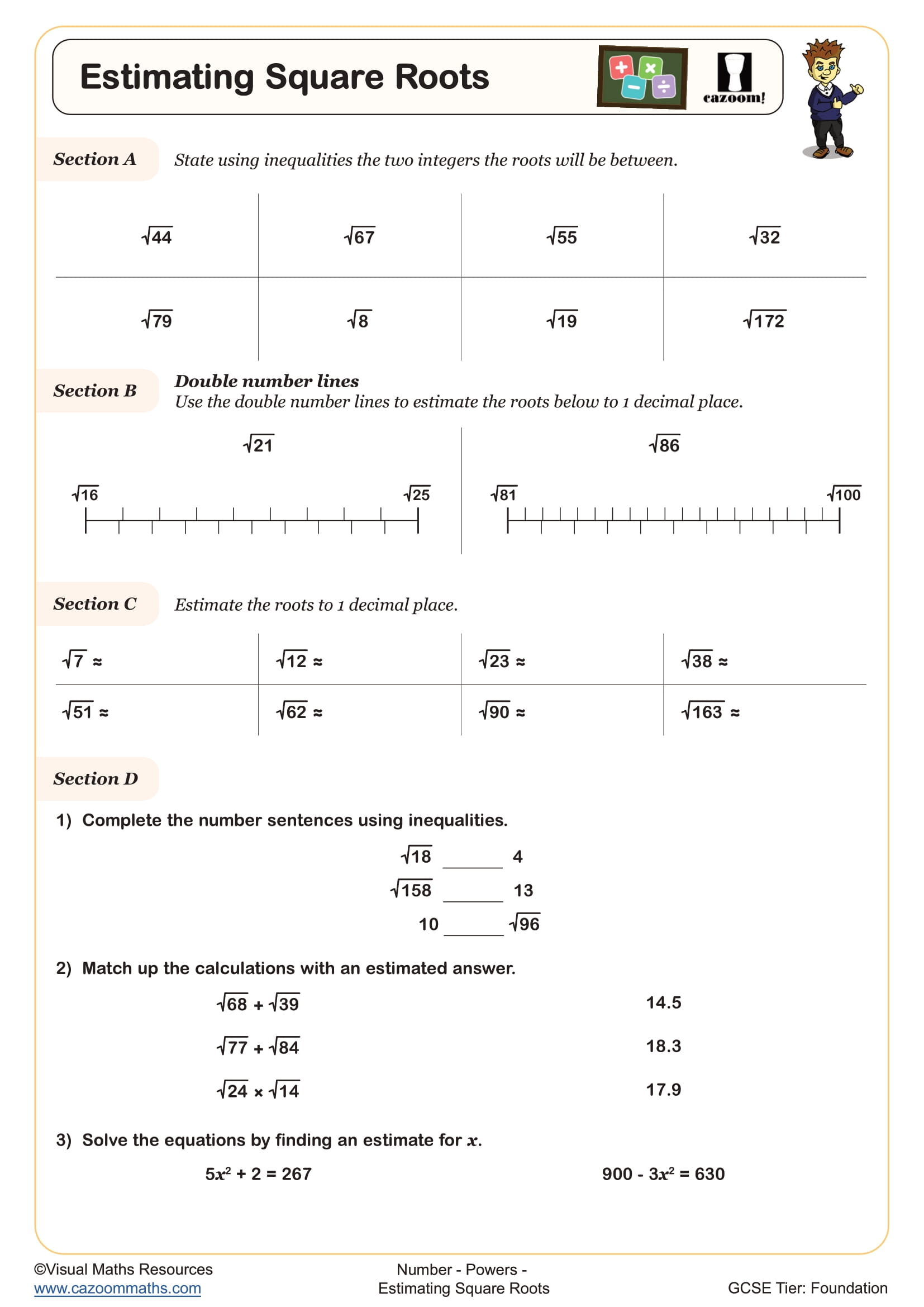
Estimating Square Roots
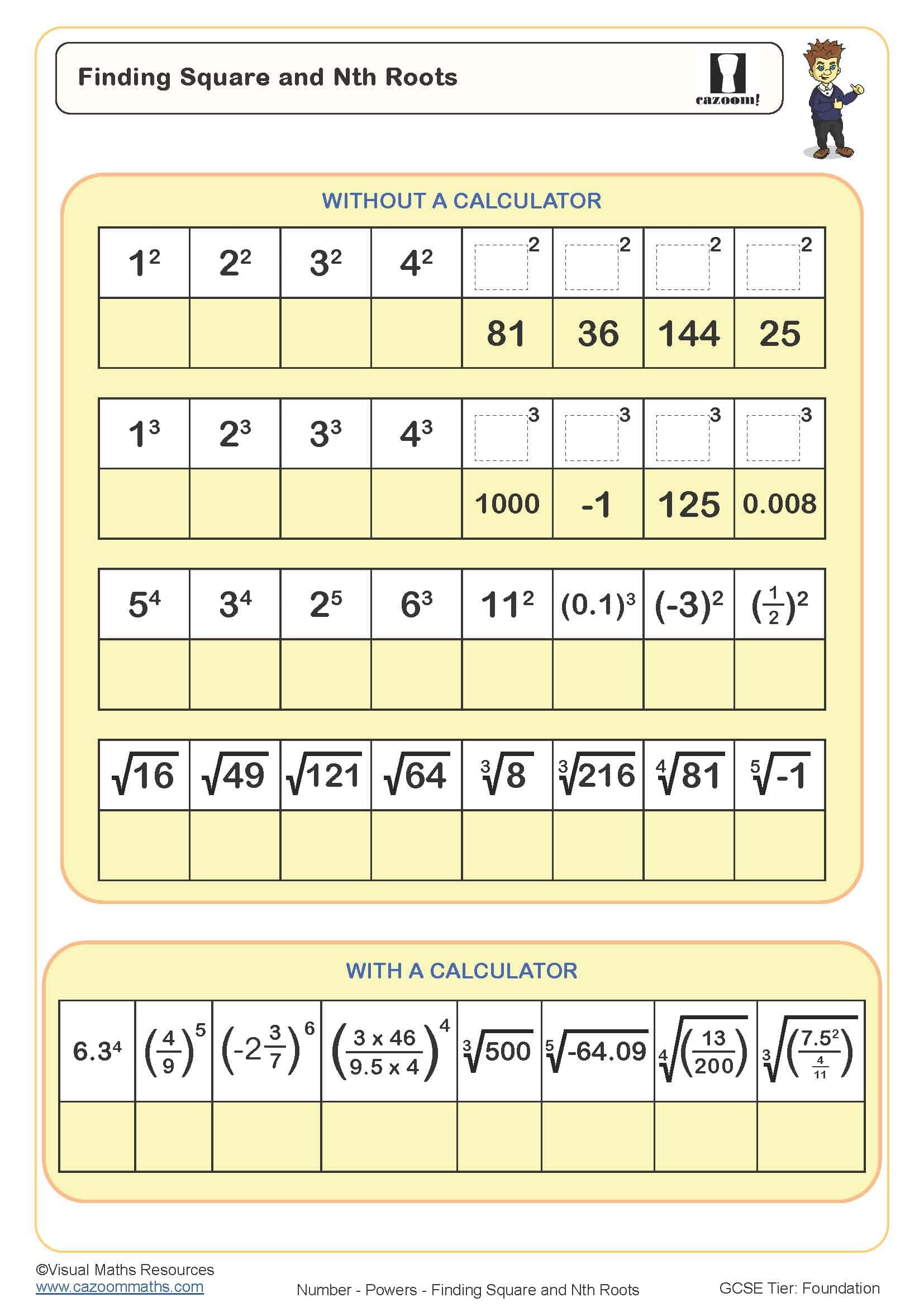
Finding Square and Nth Roots
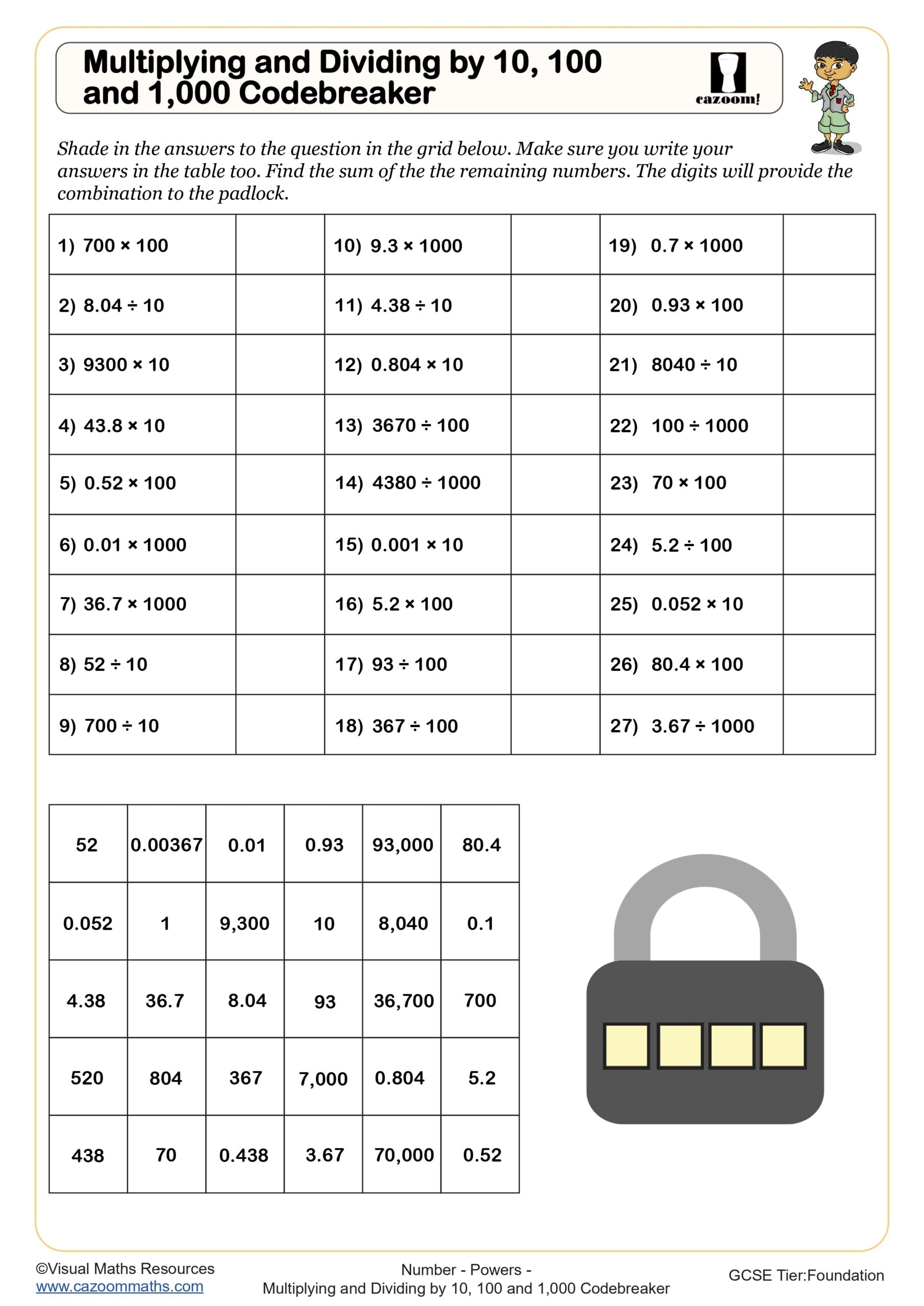
Multiplying and Dividing by 10, 100 and 1,000 Codebreaker
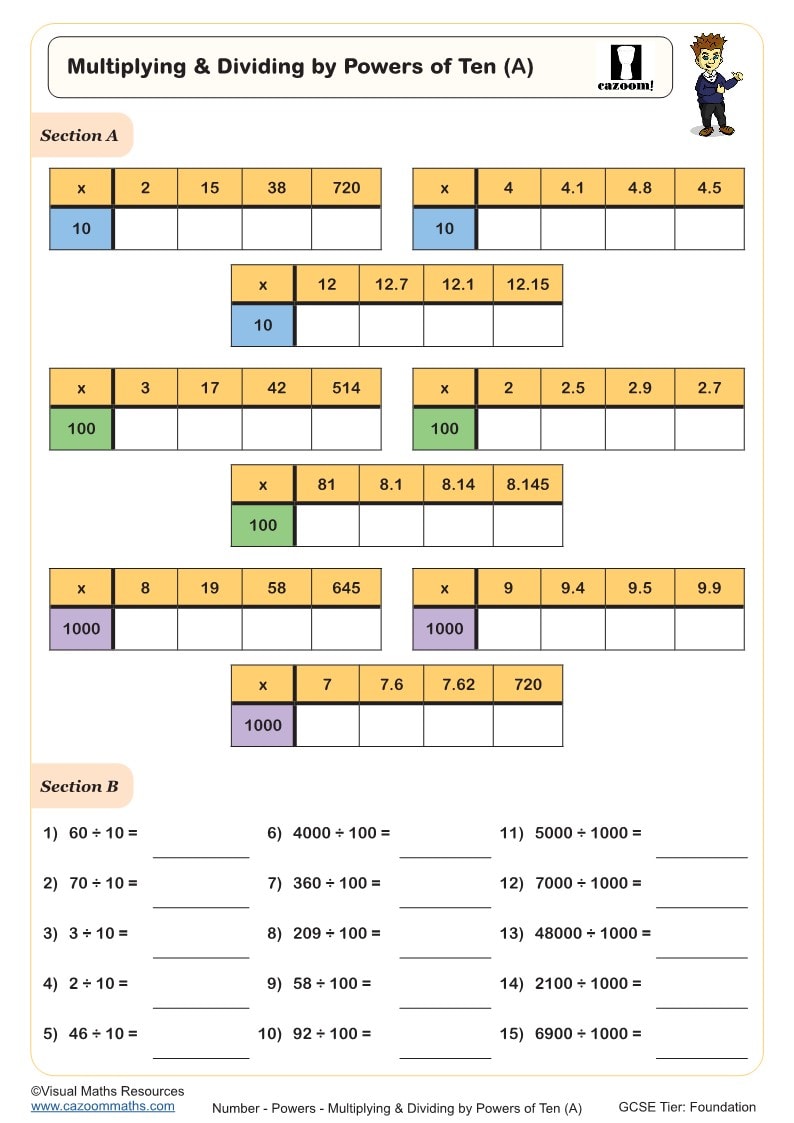
Multiplying and Dividing by Powers of Ten (A)
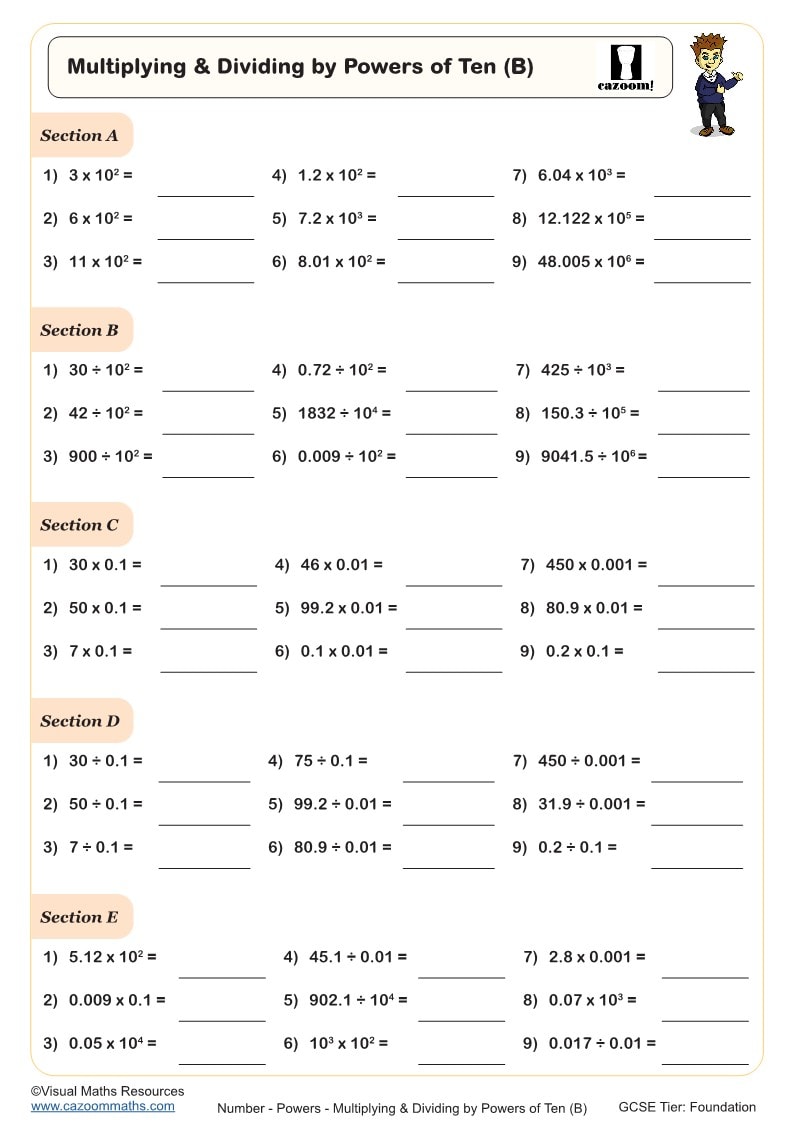
Multiplying and Dividing by Powers of Ten (B)
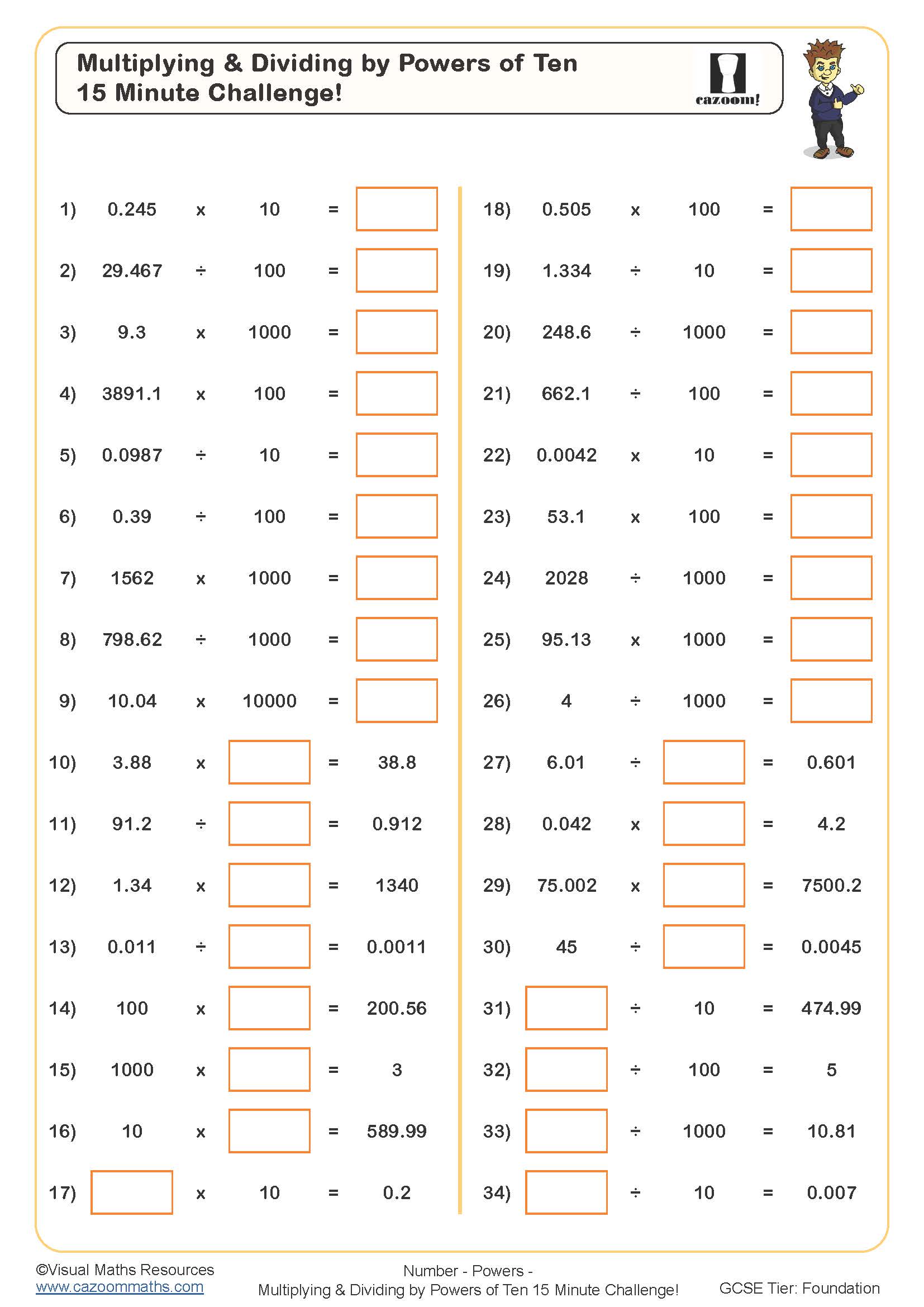
Multiplying and Dividing by Powers of Ten 15 Minute Challenge
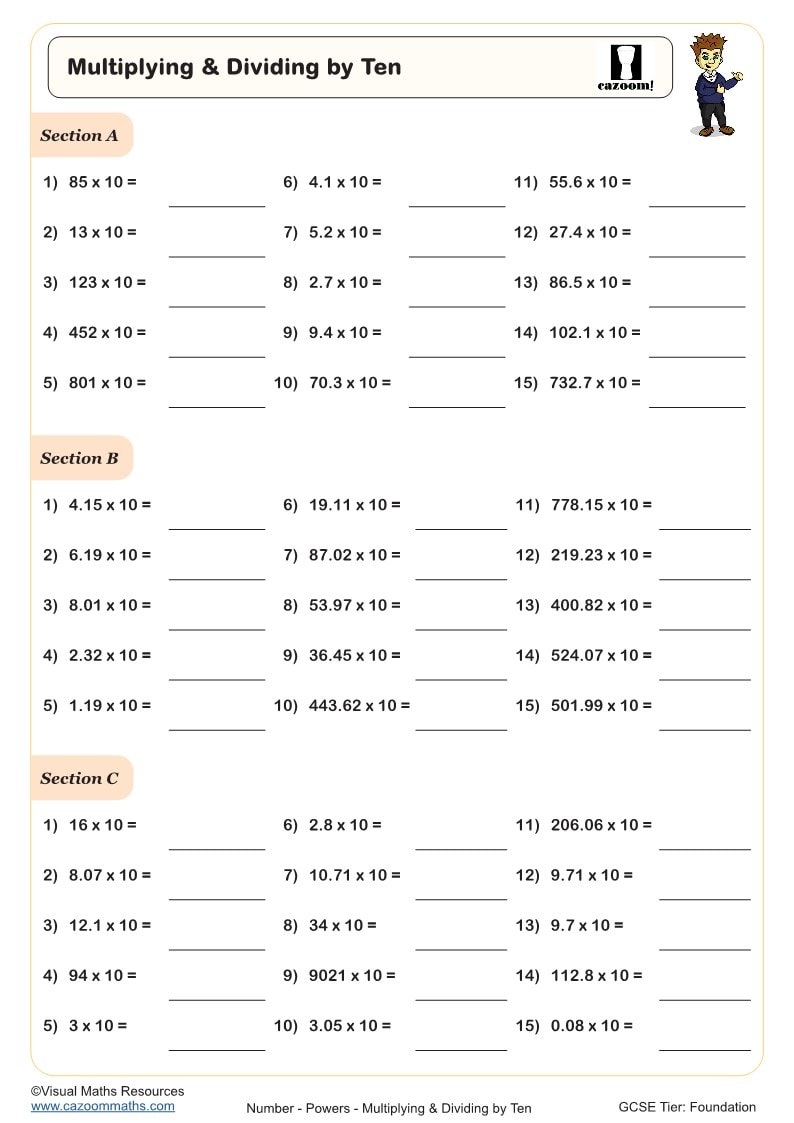
Multiplying and Dividing by Ten
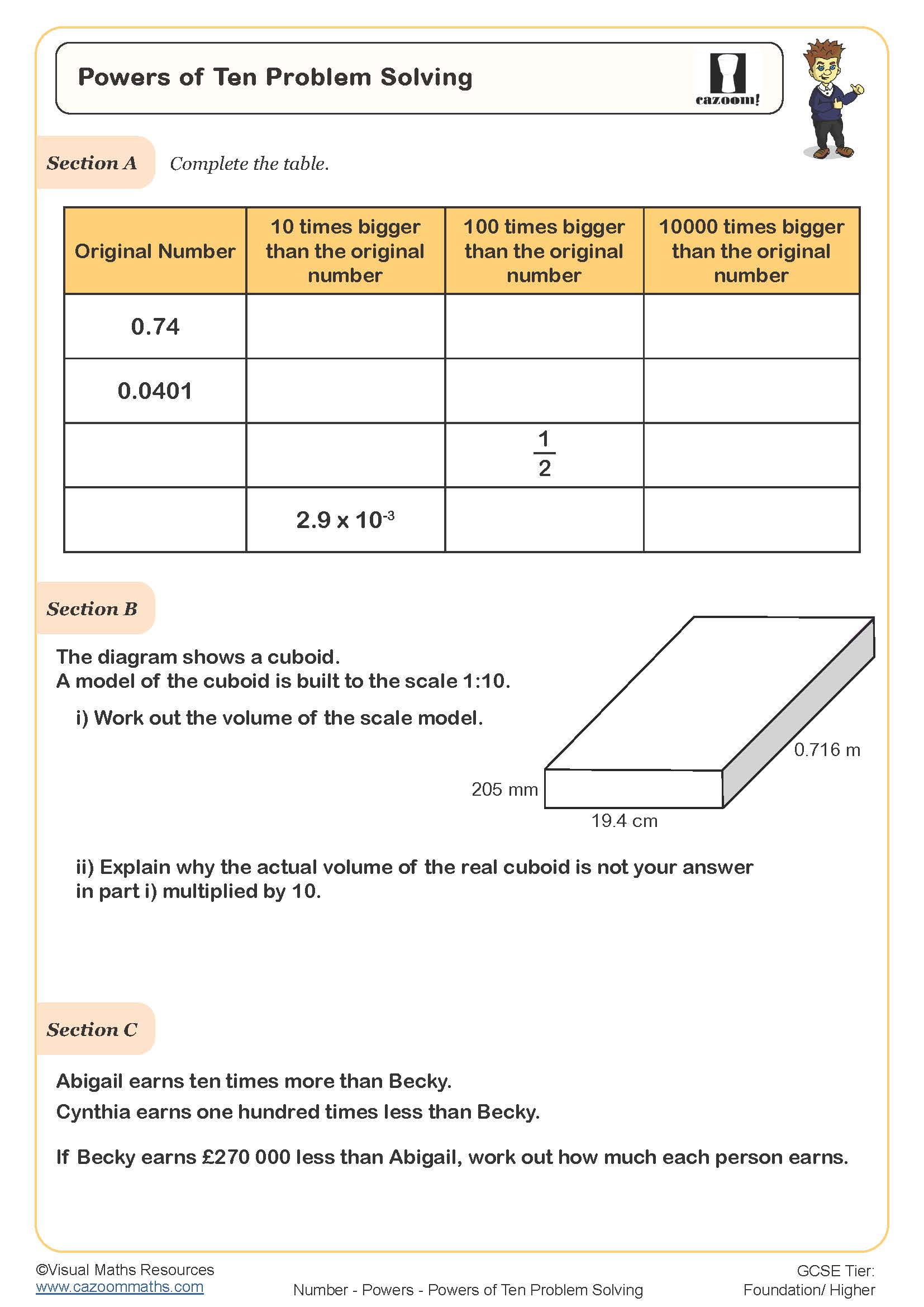
Powers of Ten Problem Solving
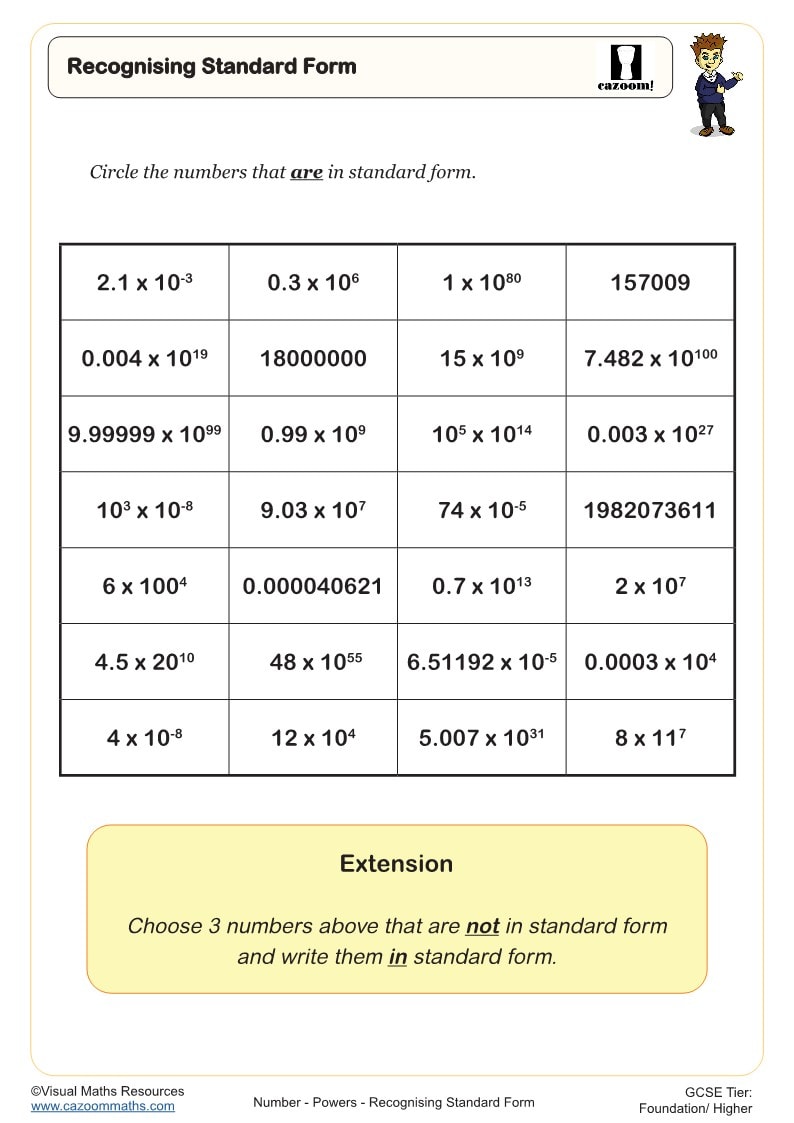
Recognising Standard Form
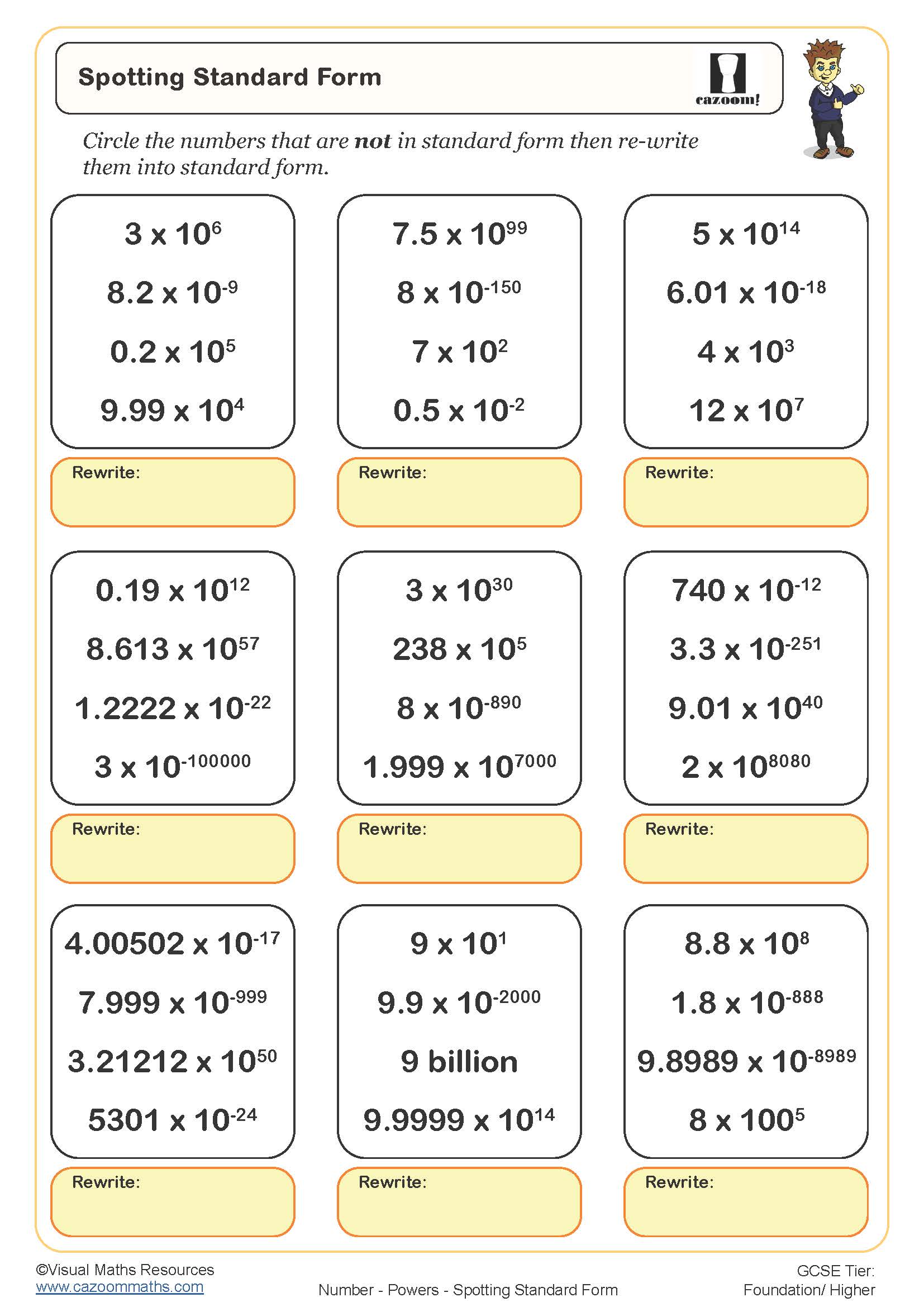
Spotting Standard Form
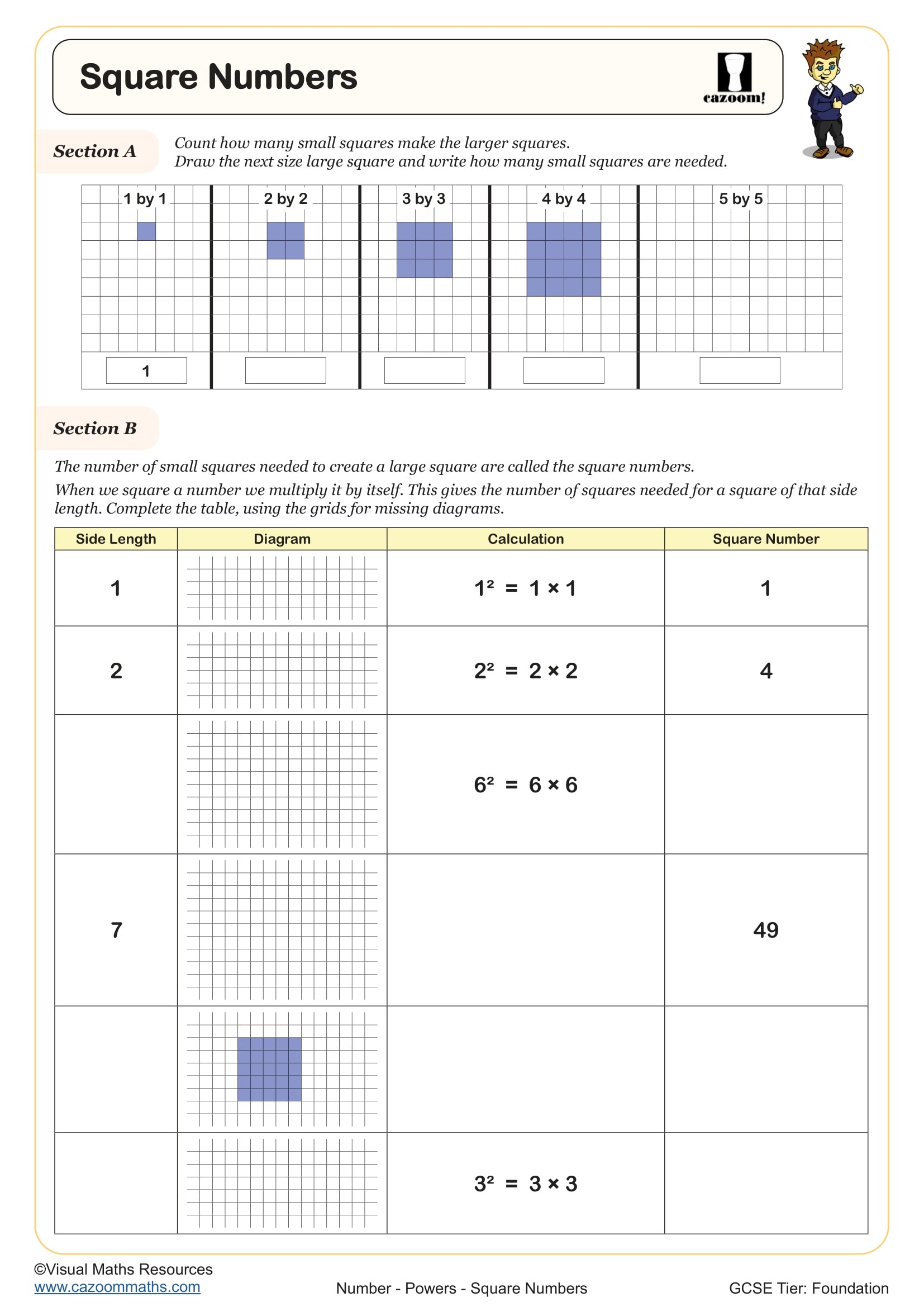
Square Numbers
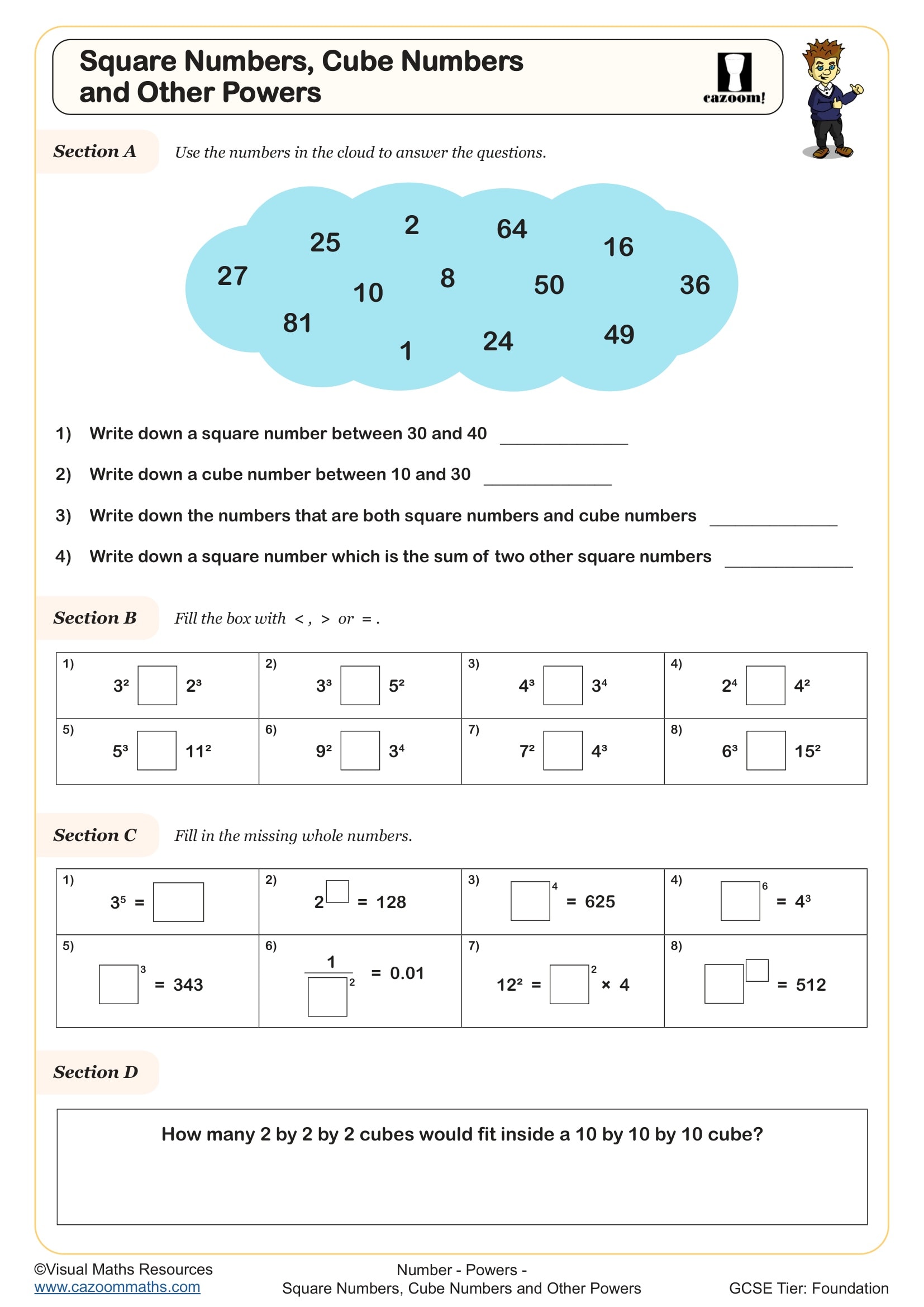
Square Numbers, Cube Numbers and Other Powers
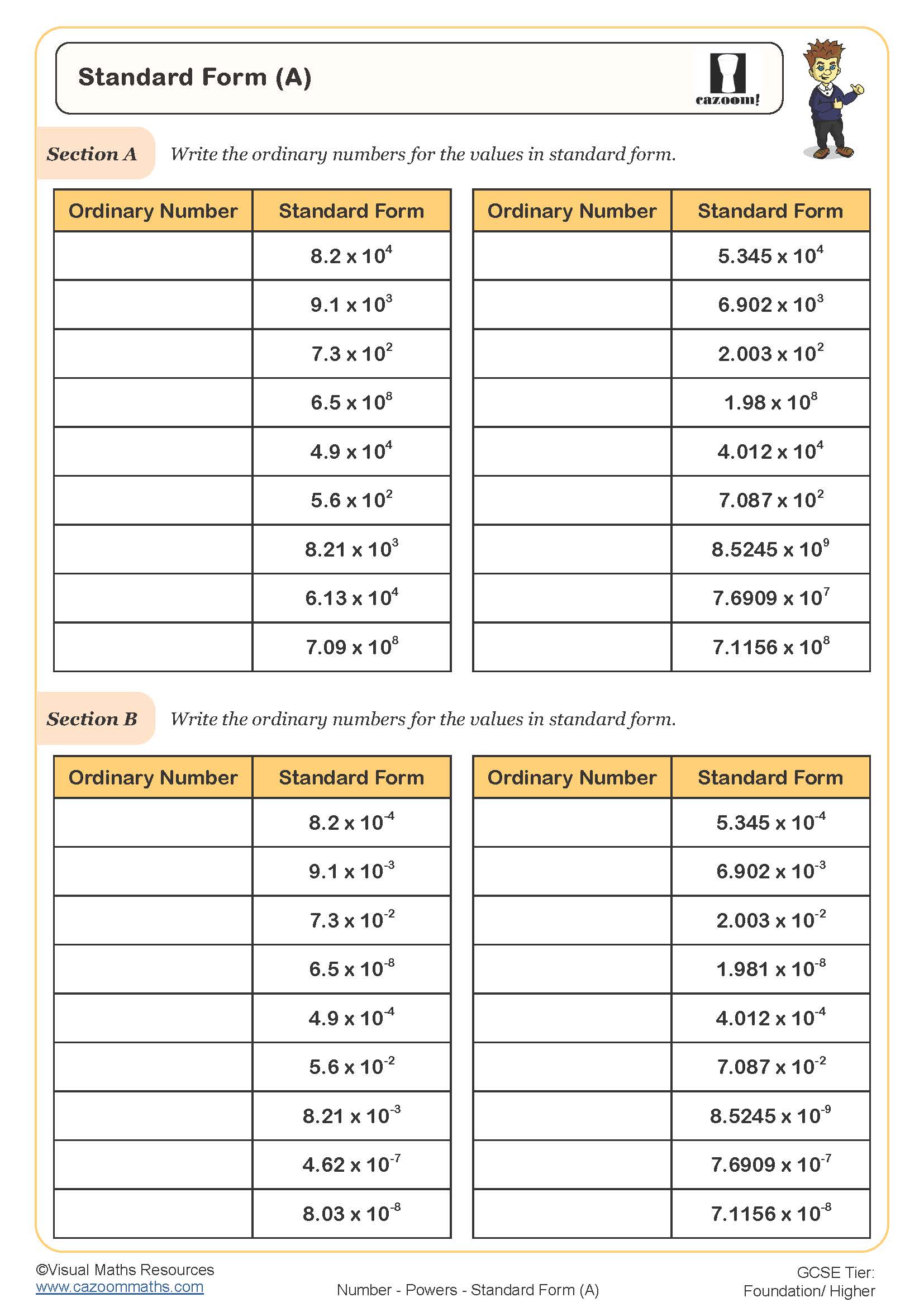
Standard Form (A)
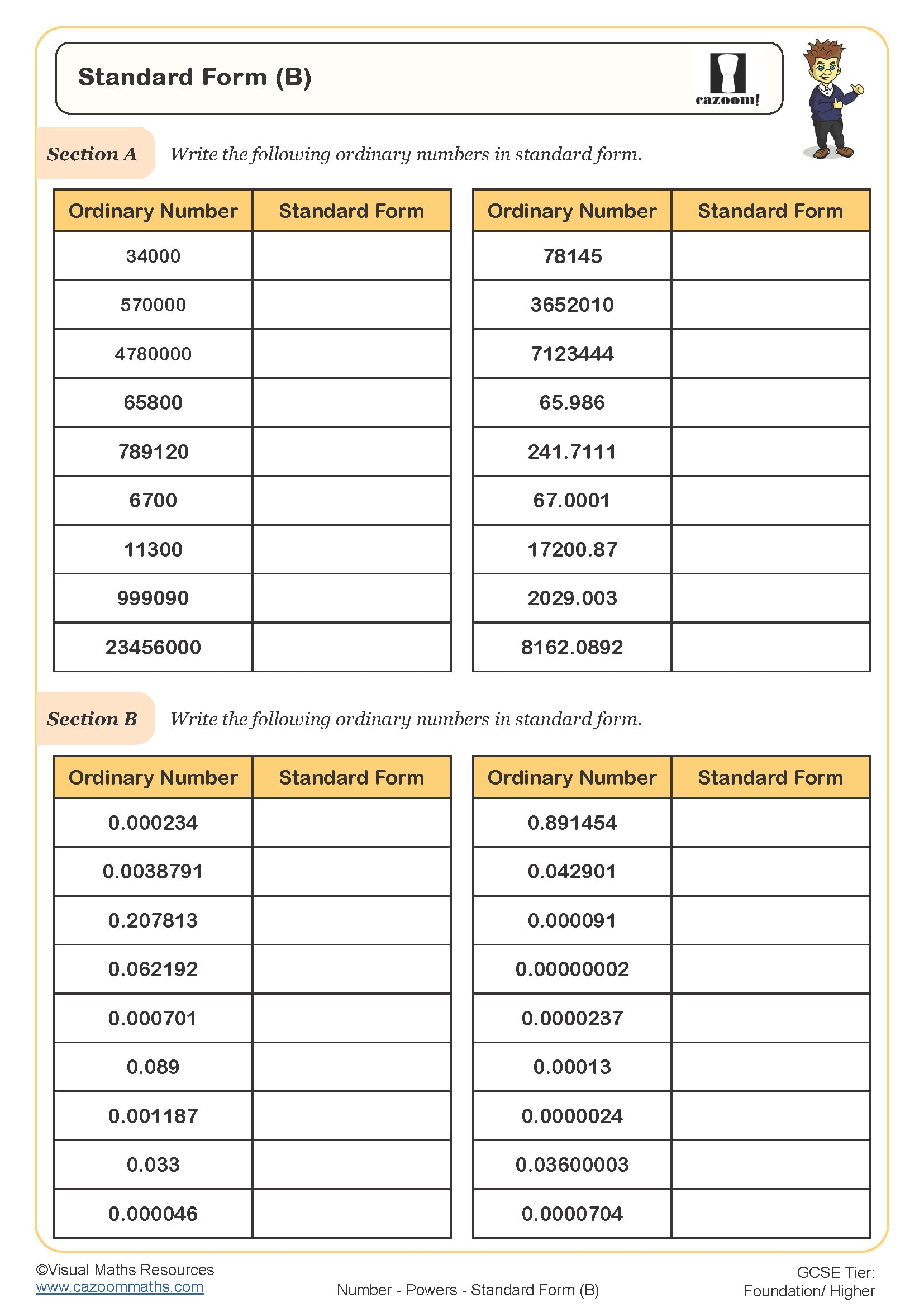
Standard Form (B)
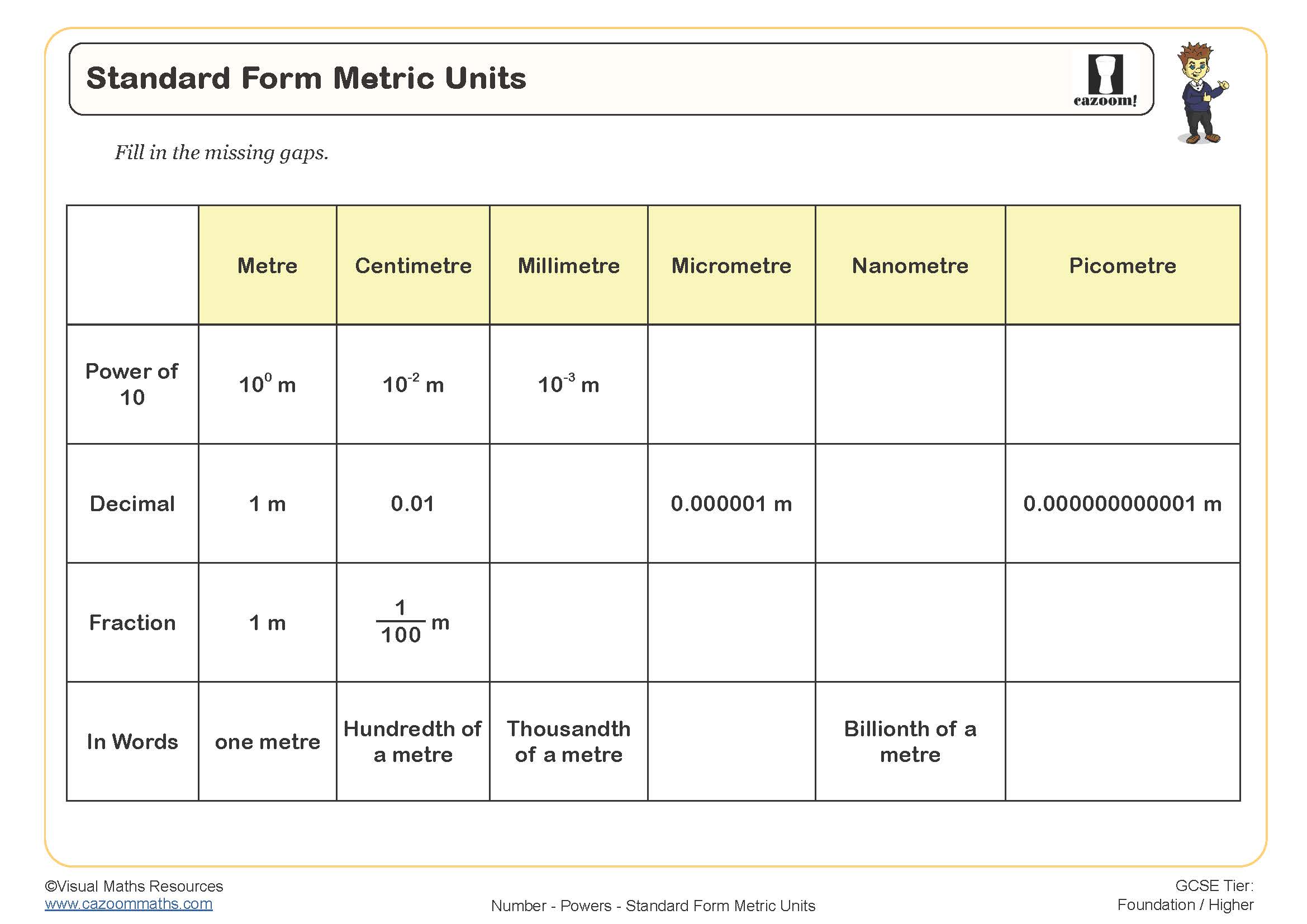
Standard Form Metric Units
All worksheets are created by the team of experienced teachers at Cazoom Maths.
What topics are covered in a powers and roots worksheet for Year 7?
A thorough powers and roots worksheet typically includes calculating square numbers up to 15², cube numbers up to 5³, and finding square roots of perfect squares. Students practise writing numbers in index form, evaluating simple powers like 2⁴ and 3³, and identifying relationships between powers and their corresponding roots.
Teachers notice that students often struggle with the concept that squaring and square rooting are inverse operations. Many Year 7 pupils initially attempt to memorise square numbers rather than understanding the underlying multiplication, which limits their progress when encountering larger numbers or algebraic expressions later in their mathematical journey.
Is Year 7 the right time to introduce powers and roots?
Year 7 represents the optimal introduction point for formal powers and roots notation, building on the multiplication concepts students have mastered in Key Stage 2. The National Curriculum places indices at this level because students have developed sufficient arithmetic fluency to understand repeated multiplication and can begin connecting numerical patterns to algebraic thinking.
Some teachers find that introducing powers through practical contexts like calculating areas of squares or volumes of cubes helps students visualise these abstract concepts. Students who grasp powers and roots confidently in Year 7 demonstrate stronger performance in later topics including surds, exponential functions, and scientific notation in GCSE mathematics.
How do students typically approach square root calculations?
Most Year 7 students begin by recognising perfect squares they can recall immediately, such as √16 = 4 or √49 = 7. Teachers encourage this recognition-based approach initially, as it builds confidence and establishes the inverse relationship between squaring and finding square roots through familiar number facts.
Common errors include attempting to divide the number under the root sign by 2, or confusing square roots with half powers. Effective worksheets progress from perfect squares to estimation exercises, where students learn to identify that √50 lies between 7 and 8, developing number sense that supports calculator-free problem-solving in examinations.
How can teachers maximise the effectiveness of these worksheets?
Teachers achieve best results by using powers and roots worksheets as consolidation tools after demonstrating the concepts through manipulatives or visual representations. Starting lessons with square number patterns or cube building activities helps students connect abstract symbols to concrete understanding before attempting written calculations.
Regular low-stakes practice using these worksheets, perhaps as starter activities or homework tasks, helps embed the automatic recall that students need for GCSE success. Teachers who provide immediate feedback using the included answer sheets report that students develop better self-correction habits and gain confidence in checking their own mathematical reasoning.