Year 7 Ratio Worksheets
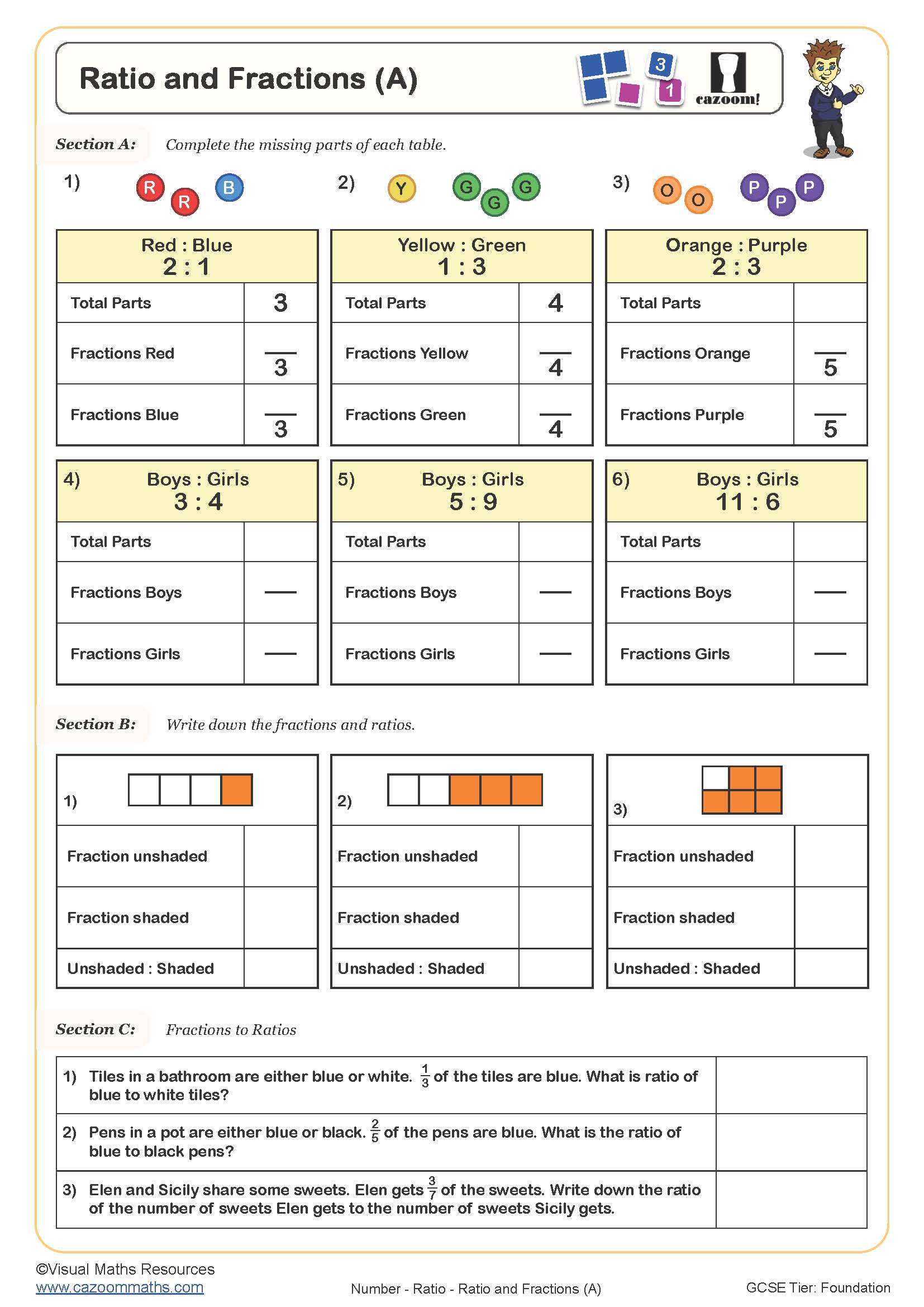
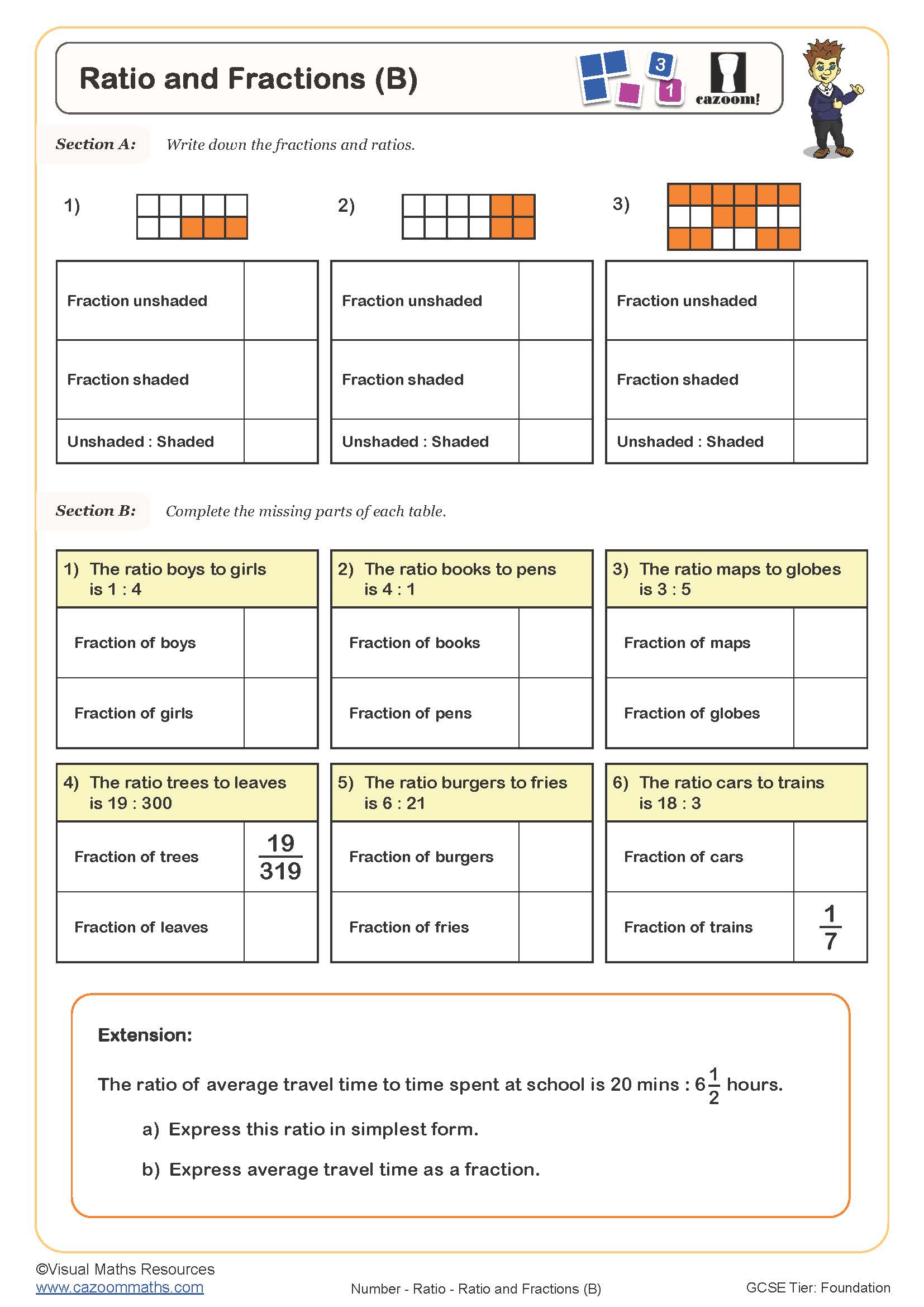
/Cazoom-Maths-Ratio-Simplifying-Ratios-(A)-Worksheet.jpg?w=3840)
-Worksheet.jpg?w=3840)
All worksheets are created by the team of experienced teachers at Cazoom Maths.
What makes effective ratio worksheets Year 7 with answers?
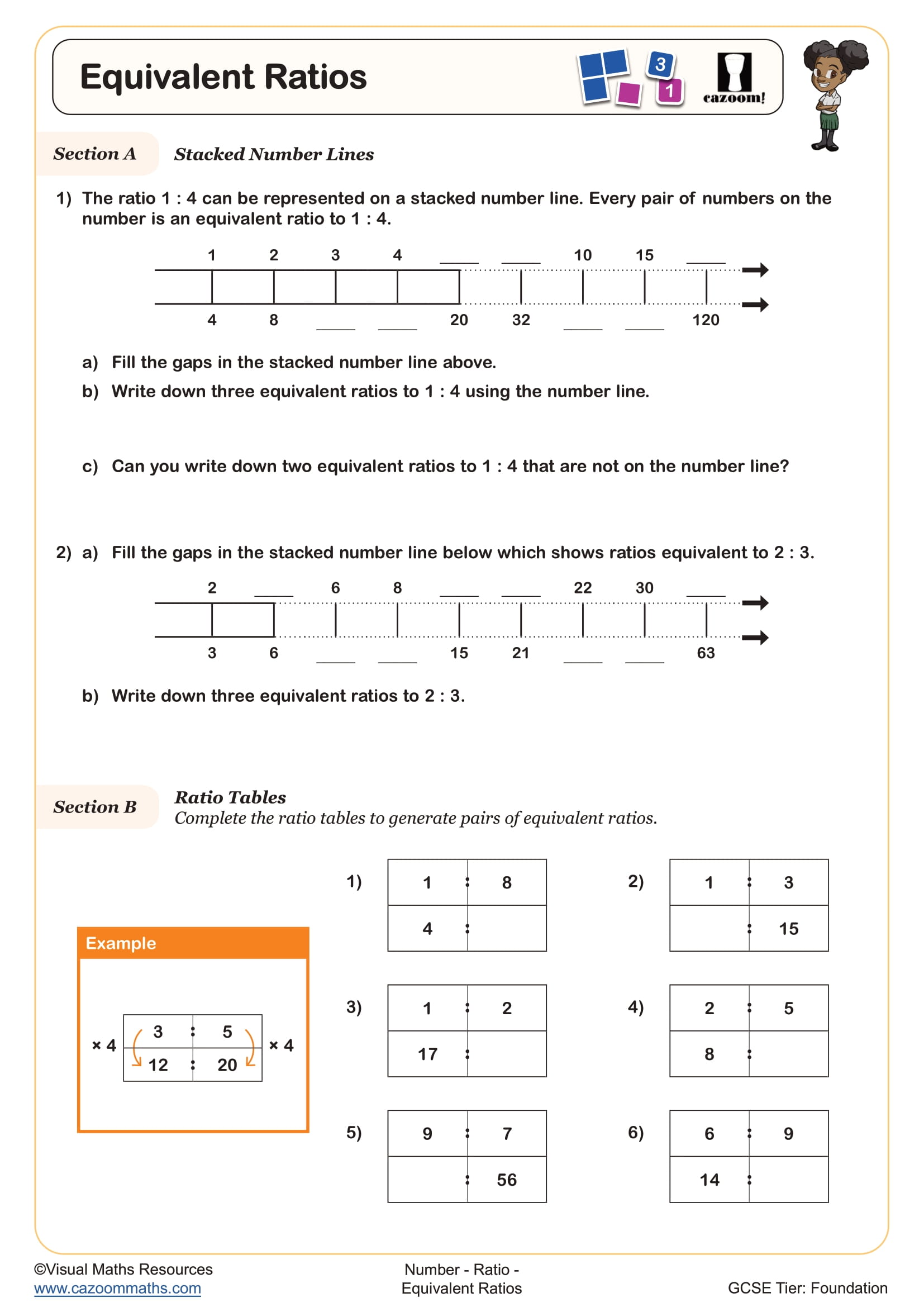
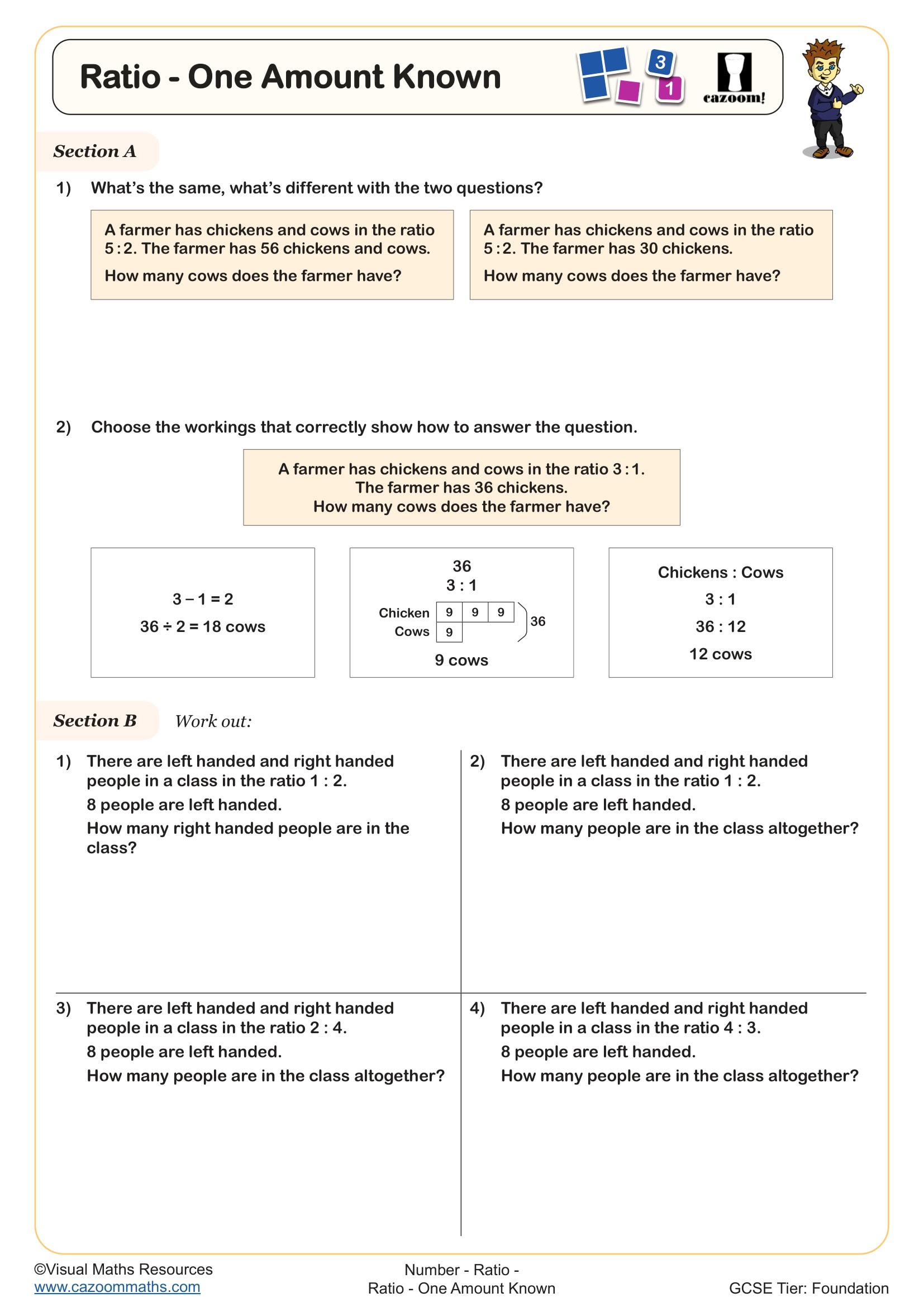
Quality ratio worksheets for Year 7 students include a logical progression from identifying ratios in real contexts through to solving multi-step problems. They should cover writing ratios in simplest form, finding equivalent ratios, and dividing quantities in given ratios, all aligned with KS3 National Curriculum expectations.
Teachers notice that students benefit most when worksheets include visual representations alongside numerical problems. Many students initially write ratios backwards or struggle to distinguish between ratios and fractions. Effective answer sheets show working steps, particularly for simplification, helping students identify where errors occur in their method.
How do Year 7 ratio topics progress from Year 6?
Year 7 ratio work builds significantly on Year 6 foundations, moving from simple ratio recognition to algebraic approaches and problem-solving applications. Students encounter more complex scenarios involving three-part ratios and unitary method calculations that prepare them for GCSE proportion work.
The transition often reveals gaps in basic fraction skills, as ratio simplification requires confident handling of common factors. Teachers observe that students who struggled with equivalent fractions in Year 6 need additional support with ratio equivalence. Year 7 introduces ratio notation (a:b) more formally and connects ratios to real-world contexts like recipes, maps, and mixing solutions.
Why do students find dividing quantities in ratios challenging?
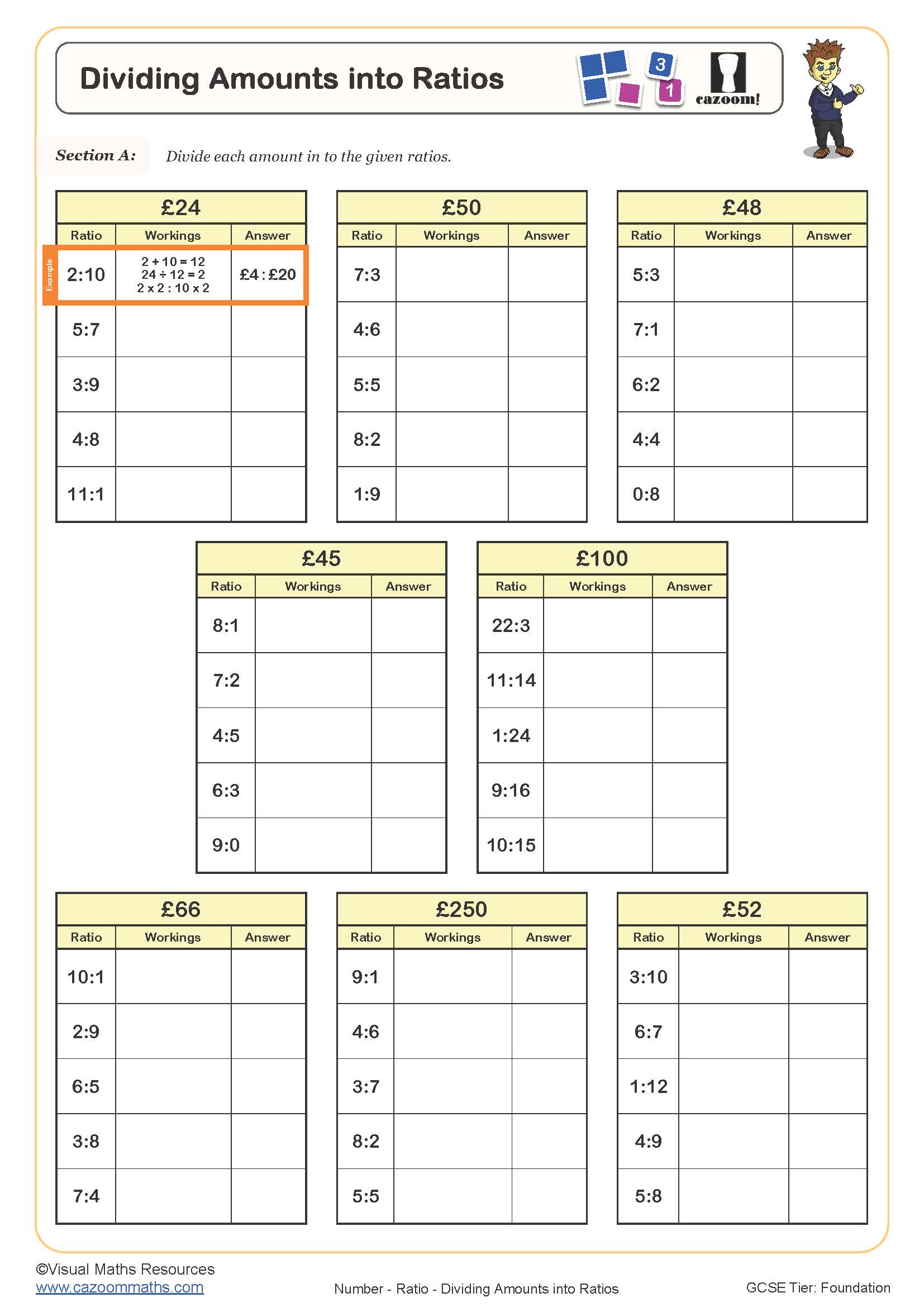
Dividing quantities in given ratios requires students to understand that ratios represent parts of a whole, not absolute values. Many students initially attempt to subtract rather than recognise the multiplicative relationship between ratio parts and actual quantities.
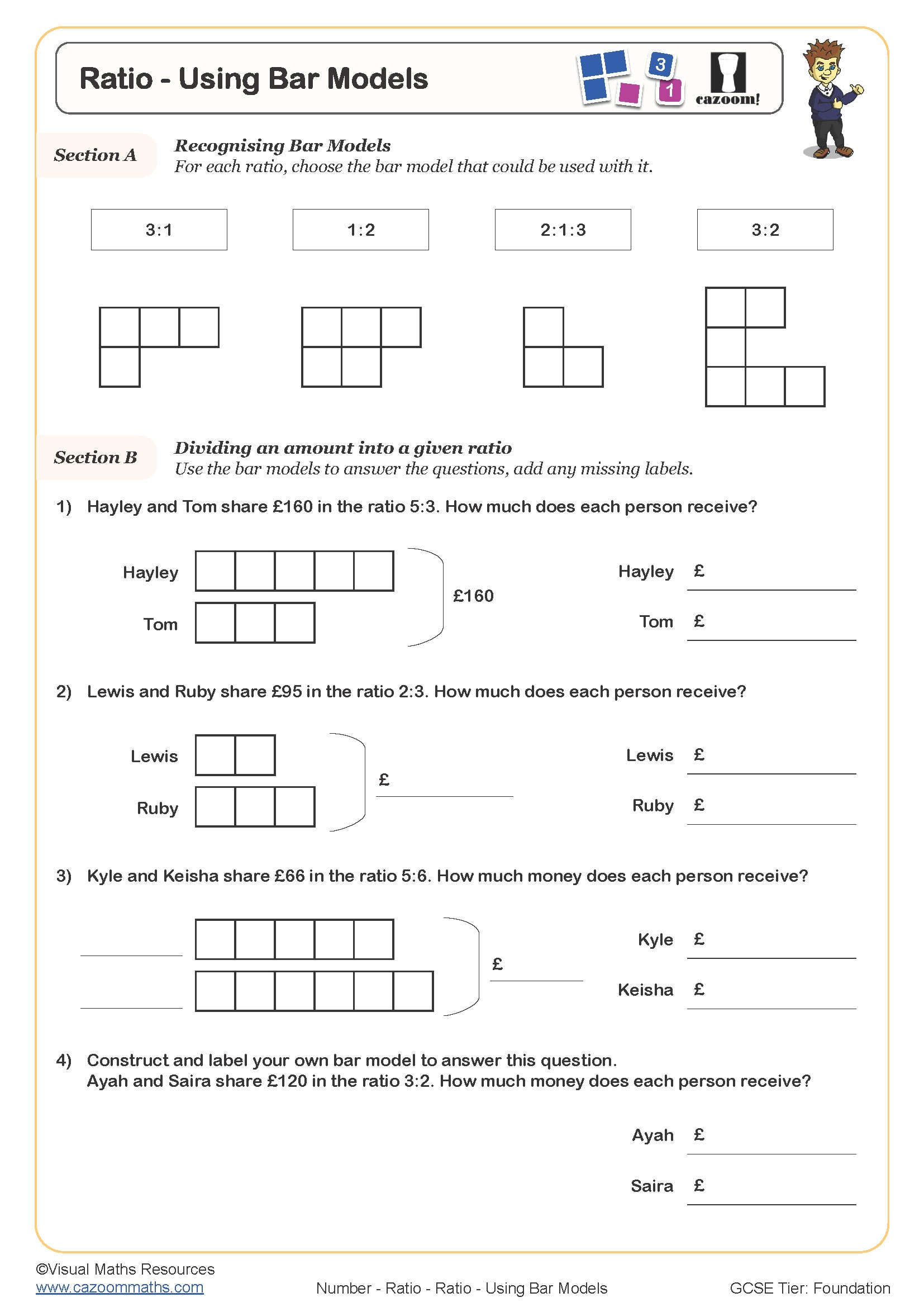
Teachers frequently observe students adding the ratio parts incorrectly or forgetting to find the total number of parts before calculating individual portions. For example, when dividing £60 in the ratio 2:3, students might divide by 2 and 3 separately rather than recognising they need 5 equal parts worth £12 each. Visual bar models help students conceptualise these problems before moving to purely numerical methods.
How should teachers use these ratio worksheets effectively in lessons?
These worksheets work best when integrated into a teaching sequence that moves from concrete examples to abstract problems. Teachers achieve better outcomes by starting each topic with practical activities using actual objects or visual representations before introducing worksheet practice.
Many teachers find success using the worksheets for differentiated homework or intervention work, with answer sheets enabling students to self-assess and identify specific areas needing support. The PDF format allows for easy printing of individual questions for mini-plenaries or targeted practice. Regular low-stakes testing using worksheet questions helps maintain ratio fluency throughout the year and prepares students for the problem-solving demands of GCSE mathematics.