Year 8 Calculator Methods Worksheets
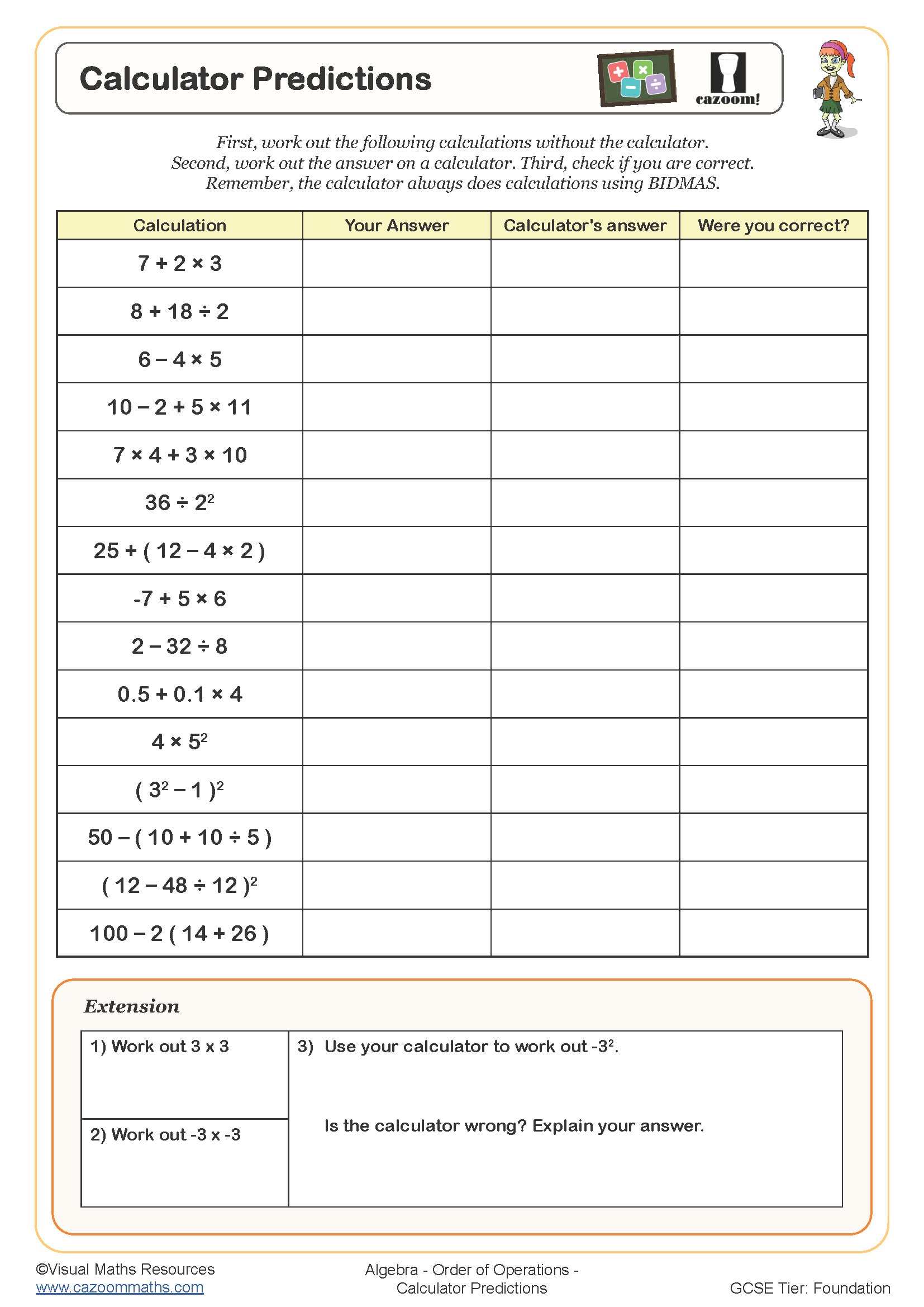
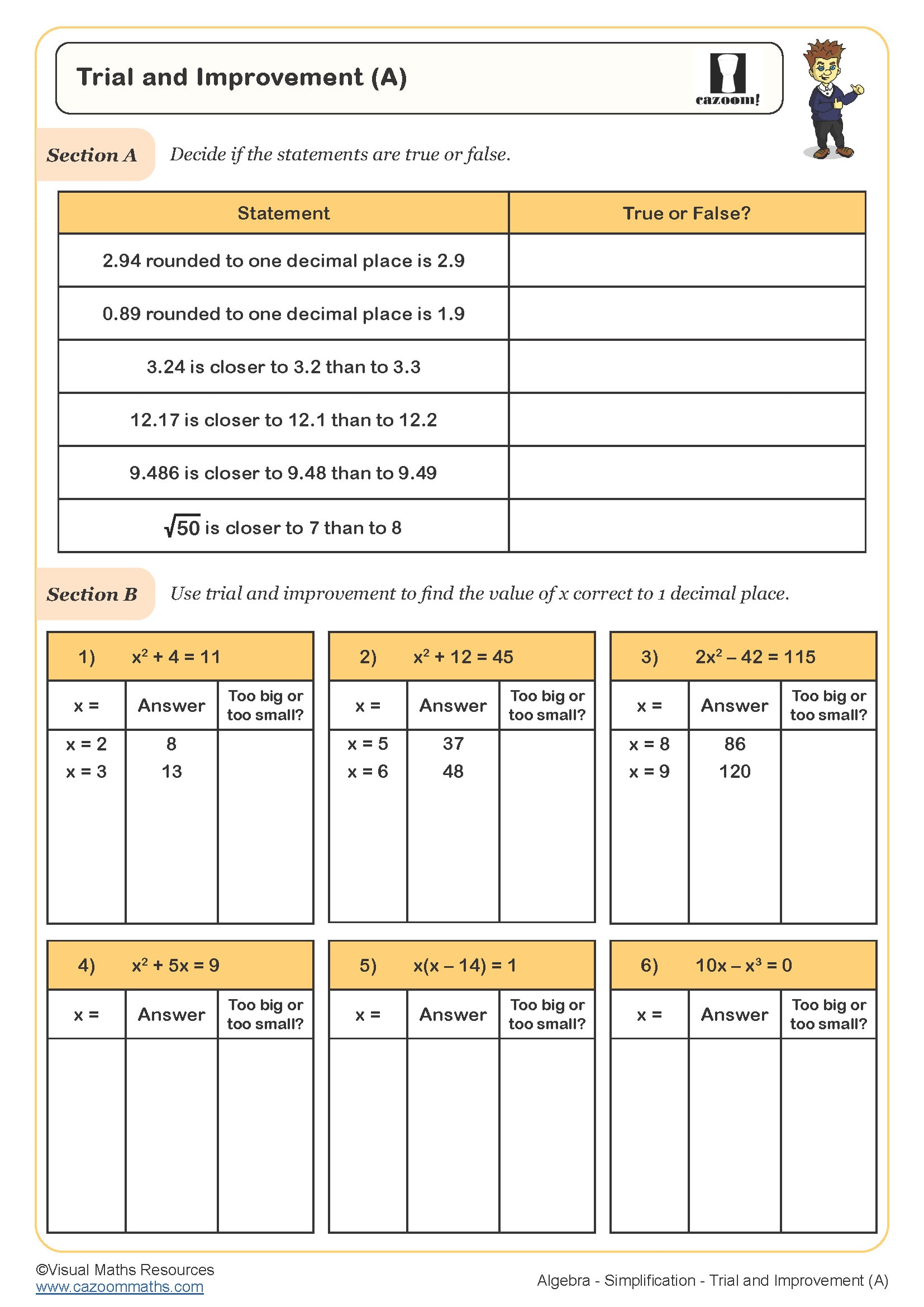
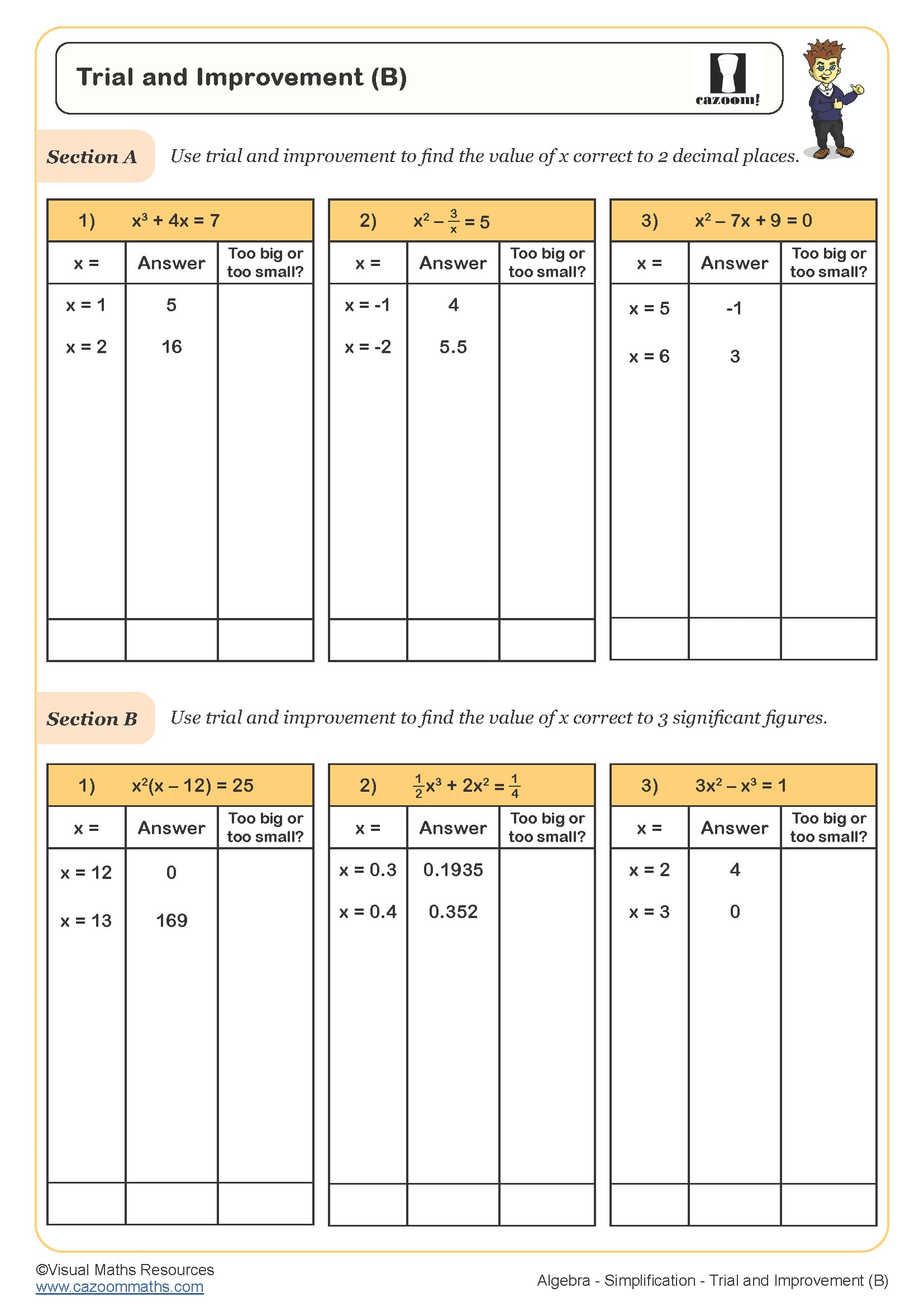
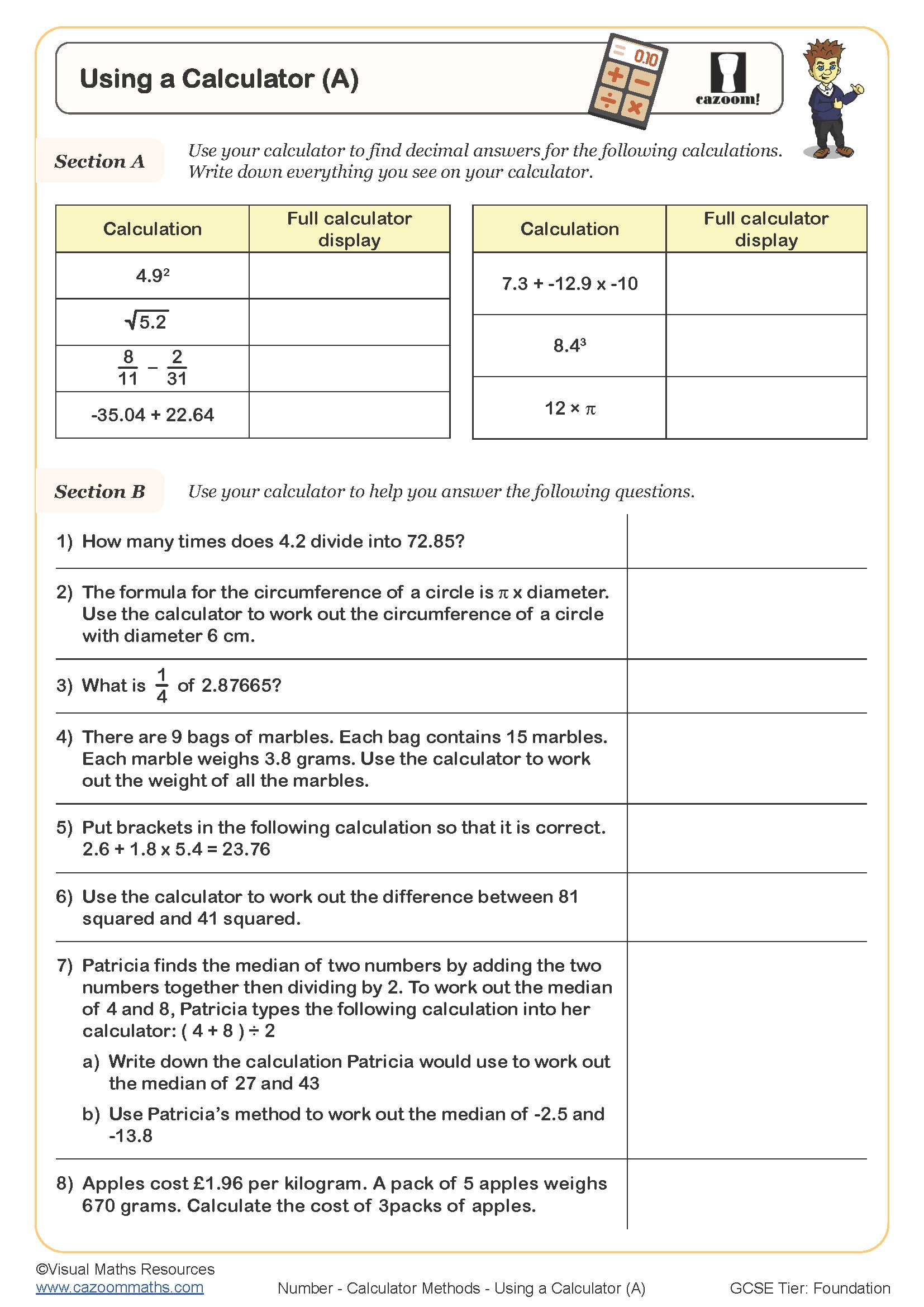
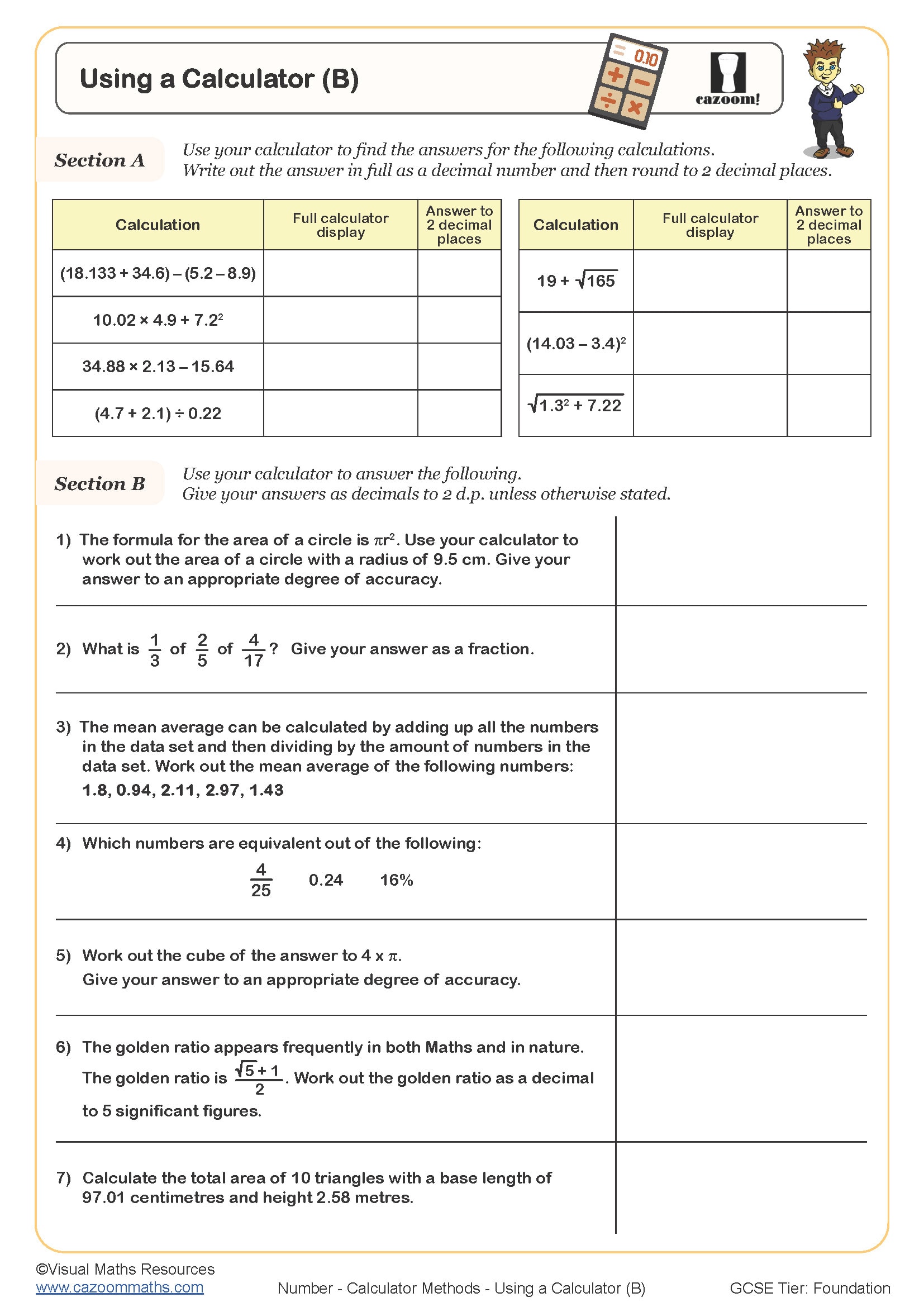
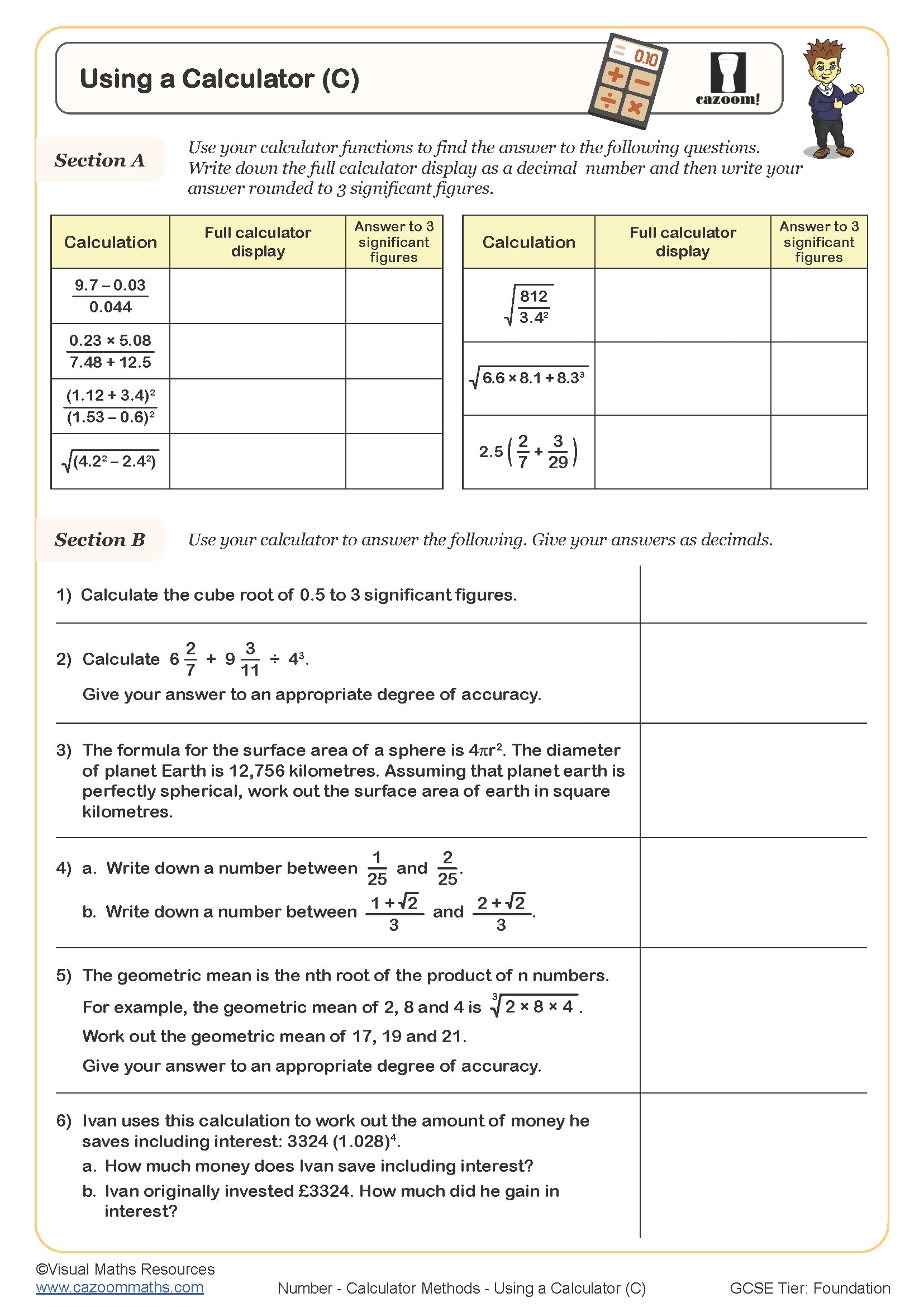
All worksheets are created by the team of experienced teachers at Cazoom Maths.
What skills do students develop with a using a calculator worksheet?
Students develop systematic approaches to calculator operations, including memory storage functions, bracket calculations, and working with scientific notation. The worksheets target Key Stage 3 objectives for using calculators effectively and interpreting calculator displays accurately, particularly when dealing with recurring decimals and very large or small numbers.
Teachers frequently notice that students make errors when entering complex calculations without planning their approach first. These calculator exercises encourage students to break down multi-step problems and verify their results using estimation, building the critical thinking skills core for GCSE success.
Are these calculator worksheets suitable for different year groups?
While designed specifically for Year 8, these worksheets work effectively across Key Stage 3 depending on students' prior experience with scientific calculators. Year 7 students who have mastered basic operations can tackle simpler problems, whilst Year 9 students benefit from the systematic approach when preparing for GCSE calculator papers.
The progression within each worksheet allows teachers to differentiate effectively, with early questions focusing on basic calculator functions and later problems incorporating trial and improvement methods and complex multi-step calculations that mirror GCSE-style questions.
How do these worksheets support trial and improvement calculator methods?
The worksheets include structured approaches to trial and improvement problems, teaching students to use calculator memory functions efficiently and organise their working systematically. Students learn to refine estimates using calculator results and recognise when they've achieved sufficient accuracy for different contexts.
Many teachers report that students initially struggle with the iterative nature of trial and improvement, often giving up after one or two attempts. These resources provide scaffolded practice that builds persistence and shows students how calculator technology can accelerate the process whilst maintaining mathematical rigour.
How can teachers use these calculator worksheets most effectively in lessons?
Teachers find these worksheets work best when introduced after students have explored calculator functions practically, allowing them to consolidate learning through focused practice. The answer sheets enable quick marking and immediate feedback, whilst the structured format helps identify students who need additional support with specific calculator operations.
Effective implementation often involves pairing calculator work with estimation activities, helping students develop number sense alongside computational skills. Teachers report success using these resources for intervention groups and as homework tasks, as the clear instructions allow students to work independently whilst building confidence with scientific calculator use.