Year 8 Circle Worksheets
All worksheets are created by the team of experienced teachers at Cazoom Maths.
What topics are covered in area of circles worksheets for Year 8?
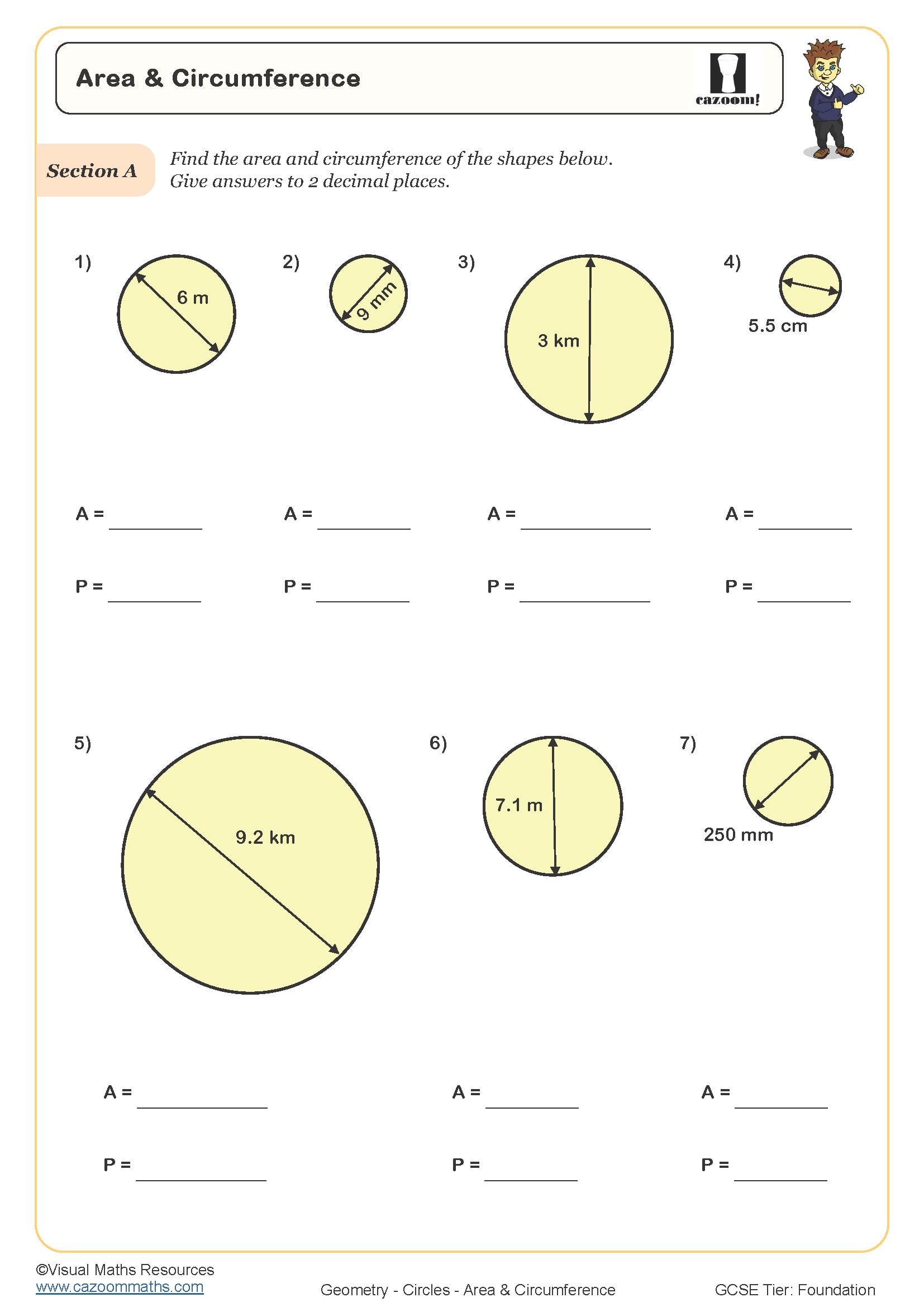
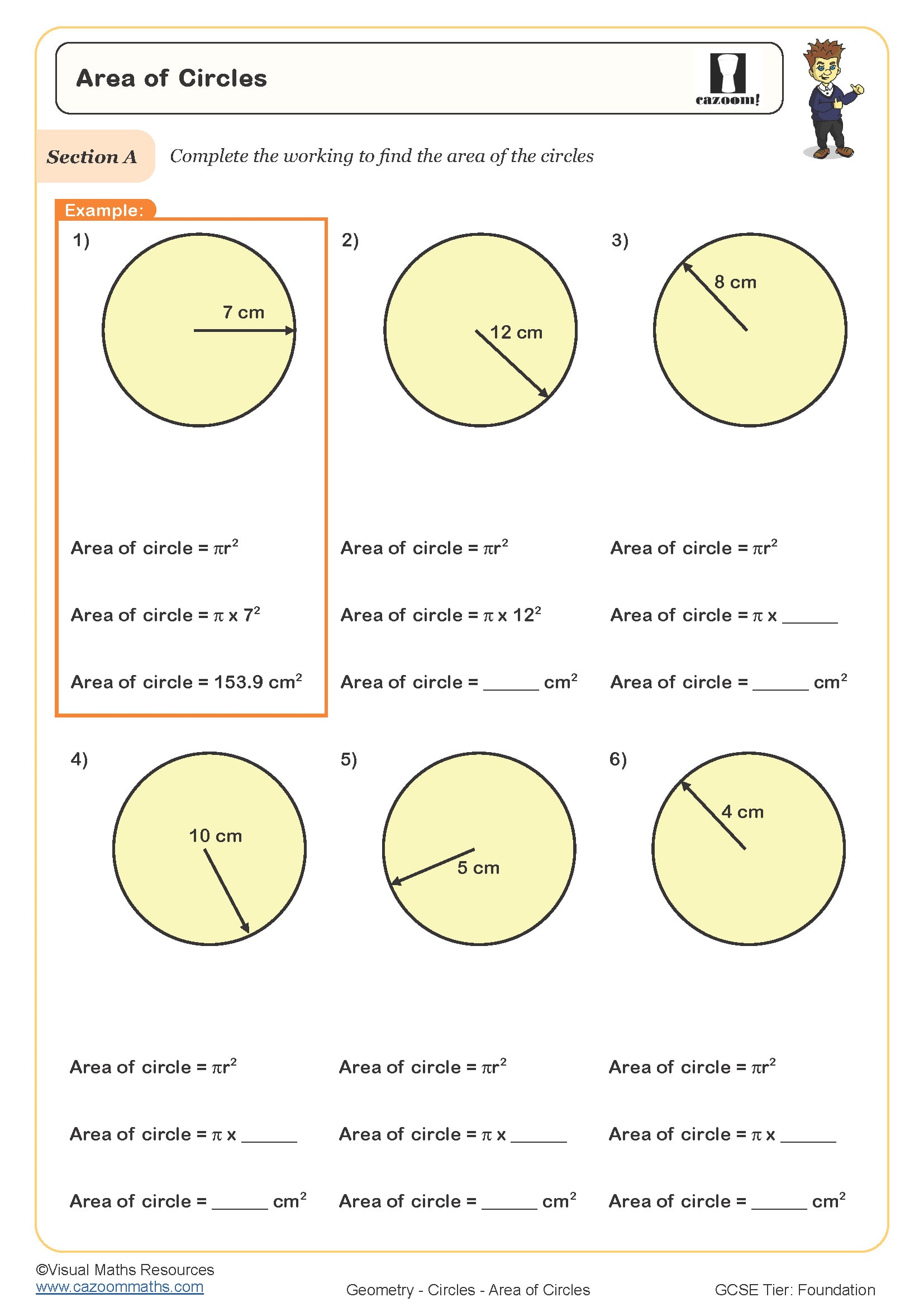
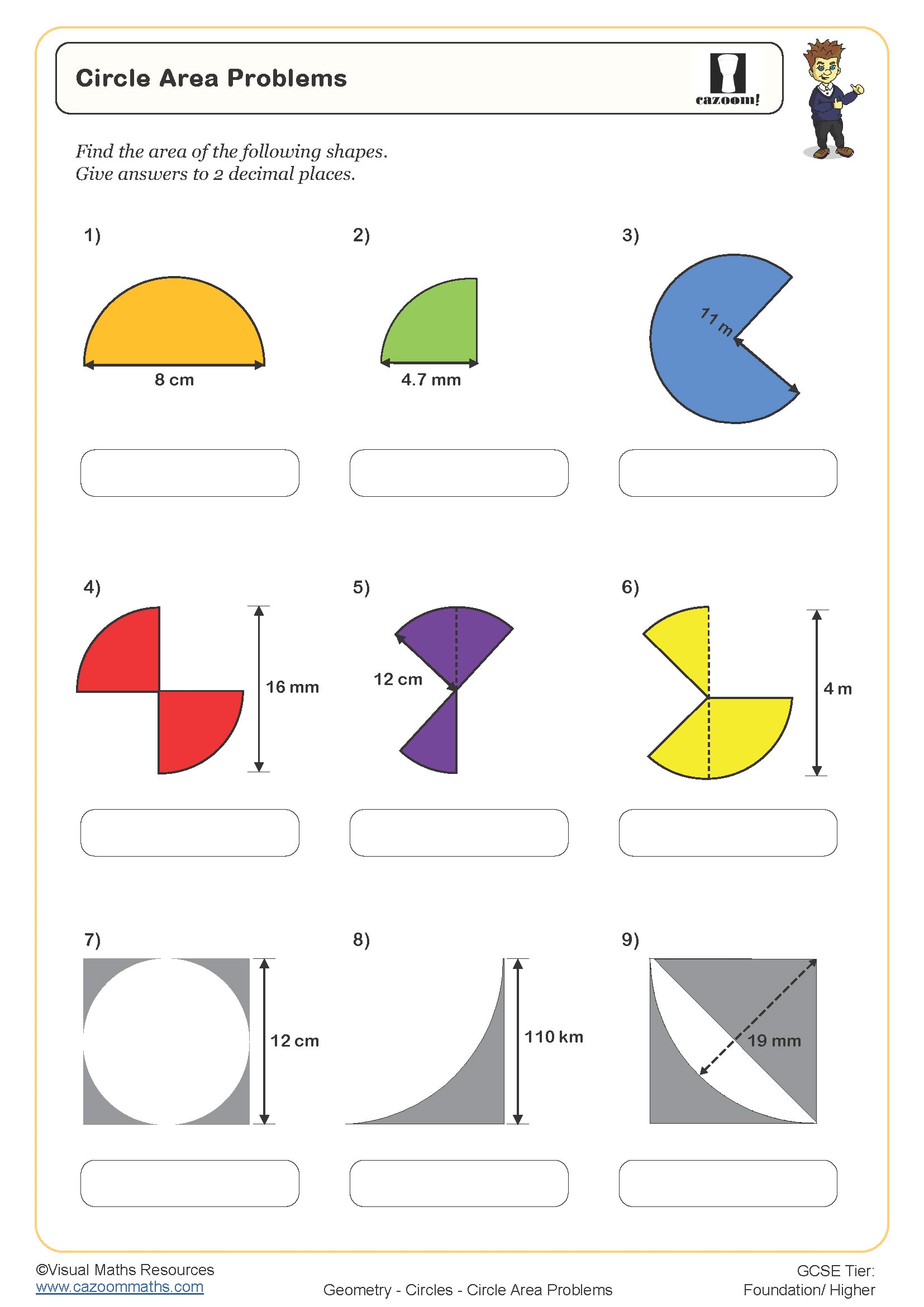
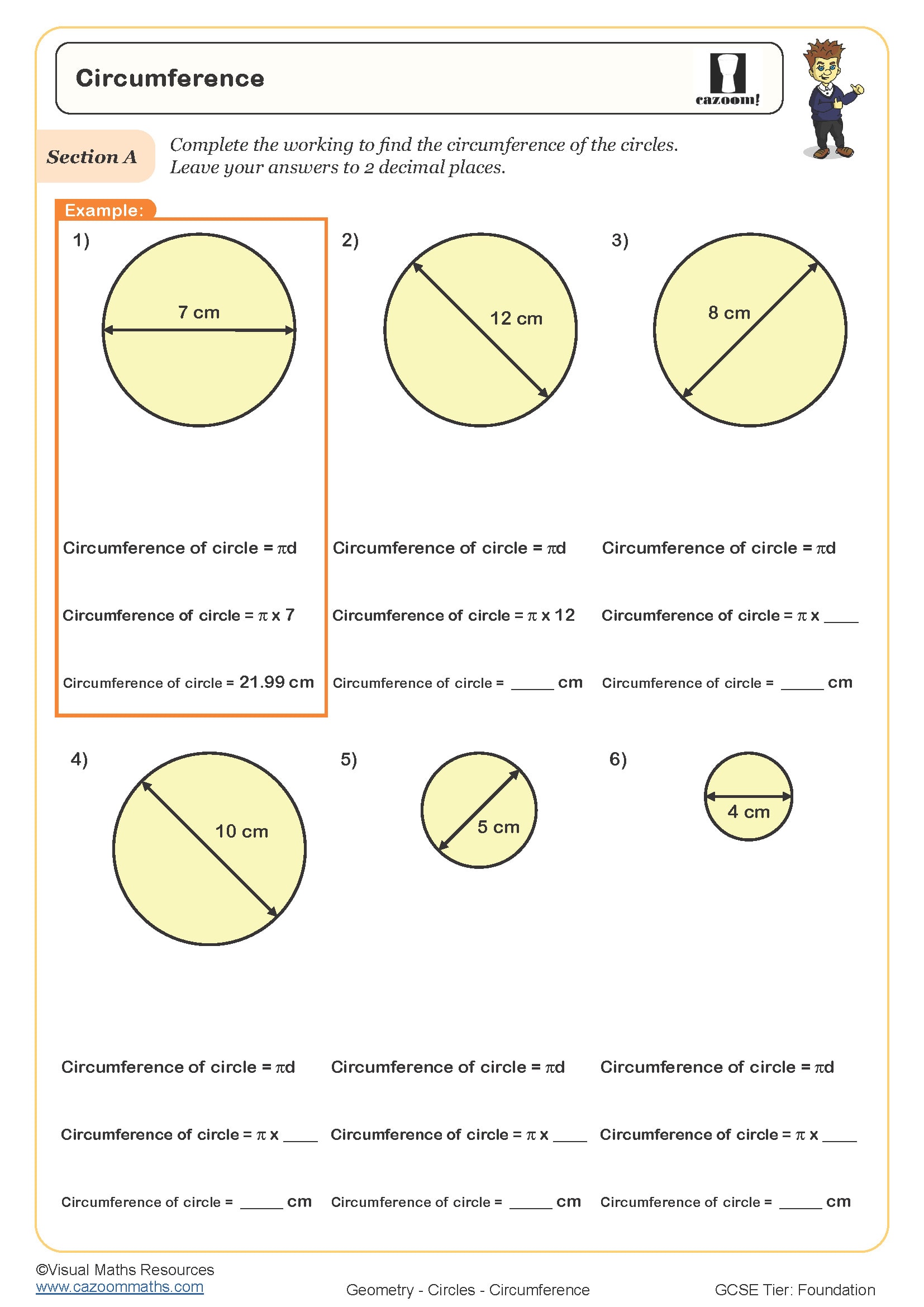
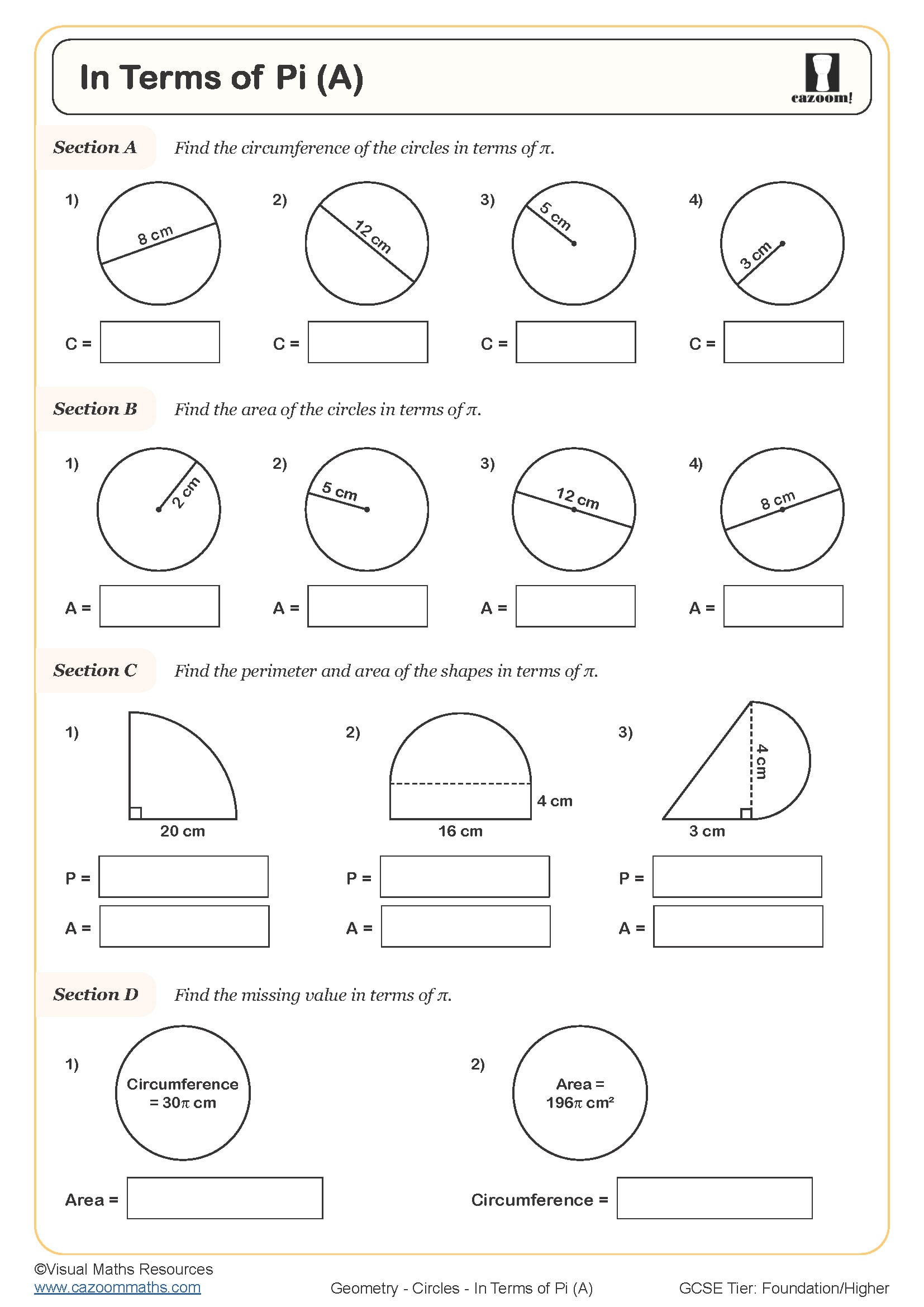
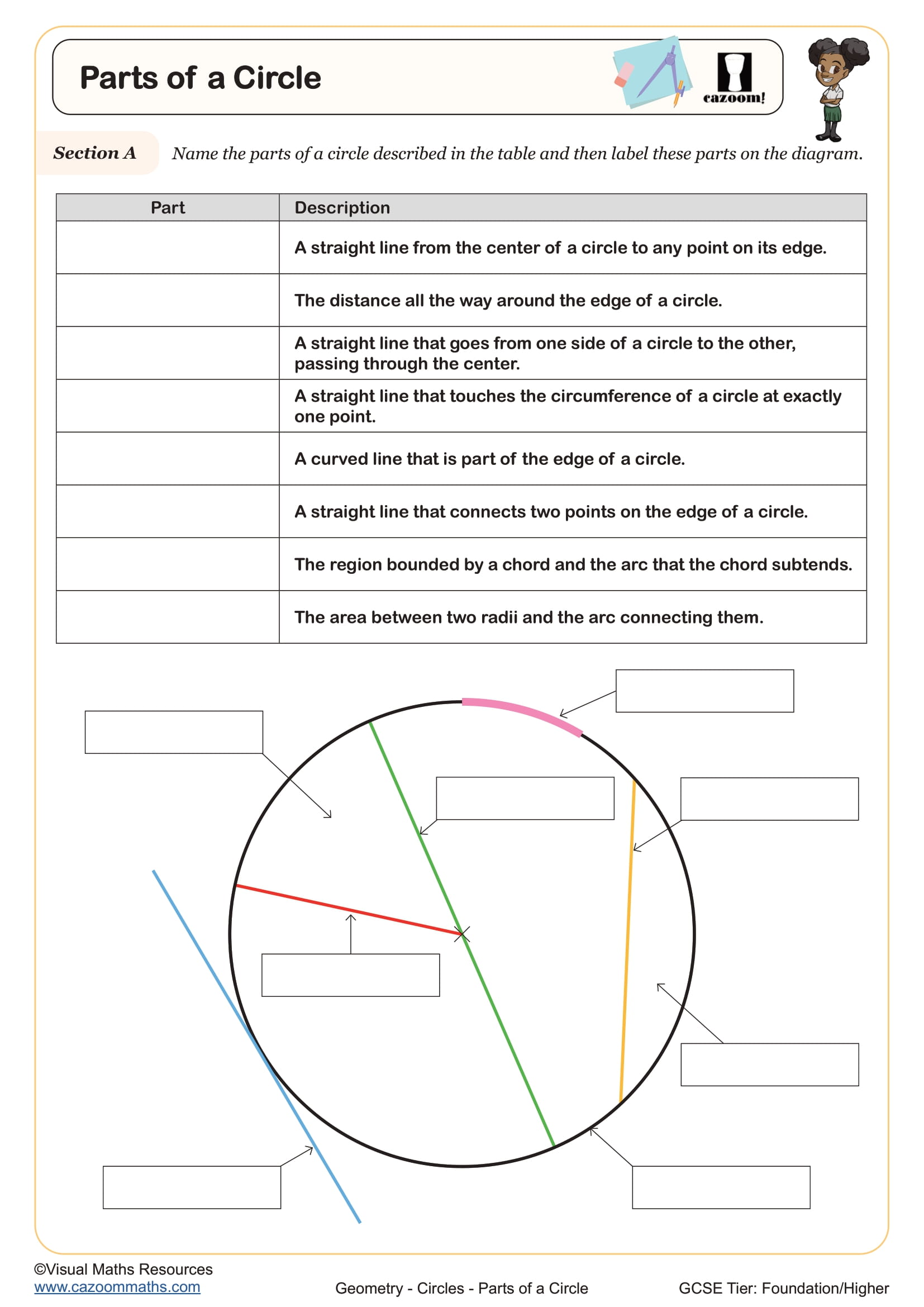
Area of circles worksheets for Year 8 focus on applying the formula A = πr² across various contexts aligned with KS3 expectations. Students practise calculating areas using both exact answers (leaving π in the expression) and decimal approximations, finding missing radii from given areas, and solving problems involving semicircles and quarter circles.
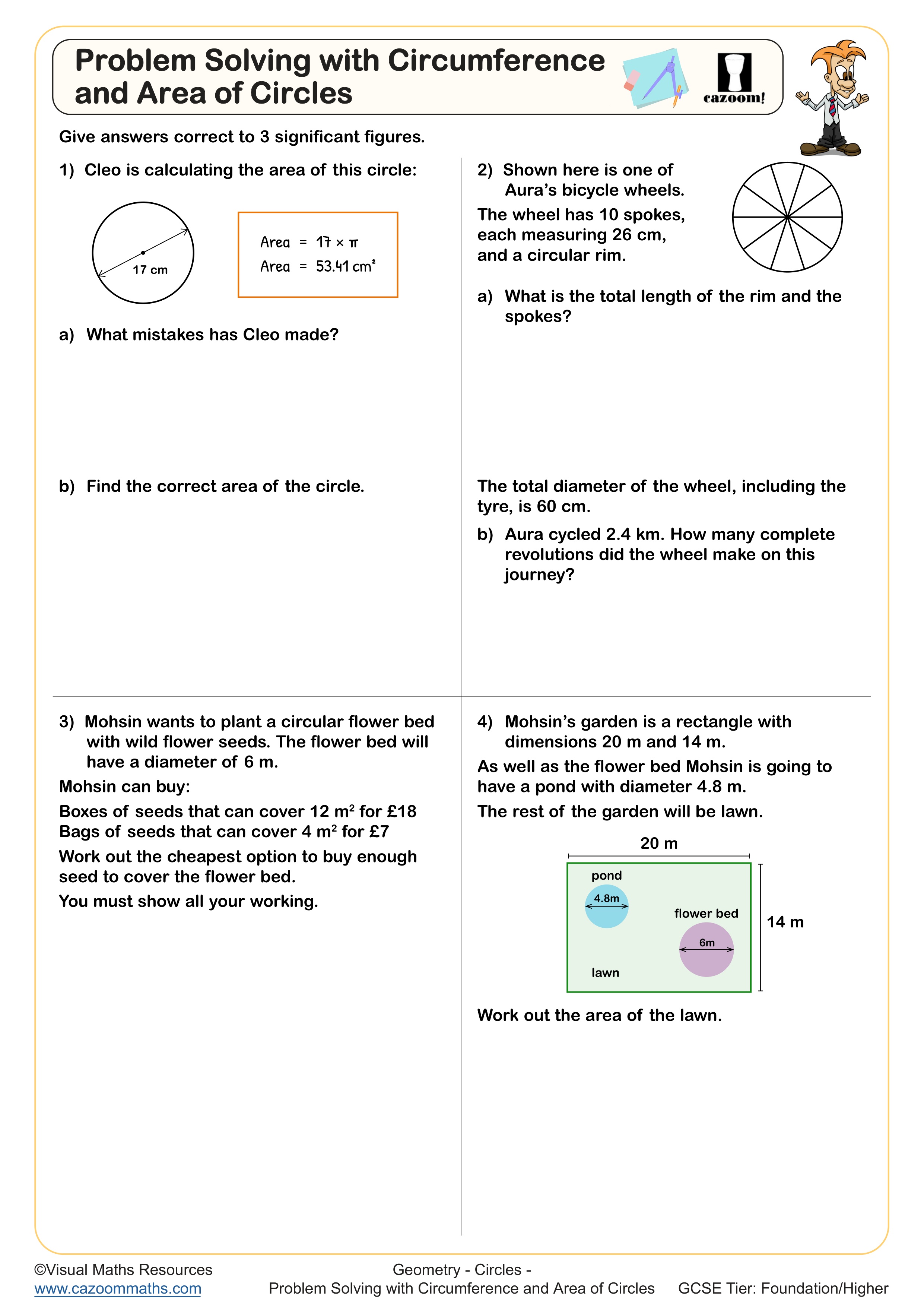
Teachers notice that students frequently struggle when circles are embedded within compound shapes or when they need to work backwards from area to find radius. The circles worksheet activities progress from straightforward substitution problems to multi-step applications involving real contexts like garden design or sports field measurements, helping students see the practical relevance of circle area calculations.
How do these circle worksheets support progression from Year 7 to GCSE?
Circle worksheets for Year 8 bridge the gap between Year 7's introduction to circumference and the more complex circle geometry required at GCSE level. Students consolidate area calculations while beginning to encounter circles within coordinate geometry and more sophisticated problem-solving contexts that prepare them for higher-tier GCSE questions.
The progression includes moving from single-step area calculations to problems involving multiple circles, composite shapes, and inverse operations. Teachers find that consistent practice with area and perimeter of circle worksheet problems in Year 8 significantly improves students' confidence when tackling GCSE questions involving sectors, arcs, and circle theorems in later years.
Why do students often mix up circumference and area formulas?
Students frequently confuse C = πd with A = πr² because both formulas involve π and circle measurements. The confusion typically stems from not recognising whether a problem asks for distance around the circle or the space inside it, particularly when working with word problems or diagrams that don't explicitly state which measurement is needed.
Maths teachers have found that emphasising the units helps students distinguish between the formulas - circumference gives linear units (cm, m) while area gives square units (cm², m²). Regular practice with varied circle worksheet problems that explicitly ask students to identify whether they're finding circumference or area before calculating helps reinforce this crucial distinction and reduces exam errors.
How can teachers use these worksheets most effectively in Year 8 lessons?
Teachers achieve best results by using circle worksheets as differentiated practice after demonstrating formula derivation and key concepts. Starting with guided examples where students identify given information and choose appropriate formulas helps prevent the common error of rushing into calculations without understanding what the question asks for.
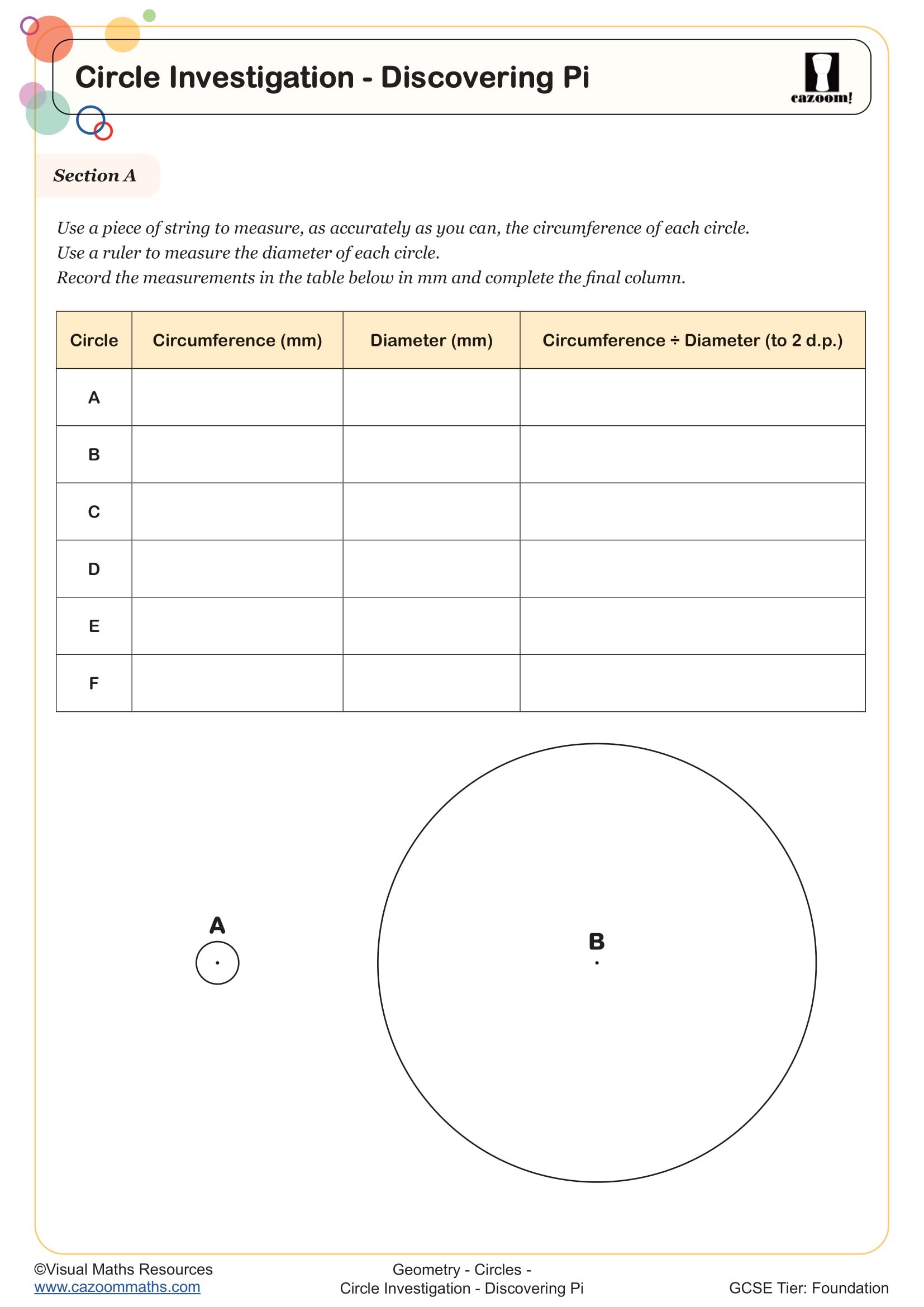
The included answer sheets enable peer marking sessions that promote mathematical discussion about methods and common errors. Many teachers pair these worksheets with practical activities like measuring circular objects in the classroom, then use the structured practice to consolidate learning. This approach helps students connect abstract formulas to real measurements and builds confidence before attempting more complex GCSE-style problems.