Year 8 Coordinates Worksheets
All worksheets are created by the team of experienced teachers at Cazoom Maths.
What topics are covered in Year 8 coordinates worksheet PDF resources?
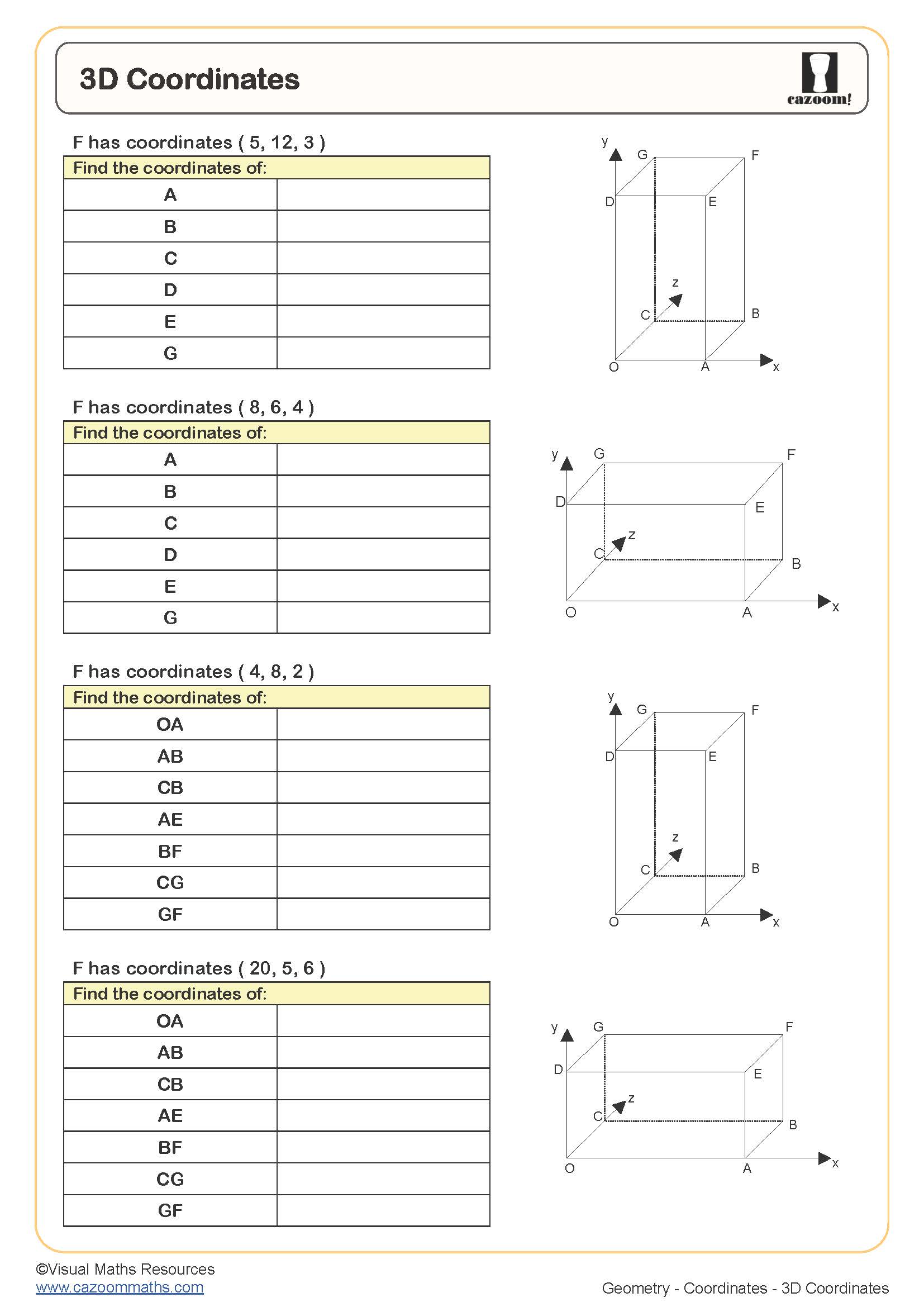
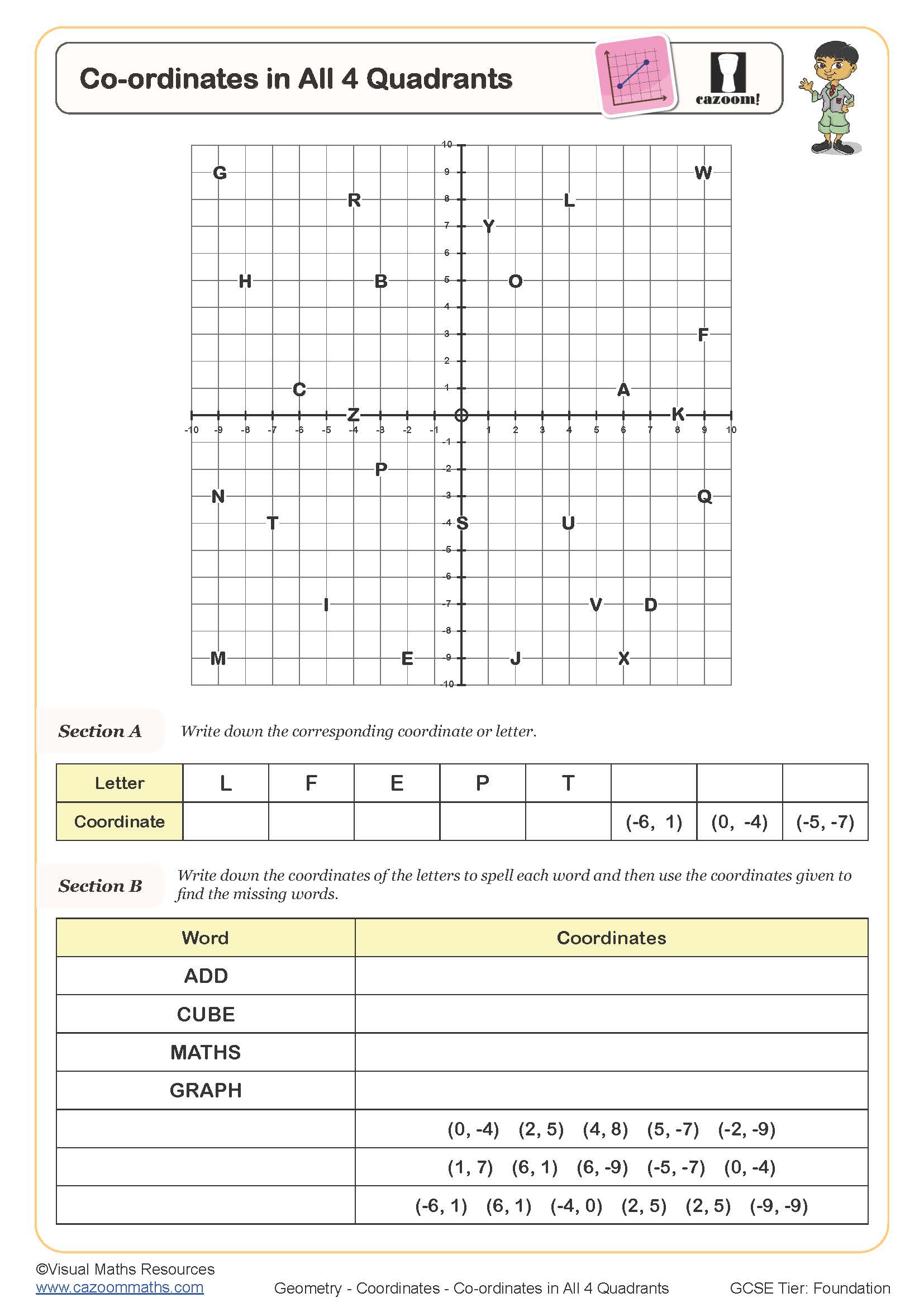
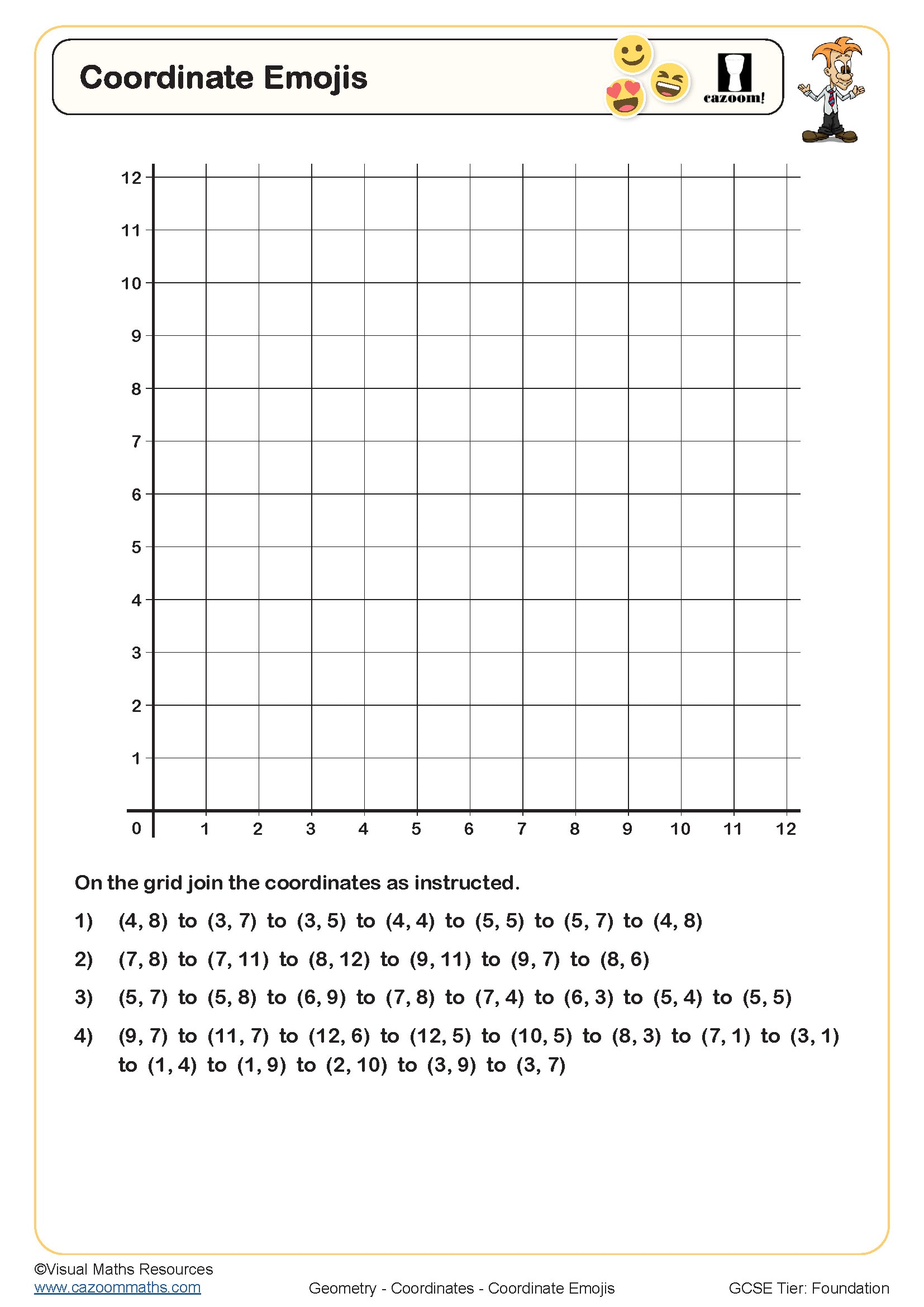
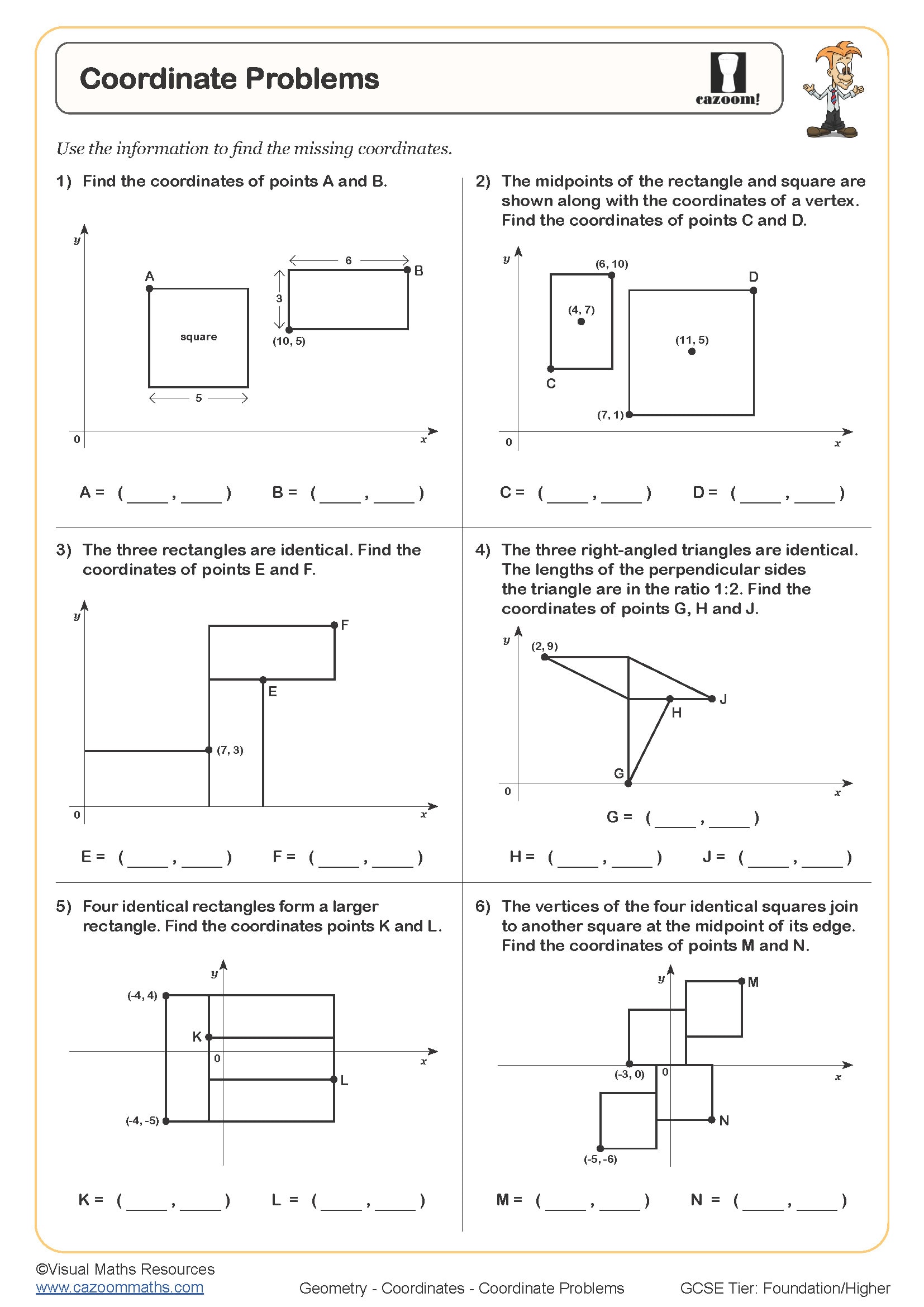
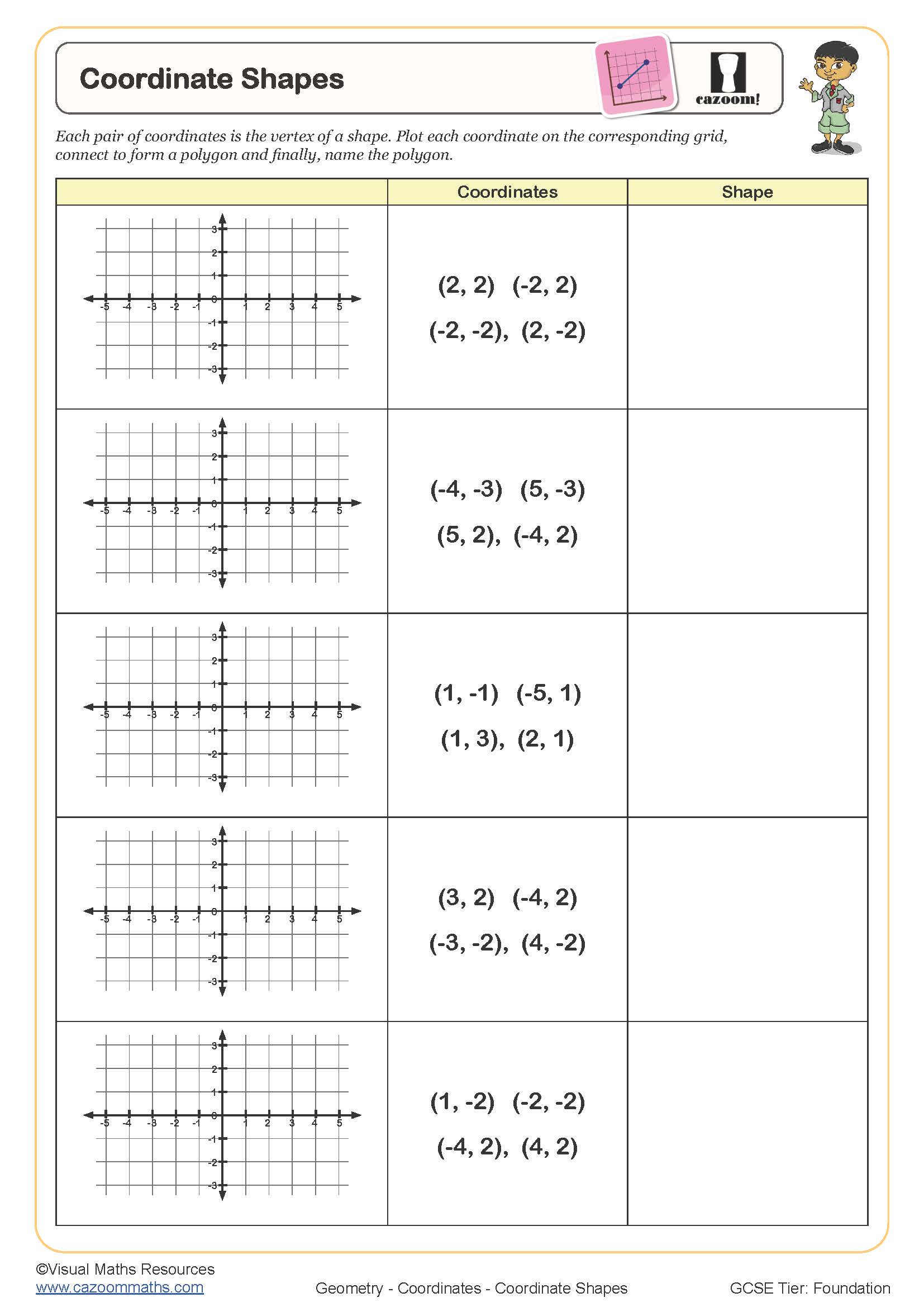
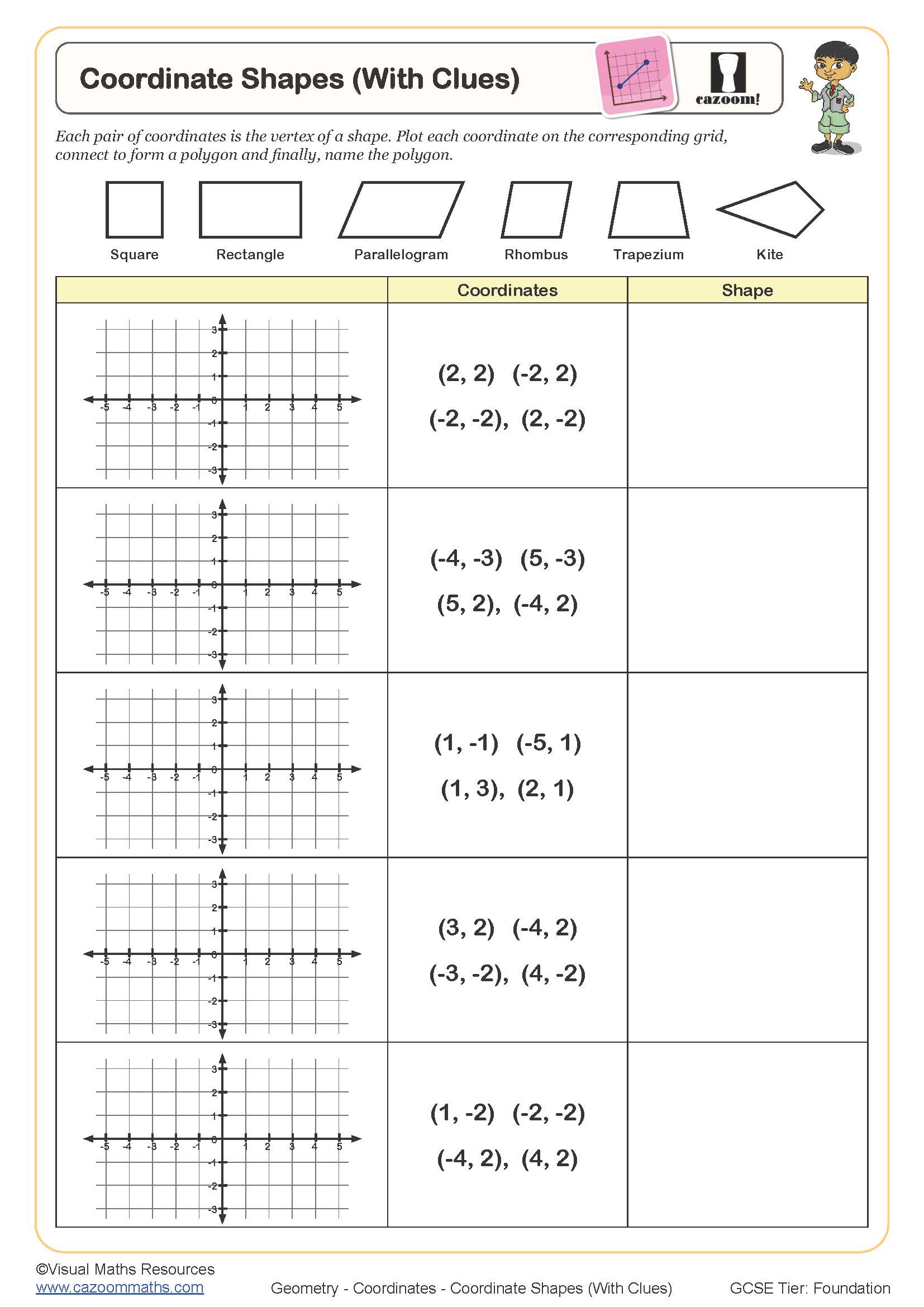
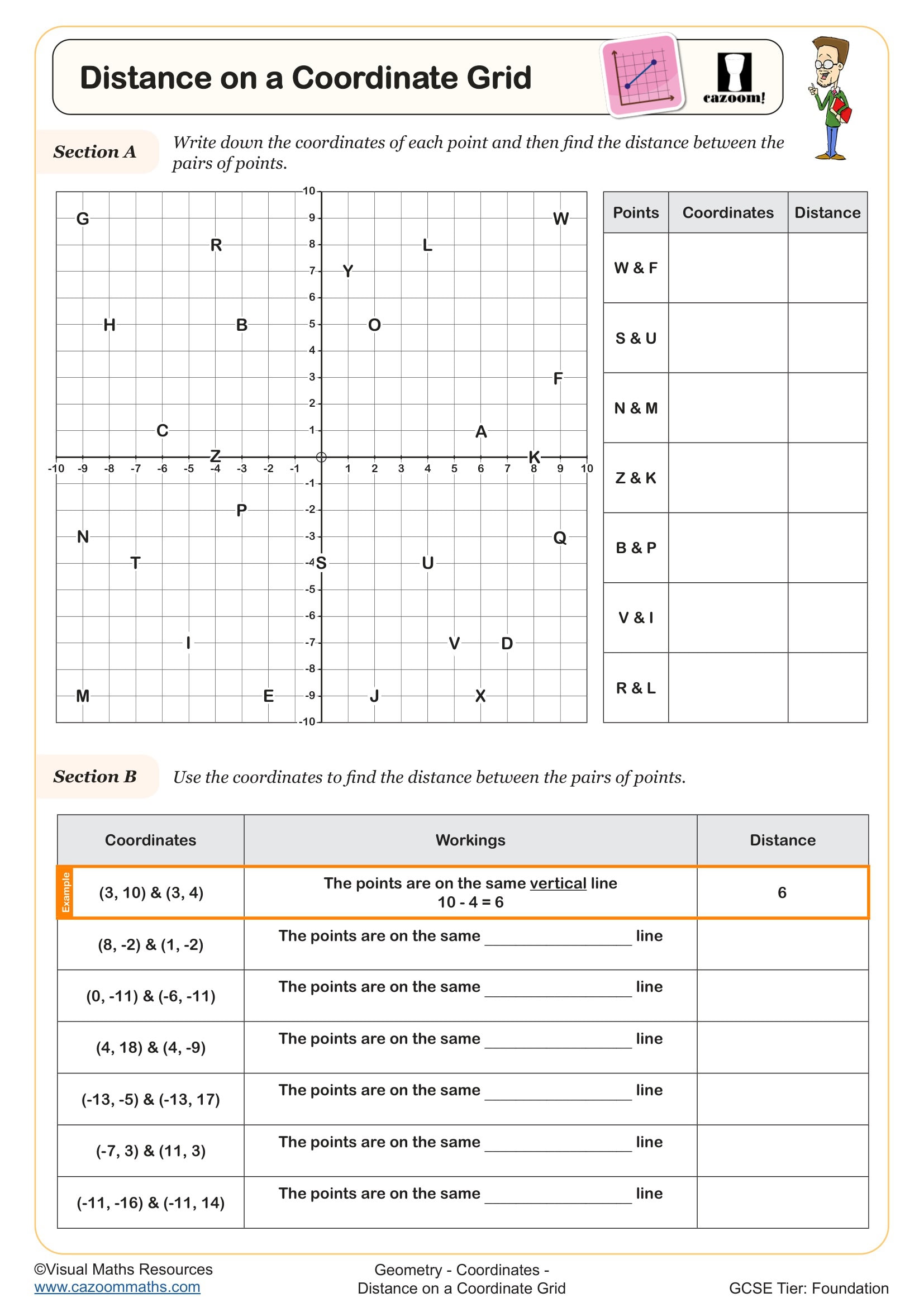
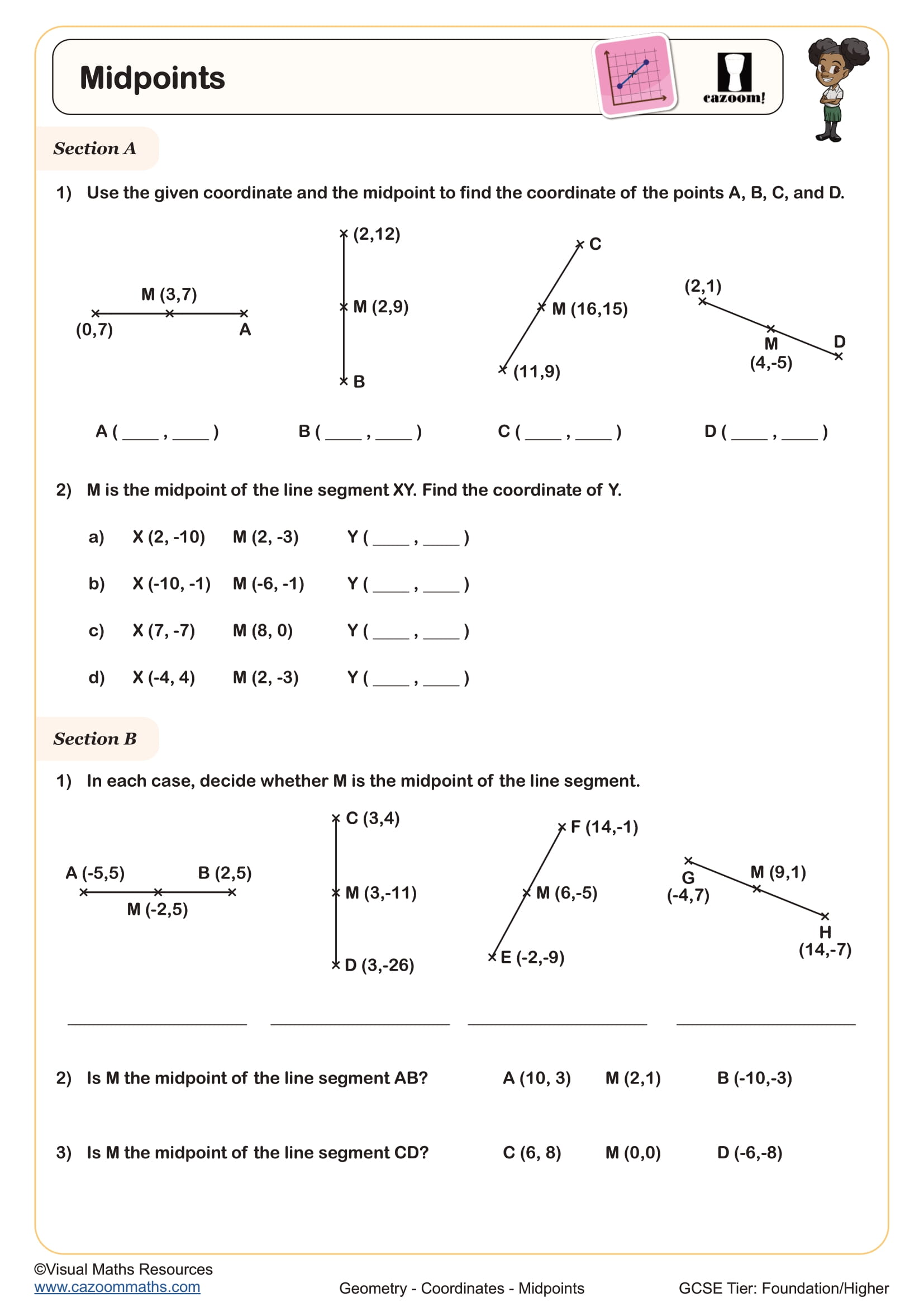
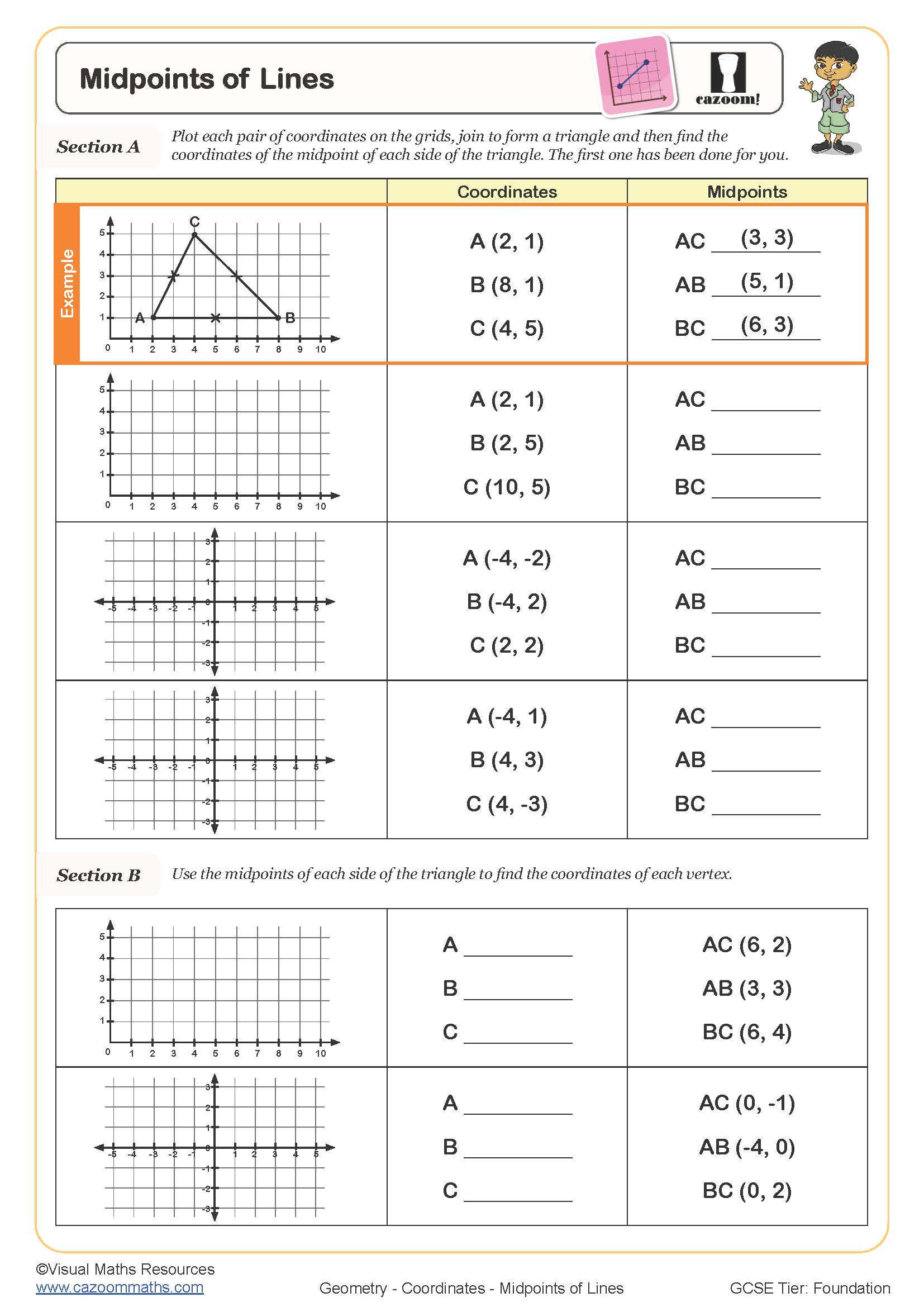
Year 8 coordinates worksheet pdf collections typically cover plotting and reading coordinates in all four quadrants, calculating distances between points, finding midpoints, and exploring simple transformations on the coordinate plane. These align with KS3 National Curriculum requirements for geometry and measures, preparing students for more advanced coordinate geometry at GCSE level.
Mathematics teachers frequently observe that students find the transition from positive coordinates to working with negative values particularly challenging. Many students correctly plot points like (3, 4) but struggle with coordinates such as (-2, -5), often placing them in the wrong quadrant or confusing the x and y directions when negative numbers are involved.
How do coordinates worksheets progress from Year 7 to Year 8?
Year 7 coordinates work typically focuses on the first quadrant with positive coordinates, basic plotting, and simple distance calculations. Year 8 coordinates worksheets extend this to all four quadrants, introducing negative coordinates and more complex problems involving midpoints, perpendicular and parallel lines, and coordinate-based shape properties.
The progression reflects students' developing number confidence with negative integers. Teachers notice that students who struggled with directed numbers in algebra often face similar challenges when working with coordinates, making this an excellent opportunity to reinforce understanding of positive and negative values in a visual, geometric context.
Why do students find distance calculations between coordinates challenging?
Distance calculations require students to apply Pythagoras' theorem to coordinate geometry, combining algebraic manipulation with geometric understanding. Students must correctly identify the horizontal and vertical distances between two points, square these values, add them, and find the square root - a multi-step process where errors easily compound.
Mathematics teachers consistently observe that students often forget to subtract coordinates correctly when finding distances, particularly with negative coordinates. For example, finding the distance between (-3, 2) and (4, -1) requires calculating (4-(-3)) and (-1-2), but many students struggle with the double negative, leading to incorrect horizontal or vertical distances in their Pythagoras calculations.
How can teachers use coordinate worksheets most effectively in lessons?
Coordinate worksheets work best when introduced after hands-on plotting activities using large coordinate grids or outdoor mathematics sessions. Teachers can use the structured progression from basic plotting to complex problems, ensuring students master each skill before advancing. The included answer sheets enable peer assessment and immediate feedback during lessons.
Many teachers find success in connecting coordinate work to real applications like map references, computer game design, or GPS navigation. This contextual approach helps students understand why accurate plotting matters beyond the classroom. Regular mini-assessments using coordinate problems also help identify students who need additional support with negative numbers before moving to more advanced GCSE coordinate geometry topics.