Year 8 Decimals Worksheets
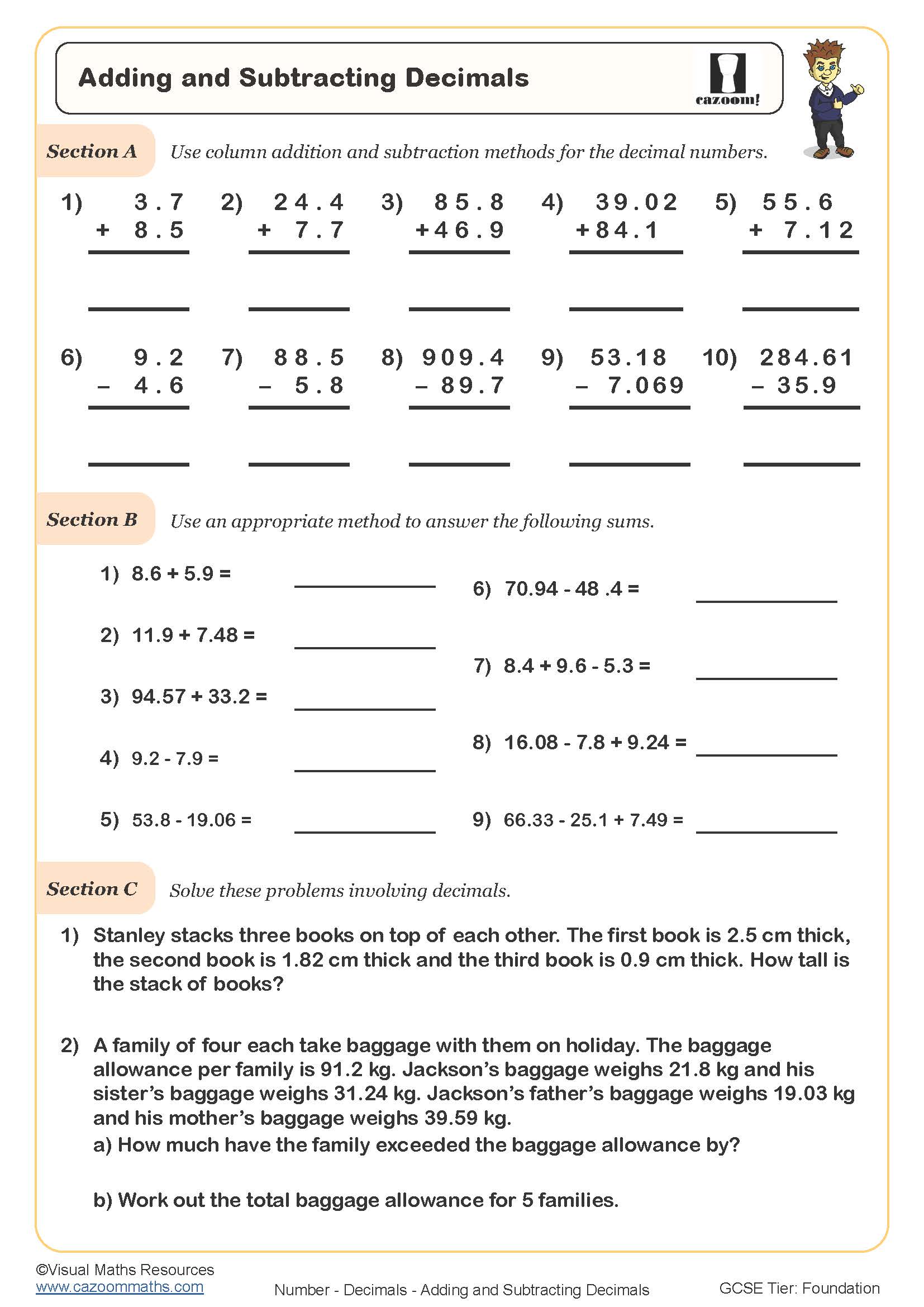
Adding and Subtracting Decimals
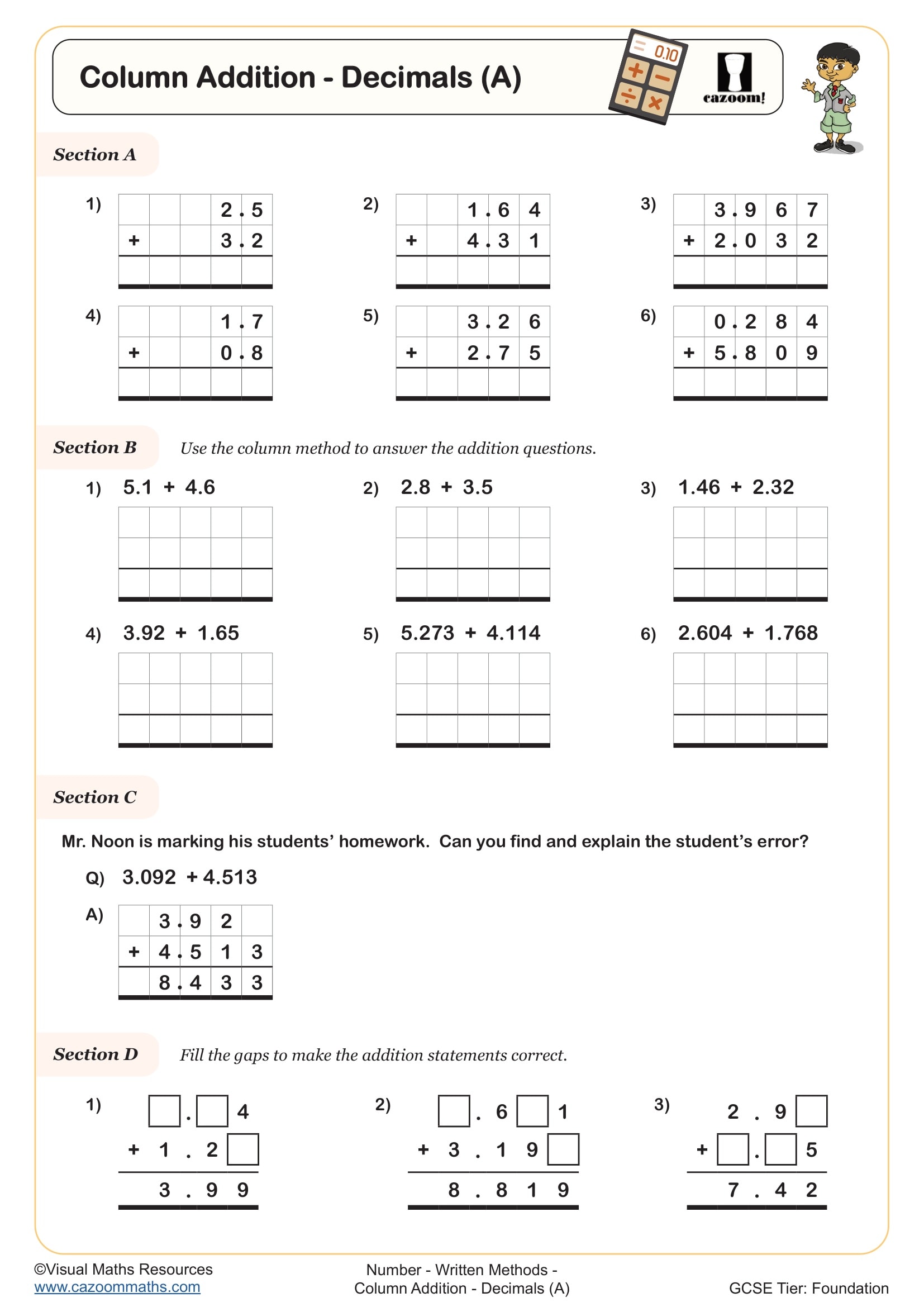
Column Addition - Decimals (A)
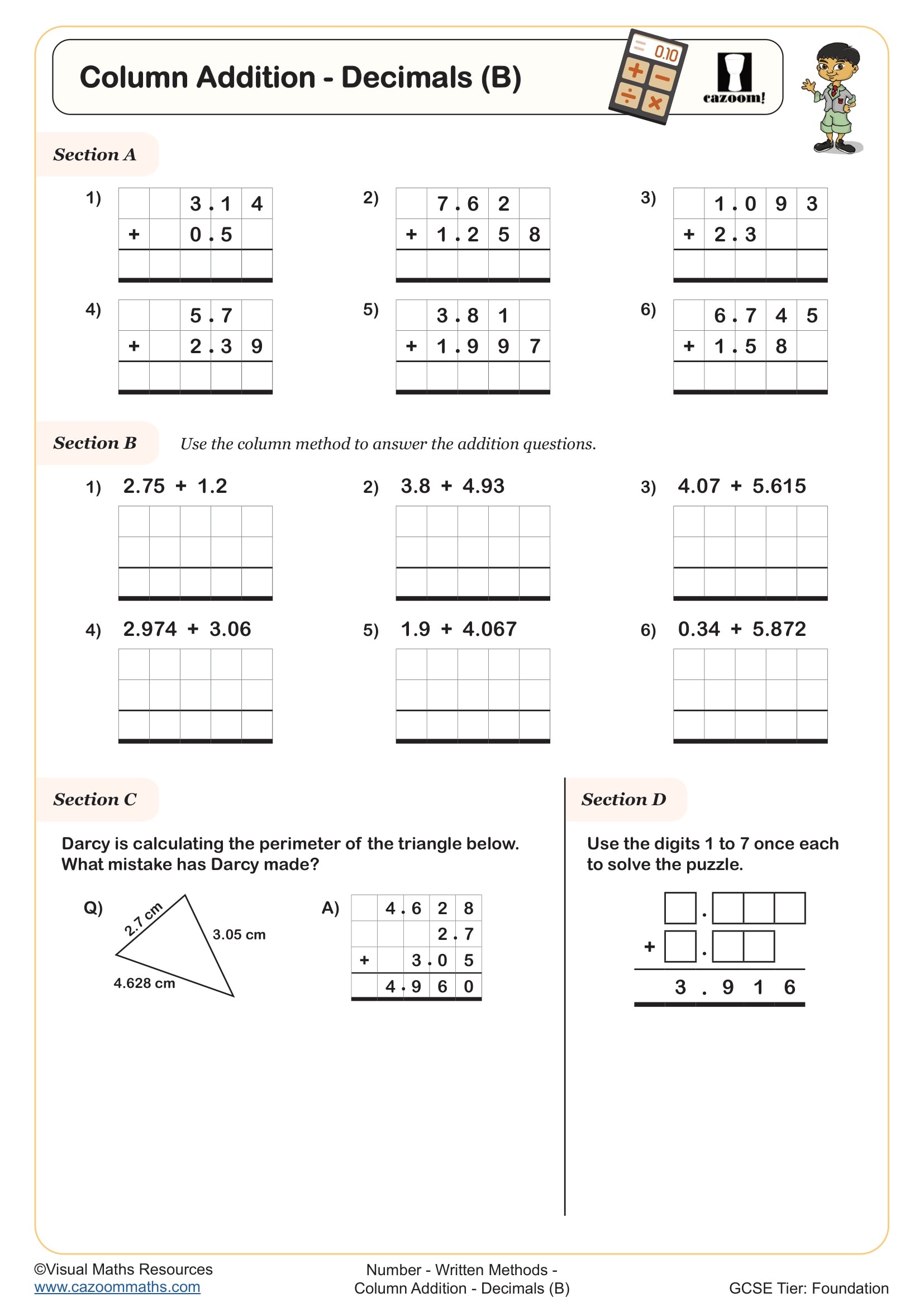
Column Addition - Decimals (B)
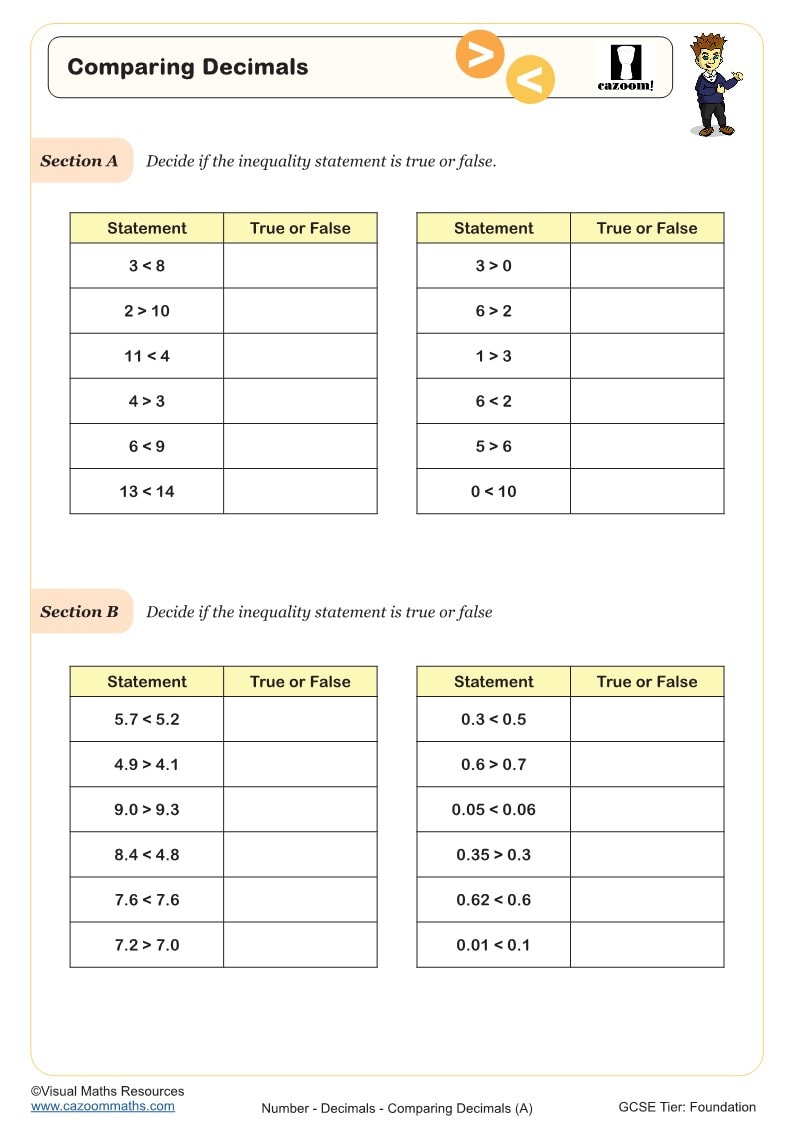
Comparing Decimals
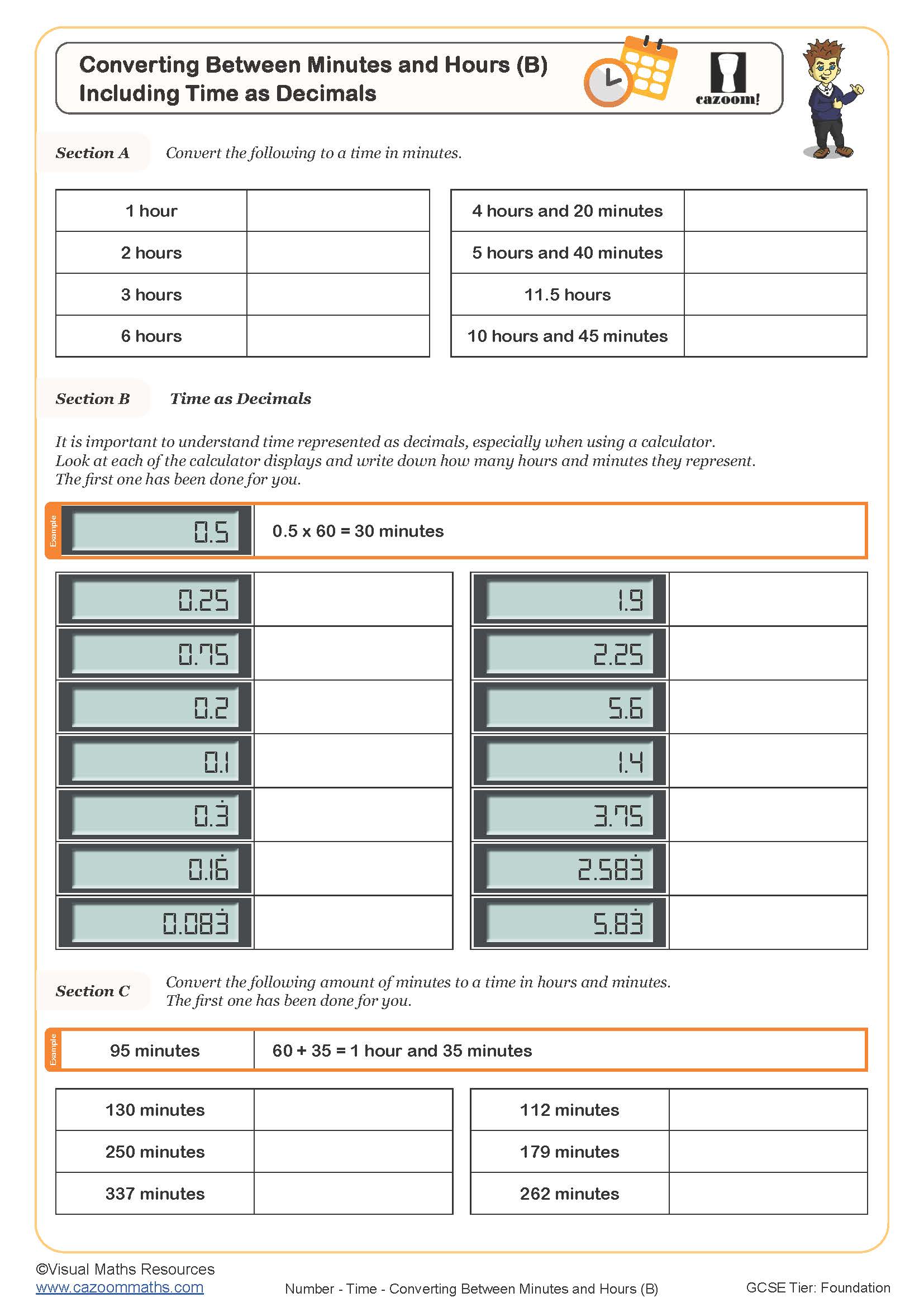
Converting Between Minutes and Hours (B)
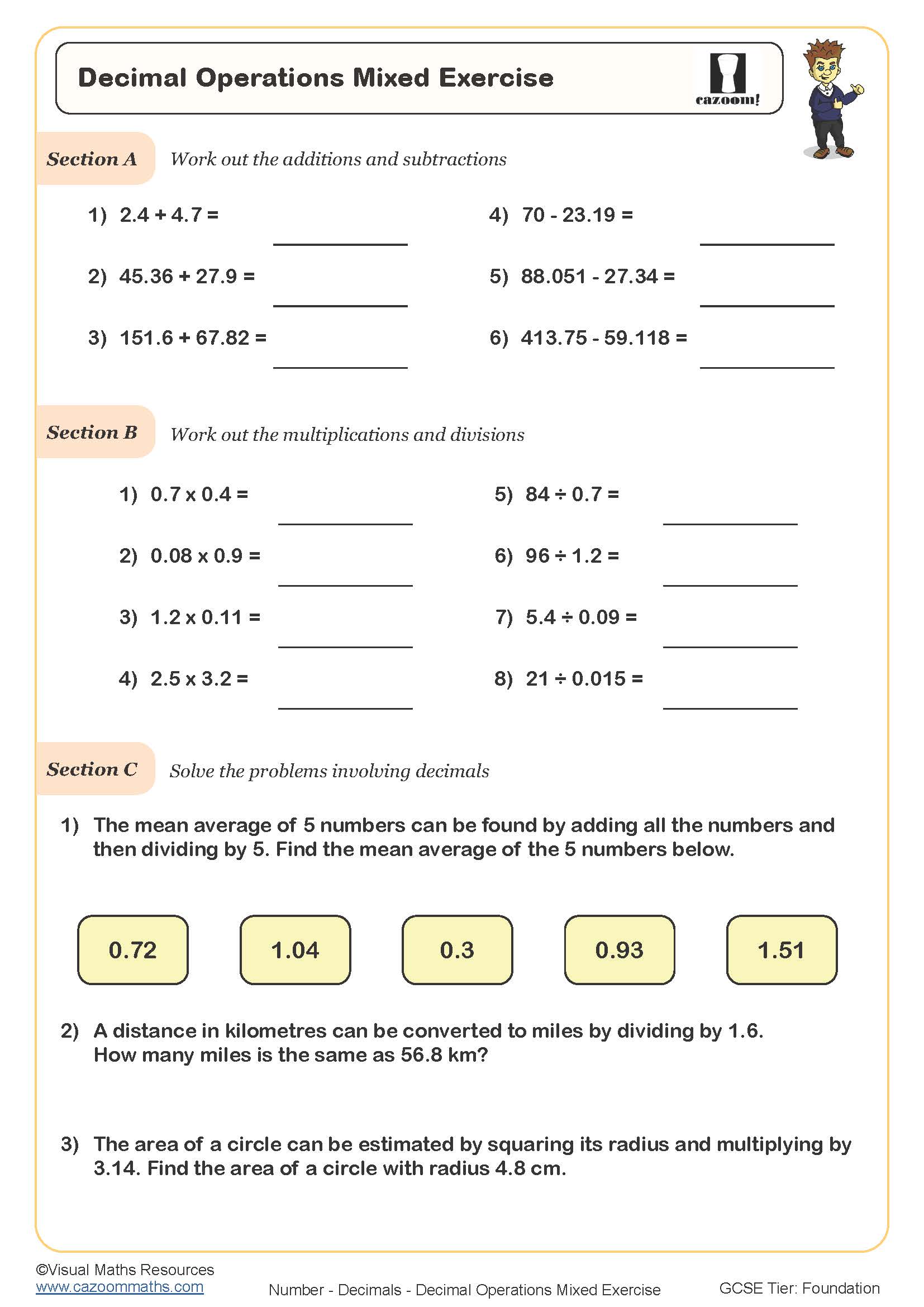
Decimal Operations Mixed Exercise
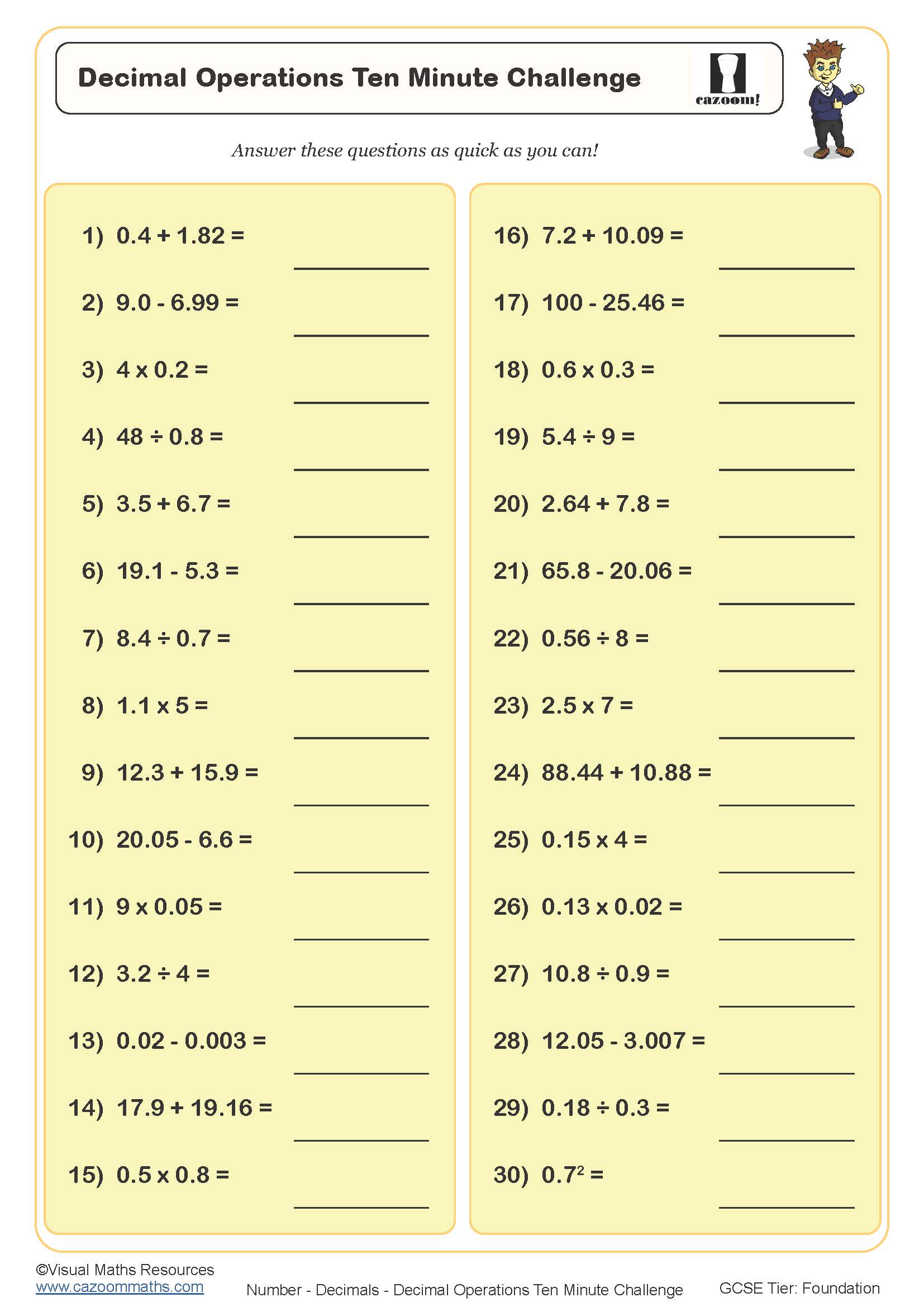
Decimal Operations Ten Minute Challenge
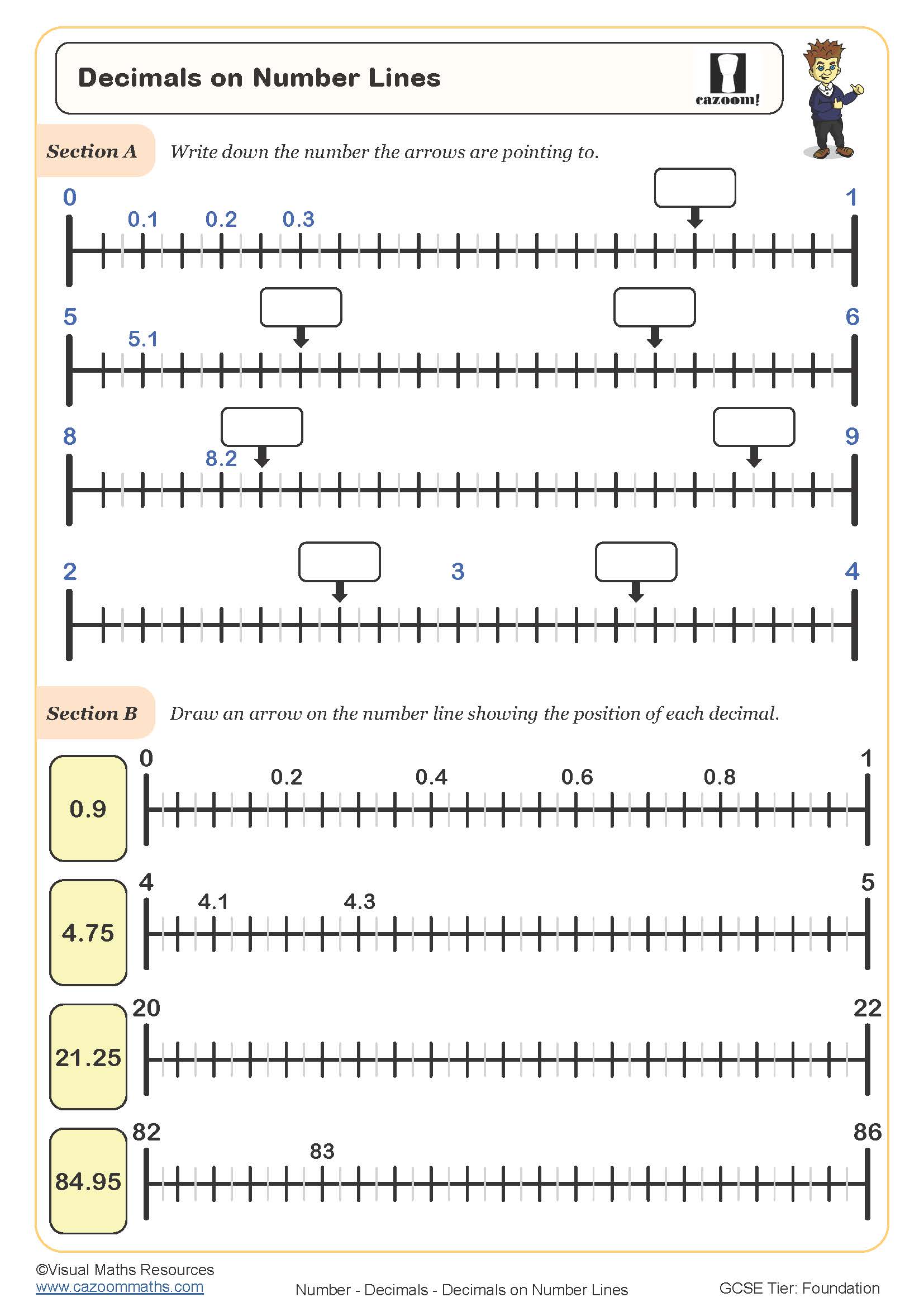
Decimals on Number Lines
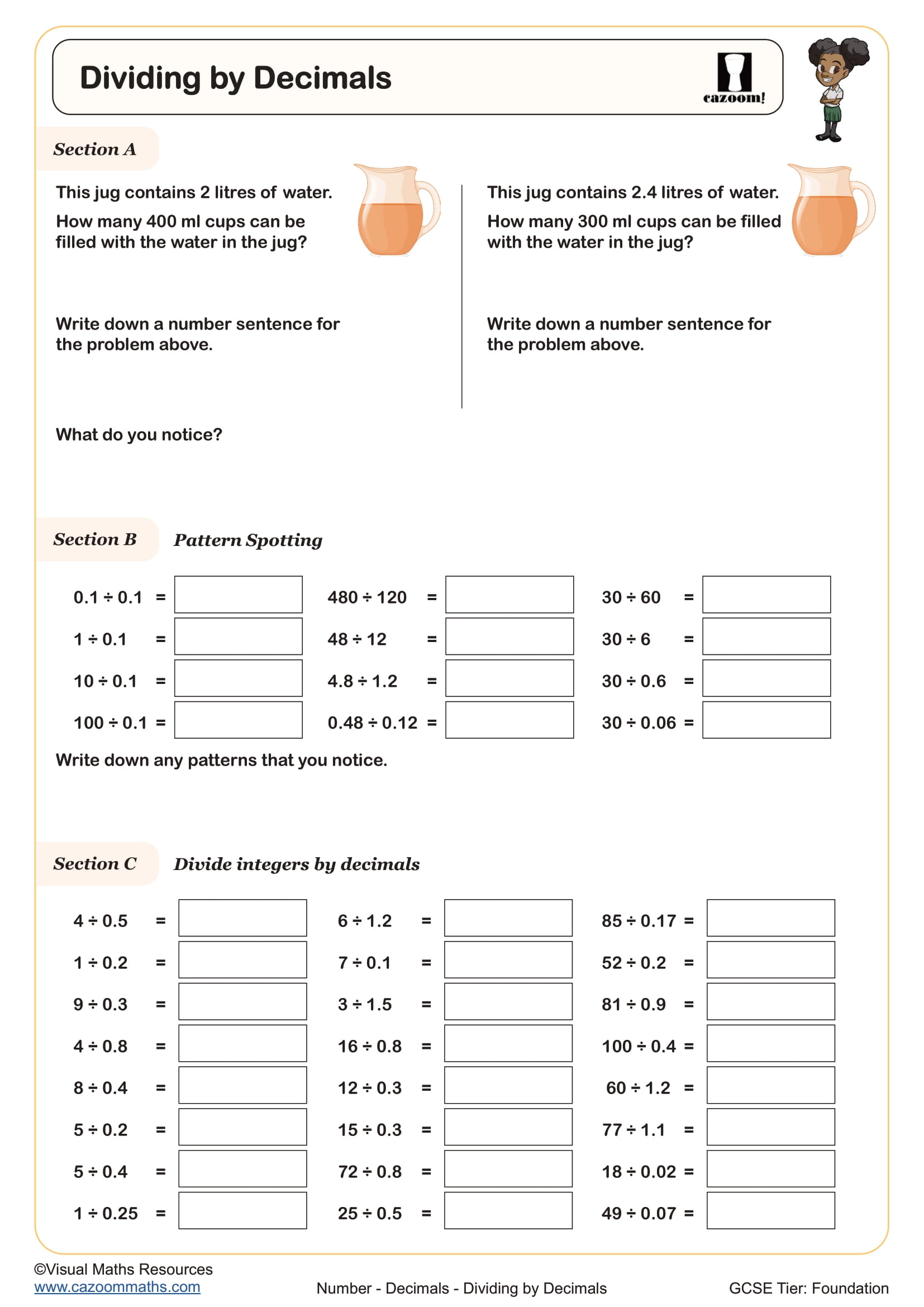
Dividing by Decimals
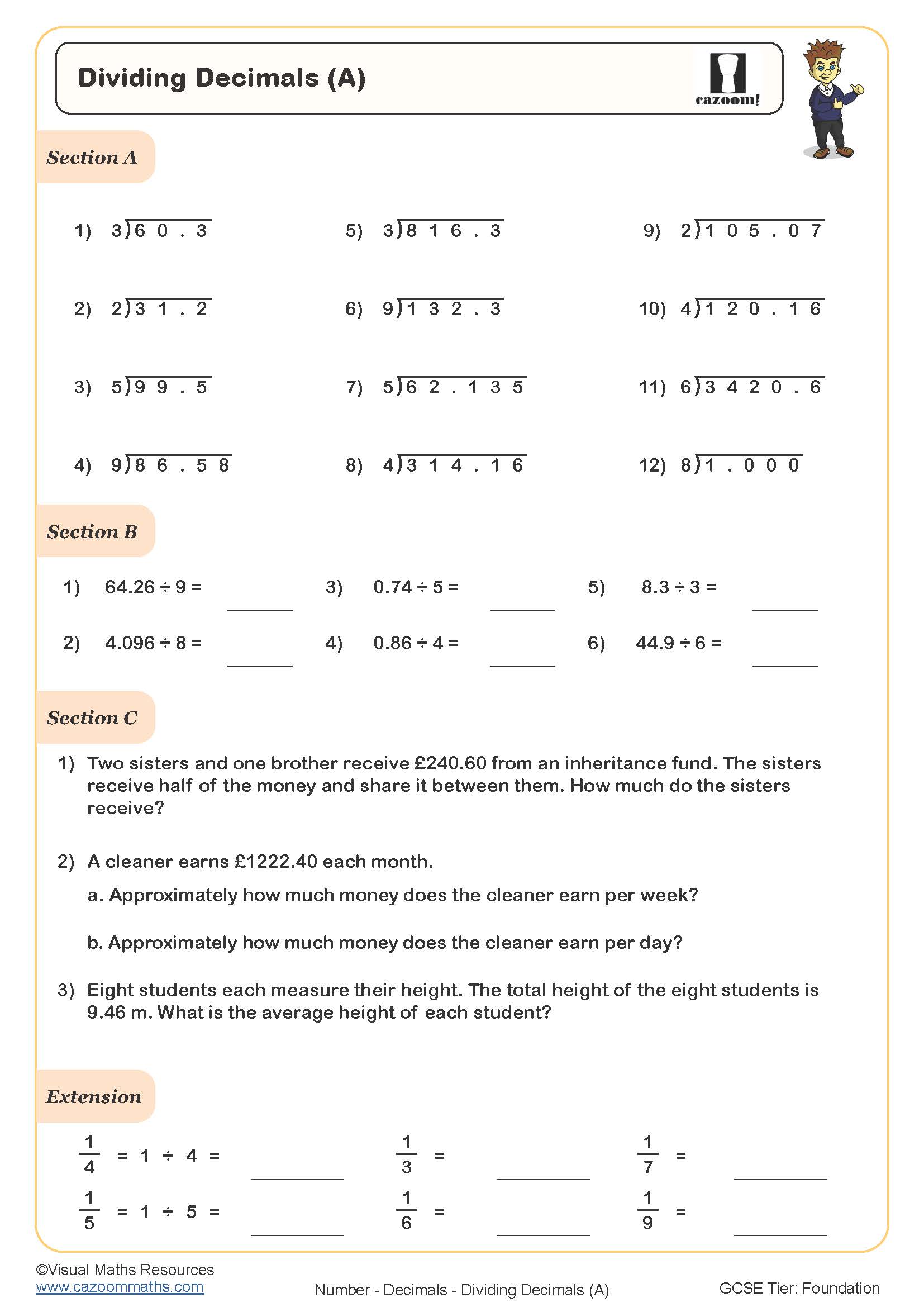
Dividing Decimals (A)
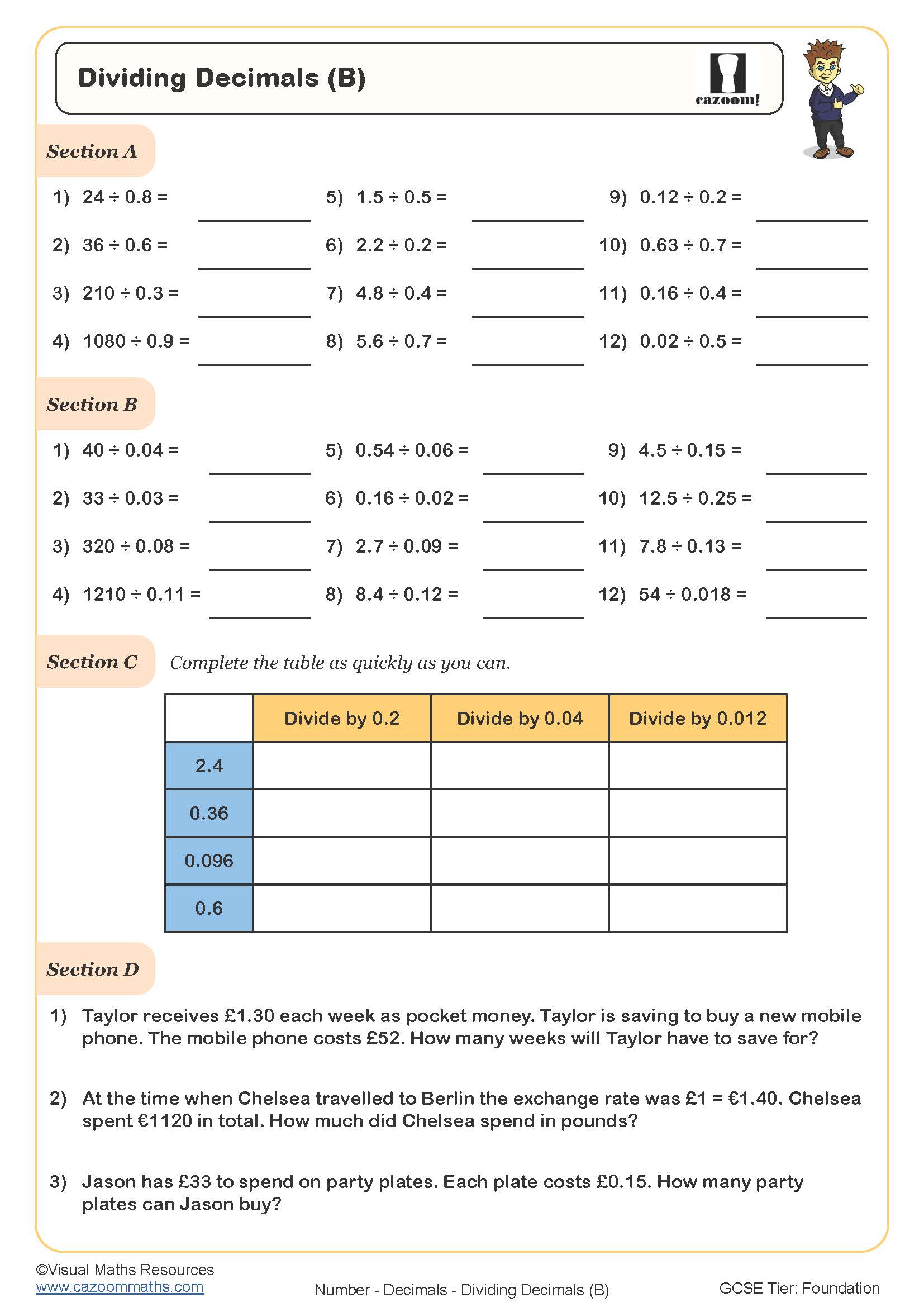
Dividing Decimals (B)
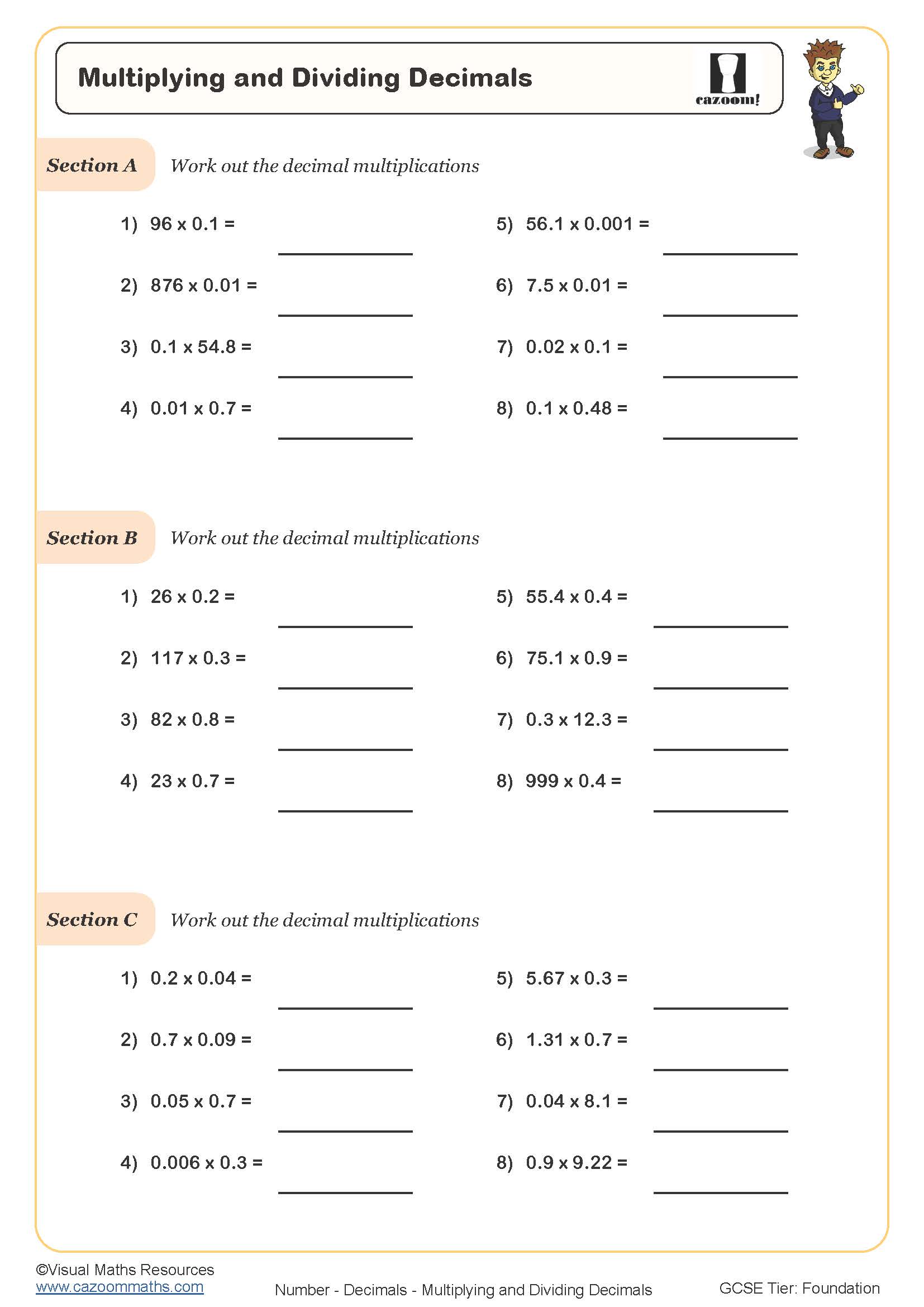
Multiplying and Dividing Decimals
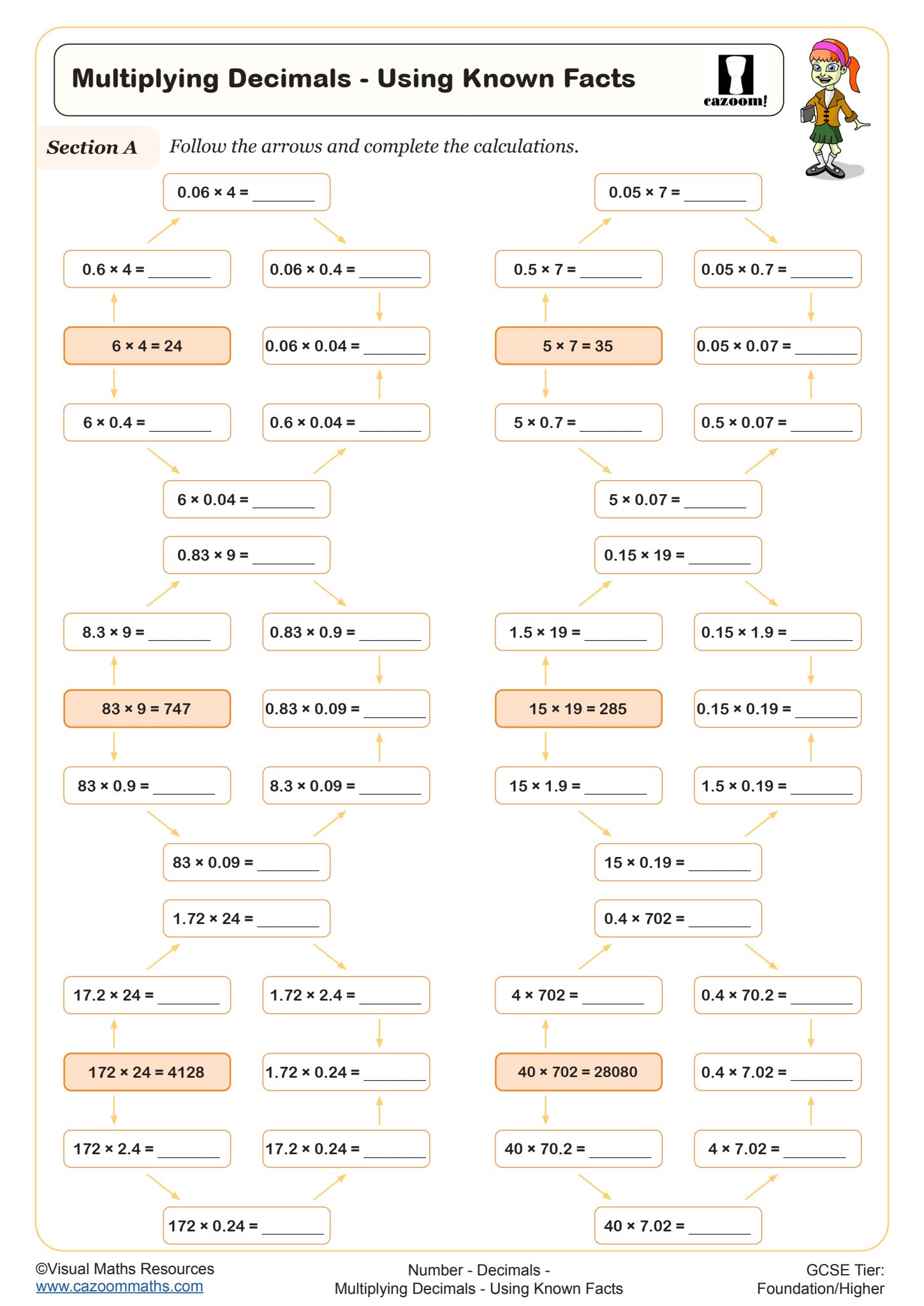
Multiplying Decimals - Using Known Facts
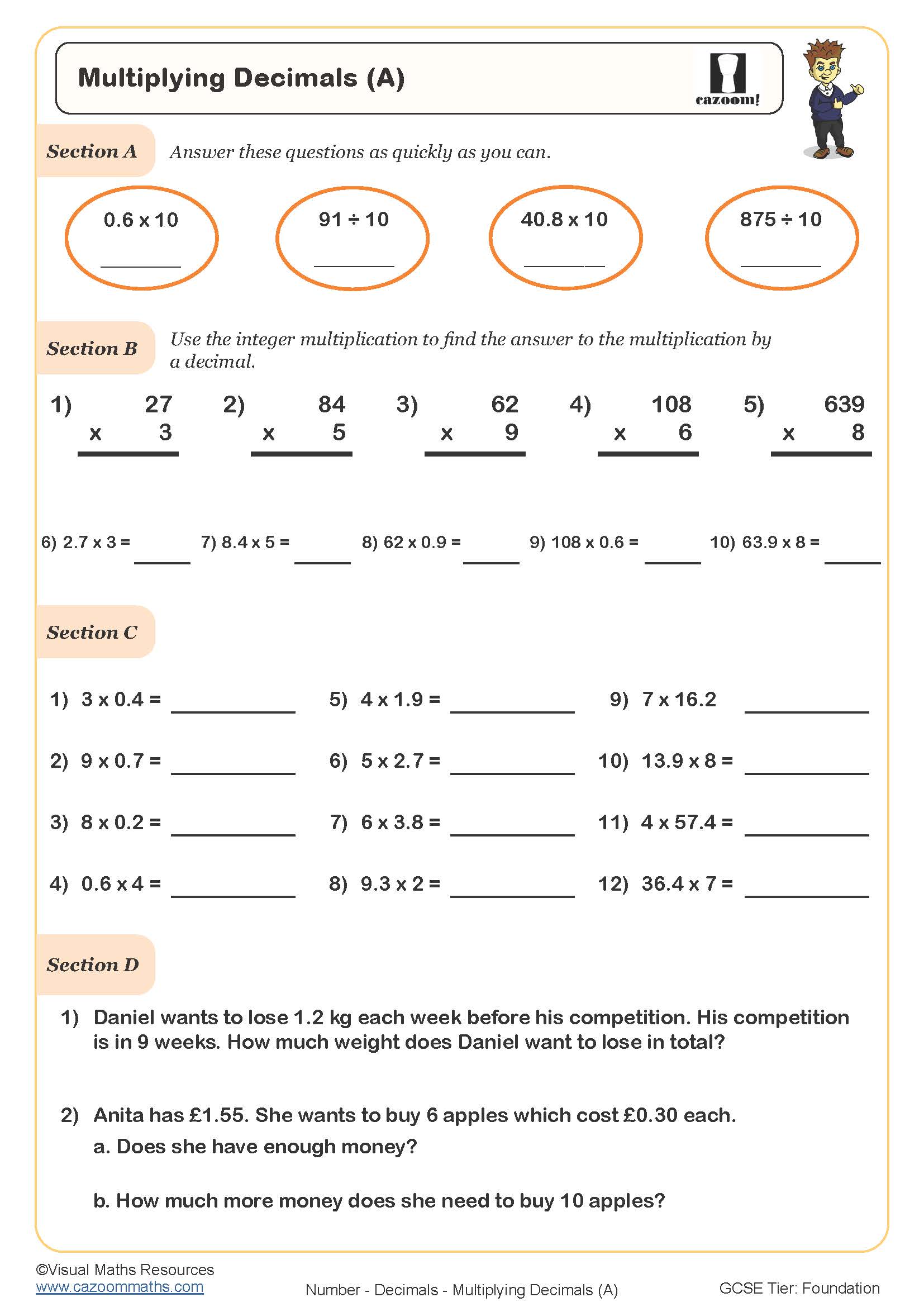
Multiplying Decimals (A)
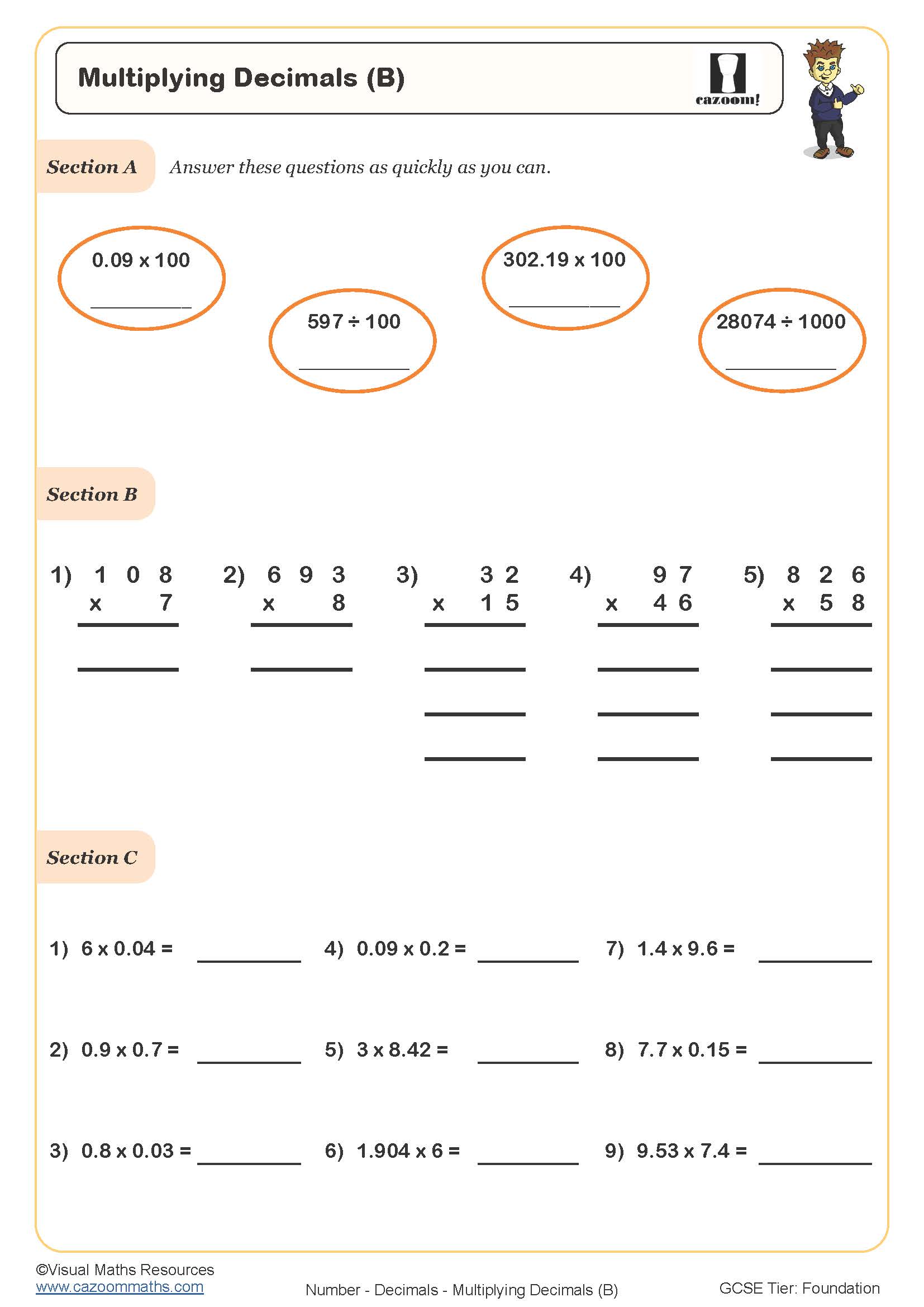
Multiplying Decimals (B)
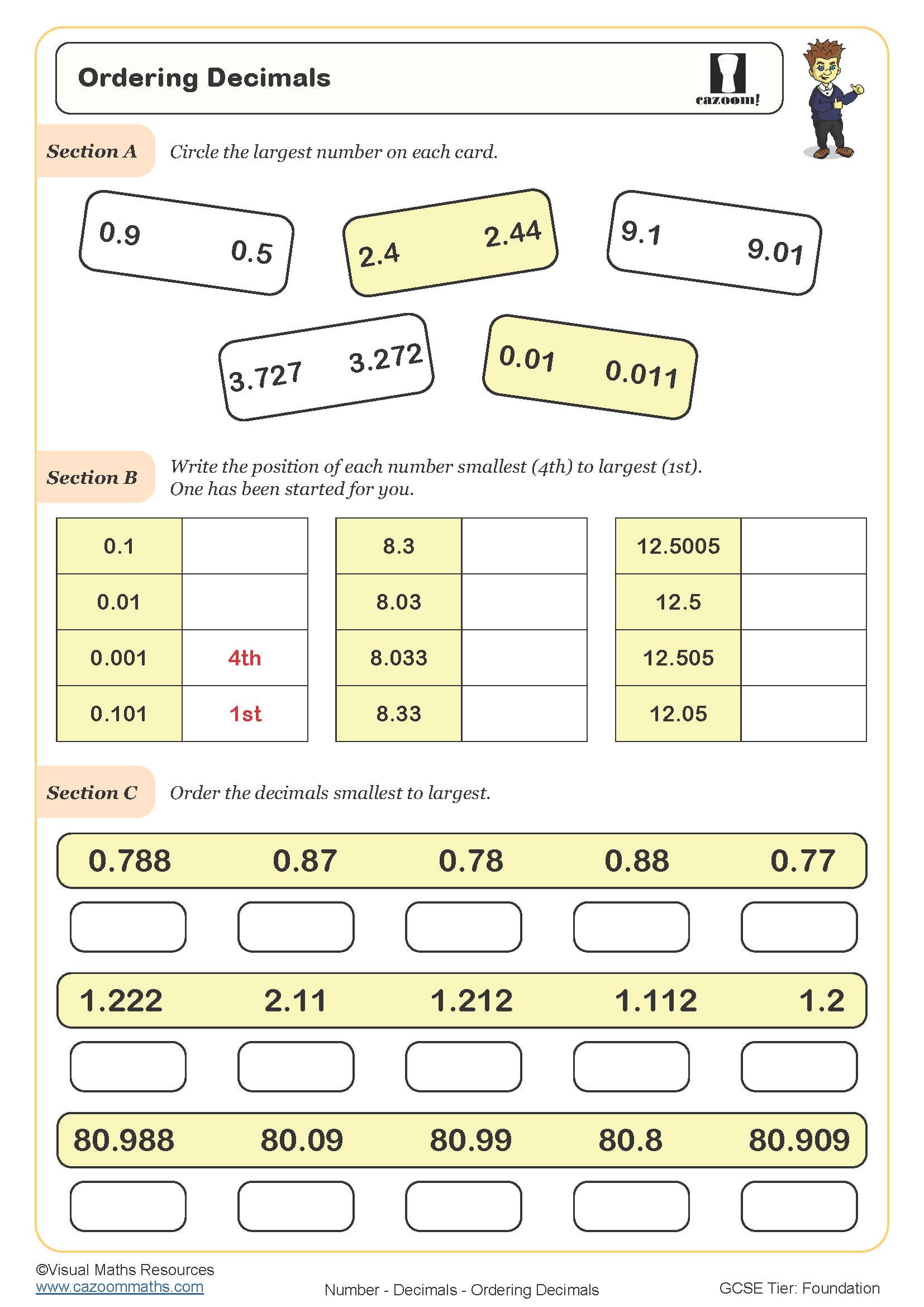
Ordering Decimals
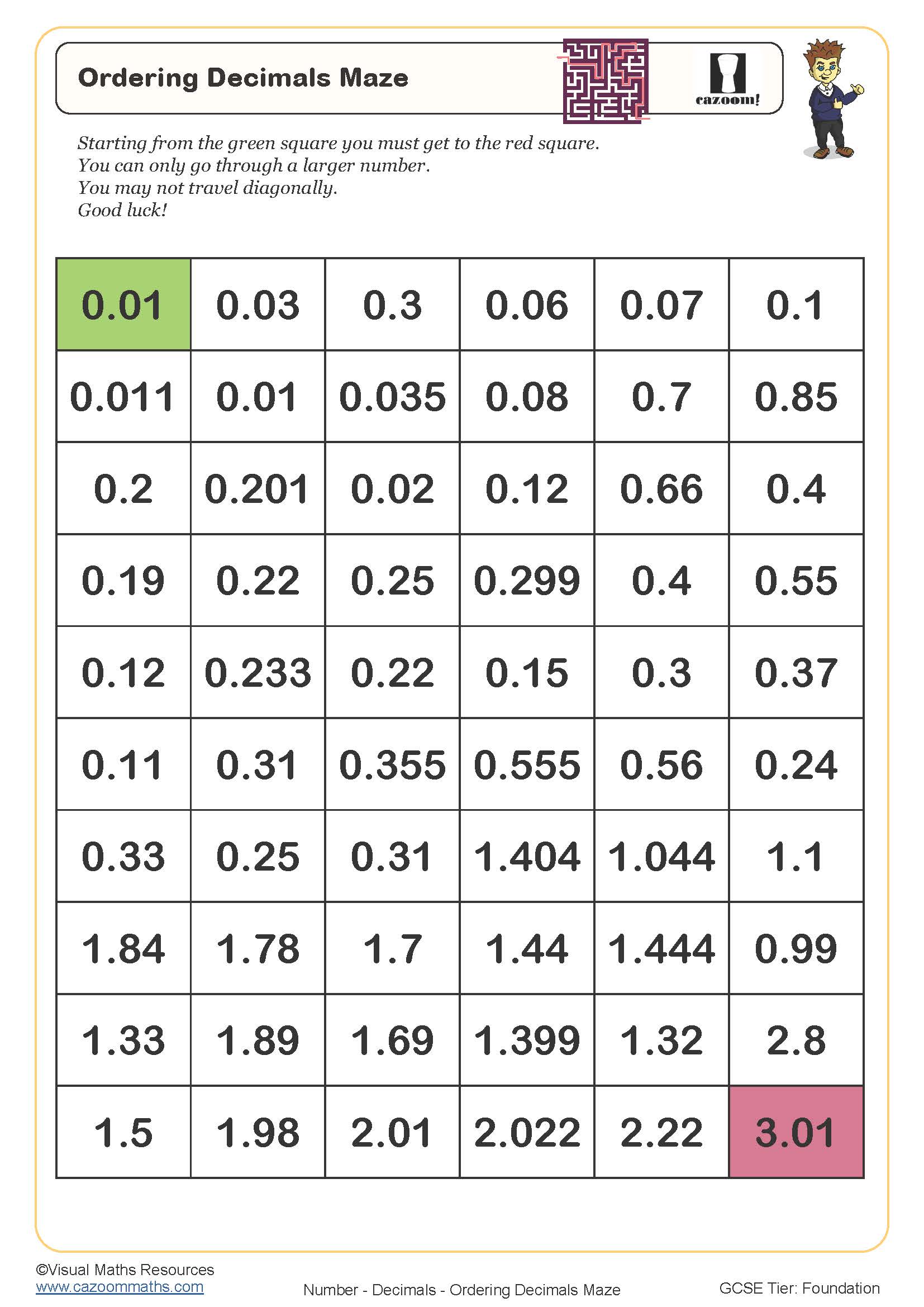
Ordering Decimals Maze
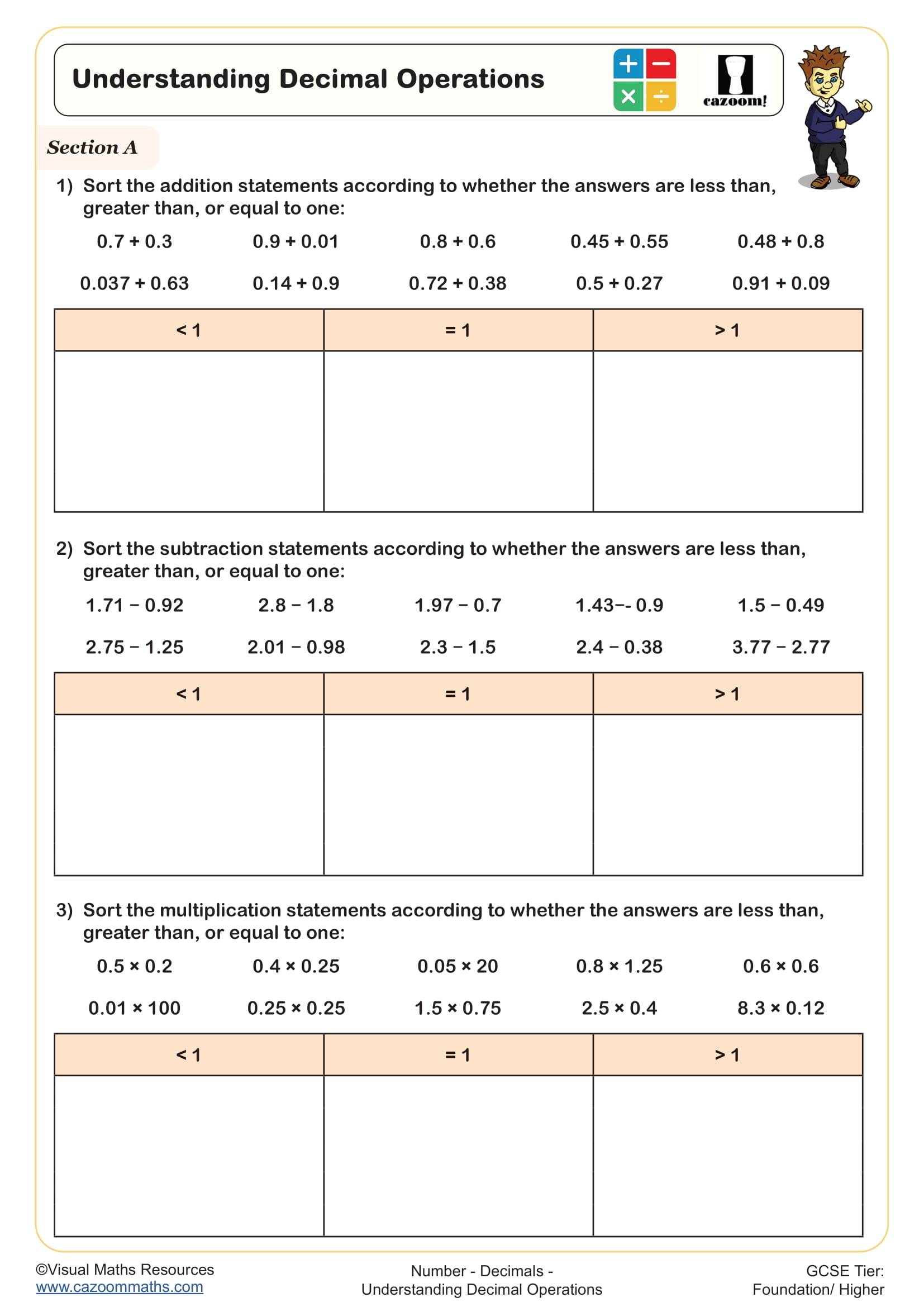
Understanding Decimal Operations
All worksheets are created by the team of experienced teachers at Cazoom Maths.
Why do teachers need decimal worksheets PDF with answers for Year 8 classes?
Decimal worksheets PDF with answers streamline lesson planning and assessment for Key Stage 3 teachers managing diverse ability levels within their Year 8 classes. The PDF format ensures worksheets print clearly with consistent formatting, whilst complete answer sheets enable efficient marking and immediate feedback during lessons.
Teachers find that having answers readily available allows them to circulate during independent practice, quickly identifying students who need support with specific decimal concepts. This immediate intervention proves particularly valuable when students attempt decimal division, where many reverse the process and divide by the wrong number, creating systematic errors that compound without swift correction.
Can Year 7 students use these decimal worksheets, and how do they progress to Year 8 level?
Higher-attaining Year 7 students often benefit from accessing Year 8 decimal content, particularly those who demonstrate secure understanding of basic decimal operations and place value concepts. A year 7 decimals worksheet typically focuses on simpler contexts and fewer decimal places, whereas Year 8 materials introduce more complex multi-step problems and real-world applications.
Teachers observe that the transition from Year 7 to Year 8 decimals involves students moving from concrete decimal manipulations to abstract problem-solving scenarios. Year 8 worksheets incorporate measurement conversions, percentage connections, and multi-step calculations that require students to select appropriate operations independently, preparing them for GCSE-level decimal fluency expectations.
What common errors do students make when multiplying decimals, and how can worksheets address these?
Students frequently struggle with decimal point placement when multiplying decimals, often applying whole number rules incorrectly or losing track of decimal places in their calculations. The most common error involves counting decimal places from the left instead of the right, or forgetting to account for both numbers' decimal places in the final answer.
Well-structured decimal worksheets address these misconceptions through progressive difficulty levels, starting with multiplying by whole numbers before advancing to decimal-by-decimal calculations. Teachers notice that students benefit from worksheets that include visual representations and step-by-step worked examples, helping them develop systematic approaches to decimal multiplication that transfer to examination contexts.
How should teachers use these decimal worksheets to maximise student progress?
Effective implementation involves using decimal worksheets as diagnostic tools first, identifying specific areas where students need additional support before progressing to more complex concepts. Teachers achieve better outcomes when they model solutions using the answer sheets, demonstrating correct methods and highlighting common pitfalls that students encounter.
Successful teachers often pair worksheet practice with mini-plenaries, using selected questions to address misconceptions as they arise during lessons. The answer sheets enable peer assessment activities where students explain their reasoning, developing mathematical vocabulary and deeper conceptual understanding that supports long-term retention and application in varied contexts.