Year 8 Equivalent Fractions Worksheets
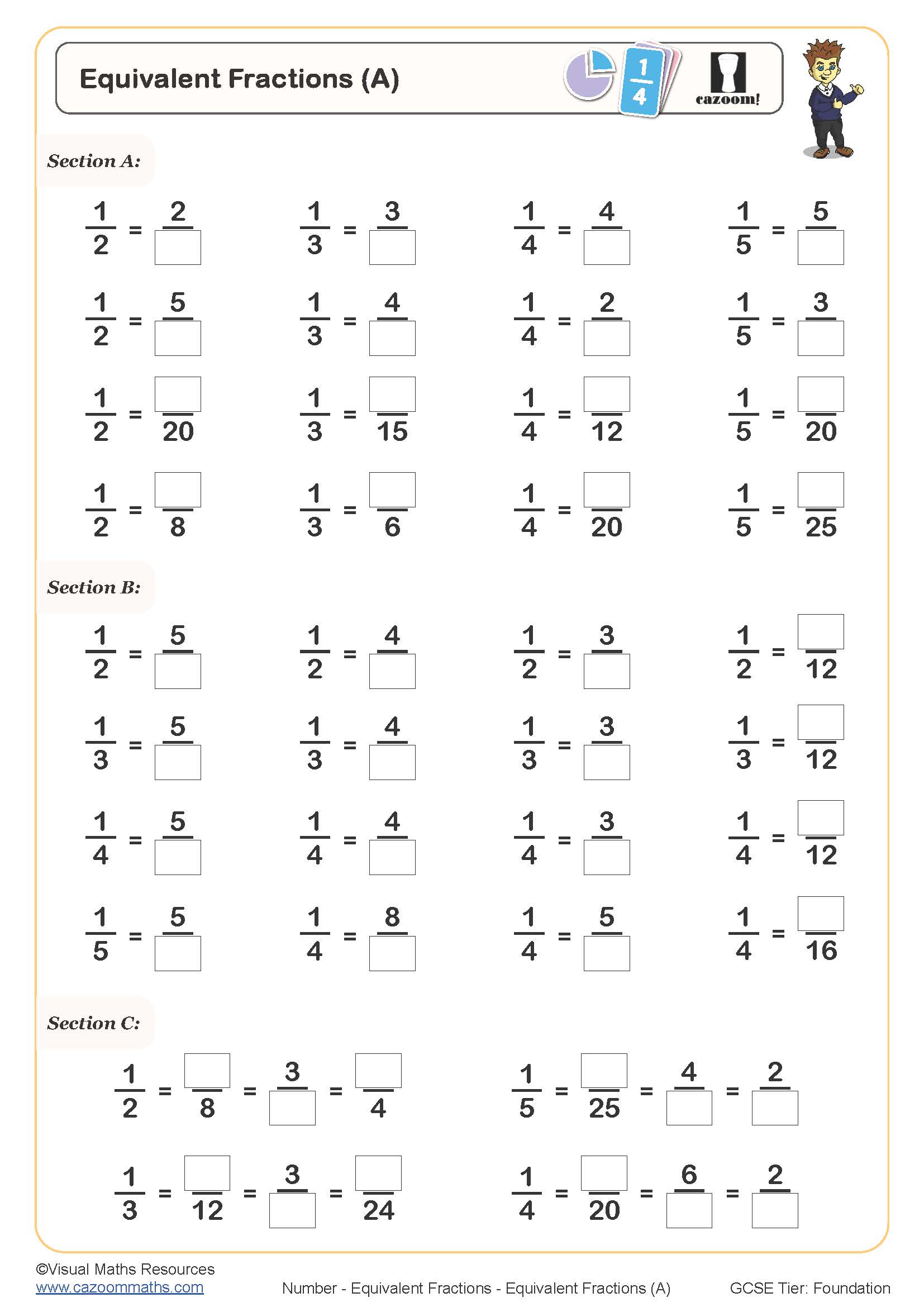
Equivalent Fractions (A)
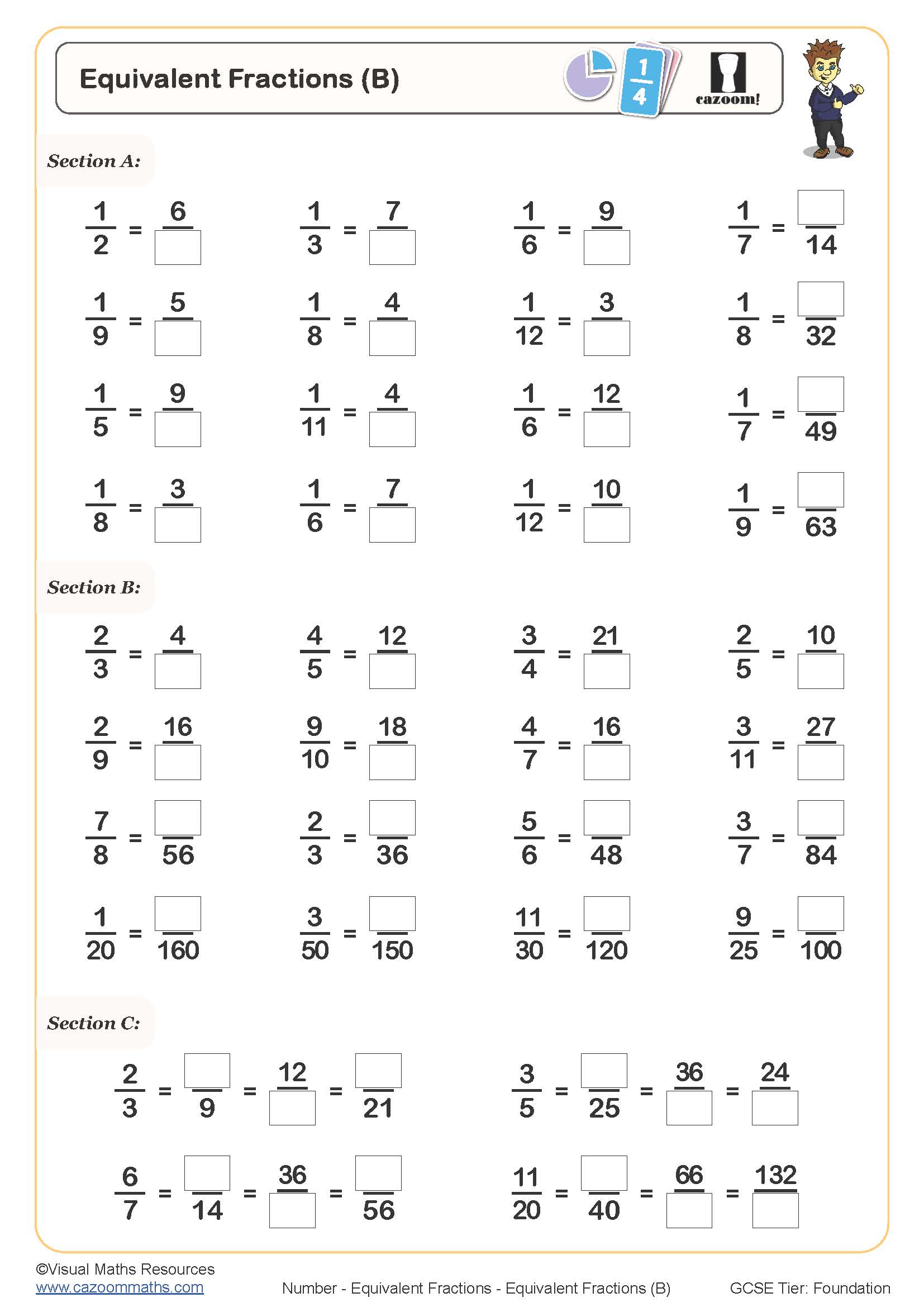
Equivalent Fractions (B)
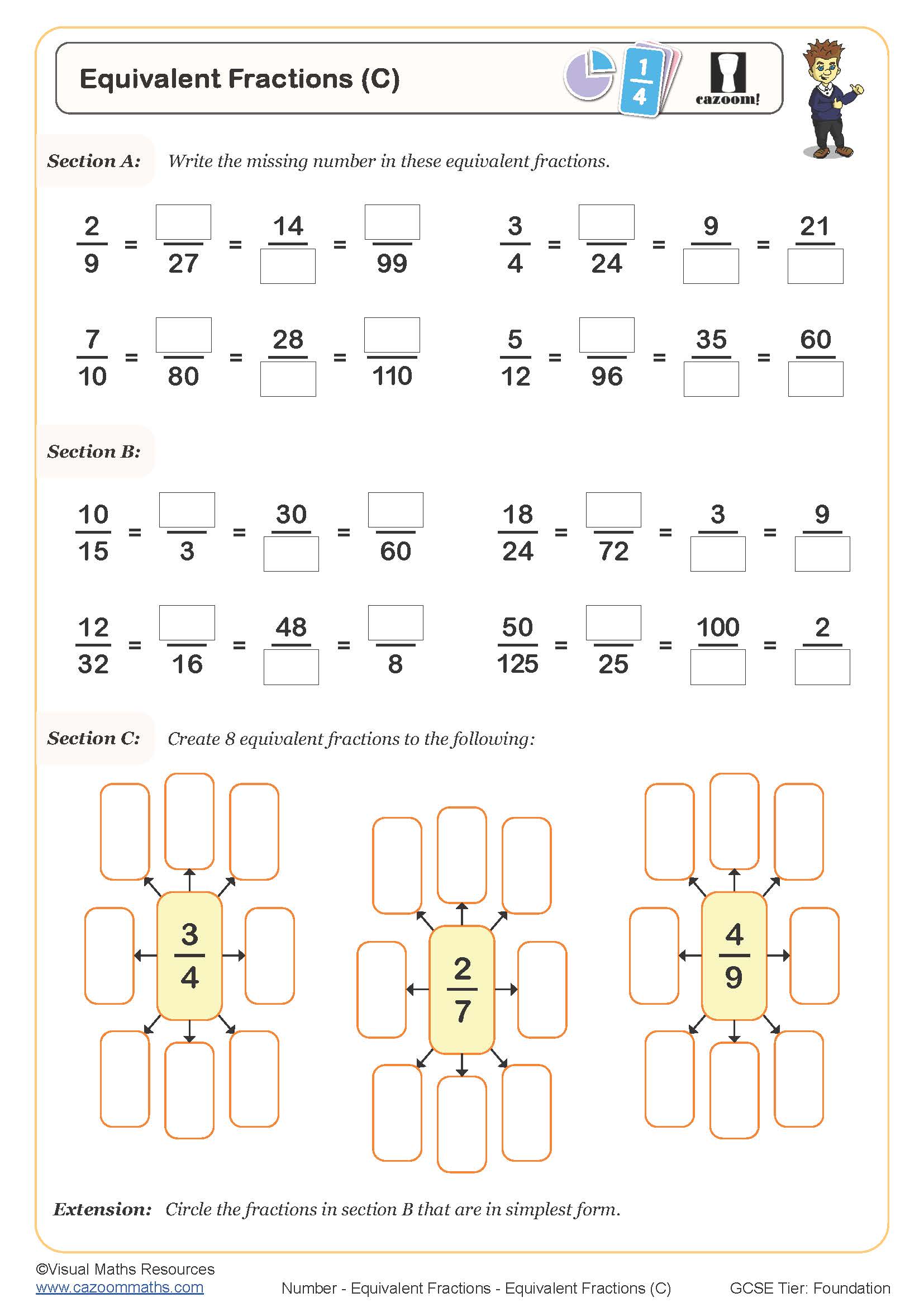
Equivalent Fractions (C)
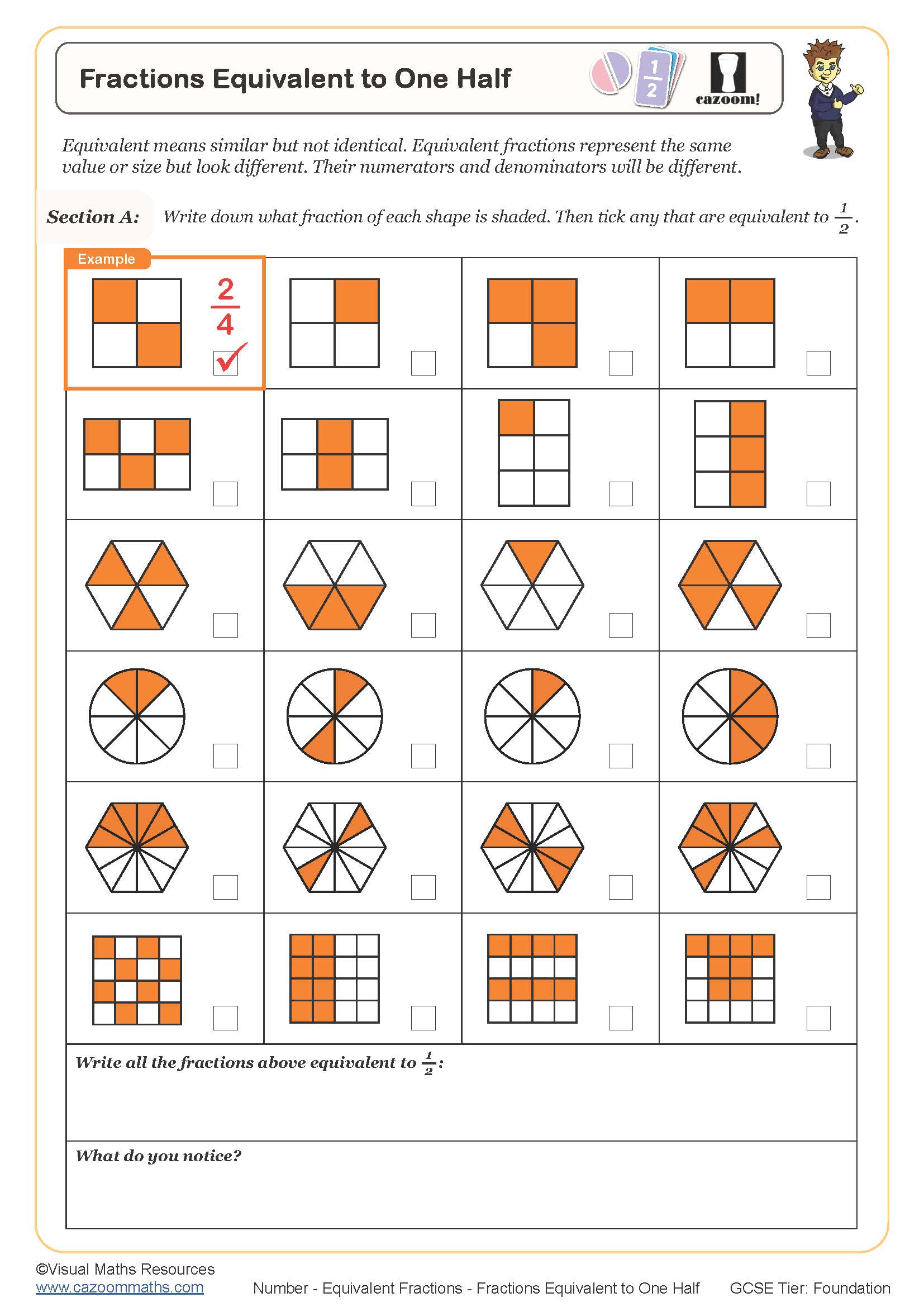
Fractions Equivalent to One Half
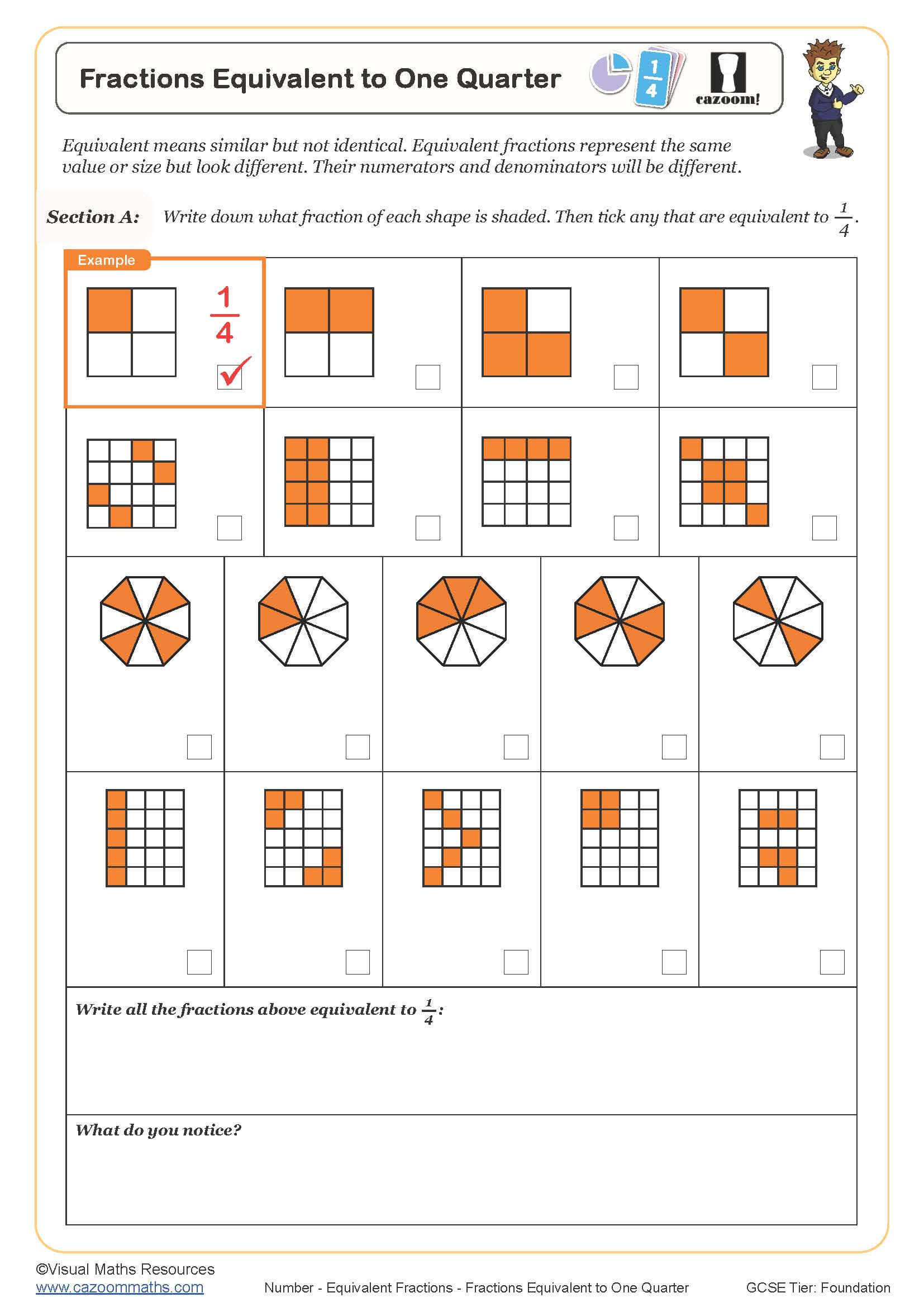
Fractions Equivalent to One Quarter
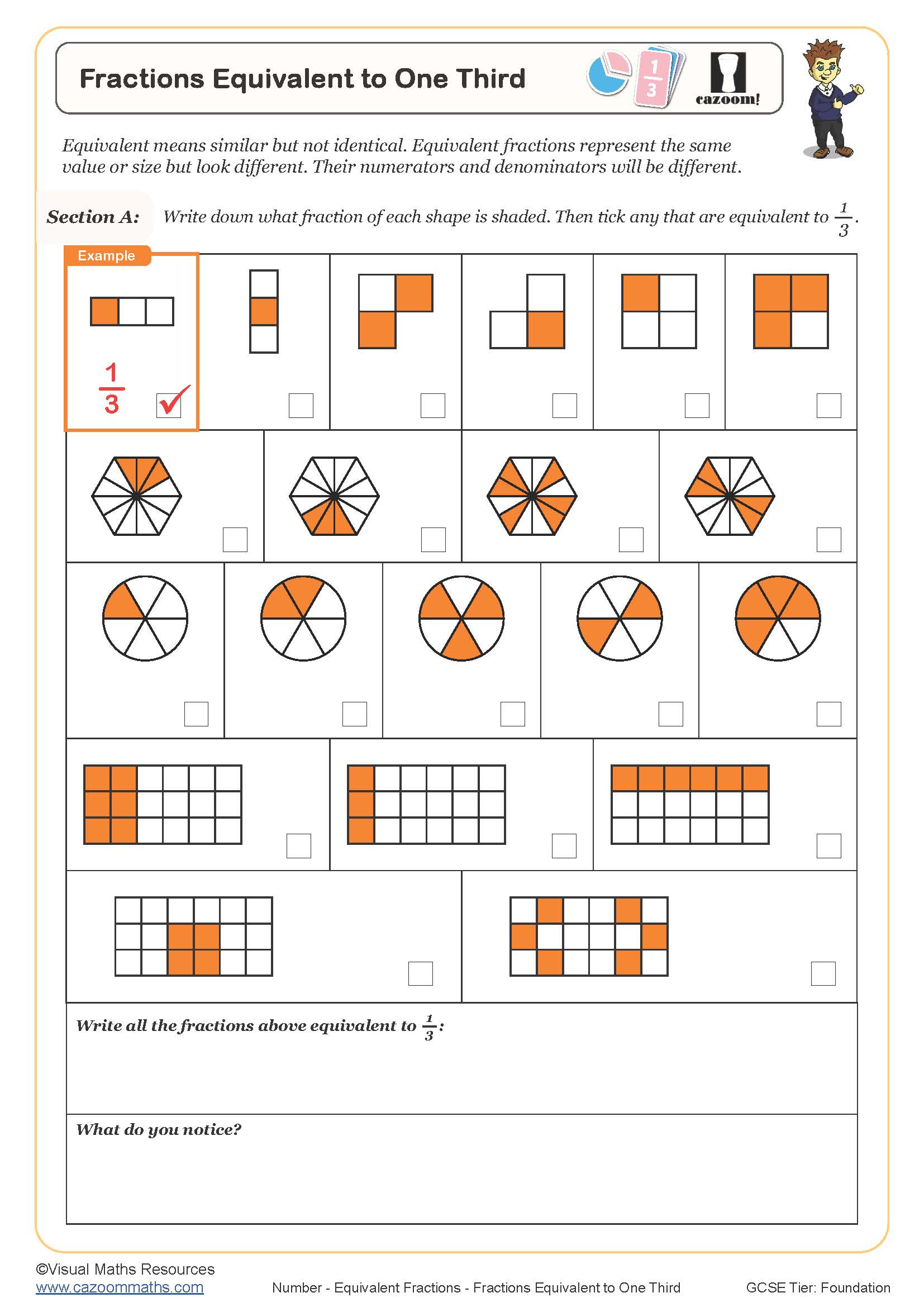
Fractions Equivalent to One Third
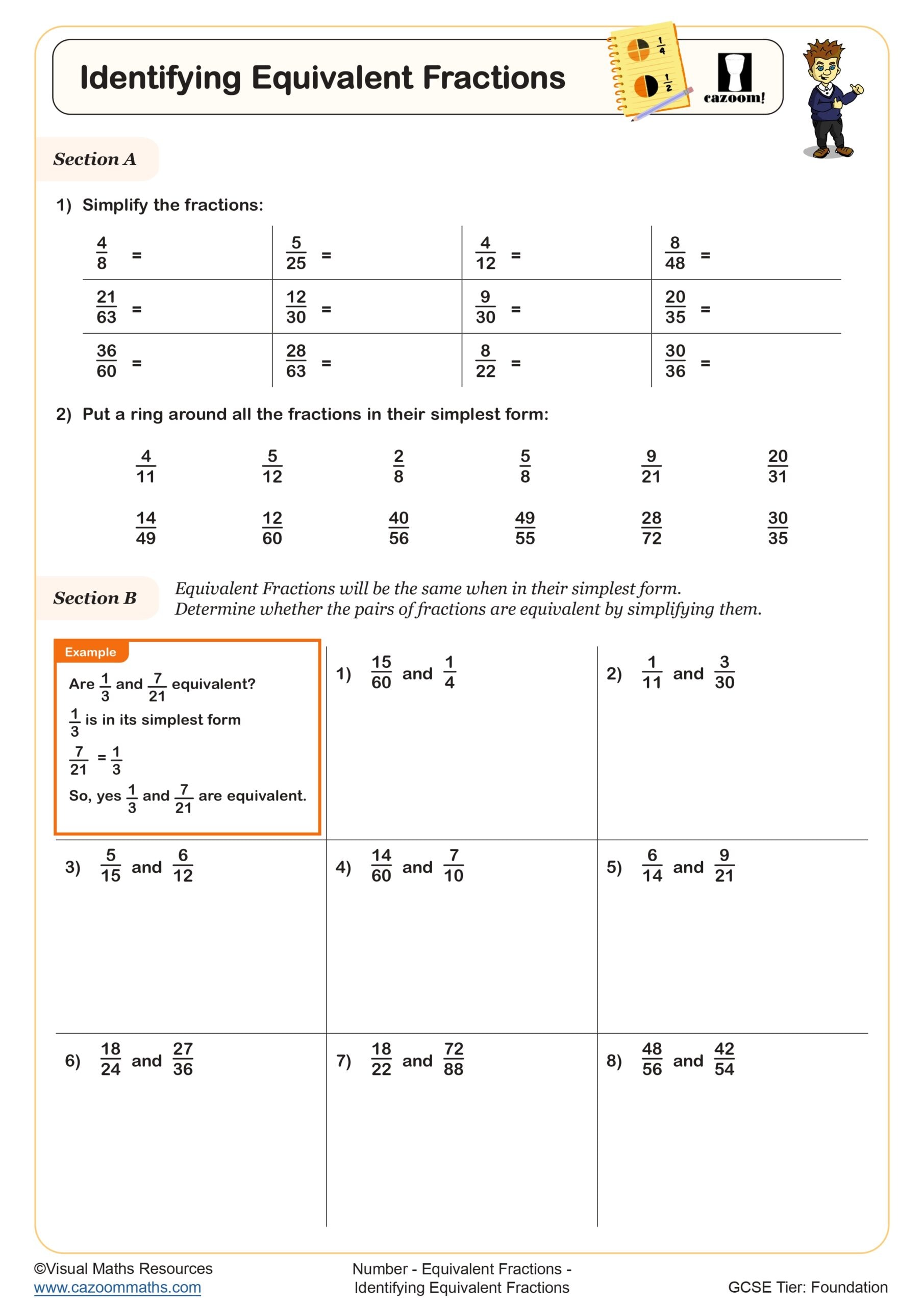
Identifying Equivalent Fractions
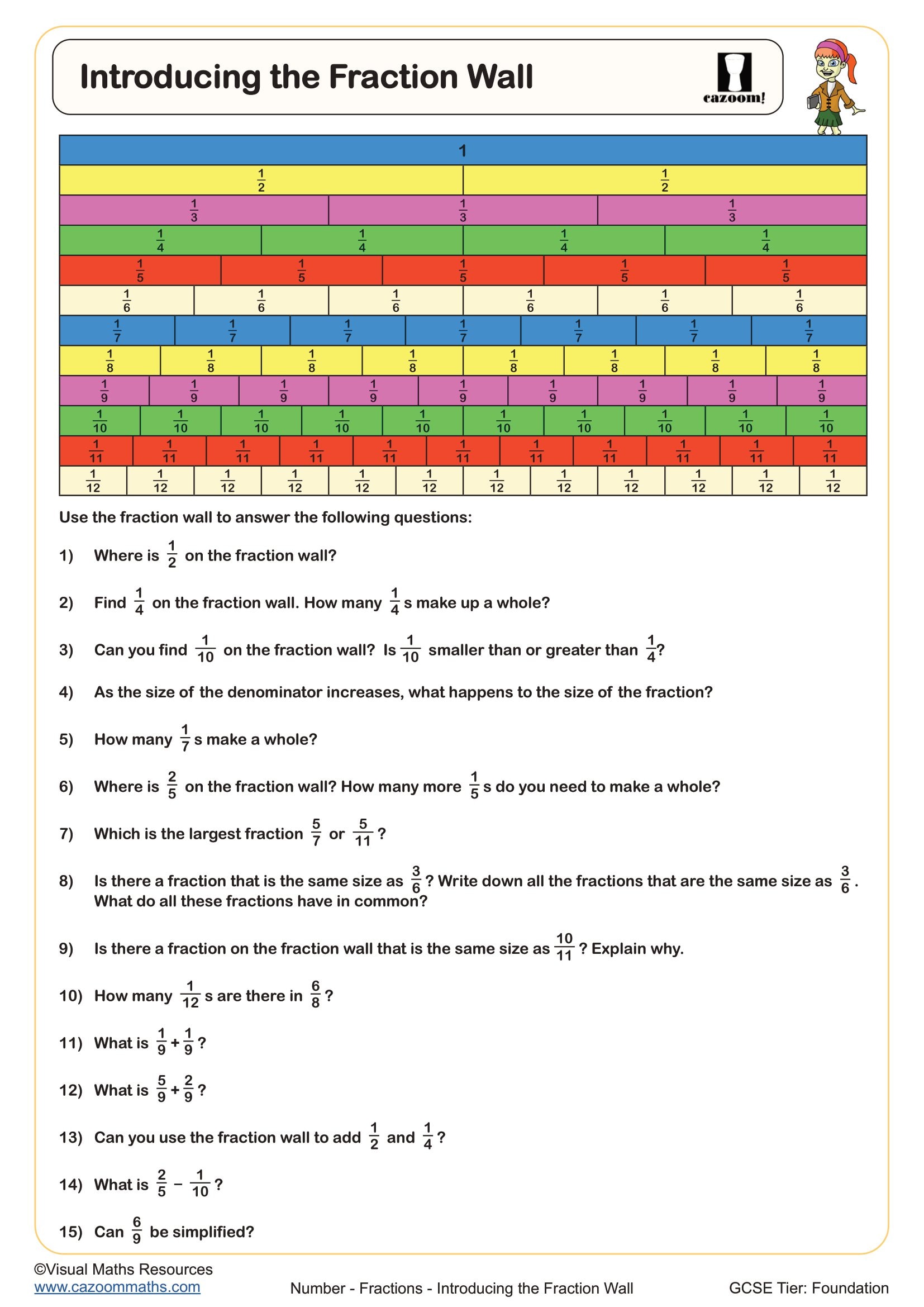
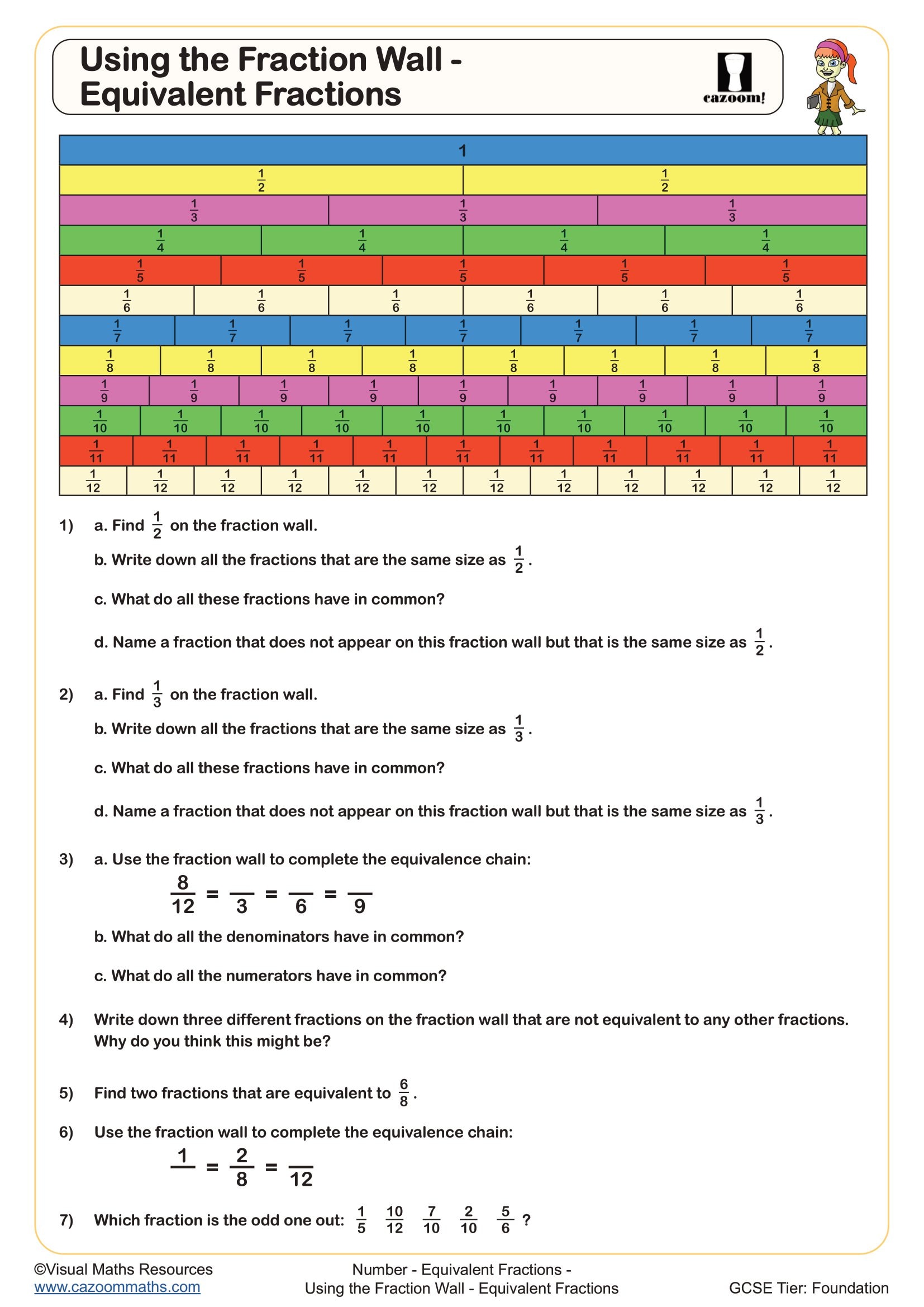
Introducing the Fraction Wall
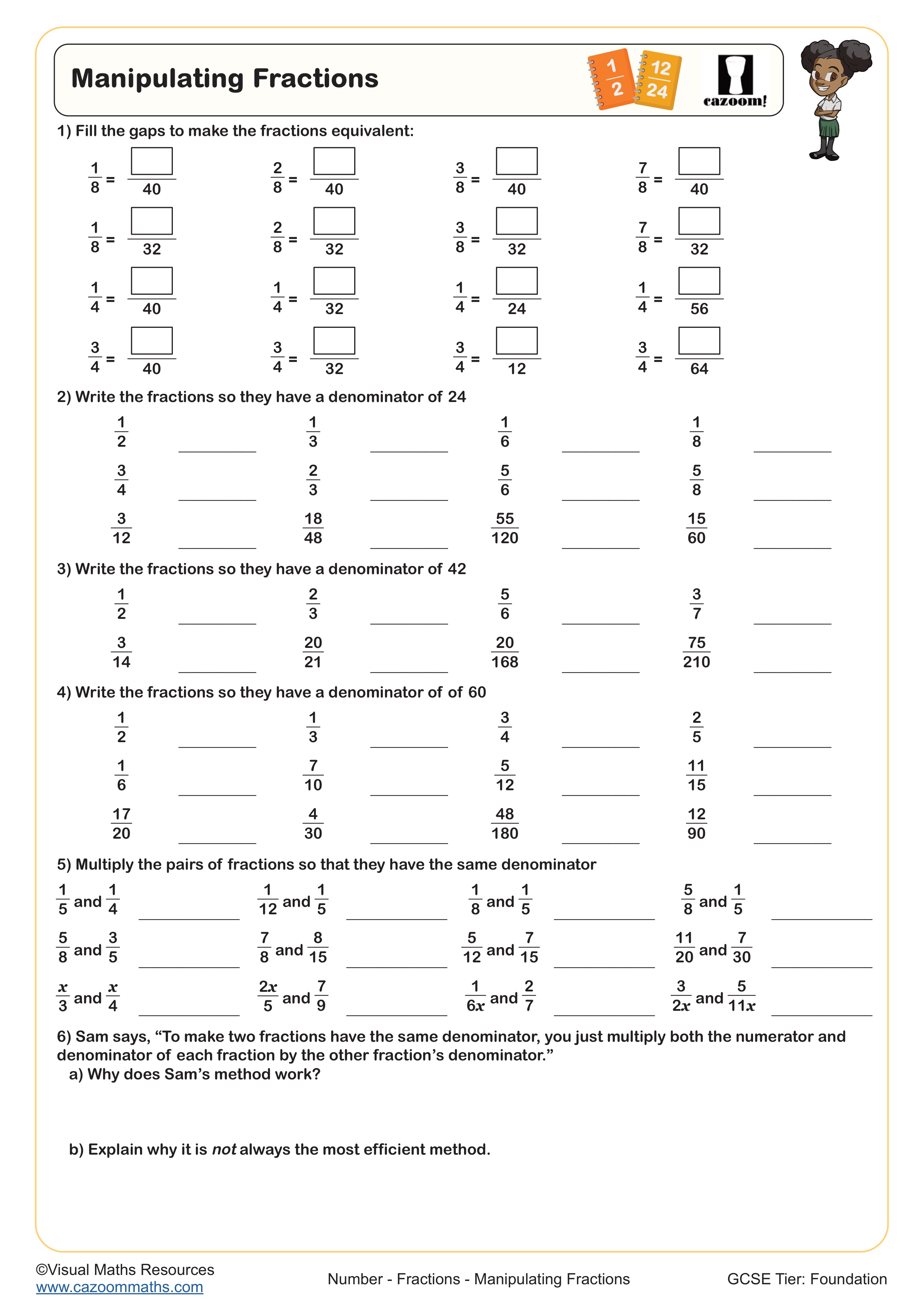
Manipulating Fractions
Using The Fraction Wall - Equivalent Fractions
All worksheets are created by the team of experienced teachers at Cazoom Maths.
What makes a good equivalent fractions worksheet for Year 8 students?
An effective equivalent fractions worksheet for Year 8 should include a variety of question types, from completing equivalent fraction families to identifying equivalent fractions within mixed lists. The best resources scaffold learning by starting with visual fraction strips or circles before moving to purely numerical exercises, helping students bridge concrete and abstract understanding.
Teachers notice that students benefit most when worksheets include both 'find the missing numerator' and 'find the missing denominator' problems. Many students initially rely on times tables they know well, so including less familiar multipliers like 7 or 11 helps develop genuine understanding rather than pattern recognition. Questions should also incorporate improper fractions and mixed numbers to reflect the full KS3 curriculum expectations.
How do equivalent fractions fit into the KS3 mathematics progression?
Equivalent fractions form a crucial bridge between Key Stage 2 fraction work and the more complex fraction operations required at GCSE level. At Year 8, students must move beyond basic recognition to confidently manipulate equivalent forms for addition, subtraction, and comparison of fractions with different denominators. This understanding directly supports algebraic fraction work in Years 9-11.
The National Curriculum expects students to use equivalent fractions to express answers in their simplest form and to order fractions of different sizes. Teachers find that students who struggle with equivalent fractions often face significant difficulties later when tackling algebraic fractions, making this topic particularly important for mathematical progression. Strong equivalent fraction skills also support percentage and decimal conversions throughout secondary mathematics.
Why do students find simplifying fractions more challenging than creating equivalent fractions?
Students often find creating equivalent fractions straightforward because they can multiply both numerator and denominator by any whole number, giving them multiple correct answers. However, simplifying requires them to identify the highest common factor, which demands stronger number sense and factorisation skills that many Year 8 students haven't fully developed.
Mathematics teachers frequently observe students attempting to simplify fractions by cancelling different amounts from numerator and denominator, or stopping their simplification too early. For example, students might reduce 12/18 to 6/9 but fail to recognise this can simplify further to 2/3. Systematic practice with both prime factorisation methods and finding common factors helps students develop confidence in reaching the simplest form consistently.
How should teachers use equivalent fractions worksheets most effectively in lessons?
Equivalent fractions worksheets work best when used after concrete manipulation activities, allowing students to apply visual understanding to abstract problems. Teachers find success by starting lessons with fraction walls or circle diagrams before moving to worksheet practice, ensuring students understand why equivalent fractions exist rather than just how to create them.
Many teachers use these worksheets for both independent practice and paired work, encouraging students to explain their reasoning to develop mathematical vocabulary. The answer sheets enable students to self-assess their work, building confidence and allowing teachers to focus support on students who need additional help. Regular mini-assessments using worksheet questions help identify misconceptions early, particularly the common error of adding the same number to numerator and denominator rather than multiplying by the same factor.