Year 8 Fractions, Decimals and Percentages Worksheets
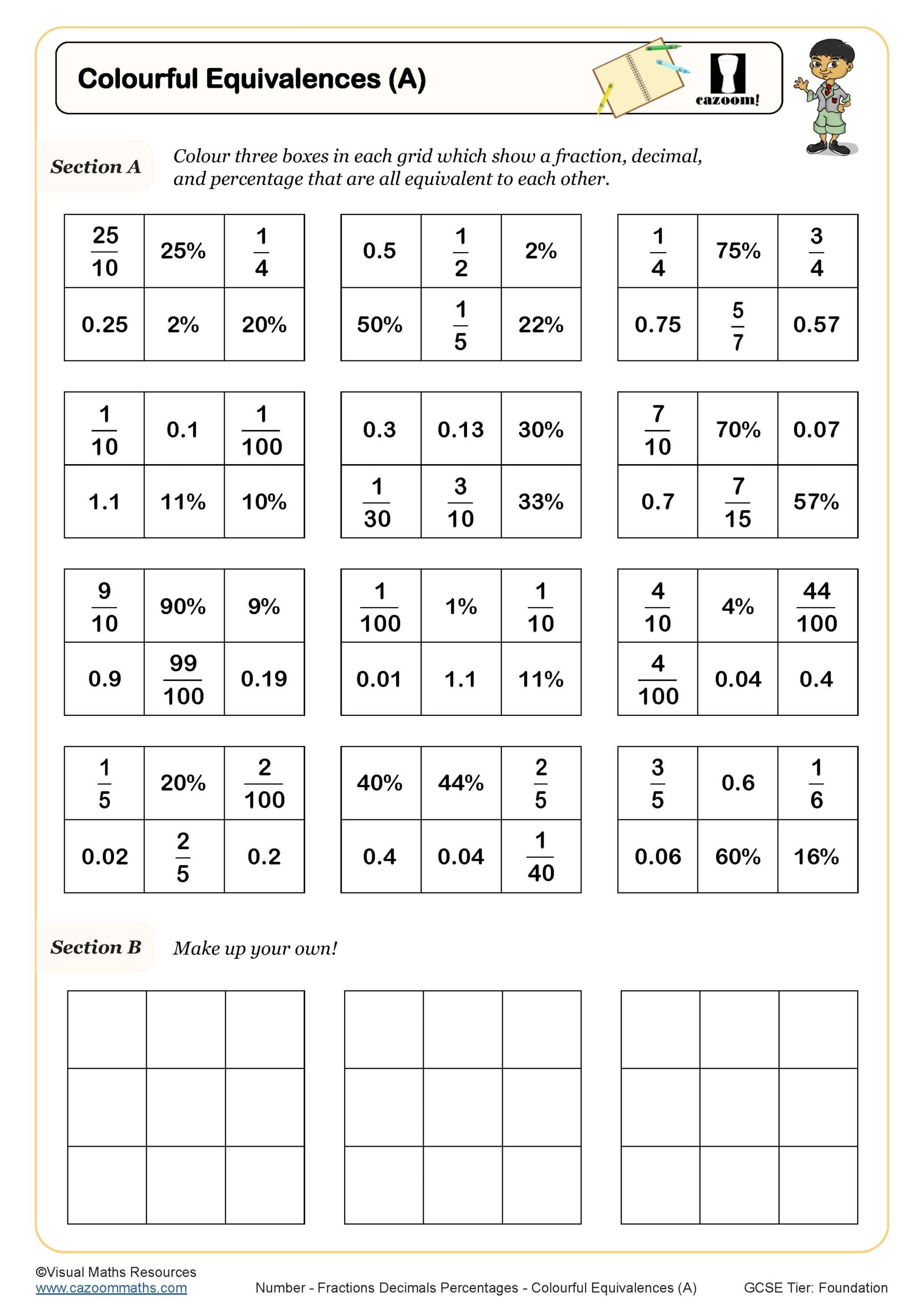
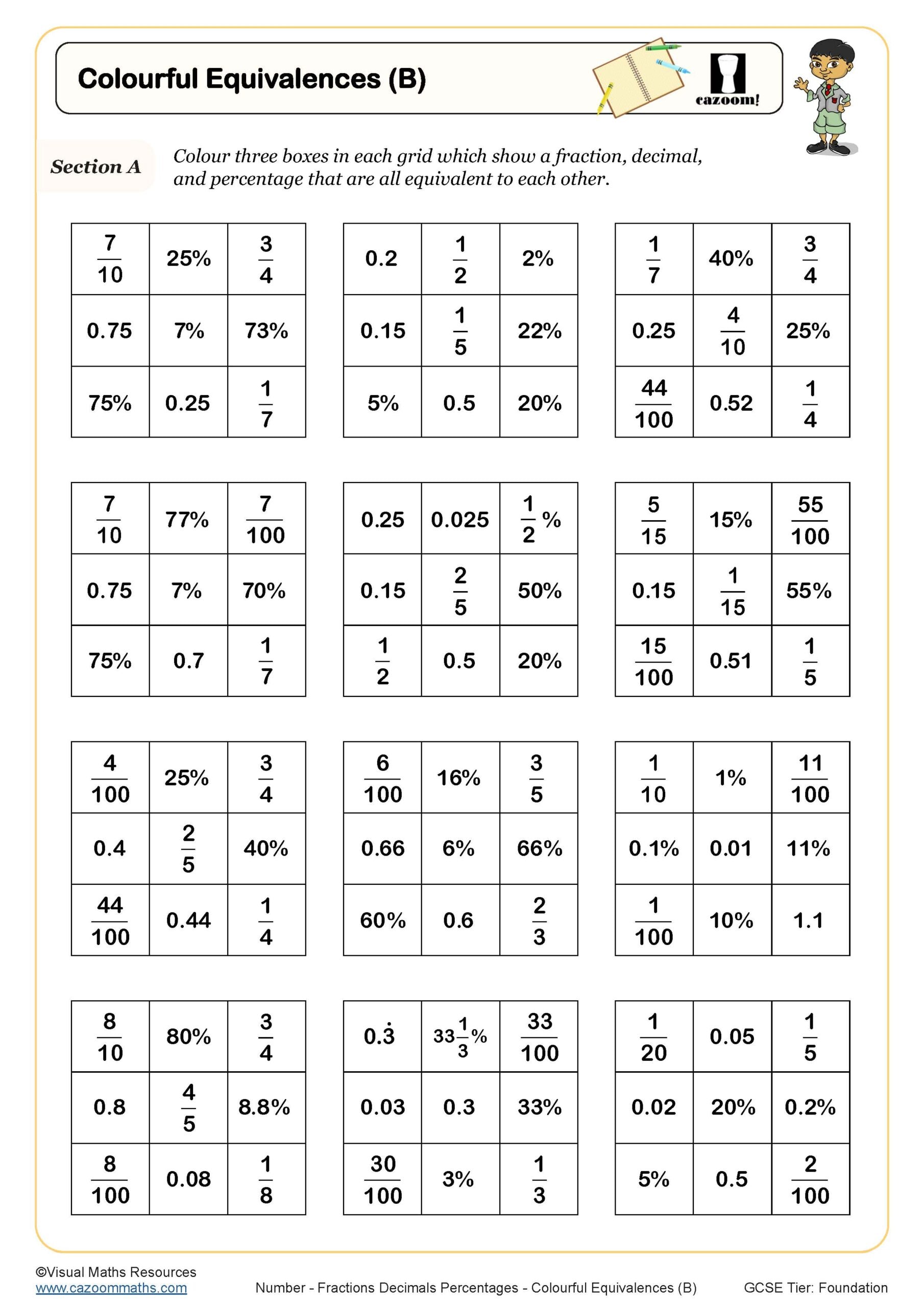
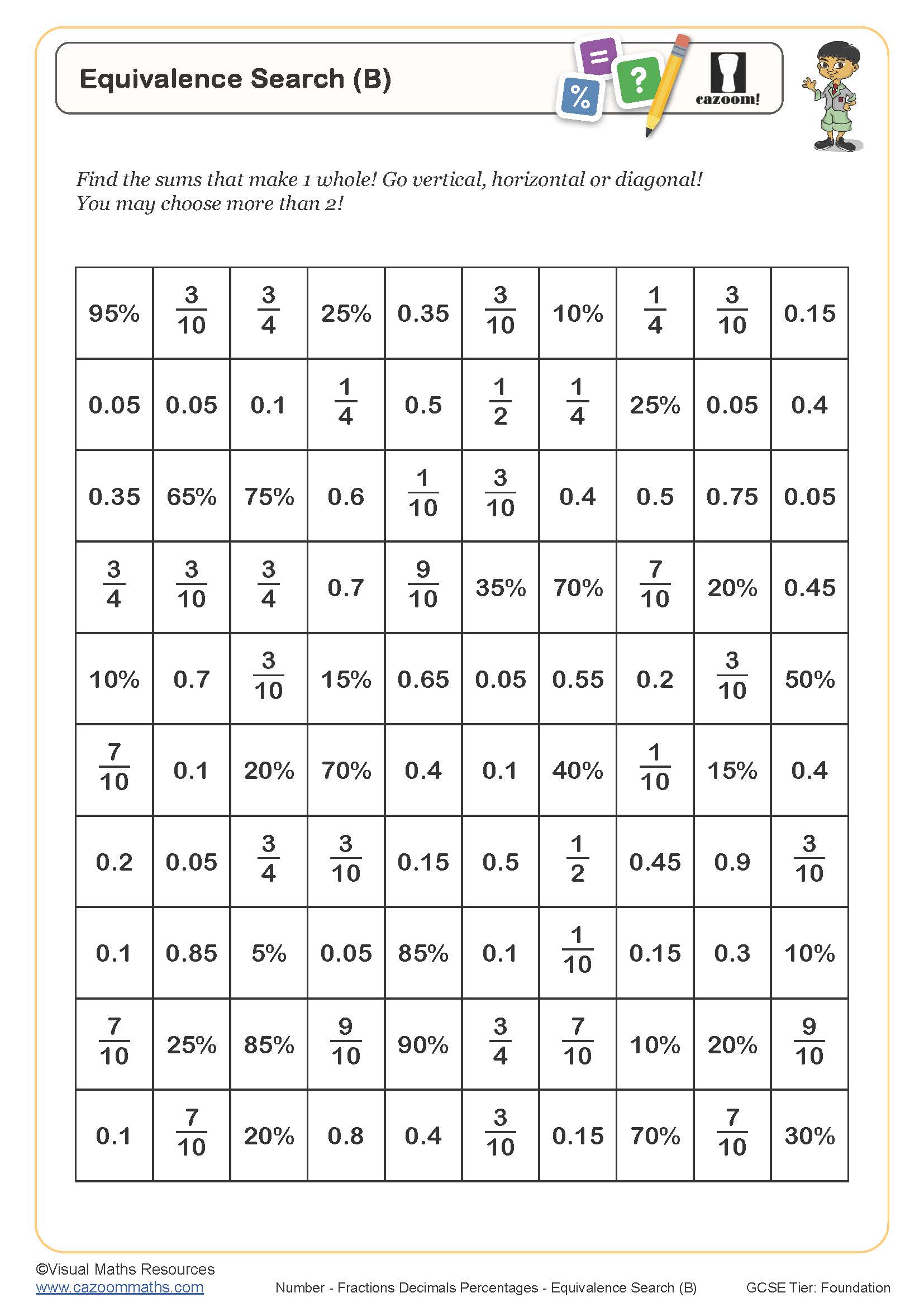
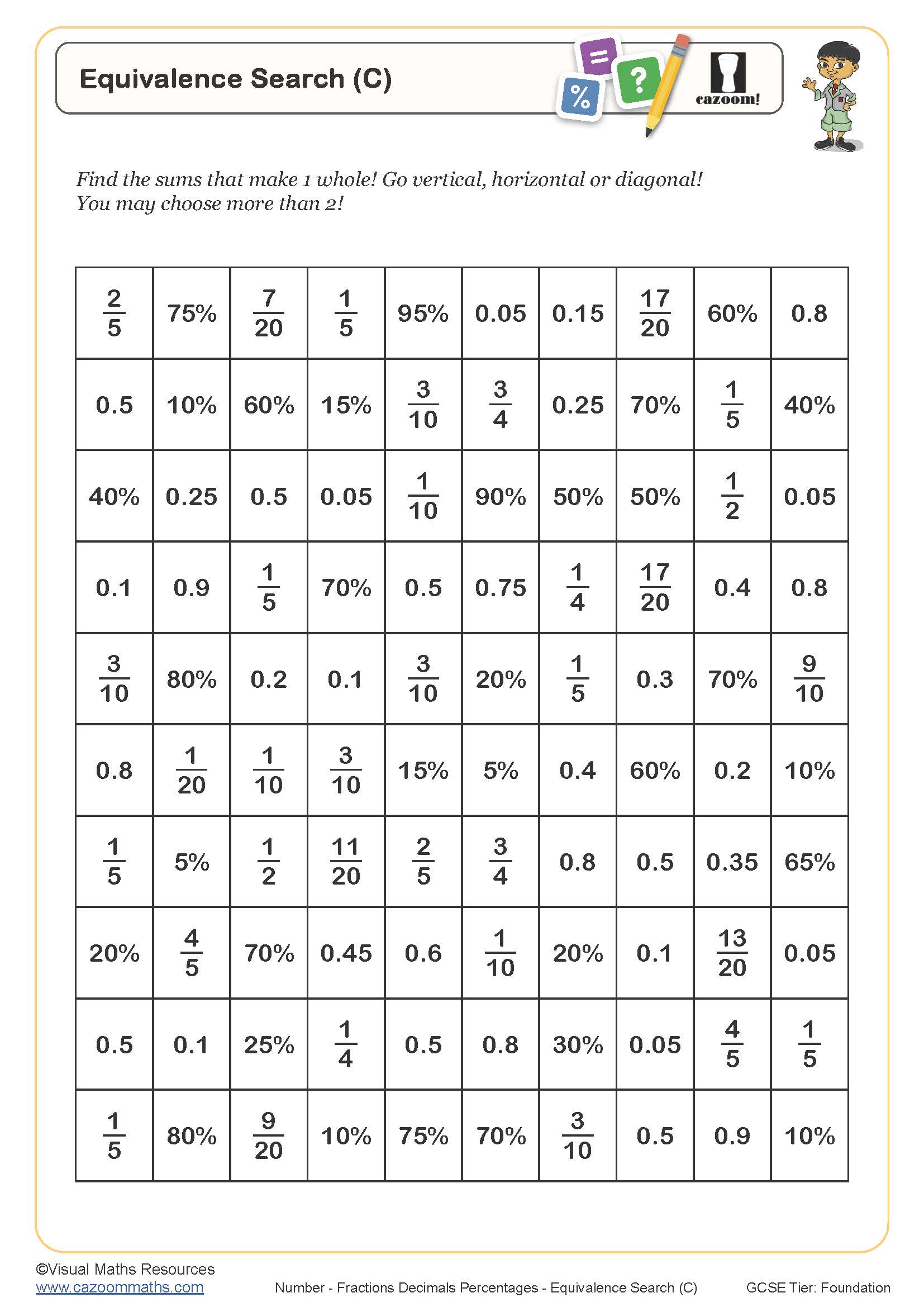
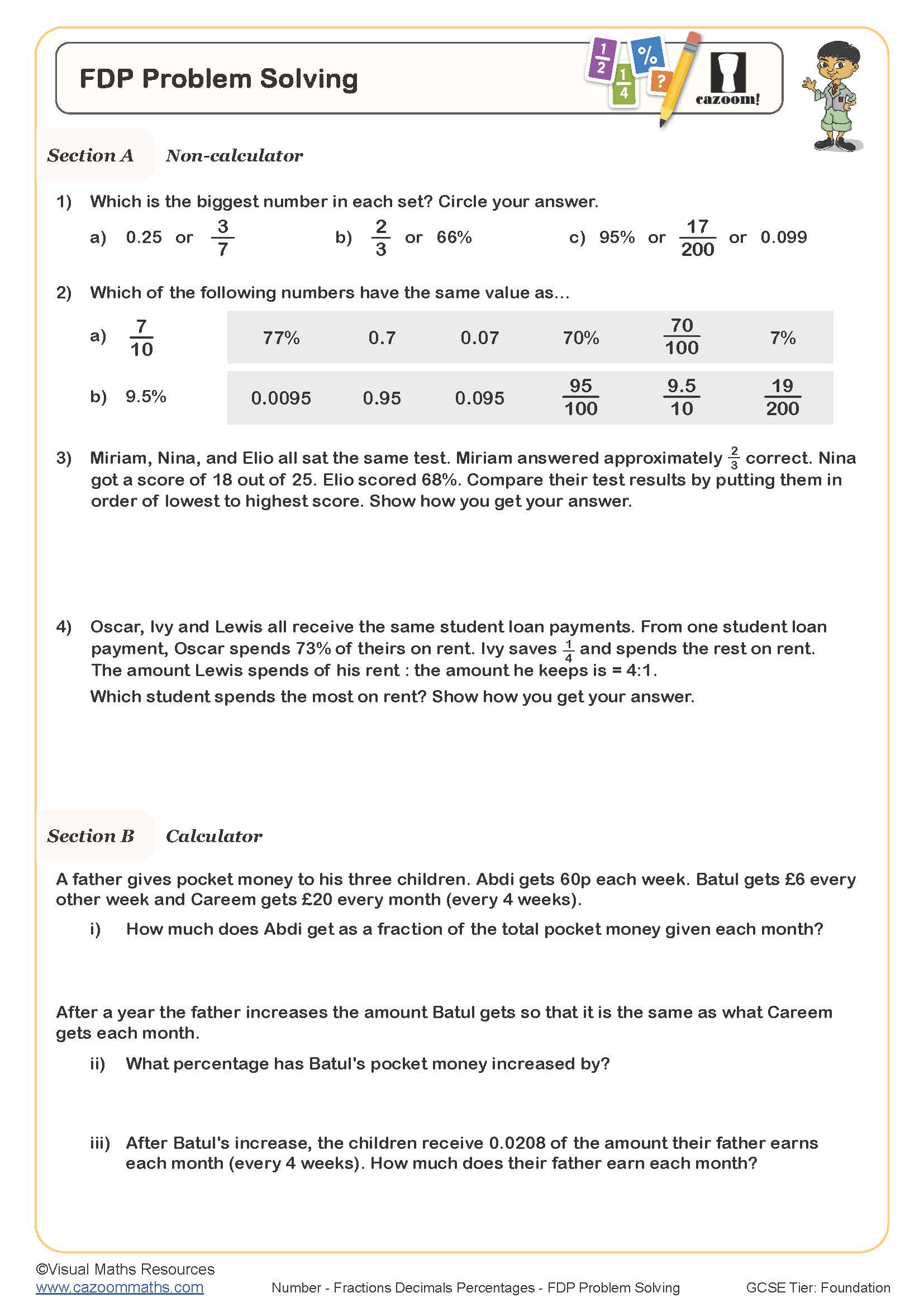
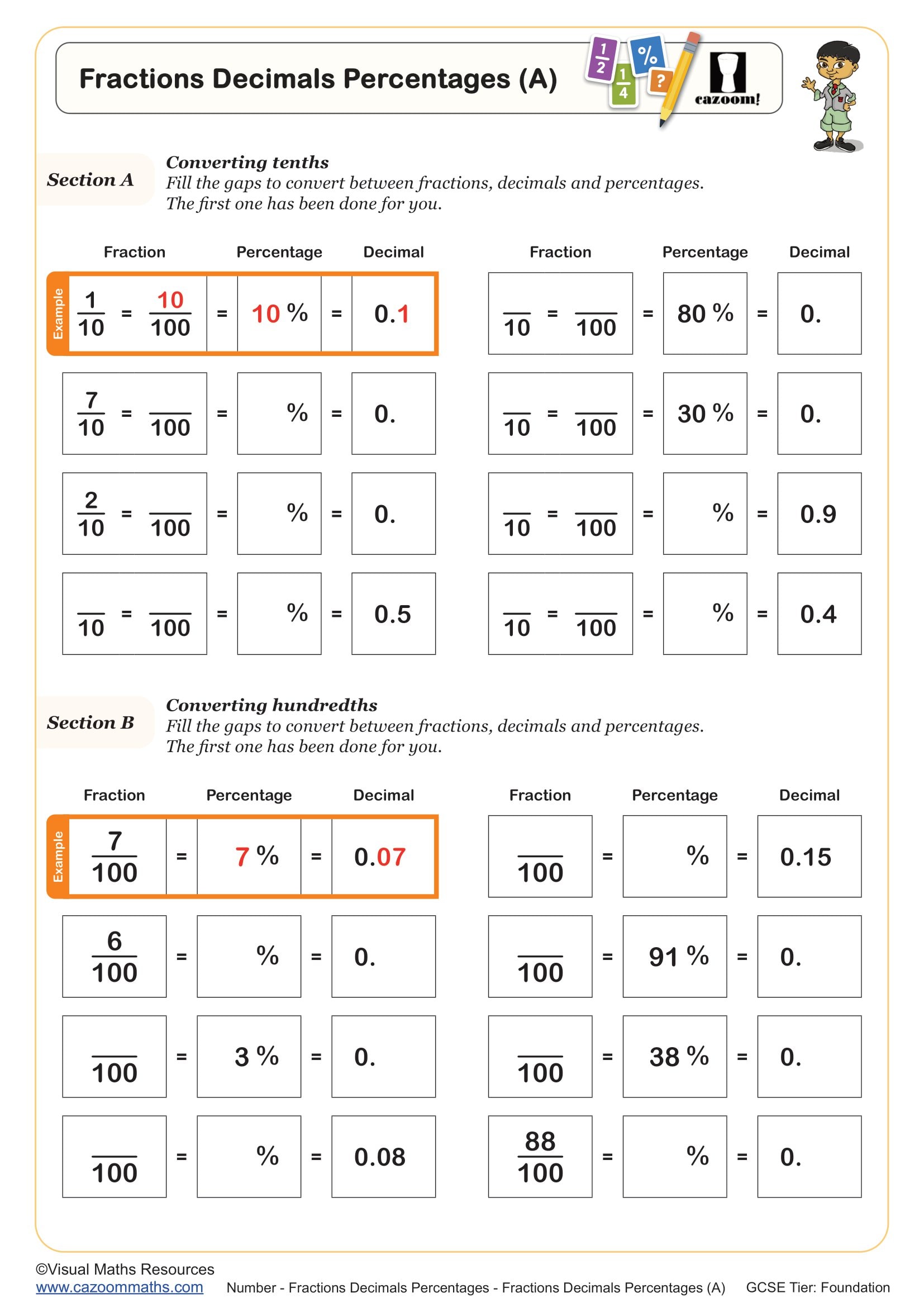
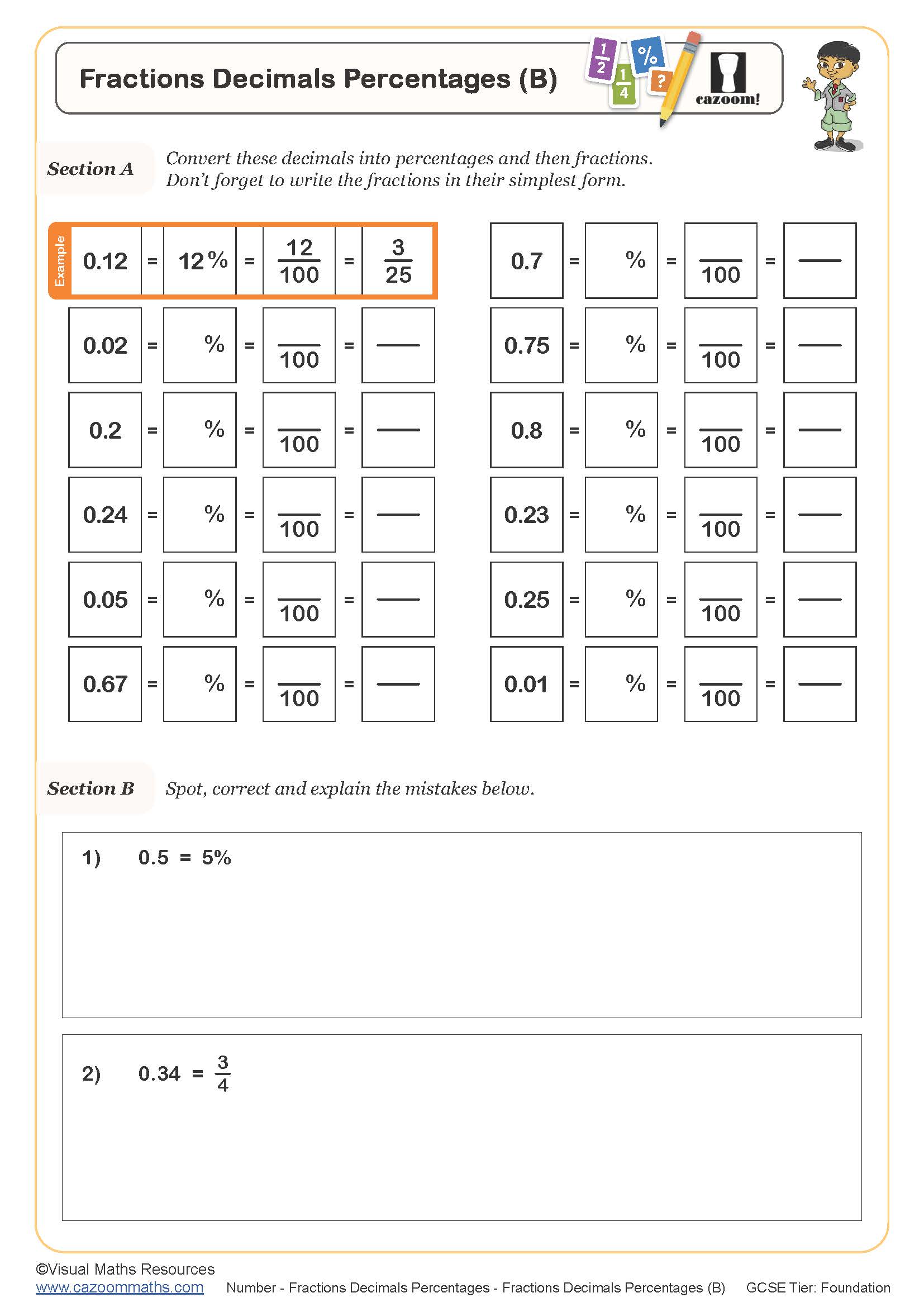
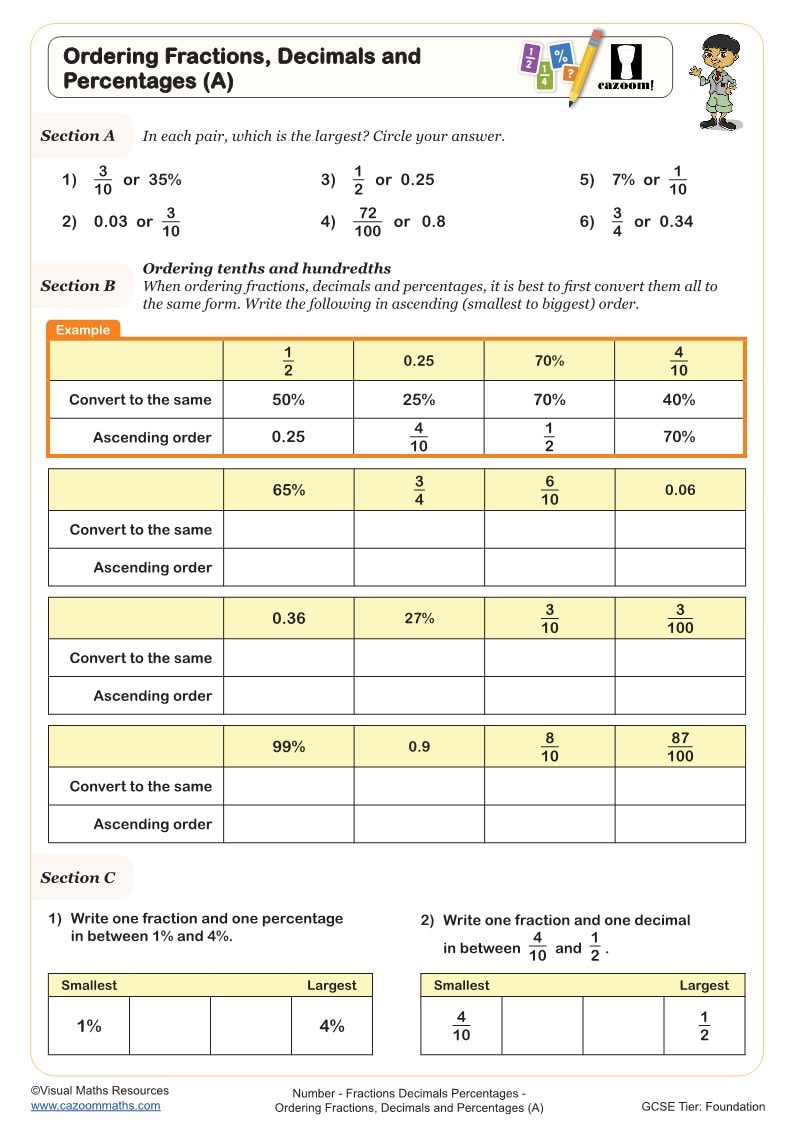
All worksheets are created by the team of experienced teachers at Cazoom Maths.
What topics are covered in year 8 percentages worksheets?
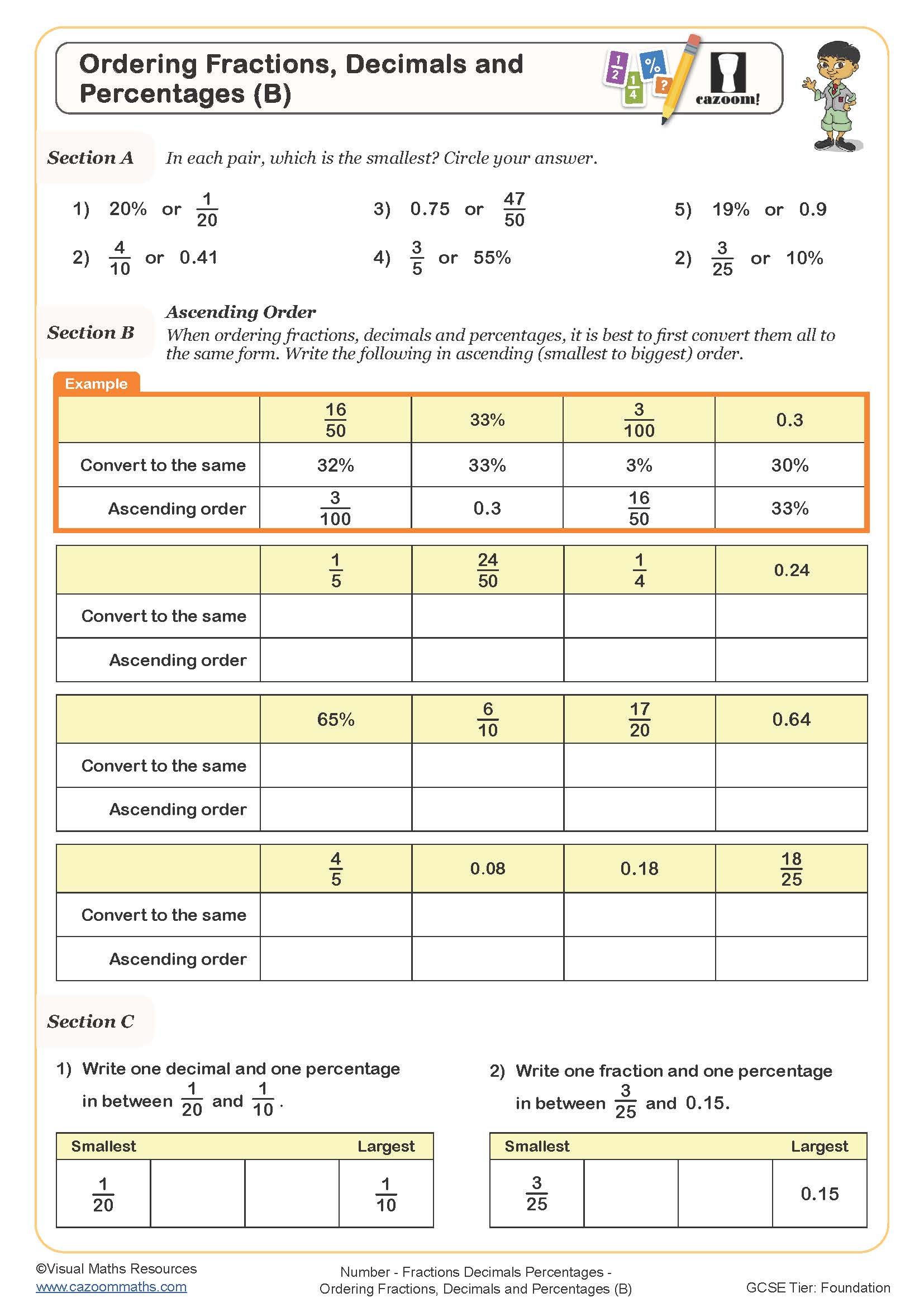
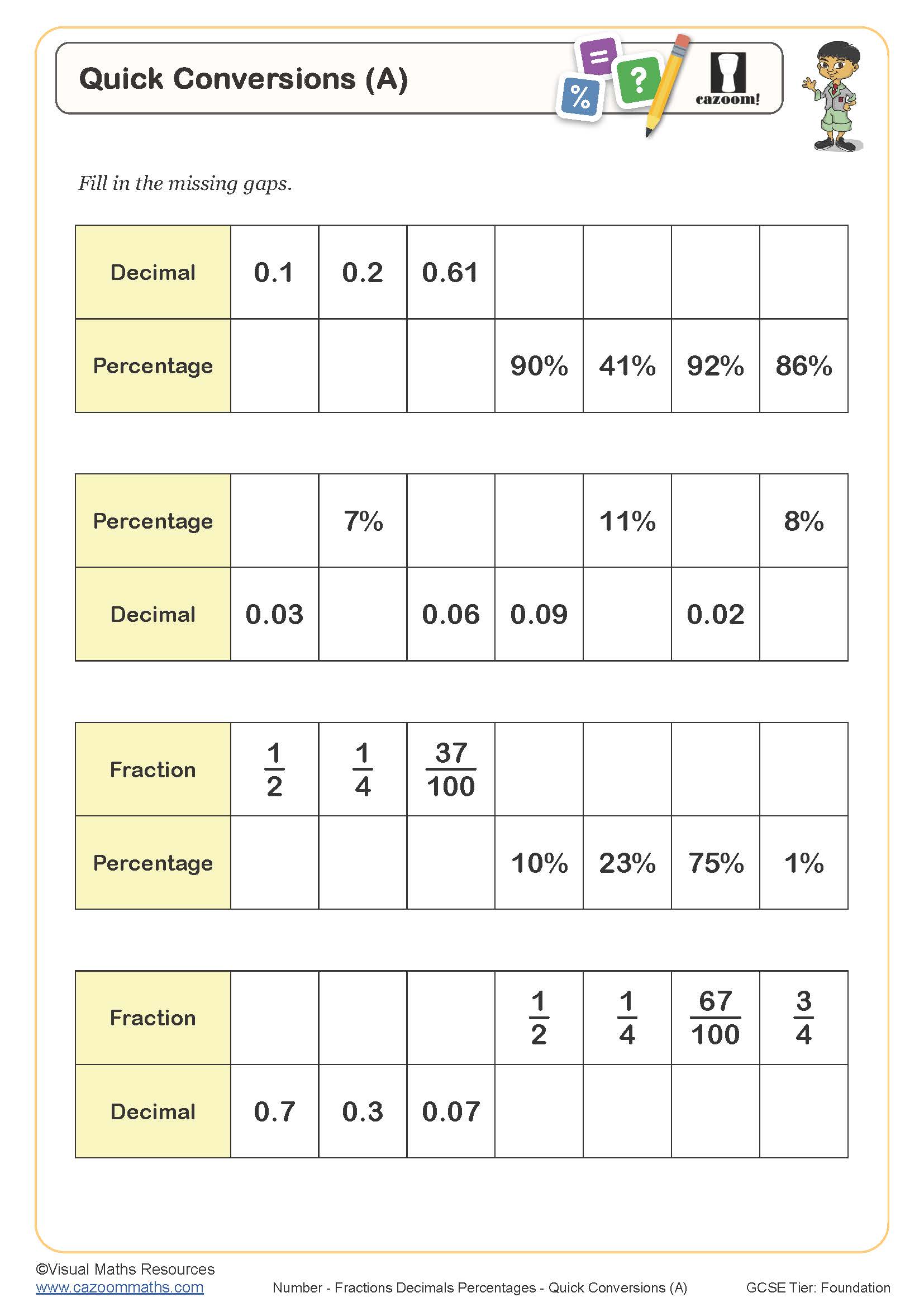
Year 8 percentages worksheets typically cover percentage calculations including finding percentages of amounts, percentage increase and decrease, expressing one quantity as a percentage of another, and converting between fractions, decimals and percentages. These topics align with the KS3 National Curriculum expectations for developing proportional reasoning and preparing students for GCSE mathematics.
Teachers notice that students often confuse the method for finding a percentage of an amount with finding what percentage one number is of another. For example, when asked 'What percentage is 15 out of 60?', many students calculate 60 ÷ 15 instead of 15 ÷ 60 × 100, highlighting the importance of explicit teaching around question interpretation.
Are these worksheets suitable for students struggling with fractions and percentages?
These worksheets include scaffolded exercises that begin with converting simple fractions to percentages before progressing to more complex percentage calculations. The structured approach helps students who find fractions decimals and percentages challenging by breaking down multi-step problems into manageable components and providing visual representations where appropriate.
Many teachers find that students who struggle with this topic benefit from starting with benchmark percentages like 10%, 25%, 50% and 75% before tackling more complex conversions. The worksheets often include these foundation skills alongside more demanding problems, allowing teachers to differentiate instruction while maintaining curriculum coverage for the whole class.
How do these worksheets help with decimal fractions understanding?
The worksheets systematically develop students' understanding of decimal fractions by demonstrating how percentages, decimals and fractions represent the same values in different forms. Students practise converting decimal fractions like 0.375 to both common fractions (3/8) and percentages (37.5%), reinforcing the multiplicative relationships between these representations.
Teachers observe that students often struggle when decimal fractions extend beyond two decimal places, particularly when converting to percentages. The worksheets address this by providing step-by-step examples and ensuring students understand that multiplying by 100 shifts the decimal point rather than requiring complex multiplication algorithms.
How can teachers use these worksheets most effectively in lessons?
Teachers find these worksheets work best when used alongside practical contexts like calculating discounts, interest rates or statistical data from sports or science experiments. The answer sheets allow for quick peer assessment activities, where students can check their work and identify common errors before teacher intervention becomes necessary.
Many teachers use selected questions as starter activities to maintain fluency while introducing new topics, then return to more challenging problems as the lesson progresses. The variety of question types means teachers can easily extract specific problems for mini-plenaries or target particular misconceptions that emerge during whole-class teaching.