Year 8 Fractions Worksheets
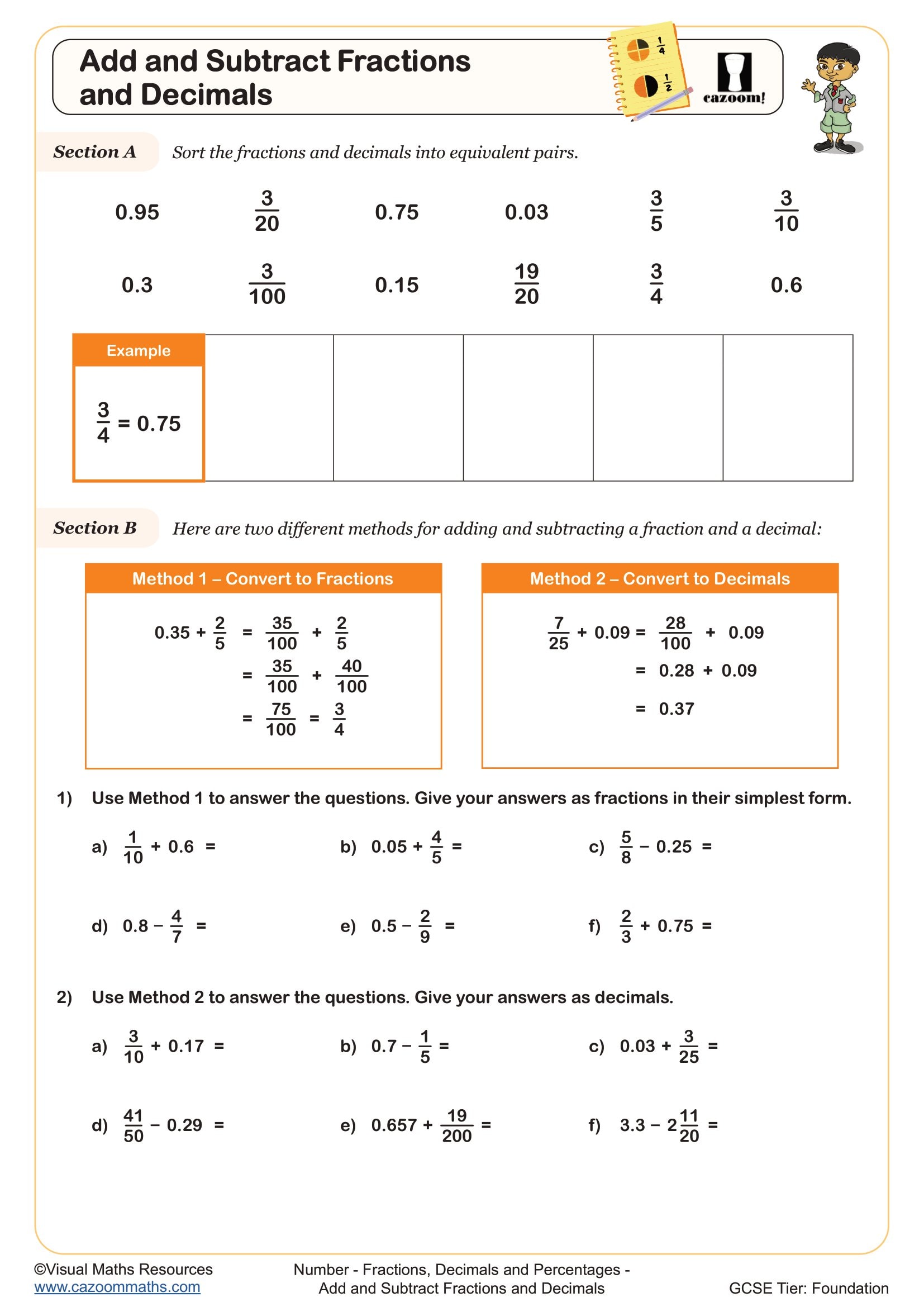
Add and Subtract Fractions and Decimals
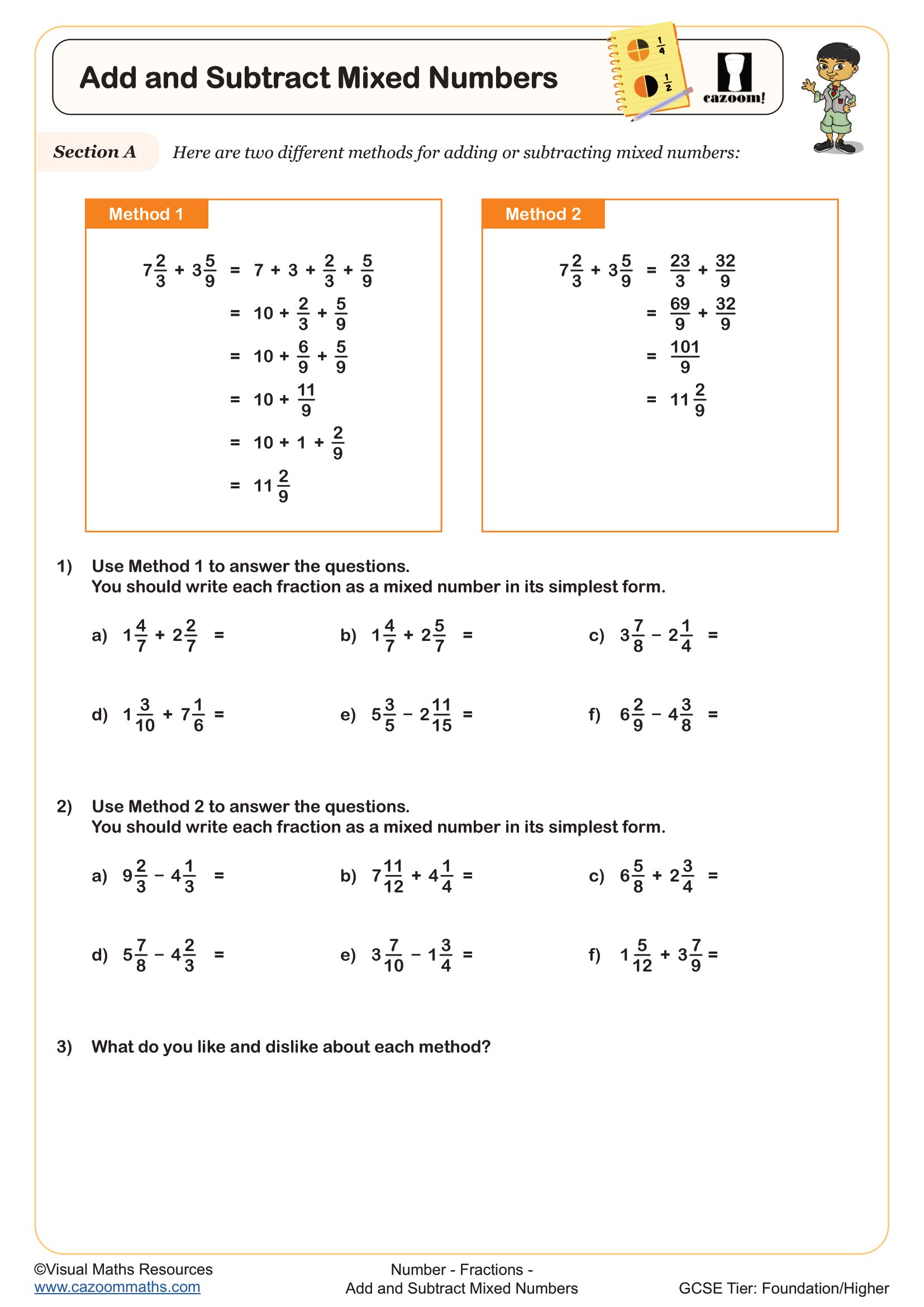
Add and Subtract Mixed Numbers
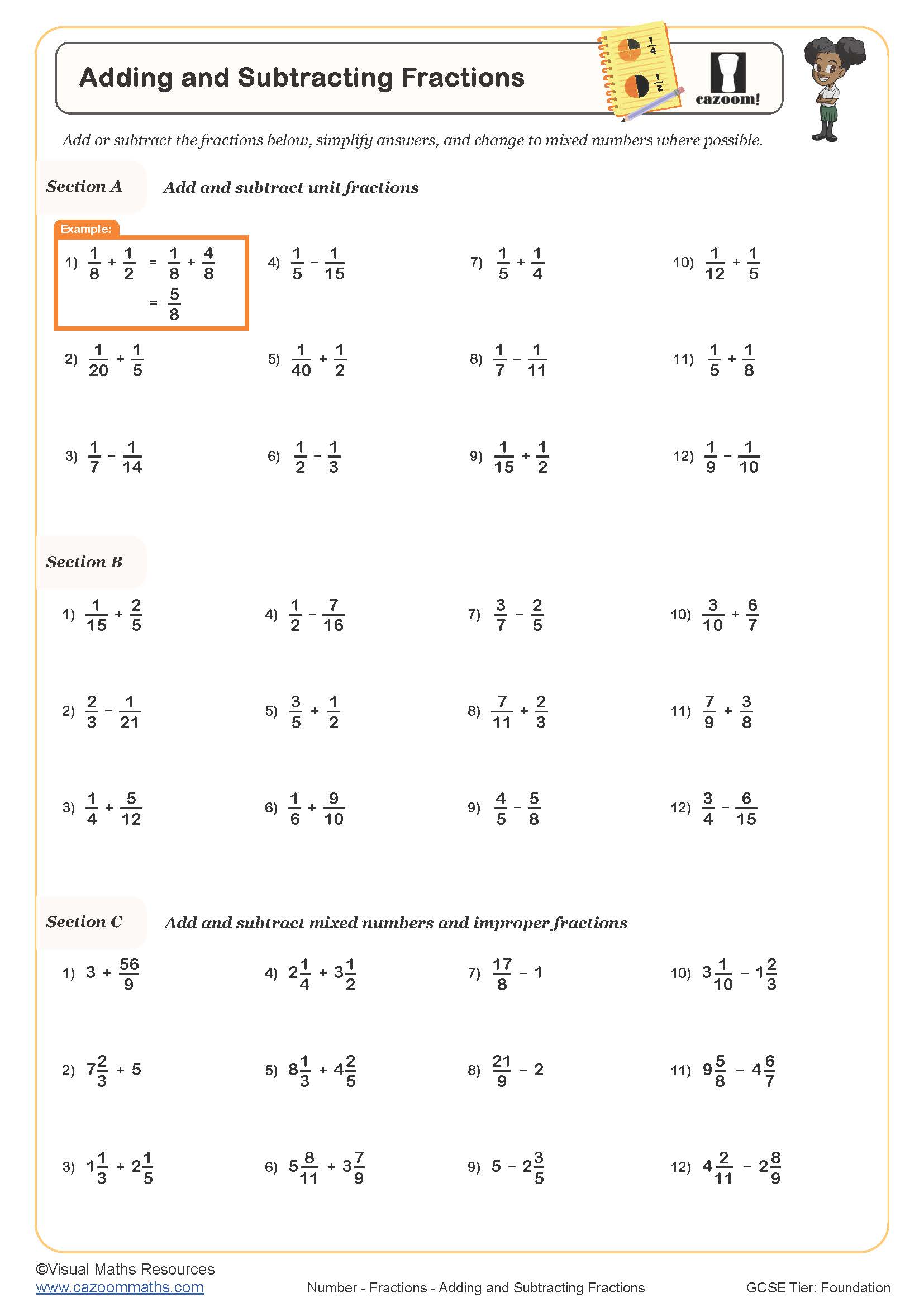
Adding and Subtracting Fractions
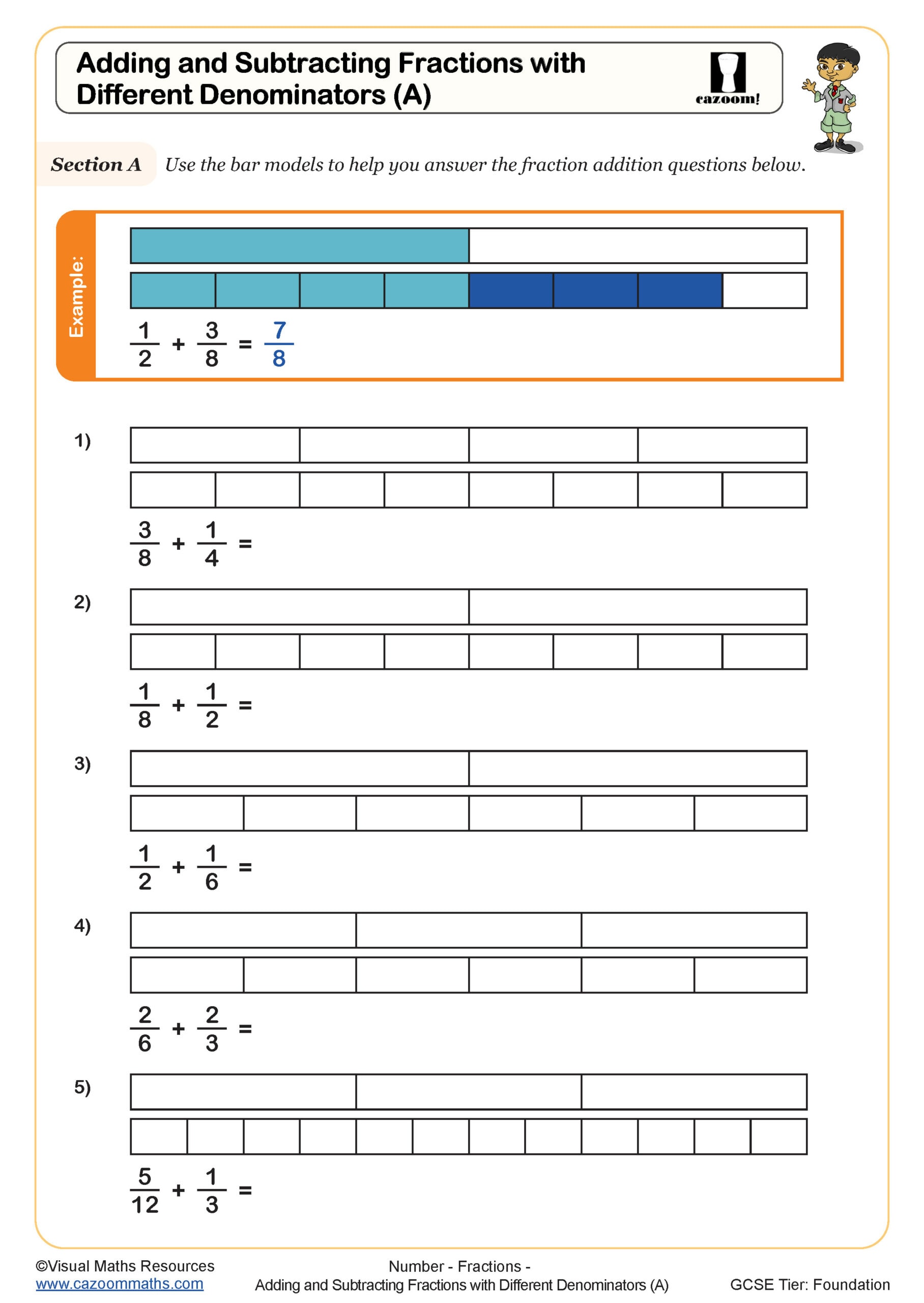
Adding and subtracting fractions with different denominators (A)
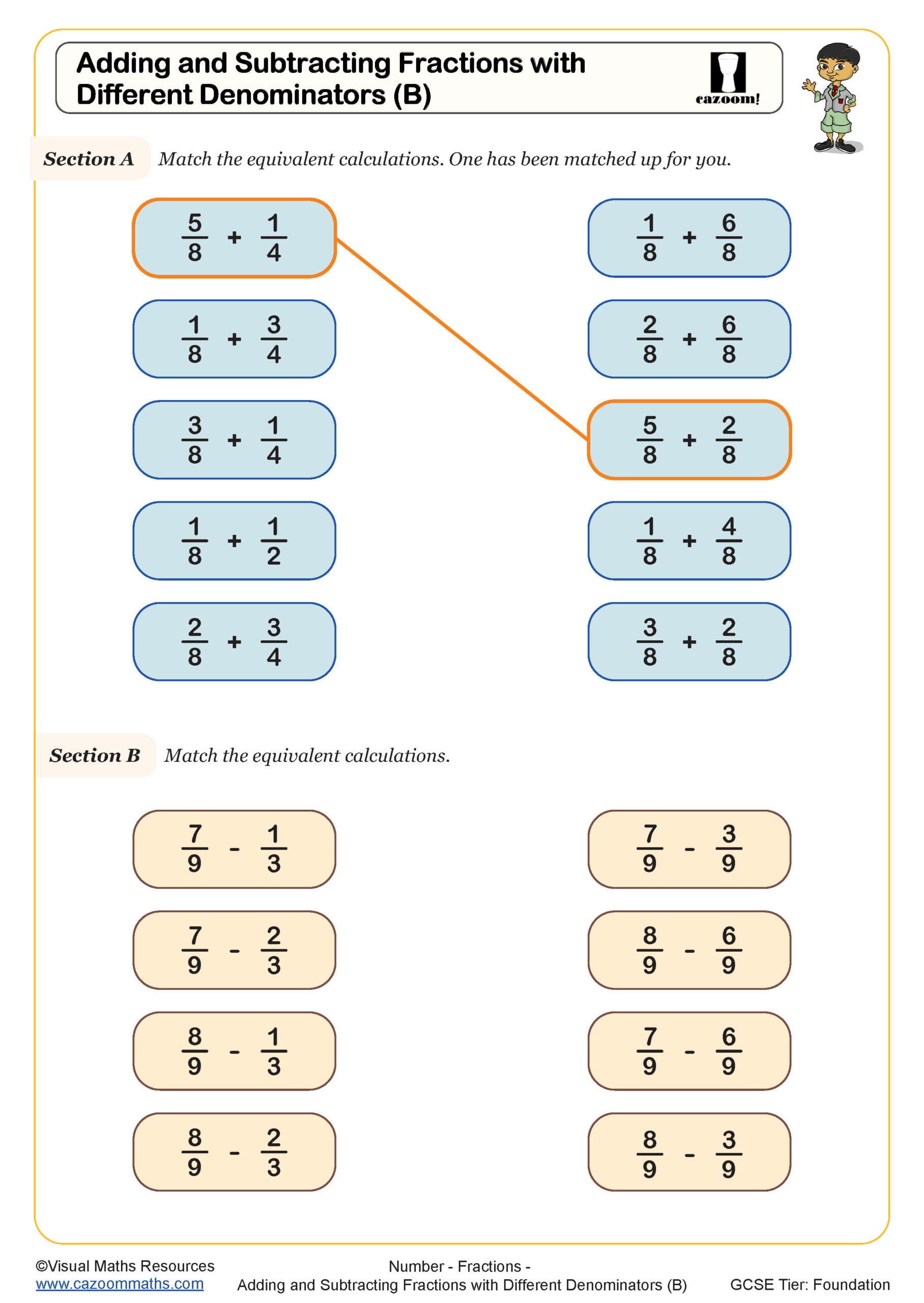
Adding and subtracting fractions with different denominators (B)
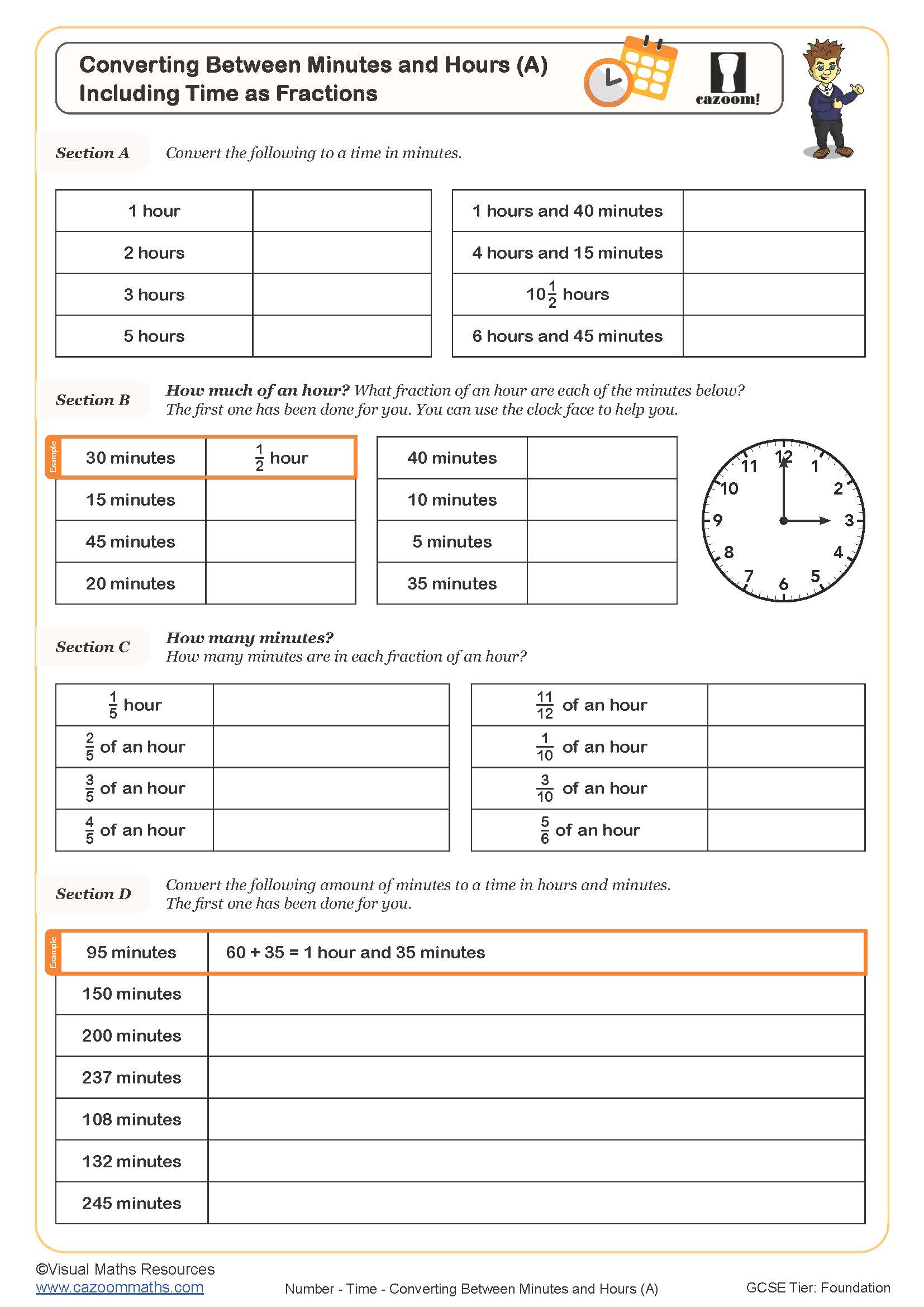
Converting Between Minutes and Hours (A)
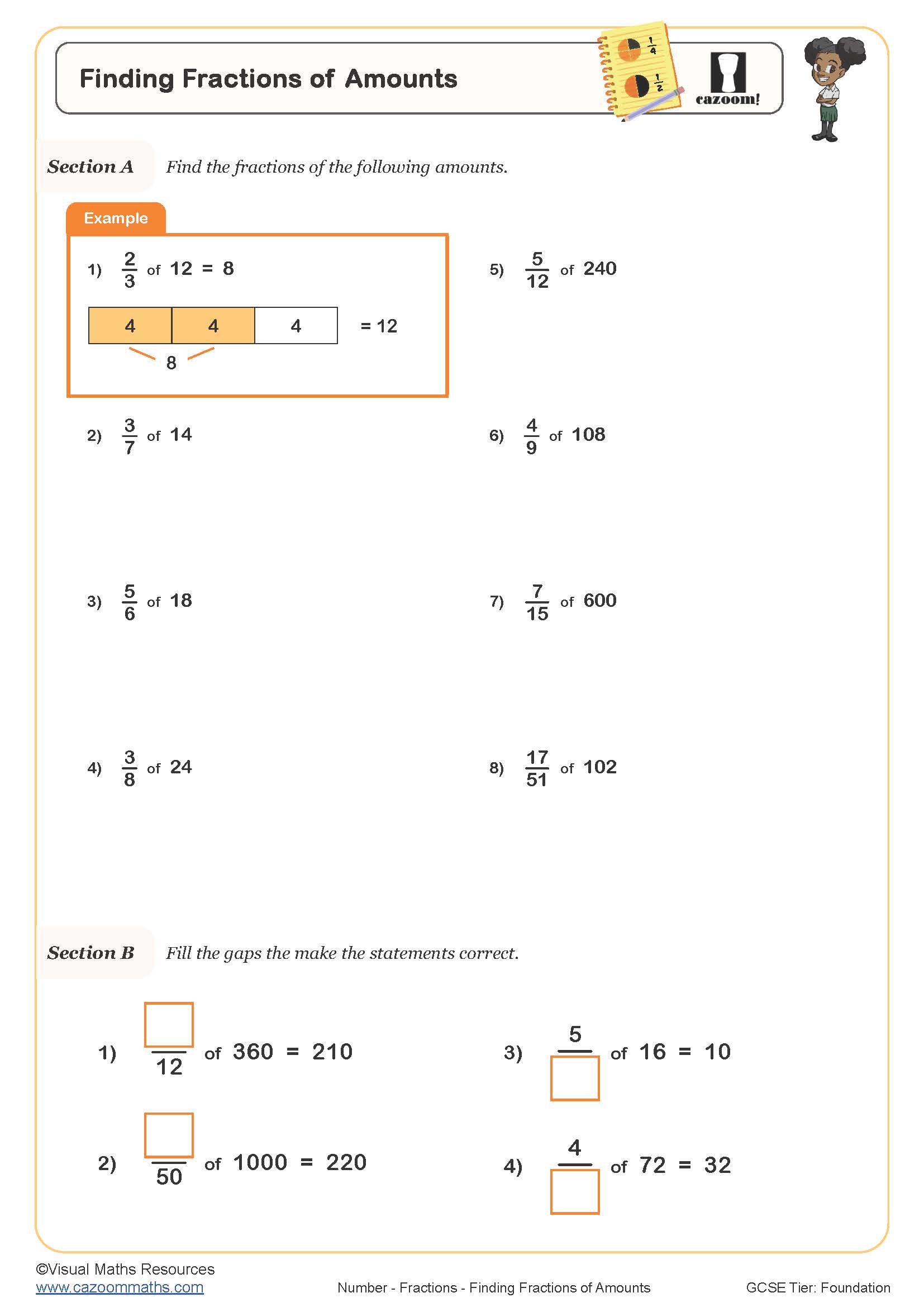
Finding Fractions of Amounts
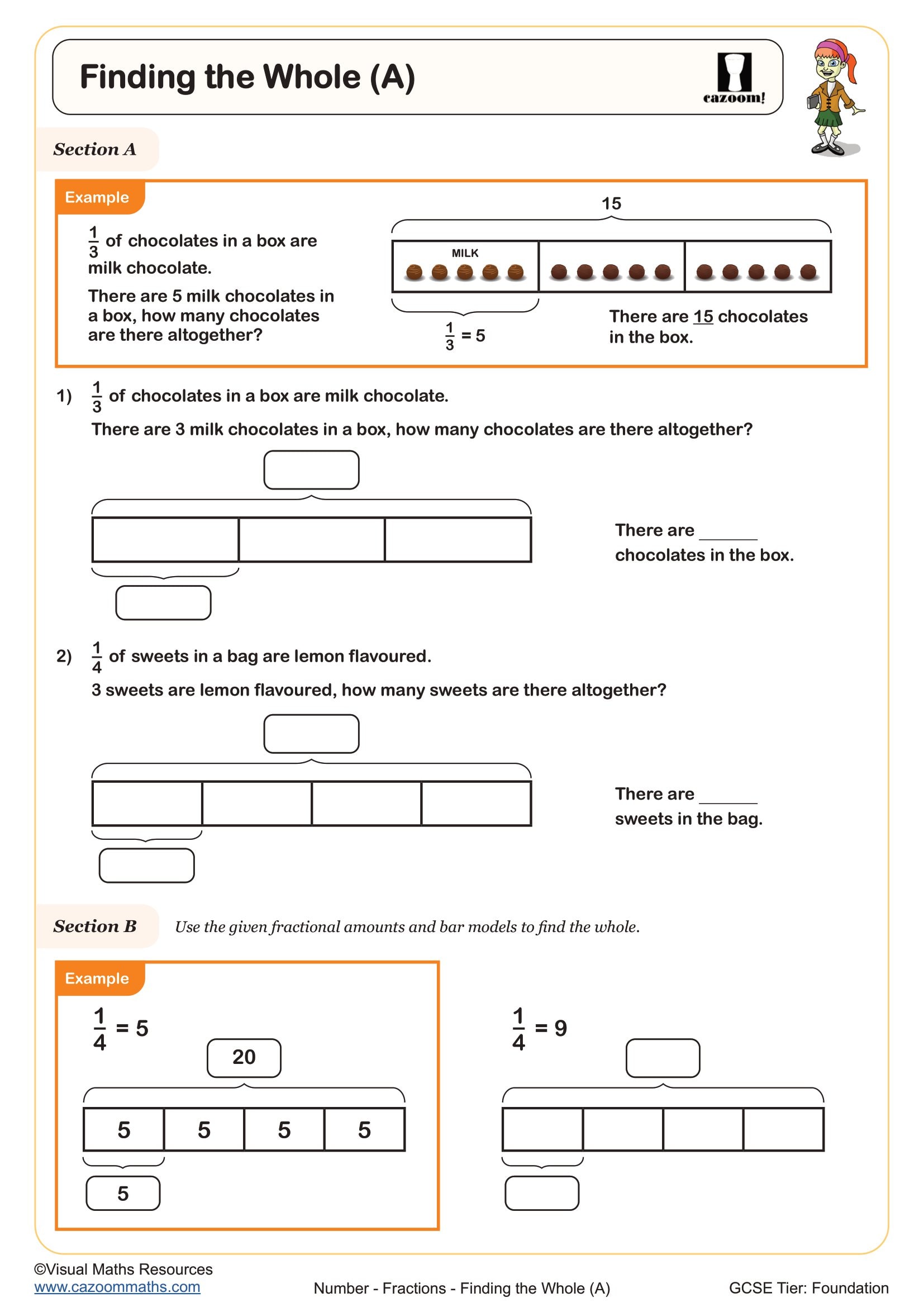
Finding the Whole (A)
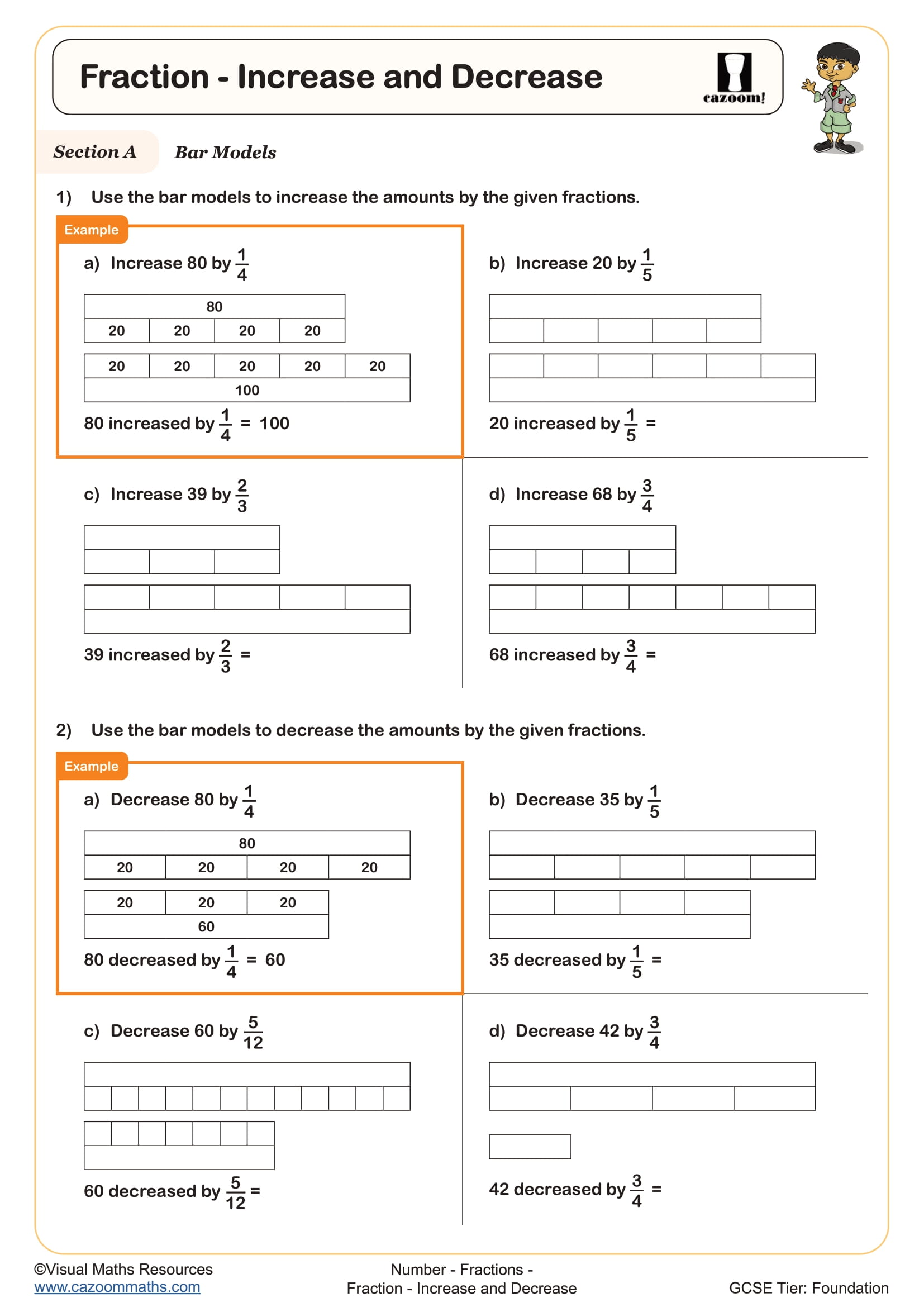
Fraction - Increase and Decrease
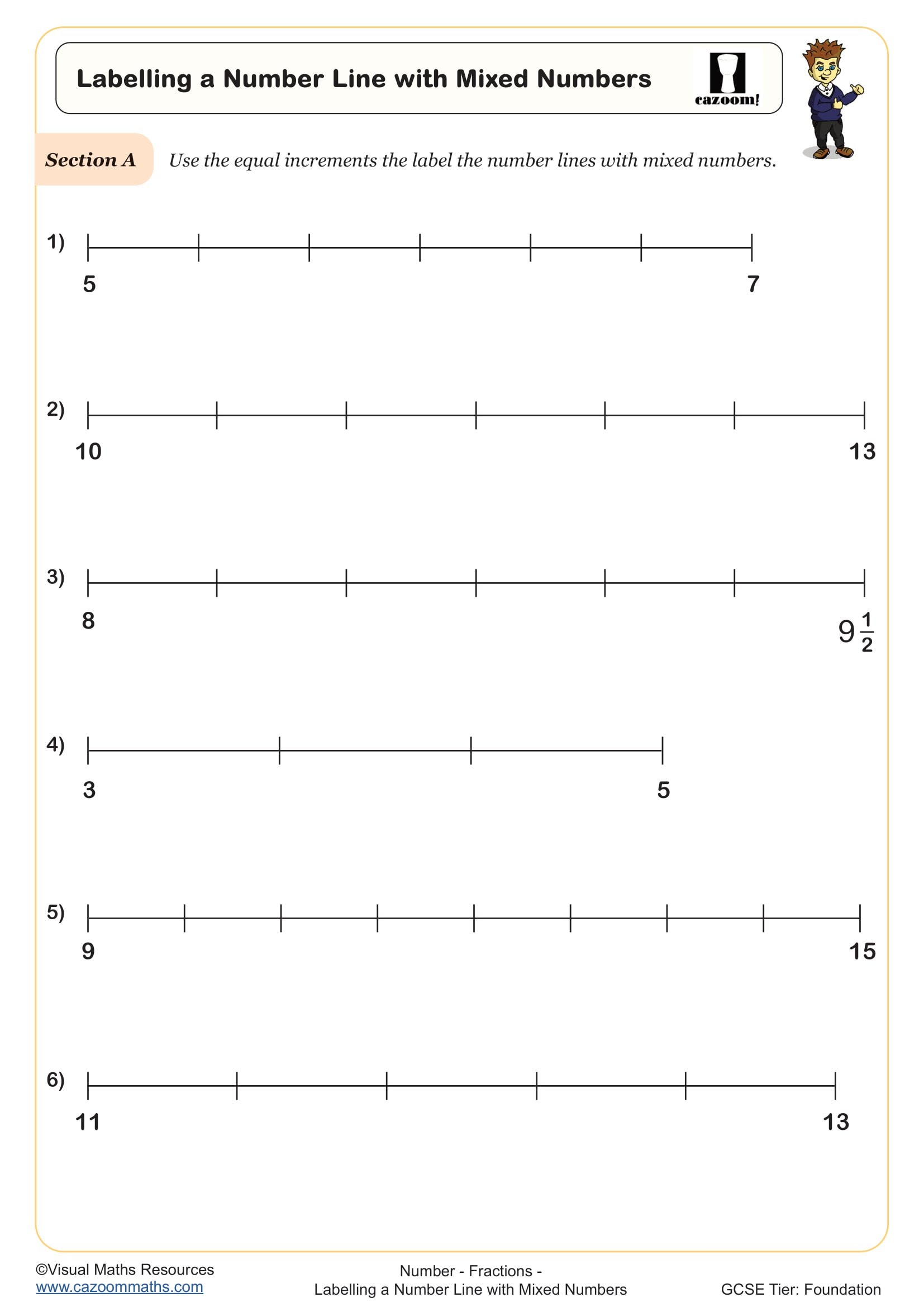
Labelling a Number Line with Mixed Numbers
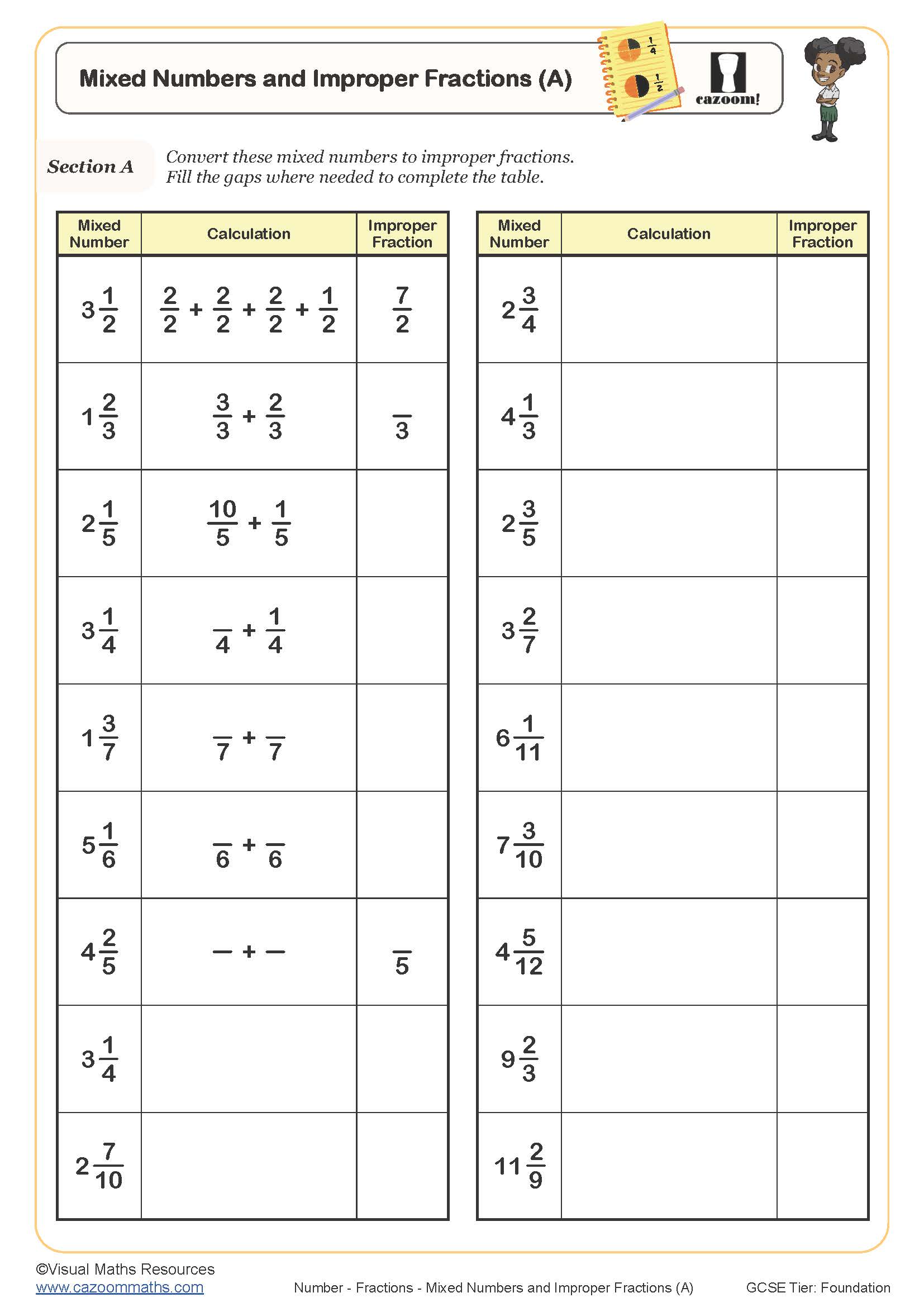
Mixed Numbers and Improper Fractions (A)
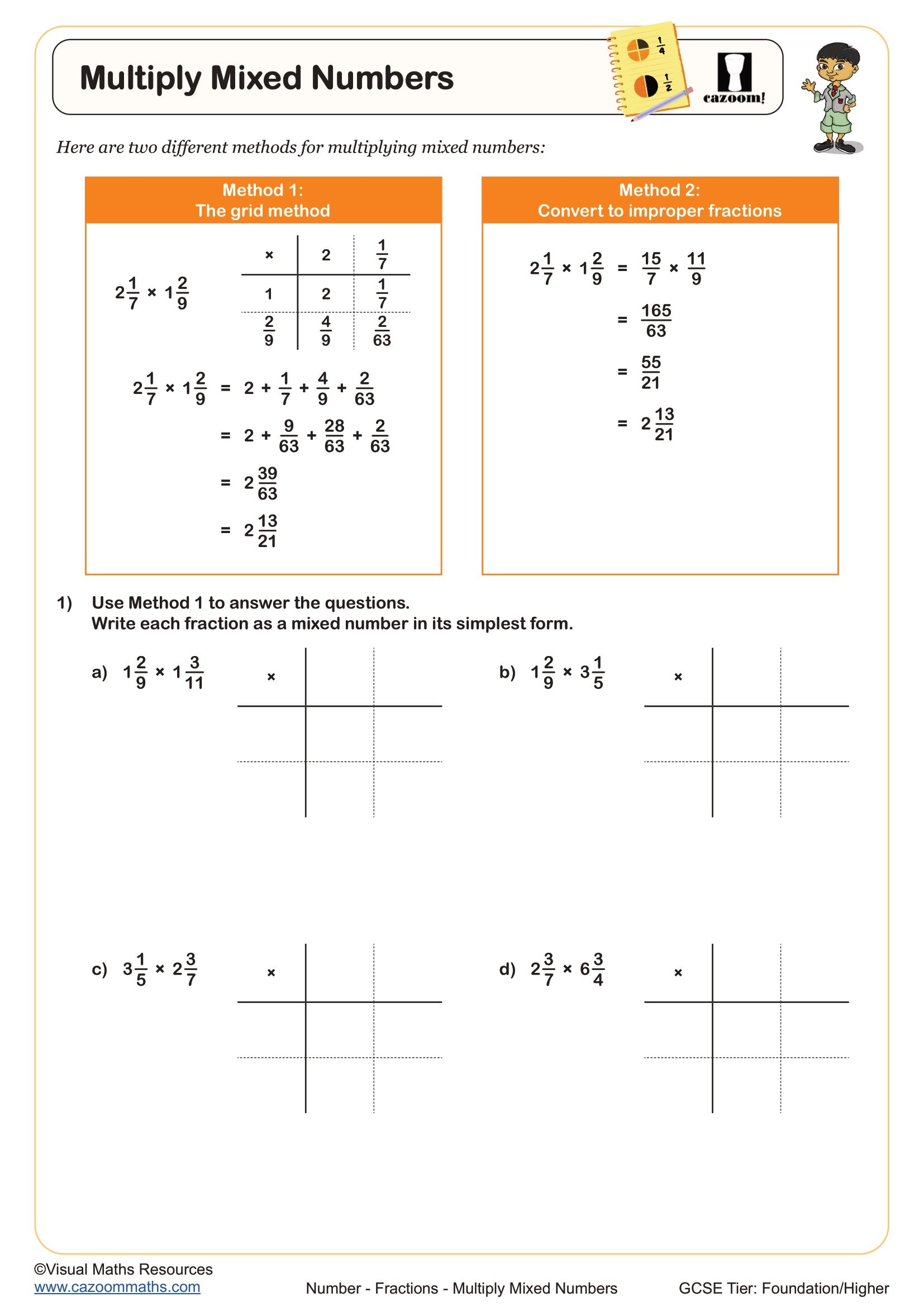
Multiply Mixed Numbers
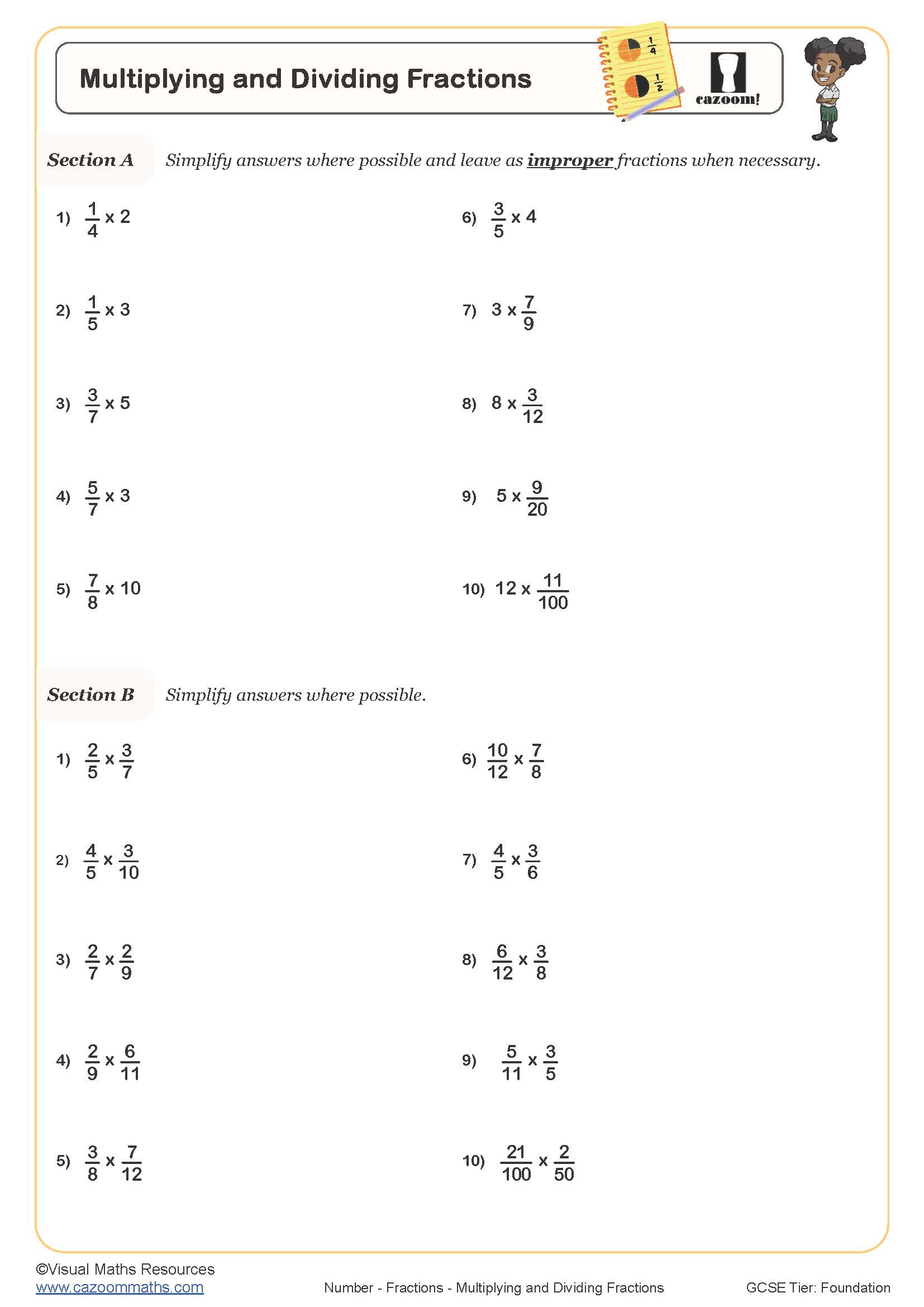
Multiplying and Dividing Fractions
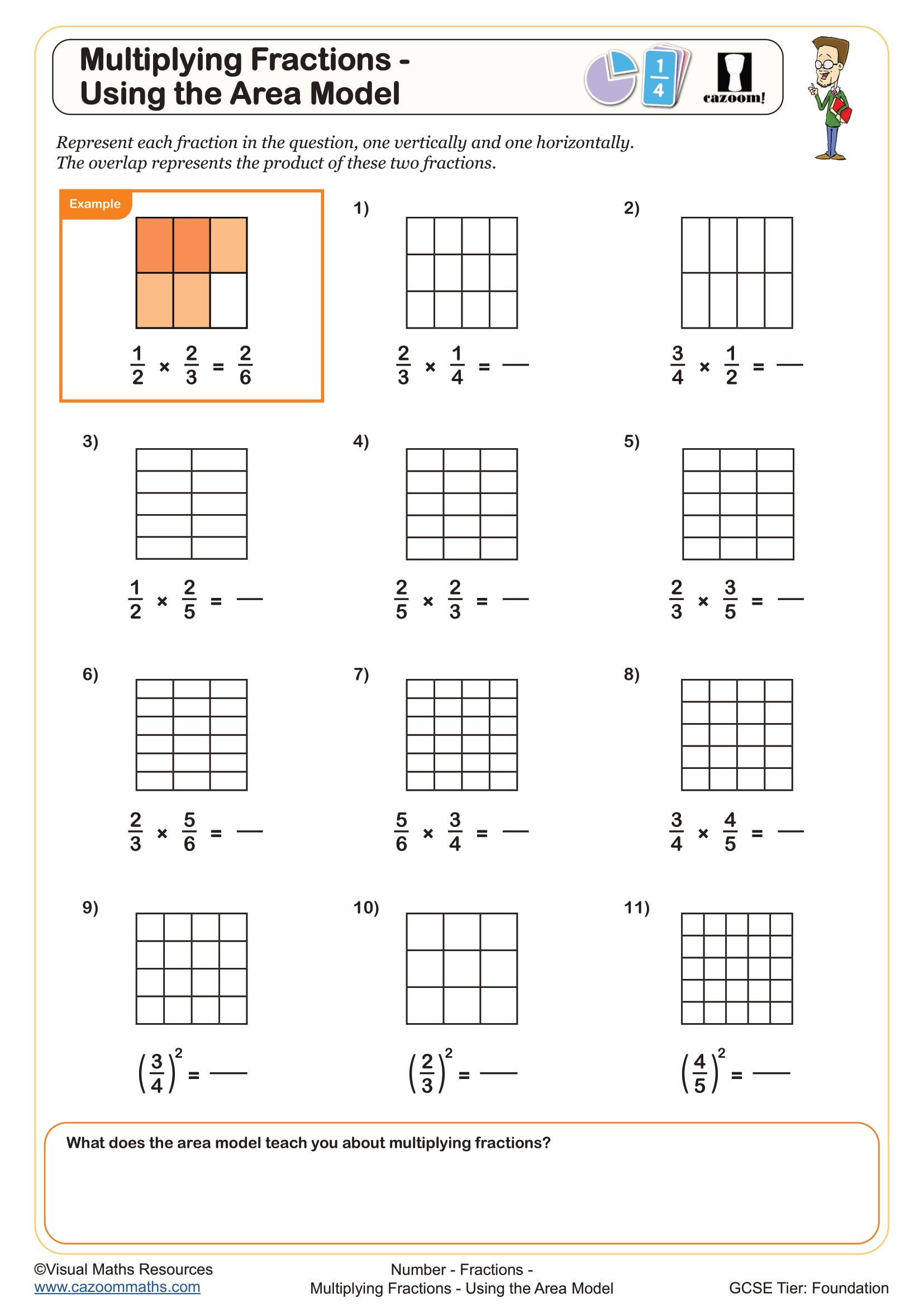
Multiplying Fractions - Using the Area Model
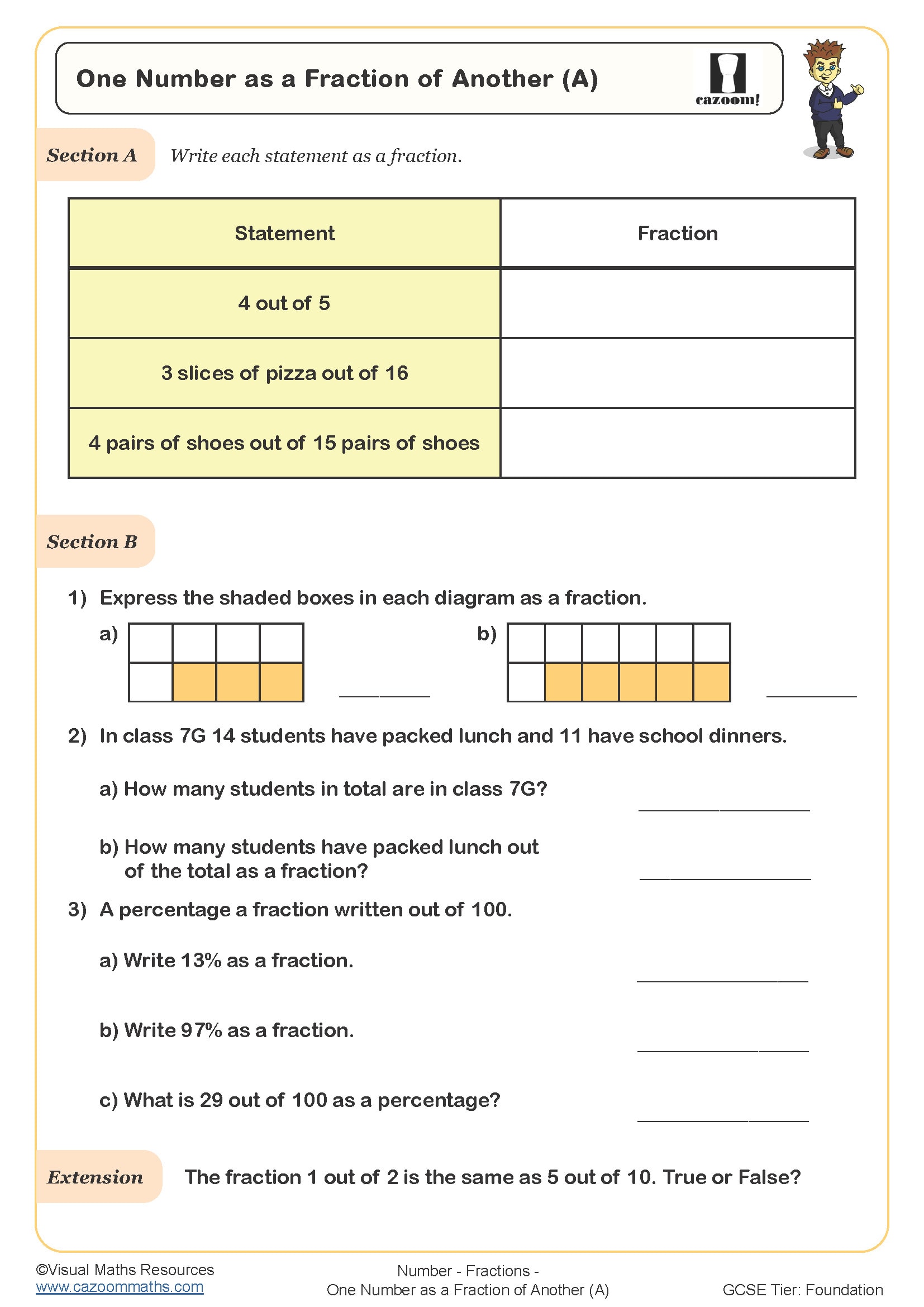
One Number as a Fraction of Another (A)
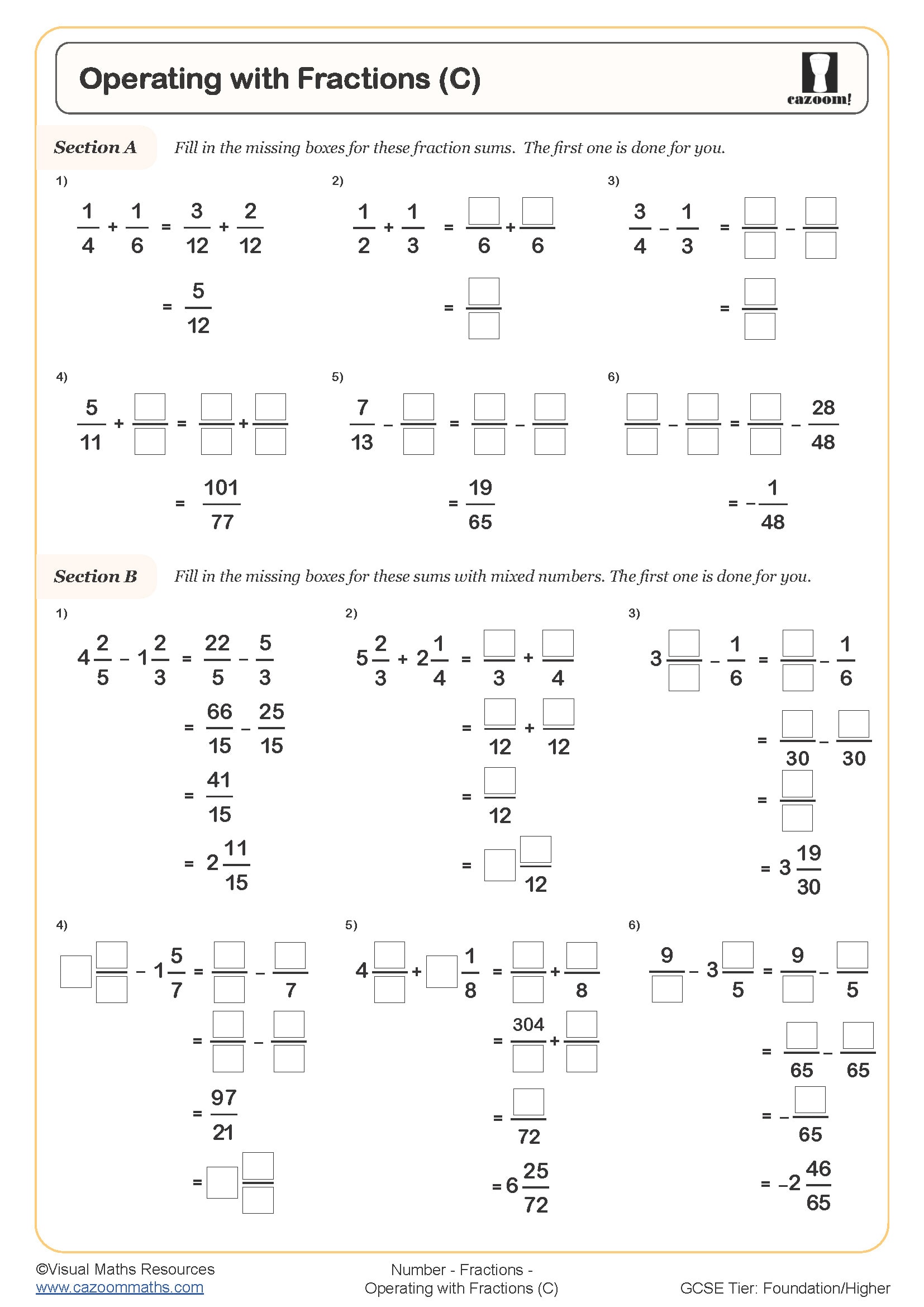
Operating with Fractions (C)
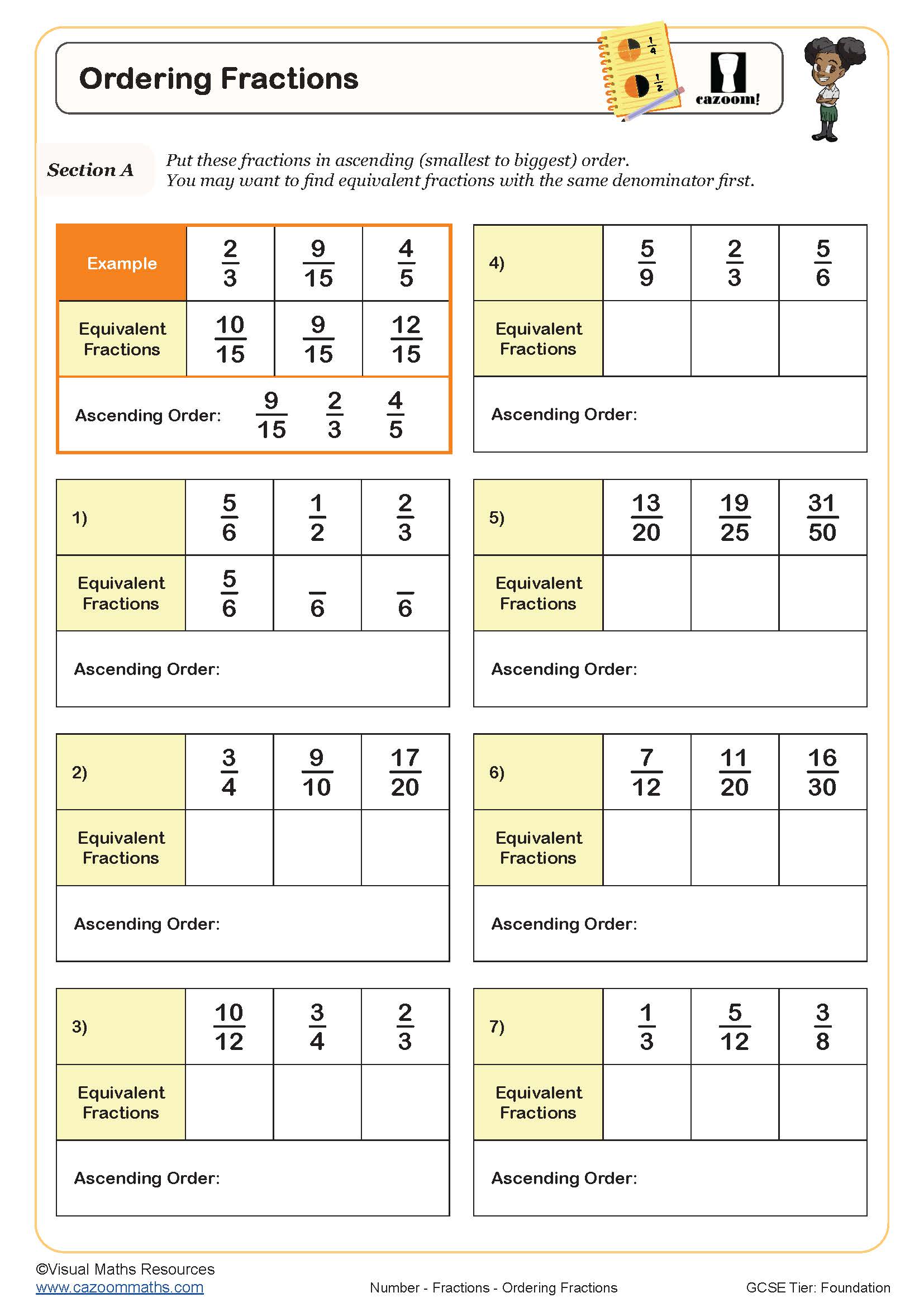
Ordering Fractions
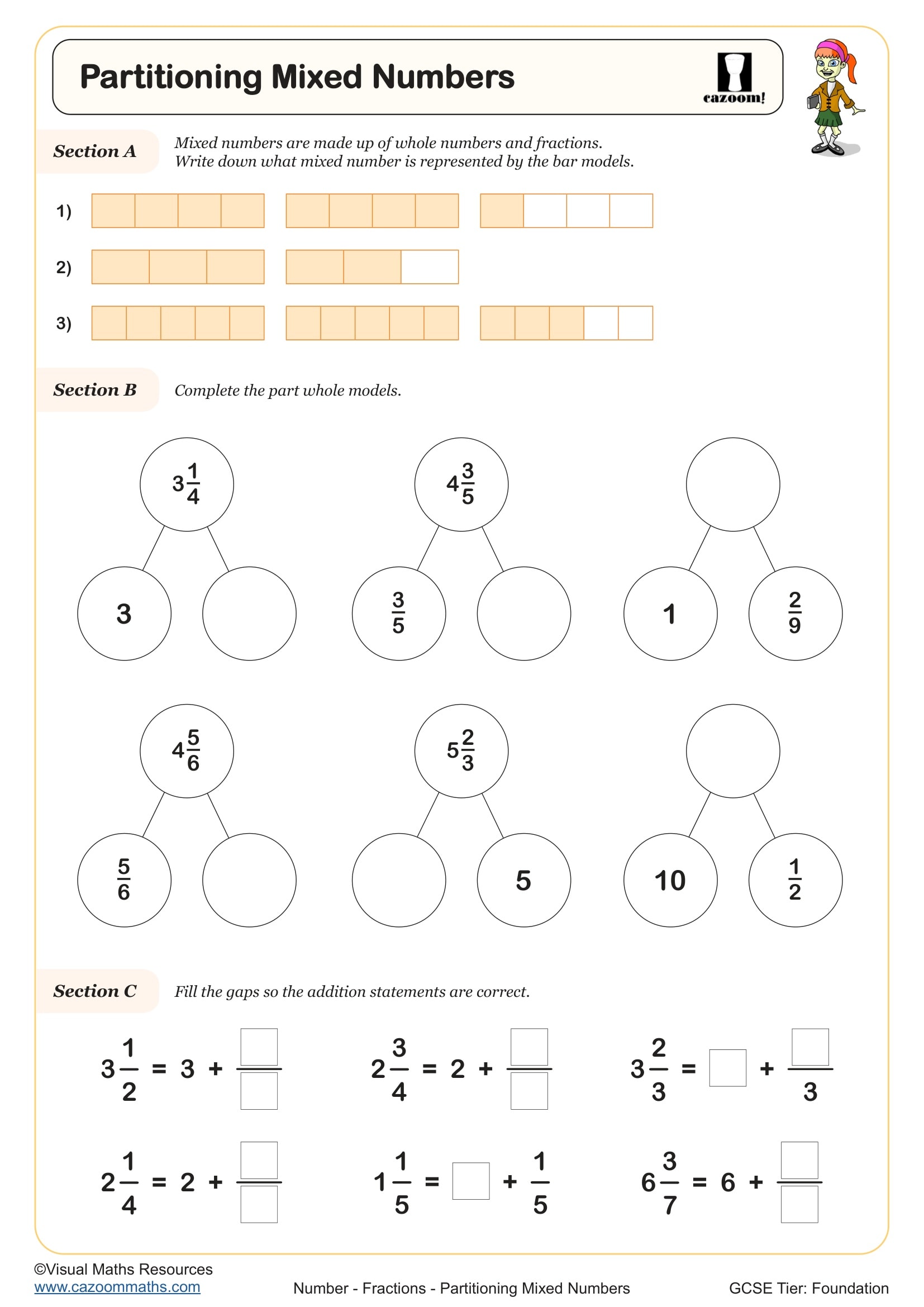
Partitioning Mixed Numbers
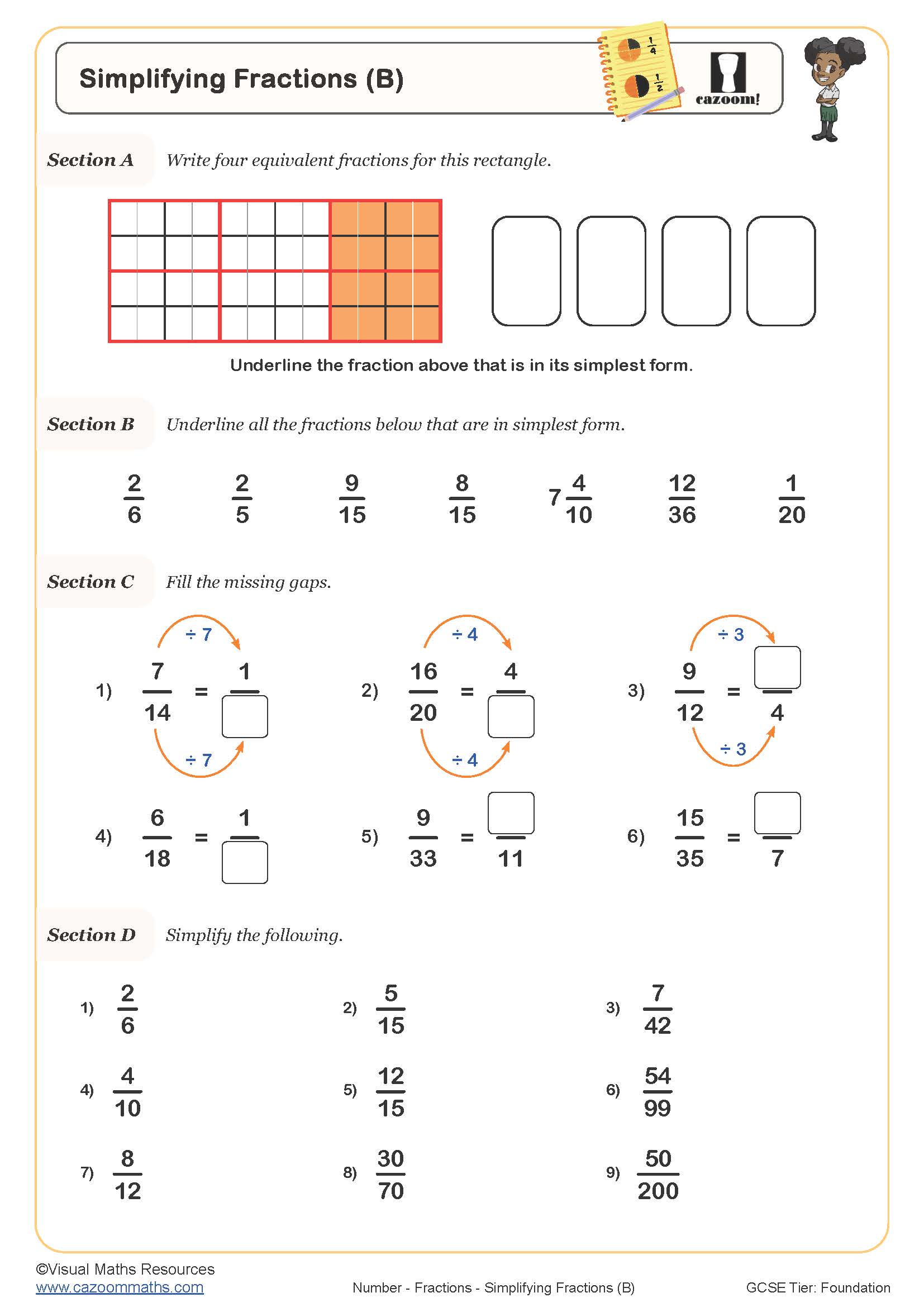
Simplifying Fractions (B)
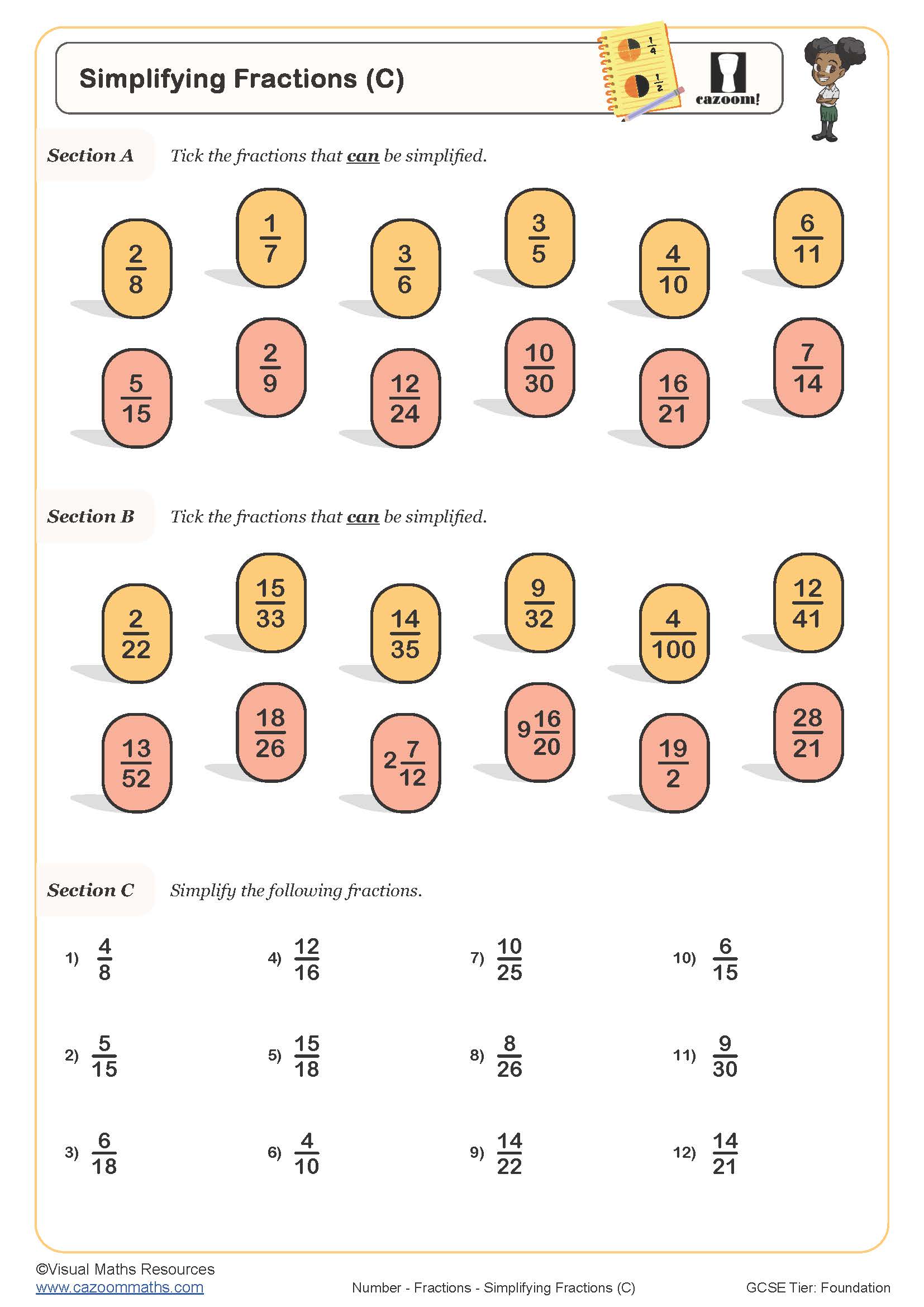
Simplifying Fractions (C)
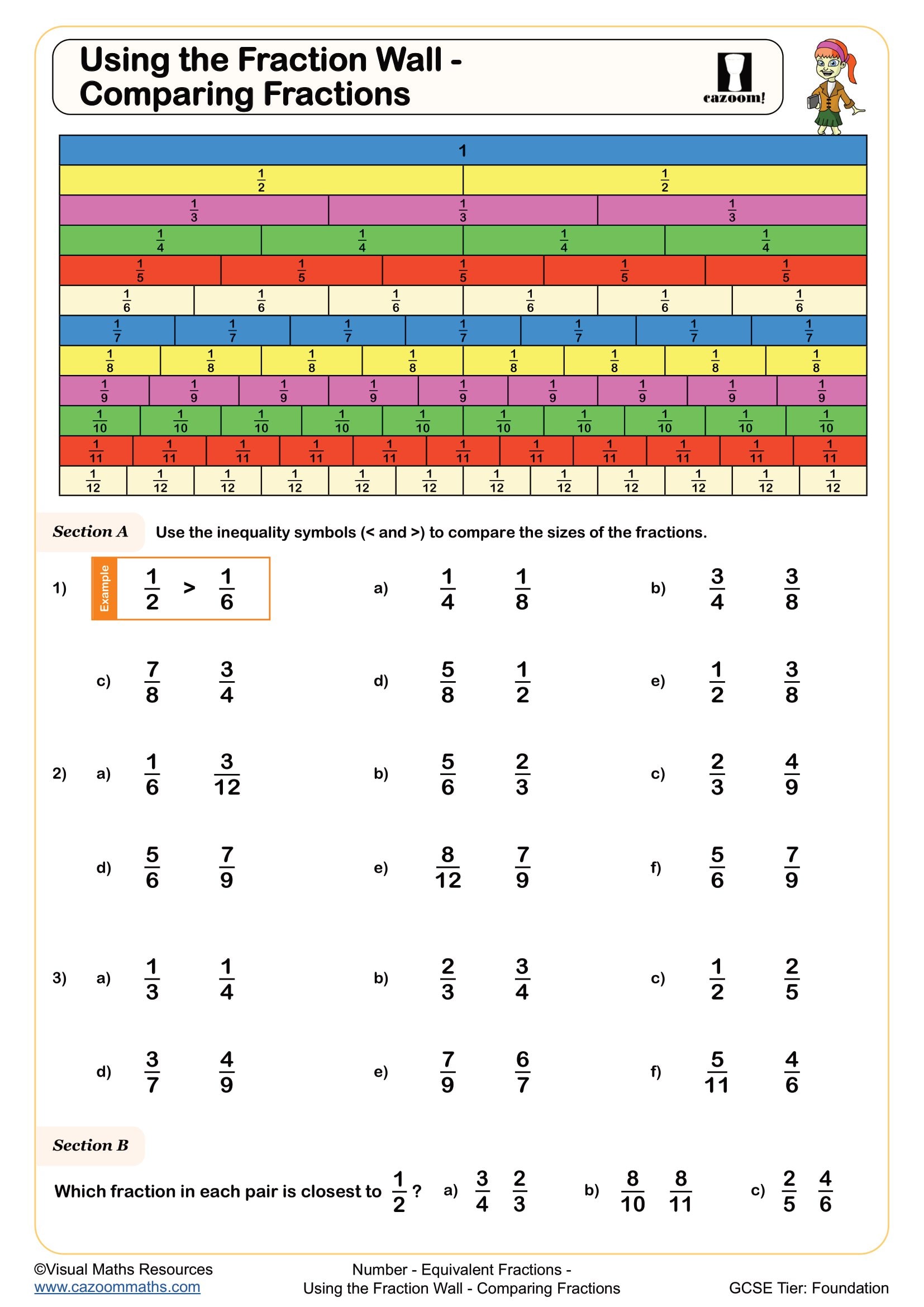
Using a Fraction Wall - Comparing Fractions
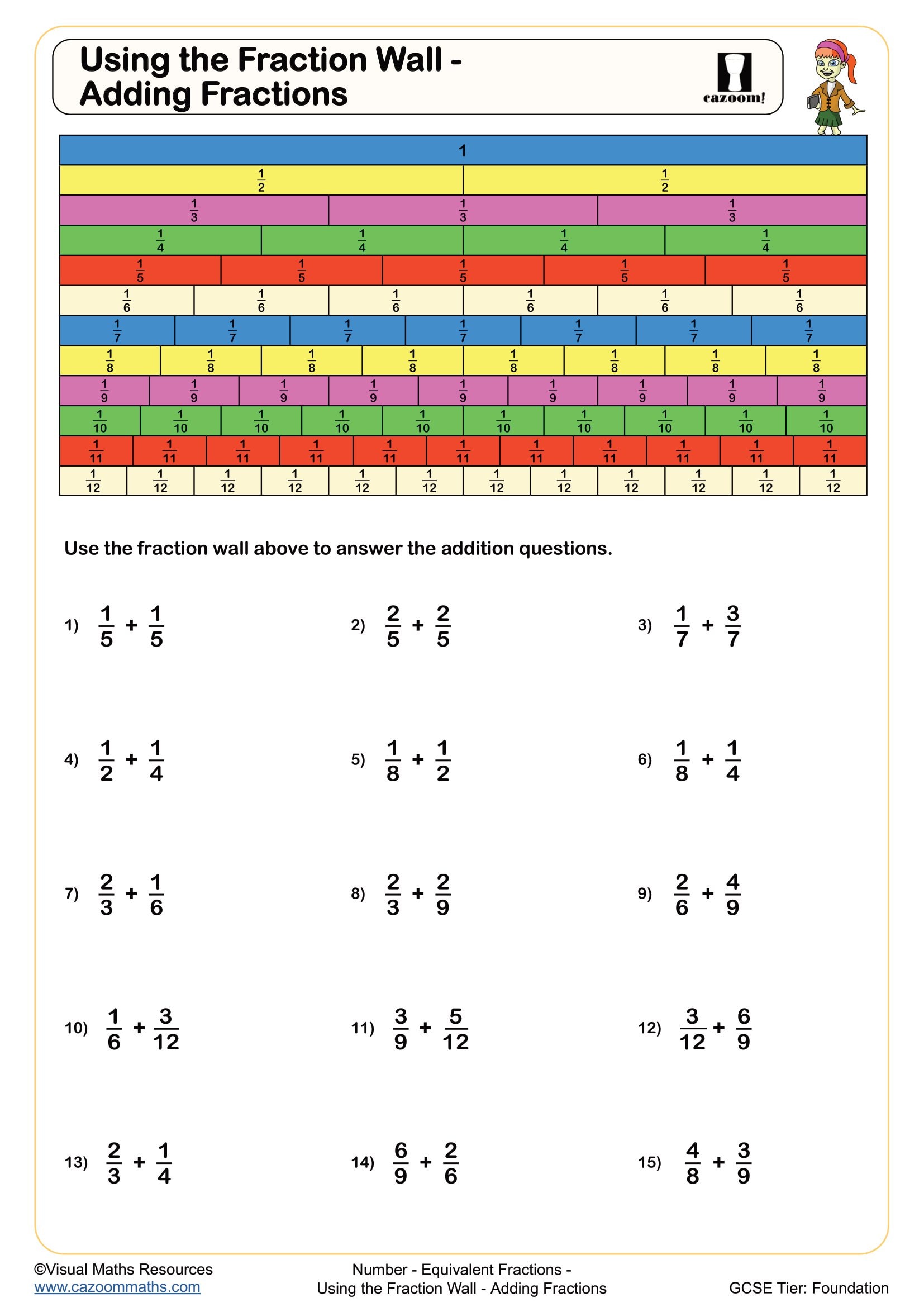
Using The Fraction Wall - Adding Fractions
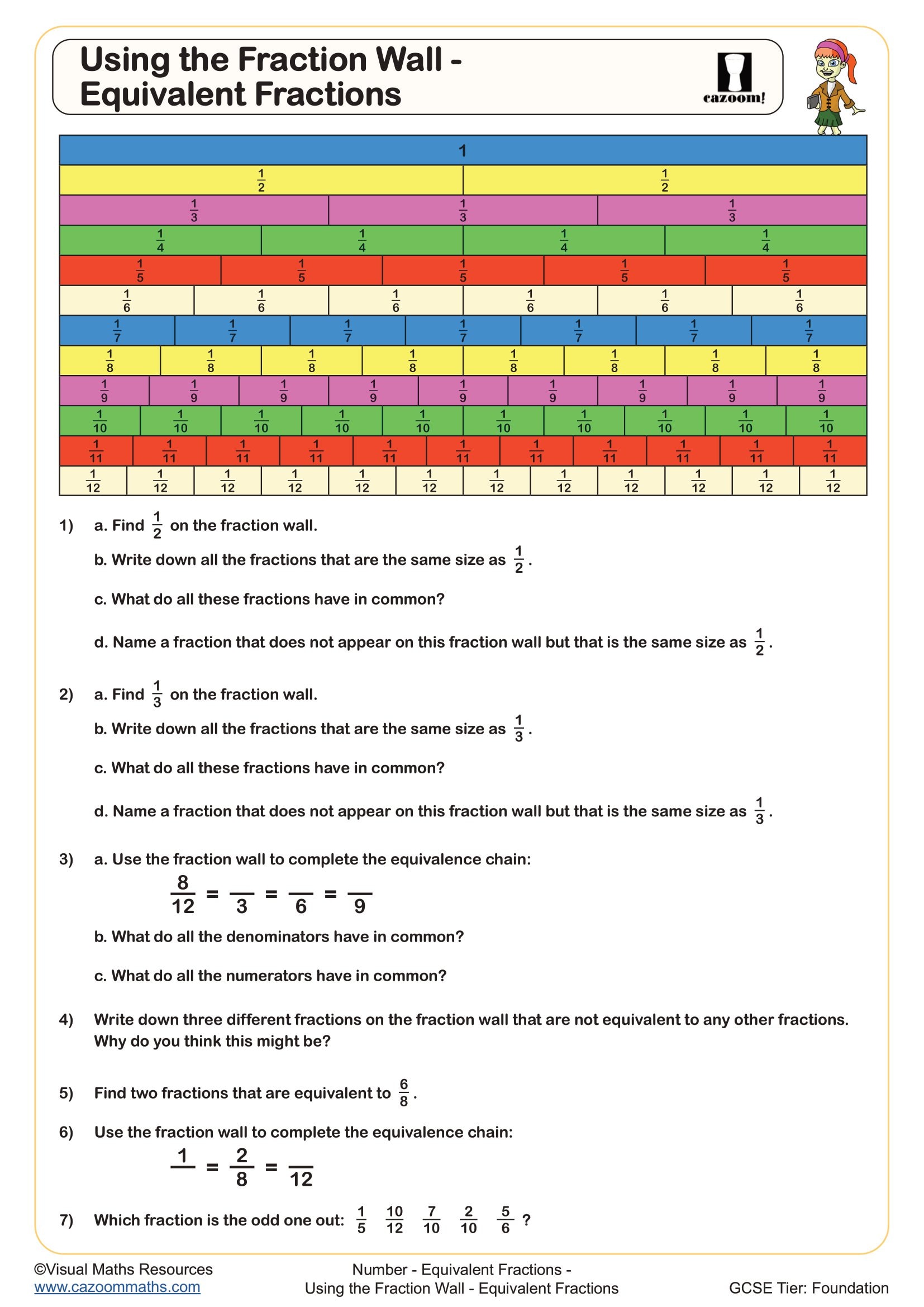
Using The Fraction Wall - Equivalent Fractions
All worksheets are created by the team of experienced teachers at Cazoom Maths.
What fraction questions should Year 8 students be able to tackle?
Year 8 students should confidently handle all four operations with proper and improper fractions, including mixed numbers with different denominators. The National Curriculum expects them to work fluently with fraction, decimal and percentage equivalencies, plus solve multi-step problems involving fractions of amounts and quantities.
Teachers notice students often lose marks when they forget to simplify final answers or when they add denominators instead of finding common denominators. These Year 8 fractions worksheets with answers provide systematic practice to address these misconceptions, ensuring students develop procedural fluency alongside conceptual understanding of fraction operations.
How do Year 8 fraction skills build from earlier years?
Year 8 fraction work extends Year 7 foundations by introducing more complex denominators and multi-step calculations. Students move from simple equivalent fractions to sophisticated problem-solving involving mixed operations and real-world contexts like recipes, measurements, and proportional reasoning.
The progression typically sees students struggling when fractions year 8 concepts combine multiple operations in one question. Teachers observe this particularly in word problems where students must first convert mixed numbers, then perform calculations, then interpret results. Year 8 maths worksheets address this by scaffolding complex problems into manageable steps.
Why do students find multiplying and dividing fractions challenging?
Multiplying and dividing fractions often confuses students because the procedures seem counterintuitive compared to whole number operations. Many students expect multiplication to make numbers bigger and division to make them smaller, which doesn't always apply with fractions.
Teachers frequently see students attempting to find common denominators when multiplying fractions, or forgetting to flip and multiply when dividing. These fractions year 8 worksheets provide extensive practice with visual models and contextual problems that help students understand why the algorithms work, moving beyond rote memorisation to genuine comprehension.
How can teachers use these worksheets most effectively in lessons?
These Year 8 fractions worksheets work best when used strategically rather than as standalone exercises. Teachers often begin lessons with diagnostic questions to identify gaps, then select specific worksheet sections that target those misconceptions before moving to independent practice.
The answer sheets enable immediate feedback during lessons, allowing teachers to address errors before they become embedded. Many teachers use selected questions as starter activities or homework consolidation, particularly the word problems that connect fractions to real-world STEM contexts like engineering ratios and scientific measurements.