Year 8 Mental Methods Worksheets
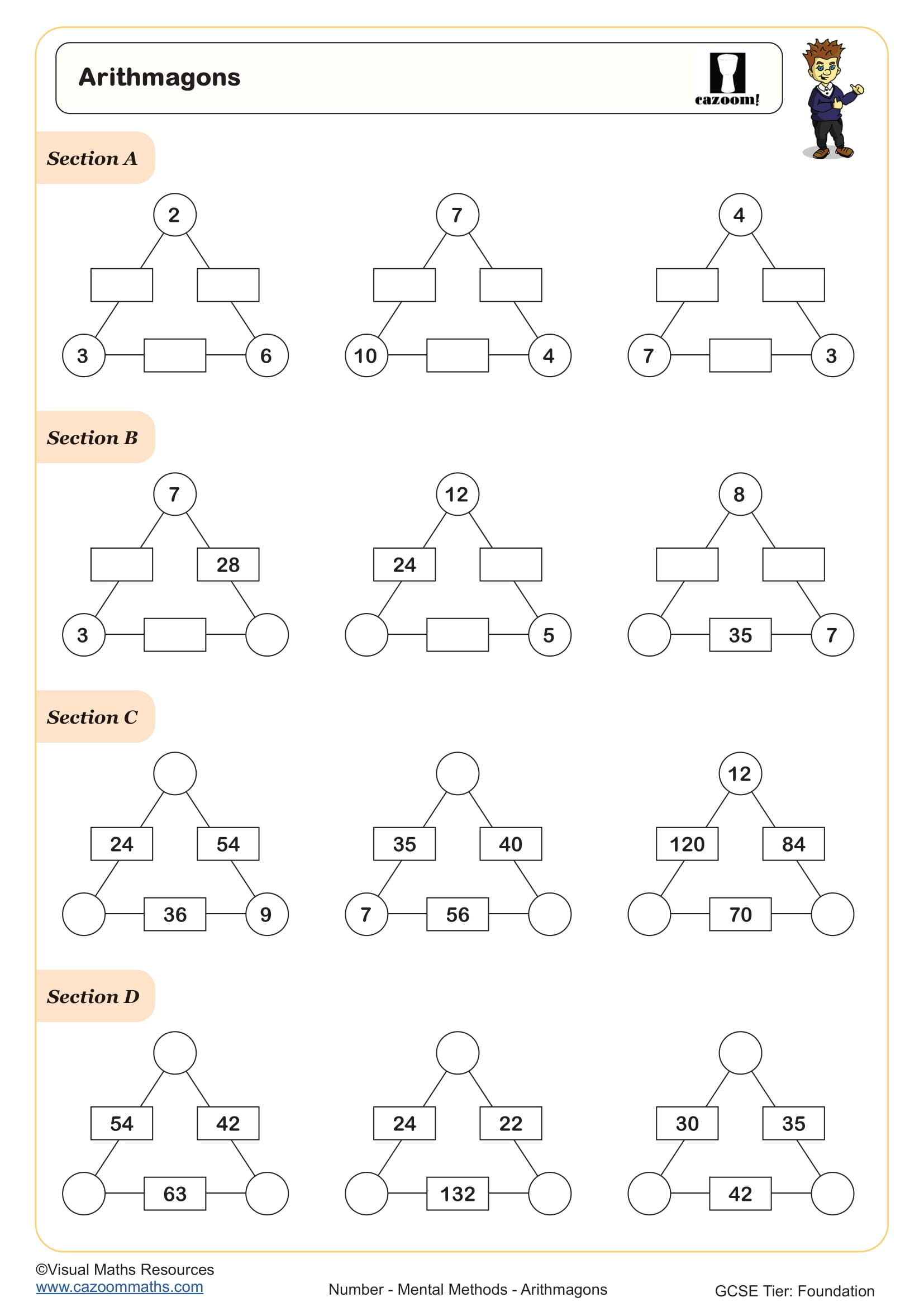
Arithmagons
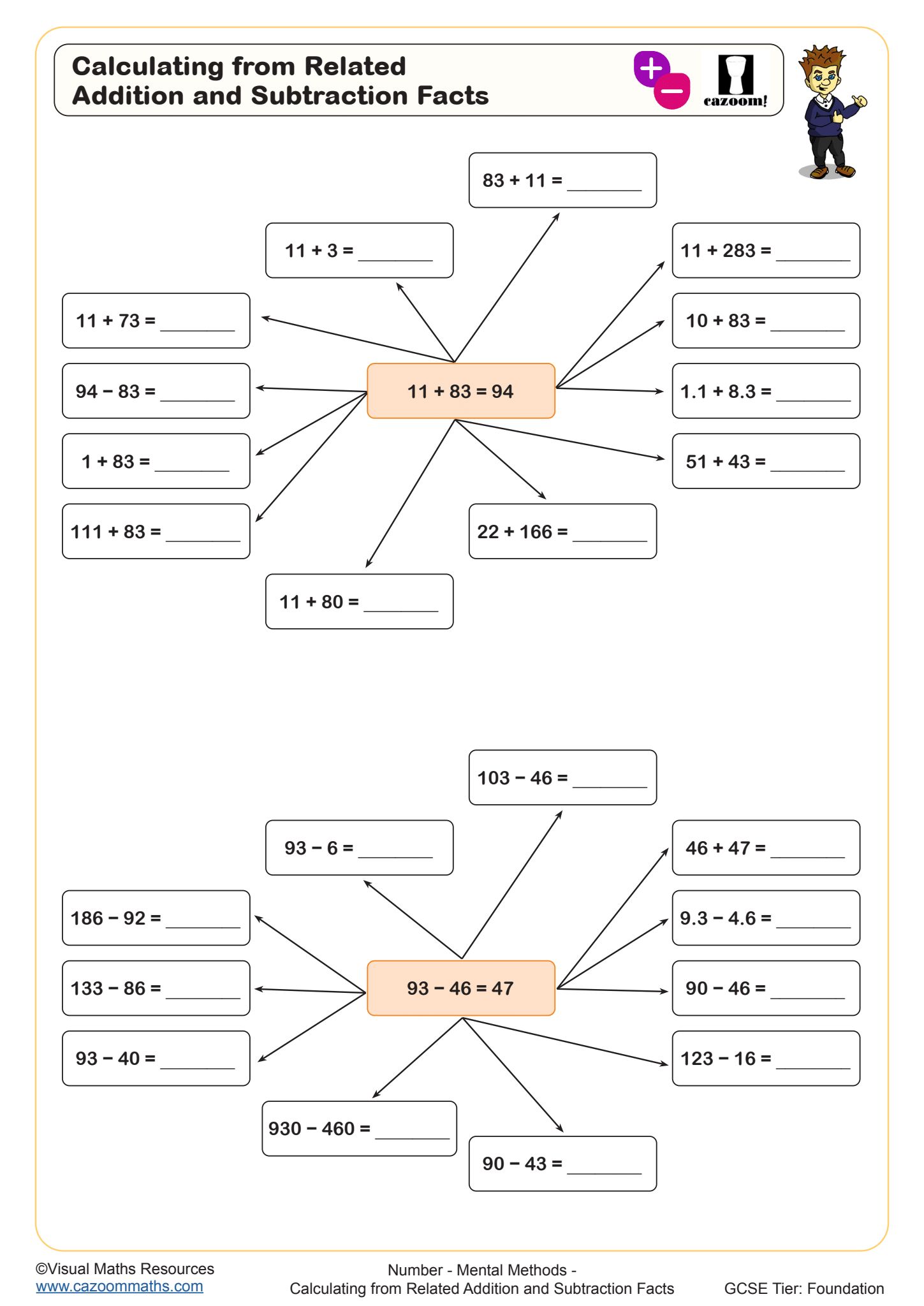
Calculating from Related Addition and Subtraction Facts
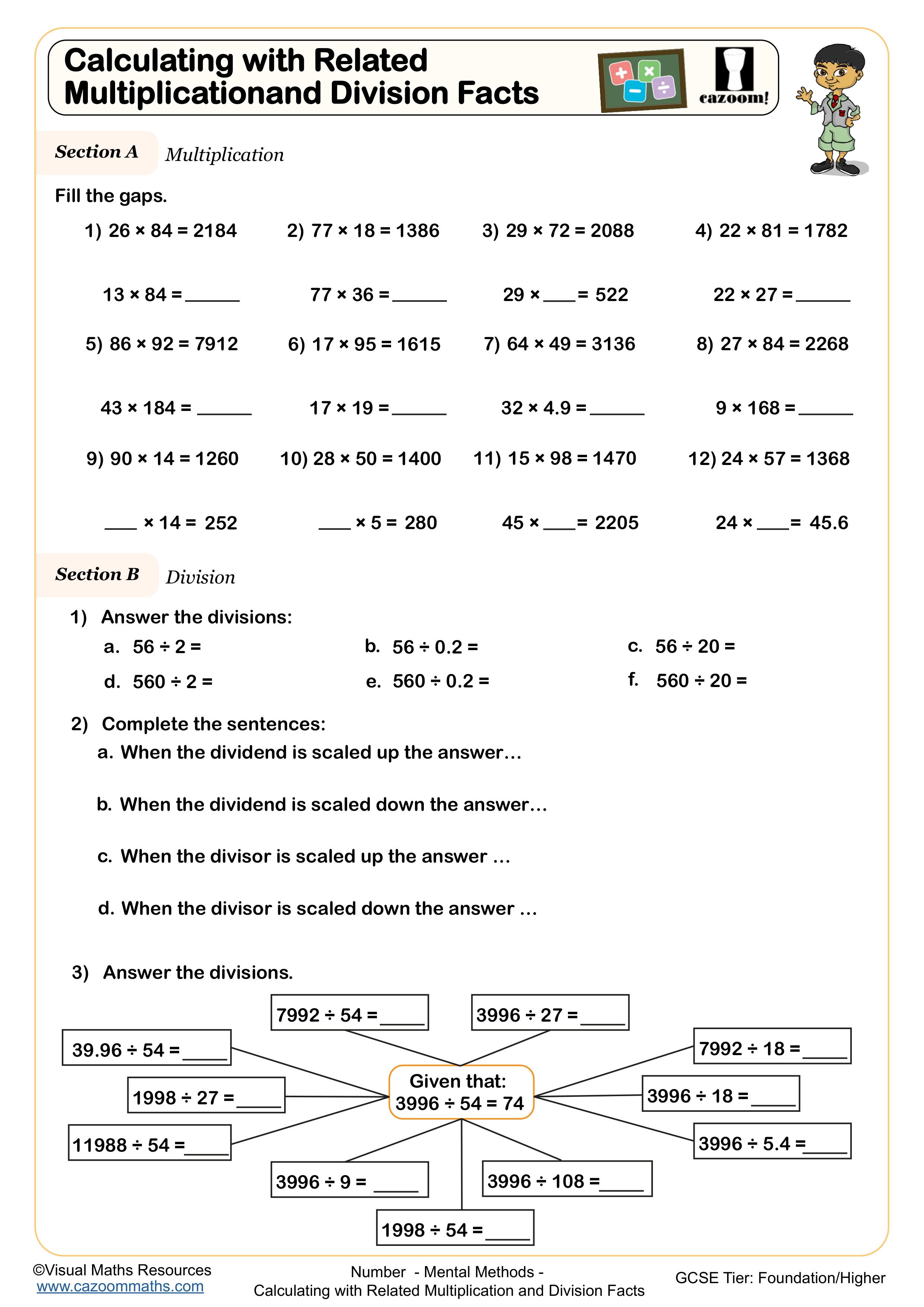
Calculating with Related Multiplication and Division Facts
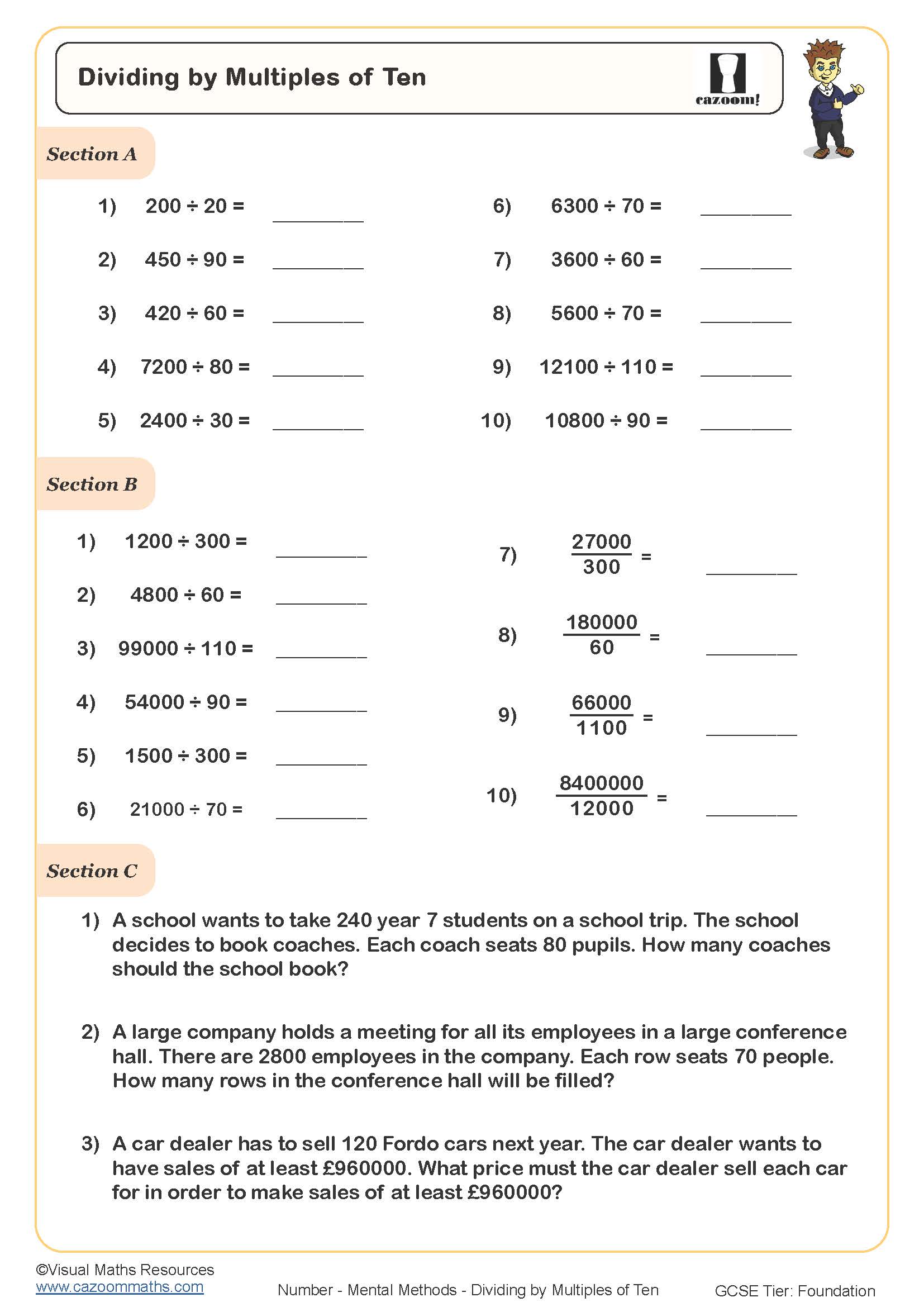
Dividing by Multiples of Ten
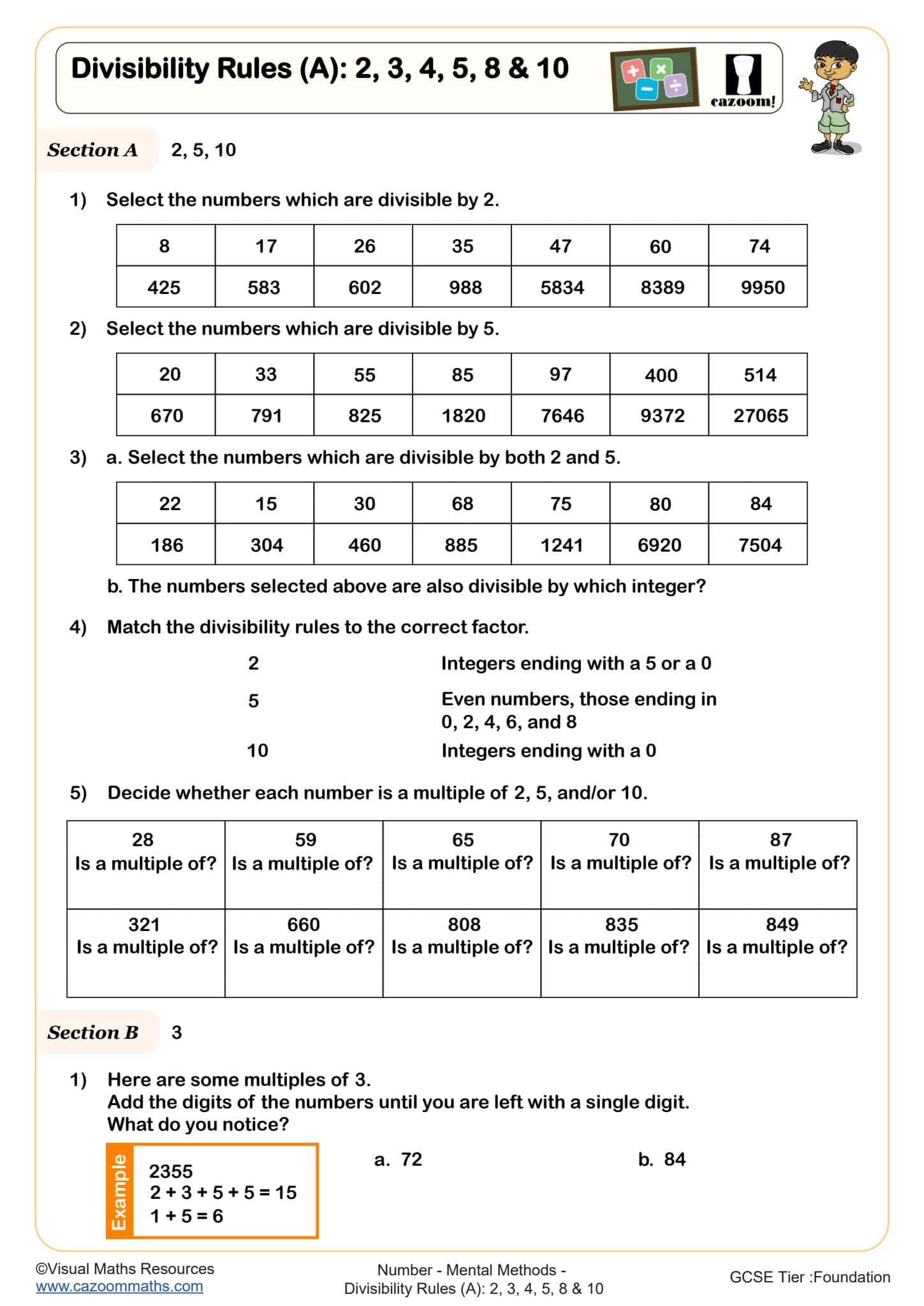
Divisibility Rules (A): 2, 3, 4, 5, 8 & 10
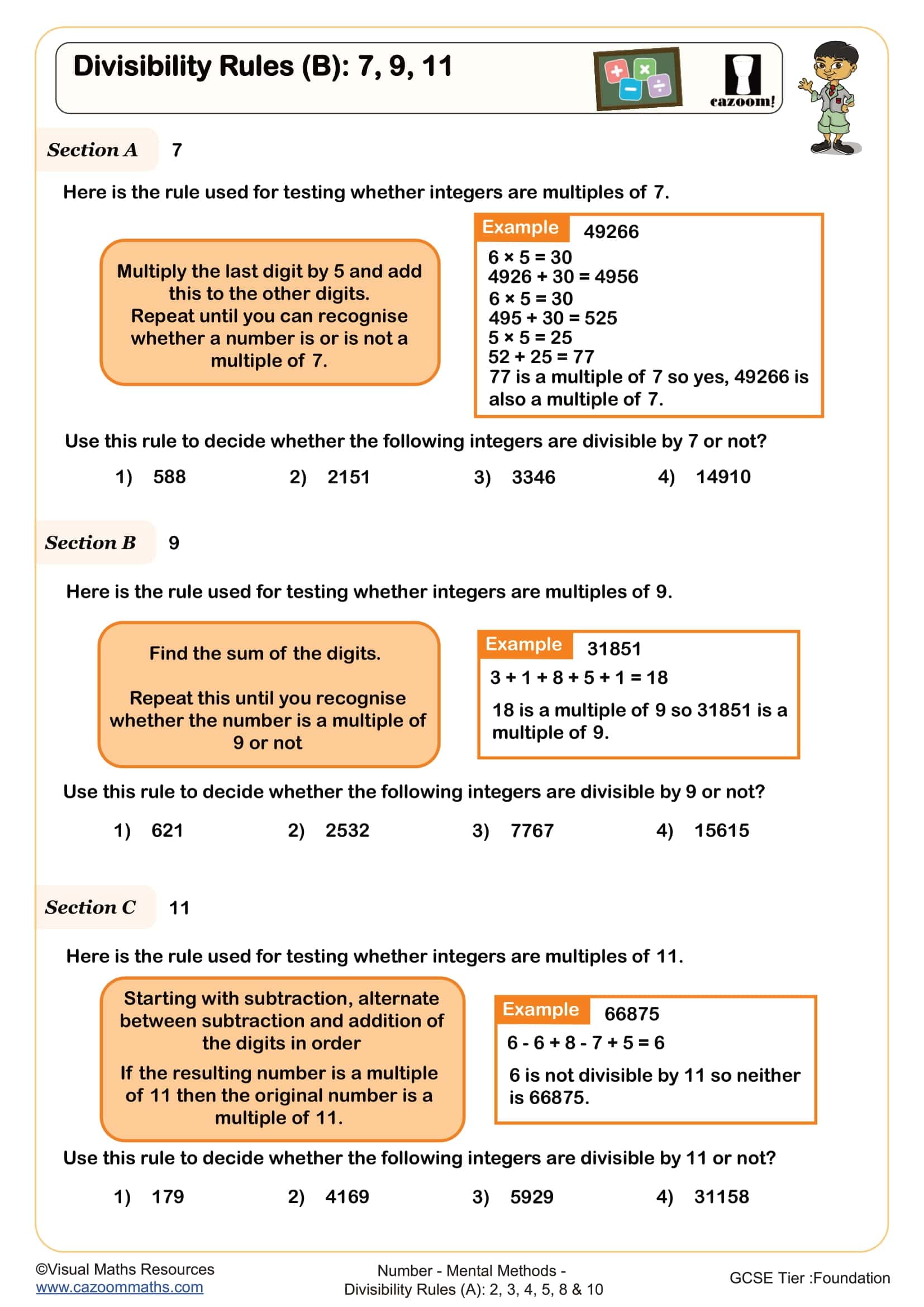
Divisibility Rules (B): 7, 9, 11
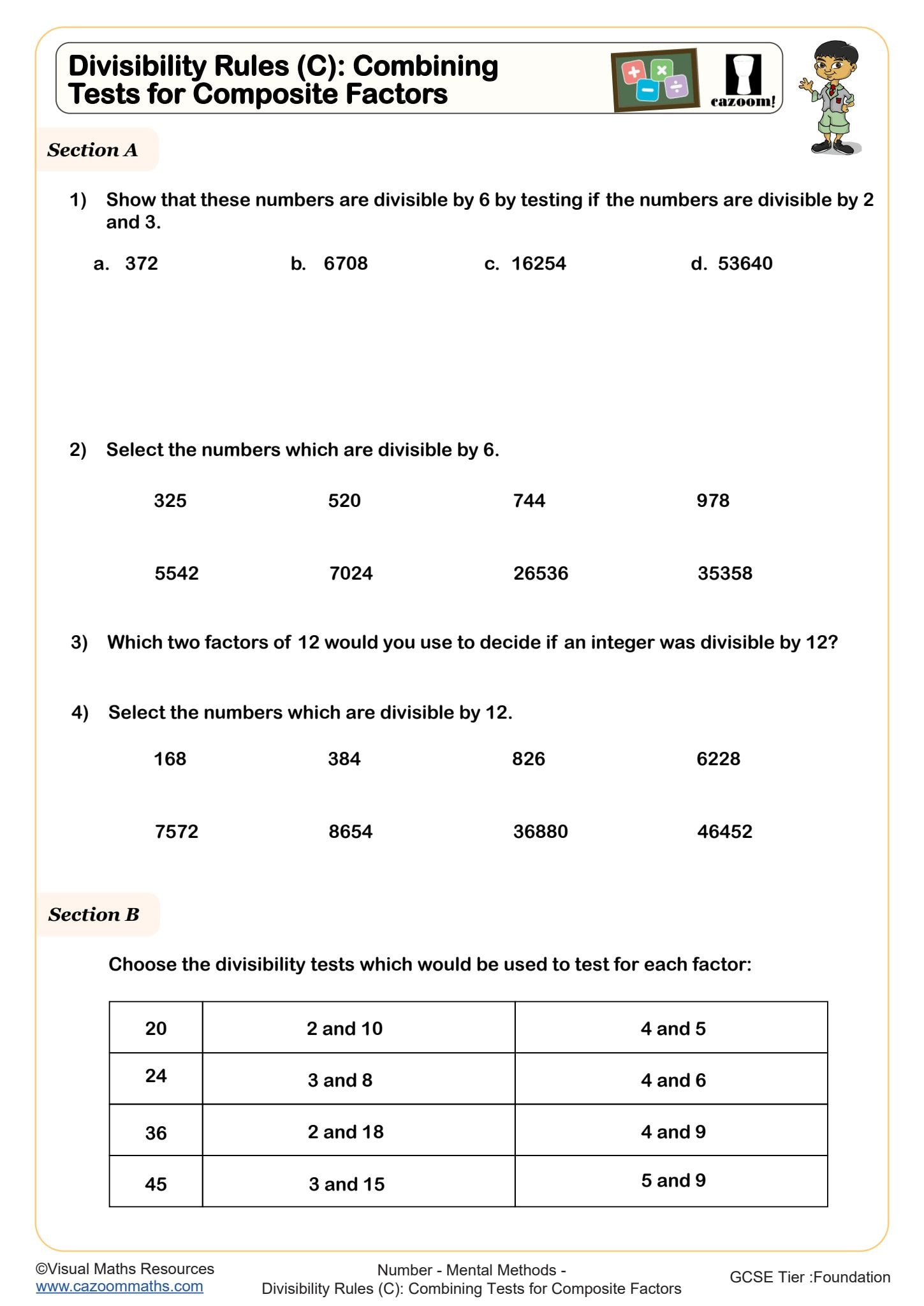
Divisibility Rules (C): Combining Tests for Composite Factors
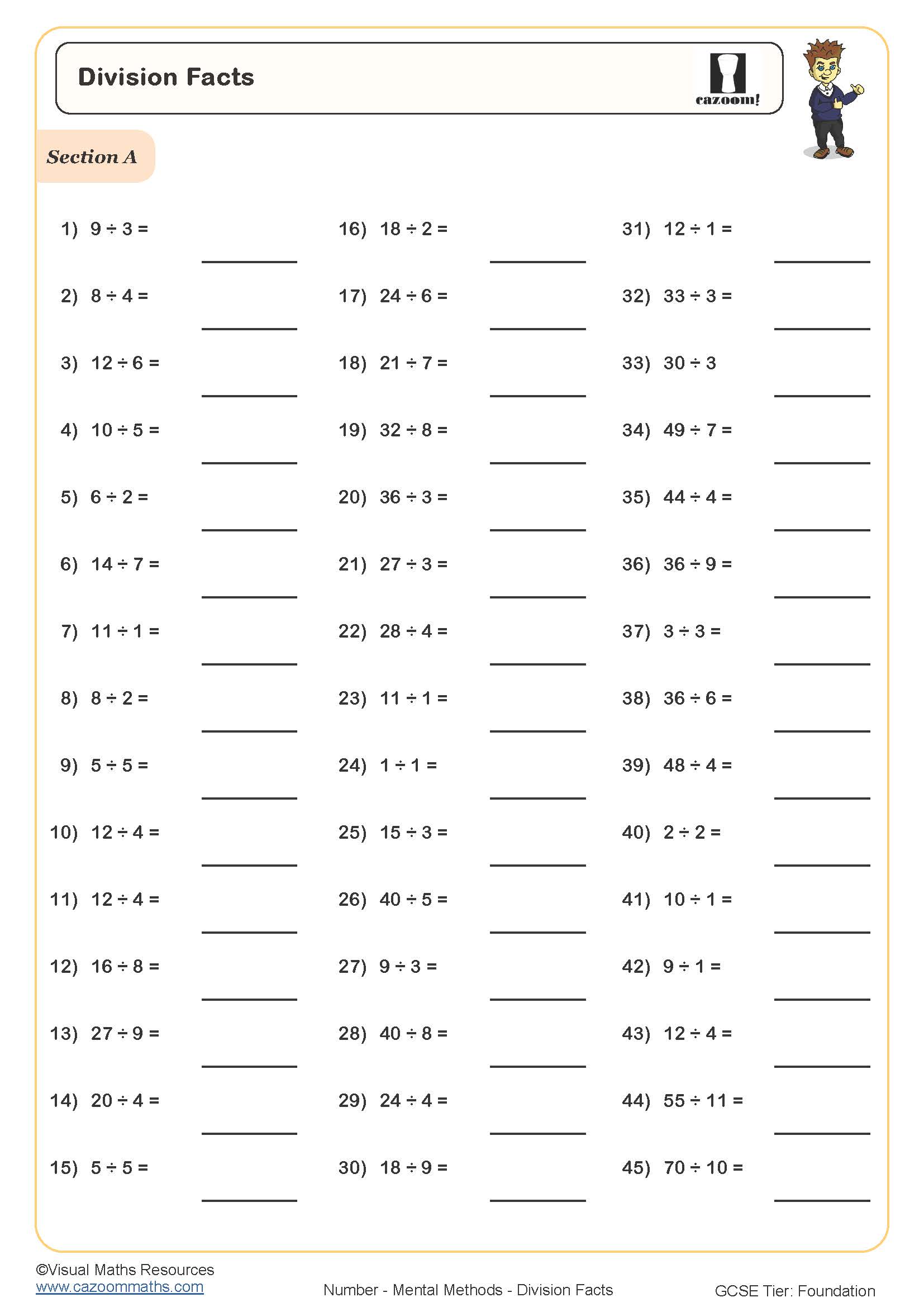
Division Facts
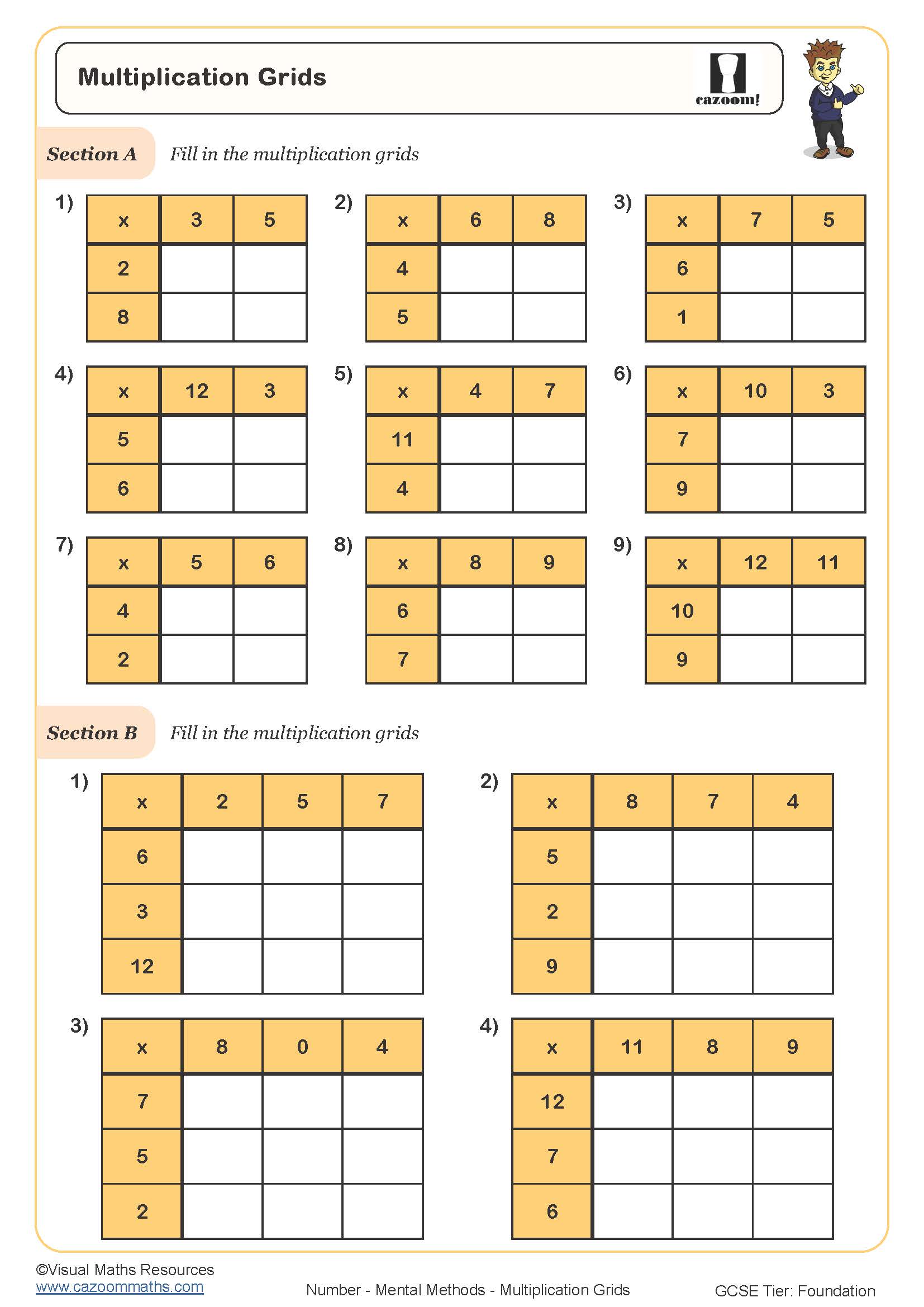
Multiplication Grids
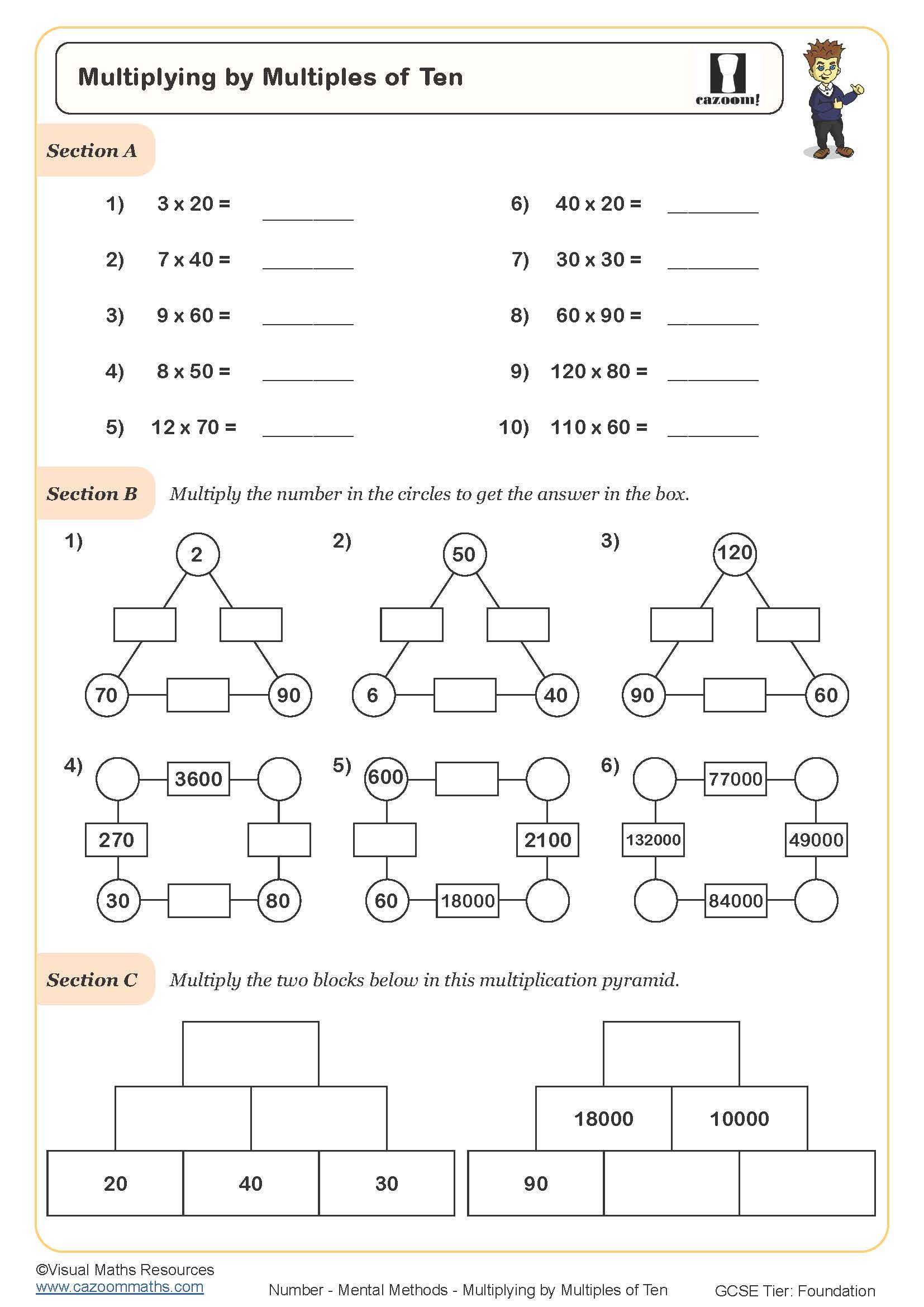
Multiplying by Multiples of Ten
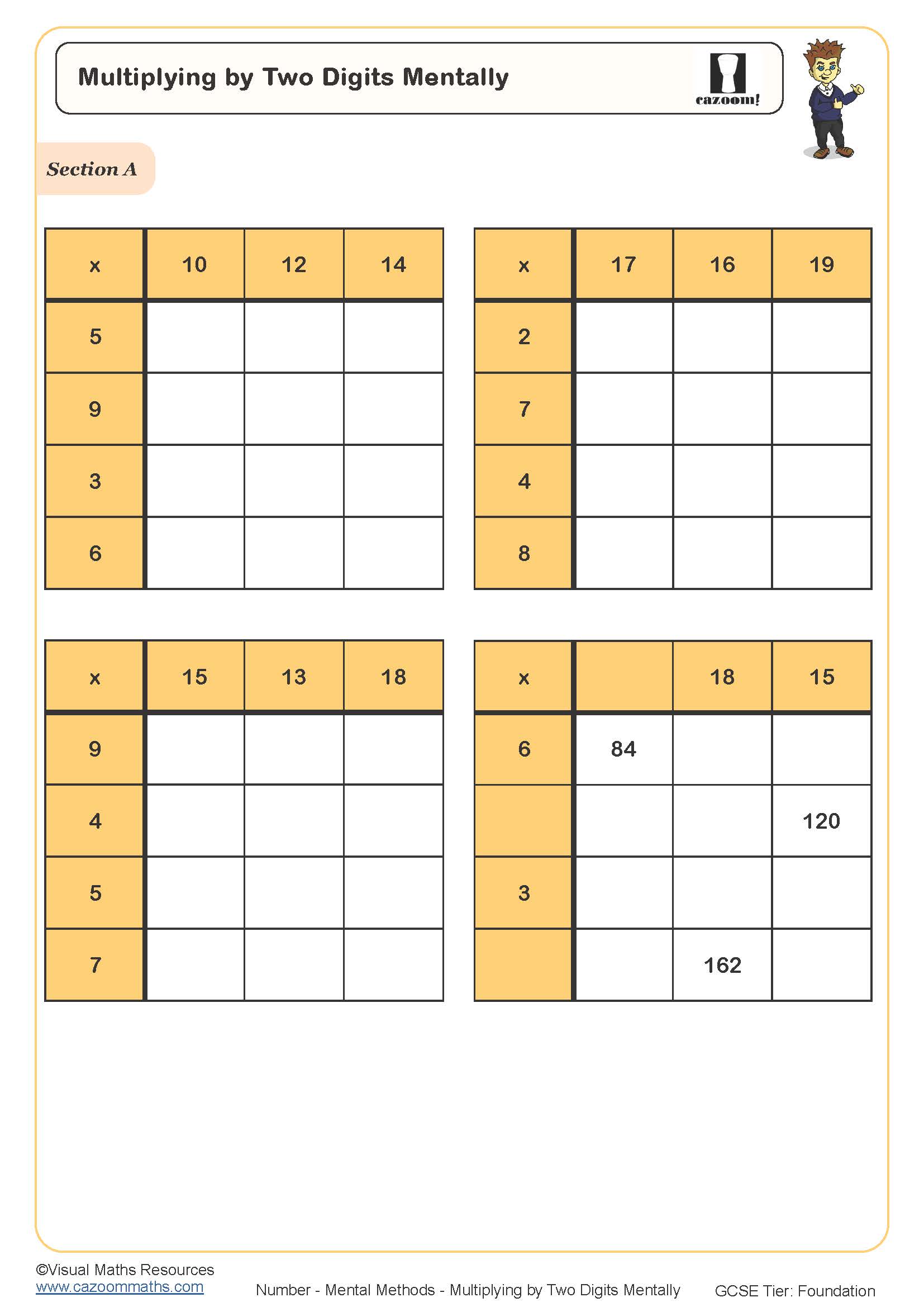
Multiplying by Two Digits Mentally
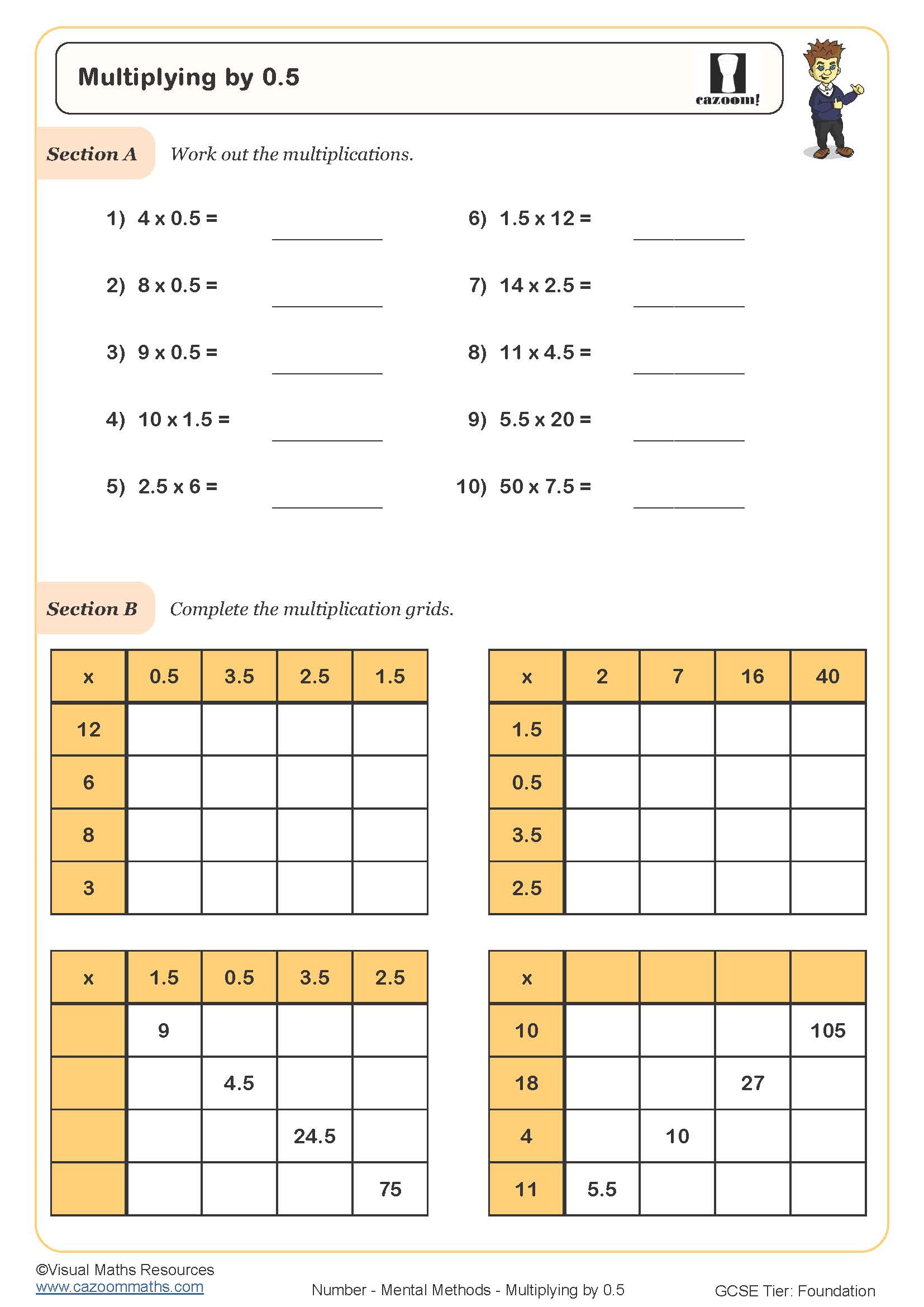
Multiplying by Zero Point Five
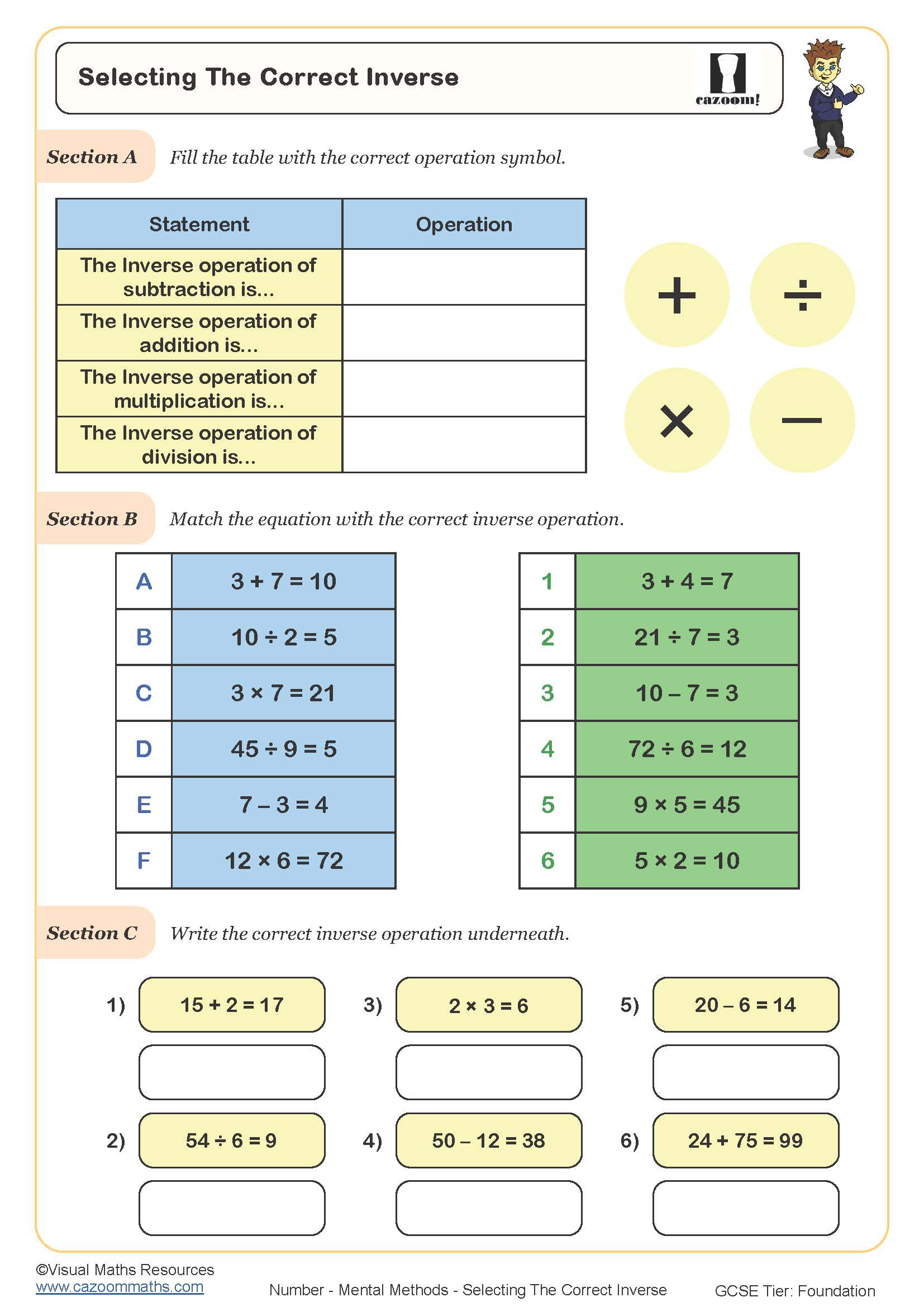
Selecting the Correct Inverse
All worksheets are created by the team of experienced teachers at Cazoom Maths.
What do mental maths worksheets cover for Year 8 students?
Mental maths worksheets for Year 8 focus on calculation strategies outlined in the KS3 National Curriculum, including operations with integers, fractions, decimals, and basic algebraic expressions. Students practise methods like partitioning for multiplication, using number bonds for addition chains, and applying percentage shortcuts for common values like 10%, 25%, and 50%.
Teachers frequently observe that Year 8 students over-rely on written algorithms even for straightforward calculations like 15% of 80 or 7 × 19. These worksheets encourage flexibility in mathematical thinking, helping students recognise when mental methods are more efficient than formal procedures, particularly during timed assessments where speed matters.
Are these worksheets suitable for students working above or below Year 8 level?
Year 8 mental maths resources work well for differentiation across KS3. Higher-attaining Year 7 students often benefit from the challenge, whilst some Year 9 students need these foundations before tackling more complex GCSE content. The progression from basic number facts to multi-step problems allows teachers to select appropriate starting points.
Many teachers use these materials for intervention with Year 9 students who struggle with mental arithmetic during algebra lessons. When students can't quickly calculate 3 × (-4) or recognise that 0.25 equals 1/4, their progress in solving equations suffers significantly. Building this fluency early prevents later difficulties.
How do these worksheets help with percentage calculations?
The percentage sections focus on mental strategies rather than formal methods, teaching students to recognise convenient shortcuts. Students learn to calculate 15% by finding 10% then adding half of that amount, or to find 35% by combining 30% and 5% calculations. These approaches prove invaluable during GCSE non-calculator papers.
Teachers notice that students who master these mental percentage methods show greater confidence in real-world contexts, from calculating tips to understanding VAT. The worksheets deliberately include percentage problems with amounts that work well mentally, building students' intuition about when mental calculation is more efficient than reaching for a calculator.
What's the best way to use these worksheets in the classroom?
Most teachers find these worksheets work effectively as five-minute starters or homework consolidation rather than full lessons. The key is regular, short bursts of practice rather than intensive sessions. Many teachers project selected questions for whole-class discussion, encouraging students to share different mental strategies.
Using the answer sheets for peer marking creates opportunities for mathematical discussion when students get different answers. Teachers often notice that explaining mental methods helps students identify their own errors and learn alternative approaches from classmates. This collaborative approach builds both calculation skills and mathematical communication.