Year 8 Negative Numbers Worksheets
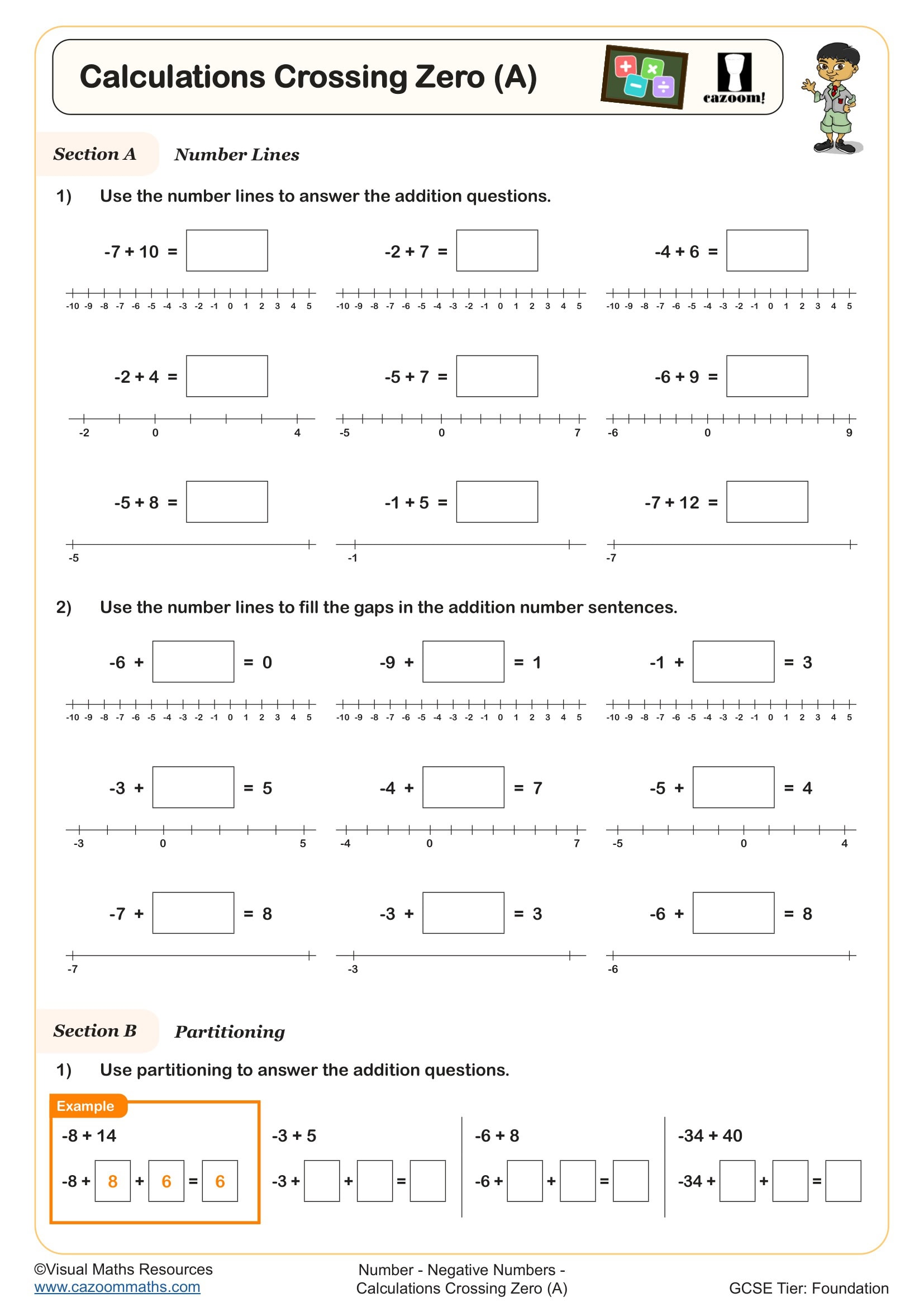
Calculations Crossing Zero (A)
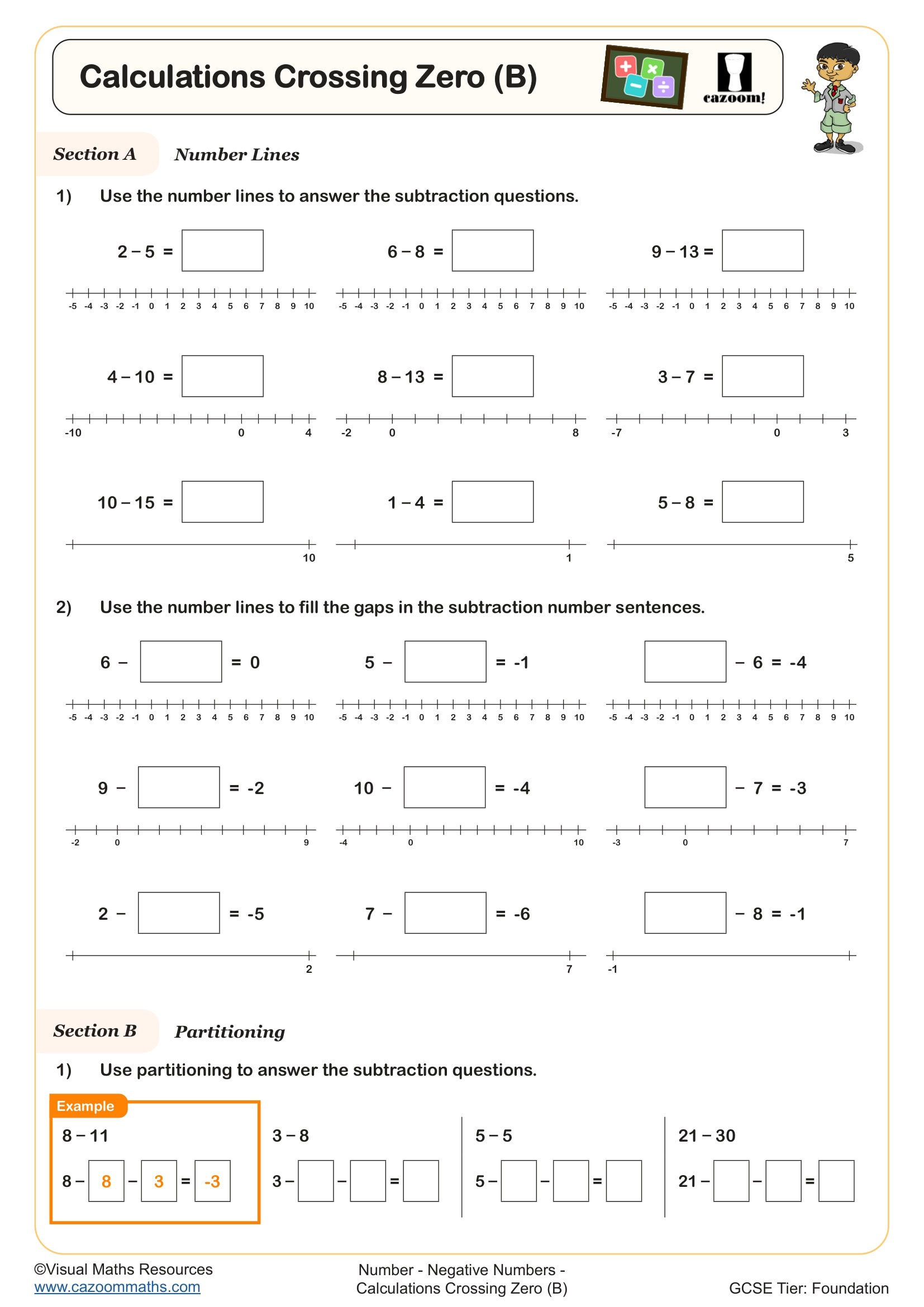
Calculations Crossing Zero (B)
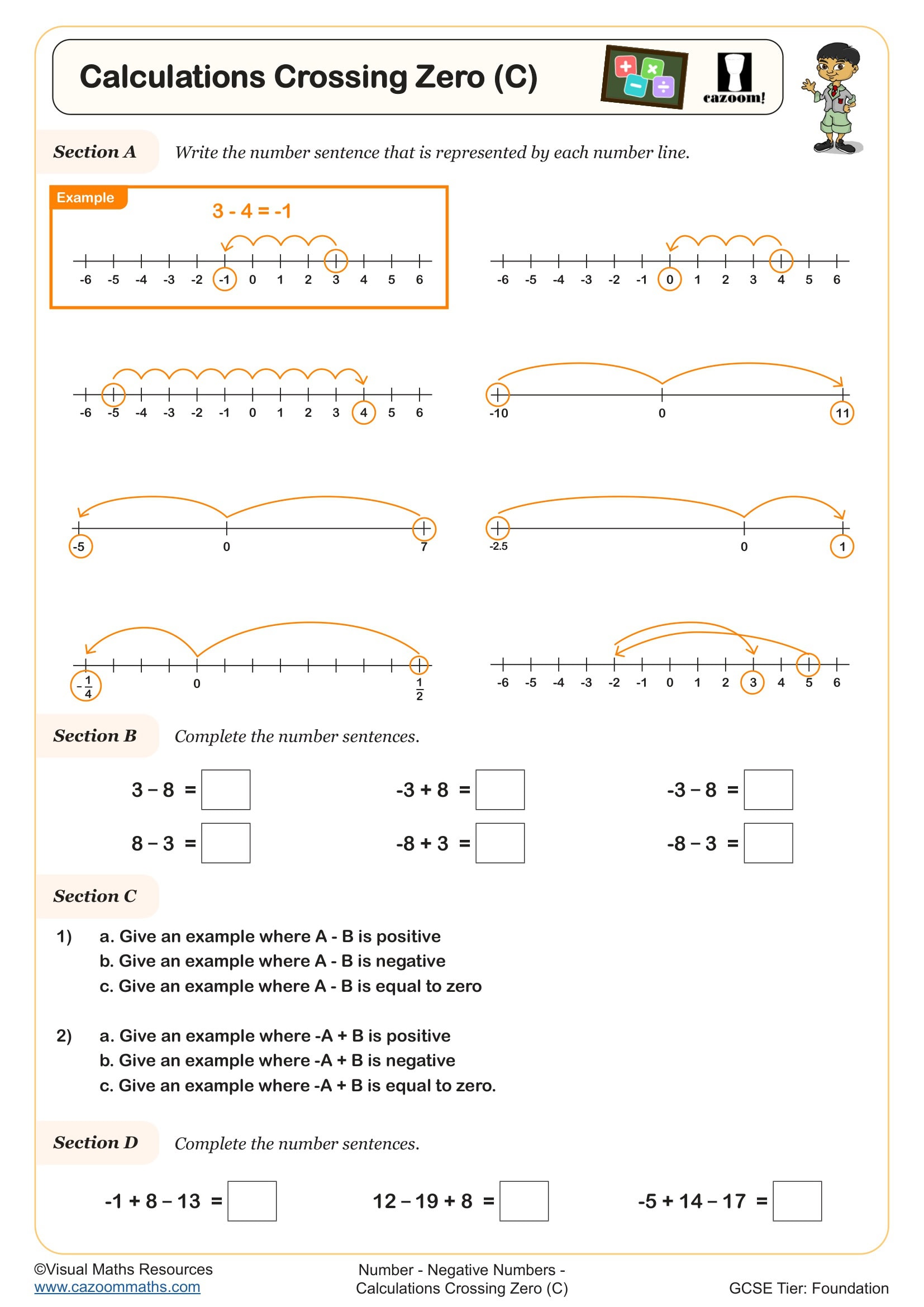
Calculations Crossing Zero (C)
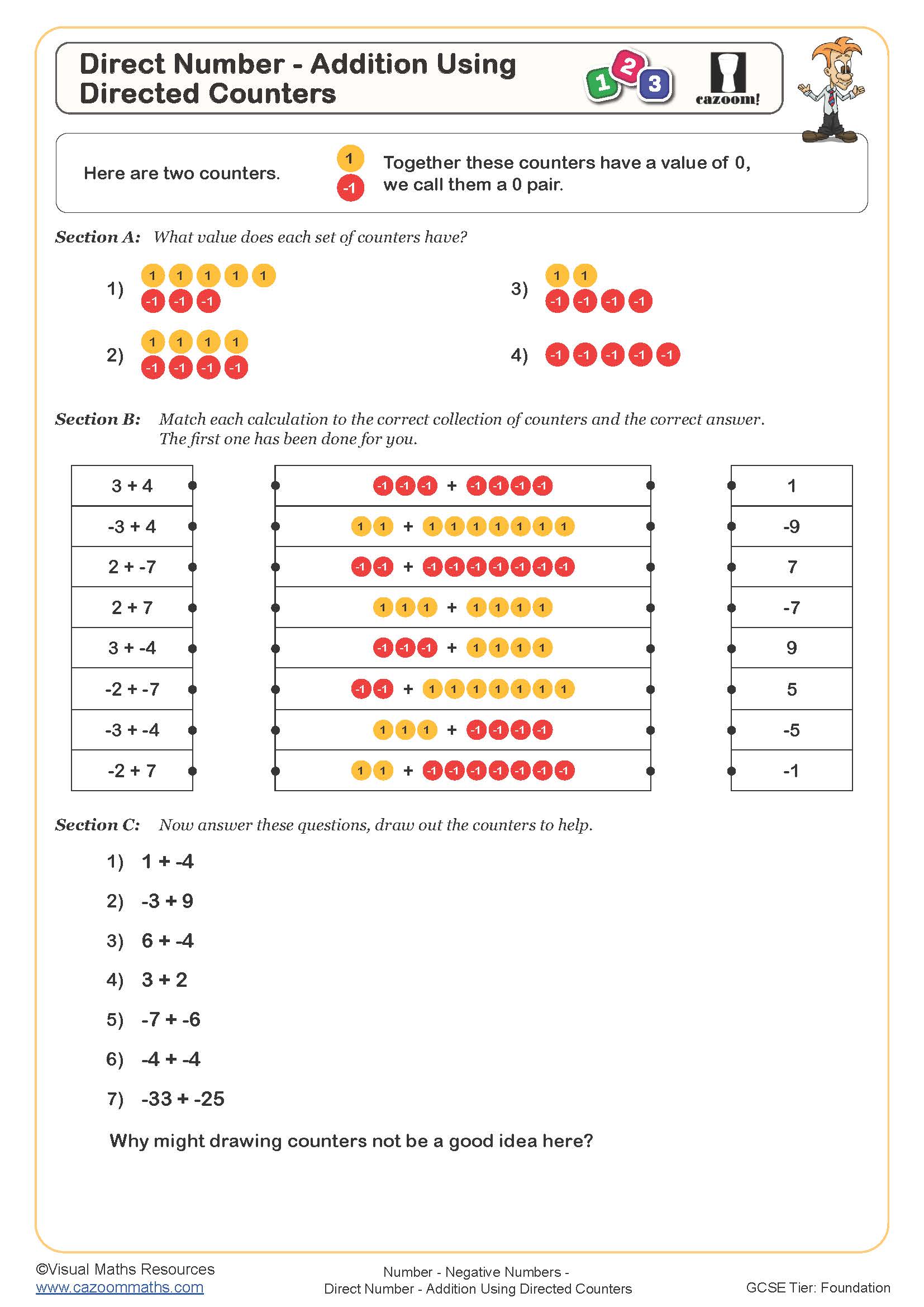
Directed Number - Addition Using Directed Counters
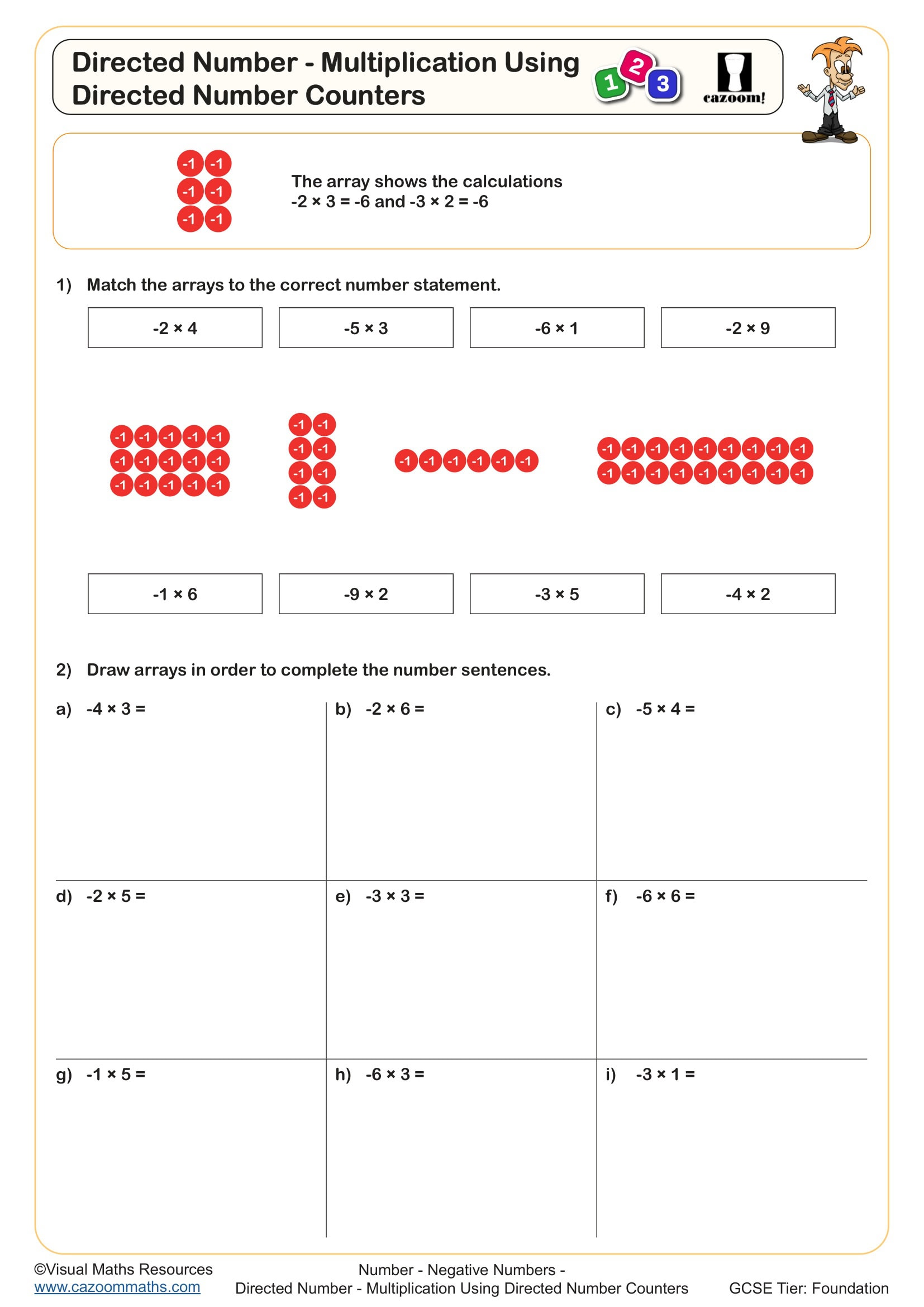
Directed Number - Multiplication Using Directed Number Counters
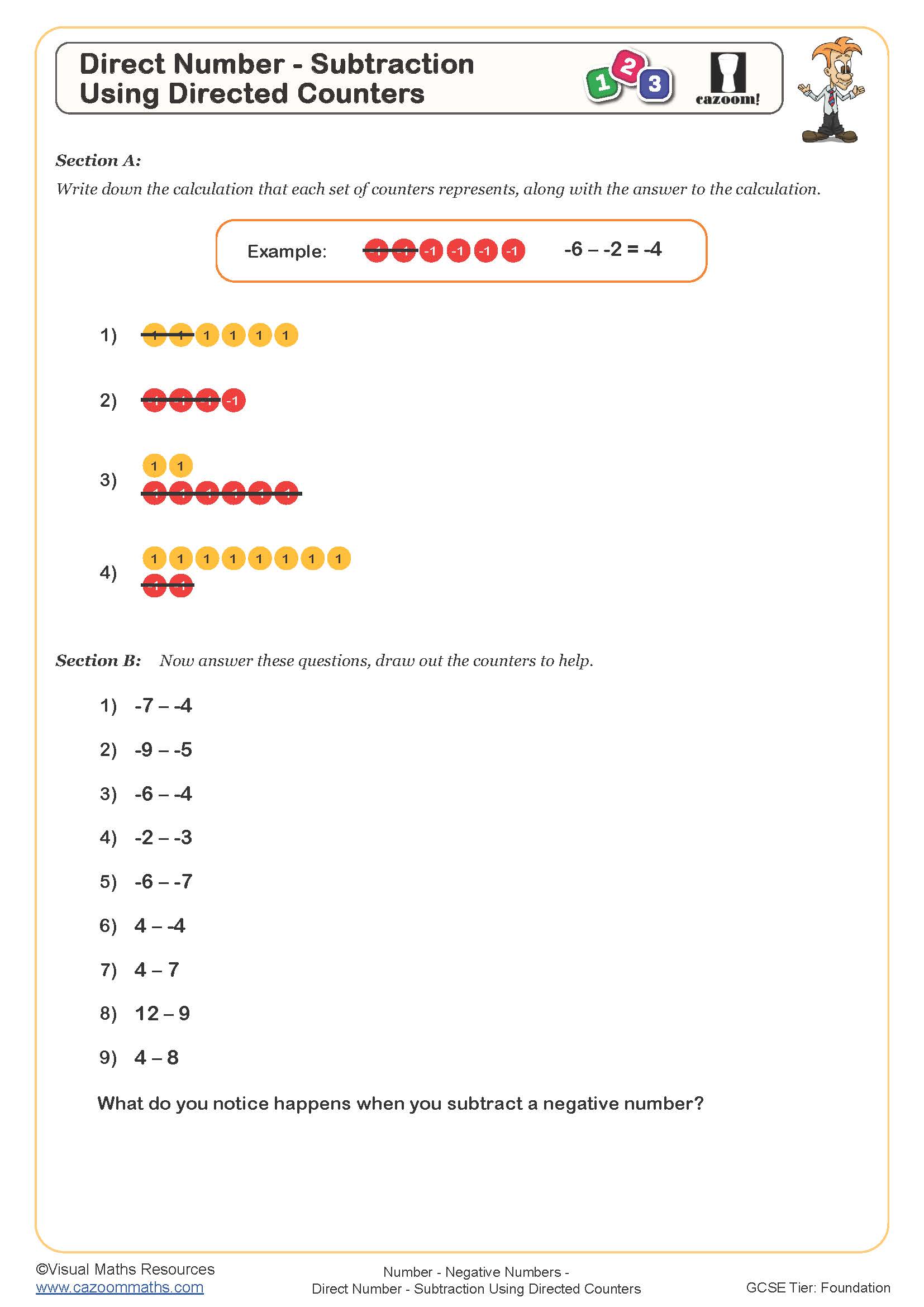
Directed Number - Subtraction Using Directed Counters
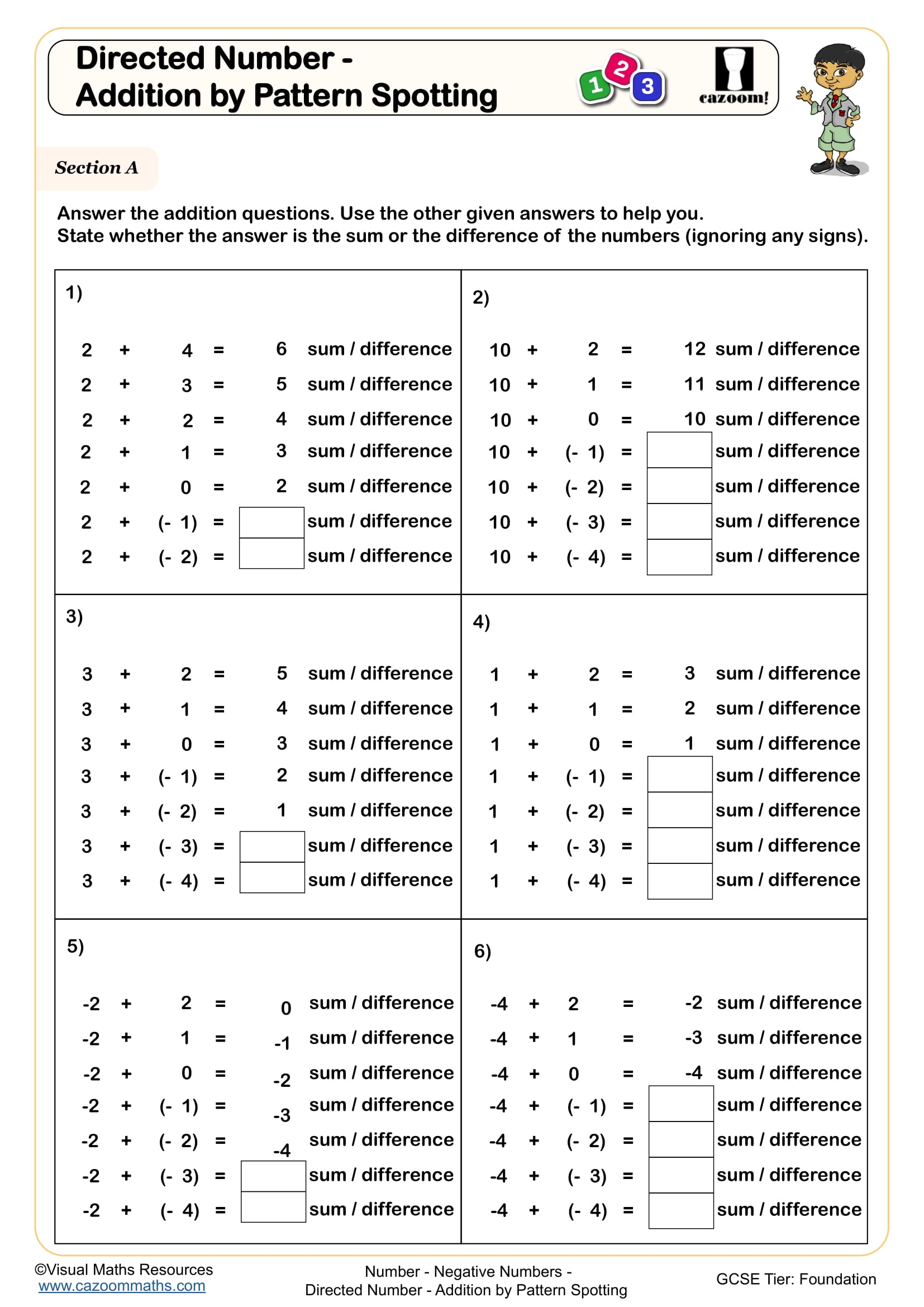
Directed Number – Addition by Pattern Spotting
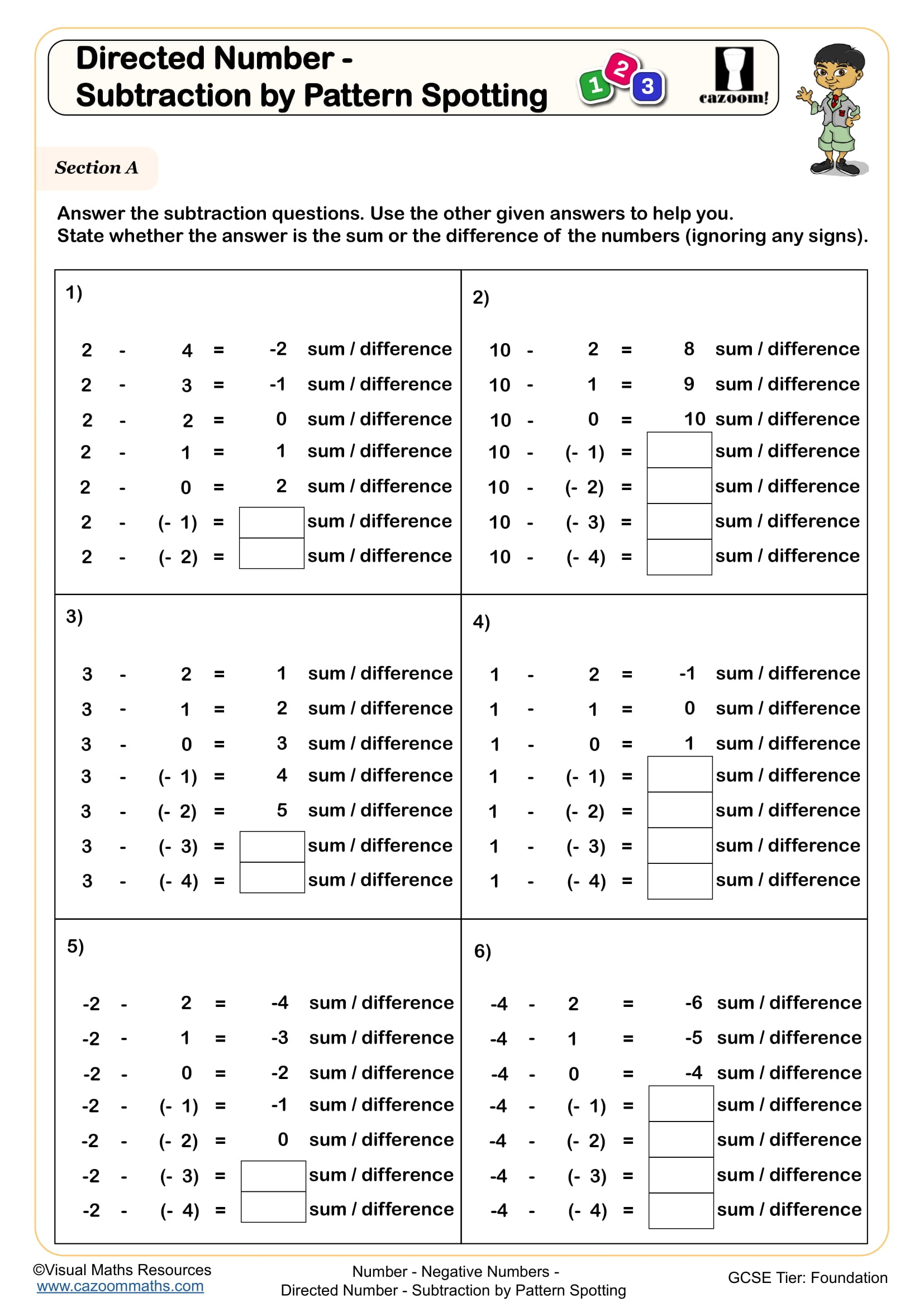
Directed Number – Subtraction by Pattern Spotting
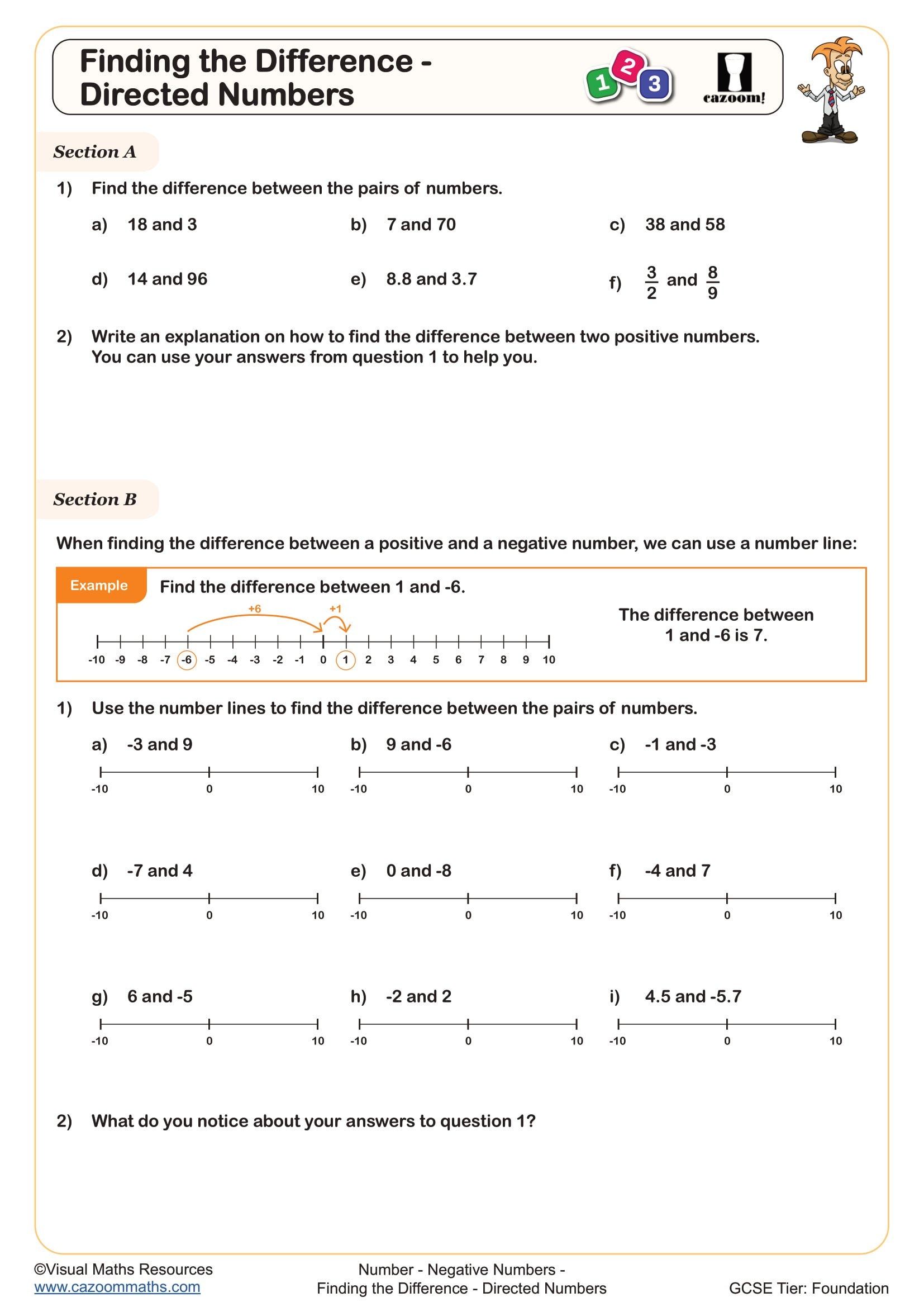
Finding the Difference - Directed Numbers
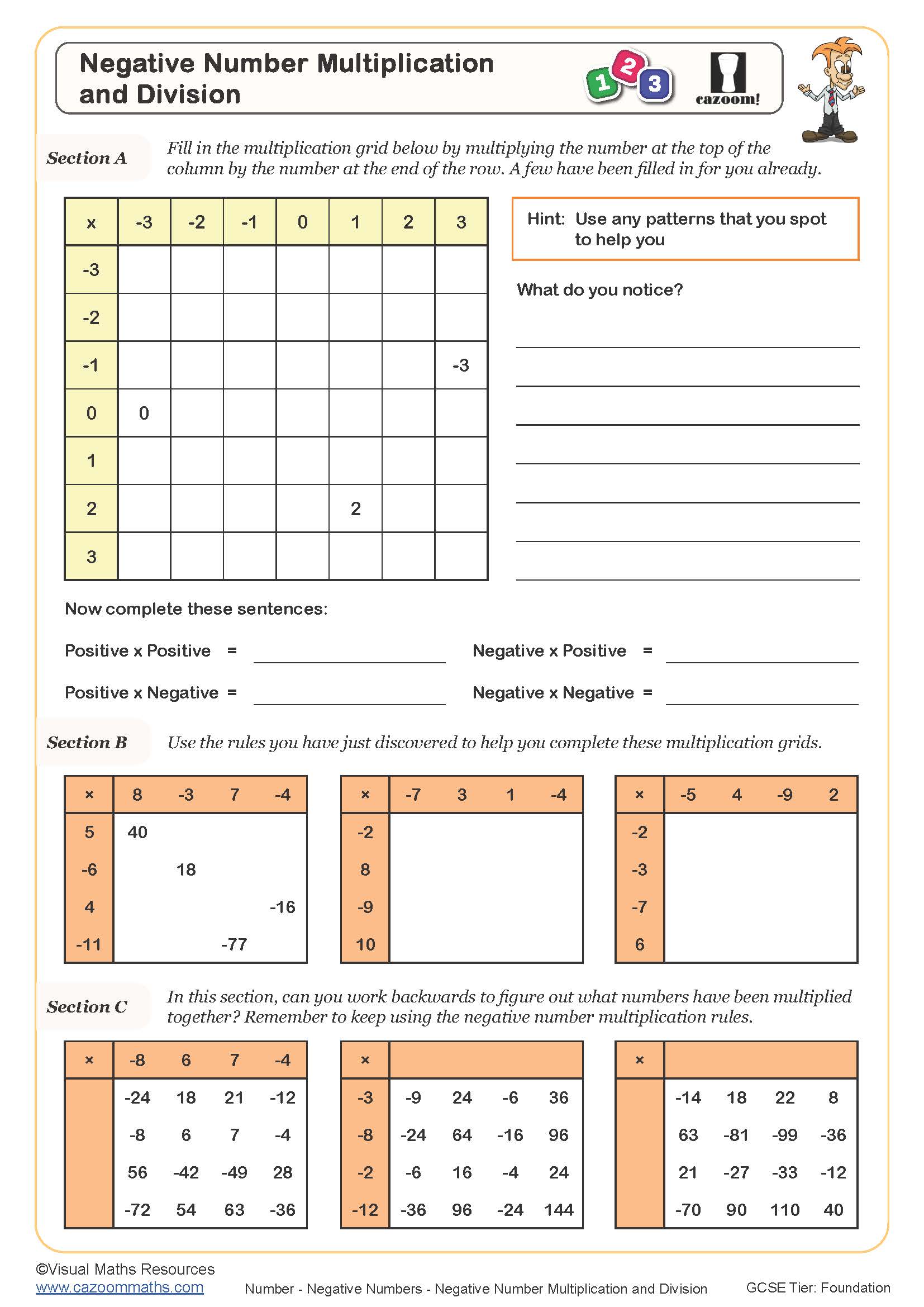
Negative Number Multiplication and Division
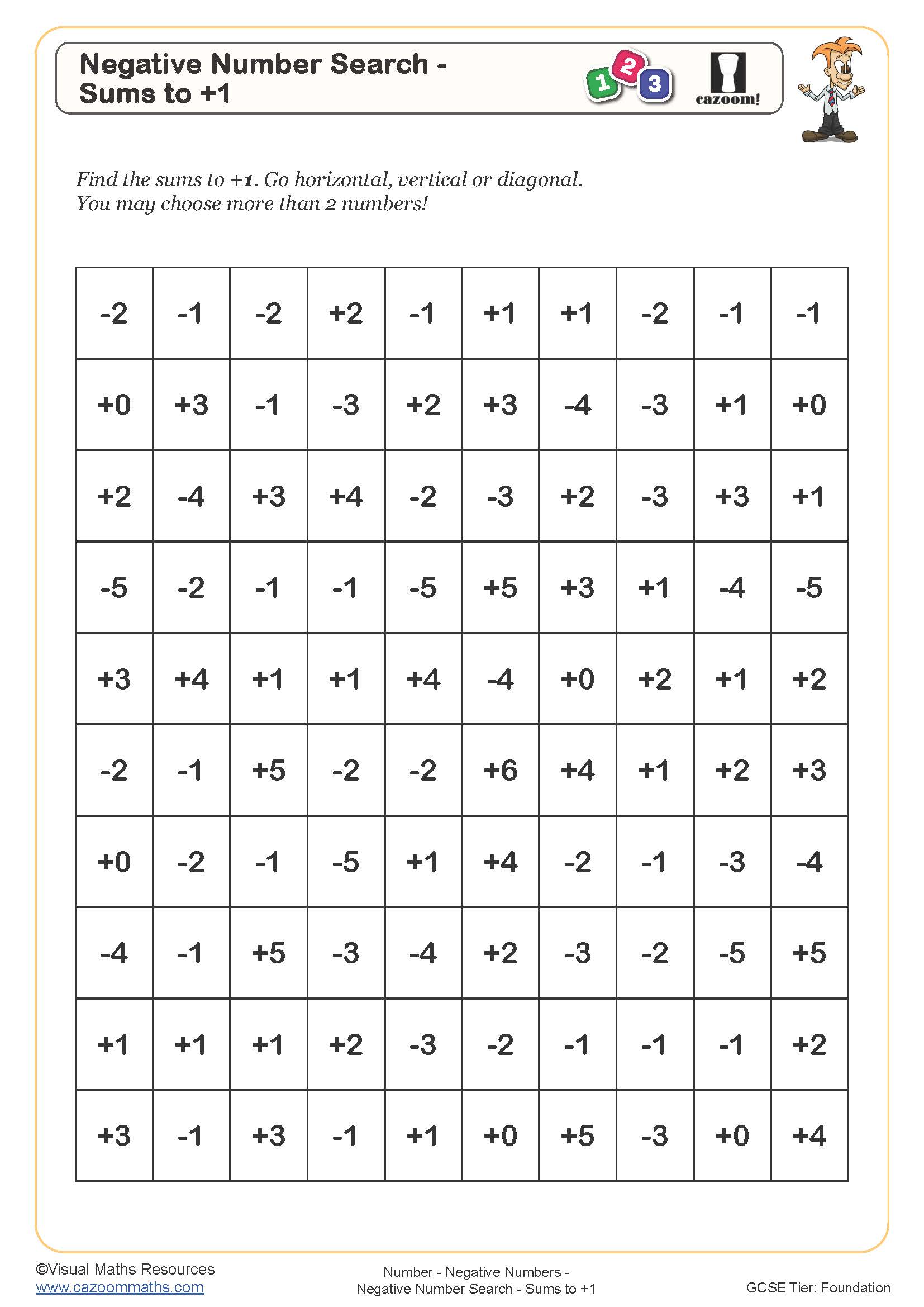
Negative number search - sums to +1
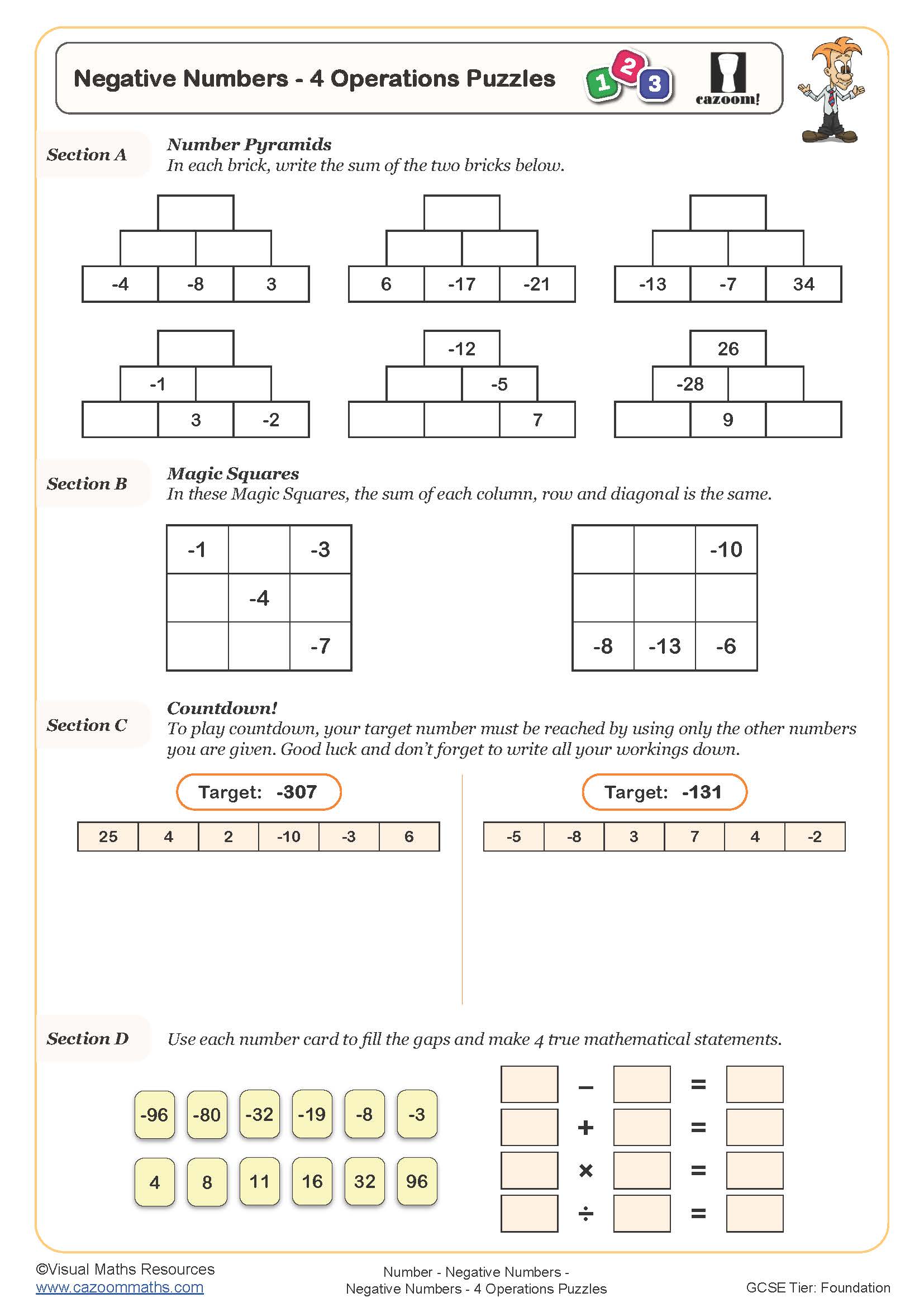
Negative Numbers - 4 Operations Puzzles
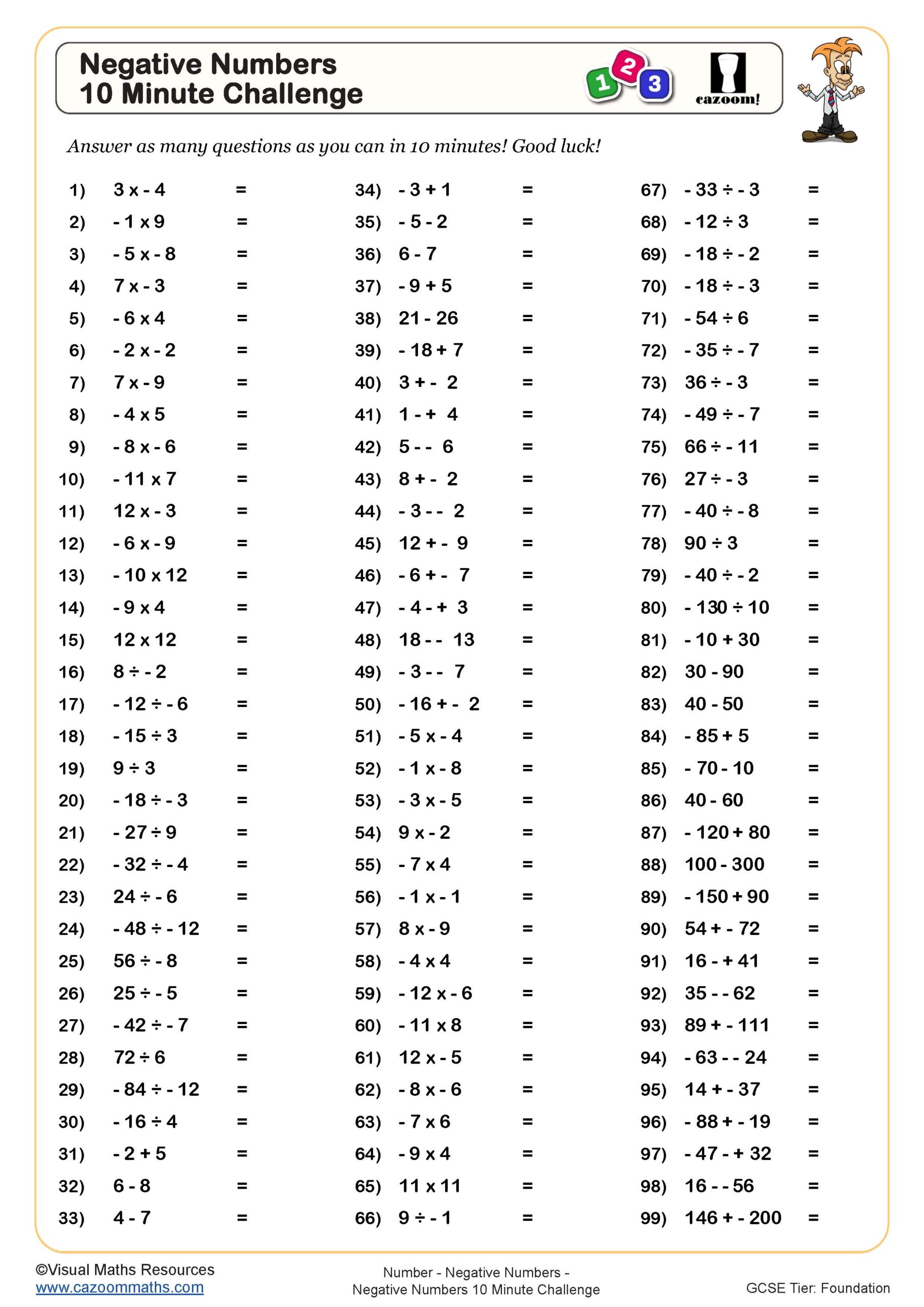
Negative Numbers 10 Minute Challenge
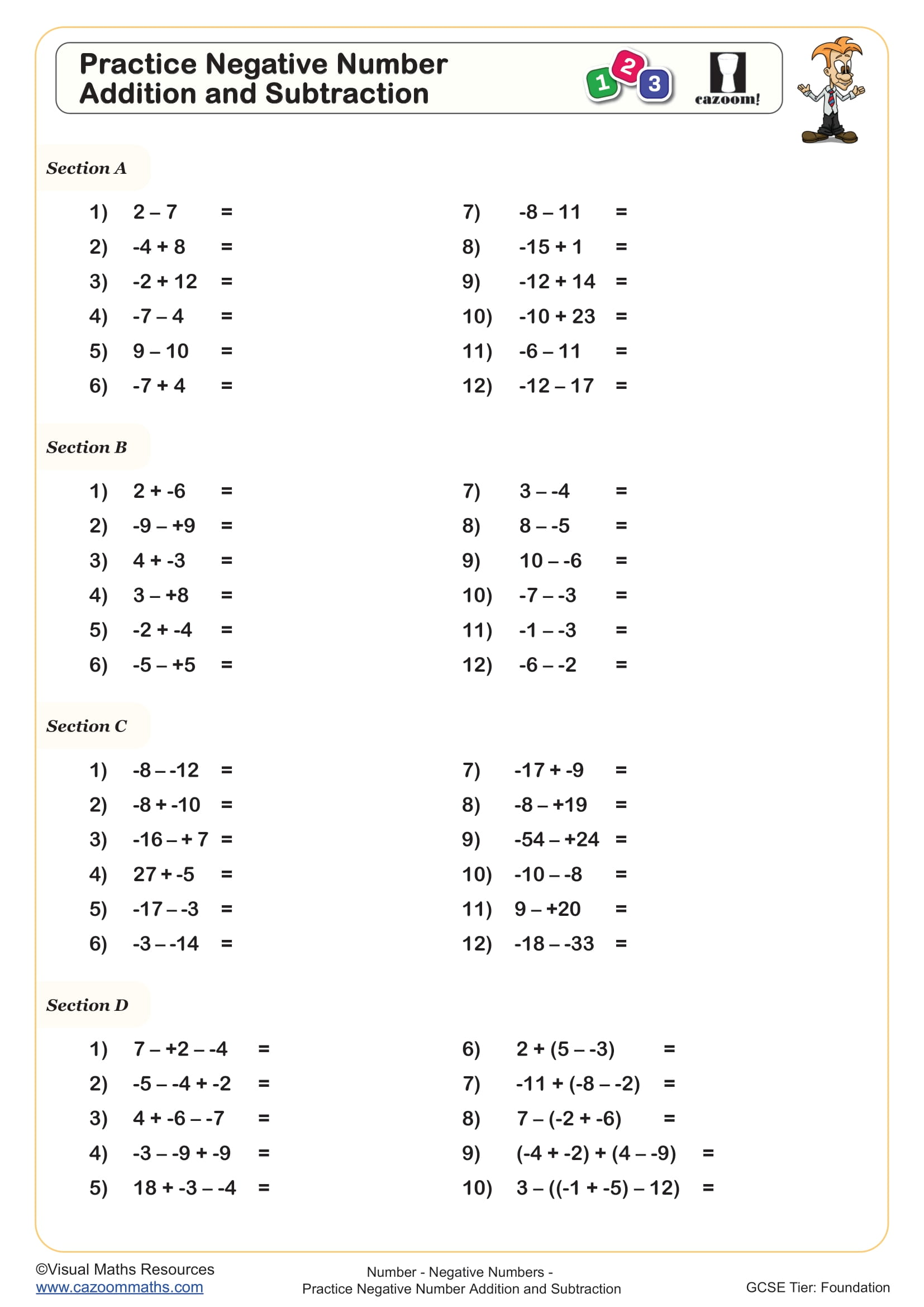
Practice Negative Number Addition and Subtraction
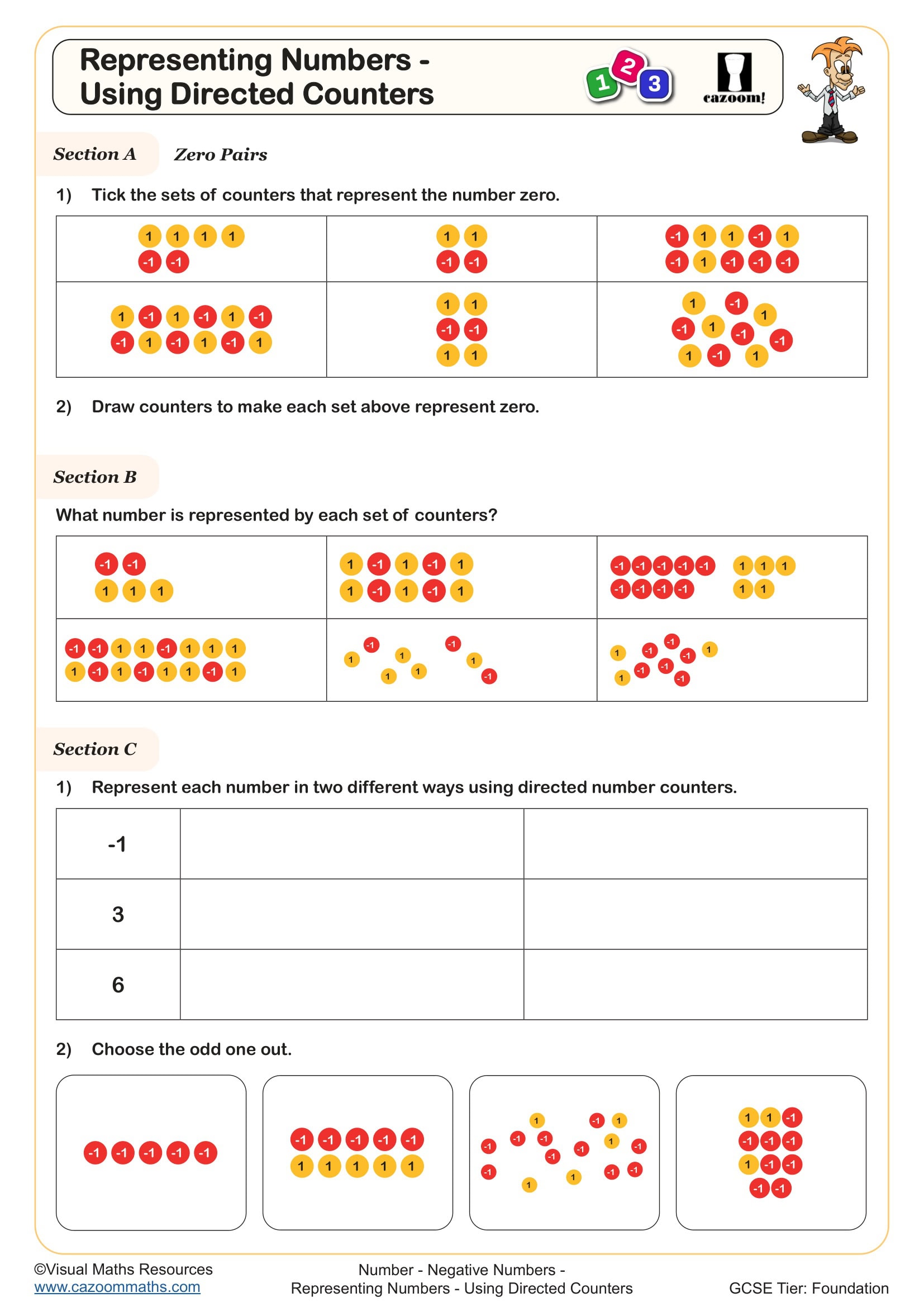
Representing Numbers - Using Directed Counters
All worksheets are created by the team of experienced teachers at Cazoom Maths.
What makes an effective negative numbers worksheet for Year 8 students?
An effective negative numbers worksheet Year 8 should progress systematically through the four operations, starting with addition and subtraction before moving to multiplication and division. The National Curriculum expects students to understand that operations with directed numbers follow consistent rules, particularly that multiplying or dividing two negative numbers gives a positive result.
Teachers notice that worksheets work best when they include visual representations like number lines for the opening questions, then gradually remove this support. Students particularly benefit from worksheets that explicitly address the double negative scenario, such as calculating -7 - (-3), as this consistently causes confusion across different ability levels.
How do negative number skills develop from Year 7 to Year 8?
Year 7 students typically work with negative numbers in simple addition and subtraction contexts, often using number lines or thermometer models to support understanding. By Year 8, the curriculum expects students to work confidently with all four operations involving negative numbers without visual aids, including more complex expressions like -3 × (-4) + (-2).
The progression also includes applying negative number operations to algebraic contexts and real-world problems. Teachers find that Year 8 students often struggle with the transition from concrete visual methods to abstract calculation rules, particularly when dealing with multiplication and division of directed numbers in algebraic expressions.
Why do students find multiplying and dividing negative numbers challenging?
Students often struggle with negative number multiplication and division because the rules seem counterintuitive - two negatives making a positive contradicts their everyday experience. The abstract nature of these rules requires students to move beyond concrete thinking to understand mathematical convention rather than logical reasoning.
Teachers frequently observe students applying addition rules to multiplication, writing -3 × -4 = -12 instead of +12. Effective practice involves connecting these operations to practical contexts like temperature changes or financial transactions, where removing a debt (dividing by a negative) can be understood as gaining money (positive result).
How can teachers use these worksheets to address common misconceptions?
Teachers can use answer sheets strategically to identify patterns in student errors, particularly the frequent mistake of treating subtraction of negatives as addition. When students consistently get questions like 5 - (-3) wrong, targeted intervention using number line models helps rebuild understanding before moving to abstract methods.
The worksheets work most effectively when teachers discuss worked solutions as a class, focusing on the reasoning behind each step rather than just the final answer. Many teachers find that asking students to explain why -2 × -3 = +6 using real-world analogies helps cement understanding better than memorising rules alone.