Year 8 Percentages Worksheets
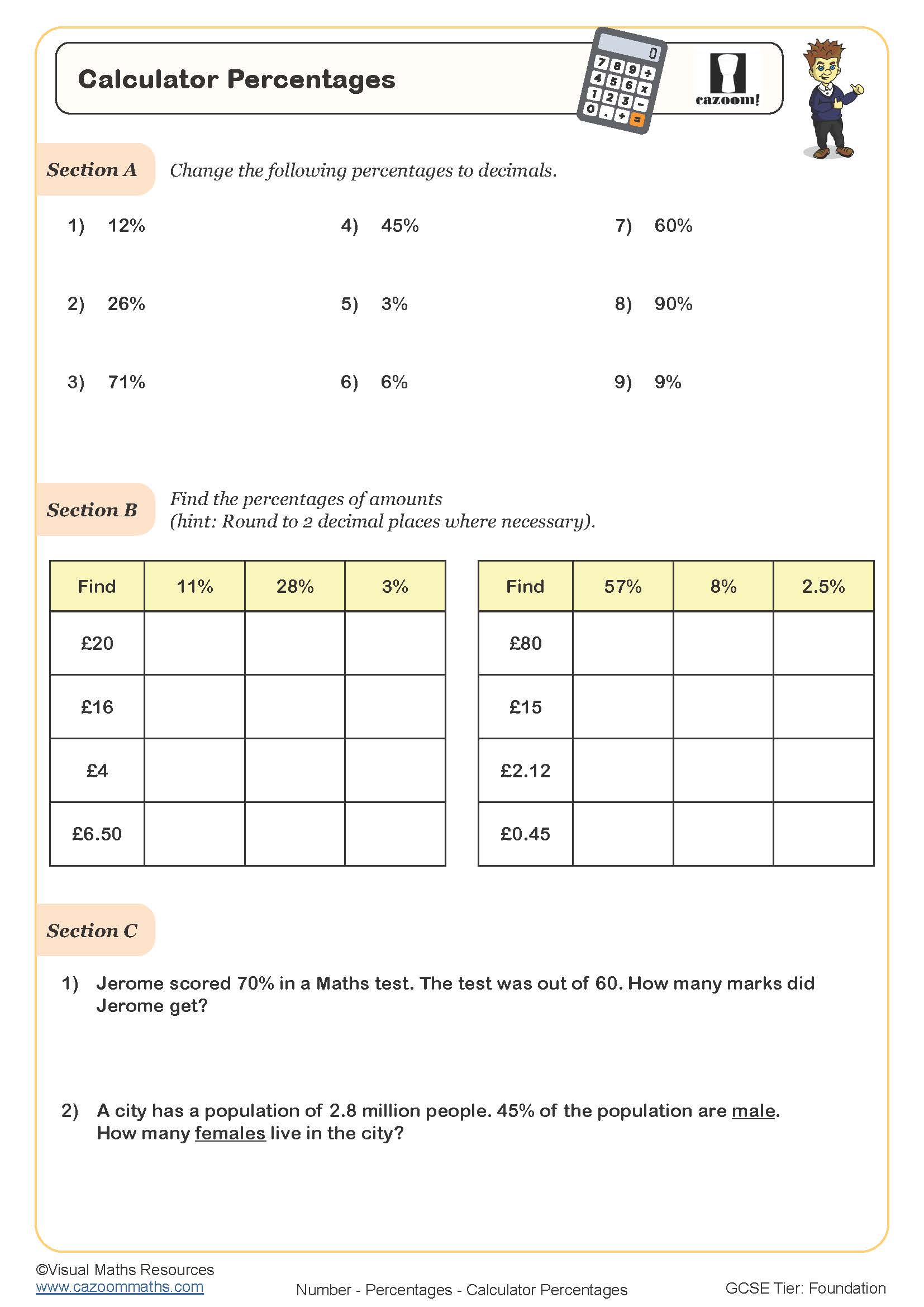
Calculator Percentages
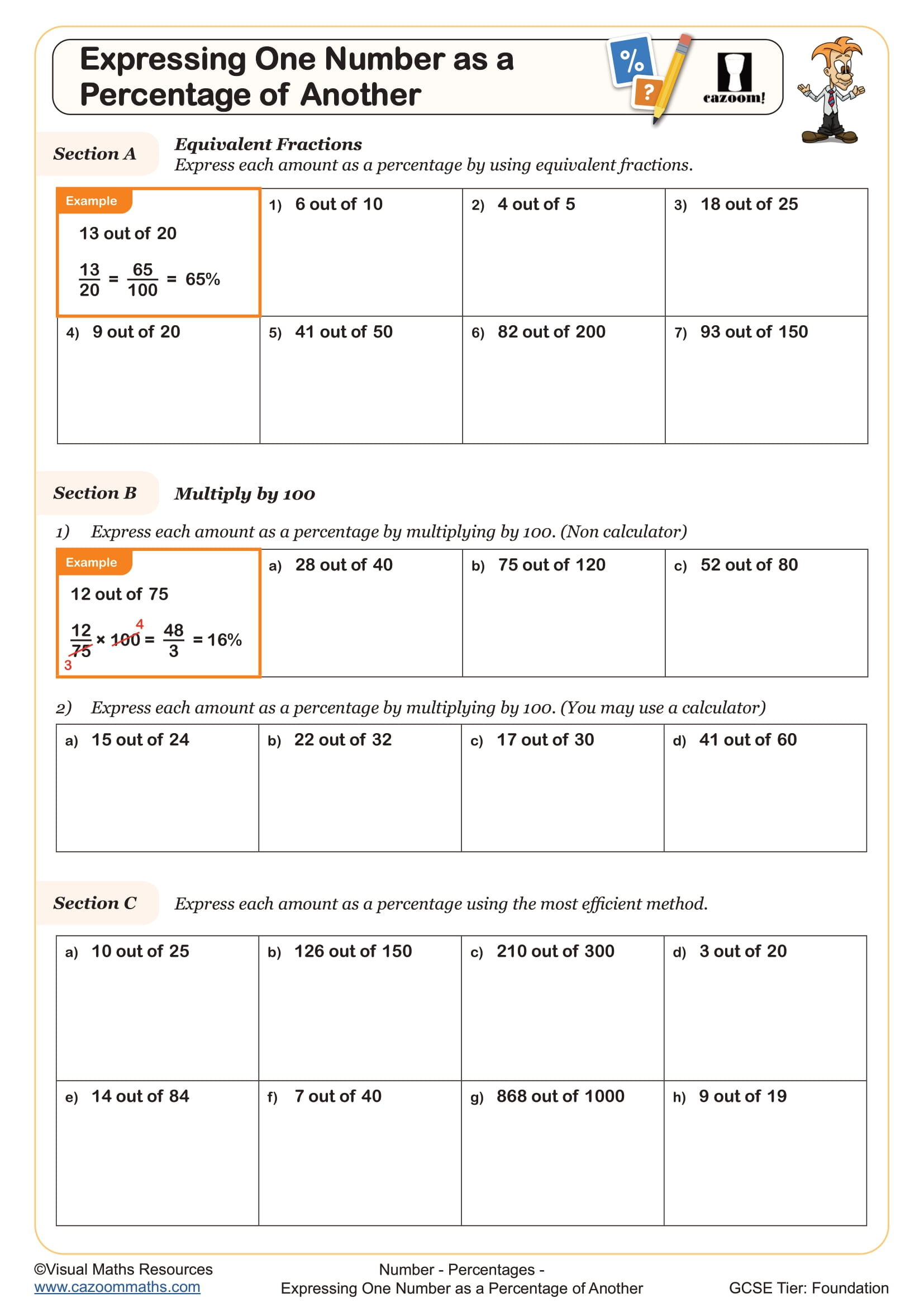
Express One Number as a Percentage of Another.
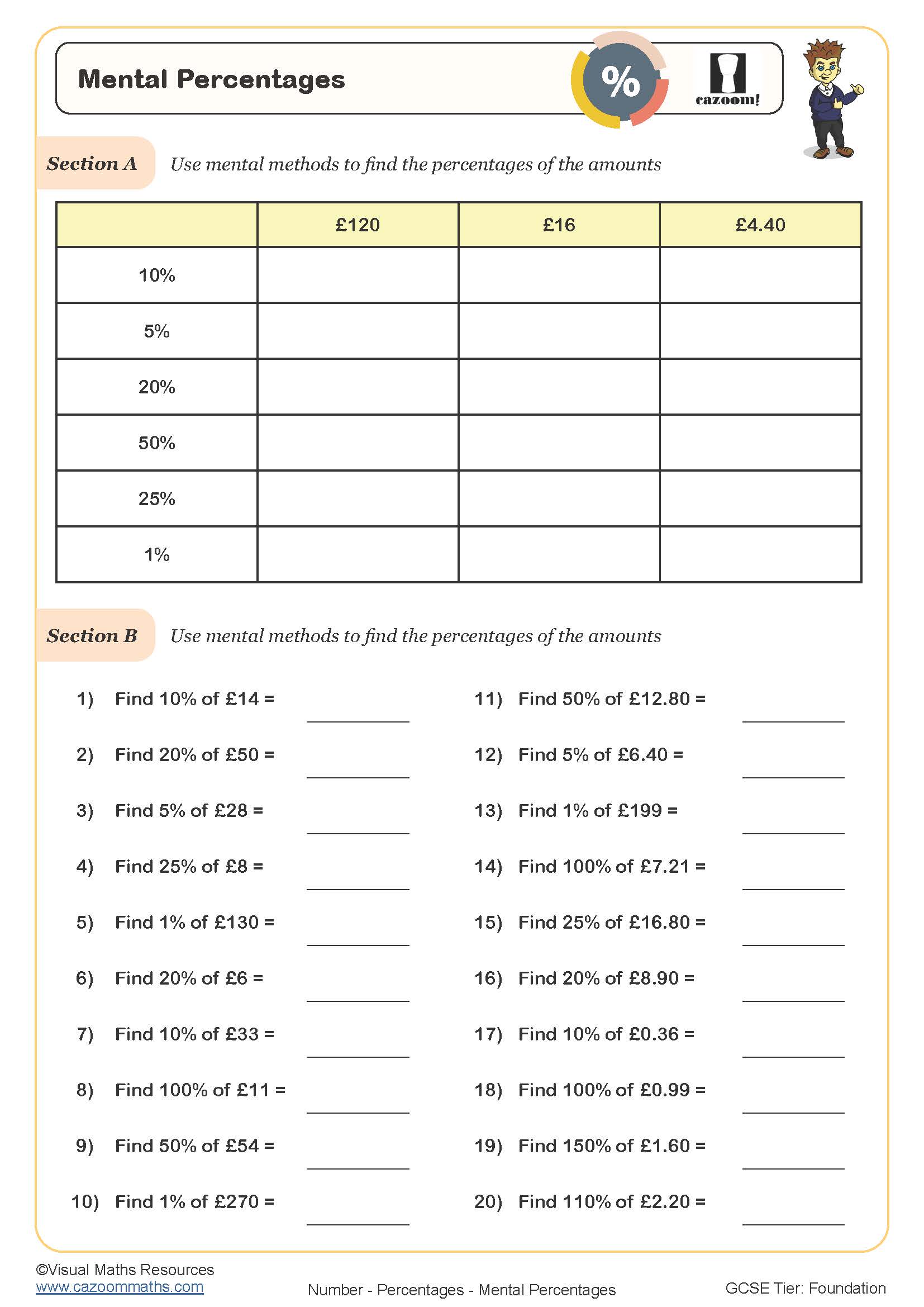
Mental Percentages
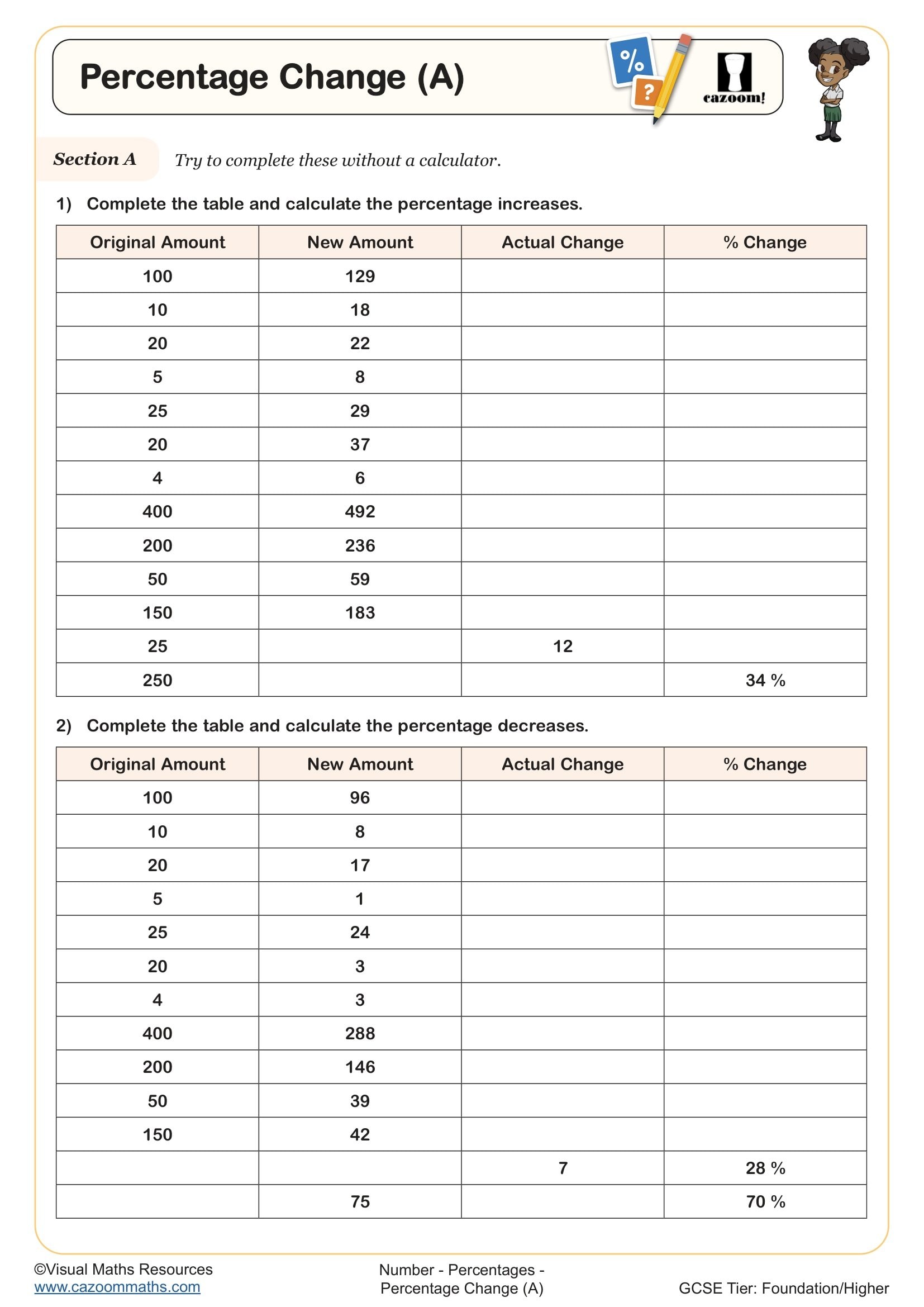
Percentage Change (A)
Percentage Decrease - Using a Bar Model
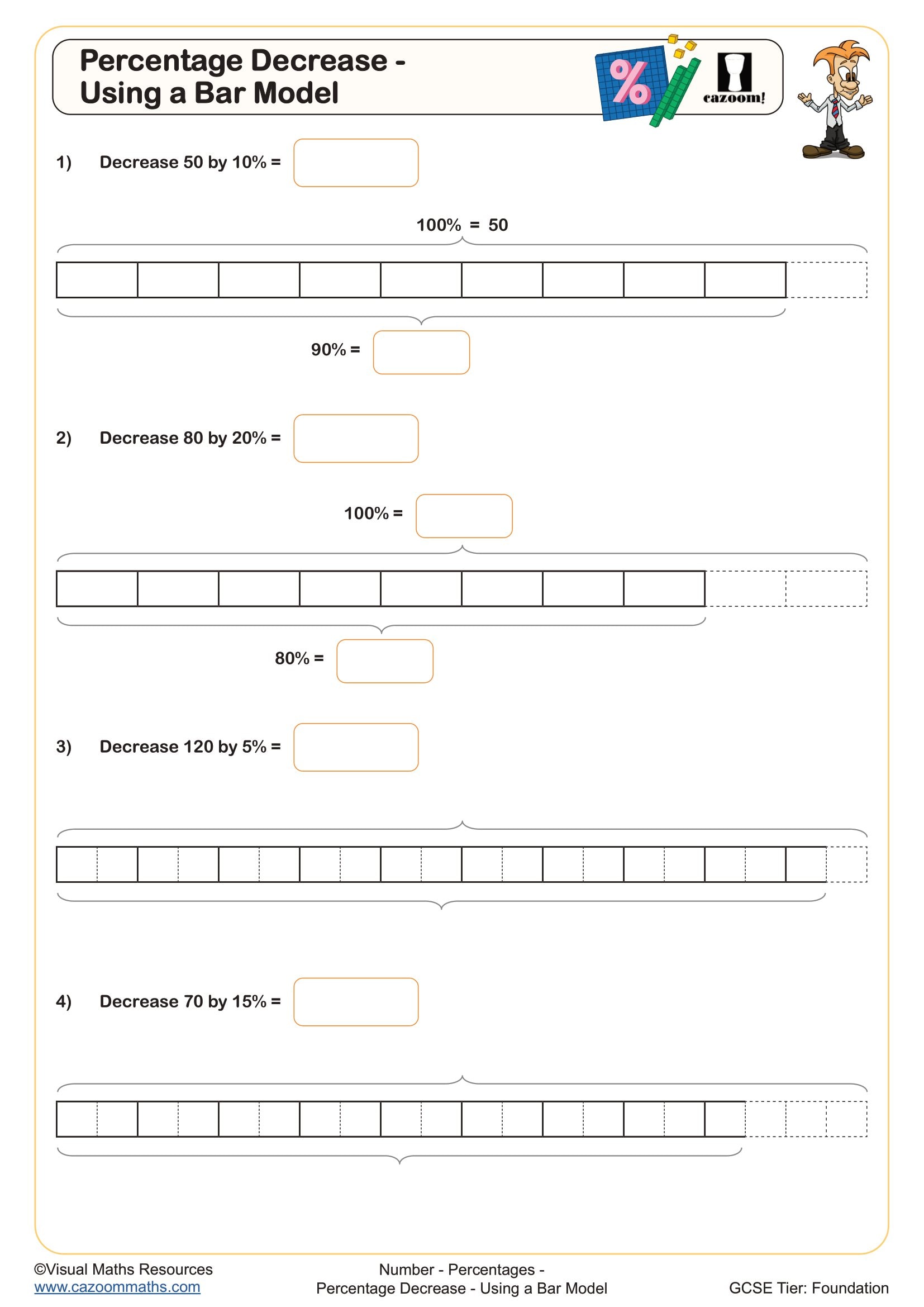
Percentage Increase - Using a Bar Model
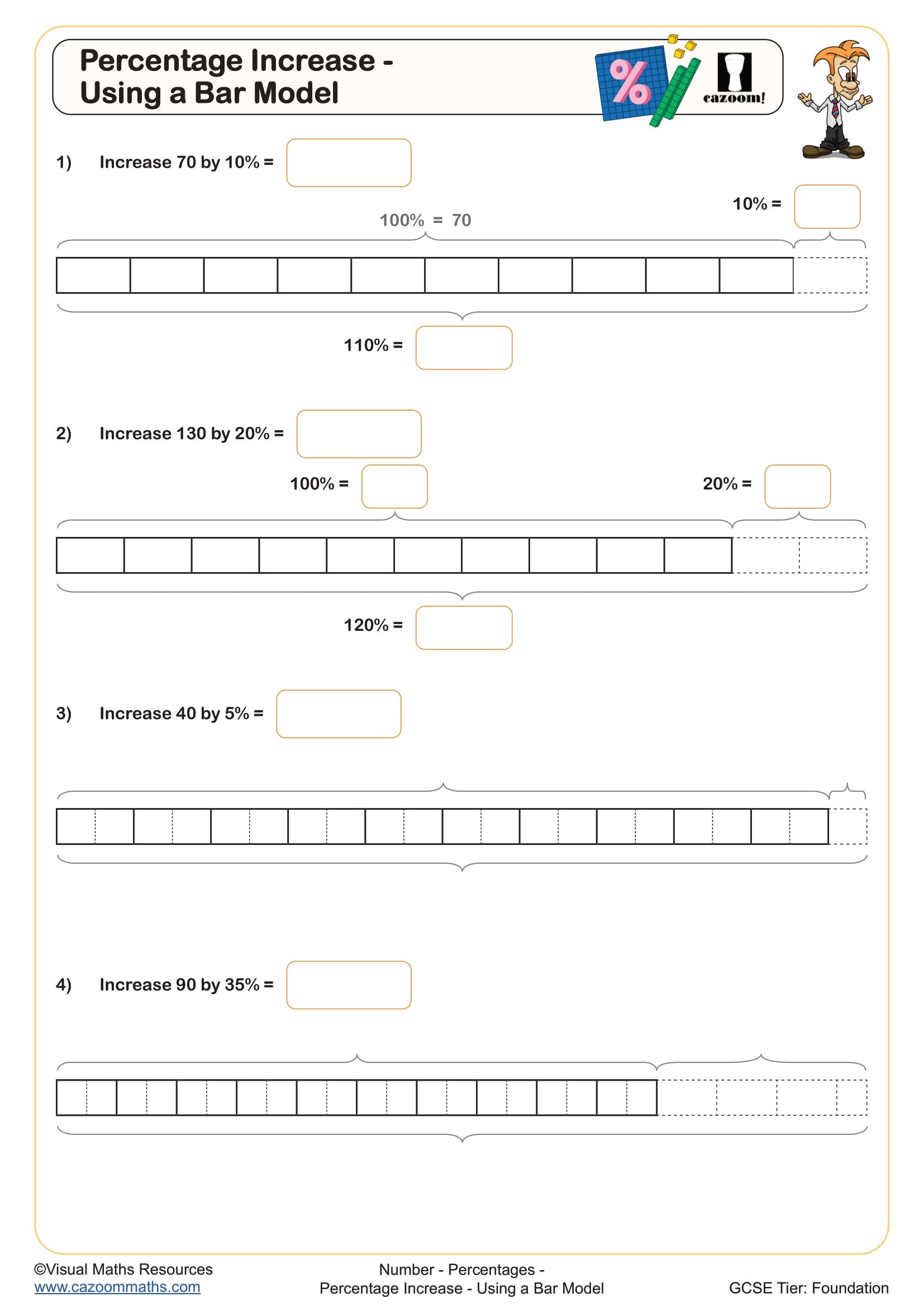
Percentage Increase and Decrease
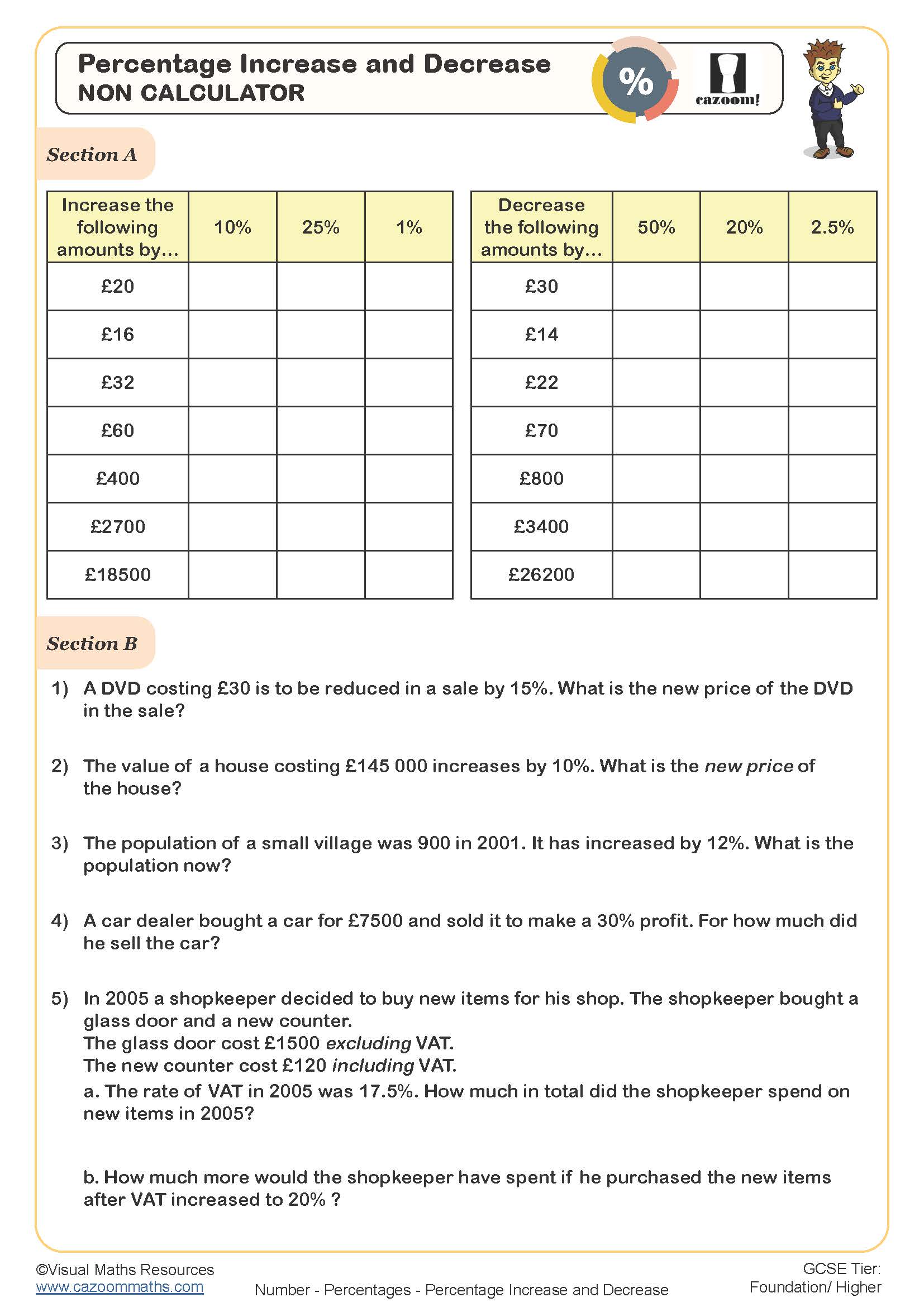
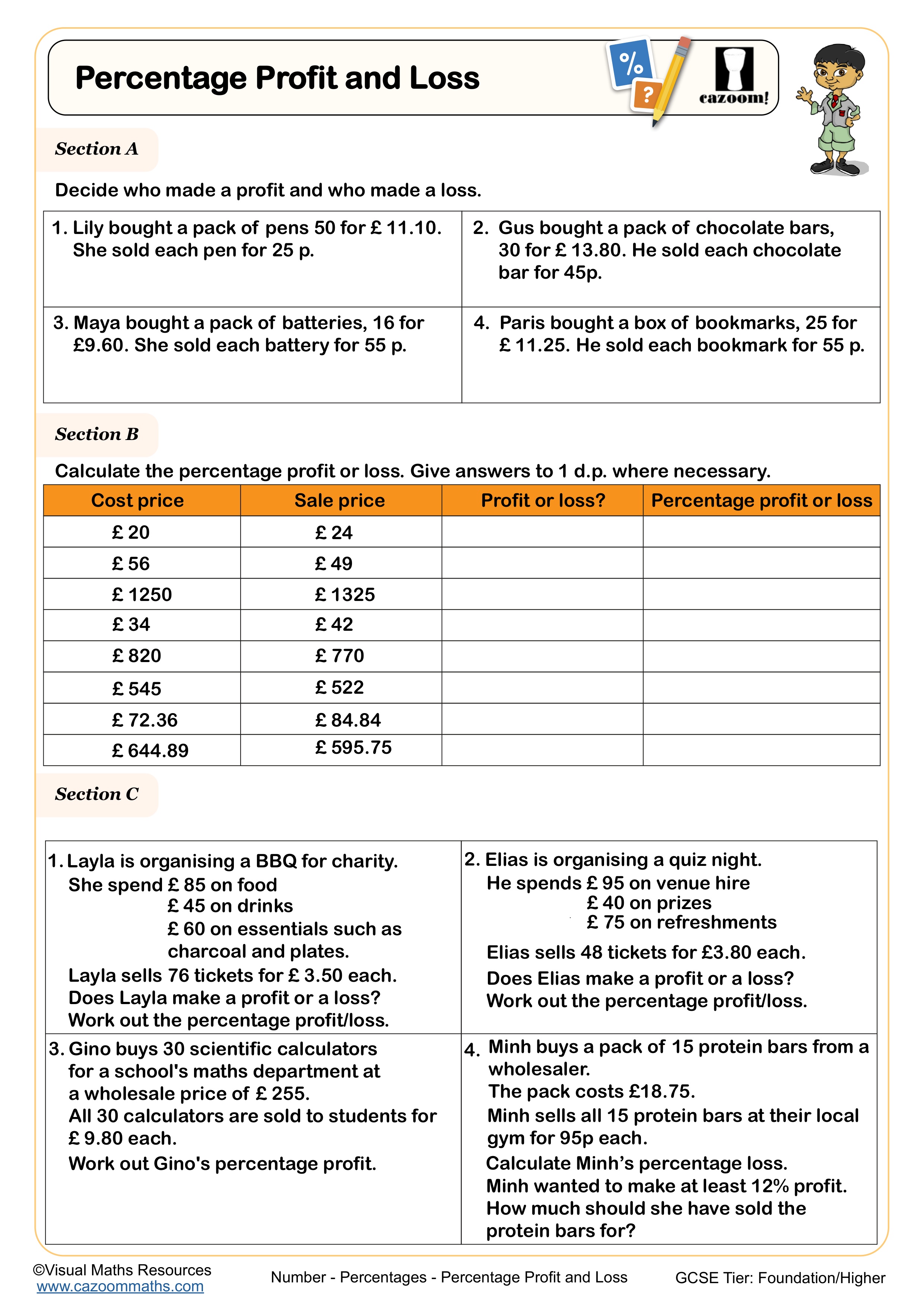
Percentage Profit and Loss
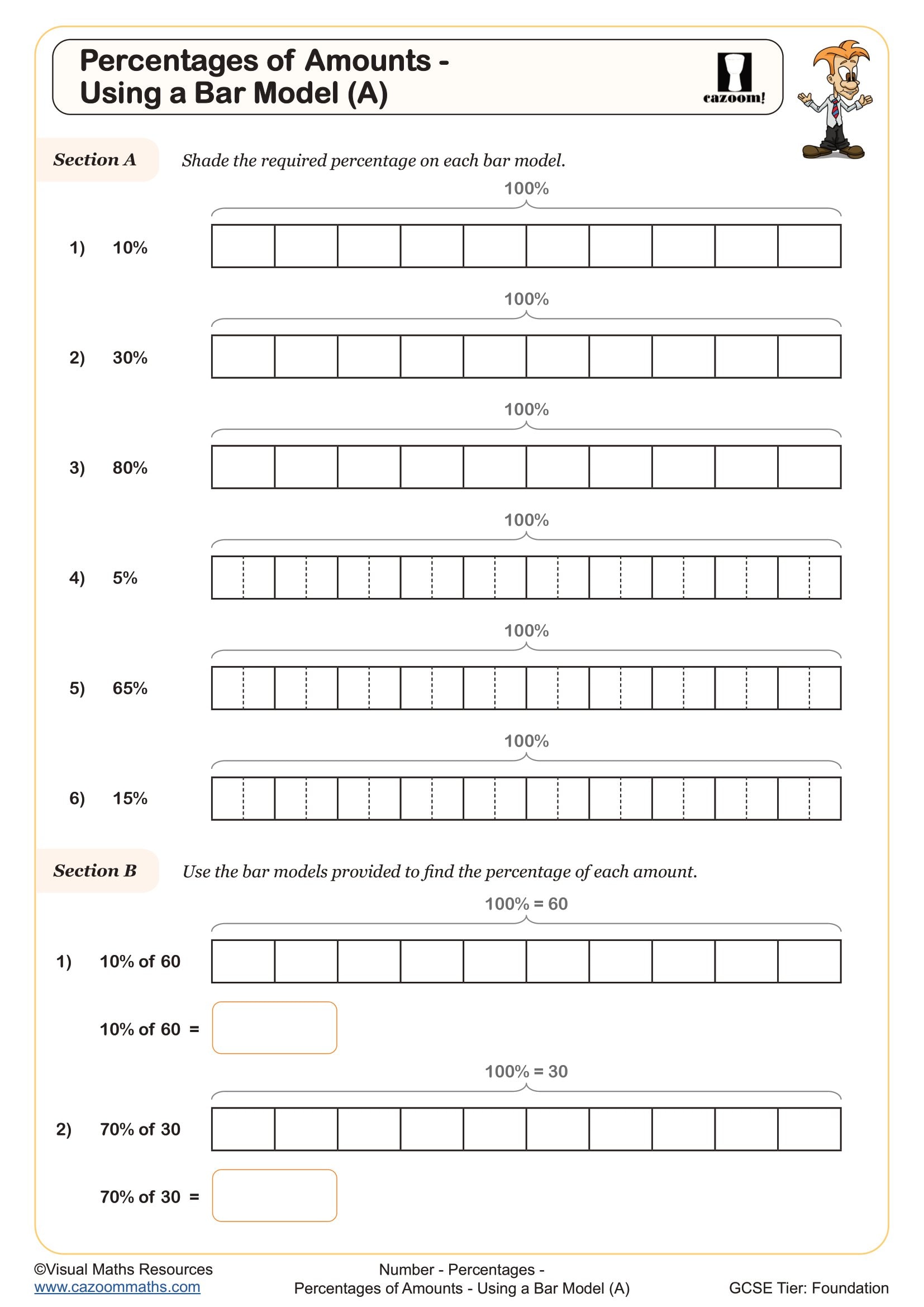
Percentages of Amounts - Using a Bar Model (A)
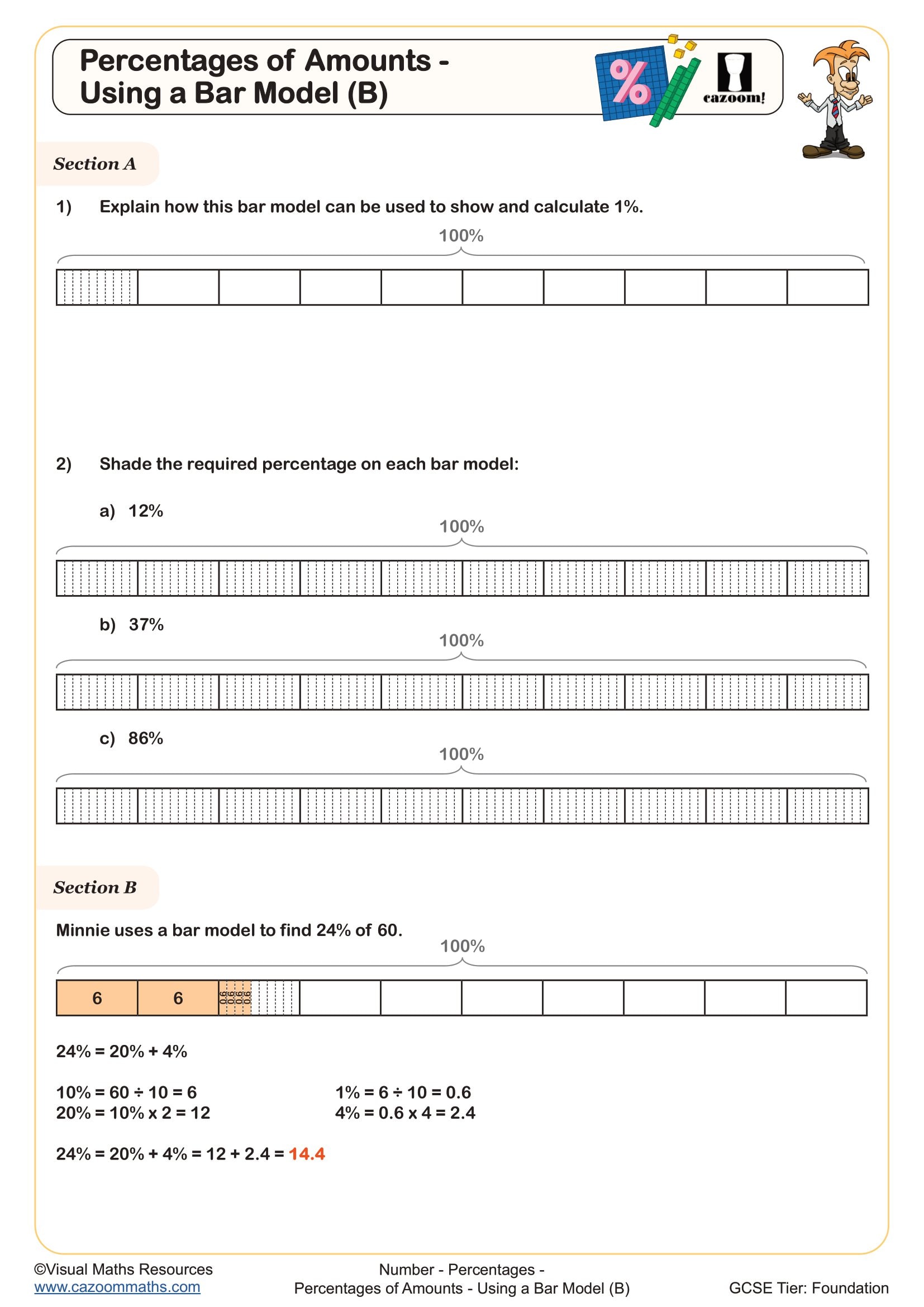
Percentages of Amounts - Using a Bar Model (B)
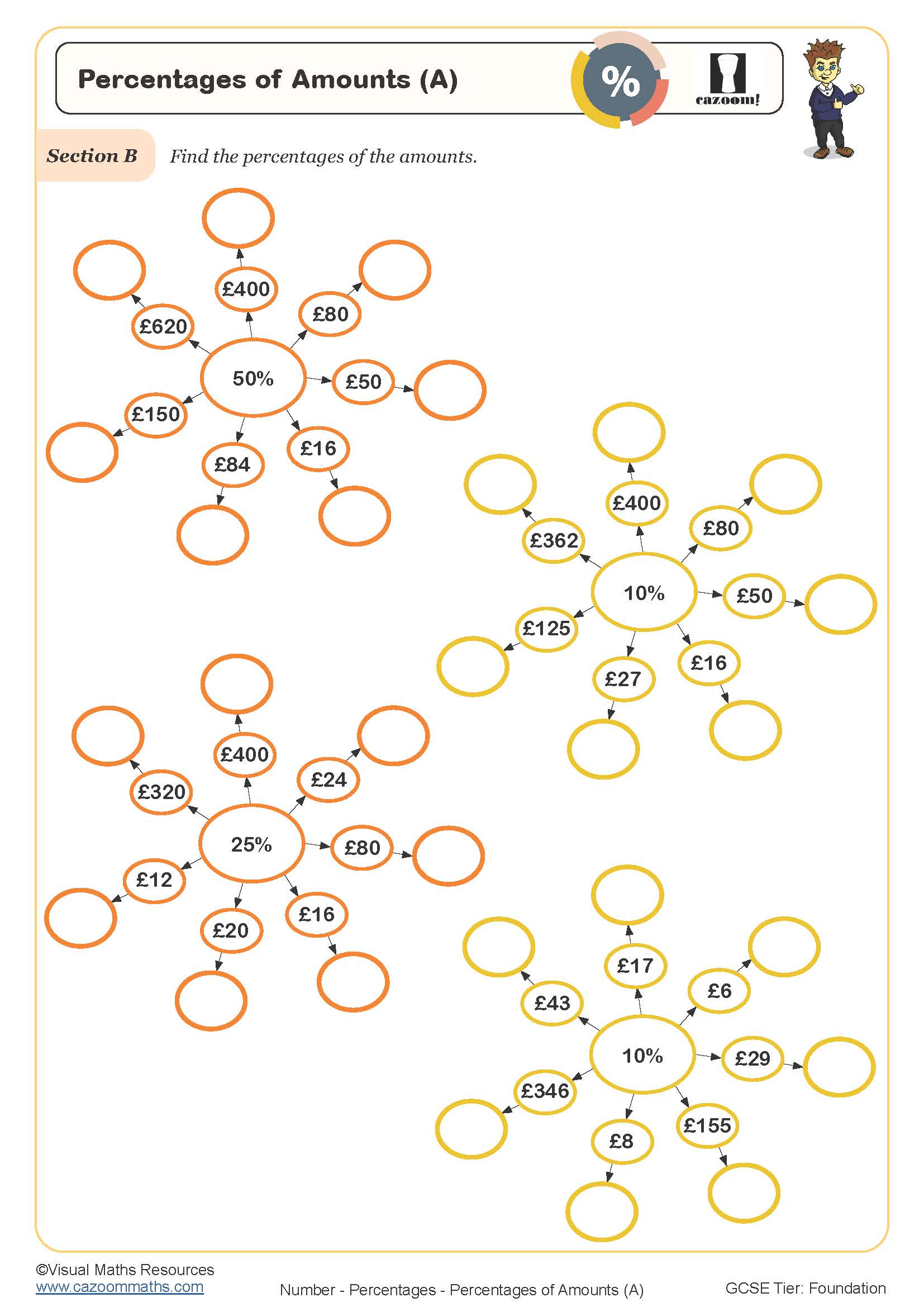
Percentages of Amounts (A)
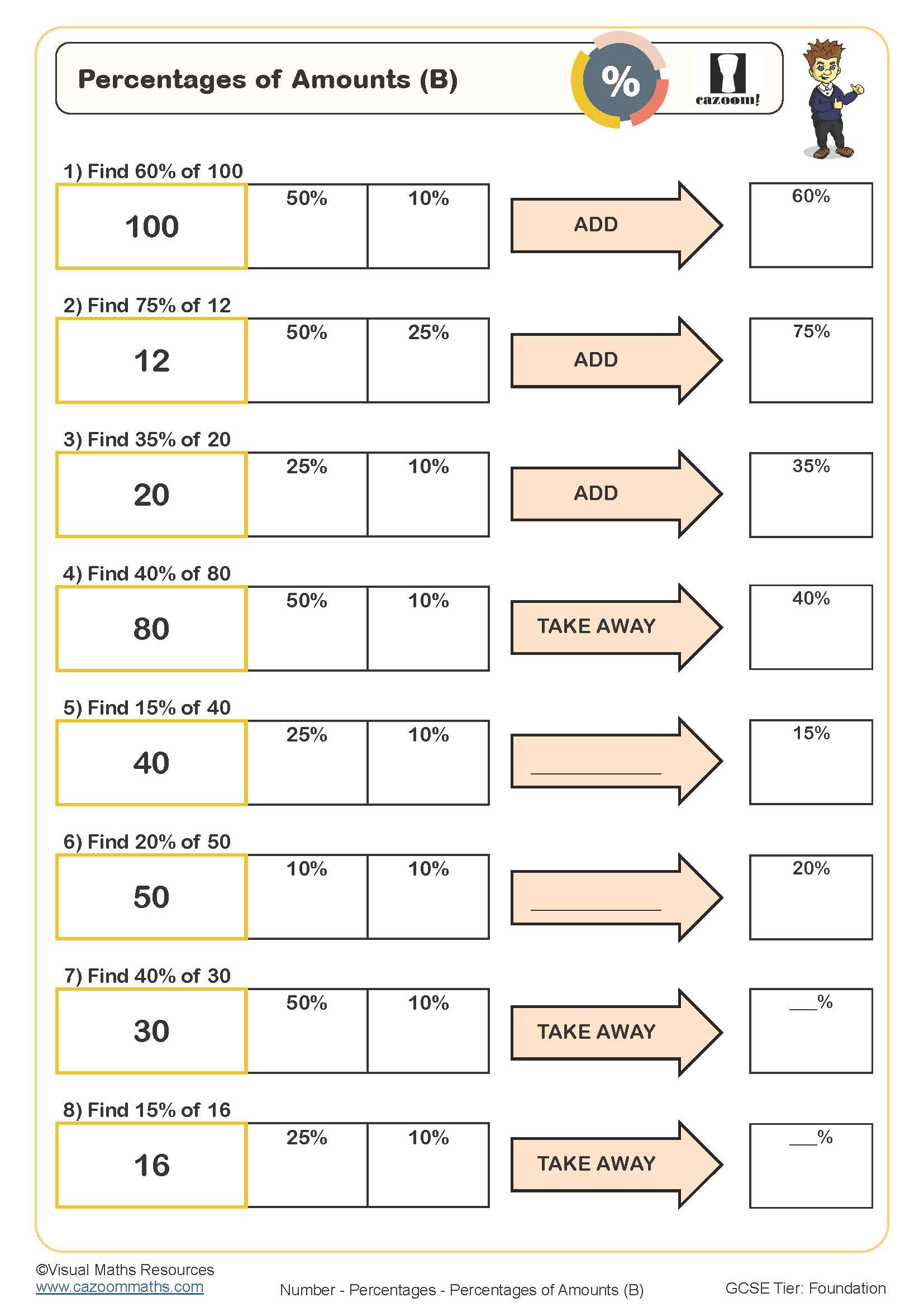
Percentages of Amounts (B)
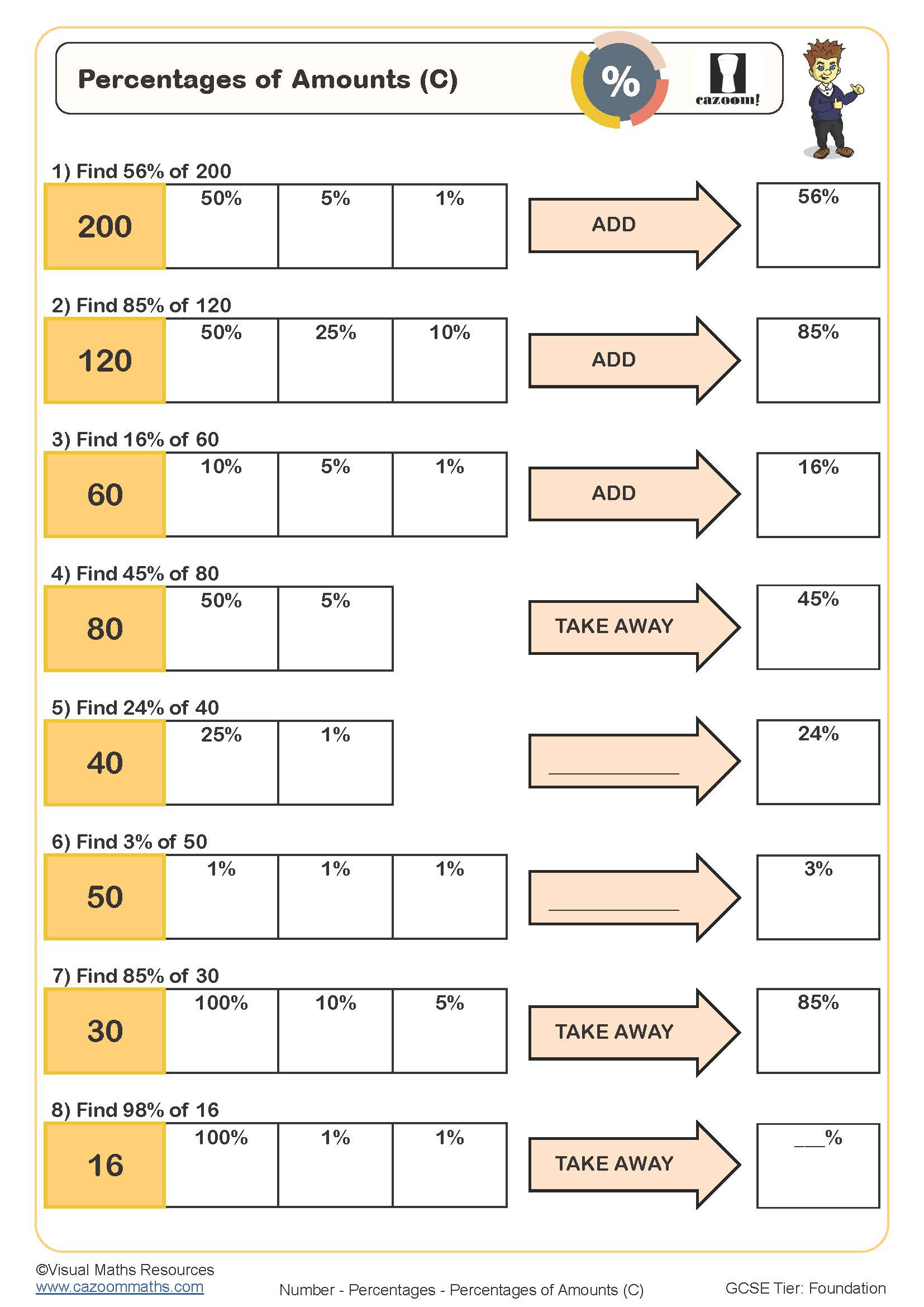
Percentages of Amounts (C)
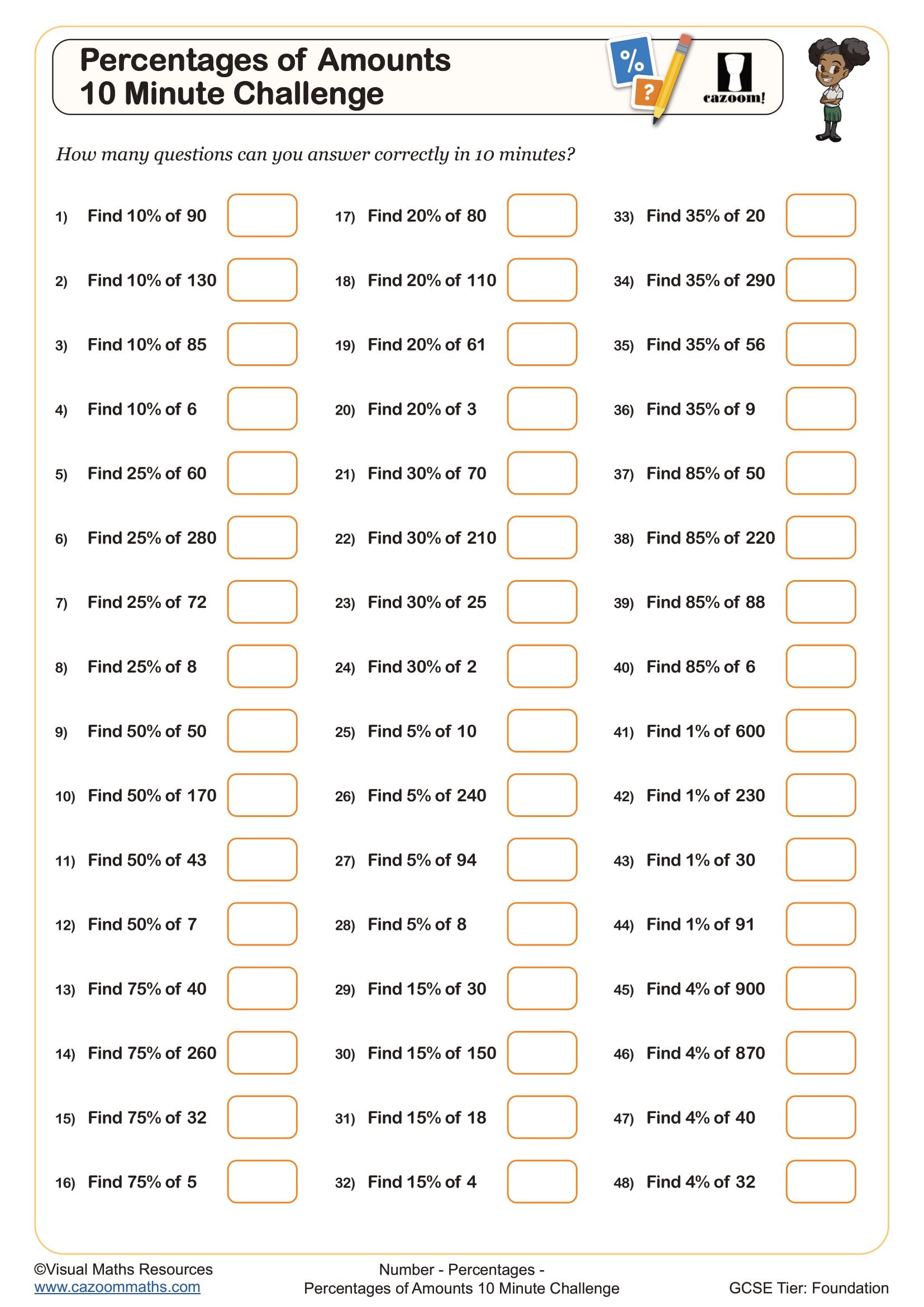
Percentages of Amounts 10 Minute Challenge
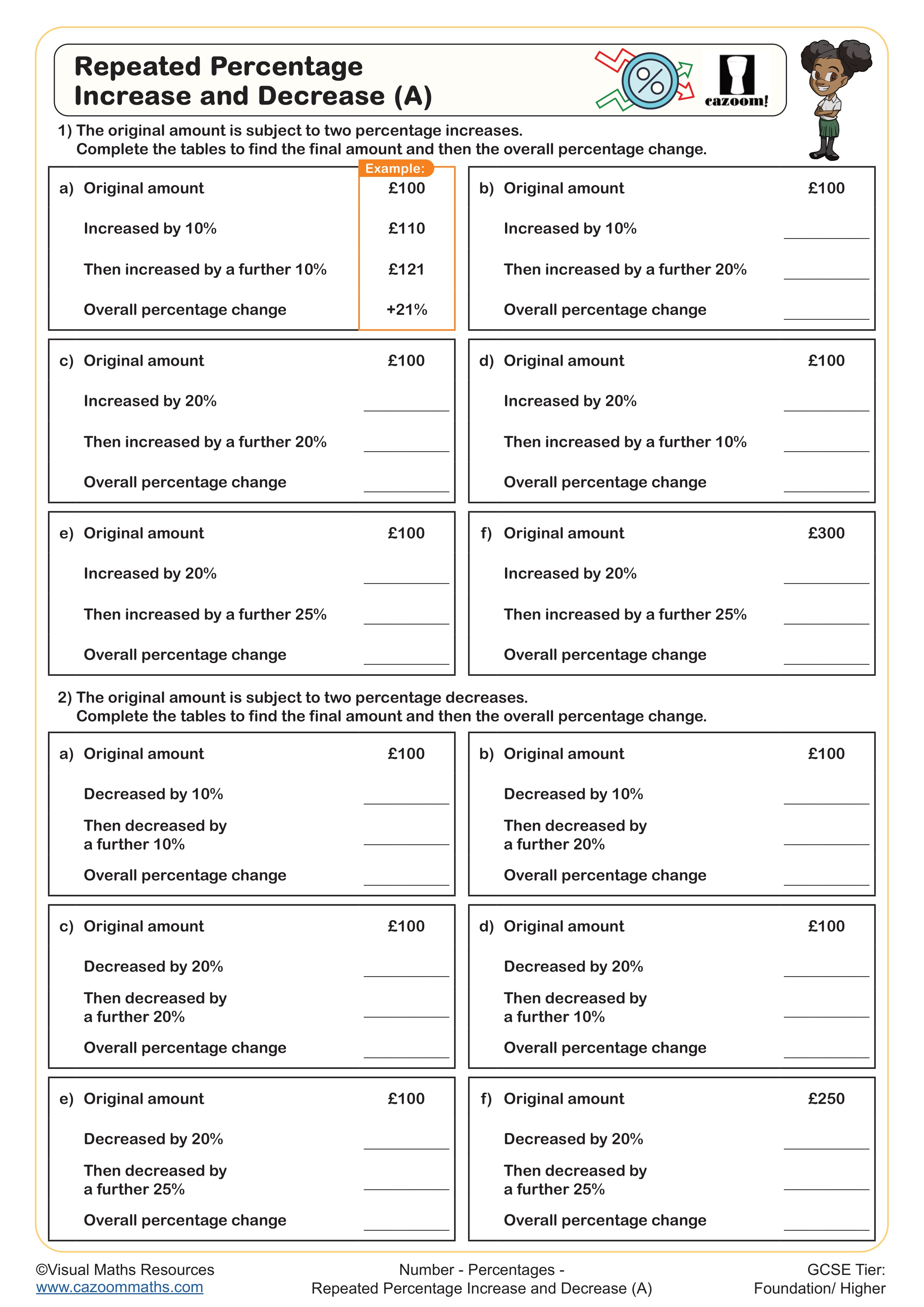
Repeated Percentage Increase and Decrease (A)
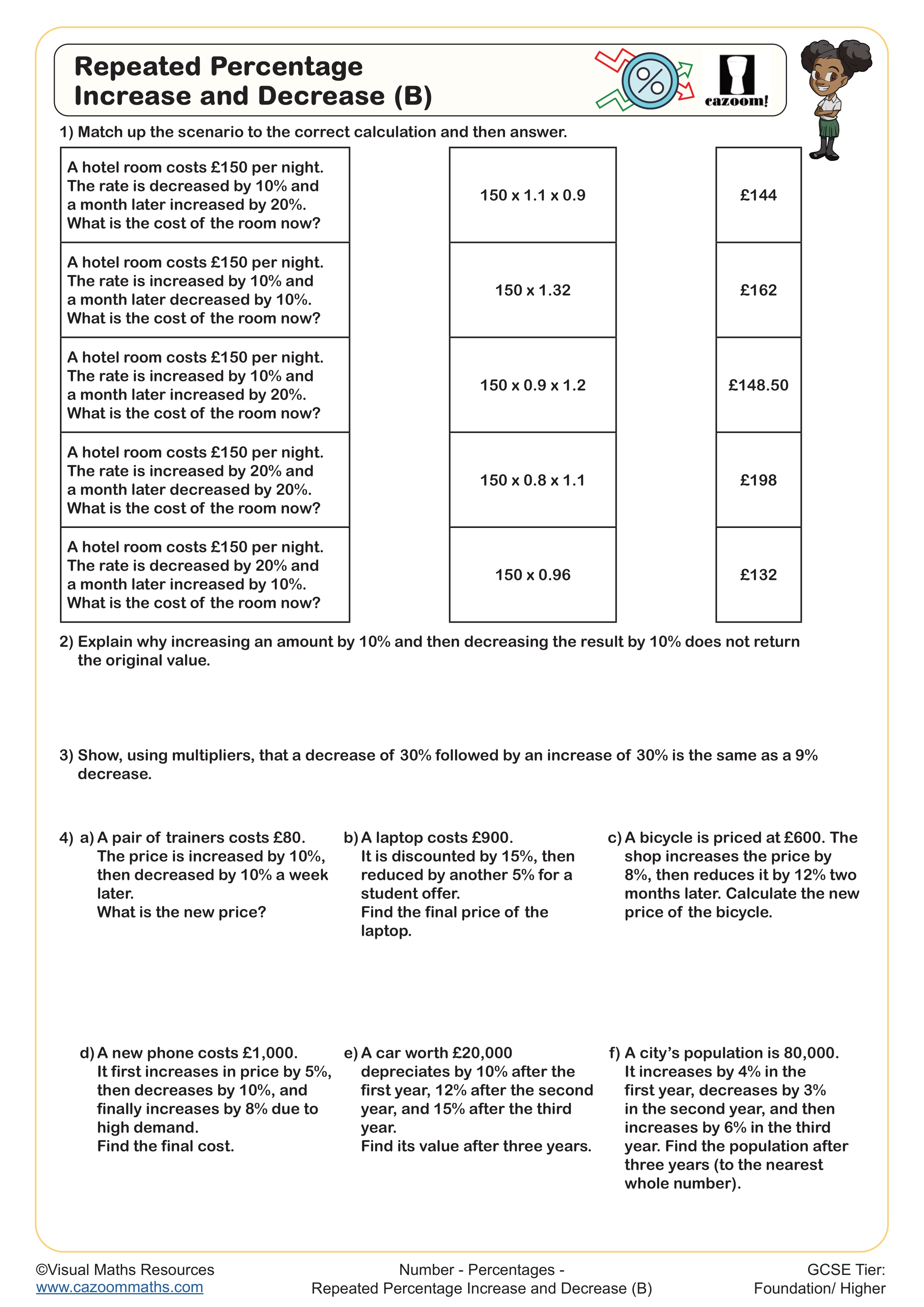
Repeated Percentage Increase and Decrease (B)
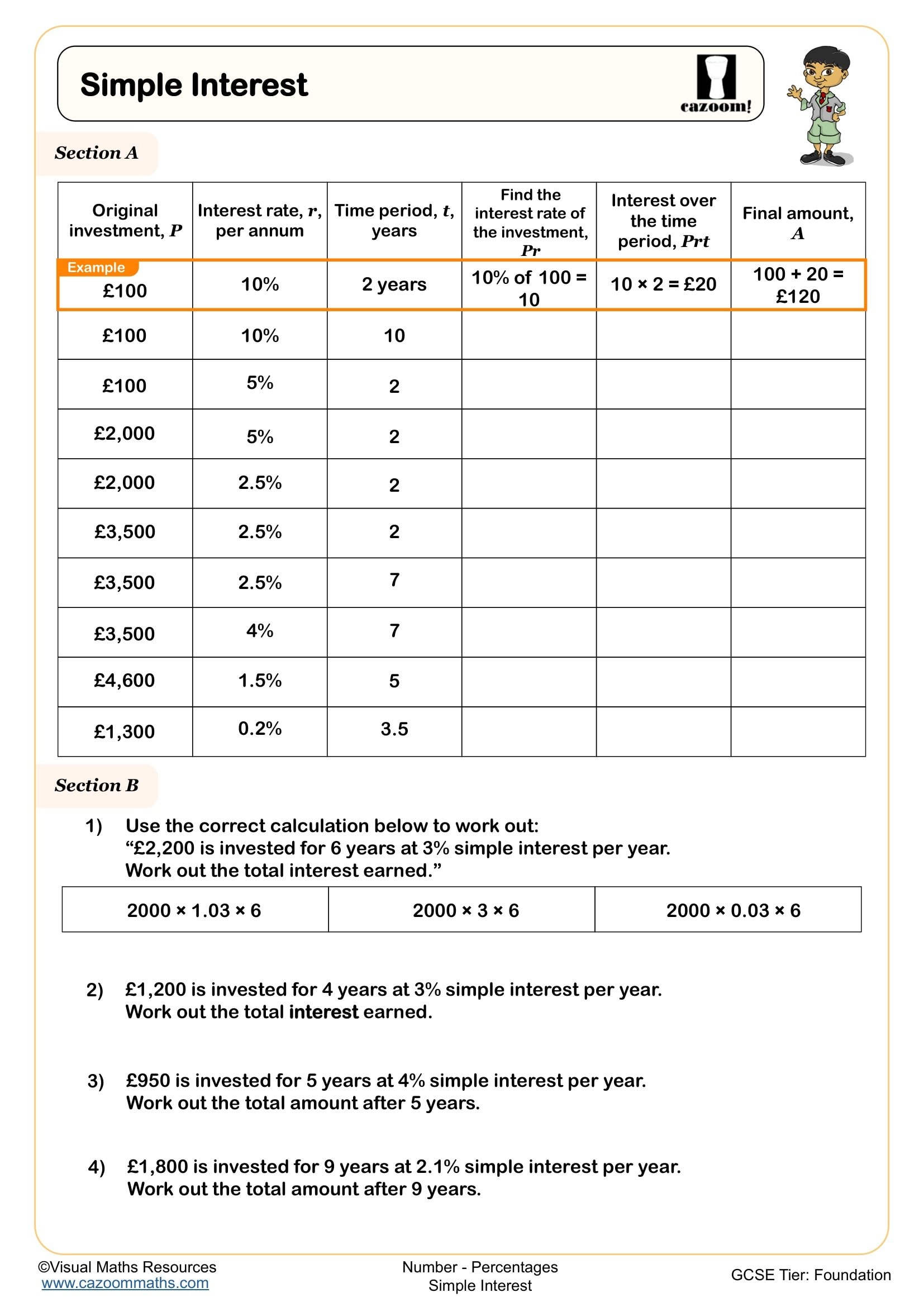
Simple Interest
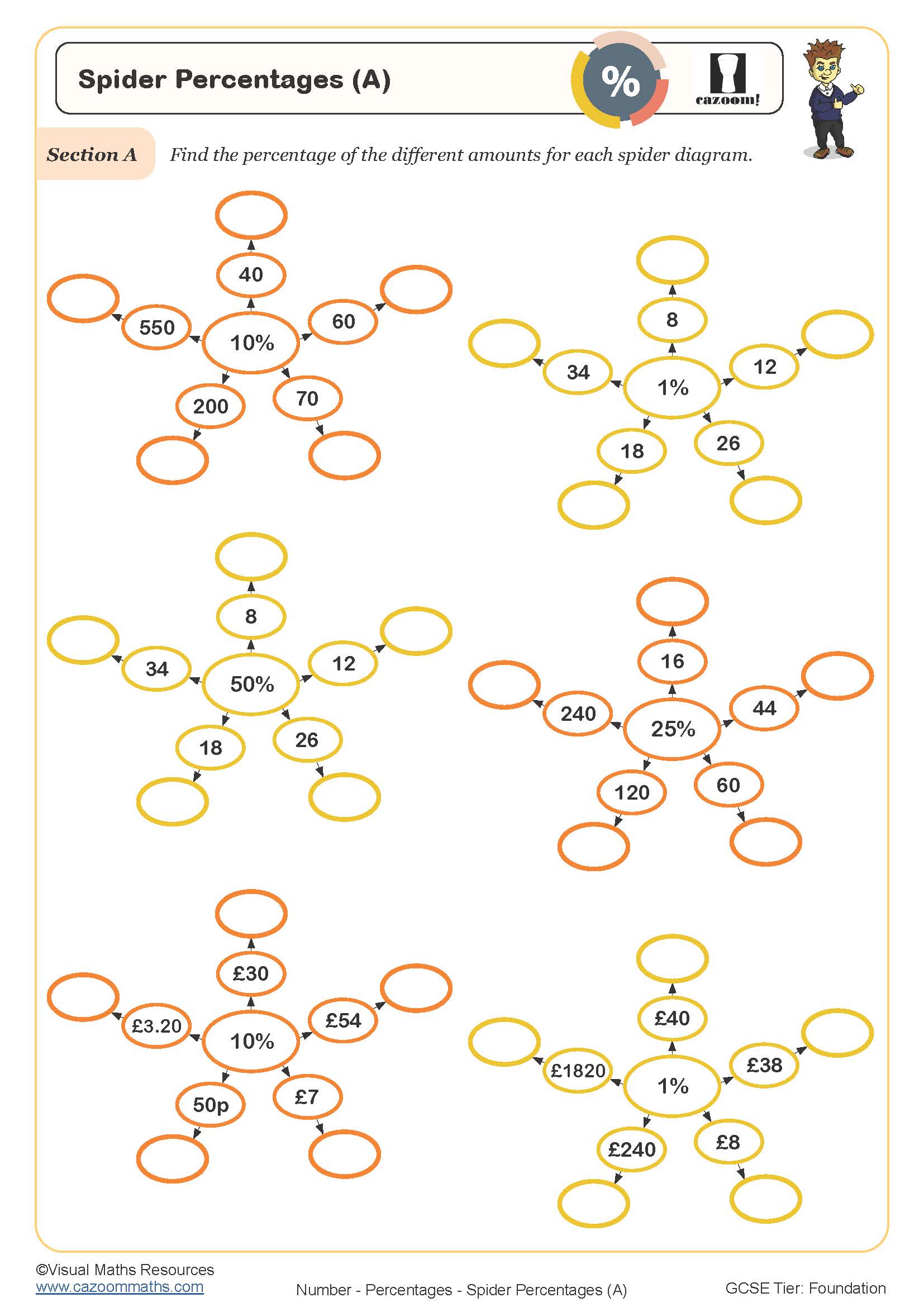
Spider Percentages (A)
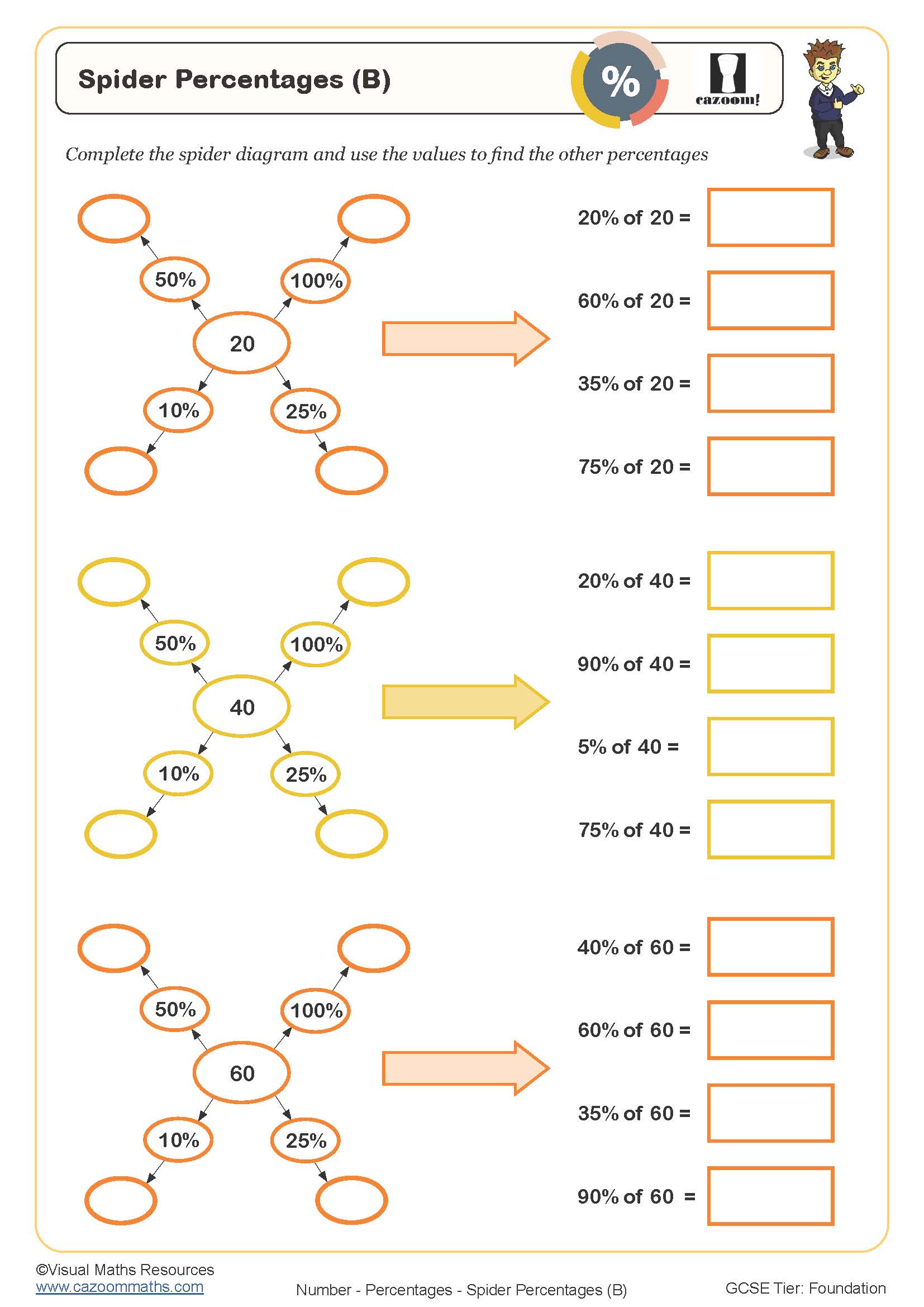
Spider Percentages (B)
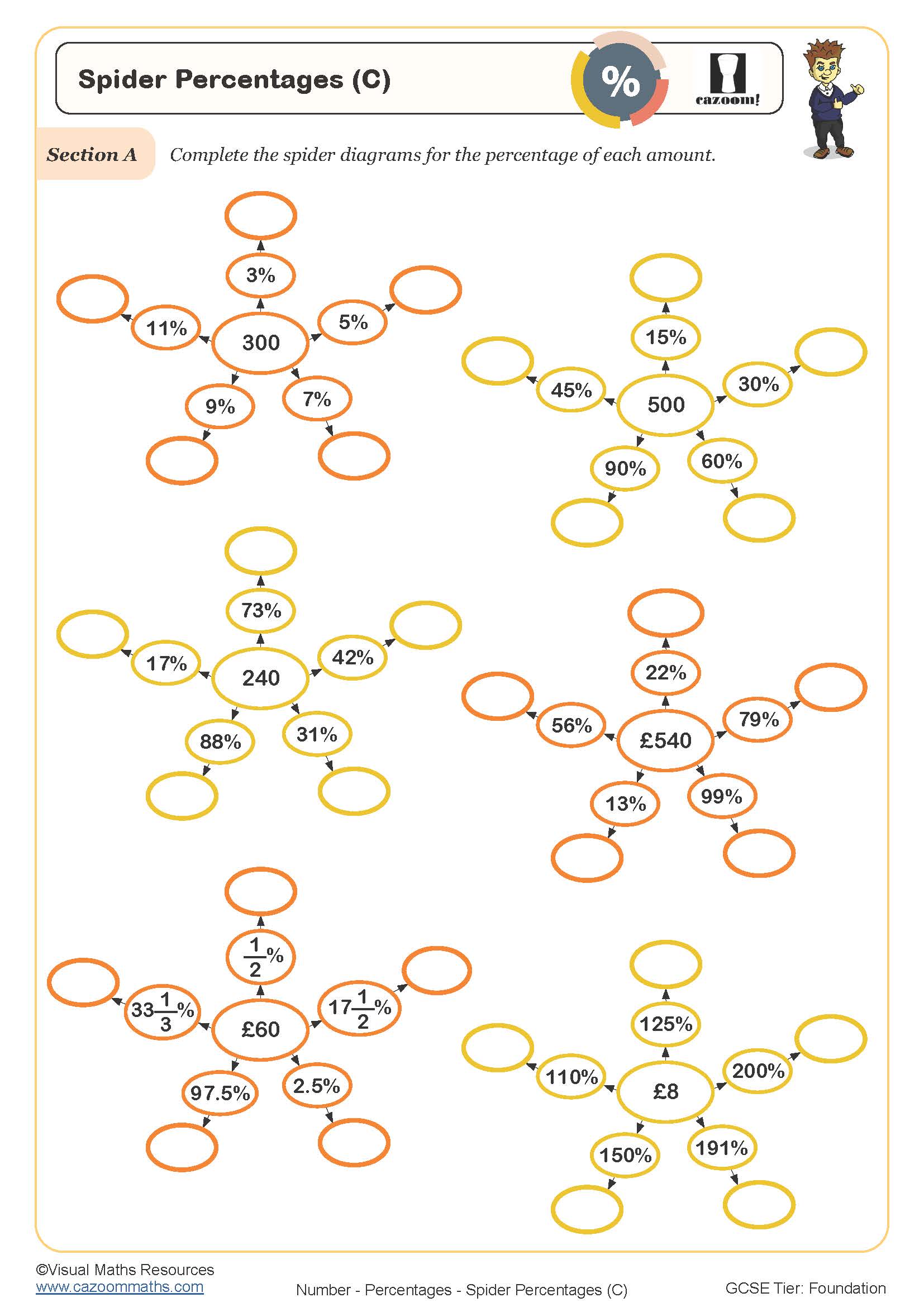
Spider Percentages (C)
All worksheets are created by the team of experienced teachers at Cazoom Maths.
What topics do year 8 percentages worksheets typically cover?
Year 8 percentages worksheets align with National Curriculum expectations for KS3, covering percentage calculations of amounts, simple and compound interest, percentage increases and decreases, and reverse percentage problems. Students practise converting between percentages, decimals and fractions, whilst developing fluency with mental calculation strategies for common percentages like 10%, 25% and 50%.
Teachers notice that students often memorise percentage calculation methods without understanding the underlying mathematics, leading to errors when questions present information differently. The percentage year 8 worksheet format helps address this by including varied question styles that require students to identify which method applies to each scenario, building conceptual understanding alongside procedural skills.
How do Year 8 percentage skills build towards GCSE requirements?
Percentages year 8 work establishes foundations for GCSE topics including compound growth and decay, percentage error calculations, and financial mathematics contexts. Students develop confidence with multi-step problems that combine percentage calculations with other mathematical operations, preparing them for complex real-world applications they'll encounter in higher key stages.
Many teachers observe that students who struggle with basic percentage conversions in Year 8 find GCSE compound interest and exponential growth particularly challenging. The percentages year 8 worksheet approach emphasises building secure foundational knowledge before progressing to more abstract applications, ensuring students understand why methods work rather than simply memorising procedures.
Why do students find reverse percentage problems particularly difficult?
Reverse percentage calculations challenge students because they require working backwards from a final value to find either the original amount or the percentage change applied. Teachers frequently observe students attempting to subtract the percentage increase directly from the final amount, demonstrating confusion between additive and multiplicative relationships in percentage contexts.
Classroom experience shows that students benefit from visual representations and systematic approaches when tackling reverse percentages. Worksheets that include bar models or proportion methods help students understand that finding 120% of a value and then reversing the process requires division by 1.2, not subtraction of 20%. This conceptual understanding prevents common errors in financial contexts like calculating original prices before VAT.
How can teachers use these worksheets most effectively in lessons?
Teachers find that using percentage worksheets as differentiated practice works well after introducing concepts through practical contexts like shopping discounts or population changes. The answer sheets enable peer marking activities, encouraging mathematical discussion as students explain their methods and identify where approaches differ or errors occur.
Many educators use these resources for targeted intervention, selecting specific question types that address gaps identified through formative assessment. The systematic progression through difficulty levels allows teachers to build student confidence gradually, ensuring secure understanding before introducing more complex scenarios. Regular low-stakes practice using these worksheets helps maintain fluency whilst freeing up lesson time for problem-solving and real-world applications.