Year 8 Types of Number Worksheets
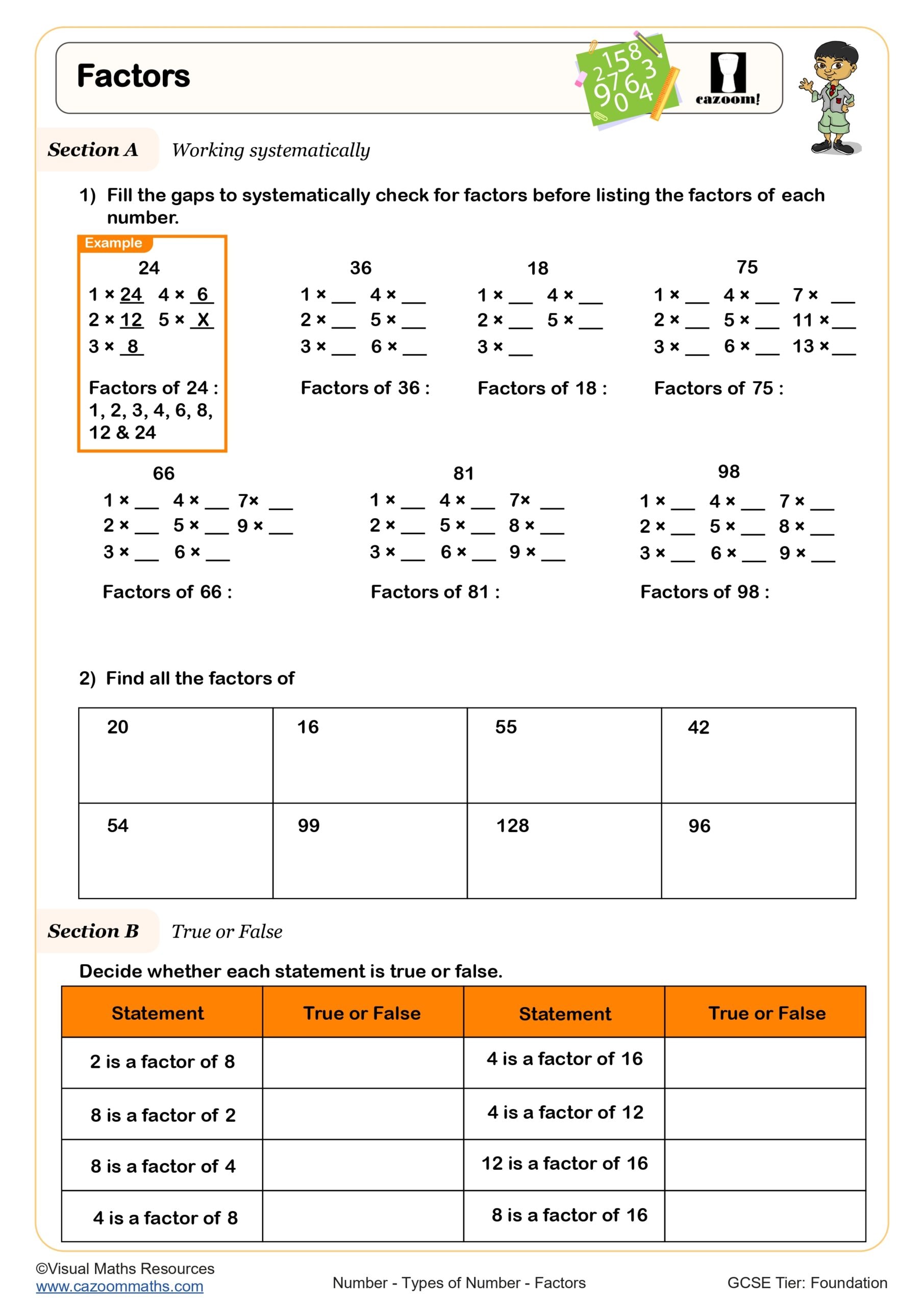
Factors
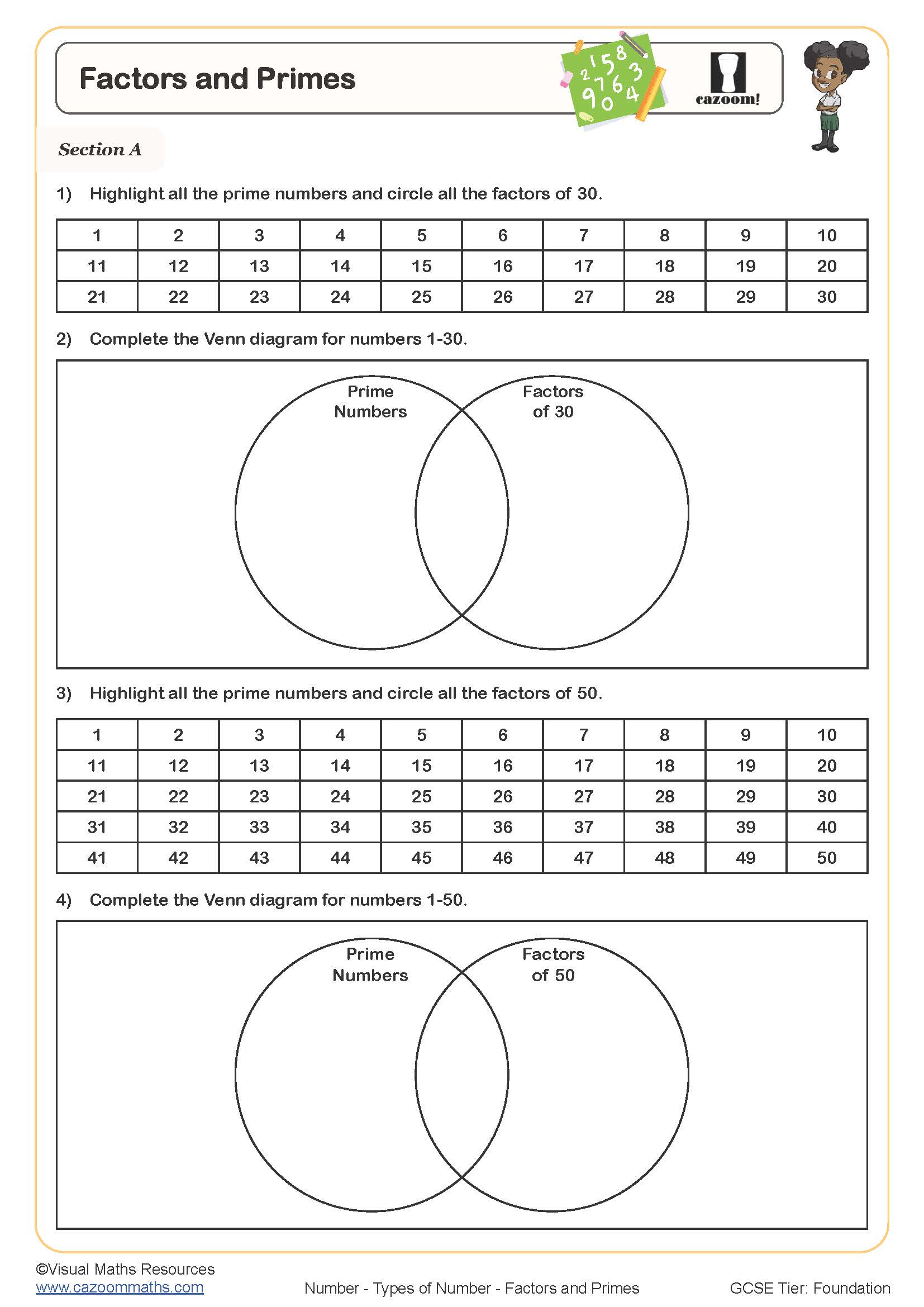
Factors and Primes
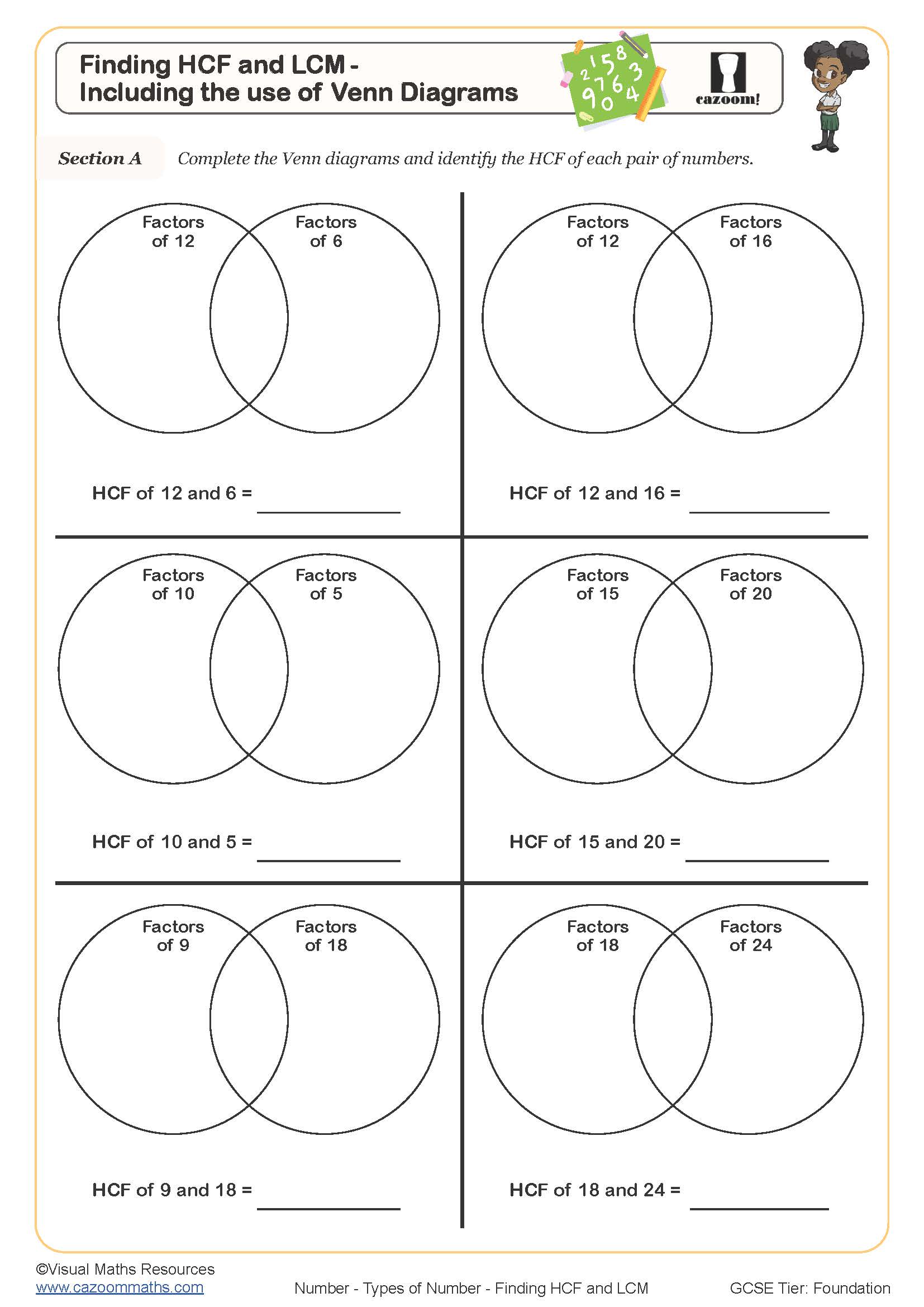
Finding HCF and LCM - Including the Use of Venn Diagrams
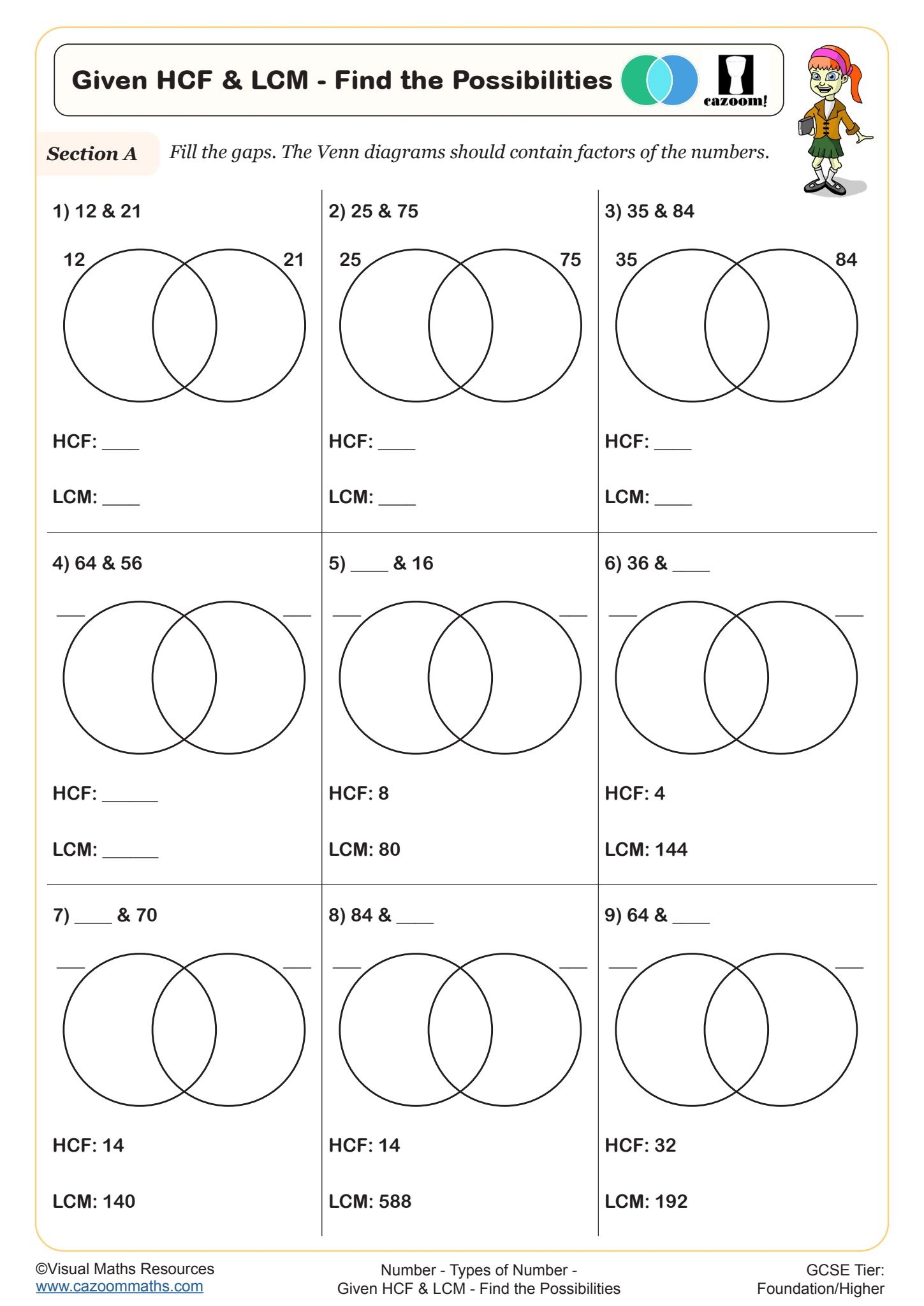
Given HCF & LCM - Find Possible Numbers
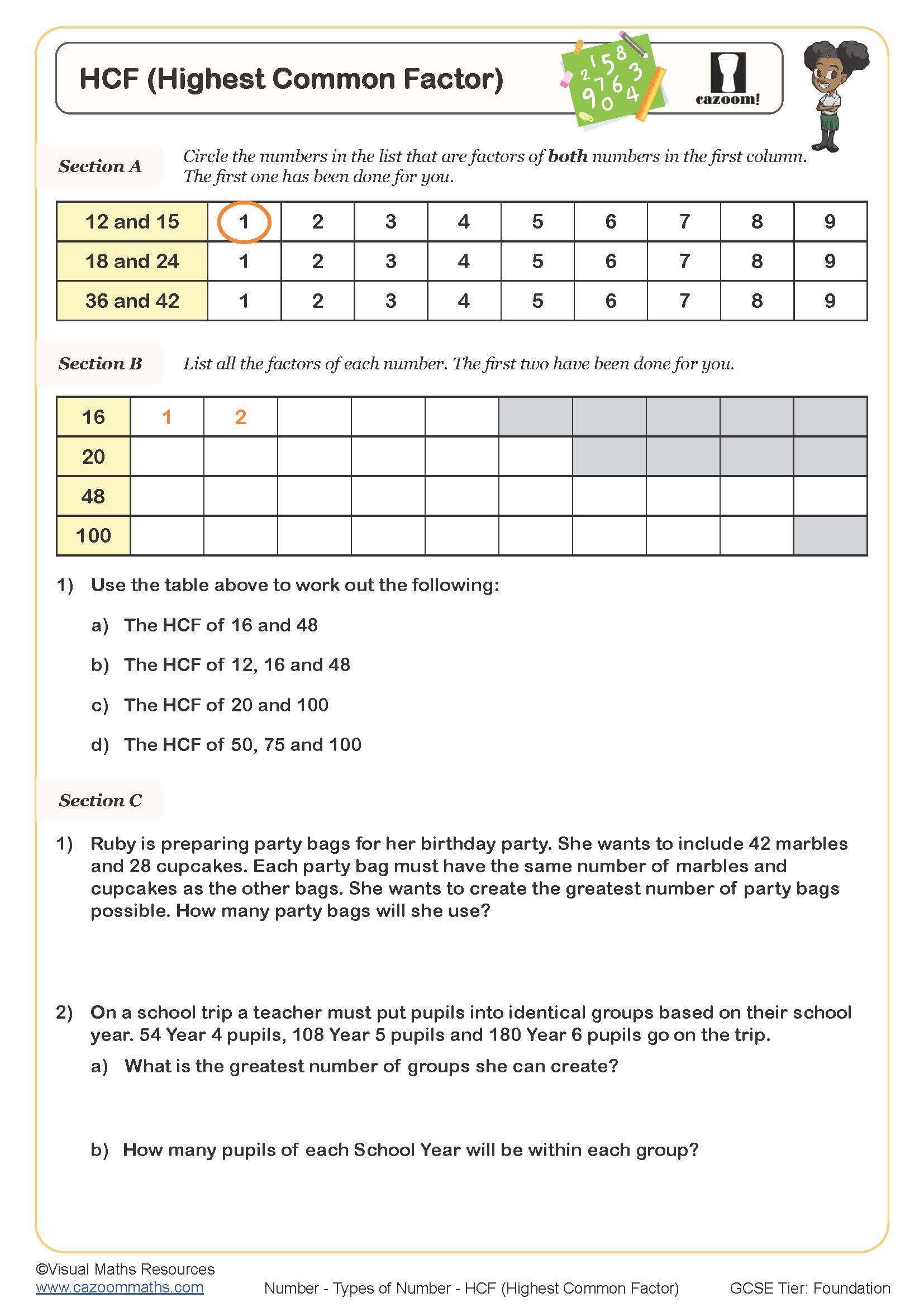
Highest Common Factor
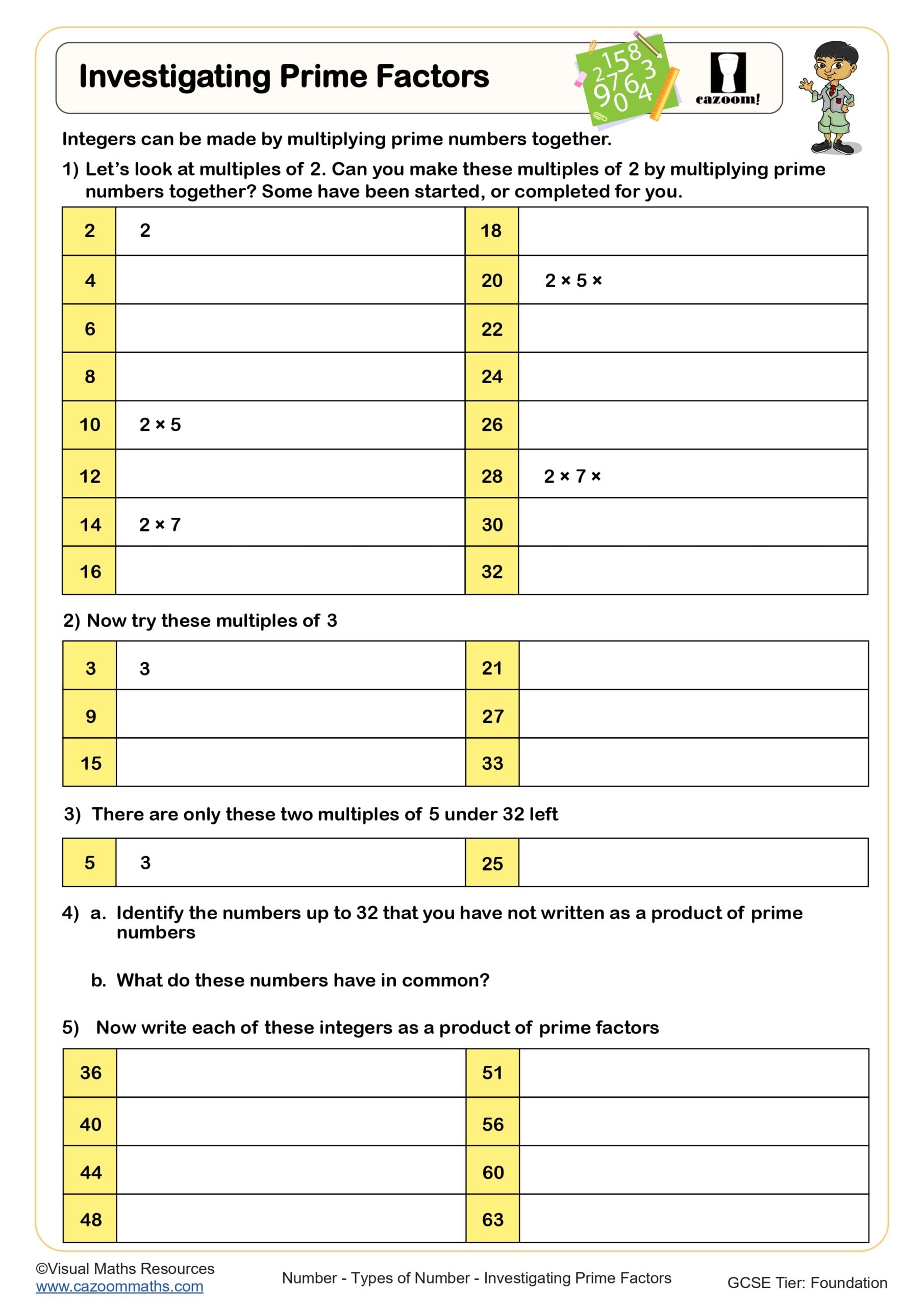
Investigating Prime Factors
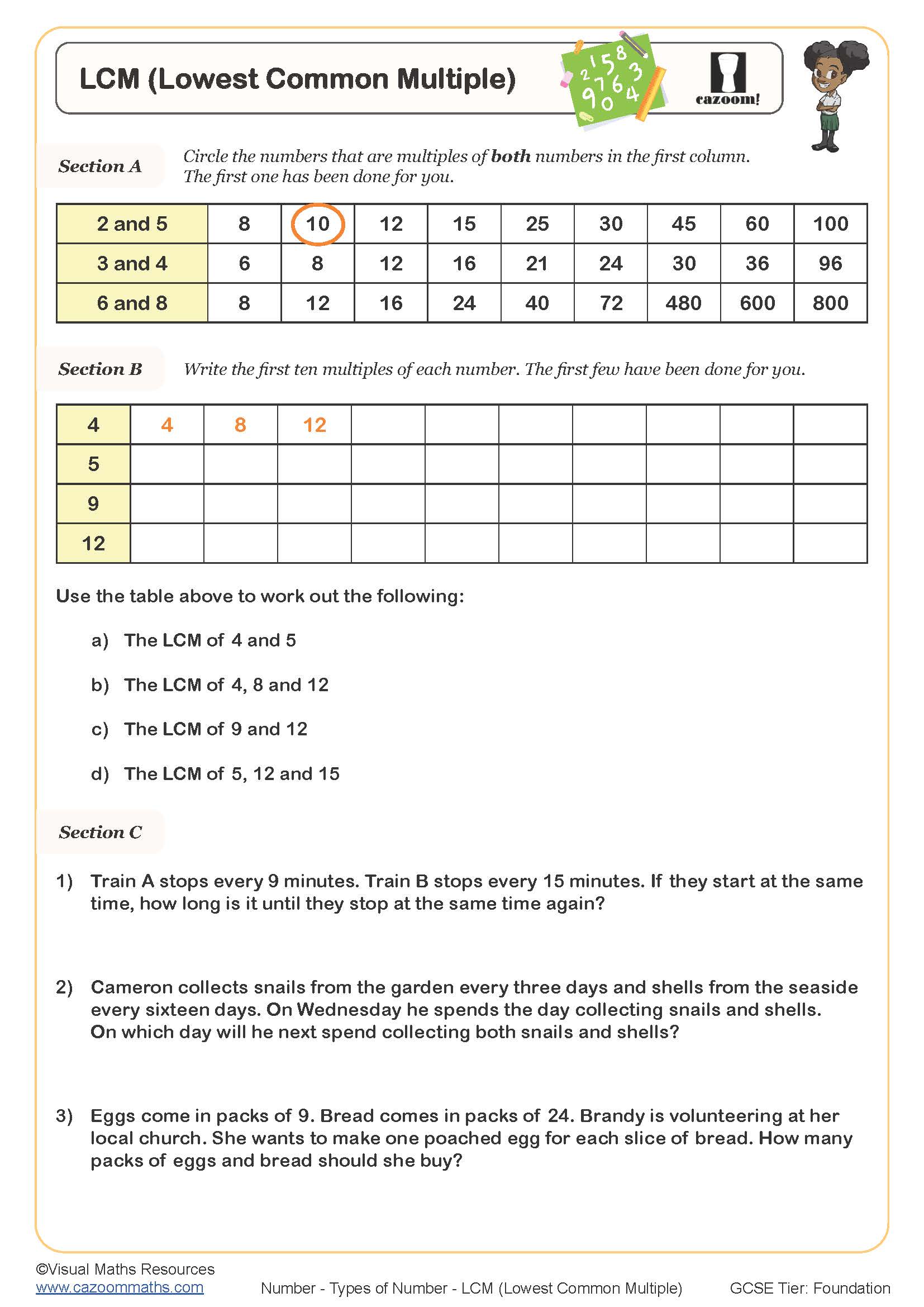
Lowest Common Multiple
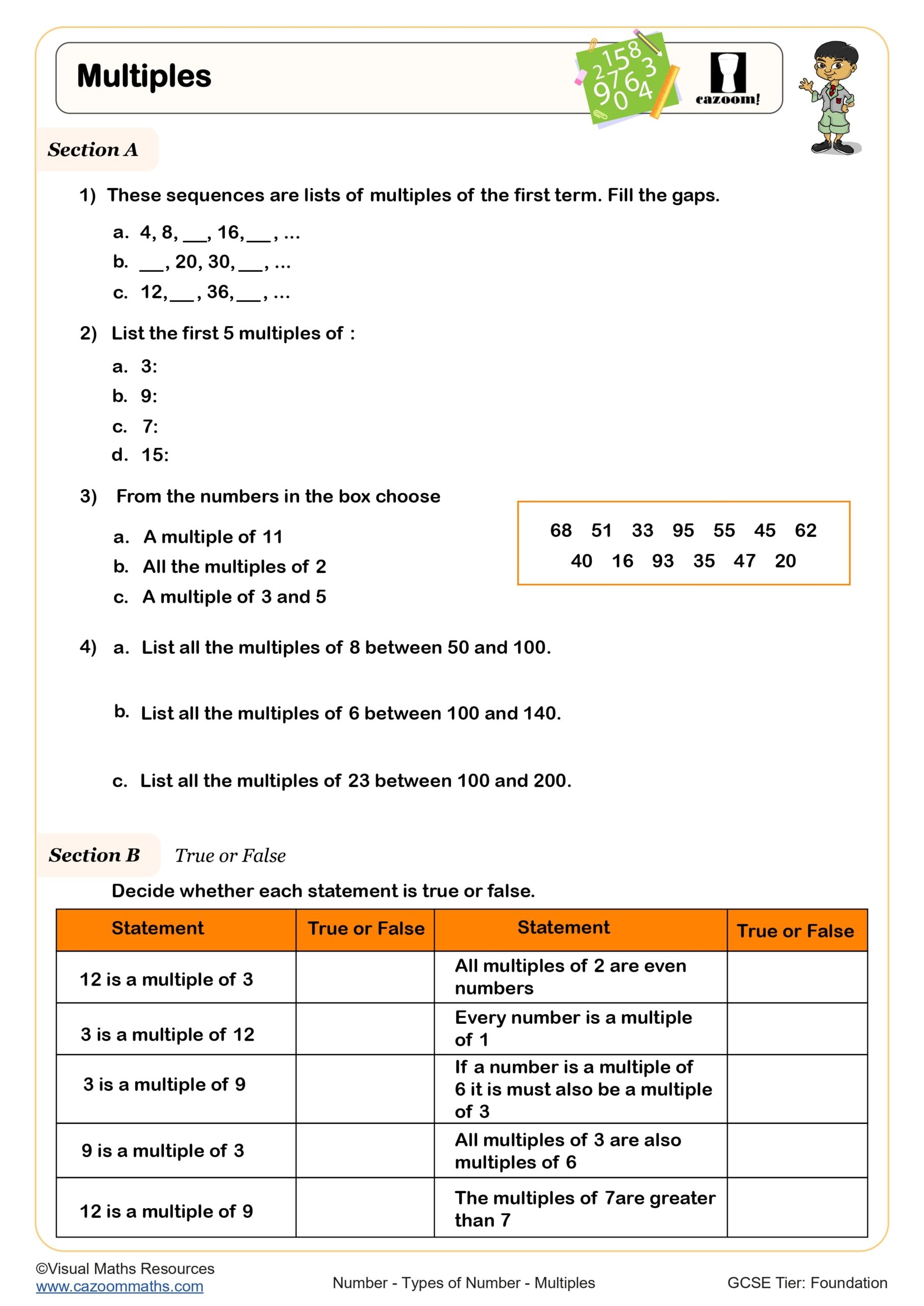
Multiples
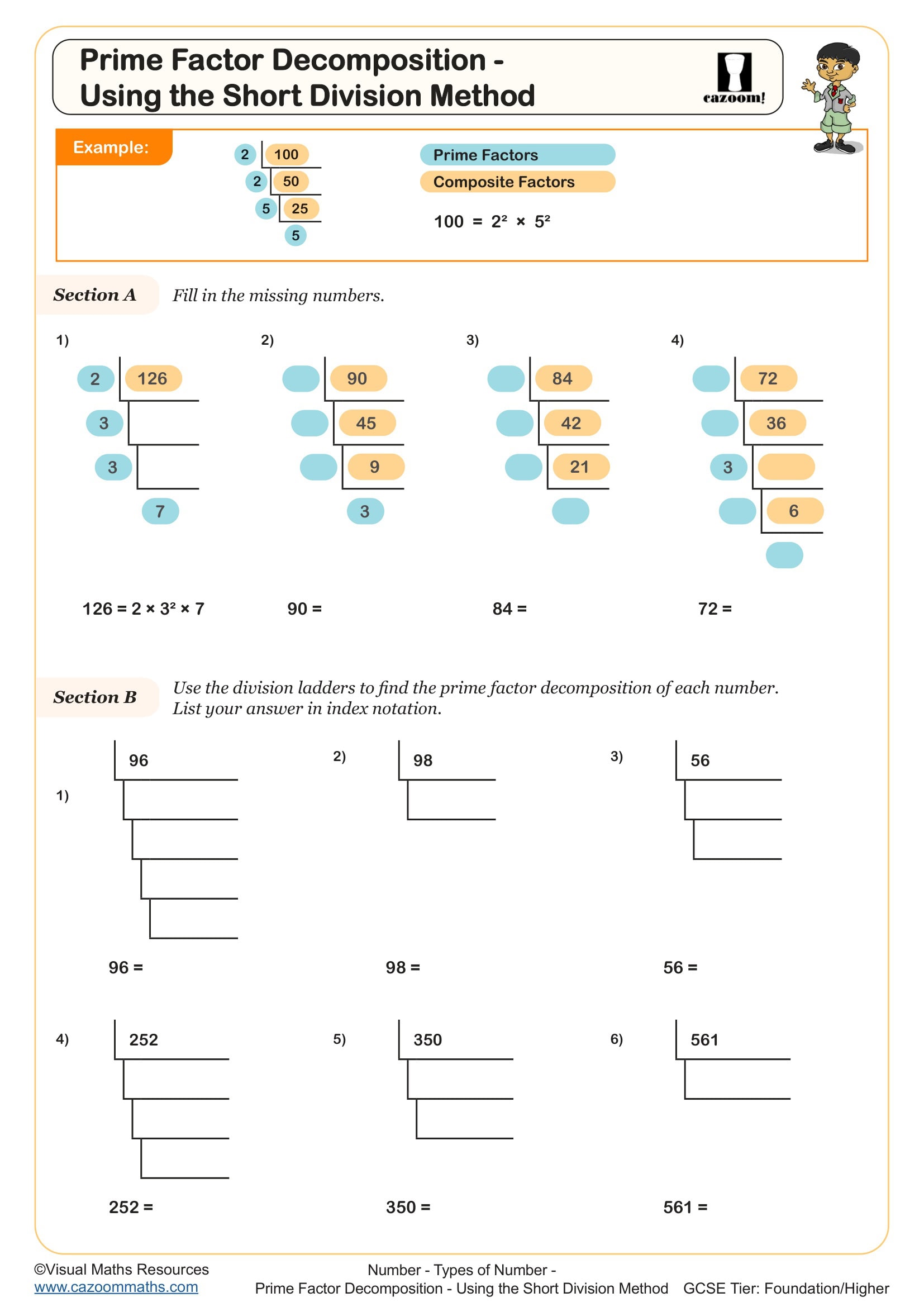
Prime Factor Decomposition - Using the Short Division Method
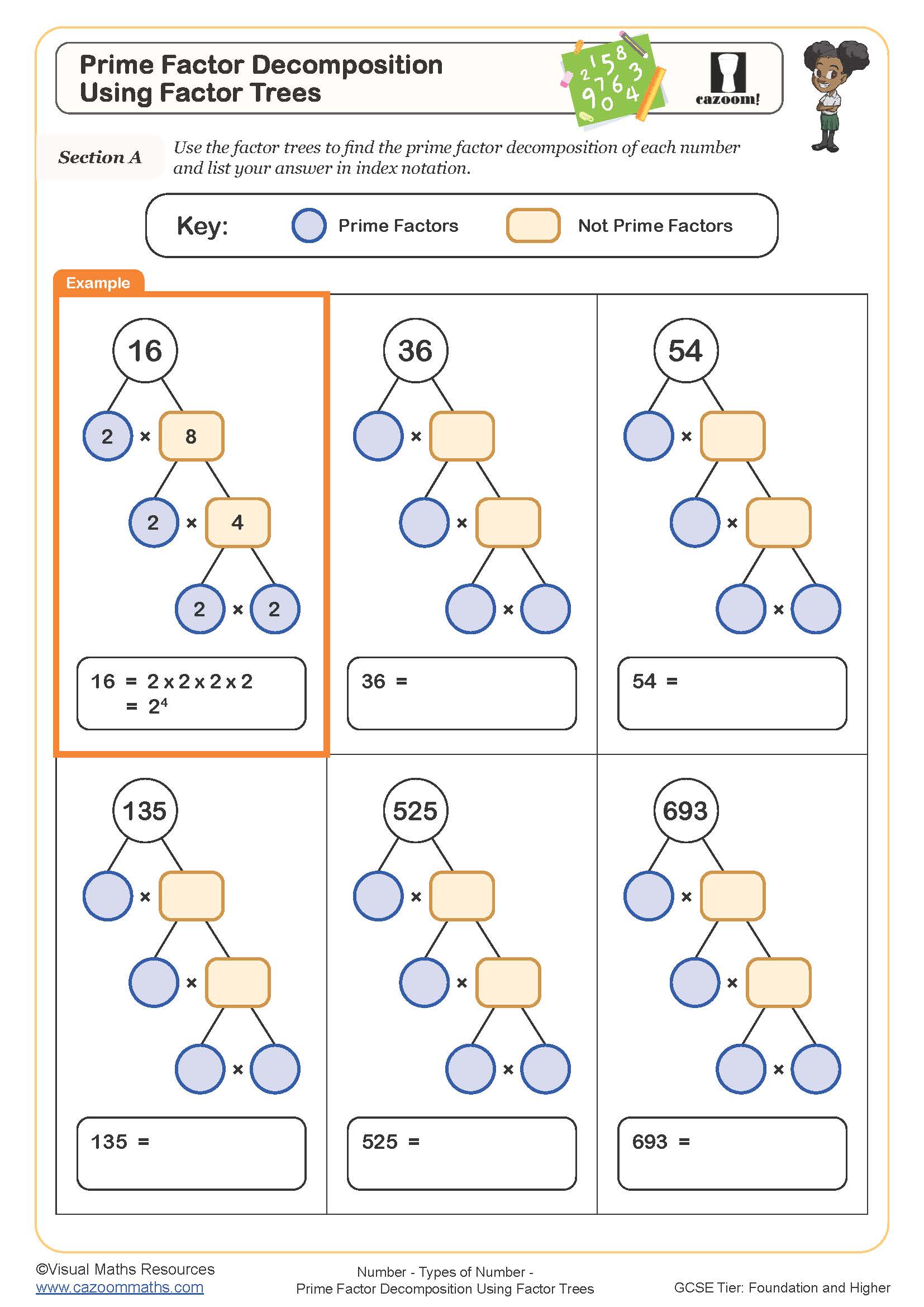
Prime Factor Decomposition Using Factor Trees
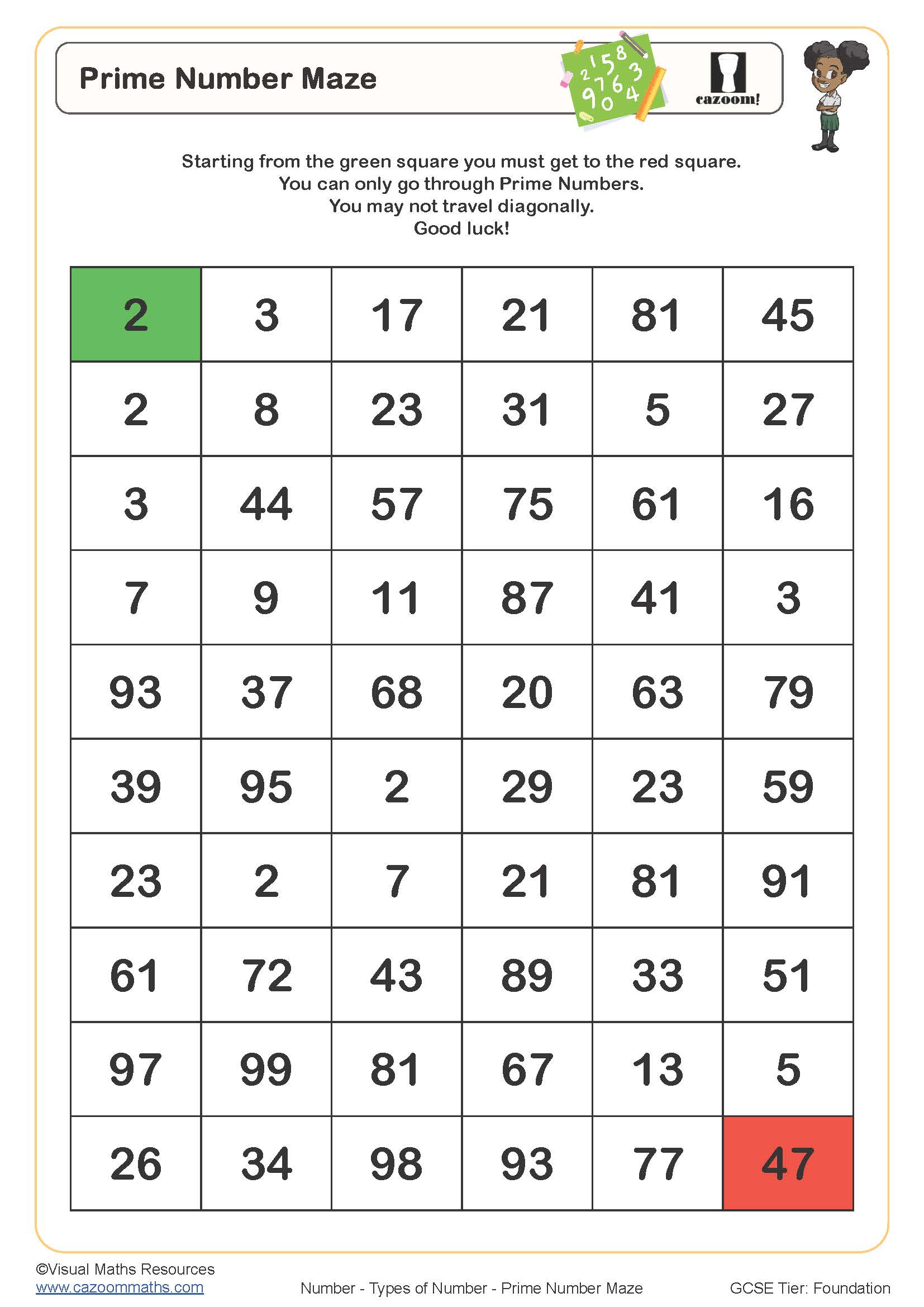
Prime Number Maze
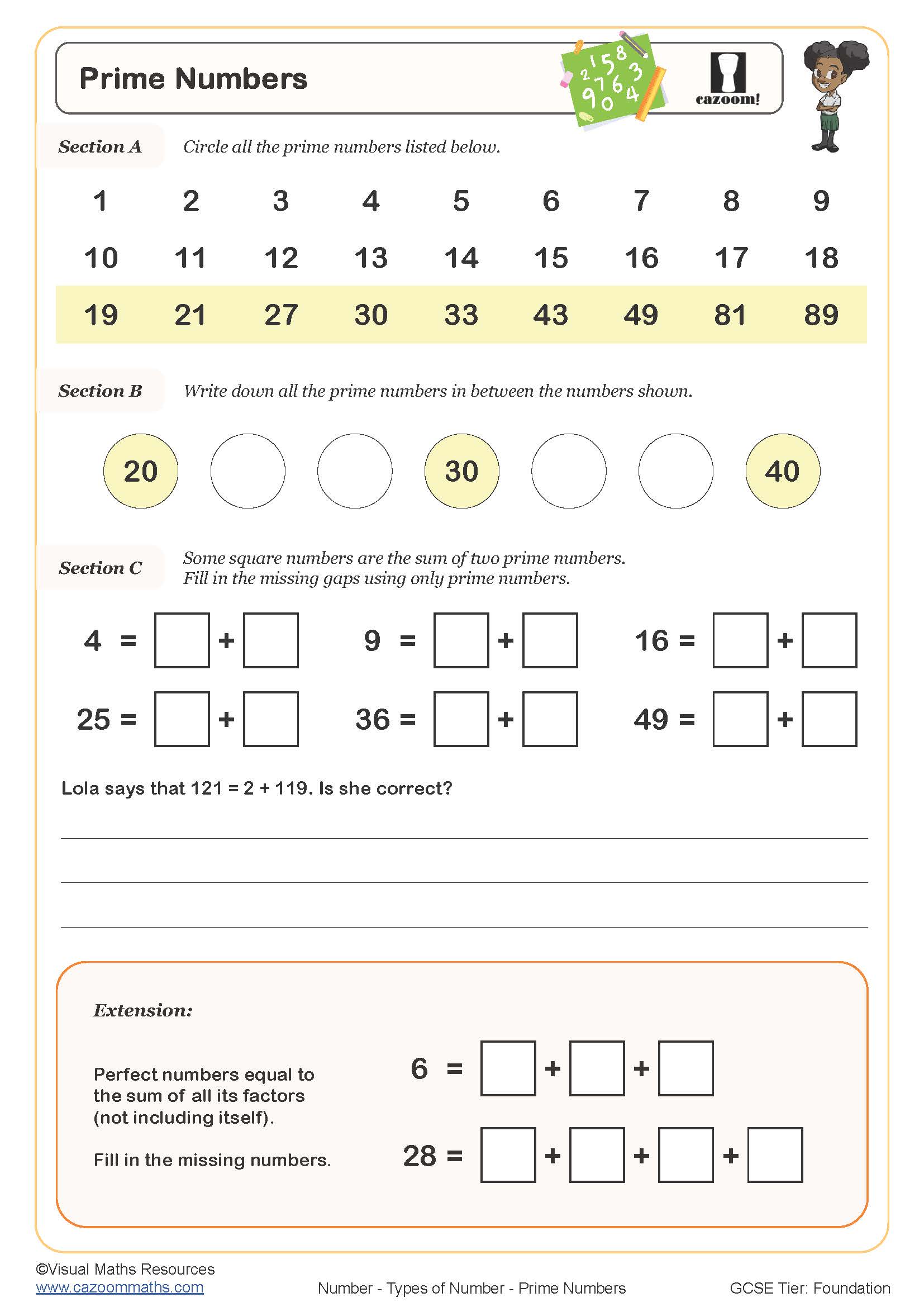
Prime Numbers
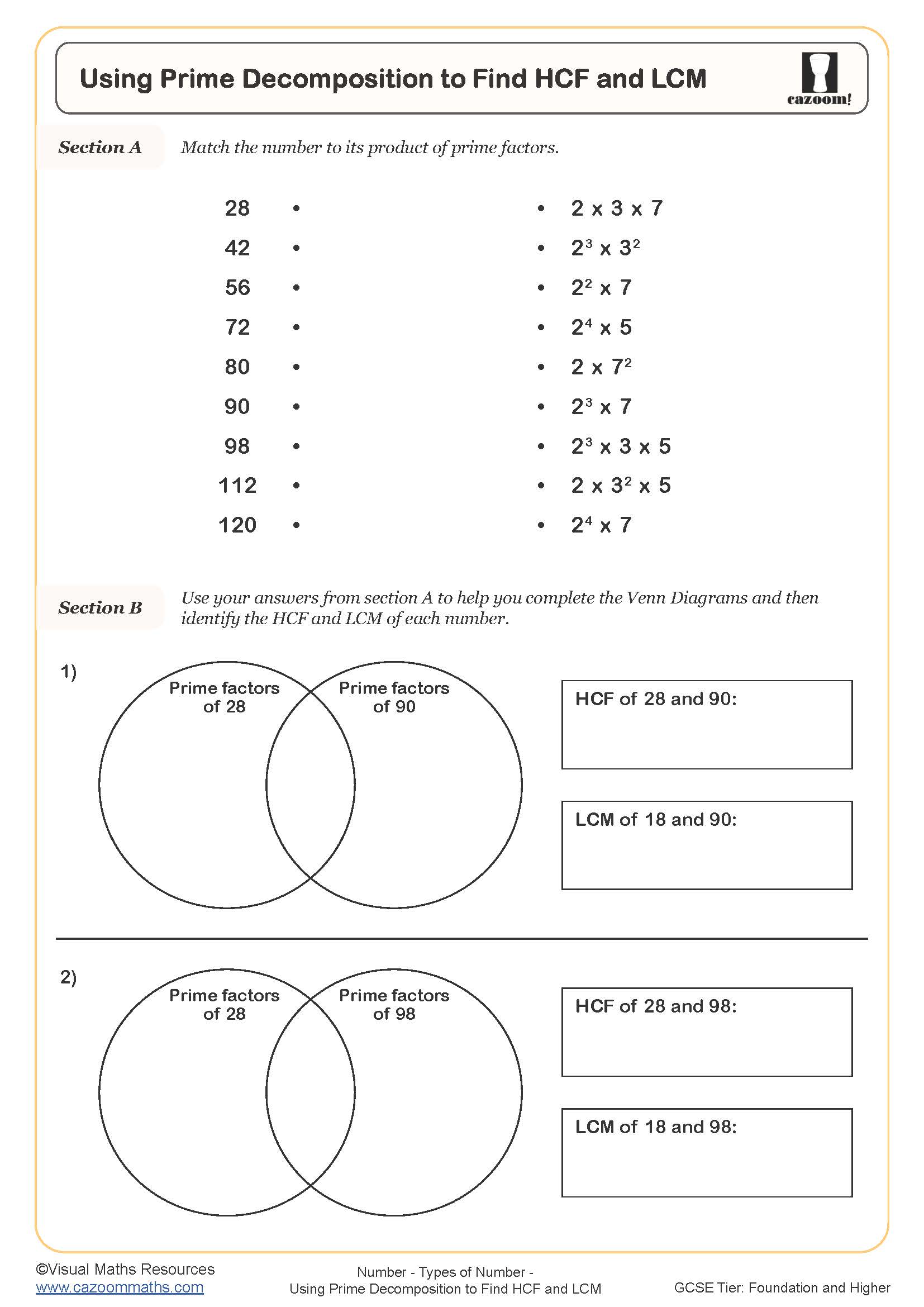
Using Prime Decomposition to Find HCF and LCM (A)
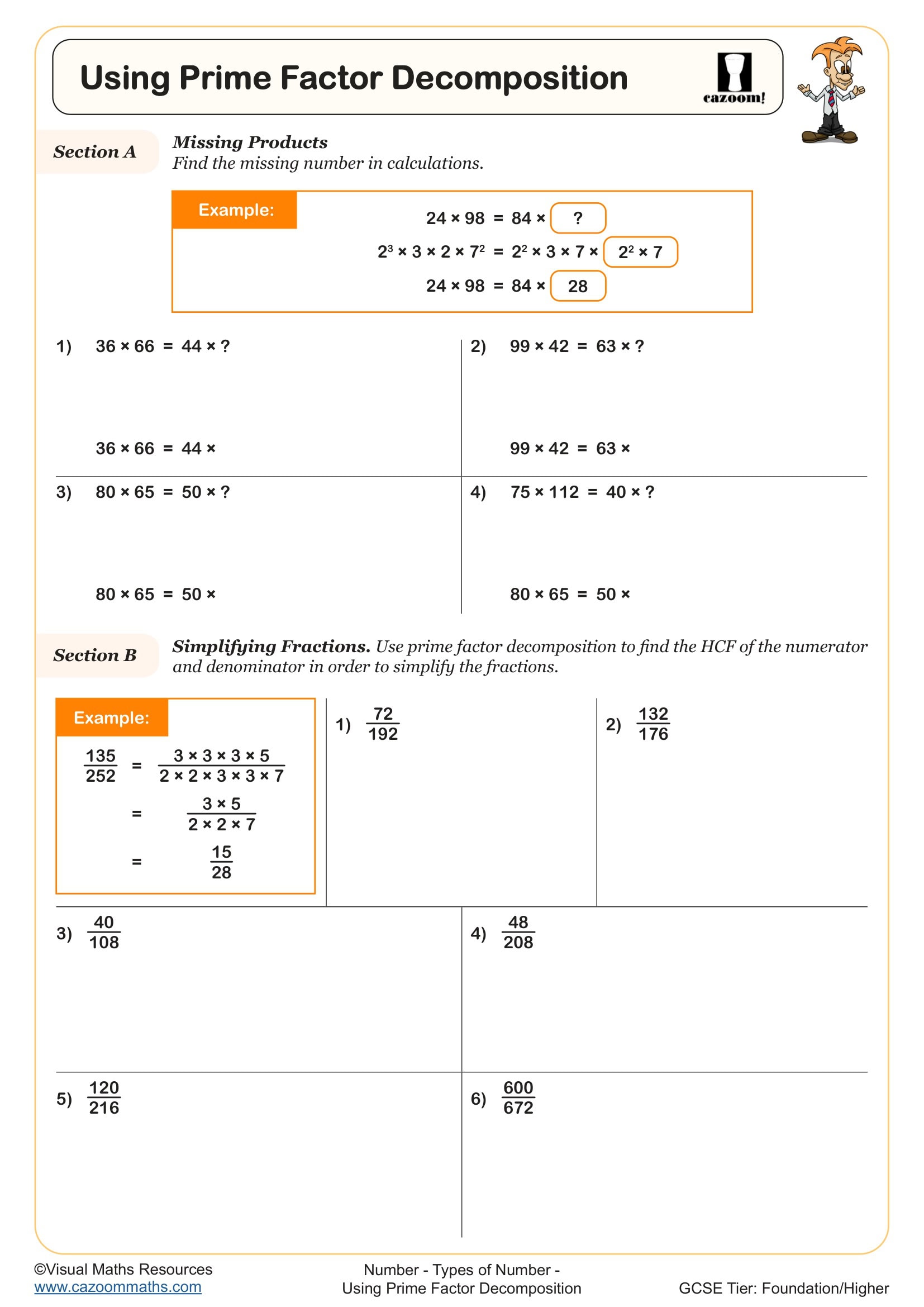
Using Prime Factor Decomposition
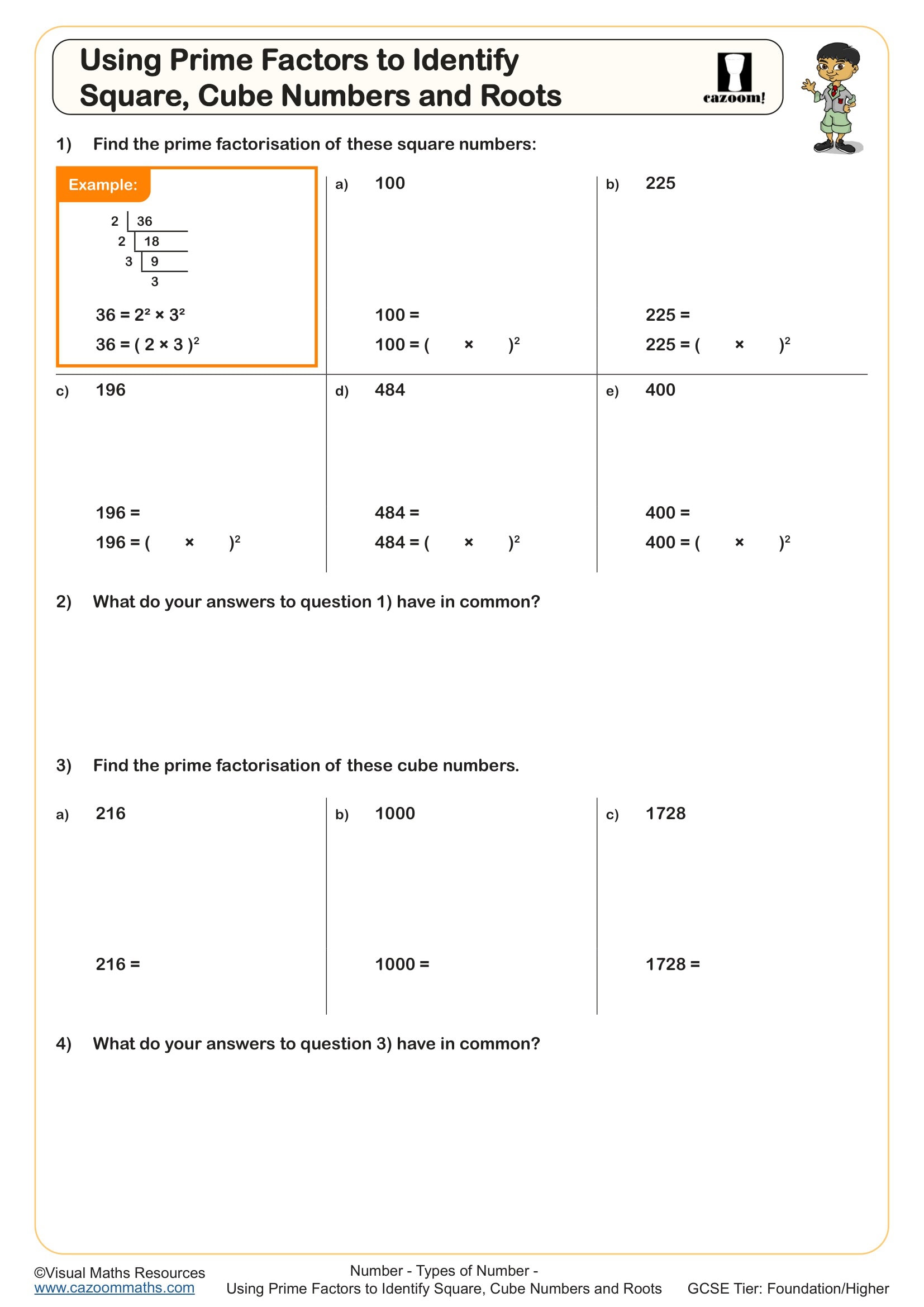
Using Prime Factors to Identify Square, Cube Numbers and Roots
All worksheets are created by the team of experienced teachers at Cazoom Maths.
What makes effective year 8 maths worksheets for number work?
Effective KS3 maths worksheets year 8 combine systematic practice with varied question types that mirror GCSE expectations. Students need opportunities to classify numbers, find prime factorisations, and work with indices notation alongside problem-solving applications that connect to real contexts.
Teachers notice significant improvement when worksheets scaffold from concrete examples to abstract reasoning. Students who practise identifying whether numbers like 51 or 91 are prime develop stronger mental arithmetic skills and better preparation for algebraic manipulation in Year 9.
How does Year 8 number work build from Year 7 concepts?
Year 7 introduces basic factors, multiples, and prime numbers, while Year 8 extends this to prime factorisation, highest common factors, and lowest common multiples using systematic methods. Students move from listing factors to using factor trees and division methods for larger numbers.
The progression becomes evident when students tackle problems involving multiple steps. A Year 7 pupil might find factors of 24, but Year 8 students should express 360 as 2³ × 3² × 5 and use this to find HCF and LCM efficiently.
Are prime numbers and prime factors the same thing?
Prime numbers and prime factors are related but distinct concepts that often cause confusion. A prime number is any number greater than 1 with exactly two factors: 1 and itself. Prime factors are the prime numbers that multiply together to make a composite number.
Many students incorrectly think 9 has prime factors of 3 and 9, when actually 9 = 3². Teachers find success by emphasising that prime factors must themselves be prime - so while 6 is a factor of 12, it cannot be a prime factor because 6 = 2 × 3.
How can teachers use these worksheets most effectively in lessons?
These worksheets work well as starter activities to consolidate previous learning or as structured practice following direct teaching. Teachers often use the first few questions as worked examples, then allow independent practice with targeted support for students who struggle with prime factorisation methods.
The answer sheets enable peer marking and immediate feedback, which helps students identify misconceptions quickly. Many teachers find that displaying common errors from the worksheets as mini-plenaries helps address whole-class misunderstandings about notation and method selection.