Year 9 Factorising Worksheets
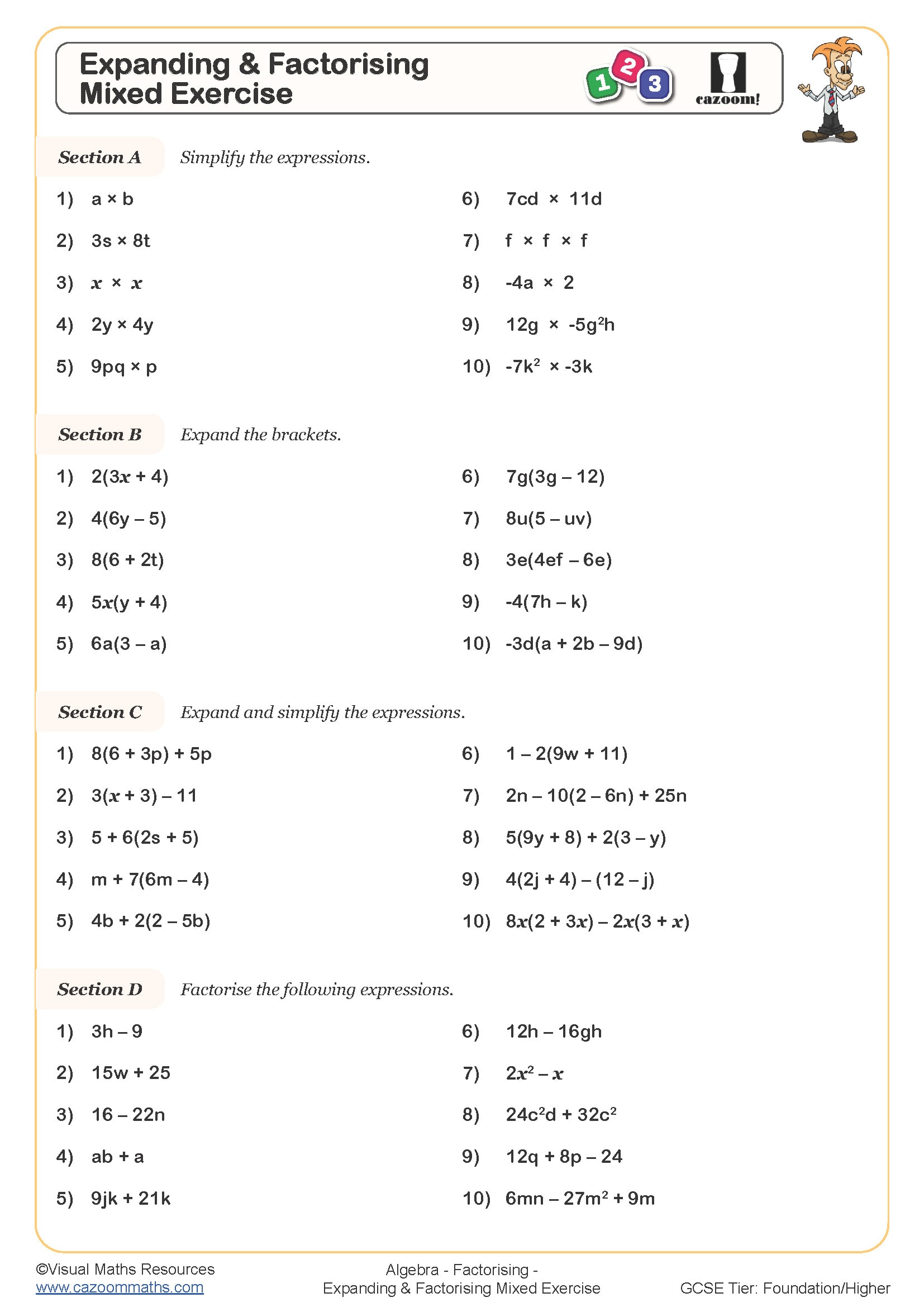
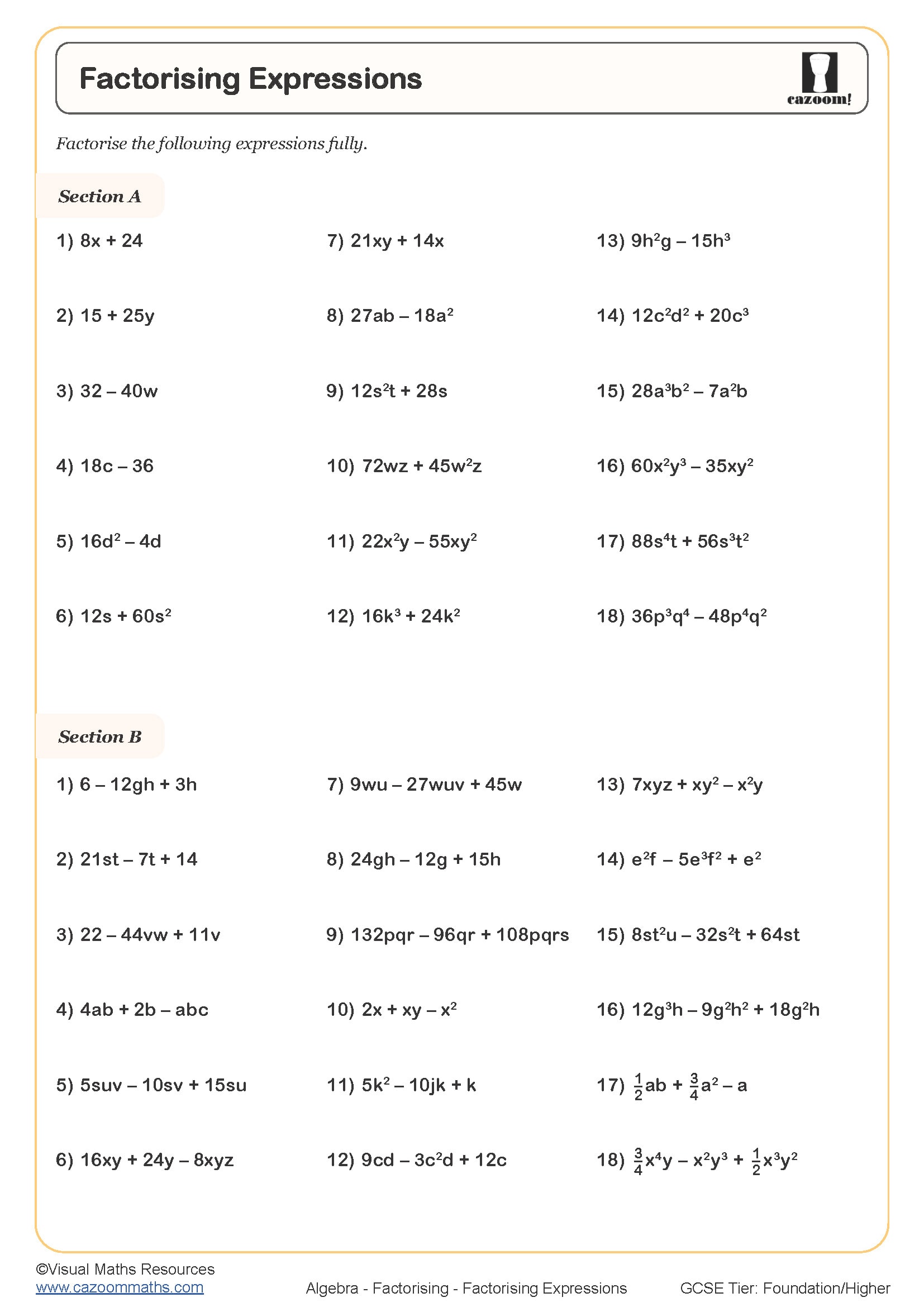
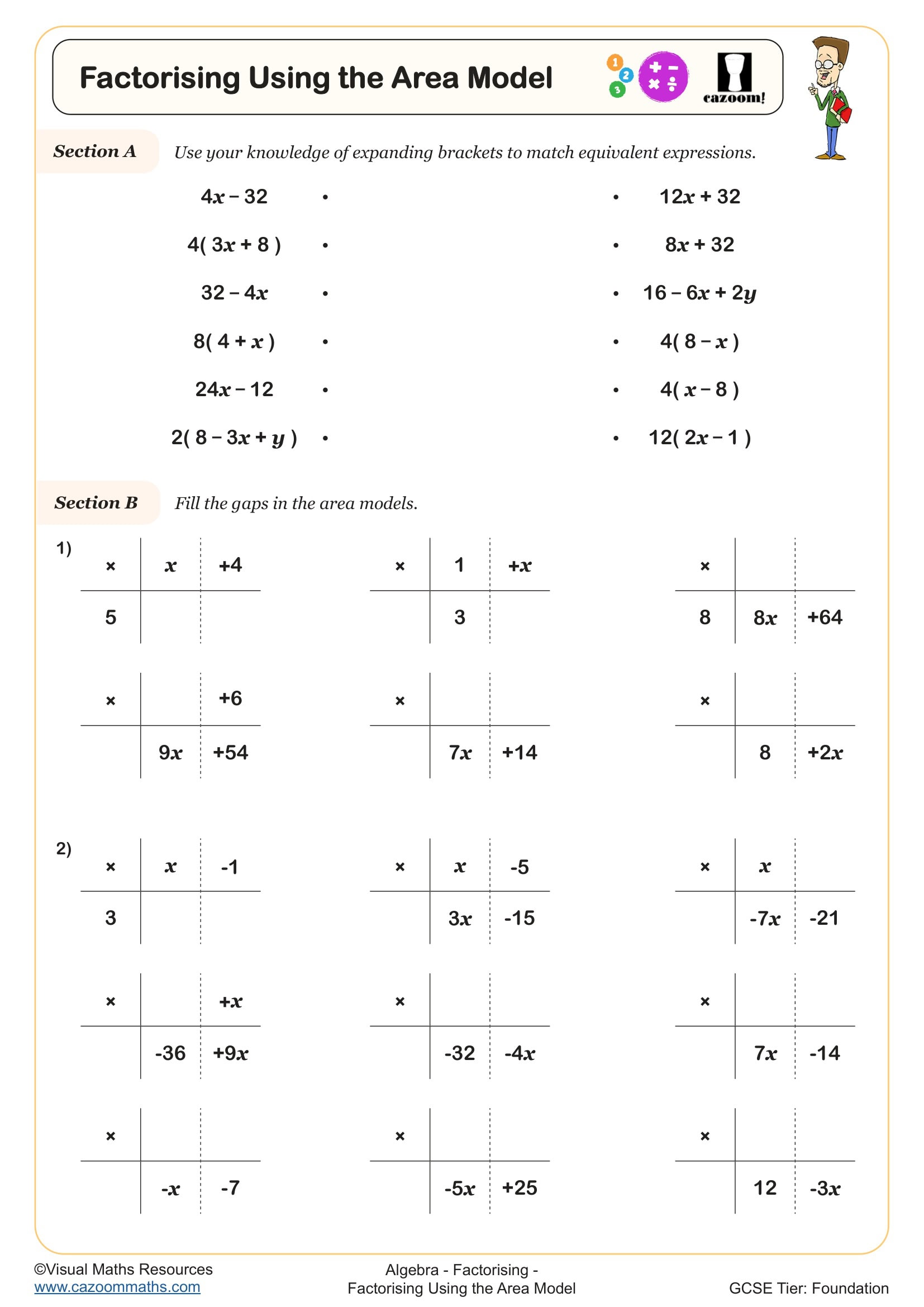
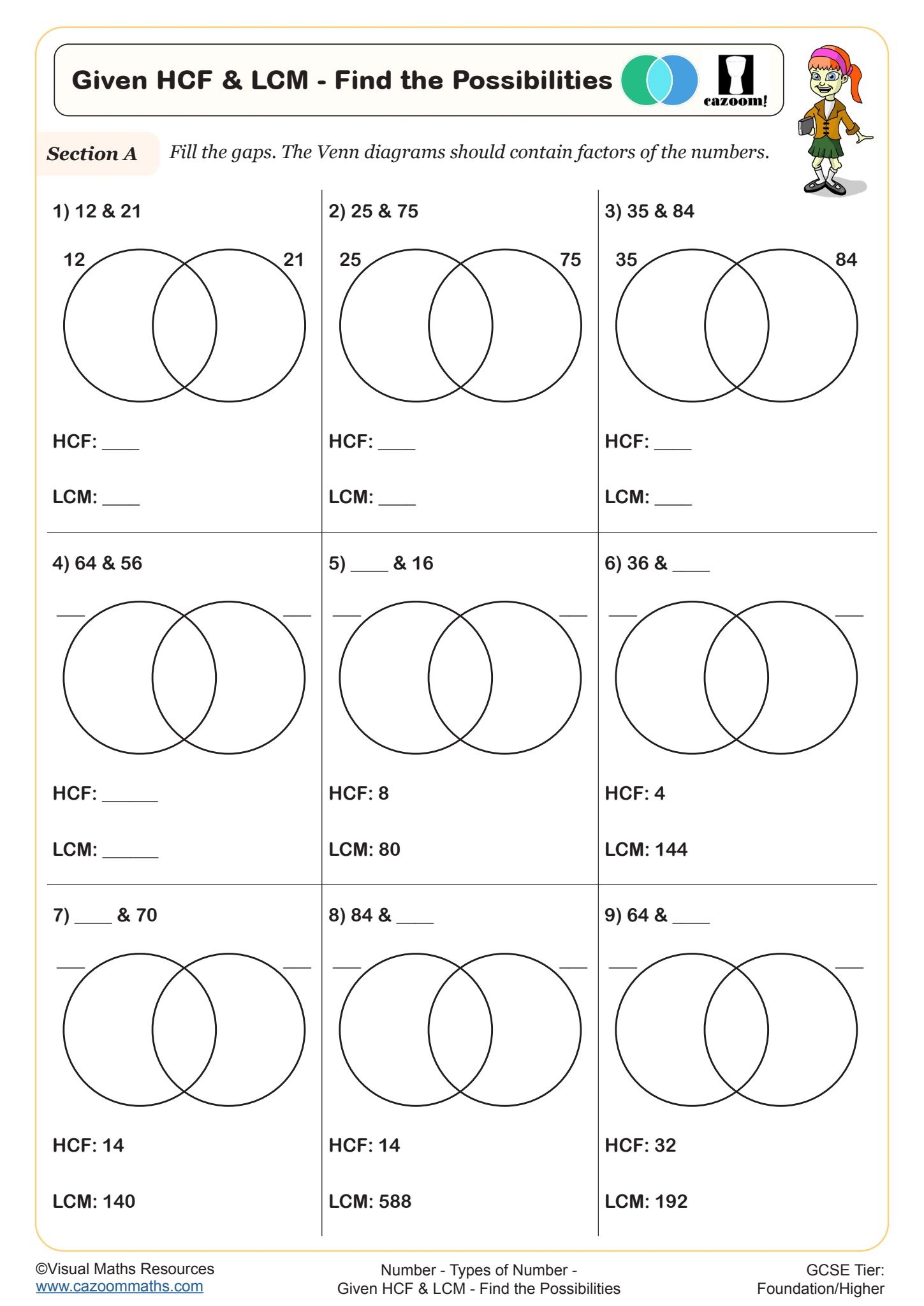
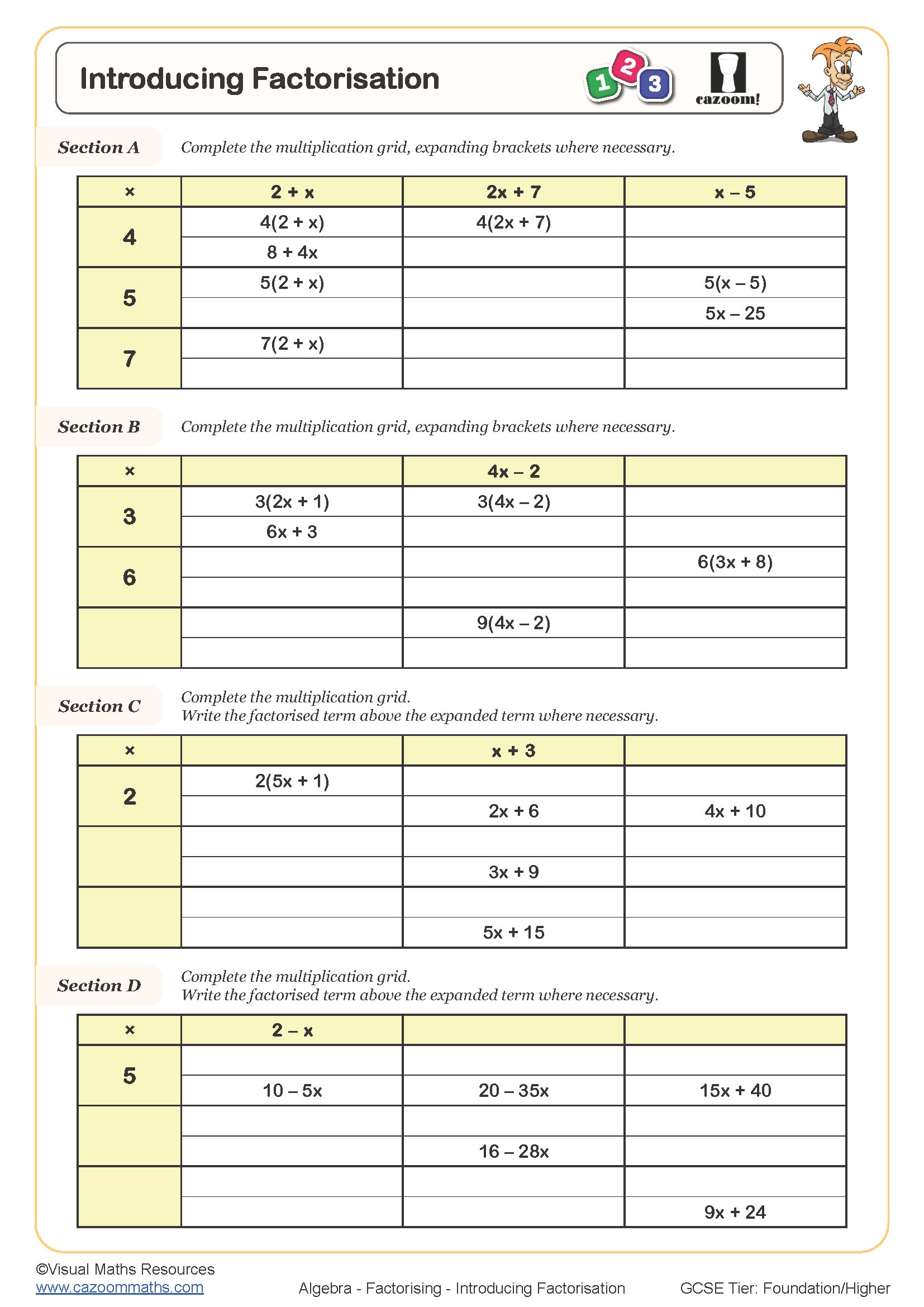
All worksheets are created by the team of experienced teachers at Cazoom Maths.
What types of factorising questions appear on a year 9 factorising worksheet?
Year 9 factorising worksheets typically cover common factor extraction, factorising expressions with two terms, and introducing difference of two squares. Students work through linear expressions like 3x + 12 and progress to quadratic forms such as x² - 9, building the foundation skills needed for Key Stage 4.
Teachers notice that students often miss negative common factors, writing 6x - 15 as 3(2x - 5) instead of recognising that -3(-2x + 5) is equally valid. The worksheets address this by including mixed positive and negative coefficients throughout, helping students develop flexibility in their factorising approach.
Is factorising suitable for students below Year 9 level?
Basic factorising appears in Year 8 with simple common factors, but Year 9 marks when students tackle more complex algebraic expressions and begin working with quadratic forms. The National Curriculum expects students to factorise quadratic expressions by the end of Key Stage 3, making Year 9 the crucial preparation year.
Some higher-ability Year 8 classes can access simpler factorising questions, particularly those involving single common factors like 4x + 8. However, expressions involving difference of two squares and more complex algebraic manipulation typically require the algebraic maturity that develops during Year 9.
How do students learn to factorise the difference of two squares?
The difference of two squares follows the pattern a² - b² = (a + b)(a - b), which students must recognise before attempting to factorise. Teachers find that students initially struggle to identify perfect squares within expressions, often missing that 25x² equals (5x)² or that 49 represents 7².
Successful teaching involves extensive practice with recognising square numbers and square terms before introducing the factorising pattern. Students need to automatically identify expressions like x² - 16 or 9y² - 4 as fitting the difference of two squares format, then apply the factorising rule systematically.
How can teachers use these factorising worksheets most effectively in lessons?
Teachers achieve best results by using factorising worksheets with answers to provide immediate feedback during guided practice. Students can check their working step-by-step rather than waiting until the end of the lesson, allowing teachers to address misconceptions while they're still forming.
Many teachers find that starting lessons with a mixed review of previously learned factorising methods helps students choose appropriate techniques for different expression types. The answer sheets enable peer marking activities where students explain their methods to classmates, reinforcing understanding through mathematical discussion and identifying alternative solution approaches.