Year 9 Fractions Worksheets
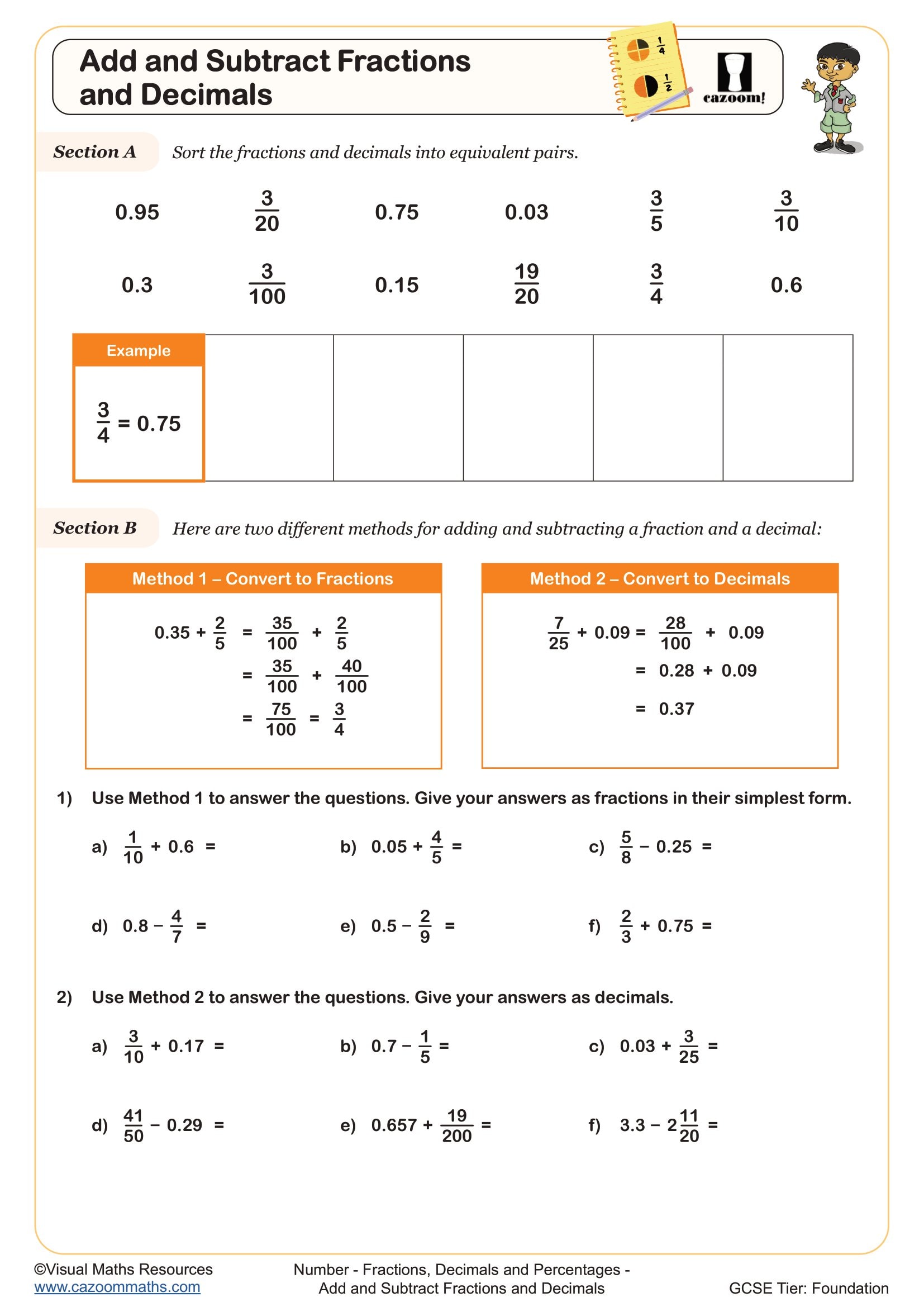
Add and Subtract Fractions and Decimals
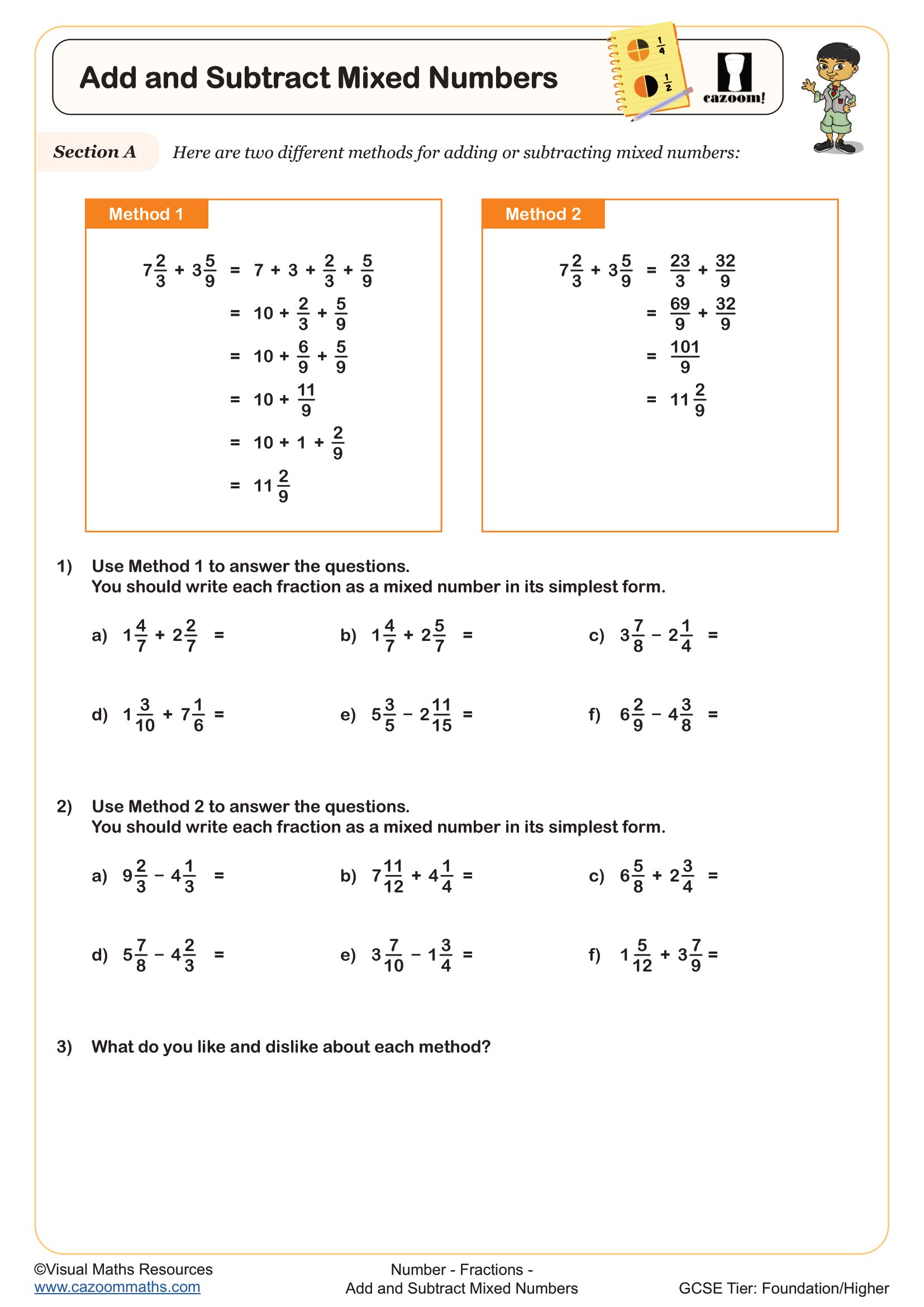
Add and Subtract Mixed Numbers
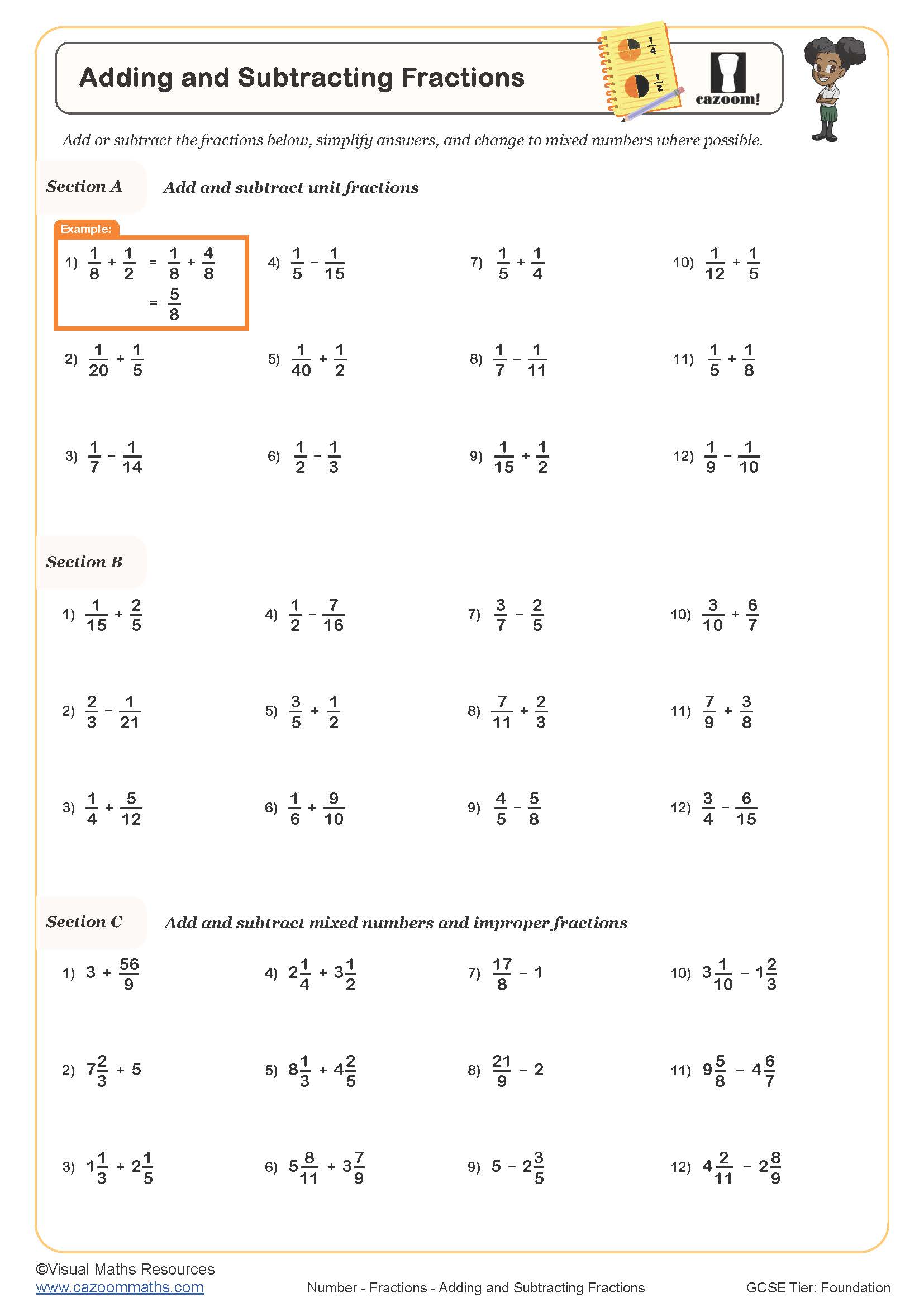
Adding and Subtracting Fractions
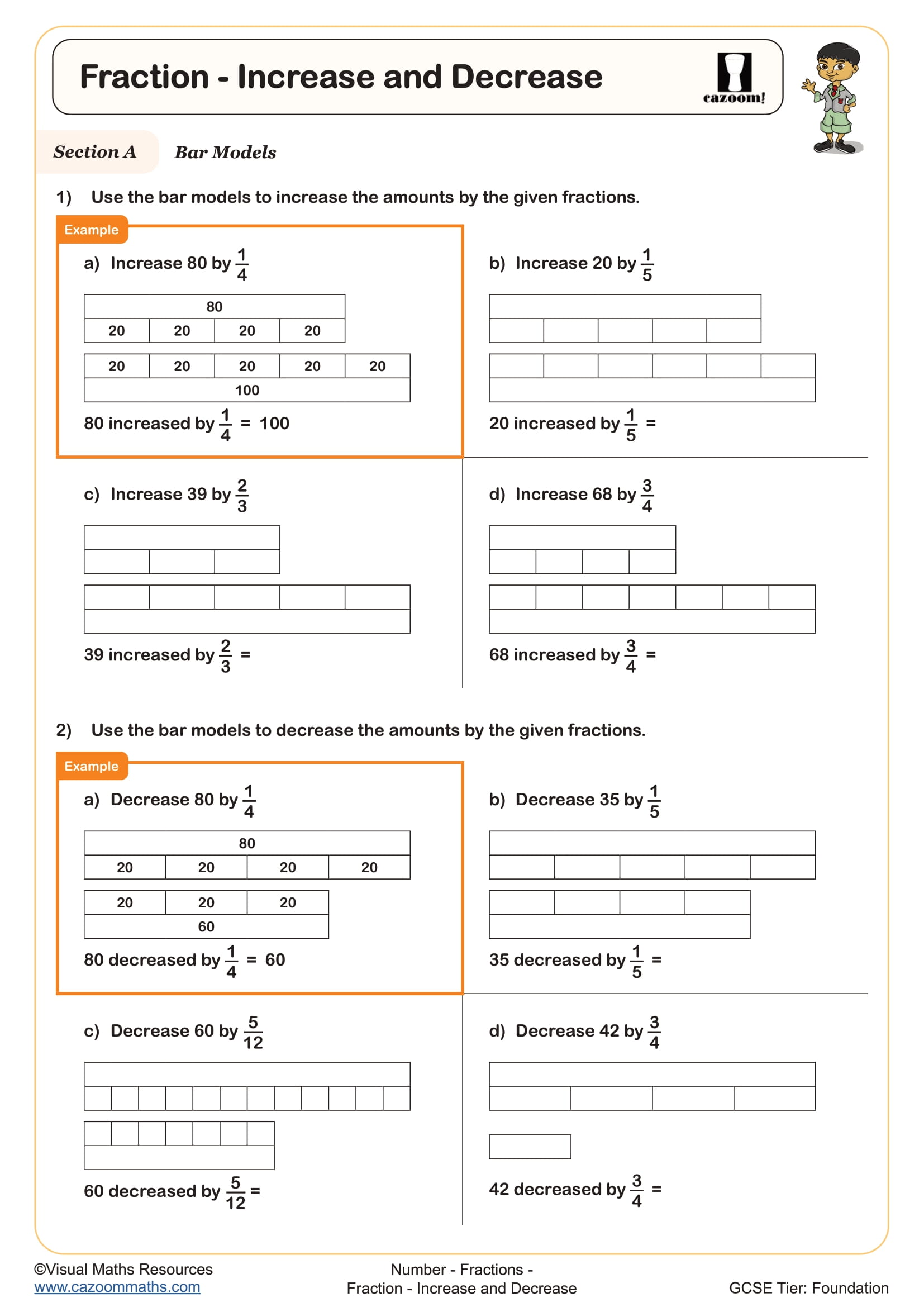
Fraction - Increase and Decrease
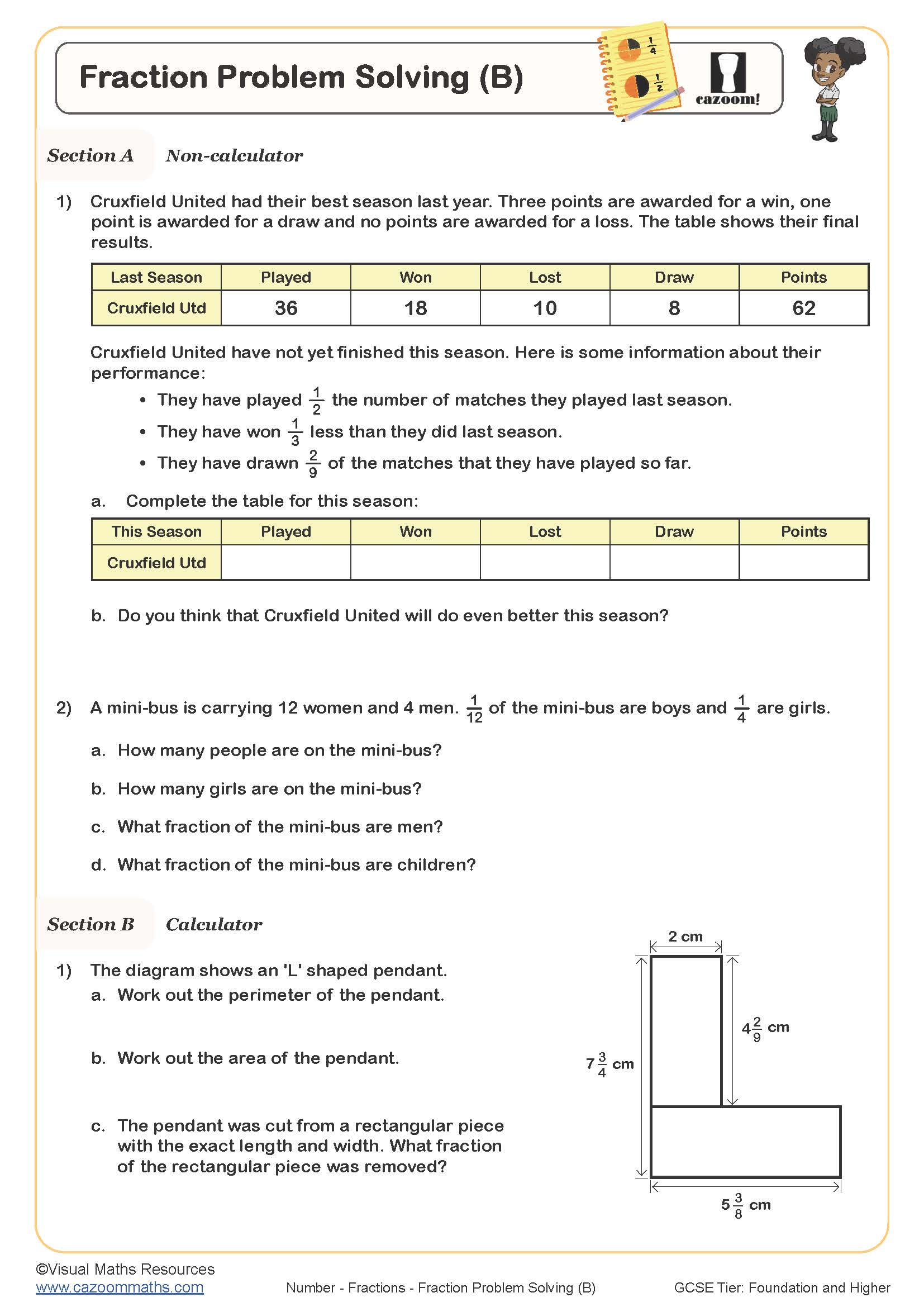
Fraction Problem Solving (B)
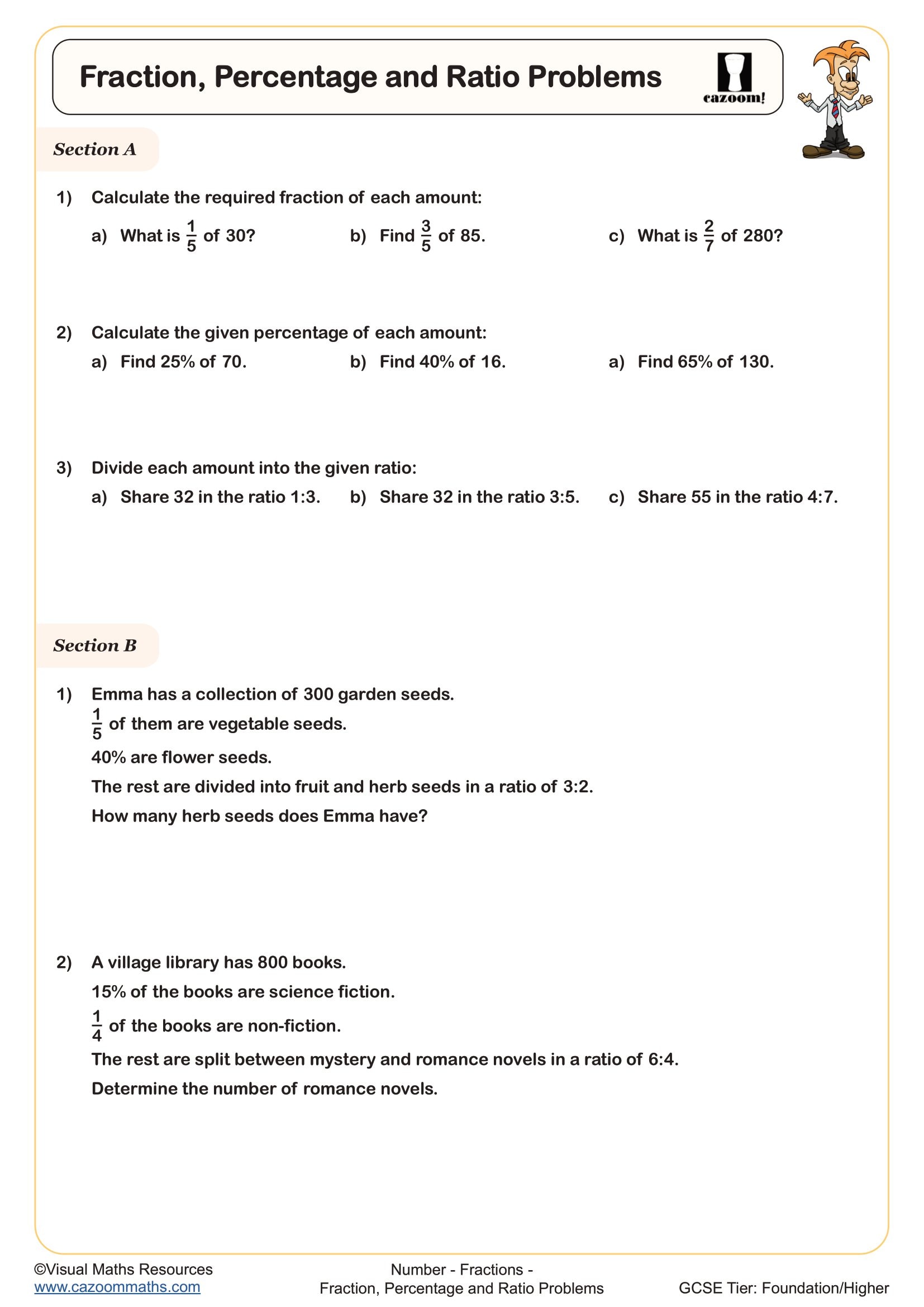
Fraction, Percentage and Ratio Problems
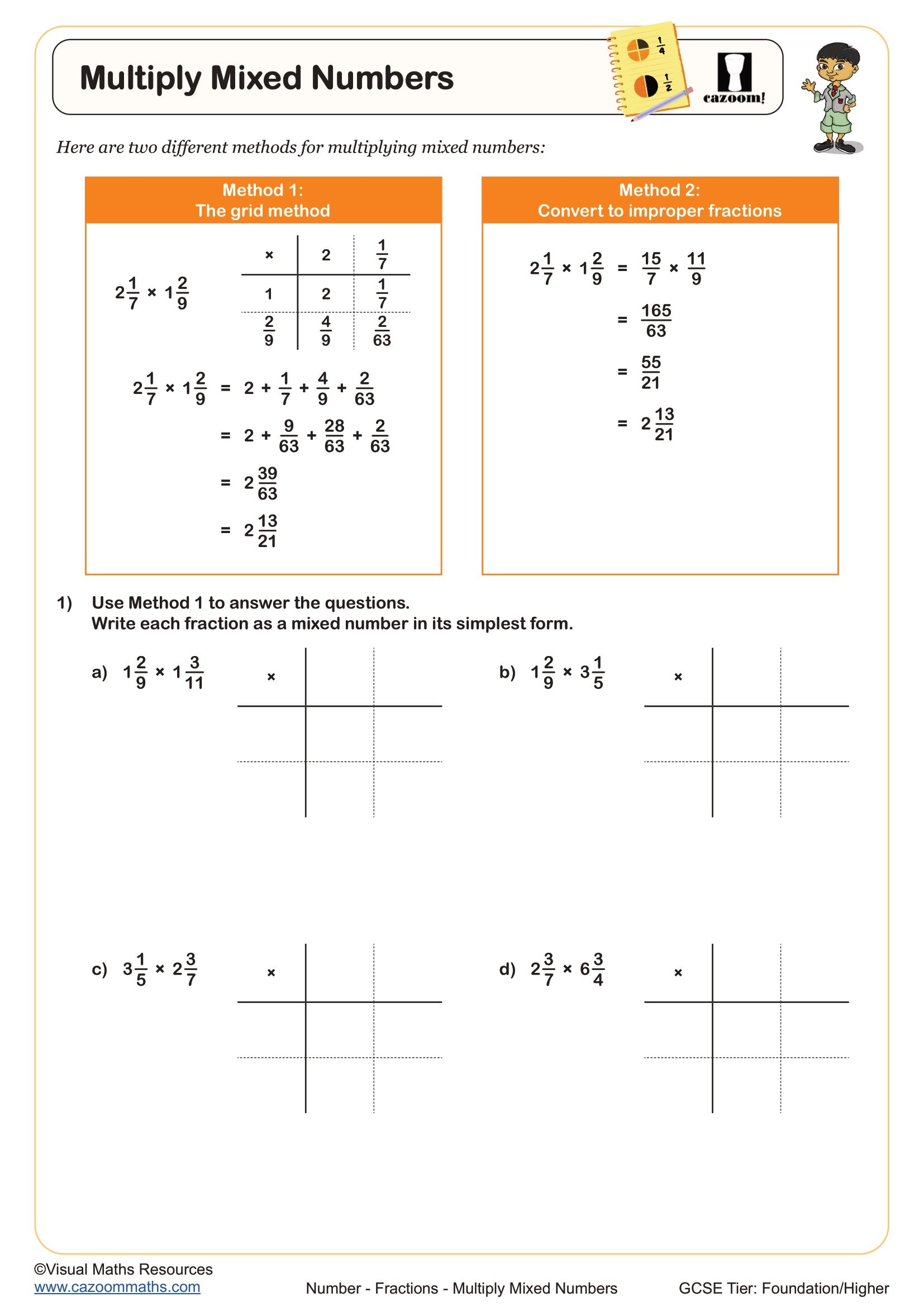
Multiply Mixed Numbers
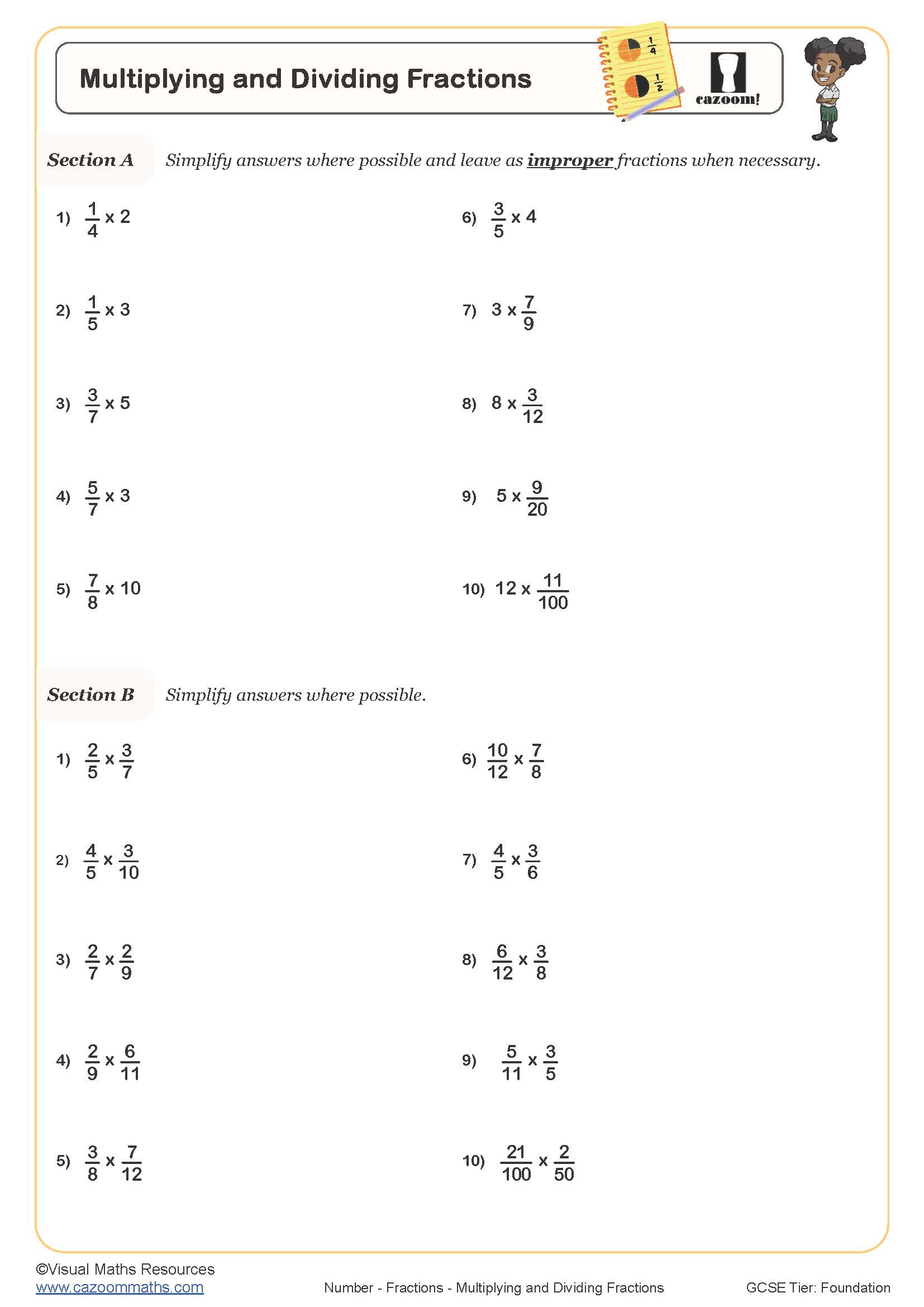
Multiplying and Dividing Fractions
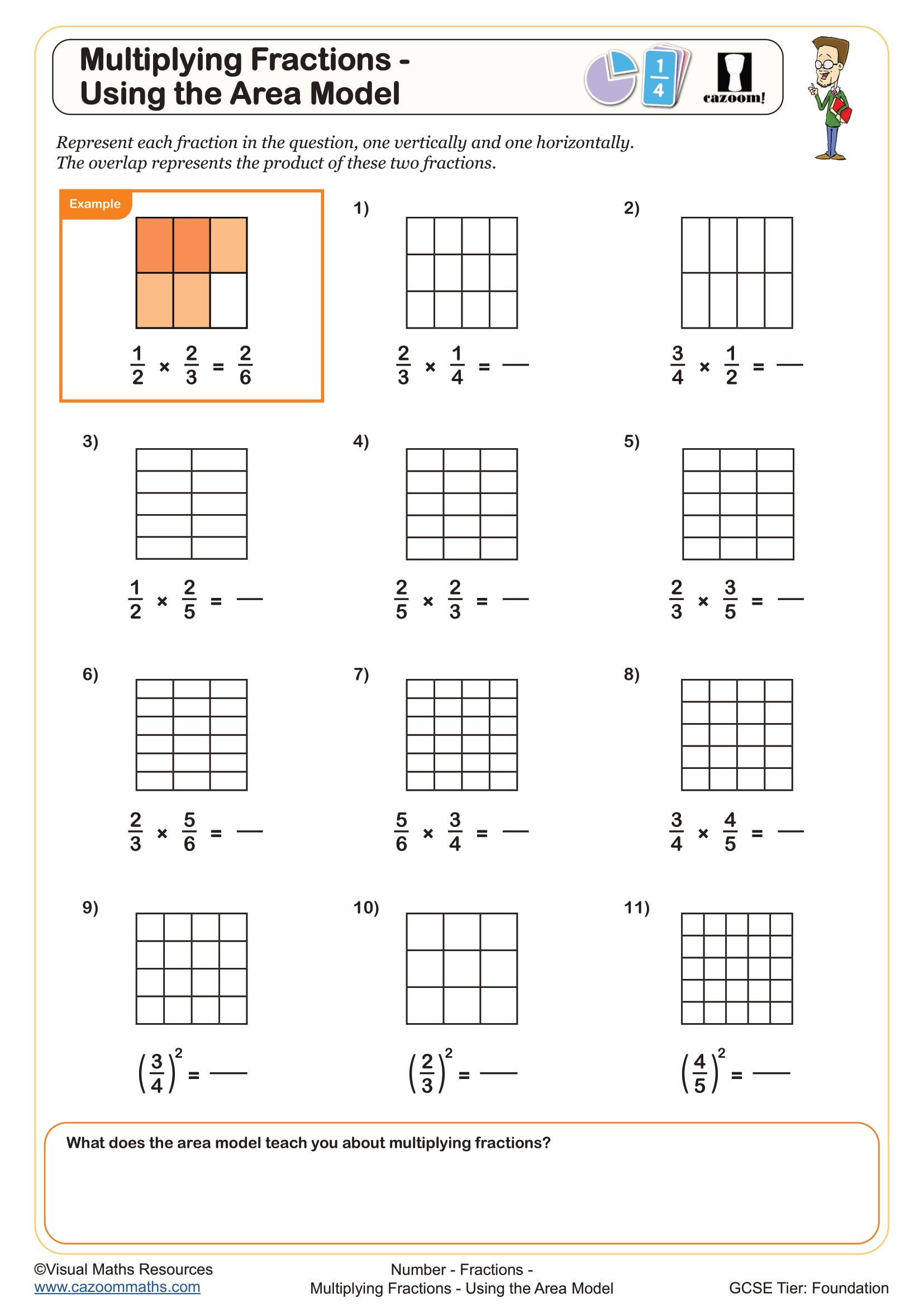
Multiplying Fractions - Using the Area Model
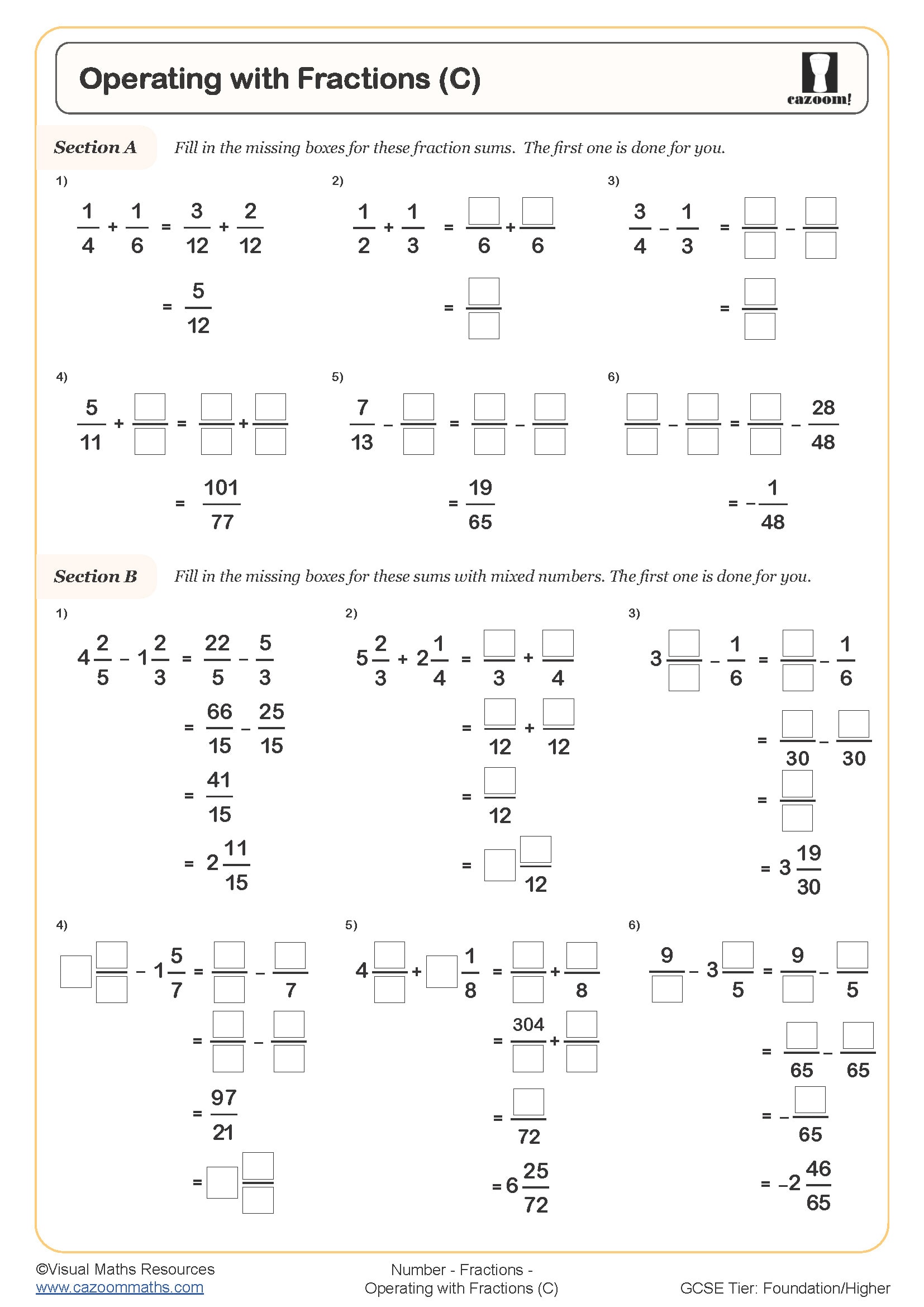
Operating with Fractions (C)
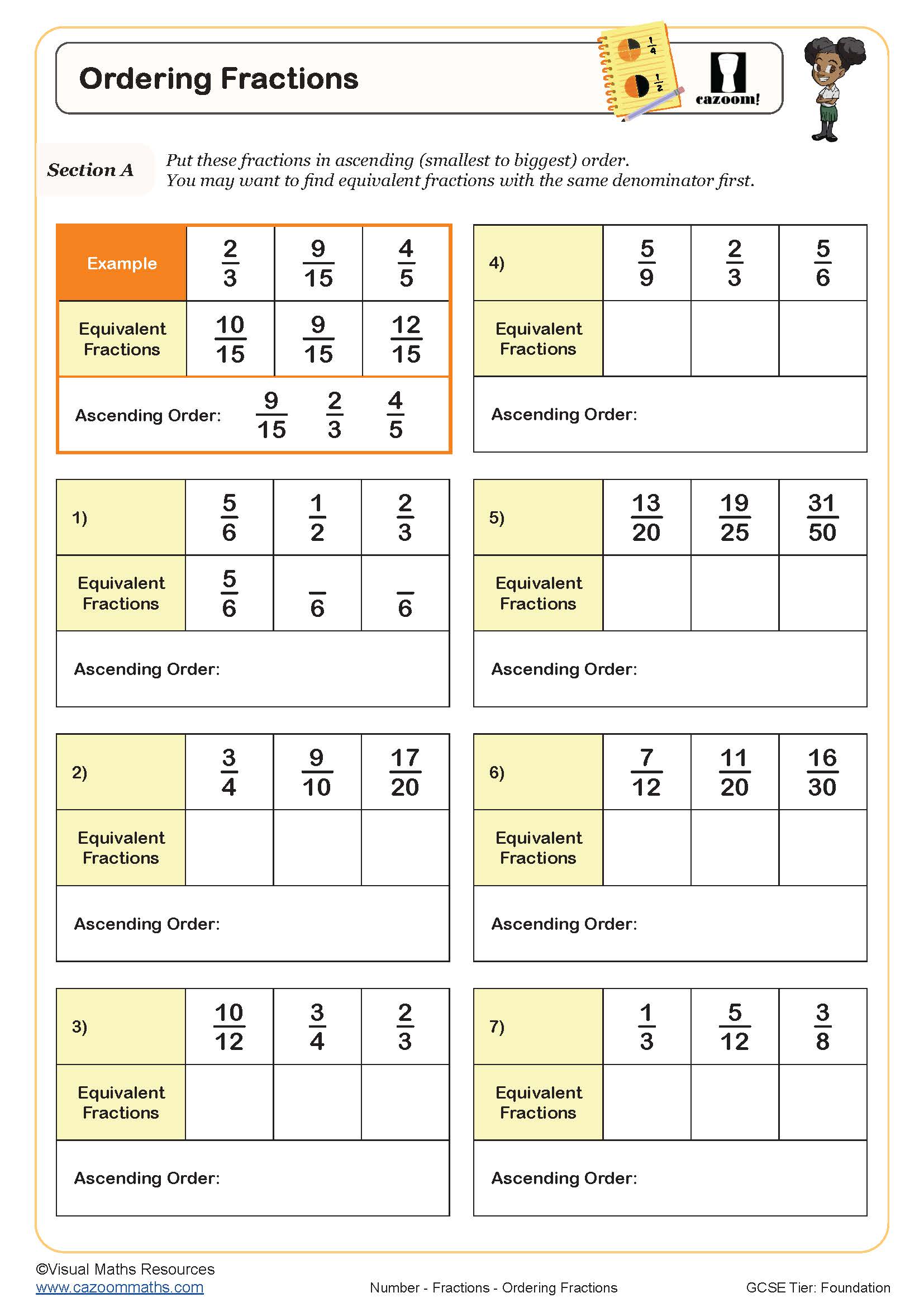
Ordering Fractions
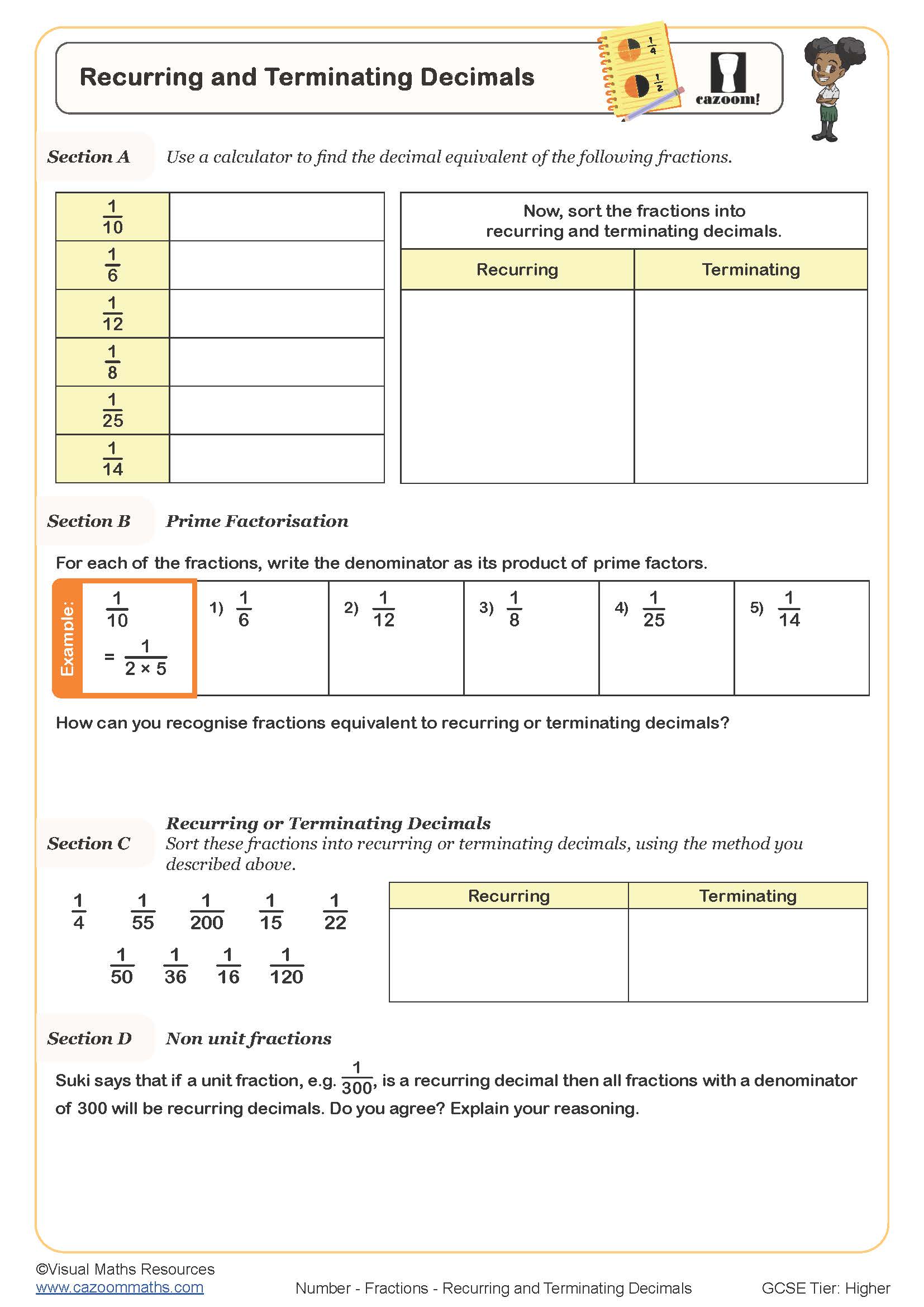
Recurring and Terminating Decimals
All worksheets are created by the team of experienced teachers at Cazoom Maths.
What makes these Year 9 fractions worksheets with answers effective for Key Stage 3 students?
These worksheets systematically develop fraction fluency through carefully structured practice that mirrors National Curriculum expectations for Year 9. The Year 9 fractions worksheet collection covers operations with proper fractions, improper fractions, and mixed numbers, progressing from straightforward calculations to multi-step problems involving different denominators and fraction types.
Teachers find that students benefit most when they can immediately check their working using the complete answer sheets provided. Many students lose confidence with fractions Year 9 level work because they can't verify their methods, but having detailed solutions helps them identify where their approach went wrong and reinforces correct techniques through self-marking.
How do these Year 9 fraction worksheets differ from earlier Key Stage 3 work?
Year 9 fraction work builds complexity by combining multiple operations within single problems and introducing more challenging real-world contexts. Students encounter problems requiring them to work backwards from fraction results, handle expressions with brackets, and manipulate fractions algebraically in preparation for GCSE topics.
The key difference teachers observe is that Year 9 students must demonstrate fluency rather than just accuracy. Where Year 7 students might use visual methods or extensive working, Year 9 expectations include mental calculation shortcuts, recognising equivalent forms quickly, and choosing efficient methods for different fraction types.
Why do students find multiplying and dividing fractions particularly challenging at this level?
Teachers consistently observe that students struggle with fraction division because the 'flip and multiply' rule seems counterintuitive, especially when dealing with mixed numbers or complex fractions. Many students apply multiplication rules to division problems or forget to convert mixed numbers before dividing, leading to systematic errors.
The worksheets address this by providing problems that require students to identify the operation needed before calculating, and by including word problems where division by fractions has clear meaning. Students practise recognising when division results in larger answers than the original number, helping them develop number sense around fraction operations.
How can teachers use these fraction worksheets most effectively in their lessons?
Teachers find these worksheets work best when used strategically rather than as complete lesson fillers. The most effective approach involves selecting specific questions that target identified misconceptions or reinforce methods taught in the main lesson, with students working through answers collaboratively using the provided solutions.
Many teachers use individual questions as starter activities or homework tasks, then use the answer sheets for peer marking sessions. This approach helps students recognise their own errors and develops their mathematical communication skills as they explain methods to classmates who made different mistakes.