Year 9 Lines and Angles Worksheets
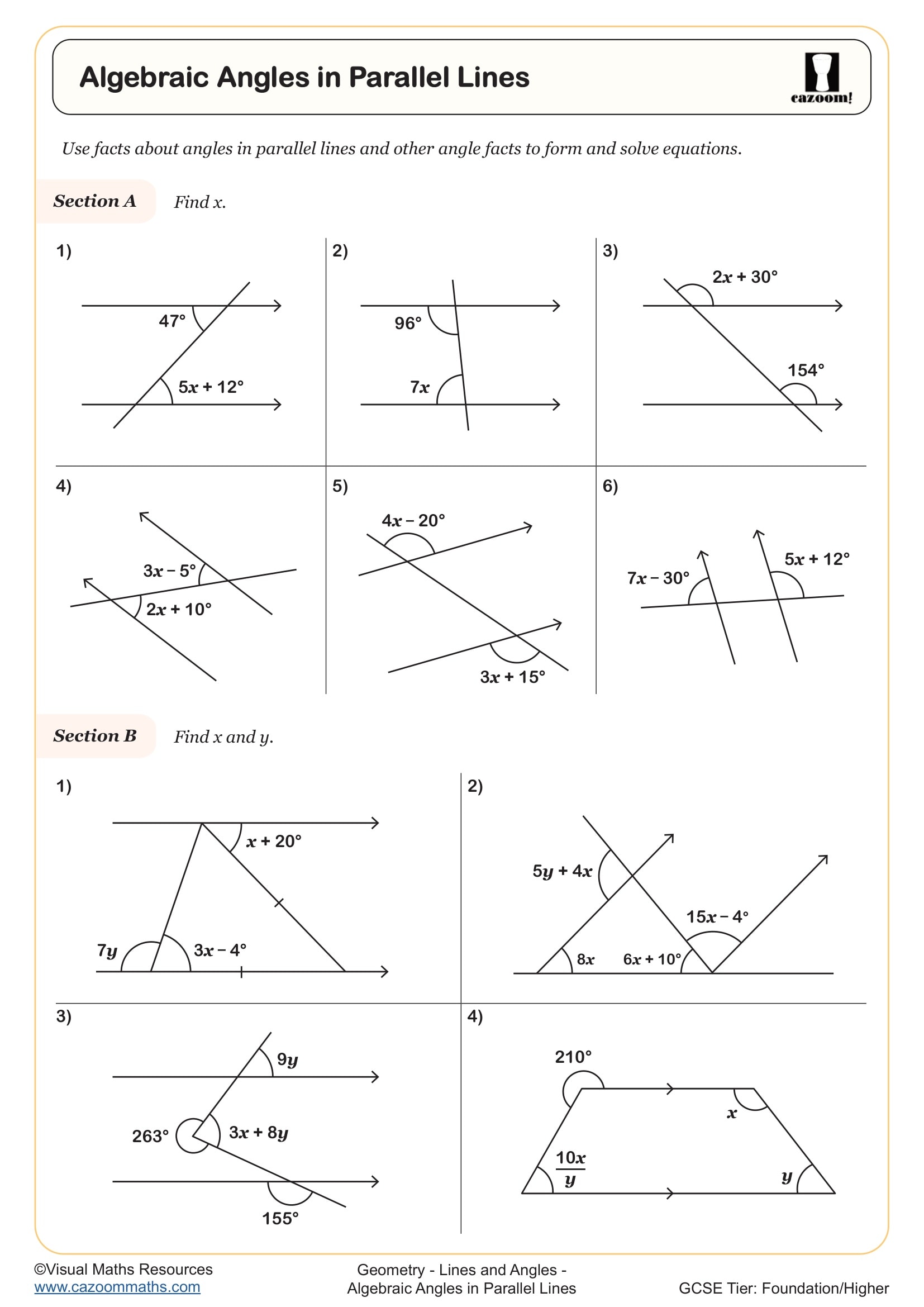
Algebraic Angles in Parallel Lines
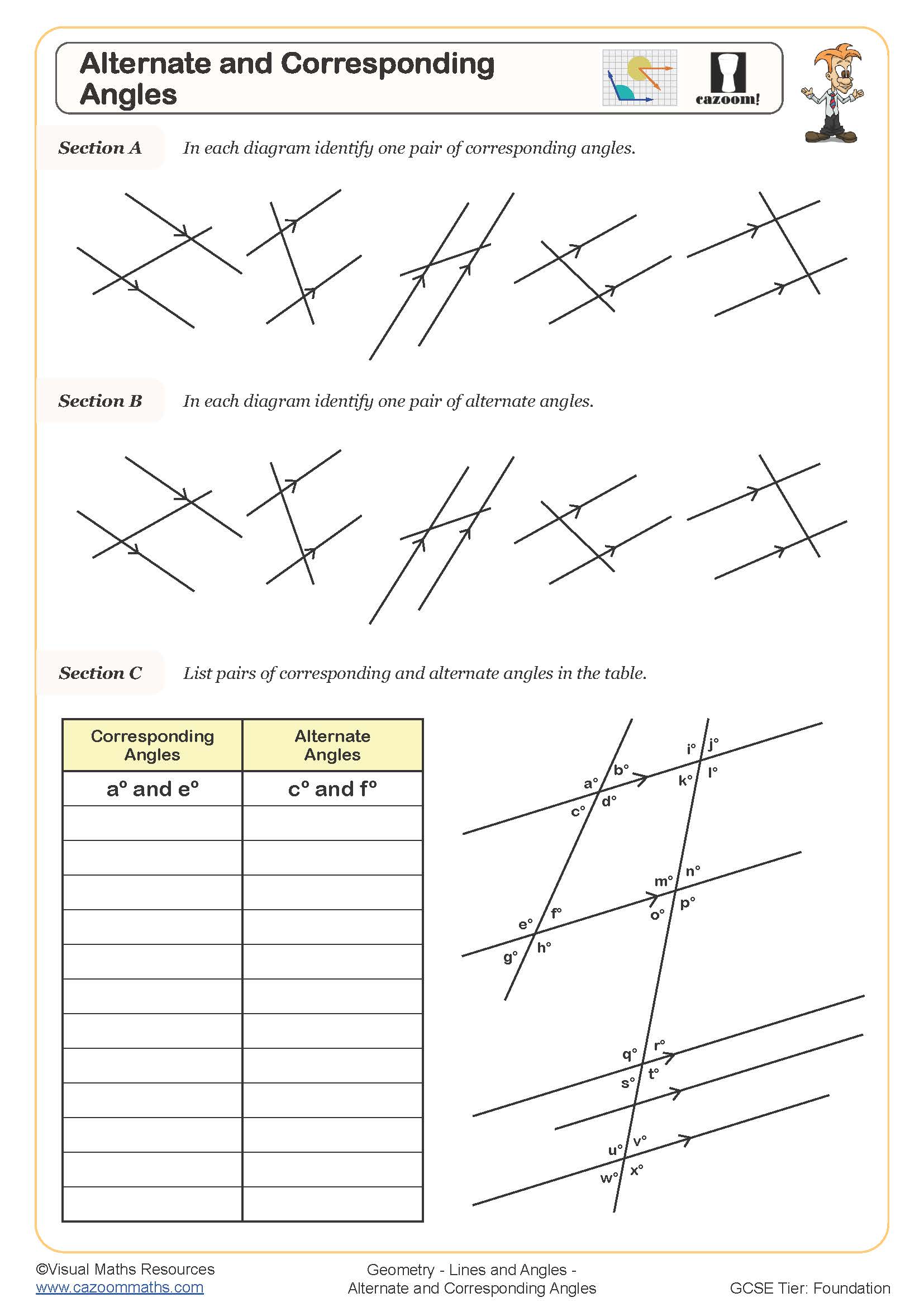
Alternate and Corresponding Angles (A)
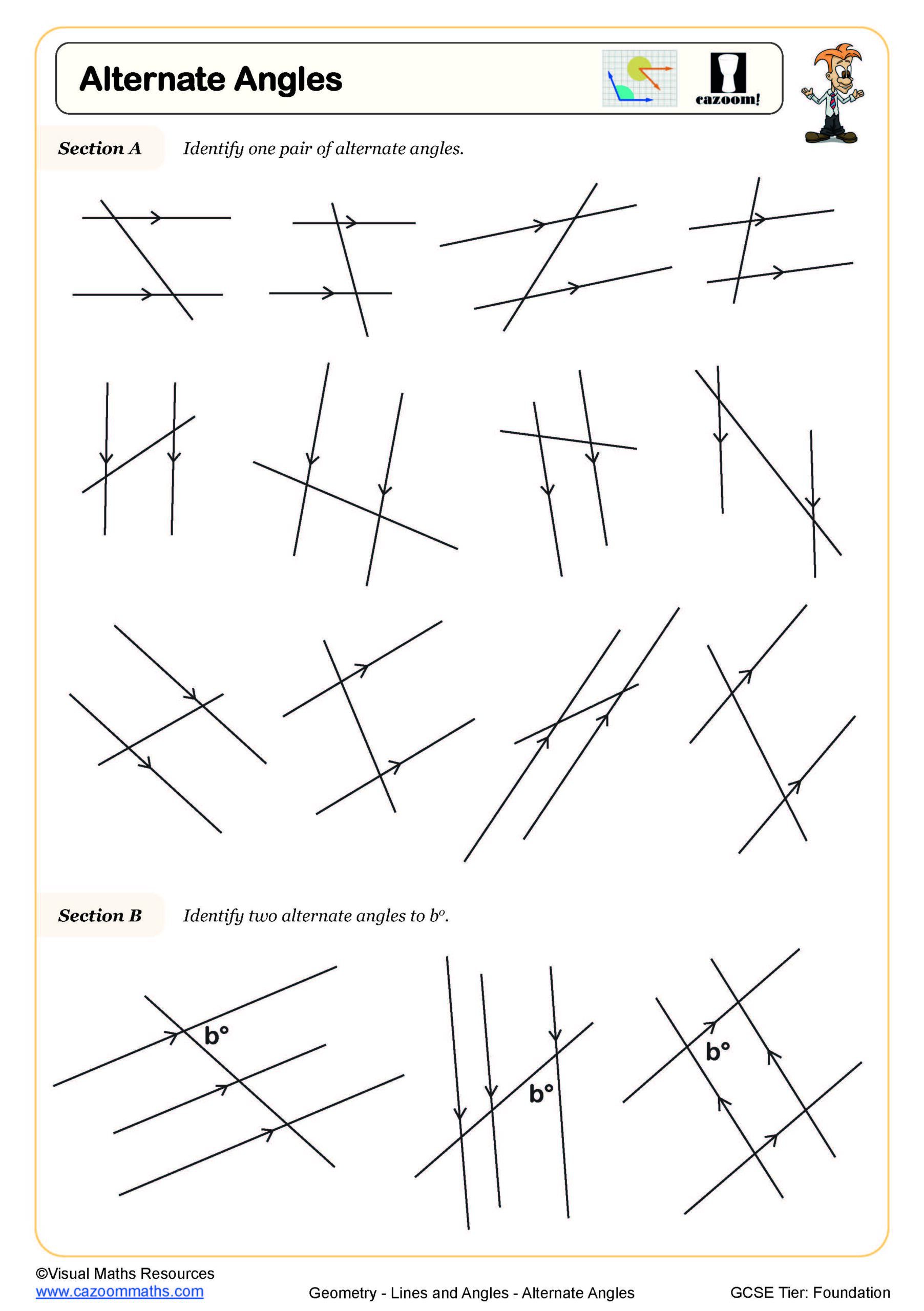
Alternate Angles
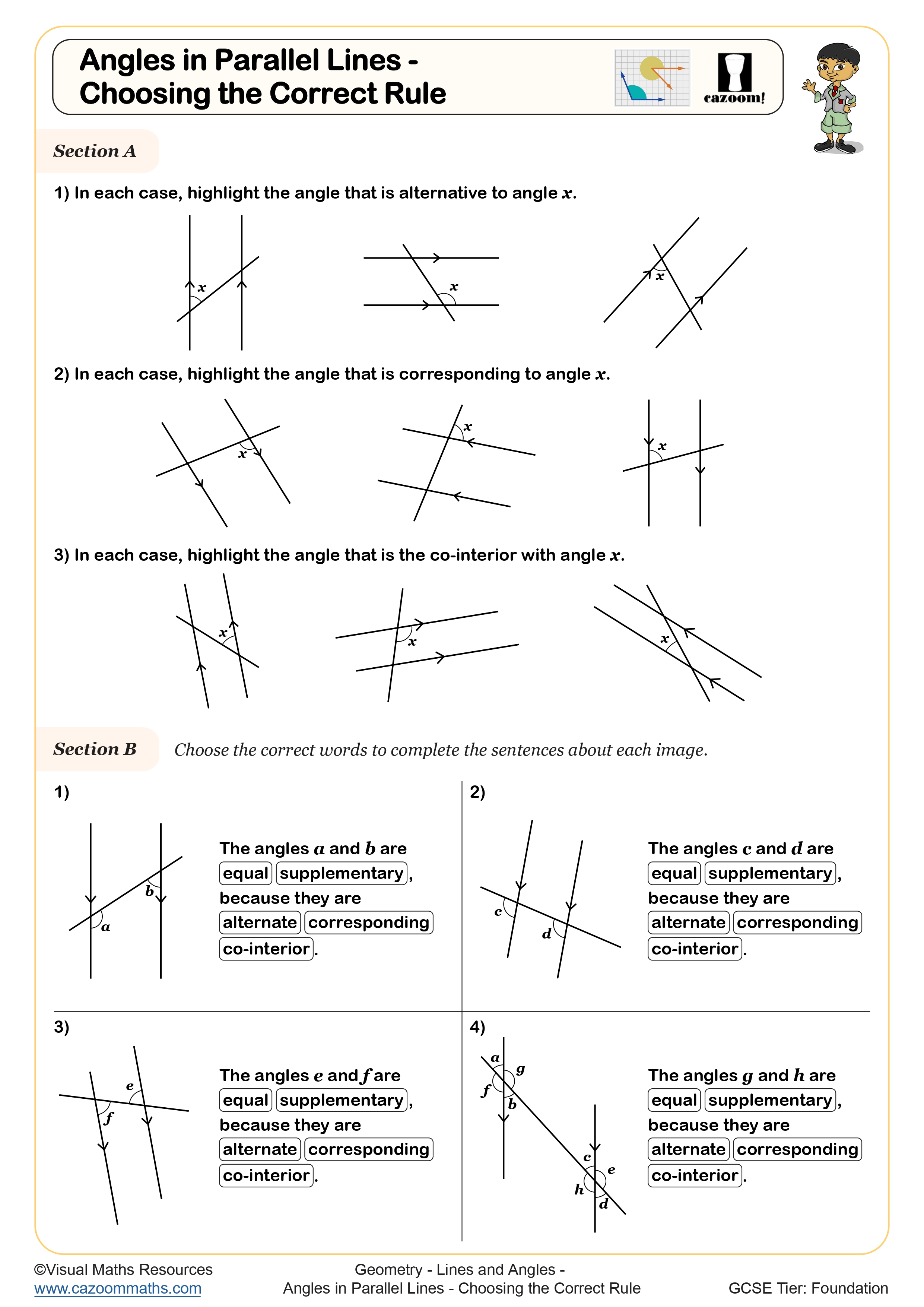
Angles in Parallel Lines - Choosing the Correct Rule
Angles in Triangles (B)
/Cazoom-Maths-Lines-and-Angles-Angles-in-Triangles-(B-Worksheet.jpg?w=3840)
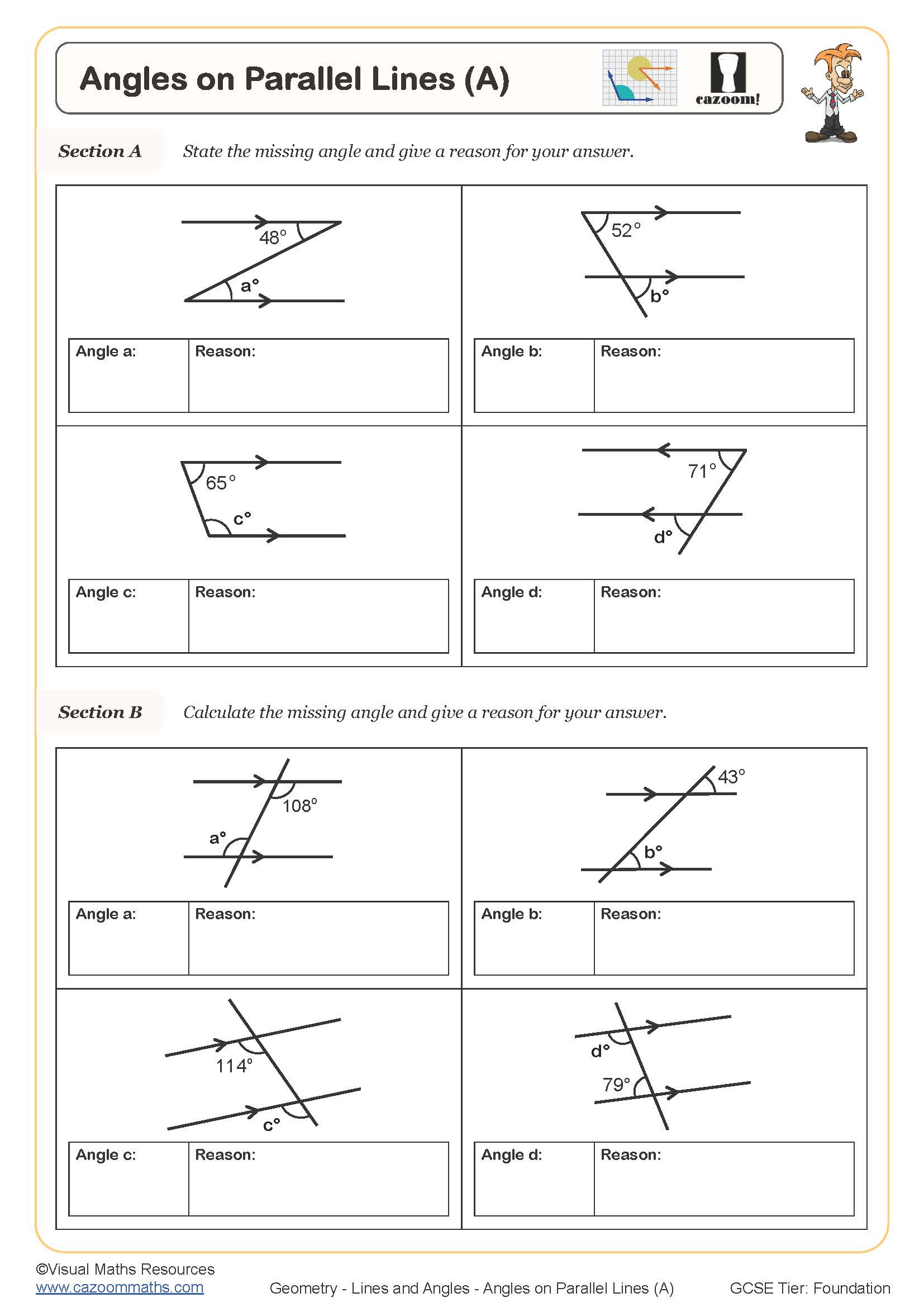
Angles on Parallel Lines (A)
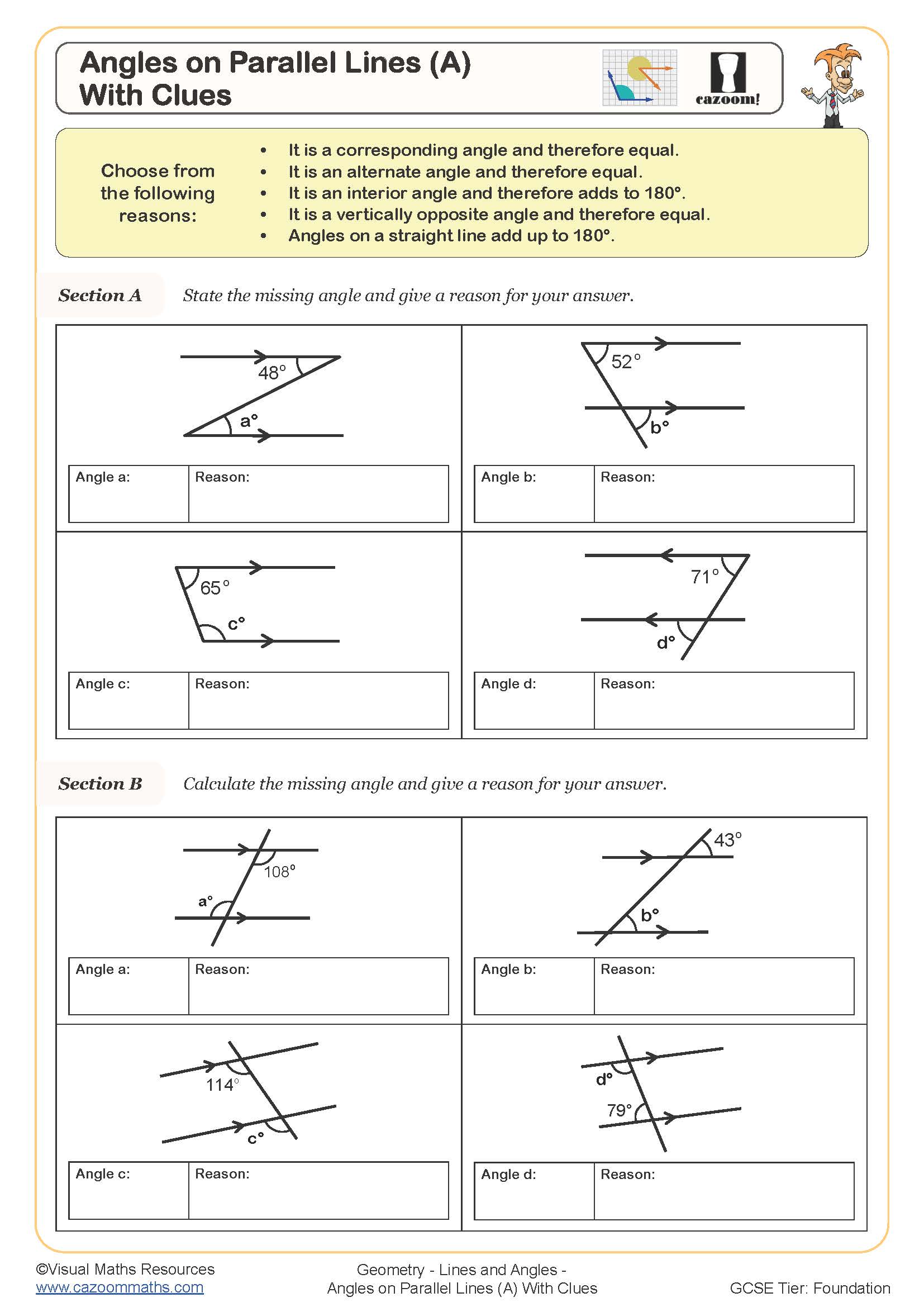
Angles on Parallel Lines (A) (With Clues)
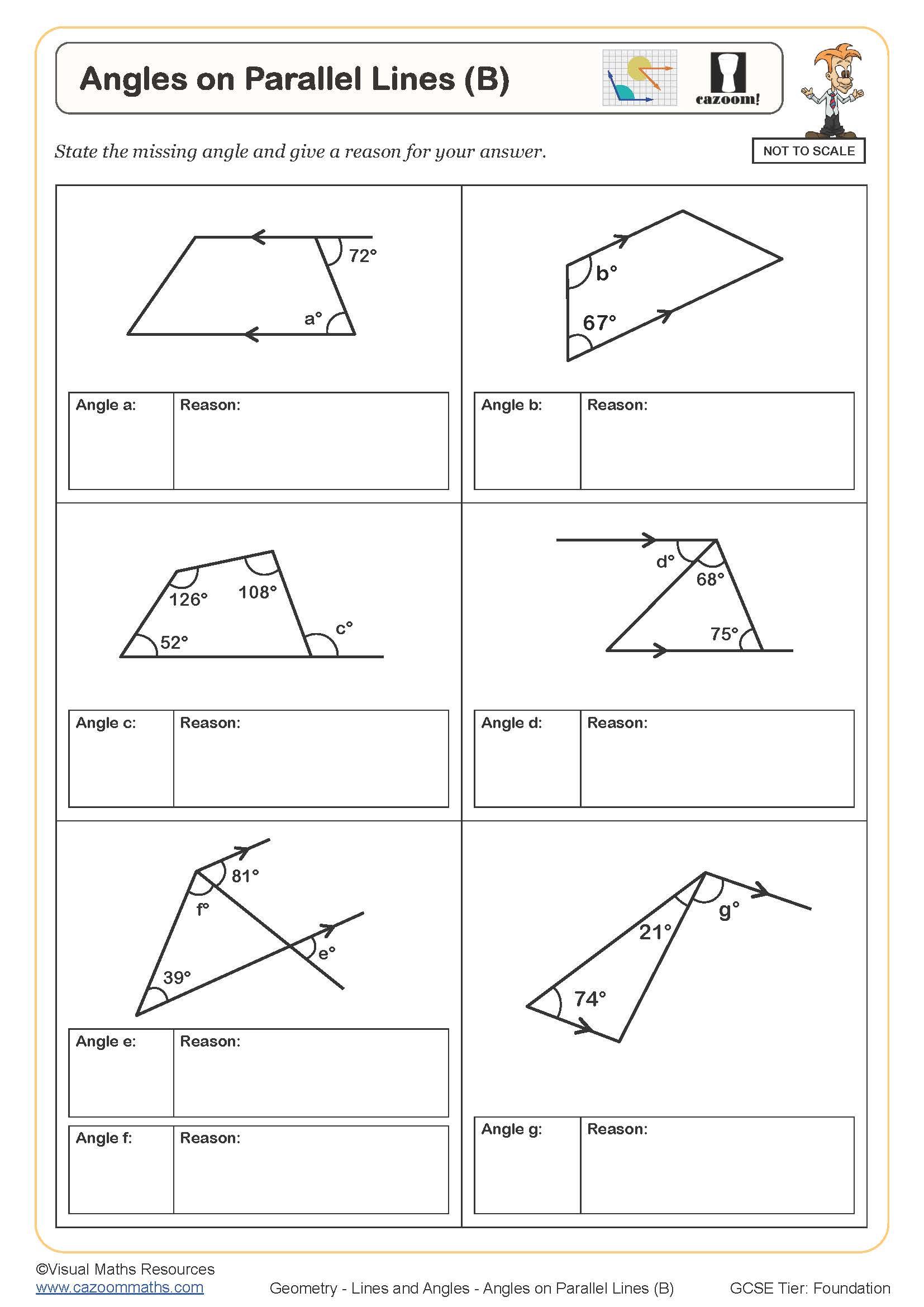
Angles on Parallel Lines (B)
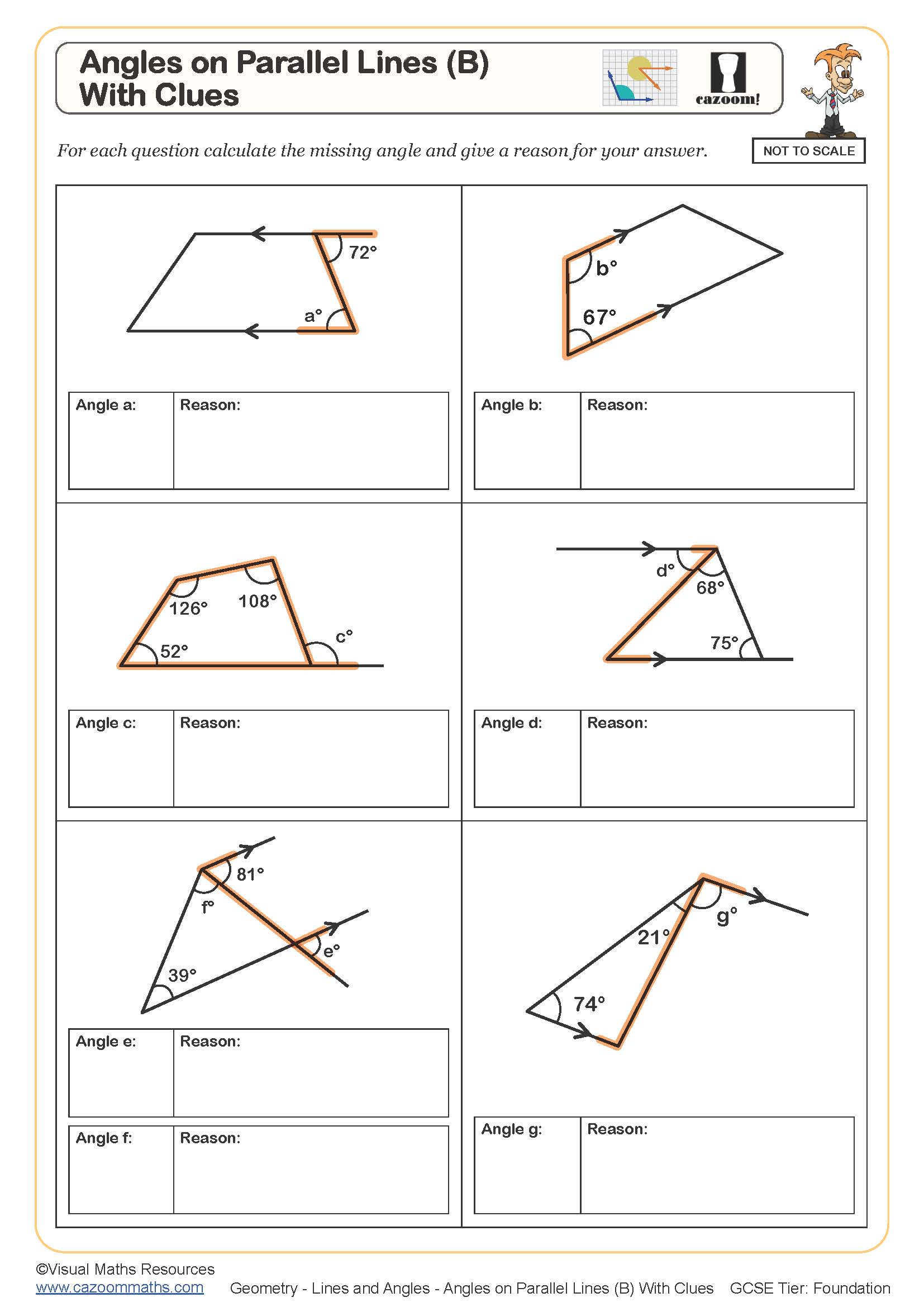
Angles on Parallel Lines (B) (With Clues)
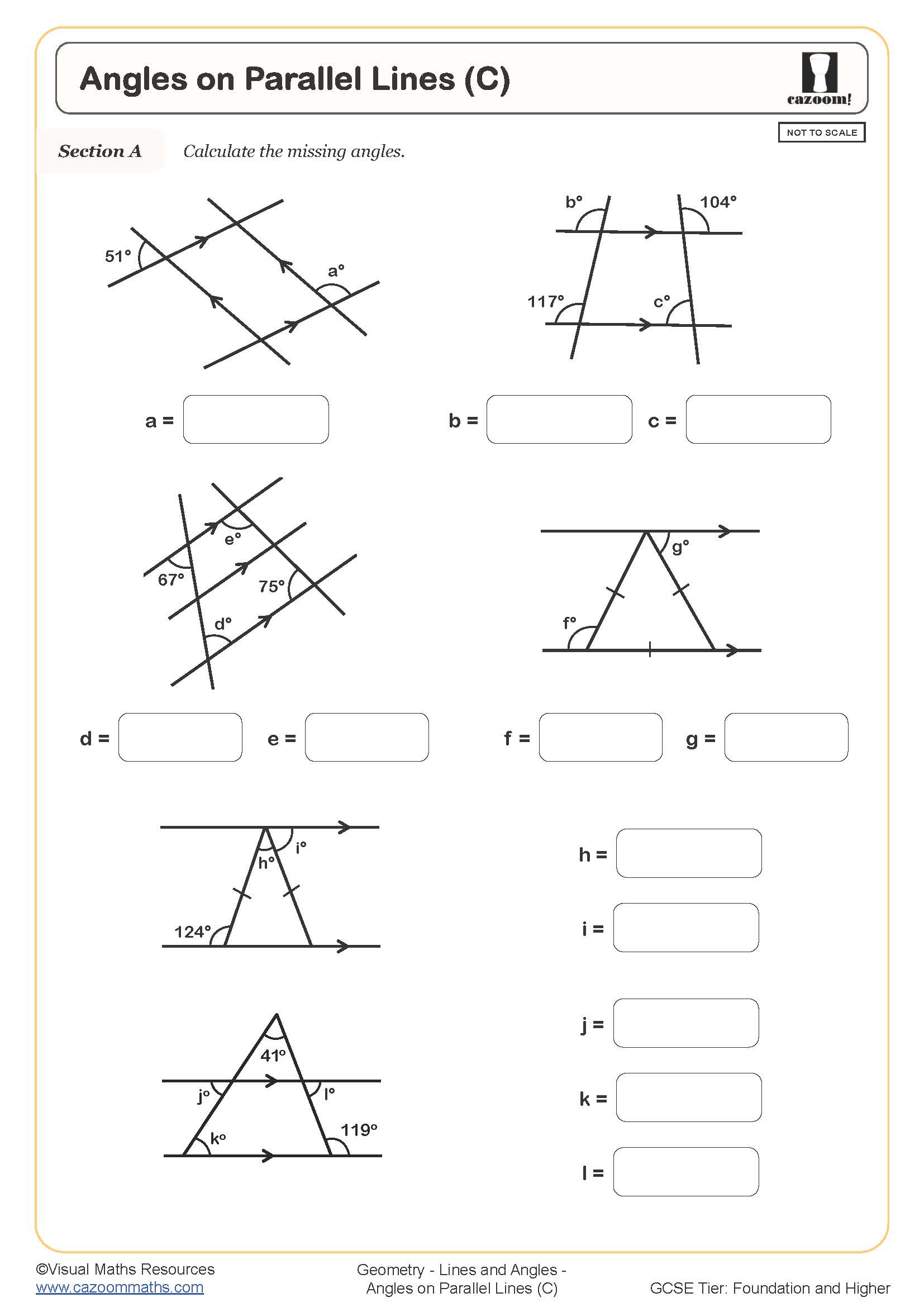
Angles on Parallel Lines (C)
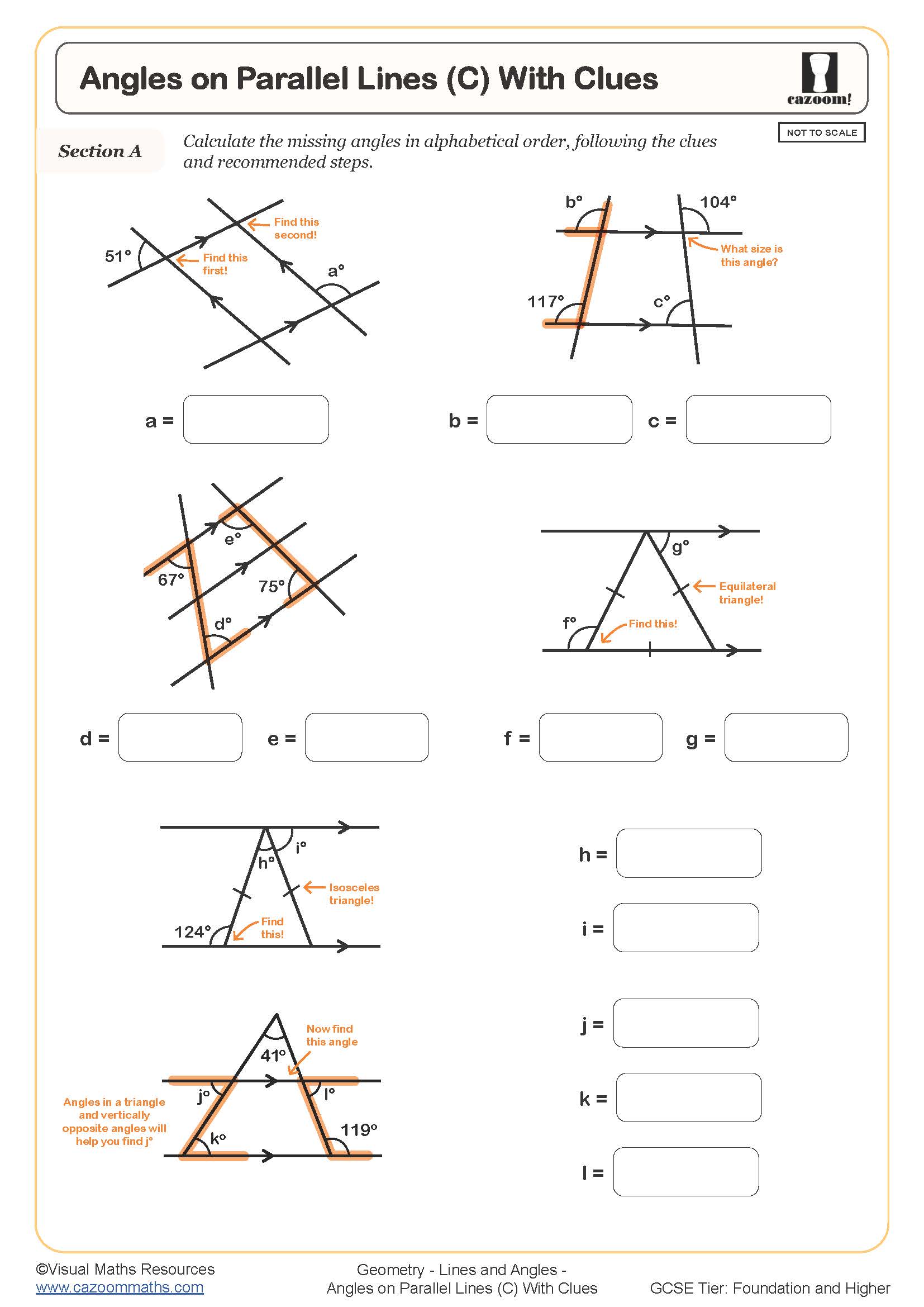
Angles on Parallel Lines (C) (With Clues)
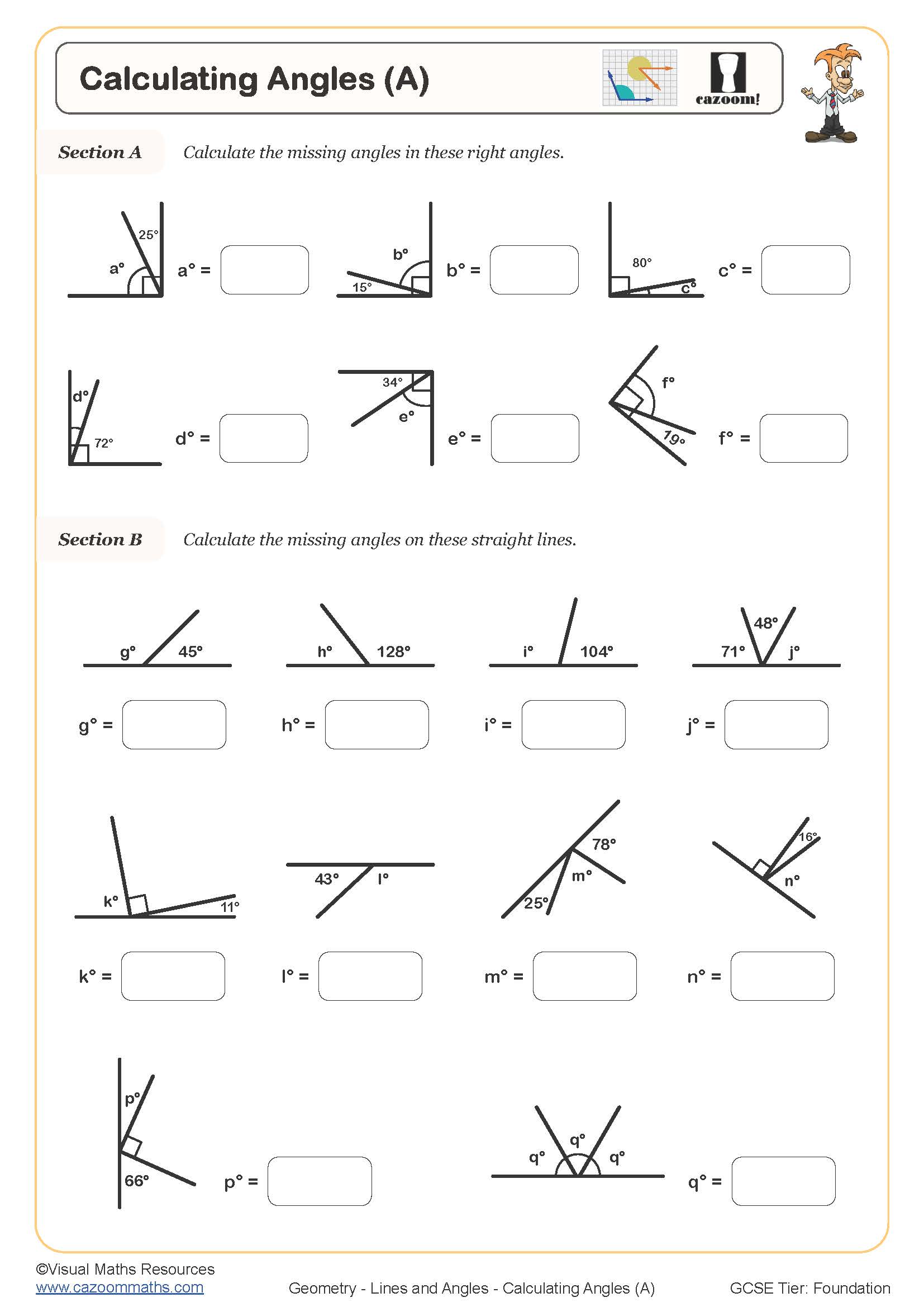
Calculating Angles (A)
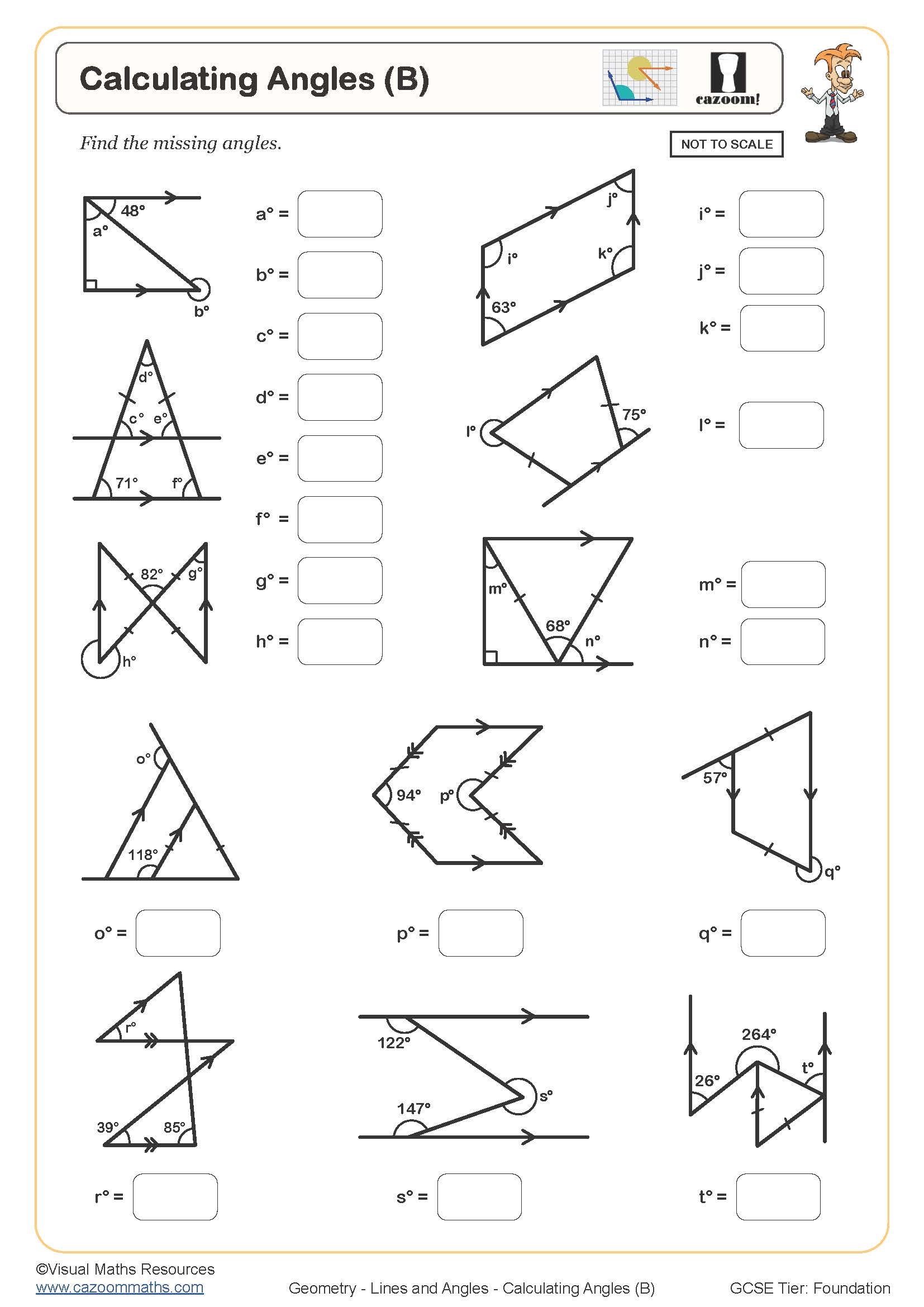
Calculating Angles (B)
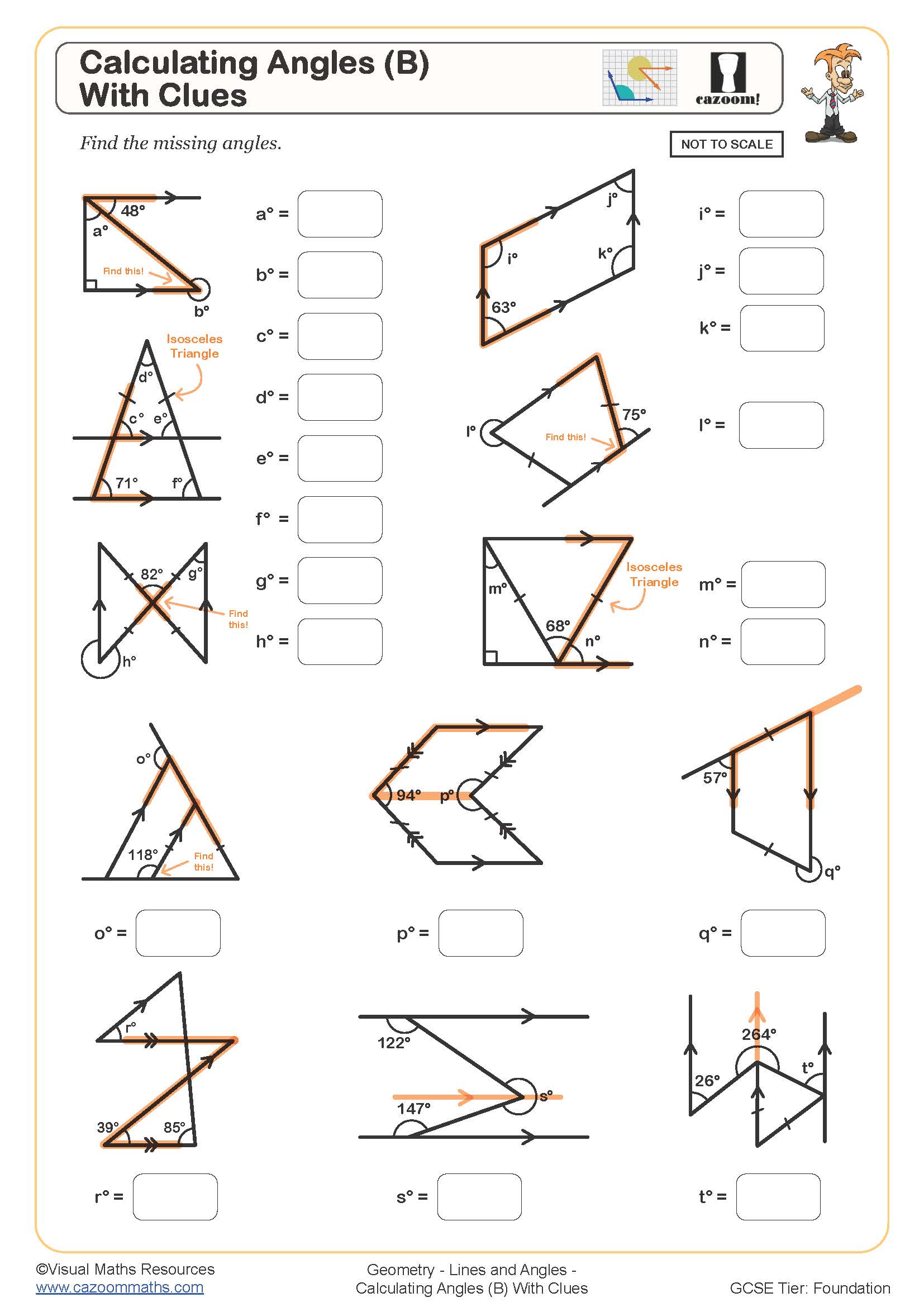
Calculating Angles (B) (With Clues)
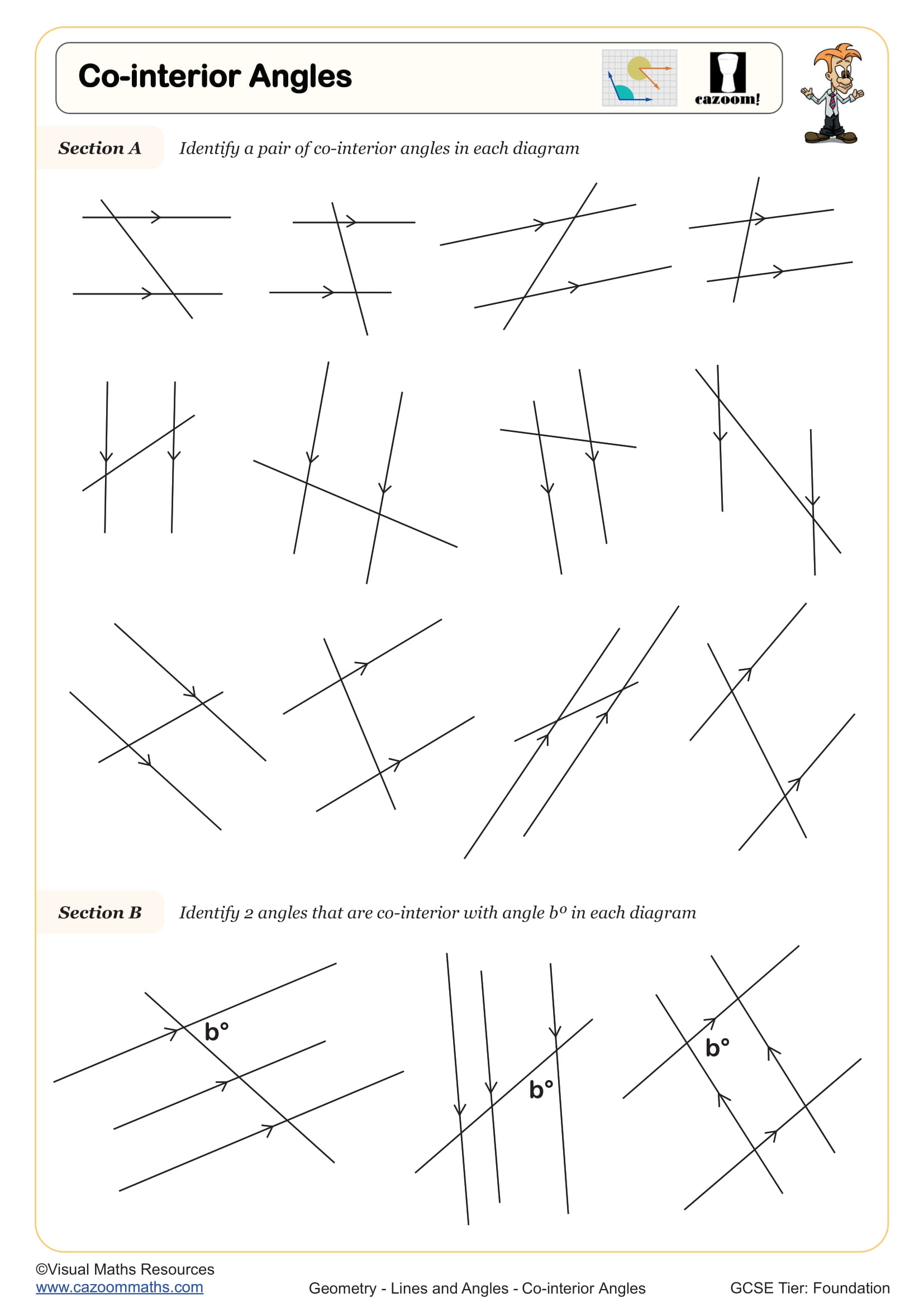
Co-interior Angles
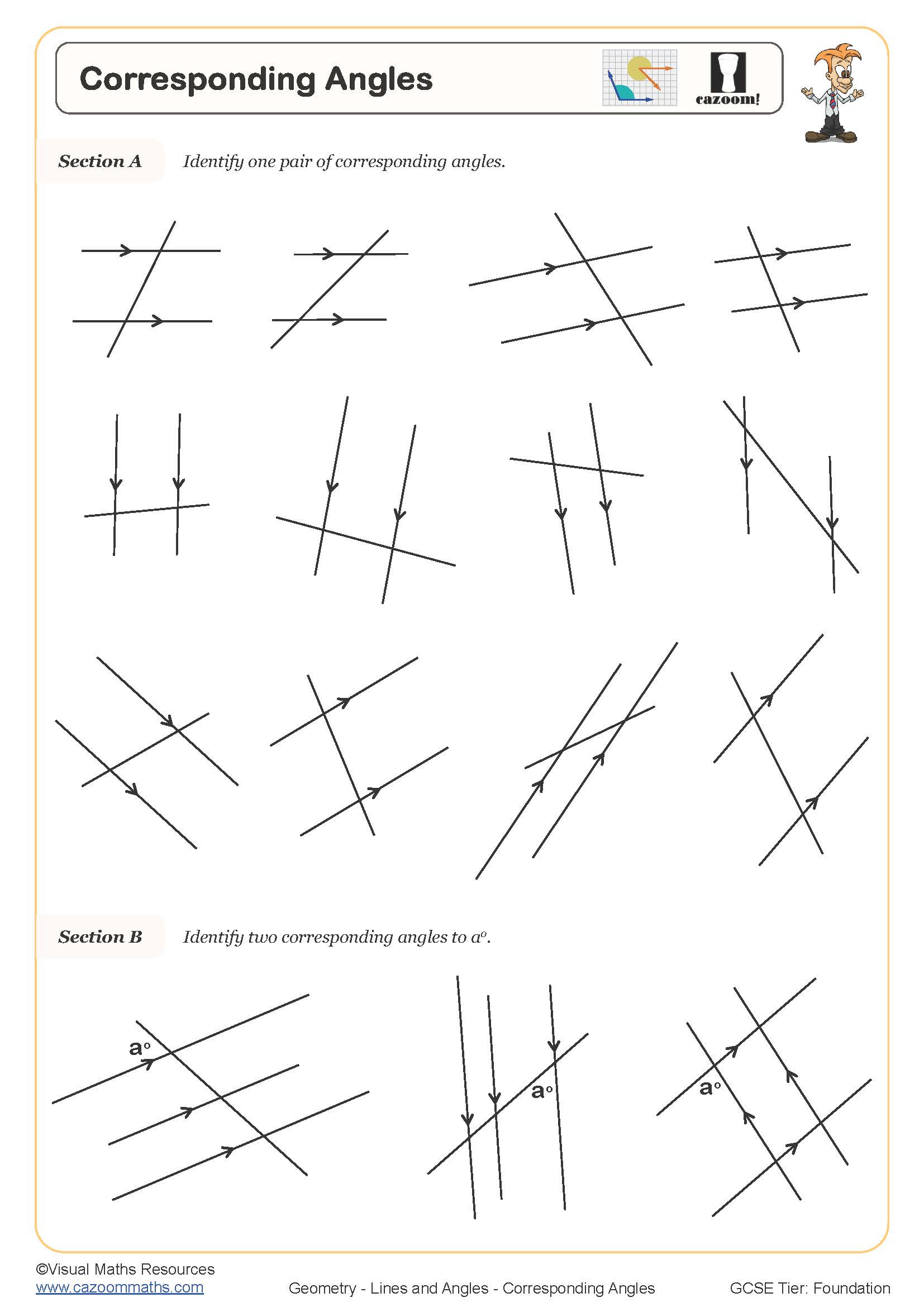
Corresponding Angles
Forming and Solving Equations Involving Angles (B)
-Worksheet.jpg?w=3840)
All worksheets are created by the team of experienced teachers at Cazoom Maths.
What makes an effective year 9 angles worksheet?
An effective year 9 angles worksheet builds systematically from basic angle facts through to more complex problems involving parallel lines and transversals. It should include clear diagrams that help students visualise relationships between alternate angles, corresponding angles, and co-interior angles, preparing them for GCSE-level geometry.
Teachers find that worksheets work best when they include a mix of calculation and reasoning questions. Students often make errors by confusing alternate and corresponding angles, so effective resources provide plenty of practice distinguishing between these relationships. The progression should move from identifying angle types to calculating missing angles in increasingly complex configurations.
Which year groups benefit most from lines and angles worksheets?
Lines and angles worksheets primarily target Year 9 students following the KS3 National Curriculum, though they also support Year 10 students beginning GCSE preparation. The content aligns with geometry requirements across both key stages, making these resources valuable for reinforcement and revision.
Year 8 students working ahead often benefit from simpler angle worksheets, while Year 11 students may use them for GCSE revision. Teachers notice that students who master these concepts in Year 9 show greater confidence with more advanced geometric proofs later in their studies. The skills transfer directly to coordinate geometry and trigonometry topics in subsequent years.
How do students typically approach angle problems involving parallel lines?
Students learning about parallel lines often start by identifying the transversal and marking known angles clearly on diagrams. Teachers observe that successful students develop systematic approaches, working methodically through alternate, corresponding, and co-interior angle relationships rather than guessing.
A common error occurs when students confuse which angles are equal and which are supplementary. Many struggle initially with co-interior angles, expecting them to be equal rather than adding to 180 degrees. Effective practice helps students recognise these patterns and apply the correct relationships confidently, building towards the geometric reasoning skills required at GCSE level.
How can teachers maximise learning from angles worksheets?
Teachers achieve best results when they use angles worksheets alongside practical activities that help students visualise angle relationships. Encouraging students to mark diagrams clearly and show their working builds good mathematical communication habits that benefit them throughout their studies.
The answer sheets prove invaluable for peer marking activities, allowing students to discuss different approaches and identify errors in their reasoning. Many teachers find that having students explain their solutions to classmates reinforces understanding and reveals misconceptions that might otherwise go unnoticed. This approach particularly helps with the reasoning components that appear increasingly in GCSE examinations.