Year 9 Pythagoras Worksheets
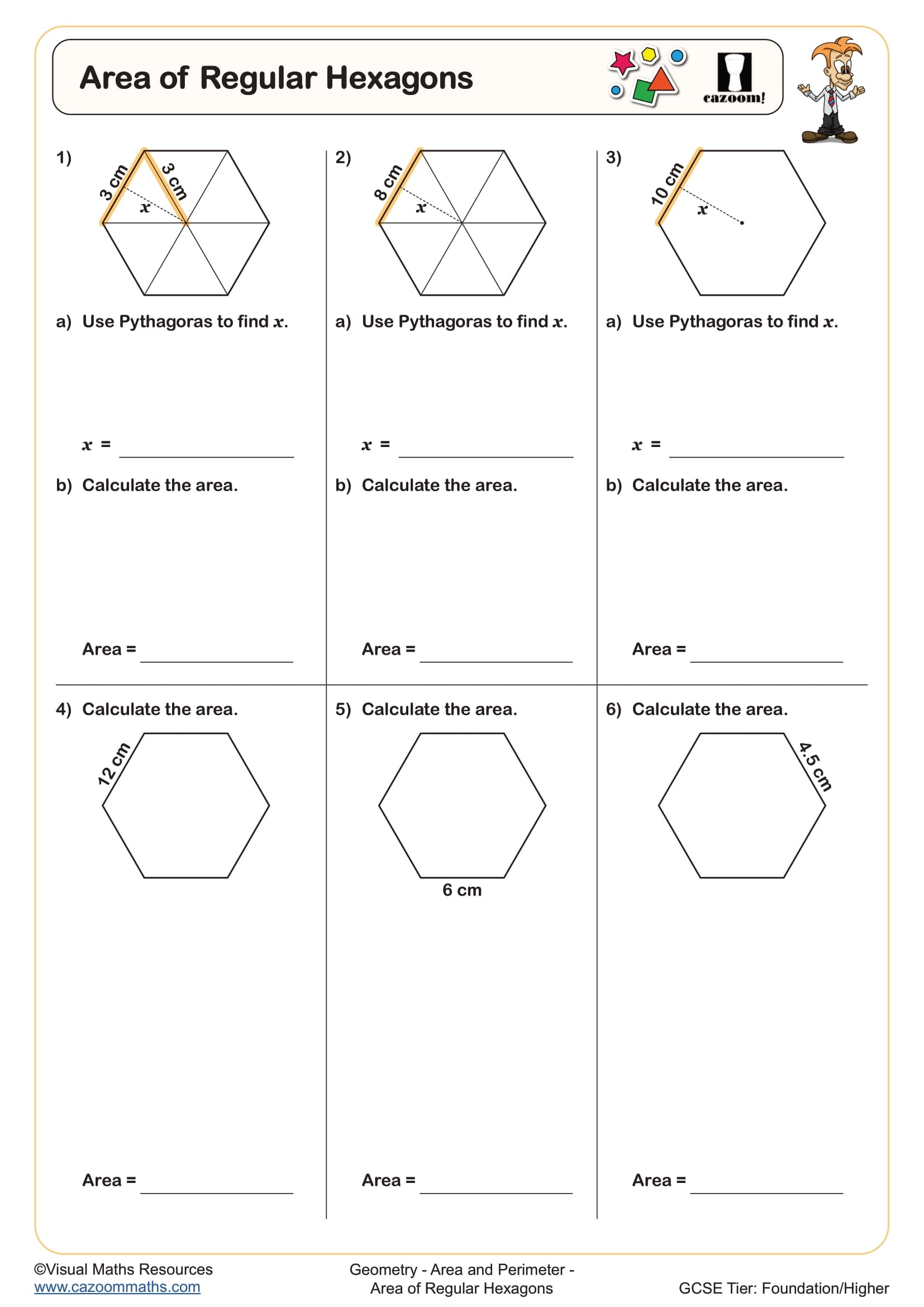
Area of Regular Hexagons
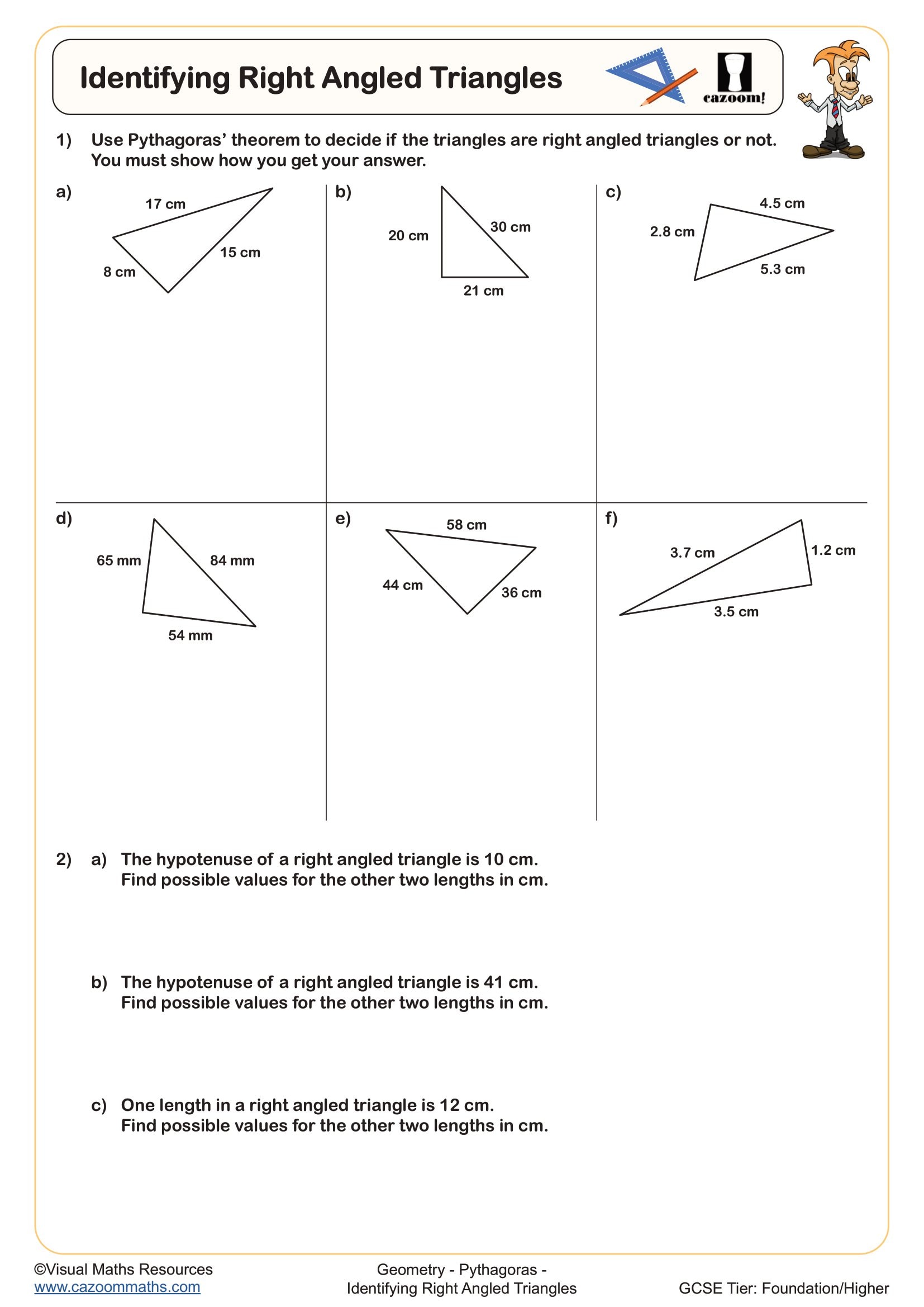
Identifying Right Angled Triangles
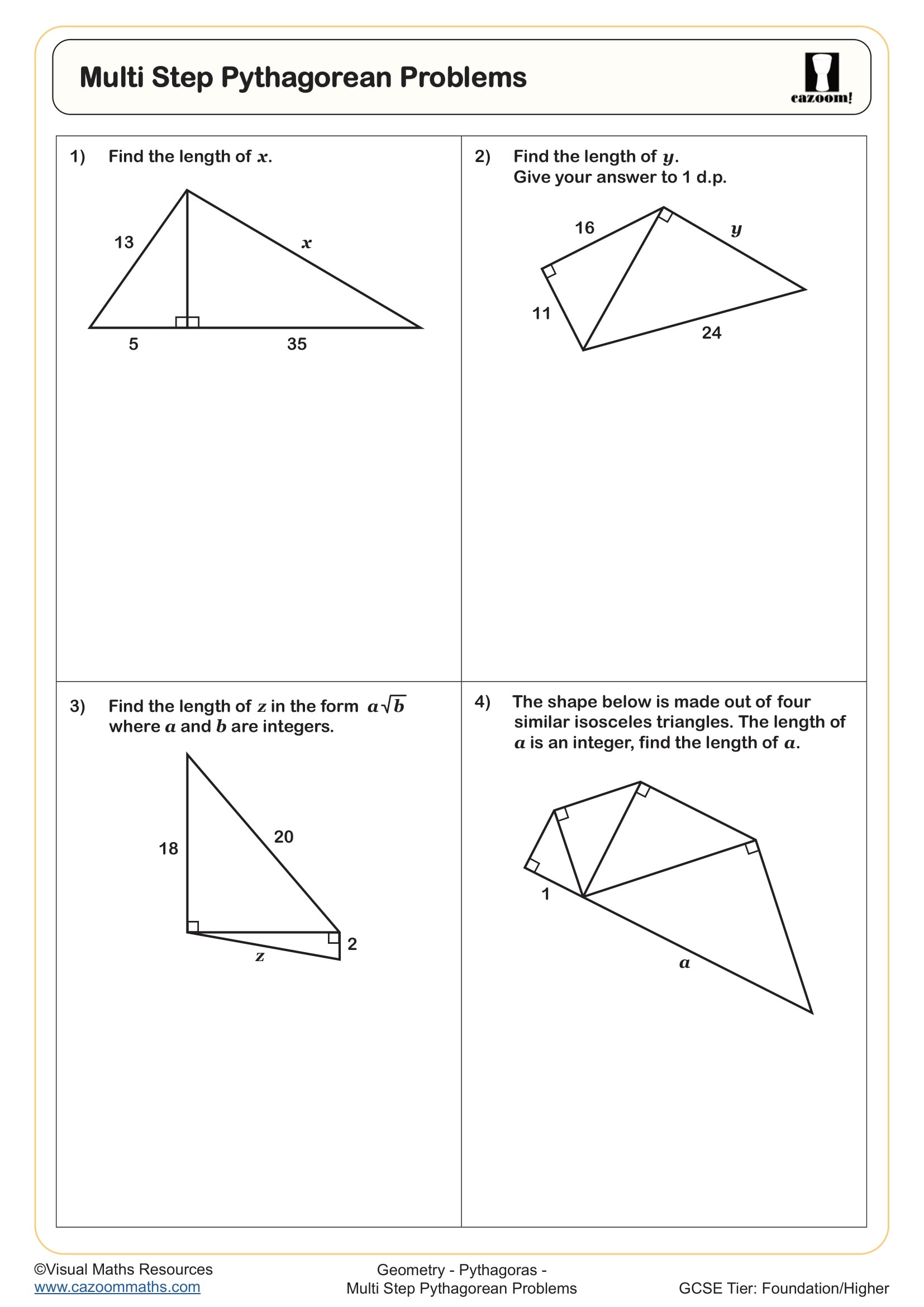
Multi Step Pythagorean Problems
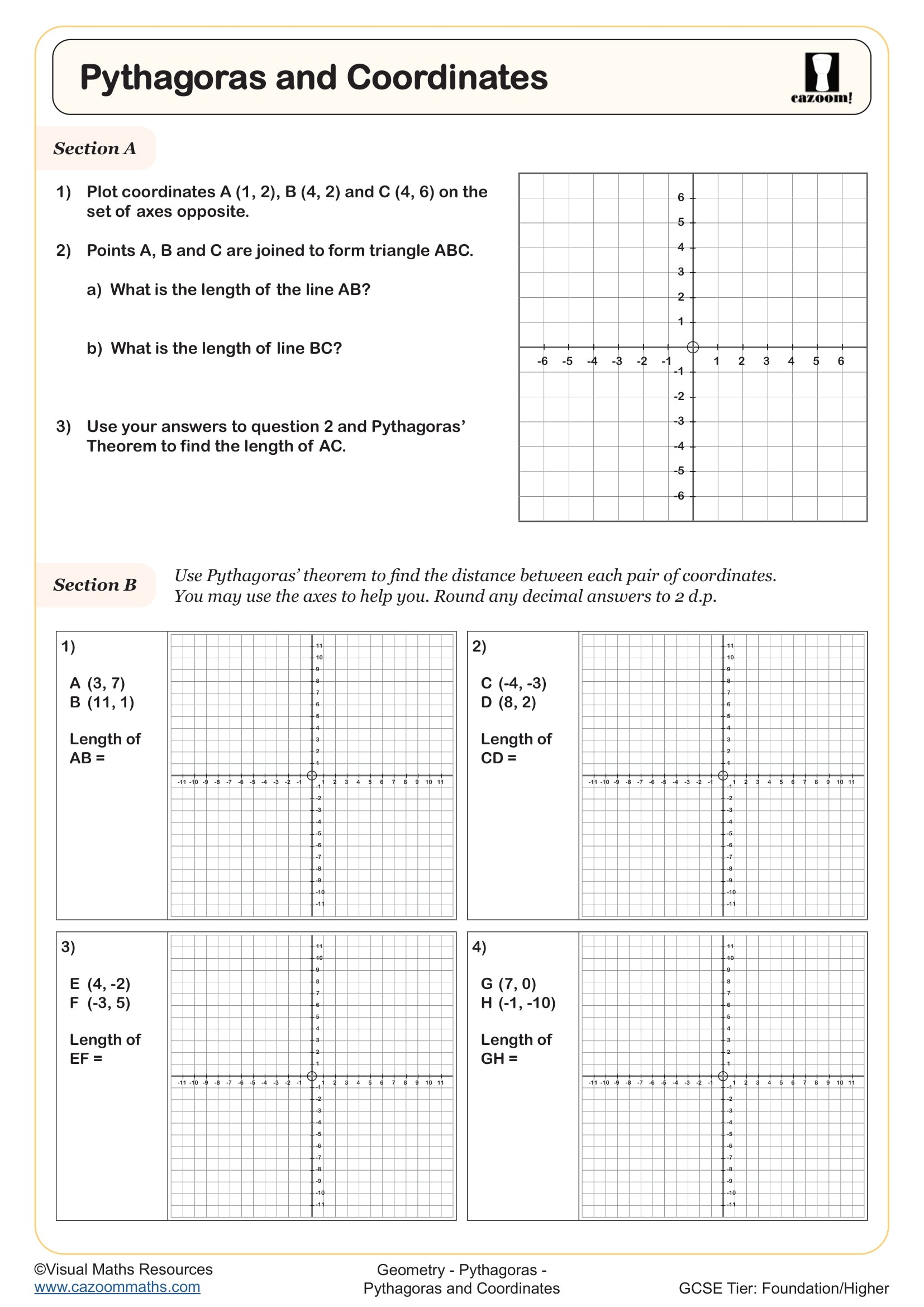
Pythagoras and Coordinates
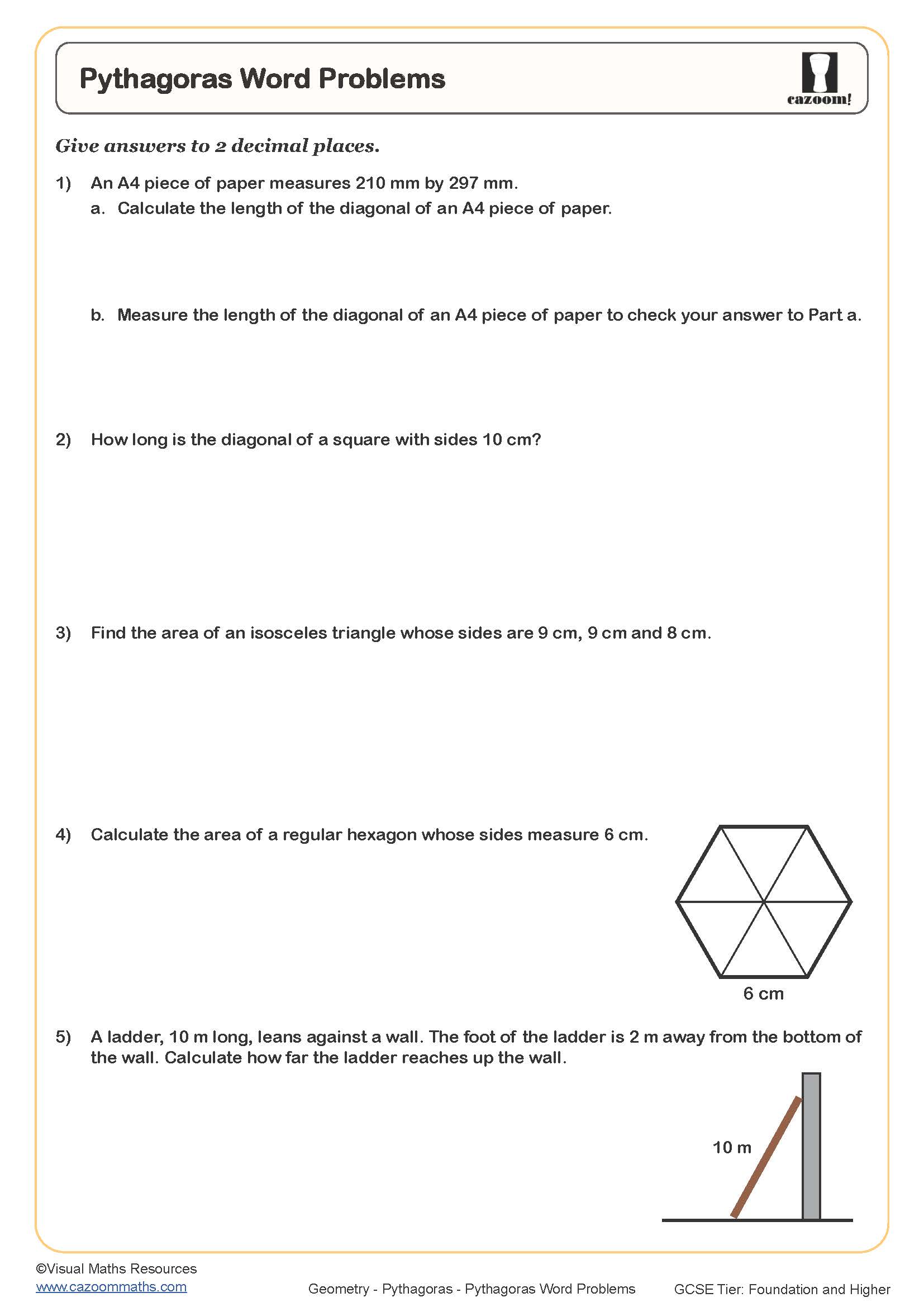
Pythagoras Word Problems
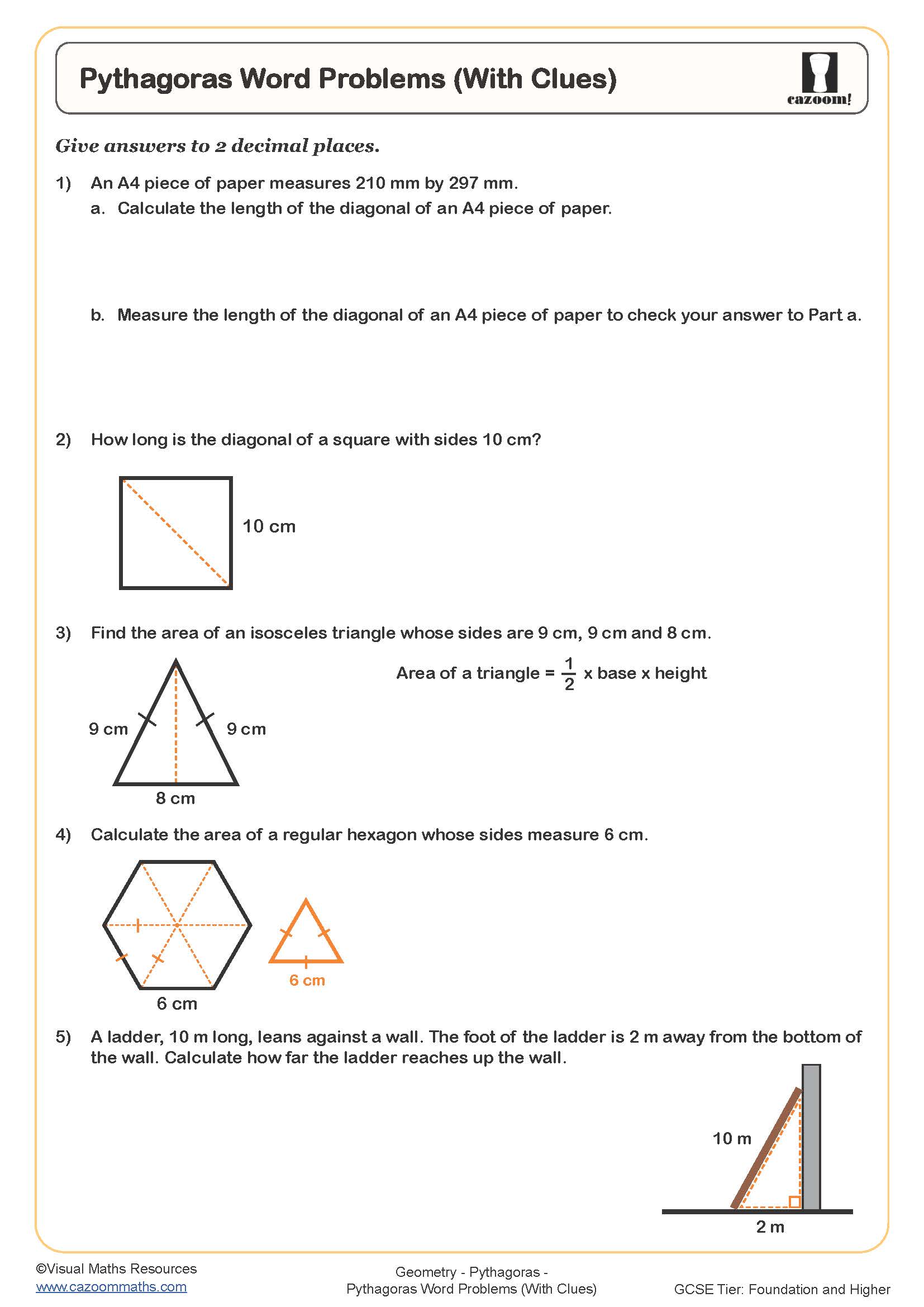
Pythagoras Word Problems (With Clues)
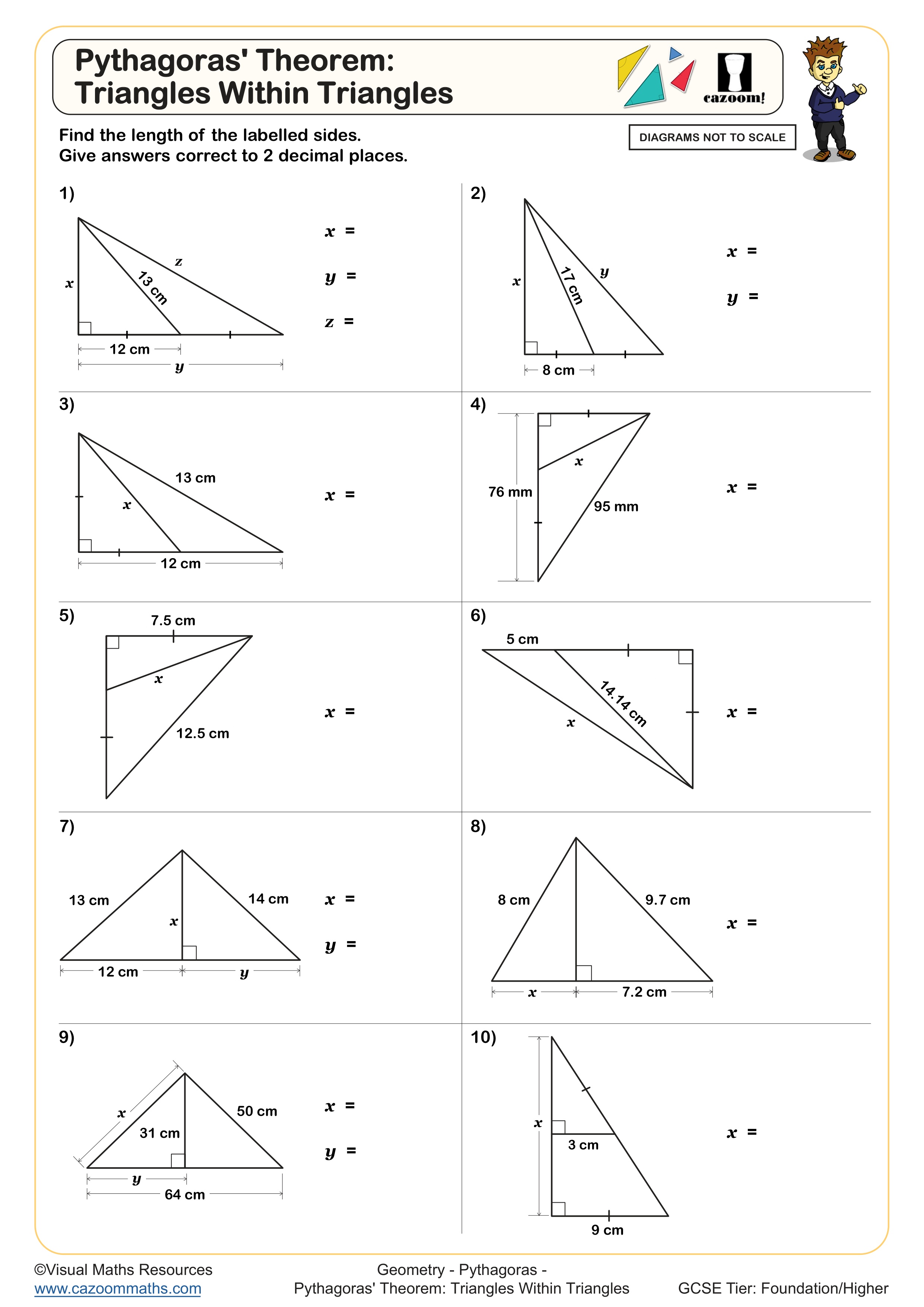
Pythagoras' Theorem: Triangles Within Triangles
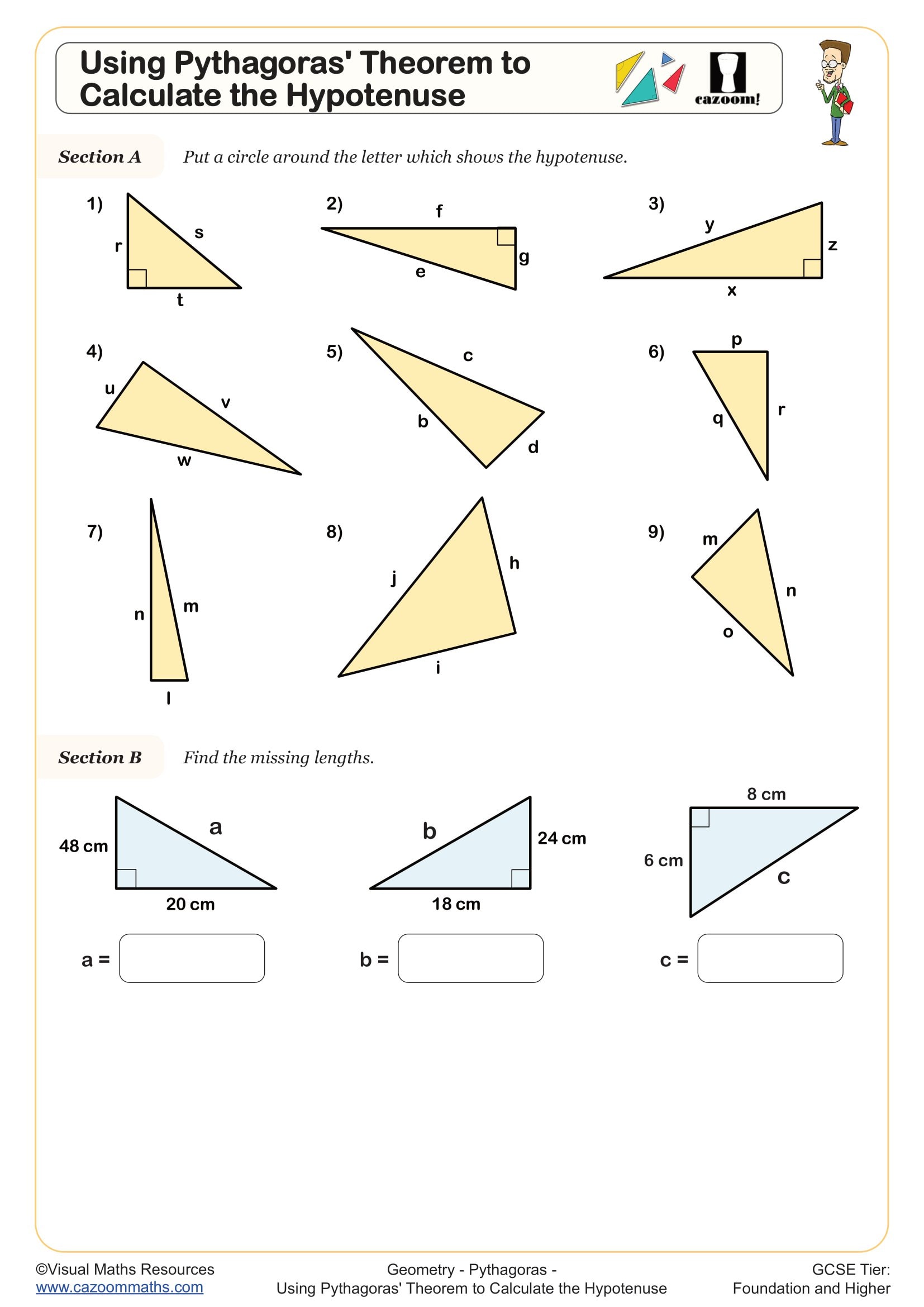
Using Pythagoras Theorem to Calculate the Hypotenuse
Using Pythagoras' Theorem to Calculate Missing Lengths in Right Angled Triangles
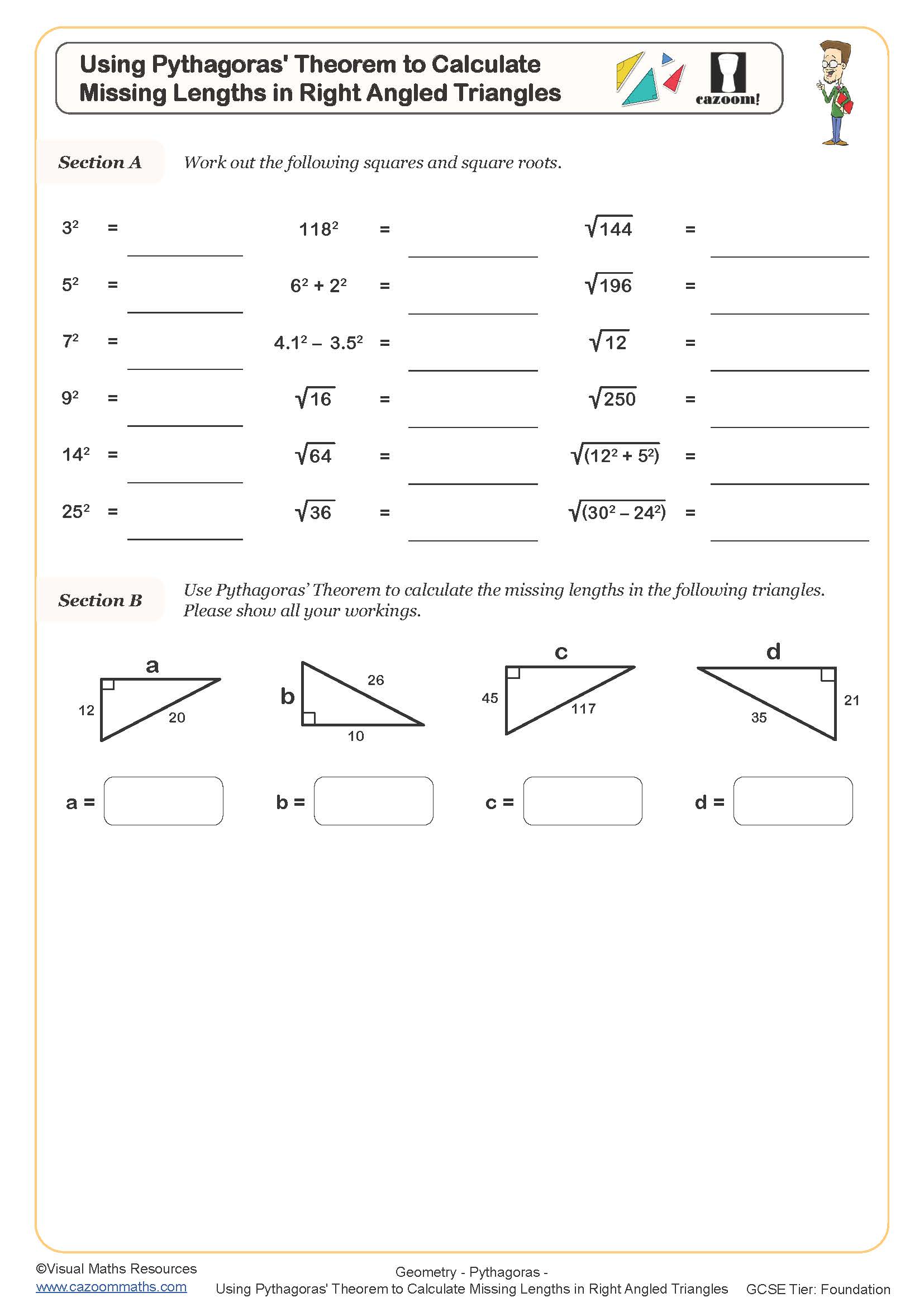
All worksheets are created by the team of experienced teachers at Cazoom Maths.
What makes a good pythagorean theorem worksheet with answers pdf Year 9?
Effective Year 9 Pythagoras worksheets combine clear diagrams with progressive difficulty levels, starting with straightforward missing side calculations before advancing to worded problems and real-world contexts. The PDF format ensures consistent formatting across different devices whilst answer sheets enable efficient marking and student self-assessment.
Teachers notice that worksheets work best when they include triangles in various orientations, not just the standard right-angle-at-bottom position. Students often assume the longest visible side is always the hypotenuse, so varied triangle positions help address this misconception early. Quality worksheets also include measurement units consistently and provide space for working, encouraging students to show their method clearly.
When should students start using Pythagoras theorem worksheets?
Most schools introduce Pythagoras' theorem in Year 9 as part of KS3 geometry, though some higher-attaining groups may encounter it in Year 8. Students need solid understanding of squares, square roots, and basic algebra before tackling Pythagoras problems effectively, making Year 9 the natural progression point.
The theorem connects to GCSE topics including trigonometry, coordinate geometry, and 3D shapes, making early mastery valuable. Teachers find that students who struggle with square roots often find Pythagoras challenging, so addressing calculator skills alongside the theorem helps build confidence. Year 9 provides enough time to develop fluency before GCSE coursework begins in Year 10.
How do scaffolded Pythagoras worksheets help struggling students?
Scaffolded worksheets break down Pythagoras problems into clear steps: identifying the right angle, labelling the hypotenuse, substituting values into the formula, and calculating the result. This structured approach prevents students from feeling overwhelmed by multi-step problems whilst building systematic problem-solving habits.
Teachers report that scaffolding particularly helps students who struggle with algebraic manipulation or have difficulty organising their working. The step-by-step format also makes it easier to identify where errors occur, whether in formula recall, calculation, or triangle interpretation. Many students gain confidence through this supported practice before attempting independent problems.
How can teachers use these worksheets most effectively in lessons?
Teachers find success using these worksheets for guided practice after demonstrating the theorem, allowing students to work through examples with immediate support available. The answer sheets enable quick circulation and feedback, helping identify common errors whilst they're still fresh in students' minds.
Pairing stronger students with those who need support often works well with Pythagoras worksheets, as explaining the method reinforces understanding for both parties. Teachers also use completed worksheets as assessment tools, checking whether students can identify right-angled triangles correctly and apply the formula accurately. Regular mini-plenaries using worksheet examples help consolidate learning before independent practice begins.