Year 9 Ratio Worksheets
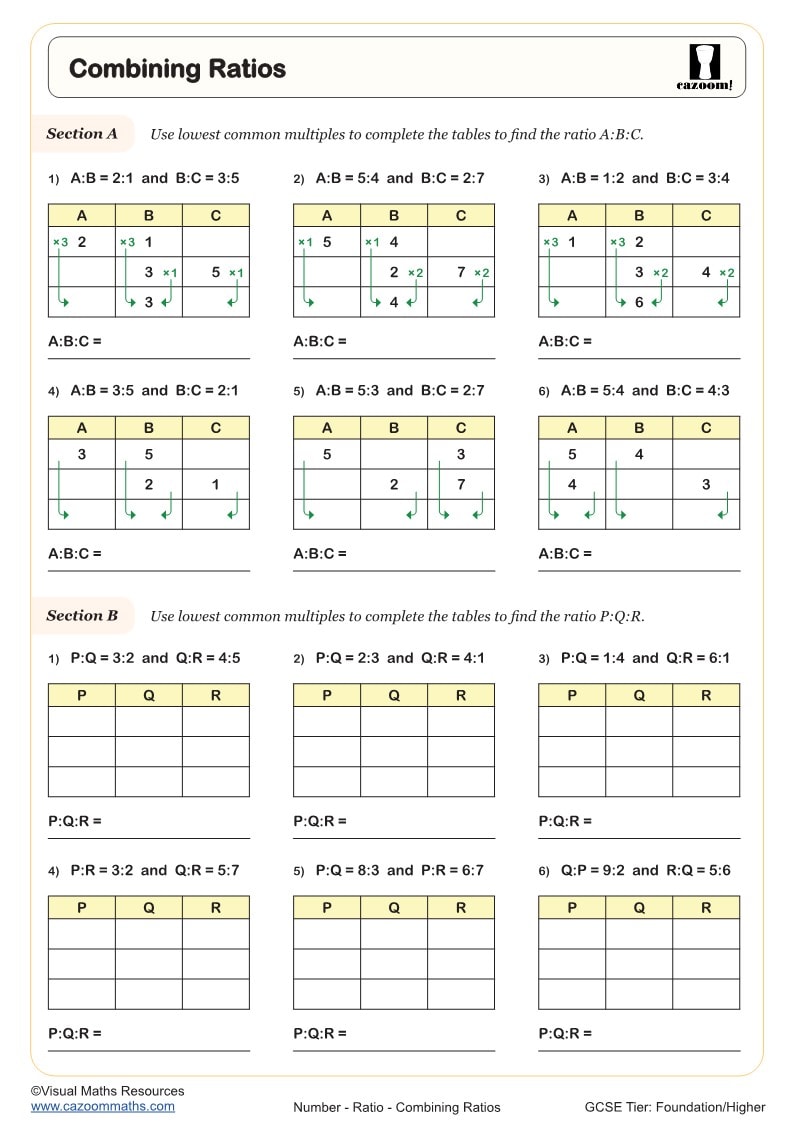
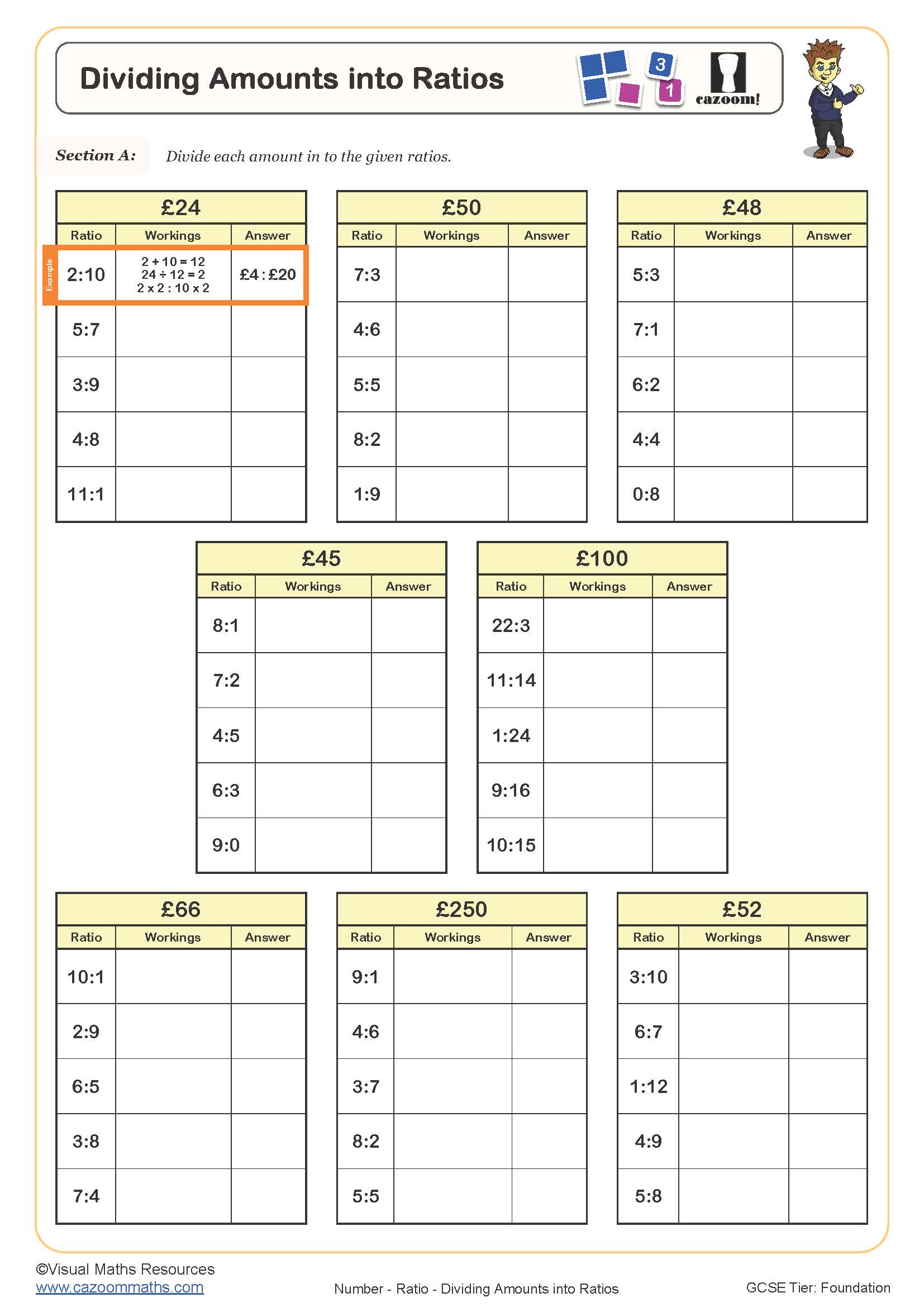
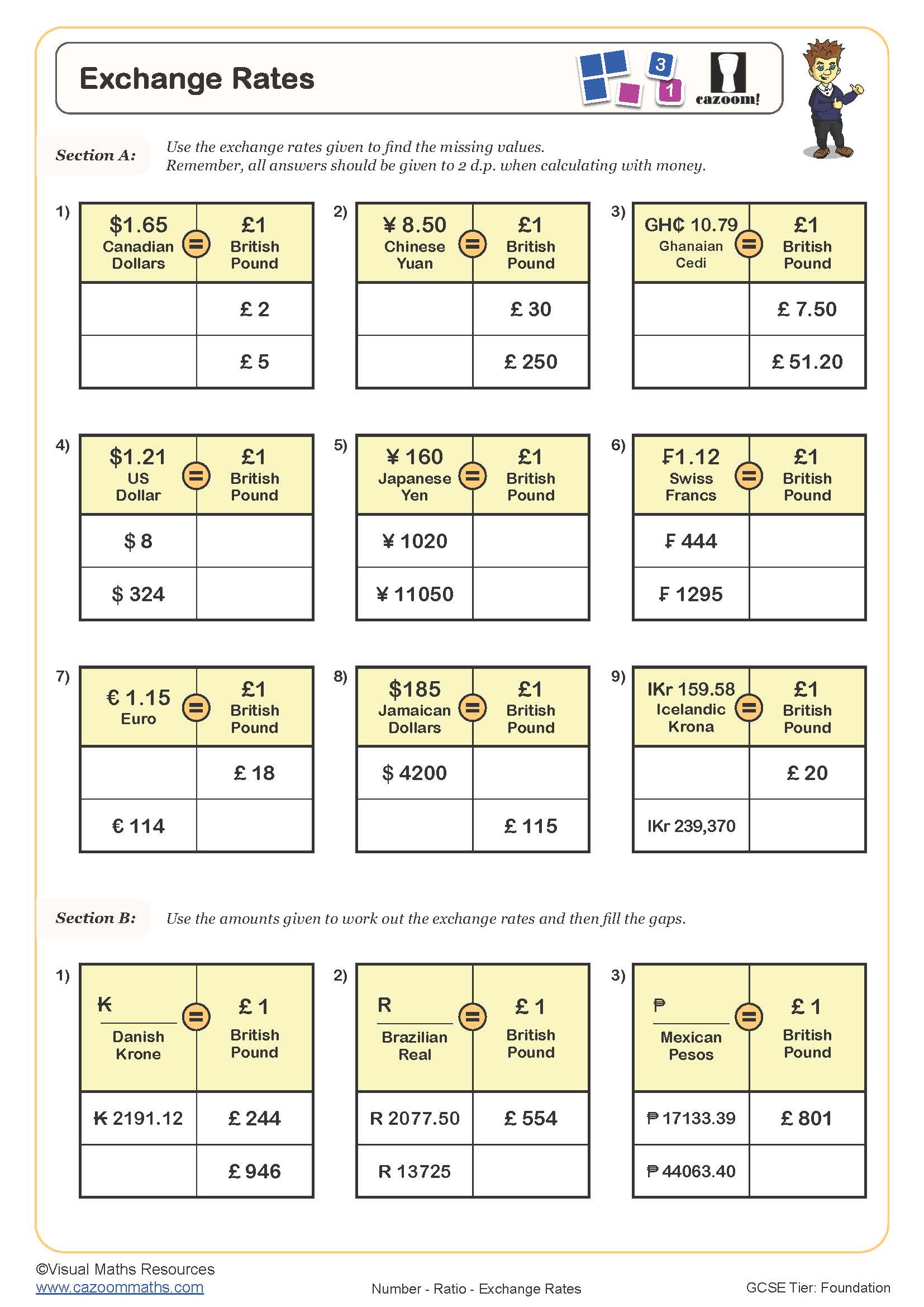
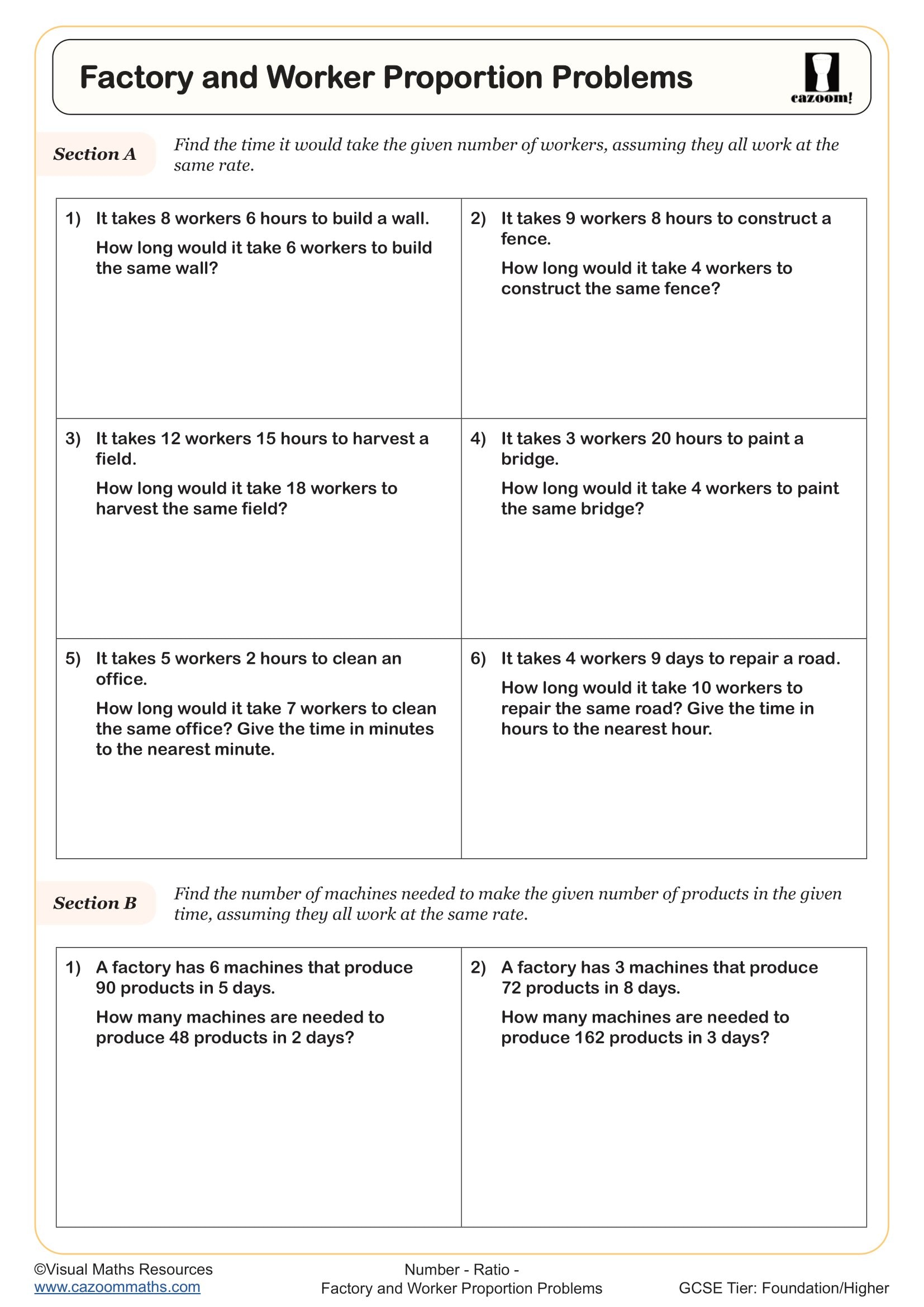
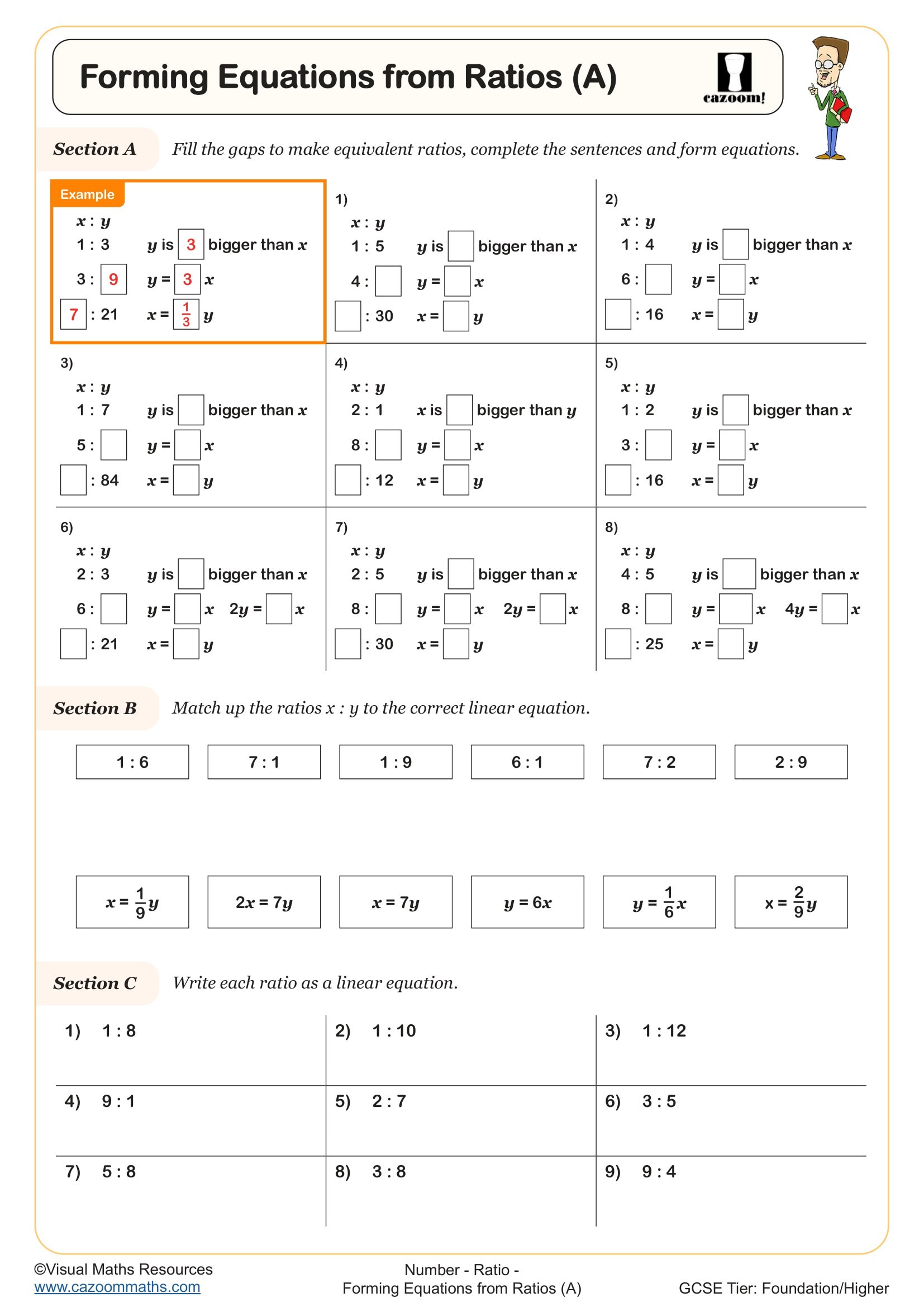
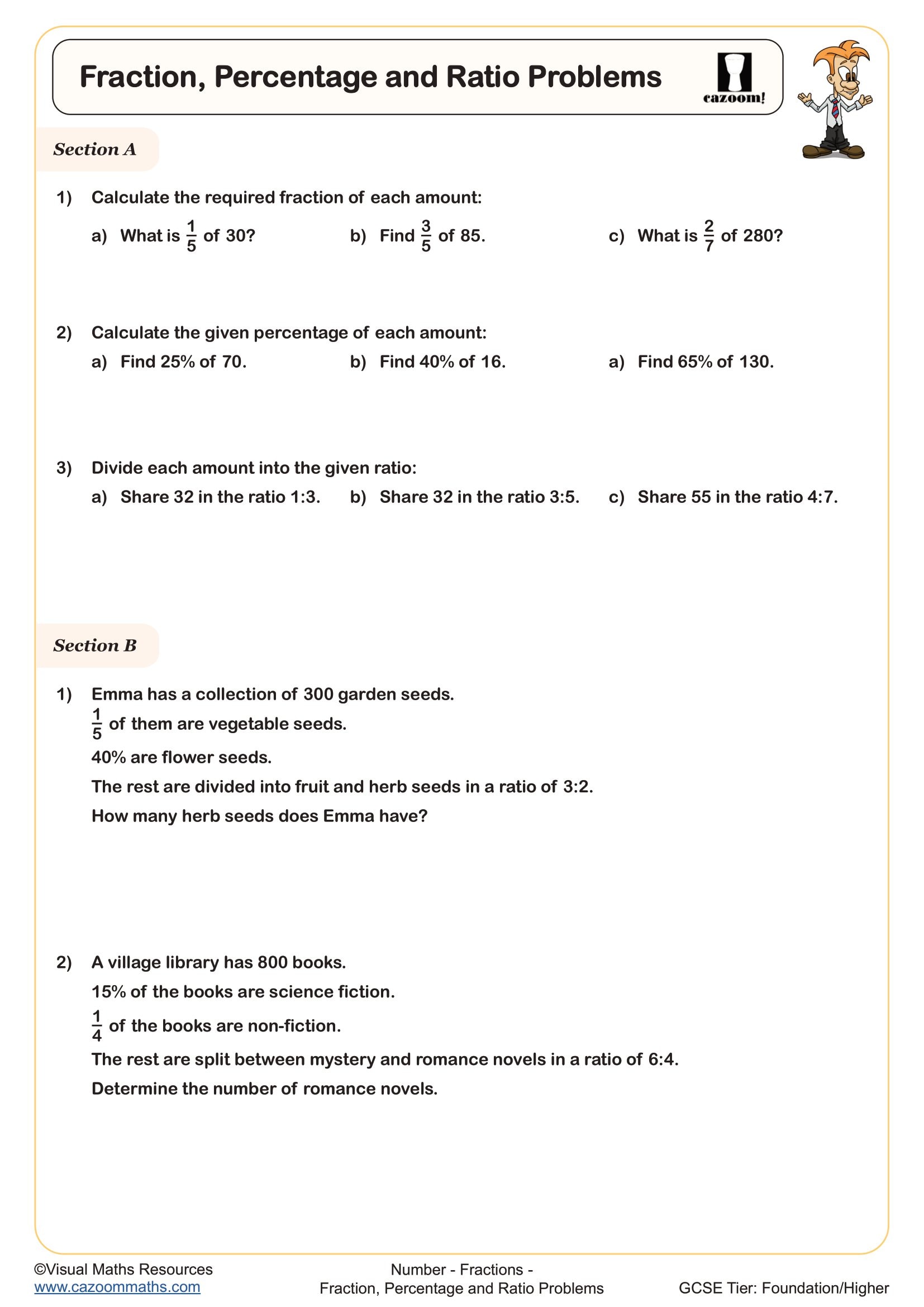
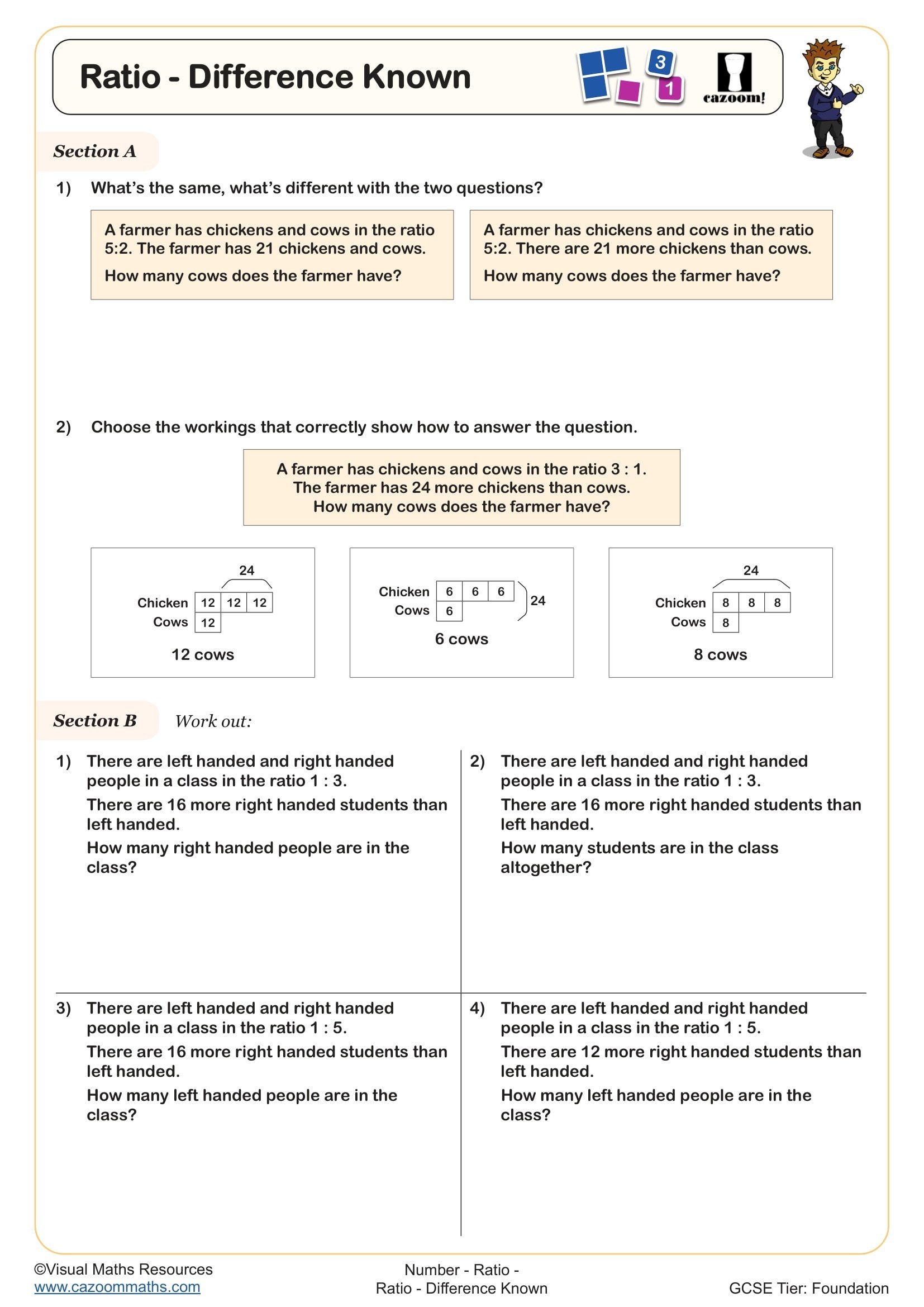
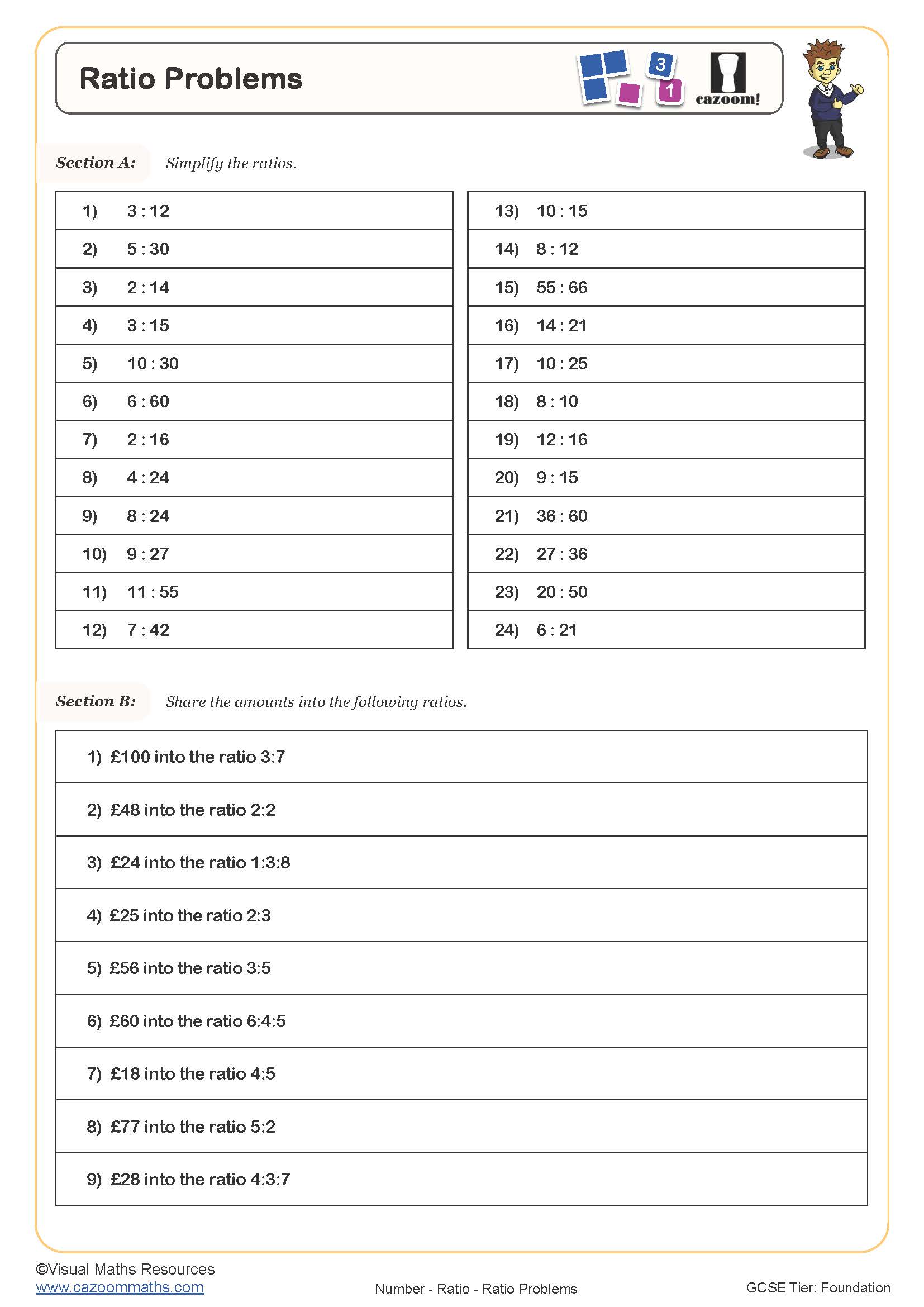
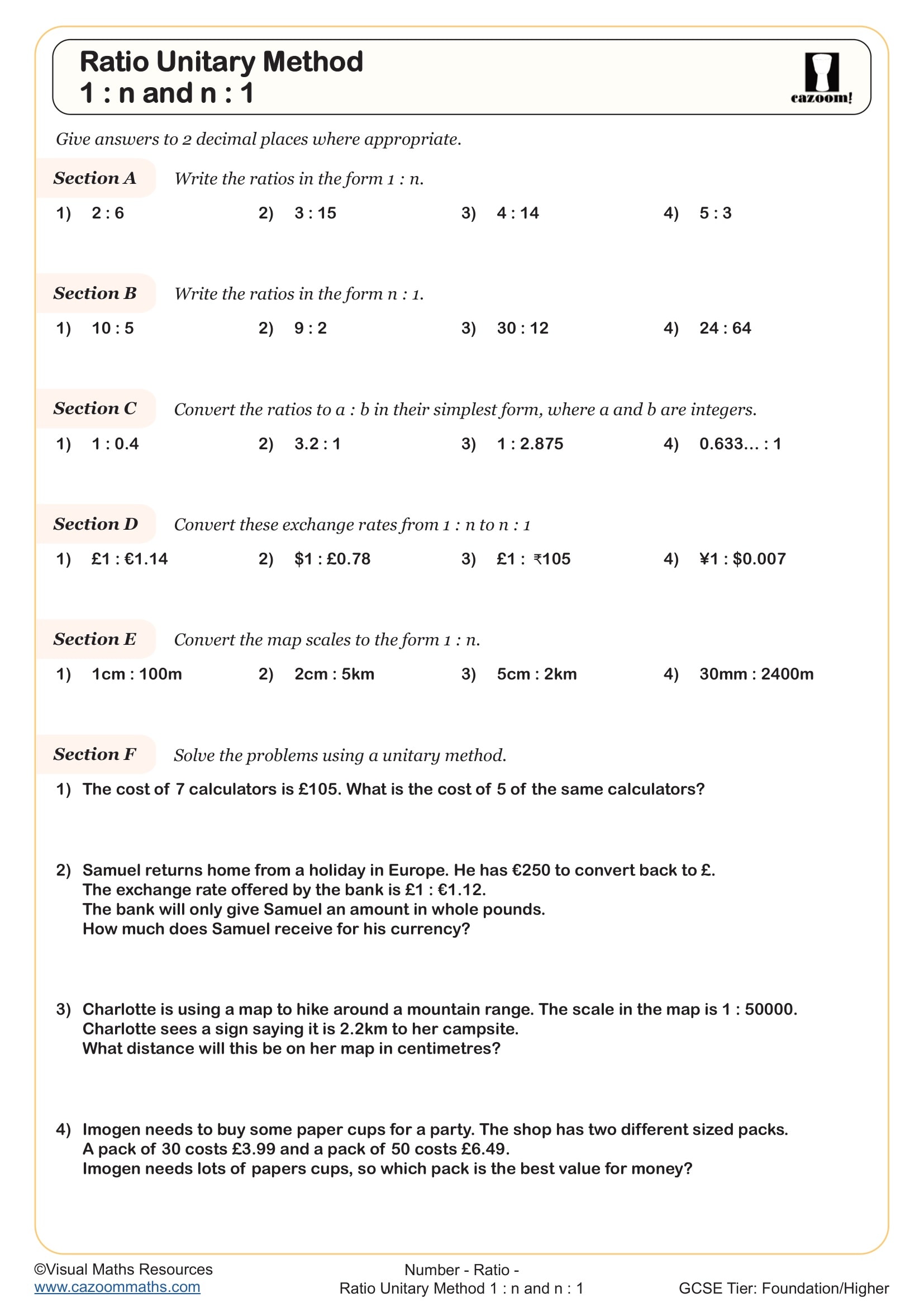
All worksheets are created by the team of experienced teachers at Cazoom Maths.
What makes effective ratio worksheets for Year 9 students?
Effective ratio worksheets for Year 9 build systematically from basic simplification through to complex real-world applications. Students need structured practice moving from numerical ratios like 12:8 to contextual problems involving ingredients, distances, and exchange rates. The worksheets should include both part-to-part and part-to-whole ratio problems to develop complete understanding.
Teachers find that students often confuse ratio calculations with simple multiplication when scaling recipes or maps. Quality year 9 ratio questions include clear context and require students to identify what type of ratio relationship exists before calculating. The progression from simple integer ratios through to decimal and percentage applications mirrors the KS3 to KS4 transition students will experience.
How do Year 9 ratio topics connect to other year groups?
Year 9 ratio work builds directly on KS2 foundations where students first encountered simple scaling and proportion. In Year 8, students worked with basic ratio simplification and sharing quantities. Year 9 extends this to more complex contexts including rates, density calculations, and compound ratios that appear in GCSE mathematics.
The progression continues into Years 10 and 11 where ratio knowledge underpins similarity, trigonometry, and statistical analysis. Teachers observe that students who master ratio manipulation in Year 9 show greater confidence with algebraic proportion and gradient calculations later. This foundation proves particularly valuable for students pursuing science subjects where ratio appears in concentration calculations and reaction stoichiometry.
What are the most challenging aspects of ratio simplification?
Students frequently struggle with ratio simplification when dealing with decimal or fractional parts. Many attempt to clear decimals by multiplying each part by 10, but fail to recognise when this creates unnecessarily large numbers. The key misconception involves treating ratios like fractions and trying to find common denominators instead of common factors.
Teachers notice particular difficulty when ratios involve mixed units, such as converting between pence and pounds or minutes and hours before simplification. Students often forget the conversion step entirely or apply it incorrectly to only one part of the ratio. Structured practice with unit conversion within ratio contexts helps students develop systematic approaches to these multi-step problems.
How should teachers use these ratio worksheets in lessons?
These worksheets work most effectively when teachers model the first few problems before independent practice. Students benefit from seeing explicit connections between ratio notation, fraction equivalents, and scaling methods. Teachers should emphasise checking answers by scaling back to verify proportional relationships remain consistent throughout calculations.
The answer sheets prove particularly valuable for peer assessment activities where students can identify common errors in working methods. Teachers report success using selected problems as starter activities to revisit ratio concepts across multiple lessons. The variety of contexts helps students recognise ratio applications in science lessons, geography map work, and design technology projects.