Year 9 Trigonometry Worksheets
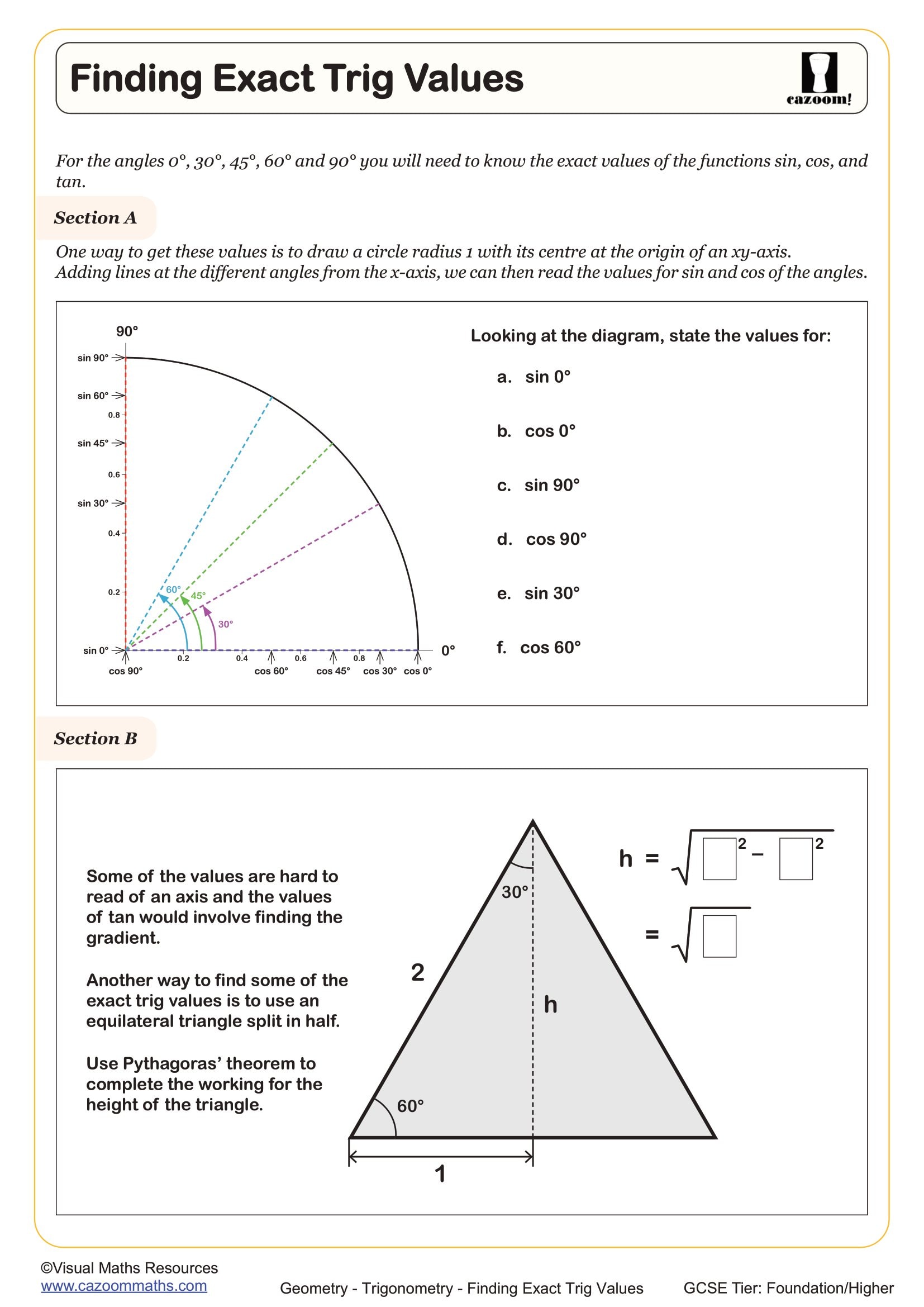
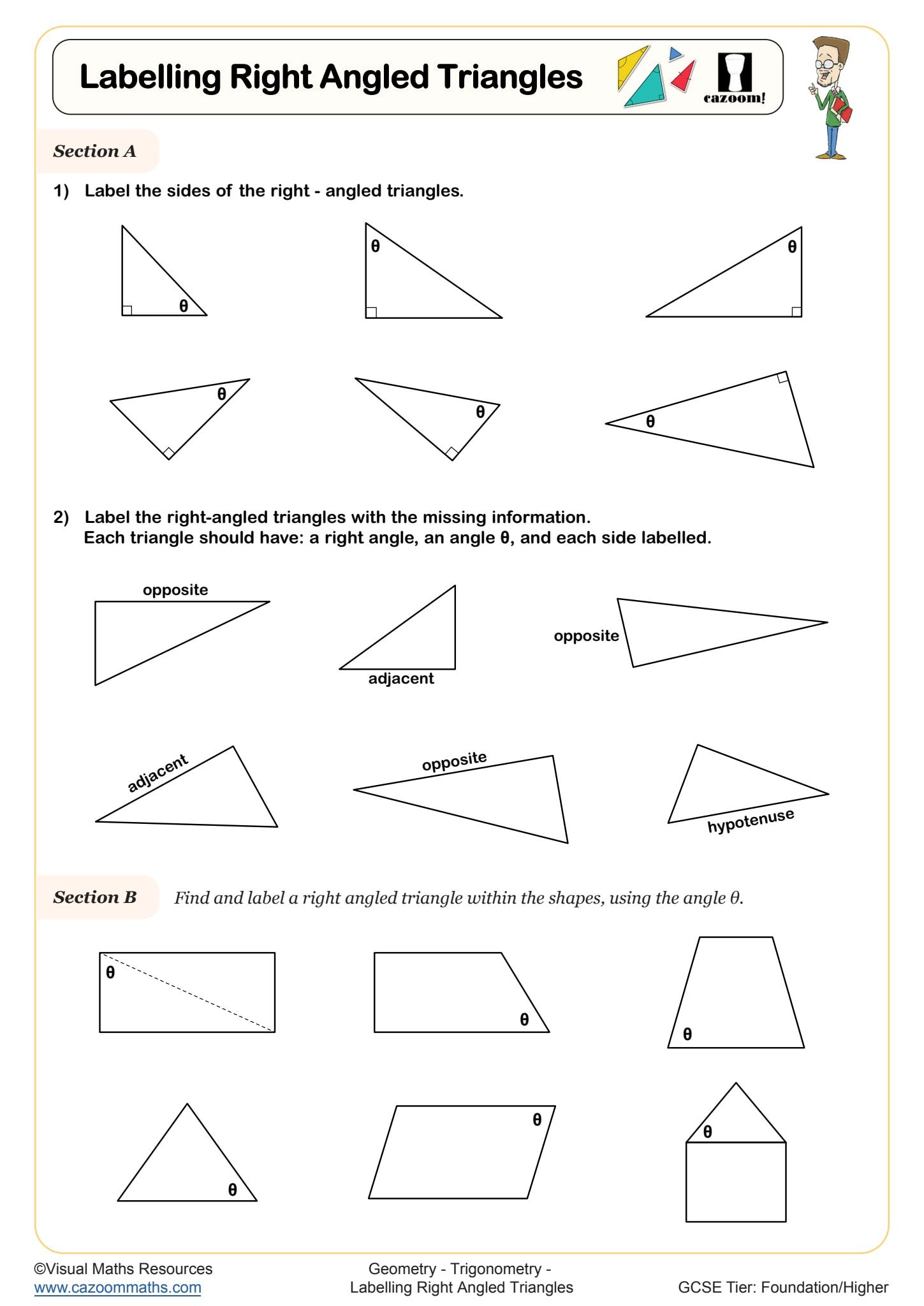
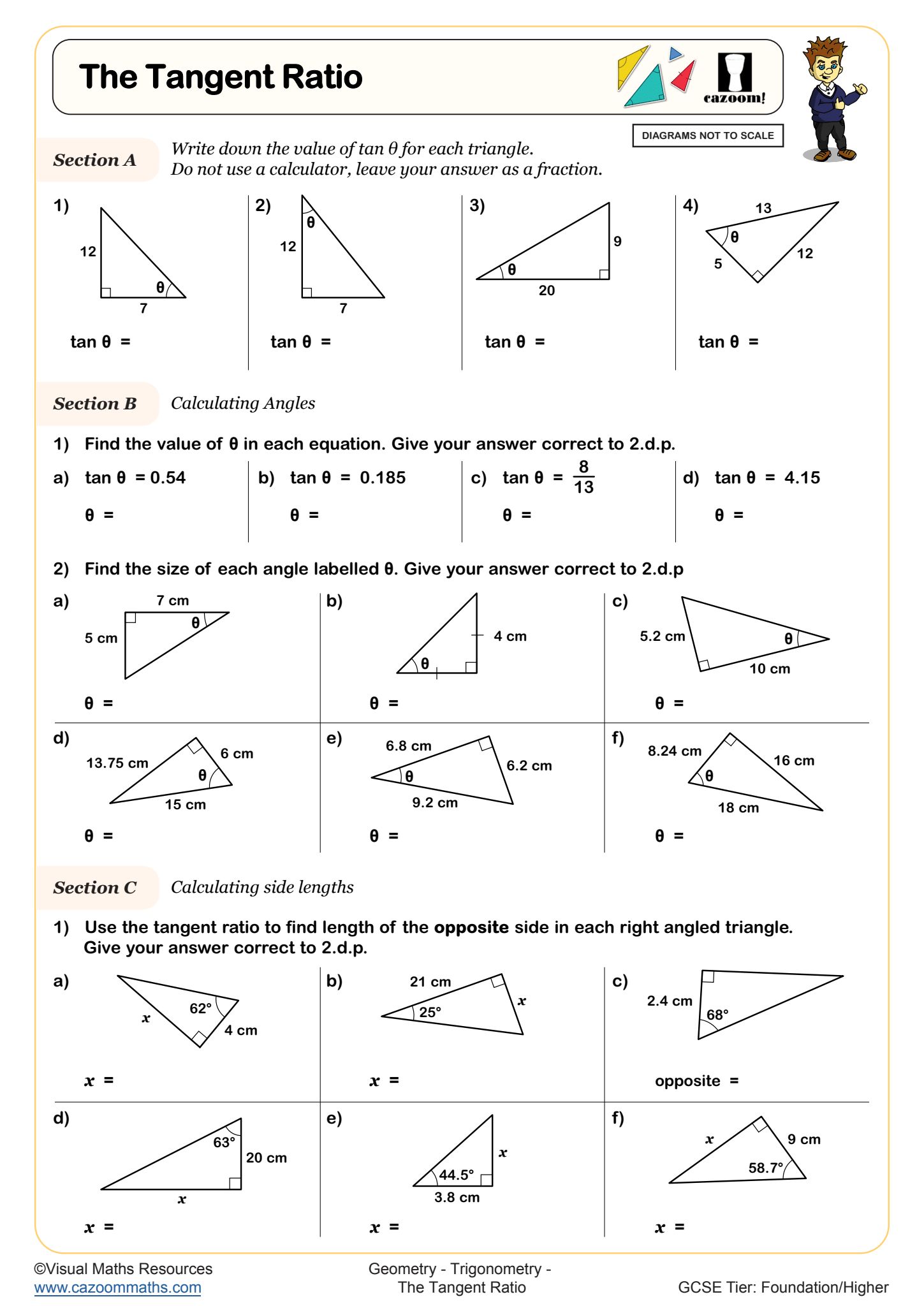
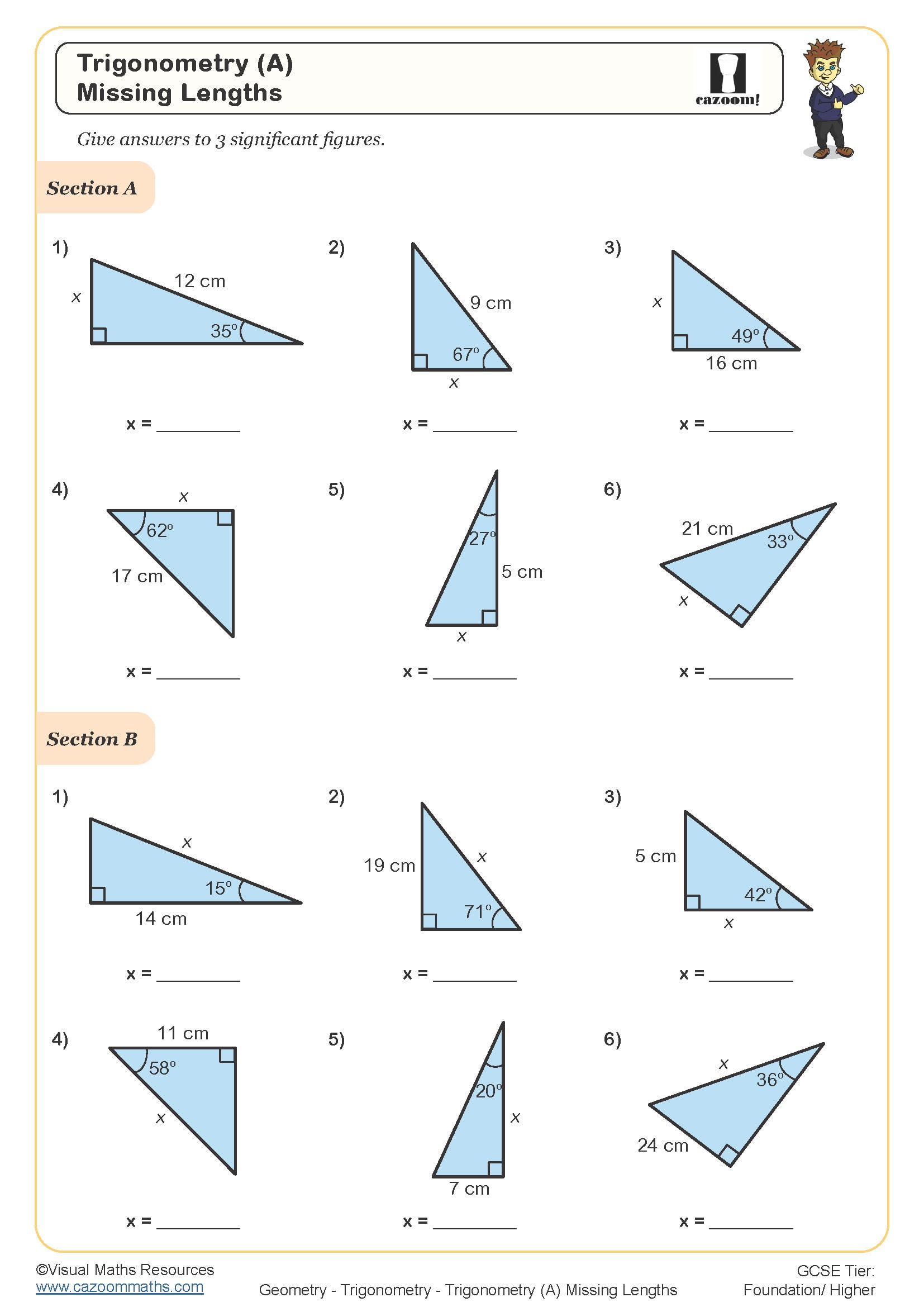
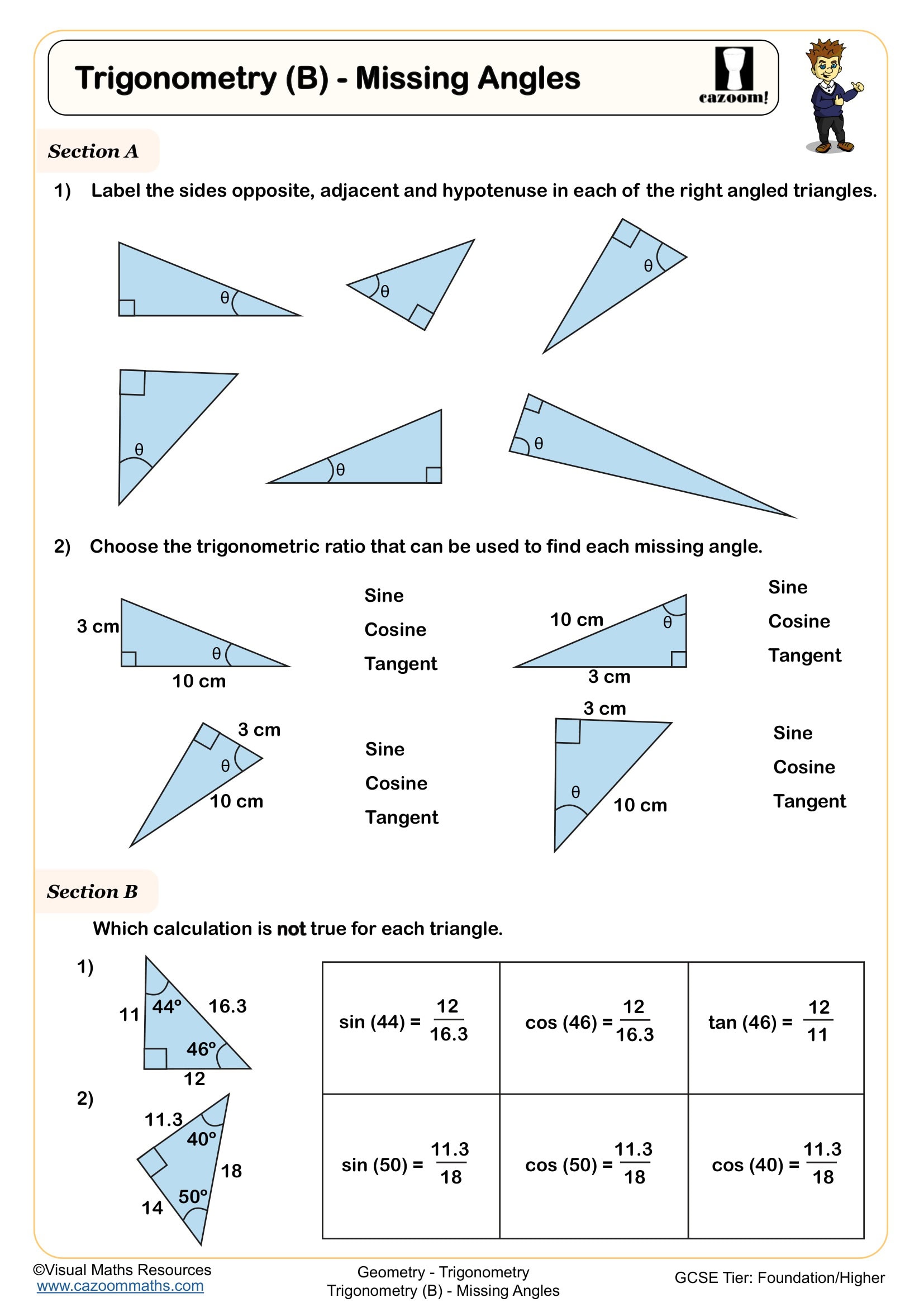
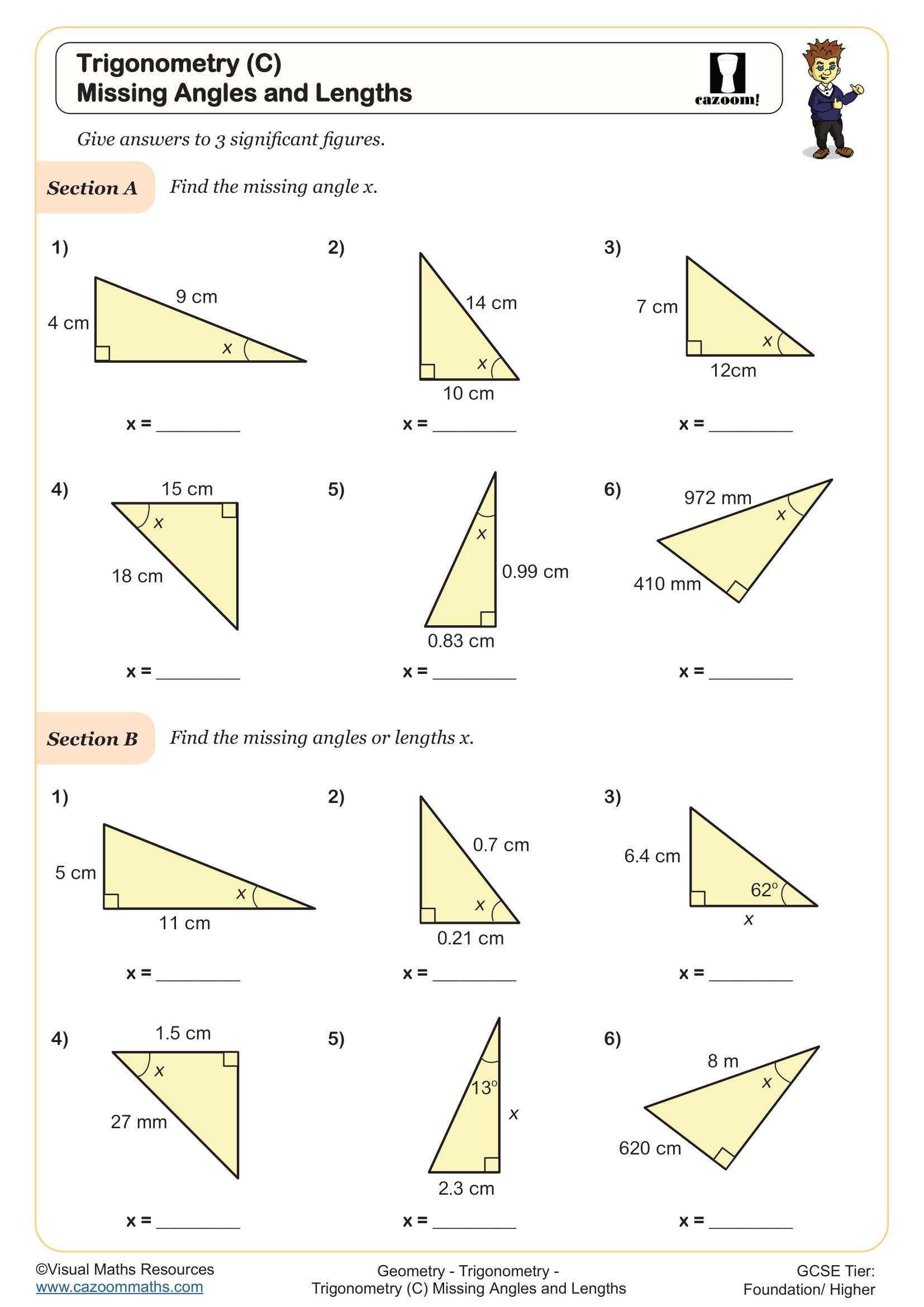
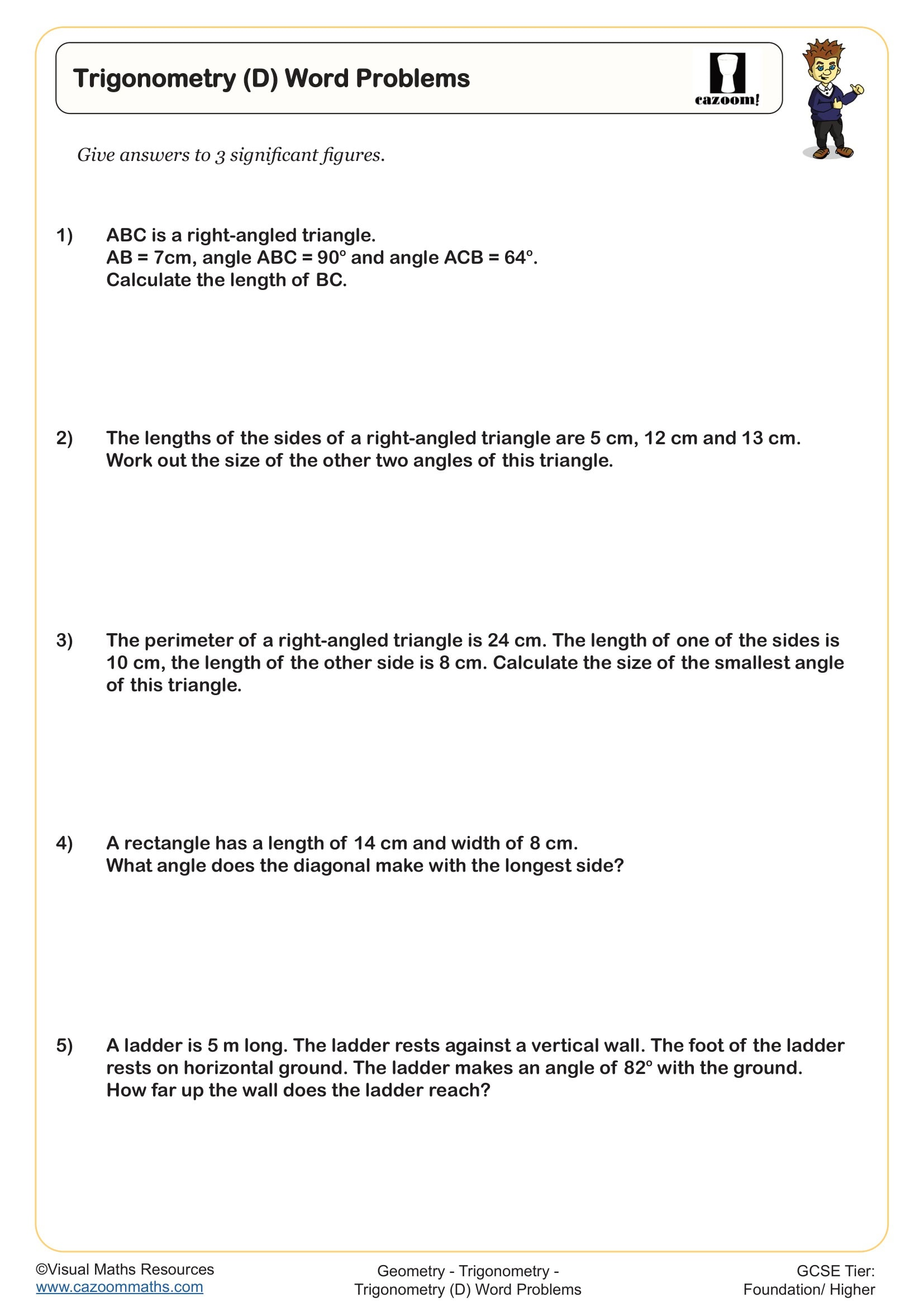
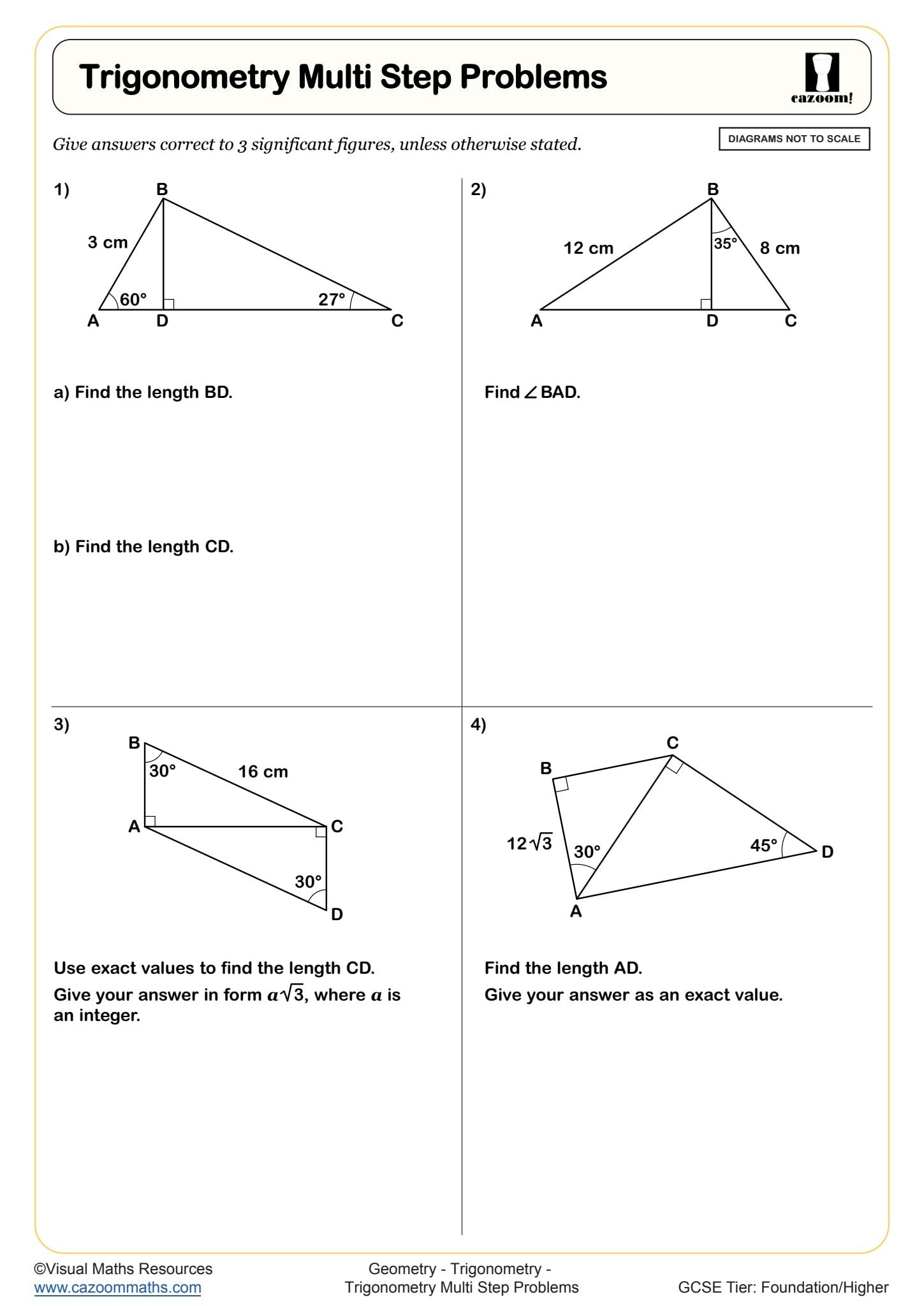
All worksheets are created by the team of experienced teachers at Cazoom Maths.
What makes these trigonometry Year 9 worksheets effective for teaching missing lengths?
These trigonometry Year 9 worksheets pdf resources use a structured approach where students identify the given information, select the appropriate trigonometric ratio, and set up equations systematically. The visual maths resources include triangles in different orientations to prevent students from memorising positions rather than understanding relationships.
Teachers find that students often struggle when the hypotenuse isn't the longest-looking side in the diagram. The worksheets address this by including triangles where the hypotenuse appears horizontal, vertical, or diagonal, forcing students to identify it correctly rather than relying on visual assumptions about which side looks longest.
How do these year 9 trigonometry questions progress through Key Stage 3?
The trigonometry year 9 worksheets begin with right-angled triangles where students find missing sides using clearly labelled opposite, adjacent, and hypotenuse. Questions then progress to scenarios where students must first identify these relationships themselves before applying trigonometric ratios.
By Year 9, students should confidently use all three primary ratios and understand when each applies. The worksheets support this transition from Year 8 introduction work by including mixed exercises where students choose between sine, cosine, and tangent. This mirrors GCSE expectations where students must demonstrate ratio selection skills alongside calculation accuracy.
Why do students find trigonometry finding angles worksheet questions more challenging?
Finding angles requires students to use inverse trigonometric functions, which many find conceptually difficult after focusing on finding lengths. The trigonometry worksheet year 9 materials introduce angle-finding systematically, showing students how to rearrange equations and use calculator inverse functions correctly.
Teachers observe that students often forget to check whether their calculated angles are reasonable for the given triangle. The worksheets include problems where students must evaluate their answers, such as checking that angles in a triangle sum to 180° or that acute angles in right-angled triangles are less than 90°.
How can teachers use these trigonometry year 9 worksheets most effectively in lessons?
The Year 9 trigonometry worksheets work well as starter activities to recap previous learning or as consolidation exercises following direct teaching. Teachers can use the answer sheets to facilitate peer marking, which helps students identify common errors in their working and develops their mathematical communication skills.
Many teachers find these resources valuable for differentiated homework tasks, as the PDF format allows easy distribution through learning platforms. The clear progression through each worksheet means teachers can assign specific sections to students based on their current understanding, rather than giving entire worksheets that might overwhelm or under-challenge different learners.