6th Grade Ratio and Proportional Relationships Worksheets
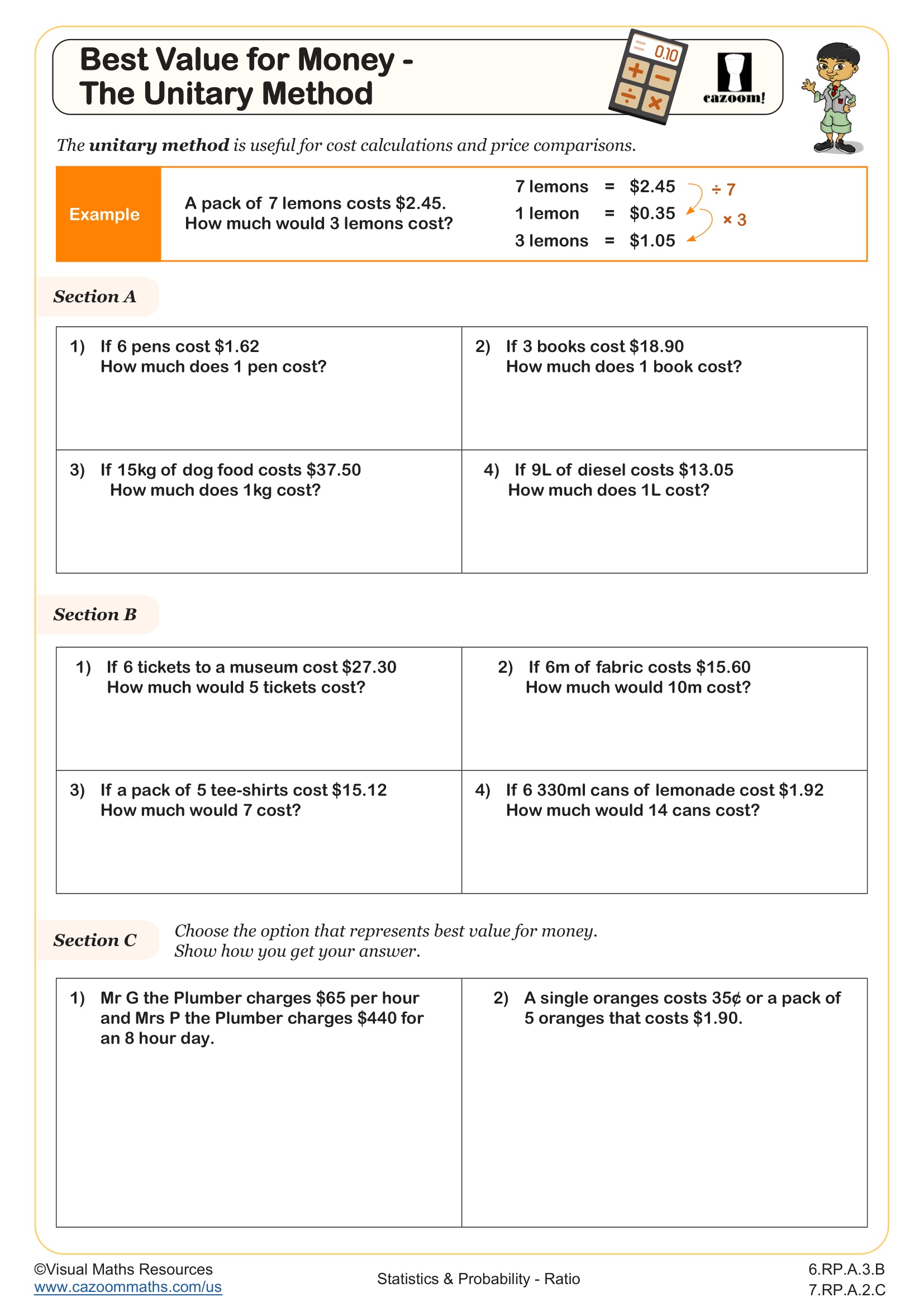
Best Value for Money - the Unitary Method
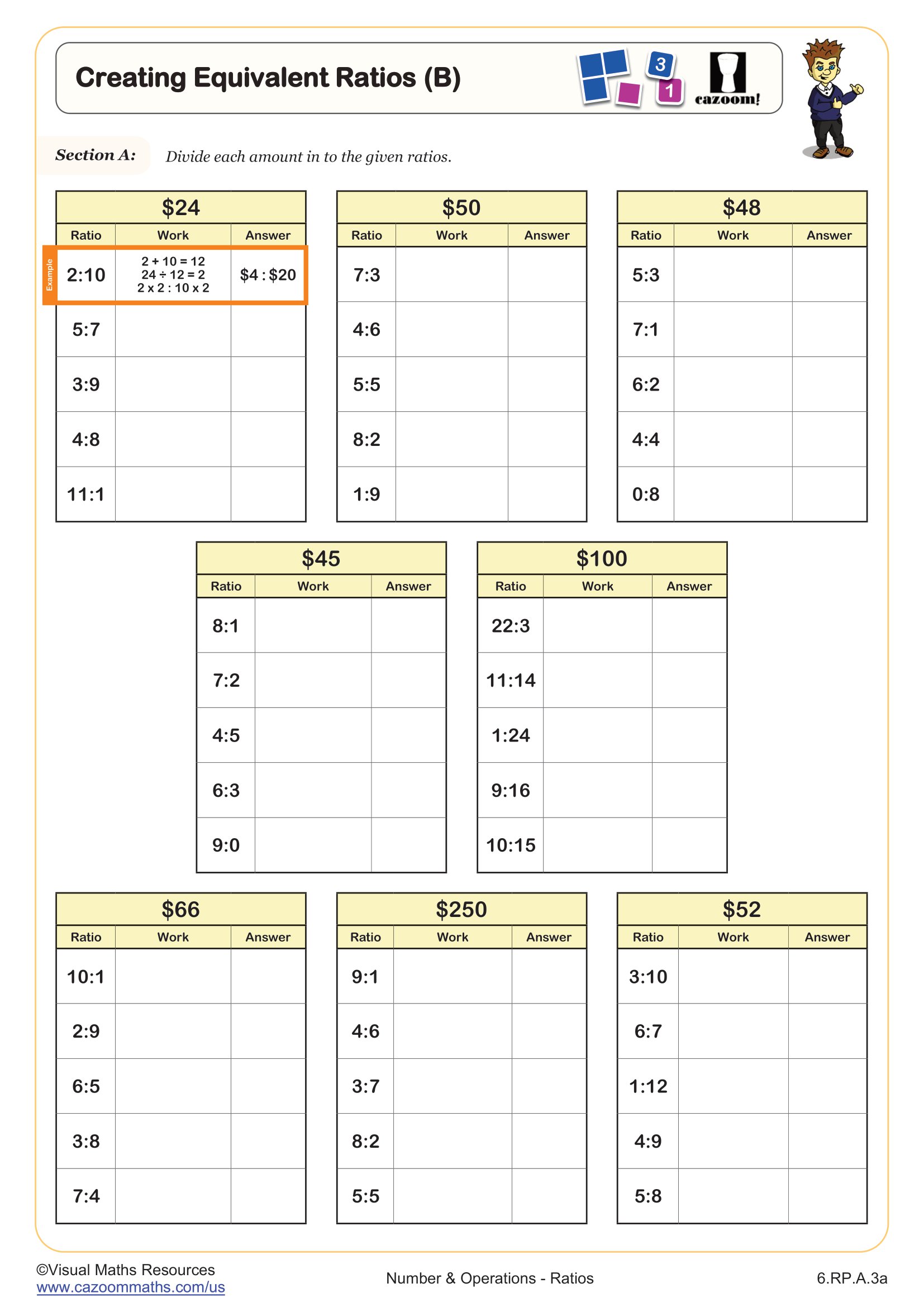
Creating Equivalent Ratios (B)
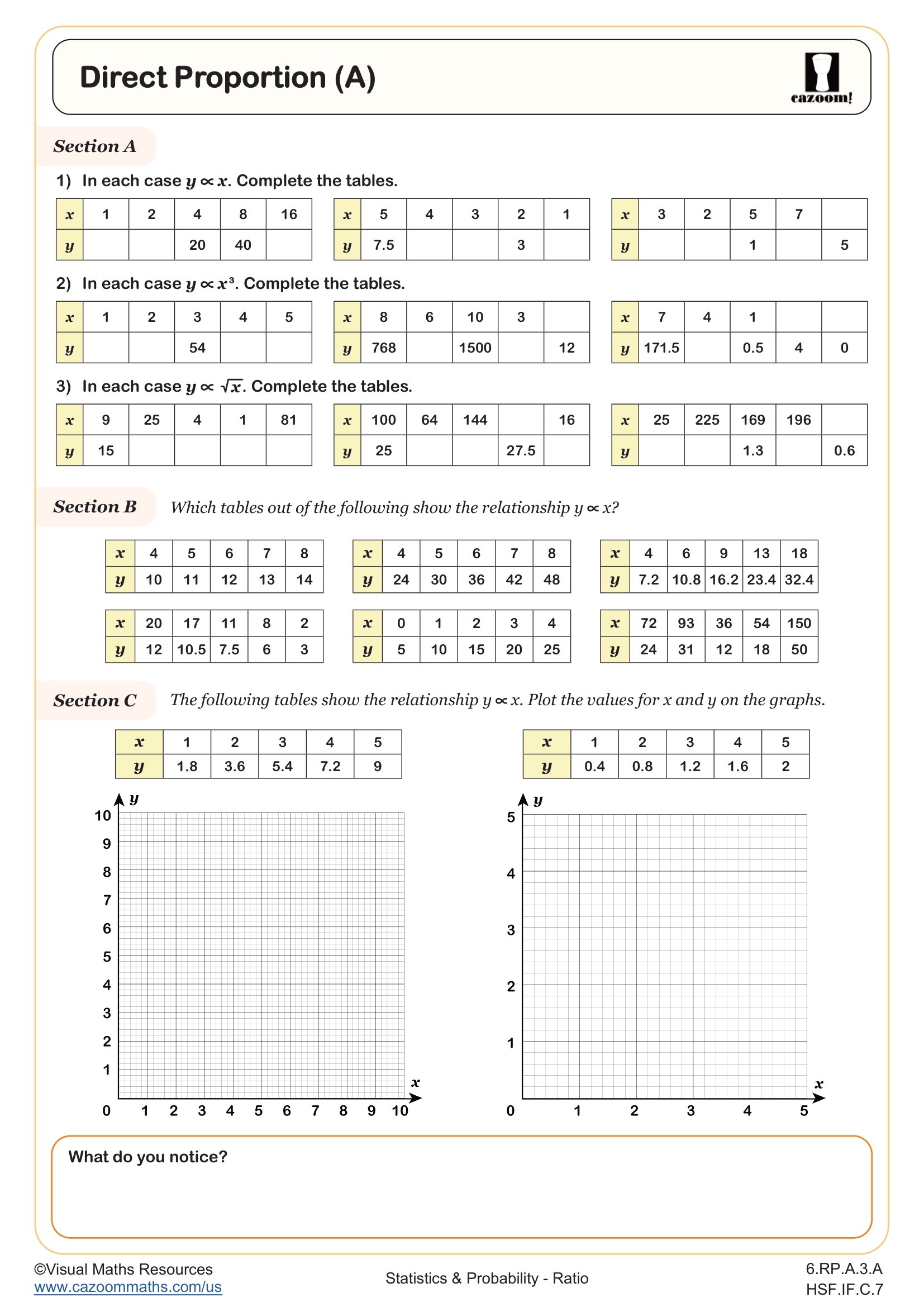
Direct Proportion (A)
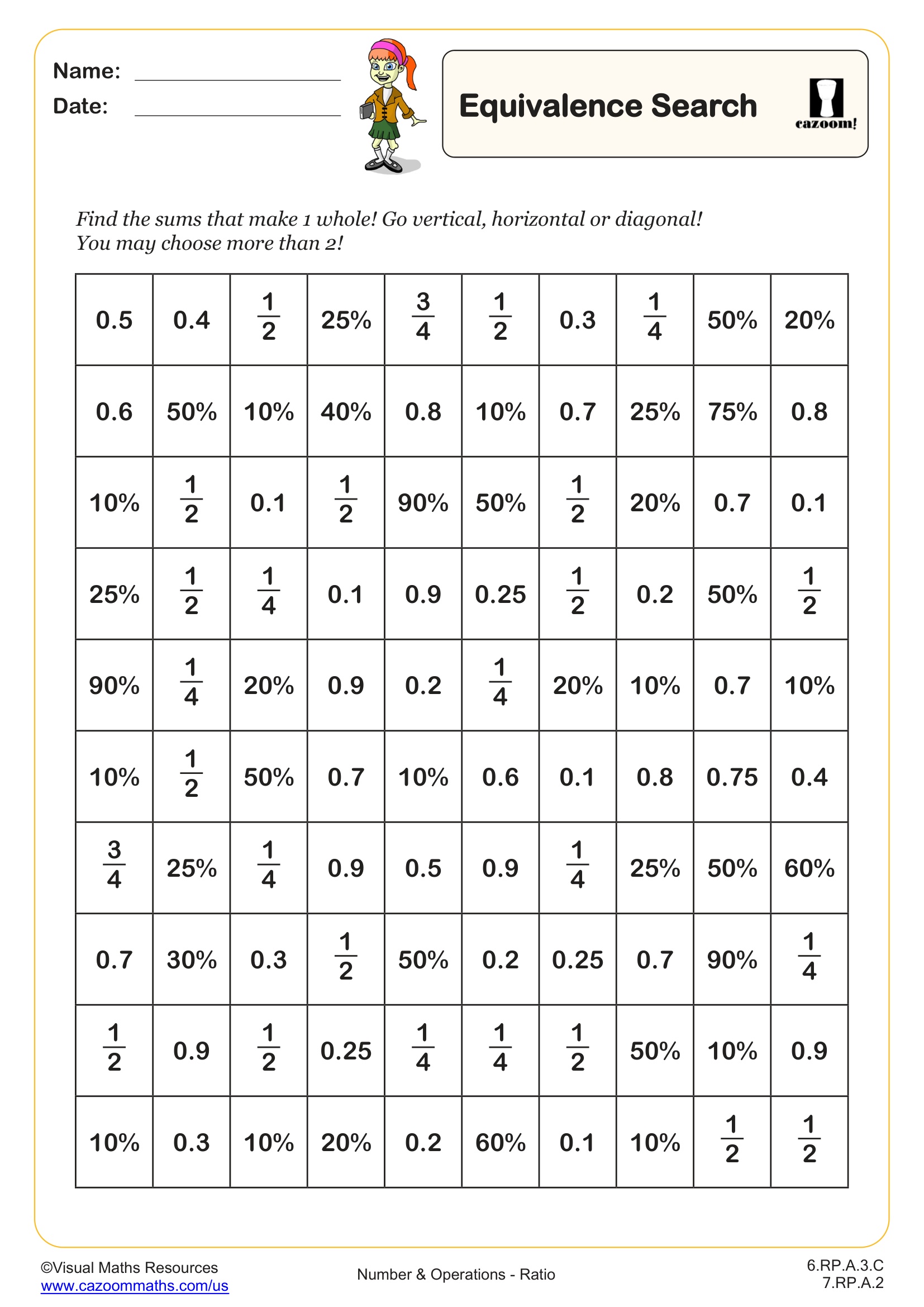
Equivalence Search (A)
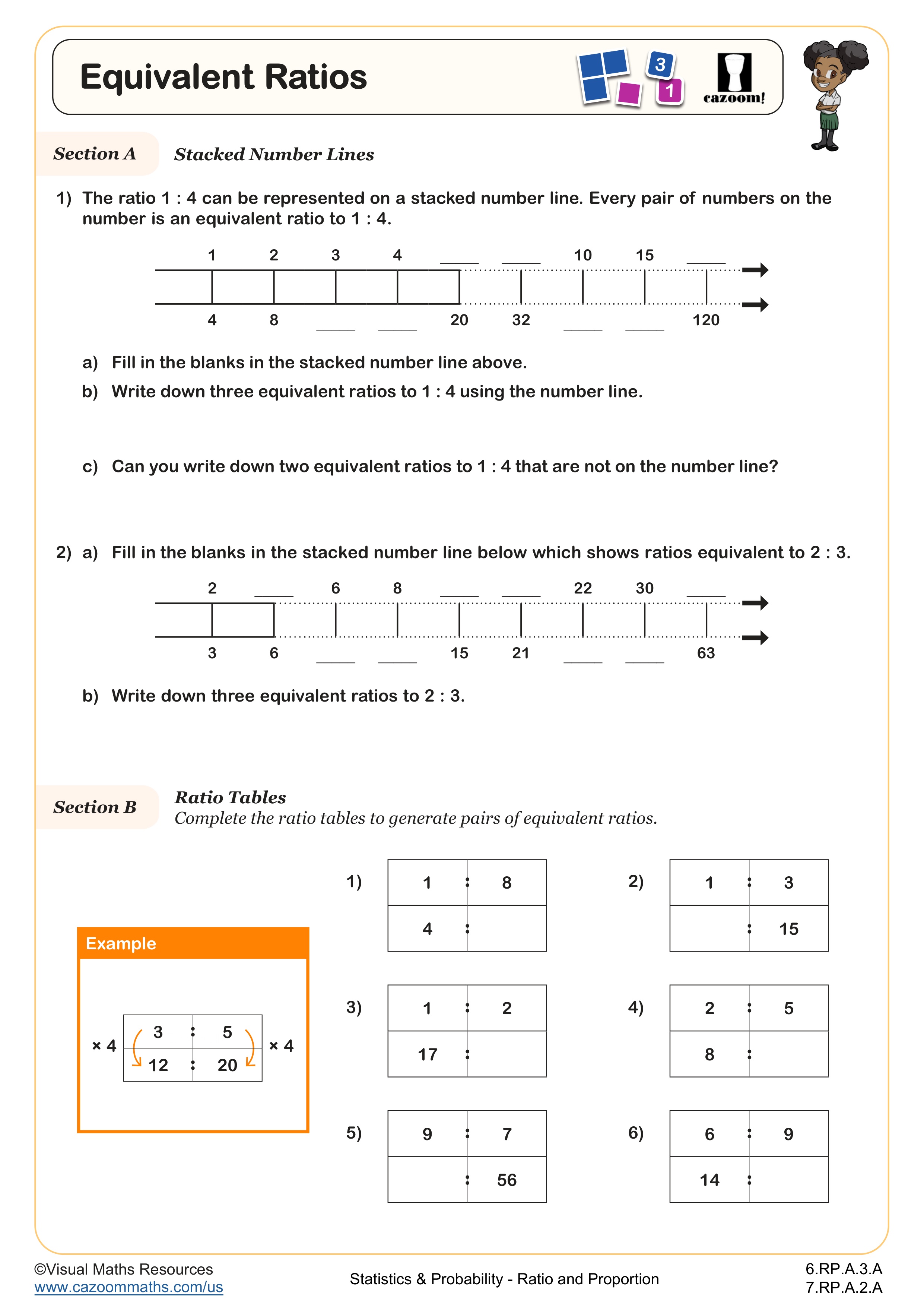
Equivalent Ratios
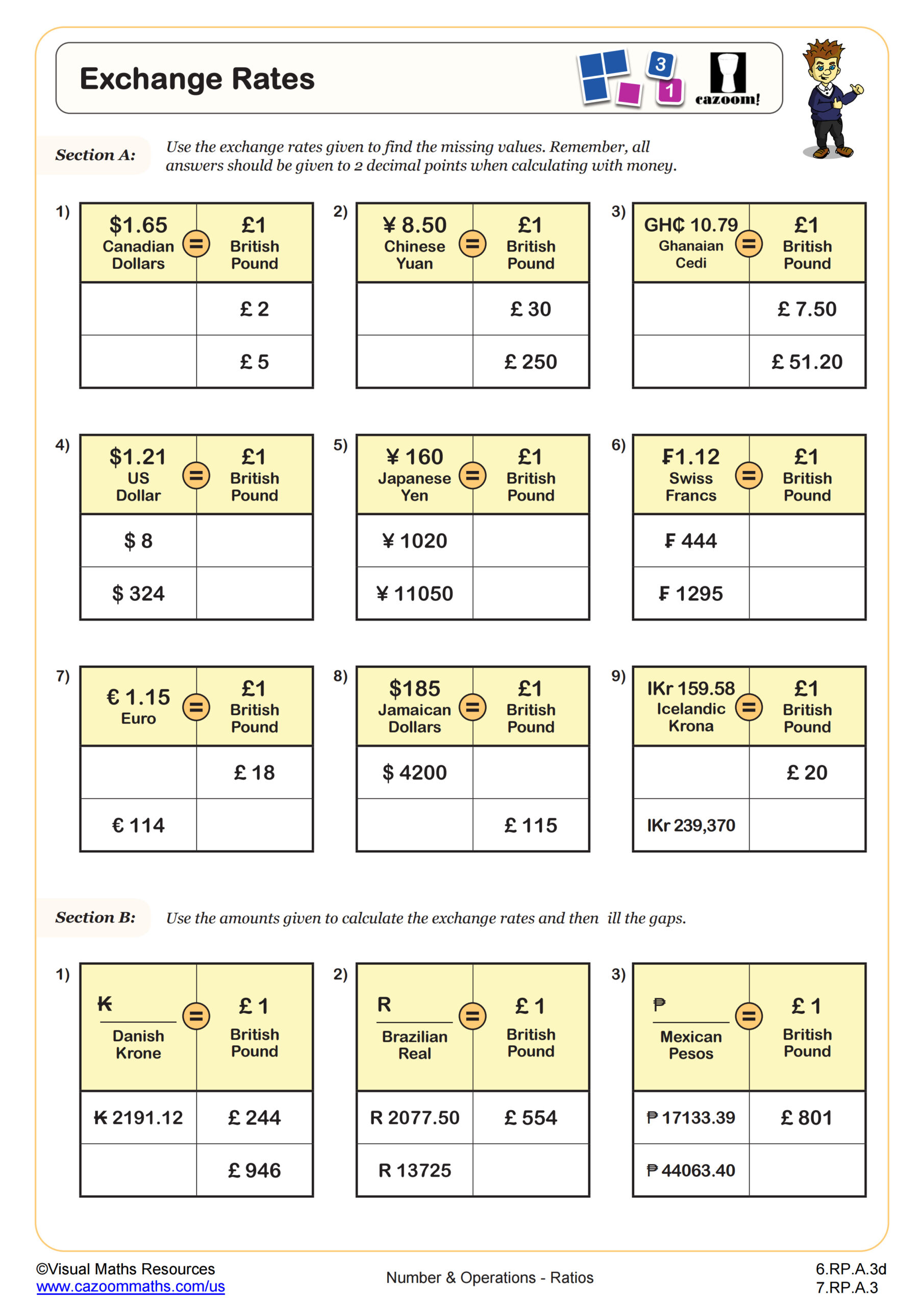
Exchange Rates
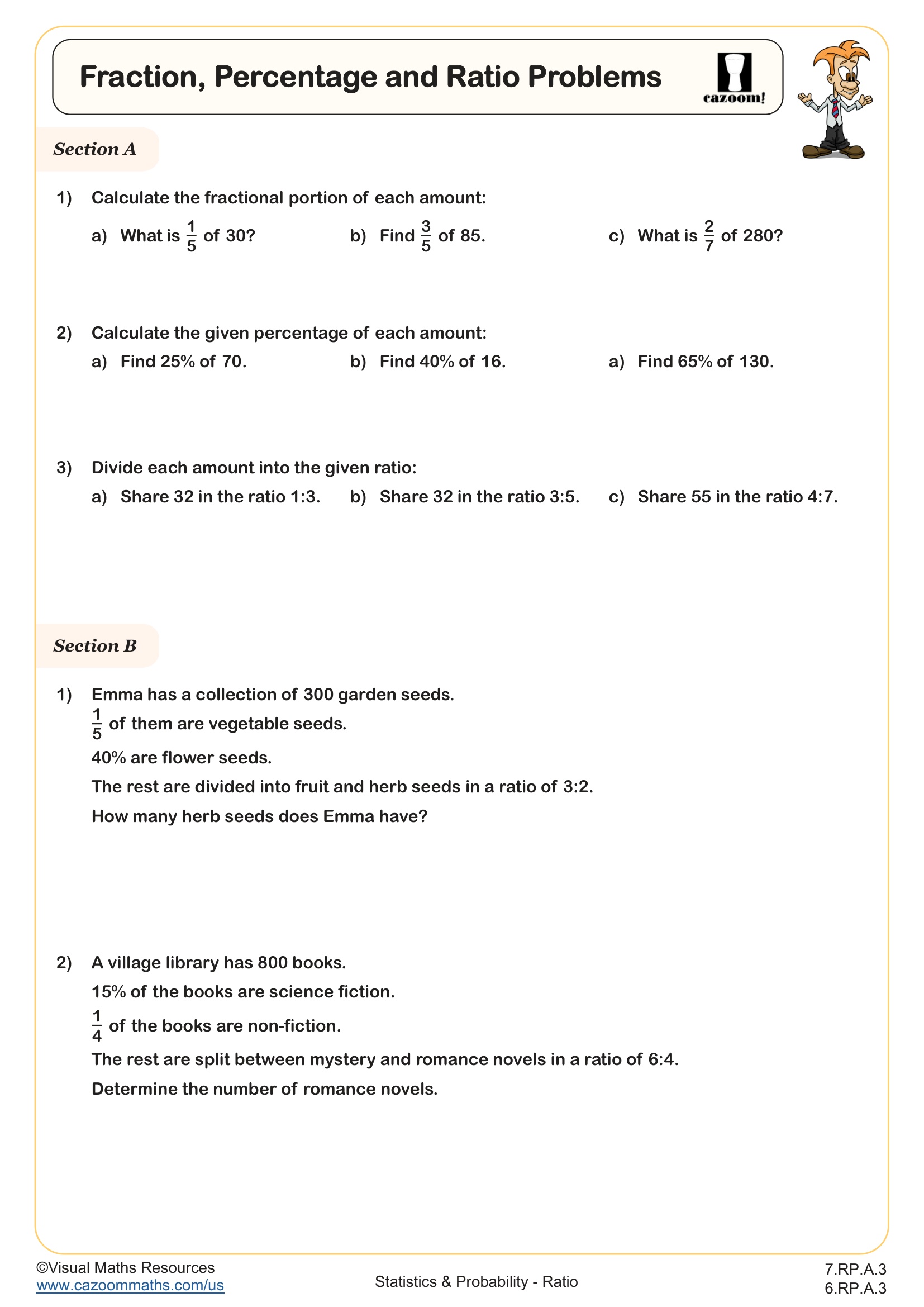
Fraction, Percentage and Ratio Problems
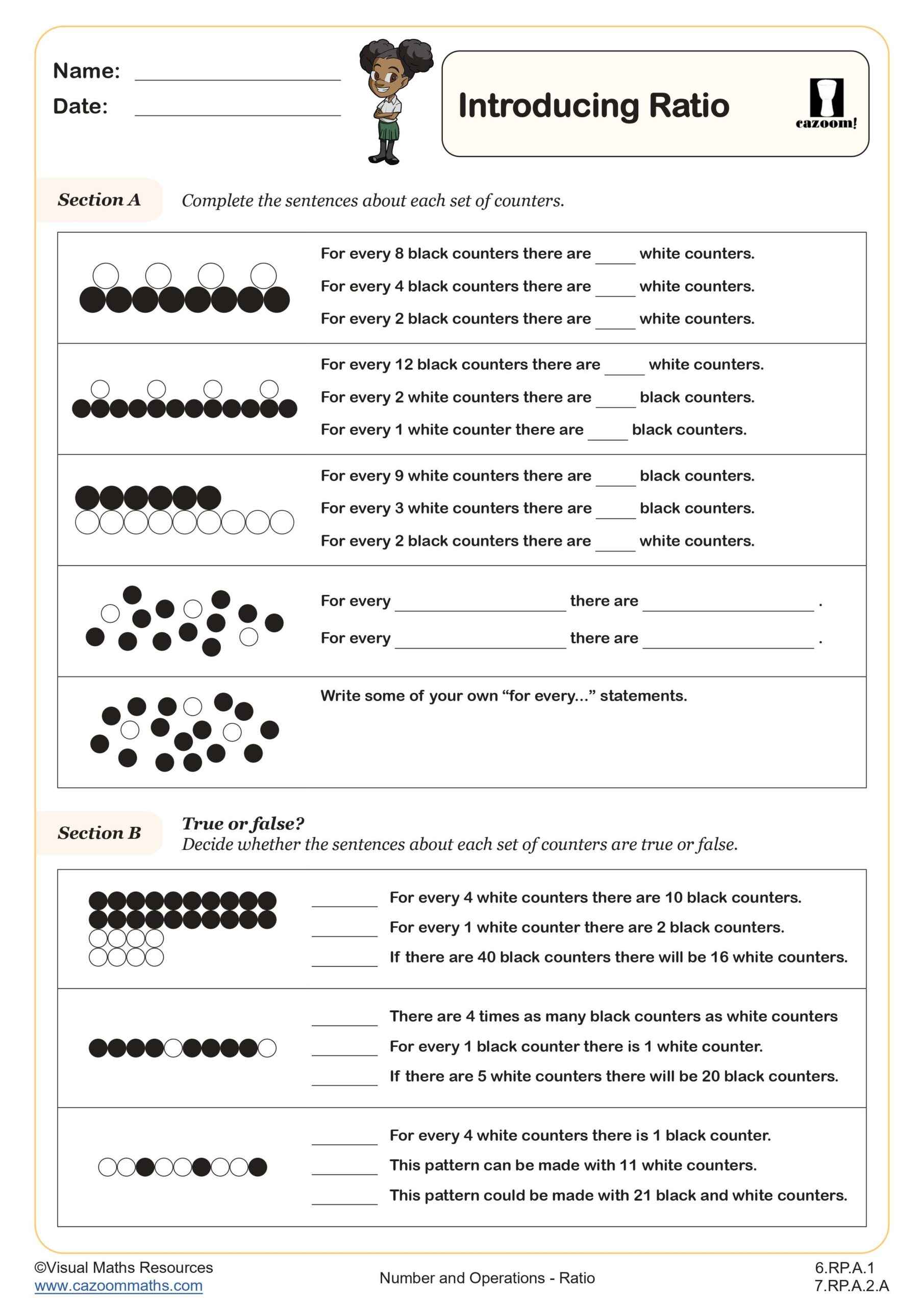
Introducing Ratio
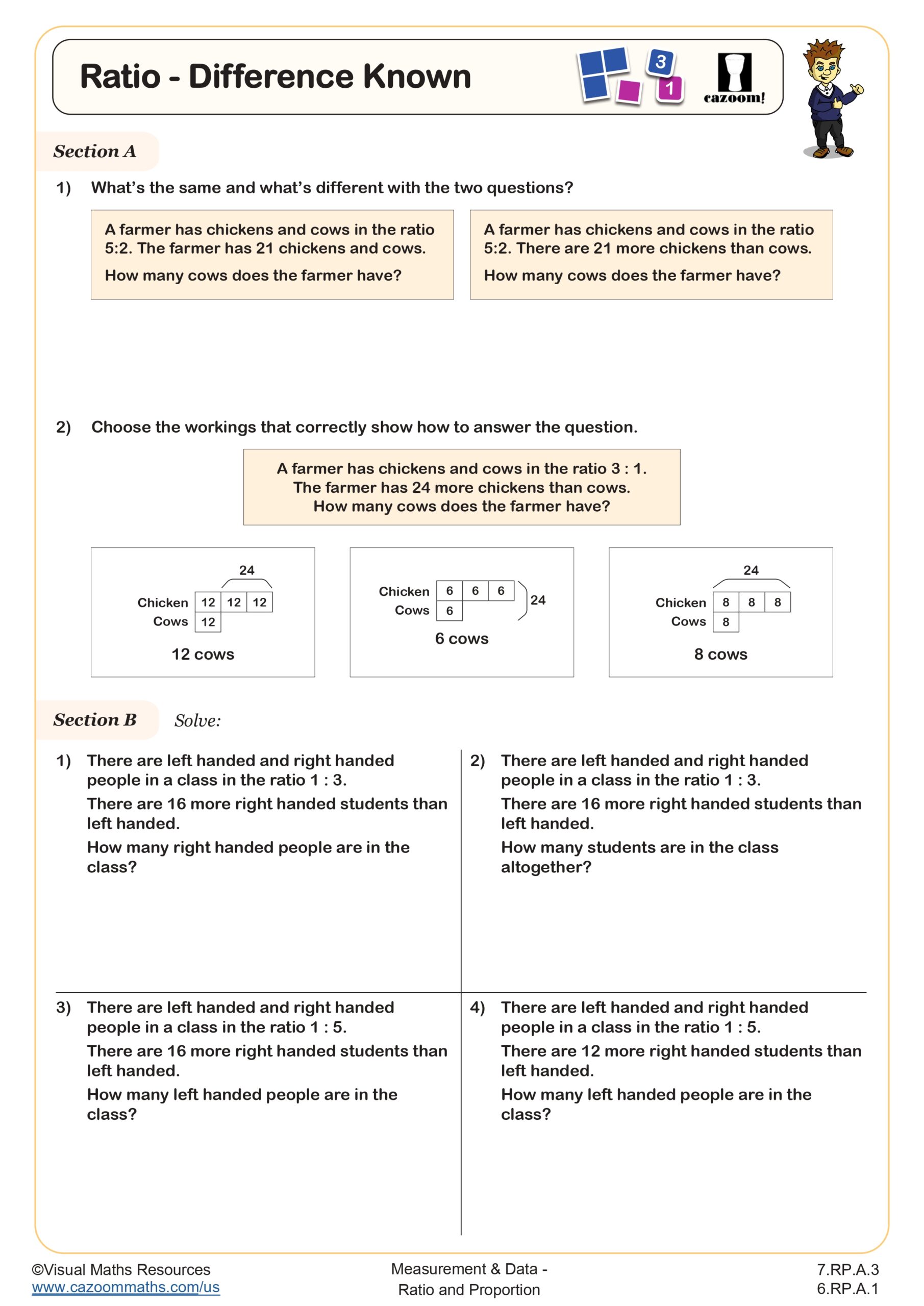
Ratio - Difference Known
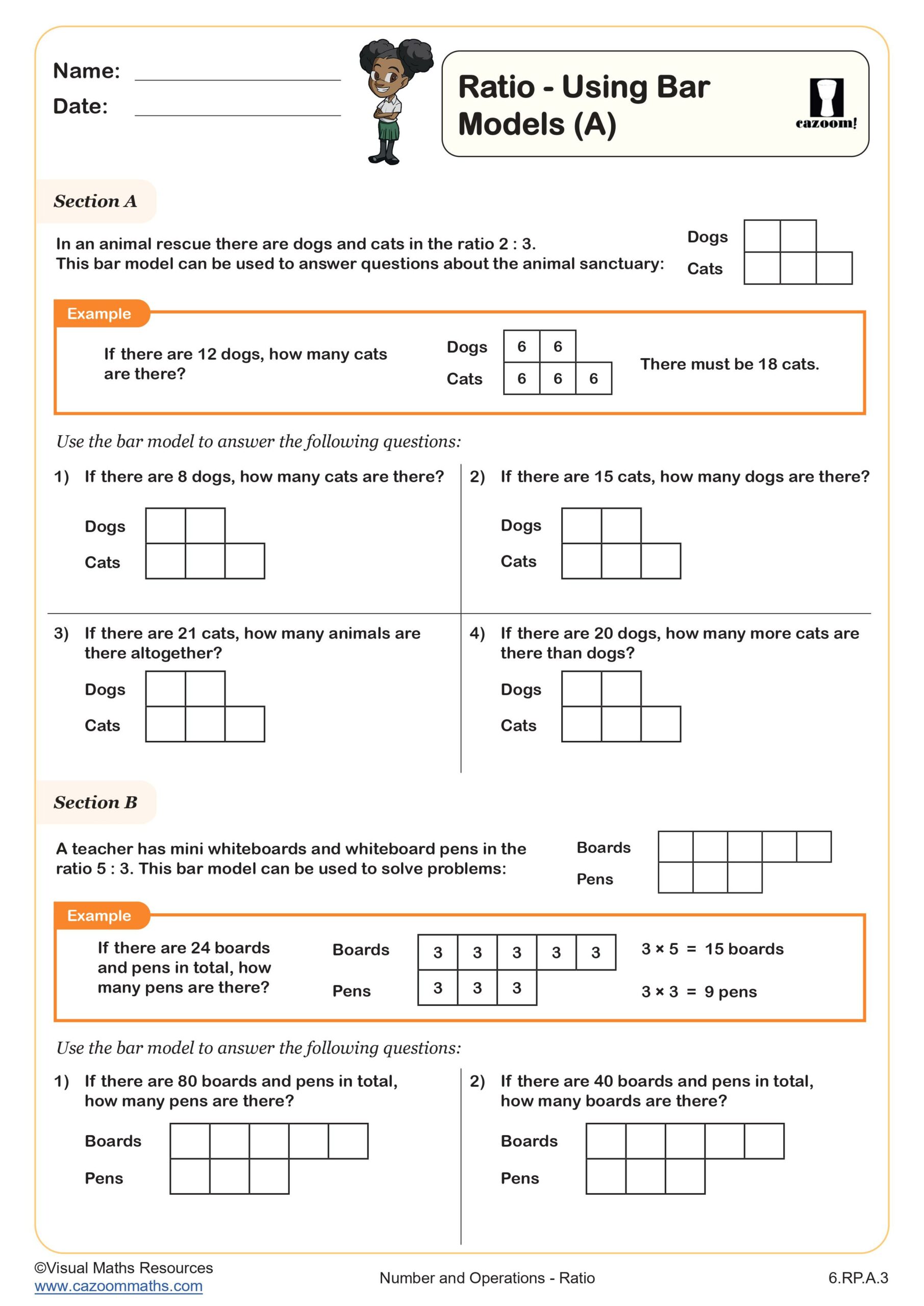
Ratio - Using Bar Models (A)
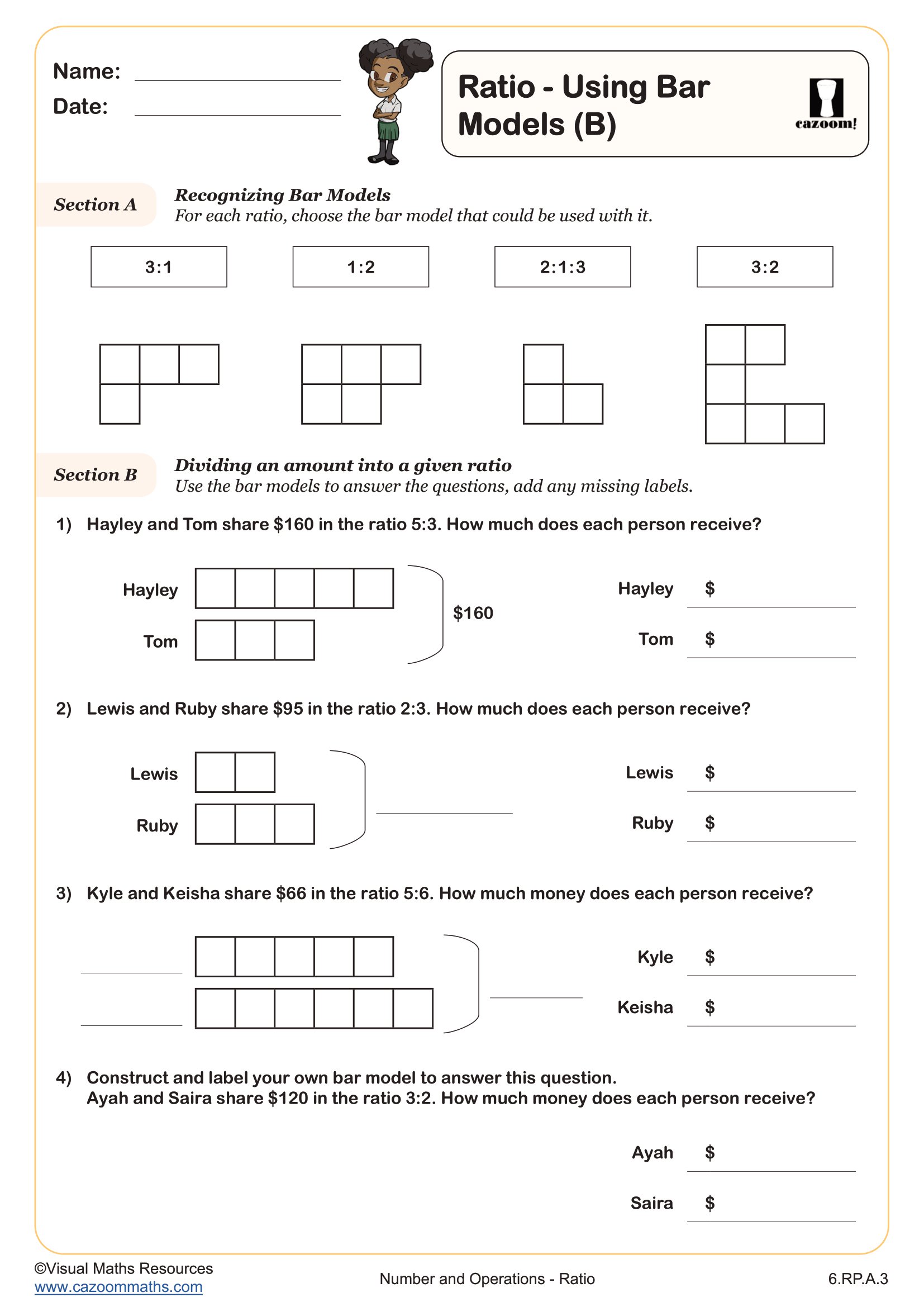
Ratio - Using Bar Models (B)
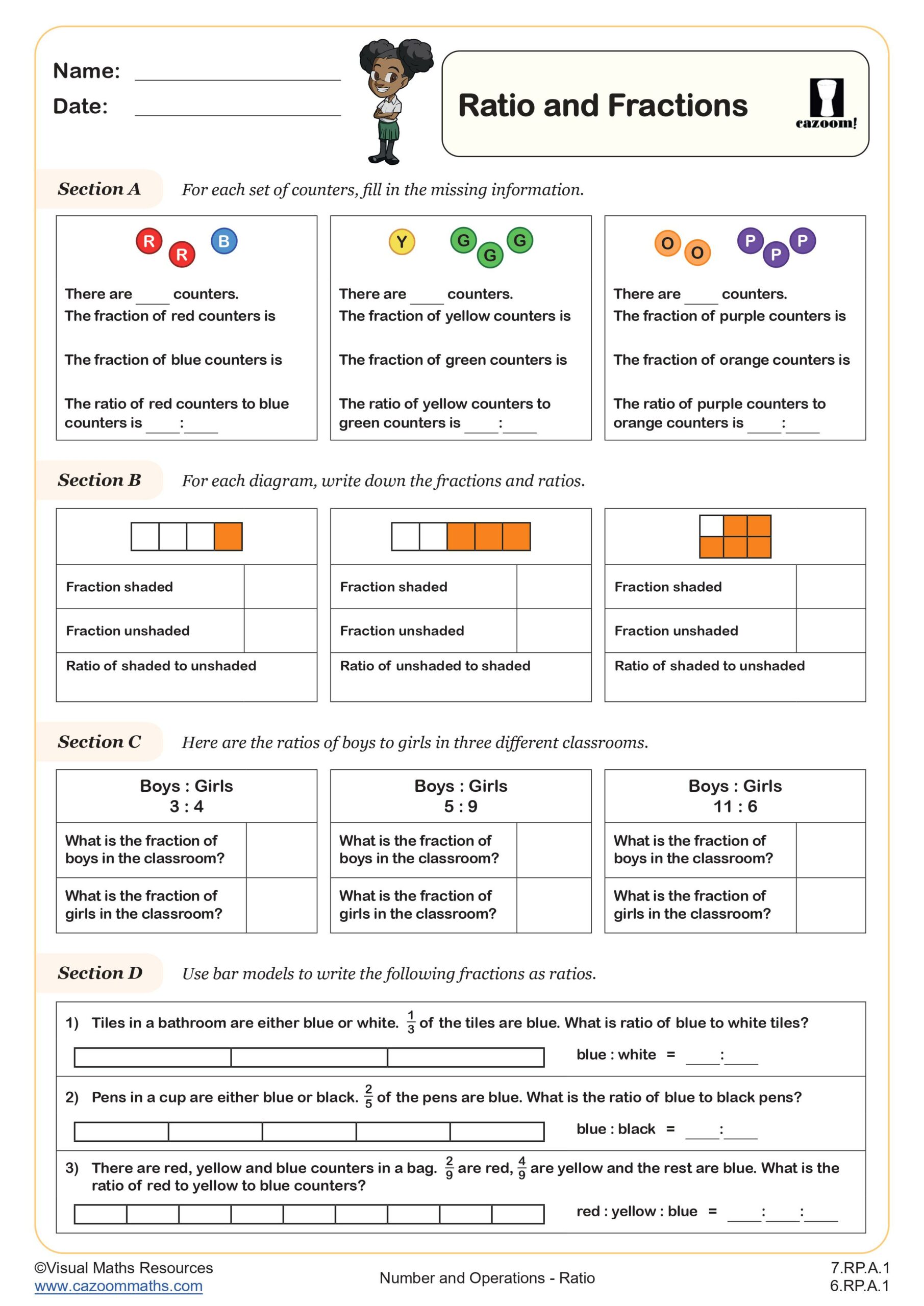
Ratio and Fractions
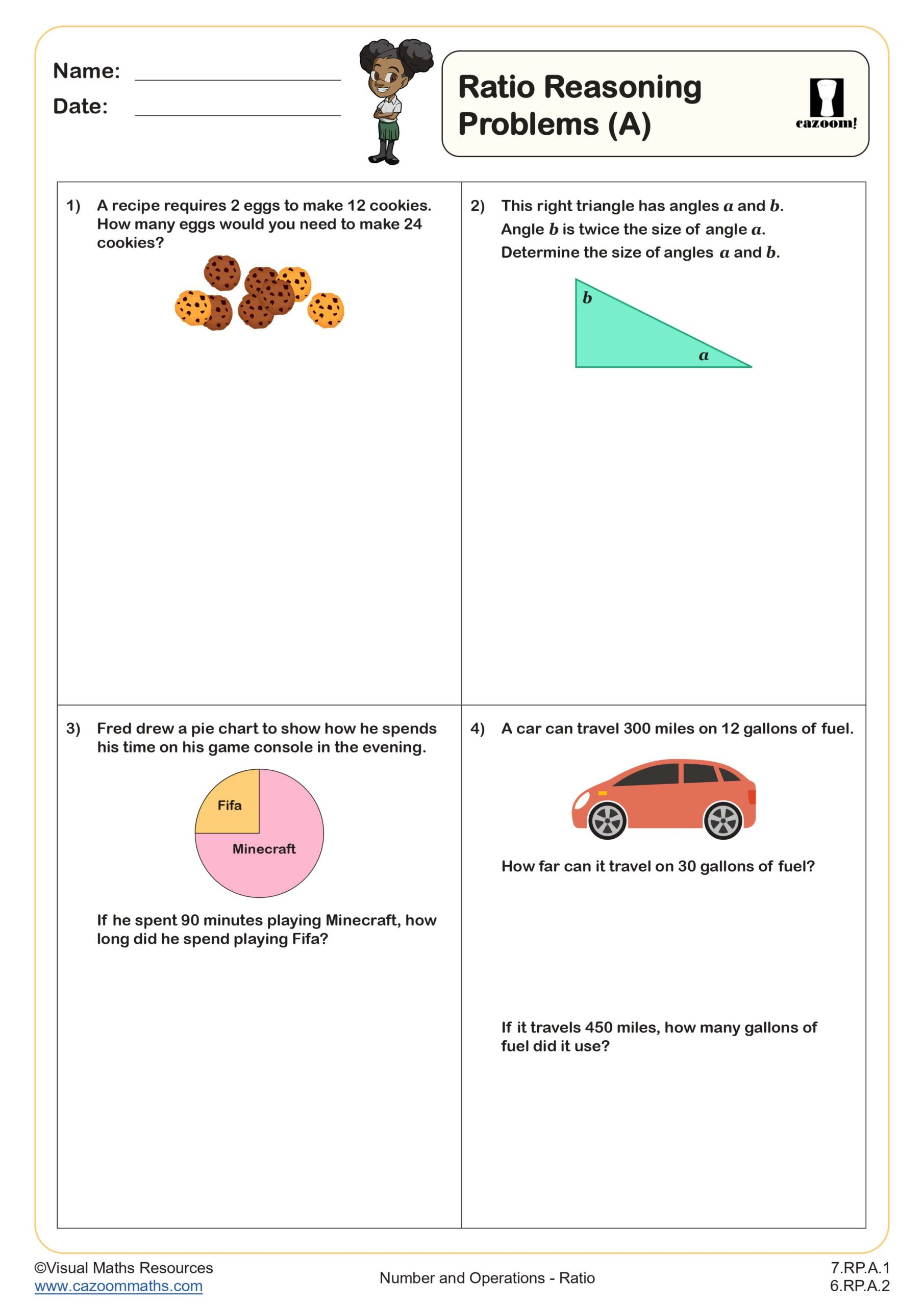
Ratio Reasoning Problems (A)
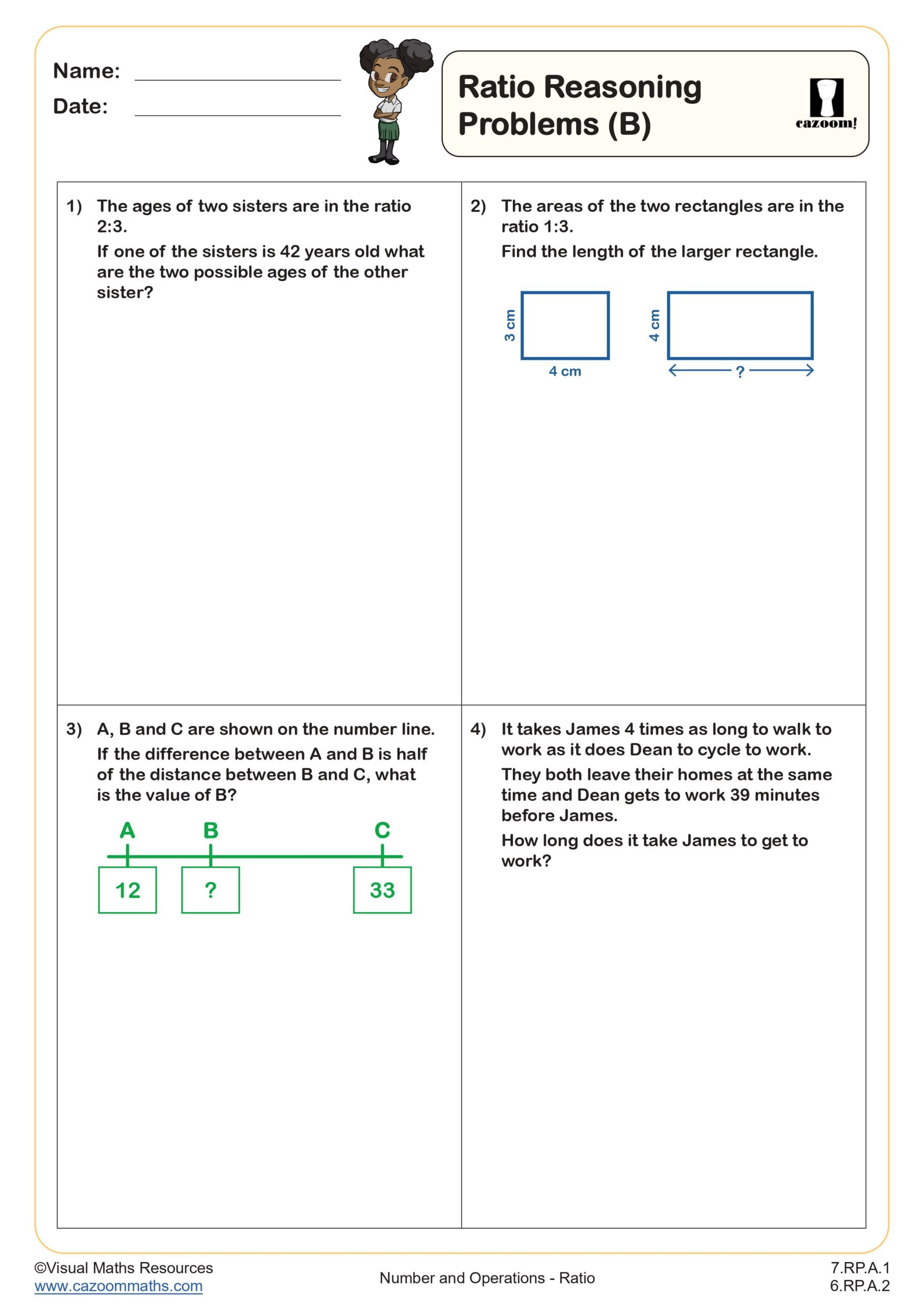
Ratio Reasoning Problems (B)
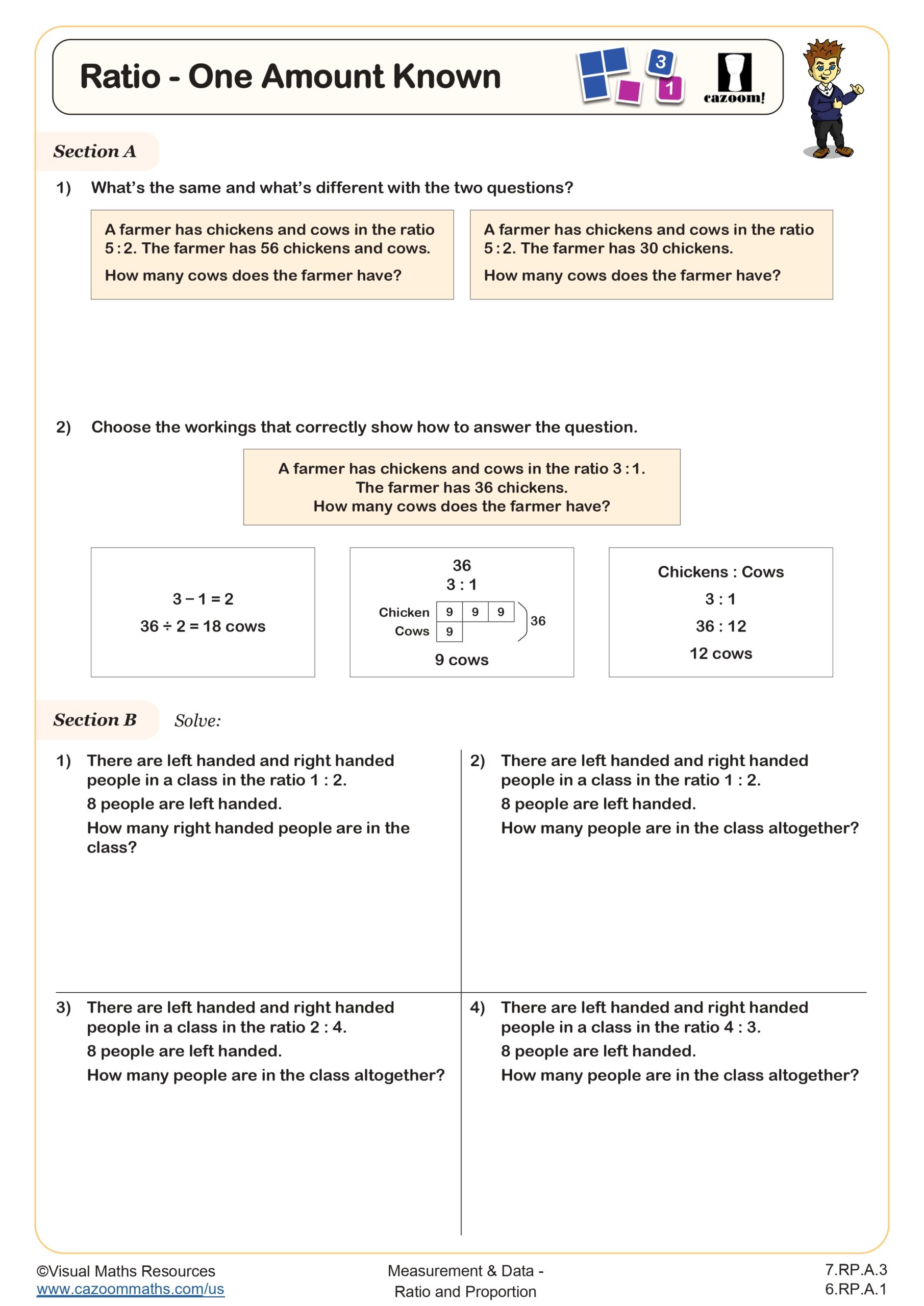
Ratio- One Amount Known
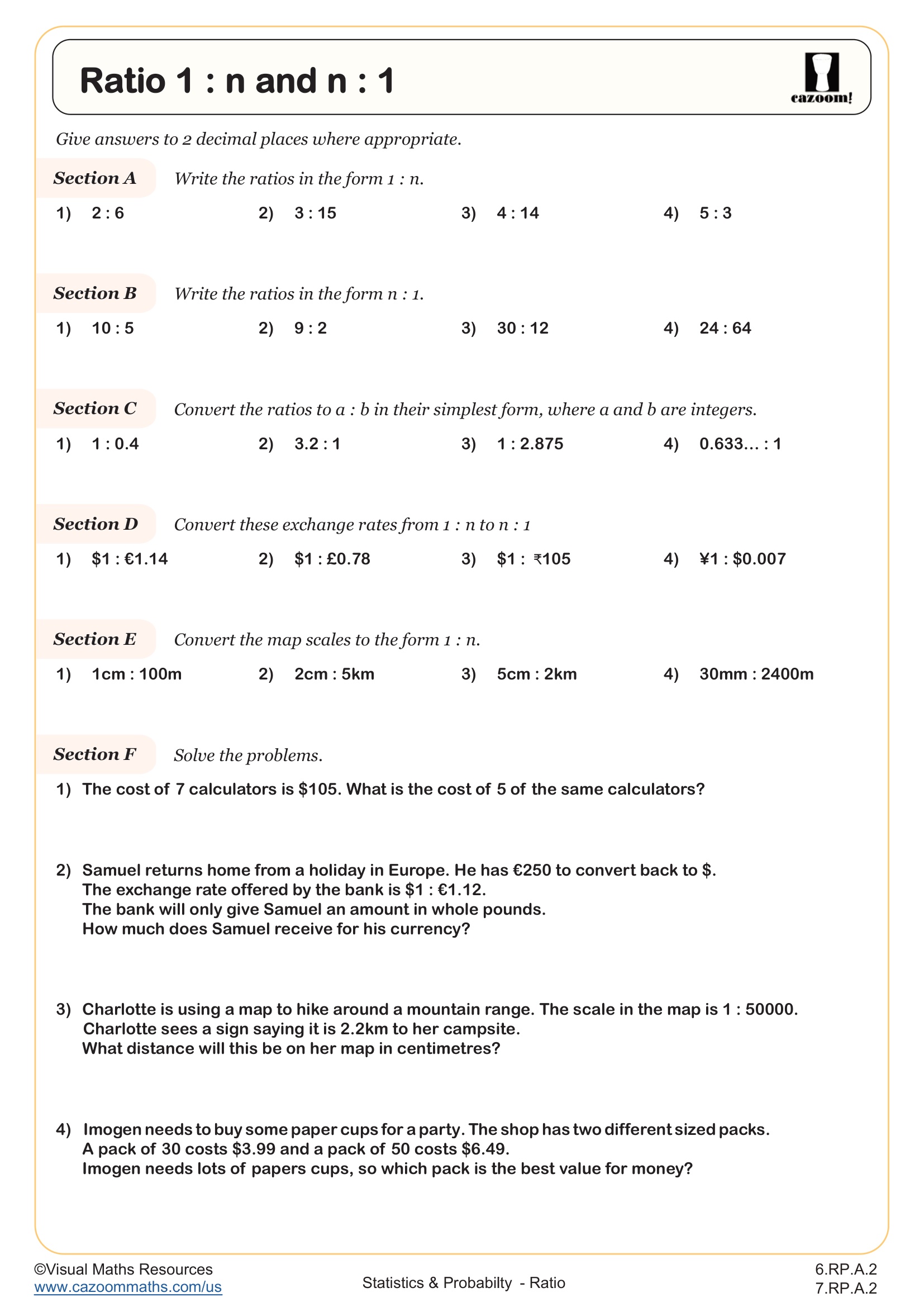
Ratios 1:n and n:1
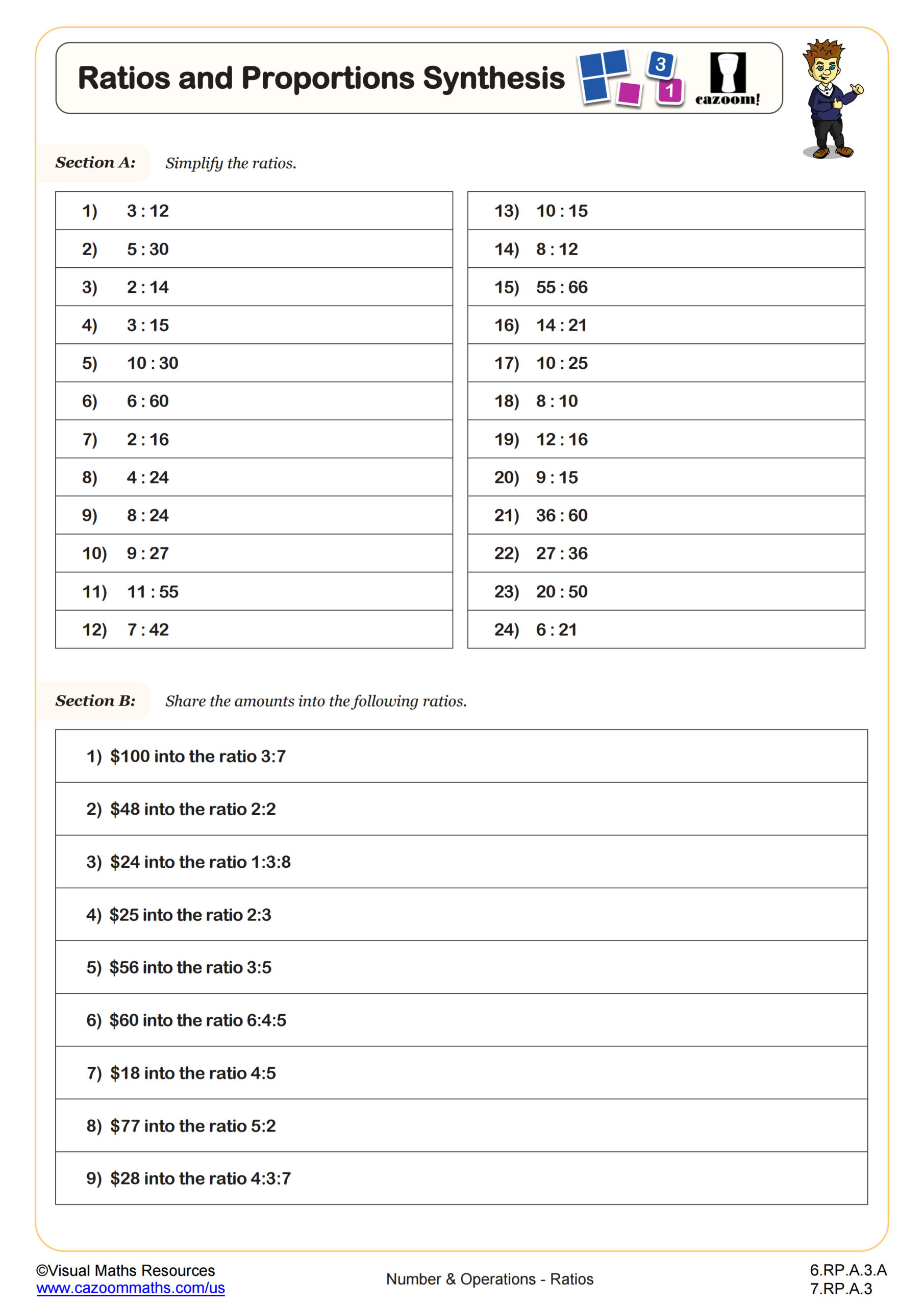
Ratios and Proportions Synthesis
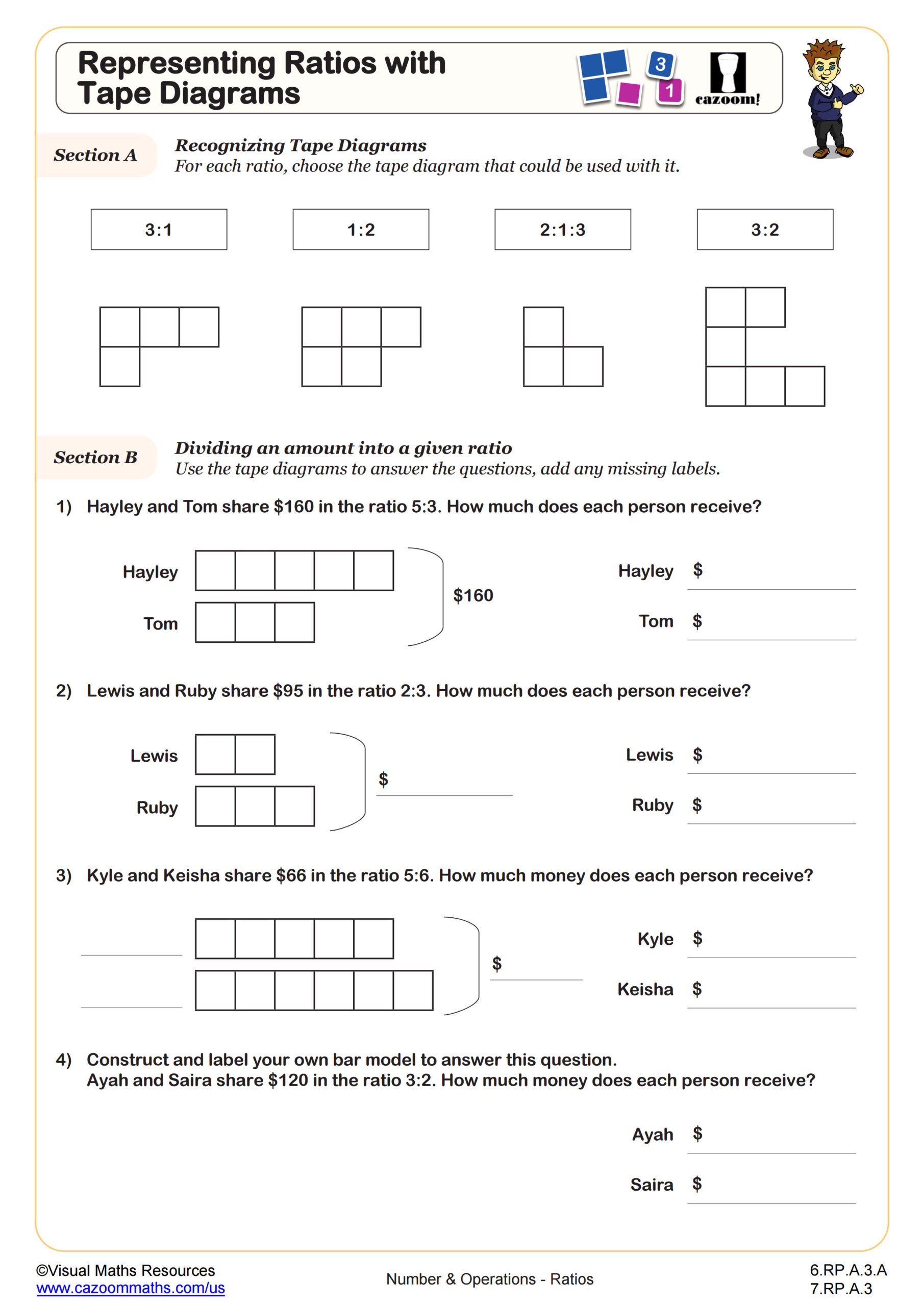
Representing Ratios with Tape Diagrams
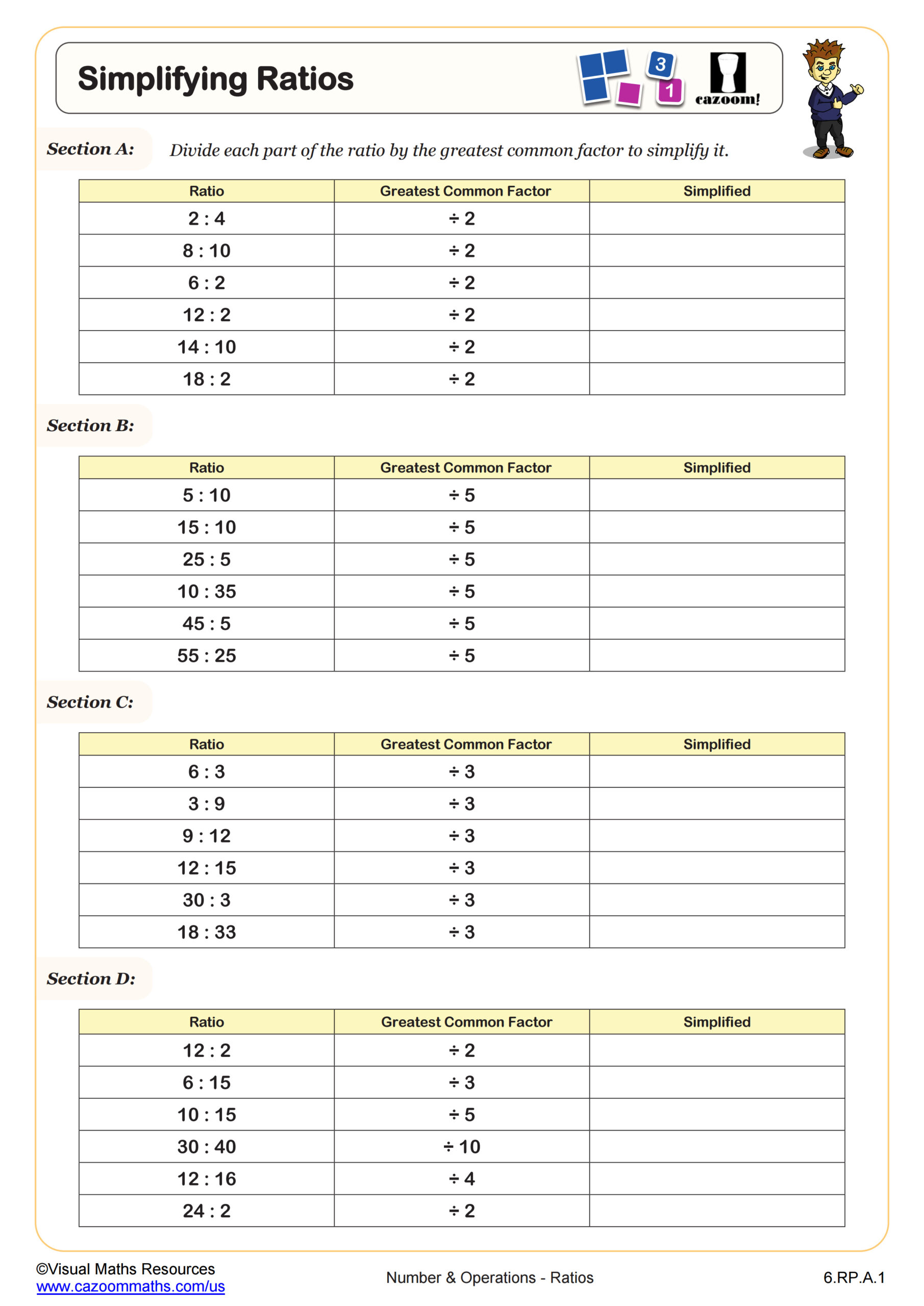
Simplifying Ratios
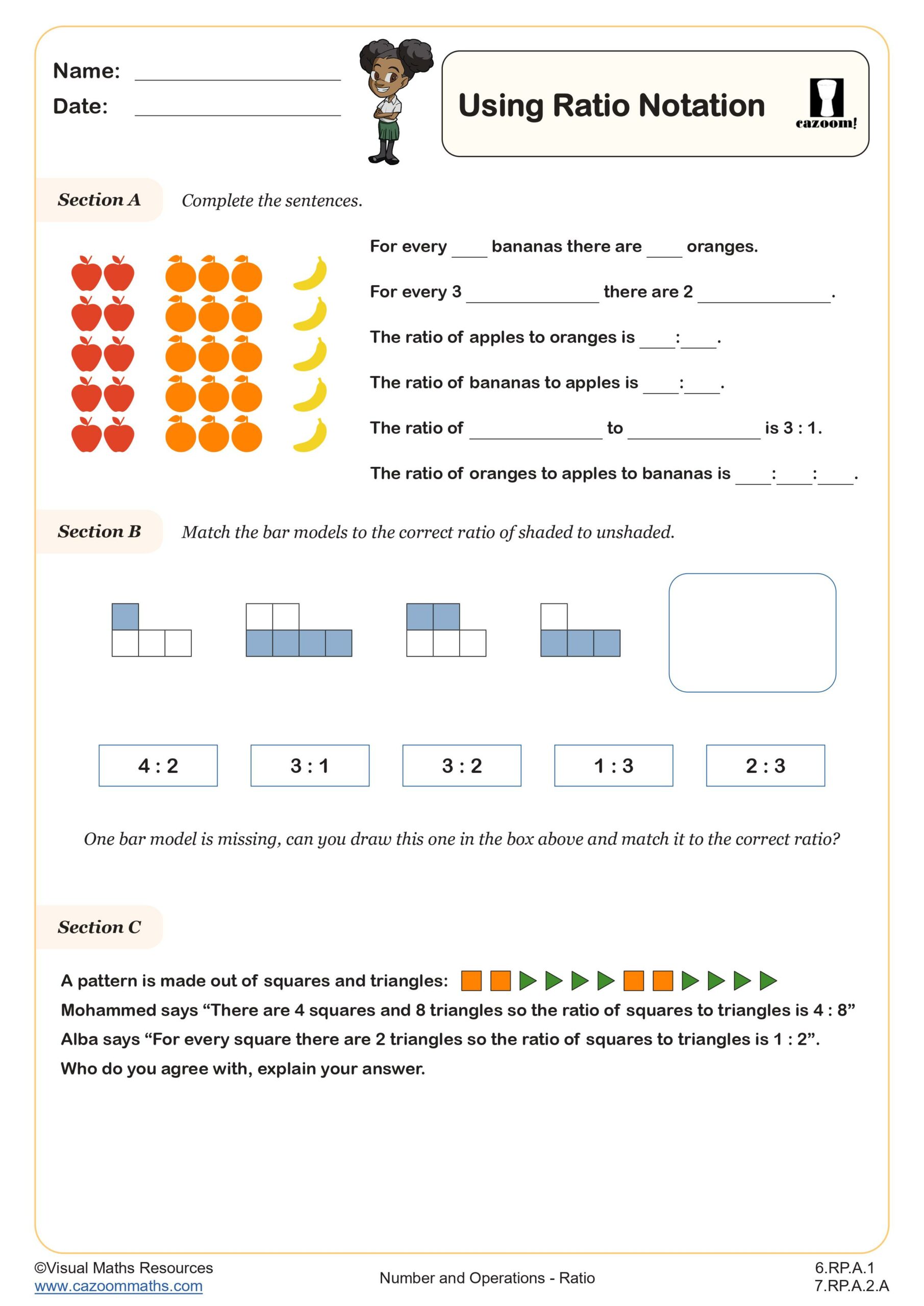
Using Ratio Notation
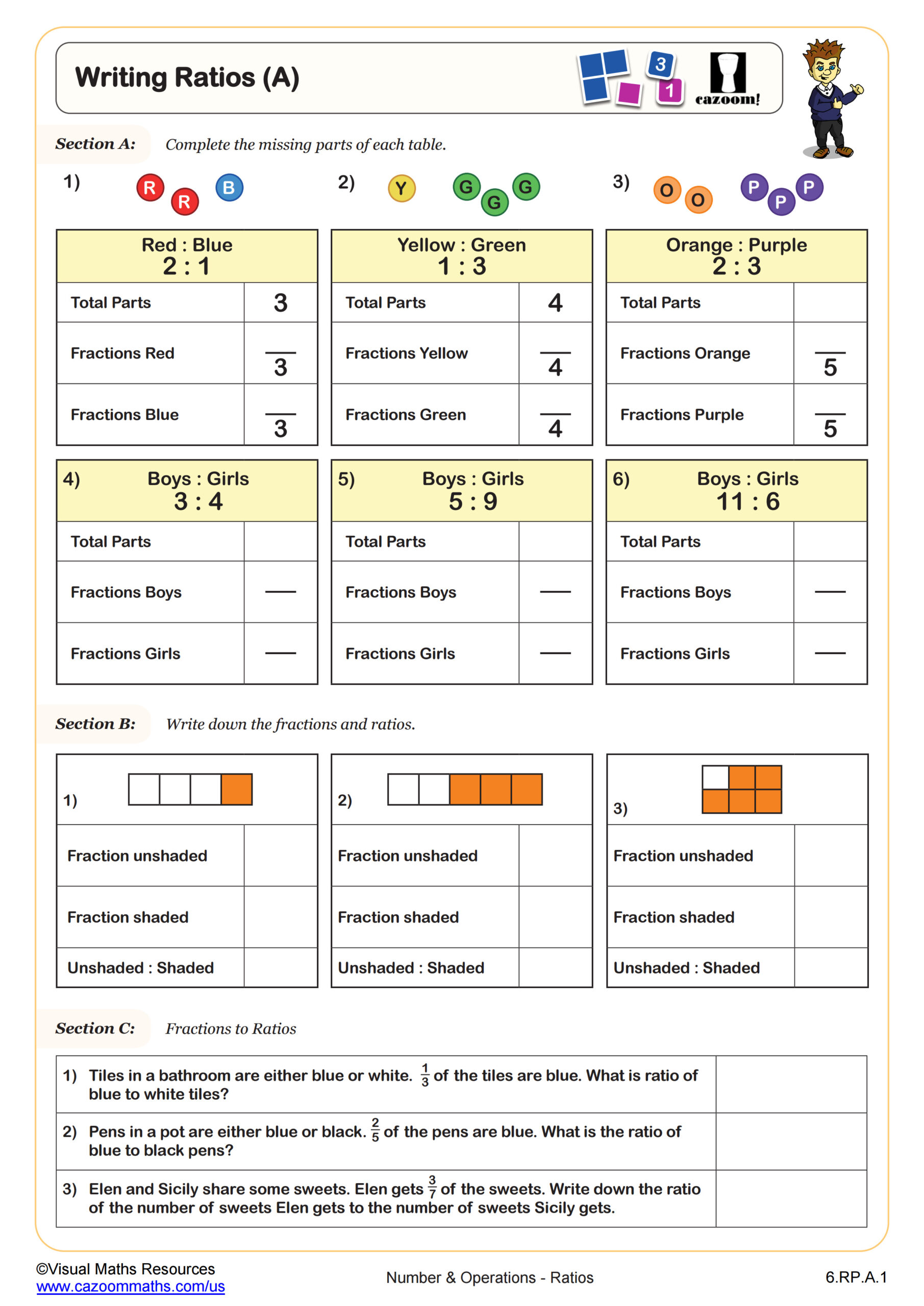
Writing Ratios (A)
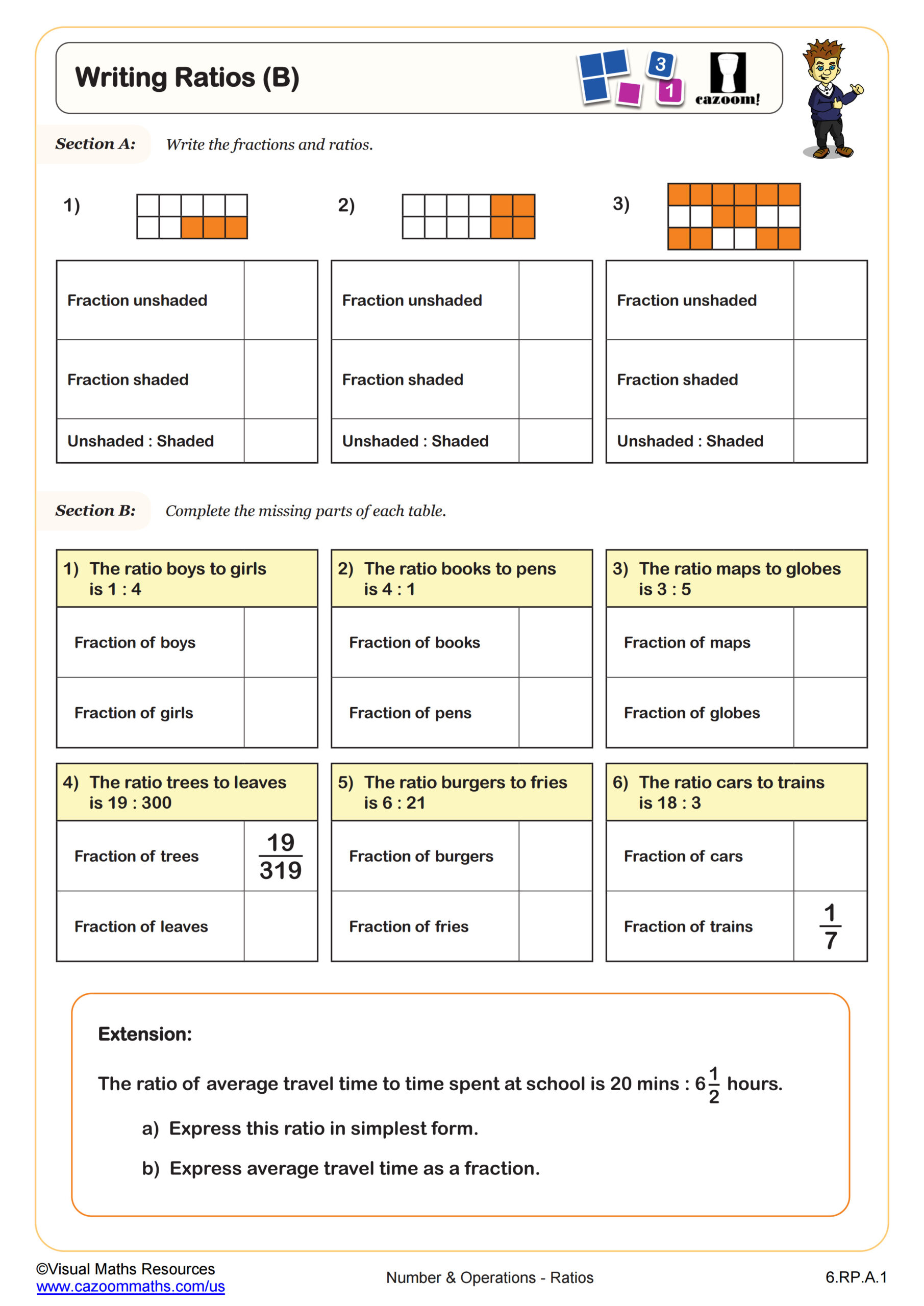
Writing Ratios (B)
All worksheets are created by the team of experienced teachers at Cazoom Math.
What Are Ratios and Why Do Students Learn Them in 6th Grade?
Ratios express the relationship between two or more quantities, showing how many times one value contains another or how quantities compare to each other. Sixth grade introduces ratios as part of the Common Core State Standards domain Ratios and Proportional Relationships, where students learn to describe relationships using ratio language, write ratios in different forms, and solve real-world problems involving equivalent ratios.
A common misconception occurs when students treat ratios like fractions without understanding the context. For example, when given a ratio of 3:5, students sometimes simplify it to 3/8, confusing part-to-part relationships with part-to-whole. Teachers notice that explicit practice distinguishing between these representations helps students recognize when to use each form appropriately during problem-solving.
What Grade Levels Cover Ratio Worksheets?
This collection specifically targets sixth grade middle school students, aligning with the introduction of formal ratio concepts in the curriculum. While some advanced fifth graders encounter basic ratio ideas informally through multiplication and division, sixth grade marks the systematic study of ratios as distinct mathematical objects with their own notation and properties.
The progression within sixth grade moves from concrete ratio situations with simple whole numbers toward more complex applications involving fractions, decimals, and percentages. Students start by writing ratios in multiple forms (3 to 5, 3:5, 3/5) before tackling bar models that visualize ratio relationships, then advance to solving proportion problems and working with real-world contexts like exchange rates that require multistep reasoning.
How Do Bar Models Help Students Understand Ratios?
Bar models provide a visual representation where rectangles are divided into equal parts representing the quantities in a ratio. If a problem states that the ratio of cats to dogs is 2:3, students draw two units for cats and three units for dogs, making the relationship visible and helping them calculate actual quantities when given total values or one specific amount.
This visualization technique connects directly to data representation skills students need in STEM fields. Engineers use similar proportional reasoning when scaling blueprints, chemists rely on ratio relationships when mixing solutions at specific concentrations, and graphic designers apply ratios to maintain proper dimensions when resizing images. Students who develop strong ratio visualization skills find these professional applications more accessible because they can mentally picture the proportional relationships involved.
How Should Teachers Use These Ratio Worksheets in the Classroom?
The worksheets progress from basic ratio notation practice through increasingly complex applications, allowing teachers to select materials matching current instructional focus. Worked examples on many worksheets provide models students can reference when tackling similar problems independently, while answer keys enable self-checking during practice sessions or support efficient grading.
Teachers often use these materials for differentiated instruction, assigning foundational ratio notation worksheets to students needing additional practice with basics while challenging advanced learners with exchange rate or multi-step percentage problems. The worksheets work well for intervention sessions targeting specific gaps, homework practice reinforcing classroom lessons, or partner activities where students compare solution strategies. Many teachers keep the exchange rate worksheets for substitutes since they're self-contained and naturally engaging for students curious about international currency.